Last week we asked readers to figure out which five from a list of thirty nineteenth-century campaign newspaper titles were fake. Here are the answers. How did you do?
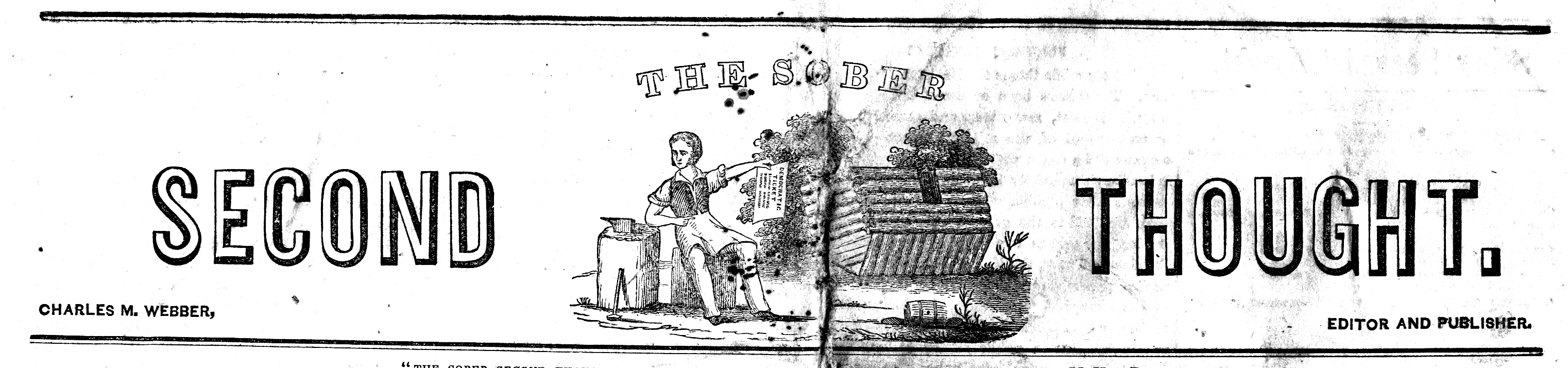
Sober Second Thought (Hartford, CT), 1841
A Democratic newspaper supporting Martin Van Buren.
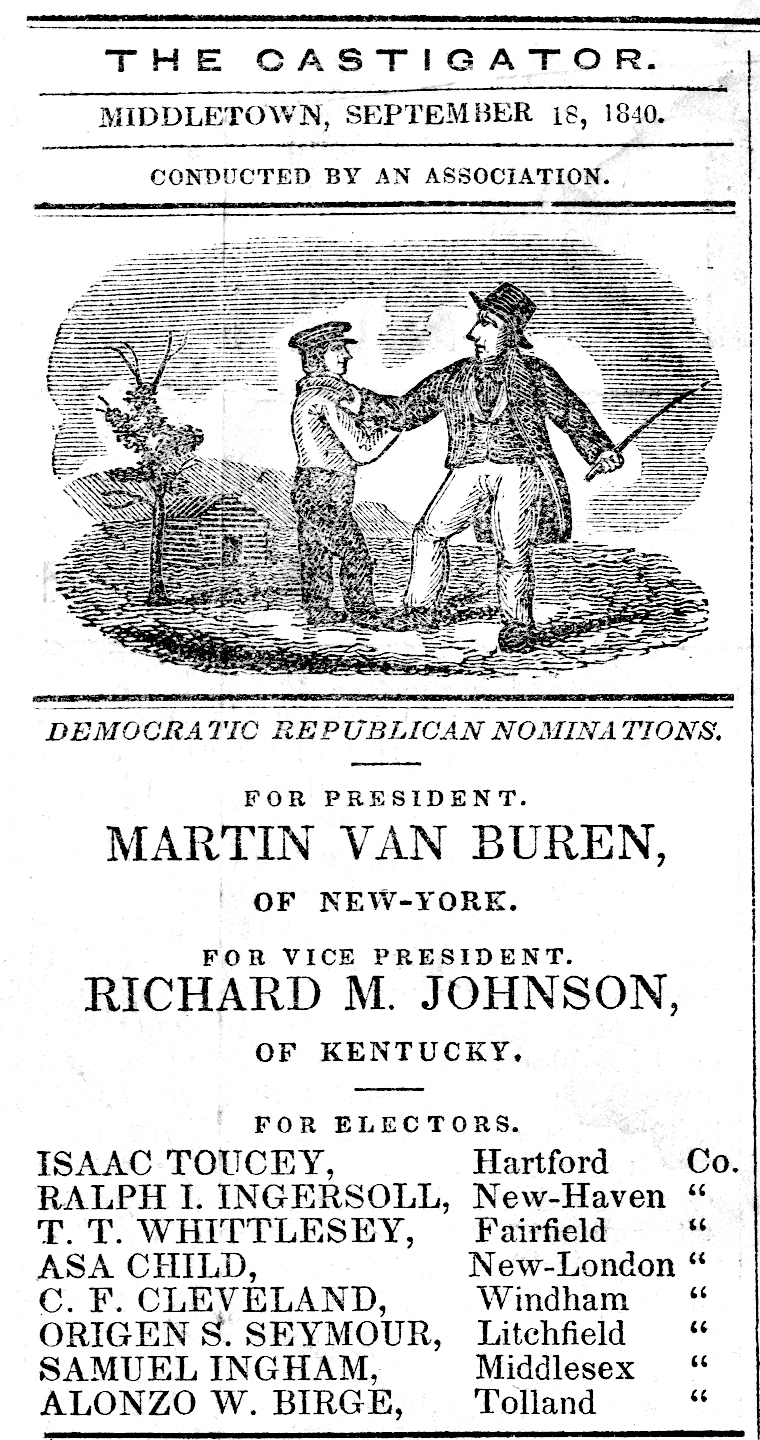
Castigator (Middletown, CT), 1840
Another Democratic newspaper supporting Martin Van Buren.
A Kick in the Pants – Fake
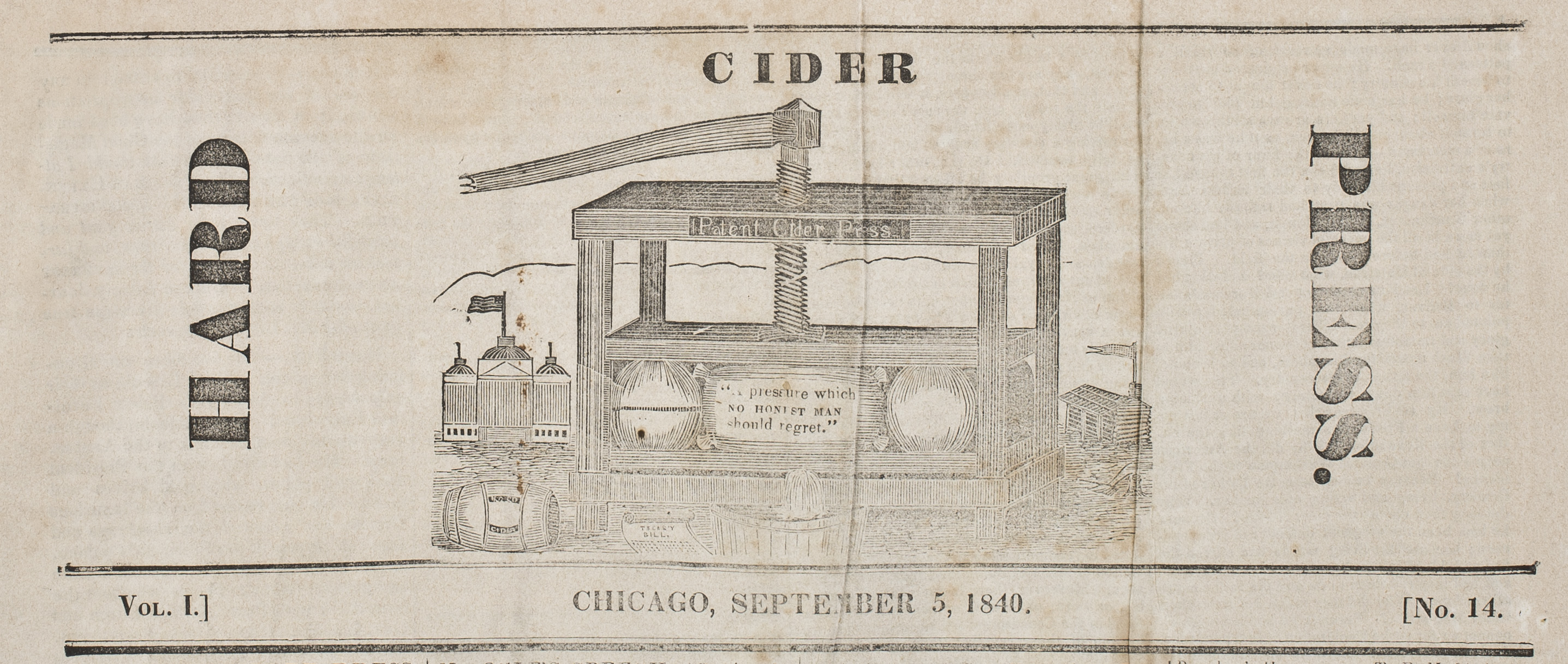
Hard Cider Press (Chicago, IL), 1840
This is the first campaign newspaper published in Chicago. It was a Democratic paper.
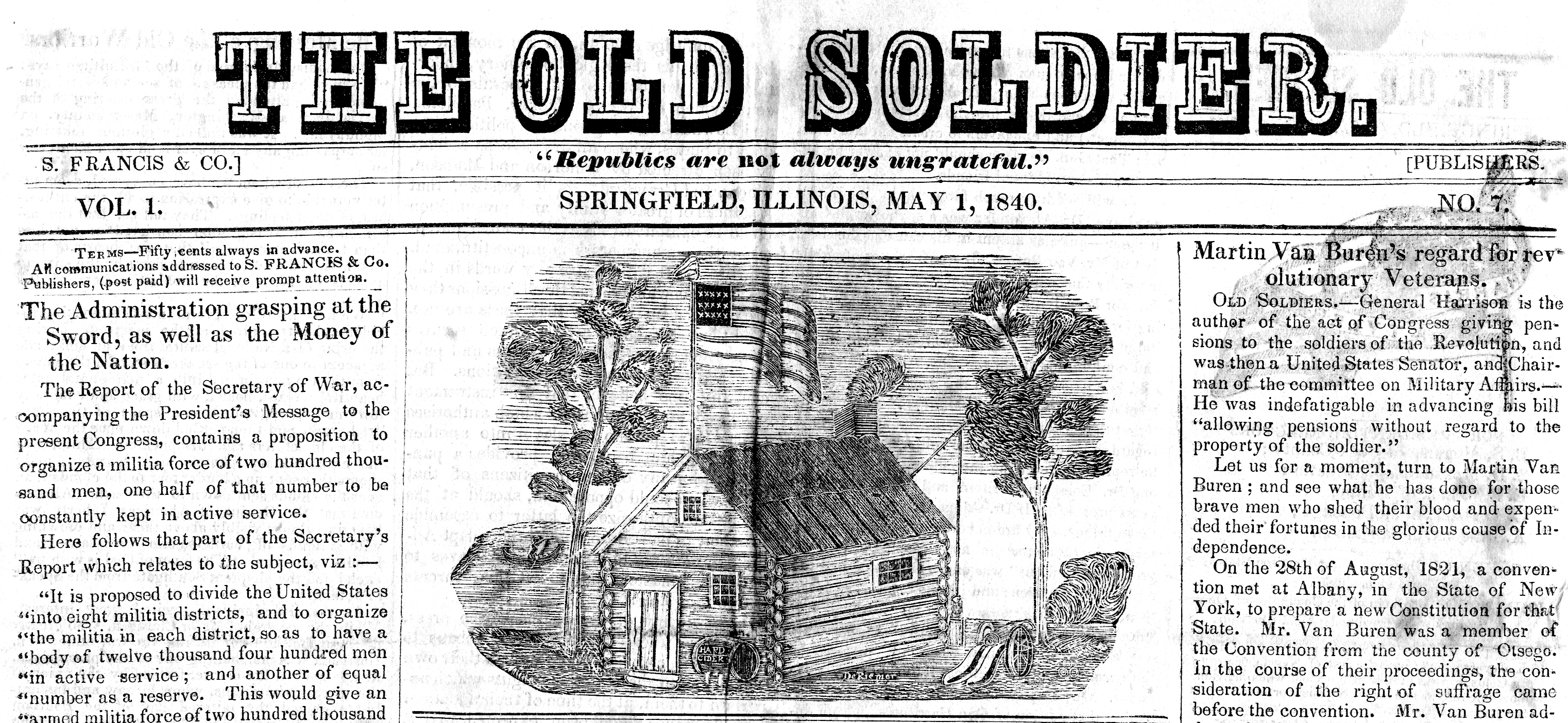
The Old Soldier (Springfield, IL), 1840
This is one of the earliest campaign newspapers known from Springfield, Illinois. It was a Whig newspaper supporting the election of William Henry Harrison. Abraham Lincoln may have worked on this publication.
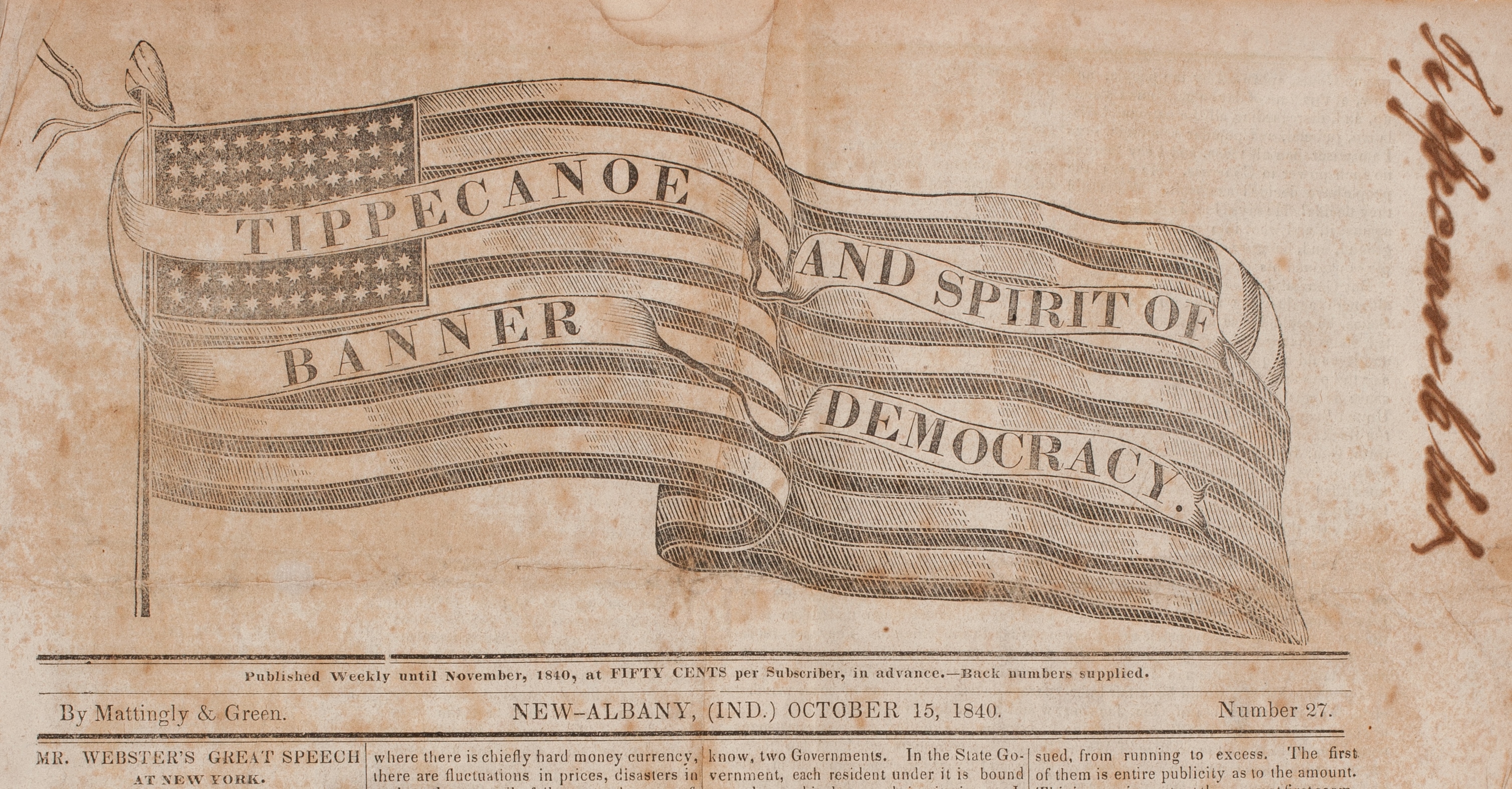
Tippecanoe Banner and Spirit of Democracy (New Albany, IN), 1840
A Whig newspaper supporting William Henry Harrison.
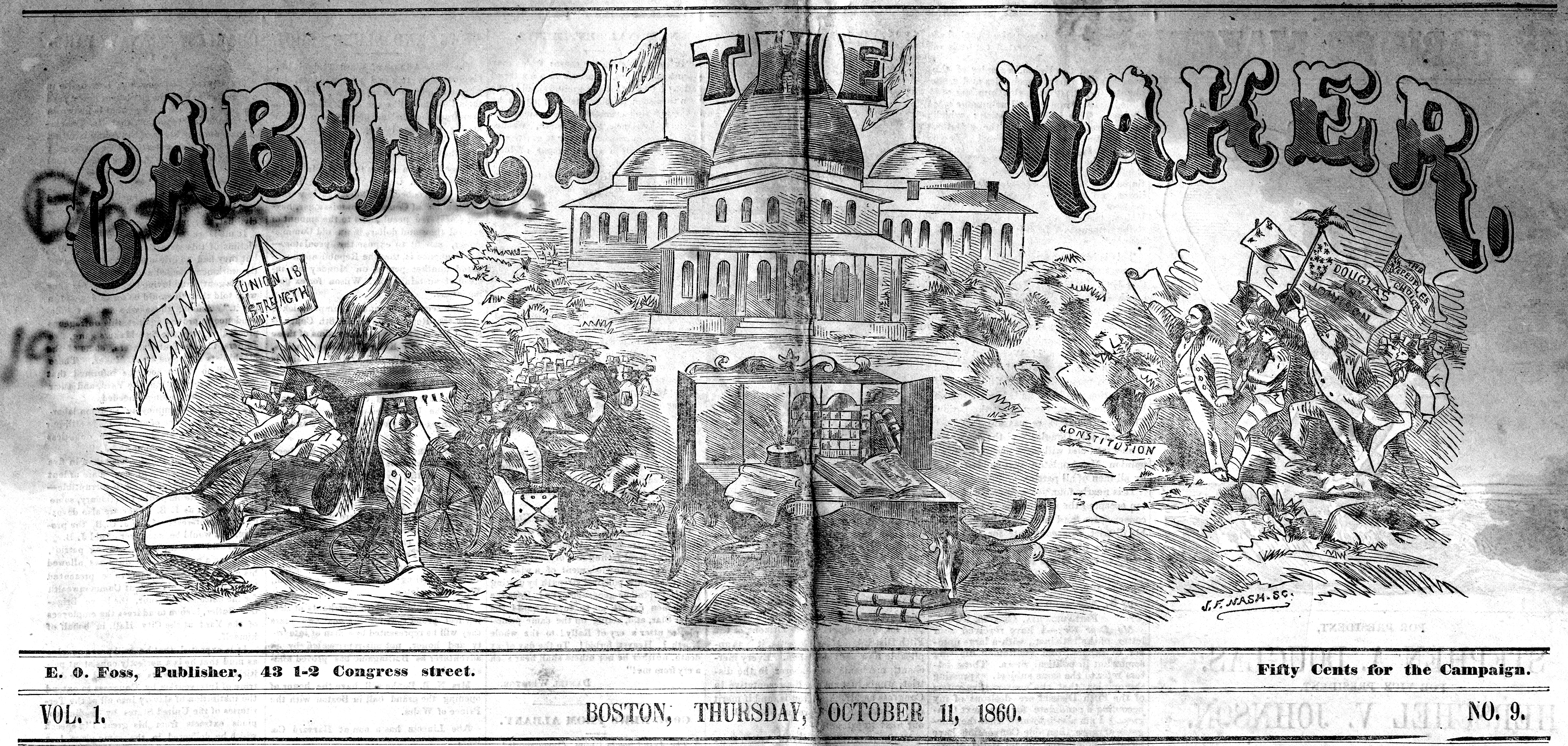
Cabinet Maker (Boston, MA), 1860
This is a Democratic newspaper supporting Stephen Douglas. Like the Rail Splitter supporting Abraham Lincoln, the title of this paper is based on the trade Douglas was taught as a young lad. The aim was to present him as a candidate of the working class.
My Worthless Opponent – Fake
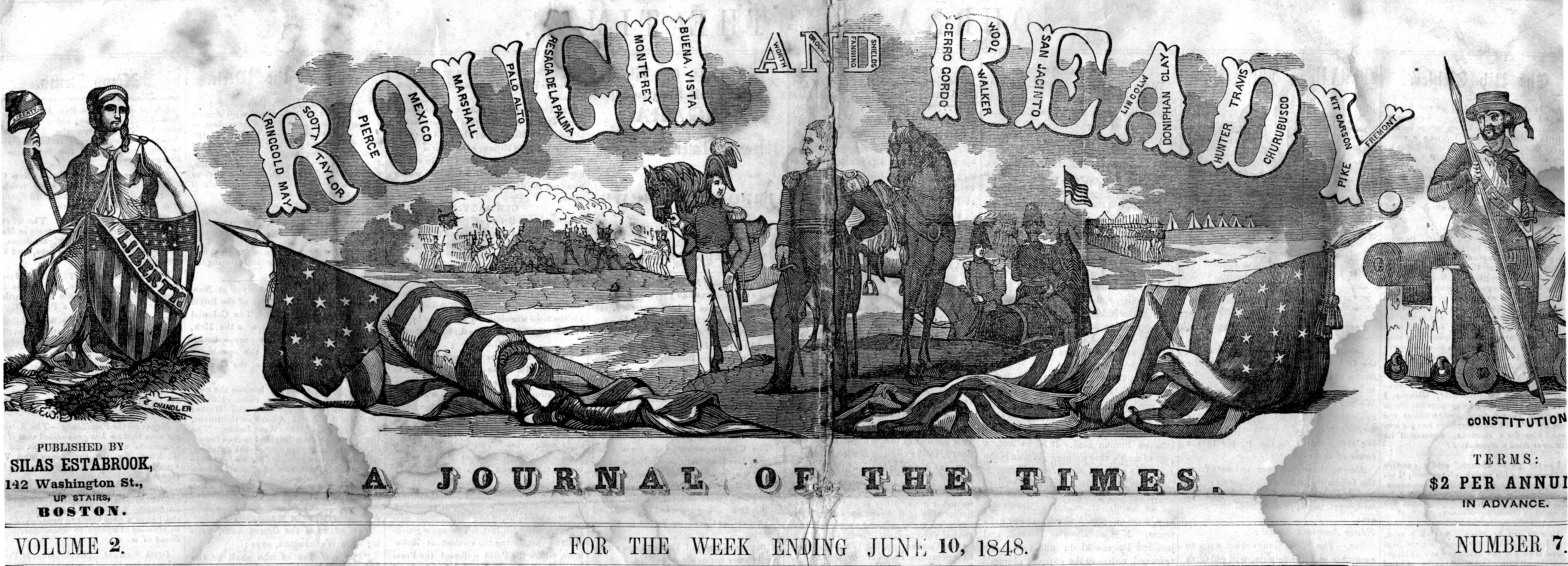
Rough and Ready (Boston, MA), 1848
A Whig newspaper supporting Zachary Taylor.
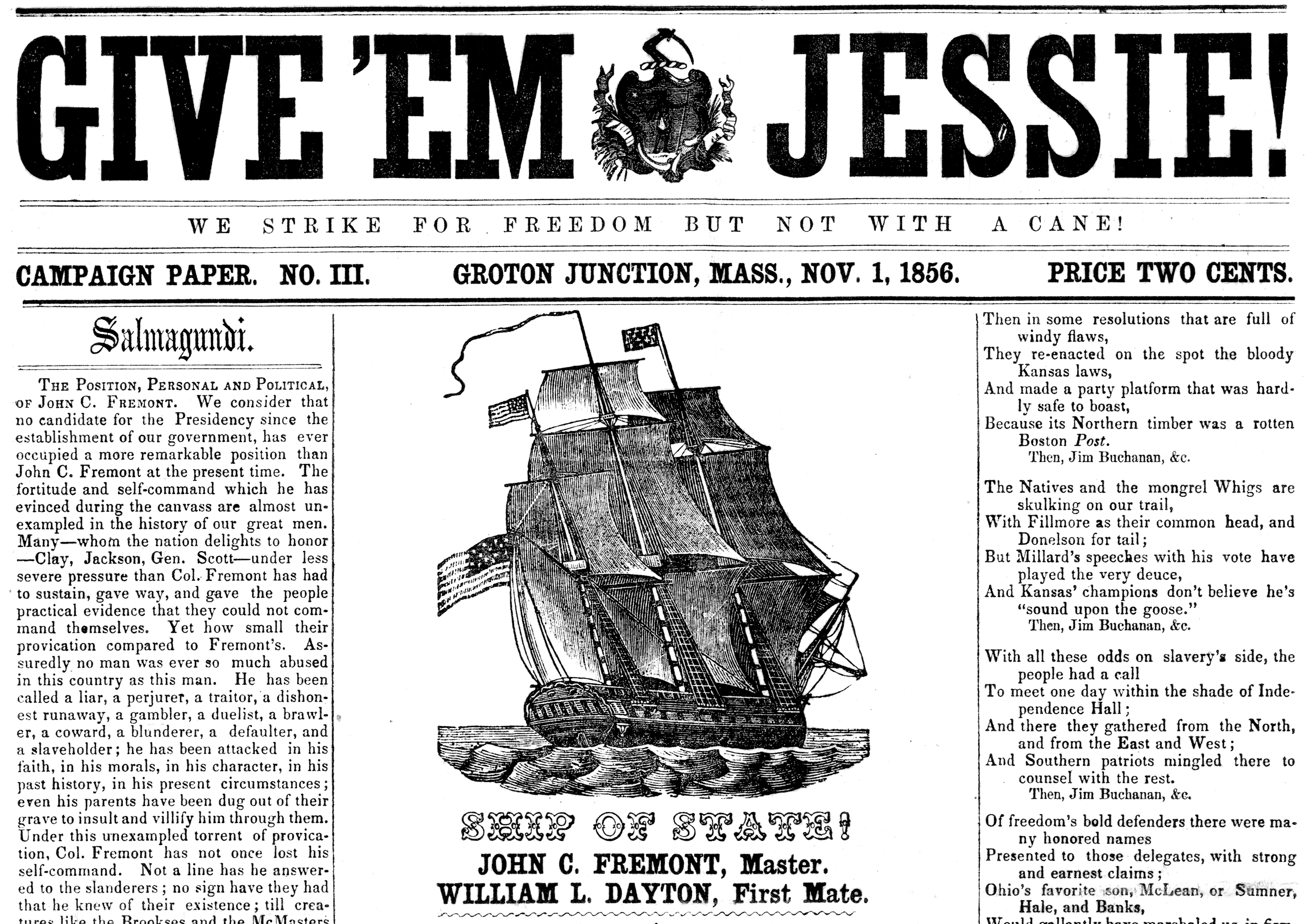
Give ‘Em Jessie! (Groton, MA), 1856
A People’s Party newspaper. The phrase “We strike for freedom but not with a cane!” refers to the incident when Preston Brooks of South Carolina beat Charles Sumner with a walking cane in the Senate chambers over a speech Sumner gave attacking slaveholders.
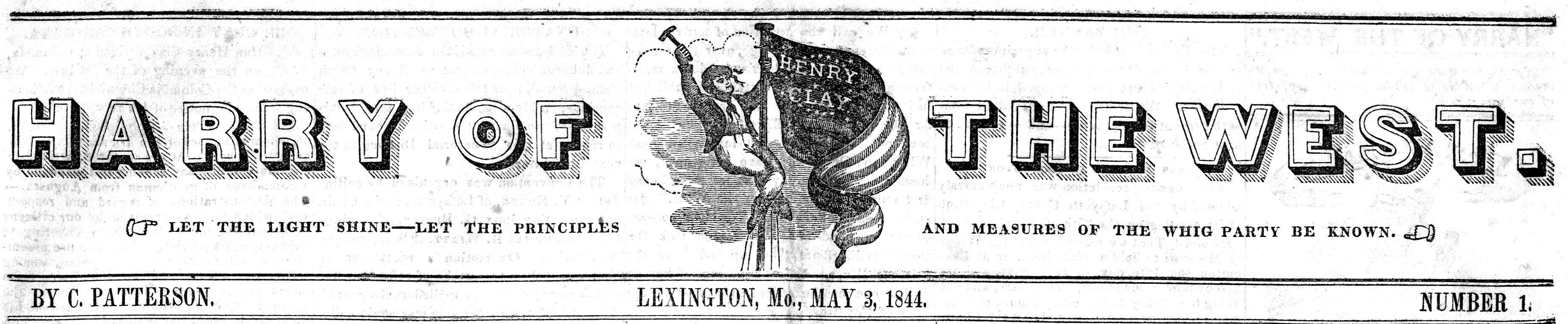
Harry of the West (Lexington, MO), 1844
A Whig paper supporting Henry Clay.
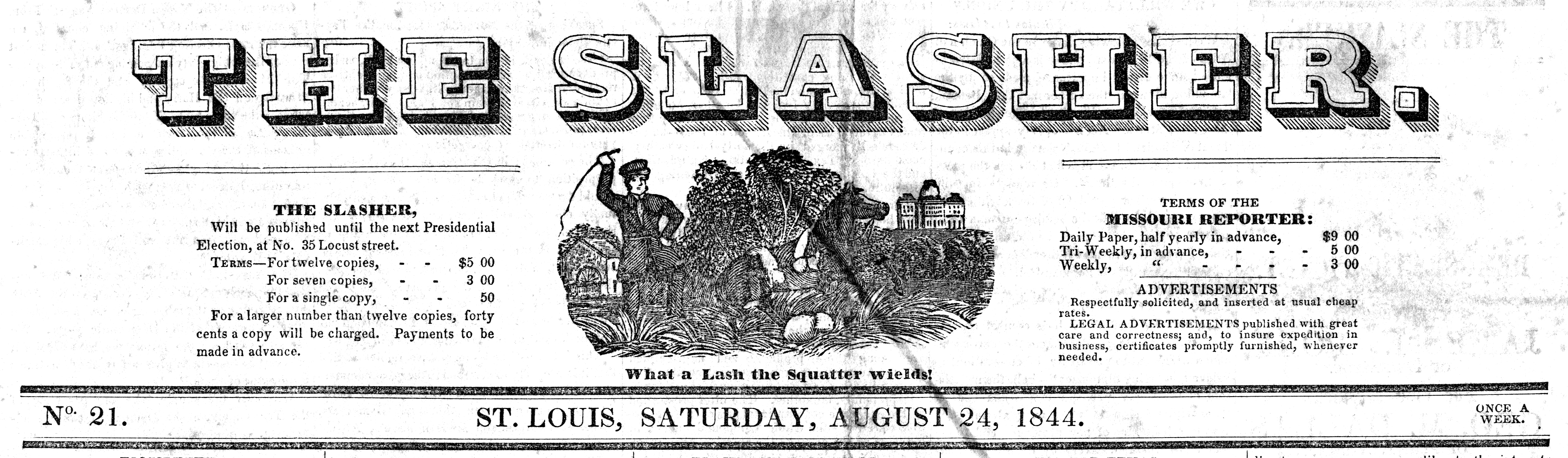
The Slasher (St. Louis, MO), 1844
A Democratic paper supporting James K. Polk.
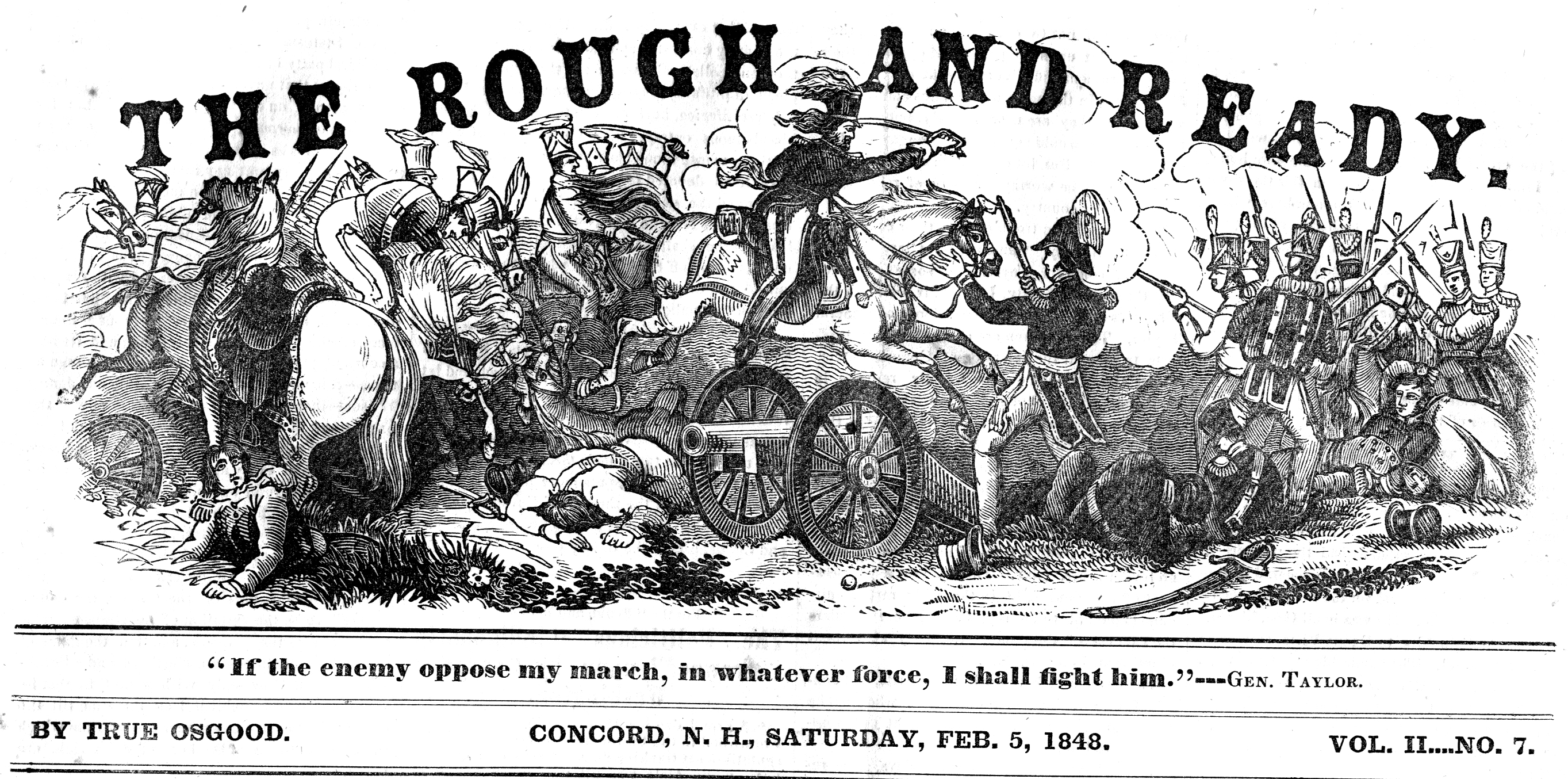
Rough and Ready (Concord, NH), 1846-1848
A Democratic Republican paper published in opposition to the Tough and Steady (see number 15 below).
The Cane Mutiny – Fake
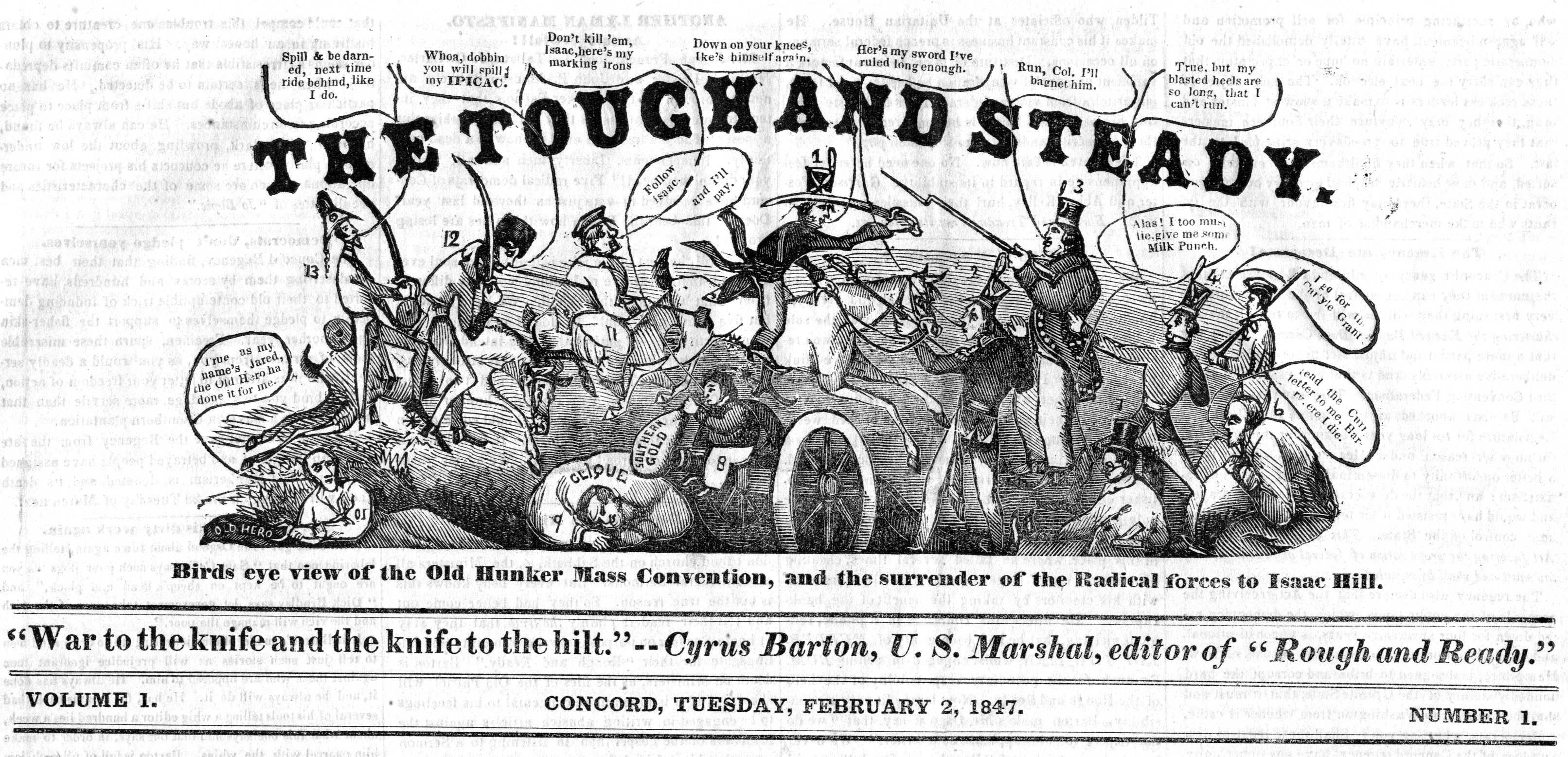
Tough and Steady (Concord, NH), 1847
An independent newspaper in opposition to the Rough and Ready (see number 13 above).
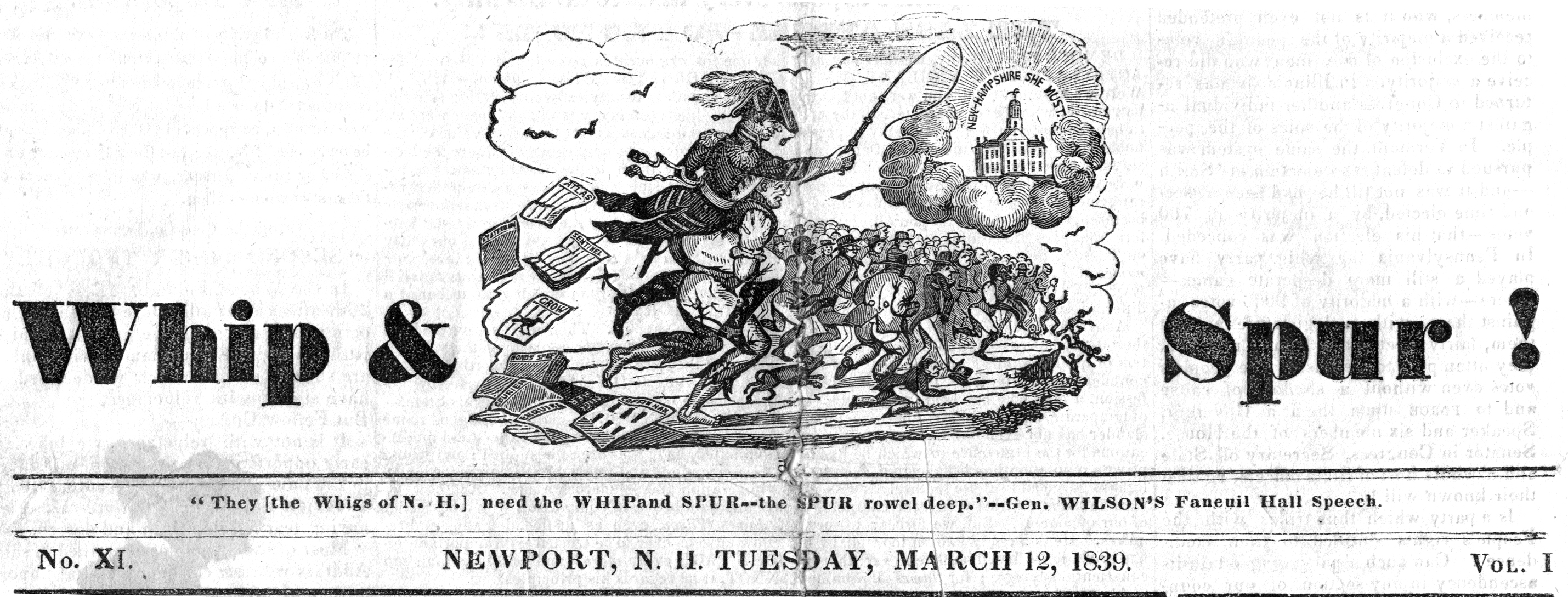
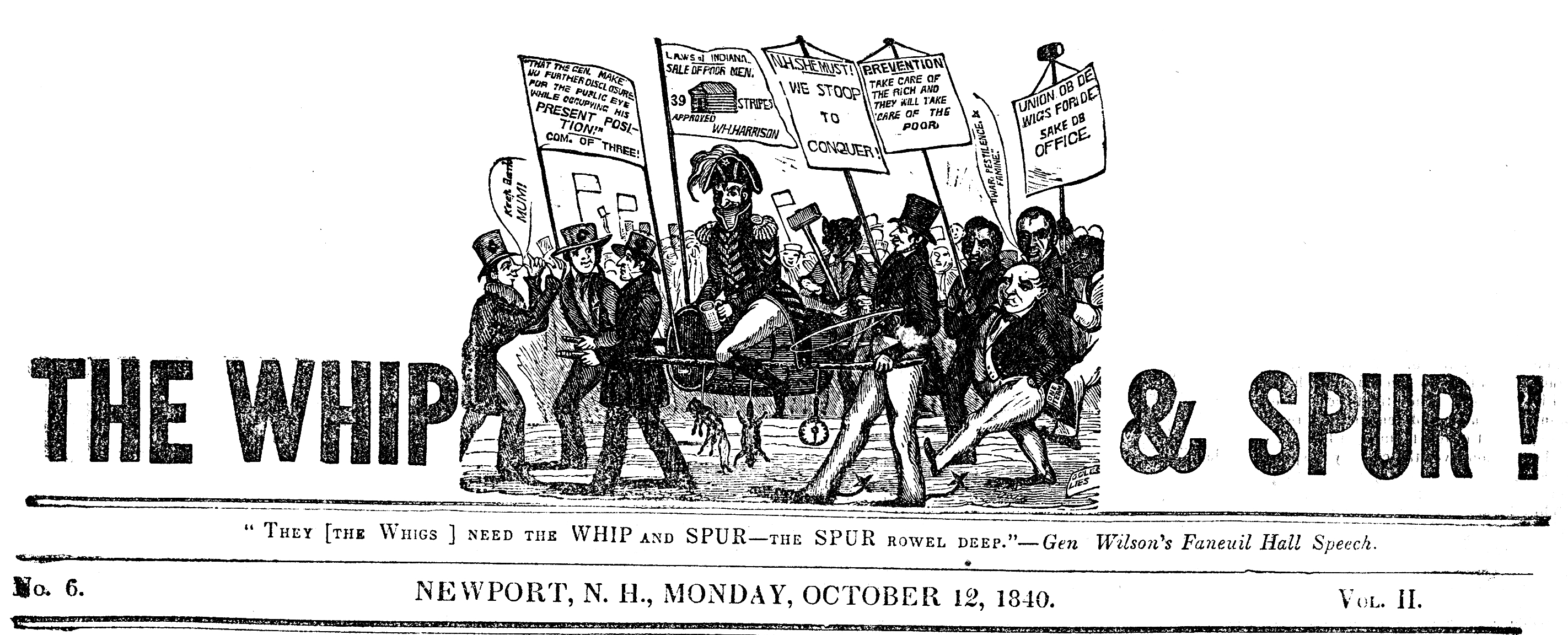
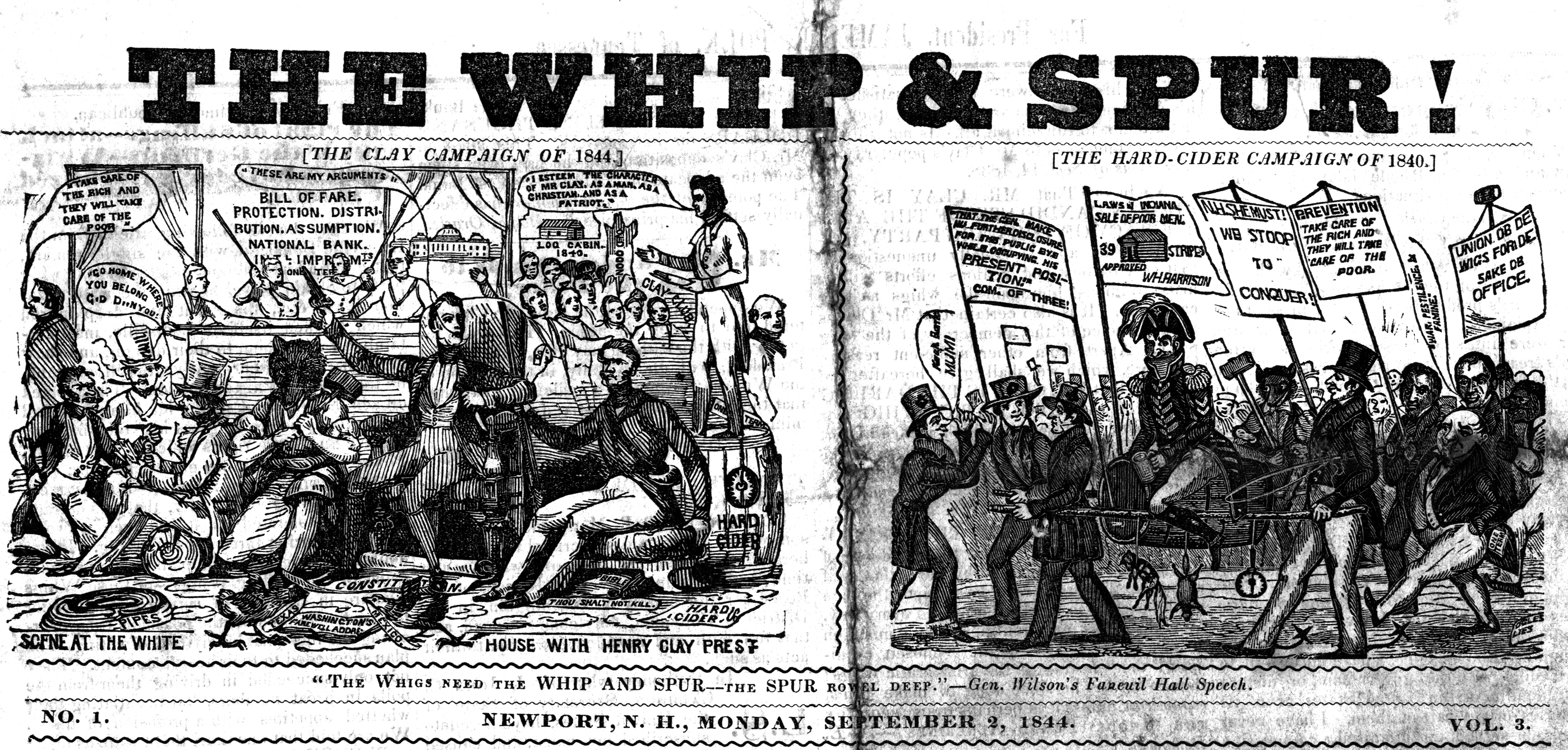
Whip & Spur (Newport, NH), 1839-1856
This is a Whig newspaper that appeared during various elections between 1839 and 1856. Here are three mastheads used in 1839, 1840, and 1844.
The Hare Splitter – Fake
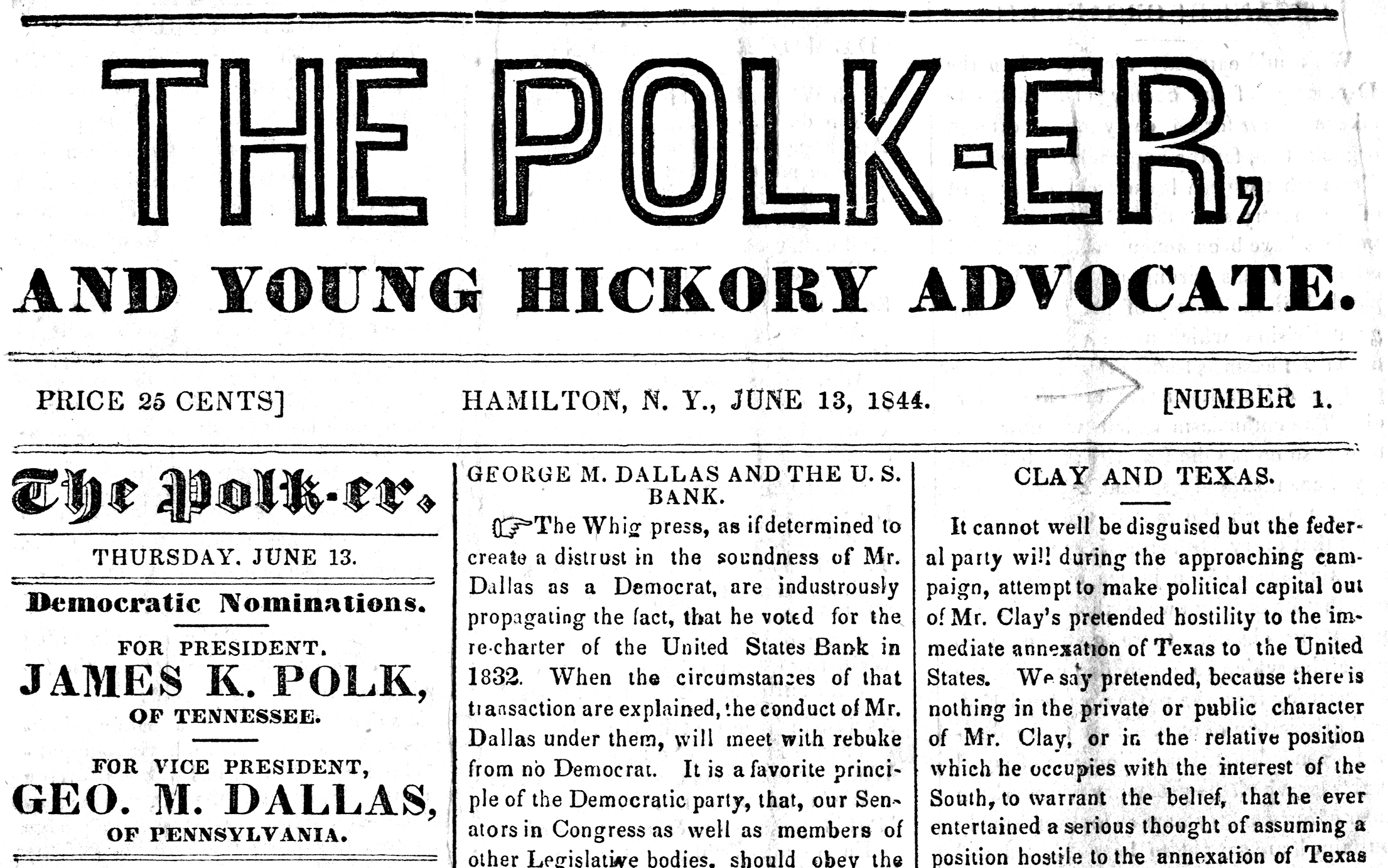
The Polk-er, and Young Hickory Advocate (Hamilton, NY), 1844
A Democratic newspaper supporting James K. Polk (as if you couldn’t guess from the title).
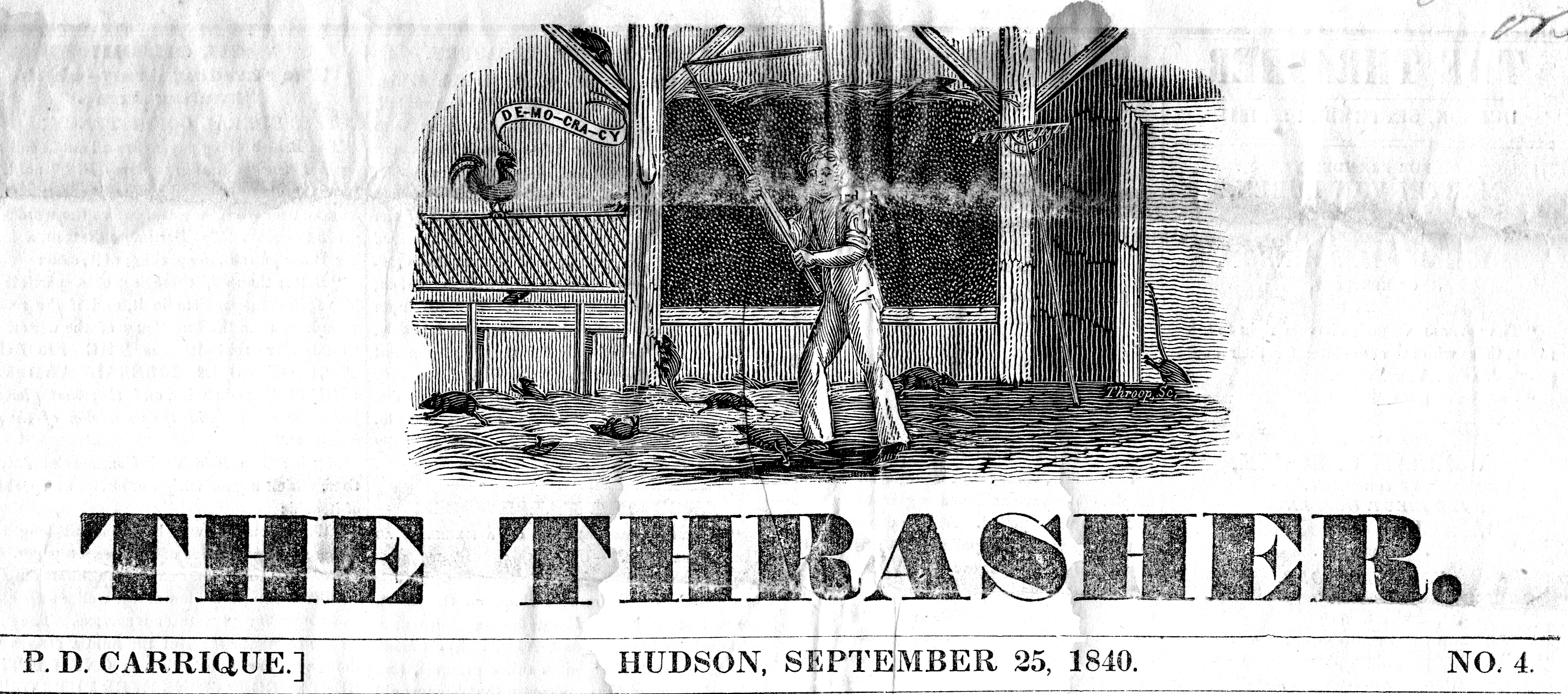
The Thrasher (Hudson, NY), 1840
A Democratic newspaper supporting Martin Van Buren.
Barnburner (New York, NY), 1848
A Free Soil newspaper supporting Martin Van Buren.
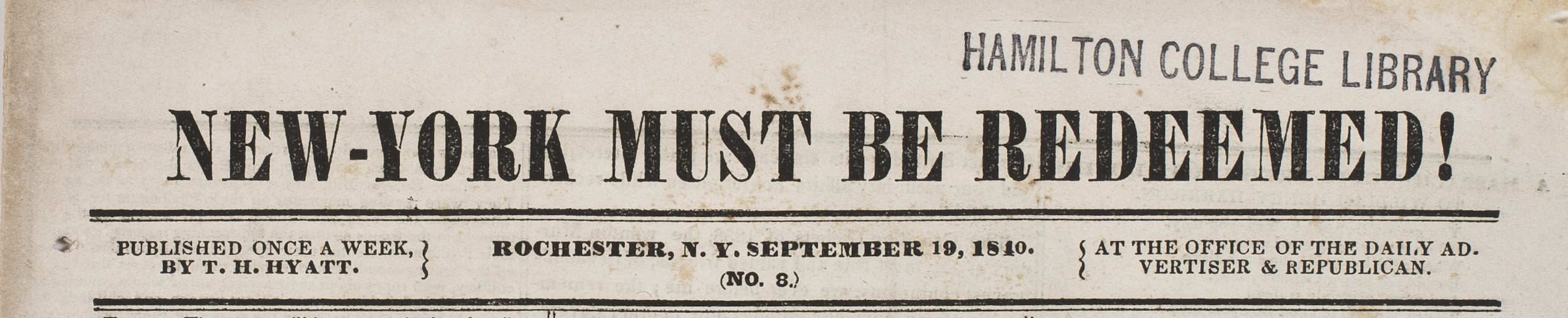
New-York Must be Redeemed! (Rochester, NY), 1840
A Democratic newspaper supporting Martin Van Buren.
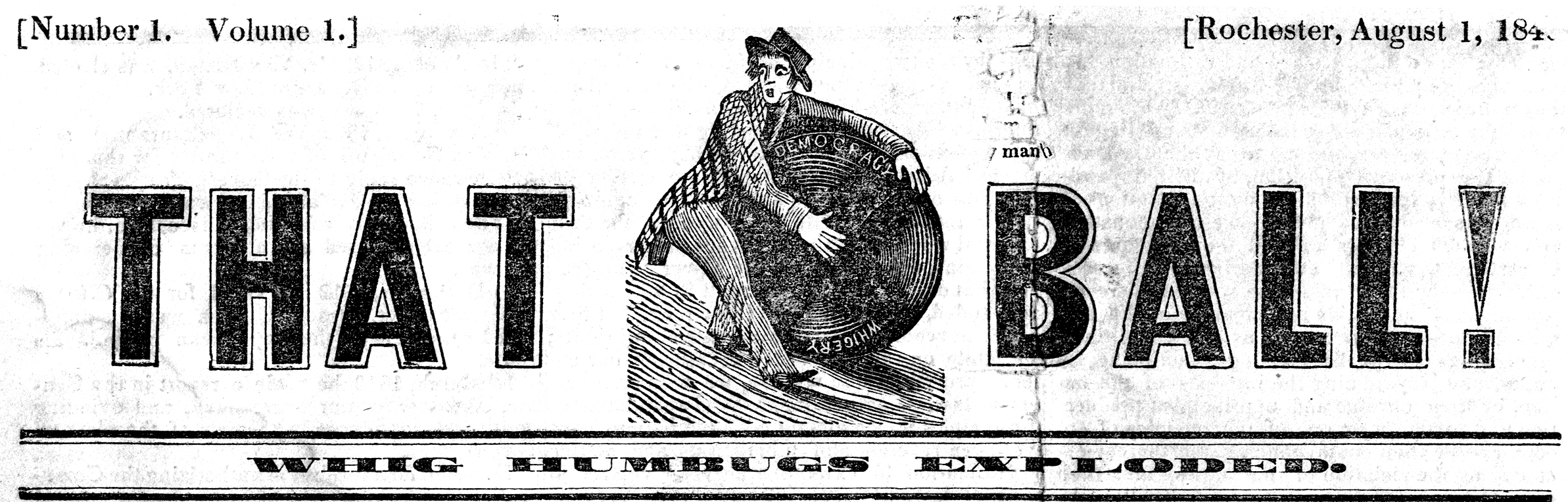
That Ball! (Rochester, NY), 1840
A Whig paper supporting William Henry Harrison.
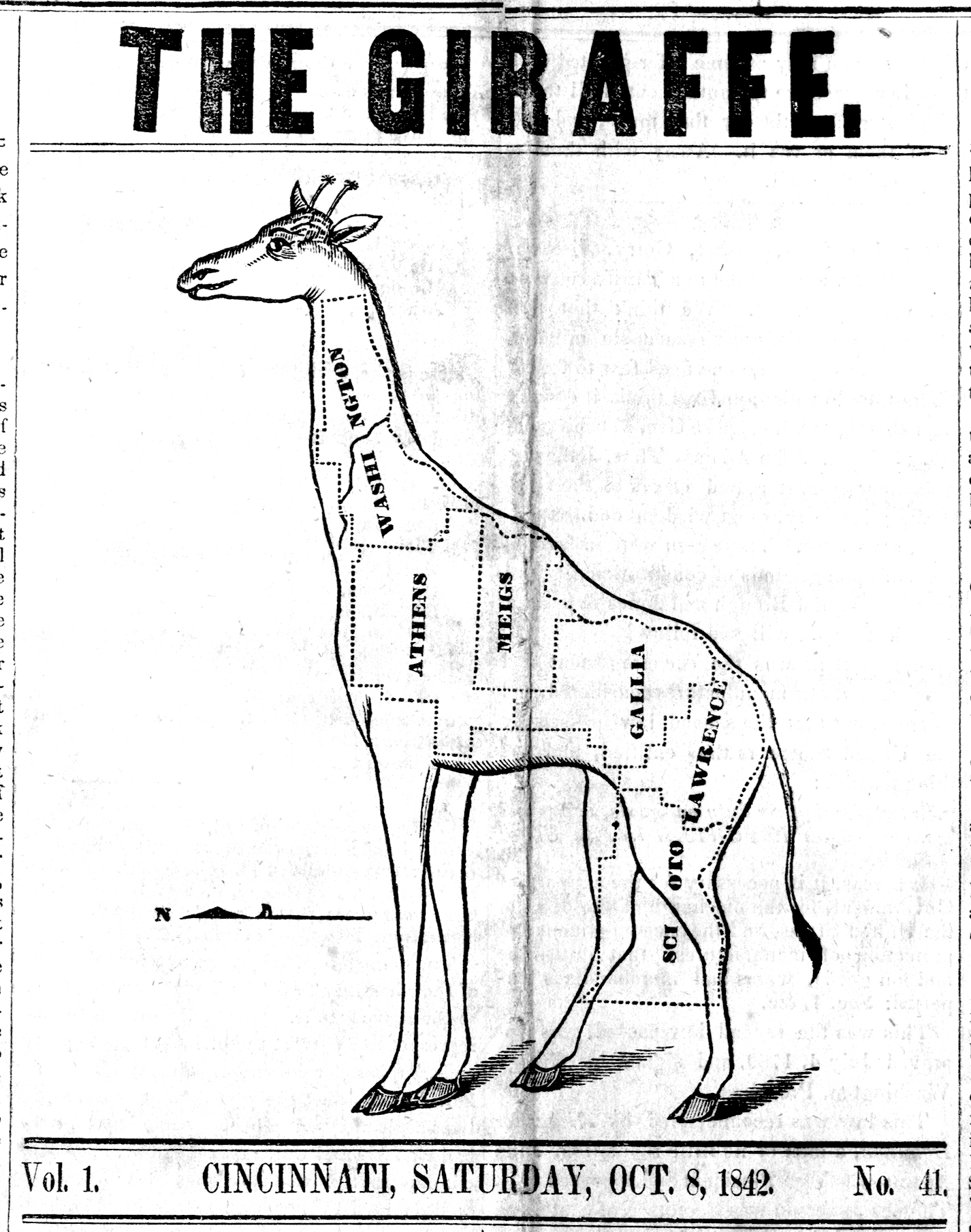
The Giraffe (Cincinnati, OH), 1842
A Whig newspaper supporting the election of Thomas Corwin as governor. This is an example of a campaign newspaper printed for a local rather than national election.
Mother’s Favorite! – Fake
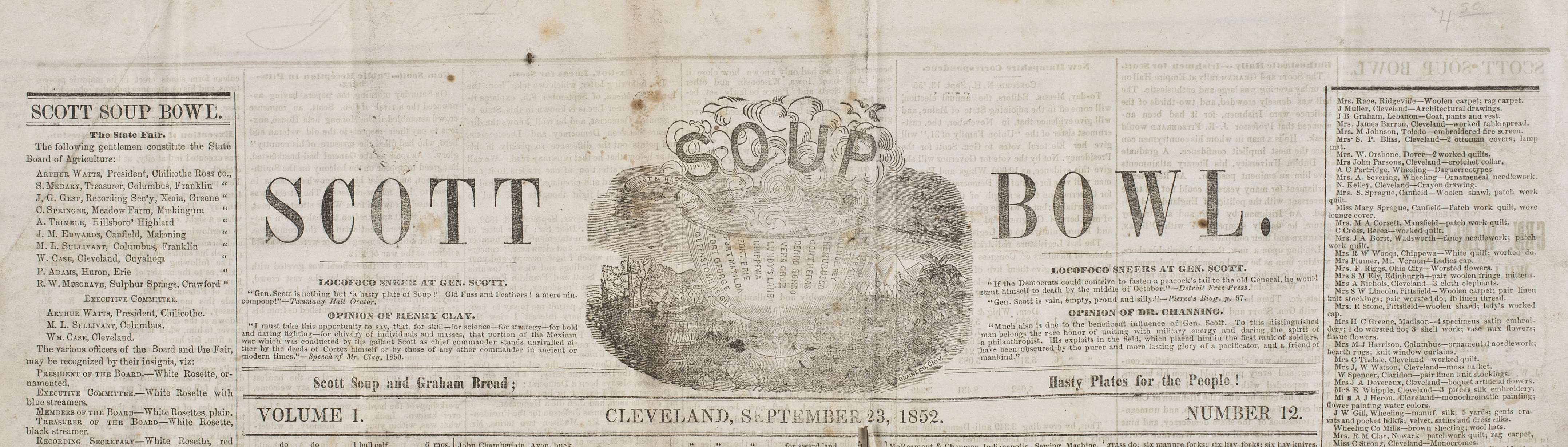
Scott Soup Bowl (Cleveland, OH), 1852
A Whig newspaper supporting Winfield Scott.
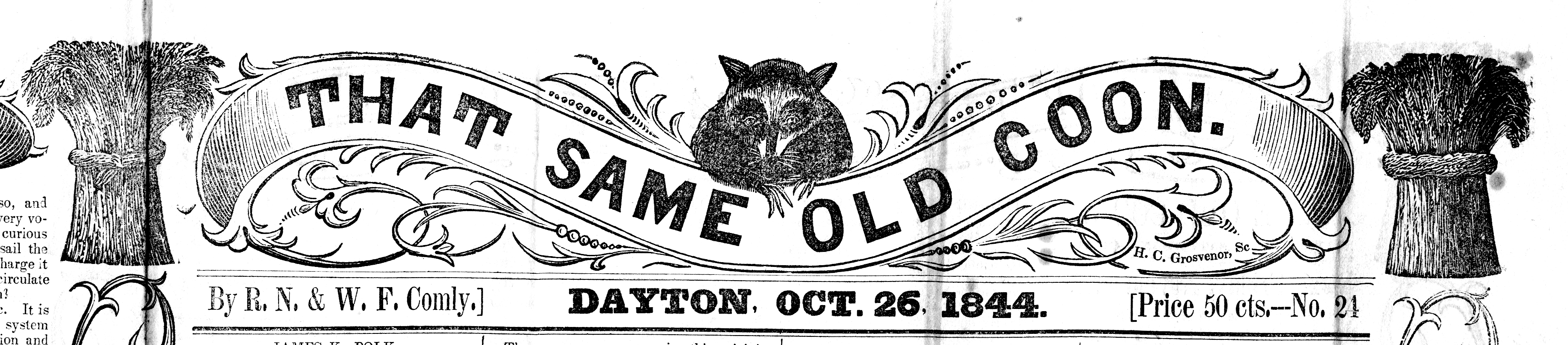
That Same Old Coon (Dayton, OH), 1844
This is a Whig newspaper supporting Henry Clay. The symbol of the Whig party was the raccoon. This newspaper included an image of a raccoon in the masthead, and the pages were bordered by images of raccoons as well.
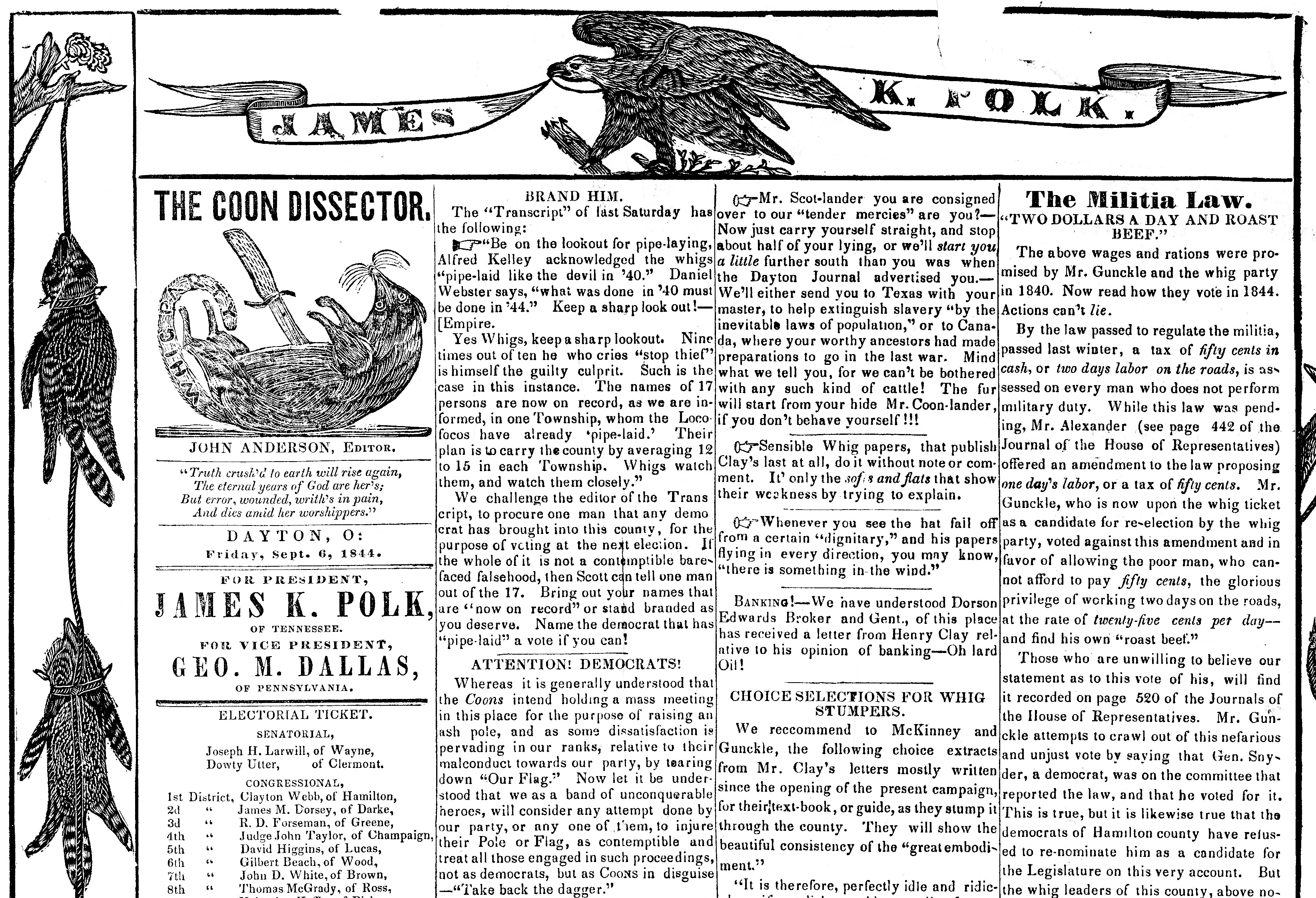
Coon Dissector (Dayton, OH), 1844
A Democratic newspaper supporting James K. Polk. The symbol of the Democratic party at the time was a rooster. Instead of incorporating their own symbol into the campaign newspaper, they decided to attack their local opponent seen above in number 26. They used an image of a dead raccoon with a knife in its chest and decorated the borders with dead raccoons hanging by the neck.
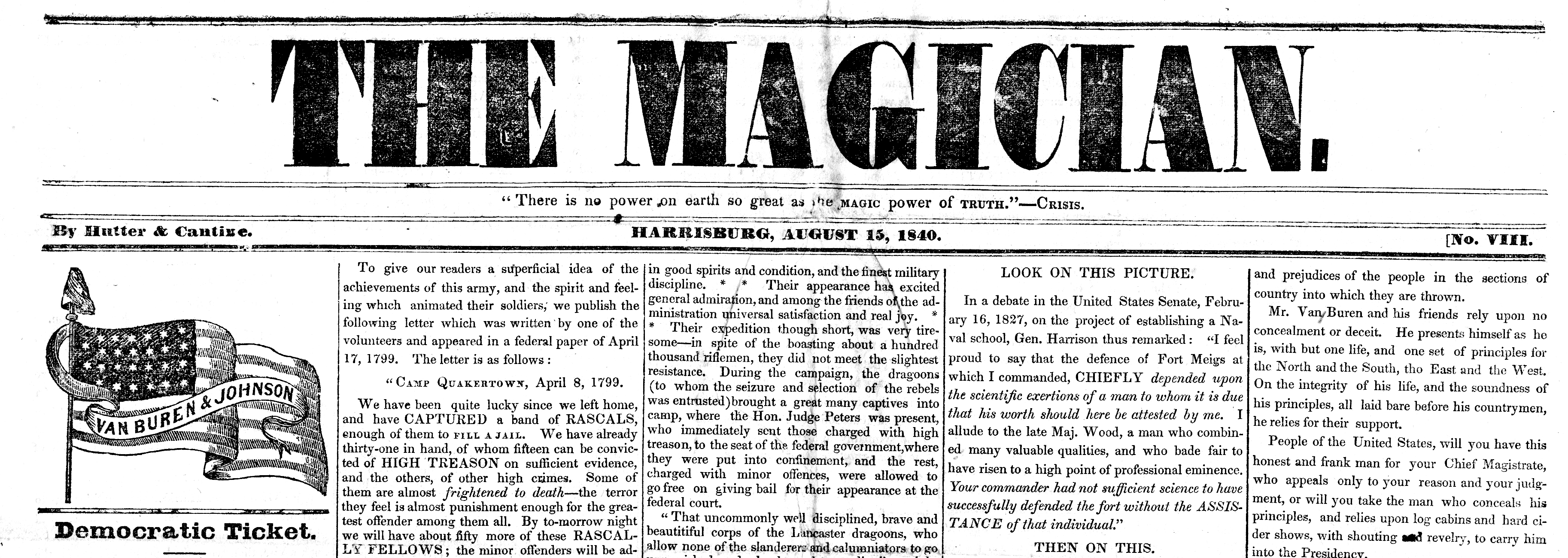
The Magician (Harrisburg, PA), 1840
A Democratic newspaper supporting Martin Van Buren.
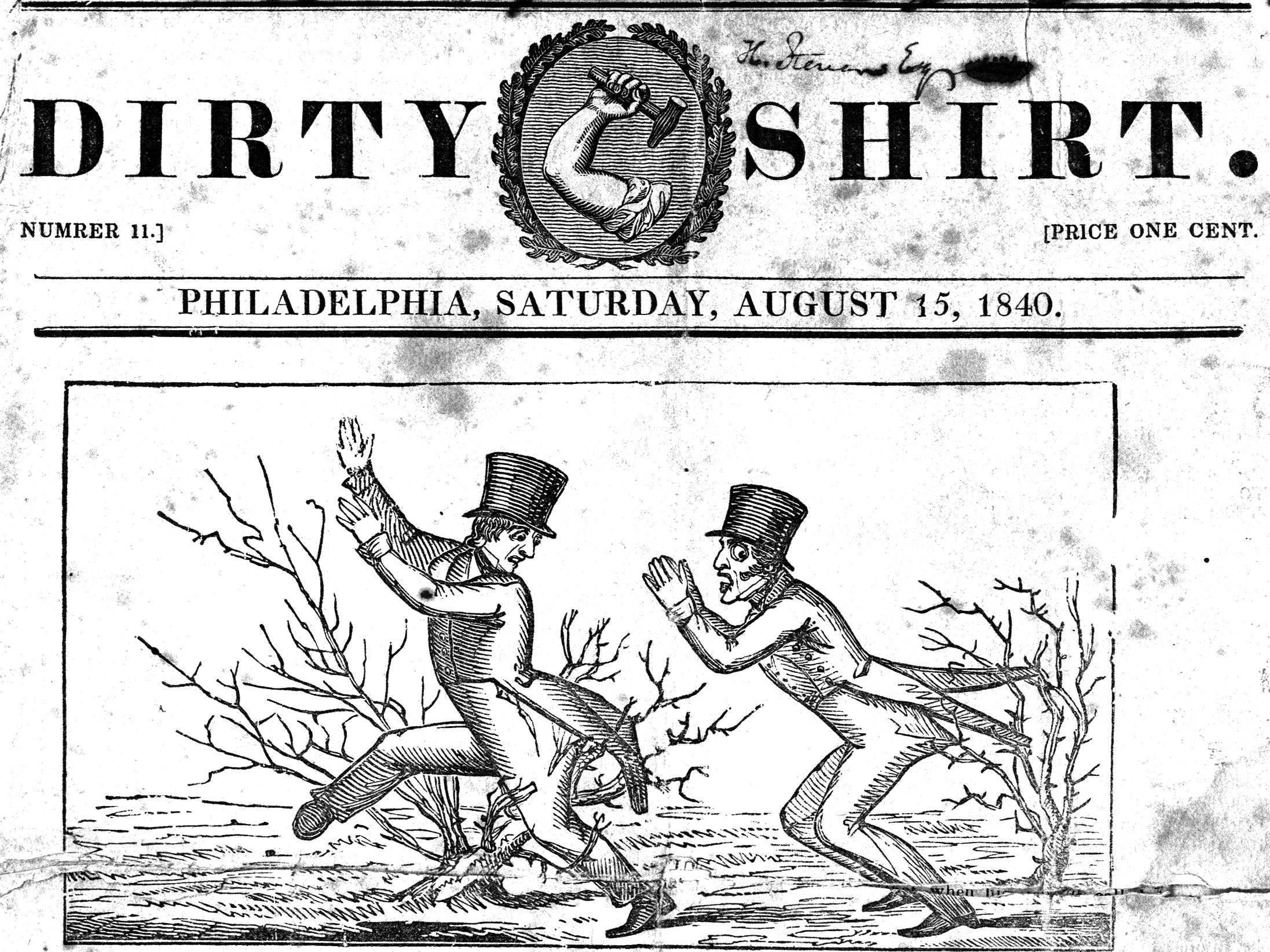
The Dirty Shirt (Philadelphia, PA), 1840
A Democratic newspaper supporting the election of Martin Van Buren.
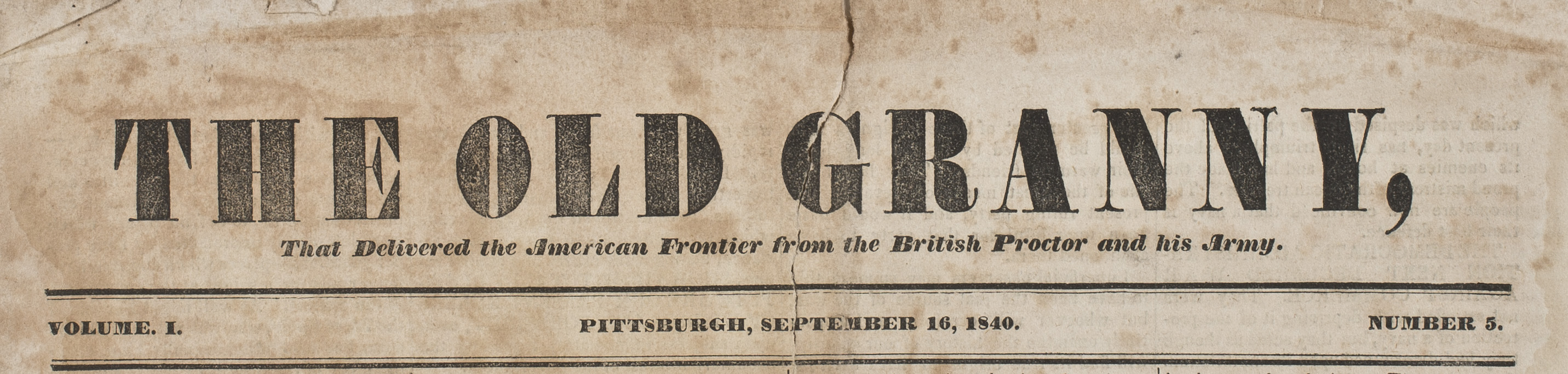
Old Granny, That Delivered the American Frontier from the British Proctor and His Army (Pittsburgh, PA), 1840
A Whig newspaper supporting William Henry Harrison.
Every quarter at AAS we release a list of recent publications by those who have researched at the library as fellows, members, or readers. To see this list, as well as a list of works published from 2000-2014, please visit our recent scholarship page on the AAS website. If your book, article, or other achievement is not included, just let us know if you’d like to see it there!
BOOKS
Apap, Chrisopher. Genius of Place: The Geographic Imagination in the Early Republic. Durham: University of New Hampshire Press, 2016. (Peterson Fellow, 2012-2013)
Barreyre, Nicolas. Gold and Freedom: The Political Economy of Reconstruction. Charlottesville: University of Virginia Press, 2015. (Tracy Fellow, 2011-2012)
Bassett, Lynne. Gothic to Goth: Romantic Era Fashion & Its Legacy. Hartford: Wadsworth Atheneum Museum of Art, 2016. (Peterson Fellow, 2004-2005; AAS member)
Blum, Hester, ed. Turns of Event: Nineteenth-Century American Literary Studies in Motion. Philadelphia: University of Pennsylvania Press, 2016. (Reese Fellow, 2004-2005; AAS member)
Crabtree, Sarah. Holy Nation: The Transatlantic Quaker Ministry in an Age of Revolution. Chicago: University of Chicago Press, 2015. (AAS-ASECS Fellow, 2013-2014)
Crosby, Sara L. Poisonous Muse: The Female Prisoner and the Framing of Popular Authorship in Jacksonian America. Iowa City: University of Iowa Press, 2016. (AAS-NEH Fellow, 2005-2006)
Dalton, Russell. Children’s Bibles in America: A Reception History of the Story of Noah’s Ark in U.S. Children’s Bibles. New York: Bloomsbury, 2016.
Gunn, Robert Lawrence. Ethnology and Empire: Languages, Literature, and the Making of the North American Borderlands. New York: New York University Press, 2015. (Peterson Fellow, 2008-2009)
Kelley, Sean. The Voyage of the Slave Ship Hare: A Journey into Captivity from Sierra Leone to South Carolina. Chapel Hill: University of North Carolina Press, 2016. (AAS-NEH Fellow, 2008-2009)
Sinha, Manisha. Slave’s Cause: A History of Abolition. New Haven: Yale University Press, 2016. (AAS-NEH Fellow, 2004-2005; AAS member)
Fagan, Benjamin. “Chronicling White America.” American Periodicals 26.1 (2016): 10-12. (Tracy Fellow, 2008-2009)
McGill, Meredith. “American Poetry: What, Me Worry?” American Literary History 28.2 (2016): 288-294. (Peterson Fellow, 1995-1996; Mellon Fellow, 2003-2004; AAS member)
Murphy, Jillmarie. “The Humming Bird; or Herald of Taste (1798): Periodical Culture and Female Editorship in the Early American Republic.” American Periodicals 26.1 (2016): 44-69.
Pawley, Emily. “The Point of Perfection: Cattle Portraiture, Bloodlines, and the Meaning of Breeding, 1760-1860.” Journal of the Early Republic 36 (2016): 37-72. (AAS-NEH Fellow, 2009-2010)
This election year the verbal thrusts and parries have been fast and thick throughout the primaries. Today Facebook and Twitter are as important as radio and TV in spreading the vitriolic name-calling and accusations of various candidates. In the nineteenth century politicians had to resort to print media, and one way to do this was through campaign newspapers.
Campaign newspapers were separate publications issued just during elections to promote a specific person, party, or issue. They were printed in local newspaper offices (and sometimes edited there) for distribution in the surrounding region. Often the title is evocative of some feature of the candidate. For example, leading up to and during the Republican convention in Chicago in 1860, there was a campaign newspaper published supporting the nomination of Abraham Lincoln as the Republican candidate titled The Rail Splitter. The title emphasized Lincoln’s humble beginnings and implied that he was a man of the people.
Similarly, the election of 1840 produced many campaign newspapers supporting William Henry Harrison with the phrase “Log Cabin” in the title. The most famous one was called The Log Cabin and published by Horace Greeley in New York and Albany.
Sometimes the title was very explicit about who they supported but at other times they were quite imaginative. Thanks to this fact, as well as to the rough and tumble primaries of the 2016 election, we decided to create a quiz similar to one from last fall asking readers to identify genuine newspaper titles from a list, this time with titles of campaign newspapers. Can you find the five fake titles out of this list?
Sober Second Thought
Castigator
A Kick in the Pants
Hard Cider Press
The Old Soldier
Tippecanoe Banner and Spirit of Democracy
Cabinet Maker
My Worthless Opponent
Rough and Ready
Give ‘Em Jessie!
Harry of the West
The Slasher
Rough and Ready
The Cane Mutiny
Tough and Steady
Whip & Spur
The Hare Splitter
The Polk-er, and Young Hickory Advocate
The Thrasher
Barnburner
New-York Must be Redeemed!
That Ball!
The Giraffe
Mother’s Favorite!
Scott Soup Bowl
That Same Old Coon
The Coon Dissector
The Magician
The Dirty Shirt
Old Granny, That Delivered the American Frontier from the British Proctor and His Army
Emily Wells, who is working on the Printers’ File project at AAS this summer, received her B.A. from Mount Holyoke College in 2015. In the fall she will enter the History Ph.D. program at the College of William and Mary and begin work as an editorial apprentice at the Omohundro Institute of Early American History and Culture. Here she shares what she has learned while working with the Printers’ File.
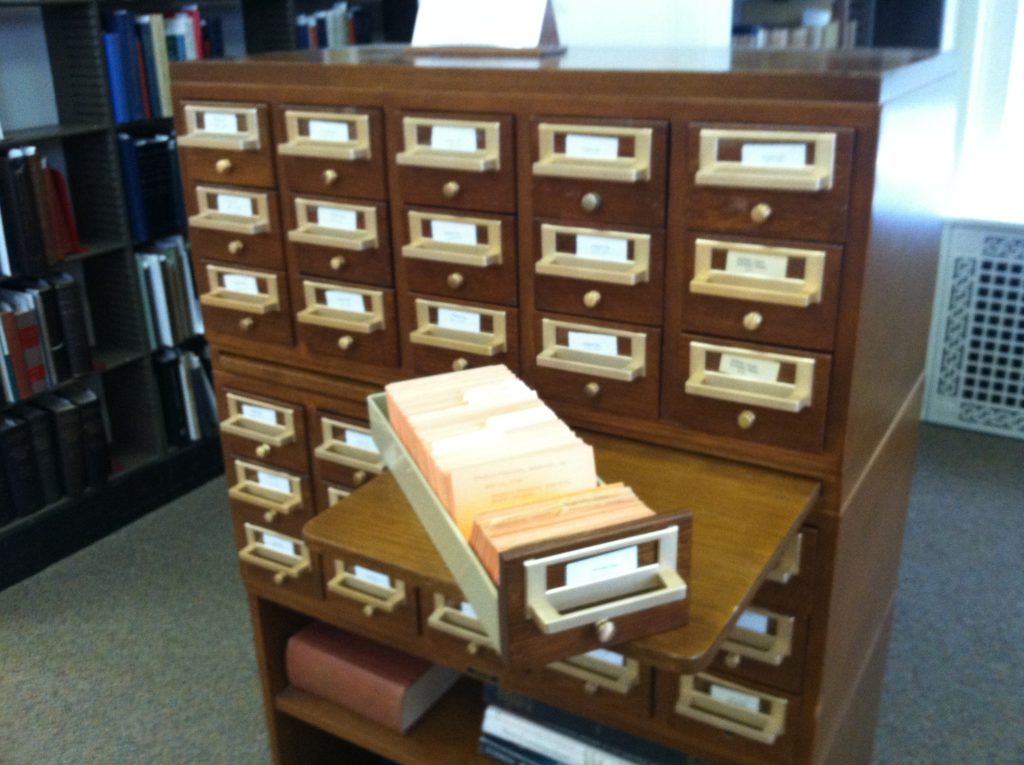
When you walk into the reading room, a number of objects might catch your eye, from the marble busts that flank the doorway to the portraits that stare down from the second floor balcony. One object that might escape your notice, however, is a brown wood cabinet that stands to the left of the main entrance. This cabinet, known as the Printers’ File, contains more than 16,000 typewritten cards that record the stories of approximately 6,000 people who were involved in the American book trade before 1820.
At present, this resource is only available to researchers who are able to visit the reading room and peruse the cards in person. To make the Printers’ File more easily accessible, AAS is working to digitize and transfer the information recorded on these cards to a linked open data resource. Not only will this resource make the Printers’ File available to anyone with a computer and internet access, but it will also allow researchers to answer complex research queries and draw connections between the people and places recorded within the scope of the project.
As the person hired to enter data, I am working to interpret and transfer the information written on the original typewritten cards to a digital environment while also helping to formulate guidelines that will standardize the data entry process. Through my work with the Printers’ File, I have discovered that there is a fundamental difficulty that arises when attempting to fit biographical information into a standardized format. To create a working dataset, one must determine the best way to field a person’s life experience, something that is inherently messy and complex, within the limits of a data entry form.
The original Printers’ File card and the digital entry for William Bradford.
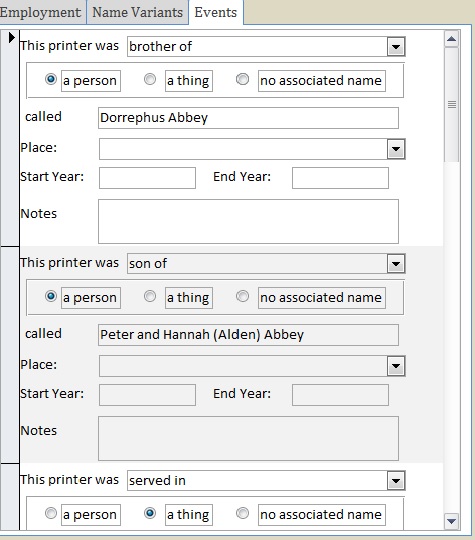
Although there is no perfect solution to this problem, there are several ways that we can record the unique details of a person’s life while also maintaining consistency across the entire dataset. One way we can accomplish this is by entering information in a specially created “events” form. This form, which is separate from, but connected to the form that contains information regarding a person’s profession, allows us to record the more unusual aspects of a person’s life in a searchable format. For example, if someone was banished, held for ransom, impressed into the navy, or enslaved, we can create unique entries for those occurrences. By creating these events, we avoid relegating information to the notes, a catchall field that renders the data unsearchable and therefore, somewhat unusable.
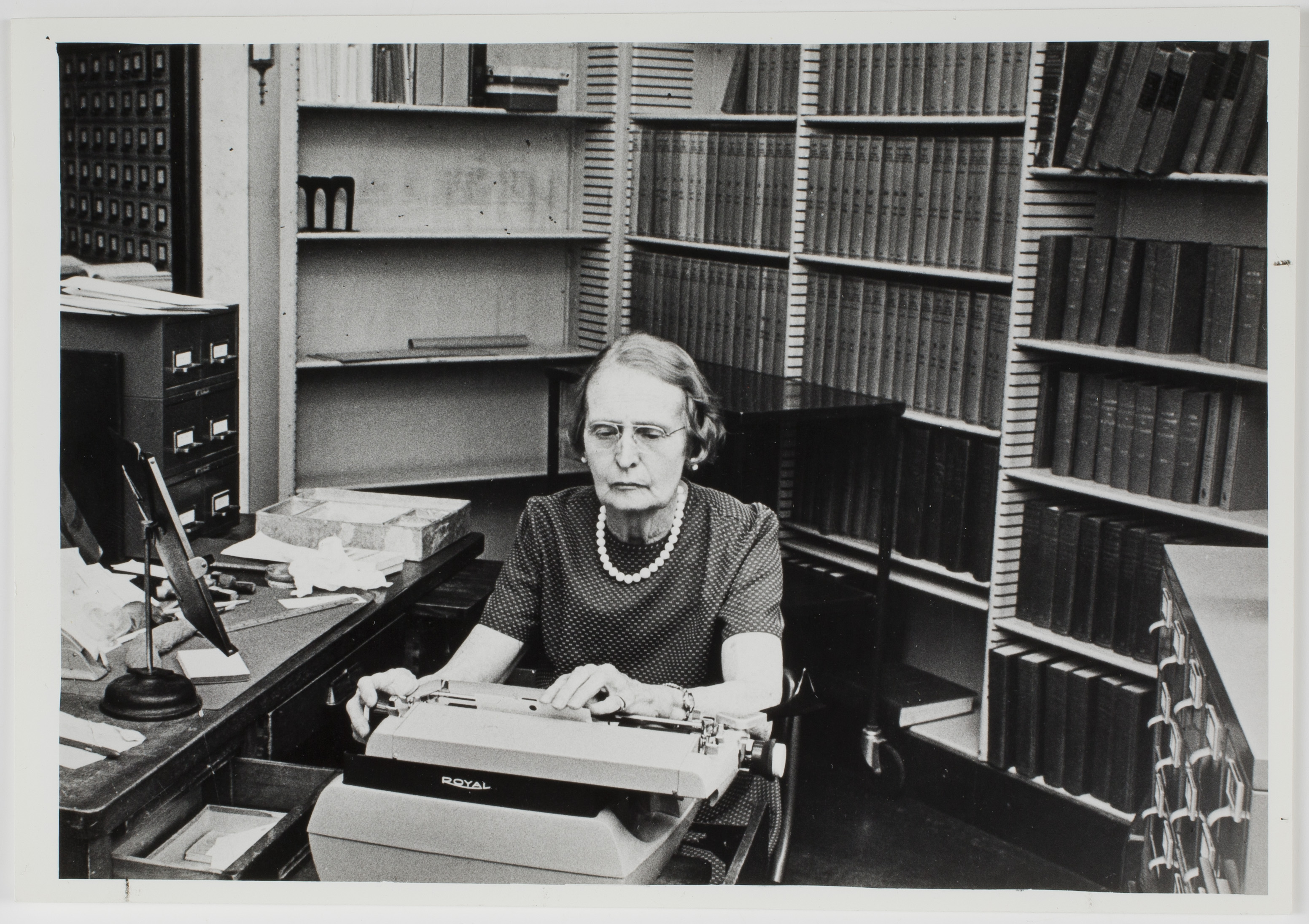
Another challenge arises when attempting to interpret the cards themselves. Avis Clarke, the woman who created the Printers’ File, devised a system that allowed her to record information in a consistent manner, even when she returned to cards years later with new research. Starting in 1927, Clarke combed through a vast number of imprints, newspapers, and secondary sources to find information that could be incorporated into the Printers’ File. Before I could understand the essential data recorded on the cards, I first had to familiarize myself with Clarke’s method. Every so often, her quirks and idiosyncrasies shine through and create an extra challenge of decoding her research before entering it into the data entry form.
Avis Clarke, who created the Pinters’ File, working in Antiquarian Hall.
Although the Printers’ File contains records for a number of well-known individuals, some of the most colorful stories are those that are relatively unknown. For example, James Adams, the first printer in Wilmington, Delaware, was forced to move his press to Doylestown, Pennsylvania, in 1777 to escape the British forces. Another printer, Daniel Bowen, gave up his business in 1788 to travel the country exhibiting his collection of wax sculptures. The Printers’ File also contains the stories of a handful of women who participated in the early American book trade. One of these women, Mary Baldwin, took over her husband’s printing business in Kingston, Jamaica, after his death in 1722. A few decades earlier, Mary Avery began working as a bookseller in Boston after the death of her first husband in 1678 and continued her business even after she remarried in 1679.
Once the project is complete, these stories and many others will be available to researchers anywhere in the world. With a single search, we will be able to comb through thousands of records. For example, we could compile a complete list of women who owned printing offices in early America or search through the names of printers who learned their trade in Europe before immigrating to North America. Regardless of specialty, scholars of early American history will undoubtedly find something of interest.
This fall, as I begin my first year as a History PhD student at the College of William and Mary, I will have the chance to apply skills I learned while working on the Printers’ File to my own research. Not only has this experience opened my eyes to the varied world of the early American book trade, but it has also given me an inside look into how digital repositories of information are constructed, knowledge that will make it easier to find and navigate these resources in the future.
Support for this work has been generously provided by the Delmas Foundation, the Lapidus Digital Enterprise Fund, and the Pine Tree Foundation of New York.
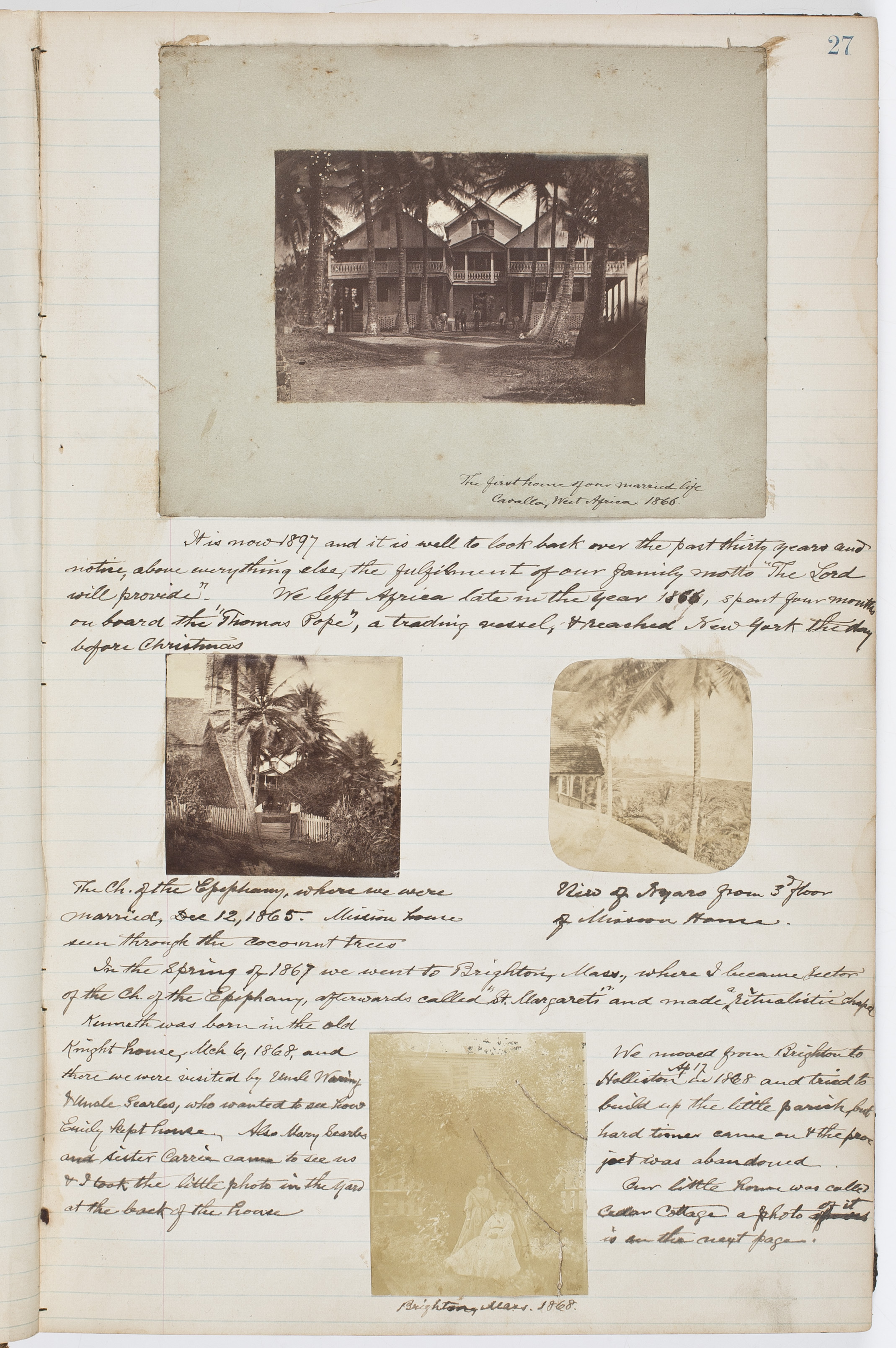
Earlier this year the American Antiquarian Society acquired an important archive of manuscripts and drawings related to American missionary activity in Western Africa. The collection tells the story of a couple, Emily Griswold (1838-1906) and her eventual husband, Benjamin Hartley (1838-1912). Emily was the daughter of the poet and publisher Rufus Wilmot Griswold, who edited anthologies, gift books, and newspapers in Philadelphia and New York. Rufus Griswold is best known today for his rivalry with Edgar Allan Poe, and is something of a larger-than-life figure in American publishing history. When the Society’s curators were first contacted about the archive, in fact, it was the connection to Rufus that enticed us to take a closer look.
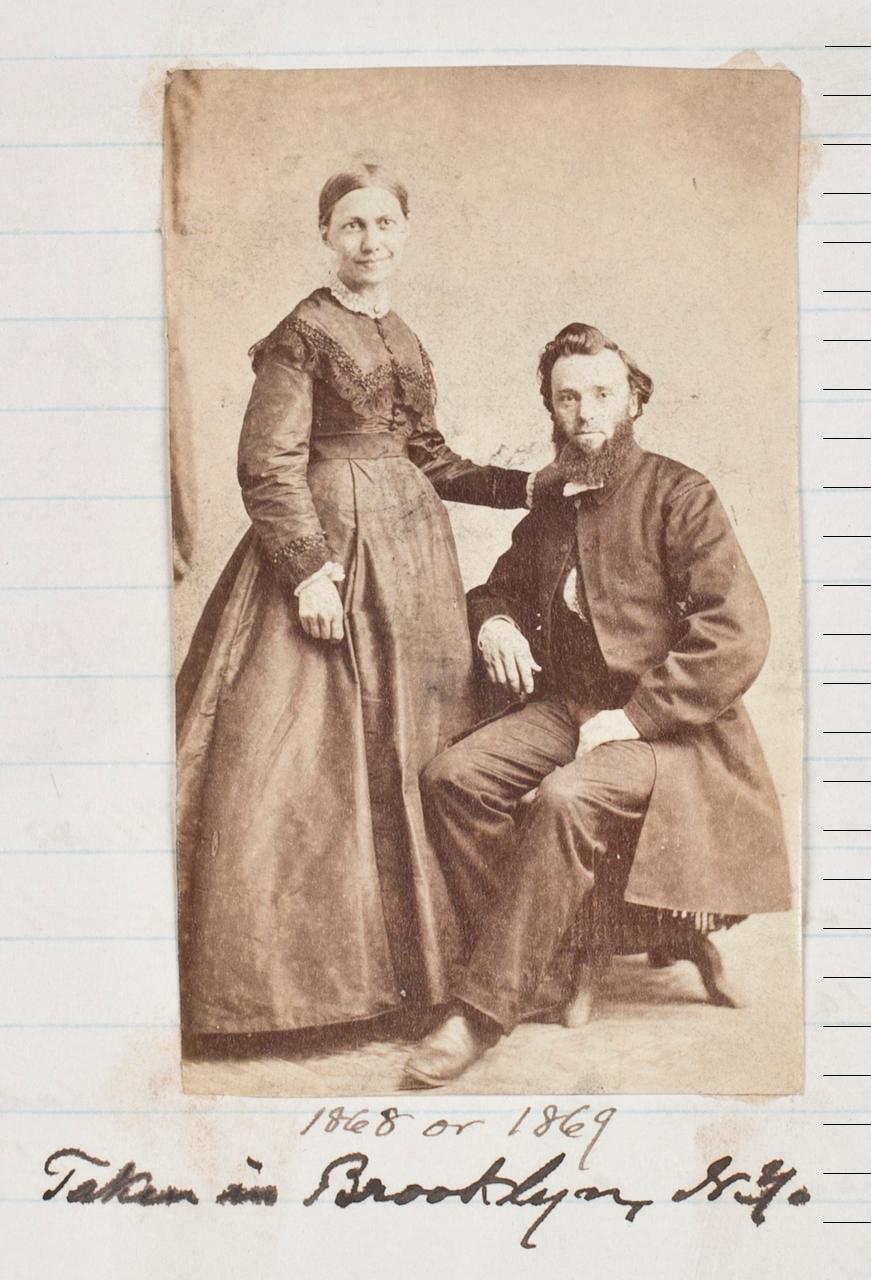
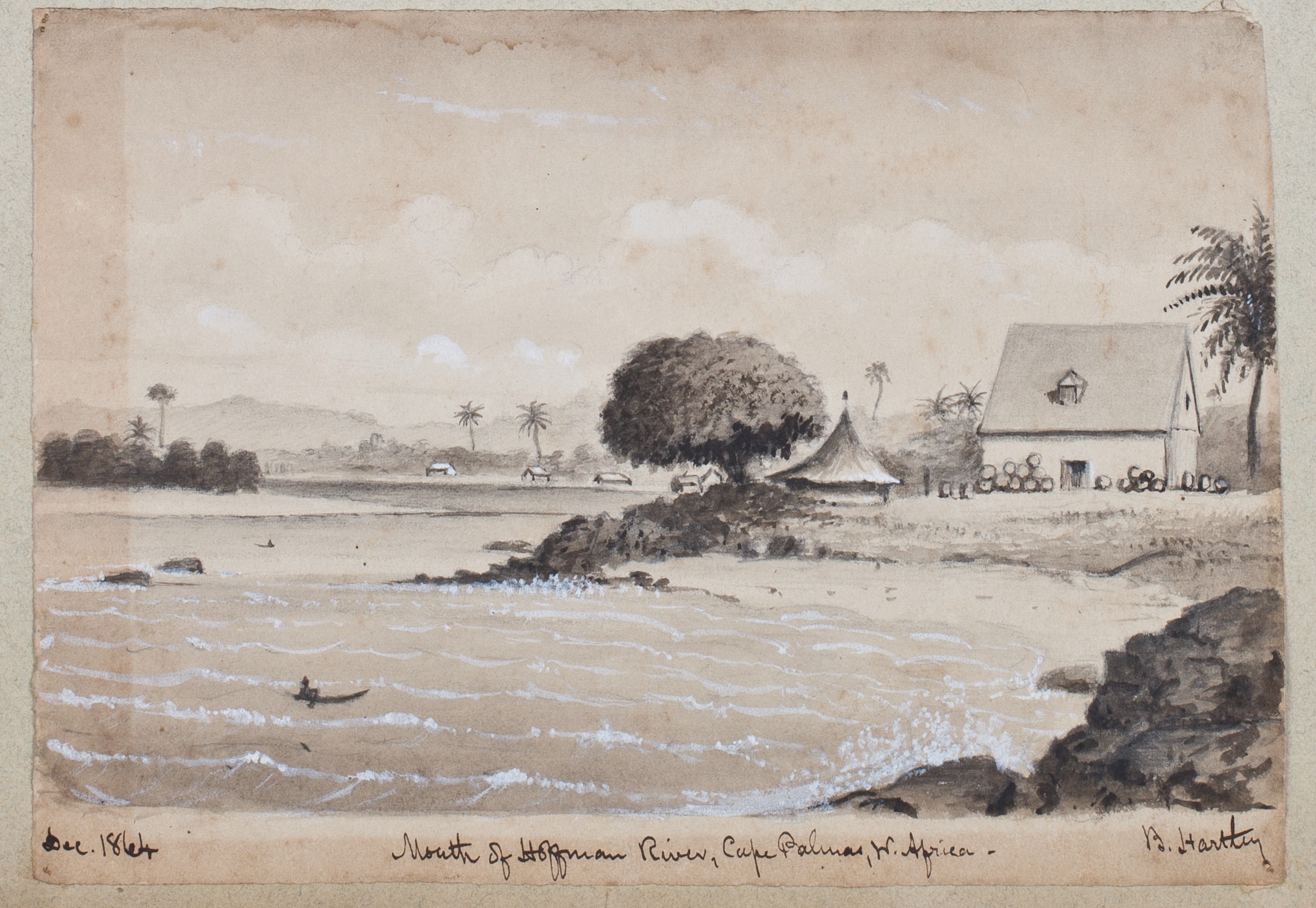
As is often the case with such collections, however, it soon became apparent that the real treasure of the collection was not about Rufus at all, but was material related to what we all started calling “The Emily & Benjamin story.” After surviving near-death during a railroad accident, Emily devoted herself to missionary work. In 1860, at the age of twenty-two, she traveled to Liberia as part of an Episcopal mission. She wrote letters home to her aunt as the American Civil War raged and by all accounts enjoyed living in the lush climate of coastal Africa, far away from the war. In 1864, the Scottish-born artist Benjamin Hartley also arrived in Africa. Educated at the Theological Seminary in Gambier, Ohio, formerly associated with Kenyon College, Hartley was ordained in Brooklyn, New York, in May of 1864, and by July was in Cape Palmas, Liberia. The two missionaries met, worked and prayed together, and eventually fell in love. Just a year after his arrival, Benjamin and Emily, both aged twenty-seven, married in Cape Palmas.
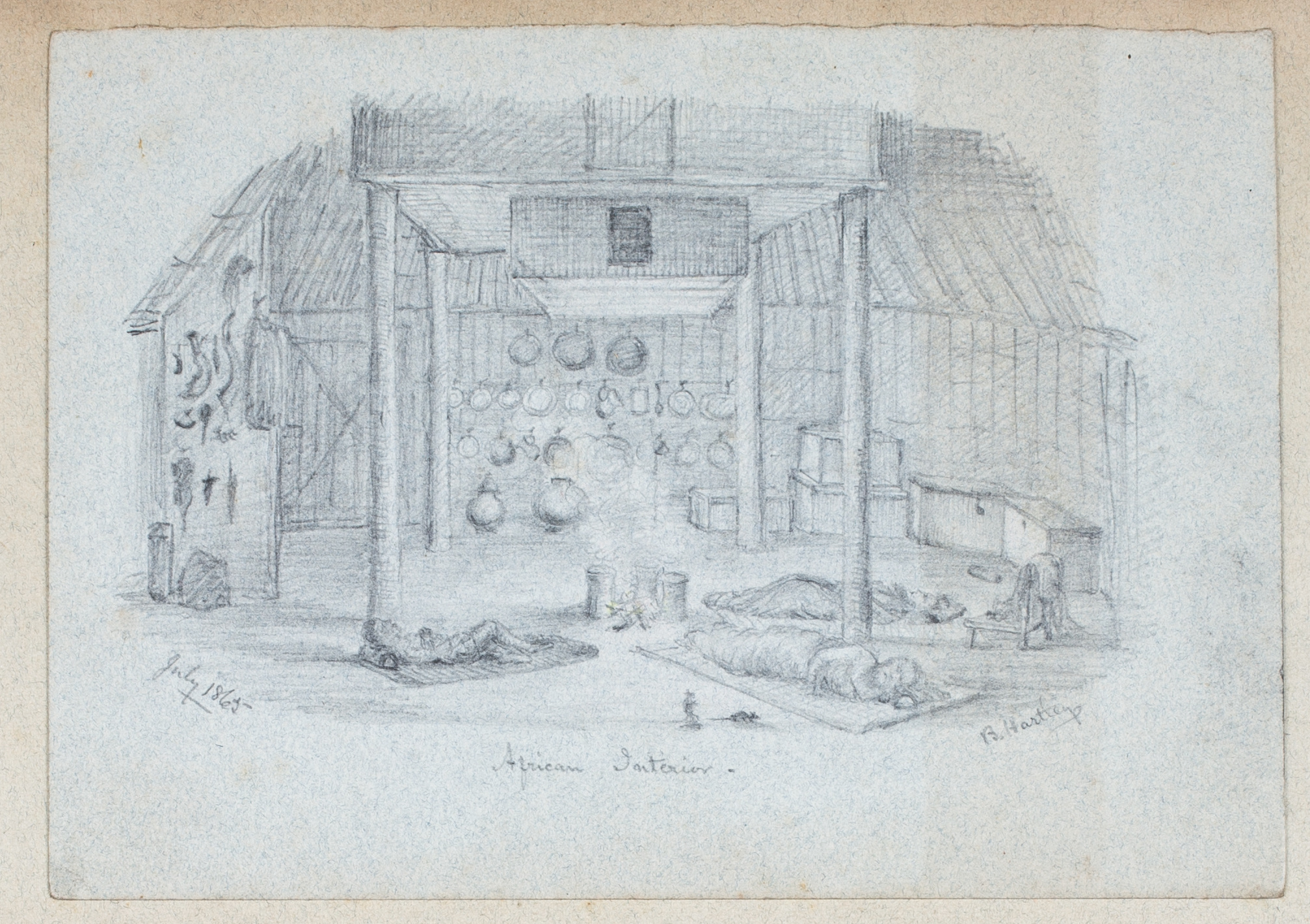
When he traveled to Africa in 1864, Benjamin carried with him empty sketch books, inks, watercolors, and, most surprisingly perhaps, a camera. He used them all to document the world around him, so different from Scotland and Ohio. He drew and painted the people, their homes, the harbor, and the plants, animals, and architecture of Cape Palmas, Fishtown, the Hoffman river basin, and nearby communities of the Grebo (Kru) people. Dozens of his drawings and watercolors are preserved in the family collection. Benjamin even photographed the church where he and Emily worked and said their vows—his 1865 albumen photo is pasted into the family scrapbook (see above). Images of the American missionary towns of West Africa from this period are extremely rare, and I realized that this part of the Emily & Benjamin story could be a valuable visual resource for scholars.
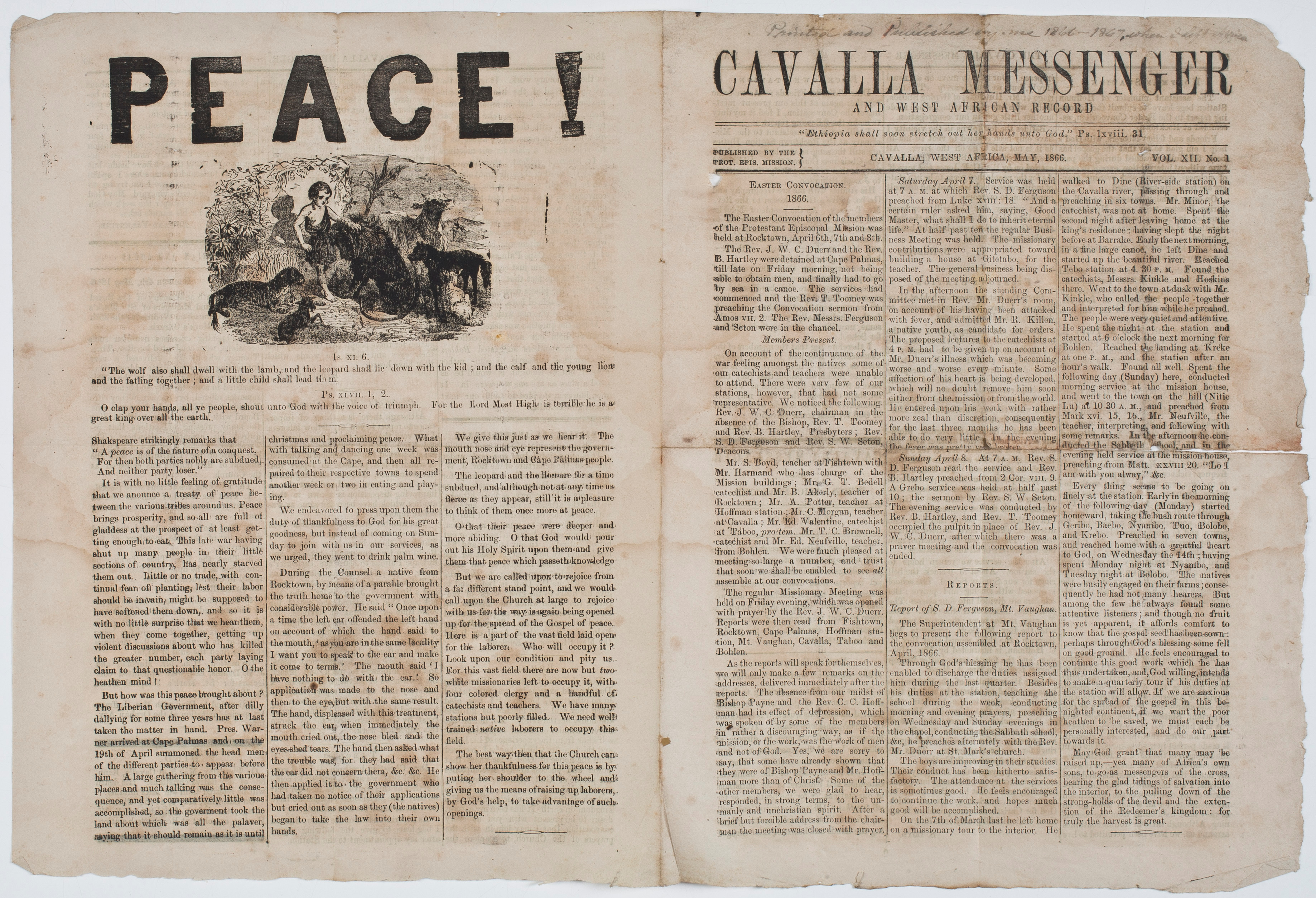
But there was more to the family collection than just important and evocative drawings and photos. During a visit to assess the condition and breadth of the artwork, I was invited by the dealer handling the transaction to have a look at some manuscript and printed material as well. Throughout their lives, both Emily and Benjamin wrote prolifically—Benjamin kept a diary during his years at Gambier, Emily corresponded with family and friends around the world. Benjamin edited and printed a missionary newspaper in Africa (see left). Both of them wrote continuously about their time in Africa, with Emily producing articles and stories for the periodical press for decades after they returned to America and Benjamin writing sermons and giving public lectures about their experience. In fact, Rev. Hartley repurposed much of his imagery from Africa in a series of illustrated lectures on “African Life and Superstitions,” which he delivered at churches and Sunday schools around the United States in the 1870s, during Reconstruction. At this same time, Emily started writing moral tales for children. AAS already had four of her titles in our collection and so our curator of children’s literature was thrilled that the archive contained manuscripts of Emily’s unpublished writing, plus a scrapbook of her published work—all carefully clipped from newspapers and magazines and preserved by the author.
Fortunately for AAS, Emily and Benjamin’s descendants saved it all, including letters of rejection and acceptance for their various writings, the sketchbooks, the scrapbook, a handful of African newspapers, the Gambier diary, a scrapbook and diary of the couple’s time in Africa, and papers and sketches from after 1867 when they left Africa and lived in New York, Kansas, Missouri, and California. In the end there was some piece of the Emily & Benjamin story for each of the Society’s five collecting areas: drawings and artwork for the Graphic Arts Department, unpublished manuscripts for the Children’s Literature Department, diaries and letters related to the publishing trade for the Manuscript Department, missionary newspapers for the Newspaper Department, and the family Bible, with a complete Hartley genealogy, for the Books Department. Welcome to AAS, Emily and Benjamin!
Bloggers at Past is Present have previously written about the recent donation of Pike-Wright Family papers in posts about the family’s photographs, Dr. Nathan Pike’s medical tools, and Nathan’s trips to the 1850s South. The following post is from AAS member (elected 2002) and volunteer Sande Bishop, who researched Nathan’s medical education and practice.
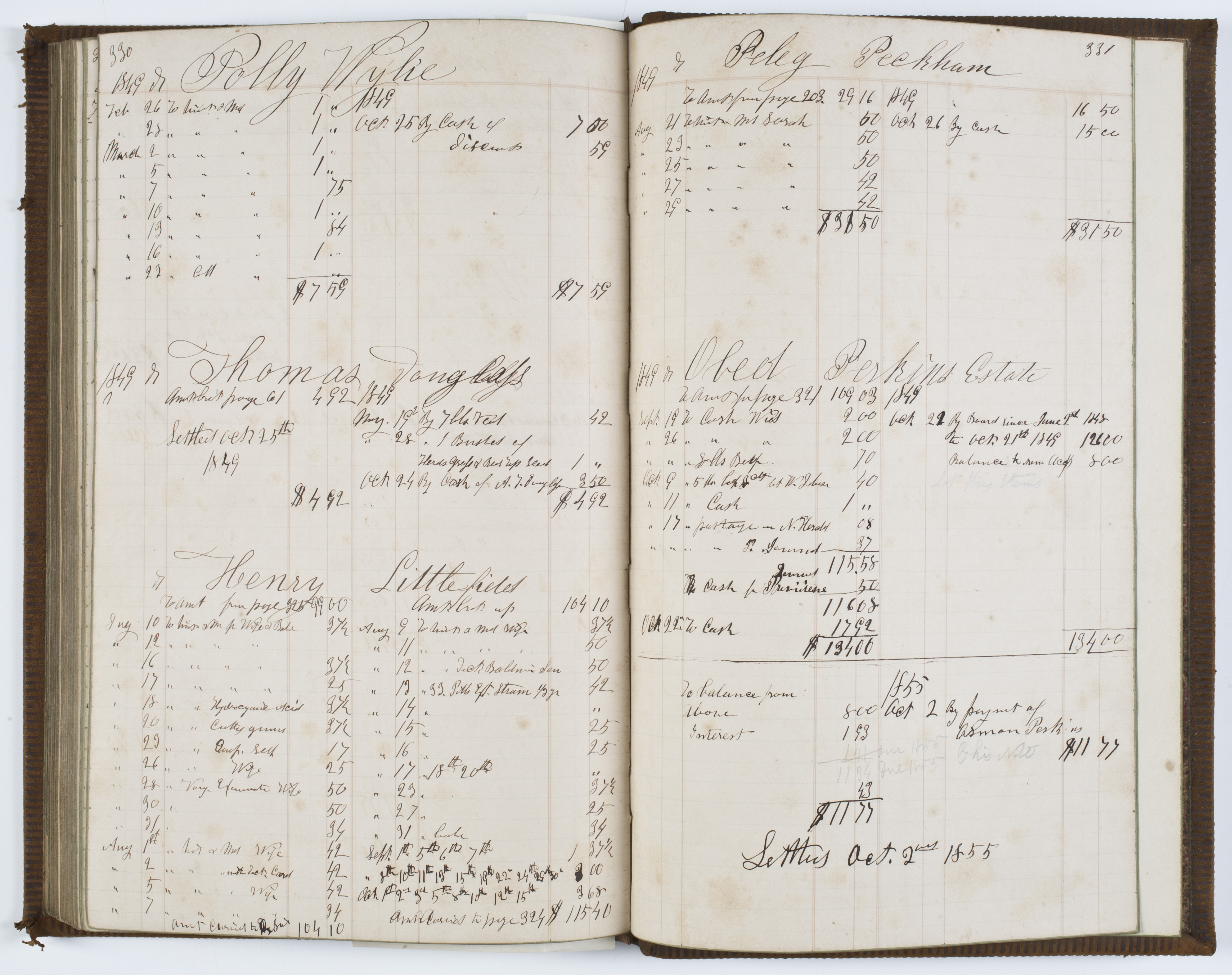
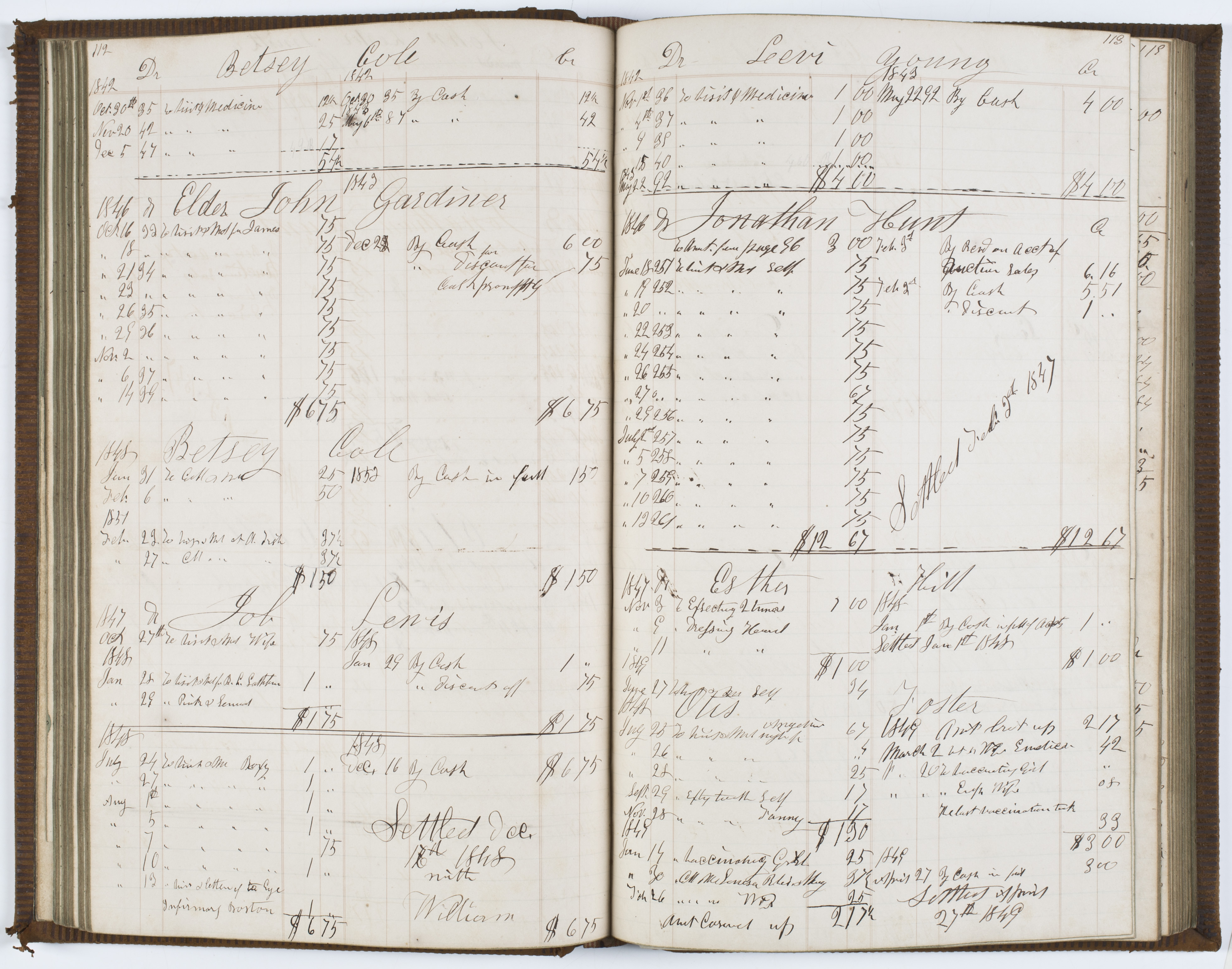
Among the many papers in the Nathan Staples Pike collection are two leather ledgers, embossed N. S. Pike, in which Dr. Pike diligently recorded his financial life. The accounts of his patients are scattered throughout the ledgers, wherever they fit. Many pages contain two, three or even four different accounts. It was through a carefully alphabetized index in the opening pages that the Doctor kept track of the balances. Each time a patient visited, he listed the page number where the latest charges and payments were recorded – for example, Benjamin Clark’s account is indexed as being on pages 244, 293, and 218. In all there are 534 patients in the first ledger and 538 in the second. There are, of course, some names listed in both ledgers, but surprisingly few.
Dr. Pike used double entry bookkeeping, recording his fee and the payment when it was made, sometimes quite a bit later. The majority of ledger listings are “calls” (probably an office visit when he typically billed either 25 or 34 cents) and “visits” (likely house calls, costing 50 cents). These charges included medicine. Most prescriptions have no description, but fall under the general term “med.” A few prescriptions, including paregoric, laudanum, opium, and castor oil, are sometimes identified. Those cost from 12 ½ to 21 cents. Obstetrical delivery is typically $3, more for a breach presentation or use of forceps. Both tooth extractions and vaccinations cost 25 cents. He listed “surgery by cataract needle,” a craniotomy, treatment for dog bites, fractures, draining fluid from hydroceles, and a chest exam “by percussion and auscultation.”
Like a paint-by-numbers canvas, these pages of numbers, beyond his professional fees, capture snippets of the daily life of Dr. Pike—and by extension, physicians of the 1840s. From his canvas of numbers, we can sum up much of his daily professional life.
We learn Nathan treated a wide variety of patients: He doctored workers at the local mills. He signed contracts with several towns to “doctor the town paupers” for a fixed annual charge. He agreed to care for specific individuals, for example, “Widow Burdick at the expense of the town.” In 1851, he itemized “5 people examined for Conn. Mutual Life Insurance.” A few families negotiated a fixed amount for all their care over a year’s time.
He purchased an “amputating knife” for $1, various scalpels, and in 1842 he wrote that he was “learning Galvanic Battery” for 75 cents. A month later he wrote, “I bought home the G. Battery” for another 75 cents. He paid $3 for Webster’s Dictionary.
Many of the accounts have some payment in kind, especially hay, oats, cord wood, and upkeep of his horse, wagon, and sleigh. Several include personal items, such as clothing. To a few, he gave discounts for prompt payment and to others charged interest for late payments. He was aggressive in pursuing unpaid debts, sometimes tracking clients who had moved to out of town or even state.
When the ledgers are read in conjunction with the family genealogy, we learn that Dr. Pike treated a large extended family. Accounts list his siblings, their families, and the related Dixon, Kies, and Hammett families. He charged them as he would any patient, but showed compassion to those who were apparently struggling financially. In the account of his brother-in-law Erastus Hammett Jr., we learn Erastus paid half the balance in kind, with 20 bushels of oats, valued at 42 cents a bushel, totaling $8.40. Dr. Pike apparently forgave the balance, writing, “Let this remain unsettled unless he calls.” Nathan covered the cost of lace and spinning supplies purchased by his mother and sister Mary.
The accounts reveal a supportive family network, in which Nathan repaid debts, especially to his brother Thomas and cousin Eleazer Kies. Nathan documents a number of payments to Thomas, starting with a payment of $41.50 in 1842, the year he graduated from New York University Medical School. Further payments totaling more than $300 follow. In 1848, Nathan repaid Eleazer “By note for tuition previous to this date $90.”
His records likewise present mysteries. One name in particular recurs—Archibald Thomas Douglas—in various roles. Archibald Thomas Douglas is listed as Professor of Obstetrics and Diseases of Women and Children in the catalog from New York University Medical Department. In his ledger a few years after Nathan was a student there, Dr. Pike recorded payments for tuition to Archibald Douglas in 1847 and again 1849. Later, in the 1850s, both served on the Committee on Exams at the Yale Medical School.
In the 1850s, the relationship between Dr. Pike and an Archibald Douglas appears non-medical. In 1852 he paid Archibald T. Douglas for the administration of his estate and in 1855 Douglas signed a note to pay Nathan $58 and interest. And finally, Archibald Douglas signed Nathan’s will as Justice of the Peace and as Judge of Sterling Probate District Court. The relationship of these gentlemen remains a mystery to be solved.
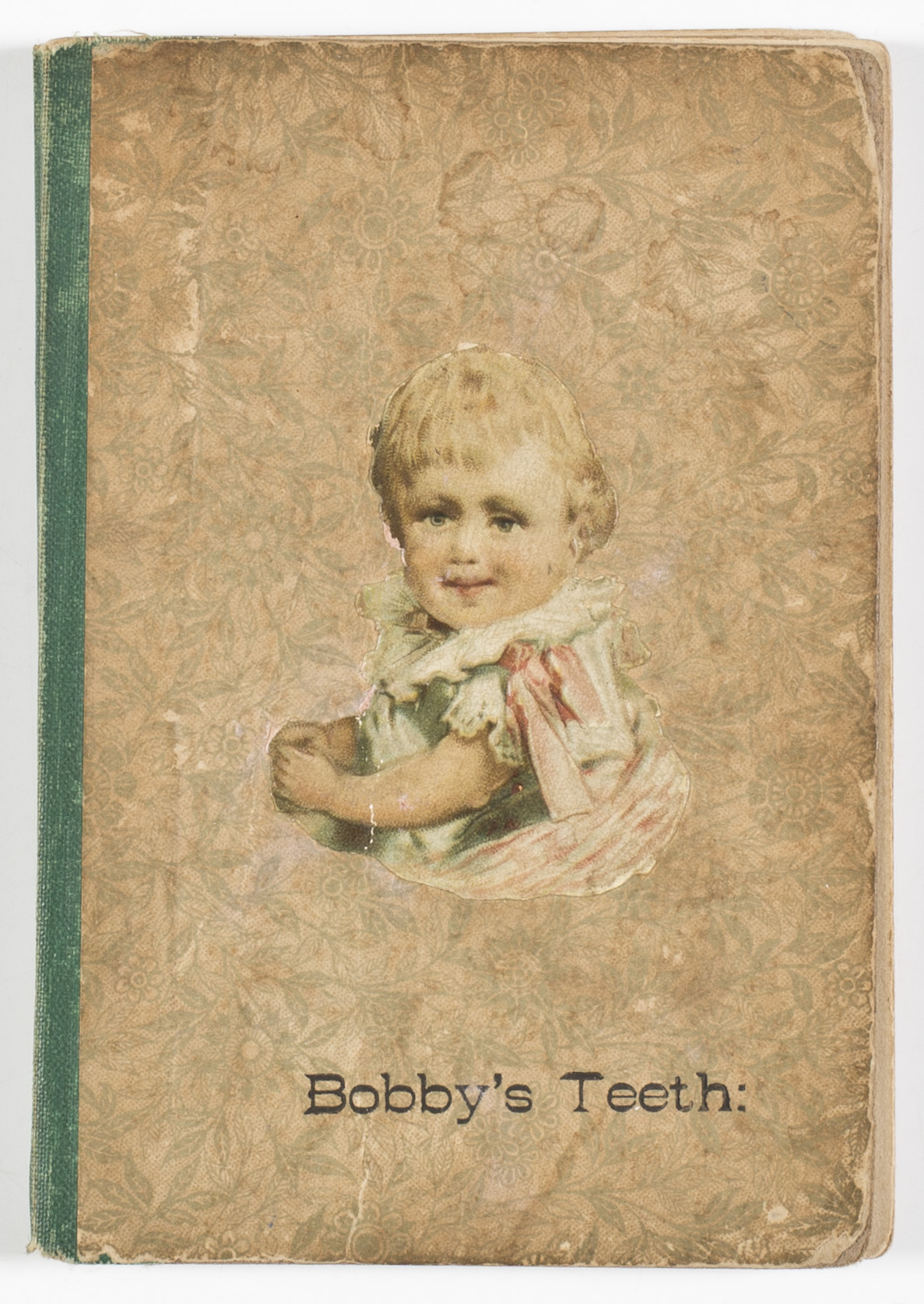
Sarah E. Chester. Bobby’s Teeth. New York: American Tract Society, ca. 1873. (Swallow Stories.)
This cute chromolithographed label of a little boy decorates the cover of a humorous tale about little Bobby, who according to the book’s narrator, has teeth as “white as snow” and “even as a row of pins.” Unfortunately, Bobby uses his teeth to bite his sister while trying to eat an apple that is not his. Ashamed of his bad behavior, the little boy seeks out the “tooth man” to pull out his teeth; in response, the nineteenth-century dentist tells the boy the cause of the little troublemaker’s wickedness is in his soul, not his teeth.
Ever since Omeka Mania first took hold here at AAS, we have delighted in learning about this exhibition publishing platform and helping each other make the most of it. A group of us meet about twice a month to share our progress and help each other out. From these collaborations, AAS has published six online exhibitions in the last year with more to come soon. As our work has progressed, we’ve taken turns teaching each other what we’ve learned. We thought that we might share some of these teaching tools with you.
We consider the slides below for the middle-level Omeka user. There are a number of “getting started with Omeka” resources out there. And the robust Omeka forums certainly can answer questions for programmers and developers. What we have created is for those of us who fall somewhere in between those two categories. From conversations with colleagues and friends both at other cultural heritage organizations and at educational institutions, we suspect that there might be a few others like us out there!
Though we think that these slides might be useful to any Omeka users, we should offer a few caveats. These assume that Omeka is installed in a server that you have some amount of access to (we have no experience with omeka.net). Also, as a special collections library with an excellent General Catalog, we have created very little metadata for our items. Instead, we have pulled metadata from our Catalog and from Aeon, as is detailed in the “metadata” slide deck.
We hope that you find these slides useful. Please feel free to share, use, and reuse as needed. And thanks to our friends at the Roy Rosenzweig for History and New Media for creating this amazing tool and for offering us so much support as we put it to use!
You can view the slides below (also in Slideshare).
AAS member Jane K. Dewey has volunteered in the manuscripts department for almost 30 years and processed forty large collections. Jane most recently organized, housed, and wrote about some of the manuscripts from the Pike-Wright Family papers, a recent donation from Susan Pike Corcoran. Even though the donation includes a substantial collection of ambrotypes, daguerreotypes, and photographs and a fantastic group of medical instruments used by Connecticut physician Nathan Pike, one of the most exceptional pieces is a letter from Nathan, which Jane discusses below.
The job of a manuscripts processor is to put a collection in order, describe it briefly, and make it of use to the researcher. Pike family descendants preserved genealogies and Nathan’s notes on medical lectures, several ledgers, and about thirty mid-nineteenth-century letters. To get to the heart of the collection—the material associated with Nathan Pike—I separated a large number of genealogical notes from the rest of the material and roughly processed them. After setting aside the ledgers and lecture notes, I decided to read and put the letters in chronological order and then set my attention on the diary.
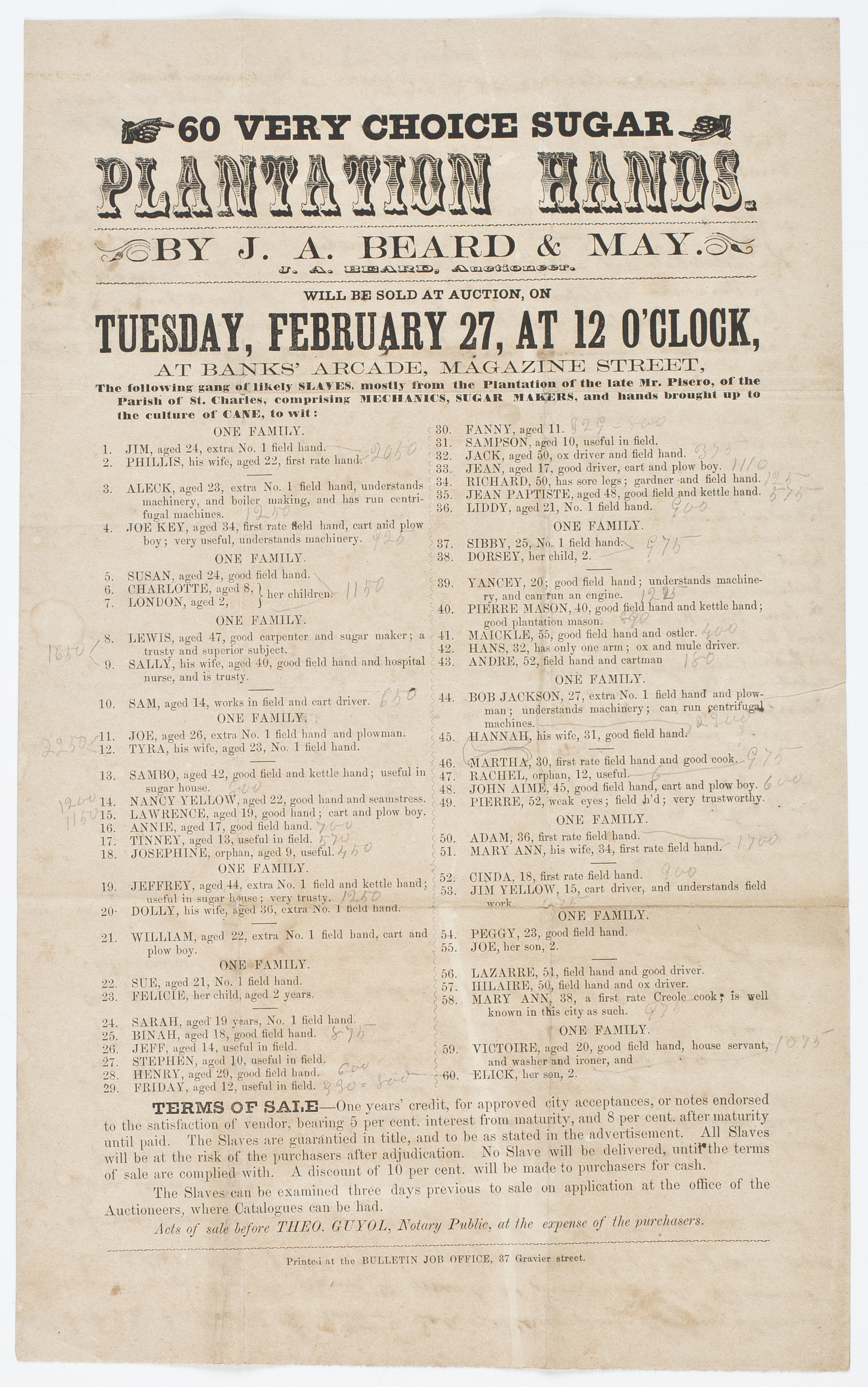
Nathan’s diary begins in 1853, when he embarked with his wife on a trip to the South. Nathan suffered from tuberculosis and traveled to a warmer climate to alleviate the symptoms of his disease. He kept the diary, in which he recorded this and another trip the following year, until only ten days before his death in 1857. During his travels Nathan visited fellow physicians, attended medical meetings, and toured hospitals. While in New Orleans he also wrote home to an unknown addressee about a slave auction he attended there, noting the price for which each slave was sold as well as the policy of keeping the family unit intact if possible. Nathan’s diary is a witness to one man’s fight against one of the greatest scourges of his time. In addition to reporting on the weather and his activities, he reports on his health. Taking cod liver oil mixed with cider or porter was his chief weapon in a losing battle against TB. Nathan probably had no idea that the record of his struggle would long survive him. It’s easy to feel great sympathy while reading the words of a dying man.
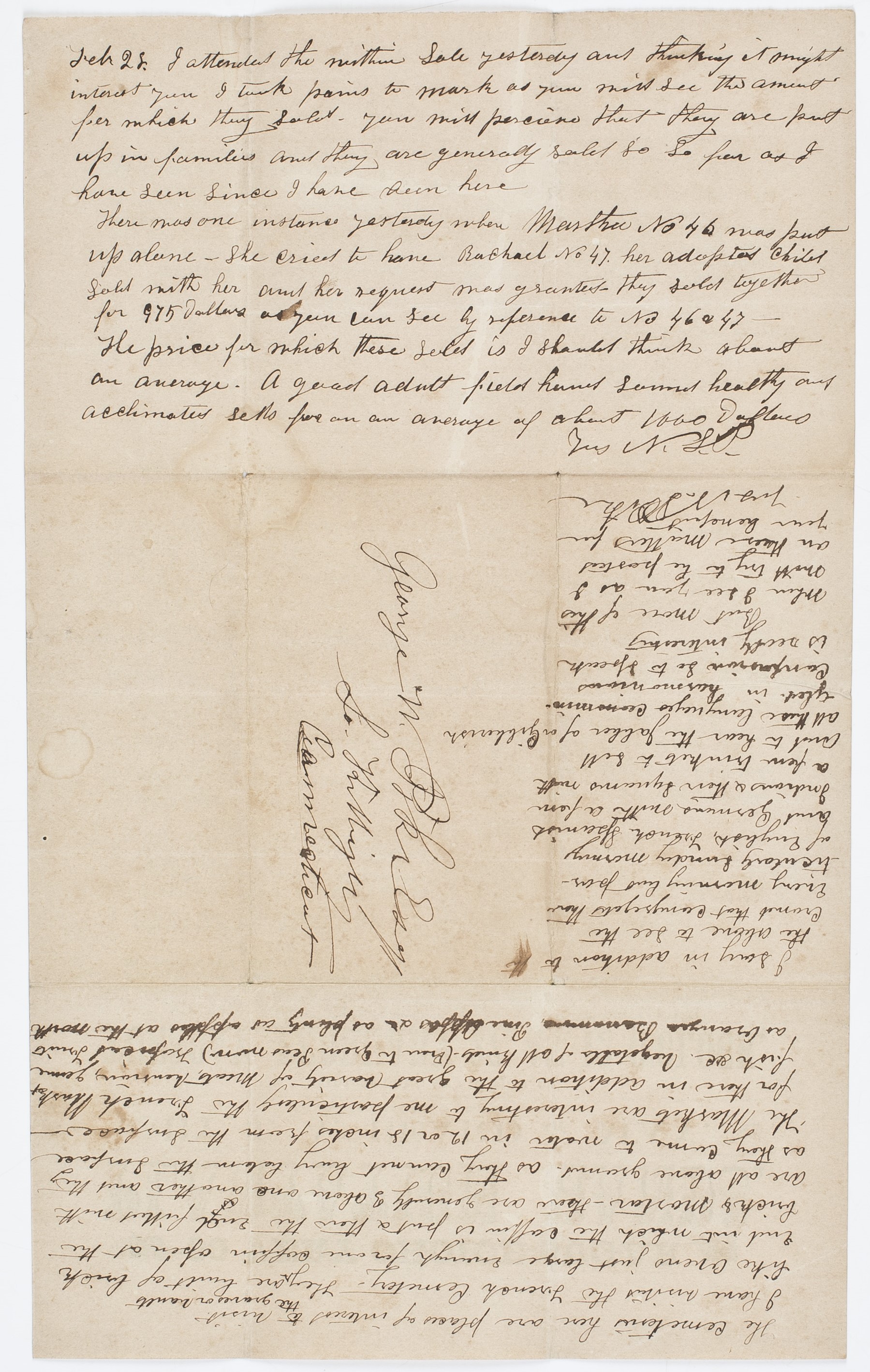
The slave auction letter to which Jane refers was written in 1855 and details the heartbreaking story of the sale of one woman and her adopted daughter in New Orleans. Nathan writes:
Feb. 28. I attended the within sale yesterday and thinking it might interest you I took pains to mark as you might see the amount for which they sold. You will perceive that they are put up in families and they are generally sold so so far as I have seen since I have been here.
There was one instance yesterday when Martha No 46 was put up alone—she cried to have Rachel No 47 her adopted child sold with her and her request was granted—they sold together for 975 dollars as you can see by reference to No 46 + 47—the price for which these sold is I should think about an average. A good adult field hand sound healthy and acclimated sells for an average of about 1000 dollars.
Although we might feel sympathy for Nathan in his ailing state, his distant, almost clinical tone, in describing the sale is disturbing. Seeing the enslaved people referred to and sold by lot number and described only by their usefulness (“good field hand” “trusty”) or defects (“has only one arm”), seems not to have affected Nathan enough to comment. What did Nathan think about Aleck, Jeffrey, Yancey, and Bob Jackson, who sold for more because of their experience with machinery? How did this group of enslaved people, “brought up to the culture of cane” on Pisero’s plantation, say their farewells to each other? Had he lived, what would Nathan have thought about the fate of the enslaved five years later on the eve of civil war?
We hope you return to the AAS blog as we continue to post more from the Pike-Wright Family papers. Our next installment is from AAS member Sande Bishop, who worked with Nathan’s medical ledgers and lecture notes.
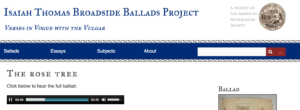
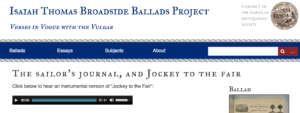
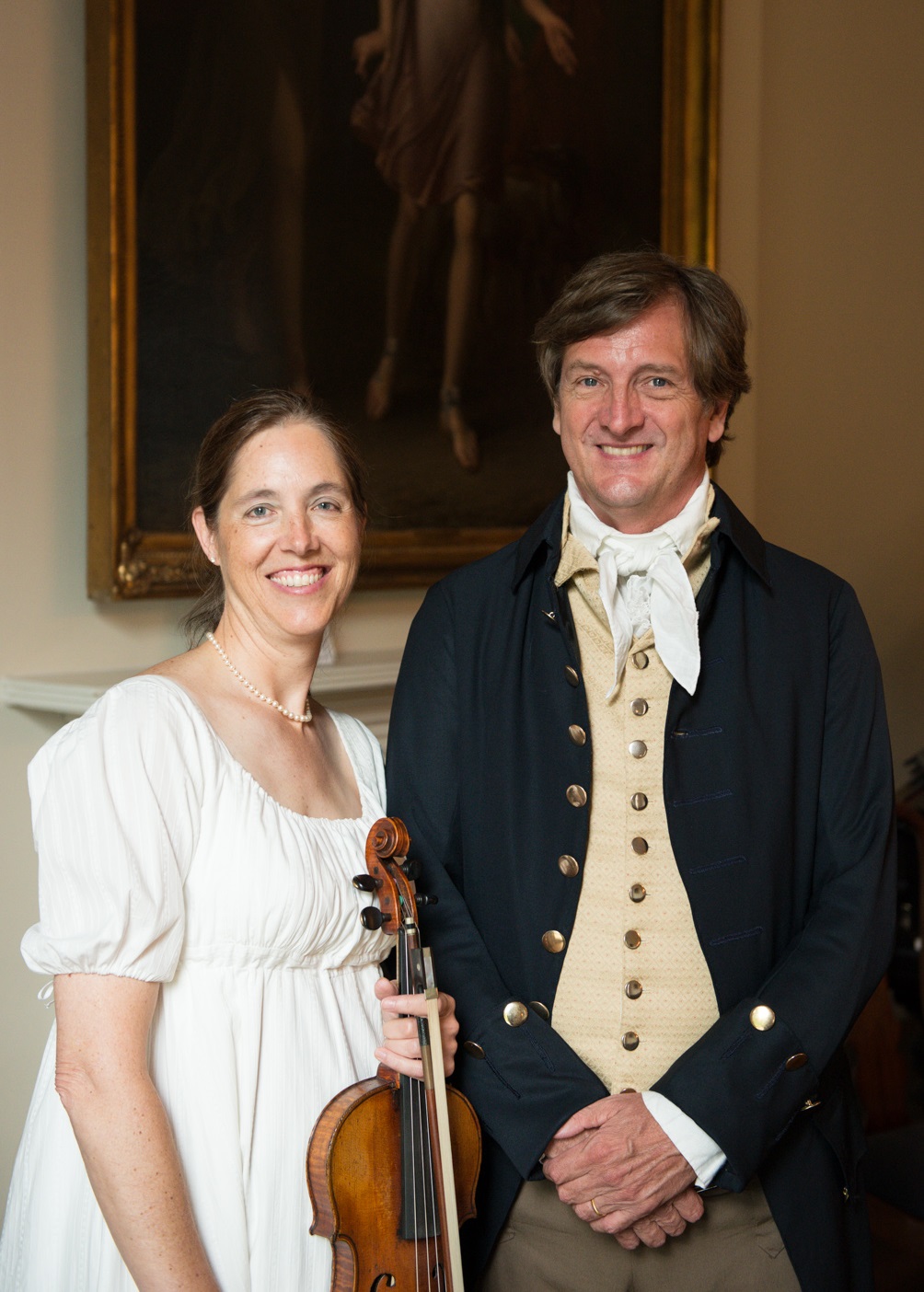
We are now ready to debut our latest addition: music! Thanks to David and Ginger Hildebrand of the Colonial Music Institute, their recorded performances of twenty-five ballads are now included on the site, with another dozen or so to come. Their contributions might be the ballad exactly as it appears on the broadside, a few verses from a given ballad, or the melody to which the ballad would have been sung. An mp3 link is included at the top of any broadside page that has musical accompaniment with details of what is being performed.
The complete ballad of “The Rose Tree” is includedAn instrumental version of “Jockey to the Fair” in included
To find all the ballads included on the site, visit the Listen to the Balladspage on the site.
Ginger and David Hildebrand
And wait, there’s more! David and Ginger will be performing under our generous dome this Friday, April 29th at 7pm. Their concert, “Ballads from Boston: Music from the Isaiah Thomas Broadside Ballad Collection”, is free and open to the public, so please join us for this celebration of early American music and of this collection, which does so much to preserve it.
“Fenway is the essence of baseball.” – Tom Seaver
“I see great things in baseball.” – Walt Whitman
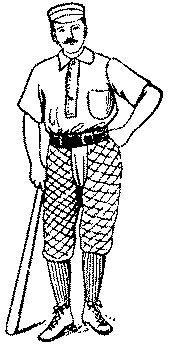
It is April and once again it is a fresh, new season of baseball. The sports pages are full of box scores and statistics. Bars are filled with people arguing over batting orders and when pitchers should have been yanked. Fans are sitting in living rooms staring at their large-screen TVs filled with images of Fenway Park and the Green Monster dreaming they were at the game.
That dream can become your reality.
On May 3rd, the American Antiquarian Society will hold its ninth annual Adopt-A-Book fundraiser.
As part of the event, thanks to a generous donor we will be auctioning off two pairs of tickets to Red Sox games. Not just any tickets. VIP Red Sox tickets! The games are:
Saturday evening, July 23, Red Sox vs. Twins
and
Sunday afternoon, July 24, Red Sox vs. Twins.
These EMC Club luxury box tickets include reserved parking on Brookline Ave. next to Fenway, luxury seating both inside and out, and full service amenities. Each pair is valued at $400.
There will be separate bidding on each pair. If for some reason you can’t attend the May 3rd event, you can e-mail a bid beforehand. Send an e-mail to Vincent Golden (vgolden@mwa.org) and let him know which pair you would like to bid on and your maximum bid by May 2nd. The highest bidder for each pair will be represented by a proxy the night of the event.
Remember. Bidding is ninety percent mental, the other half is sending us your bid.
Brooks, Noah. Abraham Lincoln: The Nation’s Leader in the Great Struggle through Which Was Maintained the Existence of the United States. Washington, D.C.: National Tribune, [1909, copyright 1888].
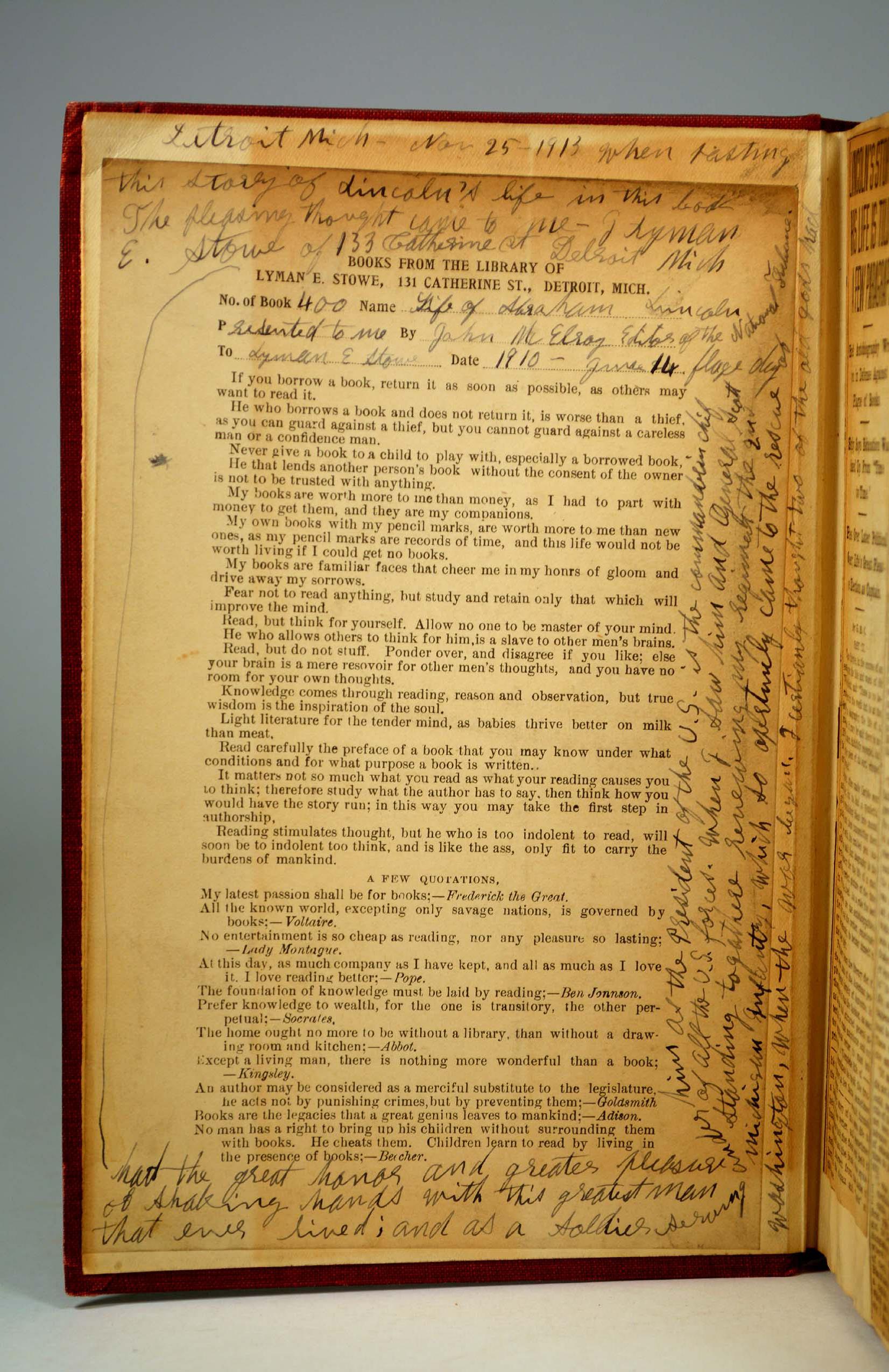
This is marginalia at its finest. Found in a remarkable collection of twenty-seven books published between 1859 and 1916, the marginalia displayed here recalls the moment when an eighteen-year-old man met Abraham Lincoln. The collection of books is from the library of that man, the outsider poet and self-taught speculative utopian author Lyman E. Stowe. AAS had earlier acquired the woodcuts Stowe made to accompany his eccentric philosophical publications. This library of books once owned by Stowe presents evidence of how popular history, philosophy, and literature helped him to make sense of his own early trauma as a wounded veteran of the Civil War, as well as how to face a radically evolving world awash in scientific and literary innovation. Many of the books bear Stowe’s elaborate typographical book plate, include his annotations in the text and endpapers, or have related newspaper clippings mounted or laid-in. The notes are keen and critical, if often riddled with eccentric spelling. Stowe’s copy of Noah Brooks’s Abraham Lincoln bears all these marks, including an extensive handwritten note Stowe started writing on his enormous bookplate and continued over the endpapers:
Detroit Mich. – Nov. 25 – 1913. When pasting this story of Lincoln’s life in this book The pleasing thought came to me – I Lyman E. Stowe of 133 Catherine St. Detroit Mich. had the great honor and greater pleasure of shaking hands with this greatest man that ever lived; and as a soldier serving under him as the President of the U.S. is [sic] the commander in chif [sic] of all the U. S. forces. When I saw him and General Scott Standing togethere [sic] revewing [sic] my regiment the 2nd Michigan Infantry, which so opertunely [sic] came to the rescue of Washington, when the war began. I certainly thought two of the old gods had come to earth to help us save the union. Tho Lincoln towered away above me in highth [sic] and I am 6 feet in my stockens [sic], Scott seemed a head taller than Lincoln and while the president was slim and angular Scott was stout and well proportioned, to a patriotic boy of 18 years of age these noble men were truly gods…
Many of the other books from Stowe’s library are about the Civil War and include his personal reminiscences in pencil notations. A couple of notes are about his friendship with Sarah Emma Edmonds, a woman who enlisted in the Civil War in the 2nd Michigan Infantry (Stowe’s own unit) and passed for a time as a man named Frank Thomas. According to Stowe, Sarah had been passing as a man for some time prior to enlistment.
There’s no shortage of celebrations here in Massachusetts for today’s holiday, even if it is a holiday that almost nobody from any other state (with the exception of Maine and Wisconsin) has ever heard of. But for a native of Massachusetts who likes history, Patriots’ Day is about as good as it gets. After all, if it weren’t for Massachusetts we probably wouldn’t exist as an independent nation at all (at least this is what we like to tell everyone who will listen—or won’t listen, for that matter).
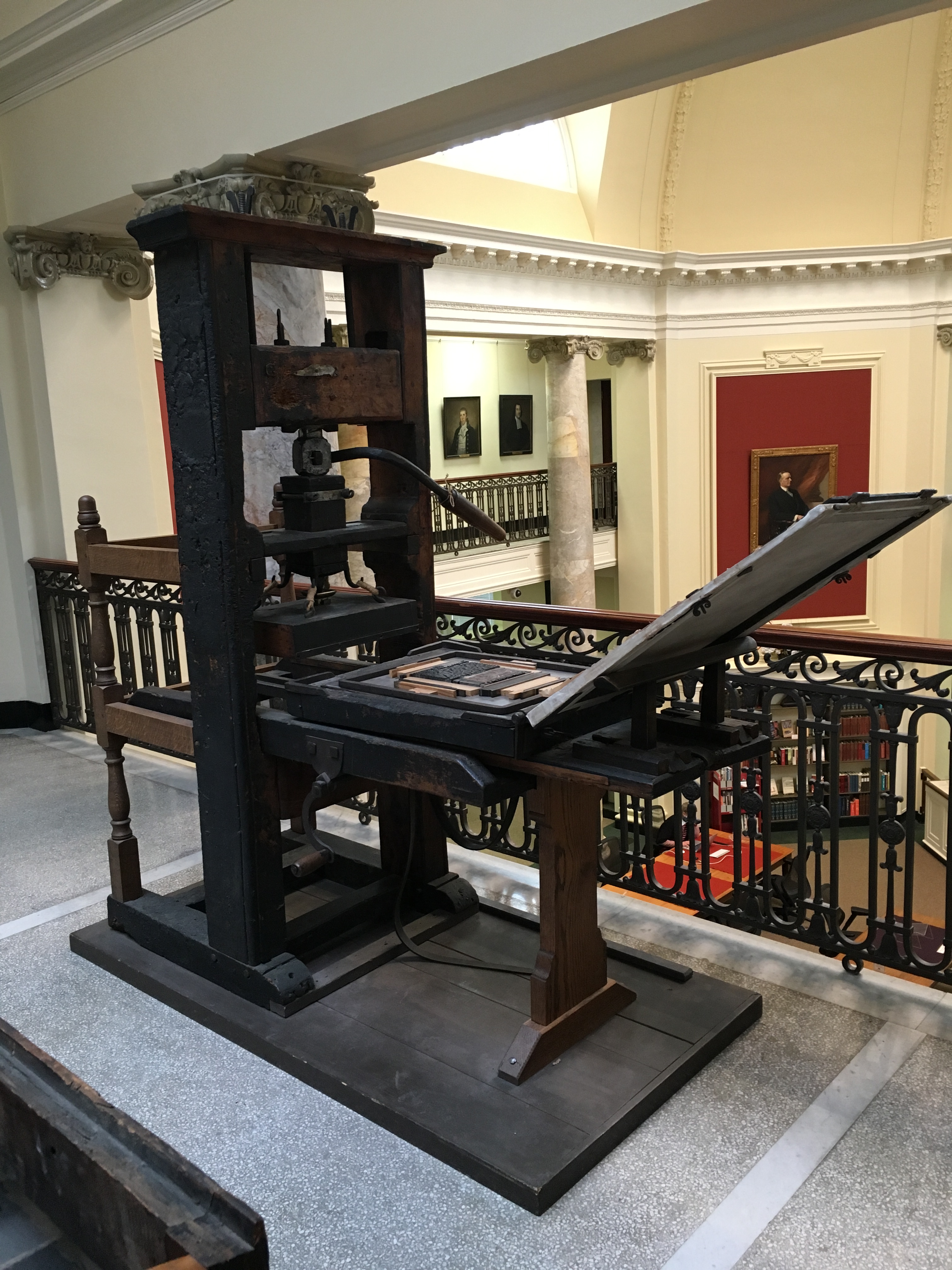
The press Isaiah smuggled out of Boston, known as Old No. 1.
Patriots’ Day is near and dear to our hearts at AAS as well, because the Battles of Lexington and Concord mark the arrival of the Society’s founder in Worcester. It’s an oft-told tale that our founder, Isaiah Thomas, was a rabble-rousing twenty-six-year-old printer in Boston who, with the encouragement of John Hancock and help of Joseph Warren, smuggled his printing press out of the city on April 16, 1775, before it could be impounded by the British authorities. Three days later he was an eyewitness to the Battles of Lexington and Concord. After setting up his press in the basement of Worcester blacksmith and patriot leader Timothy Bigelow, he waited for paper to arrive so he could continue printing his popular newspaper, the Massachusetts Spy.
It may seem odd that a lack of paper was the holdup for Isaiah being able to print his version of the British soldiers’ atrocities at Lexington and Concord, but at this period paper was difficult to get. Most paper was still being imported from British sources (hence the outrage of printers at the Stamp Act in 1765, which taxed almost everything printed), and between the British blockade enacted by the Boston Port Act of 1774 and the colonists’ own non-importation agreements, keeping a supply of paper was becoming a significant hurdle.
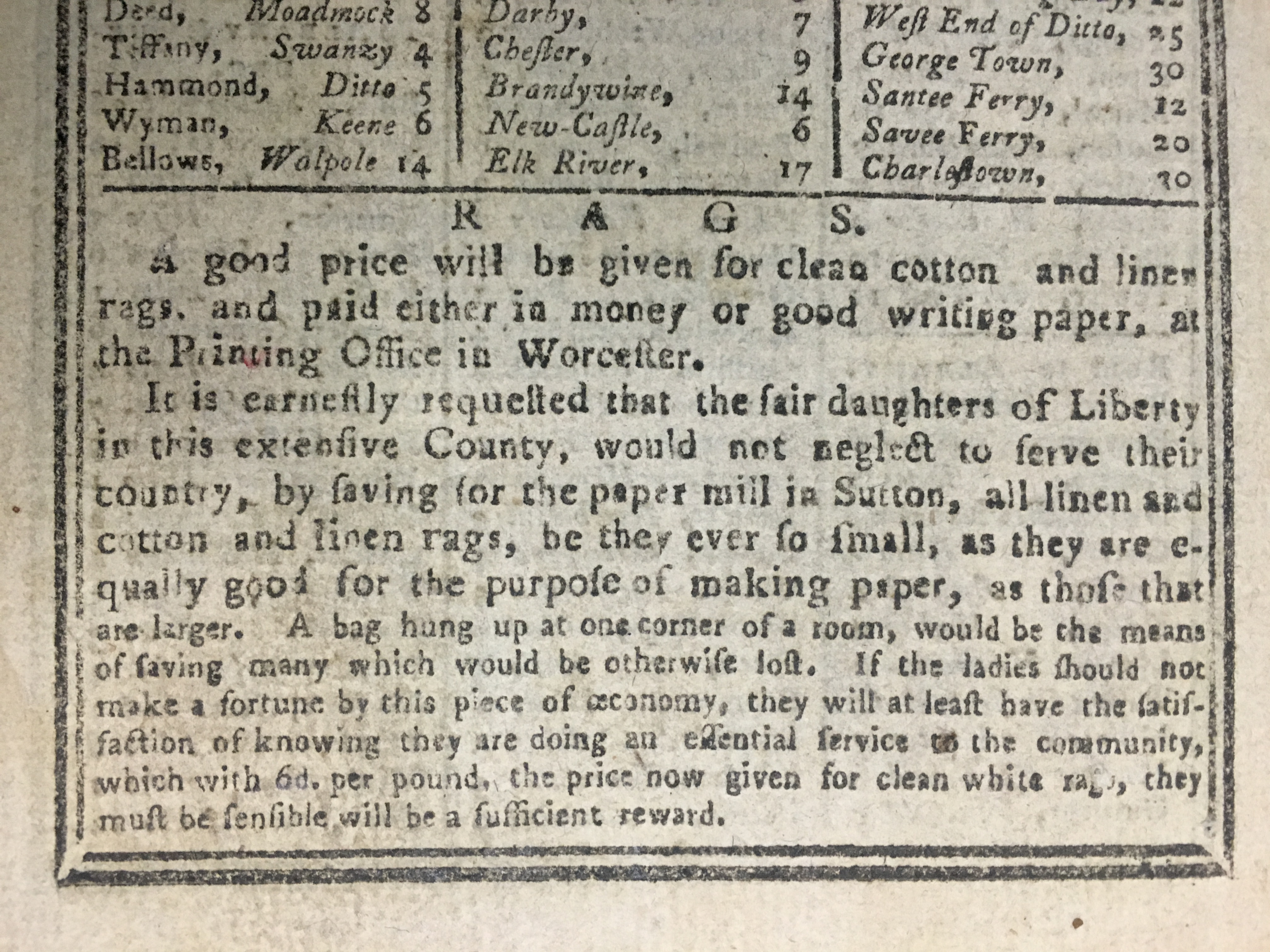
The alternative was to produce paper in the colonies, but this was still difficult as well. In the eighteenth century paper was made out of rags, which meant that not only did enough rags need to be available, but those shreds of cloth also had to make it to one of the very few paper mills established in the colony (in 1769 there were only two). As an advertisement on the back cover ofThomas’s Massachusetts, New-Hampshire, and Connecticut Almanack for the Year of our Lord Christ 1779attests, paper was both scarce and instrumental to the colonists’ cause:
R A G S.
A good price will be given for clean cotton and linen rags, and paid either in money or good writing paper, at the Printing Office in Worcester.
It is earnestly requested that the fair daughters of Liberty in this extensive County, would not neglect to serve their country, by saving for the paper mill in Sutton, all linen and cotton and linen rags, be they ever so small, as they are equally good for the purpose of making paper, as those that are larger. A bag hung up at one corner of a room, would be the means of saving many which would be otherwise lost. If the ladies should not make a fortune by this piece of economy, they will at least have the satisfaction of knowing they are doing an essential service to the community, which with 6d. per pound, the price now given for clean white rags, they must be sensible will be a sufficient reward.
By 1778, when this was printed, a paper mill had been set up in Sutton, Massachusetts, part of a rash of mills established after the outbreak of war (there were six in Massachusetts by 1779). But in April 1775 in Worcester—where there had not even been a press before Isaiah arrived, never mind a paper mill—how was one to get paper? With the help of John Hancock, it turns out.
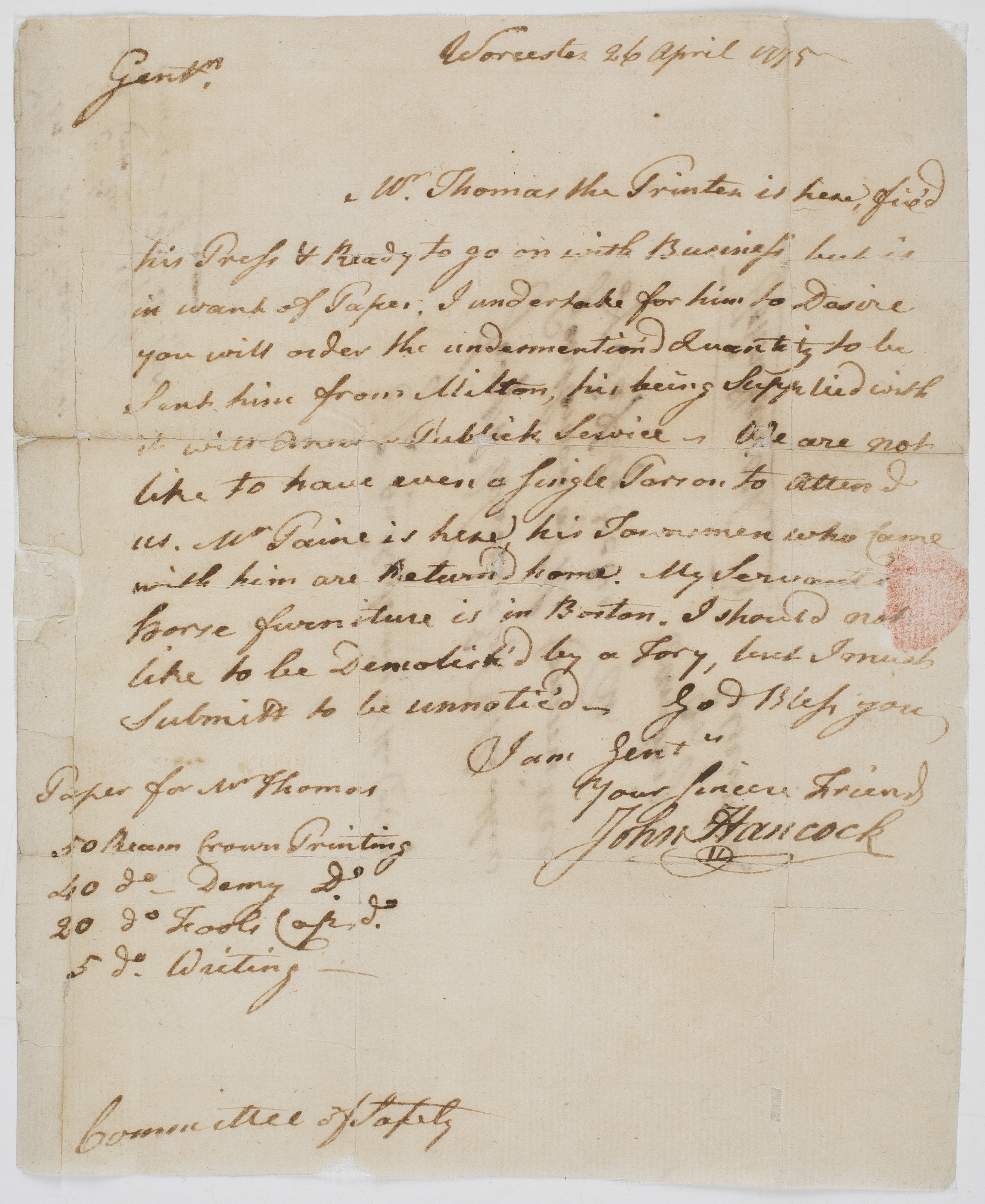
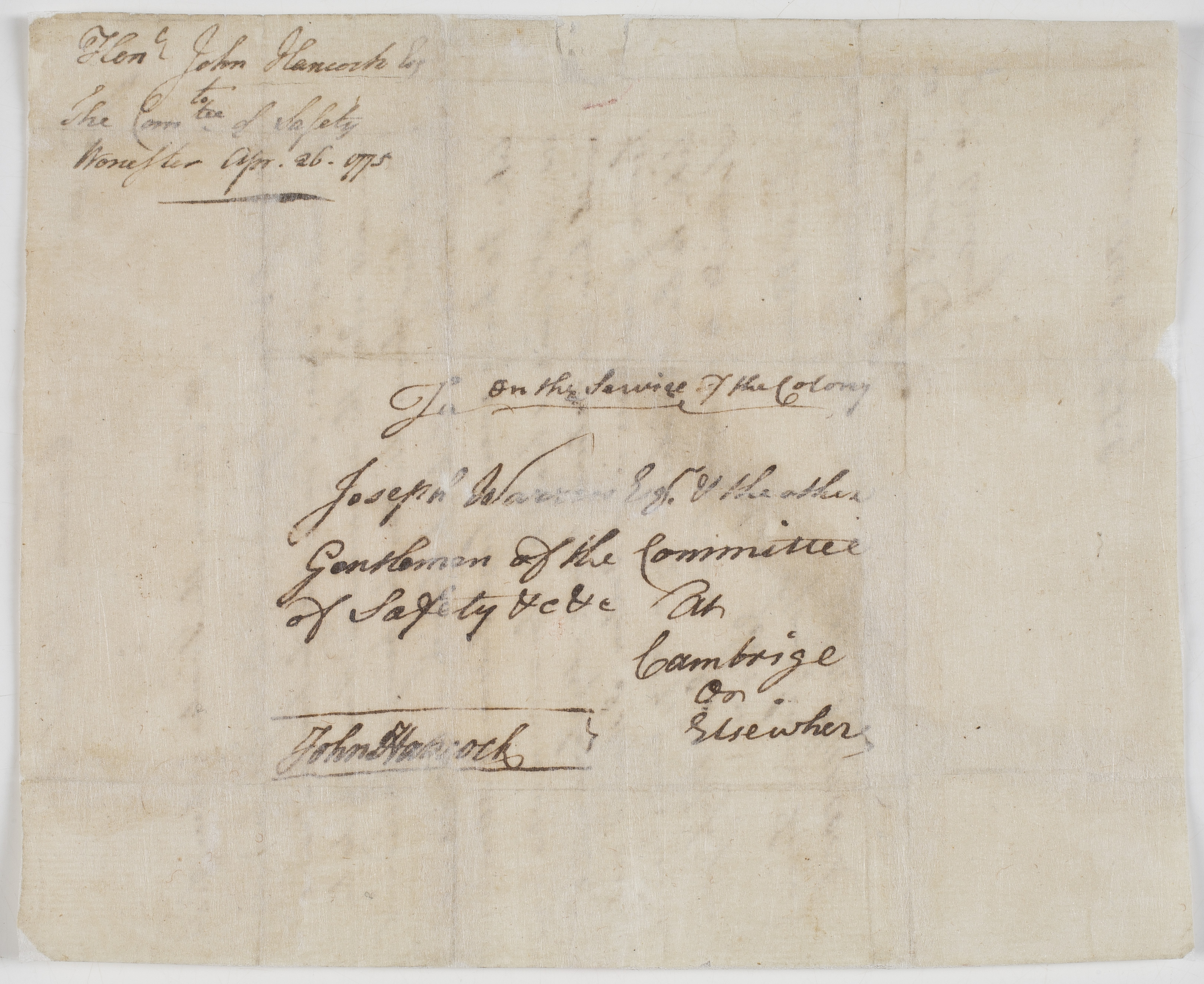
In a letter from Worcester dated April 26, 1775, and addressed to Dr. Joseph Warren and “the other Gentlemen of the Committee of Safety &c &c,” Hancock asks his fellow rebels to please get Isaiah some paper so that he can continue his “Publick Service.” (Or, in other words, print the horrifying things that need to be said about the conduct of the British at Lexington and Concord). The letter, complete with the soon-to-be famous Hancock signature, reads as follows:
Gentn. Mr. Thomas the Printer is here, fix’d his Press & Ready to go on with Business but is in want of Paper. I undertake for him to Desire you will order the undermention’d Quantity to be Sent him from Milton, his being Supplied with it will answer Publick Service. We are not like to have even a Single Person to attend us. Mr Paine is here, his Townsmen who Came with him are Return’d home. My Servants house furniture is in Boston. I should not like to be Demolish’d by a Tory, but I must Submit to be unnoticed – God Bless you,
I am Gentn Your Sincere Friend John Hancock
Paper for Mr Thomas 50 Ream Crown Printing 40 do. Demy do. 20 do Fools Cap do. 5 do. Writing —
The “Mr. Paine” Hancock mentions is Robert Treat Paine, who joined Hancock in Worcester to start their journey down to Philadelphia to act as delegates to the Second Continental Congress, which was slated to begin on May 10. Hancock, unsure of how the other colonies would react to the news of Lexington and Concord, was hoping for a military escort, but was now worried that they would not have anyone to accompany them. His fears would soon be quelled when they were joined by local militia and celebrating colonists along their route in Connecticut.
Within a week, paper had arrived and Isaiah resumed business. That paper arrived so quickly was a good bit of luck, considering that Hancock apparently wasn’t even sure of the whereabouts of Warren or the rest of the Committee. Hancock’s letter is vaguely directed to “Cambridge Or Elsewhere,” which makes some sense given the current situation. On the evening of April 18, it was Joseph Warren that sent Paul Revere and William Dawes on their famous “midnight ride” to warn Hancock and Samuel Adams, who were currently in Lexington, that the regulars were heading to Concord and probably had orders to arrest them as well. They were able to elude capture while Warren, accompanied by Isaiah Thomas, slipped out of Boston the next morning. After the battle, the members of the Committee of Safety were scattered, either avoiding arrest or figuring out the Americans’ next move. But a large contingent of the Committee, headed by Warren, was stationed in Cambridge and continued its work by releasing a circular urging men to enlist in the provincial army and commissioning depositions concerning Lexington and Concord. Cambridge was therefore Hancock’s best guess, but given how quickly events were developing he couldn’t be sure.
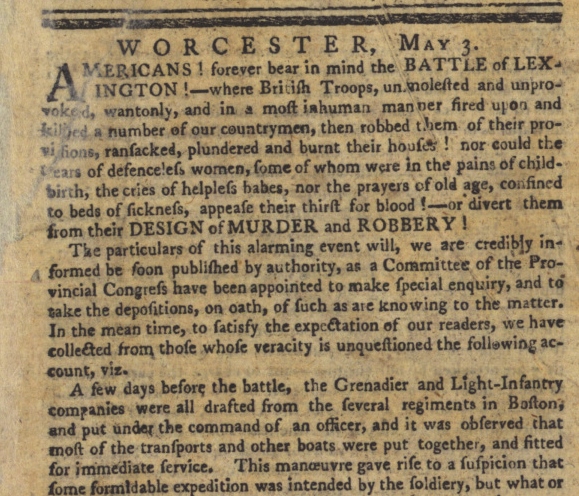
Despite this lack of geographical direction, Hancock’s courier found Warren or another member of the Committee without too much trouble, and they carried out Hancock’s directions to get paper from Milton, where one of the three paper mills in the colony was located. On May 3 the first Worcester issue of Isaiah’s Massachusetts Spy appeared, complete with a scathing eyewitness account of the action at Lexington and Concord that claimed the British troops had “wantonly, and in a most inhuman manner fired upon and killed a number of our countrymen, then robbed them of their provisions, ransacked, plundered and burnt their houses!” Even worse, “nor could the tears of defenseless women, some of whom were in the pains of childbirth, the cries of helpless, babes, nor the prayers of old age, confined to beds of sickness, appease their thirst for blood!—or divert them from their DESIGN of MURDER and ROBBERY!” Isaiah was obviously a very nonpartisan observer.
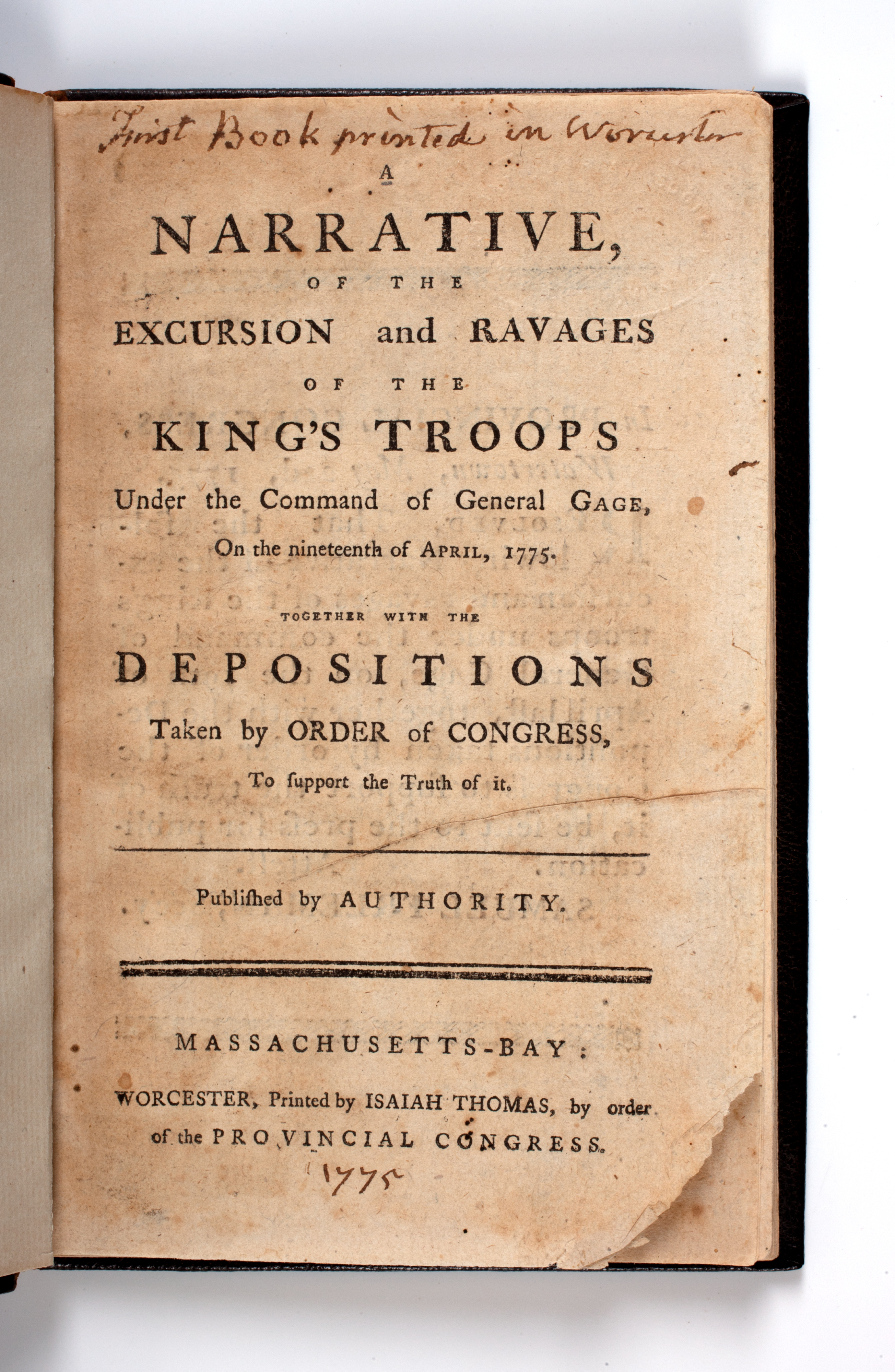
With this same delivery of paper, Isaiah would also print his first (and only) official commission from the Massachusetts Provincial Congress, the series of depositions compiled by the congress called A Narrative, of the Excursion and Ravages of the King’s Troops. Copies were sent to King George, the provincial governors, and other influential personages who could possibly be swayed by this “official” version of events.
It’s difficult to overemphasize the importance of paper and printing in sparking and carrying out the American Revolution. From printers’ opposition to the Stamp Act in their newspapers to Thomas Paine’s pamphlet Common Sense to a simple ad for rags on which to print the incendiary words, paper and ink were just as vital to revolution as guns and gunpowder. That Hancock made acquiring paper a priority while he was evading arrest by British troops offers pretty telling proof of that.
This letter resides in the Hancock Family Papers at AAS. More about the importance of news and print in the Battle of Lexington and Concord is among the topics covered in our online exhibition News Media and the Making of America, 1730-1865.
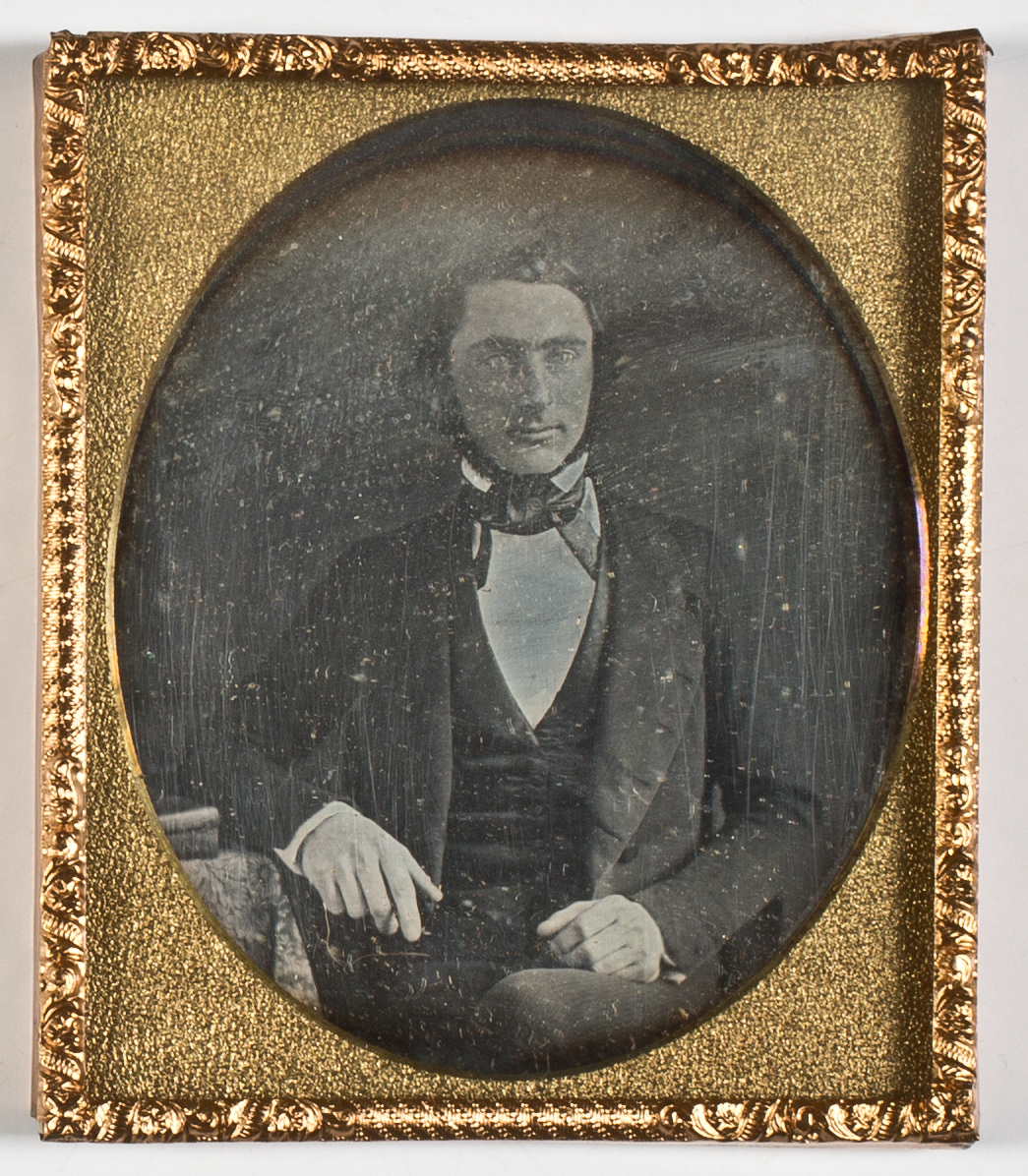
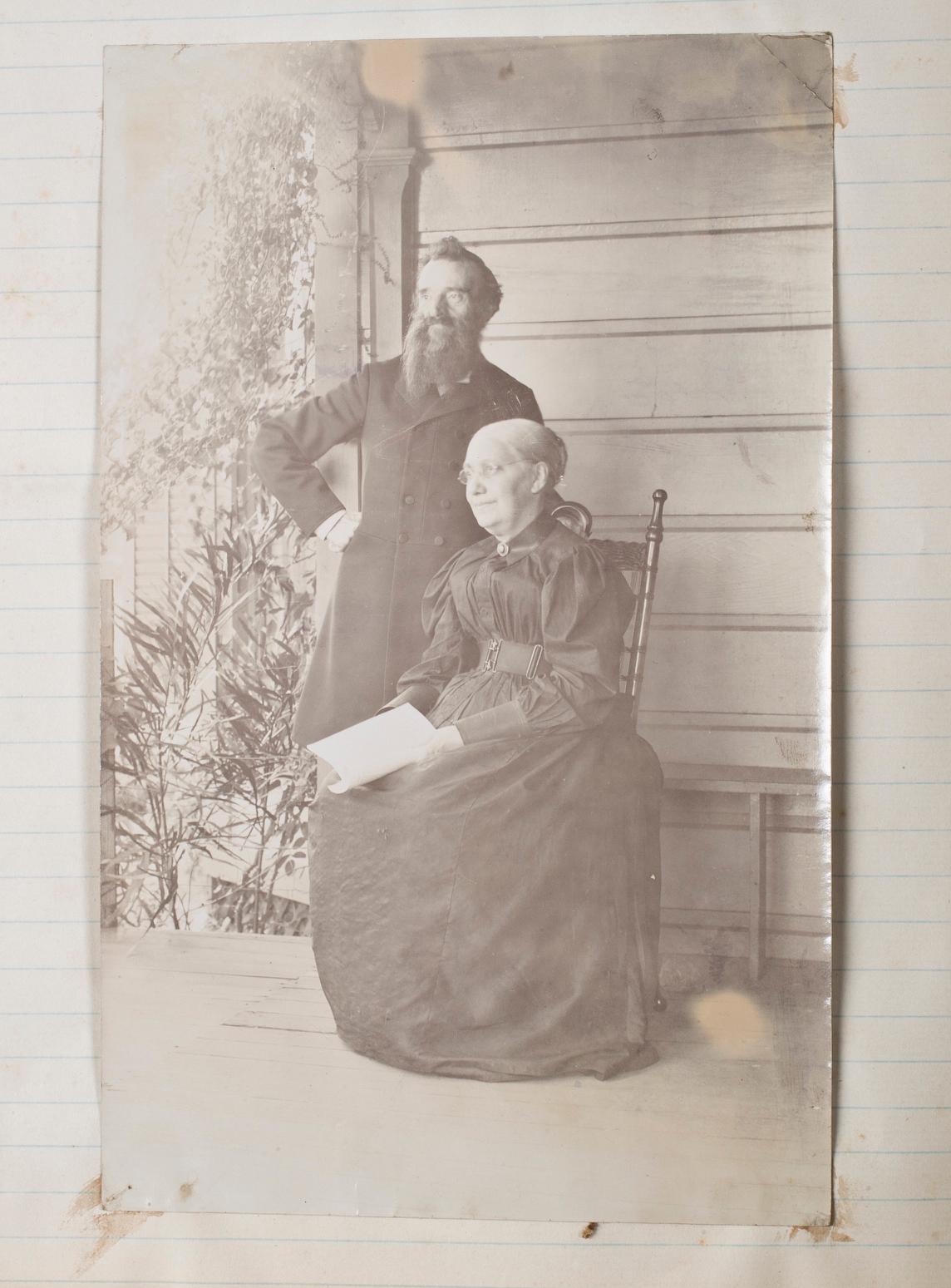
The Pike and Wright Collection, donated by Susan Pike Corcoran, has brought to AAS more than the typical materials of photographs, diaries, books, and letters. Along with the genealogical material, a collection of medical instruments used by Dr. Nathan Staples Pike (1819-1857) is now housed within the Graphic Arts Department. You might remember seeing Dr. Pike’s face (right) in the earlier post about the wonderful photographs that are part of this comprehensive family collection.
Cataloging and rehousing these items has been a challenge. Coming in one box, the collection was carefully unpacked and the items were placed in smaller boxes and individually wrapped in foam or bubble wrap to protect them. Luckily I have had some practice in rehousing objects at AAS (the games collection, glass plate negatives, and printing matrices to name a few) but the nature of the items and their use made them a little harder to handle. Latex gloves were a necessity with these tools!
Dr. Pike graduated from New York University in 1843 and practiced medicine in central and eastern Connecticut until his death in 1857 from tuberculosis, meaning this collection of about forty items likely date from before the Civil War. They demonstrate some of the common practices in general medicine at that time, including more specialized practices in the dental and obstetric fields. After handling these tools, and discovering what they were used for, I am very grateful to be living in the age of modern medicine! (This also means the following descriptions are a bit graphic, so continue reading at your own risk.)
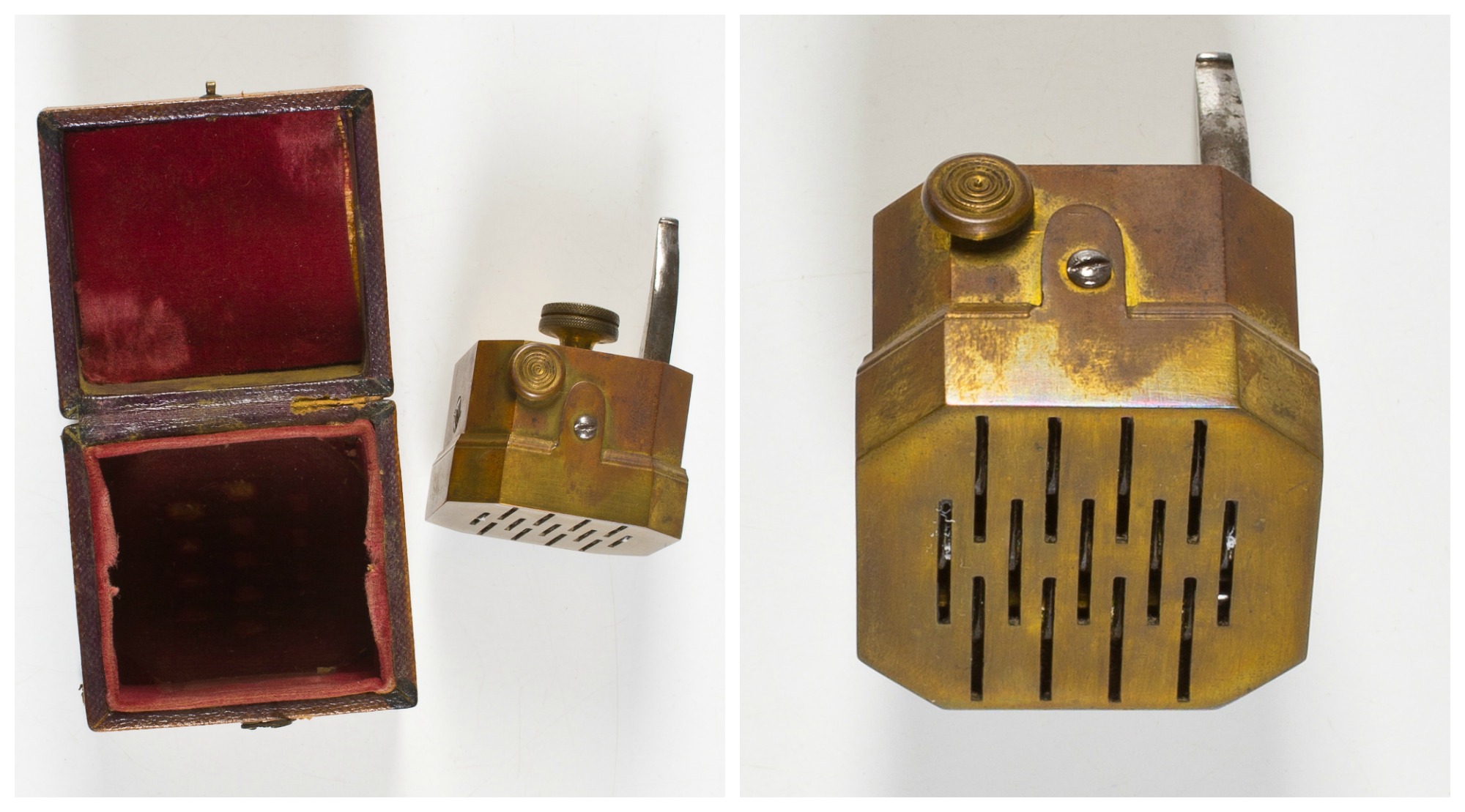
Blood-letting, though becoming less popular in the nineteenth century than in previous centuries, was still used to treat common ailments and infections. This scarificator (below), which is housed in a velvet-lined wooden box, may have been used in conjunction with glass cups to bring blood to the surface. The scarificator, which has spring-loaded blades, would be placed on the skin and plunged in to bleed the patient.
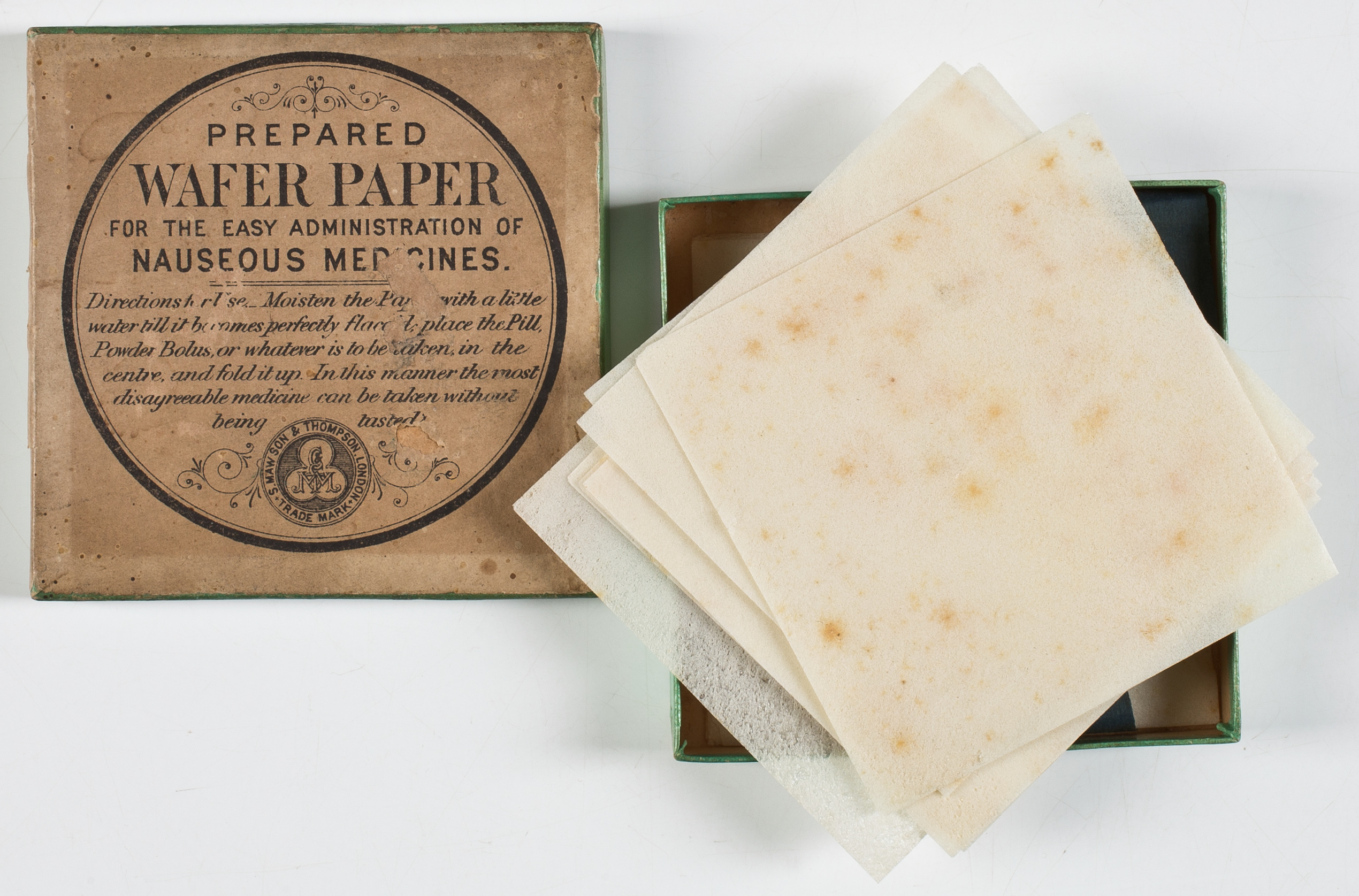
This set of wafer papers, imported from London, was used to create pills from whatever medicine the doctor would prescribe. The filling would be wrapped in the paper, allowing the patient to easily swallow the medication. The package states that using this paper meant even “the most disagreeable medicine can be taken without being tasted.”
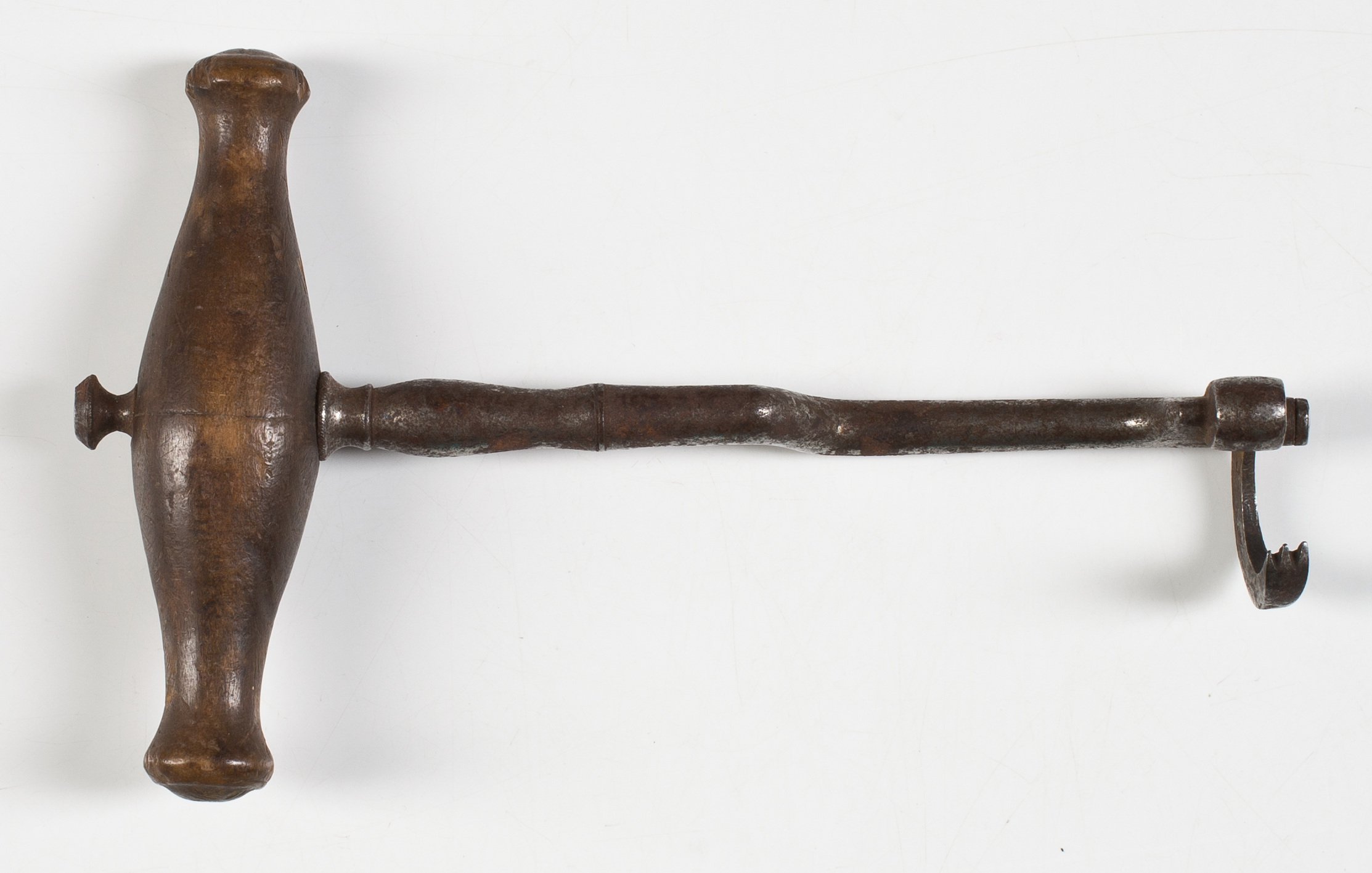
Another common occurrence for physicians of this time was to perform some dental work. This dental key, or extractor (below), would be inserted into the mouth, the small claw at the end would be placed around the tooth, and the handle would be turned, twisting the tooth until it was pulled out.
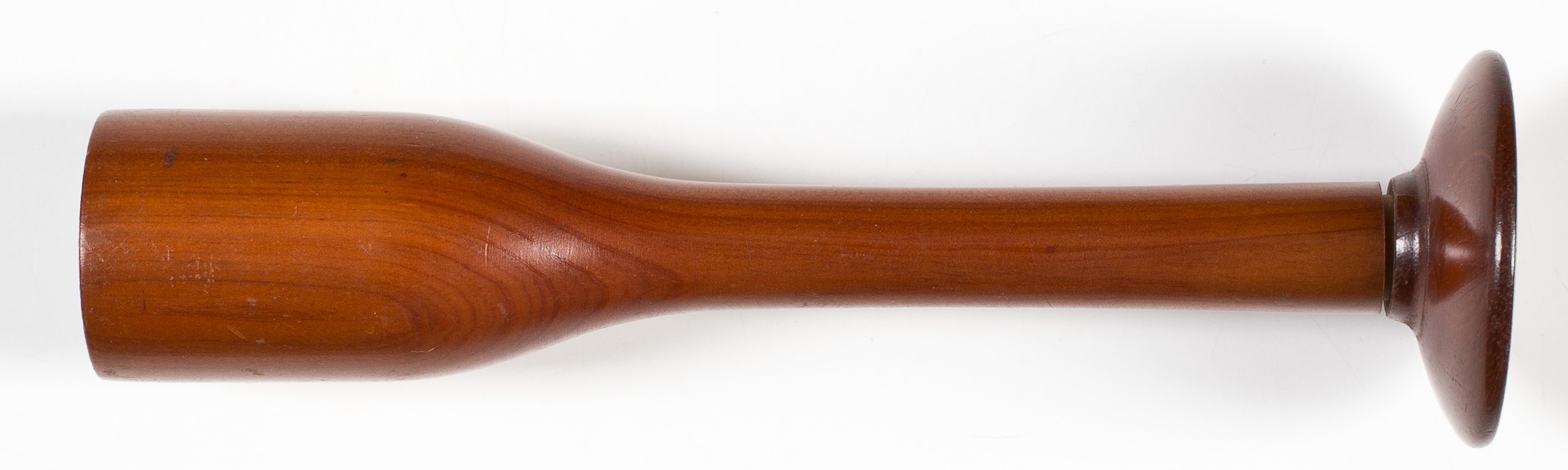
Dr. Pike not only practiced general medicine and dentistry, but according to his letters, he was also interested in and tried his hand at obstetrics. The hollow wooden tool below is possibly a Pinard horn, or fetal stethoscope, used to listen to the heart rate of a fetus in utero. The cup would be placed over the woman’s belly and listened to at the other end with the curved earpiece.
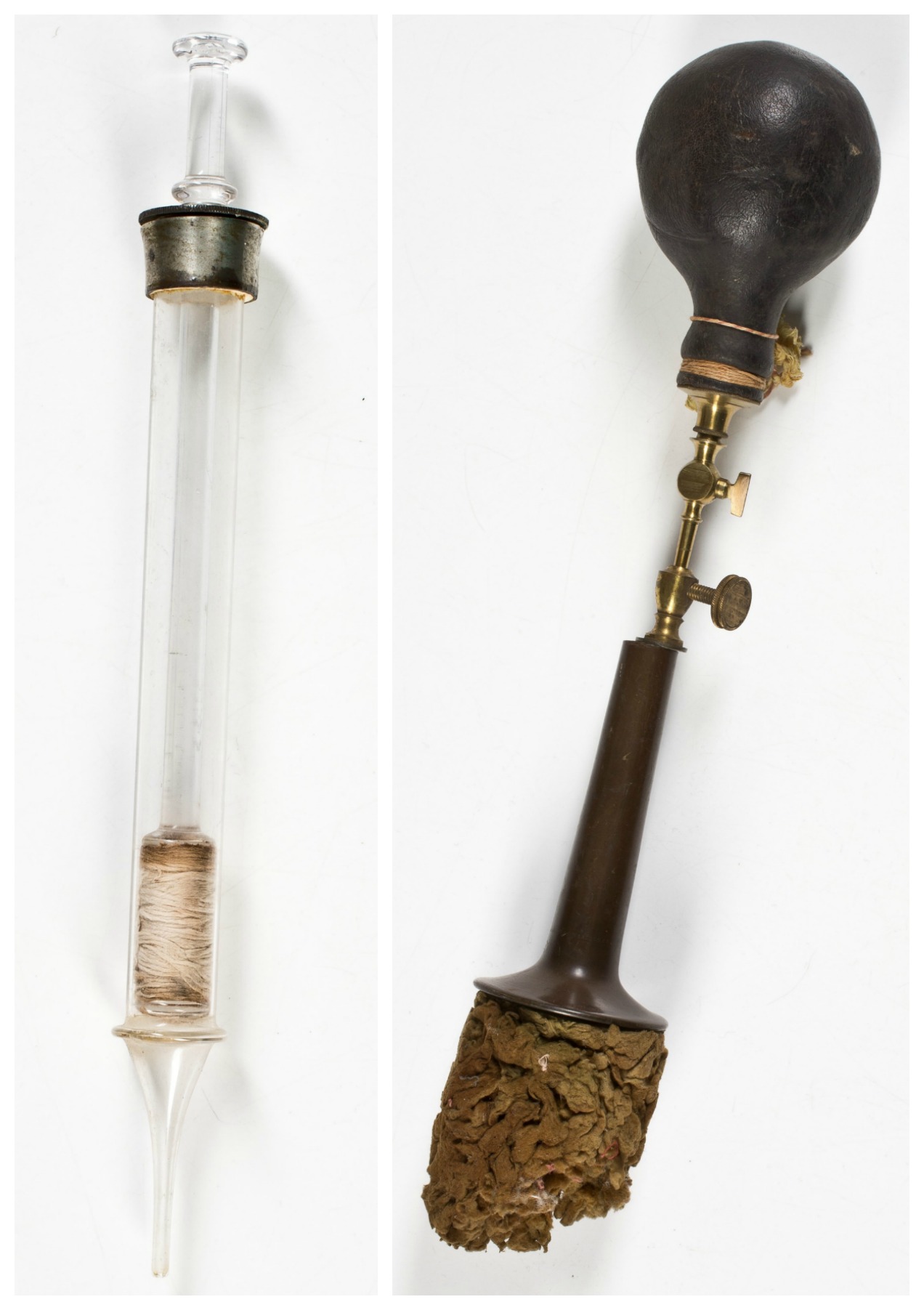
Other items in Dr. Pike’s collection include glass and rubber syringes, a mortar and pestle, a large beaker and measuring cups, his leather saddle bag with many pockets for vials of medicine, a set of brass scales, and some other items whose use are unknown. The glass pieces are actually well-crafted and beautiful, as long as you don’t think of what they might have been used for! The second item to the right, with a bulb made of rubber or possibly an animal bladder and a sponge, may have been used to dispense ether or another anesthetic.
While these items are definitely not the norm for a library that specializes in printed materials, having a collection of medical tools such as this, in addition to the family photographs, diaries, letters, and ledgers, paint a complete picture of a physician’s life in nineteenth-century New England. The story of Dr. Pike’s life and training as a physician and his travels to the southern states are within the collections of the Manuscripts Department, and will be the focus of upcoming blog posts, so stay tuned!
What do a wolverine, sunshine, runaway sailors, weaving, and baseball have in common? These are the titles or subjects of items available at our ninth annual Adopt-a-Book program! Once again our intrepid curators have put together a group of items acquired over the past year or so and put them up for “adoption.” Supporters of the American Antiquarian Society can “adopt” the these items to help raise funds for further acquisitions. Over the past eight years, this event has raised well over $100,000 for the curators to acquire even more materials for the collection. These funds become available during the last quarter of our fiscal year when our acquisitions funds are running low, making them doubly appreciated.
And this year’s online catalog is now up and ready for you to adopt!
Then, on May 3 from 6 to 8 p.m., please join us for our Adopt-a-Book evening, where you can view many of the items (including more materials up for adoption not in the online catalog), chat with curators over food and drink, and bid on a pair of Red Sox tickets, all under our generous dome.
To give you a taste, here are some items up for adoption from each of the five curatorial departments:
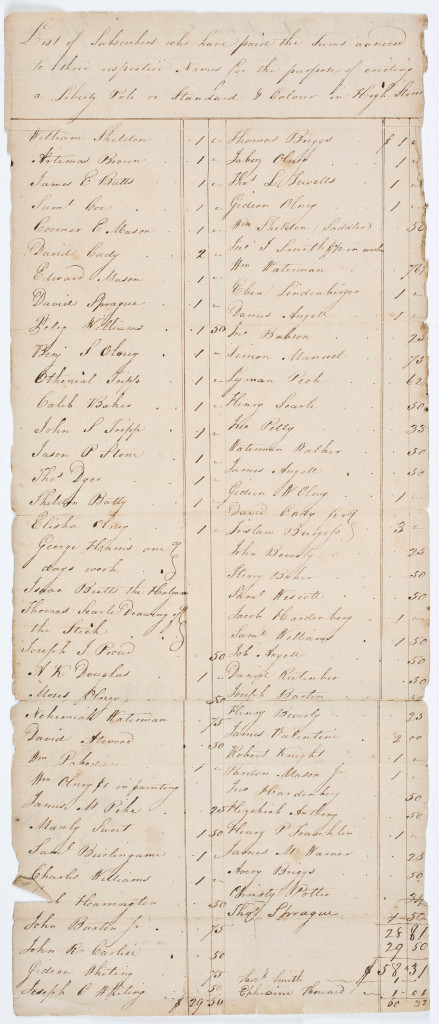
Liberty Pole Subscribers List. Adopt me for $125
Shortly after the U.S. declared war on Great Britain during the summer of 1812, residents of Providence, Rhode Island, joined together to erect a liberty pole on Cranston St. Liberty poles were often built in towns during the American Revolution as a symbol of freedom and independence. During the War of 1812, which has often been called a second American Revolution, citizens of Providence erected one as well. This list details who subscribed for the construction of the pole. If you value American independence but can’t subscribe to erect a liberty pole, at least you can adopt this list.
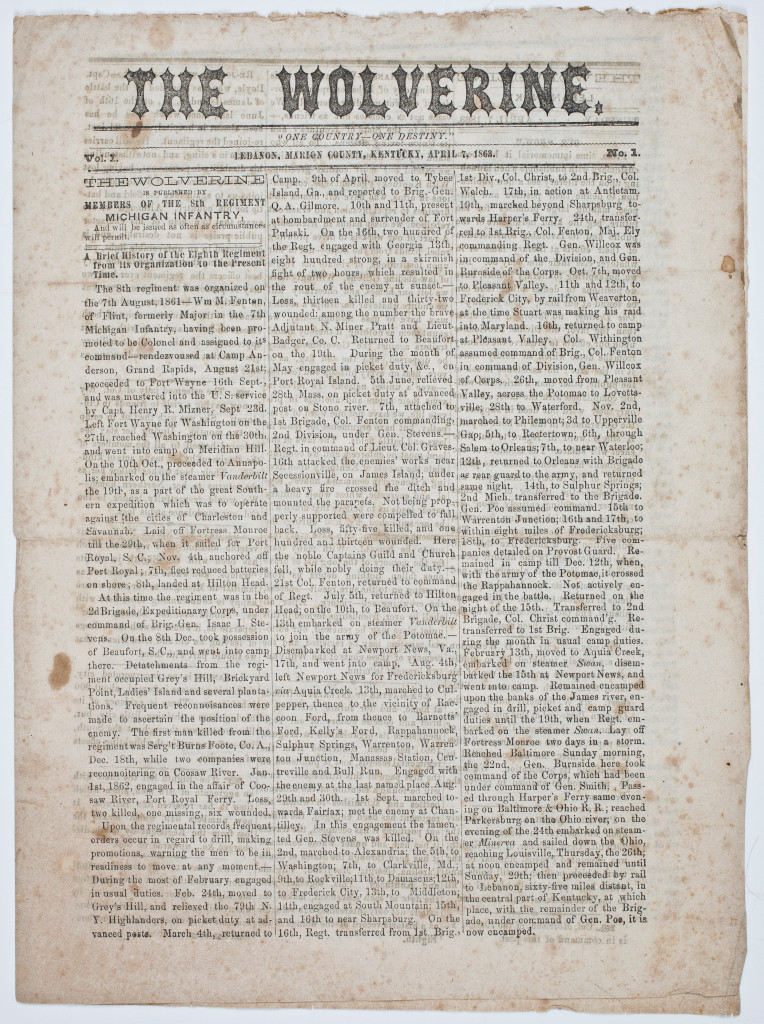
The Wolverine (Lebanon, Ky.) Apr. 7, 1863. Vol. 1, no. 1. Adopt me for $200
This is camp newspaper from the Civil War. This paper was published by members of the 8th Regiment, Michigan Infantry. An article on the second page thanks Mr. W.H. Wetherton, former publisher of the Lebanon Democrat, for letting them use the office to publisher The Wolverine. The office of the Democrat had been closed because of its Union sympathies in a region that supported secession. No issues of the Democrat are known, but it apparent existed between 1859 and 1862. This is the only issue of The Wolverine that is known to have been published, and it is known in only two other copies at University of Michigan and Western Kentucky University.
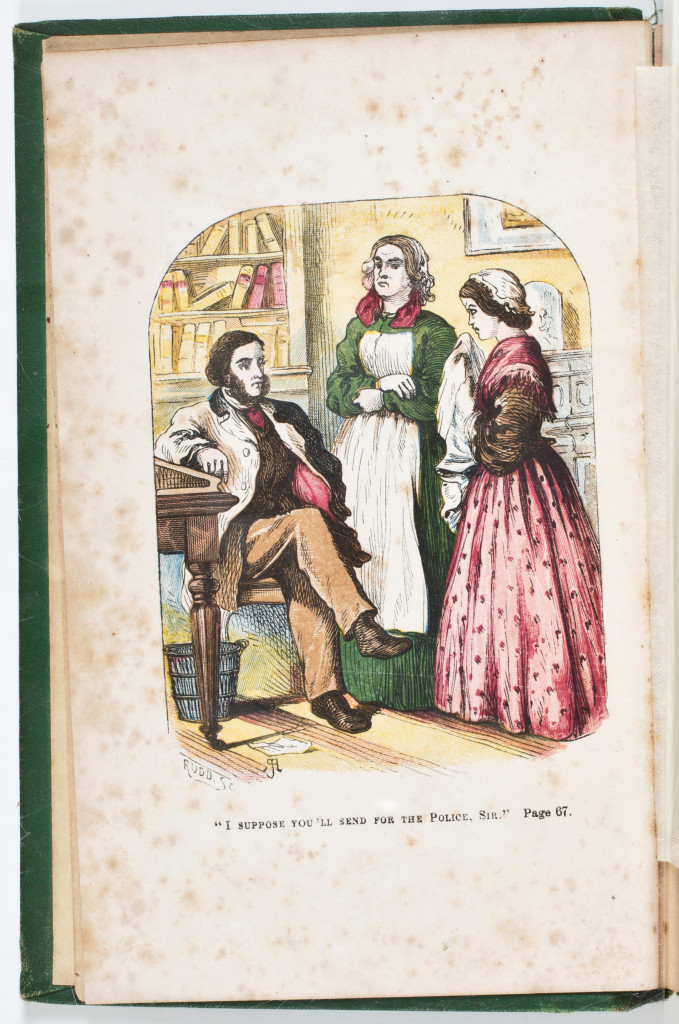
Sophie Amelia Prosser. Sunshine or Cures for All Ills. Boston & New York: American Tract Society, ca. 1860-1868. Adopt me for $50
This strikingly colored image is from the frontispiece to a book of didactic short stories. The young maid on the right is being questioned by her master about her possibly stealing from valuables. The story really focuses on housekeeper pictured in the center, who is hardened to the young girl’s crying. The master of the house decides to give the girl a second chance by having her live in his country house under the virtuous eye of his wife. The housekeeper eventually realizes that her master is right to be merciful.
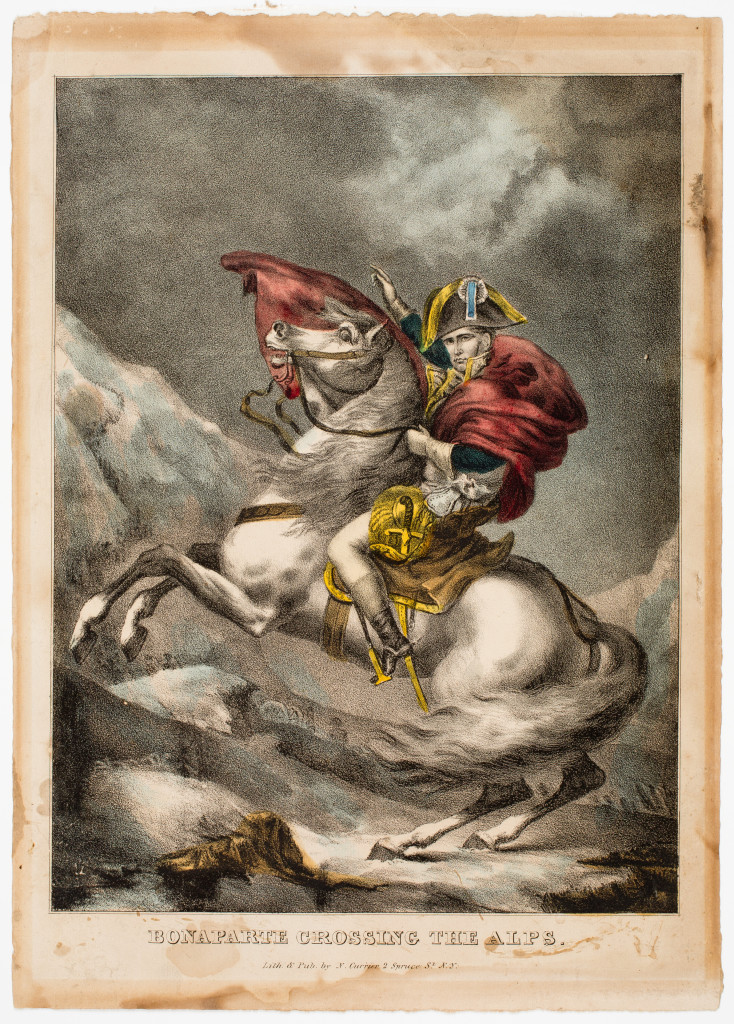
After Jacques Louis David. Bonaparte Crossing the Alps. New York: N. Currier, after 1838. Adopt me for $100
This image of Napoleon Bonaparte crossing the Alps on his rearing white horse was reproduced frequently by American printmakers. The immense painting on which is was based was part of the estate of Joseph Bonaparte in Bordentown, New Jersey, from 1815 to about 1840 when it returned to France with Joseph’s daughter. The painting was exhibited frequently in Philadelphia and copies proliferated around New England.
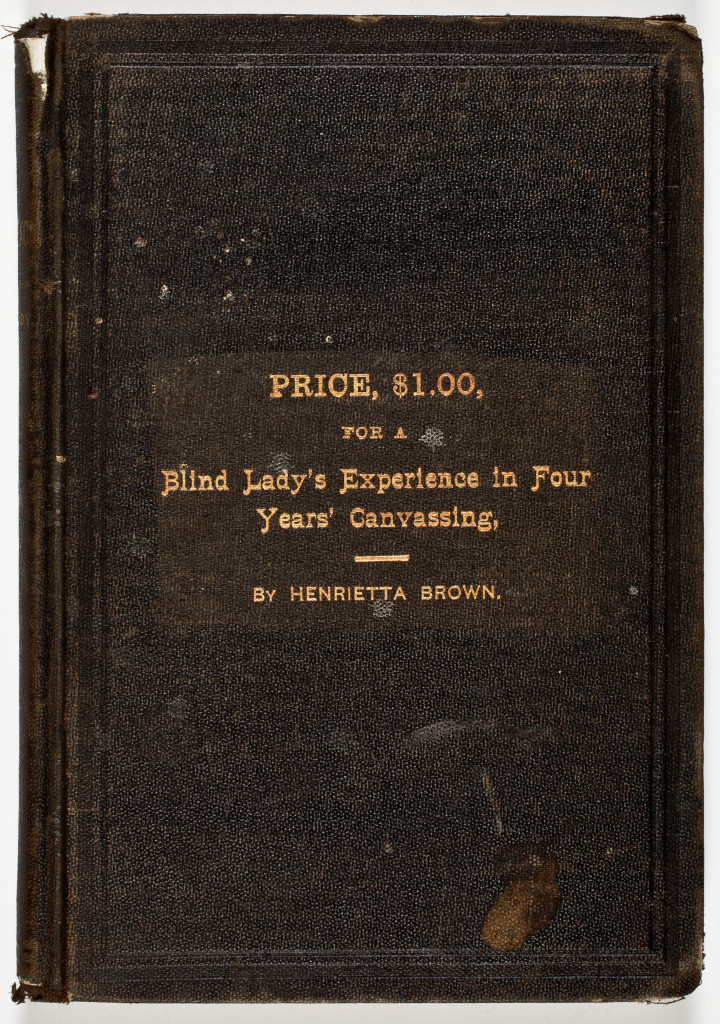
Brown, Henrietta. A Blind Lady’s Experience in Four Years’ Canvassing. [U.S.: s.n., 1882]. Adopt me for $200
The bare-bones details of Henrietta Brown’s life begin her narrative: she was born in 1836, was widowed in 1858, lost her sight in 1867, and in 1875 her uncle who had been supporting her died. Brown describes herself as “compelled to drift out from home to canvass for my support.” She purchased $5 worth of books (one of which was titled Comfort for the Desponding) and began canvassing. Her practice seems to have been to go to local pastors across the Midwest, bringing letters of introduction from Illinois ministers, and ask to speak to their congregations on Sunday mornings. Much of the book describes her time on the road and encounters with saloon keepers, coachmen, and railroad conductors. The logistics of travel were difficult for her as a blind woman, but the life seems to have suited her. Henrietta Brown concludes the book: “‘A rolling stone gathers no moss,’ and ‘a setting hen never thrives.’ I have long since learned that a sitting Hen-rietta never accomplishes much by remaining still; and I have resolved to move on, and on, and on.”

 Every quarter at AAS we release a list of recent publications by those who have researched at the library as fellows, members, or readers. To see this list, as well as a list of works published from 2000-2014, please visit our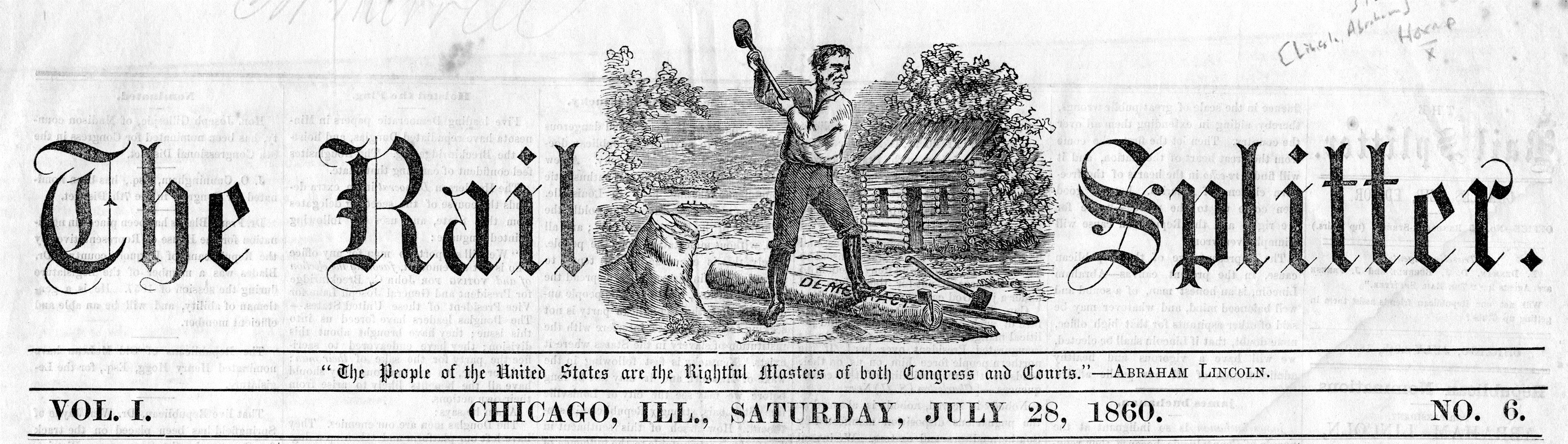

 Emily Wells, who is working on the Printers’ File project at AAS this summer, received her B.A. from Mount Holyoke College in 2015. In the fall she will enter the History Ph.D. program at the College of William and Mary and begin work as an editorial apprentice at the Omohundro Institute of Early American History and Culture. Here she shares what she has learned while working with the Printers’ File.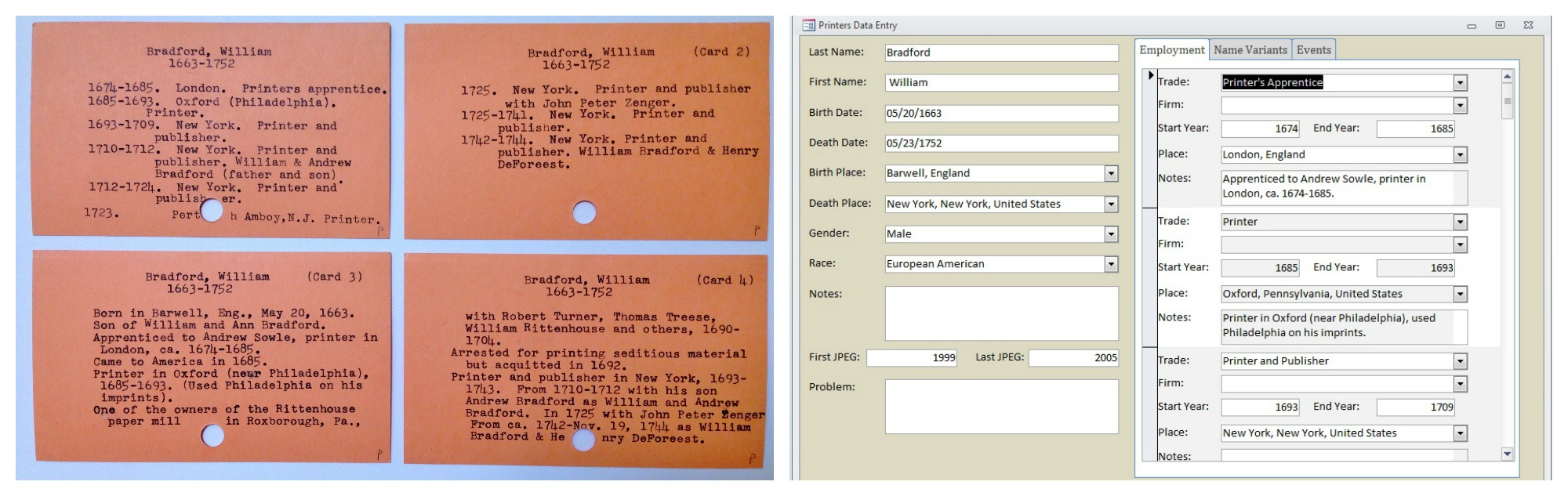
 pts department for almost 30 years and processed forty large collections. Jane most recently organized, housed, and wrote about some of the manuscripts from the Pike-Wright Family papers, a recent donation from Susan Pike Corcoran. Even though the donation includes a substantial
  There was one instance yesterday when Martha No 46 was put up alone—she cried to have Rachel No 47 her adopted child sold with her and her request was granted—they sold together for 975 dollars as you can see by reference to No 46 + 47—the price for which these sold is I should think about an average. A good adult field hand sound healthy and acclimated sells for an average of about 1000 dollars.