Starting the Presses: New Online Gallery Showcases First State Newspapers

Newspapers in early America were an essential part of connecting communities with the latest news from Europe and other colonies. They “enabled readers to imagine themselves as part of a shared culture of ideas, investments and events that spread beyond their local world,”[1] helping to unite the distinct geographic regions that would later become the ...

Conservator as Mediator: Paper Mends on Eighteenth-Century Connecticut Newspapers

In summer of 2025, I was fortunate and delighted to assist as a graduate intern in the conservation lab at the American Antiquarian Society. My experiences at AAS piqued my interest in serving a research collection, and I am eager to apply the techniques I learned and refined with the insight and support of Chief ...

Adventures in Amateur Newspaper Cataloging: “Wicked” Magic at AAS

The recent purchase of the Western Investor, an 1890 newspaper from Aberdeen, South Dakota, brought an unusual level of excitement to the newspaper office at the American Antiquarian Society. Despite sporting a slightly whimsical masthead, the paper appeared to be a standard, somewhat dull financial newspaper interesting only for researchers of bank and stock market ...

Adventures in Amateur Newspaper Cataloging: Roasts

Publishers of amateur newspapers devoted a significant amount of their limited space to critiquing other amateur papers -- sometimes constructively, but often not. Two amateur publishers from Dassel, Minnesota, Allison C. Brokaw and Reno L. Hayford, grew tired of the critical nature of amateur journalism and wanted publishers to focus their efforts on literary pursuits. ...

New to AAS: 2 Issues of Roll Call (Washington, DC), 1864

At least these two issues of the Roll Call newspaper from the Civil War were edited by “Three Ladies. Two of the War, and One of the Treasury Departments.” There is only one other known issue of this title, which may have begun in February 1864. It was apparently published during one of the many ...

Adventures in Amateur Newspaper Cataloging: The Acorn

As I work through cataloging the American Antiquarian Society’s collection of amateur newspapers,  I’m often amused by both the content of the material and the stories of the people who published them. The Acorn (Catalog Record), published in North Attleboro, Massachusetts, by Fannie Hamilton, delights on both accounts. Hamilton published the first issue of the Acorn ...

New to AAS: Anti-Slavery True Witness (New-Concord, OH), Feb. 20, 1850

Typically, curators purchase collection material from dealers, auctions, and bookfairs. Less common is the unsolicited offer from someone who found something in their house. Early this past summer [2024], a woman from West Virginia called AAS – on the recommendation of a dealer she had consulted – about a newspaper she found among other old ...

History of Conserving History: The Evolution of Paper Conservation in Libraries

In the summer of 2024, I spent eight weeks at the American Antiquarian Society (AAS) for my first paper conservation internship as part of my master’s program in conservation at the Institute of Fine Arts, New York University. Under the guidance of Chief Conservator Babette Gehnrich — who has dedicated over 35 years to stewarding ...

A Scoundrel at Work in the Archives: George Weeks’ Scams

In my work as the Serials Cataloger at AAS, I recently came across the Ladies' Enterprise, a periodical printed in several New England cities (including Worcester!) in the 1850’s. I was immediately drawn in by its subtitle “Edited and published by females” and its decorative masthead depicting women working at a print shop. Further digging ...

Finding Family After Slavery: The Last Seen Project and AAS

In January 2025, staff at the American Antiquarian Society attended a workshop on African American print culture taught by Dr. Derrick Spires, associate professor of English at the University of Delaware (and an AAS member and councilor), generously sponsored by the Nadia Sophie Seiler Family Fund. Dr. Spires shared how Black people used African American ...

New to AAS: The Genius of Universal Emancipation, 1830-31

Benjamin Lundy was a prominent abolitionist in the 1820’s and 1830’s. Brought up as a Quaker in what is now West Virginia, he saw the iniquity of slavery. In 1821 he started the Genius of Universal Emancipation in Mount Pleasant, Ohio. From there the periodical moved several times, being published in Greenville, TN; Baltimore, MD; Washington, ...

This Day in History: Great Chicago Fire Erupts

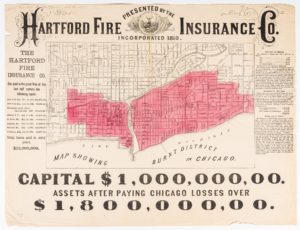
October 8, 1871 – On this day in 1871, the Great Chicago Fire erupted. The fire burned for two days, destroying buildings, claiming about 300 lives, and causing an estimated $200 million in damages. In all, the fire decimated a four-by-one-mile area of Chicago, including the city’s business district. The city quickly began reconstruction efforts, ...

This Day in History: Stamp Act Congress Convenes in Protest

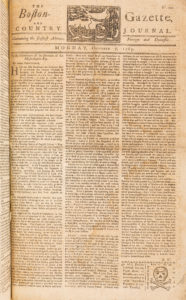
October 7, 1765 – On this day in 1765, the Stamp Act Congress convened in New York City. Representatives from nine colonies met to protest the Stamp Act, which imposed the first direct tax by the British Crown on American colonies. The passage of the Stamp Act is often cited as one of the first ...

This Day in History: Lincoln Proclaims, ‘Turkey Day!’

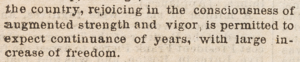
October 3, 1863 – On this day in 1863, President Abraham Lincoln issued a proclamation designating the last Thursday in November as Thanksgiving Day. The proclamation came in the midst of the Civil War. In his address, Lincoln chose to focus on the country’s prosperity: “[T]he country, rejoicing in the consciousness of augmented strength and vigor, ...

Discovery: Herald of Freedom and Peter H. Clark

Newspapers are a huge and important part of our collection here at the American Antiquarian Society. They take up over five miles of shelving here. From establishment papers like the New York Times to amateur prints, preserving newspapers gives readers a glimpse into the mundane and day-to-day, as well as insight on relevant social issues ...