The Life and Times of a Miner’s Wife: Part III

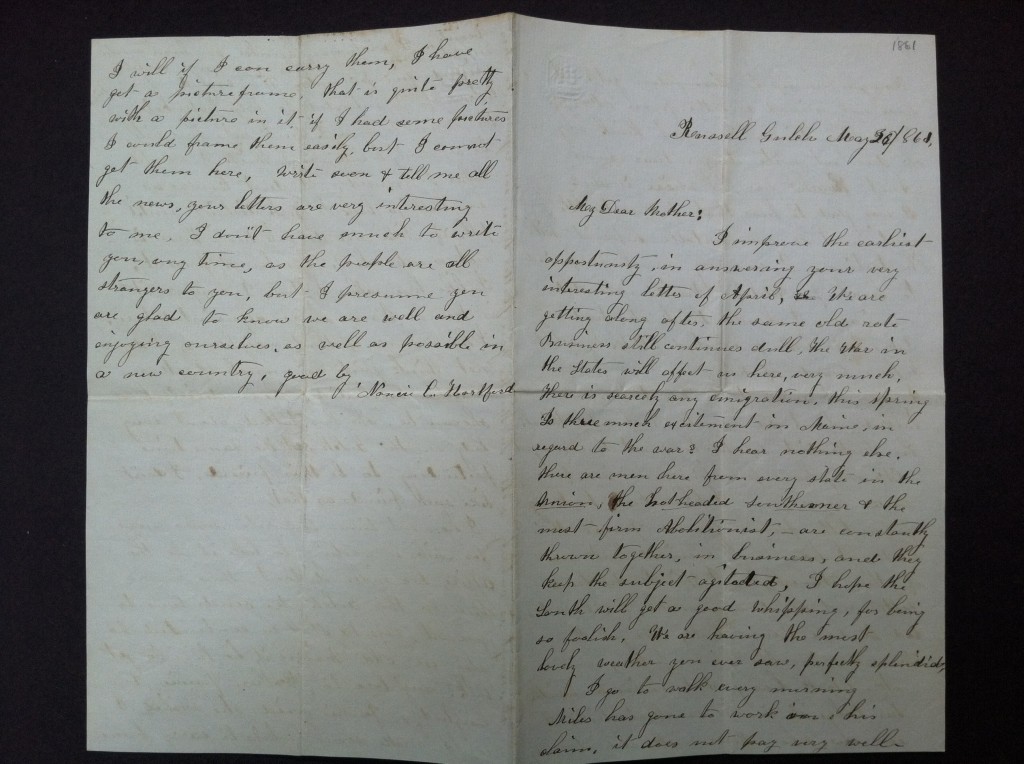
This week concludes the story of Nancie Colburn Hartford and her husband, Miles, whom we met in Part I and Part II. Their letters can be found in the Shaw-Webb Family Papers. Although westward expansion and the ensuing spread of slavery is often cited as a leading cause of the Civil War, the experiences of those ...

The Life and Times of a Miner’s Wife: Part II

Last week, we met Nancie Colburn Hartford and her mining husband, Miles, and explored their change in attitude toward mining over the course of a couple of years. This week, we’ll look at a different kind of change: those that so often happen in the life of a woman. While Miles was navigating the difficulties of ...

The Life and Times of a Miner’s Wife: Part I

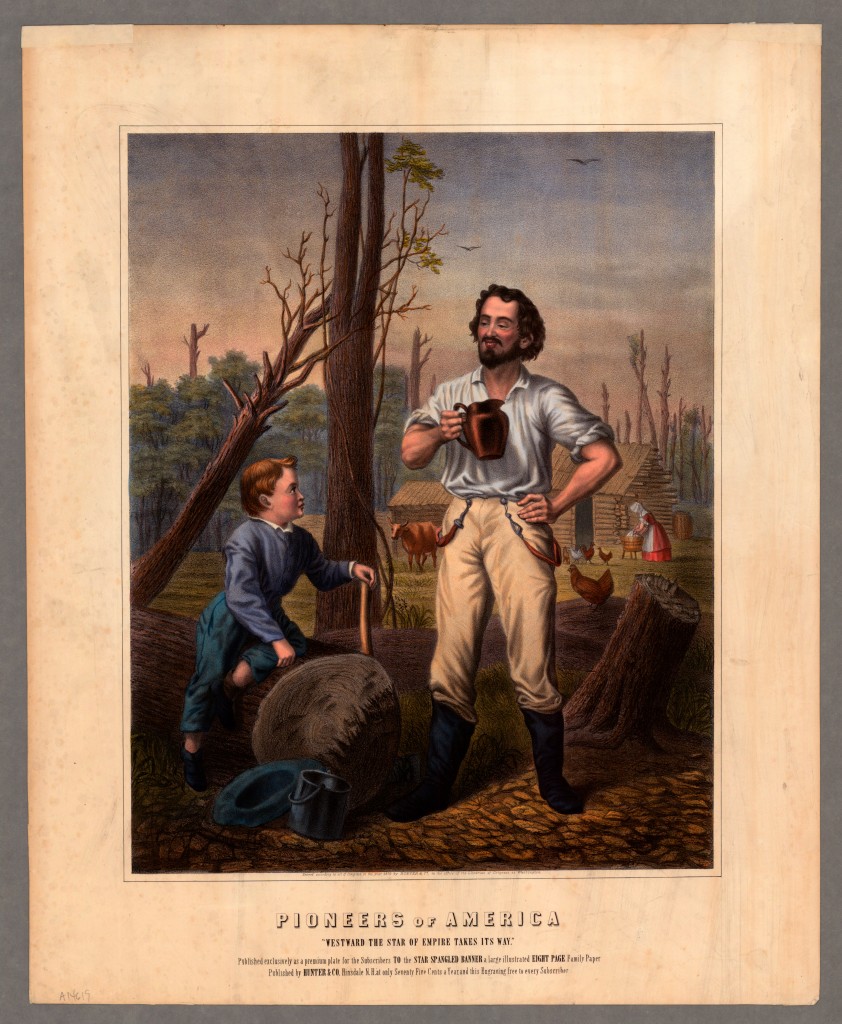
Detail from "The Miner

The nineteenth-century gold rushes continue to have a strong hold on the imagination of the American public. Perhaps it’s the promise of wealth or adventure or simply starting a new life. In any case, the gold rushes opened not only new physical and political frontiers for the United States, but also very personal ones for ...

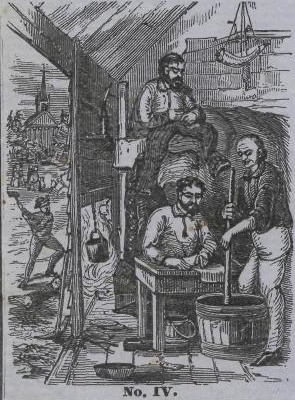
Vimmin and politics!

465696_0001

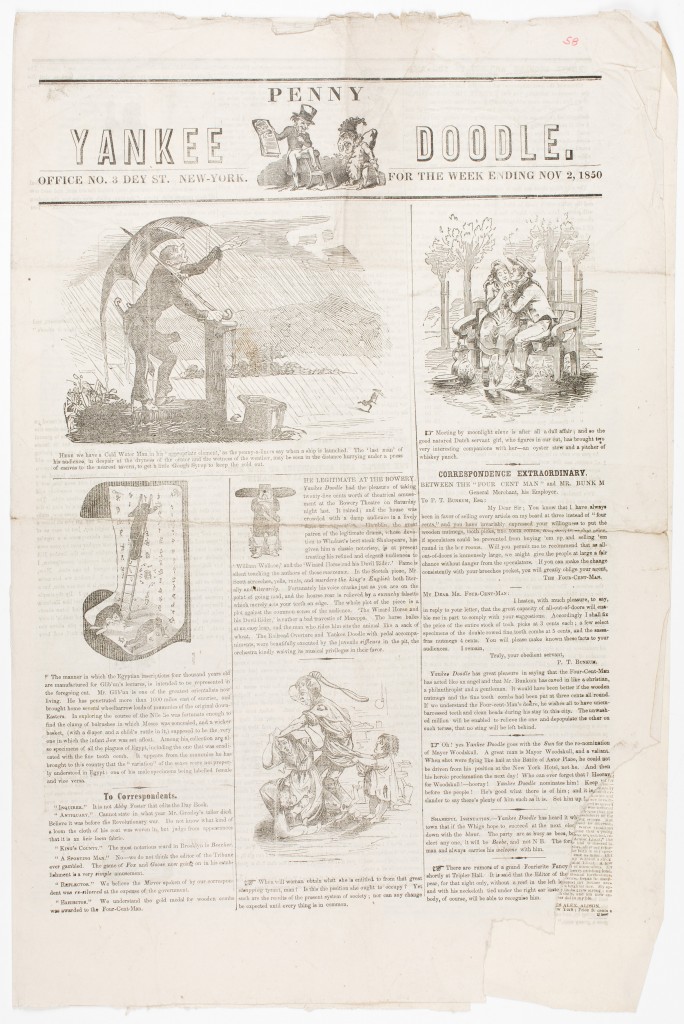
Penny Yankee Doodle  (New York, NY).  November 2, 1850. This is one of a number of illustrated humor newspapers and periodicals that appeared in the 1840s and 1850s.  The editor says they are not an imitation of Punch from England, but, “I am myself alone – the original Genius of American Humor.”  There are the usual ...

The red vegetable pill or the blue vegetable pill?

464331_0001

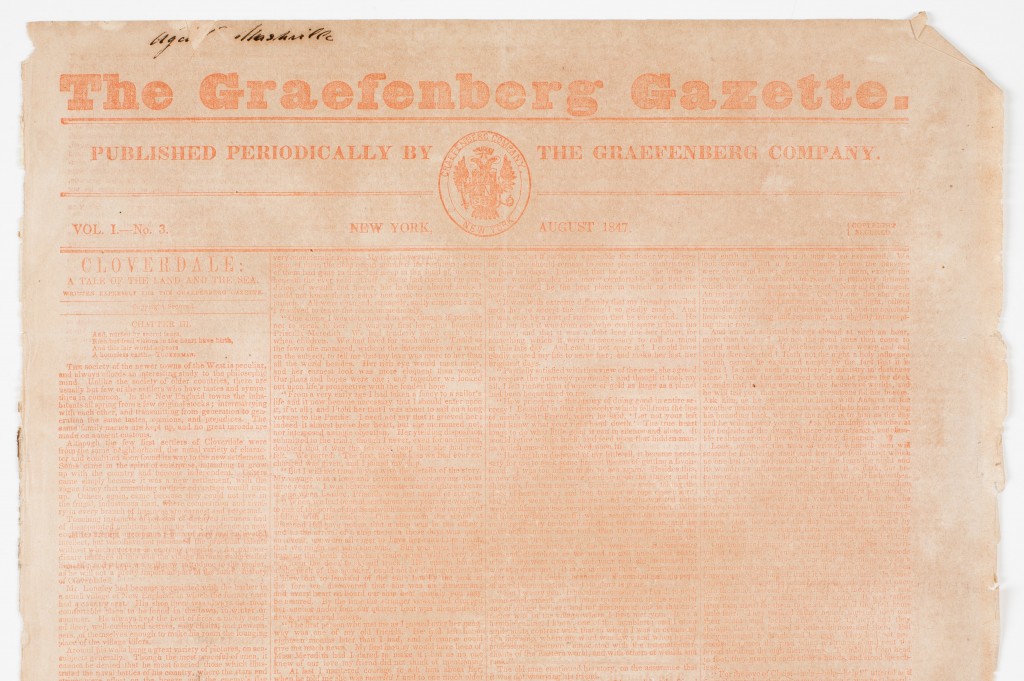
Graefenberg Gazette (New York, NY),  August 1847. The first thing that should grab your attention about this advertisement sheet is that it is printed in red ink.  This was a marketing trick by the Graefenberg Company that put out a wide variety of pills and elixirs.  This particular sheet promoted their vegetable pills, sarsaparilla compounds, eye ...

Isaiah Celebrates the Fourth of July

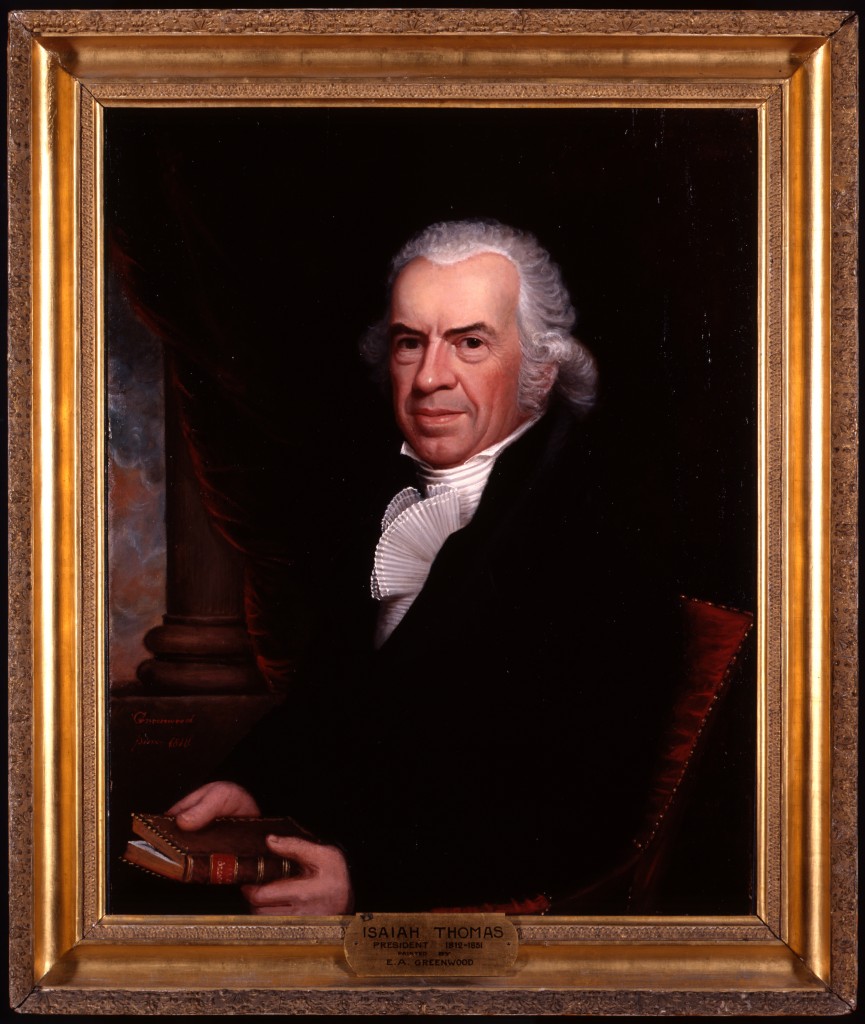
Portrait of Isaiah Thomas by Ethan Allen Greenwood, 1818

Here at AAS, nary a holiday goes by without some reflection on how the same was celebrated in days past. On this Fourth of July we’re going to take a trip back 200 years and check in on how our founder, Isaiah Thomas, celebrated the holiday. In July 1814 the United States was in the midst ...

Filling in a Gap: Reporting Lincoln’s Assassination

9420_0001

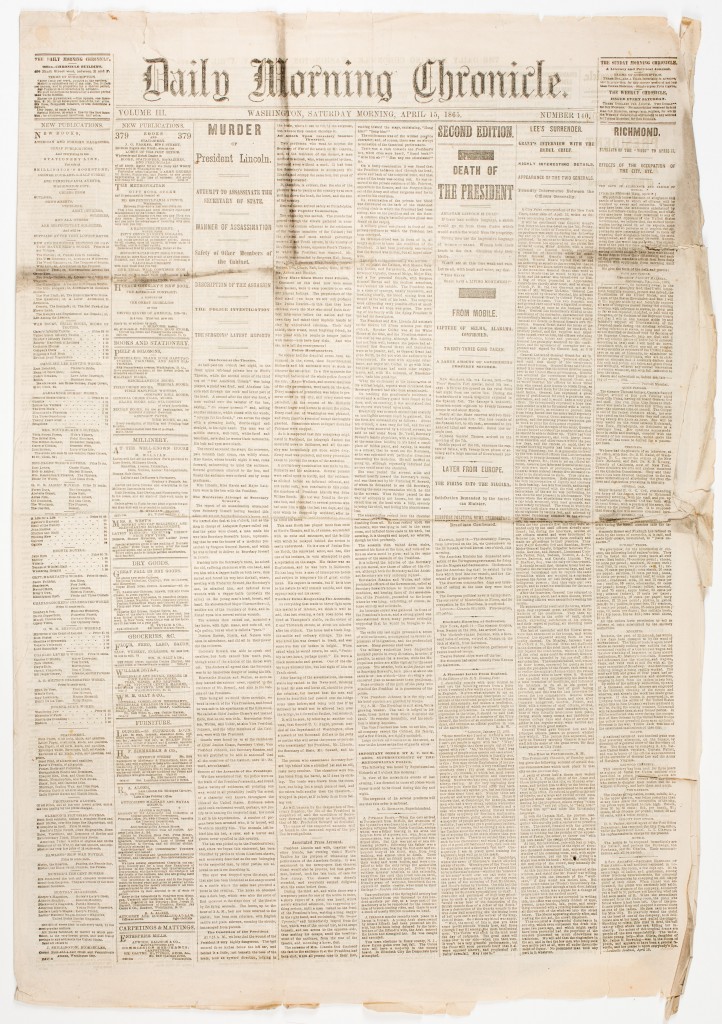
In May I picked up a large collection of newspapers from the Indiana State Library.  It took 20 book cart loads to unload the back of the 26’ truck.  There were a number of bundles of miscellaneous newspapers of single or scattered issues. While going through one of the bundles, I came across an issue of ...

Now in print

Readers

Every quarter at AAS we release a list of recent publications by those who have researched at the library as fellows, members, or readers. To see this list, as well as a list of works published from 2000-2014, please visit our recent scholarship page on the AAS website. If your book, article, or other achievement is not included, ...
Who is that Book-Clad Man? William Jenks on the Science of Early American Antiquarianism

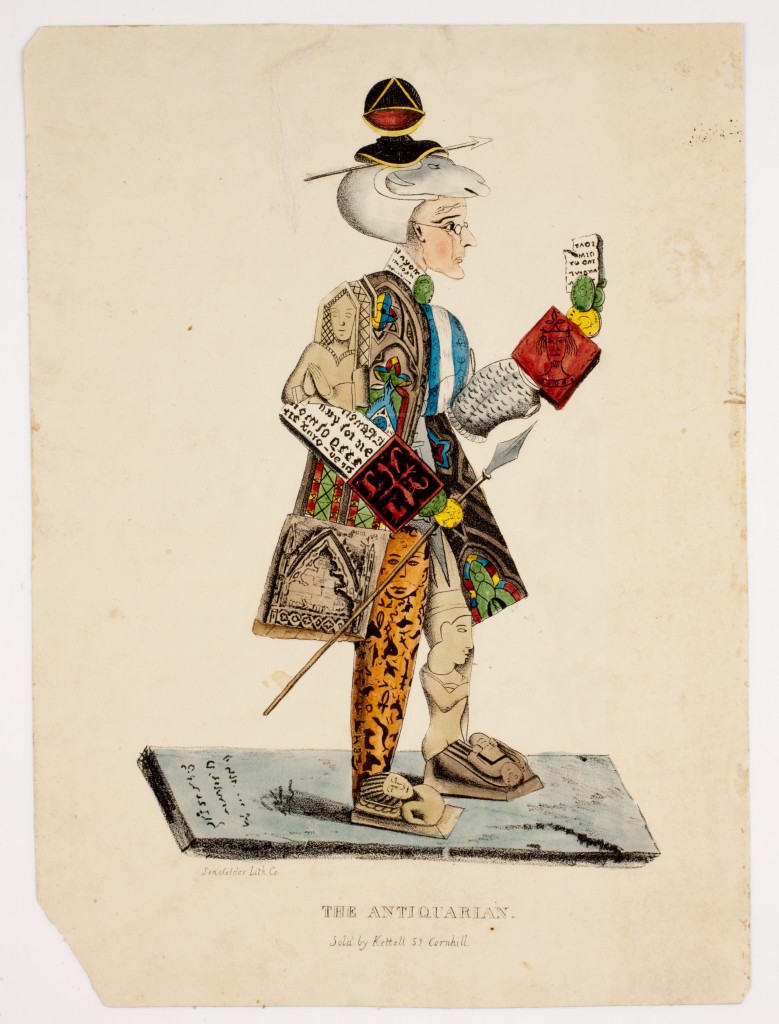
the antiquarian

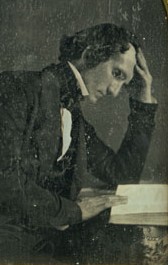
This image, a favorite around AAS, is part of a series a lithographs that circulated in the late 1820s and early 1830s, depicting people as an amalgamation of various objects: shells, vegetables, paintings, and in this instance, relics. This graphic motif harkens back to the Renaissance painter Giuseppe Arcimboldo, whose portrait heads made of similar ...

The Way to a Woman’s Heart—Or Not

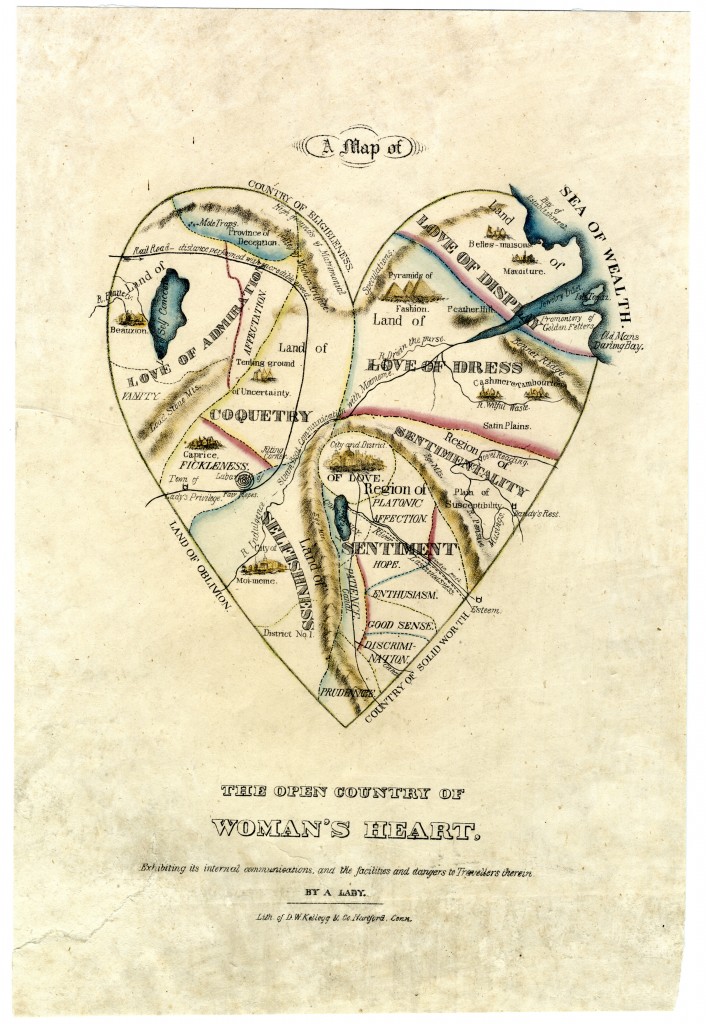
map of woman

It’s an age-old question: What is the way to a woman’s heart? (It’s also a timely question, with Mother’s Day this coming weekend.) We often hear the way to a man’s heart is food, beer, or sports. To a woman’s, it’s usually said that it’s chocolate, jewelry, clothing, or shoes. If we dig a little ...

Noah Webster’s American English

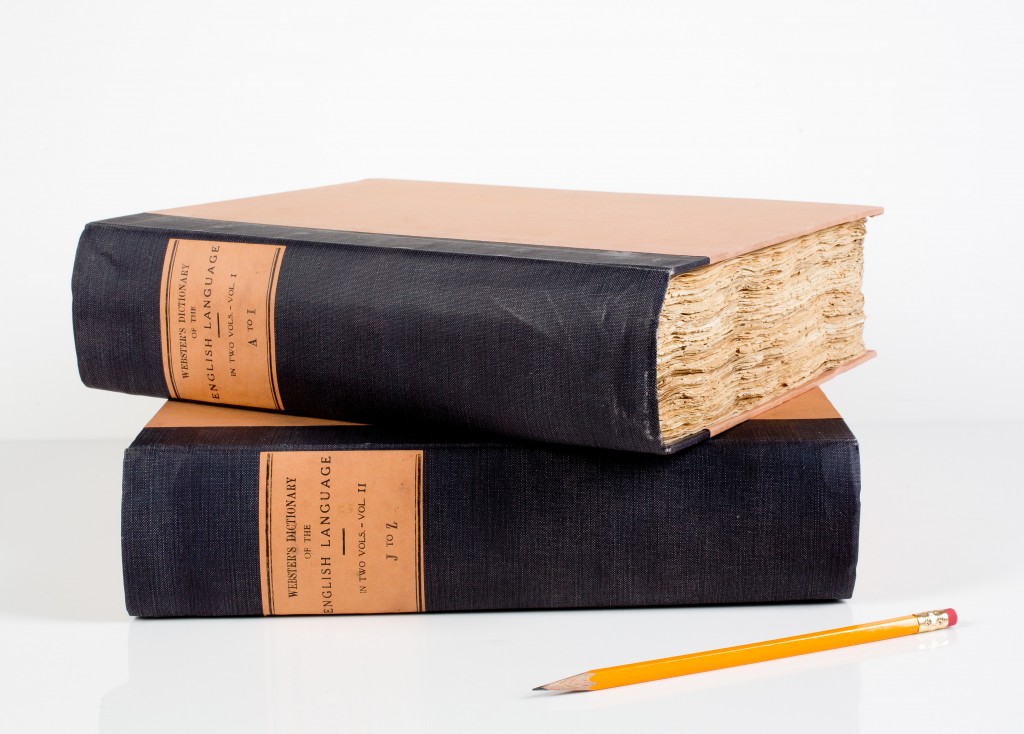
First edition of the two-volume American Dictionary.

Do you remember – especially before the advent of the internet - being in need of a definition or a proper spelling of a word and turning to your home’s, school’s, or work’s copy of a Merriam-Webster dictionary?  That dictionary you used was based on the life’s work of one ambitious American, Noah Webster.  Webster’s legacy continues ...

Adventures in Cataloging: Some Sleuthing Required (Part III)

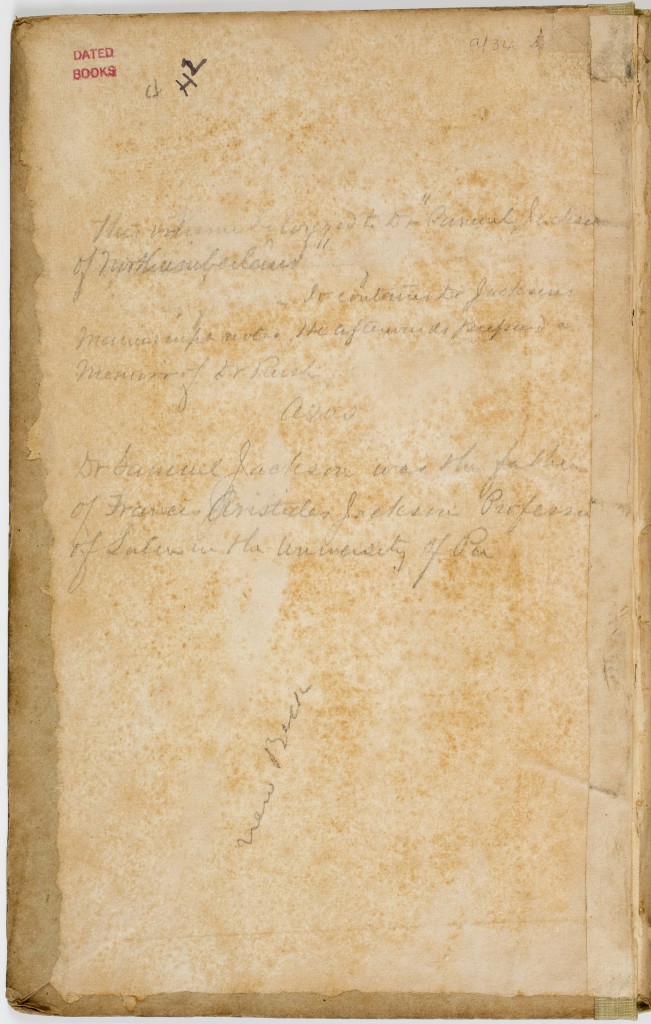
Dr. Asa M. Stackhouse’s notes about Dr. Samuel Jackson, which proved to be the key to disentangling the identities of the doctors Jackson.

This week, the series ends by correcting a case of mistaken identity. And if you missed the first two parts, be sure to check them out: Part I, Part II. 3. The Doctors Jackson We like to trace provenance information in our records when we can. This allows one to find former owners, virtually reconstruct an ...

A Young Reader’s Appreciation for Johnny Tremain

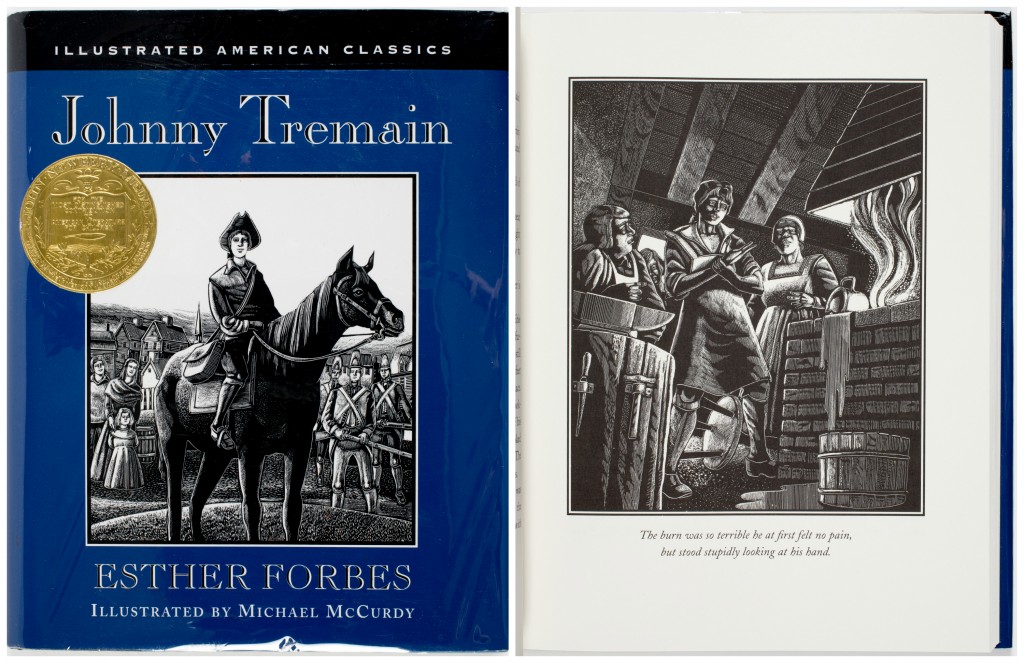
Tremain 1998

Editor’s note: In a twist that follows up on Jackie Penny’s account of reading pre-1900 fiction to her children, retired AAS director of book publication Caroline F. Sloat turned to her ten-year-old grandson for an enthusiastic recommendation of Esther Forbes’s Johnny Tremain. Our bags were packed and we were ready to leave for the airport ...

Adventures in Cataloging: Some Sleuthing Required (Part II)

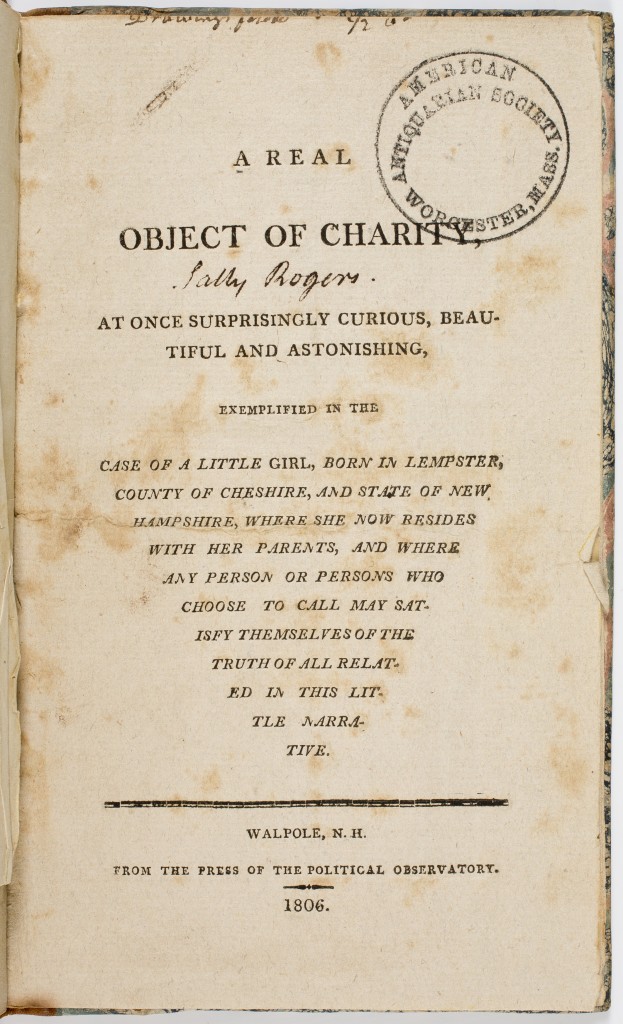
Title page of A Real Object of Charity (Walpole, N.H., 1806).

Last week, in Part I, Amy discovered the title and date of a pamphlet missing a title page by scouring the newspapers. Now, she puts a name to a remarkable but unidentified woman. 2. The life of Ms. Sally (or Sarah) Rogers Sometimes, I catalog a book or pamphlet and a person appears whom we know ...

Adventures in Cataloging: Some Sleuthing Required (Part I)

Our 25 miles of shelves hold many mysteries for the intrepid cataloger to unravel.

One of the neat things about working as a cataloger at the American Antiquarian Society is solving the puzzles that come across my desk. I work exclusively on books and pamphlets published in the early nineteenth century, and over the course of 200 years title pages are lost, authors are forgotten, and people disappear into ...