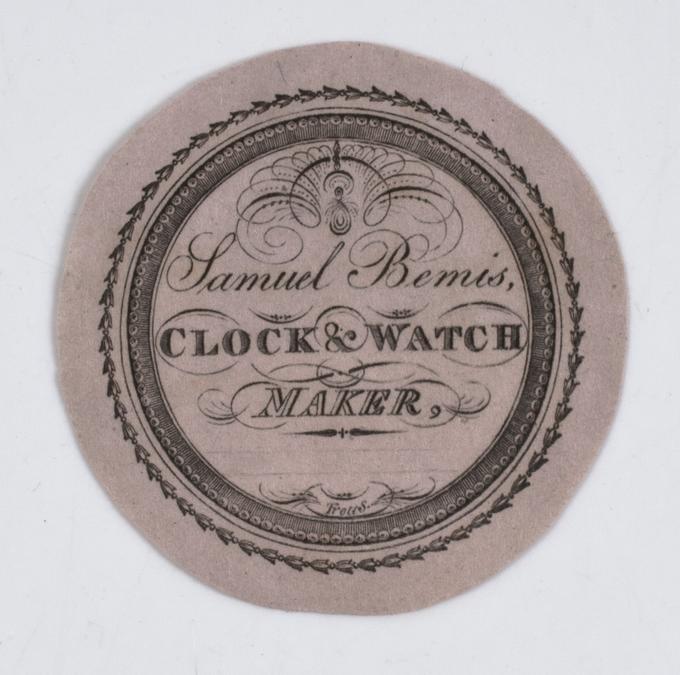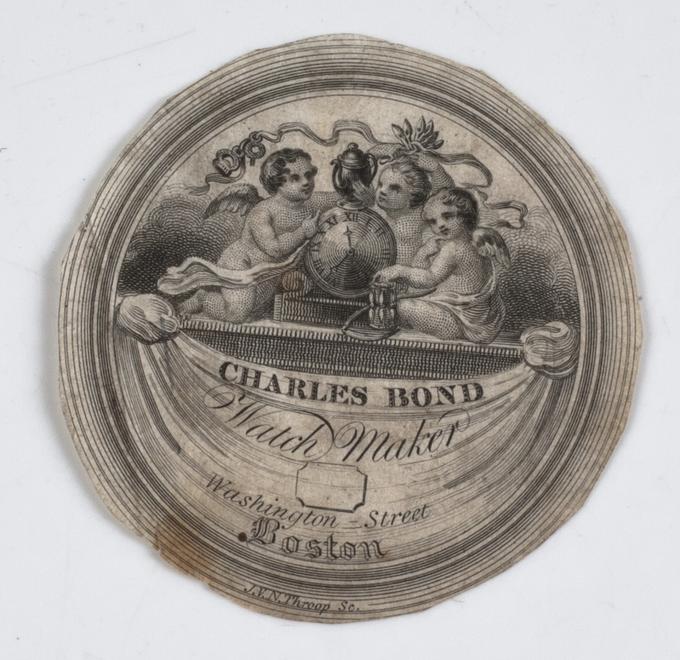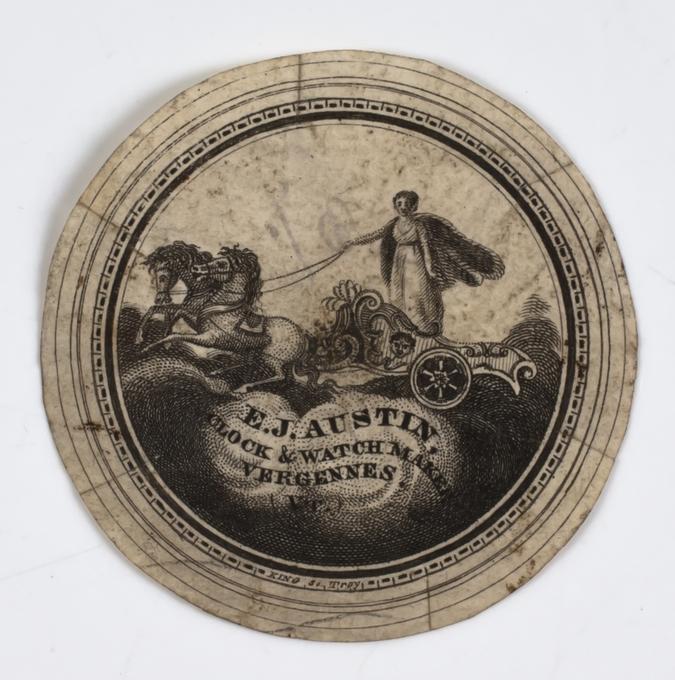
Log Book + Diary = Story of a Voyage

In 1849, the Cayuga Joint Stock Company of Auburn, NY set sail for California.  The company of men had their sights set on California’s gold, and established their joint stock company “to engage in mining, trading and such other business in the territory of California” according to the company by-laws.  For a nominal fee of $500, anyone (of good reputation, of course) could become a member and receive his fair share.

In 1883, W.A. Ogden presented a paper to the Cayuga County Historical Society.  Ogden was a member of the Cayuga Joint Stock Company and a passenger on the barque Belvidere during its passage from New York to San Francisco.  In his paper he recalls their journey and their successes upon landing in California.  (Read other Past is Present posts about California.)

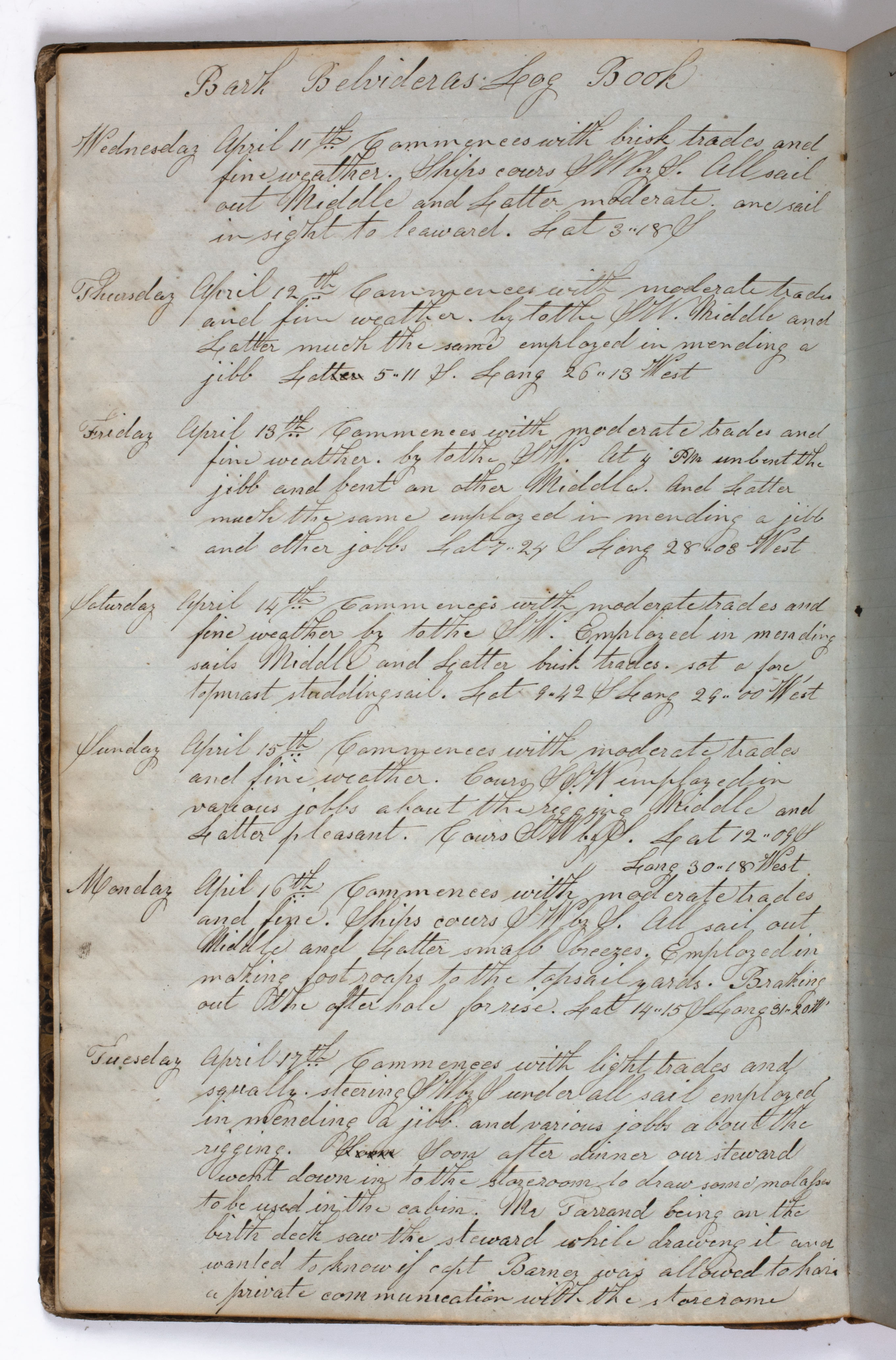
In 2011, here at AAS, we have a fabulous collection of log books, which shed light on over 150 years of American maritime history.  Included in this collection is the log book of the barque Belvidere, the Baltimore Clipper carrying the entirety of the Cayuga Joint Stock Company to California.  And we come full circle!

Comparing Ogden’s reminiscences of the voyage with the log book completes the experience of working with this primary resource.  Log books are excellent for researching maritime history, but on their own it’s difficult to reconstruct a complete voyage.  Pair the log book with a diary or reminiscences such as Ogden, and you’ll get a much more complete picture.

For  example, reading the log book will tell us the Belvidere dropped anchor in Peru, but thanks to Ogden’s writings, we also know the crew visited the Peruvian Library (which had over 20,000 volumes!) and that Ogden thought Peruvian women to be quite attractive.  Also, on April 16th, the log book can tell us the wind, the weather, and the course of the clipper.  But because of Ogden, we also know that on this day, although the ocean seemed calm, the passengers were not:

The 16th of April we had what might be termed a family row on a large scale; Captain Barney, who was very sensitive and quick to take offence, had heard some criticism by member of the company in regard to his management.  He called the company “aft” on the quarter deck, and gave us a speech, threatening that unless apologies were made and he was sustained by the company, he would take the ship into Rio Janeiro and deliver her over to consul.

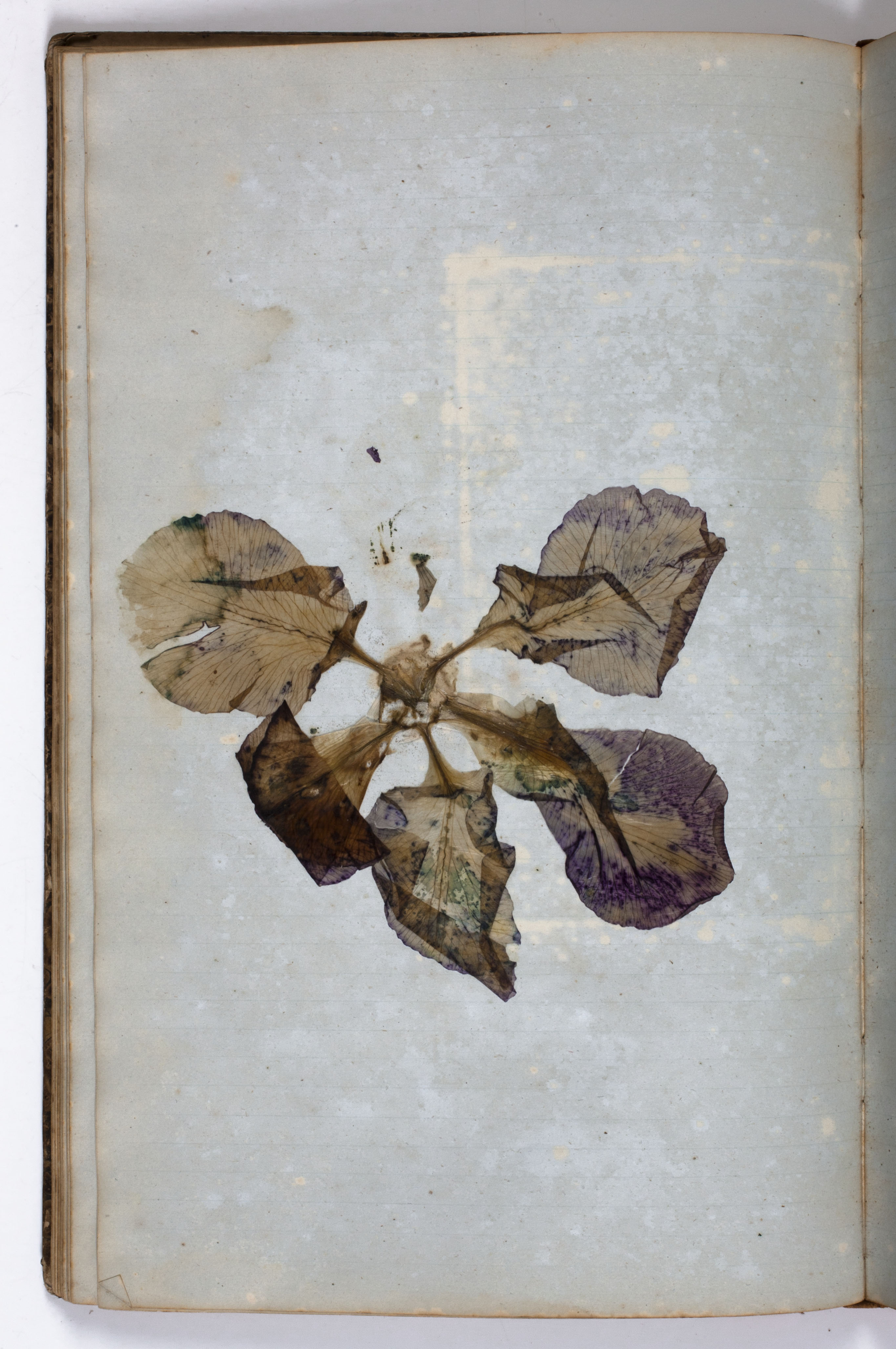
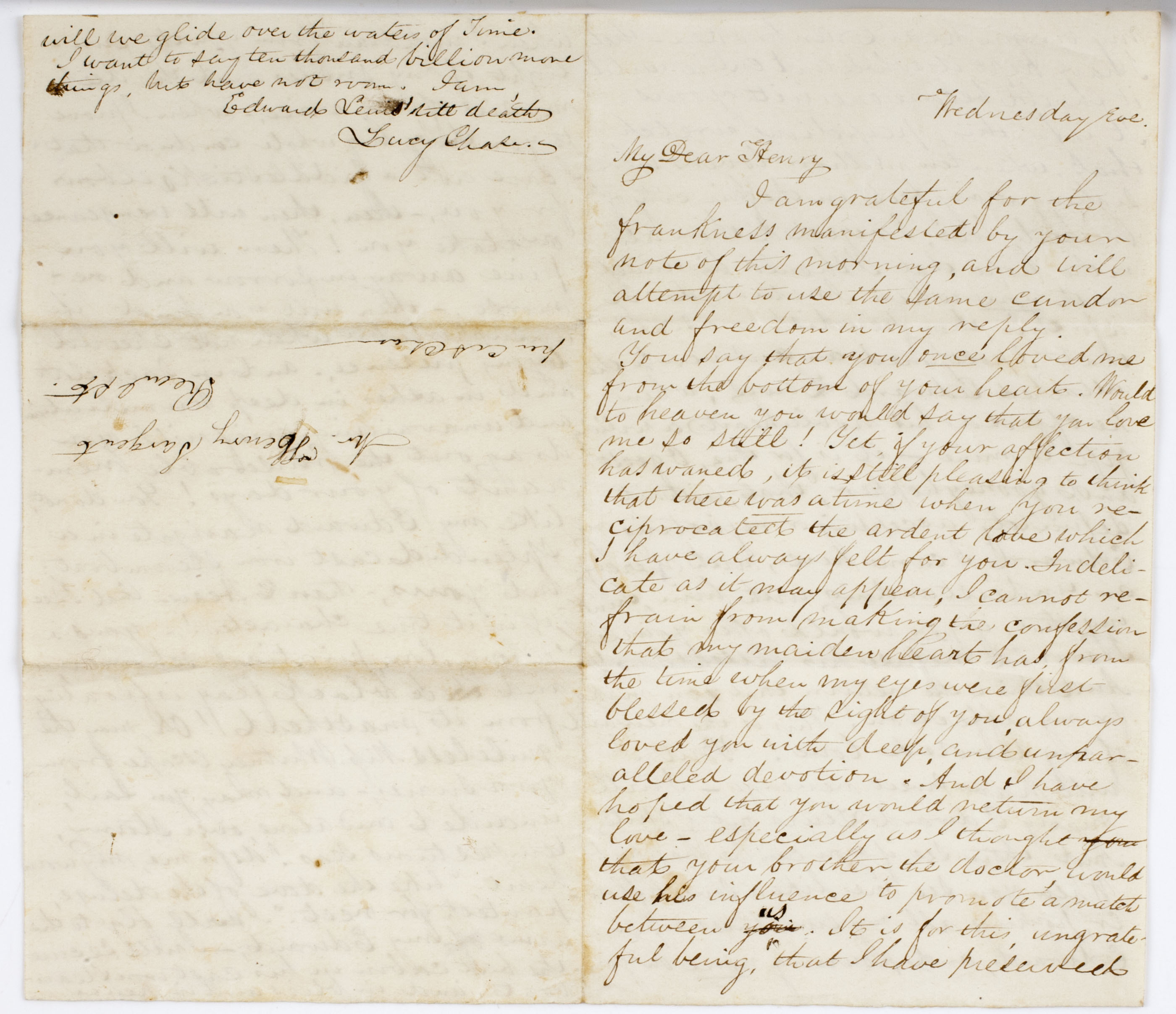
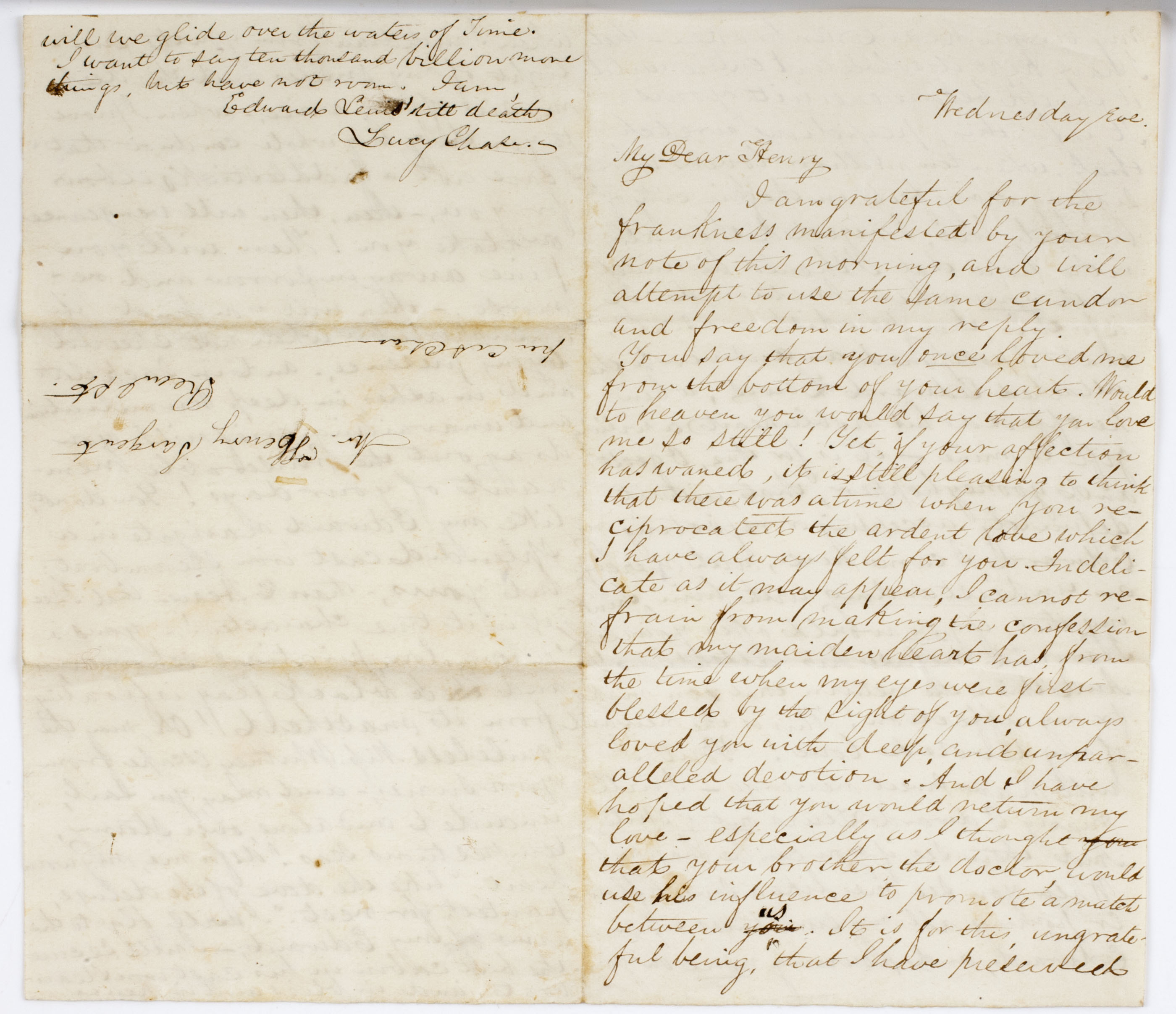
And what the log book can do for historical research that reminiscences cannot is provide us with an amazing tactile connection to history.  While our collections are important for the information they hold, this log book also has that awe factor of its physicality.  After learning about the voyage, and the history behind the men aboard, the book serves as a relic of the voyage, and connects us to the experience.  Perhaps Ogden recalled collecting flowers from Peru; however we can see the actual pressed flowers in the log book.  The log book serves as a common element between us and the men of the Cayuga Joint Stock Company from over 150 years ago, and provides an amazing historical experience!

Richard Allen, Absalom Jones, and the Early Black Church

In April 1787, Rev. Richard Allen and Rev. Absalom Jones co-founded the Free African Society (FAS) in Philadelphia, Pennsylvania. As two of the earliest African Americans to become ordained Christian priests, Allen and Jones sought to create a kind of community outreach organization with the FAS. It helped black Philadelphians satisfy some of their basic needs through education and employment opportunities. But after the turn of the nineteenth century, Allen and Jones parted ways over the religious direction of the FAS. Although both men had started their careers in the Methodist Church.  Jones became a priest in the Episcopal Church in 1804. Many FAS members followed Jones and joined an already established Episcopal church in the city, while Allen considered starting an independent Protestant denomination of his own.

Allen founded the African Methodist Episcopal (AME) Church in Philadelphia in 1816. As the first independent African-American church in the United States, it appealed to Afro-Christian freemen and women who understood Allen’s theology as a force of liberation. In other words, Allen saw his socio-racial purpose in the pulpit as twofold. First, he advocated abolition in his weekly sermons, and second, he spoke against the vitriol that often defined antebellum race relations, especially in cities such as Philadelphia. Across town at the African Church of St. Thomas, Jones also condemned the evils of slavery in his sermons. In fact, Jones’ congregation even petitioned Congress about the 1793 Fugitive Slave Law, which kept free black communities living in fear.

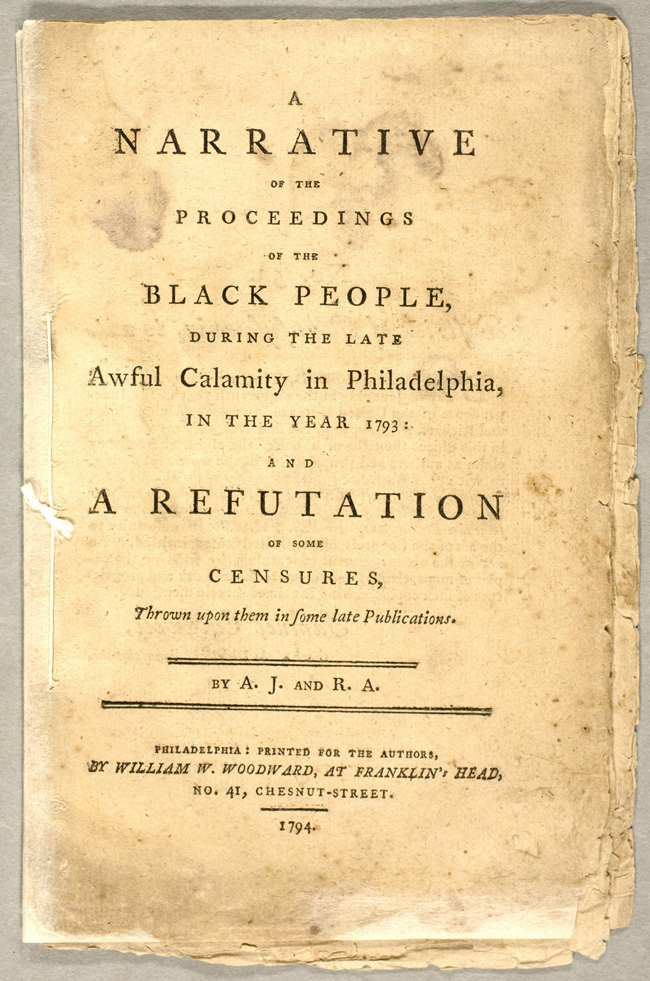
At the American Antiquarian Society (AAS), an original copy of Allen and Jones’ 1794 co-publication concerning Philadelphia’s yellow fever epidemic is held in the archives. Entitled A Narrative of the Proceedings of the Black People, During the Late Awful Calamity in Philadelphia, in the Year 1793 [AAS online catalog record], it depicts the efforts of black Philadelphians at helping the city’s sick, regardless of race. Some whites wrongly believed that blacks were immune to the disease, but Allen and Jones refuted this idea, along with claims that they had somehow profited from the epidemic. Ultimately, AAS strives to preserve historical, literary, and graphic-arts materials prior to 1877 and Allen and Jones’ Narrative is certainly a unique aspect of AAS’ African-American collection in the antebellum period.

The Acquisitions Table: The Boy’s Treasury of Sports, Pastimes, and Recreations

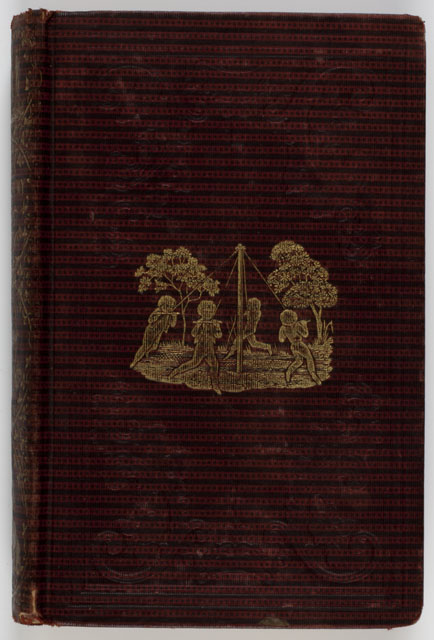
The Boy’s Treasury of Sports, Pastimes, and Recreations. Fourth American edition. New York: Clark, Austin & Co., 1850.

Striped publisher’s cloth bindings are rare, and such a binding on a children’s book in good condition is even rarer. The charming gilt vignette of boys at play puts an added layer on an already delightful binding.

The Civil War comes to “Mary S. Peake, the Colored Teacher at Fortress Monroe,” Part 1

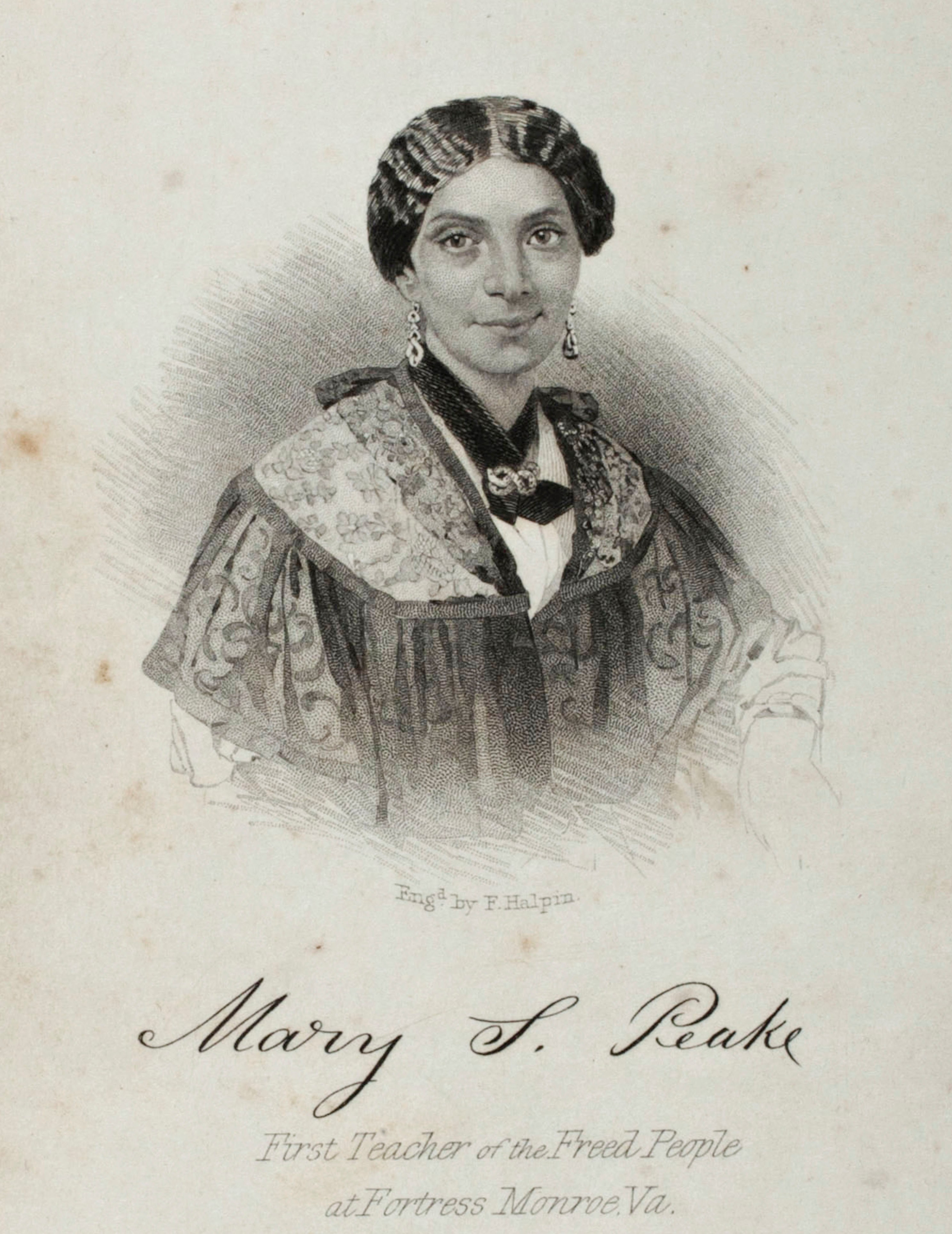
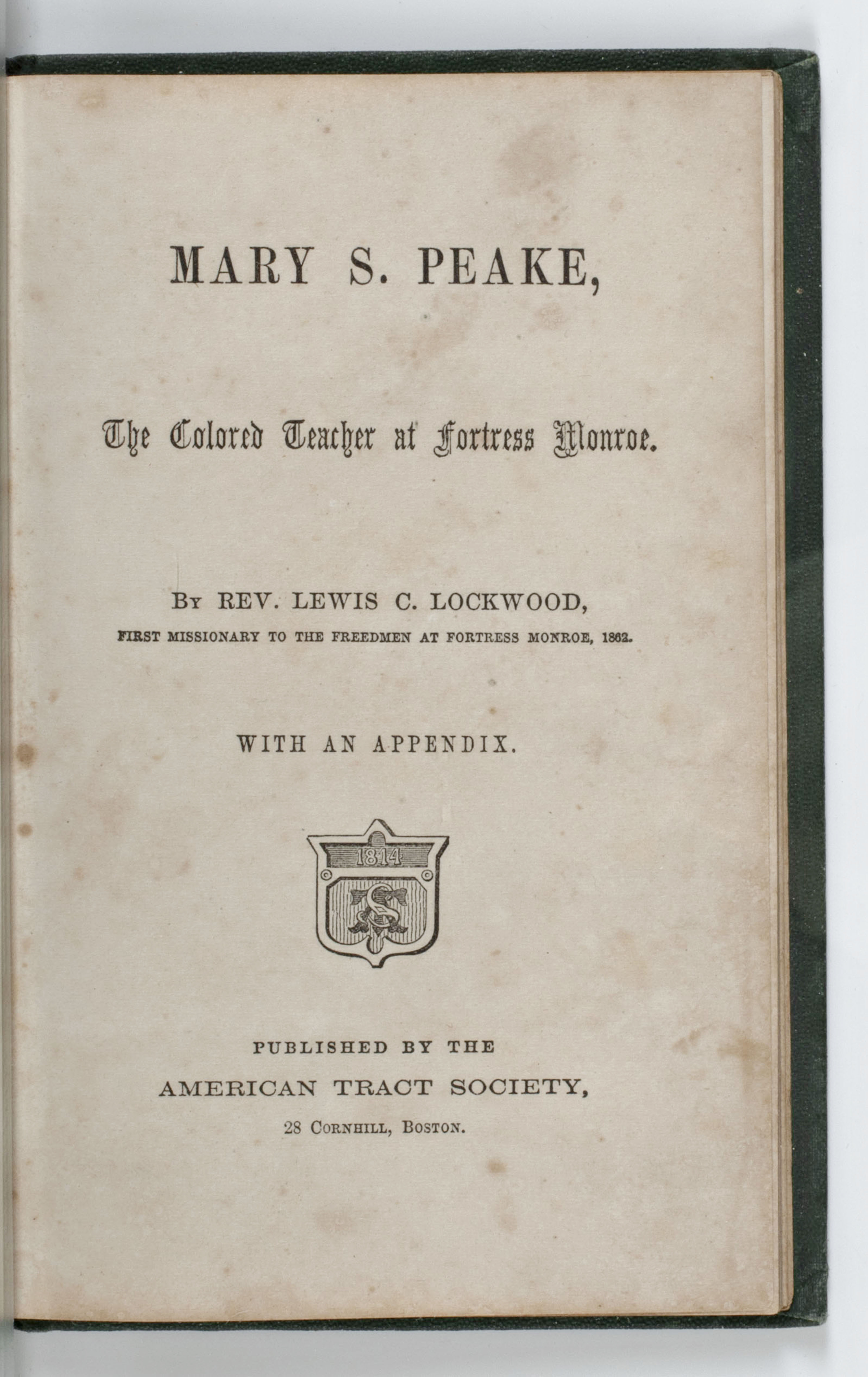
What we have for you today is the story of a remarkable African American woman and her community.  The story was told by Rev. Lewis C. Lockwood, self-described as the “First Missionary to the Freedmen at Fortress Monroe, 1862,” in a book titled: Mary S. Peake, the Colored Teacher at Fortress Monroe.  (The full text is available online through Project Gutenberg, or you can check out the AAS online catalog record describing our copy of the original.)

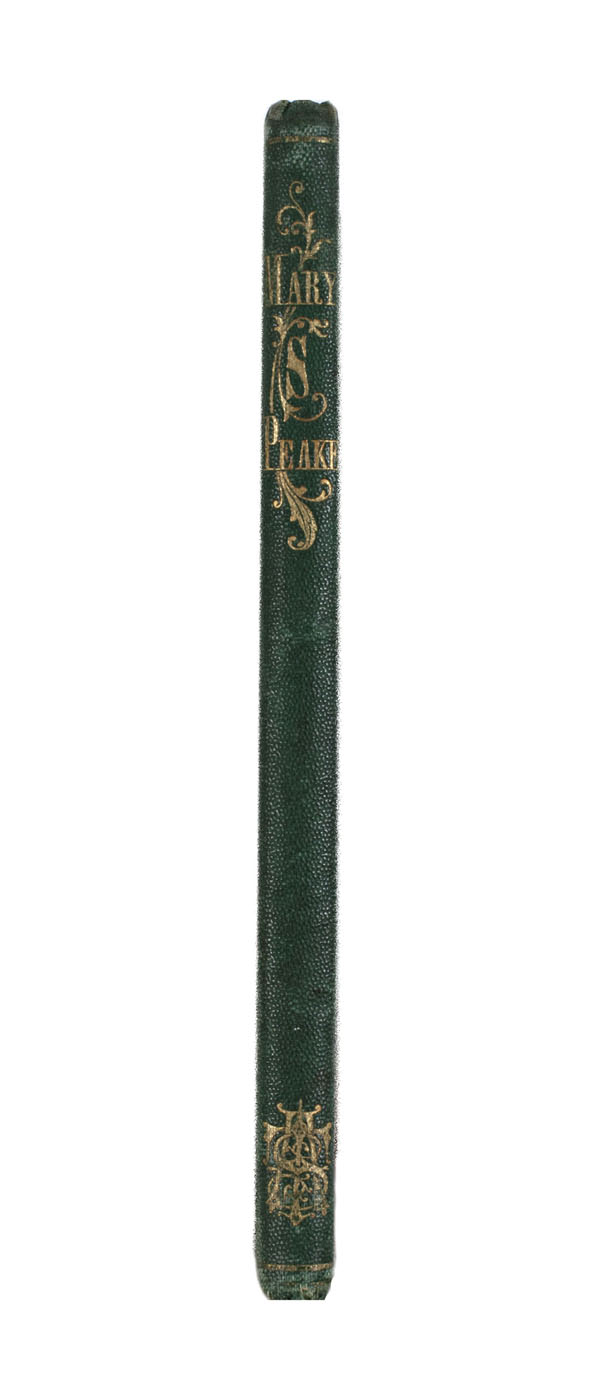
The small green book is only 16 cm high and 1 cm thick, but it is packed with vivid accounts of the free black community that grew up around Fortress Monroe after the nearby town of Hampton, VA was burned in the summer of 1861.  Though 150 years have passed, Mary’s story tells us much about the everyday heroism and hope for the future that was present in nineteenth-century free black communities, traits that didn’t begin or end with the Civil War.

The bare bones of the life story of “Mary S. Peake, the Colored Teacher at Fortress Monroe” are easily told.

In 1823, Mary S. Kelsey was born in Virginia to a free colored woman and was educated in Alexandria until:

a law of Congress enacted that the law of Virginia in relation to free colored people should prevail in the District of Columbia. This was several years before Alexandria was retroceded to Virginia. This law closed all colored schools in the city. Mary was compelled to leave the school in consequence of being informed of as having come from Virginia.

In 1847, Mary’s mother was married to Thompson Walker, and they bought a house in Hampton, VA.

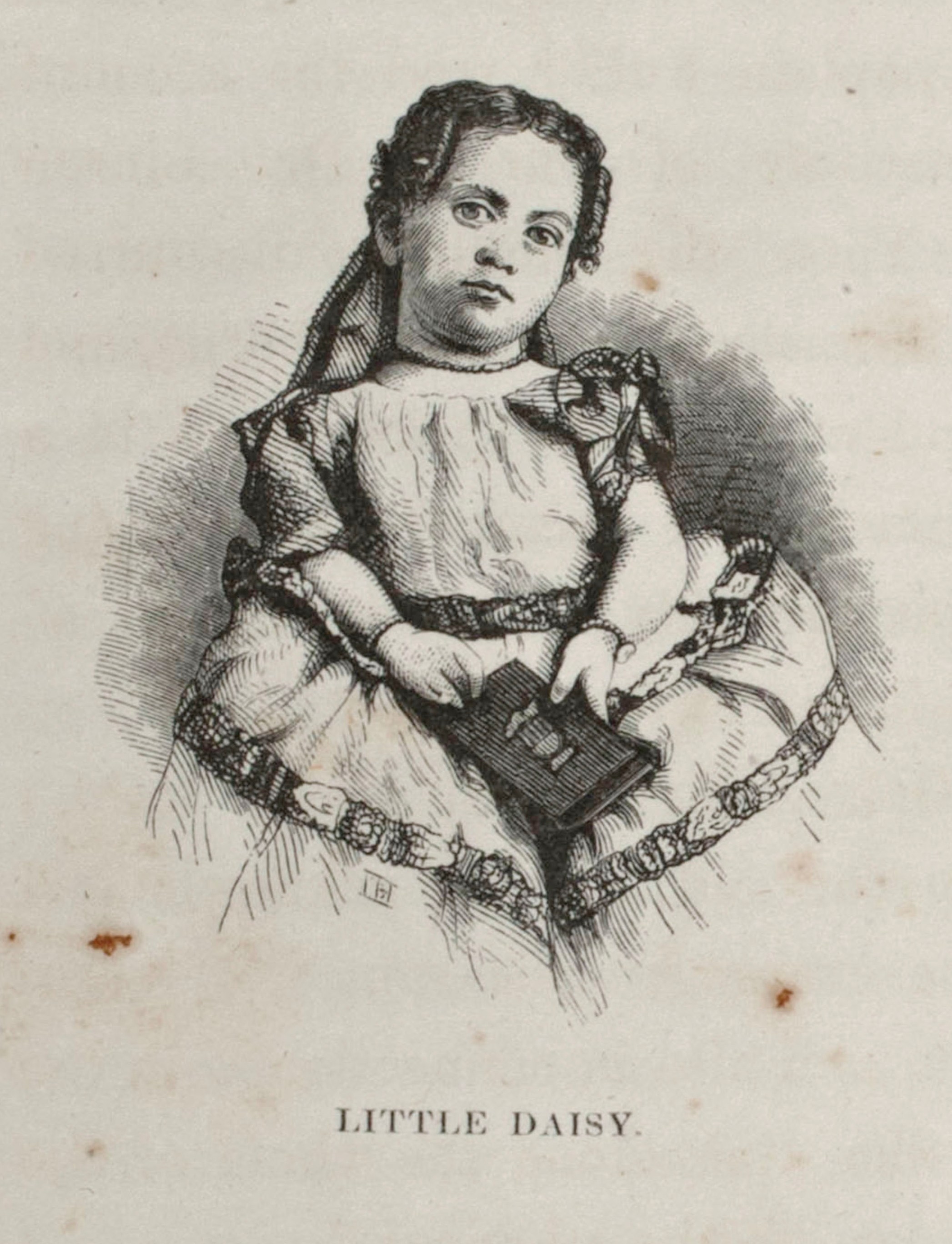
In 1851, Mary was married to Thomas Peake, formerly a slave, but afterward a free man, and soon had a daughter Daisy.  Of this time in her life, our narrator, Rev. Lockwood, writes:

Though sustaining herself by her needle, Mary found time for many labors of love. Among other things, she originated a benevolent society, called the “Daughters of Zion,” designed for ministration to the poor and the sick. It is still in existence.

Her house, like that of Mary and Martha of old, was a place of spiritual resort. There the pastor, deacons, and other leading members of the church found congenial society. She early began the exercise of her gifts as a teacher. At that time, fifteen years earlier, she had among her pupils Thompson Walker, her stepfather, William Thornton, and William Davis, all now able and eloquent exhorters. She was afterward of great service to others, who are now efficient exhorters and members of the church.

Up to the time of the burning of Hampton, she was engaged in instructing children and adults, through her shrewdness and the divine protection eluding the vigilance of conservators of the slave law, or, if temporarily interfered with, again commencing and prosecuting her labors of love with cautious fearlessness, and this in the midst of the infirmities attending a feeble constitution. (p. 14-15)

While her work may have been “temporarily interfered with” earlier, 1861 was the year everything changed for Mary Peake, for her family, and for the fellow African Americans she taught.  Their lives would never be the same.  Neither would their country.

Tune in next week for Part 2 of our saga exploring the effect of the Civil War on one woman and her community.

Congratulations, John!

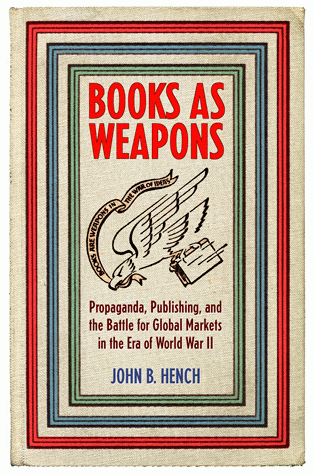
Please join us in congratulating John B. Hench, retired vice president for collections and programs at AAS.  His recent book, Books as Weapons: Propaganda, Publishing, and the Battle for Global Markets in the Era of World War II, was awarded the 2010 George A. and Jean S. DeLong Book History Book Prize from the Society for the History of Authorship, Reading, and Publishing (SHARP).

In awarding the prize, the committee described Books as Weapons as follows:

In a breathtaking history of wartime editions, this book presents a rich history of a relatively brief period in American publishing. . . . This is a book about war but it is also a book about the diplomacy of books. As an international and comparative history of wartime publishing, it presents deeply contextualized accounts, offering multiple contemporary perspectives, a true mark of scholarship that constructs the book trade as an international phenomenon. It will for sure make its mark in many fields, but it is deeply embedded in our own.


John B. Hench worked at AAS for 33 years beginning as editor of publications in 1973. In addition to writing Books as Weapons: Propaganda, Publishing, and the Battle for Global Markets in the Era of World War II (2010), Hench also co-edited The Press and the American Revolution (1981) and Printing and Society in Early America (1983).  The Hench Post-Dissertation Fellowship at AAS was named in honor of him upon his retirement from the Society.

Samuel Cornish, John Russwurm, and the Early Black Press

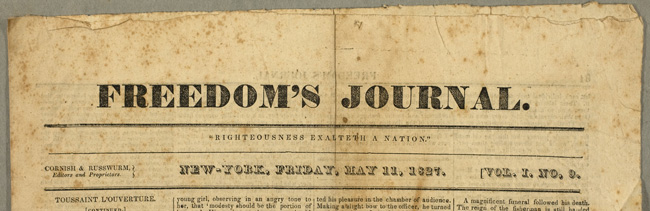
In March 1827, Rev. Samuel Cornish and John Russwurm co-founded Freedom’s Journal in New York City. It served as the first African-American newspaper in the United States and commemorated the 50th anniversary-year of the first American anti-slavery statutes in the 1777 Vermont Constitution. One of their primary objectives in starting Freedom’s Journal was to combat the negative impressions of Africa and African-Americans in the New York press. Although the newspaper only lasted two years, Cornish and Russwurm were able to raise significant doubts in the minds of many whites about the perceived racial inferiority of black Americans.

As co-editors of the newspaper, Cornish and Russwurm were strong believers in the idea that ancient Egypt and Ethiopia constituted bastions of African high culture. In other words, ancient Egypt and Ethiopia were on par with ancient Greece and Rome in terms of their contributions to the growth of Western civilization, especially regarding art and architecture. In the 1820s, however, there was an emerging call for free African Americans to emigrate from the United States and recolonize Africa. Even though Cornish and Russwurm stood mostly opposed to this call, they welcomed pro-colonization opinions in their newspaper. The main problem they saw with colonization was that it appeared to be a panacea for Southern slaveholders who viewed free blacks as an existential threat to slavery.

At the American Antiquarian Society (AAS), original printings of Freedom’s Journal are held in two volumes. Each volume covers a designated period of months over the two-year span that the newspaper was printed. AAS also maintains portions of Freedom’s Journal on microfilm and has access to digitized versions of the newspaper. And although Cornish’s involvement with the newspaper ended after just six months of publication, he and Russwurm were careful enough to save many of its original printings for posterity, as it is one of the best preserved early black newspapers.

Other early African American serial publications in AAS collections can be found by searching the online catalog for the genre term “African American newspapers” or “African American periodicals.”

Ads during the Civil War Years

Civil War era newspapers were more than just sources of information regarding current events.  In the Boston Daily Advertiser, for example, nearly half of any given issue was devoted to advertising.   It was certainly not alone in this, though it was at least honest enough to include the word “advertiser” in its name.  Goods and services of many varieties, many of which sound somewhat strange today, can be found in the seemingly endless columns of ads.

According to items printed in the Daily Advertiser on November 9, 1864, Boston was well supplied for the celebrations which Lincoln supporters must have participated in on the day after his re-election.   Perhaps no post-election party would be complete without plenty of Holland Gin, with exotic varieties like palm tree, double pineapple and imperial crown.  Or, for those looking for somewhat less conventional refreshment, prime Turkish opium was available for sale by Nicholas Reggio & Co. at 31 Central Warf, though to be fair in 1864 this was more likely intended for medicinal uses. Fortunately for the opponents of the President, there were also many miracle remedies for sale throughout the city which could cure any illness caused by their disappointment.  People who were tempted to buy some of that Holland Gin for purposes other than celebration, for example, could turn instead to the new miracle product Speranza, “An Italian preparation to destroy the appetite for intoxicating liquors.”  Or, voters who felt positively faint at the prospect of another four years of Lincoln could purchase The Peruvian Syrup, which contained the “vital principle or life element, iron” and could cure “a low state of the system.”    These are just a few examples of the myriad of remedies that promised to lead consumers to perfect health, most of which seem dubious to people, like us, used to a professional and regulated medical industry.  It is possible that these products really were as great as they sound, but one suspects that the purveyors of these miracle medicines were fortunate that the FDA was still half a century in the future.

There is more that can be learned from reading advertisements, however, than what items were for sale.  Unlike today, when business owners with instant communication and information technology can fine tune to an exact science what and how much they should have on their shelves at any given time, mid nineteenth century business required a little more guesswork.  Therefore, we can see announcements for 8,500 goat skins, 100,000 dry pine boards and 6,000 pounds of whale oil soap.  These numbers suggest that many merchants would buy in bulk from whatever cargo a ship brought into port, and then hope to sell it off over time.  Also, such large amounts probably mean that unlike modern advertisements targeted to individual consumers, these types of ads were directed at other business owners who would buy in such large quantities to stock their stores.  This was one of the ways businesses communicated with each other before modern technology.

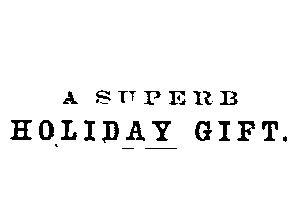
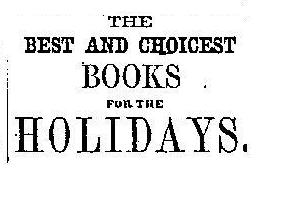
Finally, there is a certain segment of the population who, every December, decries the fact that many people now opt to use the word holiday rather than Christmas.  Some go so far as to proclaim that a vaguely defined but still suspicious cabal has declared war on Christmas itself.  They insist that this is a recent phenomenon which is somehow symbolic of America’s moral decay.  What they most likely do not know, however, is that in the December 24, 1864 issue of the Boston Daily Advertiser, despite the fact that on that date it was full of ads for gifts intended for the December festivities, the word Christmas can be found only 3 times, always in small print.  The word “holiday,” in contrast, is printed numerous times, often in large type, directing readers’ attention to “Books for the Holidays” or “A Superb Holiday Gift.”  Perhaps those preparing to do battle in defense of Christmas should reflect on the fact that despite the word’s almost total absence in 1864, the United States has somehow managed to survive.

Hopefully at least some of these facts proved interesting, but maybe the most important thing to learn from reading advertisements in Civil War era newspapers is that, unfortunately for those longing for a simpler time, even if you go back 150 years, someone will still always be trying to sell you something.

The Acquisitions Table: The Columbiad

Barlow, Joel, 1754-1812. The Columbiad: a poem. Philadelphia: Fry and Kammerer for C. and A. Conrad …, 1807.

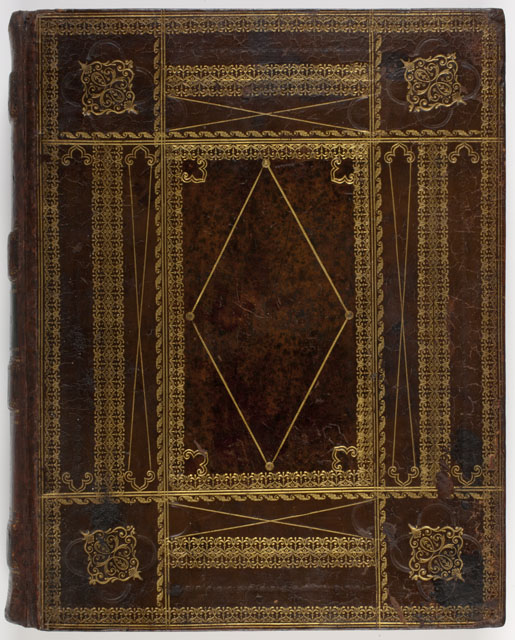
Rarely does one see “Papantonio-quality” early American bindings on the market any more, but we were fortunate to add this example to AAS’s celebrated Bindings Collection, which boasts the Michael Papantonio collection as its nucleus. John Bidwell has described the 1807 edition of Barlow’s Columbiad as “the first American-made deluxe book to be manufactured on a cost-is-no-object basis.” It was not a financial success, however, and a large portion of the 1,000 copies were remaindered in the mid-1810s. A surprising number of the remaindered copies were dressed before purchase in extra-gilt leather bindings, no doubt so that they could be marketed in bookshops as luxury objects. This example now joins the several already in the AAS Bindings Collection. Bound in full mottled calf, with marbled edges and lavender endleaves, the binding has extensive blind tooling not visible in the image. The volume’s bookbinder is unidentified, though it shares a gilt roll with another binding signed by J. Katez of Philadelphia. We first saw this volume—unfortunately, five minutes too late—at the secondary Boston “Garage” book fair last November. But its lucky purchaser (and stalwart AAS member) Joseph F. Felcone has now permitted us to acquire it on very favorable terms.

Memorandum of a Dream

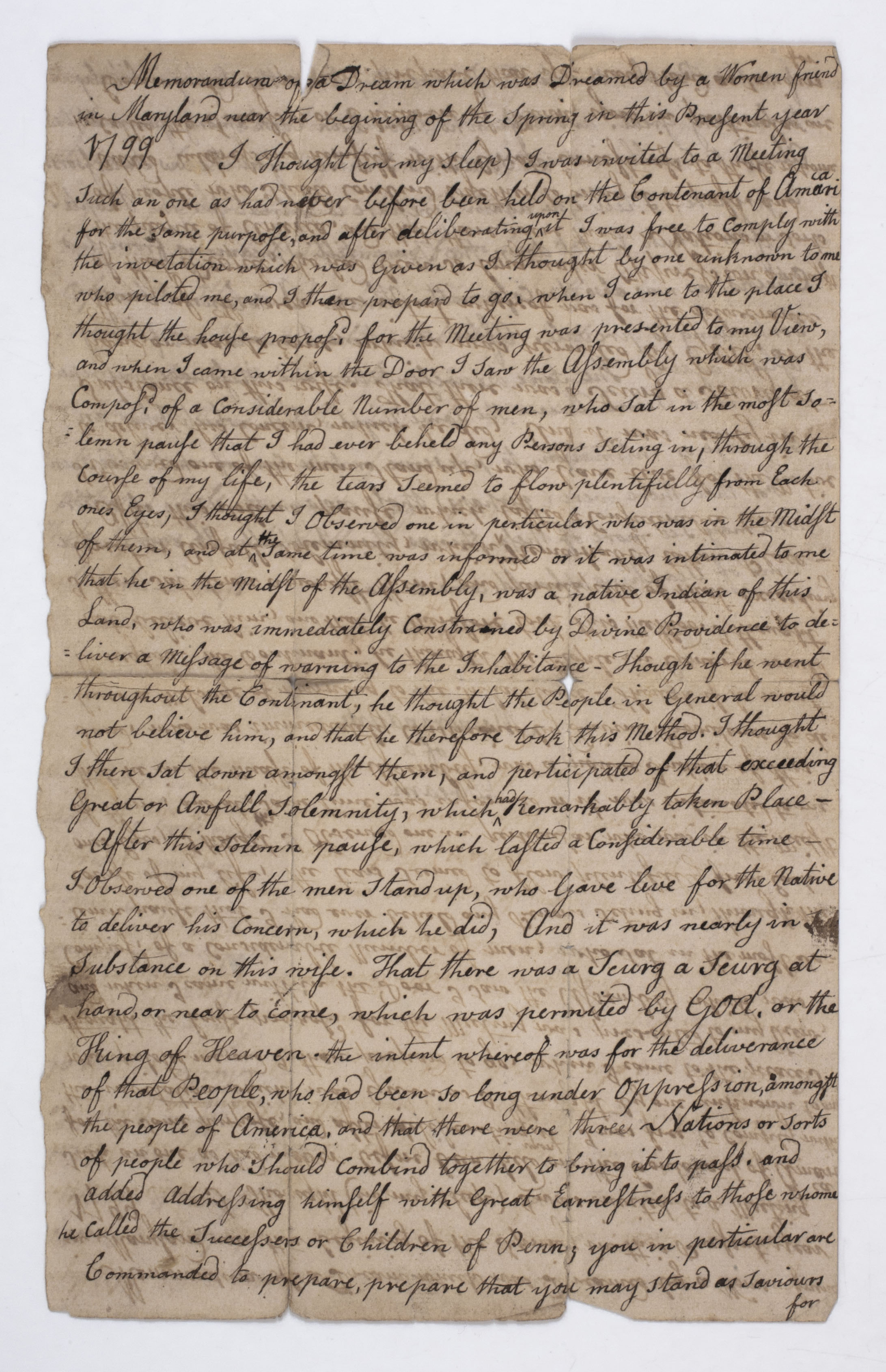
While sorting through a recent donation, I came upon an interesting item.  “Memorandum of a Dream” as it’s titled, recounts a dream of a woman from Maryland in 1799.  What is so interesting about this piece is not only the dream itself, but the mystery behind it.

Manuscripts can prove to be difficult, but at the same time and often for the same reasons, very intriguing.  With published material, you can figure out most of the information you need within the volume.  As long as the title page is still intact, you usually know where and when it was published.  Granted the journey of the book from the publisher to our hands is not always known, but at least we can figure out its origination point.  With manuscripts, it’s not so easy.  Manuscripts can be a simple scrap of paper and nothing more.  Think of all the notes you write to yourself throughout the day.  And imagine someone 200 years down the road trying to figure out what those notes mean. (Change the oil?  Bread, milk and apples?  Call Sue!?)  And I’m sure nobody lists their name, address, and the date on scrap paper.

“Memorandum of a Dream” is one of these mystery items.  Written on a single sheet of paper, our unknown author retells the dream of a friend, in which she enters a large, solemn assembly.  At the head of the room is a “Native Indian of this Land…who was immediately Constrained by Divine Providence to deliver a message of warning to the Inhabitance [sic]”.  The author goes on to recount the message of a great surge “for the deliverance of that People, who had been so long under oppression, amongst the people of America.”  A very dramatic dream.  The woman wakes, sleeps again and supposedly dreams the same dream a second time.  The dream is closed with the following:

With which I had an impulse or intimation, to preserve or take care of what I had seen.  For that there were (perhaps) those now on the stage of action who may see more of these things than I shall.  If ever such a time of searching shall come to pass.

Was this a prophetic dream of things to come?  In my very hasty amateur historical research, I haven’t come across any Native American uprisings in Maryland in 1799, but I’m open to more professional opinions!

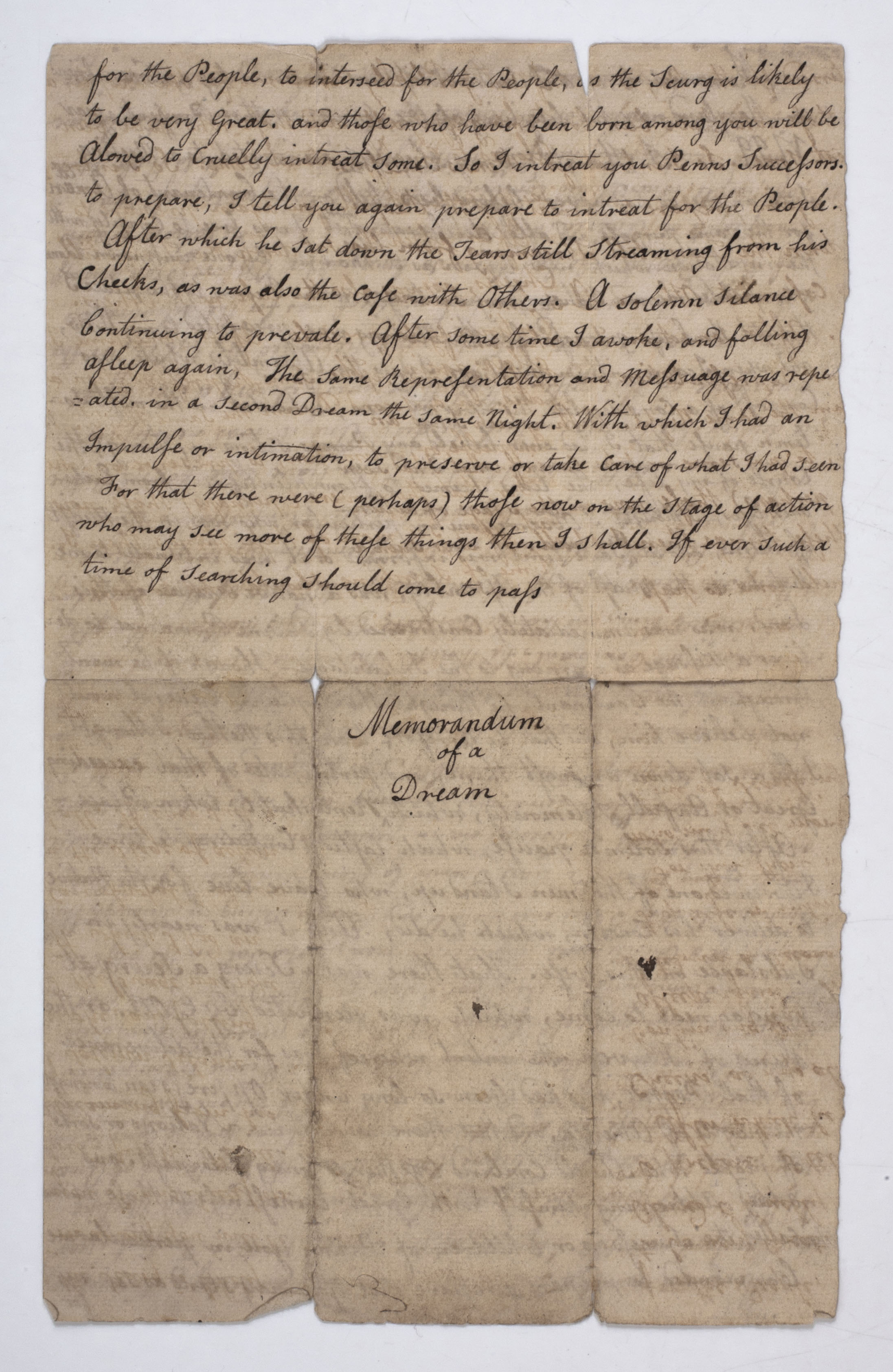
So what do we know about this item?  There is a date: 1799.  And we know the dream was dreamed by a “woman friend in Maryland,” but where it was written, and who wrote it down, we can’t say.  Even more of a mystery is why it was written.  It seems as though it was recorded and saved for a reason.  The page was folded multiple times (small enough to fit in a pocket), with “Memorandum of a Dream” written on what I’d presume would be a visible piece after the folding.  So it was at one point transported, but not sent through post.  But why?  Did the author read this aloud to a crowd?  The topic of the dream leads me to think it was more than simply a recording of a dream, but something that was shared with others for a purpose.  A warning?  A prophecy?  A lesson?  Or maybe I’m looking into it too much?

All speculation.  Feel free to share your thoughts on this dream!

This Week in the Civil War: Gettysburg, Hippos, and the French are in Mexico!

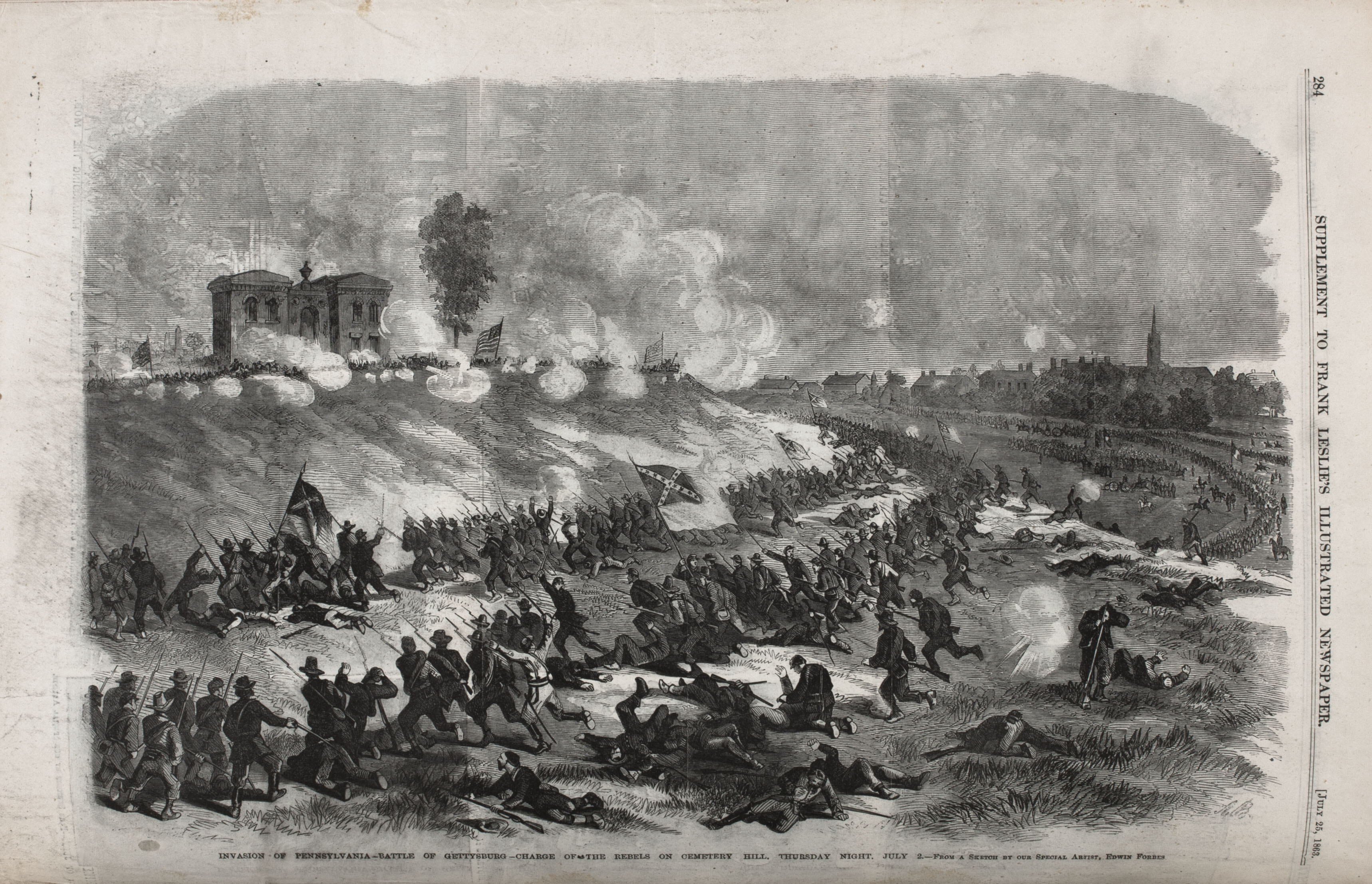
In the United States today July, 1863 is remembered primarily as the month of the Battle of Gettysburg.  For Americans at the time, however, there was plenty of other news to think about.  Readers of Frank Leslie’s Illustrated Newspaper, a weekly publication from New York, learned about the battle in the July 11th edition of the paper, and received a detailed account on the 18th.  Still, there were plenty of column inches to fill with news, ranging from the trivial to the momentous.

For example, after reading the riveting accounts of the great struggle in Pennsylvania, readers of Leslie’s Weekly could chuckle over the story relating how “The hippopotamus, which has lately been exhibiting at Boston, while on its way to Detroit, managed to get its liberty while on board the steamer S.D. Caldwell and plunged into Lake Eire.  Boats were immediately put out after him, and he was captured on swimming ashore.”  Just like in our own time, the bizarre and humorous had it place alongside more serious reports.  Or, those with an interest in literature could peruse the reviews of newly published novels including the mystery, Rockdale, by Mrs. Devereux Umsted , which was “written with great skill and purity of language” and thankfully was, to the reviewer’s obvious approval “highly moral in tone and plot.”  In 1863, anything less in woman’s literature would be simply improper.

More seriously for the industrial north, the paper reports that as a result of the invasion of Pennsylvania, the cost of coal has risen by a dollar a ton.  The writers at Leslie’s, however, view this less as a matter of necessity  and more as a result of “thrifty” Pennsylvania trying to “make the rebel raid a profitable investment.”  Even in the midst of war, patriotic fervor could be trumped by the almighty dollar.  Furthermore, this is not the only time that Pennsylvania is taken to task.  The paper is scathing in its assessment of Pennsylvania’s lackluster military preparations and insinuates that the Keystone state is full of pacifists and Copperheads.  To the statement of a Pennsylvania official which, in gratitude for the help of neighboring states, pledges that “If our sister states ever need our help we must be ready to give it,” Leslie’s replies simply that “Punch or The Budget of Fun (satirical magazines) never had anything half so funny.”  These comments are perhaps signs of the interstate tensions which persisted despite the struggle to hold the Union together, and a reflection of the stronger sense of state identity which Americans held in the nineteenth century.  Saving the Union was important, but this New York paper still felt it necessary to put Pennsylvania down.

Finally, in the July 18th issue, readers of Leslie’s weekly received additional information of the unfolding French invasion of Mexico from the previous month.  They learned that “The latest news from Mexico is that President Juarez has abandoned the city of Mexico to the French, who were to take possession of the halls of Montezumas on the 8th June.”  The truly remarkable thing about this news, however, is that in the paper it is printed in very small type in a list of other foreign news items which includes banalities such as the divorce of a prominent sea captain in London and a lawsuit between Parisian nobles.  At any other time, the news that a European power had invaded and occupied the capital of our southern neighbor would certainly have cause a national sensation, but in the midst of the Civil War, it is relegated to a small footnote which anyone simply skimming the paper could easily miss.  From this, it is easy to understand why Gettysburg so easily dominates our perception of July 1863.  Even at the time, the French conquest of Mexico couldn’t hope to compete with that famous battle.

The Acquisitions Table: The Life of George Washington the Soldier

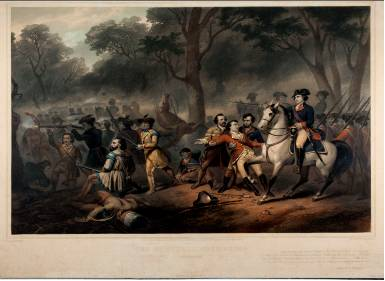
Regnier, Auguste (after a painting by Junius Brutus Stearns). The life of George Washington the soldier. New York & Paris: Goupil & Co., 1854. Printed by Lemercier, Paris.

This print is one of four in a set depicting the life George Washington—the other prints include renditions of Washington as a citizen, a farmer, and a Christian. AAS has held the other three lithographs for several years (two were given by Jay Last in 2001), and this purchase completes the set. Because the prints have a transatlantic imprint and were sold in New York and Paris, they also serve to illustrate the continued work that Georgia Barnhill and I are doing (with support from the Florence Gould Foundation) on the relationship between French and American lithography. As an additional bonus, the print arrived in time for a recent fellow to use for his research on images of the first presidents. Purchased from the Old Print Shop, New York. Print Acquisitions Fund and Florence Gould Foundation Grant.

Charles Dickens: Novelist, Social Reformer and…Flashy Dresser?

In 1842, Charles Dickens made his first of two visits to America.  He took a sweeping tour of the country, meeting with dignitaries such as Longfellow, Poe, and President John Tyler.  He visited Massachusetts, New York, Pennsylvania, Washington D.C., Virginia, Maryland, Ohio, Kentucky and Missouri.  While in New York City, he was welcomed with a grand ball (from which AAS has a menu).  And during his glamorous whirlwind tour, Dickens managed to find time to visit our humble city of Worcester!

AAS has a collection of papers belonging to the Newton Family of Worcester.  The Newtons were a prominent family in the early 19th century.  The patriarch, Rejoice Newton, was a Justice of the Peace, the first President of the Worcester Mutual Fire Insurance Company, and served in the Massachusetts Senate and House of Representative.  He married Rebecca Lincoln, sister of Governor Levi Lincoln.  The couple had two children, Hester and Levi.  Levi, a Harvard graduate, class of 1830, was an excellent diarist, recording his daily activities during his college years, and later as he worked as a cashier for the Worcester Bank.  We have 11 of his diaries, spanning the years 1837 – 1843.  And in one of his diaries, he recounts Dickens’ visit to Worcester.

On February 5th, 1842, Levi finally catches an in person glimpse of the famed Dickens.  We can learn much about Dickens’ visit through his own reminiscences of the trip in his work American Notes.  Or perhaps read what literary scholars have to say about his trip’s impact on his writing and views of America.  But what I like about Levi’s diary entry is how in awe he is, much as anyone would be when meeting their favorite celebrity.  It’s also interesting that the majority of Levi’s entry for the day he meets Dickens is about what Dickens was wearing.

His external appearance did not answer to our puritanical notions of a literary man: his dress was that a of genteel rowdy in this country and no one, who did not know, could have supposed him to be “the immortal Boz.”  A stout Prince Albert frock coat, a flashy red vest with a dark figured scarf about his neck, fastened with a pin to which was attached any quantity of gold chain and his long flowing hair gave him the air of a fashionable young man…

Gold chains and long flowing hair?  Who would have imagined Dickens as such a fashionable, flashy dresser?  Diaries, when written in such detail as Levi’s, are great for providing the reader with amazing visuals.  A picture can say a thousand words, but in the 19th century, when photography was just beginning, images of celebrities were few and far between.  So thanks to sources such as diaries we are able to remember the little things, like Charles Dickens’ sense of style.

The Acquisitions Table: The Map of Man’s Misery

Ker, Patrick, fl. 1691. The map of man’s misery. Or, The poor man’s pocket-book. Being a perpetual almanack of spiritual meditations … Boston: Printed by T. G. for B. Eliot, [ca. 1710?]

The only known copy of a newly discovered early American imprint. Patrick Ker’s collection of meditations, arranged in a seven-day “week” extending from childhood to death and eternity, was first published in London in 1690. No subsequent English editions are known, but The map of man’s misery achieved extended popularity in colonial New England. Boston bookseller Samuel Phillips commissioned an edition in 1700 (copy at AAS, erroneously noted in some bibliographies as printed in “1692”), and later Boston printings appeared in 1706 and 1732 (copy at AAS). A copy of a fourth, unrecorded Boston edition turned up at auction this spring and is now safely in Worcester. Still in its original blind-ruled sheep binding over thin wooden boards, the copy is complete save for a hole where the all-important title-page date would be. However, we can deduce from the imprint—“Printed by T. G. for B. Eliot”—that this edition was printed by Timothy Green (1679-1757) for bookseller Benjamin Eliot (1665-1741) and must date between 1700 and 1714, when Green left Boston for New London. Bought at a Pacific Book Galleries auction. Sid & Ruth Lapidus, Bank of Boston, and Robert & Mary S. Cushman Funds.

The Acquisitions Table: Cassandra Swasey Stevens Diary

Stevens, Cassandra Swasey. Diary, 1856-1858.

Cassandra Swasey (1818-1901) was the daughter of John B. and Alice Ladd Swasey of Meredith, NH. After her first husband died, Cassandra married Col. Ebenezer Stevens, a merchant in Meredith in 1846. This diary, which covers the period between 1856 and 1858, covers her daily activities. A recurring theme is her fears and anxieties. As she says in the diary’s first entry “I have such a fearful foreboding, and have had for many months, that some dreadful trouble was about to visit me, that it takes from me much enjoyment.” Purchased from Charles Cullen. Adopt-a-Book Fund.

A Story You Probably Didn’t Know about John Brown’s Body, Douglass, Emerson, and Thoreau

Today we present a story in two parts, part of which you probably already know and part of which you probably didn’t know before. 

PART I is a summary of the story of John Brown, Harper’s Ferry, and American Anti-Slavery from AAS volunteer Colin Fitzgerald:

'The Harper's Ferry Insurrection' from Frank Leslie's Illustrated, October 29 1859

For three days in October 1859, radical abolitionist John Brown conducted an armed raid on the federal arsenal at Harper’s Ferry, (West) Virginia. Considered a seminal event in the years prior to the Civil War, Brown’s raid signified the growing intensity of the American anti-slavery movement. One of the raid’s main purposes involved acquiring weapons (rifles and pikes) for African-American slaves in the surrounding communities. Brown believed the raid would be a quick stop followed by a strong push southward along the Appalachian Mountains. He also believed that hundreds of slaves would join. He was wrong.

Before Harper’s Ferry, Brown’s interest in abolition had developed over many years. Having been profoundly inspired by notions of religious equality and anti-slavery, which emerged in the Second Great Awakening of the 1820s and 1830s, he intended to become a Christian minister. But after the murder of abolitionist minister Rev. Elijah P. Lovejoy in 1837, Brown’s anti-slavery views radicalized, as he wished to abolish slavery by any means necessary. For example, in the mid-1850s, Brown traveled to Kansas to clash with pro-slavery forces and make Kansas into a free state. Despite their futility, Brown’s forays in Kansas served as a dress rehearsal for Harper’s Ferry.

'John Brown Ascending the Scaffold Preparatory to Being Hanged' from Frank Leslie's Illustrated, December 17, 1859
Harper’s Ferry changed the terrain of the American Anti-Slavery movement in ways that John Brown could never have fully anticipated, starting with Brown’s death.

    *******************************************

Part 2 of our story reveals new details about the immediate afterlife of John Brown, as told by AAS’s Librarian and curator of manuscripts, Tom Knoles:

AAS recently acquired an extraordinary grouping of three hitherto unknown letters that shed new light on a pivotal event in American history – and also on a significant literary response to that event. The letters, purchased on the Harry G. Stoddard Memorial Fund, were written by three of the most important figures in nineteenth century American thought: Frederick Douglass, Ralph Waldo Emerson, and Henry David Thoreau.

The series of letters starts with one from Frederick Douglass:

“Confidential
My Dear Sir:
Seventeen Marshalls are
on the look out for me in the
States, and to avoid arrest I
must avoid a journey to Boston…”

So former slave and abolitionist Frederick Douglass wrote from Canada on October 28, 1859, to Charles W. Slack in Boston informing Slack that Douglass would be unable to keep his engagement to speak in Boston on November 1. Slack was the organizer of the Fraternity Course, a popular series of lectures sponsored by Theodore Parker’s Congregational parish, and Douglass had been scheduled to speak on the topic “Self Made Men.” Less than two weeks earlier, John Brown’s raid on the government arsenal at Harper’s Ferry had rocked the nation. Douglass had visited Brown in Virginia in August, bringing money from contributors in the northeast. Consequently, he was implicated in the raid and was sought for his alleged role in planning it. The Douglass letter now at AAS shows his state of mind during the days following Brown’s capture:

“I should have written before – but for the hope that the clouds that now overshadow me would pass away. Instead of this they grow darker every hour.”

From Canada, Douglass went to Great Britain, only returning to the United States the following year after Brown had been hanged and the government was no longer interested in prosecuting others involved in the affair.

In the second of these three letters, Ralph Waldo Emerson writes to Slack on October 31:

“I understand that there is some doubt about Mr. Douglass’s keeping his engagement for Tuesday next. If there is a vacancy, I think you cannot do a greater public good than to send for Mr. Thoreau, who has read last night here a discourse on the history & character of Captain John Brown, which ought to be heard or read by every man in the Republic.”

On October 30, Thoreau had delivered his lecture “The Character and Actions of Capt. John Brown” for the first time in the vestry of the First Parish Meetinghouse in Concord. Emerson was present, and reports in this letter:

“He read it with great force & effect, & though the audience was of widely different parties, it was heard without a murmur of dissent.”

Thoreau wrote to Slack the following day to make arrangements: “I will come to Boston as desired. My subject will be ‘Capt. John Brown’….” He delivered the speech that evening to a crowd of twenty five hundred at the Tremont Temple, and the lecture was widely reported in the newspapers.

The outline of the story told in these letters is well known, particularly because Thoreau’s discourse, first published the following year as “A Plea for Captain John Brown,” became one of his most famous essays. Nonetheless the letters now at AAS provide many new details about Douglass’s fear of being apprehended by federal authorities, about how Thoreau came to replace Douglass on the podium, and also about Emerson’s enthusiastic reaction to the lecture.