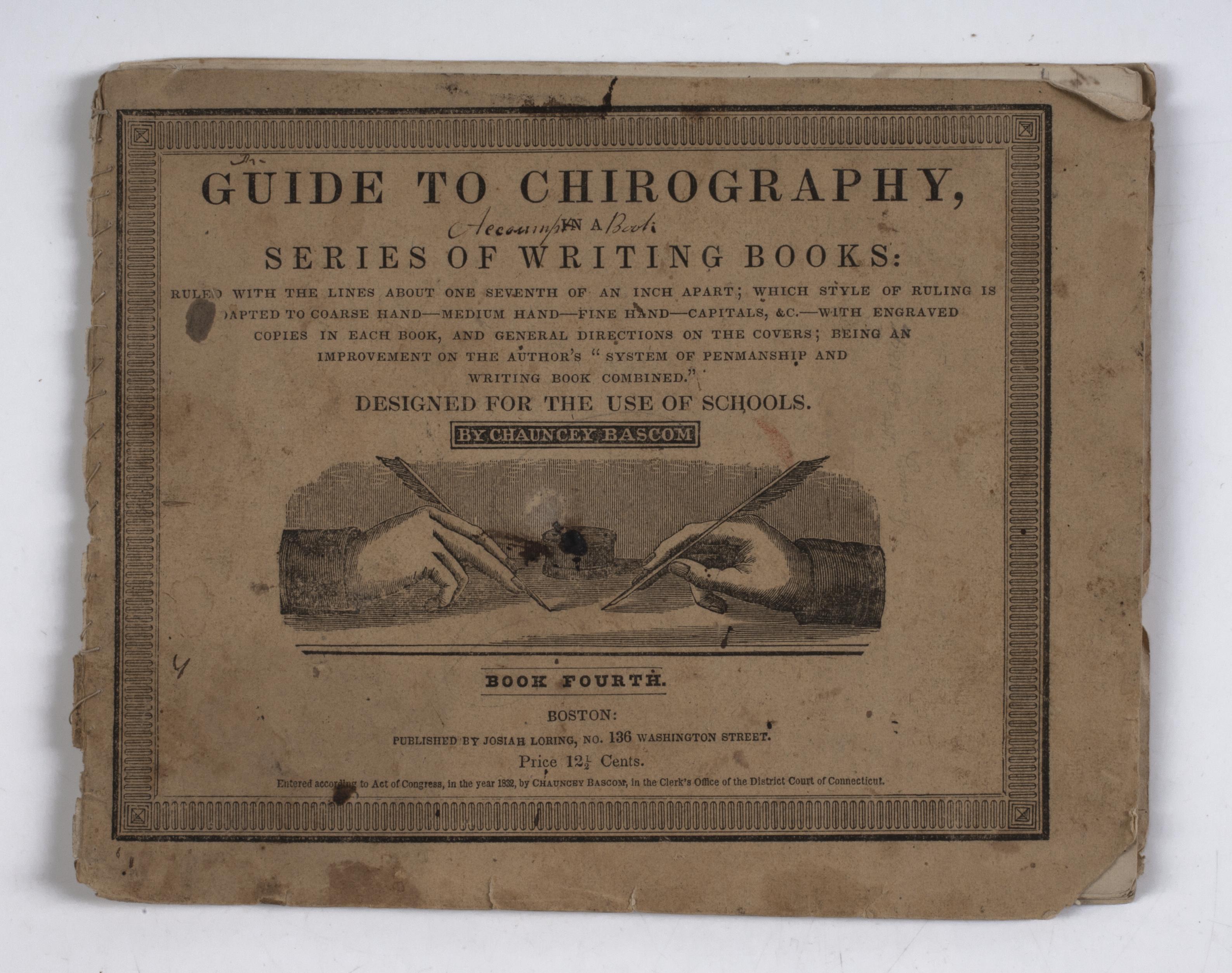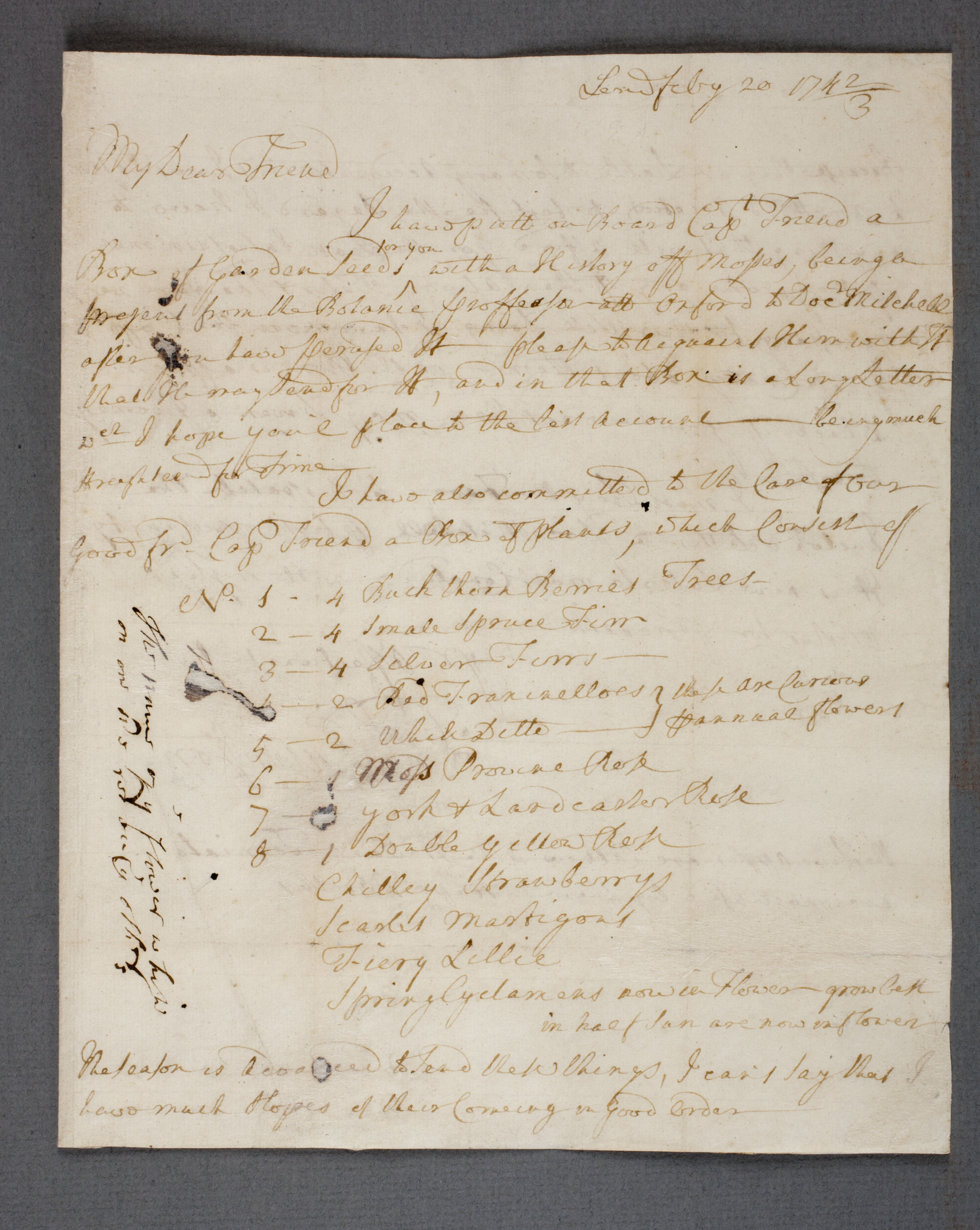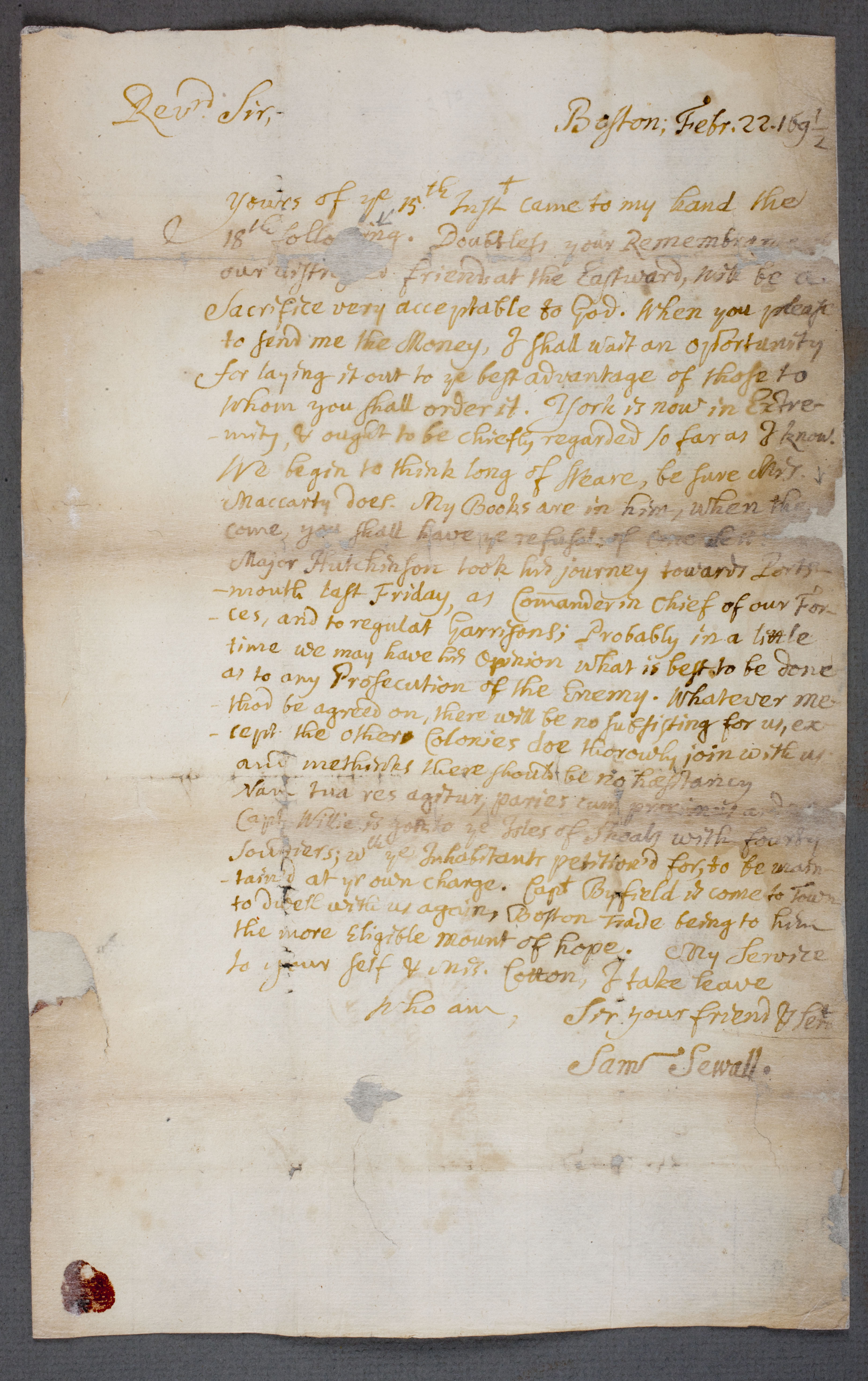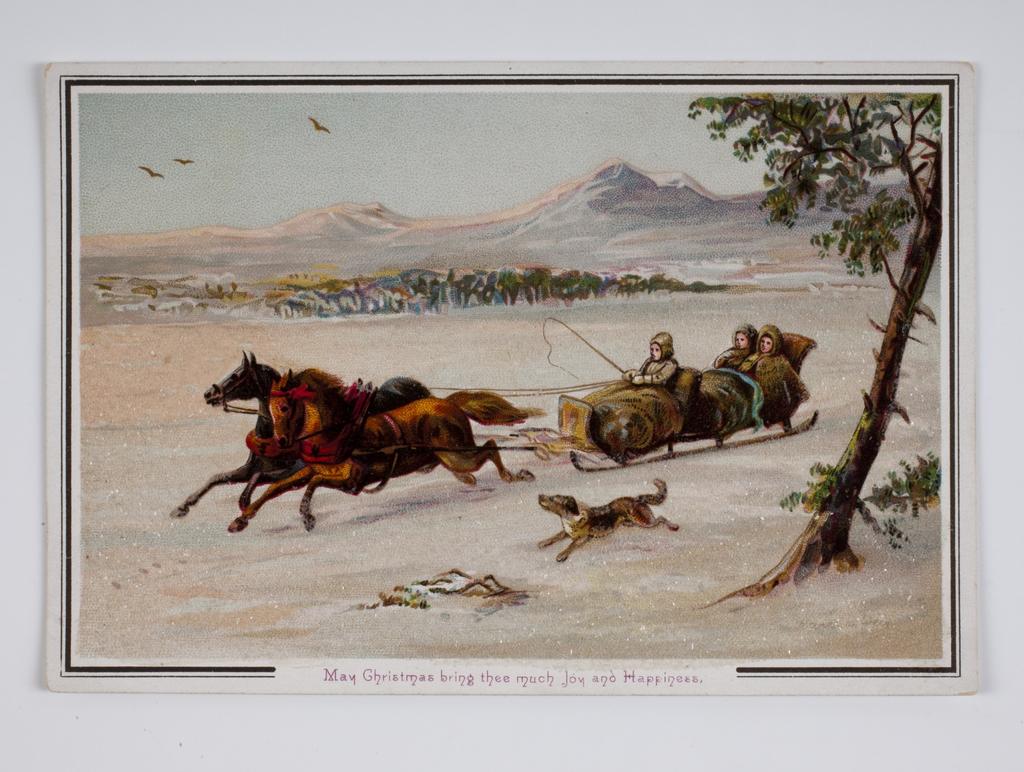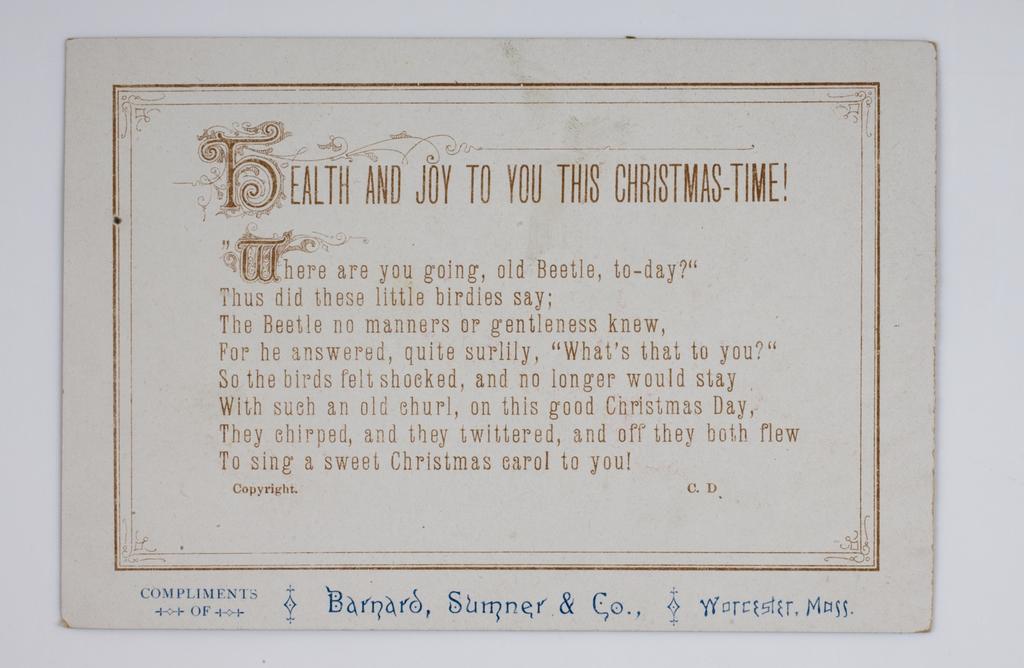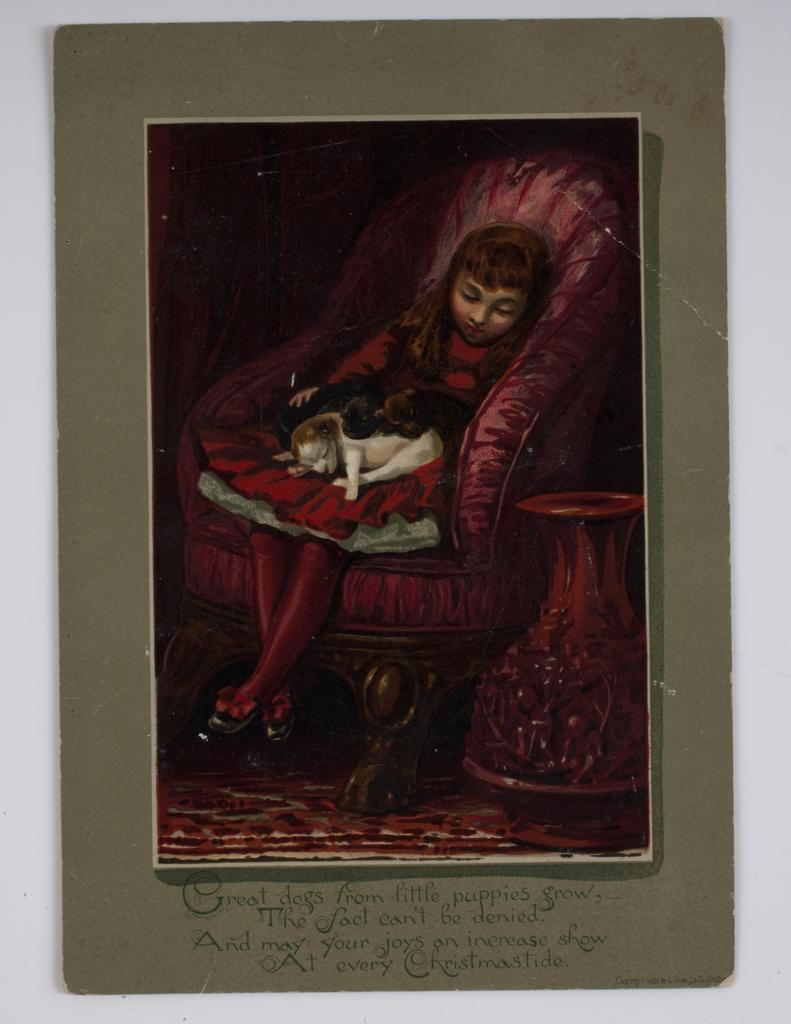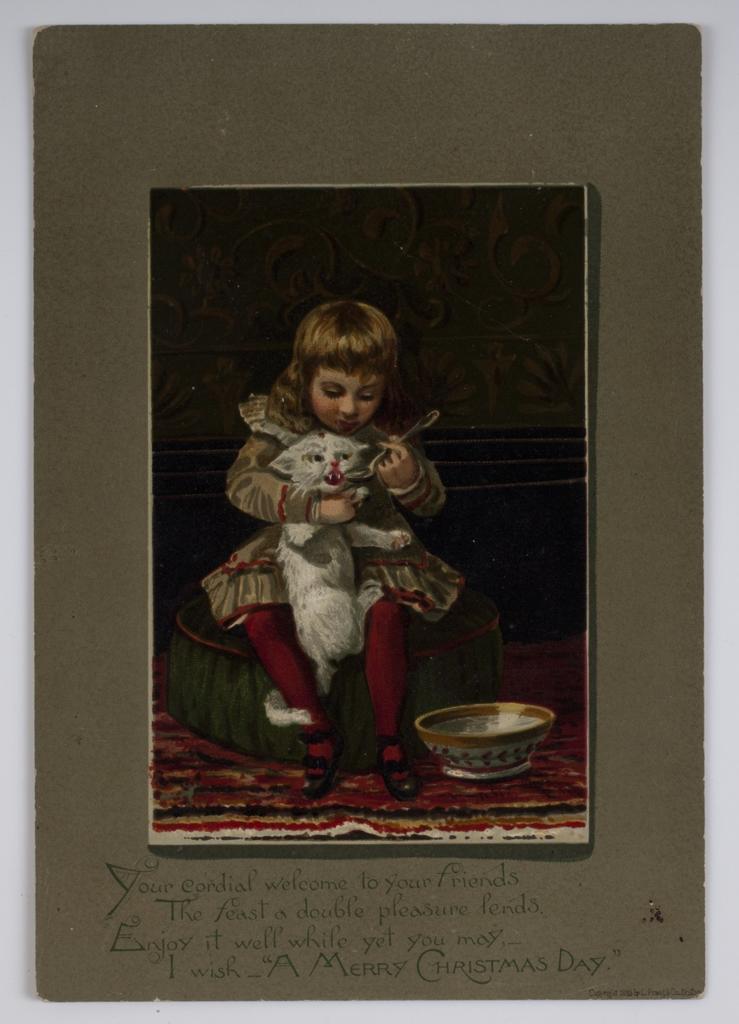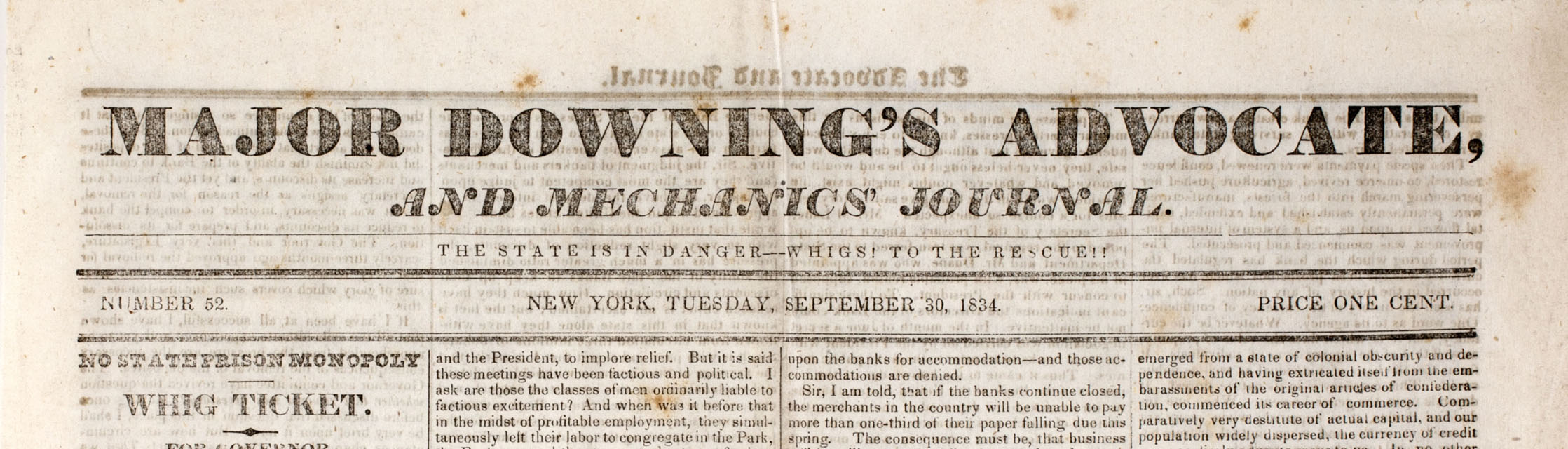
Jack Downing was a comic character created in 1830 by Seba Smith, who developed the country dialect-speaking character in a series of letters for the Portland Courier. As Downing became famous, Charles Augustus Davis imitated the style and wrote under the same name for New York papers. Davis started Major Downing’s Advocate on Mar. 12, 1834, soon expanding the title to the longer form here. By then Davis had probably left the editorship, and the paper had taken on an anti-Jacksonian tone supporting the Whig party.
A Follow-Up to “Can You Read This Image?”
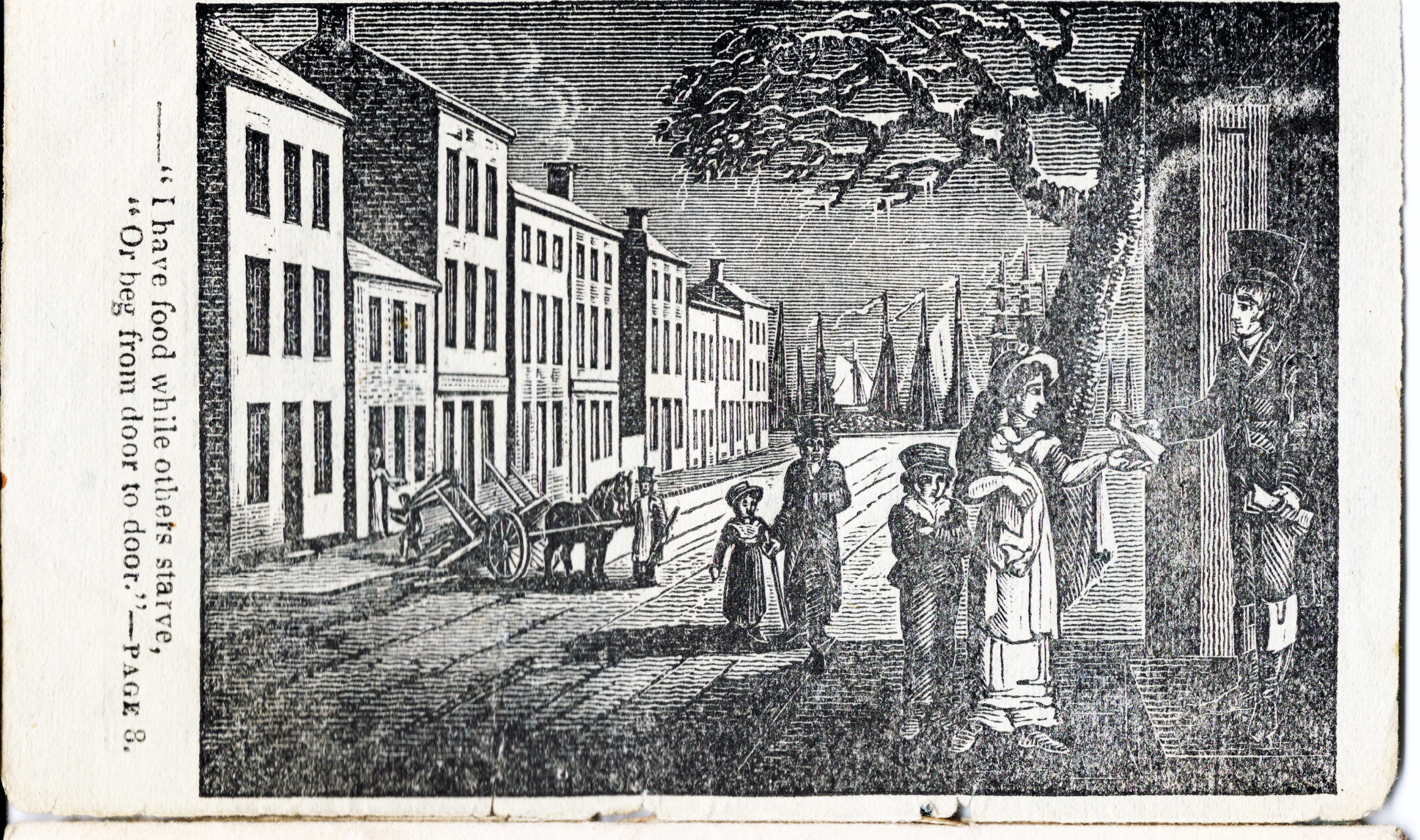
In the intervening week or so since my post on this mysterious image appeared on the AAS blog, I contacted Alexander Anderson scholar and AAS member Jane Pomeroy. She graciously sent me this scanned copy of the full image found in her copy of the Mahlon Day 1830 edition of Divine Songs.
According to Jane, she thinks it is quite possible that the image was directly commissioned by Mahlon Day either in 1830, or right around that time. Jane guesses that the man standing with what could be money or a pile of tracts in his hand is an employee of the house and that the mother with baby and son are needy, but not indigent. Jane brings up the good point that the man in the doorway is not particularly well dressed, and his hat is literally jammed on his head. Jane also thinks it is possible that the coach in the street (better revealed in her copy) carried the woman to the house. We both agree that the scene seems to be set in New York during winter, perhaps Christmas time, and that the object of the image seems to be the importance of providing spiritual/corporal aid to those in need. Finally, Jane’s copy of the image has the telling caption lacking in the imperfect AAS copy:
I have food whole others starve, Or beg from door to door.
Unfortunately, the identity of the engraver is still ambiguous; this image is not among those found in the Alexander Anderson engraving proof books held at New York Public Library. But with Jane’s input, we have a better idea of the image’s meaning.
Further Reading:
If you are interested in learning more about the illustrations that we do know were done by Alexander Anderson, you will definitely want to get your hands on this three volume set.
Pomeroy, Jane R. Alexander Anderson, 1775-1870, Wood Engraver and Illustrator, an Annotated Bibliography. 3 Volumes. New Castle, DE and Worcester, MA: Oak Knoll Press and The American Antiquarian Society, 2005. [available for purchase from Oak Knoll]
The Acquisitions Table: A Representation of the Progress of Intemperance
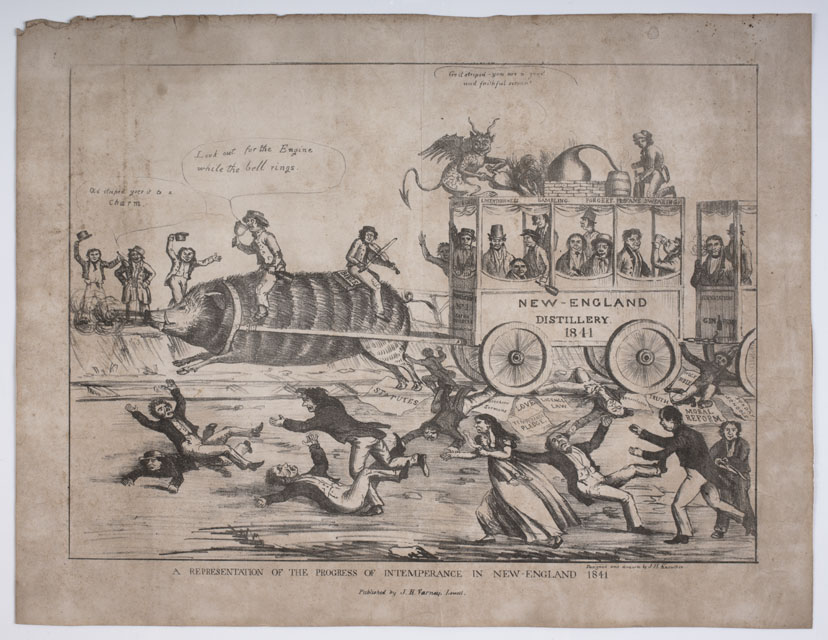
A previously unrecorded satirical cartoon printed in Lowell, MA, by J.H. Varney, possibly a relation of (or pseudonym for) local newspaper publisher Samuel J. Varney. The cartoon references the 1840 repeal of a Massachusetts state law which regulated the sale of alcohol in quantities under 15 gallons. A large railroad carriage full of drunken men and topped by a devil firing a still is pulled by an enormous striped pig. The striped pig was the invention of a Massachusetts rum seller who, in order to get around temperance laws, set up a tent at a local militia muster stating that he had inside a rare striped pig, viewable for a small fee. In the tent there was indeed a large pig with garish painted stripes. Patrons, who technically paid to see the pig, also received a “complimentary” cup of rum upon exiting the tent. This flouting of the law was covered widely in the press, and large striped pigs representing intemperate behavior and low moral character soon began appearing in temperance literature and cartoons. Purchased from Fred Robichaud. Harry G. Stoddard Memorial and The Chair Funds.
Lecture tonight!
Tuesday, November 15, at 7:30 p.m. at the American Antiquarian Society
Carolyn Eastman will be talking about Books and the Imagined World of Travel in the Eighteenth Century. For more information, including directions, click here.
In the eighteenth century, lavishly illustrated travel narratives quickly became one of the most popular book genres for American readers. These books told the tales of daring explorers and adventurers whose experiences were so dramatic they could seem better than fiction. Better yet, their pages were interleaved with elaborately detailed copperplate engravings that offered still more insights into a world full of strange peoples.
This talk will examine more closely not just how those books taught Americans how to think about a larger world, but how men and women in remote American towns and villages learned to consider travel to be an educational and potentially life-changing experience. Using the manuscript writings of ordinary Americans who read books and kept detailed travel diaries—even if they only intended to travel from Greenfield to Boston—this talk considers most broadly the new meanings of travel during the eighteenth century and how it came to be seen as a marker of the enlightened.
This lecture is based upon Eastman’s current research project at AAS that explores the changing views of gender and sexuality in the eighteenth-century Atlantic world. Eastman contends that ideas about gender moved around that world, much like race, religious movement, or mercantilism. These concepts of gender also changed as new peoples encountered one another on the ground as well as in print.
Isaac and Ella
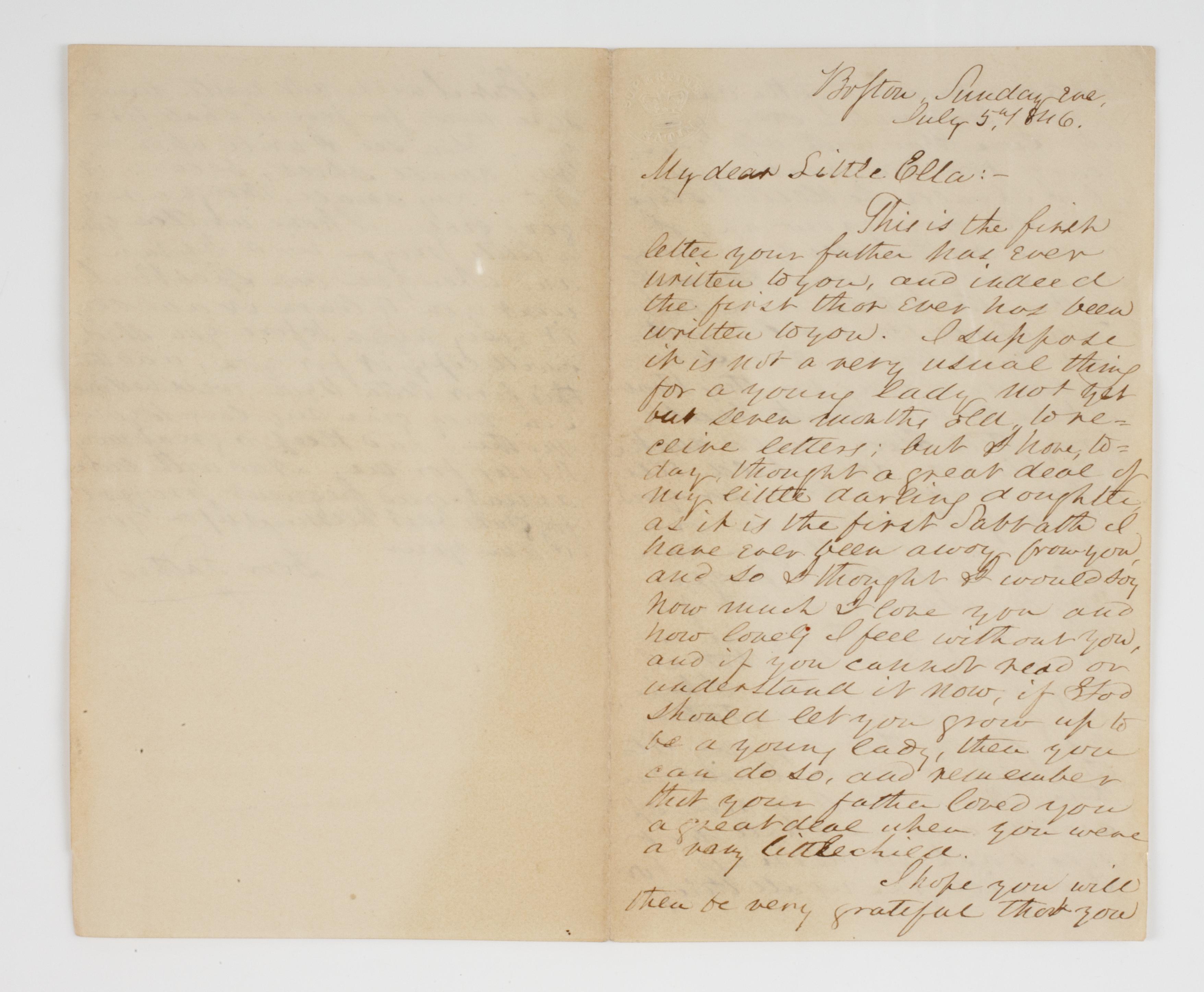
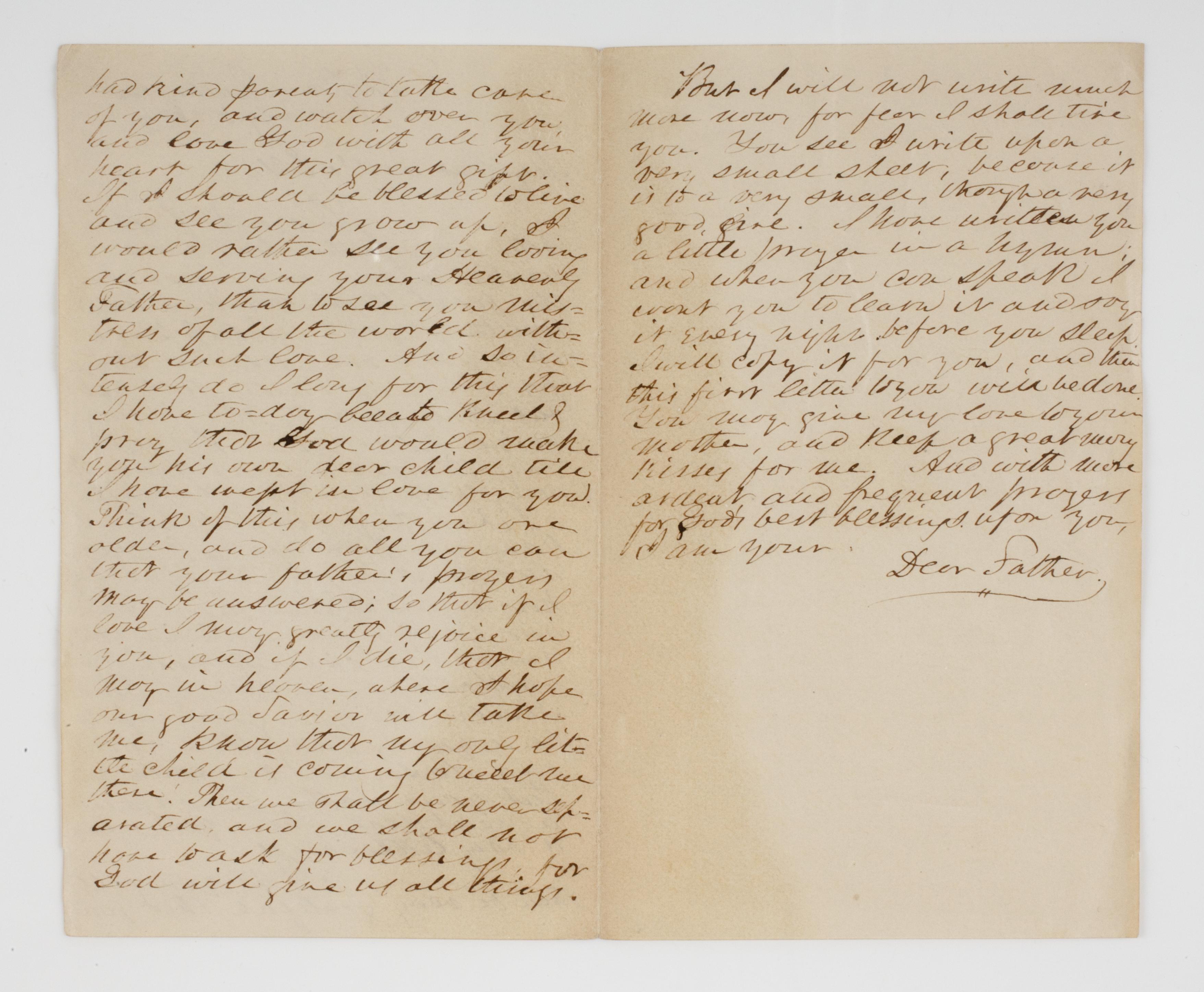
AAS intern Katrina Ireland (Simmons College GSLIS program) recently came across a wonderful letter as she was processing our collection of Isaac Shepard Papers. Shepard (1816-1889) was a Harvard graduate and a commander of the 52nd US Infantry during the Civil War. In addition to his military life, Shepard was also a poet, author, and a devoted father. He shared a strong bond with his daughter, Ella, to whom he wrote many letters throughout his life. Their relationship can be traced through these letters, and it all started with a letter written on July 5th, 1846. You can read the entire letter here, and below are some highlights.
This is the first letter your father has ever written to you, and indeed the first that ever has been written to you. I suppose it is not a very usual thing for a lady not yet but seven months old to receive letters; but I have, today, thought a great deal of my little darling daughter as it is the first Sabbath I have ever been away from you and so I thought I would
say how much I love you and how lonely I feel without you, and if you cannot read or understand it now, if God should let you grow up to be a young lady, then you can do so, and remember that your father loved you a great deal when you were a very little child.
You see I write upon a very small sheet because it is to a very small, though a very good girl. I have written you a little prayer in a hymn, and when you can speak I want you to learn it and say it every night before you sleep. I will copy it for you, and then this first letter to you will be done. You may give my love to your mother, and keep a great many kisses for me.
The entirety of the Isaac Shepard Papers will be described in a catalog record and finding aid, which should be available by the end of this year, so stay tuned!
Boston Book Fair, Nov. 11-13, 2011
This weekend bibliophiles from all over will be converging in Boston, and those of us at AAS will be among the first in line. Join us this Friday, Saturday, and Sunday at the Boston Book Fair.
There will be a number of fair activities, including a collectors’ roundtable and tips on how to decorate with books. AAS will have a booth, so please stop by and say hello!
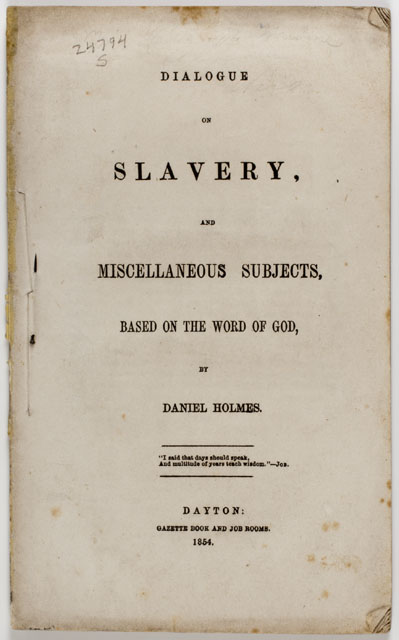
The Acquisitions Table: Dialogue on Slavery
A very rare self-published collection of poems by Holmes, a farmer in Greene County, OH east of Dayton. Most of the poems are short and predominantly religious in theme. Preceding these is Holmes’s 20-page “Dialogue on Slavery,” which offers an unusual poetic recapitulation of the religious, economic, and political arguments for and against slavery. Firmly in the antislavery camp, Holmes concludes that gradual emancipation is the most workable solution:
“Why not this plan adopt through all the nation;
There’s no mistake—the north would lend a helping hand
To colonize, and with the funds of Uncle Sam,
You shall receive from individual donations,
A sum all sufficient for to rid the nation
Of all your slaves …”
Can You Read This Image?
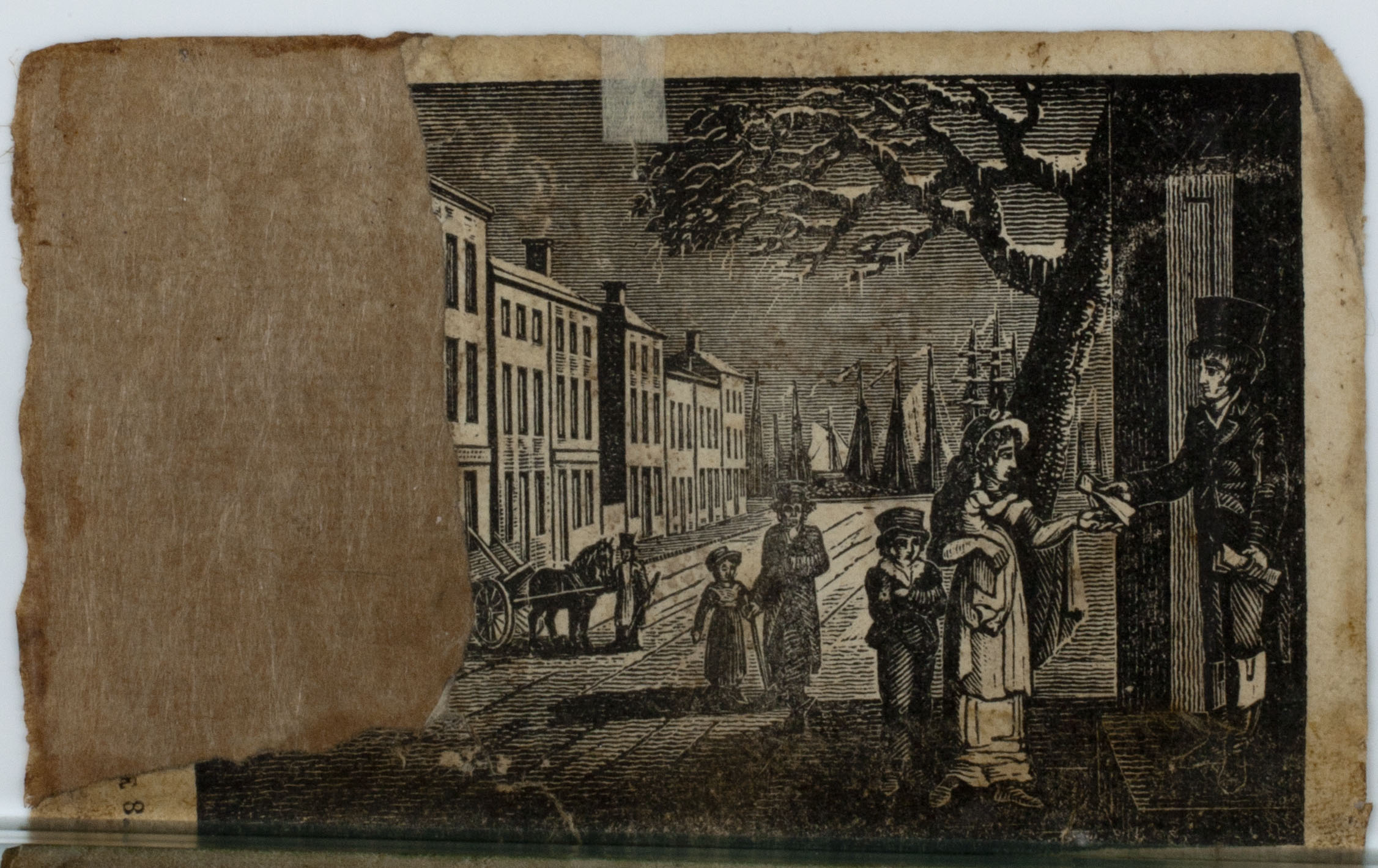
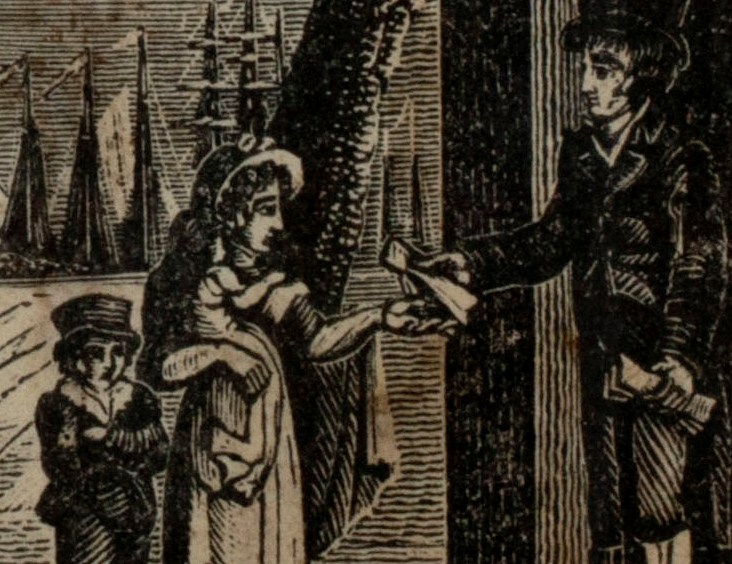
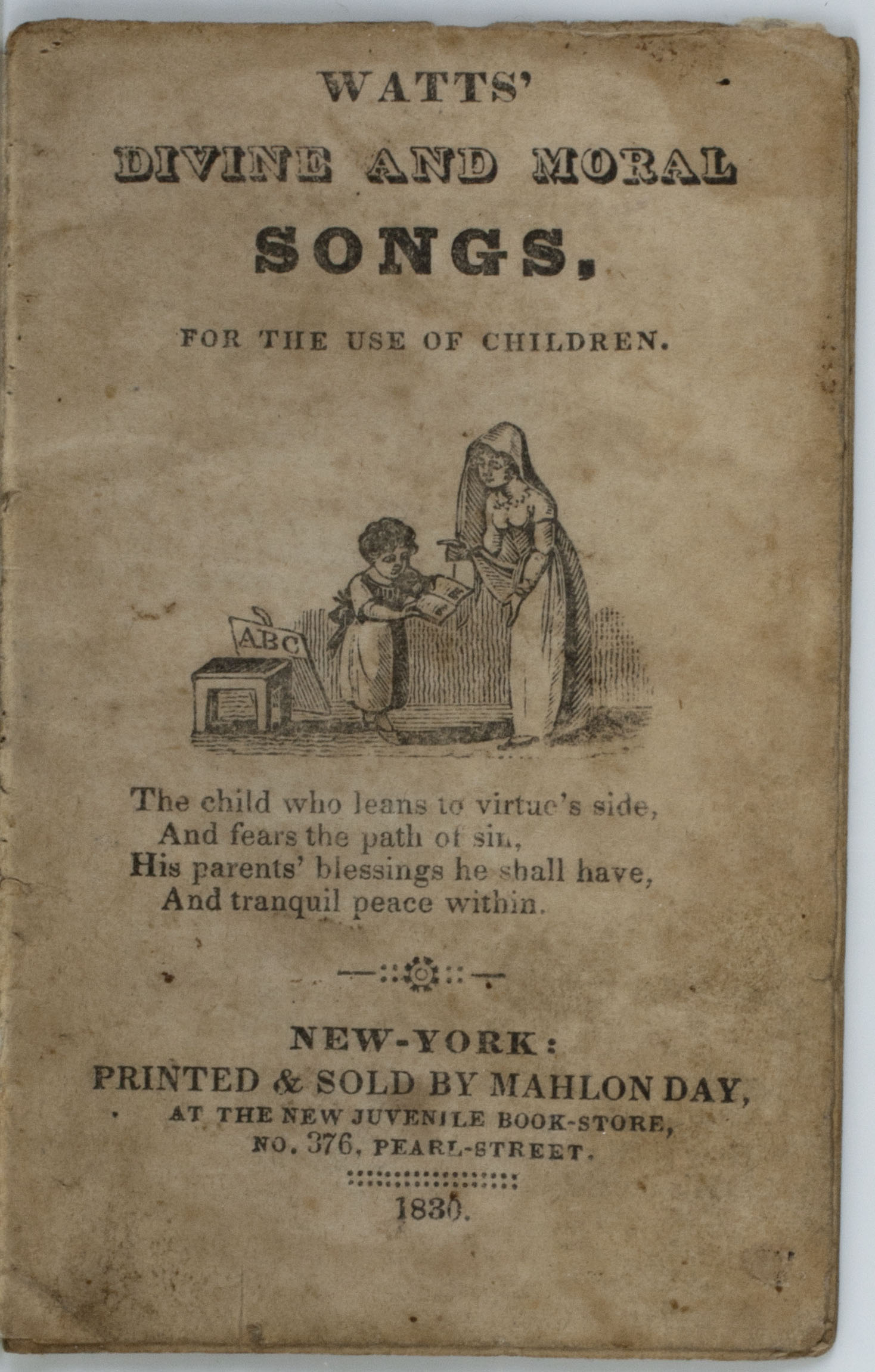
Recently, I was catching up on cataloging the nineteenth-century editions of Isaac Watts’ Divine Songs given to us by the great collector of early American and English children’s books Wilbur Macey Stone (1862-1941). One of them, a well-worn edition issued by New York publisher Mahlon Day in 1830, contains a mutilated frontispiece depicting this interesting and mysterious scene (which, as far as I can tell, has nothing to do with the text). According to researcher Jane Pomeroy, this book contains some wood engravings by master engraver Alexander Anderson, but this illustration is not among them. (Jane, if you are out there, correct me if I am wrong!)
My colleague, Lauren Hewes (AAS’s curator of graphic arts), and I examined this image together and came up with the following observations.

The frontispiece depicts an urban scene set in winter; note the snow on the leafless tree, and the row houses with chimneys belching smoke. The scene’s central figures are a woman carrying a baby (her young son follows closely behind) who is receiving what appears to be an envelope from a man at the front door of a building; it is unclear whether it is a business or private residence; conceivably, it is a merchant’s office on the first floor with his residence on the upper floor. Lauren and I agreed that the woman was no beggar; she wears a bonnet (as a respectable woman would have worn when going out in public; her son wears a hat as well), and her clothes (like those worn by her son) are neat, and neither dirty nor torn. However, they are in physical need; the mother and her baby are wearing clothes with short sleeves, despite the snow; and the little boy has his arms across his chest, as if shivering. Likewise, the man at the door is dressed formally in top hat and suit jacket; he looks like a businessman. Also, the woman is receiving an envelope; generally, images from the early nineteenth century depict beggars receiving loose coins. Could the item being handed over be an envelope containing her husband’s wages, which would more likely be in paper currency? Finally, the prominence of the tall ships in the background gave us reason to pause; not only was the scene urban, it was definitely a port. Perhaps this was a sailor’s widow receiving her deceased husband’s final wages. And what of the people in the man and child in the background? Are they are also in line to receive one of the other envelopes held by the man, or are they mere passersby? And what clues are missing from this mutilated image? In the background near the tear there is a horse-drawn vehicle being tended by a man in a top hat. Exactly what is the horse pulling? It could be a hearse, a coach, or a vegetable cart, among many things.
This image is so immediately compelling for all of its detail that tells so much, and yet leaves so much ambiguous. I want to put some decent subject headings in the catalog record that will help future researchers to find this image. If you have seen the full image, or have an idea of its story, I would love to hear from you.
Recent Books Based on Research at AAS
Looking for something new to read? Listed below are some suggestions, just a sampling of the most recent books to come across our desk that were researched here at AAS.
If you have recently published a work based on research at the Society, let us know so we can add it to our list. Information on how to do that is available on the recent scholarship page on the AAS website. There is also a complete list of the publications and other works based on research at AAS since 2000.
Recent Scholarship:
* indicates a publication by an AAS fellow
The Amazing American Circus Poster: The Strobridge Lithographing Company. Cincinnati: Cincinnati Art Museum and the John and Mable Ringling Museum of Art, 2011.
Bellion, Wendy. Citizen Spectator: Art, Illusion, and Visual Perception in Early National America. Chapel Hill, NC: University of North Carolina Press, Chapel Hill, 2011.
Botting, Eileen Hunt and Sarah L. Houser, eds. Reminiscences and Traditions of Boston. Boston: New England Historic Genealogical Society, 2011.
Chopra, Ruma.* (Peterson 2006) Unnatural Rebellion: Loyalists in New York City During the Revolution. Charlottesville, VA: University of Virginia Press, 2011.
Corey, Steven H. and Lisa Krissoff Boehm, eds. The American Urban Reader: History and Theory. New York: Routledge, 2011.
Desjardins, Simon. Castorland Journal: An Account of the Exploration and Settlement of Northern New York State by French Émigrés in the Years 1793 to 1797. Ithaca, NY: Cornell University Press, 2010.
Drake, James David. The Nation’s Nature: How Continental Presumptions Gave Rise to the United States of America. Charlottesville, VA: University of Virginia Press, 2011.
Everton, Michael.* (Reese 2004) The Grand Chorus of Complaint: Authors and the Business Ethics of American Publishing. New York: Oxford University Press, 2011.
Finkelman, Paul. Millard Fillmore. New York: Times Books, 2011.
Fowler, William M., Jr. American Crisis: George Washington and the Dangerous Two Years After Yorktown, 1781-1783. New York: Walker & Company, 2011.
Grundset, Eric with Briana L. Diaz and Hollis L. Gentry. America’s Women in the Revolutionary Era: A History Through Bibliography. Washington, D.C.: National Society Daughters of the American Revolution, 2011.
Haulman, Kate. The Politics of Fashion in Eighteenth-Century America. Chapel Hill, NC: University of North Carolina Press, 2011.
Henderson, Desirée. Grief and Genre in American Literature, 1790-1870. Burlington, VT: Ashgate Publishing Co., 2011.
Herbert, Robert L. and Daria D’Arienzo. Orra White Hitchcock: 1796-1863: An Amherst Woman of Art and Science. Amherst, MA: Mead Art Museum, 2011.
Hochman, Barbara.* (AAS-NEMLA 2002) Uncle Tom’s Cabin and the Reading Revolution: Race, Literacy, Childhood, and Fiction, 1851-1911. Amherst, MA: University of Massachusetts Press, 2011.
Jaeger, Katherine and Q. David Bowers. 100 Greatest American Medals and Tokens: Complete With Market Values. Atlanta: Whitman Publishing, LLC, 2007.
Juergens, Tom. Wicked Puritans of Essex County. Charleston: The History Press, 2011.
Newman, Nancy. Good Music for a Free People: The Germania Musical Society in Nineteenth-Century America. Rochester: University of Rochester Press, 2010.
North, Louise V. In the Words of Women: The Revolutionary War and the Birth of the Nation, 1765-1799. Lanham, MD: Lexington Books, 2011.
Romero, R. Todd. Making War and Minting Christians: Masculinity, Religion, and Colonialism in Early New England. Amherst, MA: University of Massachusetts Press, 2011.
St. Jean, Wendy. Remaining Chickasaw in Indian Territory, 1830s-1907. Tuscaloosa, AL: The University of Alabama Press, 2011.
Stanwood, Owen. The Empire Reformed: English America in the Age of the Glorious Rev
olution. Philadelphia: University of Pennsylvania Press, 2011.
Tatham, David. Winslow Homer in London: A New York Artist Abroad. Syracuse: Syracuse University Press, 2010.
Tolles, Bryant Franklin. Architecture & Academe: College Buildings in New England Before 1860. Hanover, NH: University Press of New England, 2011.
Valsania, Maurizio.* (Peterson, 2008) The Limits of Optimism: Thomas Jefferson’s Dualistic Enlightenment. Charlottesville, VA: University of Virginia Press, 2011.
Vogeley, Nancy. The Bookrunner: A History of Inter-American Relations—Print, Politics, and Commerce in the United States and Mexico, 1800-1830. Philadelphia, Pennsylvania: American Philosophical Society, 2011.
Wakely, Cheryl R. From the Roxbury Fells to the Eastward Vale: A Journey through Woodstock: 1686-2011. Woodstock, CT: Woodstock Historical Society, 2011.
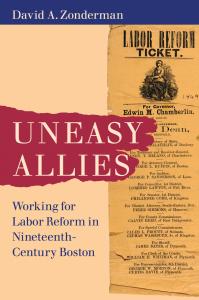
Zonderman, David A.* (Peterson 1989) Uneasy Allies: Working for Labor Reform in Nineteenth-Century Boston. Amherst, MA: University of Massachusetts Press, 2011.
The Acquisitions Table: Mathematics Exercise Book
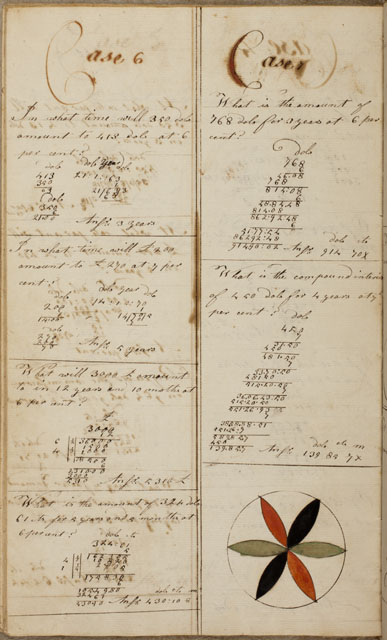
This mathematic exercise book belonged bears the name of Samuel Geer, who was probably from Groton, Connecticut. The book is filled with mathematical calculations and problems, as well as solutions, written in a very neat hand. Questions involve liquid, cubic, long and square measurements, time (“How many minutes since the creation of the world…”), percentages, and compound interest (“What is the compound interest of 450 dols. for 4 years at 7 per cent?”)
The Acquisitions Table: Great Excitement at Fredonia, KY
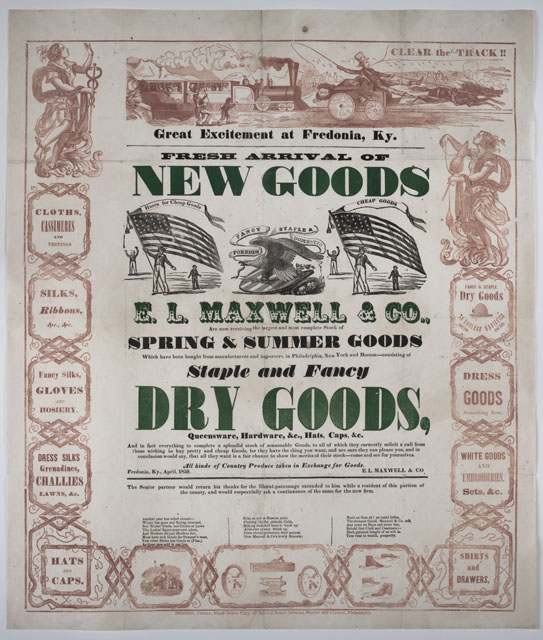
This large, colorful broadside was probably printed in two different locations. The red-printed border, which includes advertising slogans suitable for dry goods merchants (and a cartoon of a horse-drawn mail wagon and train with caption “Clear the tracks!!”), bears the Philadelphia imprint of John Duross. The bordered blank sheets were presumably sold to merchants across the country who then had their own advertisements printed within the border. Although no Fredonia or Campbell Co., KY printer has been identified, the green and black text was presumably printed locally, possibly at Evansville, IN—the closest town known to have had a newspaper press at this time. Edward L. Maxwell is listed in the 1860 census as the owner of a Fredonia dry goods business. He fought in the Union Army and then went west, ending up in California. This broadside, an excellent example of the complexities of broadside printing in the 19th century, was acquired at the print mart of the annual meeting of the American Historical Print Collector Society, held in May here in Worcester
Henry Joslin on the Banks of the Potomac
Last week, Henry left us, and his mother, hanging. His regiment encountered a skirmish, and although he was not harmed, Henry could not share the details until a few days later. On Sunday, October 27th, he tells his mother about the encounter, and his swim to safety. Below are some highlights. You can read the entire transcription here.
Although I have sent you one letter this week you will probably be glad to hear from me again as I only assured you of my own safety. I will now write a little more about the affair of last Monday.
We had to go up a steep bluff in a cart path. It was a hard fight and the enemy having reinforcements compleatly [sic] routed our small force and the order to retreat was given at about dusk. We retreated to the river where we had to stop as there was only one boat and that was quickly swamped by the troops crowding onto it. Then we had to swim the river or stand and be shot as they poured the balls down after us after the commanding officers had sent up a flag of truce. So taking off my shoes and belts and throwing my fun into the river I plunged in to swim for dear life the bullets raining into the water like hail from the top of the bluff.
When I got to camp I was just about used up but considered myself lucky to get back at all. The boys kept coming, the next two days by 2s and 3s. The number of missing is 26 including the Captain, one Sergt and one corporal there is several wounded ones in the hospital I do not write the particulars of the fight nor the names of the missing.
As more events unfold while Henry is on the banks of the Potomac, I’ll continue to share them, on their 150th anniversary. Stay tuned!
150 years ago this week: The saga continues
A few weeks ago, I shared a letter from Henry Joslin, a Civil War Corporal from Fitchburg, Massachusetts. On October 20th, 1861, Henry was again writing home to his mother. Below are some excerpts from the letter. You can read the full transcription here.
I suppose that before you get this you will have received the money that I sent you ($5.00) it will pass I suppose just as well as any if you don’t want to use it yourself I should like to have you buy and send me each week the American Union it will cost 4 cts and postage or 5 cts in all. I suppose that your patriotic principles wont prevent your sending them being only story papers. Curtis had a letter from his folks the other day part was for me. There is a travelling dagueritype [sic] saloon here and I got a picture the other day which I sent to her.
Our ovens are done but have not got dried enough for use yet. I was over to the store the other day when they opened a barrel of cod-fish the folks crowded round to see them as though it was a sea serpent or other great curiosity they thought they was dern great fish. They never saw any before.
Henry closes his letter, but two days later, before he has a chance to send it, he adds the following in pencil at the bottom of the page –
We have had a battle and met with a terrible loss. The Reg’t is indeed cut to pieces. Thank God I am alive and unhurt. Henry Sheldon asks me tell his sister he is not hurt. [?] Marshall is safe also. I can’t write more now. Yours in haste, Henry.
A few days later, the camp settles down and Henry is able to write home with details of the battle. Stayed tuned next week for Henry’s retelling of the events as they unfolded!
John Demos, “The Unredeemed Captive: Her Journey, and My Own”
Each year we present a Baron Lecture as part of the festivities surrounding the Society’s annual meeting. The series is named after Robert C. Baron, president of Fulcrum Publishing and long time AAS member and Council Chairman from 1993-2003. These lectures provide a wonderful opportunity for an AAS member who has written a significant and award-winning book to reflect on the creation and reception of the work and its subsequent influence on their own career, the historical profession, and society in general. This Thursday John P. Demos will deliver the eighth annual Baron Lecture, entitled “The Unredeemed Captive: Her Journey, and My Own.”
When Demos’s book The Unredeemed Captive: A Family Story from Early America was published by Knopf in 1994, it won the Francis Parkman and Ray Allen Billington prizes in American history. Since then, it has become a model for new approaches to writing narrative history. In The Unredeemed Captive, Demos offers a striking retelling of the aftermath of the 1704 French and Native American raid on the Puritan settlement in Deerfield, Massachusetts. Reverend John Williams, his wife, and five children were captured during this raid, forever altering the bonds that held the Williams family together. Although Williams and four of his children were later released, his wife died on the march. His fifth child, Eunice, converted to Catholicism and married a Native American in Canada. Despite the ongoing attempts of Eunice’s family to persuade her to return to Massachusetts, she chose her new life, and her new family, thus remaining “unredeemed.”
In his lecture on Thursday evening, Demos will reflect on the book’s career, as well as its impact on his own career as a scholar and teacher of generations of early Americanists at Brandeis and Yale.
John Demos is the Samuel Knight Professor of History Emeritus at Yale University. Demos’s award-winning books cover topics ranging from family life in Plymouth County, Massachusetts to witch-hunting in the Western World. These works include A Little Commonwealth: Family Life in Plymouth Colony (1970), the Bancroft Prize-winning Entertaining Satan: Witchcraft and the Culture of Early New England (1982), Circles and Lines: The Shape of Life in Early America (2004), and The Enemy Within: 2,000 Years of Witch-hunting in the Western World (2008). Demos is a member of the Antiquarian Society, and he will be the Mellon Distinguished Scholar-in-Residence during the 2012 calendar year.
“The Unredeemed Captive: Her Journey, and My Own” will take place in Antiquarian Hall on Thursday, October 20, 2011, at 7:30 p.m. The program is free and open to the public. For more information and directions to the library, please visit the public programs page on the AAS website.
The Acquisitions Table: The Science and Art of Elocution and Oratory
The frontispiece to this elocution text features a rare illustration of a young lady doing physical exercise along with her male colleagues to prepare for speaking. By 1867, female reformers like Lucy Stone had blazed new trails for women as public speakers before mixed audiences of men and women. To reflect this change in social attitude, the compiler included a piece by Lydia Sigourney on why “Ladies should study elocution.”