Celebrating the Retirements of AAS Staff Members

The 200th annual meeting provided the opportunity to celebrate many accomplishments and transitions, but among the most poignant were the retirements of three long-time colleagues:  Gigi Barnhill and Caroline Sloat (who retired this summer) and John Keenum (who will retire at the end of the year).  A blog post about Gigi’s retirement will appear in Past is Present tomorrow, but I wanted to share with you the comments that I made at the annual meeting about Caroline and John.
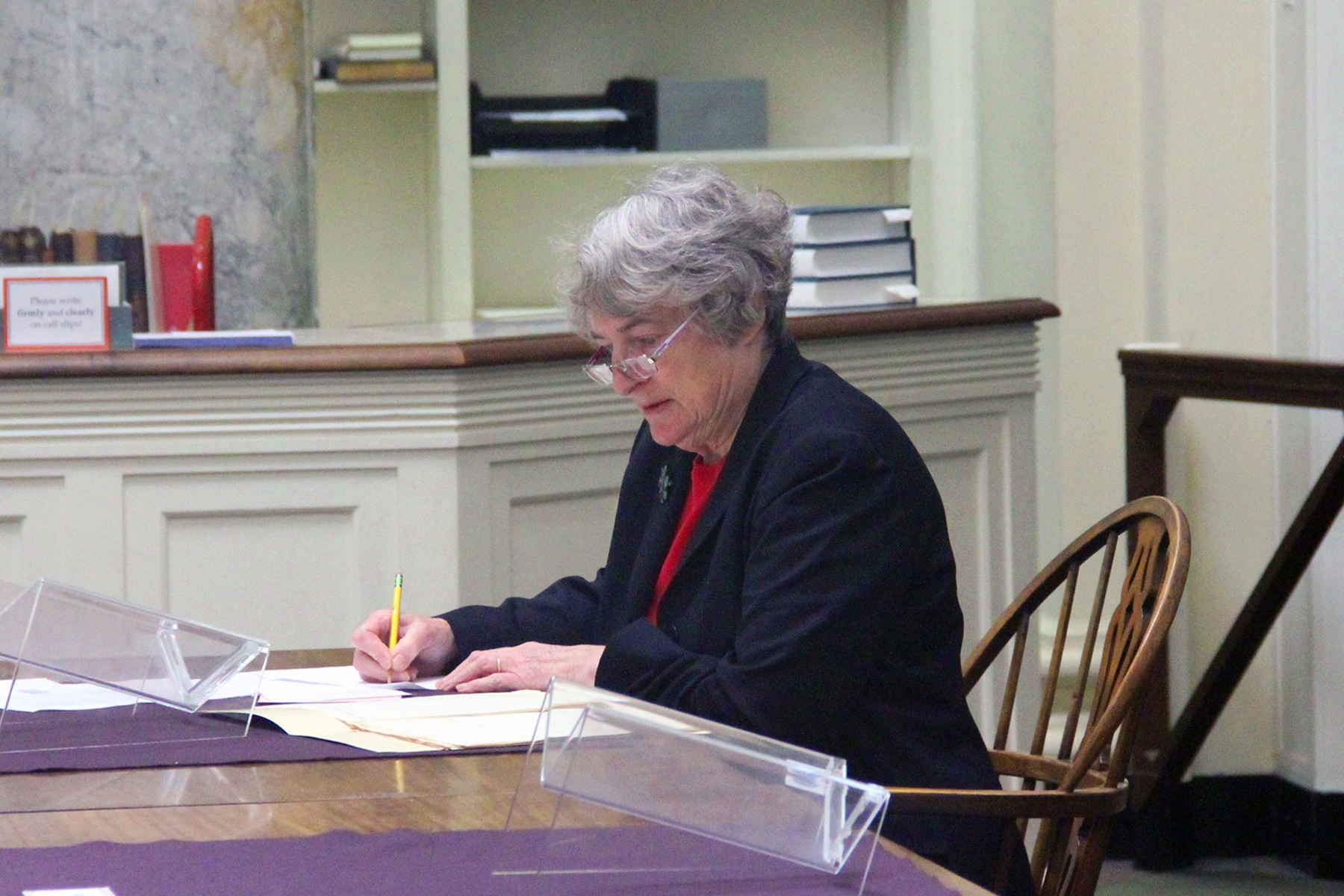
Caroline Sloat hard at work in the Reading Room.

Caroline Sloat officially joined the AAS staff in April 1993 as assistant editor, but she was a member of the AAS family for many years before that, both as a graduate student and as an Old Sturbridge Village staff member.  And in that same vein, although she is now officially retired, I trust that she will continue to stay close as “kin.” John Hench always talked about Caroline’s skills as a substantive editor, but it was not until recently that I looked up the “book” definition of that term.  As I found to be the case in almost everything he ever said, John was right about this, as well. It’s a term that fits Caroline to a T.  The work that Caroline has always excelled at is the hardest kind of editing – one that must consider what the author was trying to say, whether or not it should be said or is worth saying, and then figure out – often with great diplomacy – how to help the author make their arguments more cogent, their language more clear, their writing more functional.  And Caroline is legendary for offering this kind of substantive editorial assistance, not just on projects where she was assigned the task – such as AAS Proceedings, the History of the Book in America series, and the Gura book, she has offered the same sort of assistance to fellows working on their dissertations, journal articles, and books, just out of the goodness of her editorial heart. Caroline has devoted herself to making friends at the AAS and for the AAS, and the goodwill that she has engendered – evident in so many fellows reports over the years – is a debt that we could not easily repay except with our thanks for her years of service and devotion.
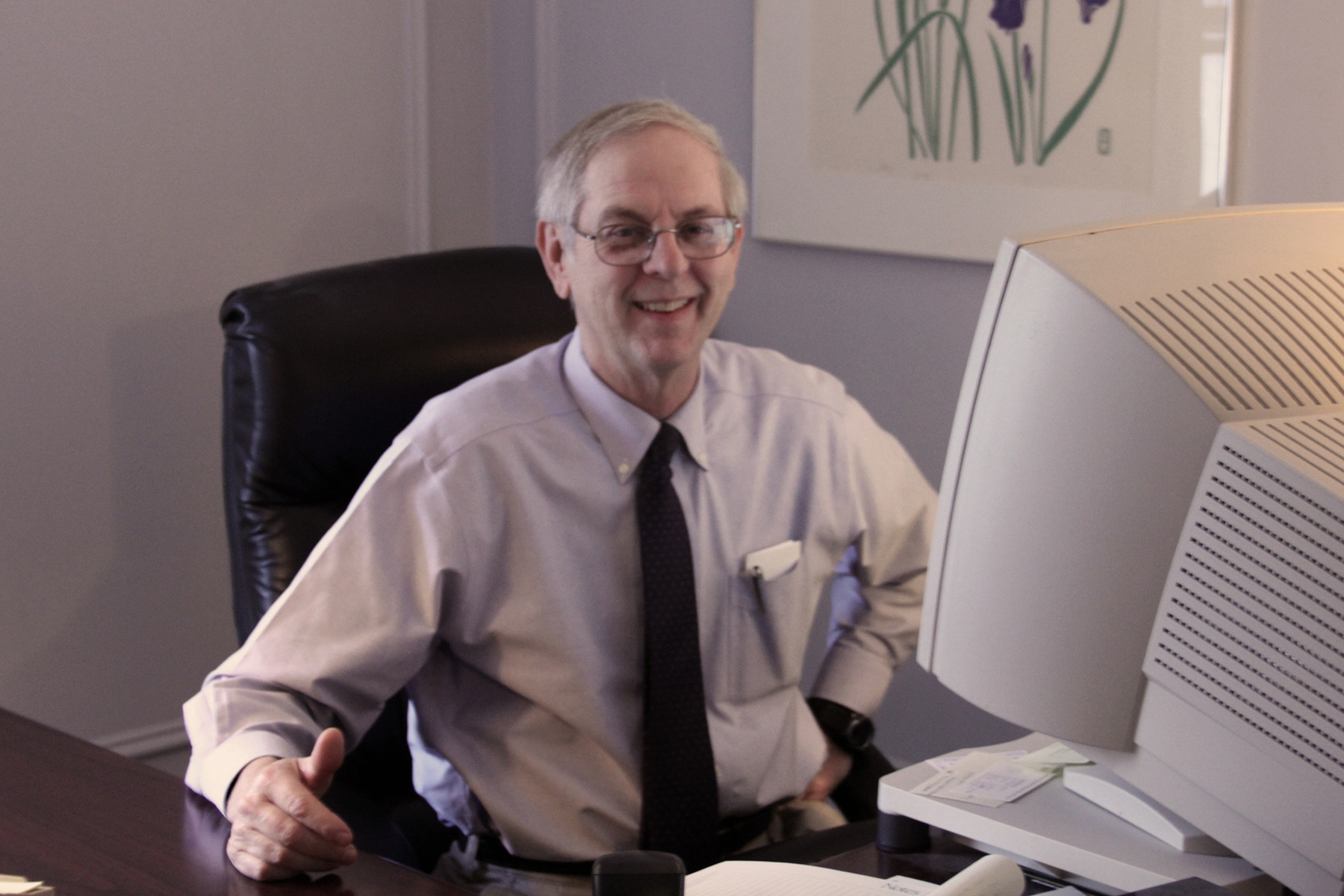
John Keenum, also hard at work, in his office at the Goddard-Daniels House.

Almost from the time he arrived at AAS in 1996 to take up the post of vice-president for development, John Keenum has been saying to me, “I’m going to retire after the bicentennial,” and being a man of his word, that’s exactly what he’s doing.  The one-room school house in the Berkshires to which John and his wife Katherine – a soon-to-be published writer of historical fiction — have long retreated on weekends and in August is now modernized, expanded, and ready for their year-round occupancy.  I imagine them enjoying a long life there together, filled with books, concerts, dogs, and land-trust meetings, and I can’t imagine anyone more deserving of such repose.  Raising money is a grind, although I’ve never seen one day in these sixteen years when John let that get the better of him.  A consummate professional, John took every challenge we faced in his stride… and there HAVE been challenges.  When he came we were still wrapping up the Mellon challenge for core operations, then we got an NEH challenge for acquisitions endowment.  Next was the Kresge challenge for the building addition, then we needed to raise endowment to maintain things like the artists’ and writers’ fellowships that the Wallace grant once paid for, then there was the Mellon challenge for academic fellowships, and then yet another NEH challenge, this one for CHAViC.  And thanks to his steadfast commitment to this institution, his dogged perseverance, his ability to finagle a budget (always on the up-and-up), and his ability to write beautifully cogent prose, under his leadership, AAS has met every one of those challenge propositions, securing the full amount offered as a challenge, often long before the deadline.  John did all this, plus running the annual fund and being our federal grants officer, with precious little assistance. But John has done more than merely raise money for AAS.  He has invested himself in the life of this institution, making friends with staff, fellows, and members alike, buying books for the collection, participating in volunteer projects, just to help out.  He has been a simply wonderful colleague, greatly admired by all.  He will also be greatly missed, but he leaves us a much richer organization for his having been here.
Bicentennial Gifts: Early Wyoming Imprints

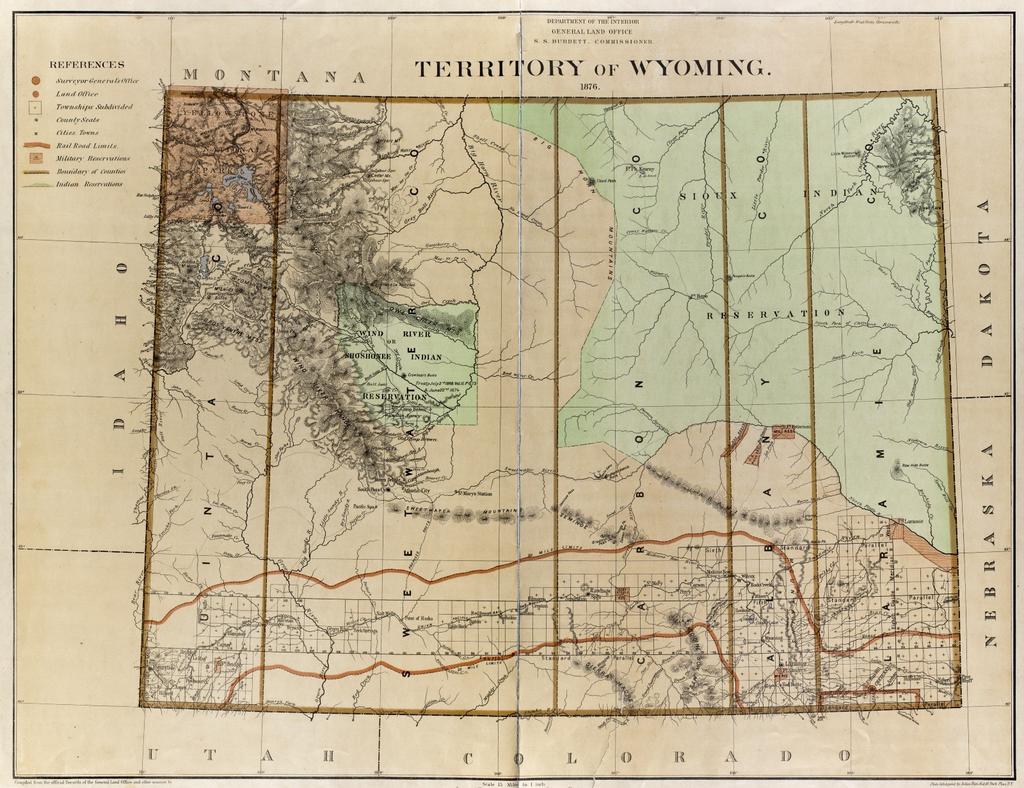
Although not part of the Chabris gift, this map of the territory of Wyoming provides a view of the land in 1876. Territory of Wyoming. New York: Bien, 1876.

In the next couple of months, Past is Present will be highlighting a number of gifts received in honor of the American Antiquarian Society’s bicentennial.  Remember, there is still time to join the group of bicentennial donors.

It continues to surprise me when I talk with people who are laboring under the misconception that AAS focuses exclusively on New England.  Not so!

Don’t get me wrong – New England has always been my home so it has a special place in my heart, and AAS certainly has an amazing collection of printed items from Massachusetts, New England, and the eastern seaboard.  But in my new role as curator of books at AAS, I am particularly interested in expanding our holdings of printed material from Western and Southern states.  Isaiah Thomas founded us 200 years ago as the first national historical institution and we continue to actively seek collectors and dealers to partner with us to document the entire nation through 1876 (and sometimes later for locations where print arrived later).

Thus Daniel Chabris’s recent donation of six Wyoming imprints in honor of the Society’s bicentennial was particularly welcome. In one fell swoop Mr. Chabris’s generous gift significantly expanded our holdings for this late entrant into the United States.  AAS had less than a dozen Wyoming imprints through 1876, and we were able to add three more to that number.  The gift included many early governmental documents for the territory/state, The Constitution of the Proposed State of Wyoming from 1889, and perhaps most significantly, the first book known to have been printed in Laramie, Wyoming:

[Jeffrey, J.K.] The Territory of Wyoming: Its History, Soil, Climate, Resources, Etc. Published by authority of the Board of Immigration. Laramie City: Daily Sentinel Print., December 1874. AAS record

The Territory of Wyoming is an in-depth survey of the territory covering everything from raising stock to homesteading to women’s suffrage. It is also exceptionally rare: the final edition of Howes’ bibliography of U.S.iana marks it as a “d” (“very rare books, obtainable only with great difficulty”) and it has only appeared at auction once in the past thirty years. The copy now at AAS contains a presentation slip from G.W. French, the Secretary of Wyoming Territory, and appears to be signed by its author, J.K. Jeffrey, the Commissioner of Immigration.

Not surprisingly, the boosterism in The Territory of Wyoming is overt and especially focused on the city where it was published.  Laramie City is declared to be “one of the most promising towns in the West, and it is destined to become a populous and prosperous city.”  The text describes Laramie County as “unoccupied, awaiting culture and utilization,” and continues:

The best portion of this country is still closed to the white man, and embraces all that portion north of the North Platte river.  But it is hoped that the obstacles will soon be removed, and this rich grazing, farming, and mineral country will be thrown open to the active farmer, the miner and the mechanic.” (p. 21)

The rhetoric expressed here will be familiar to anyone studying westward expansion and Indian removal: Native Americans were not actively cultivating the land so it should be opened up to settlers and immigrants arriving from the east.

The bulk of the text of The Territory of Wyoming contains descriptions of the resources in various areas of Wyoming, its “inducements for immigration,” and an appendix detailing how homesteading worked in the territory.  However, the last section (p. 49-83) contains more personal and engaging descriptions written by a special correspondent to the London Field, E. A. Curley, who had recently explored the region in 1873 & 1874.  One of the most interesting of Curley’s observations is on “Woman Suffrage in the Far West” – an appropriate subject for this time of year, but one which I thought everyone might appreciate a break from for a few days. Stay tuned for a follow-up post on Wyoming and Women’s Suffrage.

(The image of the map displayed here was not part of the Chabris donation but its AAS record can be found here.)

The Acquisitions Table: Leicester Academy List of Students

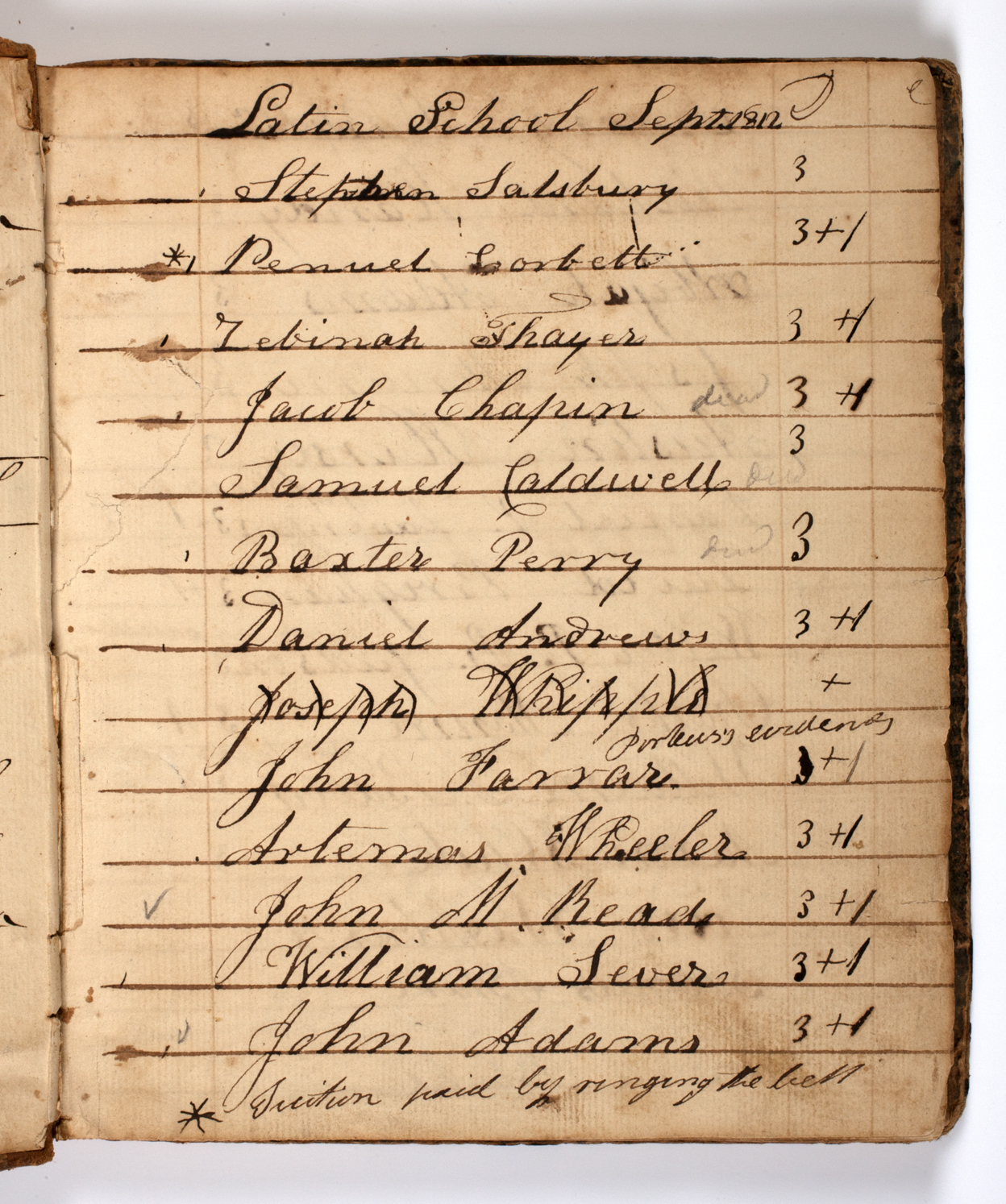
Leicester Academy, List of Students, 1812-1817.

Leicester Academy was founded in 1784 in Leicester, Massachusetts, and functioned as a private, co-educational institution until 1921, when it was leased to the town to be used as a public high school.  This volume, containing a list of students, will be added to the already substantial collection of school records at AAS dating from the school’s founding through 1963.  The volume shows enrollment at the school from 1812 though 1817, and is separated into sections for the  English School and Latin School.  The students’ names as well as their home towns are included.  Prominent Worcester families can be seen throughout the volume, the first page boasting the name of future AAS President Stephen Salisbury II, who was enrolled in the Latin School in 1812.  

What was Election Day like 200 Years Ago?

Hello fellow citizens,

As we vote today, here is a look back 200 years. In 1812 there were eighteen states and the voting cycle ran from October 30, when four states voted, until December 1, when South Carolina was the last to choose its electors.

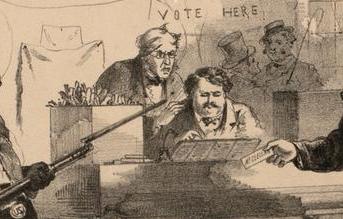
Image from a later Civil War era election, How free ballot is protected! (Boston, 1864) AAS record

Of the eighteen states in 1812, nine had popular vote of electors and nine where chosen by the state legislatures. There were three candidates; James Madison was the Republican (Jeffersonian) and incumbent, DeWitt Clinton was supported by a coalition of Federalist and Anti-War Republicans, and in mid-October some Federalist who did not like DeWitt Clinton decided to run a purely Federalist ticket supporting Rufus King of New York and William Davie of North Carolina.

The main issues were the War of 1812 (we were grossly unprepared), taxes (war is expensive) and the economy (the British naval blockade was costing the country needed revenue with many jobs being lost).

The October state elections had looked very gloomy for the Republicans, and the presidential election came down basically to three states: Pennsylvania, North Carolina and Vermont. If any two of these went Federalist, then DeWitt Clinton would be elected. In the end, all three went for James Madison and the final vote in the Electoral College was James Madison 128 and DeWitt Clinton 89.

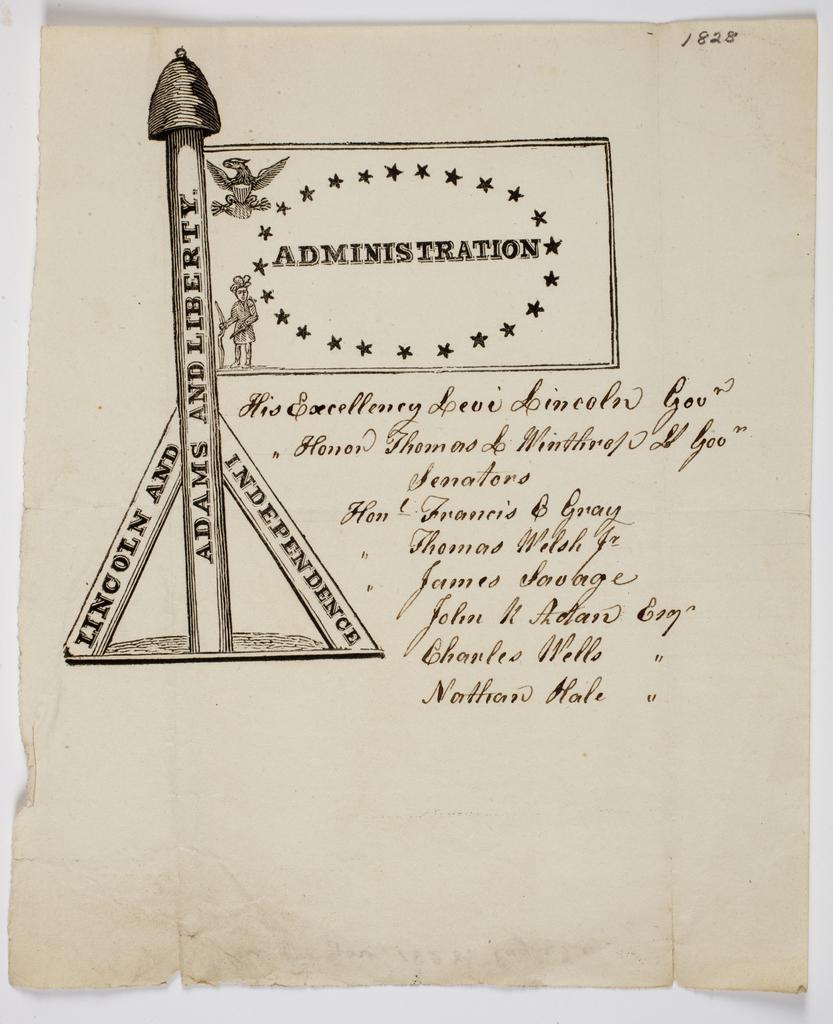
An 1828 ballot in AAS collections

Voting was very complicated in 1812, as there were a variety of election methods. States could choose electors At-Large, by districts with single or multiple candidates and legislative choice. Voters in all states had to write out the names of the candidates and they had to be spelled correctly. Abbreviating a first name (Wm. Thos., etc.), omitting  the Jr., a middle initial, or incorrect spelling would send your vote to the scattering pile.

Voting is the backbone of Democracy and hopefully all will engage in this process.

Learn more about early American election returns at A New Nation Votes.

Huzzah! A Special Tribute to AAS at 200

A familiar voice begins, “…two years ago, it was a great honor to be elected a member of the American Antiquarian Society,” as President Bill Clinton sends his bicentennial congratulations via video.

The Society has elected fourteen U.S. Presidents to membership, beginning with John Adams in 1813. Given the demands on a President’s – and a former President’s – time, we understood how coming to AAS for the bicentennial could prove to be too much of a challenge. In fact, in addition to contending with President Clinton’s busy schedule, the annual meeting was held on Secretary of State Clinton’s birthday, so we were doubly grateful to be able to share his remarks on October 26.

In the video President Clinton recalls the pivotal role played by Isaiah Thomas as a printer and publisher who helped to create a distinctly American culture and then, by founding AAS, established a place and a plan for preserving it. The crucial decision to create a library where all printed material would be collected and preserved, every item treated with equal importance, has determined its course now for 200 years. He heralds AAS as an important democratic institution, and observes how digitization has allowed scholars and historians to access our collections from all over the world.

President Clinton takes a moment to reflect on how AAS has served, and continues to serve, our nation: “America’s future depends in part on our continuing capacity to remember the past.  This year we honor the American Antiquarian Society’s dedication to collecting, preserving, and sharing that past. I also believe we should celebrate the Society’s role in shaping our shared future.”

He concludes his message by thanking those associated with the American Antiquarian Society for all they do – a fine tribute to a unique national institution.

First aired at our 200th annual meeting, we are pleased to post President Clinton’s cyber greetings here.

Finding Halloween in the Archives

The month of October, marked by grey rainy days and bright orange and red foliage certainly has me feeling a bit spooky. While Halloween as we know it is generally a twentieth-century phenomenon, New England has a long history of superstitions and ghost stories. We all know the gothic tales of Edgar Allan Poe, Nathaniel Hawthorne, and Washington Irving but there are some lesser-known American ghost stories hiding in the stacks at the American Antiquarian Society and I made it my personal goal to find them. After browsing the shelves, I found that AAS has a whole collection of material about witchcraft, superstition, and the occult. Here is a glimpse of what I found.

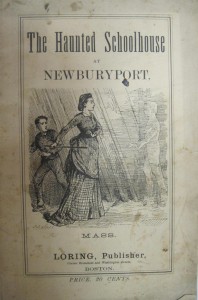
The Haunted Schoolhouse at Newburyport, a pamphlet produced by Loring publishers of Boston in 1873, tells the story of some peculiar happenings at a one room schoolhouse in Newburyport, MA. Students and teachers alike began to notice rapping, strange lights, and bells ringing when no one was around. “At times the whole school-room has been illuminated, while the school has been in session, by a strong, yellow glow, which on dark days has proceeded from the entry and entered through the partition window.”

According to the story, a student and teacher finally meet the ghost responsible, possibly a former student at the school: “The figure was that of a boy of thirteen. The visage was remarkably pale, the eyes were blue, the mouth sad, and the whole effect was that of extreme melancholy. The general picture was that of a child prepared for burial and prepared, moreover, in a poor and makeshift way.”

Were these happenings the handy work of a mischievous young boy? A student was rumored to have taken credit for the hoax some years later but the story leaves the ending to the reader’s imagination so we may never know.

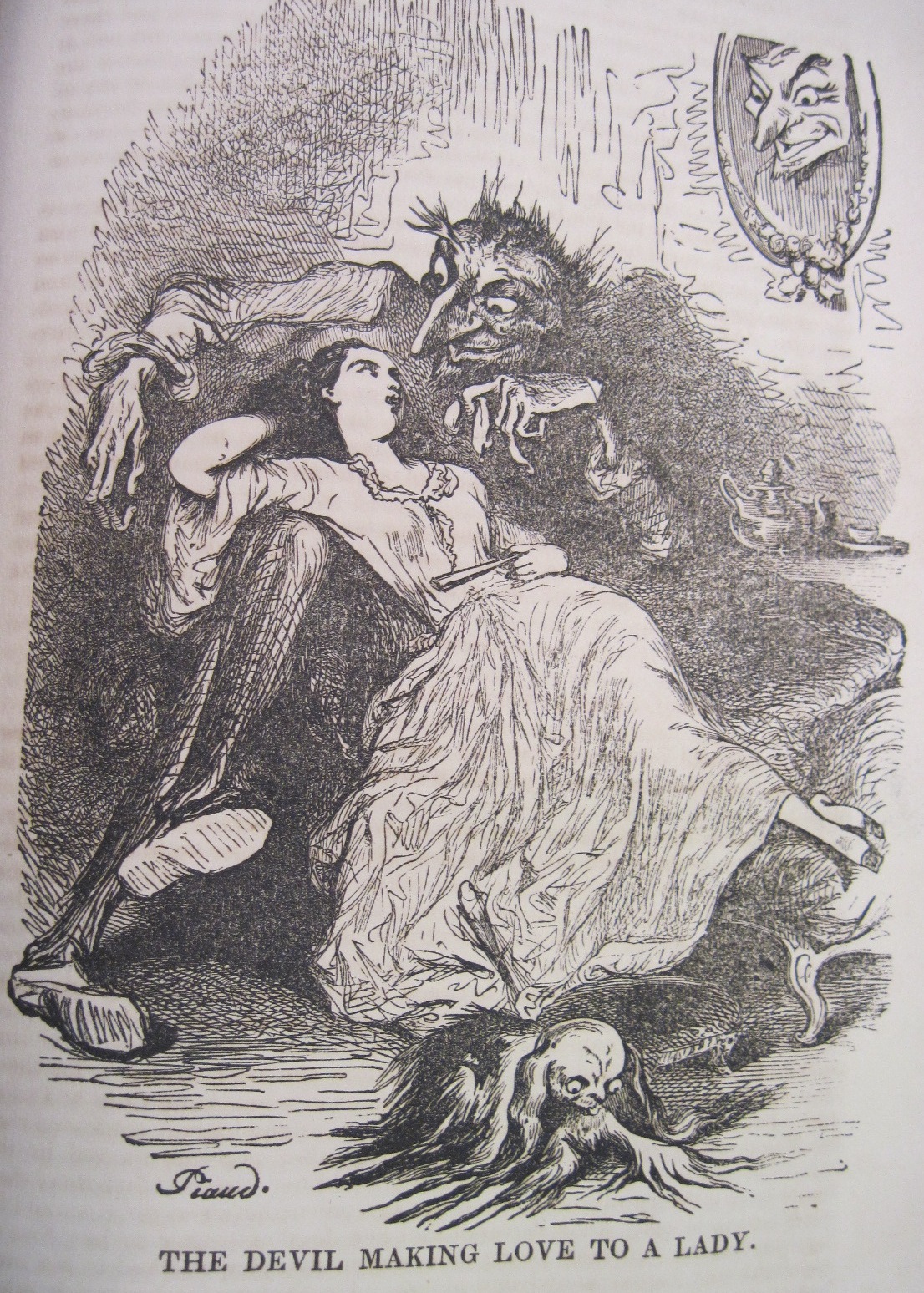
Another good find, Remarkable Apparitions and Ghost Stories or Authentic Histories of Communications (Real or Imaginary) with The Unseen World, a collection of stories compiled by Clarence S. Day in 1848, is not only full of chilling old fashioned ghost stories but also includes some terrifying images. Day introduces the book saying, “If any one doubts that telling ghost-stories is the proper employment for a winter’s night, let him open his window and look out. Can anything be more spectral? There is not a hill or a hollow in sight but has put on a shroud, and stares at him with a still, white face, the phantom of itself. The trees stand like giant skeletons, lifting their bleached arms toward the trooping clouds that hurry across the sky, like witches flocking to their sabbath. What is all that but a ghost-story in dumb-show, told by the earth to the stars?”

A particularly interesting story within the volume, written by Cotton Mather, “An Account of a Young Woman who fell in Love with the Devil”, takes place in Hartford, CT around 1662. The plot includes a young woman visited in her bedroom by the devil, a public witch burning, and of course, the eventual return to daily life.

My exploration of the ghost stories of New England’s past makes me happy to be living in 2012, safely removed from witch burnings and haunted one room school houses. Though a stroll through the dark, climate controlled, and often-eerie stacks of AAS on an autumn afternoon leaves me wondering what I might encounter as I turn the corner.

The Acquisitions Table: Grigg, Elliot & Co. List of Books

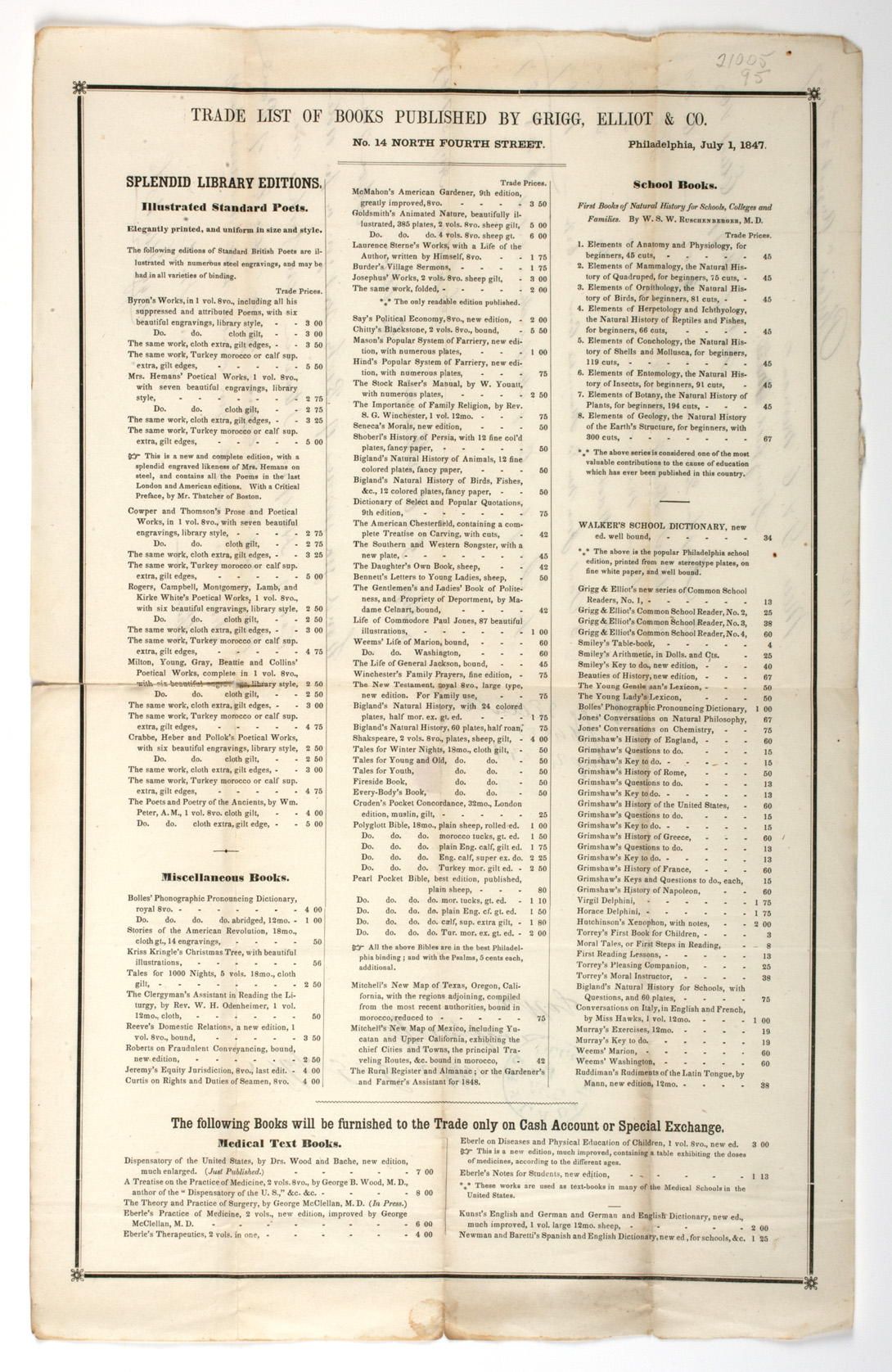
Trade List of Books Published by Grigg, Elliot & Co….Philadelphia, s.n., 1847.

This broadside listing titles for sale by the Philadelphia book publisher Grigg, Elliot & Co., includes details about their stock of poetry, medical texts, and school books. The Society has a large collection of Philadelphia bookseller and book publisher catalogues and sale broadsides and this sheet will join that group. Interestingly, this sheet lacks the hyperbolic language common to such advertisements and instead uses the space on the broadside to specify their stock, including almanacs, bibles and two Mitchell maps — one of Texas, Oregon & California and another of Mexico and Upper California, both of which would shortly be of great interest to the flood of easterners who would be seeking gold in the hills of California in 1848 and 1849.

Public Program: “From Emancipation to Civil Rights and Beyond: Legacies of the Civil War at 150”

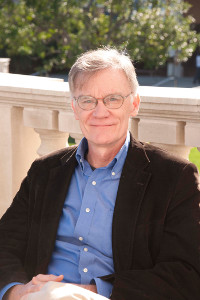
The last public program in our fall lineup will be delivered by one of the nation’s foremost historians of slavery and resistance, David Blight, next Thursday, November 1 at 7 p.m. In recent public programs we have discussed the bicentennial of AAS and the War of 1812. Now, Blight will shift focus to another current and significant anniversary – the sesquicentennial of the Civil War. He will discuss the multiple legacies of the Civil War from the 50th to the 100th, and now to the 150th anniversaries of the event. He will also explore how the legacies of this great conflict are still very much part of our current, roiling political debates.

Blight has long been examining the ways in which the Civil War has been remembered, and how those memories have played into contemporary politics and culture. His most recent book, American Oracle: The Civil War in the Civil Rights Era, looks at how the centennial of the Civil War was entwined with civil rights politics and protests. Through the lens of the works of four different American writers – Robert Penn Warren, Bruce Catton, Edmund Wilson, and James Baldwin – Blight explores how the difficult realities of the era, in many ways legacies of the war, clashed with the positive memories of the conflict’s outcome.

Before American Oracle, however, Blight’s time as an AAS Peterson Fellow contributed to his 2002 Bancroft Prize-winning book, also on the Civil War and its commemoration, Race and Reunion: The Civil War in American Memory. In Race and Reunion, Blight explored the ways in which the Civil War was remembered in the fifty years following the end of the conflict, weaving together a narrative of literature, history, and public memorials.

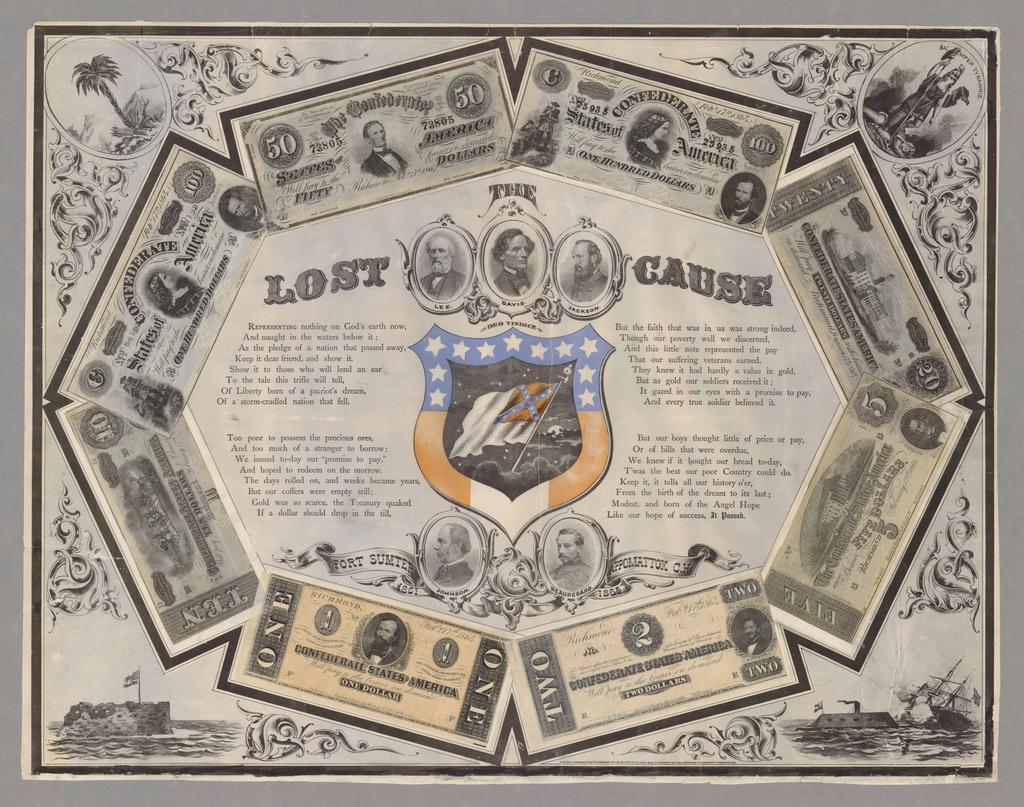
Lost Cause (1872)

Blight is Class of 1954 Professor of American History at Yale University, and Director of the Gilder Lehrman Center for the Study of Slavery, Resistance, and Abolition at Yale. Other published works include a book of essays, Beyond the Battlefield: Race, Memory, and the American Civil War (2002); and Frederick Douglass’s Civil War: Keeping Faith in Jubilee (1989). Blight is also a frequent book reviewer for the Washington Post Book World, the Chicago Tribune, the Los Angeles Times, the San Francisco Chronicle, the Boston Globe, Slate.com and other newspapers. He has been a consultant to many documentary films, including the 1998 PBS series, “Africans in America,” and “The Reconstruction Era” (2004). In 2012, he was elected to the American Academy of Arts and Sciences.

Please join us for the last public program of the season!

The Acquisitions Table: Ruth Chenery

Davis, Caroline E. Kelly.  Ruth Chenery.  Boston: Henry Hoyt, ca. 1867.

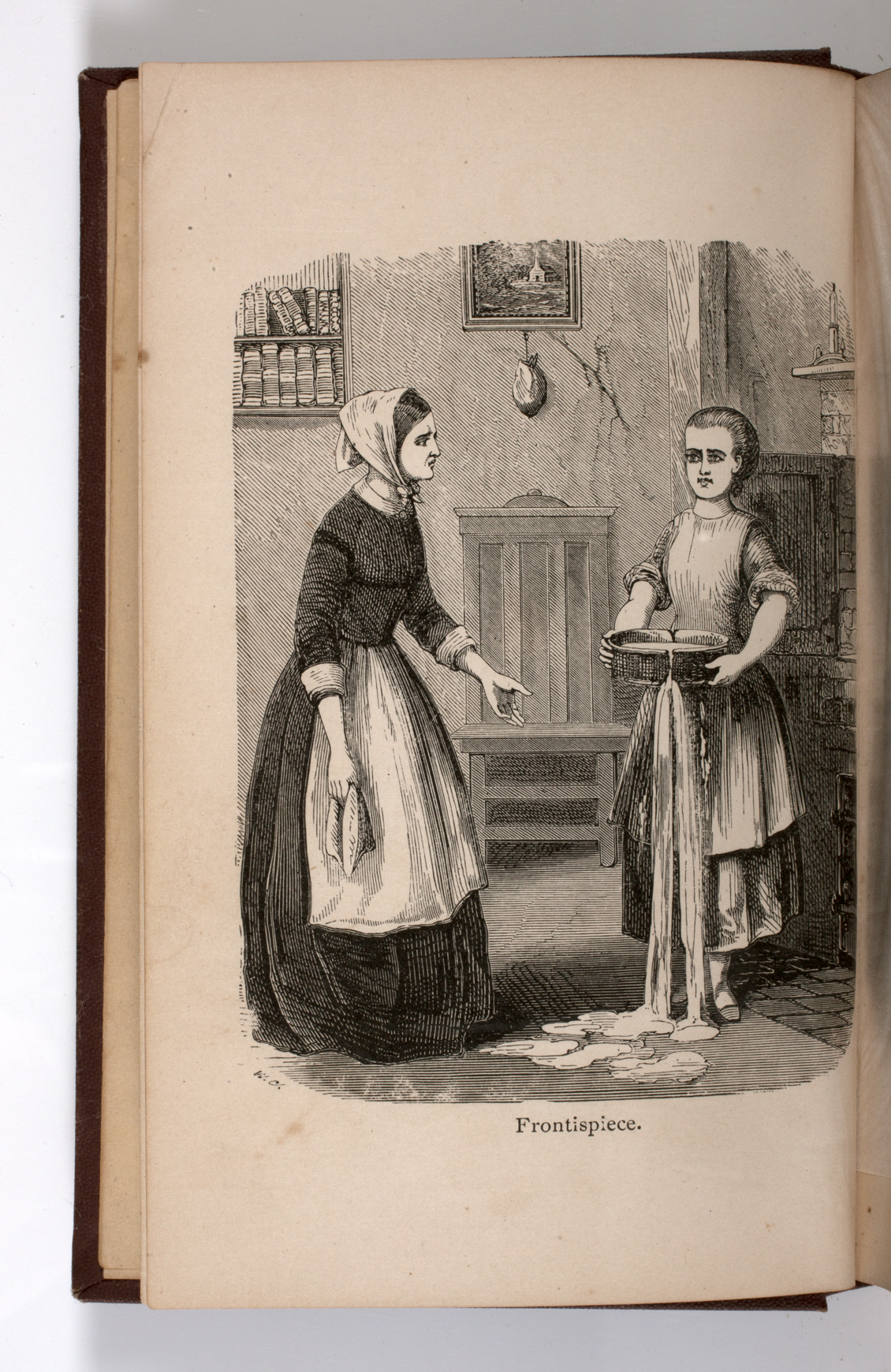
This comic frontispiece captures the embarrassment of young Ruth Chenery; the well-intentioned young woman made a pudding only to discover that she had used a cracked and hopelessly damaged dish, and she receives a sound scolding from her maiden Aunt Keziah.  The struggle of high-spirited young women to get along with their staid aunts was a common plot, particularly in the juvenile religious fiction that became popular after 1850.

Baron Lecture: Patricia Limerick Reflects Upon “The Legacy of Conquest: The Unbroken Past of the American West”

Patricia Nelson Limerick, A Western American historian at the University of Colorado, will deliver the ninth annual Baron Lecture on October 25 at 7 p.m. This lecture is named after Robert C. Baron, past AAS chairman and president of Fulcrum Publishing in Denver. This lecture invites a distinguished AAS member who has written a seminal work of history to reflect on one book and its impact on scholarship and society since its publication. The topic of this year’s Baron Lecture is particularly poignant as AAS reflects on its accomplishments over the last 200 years, for Limerick will be exploring the ways in which her seminal book, The Legacy of Conquest: The Unbroken Past of the American West, would have been improved by spending time in the archives of AAS.

The Legacy of Conquest, celebrating its 25th anniversary this year, was a groundbreaking book in scholarship on the West. It examined how the environmental characteristics of the West, combined with the dynamics of the ongoing conquest of the Native Americans, helped define the history of the region. Now, twenty-five years later, Limerick shares the instructive and amusing journeys that her book undertook, reflecting on the “substantial and genuine virtue” that Legacy would have gained from time spent in Worcester. As a “big picture” historian, Limerick feels herself indebted to historians who delve deep into the archives and work closely with the actual documents and manuscripts, as well as to those who manage these collections.

Limerick is the Faculty Director and Chair of the Board of the Center of the American West at the University of Colorado. She has dedicated her career to bridging the gap between academics and the general public and to demonstrating the benefits of applying historical perspective to contemporary dilemmas and conflicts. Her other books include Desert Passages (1985) and Something in the Soil (2000). Limerick has received a number of awards and honors recognizing the impact of her scholarship and her commitment to teaching, including the MacArthur Fellowship (1995 to 2000) and the Hazel Barnes Prize, the University of Colorado’s highest award for teaching and research (2001). She regularly contributes essays to op-ed pages of local and national newspapers, and in the summer of 2005 she served as a guest columnist for The New York Times.

As always, this program is free and open to the public.

Helen Keller’s Handwritten History Now Open to View Online

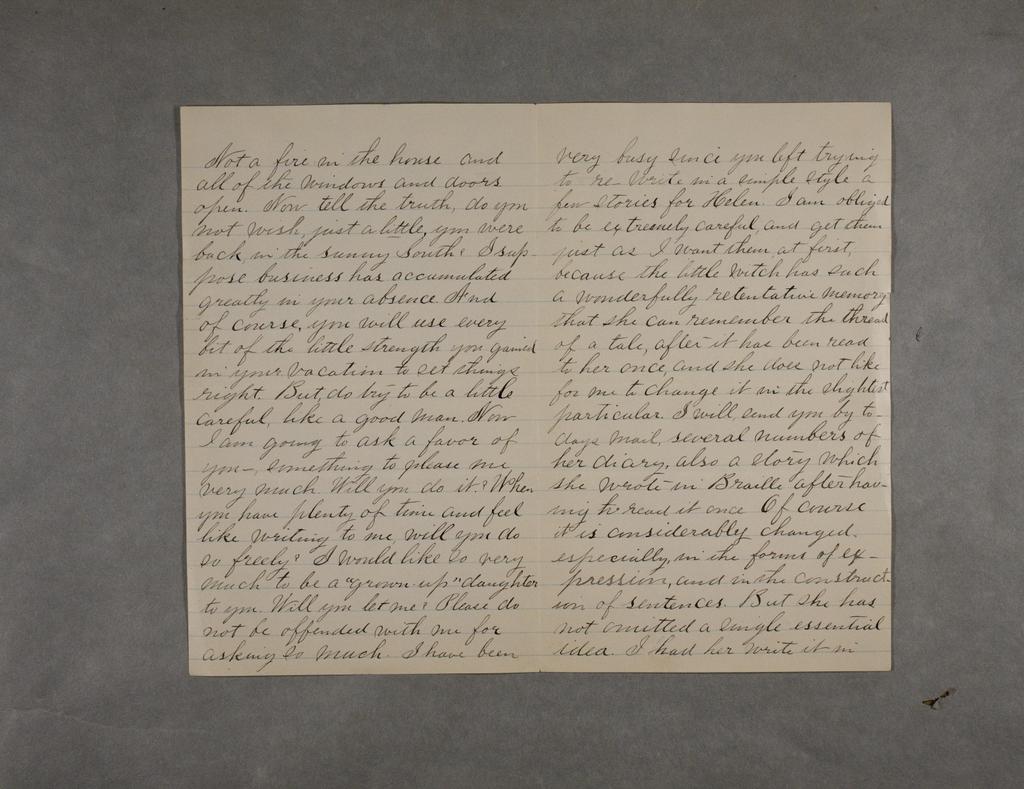
For the first time ever, the extensive 1880s-era correspondence between Helen Keller, her teacher Anne Sullivan and Sullivan’s mentor at Perkins School for the Blind, Michael Anagnos, are available online. An unusual collaboration between the American Antiquarian Society and Perkins (www.perkinsarchives.org) harnesses the power of social media to create a revealing new online exhibit that unites previously separate collections in a single online showcase:www.flickr.com/photos/perkinsarchive/collections/72157629303816171. The announcement is timely, since October is both World Blindness Awareness Month and American Archives Month.

Letter from Annie Sullivan to Michael Anagnos, 1888

The story of how Anne Sullivan unlocked Helen Keller’s brilliant intellect is well documented in literature, such as William Gibson’s Tony and Oscar winning work, The Miracle Worker. Yet these letters provide even deeper and more detailed insights to historians, writers, educators and all who are fascinated by Keller, one of the most admired and beloved figures of the 20th century. The digital archives allow viewing anytime from anywhere without handling the primary documents, thus preserving the fragile and valuable letters. The digital scans are clear and vivid, and the online collections also give researchers transcribed text. Betsy McGinnity, director of Perkins Training and Educational Resources Program, says, “Combining the AAS and Perkins archives helps put each individual letter in context. And the transcriptions can be accessed using computer screen readers – a real boon for users who are visually impaired.”

Thanks to a National Endowment for the Humanities grant, Perkins will digitize selected 19thcentury materials in its archives, such as the 1886-1895 correspondence between Perkins second director, Michael Anagnos, and Helen Keller’s parents, as well as a series of missives between Anagnos and Sullivan, all of which illuminate Keller’s early education. Also included in this collection are some of the earliest letters written by Helen Keller herself, when she was between the ages of 8 and 11 years old. Her letters to Anagnos show the great bond of affection between the two. Written in Helen’s own hand, these astonishing letters display the child’s exceptional intelligence. One is even written in French. They demonstrate her playful sense of humor, as well as her curious and eager mind.

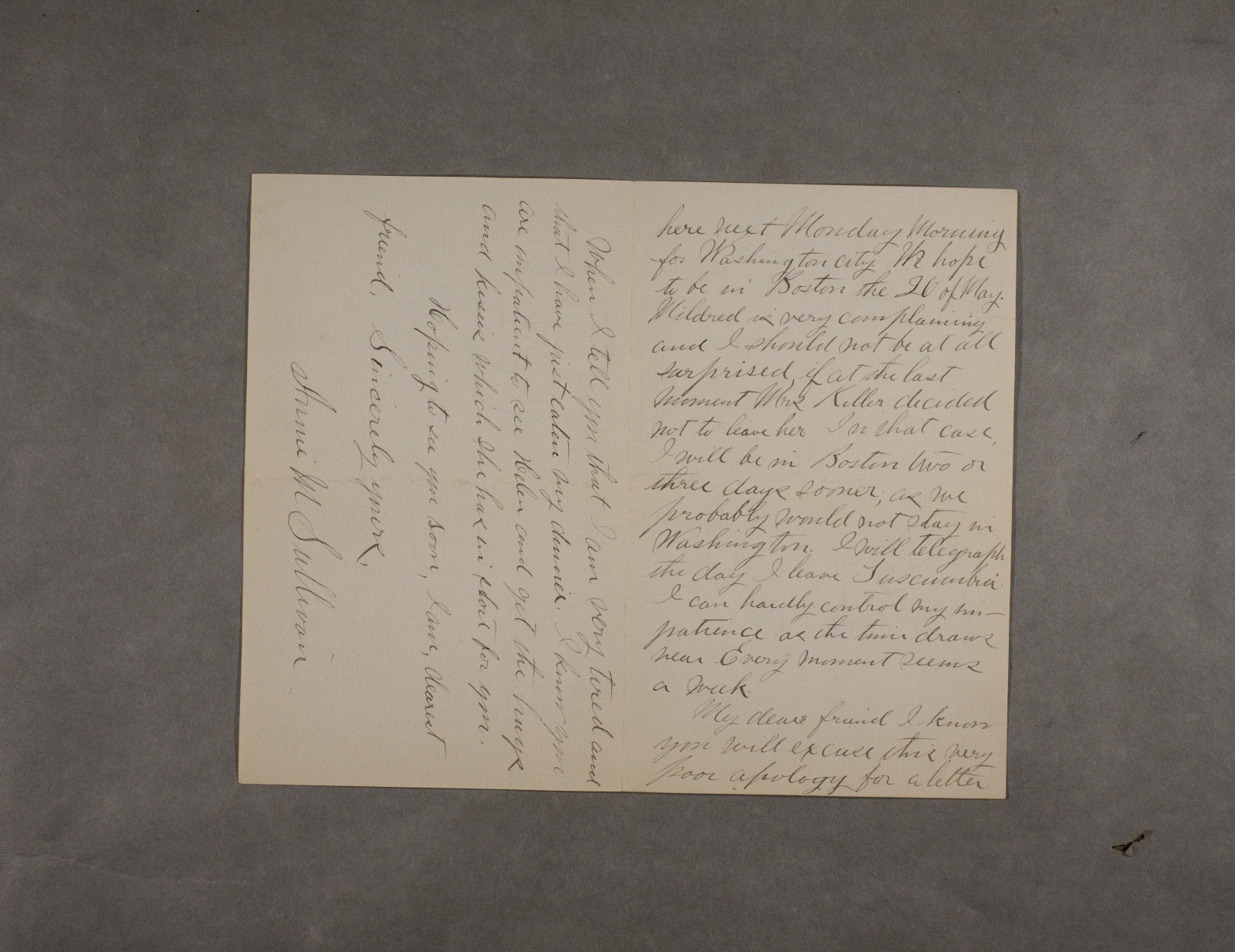
Letter from Annie Sullivan to Michael Anagnos, 1888

Sullivan’s letters to Anagnos outline her challenges, her triumphs, and her joy at Helen’s rapid progress. In her first letter written March 13, 1887, less than two weeks after the novice tutor arrived at the Kellers’ Alabama home, Sullivan writes of the child, “I find considerable trouble in controlling her.” Not long after that, however, she bursts with enthusiasm, writing, “Never did a teacher have more reason to be proud of a pupil. A sweeter or brighter child it would be impossible to find…”The evidence of wisdom gained by human struggle in the collected correspondence is both instructive and inspirational. Later in life, Keller wrote, “Usefulness, I believe, is the highest joy…” How fitting that others can now use and learn from these documents from her childhood.

By joining forces to create this online archive, AAS and Perkins achieve many shared goals, proving the adage that the whole is greater than the sum of its parts. As David McCullough says in an AAS video, “One of the lessons of history is that very little of consequence is accomplished alone.”

To learn more about Perkins visit their website at www.Perkins.org.

The Acquisitions Table: Jonathan Huse Papers

Huse, Jonathan, Papers, 1795-1842.

Jonathan Huse (1767-1853) was born in Methuen, Massachusetts and was graduated from Dartmouth College in 1788.  In 1795 he became minister of the Congregational church in Warren, Maine.  In the late 1820s a growing number of members of his congregation became interested in Hopkinsianism and a movement began to form a second Congregational parish in Warren, whereupon Huse offered to rescind his contract with the society, an offer which was accepted.  Thereafter Huse continued as minister for the dwindling first parish on a year by year basis.

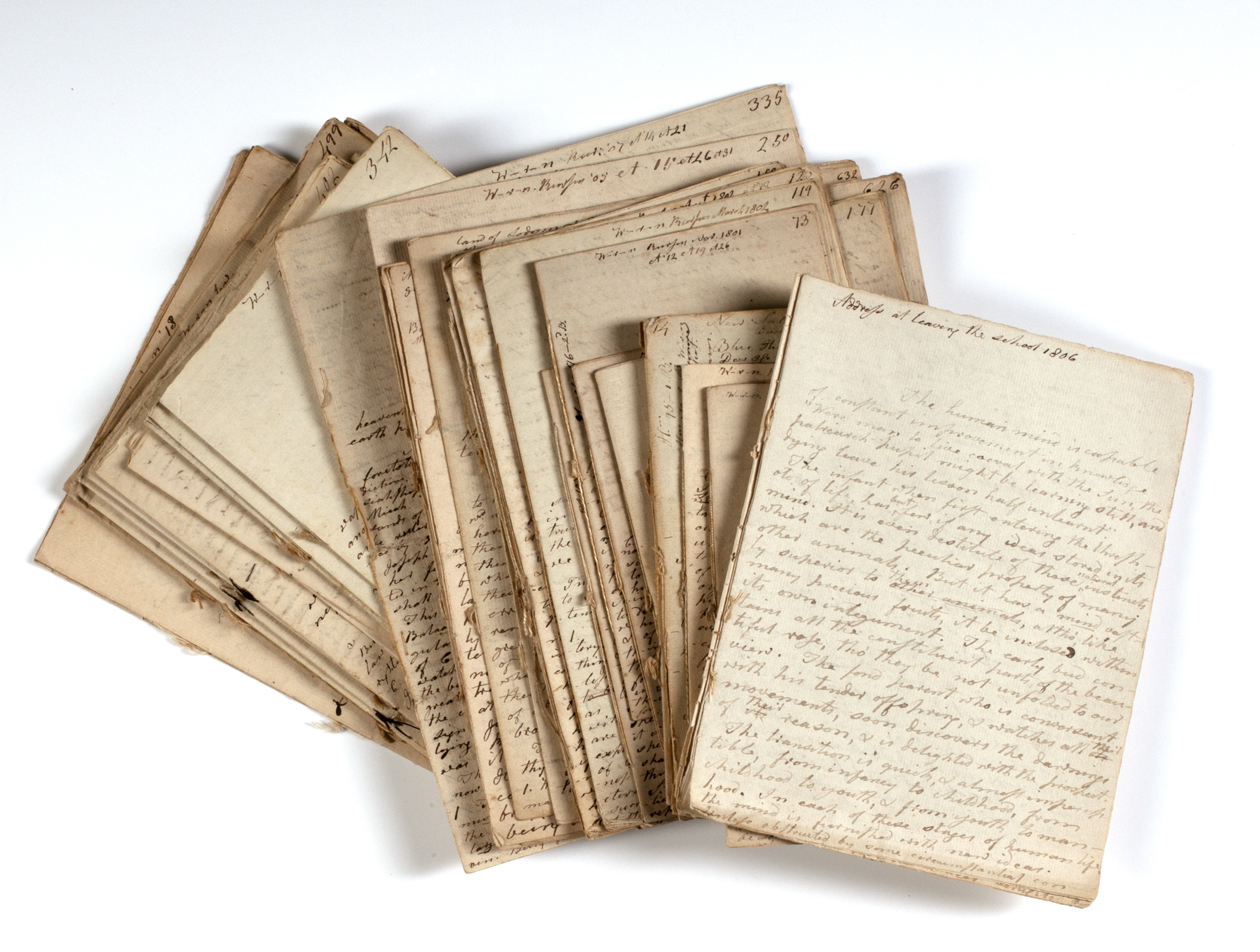
This collection includes various documents relating to Huse’s ministry, as well as thirty nine sermons he preached between 1798 and 1832. Most of the sermons are numbered (499 is the highest number in the present group) and as was a common practice among New England ministers, many were preached in more than one location over a period of years 

“Two at Two Hundred” celebrates Bicentennials of AAS and First Baptist Church

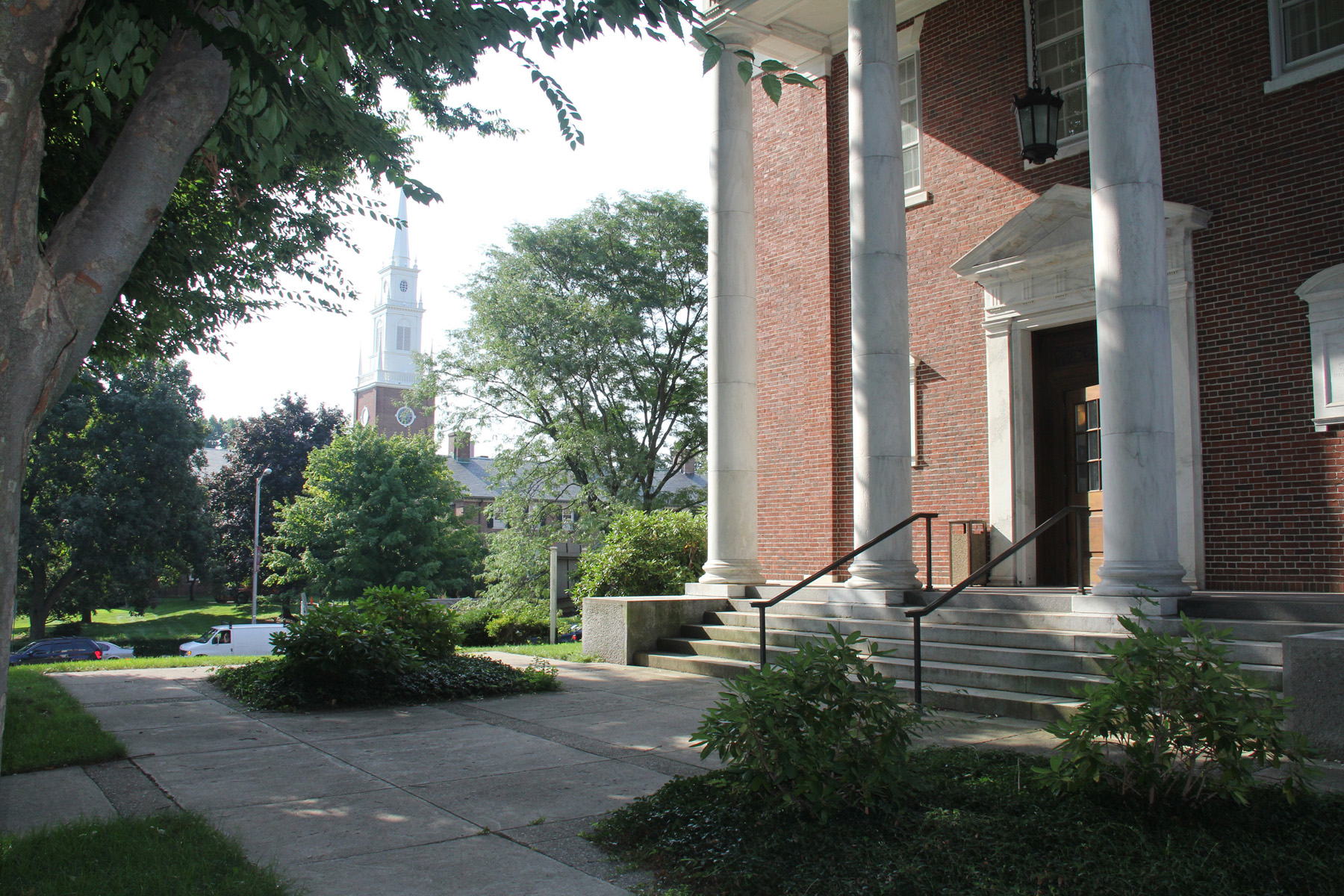
View of Antiquarian Hall (foreground) and the First Baptist Church (spire in background).

This just in for people looking for something to do in Worcester this Saturday…The Antiquarian Society is teaming up with the other venerable Worcester institution to be celebrating its bicentennial in 2012.  That’s right, on Saturday, October 20th from 10 a.m. to 2 p.m., the First Baptist Church of Worcester and the AAS will collaborate on a series of events commemorating our respective birthdays.

The Society will conduct on-going public tours of Antiquarian Hall, continuously run our new orientation video,  display materials related to the War of 1812 in the reading room, and, at 10:30 and noon perform a one-person play about the Society’s founder entitled Isaiah Thomas – Patriot Printer.  At the First Baptist Church, professor Stephen A. Marini will deliver a public talk entitled, “Being Baptist in 1812: Theology, Worship, and Politics” at 1 p.m. Marini is the Elisabeth Luce Moore Professor of Christian Studies at Wellesley College.

Join us for education and fun for the whole family!

Public Program: “In Vogue with the Vulgar: Music during the War of 1812”

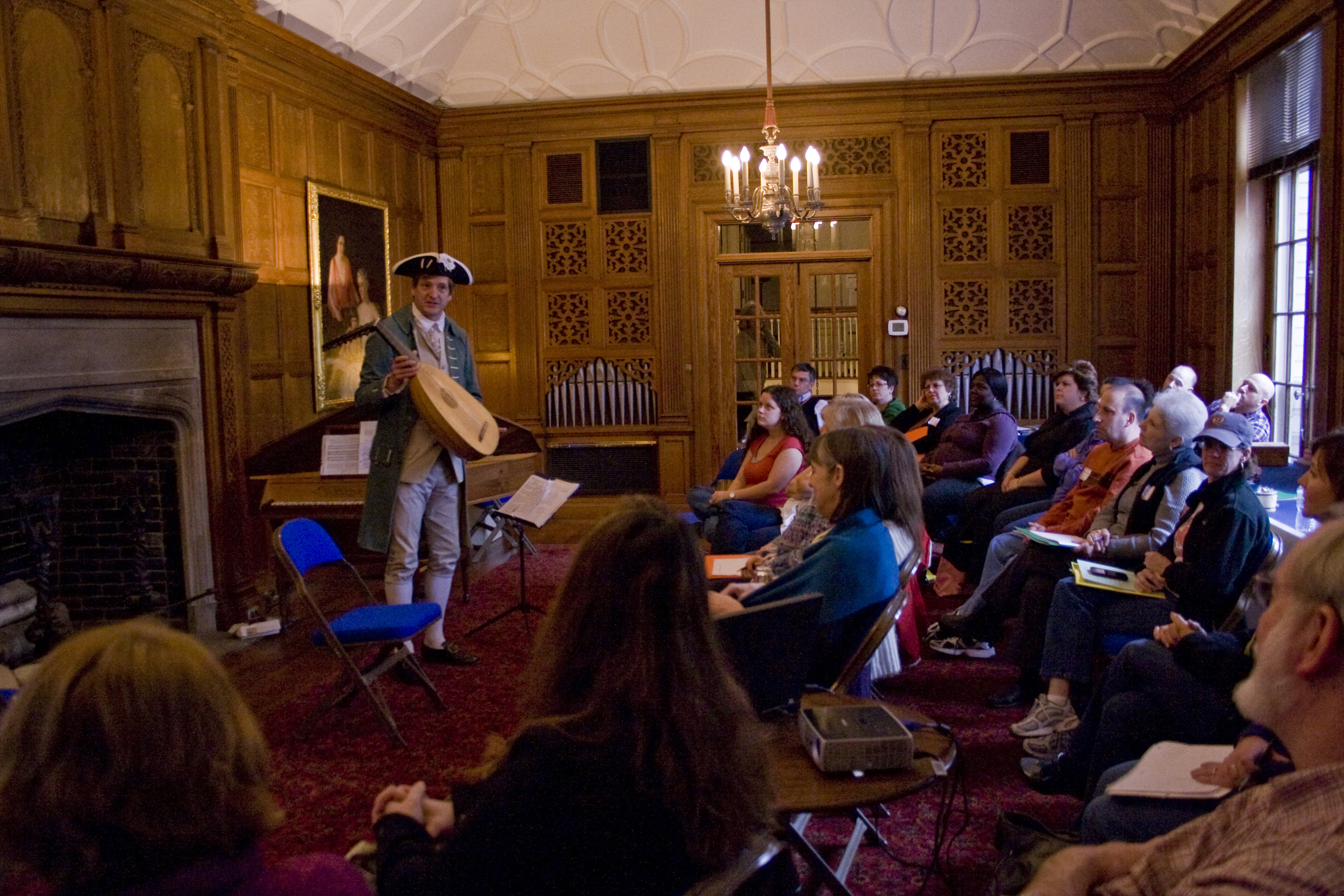
David Hildebrand in a previous performance at AAS in the Goddard-Daniels House.

If you thought you’d learned all you needed to know about the War of 1812 from Alan Taylor’s lecture “The Civil War of 1812” last week, you would be missing out on a wonderful night of music and stories.

Tomorrow night, October 16 at 7 p.m., David Hildebrand will be performing a concert, in costume and on period instruments, of music that was popular during the war, two hundred years ago. It was heard in homes, on the streets, and in taverns and theaters, and covered a wide range of topics, from the early stirrings of party politics under President Adams, to the traumatic effect of Jefferson’s Embargo in 1807, through the triumph at Fort McHenry and the last battle in New Orleans in 1814.  And of course, no concert of music from the War of 1812 would be complete without a telling of the true origin of the Star-Spangled Banner.

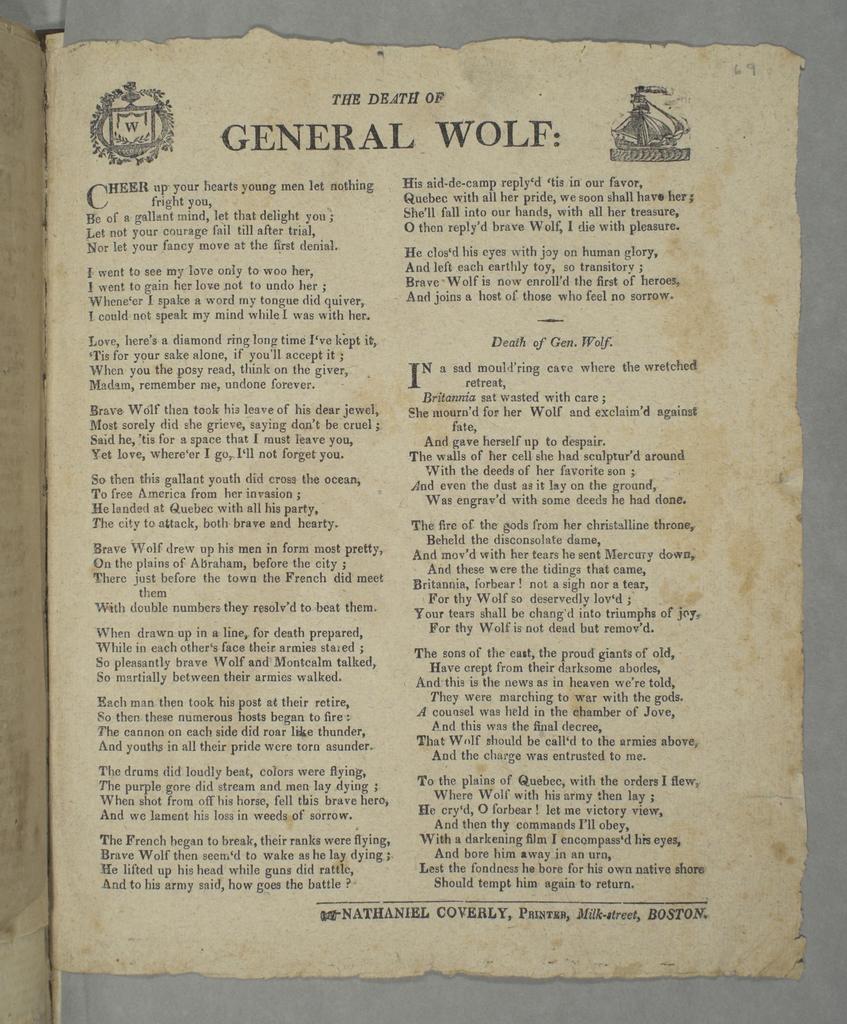
Another highlight of this program will be pieces performed from AAS’s Isaiah Thomas broadside ballad collection, which provides a fascinating window on the culture of Boston around the time of the War of 1812. In 1813, the year after he founded the Society, Thomas purchased examples of broadsides recently produced by Boston printer Nathaniel Coverly. After returning to Worcester, Thomas had almost 300 of them bound in three volumes and put in AAS’s collections. When Isaiah Thomas presented his collection to the Society, he wrote that he had the broadsides “bound up for Preservation – to show what articles of this kind are in vogue with the vulgar at this time, 1814” – hence, the title of this program.

As our only musical program this fall, and one full of bicentennial histories, you won’t want to miss this concert!

In Pursuit of Grolier

The American Antiquarian Society is somewhat of a rare bird in the way we exhibit our holdings. On the one hand, the fact that we have virtually no display space means that materials are lent for other institutions to display; on the other hand, we’re just itching to show off our collections. So when the opportunity presented itself to showcase nearly limitless AAS-only items at the Grolier Club in New York City, the staff responded. The curators selected, pruned, and honed – the photographer set-up, digitized and stitched – and the conservation staff cared, cleaned and mended. The result is a content-heavy approach that  showcases the depth of the collections. In short, visitors to the physical show leave knowing that AAS has a vast amount of material.

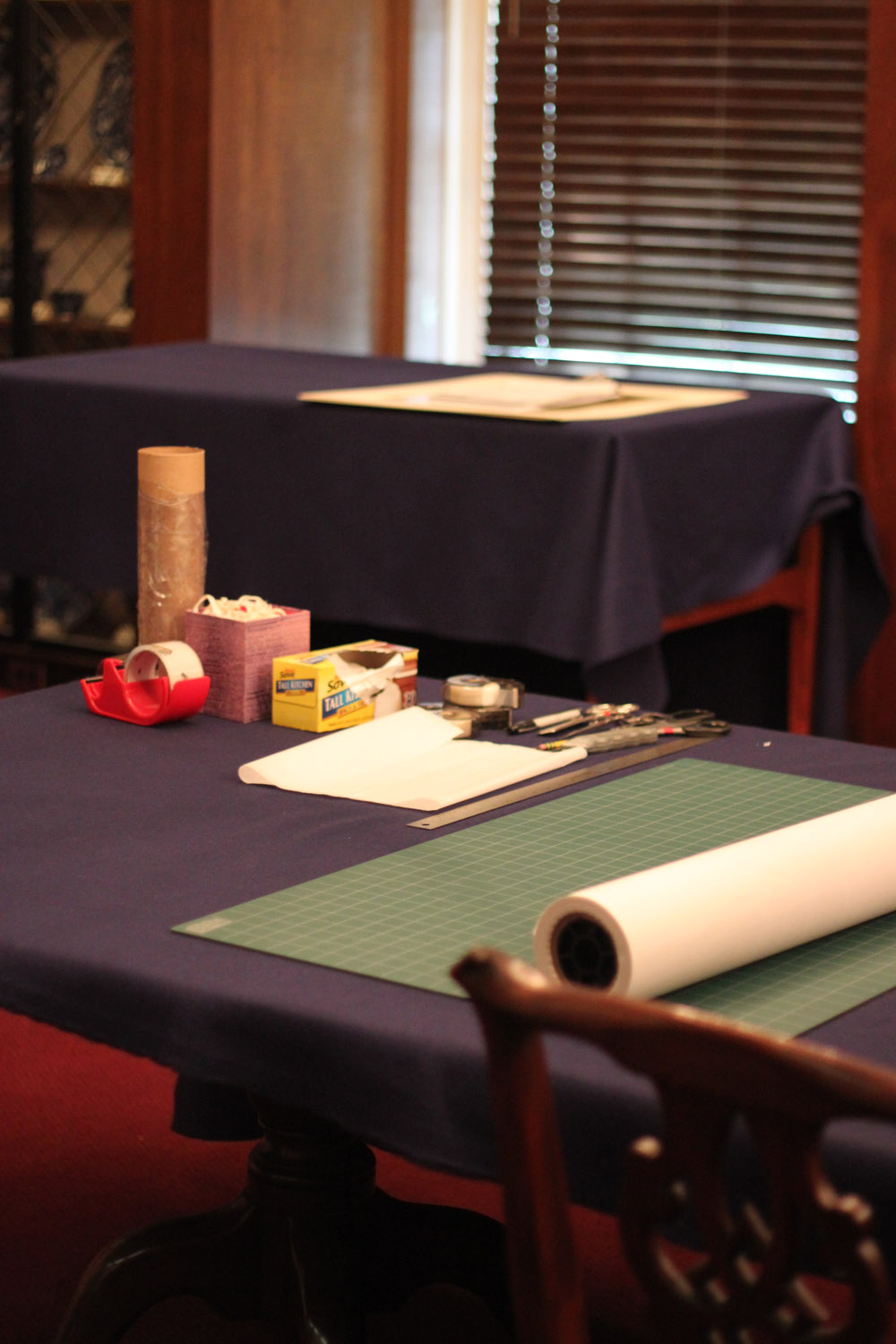
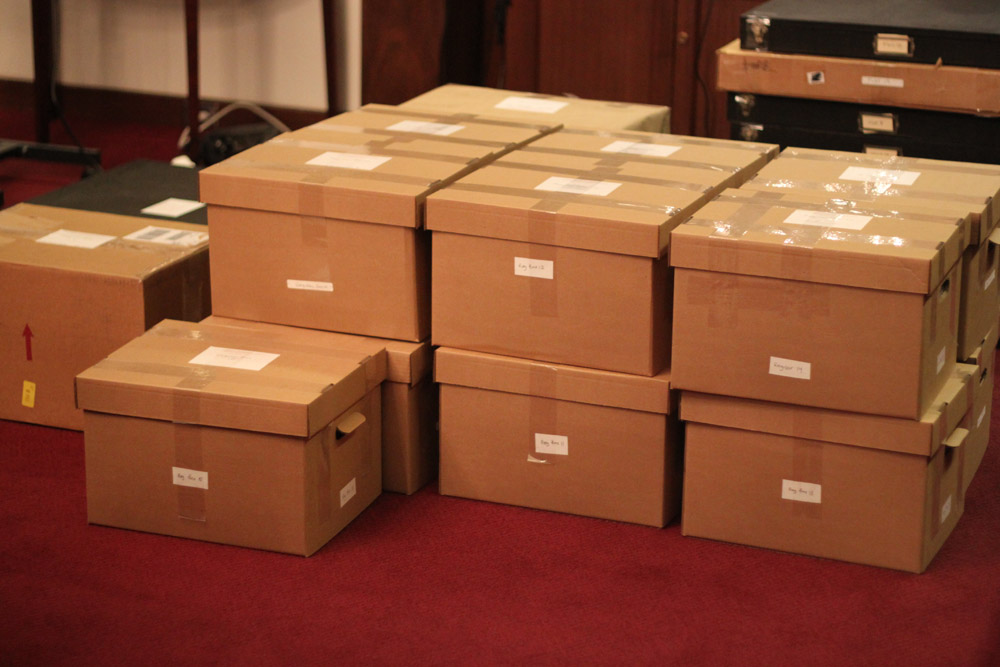
The Chief Conservator, Babette Gehnrich and Andrew W. Mellon Curator of Graphic Arts, Lauren Hewes, who was also the registrar of the exhibition, prepared the materials prior to their departure. Together they organized them, packed them, shipped them (in Worcester), and unpacked them, assembled them and arranged them (in New York).

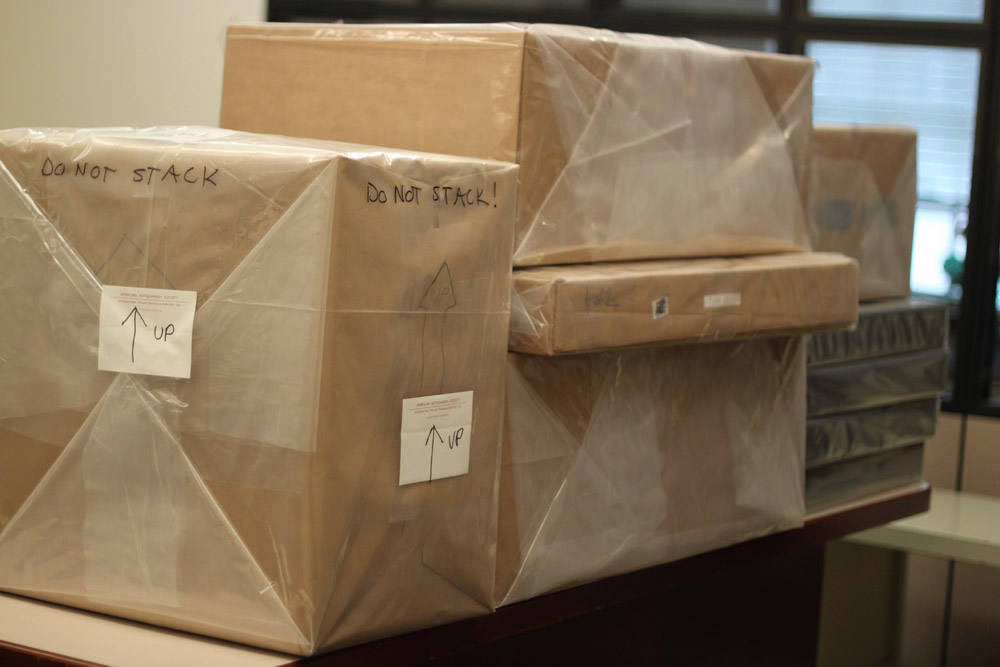
Perhaps a more appropriate analogy is in order. Because the sheer amount of materials destined for Grolier was such so large, detailed attention was involved at each step of the journey. Much like packing and shipping lobsters, you can’t just throw them in a box, use self-stick adhesive and say “see you on the other side!”

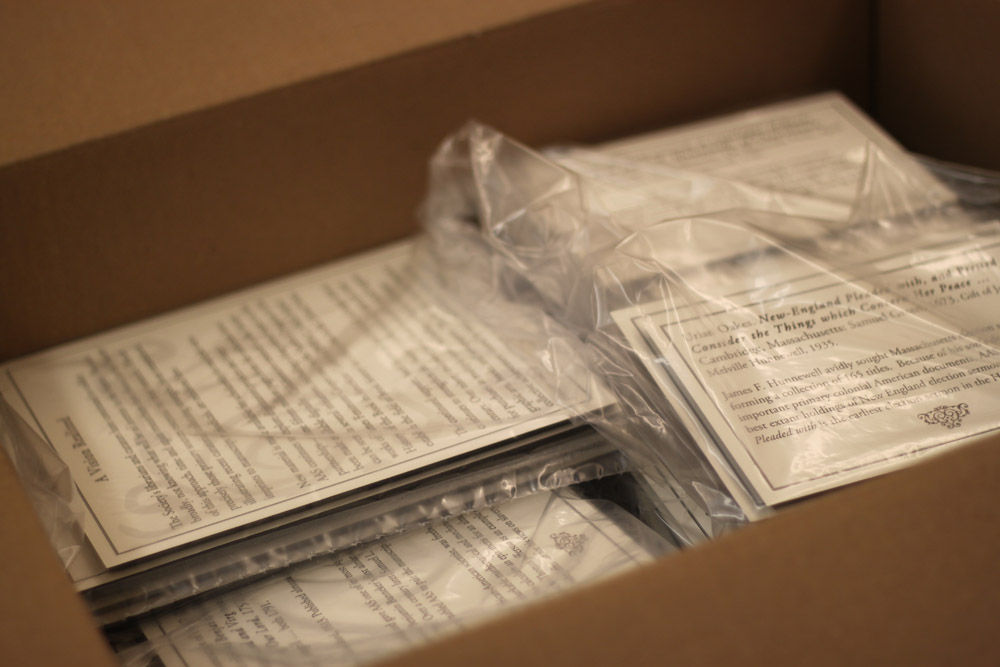
The collection (like lobsters) is high-maintenance, temperature and humidity sensitive, requires extra precautions and tastes best with clarified butter. Accordingly, and taking into account the crustacean-like-needs, Lauren and Babette left lots of extra space, made sure everything was well-padded, well-wrapped and virtually weather-proof. The support materials (case labels and item labels) were dry mounted, stacked and packed separately (but equally as carefully so they did not get bent or damaged along the way).

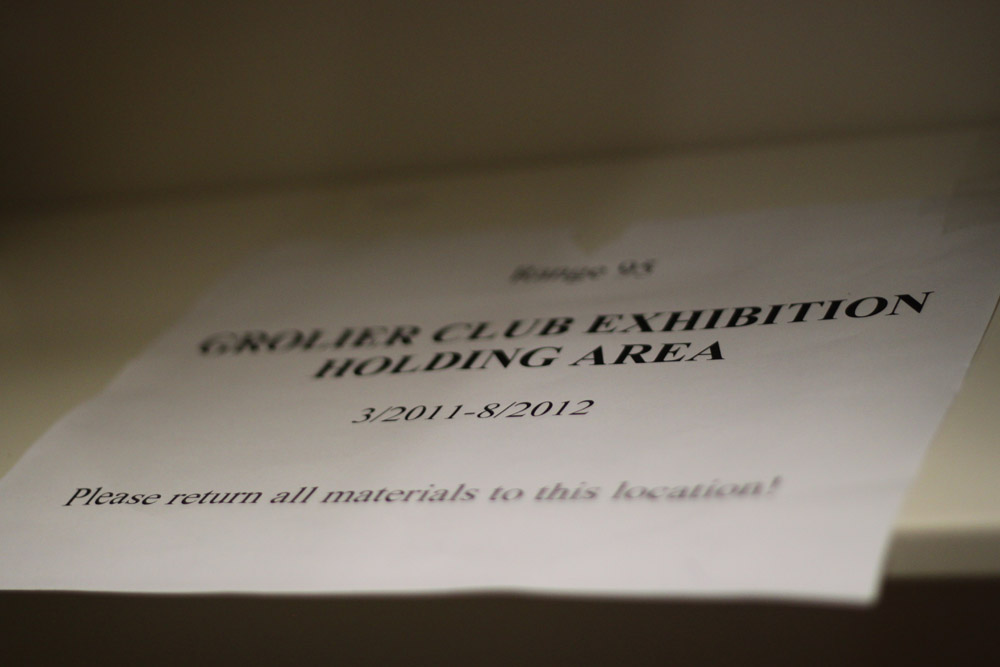
Alas, now the shelves where the items sat and were culled lay empty, the sign indicating their temporary location for more than a year is torn, and this period where the items are displayed rather than amassed, and contextualized, rather than occupying their more permanent position in call number order, is brief. So in the meantime, until November 17th, if you want to view these items in all their careful splendor, please visit the Grolier Club. No lobster bibs required.