Due to popular demand, more items have been added to our Adopt-a-Gift-Book catalog. Adopt now to avoid disappointment and in order to ensure you receive your gift card in time for Christmas. Or, perhaps consider adopting a gift book as a gift to yourself… and to AAS!
Choice selections still remain available for adoption. Here are a few highlights from the new offerings:
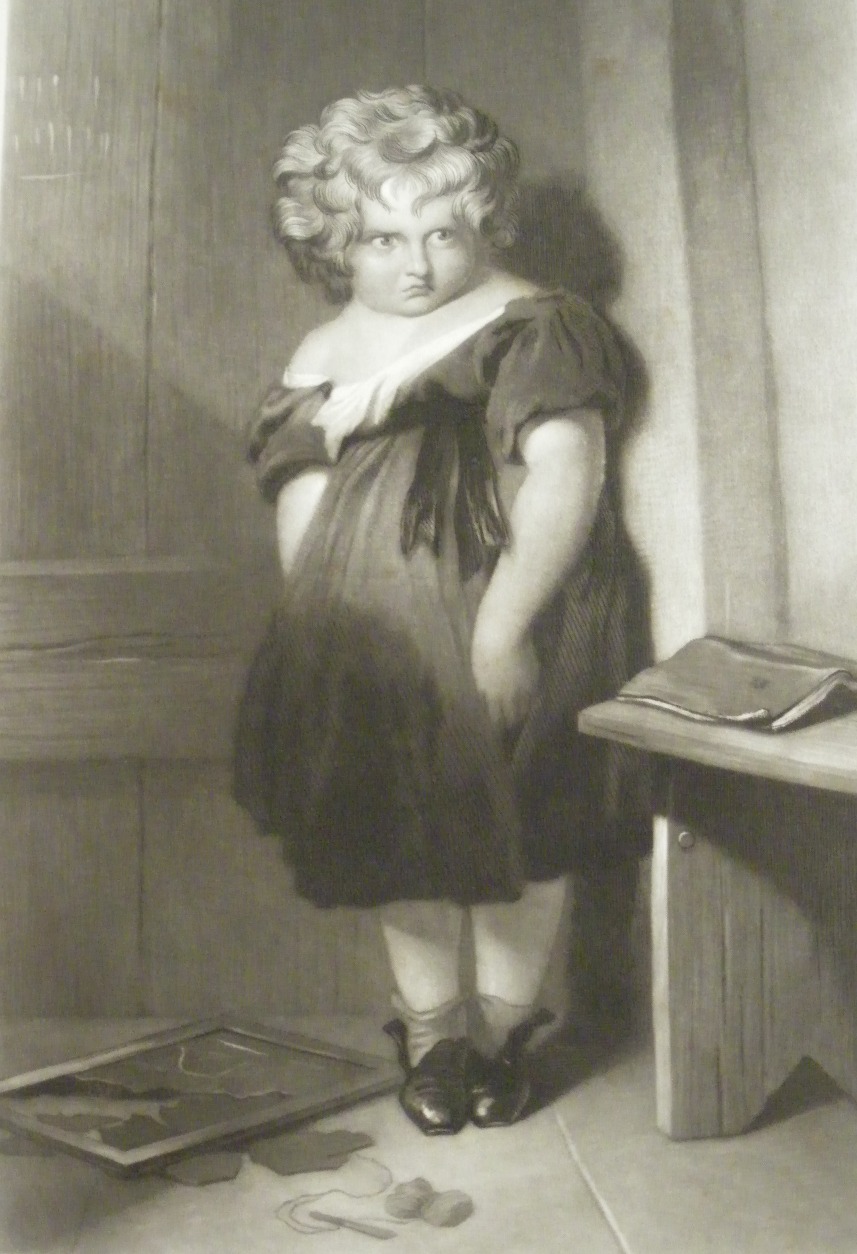
“Yes, I broke my slate, and I’ll break the next one too–I want an iPhone like all the other kids have!”
“Naughty Boy” from The Diadem. Philadelphia: Carey& Hart, 126 Chesnut Street. 1845.
Not all children were idealized in gift books. Here, a young boy has gotten in trouble at school. He stands pouting in a corner, his shirt ripped, with his book on a bench and his slate shattered into a hundred pieces on the floor. His curly hair and chubby cheeks will not get him out of his punishment this time!
Adopt me for $50
(If this “Naughty Boy” image looks familiar, it’s because we used it in an earlier “What Caption Would You Write” contest on Past is Present. It appears here with the winning caption, but you can read the other entries here.)
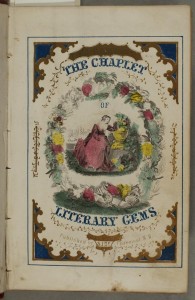
“Illuminated Title Page, from The Chaplet of Literary Gems: a Present, Worthy of all Occasions. Claremont, N.H.: Claremont Manufacturing Company, between 1850 and 1858.
With the establishment of lithography, many gift book publishers added color illustrations to enhance the eye-catching value of their annuals. Most often a single color lithographed title page was inserted. Some were quite elaborate, but most, such as this example from a small New Hampshire publisher, featured just a few colors to brighten up the title page design.
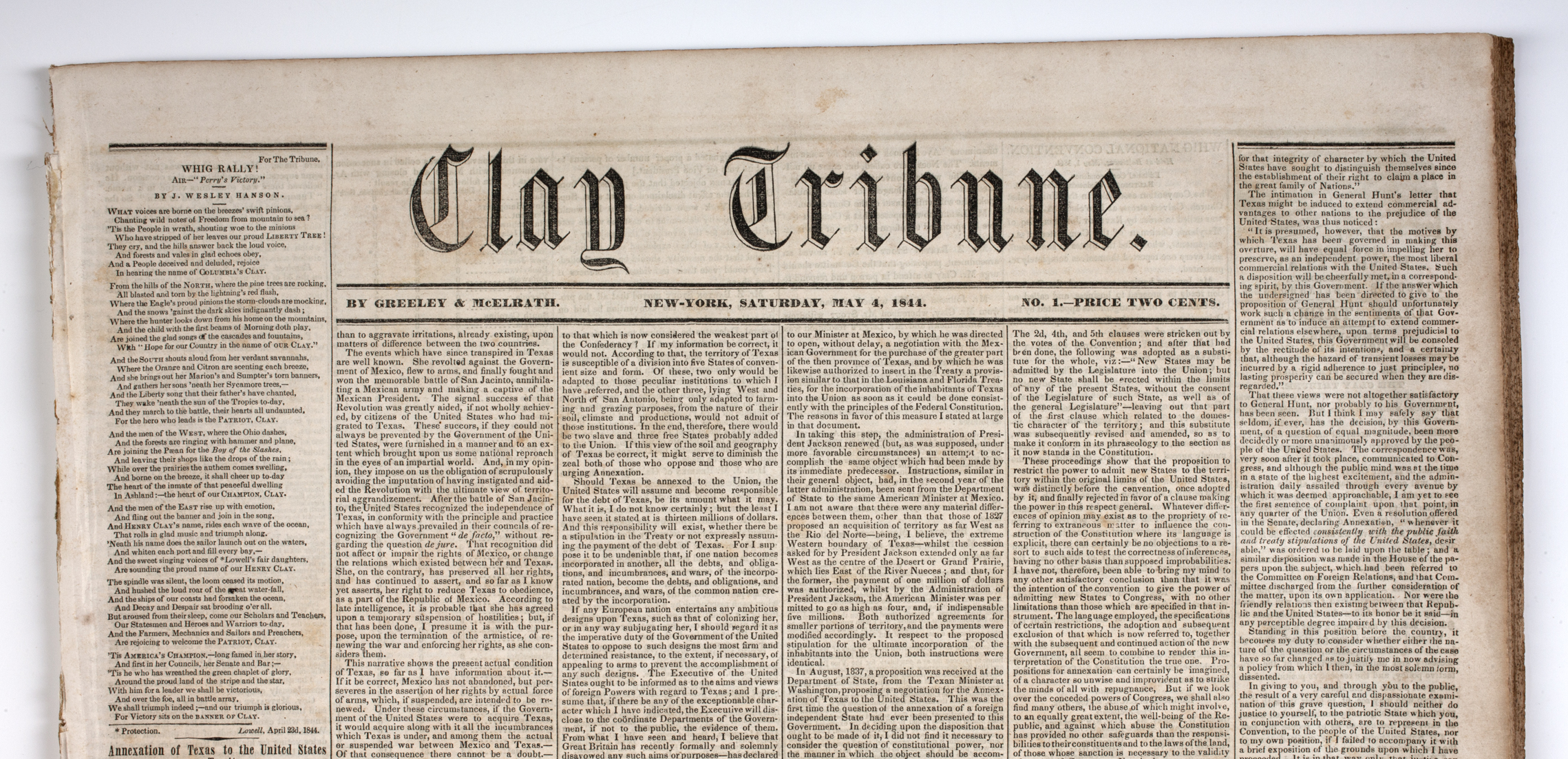
The Clay Tribune (New York). May 4 – Nov. 2, 1844. 23 issues.
This file combined with the issues already owned by AAS gives us one of three known complete files of this campaign newspaper. It was published by Horace Greeley as a separate political issue of the daily and weekly Tribune. Greeley greatly admired Henry Clay and produced this special newspaper to support Clay’s campaign for the presidency and the Whig Party in general. Four years earlier, Greeley did the same thing with William Henry Harrison with a paper called The Log Cabin.
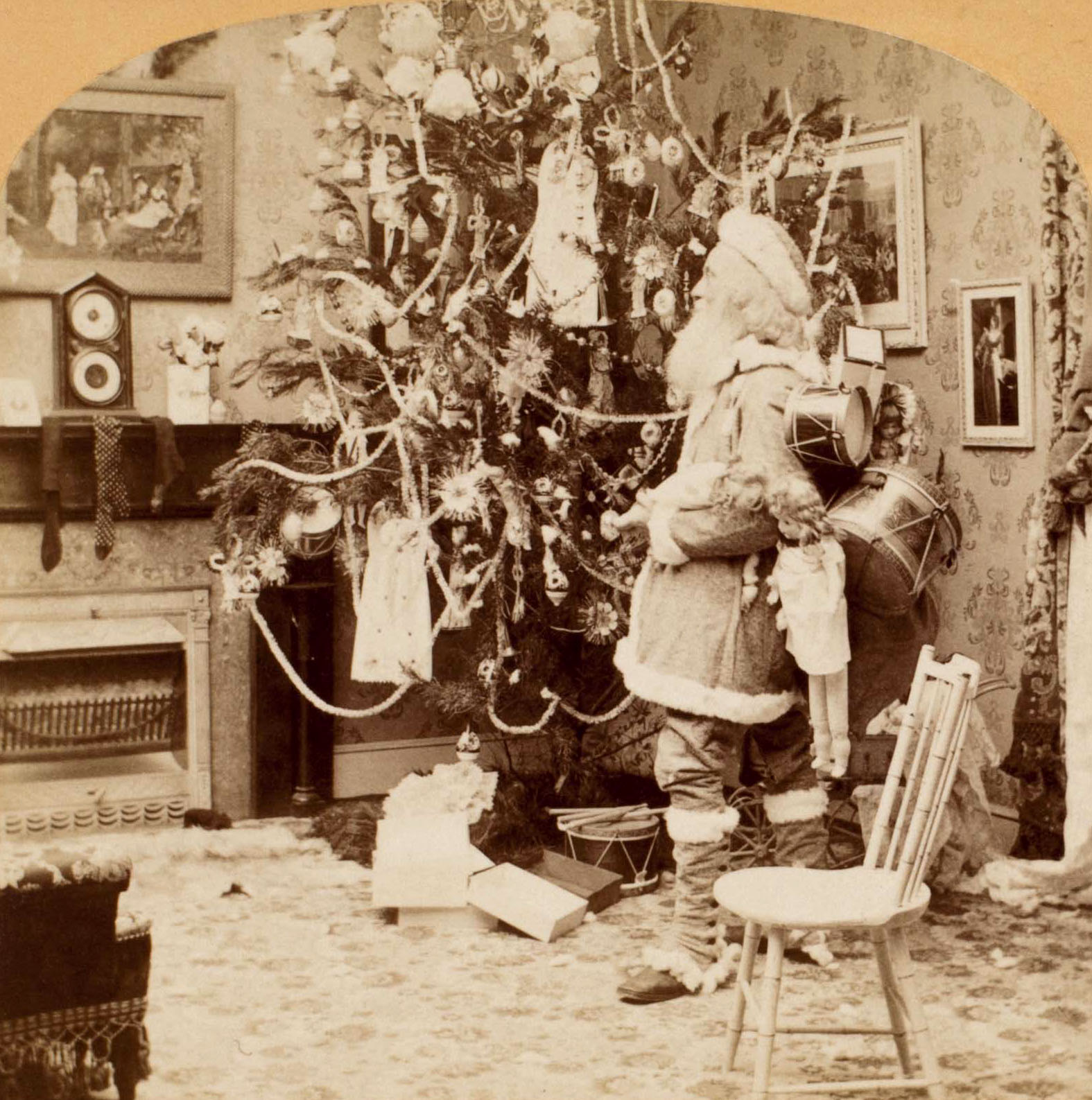
“Santa Claus loaded for business” by B.W. Kilburn, 1897. – detail
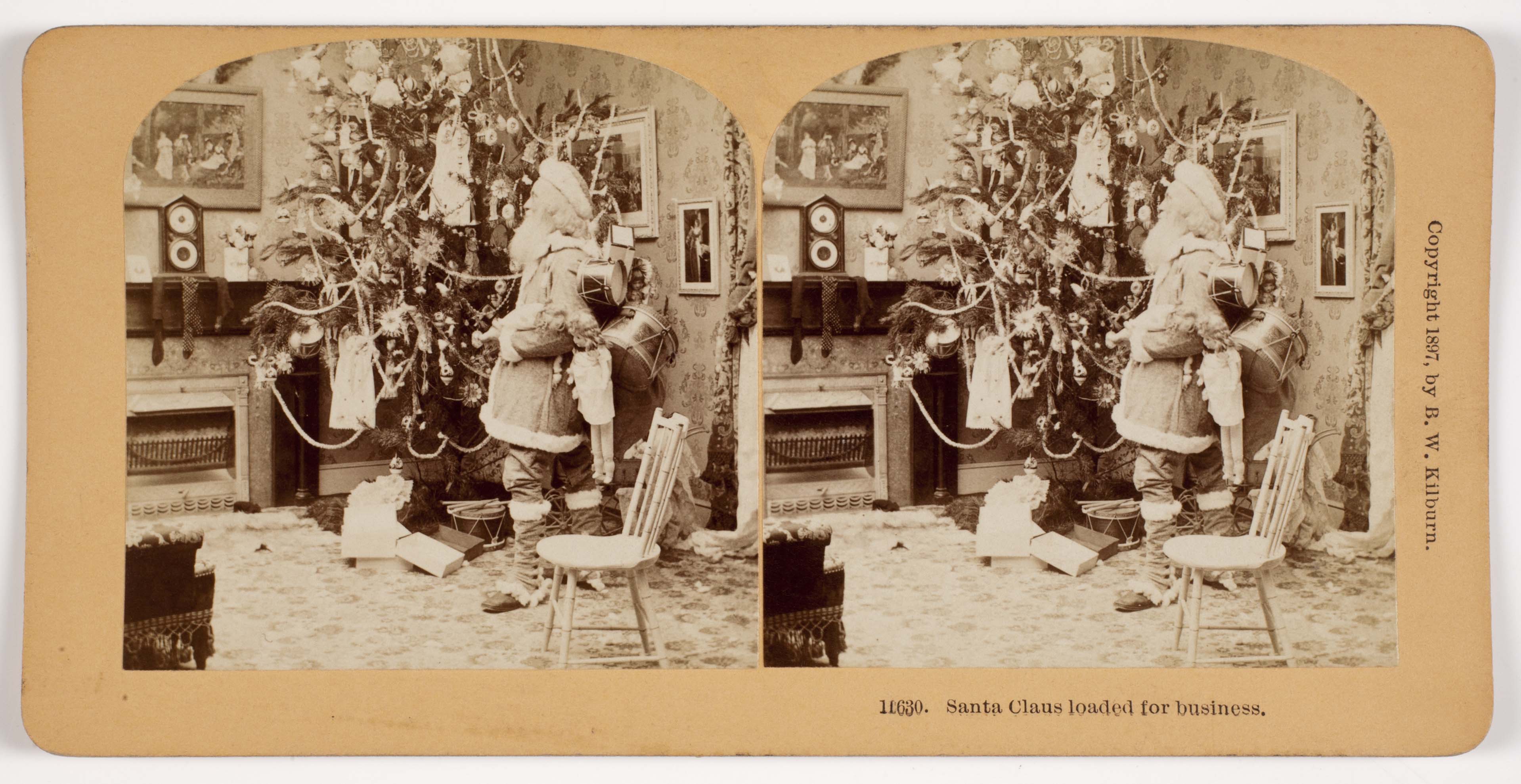
Some children would do just about anything to catch a glimpse of the gift-giving St. Nick on Christmas Eve – others have parents who would set up a camera and create a stereographic photograph to capture the whole visit. This image, titled “Santa Claus loaded for business” illustrates just such a scene. A bearded and (in this viewer’s eye) slim Santa, replete with drums, dolls and enviable boot cuffs, stands before a heavily decorated Christmas tree looking towards the clock. Here, stockings adorn the mantle and boxes litter the floor. In the image, Santa appears to have no idea that he is being recorded. The 1897 stereocard is by B.W. Kilburn, a commercial photographer from Littleton, New Hampshire; Kilburn both photographed and published the image.
“Santa Claus loaded for business” by B.W. Kilburn, 1897. (Stereocards, Box 316 “S”) – full card
In the tradition of using stereocards as storytelling, this image fills in yet another gap in the visual creation of the man we call Santa by rending him photographically. From the stereograph collection (part of the Graphic Arts collection), the image is one filled with both magic and humor. The image is also fascinating as it recreates someone who proves harder to document than the Loch Ness Monster. Indeed, the Society boasts an impressive amount of Santa-related material, including the Children’s Friend, one of the earliest images of Santa Claus (which was on display at this year’s Grolier show and can now be viewed here; additionally, Case 8 of the show featured several pieces of Santa-ana as well).
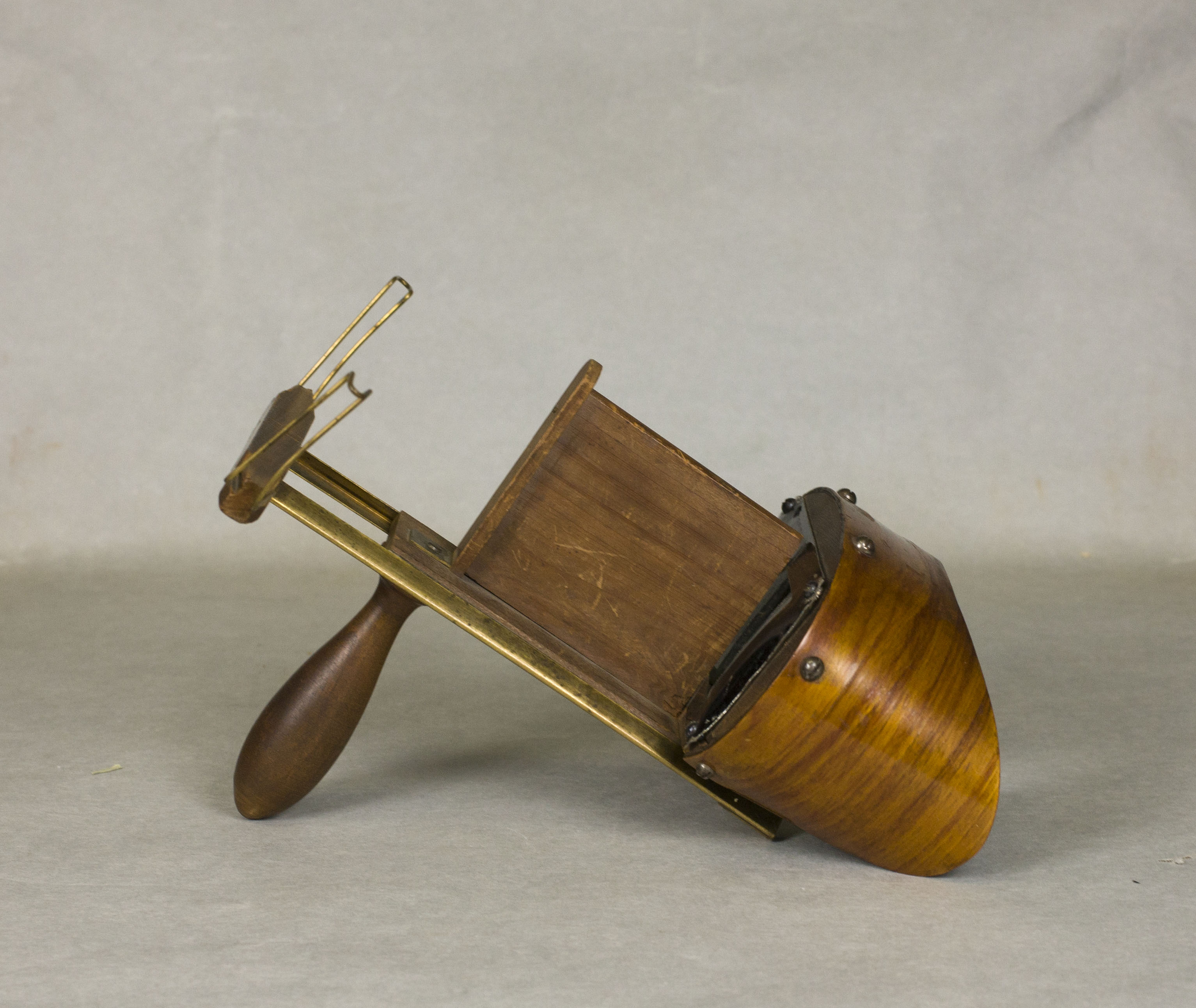
An example of one of the stereoscopes in the Society’s collection.
Typically stereocards could show faraway places, paintings, genre scenes, and landscapes, as well as someone who may (or may not depending on which list you’re on…) end up in your living room. (Note: those interested in learning more about the migration of the stereograph to American soil should check out David Jaffee’s Object Lesson in Common-place). In addition to an impressive stereocard collection, the Society also has examples of stereoscopes and viewers.
And while this was a fun-archives-find, we have yet to locate a “Dear Santa” letter to our friend-from-the-North-Pole within the manuscripts collection.
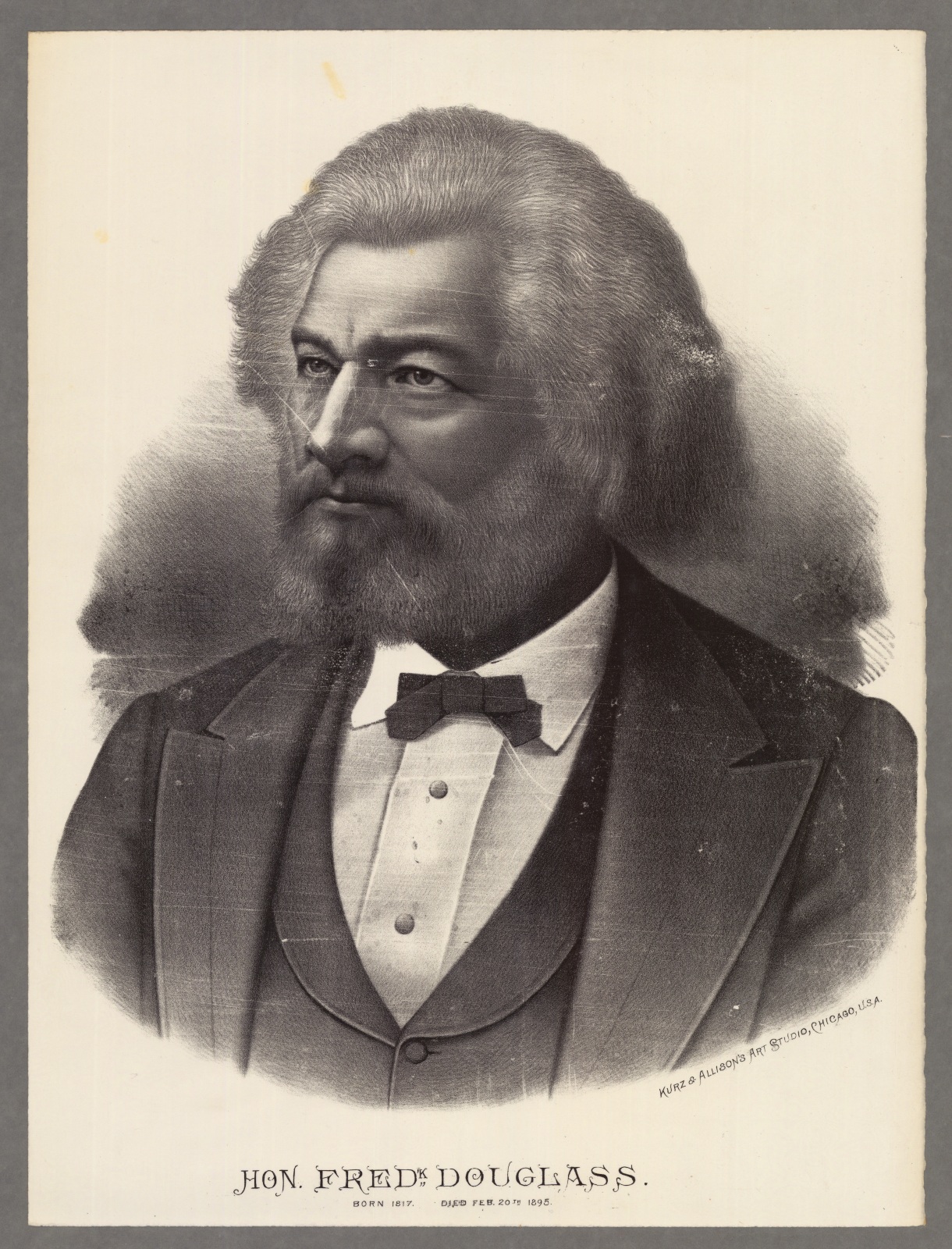
For the past two years, the American Antiquarian Society has partnered with Mass Humanities to co-host a Worcester edition of the foundation’s interactive program “Reading Frederick Douglass in the Era of Barack Obama” in connection with the Fourth of July. We were therefore very happy to hear that the National Federation of State Humanities Councils has honored the program with the 2012 Helen and Martin Schwartz Prize for the “best all-around project” conducted by a state humanities council. Mass Humanities received the award at the Federation’s national conference in Chicago, November 15-18, 2012.
“Reading Frederick Douglass” events now take place in a growing number of communities throughout Massachusetts. Although each one is organized individually, the basic premise is for people to come together and take turns reading paragraphs from Frederick Douglass’s speech The Meaning of the Fourth of July for the Negro from July 5, 1852, in which he questioned the irony of commemorating American independence in a nation where slavery was still legal:
What, to the American slave, is your 4th of July? I answer; a day that reveals to him, more than all other days in the year, the gross injustice and cruelty to which he is the constant victim.
I was introduced to “Reading Frederick Douglass” this past July 5, 2012 (the 160th anniversary of the speech itself), when I attended the program in Worcester’s City Hall Common with several other AAS staff members. After opening remarks by Worcester NAACP president Cedric Arno, we lined up with copies of the speech and each read a paragraph aloud. At the end, readers and onlookers alike recited the final paragraph in unison.
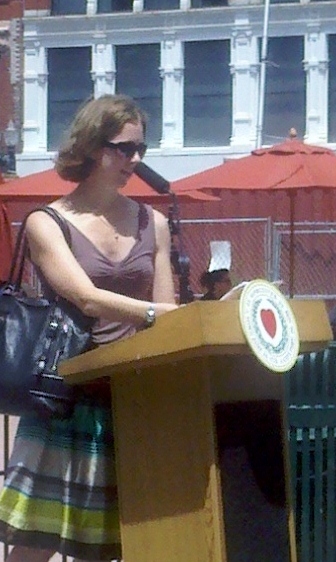
Here I am reading at the Worcester event.
I was still a fairly new employee at AAS at the time, and attending “Reading Frederick Douglass” was not only a chance to interact with Douglass’s speech from a new perspective, but one of my first opportunities to spend time downtown on a workday. Standing in line and reading the speech with a variety of Worcester locals – including civic leaders, employees at fellow cultural organizations, and people who happened to be passing by and decided to come over – turned out to be a fascinating way to get to know the community better!
“Reading Frederick Douglass” started on Boston Common in 2009, and has grown since then. For other towns interested in starting their own versions of the program, Mass Humanities has resources available on its website: http://www.masshumanities.org/douglass. This website also has a great slideshow featuring images from the “Reading Frederick Douglass” events.
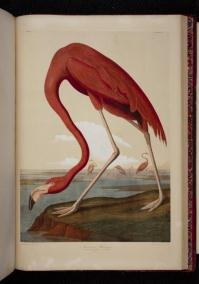
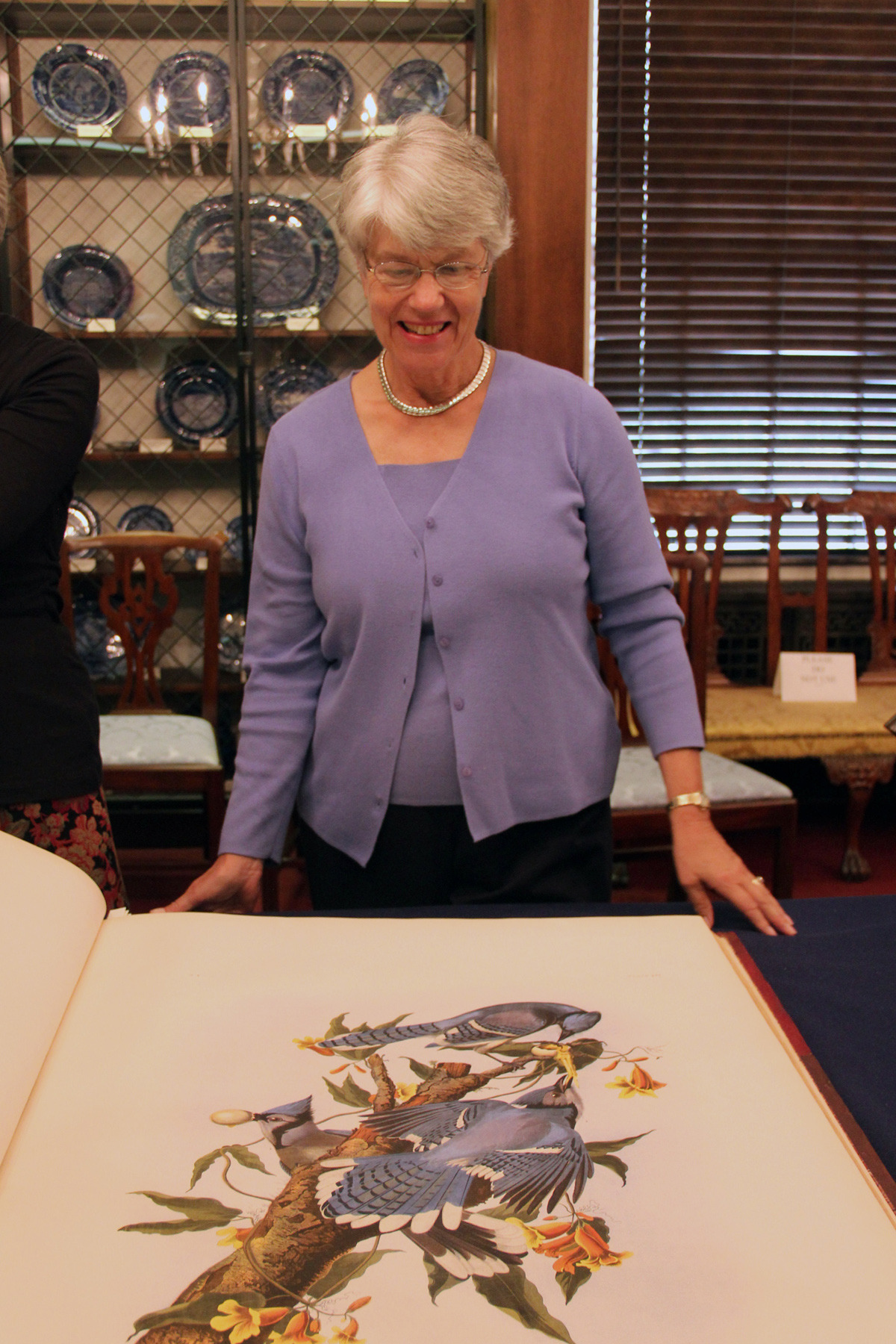
Bien, Julius, after John James Audubon. The Birds of America.New York:Roe Lockwood & Son, publishers. Chromolithography by J. Bien.Reissued by John Woodhouse Audubon, 1860.
Julius Bien (1826-1909) came to the United States from Germany in 1848 and by 1850 had opened a lithography shop in New York. The Society holds over thirty examples of his prints, including views published for the railroads, botanical prints, street scenes of Denver, Colorado, and membership certificates. In the late 1850s, Bien entered an arrangement with John Woodhouse Audubon, the son of John James Audubon, to reproduce in chromolithography the plates from The Birds of America. Transferring the designs from the engraved copperplates of the original 1838 Havell edition to lithographic stones and then creating layers of colors in multiple runs through the press occupied Bien’s firm for most of 1860. By doubling up some of the plates, they managed to complete 150 prints (on 105 sheets) of the original 400 plates before the project was interrupted by the American Civil War.
The exact number of copies Bien produced is unknown but recent estimates suggest somewhere between 75 to 100 subscribers ordered copies. Today, only 17 copies complete as issued are known to have survived. The Bien edition marks a significant milestone in American publishing and illustration. The work for the original Havell edition was done in Britain, whereas the Bien edition is remarkable as an ambitious, if ultimately incomplete, American production using the relatively new medium of chromolithography on a grand scale.Gift of Jay Last, in honor of Georgia B. Barnhill.
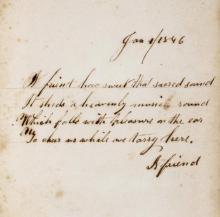
Jan 1/1846
A friend how sweet that sacred sound
It sheds a heavenly music round
Which falls with pleasure on the ear
To cheer us while we tarry here.
A friend
Dedicatory poems like the one quoted above appear in many of the gift books in the American Antiquarian Society’s collections. This particular inscription is in AAS’s copy of The Amulet from 1846, one of many gift books produced annually in America in the mid-nineteenth century. Annuals were popular holiday gifts, although (as you’ll note with this one) they were most often given as New Year’s gifts rather than for Christmas. Like other gift books/annuals, this volume contains many illustrations, poems, and stories that would have appealed to a wide audience.
This holiday season you can add another layer to that gift-giving process by “adopting” one of the gift books AAS has already purchased for our collections and “giving” it in honor of a loved one. You can learn more about AAS’s gift book collection and what exactly this adoption process entails by going to our Adopt-a-Gift-Book catalog.
At adoption prices from $25-$100, you could find a gift for everyone on your list:
In return for your generous donation “adopting” one of these gift books in AAS collections, you will receive:
1) A card with an image from a gift book already in the American Antiquarian Society’s collections.
2) A printout of the AAS catalog record for the gift book. The record will include your name and the person for whom you adopt the book (i.e. The Gift of Santa Claus in honor of All the Good Little Boys and Girls). This information will also be added to a special bookplate in the actual book, adding another layer to its gift-giving history.
3) A thank you letter outlining the details of your adoption and the fact that it is a tax deductible charitable donation.
4) The satisfaction of knowing that you have helped to make America’s printed history accessible to generations to come.
The only thing you will not receive is the actual book – visitation privileges only! AAS’s Adopt-a-Book program works to provide early American books a good home. The money you donate to “adopt” a book that is already in AAS’s collections goes directly towards acquiring more books… and historical prints and campaign newspapers and diaries and children’s picture books.
Only two dozen books are available for adoption this holiday season, so please check the Adopt-a-Gift-Book catalog early to avoid disappointment!
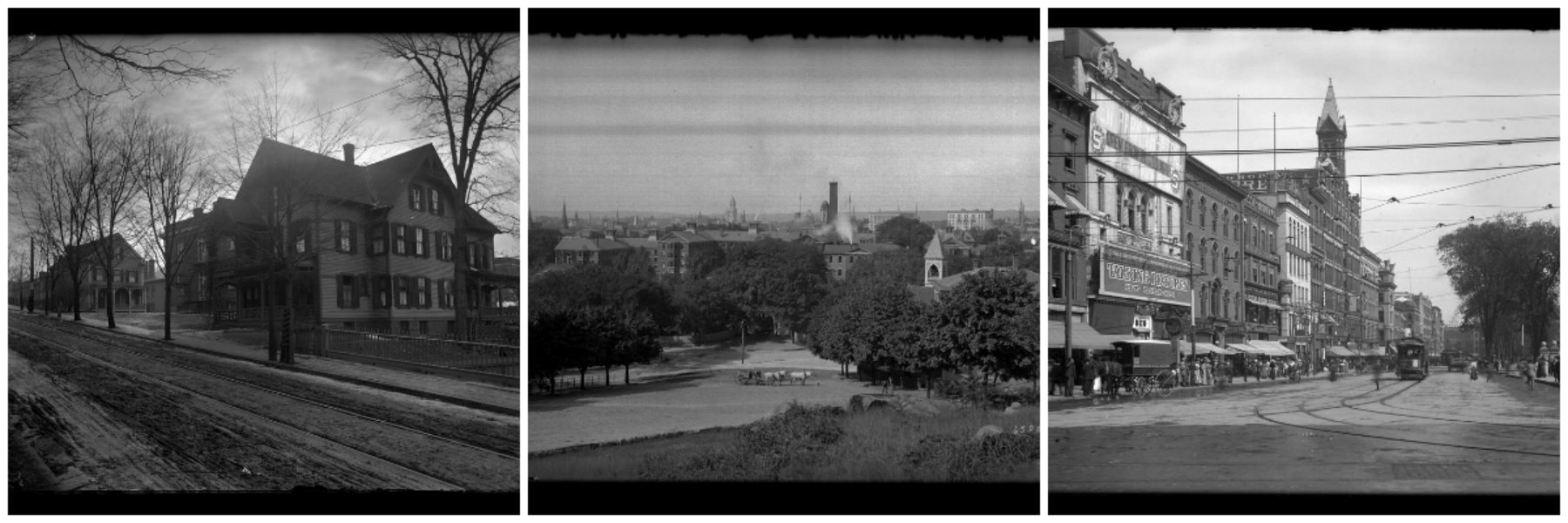
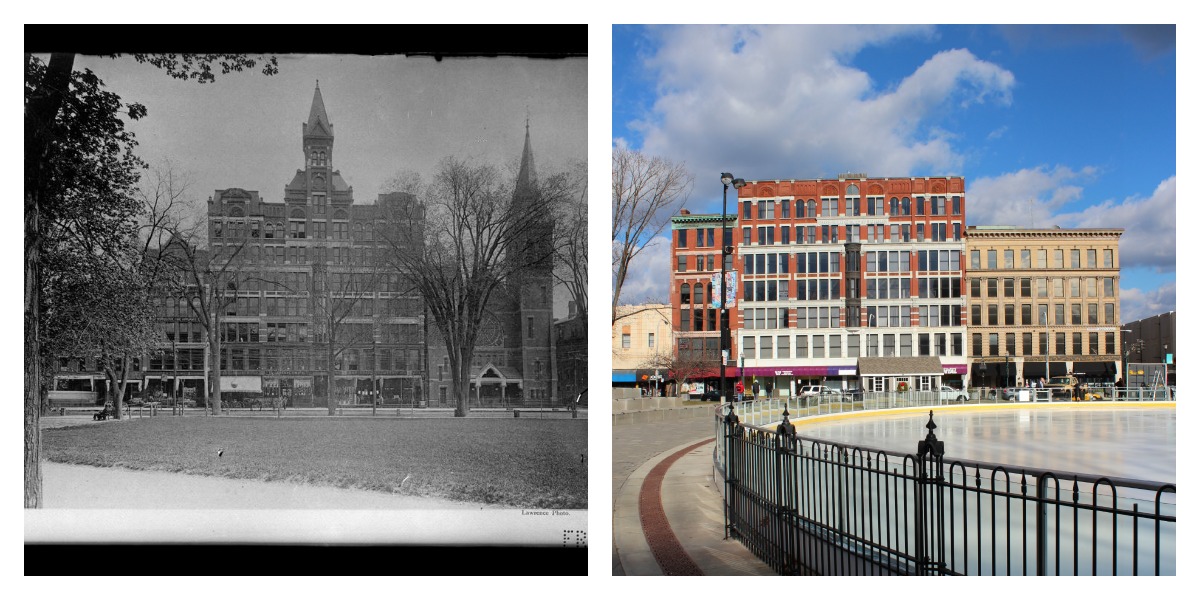
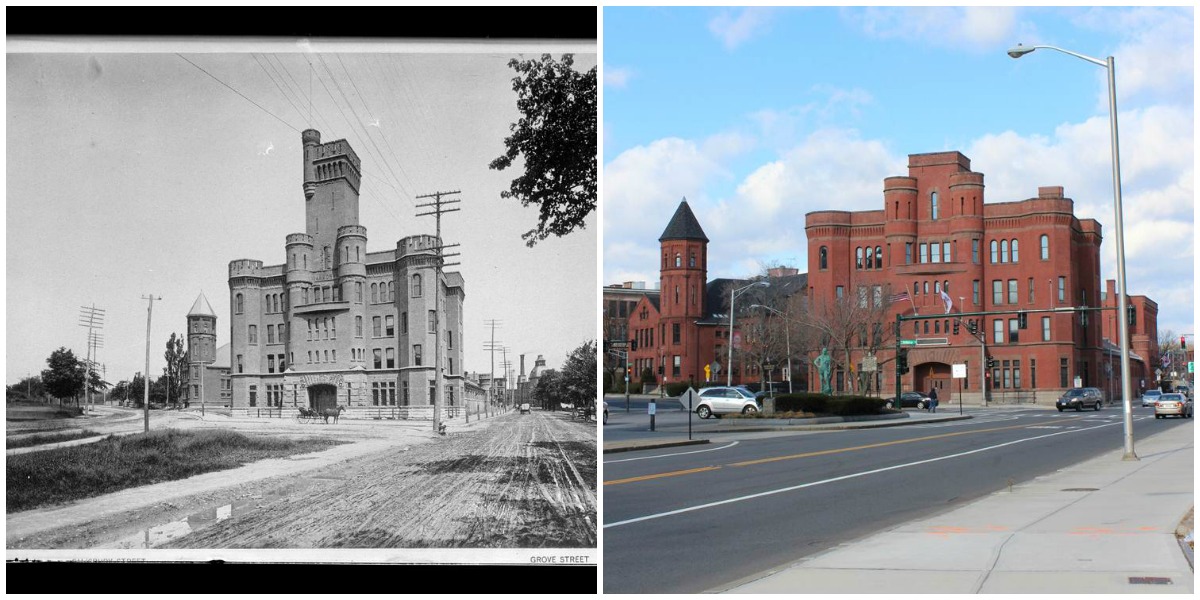
If you navigate your way to the AAS online content webpage, you’ll find a link to the Society’s digital image archive, GIGI. In GIGI you’ll discover a searchable database of over 50,000 images from the society’s collection – from maps to manuscripts, war images to newspapers, cartoons, illustrations and more. My personal favorite is the collection of images of architectural subjects captured by Theodore Clemens Wohlbrück at the turn of the 20th century. Type “wohl” into the search field in GIGI, and you’ll be presented with over 100 images from the Society’s collection of Wohlbrück’s glass plate negatives.
Working out of a shop on Worcester’s Main Street from the late 1800s to 1911, Wohlbrück was photographing Worcester at a time when the city was riding high on its self-designation as the “Heart of the Commonwealth.” Just a few years previous, the city had experienced the biggest population boom in its history and some of the city’s grandest and most important buildings were being constructed at this time.
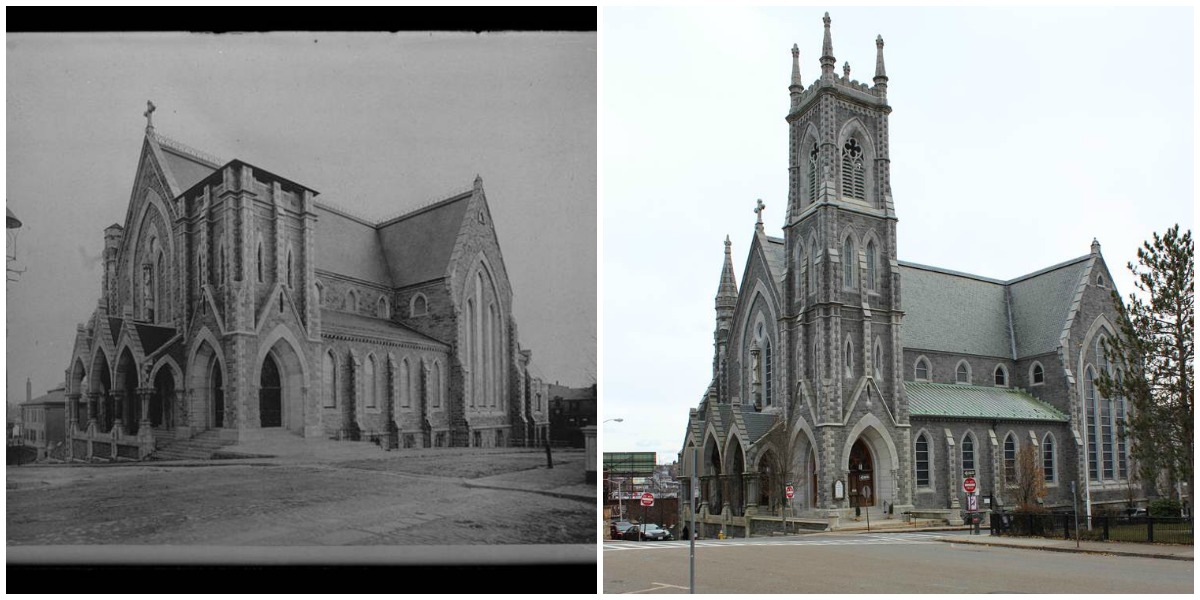
A glimpse at some of these photos stirs up nostalgia for the Worcester of the past, as several images capture the occasional horse drawn carriage, cobblestone and dirt roads, men in top hats, and most importantly, historically and architecturally significant buildings that no longer exist on the Worcester landscape. Shuffling through these Worcester images over and over again, I couldn’t help but compare and contrast what Wohlbrück captured in his 19th and 20th century images to what exists of these buildings today. Though I am most certainly not a professional photographer like Wohlbrück, I thought it would be interesting (and fun!) to show off some of these photos from “back then” alongside images of these buildings as they exist “now.”
Cathedral of St. Paul ca. 1885 and 2012
As seen here, not only have several of these buildings undergone physical changes, the landscape surrounding them is radically different. Comparing these “before and after” photographs inspires a curiosity about the evolution and history of the buildings themselves, as well as a curiosity about the history of the city. Whatever happened to the utility poles lining the streets in almost every Wohlbrück image? Why are so many of these buildings now missing important architectural features? My research to-do list is a long one.
Front Street ca. 1885 and 2012
Worcester National Guard Armory ca. 1885 and 2012
For me, a look at this collection of glass plate negatives brings so many questions to light, and a look at the before and after shots of these buildings brings so much of their history to life. The buildings have changed, the scenery has changed, and so too has photo technology. The experience of re-creating these more-than-one-hundred year old shots was no easy task when contending with whizzing traffic, construction projects, fences and ditches, widened roadways and narrower sidewalks, less space and more buildings. Although the universe may have been conspiring against me to thwart my attempts at re-creating a Wohlbrück-style photograph, I couldn’t wait to get back to GIGI to find even more images to research and re-create. I hope you’ll find something in GIGI that inspires you, too.
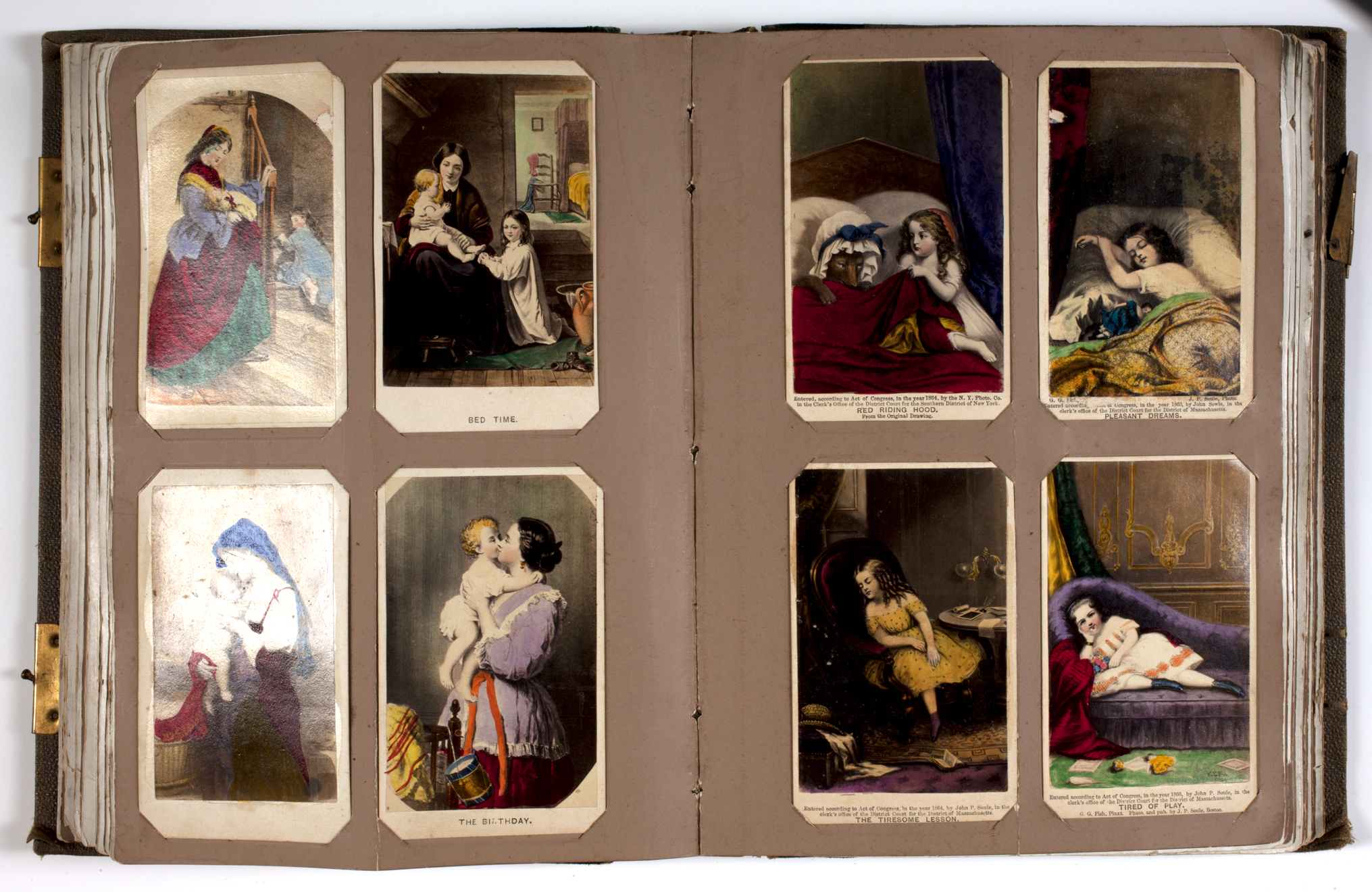
This album of over 150 cartes-de-visite images of American prints illustrates the methods used to distribute images in the nineteenth century. Many of the photographs were made by John B. Soule. Soule worked with lithographers, such as J. H. Bufford, to reproduce popular lithographed images of children, attractive women, kittens, and comical genre scenes using photography. The photographs were then mounted to cards and hand colored before being sold to customers eager to add them to their photo albums. Many of the prints depicted here can be found in the Society’s print collection.
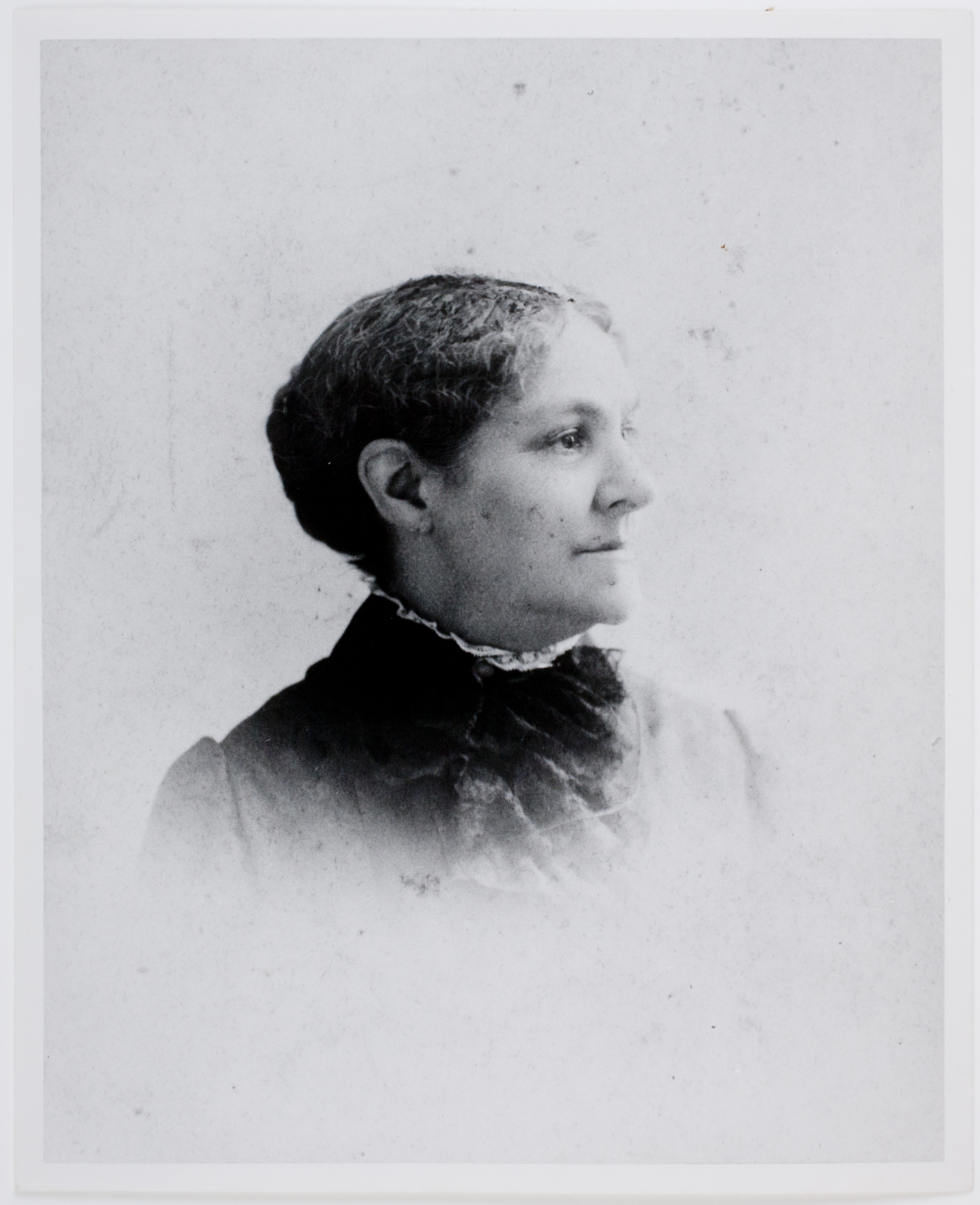
Although now a full-time employee of AAS, my love for the Society began years before I started working here when it first introduced me to the thrill of researching in an archive. As a senior History major at the College of the Holy Cross, I was introduced to AAS by my thesis advisor, who suggested I look here for sources relating to Northern women in the Civil War. Little did I know that this initiation would not only lead me to an extremely satisfying thesis experience, but to a career as well. And the collection item I credit most for this is the diary of one Caroline Barrett White (1828-1915).
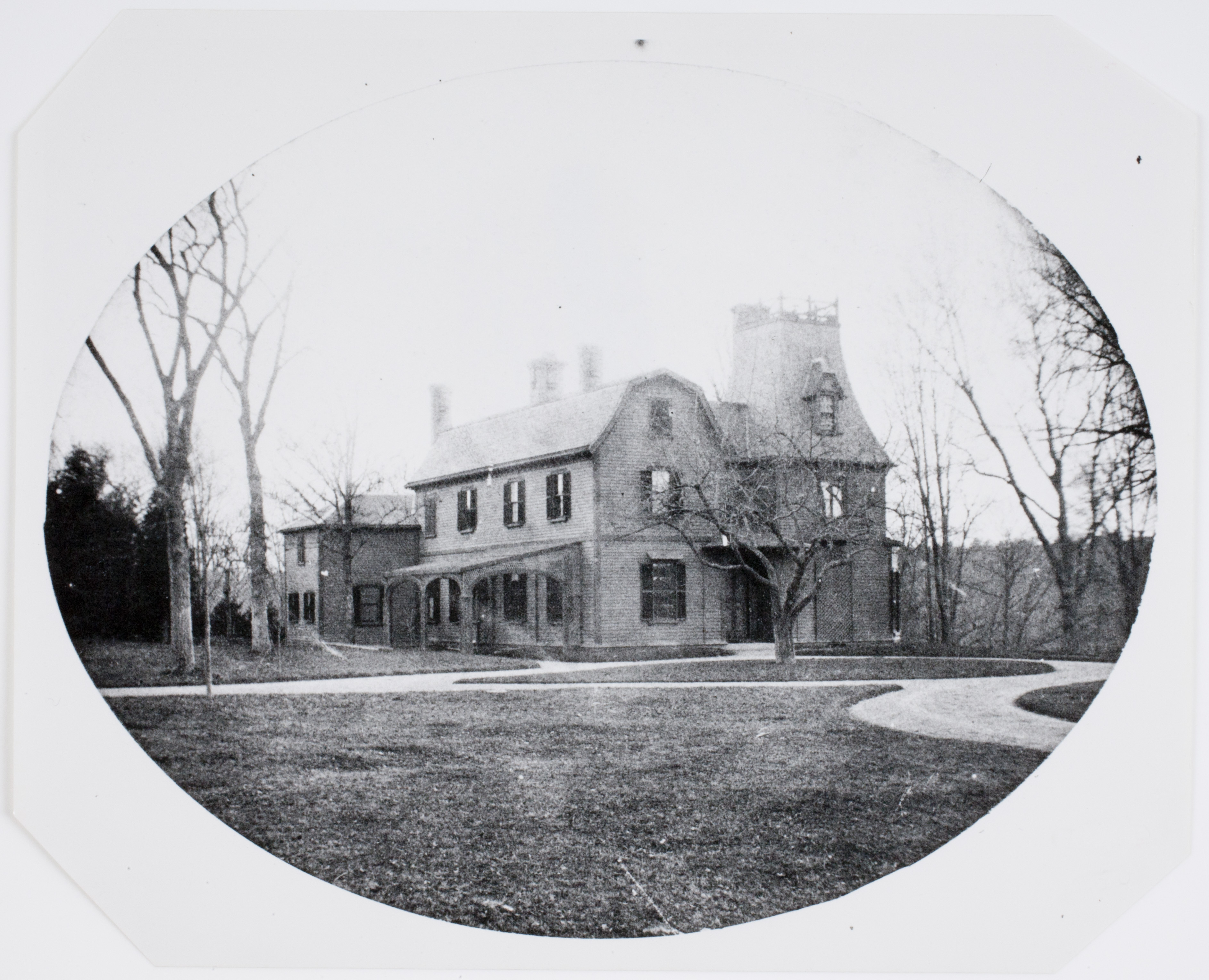
White was a native of Ashburnham, Massachusetts, but spent most of her adult life in the Boston suburb of Brookline. She was a typical nineteenth-century middle-class housewife in many ways – an estate named “Cliffside,” four troublesome children, and a devoted husband formed the structure of her everyday life – but she was very atypical in that she kept a detailed and expressive diary for sixty-five years. Sixty-five years! Although keeping diaries was a common nineteenth-century practice, few are as full of personal details and emotion – or cover as many years – as White’s.
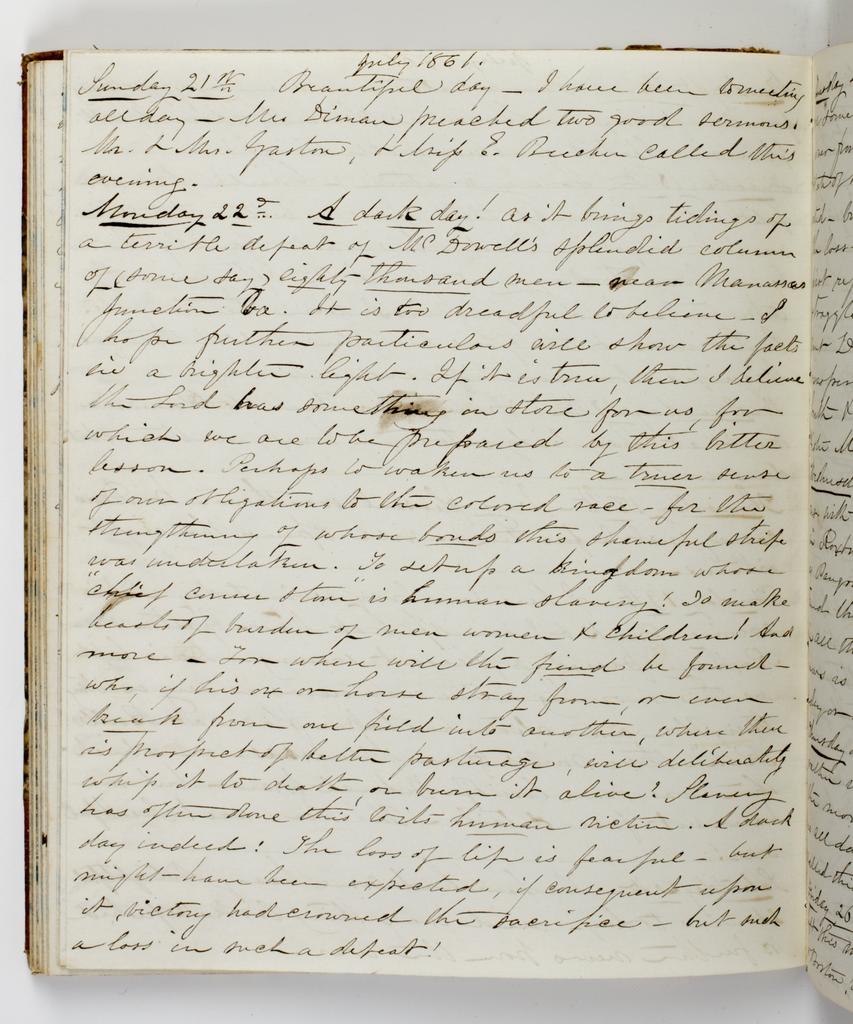
A page from Caroline’s diary, July 21 and 22, 1861
In the course of those sixty-five years, covering 1844 to 1915, White recorded her everyday activities, such as paying and receiving social calls, shopping, child-rearing, and going to lectures and concerts. She also recorded others more out of the ordinary, such as her seven European tours, travels across the United States, and a mastectomy procedure during which she assisted. And if this weren’t enough for a historian to get excited about, she was also an engaged witness to many of the biggest issues and transformations we now associate with the nineteenth century: immigration, labor unions, women’s suffrage, the laying of the Transatlantic Cable, and of course, the Civil War.
This last is what had brought me to the diary in the first place, and I was not disappointed. White was staunchly antislavery, often recording her frustration with the war and slavery, as well as describing her own contributions to the war effort. Her entry following Lincoln’s assassination, which spans three pages and is entirely lined in a thick ink mourning border, depicts someone truly devastated and utterly invested in her country and its politics:
The darkest day I ever remember – This morning the sun rose upon a nation jubilant with victory – but it sets upon one plunged in deepest sorrow…midday – came the shocking intelligence that our beloved President Abraham Lincoln was dead – shot by a brutal assassin…Later in the day came rumors of having secured the murderer – who it is affirmed by Miss Laura Keeve to be J. Wilkes Booth; Oh! where will treason end? & What shall we do with such as fall into our hands. The Vice President has been inducted into the Presidential chair – & assumed the reins of government. The rapidity with which events crowd upon one another is perfectly bewildering…When will our cup of punishments be drunk to the dregs? Merciful Father, help us.
But lest we assume that White was a woman far ahead of her time, speaking her mind on politics and calling for the end of slavery, she was also very much a woman of her time. Take this quote from the same month, April 1865, for example:
A mother ought to learn all the trades – to be able, successfully, to keep up the work of a family – she must know all that pertains to good housekeeping – cooking &c – then dress making, millinery, tailoring, come into the repertoire of her duties – & she should also be intelligent, educated sufficiently, to instruct her children – that their minds may be clothed as well as their bodies – she must have wisdom, patience & discretion – that the children’s tempers be not spoiled & more important than all other acquirements & accomplishments, she should have piety, to lead her to bring up her young immortals in the “way they should go” – Ah! Me! Ah! Me!
Caroline’s home “Cliffside,” c.1890
Despite her enlightened stance on slavery, and her obvious doubts about the practicality of fulfilling all of the prescribed duties of motherhood, she had very much internalized what historian Barbara Welter has deemed “True Womanhood,” or the nineteenth-century version of the ideal woman.[1] In many ways she was simply a young woman trying to figure out life and motherhood, just as her peers were, war or no war.
And although White did continue to comment on her political views after the Civil War, they were not always what you would expect from a woman who had voiced her opinions so freely during the war. Take her ardent anti-women’s suffrage position, for example. While women’s suffrage would seem to be a given for a woman who supported abolition, it’s important to remember that although White expressed herself deeply, she did so largely in the comfort of her own private diary.
People are not one-dimensional. They are complex, products of their culture, experiences, and individual personalities. White reminded me that this is true whether they lived two or 200 years ago. She also taught me another very important truth: archives, and all that they hold, are awesome.
[1] Welter, Barbara. “Cult of True Womanhood: 1820-1860.” American Quarterly, Vol. 18, No. 2, Part 1. (Summer, 1966): 151-174.
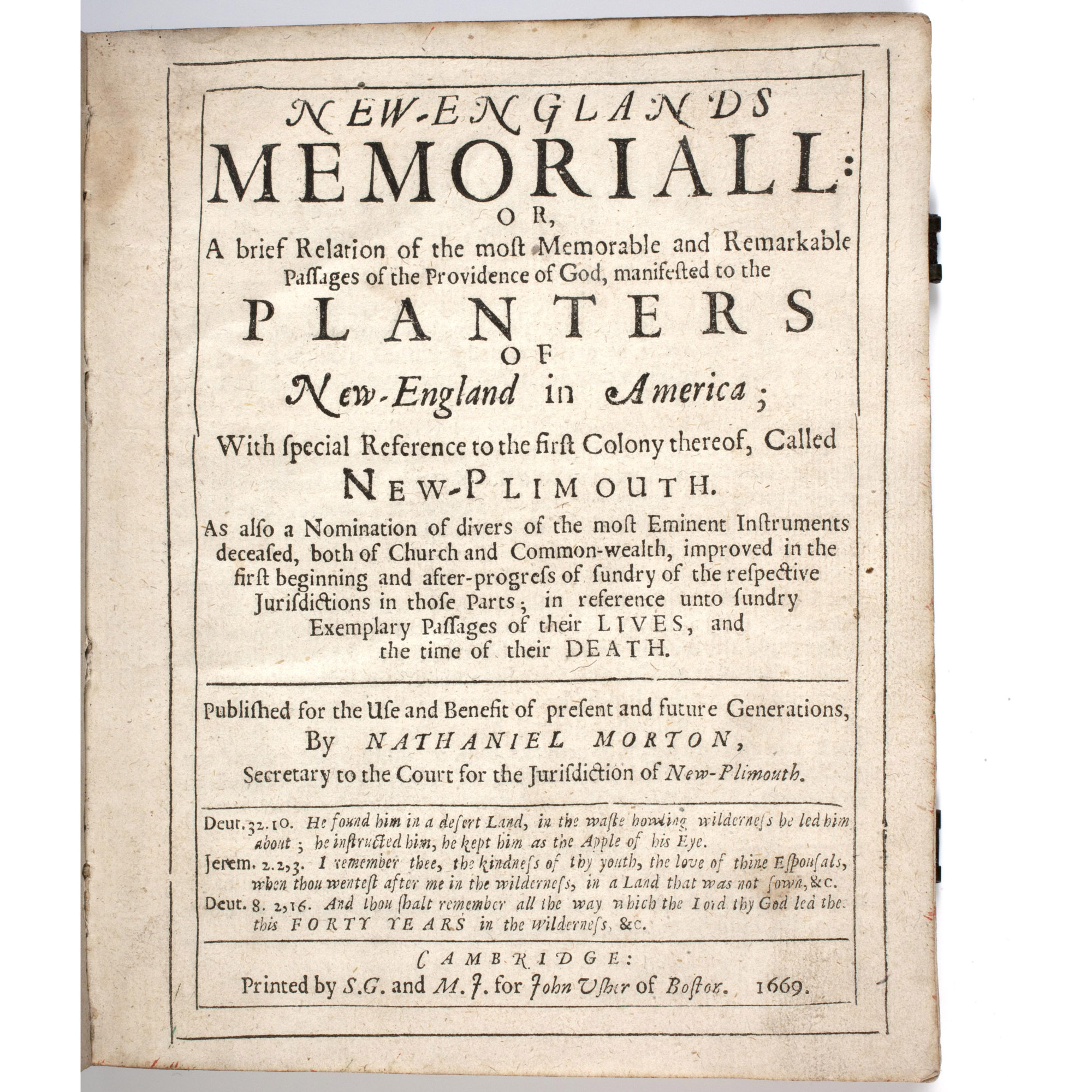
Every Wednesday before Thanksgiving for the past fifty years, the Wall Street Journal has published excerpts from Nathaniel Morton’s 1669 history of the Plymouth colony, New Englands Memoriall, on its editorial page. While Morton’s history does contain the first published list of those who signed the Mayflower Compact, it features only a negligible account of what we often call the first Thanksgiving. Morton writes, simply: “they [the Pilgrims] began to fit up their buildings against winter, and received in their first harvest, and had great plenty of fowl and fish, to their great refreshing.”
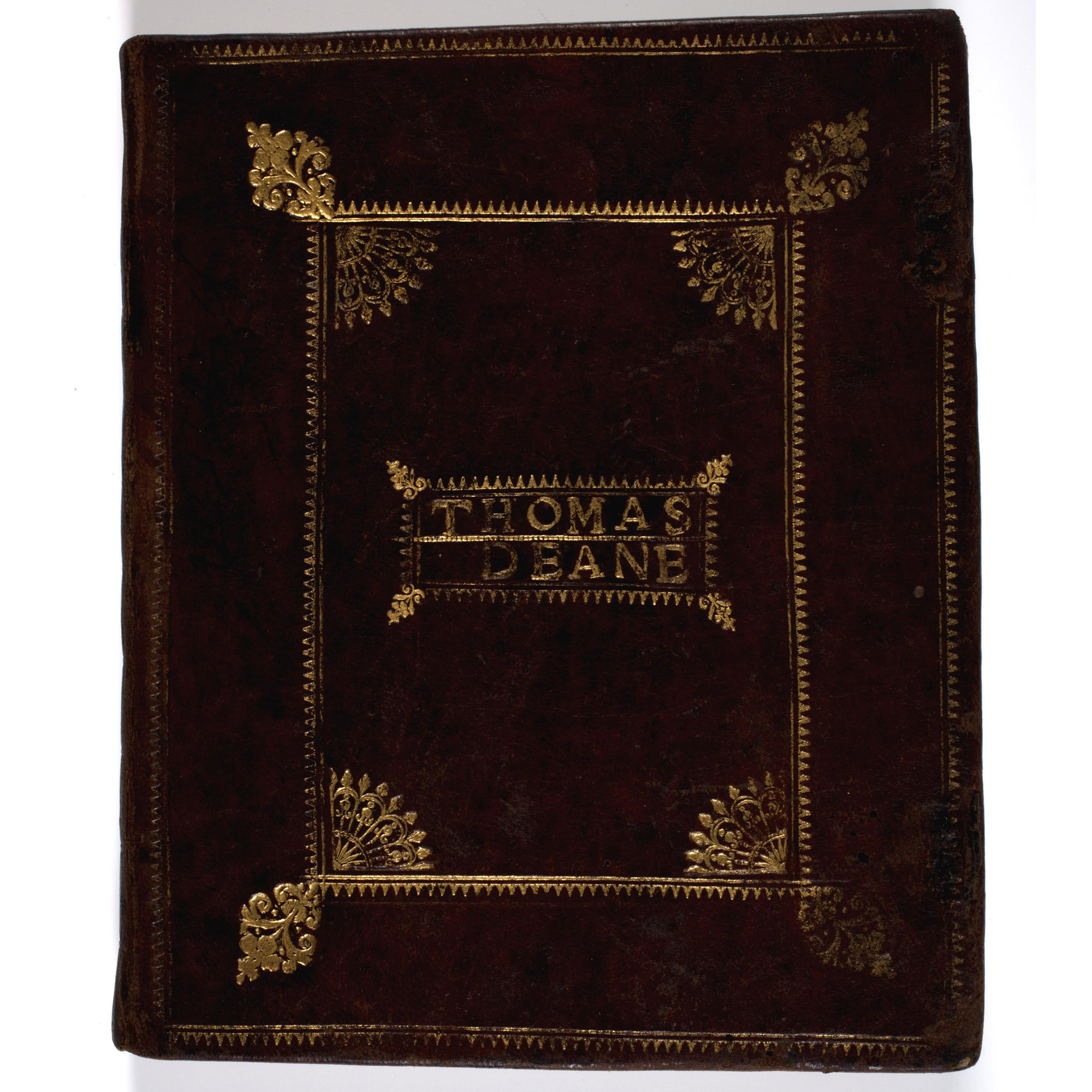
Nathaniel Morton's Memoriall (Papantonio copy)
Morton borrowed quite heavily from Plymouth governor William Bradford’s manuscript history, Of Plymouth Plantation, for his own work. The nephew by marriage of Bradford (1590-1657) and his agent in many affairs, Morton (1613-1685) was keeper of the records of Plymouth colony from 1647 to 1685, drafter of colony laws, tax collector, town clerk, and secretary of the council of war during the campaign against King Philip. He was an authority on the history of Plymouth, having spent much time with Bradford, and inherited Bradford’s papers in 1657.
The Society owns three copies of the Morton Memoriall, two of which were bound by John Ratcliff, a British binder who came to Massachusetts in the early 1660s to bind the Eliot Indian Bible. One of the Ratcliff-bound copies of Norton’s Memoriall came to AAS with John W. Farwell’s collection of rare British and early American printed books and maps. Farwell died in 1929 and left five thousand dollars to the Society, but his collection wouldn’t come to AAS for another thirteen years. The other Ratcliff copy belonged to Michael Papantonio, co-founder with John Kohn of Seven Gables Bookshop, AAS member, and collector of American bindings. Papantonio’s copy, which was recently on display at the AAS Grolier Club exhibition, prominently features a “Thomas Deane” gilt-lettered ownership stamp. Deane was a wealthy merchant and most likely handsomely paid Ratcliff, who had expressed discontent over his commission for binding the Bible, for this elaborate early American work.
Nathaniel Morton's Memoriall (Farwell copy)
Deane was one of the early English merchants who came to Massachusetts in hopes of establishing strong financial ties between Old and New England. He was the very type of immigrant who Bradford, Morton, and others, looking back in nostalgia, saw helping to destroy the simplicity of the early Massachusetts commonwealth. As we celebrate the same kind of simplicity this Thanksgiving, I wonder if Ratcliff’s showy binding, its fancy gilt sheepskin covering only a mirage of Thanksgiving, isn’t more representative of what we’ve become.
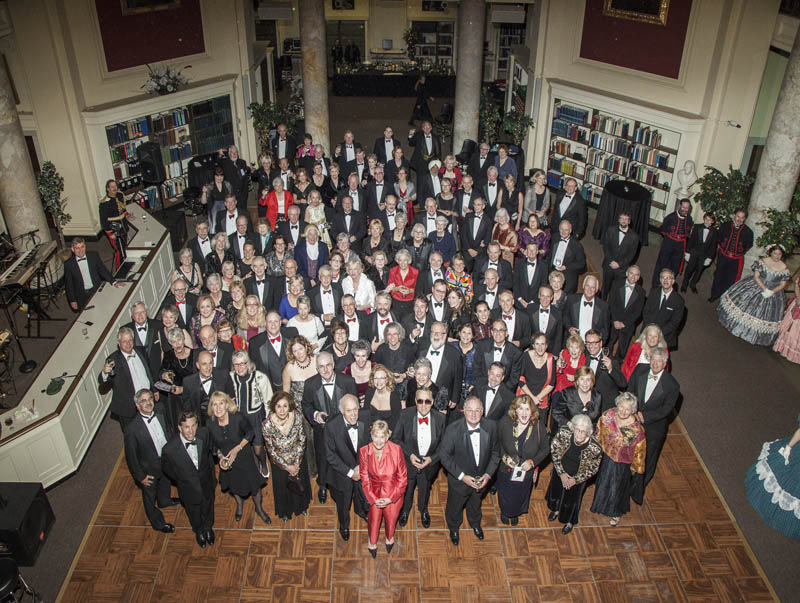
Some of us on the AAS staff are still recuperating from October’s bicentennial celebrations. There were three days of events, beginning with the Baron lecture by Patricia Nelson Limerick on Thursday night. On Friday morning the curators presented a celebration of bicentennial gifts, followed by lunch across the street at the Goddard Daniels House. On Friday afternoon there was a symposium in honor of retired curator of graphic arts and director of the Center for American Historic Visual Culture Georgia Barnhill. The bicentennial business meeting which followed included videotaped greetings from Massachusetts Governor Deval Patrick and President Bill Clinton. A cocktail supper followed the meeting.
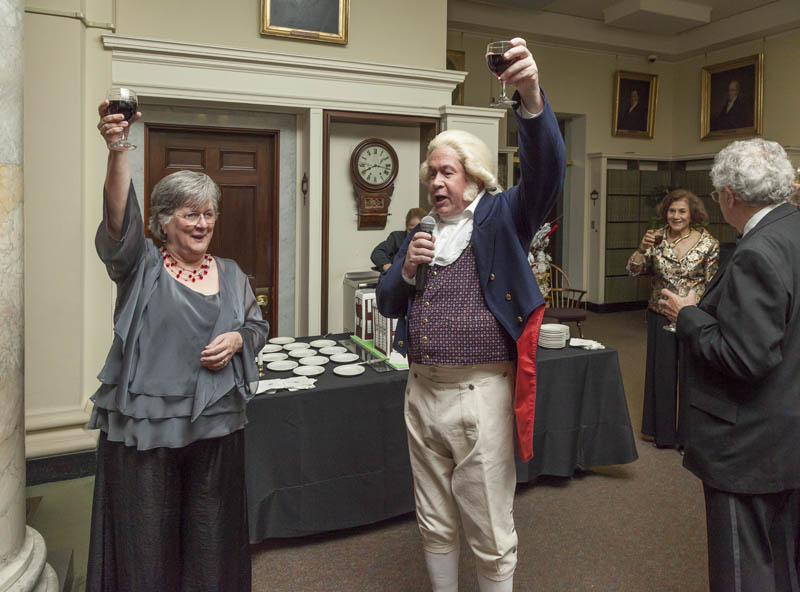
President Ellen Dunlap and Isaiah Thomas (Neil Gustafson) giving the bicentennial toast.
All of this was topped off with a black tie gala held on Saturday night in Antiquarian Hall. The night’s theme was “Black and White and Read (get it?) All Over” and attendees were asked to dress in those colors.
On Saturday morning the reading room was transformed into a ballroom, complete with dance floor and decorations. A raised platform was installed behind the reference desk for the band. The evening began with dinners hosted by members who live near the Society. We were lucky enough to be at the home of Jim Welu, director emeritus of the Worcester Art Museum. The high point of our dinner was certainly Jim’s most excellent homemade ice cream.
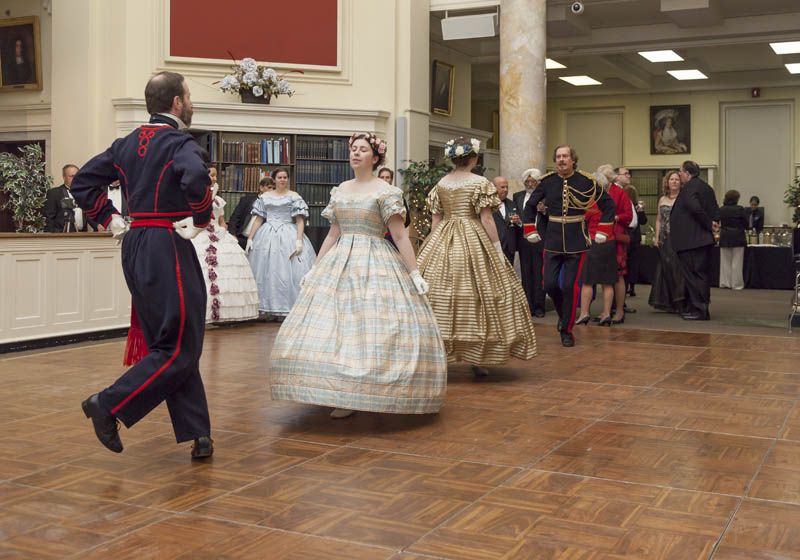
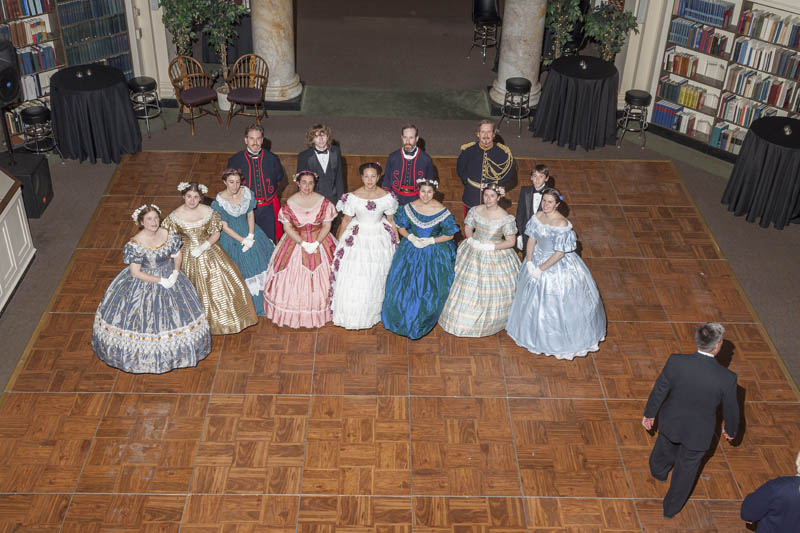
The Commonwealth Vintage Dancers
Then on to Antiquarian Hall, where AAS president Ellen Dunlap and founder Isaiah Thomas (played by actor Neil Gustafson) greeted guests on their arrival. There was period entertainment; silhouettist Ruth Monsell from Damariscotta, Maine, cut portraits of many of the attendees (another blog post about this coming soon), and there were performances of mid-nineteenth century dances by the Commonwealth Vintage Dancers. After toasts by Mr. Thomas to the Society and to United States President James Madison, a cake in the shape of Antiquarian Hall was cut and served to the guests, followed by general dancing and merrymaking into the night. (To see pictures of the cake, visit Isaiah’s Facebook page.)
Black tie events at AAS are a rarity and it was fun to see friends and co-workers in formal dress. I was happy to see that the staff cleans up quite well. And we had the reading room back to normal in time for our opening on Monday morning.
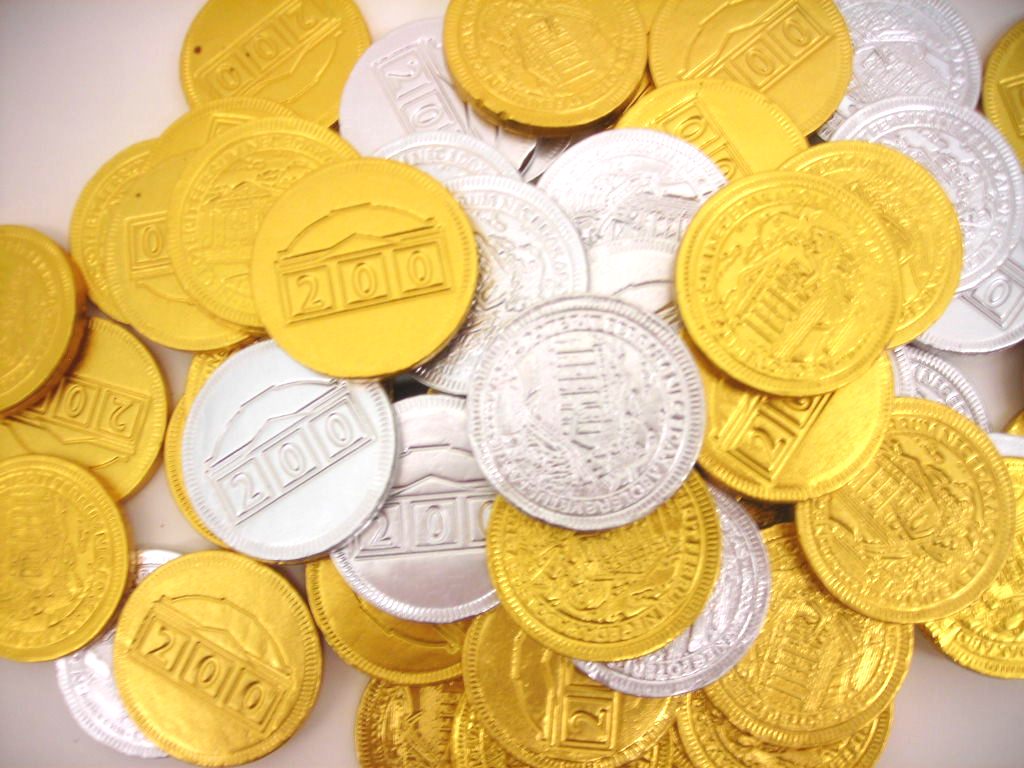
The AAS commemorative chocolate coins. On one side is AAS's seal, and on the other is the logo with 200 in between the pillars.
Each year at the Boston International Antiquarian Book Fair, AAS has a booth on Cultural Row (booths given to local libraries to promote themselves). When regular visitors to the fair walk by our booth, they usually think one thing. Chocolate! Early on we had a dish with small candy bars or other chocolate confectionery delights for those stopping by the booth and soon AAS developed a reputation as a destination for candy lovers. With the Fair occurring so soon after Halloween, we always have our pick of a variety of mouth-watering delectables to entice those who give in to temptation.
Since this is our bicentennial year we decided to do something special. Stop by our booth this weekend (November 16-18) and sample the AAS commemorative 200th birthday chocolate coin! It comes in two varieties; silver foil for milk chocolate and gold foil for dark Belgian chocolate. Then you have to decide whether to keep the coin intact or rip it open and devour the interior. Life is full of choices.
In addition you can meet the curators at the booth. The curators for graphic arts and newspapers will be at the booth on Friday, November 16. The curators for books, manuscripts, and children’s books will be at the booth Saturday afternoon, November 17.
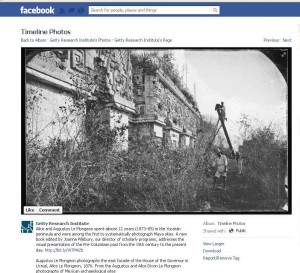
Central American archaeology may not be the first thing that comes to mind when you think of AAS, but check out this Facebook post from the Getty Research Institute about a new book called Past Presented: Archaeological Illustration and the Americas, edited by their Director of Scholarly Programs. The post features a photograph of AAS member Augustus Le Plongeon at work in Uxmal, an ancient Mayan City.
Augustus and his wife Alice Dixon Le Plongeon were, according to the post, “among the first to systematically photograph Maya sites.” Augustus was elected to AAS membership in 1878 and the couple’s work was featured prominently in the AAS Proceedings between 1877 and 1879. Stephen Salisbury III, AAS president during this period, had a strong interest in Central American history and archaeology and corresponded with Augustus as well as other scholars and archaeologists working in Central America. The AAS collection holds this correspondence in the Salisbury Family Papers manuscript collection (boxes 52 and 53).
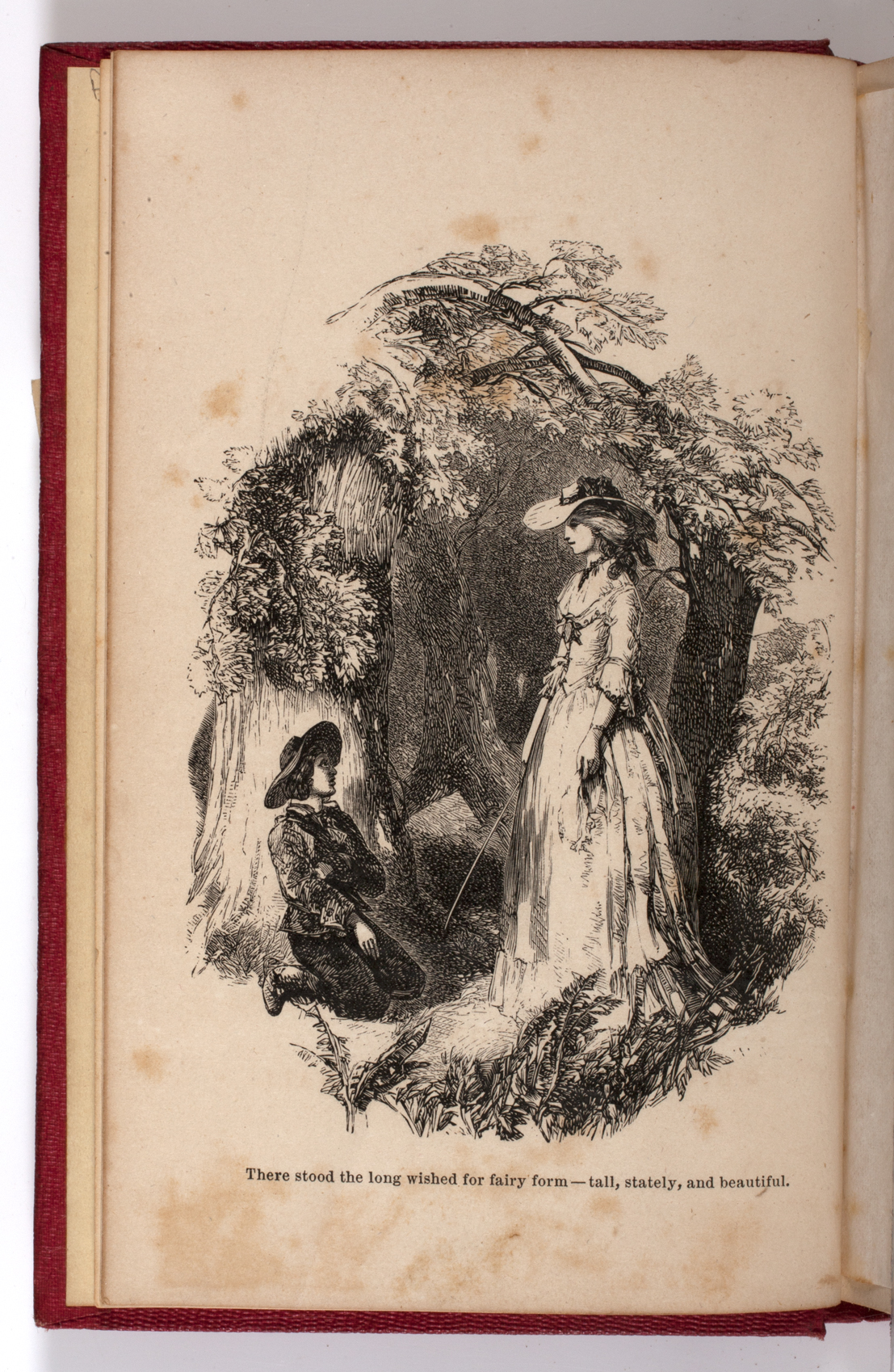
Drury, Anna H. The Blue Ribbons: A Story of the Last Century. Boston: Whittemore, Niles and Hall, 1856.
This is truly a mid-nineteenth-century creation: a fairy tale set in the eighteenth century! Alexis, a young boy growing up in Louis XIV’s France, encounters a beautiful and benevolent female fairy in the forest—who turns out to be Queen Marie Antoinette! Such a plot would have been difficult to imagine just twenty years before when fairy tales (especially those set in Catholic countries) were largely looked upon by American authors as dangerous to the moral development of children.
As a description of a professional trajectory in the research library world, it certainly makes for an impressive resume:
Library Assistant, American Antiquarian Society
Curator of Maps and Prints, American Antiquarian Society
Andrew W. Mellon Curator of Graphic Arts, American Antiquarian Society
Director, Center for Historic American Visual Culture, American Antiquarian Society
At the same time, it’s not unheard of. Plenty of people have four different positions with the same institution, adding responsibilities along with experience.
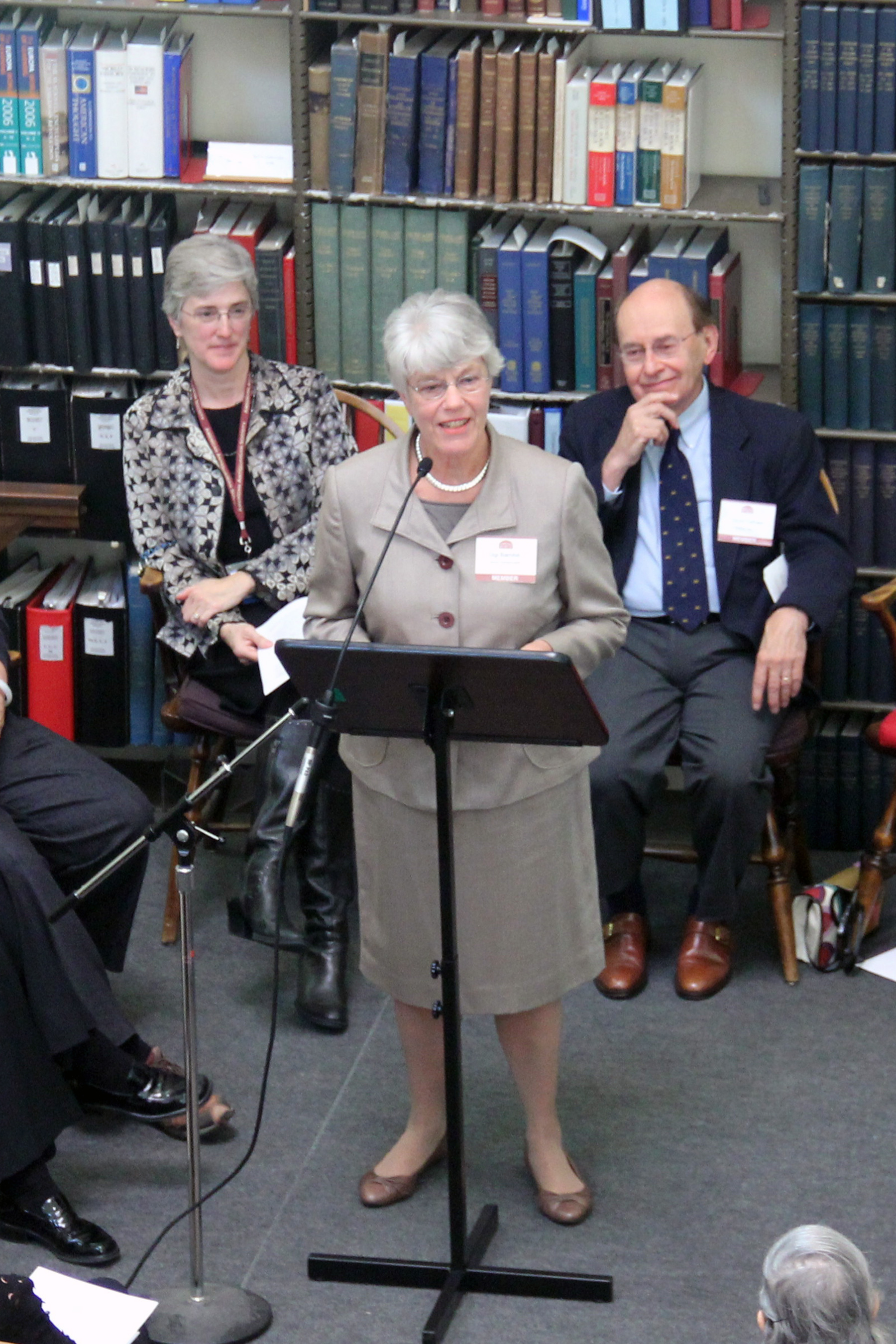
Gigi speaking at the roundtable
But when you put in the dates for these positions—the only jobs listed in the “Employment History” section of Gigi Barnhill’s CV—the mind boggles. Gigi was hired as a Library Assistant at AAS in October 1968. She became the Mellon Curator of Graphic Arts in 1973. She retired from her position as the Director of the Center for Historic American Visual Culture (CHAViC) in July 2012.
For those of you keeping score at home, that’s 44 years of service to the same institution. Given that the institution in question just celebrated its bicentennial, it’s easy to figure out that Gigi Barnhill was a member of the AAS staff for over one-fifth of its history.
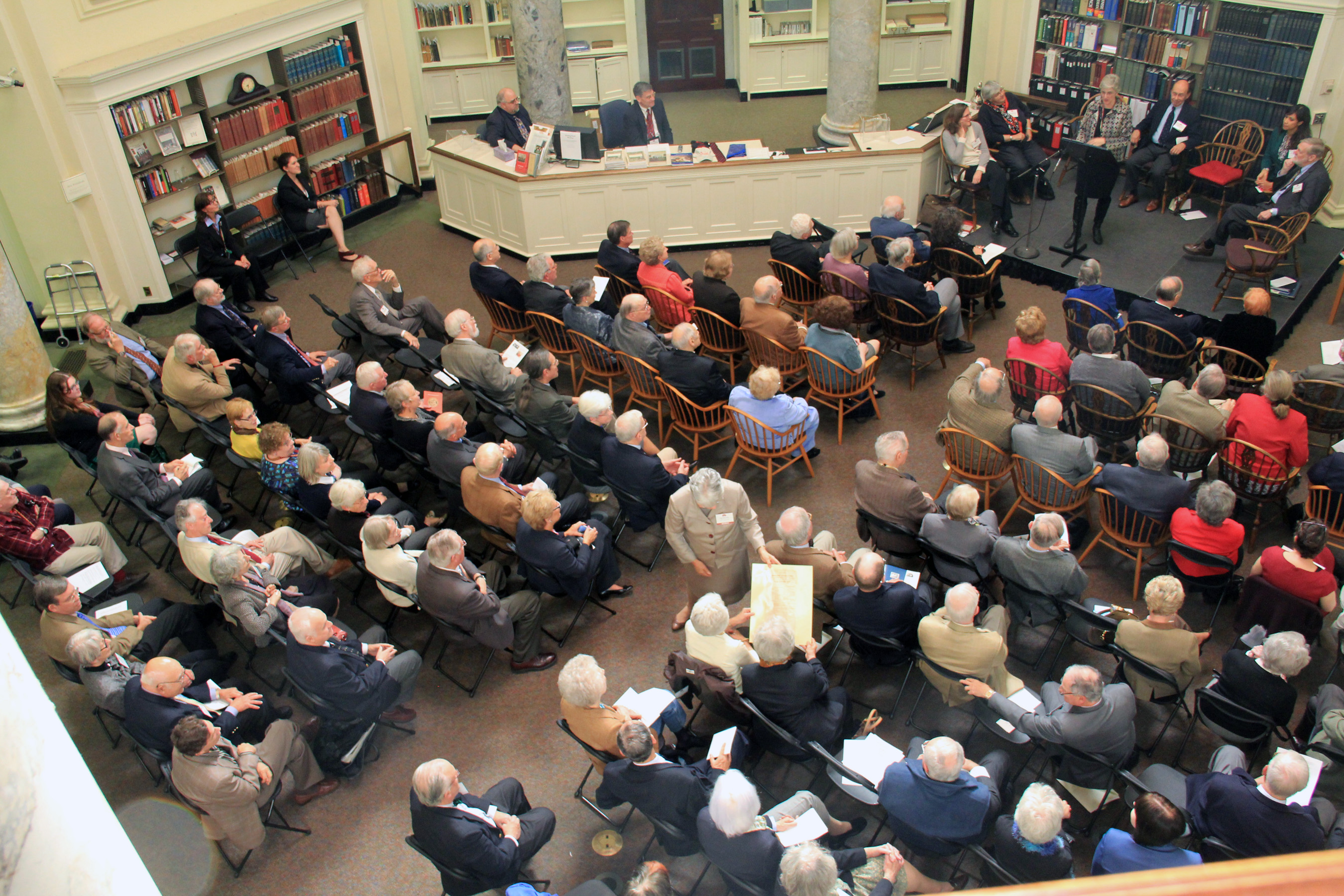
A roundtable was held to honor Gigi’s remarkable career at AAS as part of the Society’s bicentennial celebrations on Friday, October 26. A crowd of over 100 friends, colleagues, former fellows, and well-wishers gathered in Antiquarian Hall to celebrate Gigi and the AAS’s anniversary. The roundtable was structured around a list of qualities and skills that together provide the Society’s model for the “ideal curator.” We invited colleagues who had interacted with Gigi at various points throughout her career to each talk about one particular quality on the list.
The first curatorial characteristic was “Advance scholarship through publication and research.” To address Gigi’s illustrious record as a scholar of early American visual culture, we invited the person Gigi credits for getting her interested in American prints in the first place. David Tatham, professor of art history emeritus at Syracuse University and a distinguished scholar of nineteenth-century American art, talked about only a few of Gigi’s achievements (we had to limit him to a few, since a catalogue raisonné of all of Gigi’s publications assembled by AAS staff before her retirement ran to over fifty titles).
The next quality on the list, “Acquire materials for their collections and build collections of secondary and reference resources at AAS,” was taken up by Don Cresswell. Don is a co-founder of the Philadelphia Print Shop, one of the world’s leading specialist shops in antique prints, maps, in1982. As such, he sold many items to Gigi for the AAS collections over her years as Curator of Graphic Arts. Don offered a look back at some of the key books in the field that shaped scholarship in early American prints, and talked about how those landmark works shaped the collecting of a generation of curators.
View of the crowd at Gigi’s roundtable
Don was followed by Gigi’s successor as the Mellon Curator of Graphic Arts, Lauren Hewes, who talked about Gigi’s role in “Serving as an advocate for her own collections, advising on collection development, preservation, and access, while considering the needs of the rest of the Society’s collections.” Having worked right next to Gigi since 2005, Lauren witnessed firsthand Gigi’s dedication to developing AAS’s holdings of graphic arts materials and making them as widely accessible as possible.
The next quality up for discussion was that AAS curators should “Serve as ambassadors of the Society to the communities of Americana collectors and dealers, and maintain active communication and visitation with these important constituencies.” Rosemarie Tovell brought an international dimension to the proceedings in her discussion of Gigi’s outreach to many different communities over the years, most notably the American Historical Print Collectors Society. Rosemarie was curator of the Canadian Prints and Drawings Collection at the National Gallery of Canada for over 30 years, and encountered Gigi as a colleague and peer at many points throughout their careers.
The next curatorial quality—“Responsible for providing reference services to readers and fellows”—will be utterly familiar to anybody who had the privilege of doing research at AAS during Gigi’s career. Nenette Luarca-Shoaf, a recent Ph.D. in art history from the University of Delaware who held a Last Fellowship in visual culture at AAS in July 2009, talked about how Gigi’s knowledge of the collection and guidance to unexpected materials was crucial to her research on the Mississippi River in antebellum visual culture.
Martha McNamara, Director of the New England Arts & Architecture Program and professor of art history at Wellesley College, talked about the most recent phase of Gigi’s career at AAS in addressing the curator’s responsibility to “Teach and share through workshops, seminars, conferences, and tours.” Martha has been on the steering committee of CHAViC since its inception, and co-edited (with Gigi) the volume of essays, New Views of New England, that resulted from the first CHAViC conference, held in the fall of 2007. With the help of generous donors such as Jay Last and Diana Korzenik, CHAViC provides an ongoing platform of programs around visual culture at AAS.
Gigi with the magnificent Bien edition of Audubon’s “Birds of America”
The final quality addressed on the roundtable was one that only those who have worked with Gigi can truly appreciate. AAS curators are expected to “Be members of a staff that works collaboratively,” and while Lauren Hewes talked about the pleasures of working side by side with Gigi, in truth any number of Gigi’s colleagues at AAS over her 44 years here could have made similar remarks.
After some remarks from Gigi, the audience was treated to a first look at several gifts of collection materials that had been donated to AAS in honor of Gigi’s retirement, including the monumental Bien chromolithographed edition of Audubon’s Birds of America (the gift of Jay Last). It is impossible, of course, to sum up a career of over four decades in ninety minutes of conversation, so it was fitting that the roundtable ended with generations of readers inspired by Gigi’s example, crowded around books and prints in the reading room.
Editor’s Note: See an earlier post about other recent AAS staff retirements here.