Video Modules Enliven AAS Website

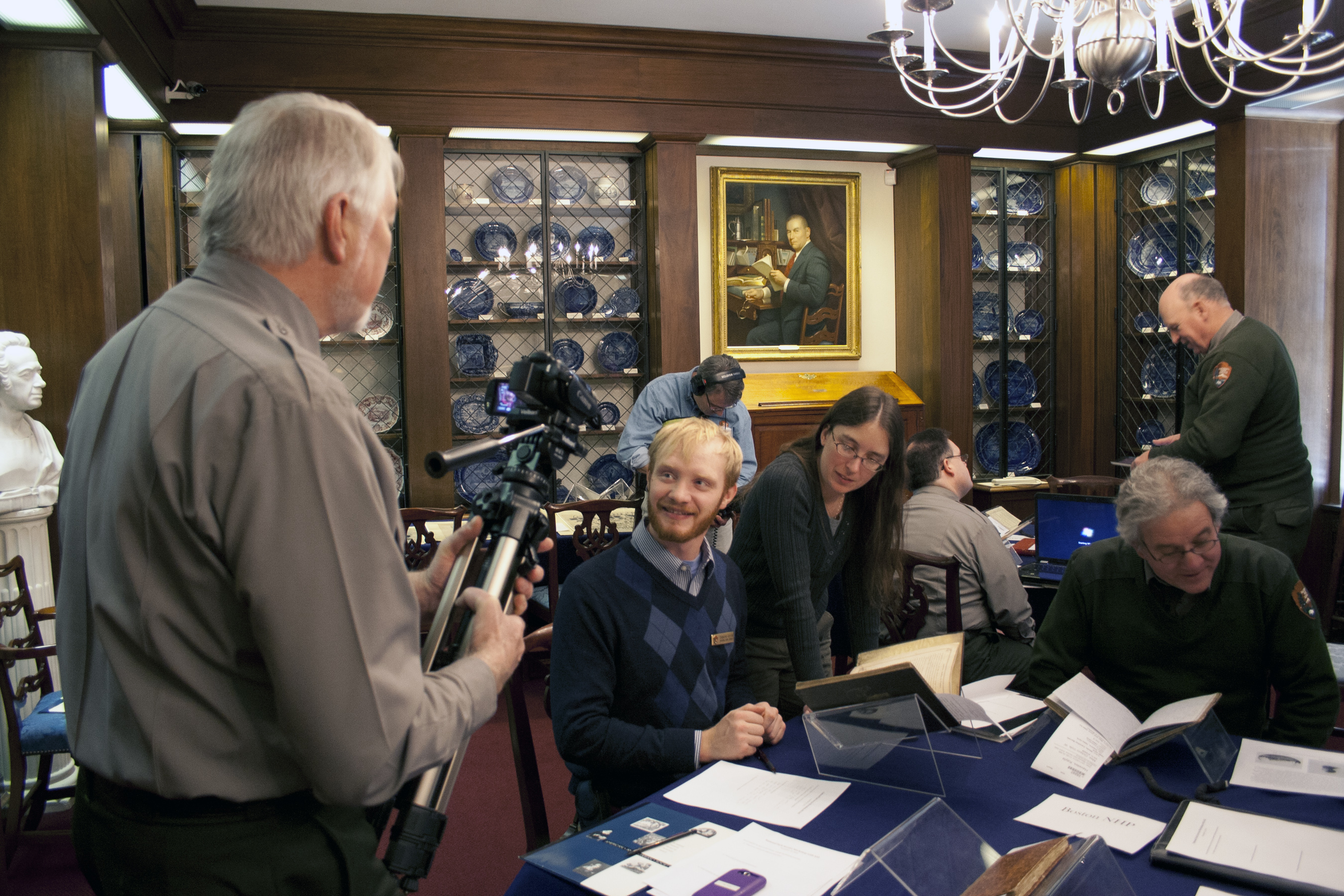
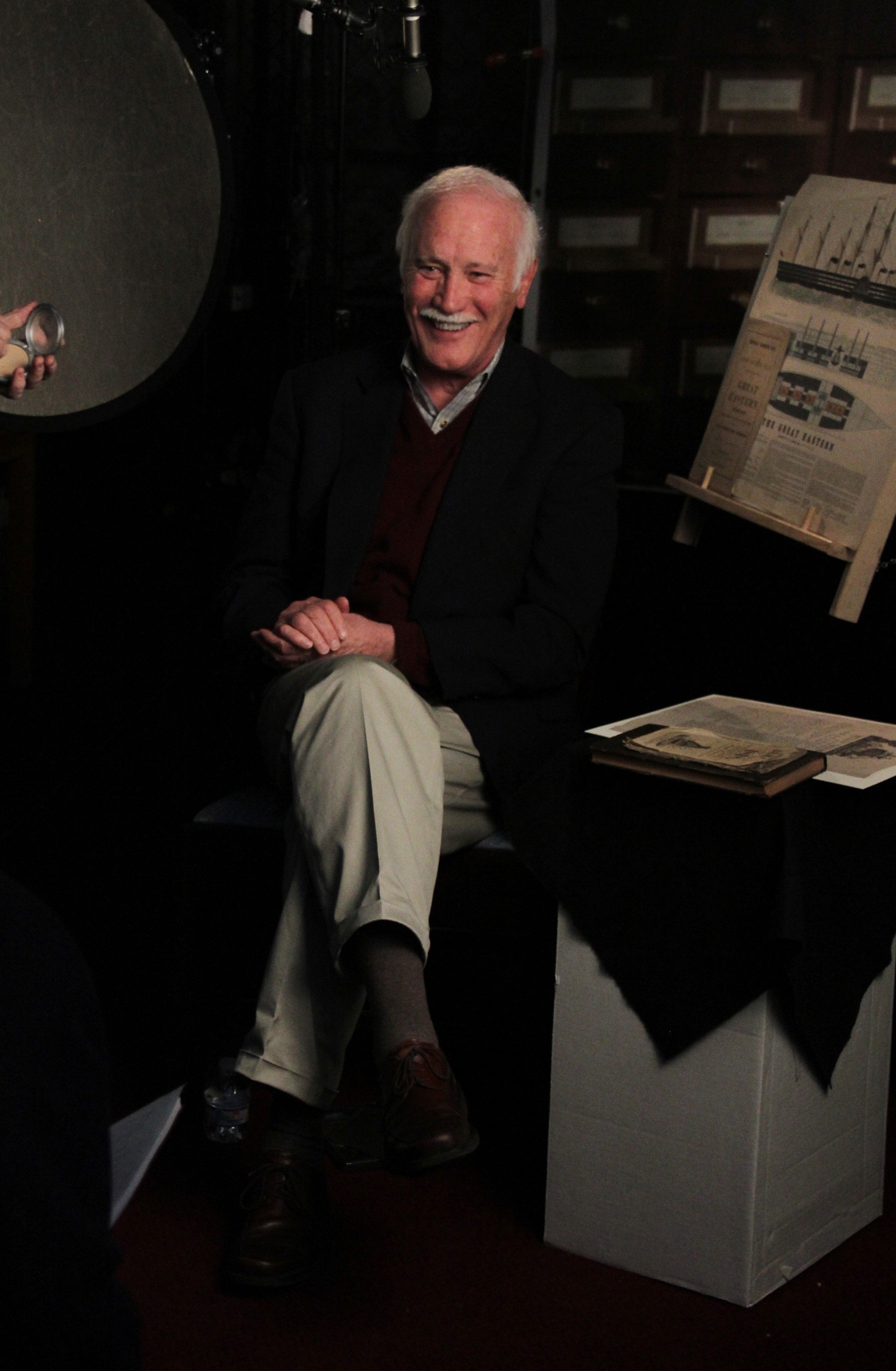
Bill Fowler in between takes during production.
Whenever you create a movie you always shoot more footage than you can actually use. When we created our new orientation film describing the Society as part of our bicentennial celebrations last year, we decided to put the extra footage we had created to good use by creating five short video modules and embedding them in various places on our newly designed website.

These modules provide greater details about certain aspects of the Society’s collections and activities.  As with the main orientation film, we called upon our members and friends to describe on camera their own experiences with the Society. They prove to be wonderful witnesses of how the Society’s collections and programs can be transformative for people studying pre-twentieth century American history and culture. I worked with Larry Hott and Diane Carey of Florentine/Hott Productions to create these modules and the main orientation film. They have produced nearly two dozen films for national PBS broadcast and have won an Emmy, two Academy Award nominations, and a George Foster Peabody Award, among many others for their work.

In one module entitled “Accessing the Collections,” embedded below, AAS members William Fowler, Jill Lepore, and former fellows Ilyon Woo and Allison Stagg describe how extensive the online catalog is and how knowledgeable and helpful the AAS staff.   In this same module, AAS counselor Bill Reese discusses the Society’s work in making digital facsimiles of the collection widely available. This segment also describes our online exhibitions.

The “Scholarly Programs” module seen below features AAS member Scott Casper and Allison Stagg describing how the Society has become a hub of scholarly endeavor and describes the activities of the Center for Historic American Visual Culture (CHAVIC) and the Program in the History of the Book in America.

“Fellowships” features Nathaniel Philbrick describing the collegial camaraderie he experiences whenever he conducts research at the Society. Jill Lepore describes how the fellowship she won early in her career gave her a sense of belonging to an intellectual community – a modern equivalent of the eighteenth century “community of letters.”  And Honoree Jeffers describes her tenure as a Creative Fellow as a “leap forward” that opened up her worldview as an artist and a historian.

Local educator, Linda Forte, is featured in the “K-12 Programs” module below and she along with Scott Casper and Bill Fowler describe how the Society has involved pre-collegiate teachers from throughout Massachusetts and the nation in hands-on workshops that engage educators as scholars and ignites their passion for history and reinvigorates their teaching.

And this last module “Preservation” describes the work of our Conservation department. Here again Allison Stagg and Bill Fowler are featured.  Allison describes the rare ephemera items now preserved by AAS despite their original intention to be viewed briefly and then discarded. Bill speaks of the beauty and value of actual artifacts and their need to be preserved.

I believe these modules provide additional insight into the workings of the Society and allow our members and friends the opportunity to share their great insights into what AAS has meant to them and their work. I hope you enjoy viewing them.
Identifying the Unidentified, Part I

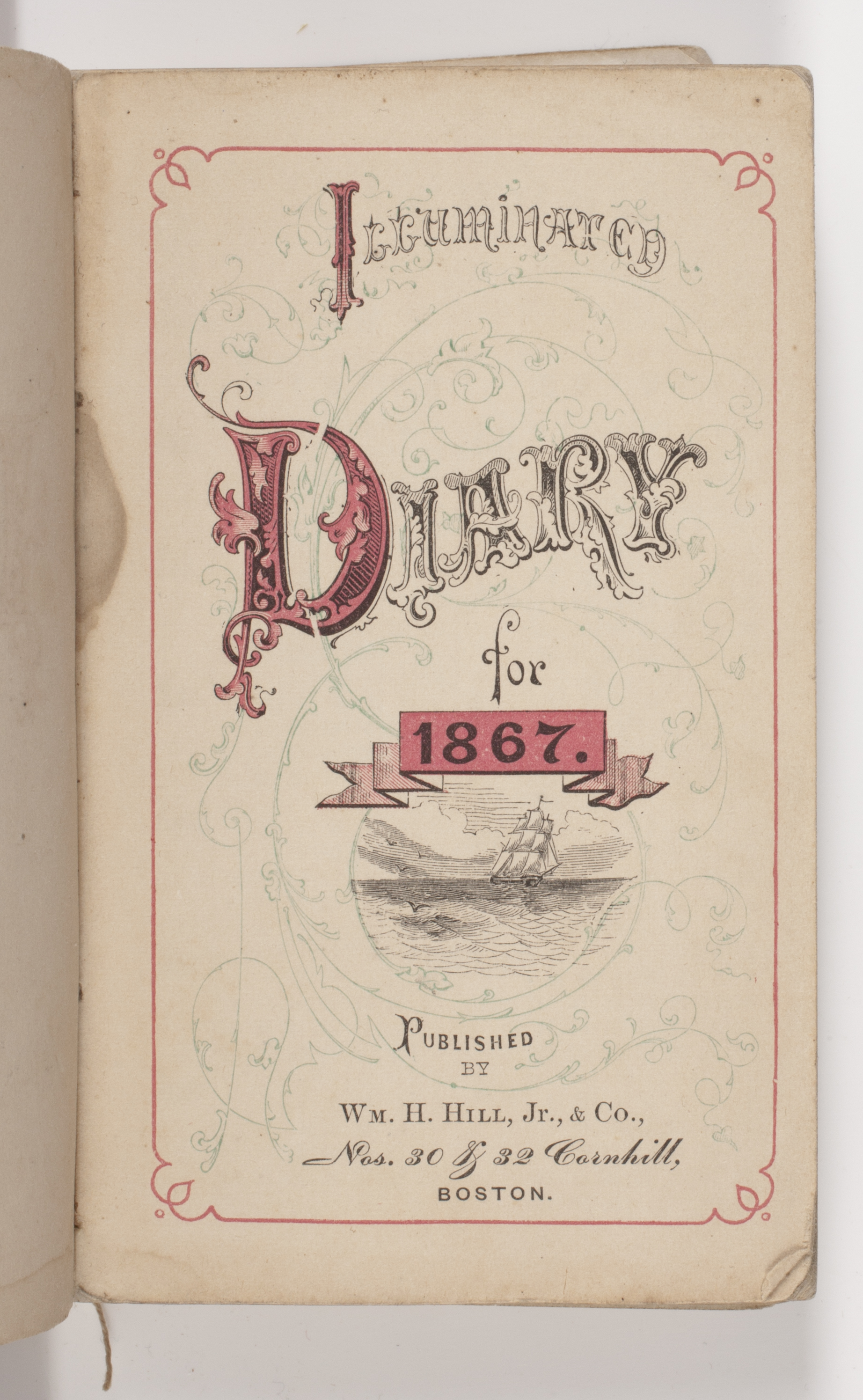
Former AAS intern Lucia Ferguson (Smith College) worked with a manuscript collection of unidentified diaries.  Her charge?  Identify the diarist.  Lucia was very successful with one particular volume, which she discovered belonged to a young man named Henry Martin.  Although no last name was listed anywhere in the volume, a poem from the diarist’s sweetheart was inscribed to a Henry.  After identifying cities and towns, as well as matching other family names listed in the diary to census records, she was able to name Henry as the author.  After that, everything fell into place.

Over the next four weeks we’ll be featuring installments from Lucia’s journey into the life of Henry Martin through his previously unidentified diary.

In the AAS collection, there are plenty of unidentified manuscripts. Inquiry into their origins is frustrating and fascinating. I was eventually able to learn that one, a yearlong diary, was written by a 24 year old man from Southern New Hampshire. The diary contains the quiet daily life of a young Civil War veteran named Henry Martin. Born on July 23, 1843, he was the eldest of the five children of Samuel Martin and Lovilla (Brown) Martin.

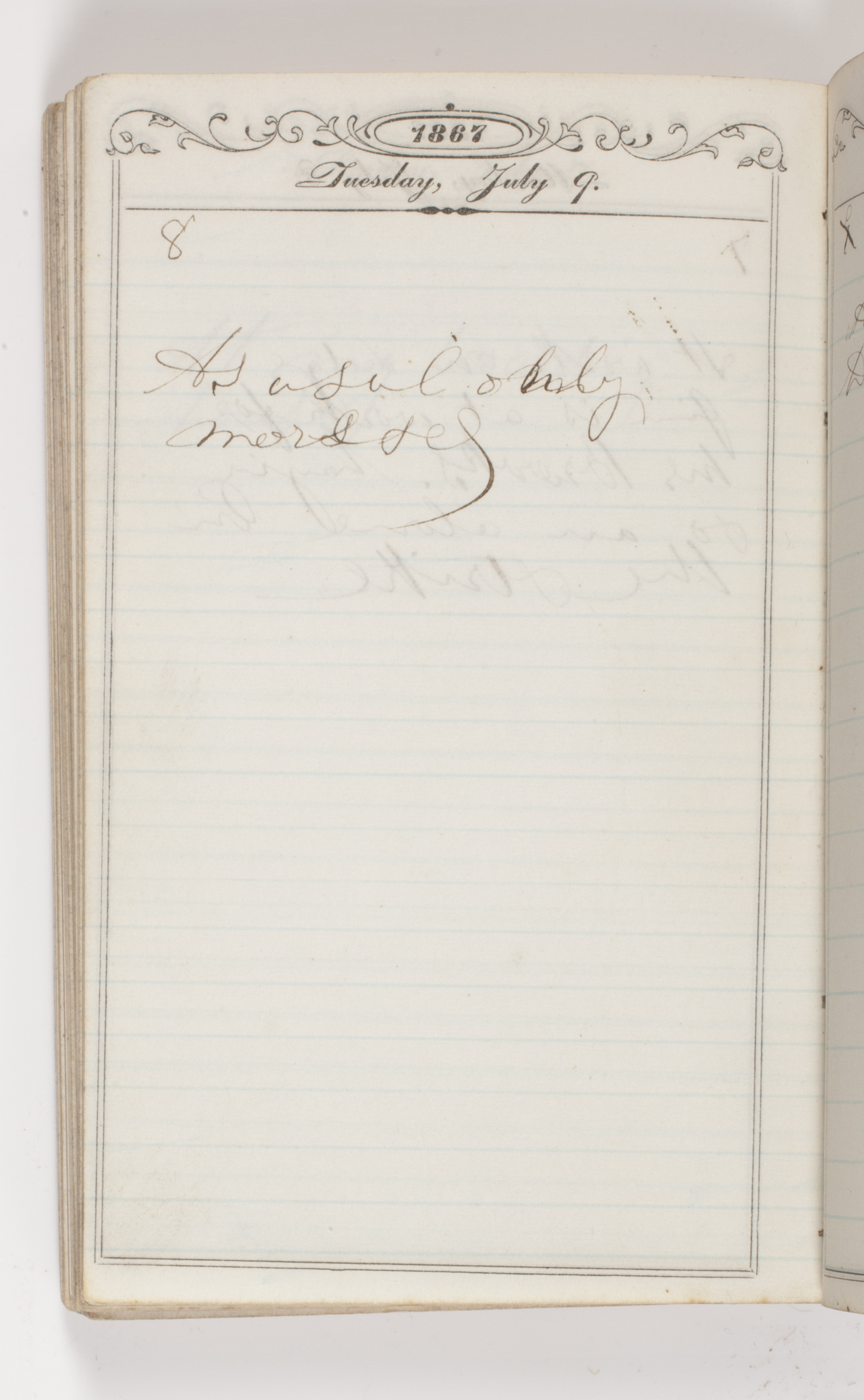
It is not a particularly remarkable document—entries are scanty, rarely more than a few phrases long. It is monotonous and repetitive. I have grappled with how to articulate the importance of something like this, and other writers have addressed it much better than I ever possibly could. Writing about the importance of something ordinary and seemingly inconsequential is a struggle. Similarly, I tried and failed to make sense of this document and its relevance, until I stumbled upon my favorite entry. Following a dull week where the entries consisted of “as usual”s and “at work today”s, Henry finally just wrote this bitterly wonderful line on Tuesday, July 9th:

As usual only more so

This brief phrase, somehow, gave me a foothold into the document as a whole. So lackluster and so perfectly descriptive of ordinariness.

I undertook to figure out what I could about the diary’s author. It is very powerful to feel you have “captured” someone in this way—to uncover an identity, to shine a bright light on a few shadowy lines on a page. Our young diarist, Henry Martin, has little eye for detail, and no desire to really write something, or create a vision of his own life—his journal is merely a record of events. Went to Lyndboro. Started for Wilton. Went to church. We onlookers have no way in, as he reveals little of his interior life.

And yet I still find his story fascinating, and can’t let go of that obscene drive to make something of it, draw a higher conclusion, give it meaning. The only way to not go crazy, however, is to avoid that—take the document on its own terms, admire its ordinariness, sit down and say, Here is a life. Or a year in a life.

Check back next week to learn more about Henry’s everyday life as recorded in his diary.

The Acquisitions Table: The National Pathfinder

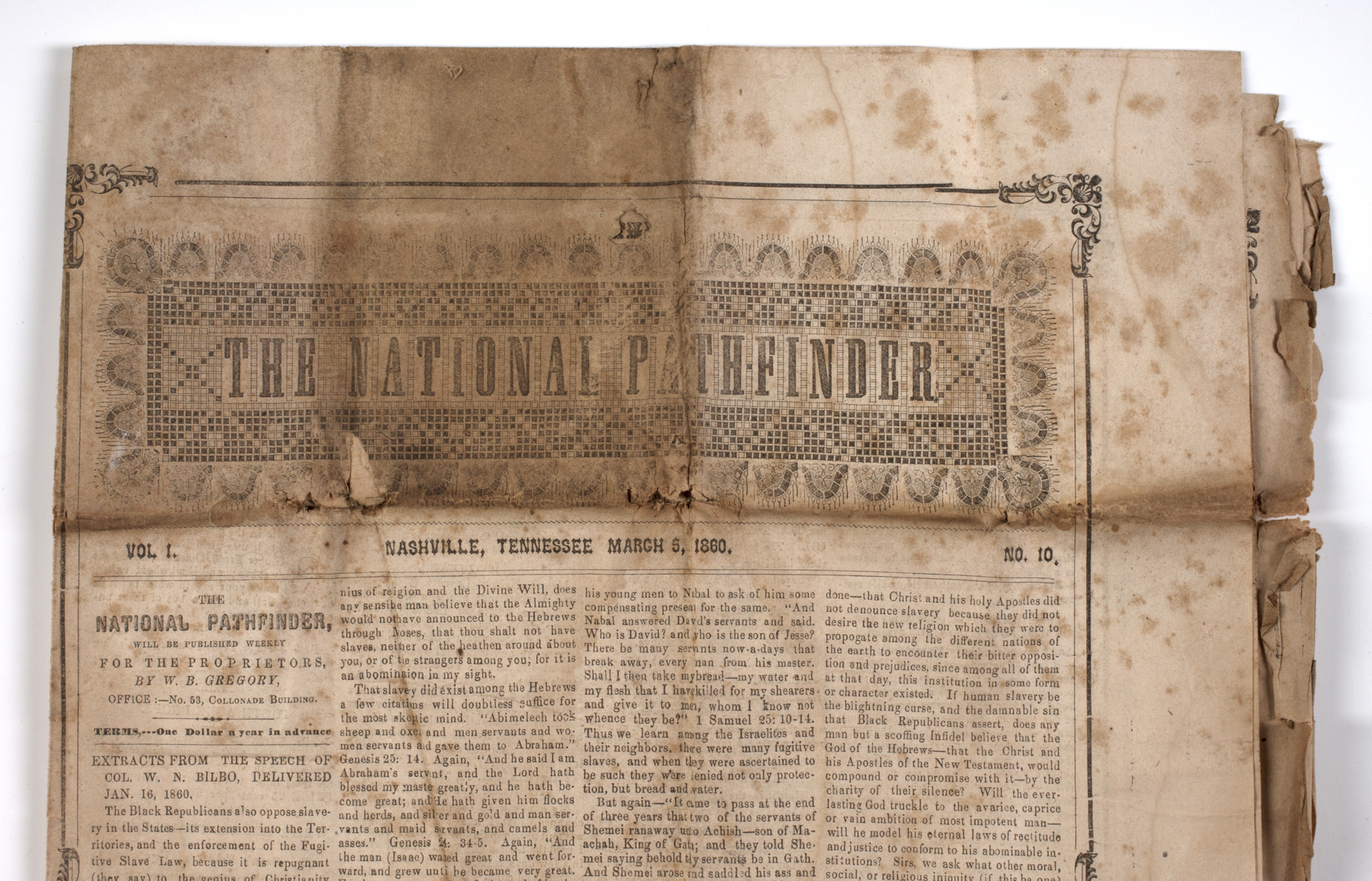
The National Pathfinder (Nashville, Tennessee).  Mar. 5, 1860.

This appears to be mainly an advertising paper with small bits of news and poetry.  Even some of the news items are really puff pieces for local businesses.  According to a Nashville directory from 1860 it was published in the office of the Nashville Patriot which had a daily, tri-weekly and weekly edition.  This is only the second issue known of this title.  It gives a nice snapshot of the business scene of Nashville right before the war.

A Day with the National Park Service

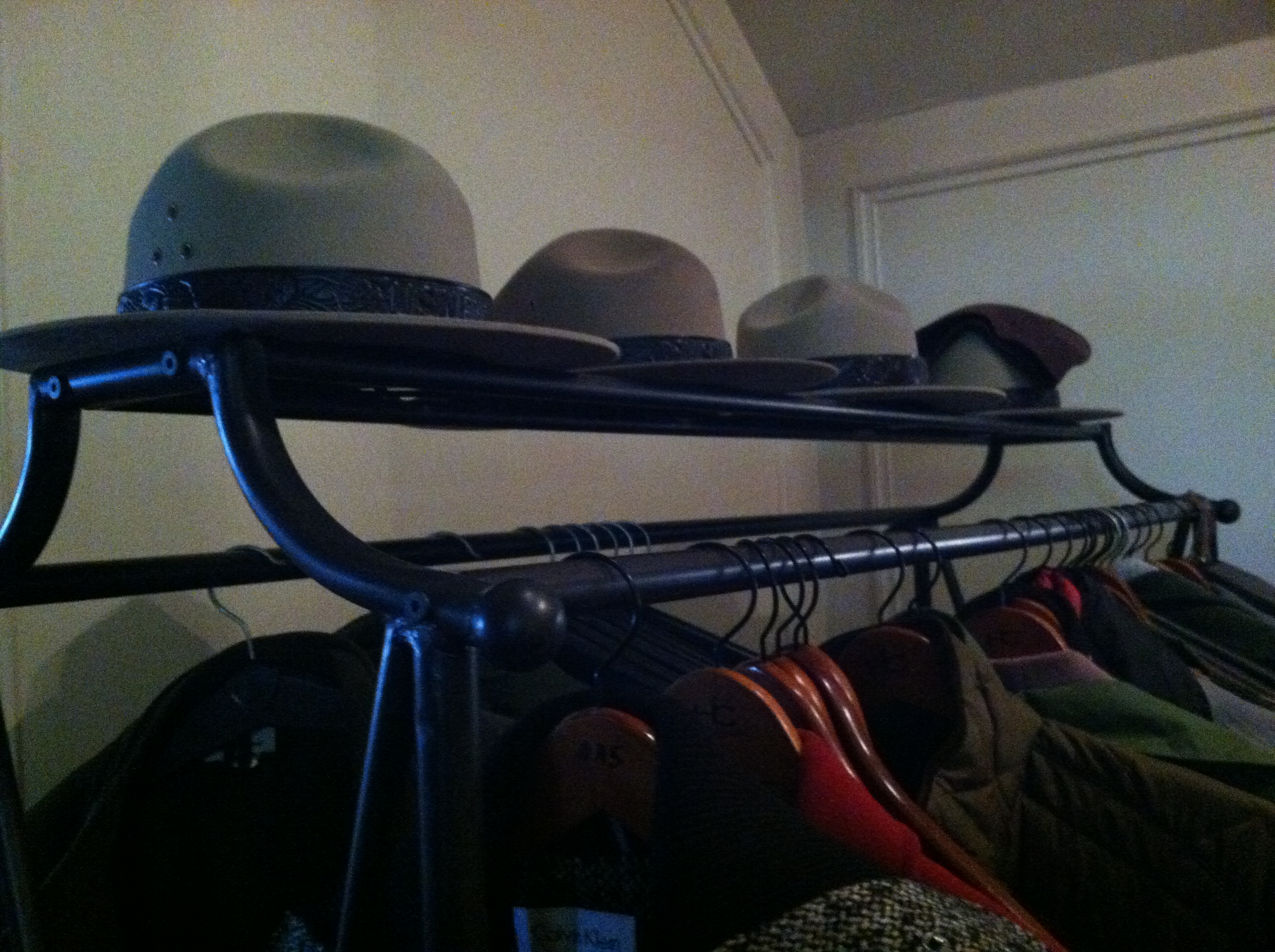
Nothing says National Park Ranger like their famous gray hats.

For museum and park enthusiasts, the green and gray uniforms of the National Park Service (NPS) symbolize respect, knowledge, and public service. They’re recognizable and serve as a reminder of the continuing preservation of our national heritage and landscape. But all too often people only associate the NPS with the large outdoor wildlife parks such as Yosemite or the Everglades. What about the battlefields, historic homes, and old ships that are also part of the park system? What about the history?

This question has been a recent topic of interest for the Park Service. In 2012, the NPS Chief Historian’s office and the Organization of American Historians

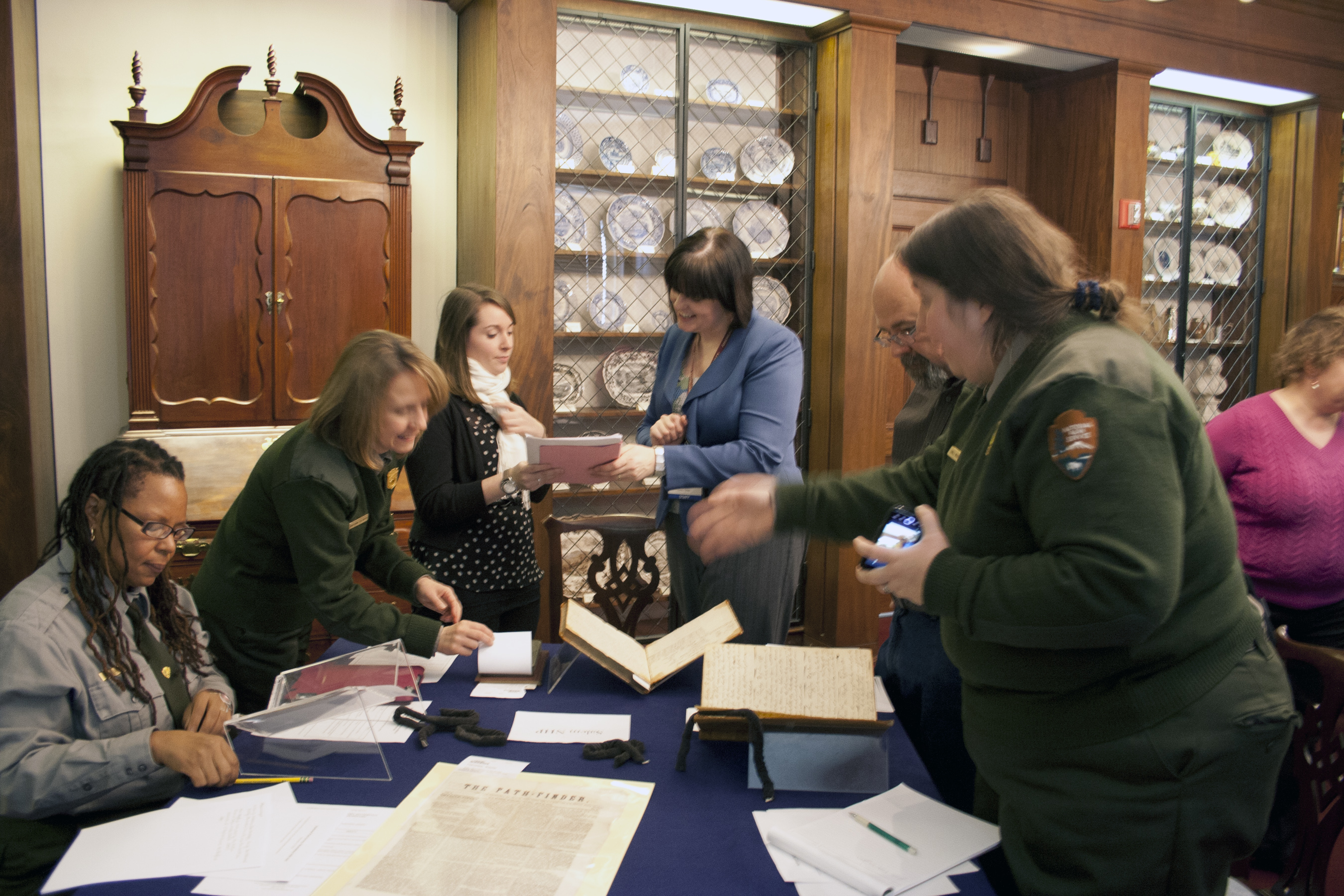
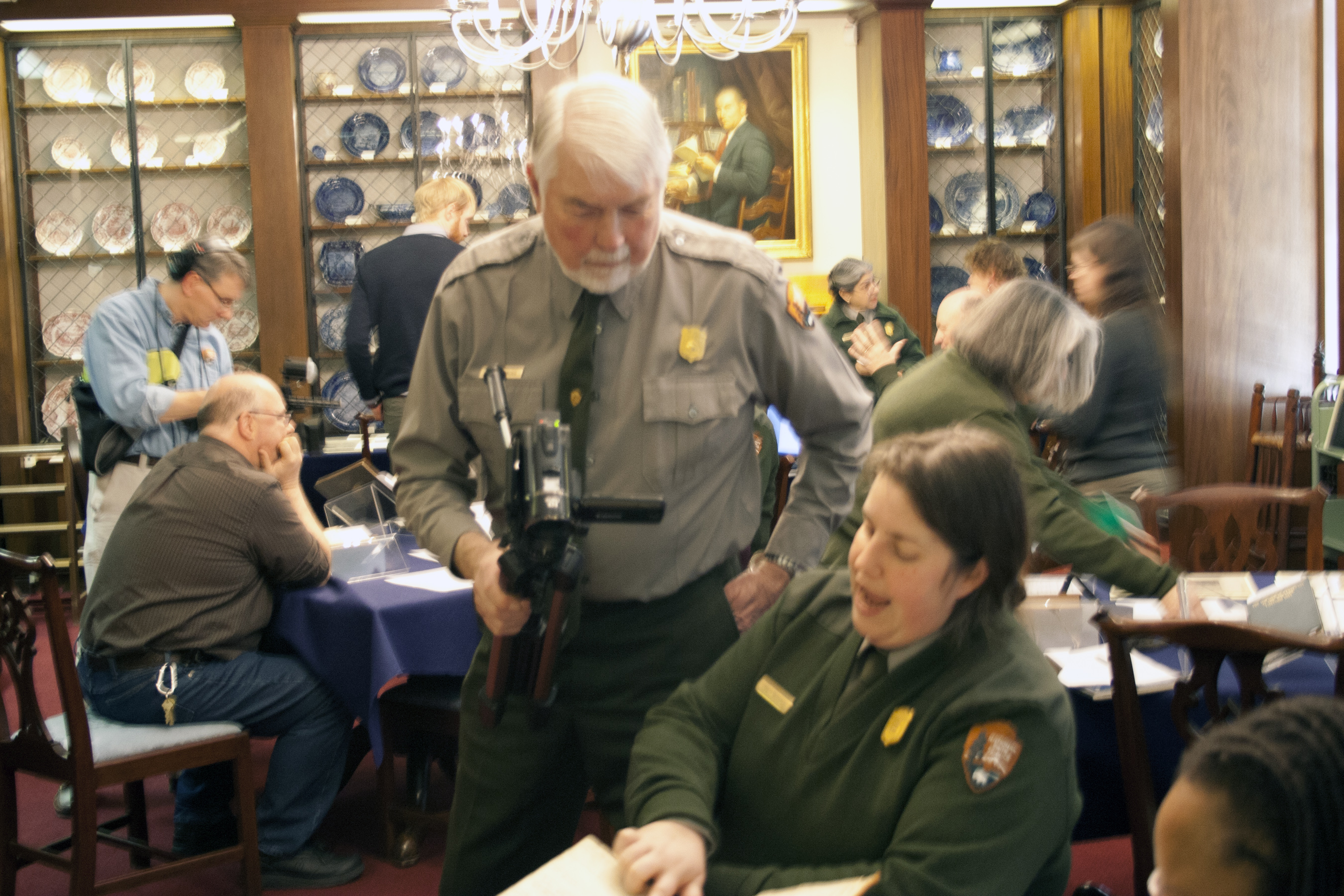
AAS and NPS staff exchanging information and ideas.

released the results of a multi-year study “examining the practice and presentation of American history in the National Park Service and at its sites” called Imperiled Promise: The State of History in the National Park Service.[1] The report was co-authored by four distinguished public historians: Anne Mitchell Whisnant, Marla R. Miller, Gary B. Nash, and David Thelen. Noting what the NPS gets right, as well as where it could use some improvement, this report is a jumping off point for imagining the future of history in the National Parks.

That’s why we were thrilled one day last month when the Goddard-Daniels House and the library were filled with park rangers – green sweaters, badges, hats and all. It was a fantastic group from all over the region, brought together through the efforts of Chuck Arning, Park Ranger and AV Specialist at the Blackstone River Valley National Heritage Corridor and an AAS Council member. The group included representatives from Adams National Historic Site, Boston National Historic Park, Salem National Historic Park, New Bedford Whaling National Historic Park, Lowell National Historic Park, Blackstone River Valley National Heritage Corridor, Minute Man National Historic Park, Springfield Armory National Historic Park, and the Northeast Museum Services Center. Their research interests ranged from abolitionist and anti-slavery activity in Boston, to links between the Caribbean and Salem, to the early development of mills and textiles in the northeast. Not only did the sites cover a wide geography and a variety of topics, but the range of job titles also added to the multiple perspectives offered during the day. These included everything from historian to curator to ranger to archaeologist to superintendent.

We began the day in the Goddard-Daniels House with an introduction to AAS and its resources, both those available on campus as well as those accessible from anywhere. After this introduction we headed over to Antiquarian Hall for a workshop with library materials. Prior to their arrival we had invited participants to request items they were interested in seeing, which the AAS staff supplemented with items we believed they would be interested in based on their research topics.

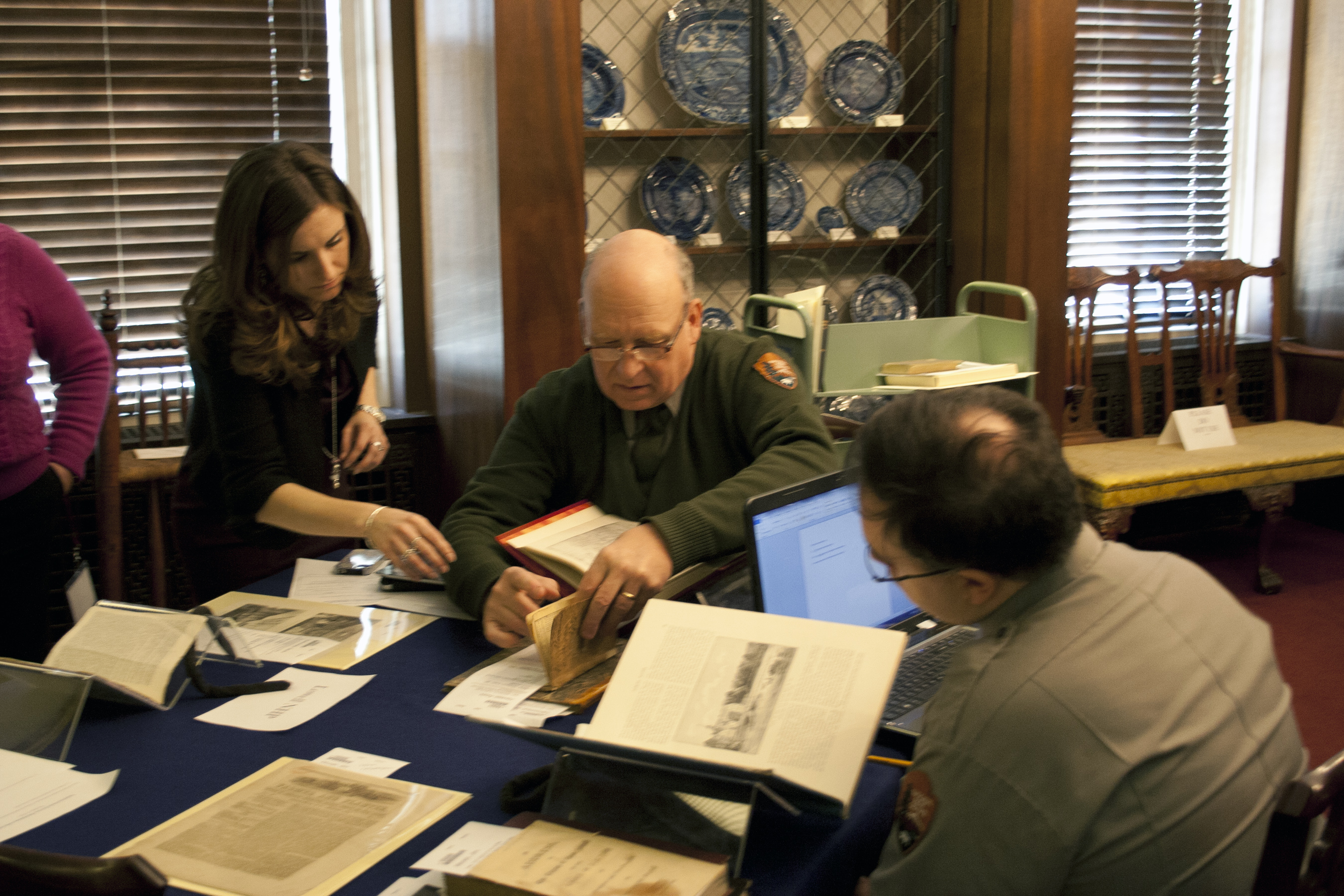
Emily Murphy, historian at Salem National Historic Park, sharing the logbook of the Tyrannicide with Chuck Arning.

The excitement in the room when the participants made new discoveries was palpable. Take for example the logbook of the ship Tyrannicide. (For a full finding aid of the logbook collection, see here.) When Emily Murphy, historian at Salem National Historic Park, realized what she was looking at, she couldn’t contain her delight. As it turns out, she had been researching this particular ship – a Massachusetts Navy Privateer contracted to be built by Richard Derby, Jr. of Salem, Massachusetts – for years and had had no idea that this logbook even existed. And to make the find even better, the keeper of the logbook was more loquacious than most, giving her entirely new details about life on the ship. This chattiness was due to the fact that the ship’s captain needed to document his movements and actions for the Prize Court and the Massachusetts Naval authorities.

This was not the only item to stir some excitement. For some, it was seeing an original copy of a book they had only read online or in modern reprints. For others, it was a new image of a nineteenth-century shawl shop or a list of items someone lost from their home during the Battles of Lexington and Concord. And for everyone it was more than just the materials, but also the opportunity to share and discuss their research and what they were finding with their colleagues. Many were surprised by how much their own topic related to projects being done at other sites and how helpful it was to have conversations about them. As both a learned society and a library, the combination of research and collegial conversation that characterized the day was just what AAS was hoping to foster, and we were delighted to see it in action.

The author exploring material from Shays' Rebellion with Richard Colton from the Springfield Armory National Historic Park.

Working with such a knowledgeable and enthusiastic group of park rangers not only made me a bit envious that I don’t have the title “Ranger Kayla” myself, but it also increased my eagerness for AAS to explore more ways to work with and serve the NPS.  To begin working towards this goal, the last part of the day was a roundtable discussion brainstorming ideas about how AAS and the NPS can work collaboratively together. The more we talked the more we realized that the possibilities are boundless. AAS’s collections and the NPS’s public history expertise could make a powerful team that would benefit all involved, including the broader public. I, for one, am looking forward to where the future could take us.


[1] “Imperiled Promise: The State of History in the National Park Service,” The Organization of American Historians, http://www.oah.org/programs/nps/imperiled_promise.html.

The Acquisitions Table: Dreka’s Dictionary Blotter

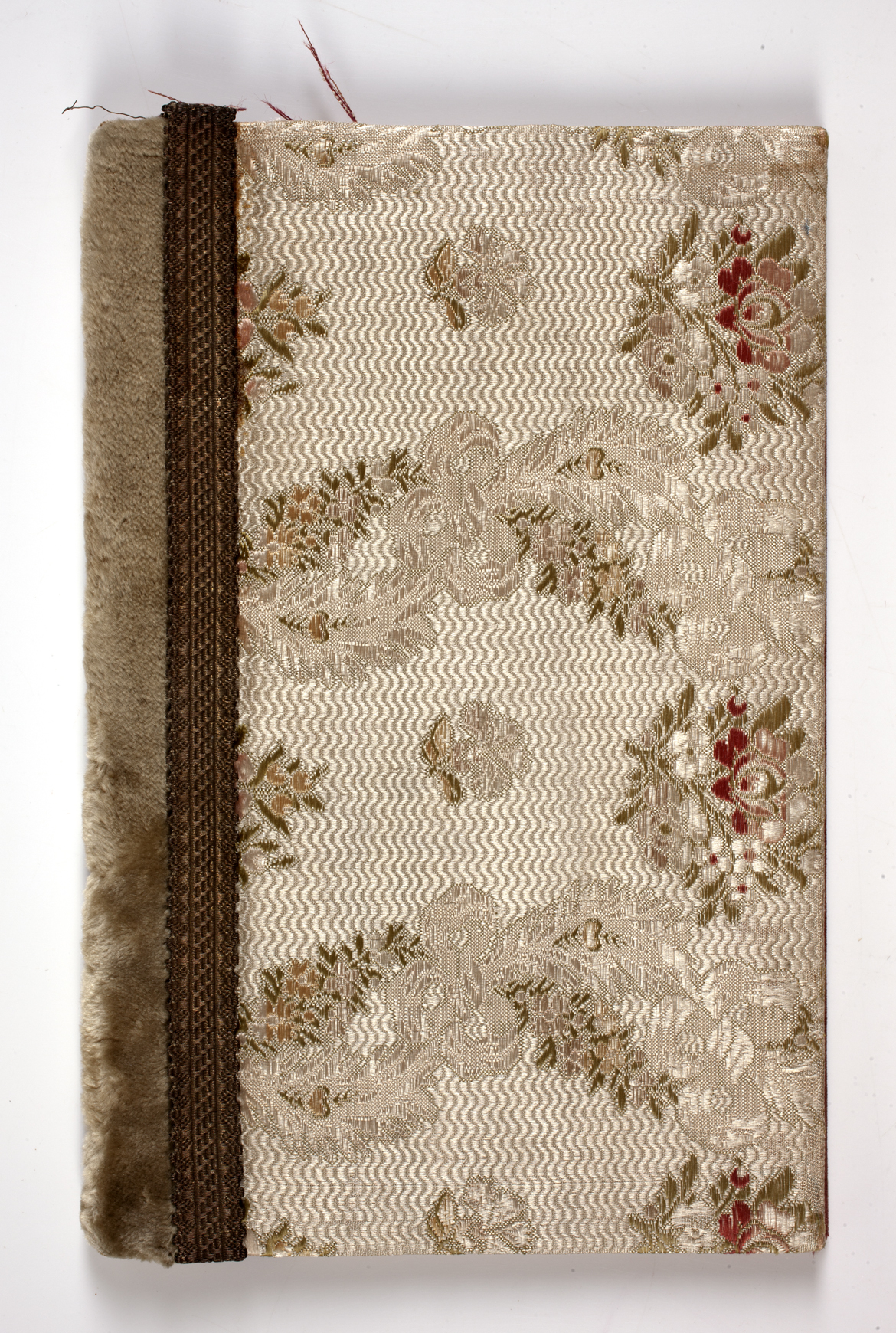
Dreka’s Dictionary Blotter; or, Combination of Word-Book with a Blotting-Case. Philadelphia: Louis Dreka, [1873?]

This book/blotter’s decorative binding and striking fuchsia silk endpaper (seemingly still as bright as the day it was attached to the boards) look too glamorous to mark up, but apparently its previous owner disagreed. The ink stains inside prove it was used, as intended, to soak up excess ink. Less easy to ascertain is whether the innovation of including a spelling dictionary and lists of synonyms, common English first names, and geographical names were used as well.

Happy New Year!

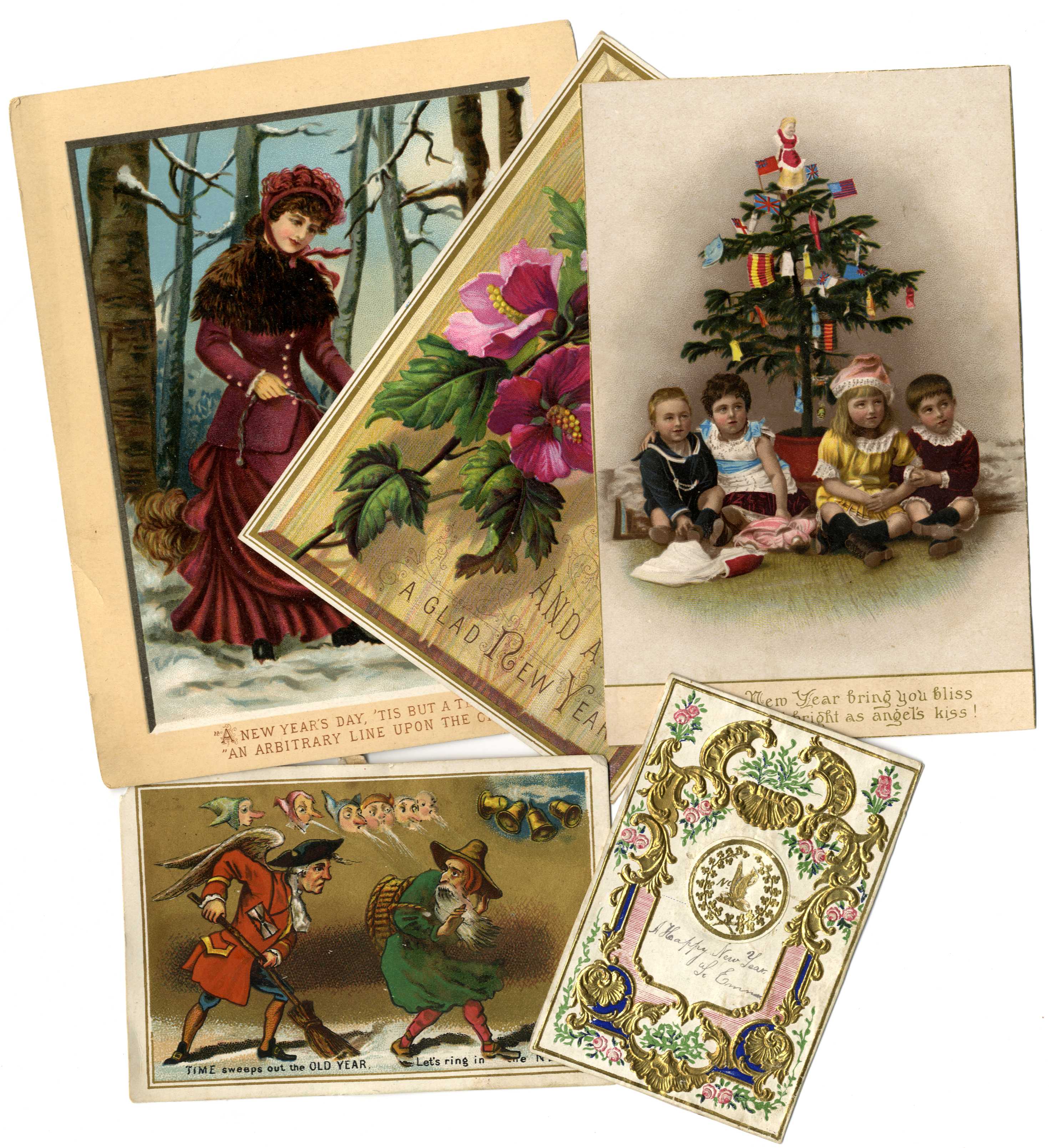
Assorted New Year's greeting cards from 1870 through 1900

As many scholars of American history are aware, for many decades before 1840 the largest winter holiday in the nation was New Year’s Day, not Christmas.  Christmas was perceived by many Protestant Americans as too closely linked to Catholicism.  New Year’s Day, on the other hand, was a secular family holiday often marked by travel to see family, dinners, or community events – not unlike what we find ourselves doing over the holidays today.

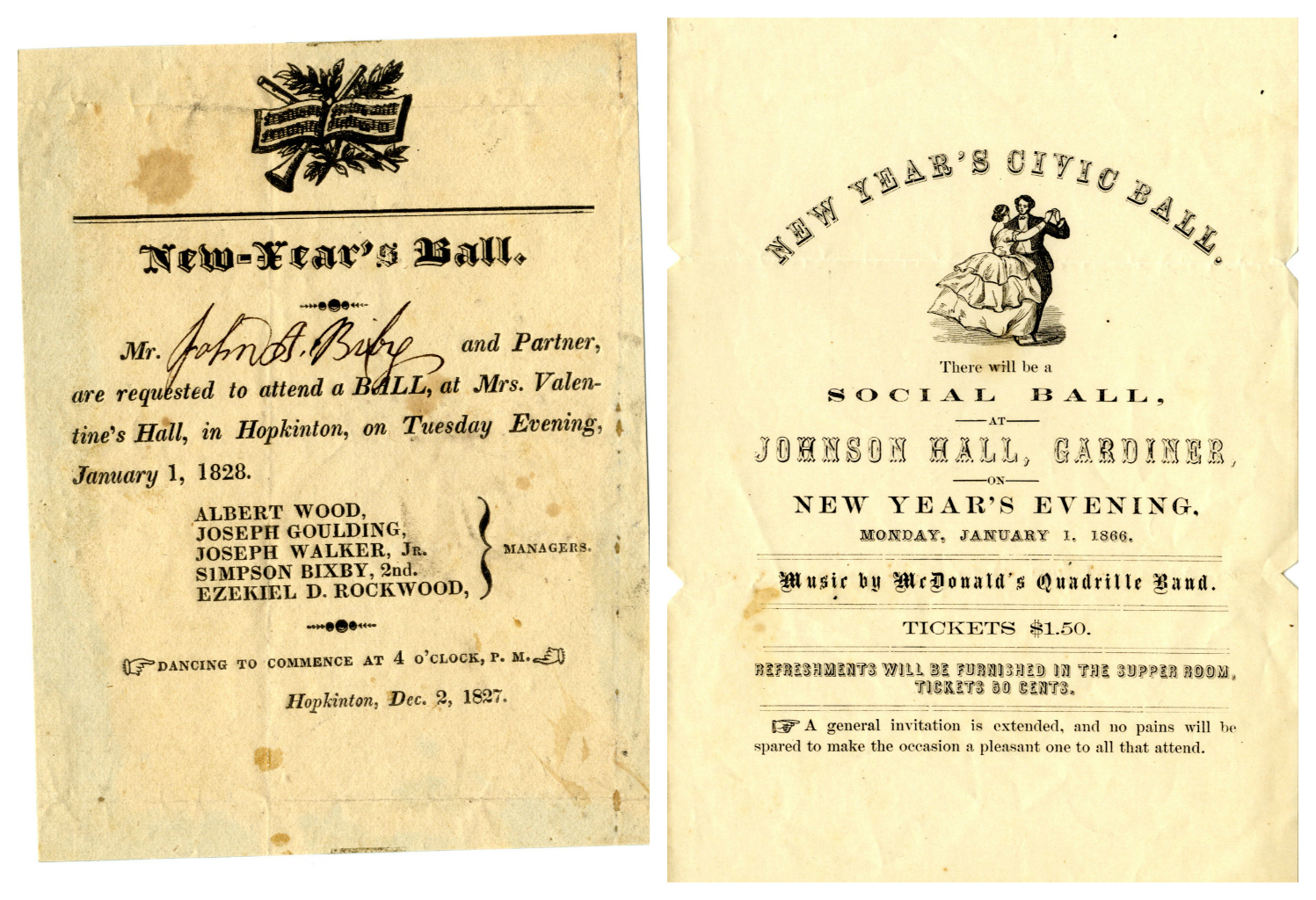
The importance of New Year’s is reflected in many collections at AAS, including the ephemera holdings.  Because the holiday falls in the dark and cold of January, many residents took the opportunity to hold cheerful dances, parties, and balls.  Most of these events (including two represented below by extant invitations, one from 1827 and the other from 1866) were held on the evening of New Year’s Day, January 1st – when today we are watching football or nursing hangovers from the previous evening. The parties often included supper and live music and were intended to be enjoyable – one invitation states reassuringly: “No pains will be spared to make the occasion a pleasant one to all that attend.”  These holiday events offered young people chances to meet and get acquainted, or were used as fund raisers for various causes such as anti-slavery or temperance.  Some New Year’s dances were held as late as January 15th or as early as December 20th, indicating a certain stretched-out length to a holiday that we today mainly associate with the multi-second dropping of a ball in Times Square.

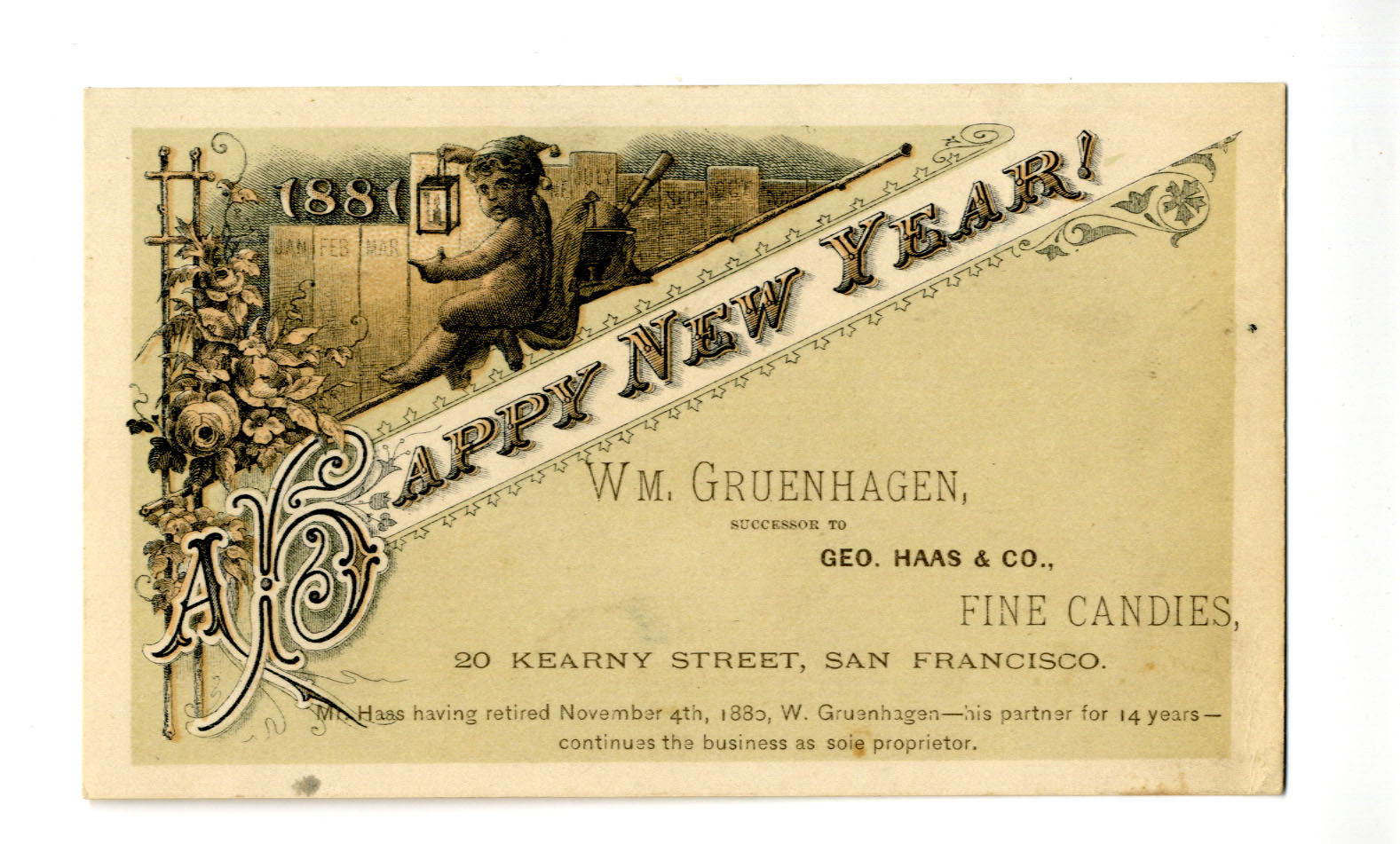
Happy New Year. Wm. Gruenhagen, Fine Candies, San Francisco, 1881.
New-Year’s Ball, invitation, Hopkinton, Massachusetts, 1827 (left). New Year’s Civic Ball, invitation, Gardiner, Massachusetts, 1866.
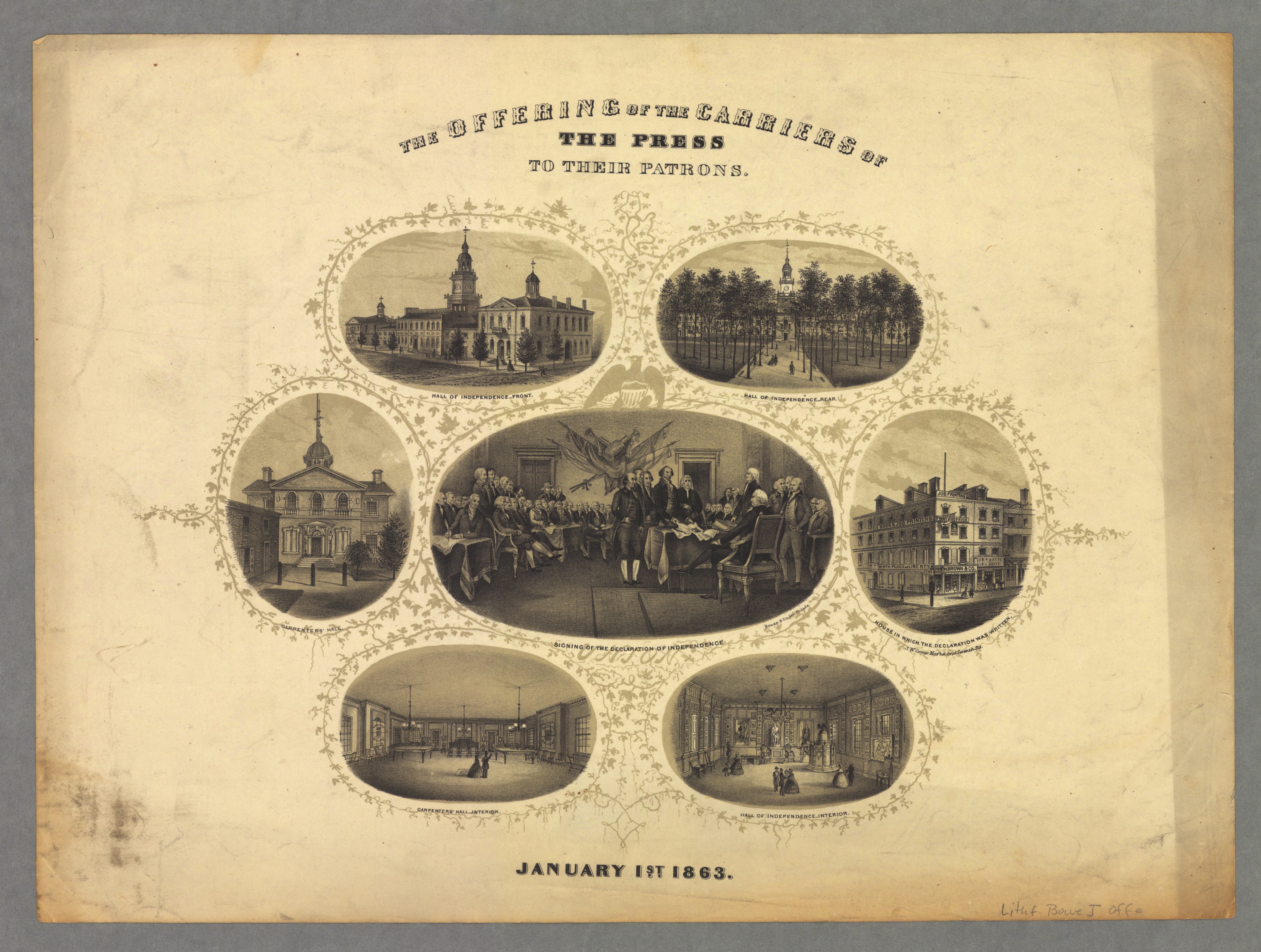
The Offering of the Carriers of The Press to Their Patrons, Philadelphia: Bowen & Co., 1863.

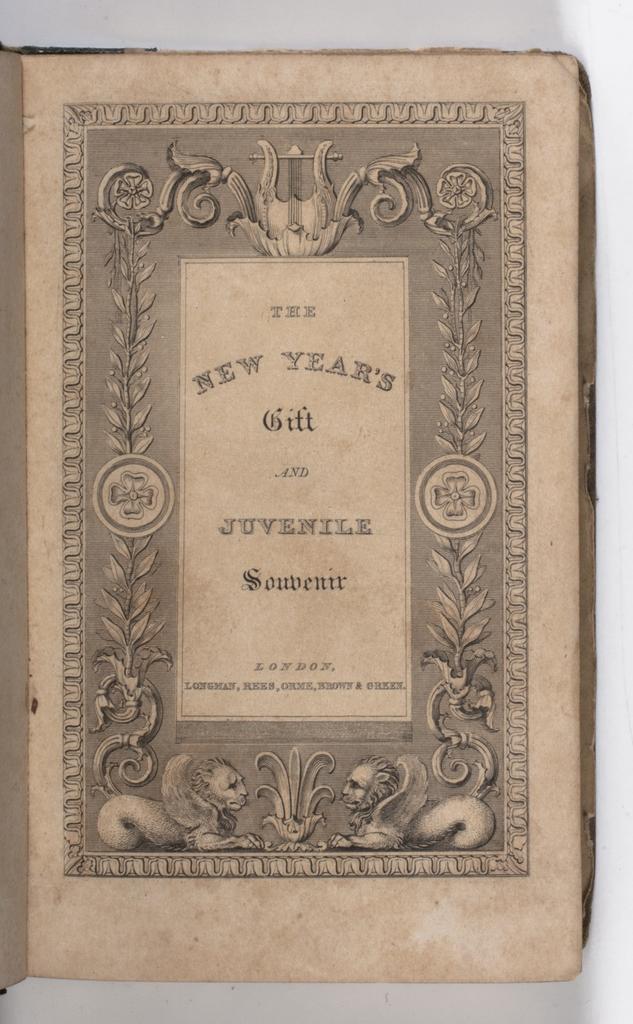
A desire for new beginnings meant new opportunities for merchants, too, and many promoted their goods for the New Year’s market.  Gift book publishers were notorious, naming their titles New Year’s Offering, or New Year’s Gift to encourage exchange for the holiday.  Newspaper carriers offered poetry sheets in exchange for New Year’s tips, and periodical publishers often included decorative prints as premiums in their January issues.  Some businessmen handed out decorative advertising cards for the holiday, selling goods like jewelry, candy, and books.  People exchanged greeting cards at New Year’s, and publishers like Louis Prang in Boston provided hundreds of designs from adorable children to kittens to snowy winter scenes.

The New Year’s Gift and Juvenile Souvenir, London, 1831. (annual)

The New Year’s holiday has already slipped away and we are well into the year 2013.  Consider saving that First Night button, party e-vite from your neighbors, or “Year in Review” issue of your favorite magazine. This modern ephemera all follows the long American tradition of recording our activities on January 1st – the start of the new calendar and the new year.

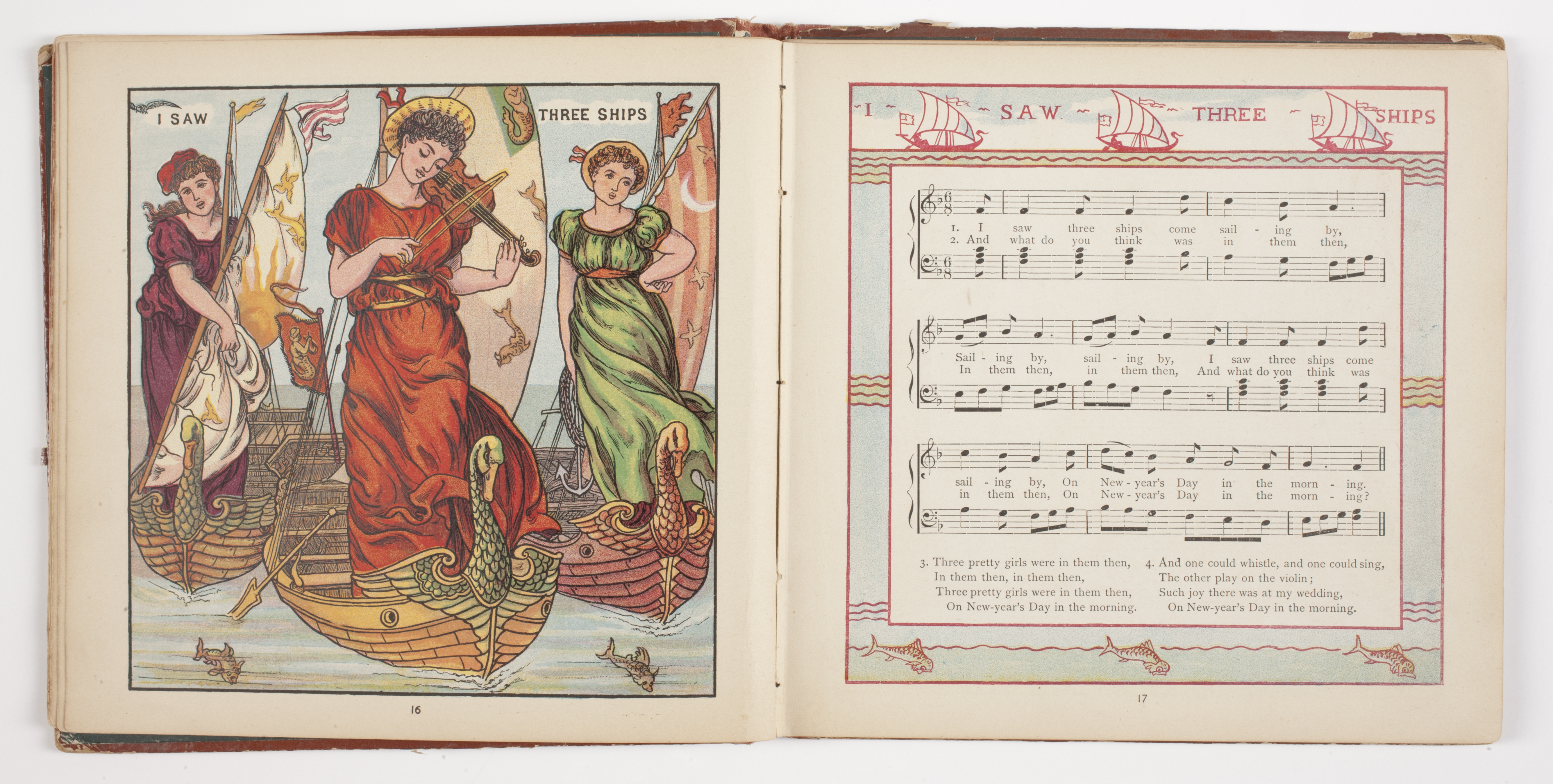
The Tempest Over “The Baby’s Opera”

McLoughlin Brothers chromolithographed version of "I Saw Three Ships."

Nineteenth-century American publisher McLoughlin Brothers pioneered the use of chromolithography in the production of color picture books starting in the 1860s.  Until that point, most children’s books were illustrated with wood engravings that were locked into the printing press form along with set type.  Coloring these images generally entailed using hand-colored stencils or employing a system of printing with wood blocks inked with colors–a system that was labor intensive and frustrating, due to the wood block’s tendency to wear down over time.  By the early 1860s, ephemera printers discovered how to easily transfer wood-engraved images to more durable lithographic stones that could be mounted onto steam presses for mass production.  McLoughlin Brothers was among the earliest American children’s book publishers to experiment with the new chromolithographic technology.  By the 1870s, McLoughlin Brothers also developed a notorious reputation as a publisher of unauthorized reissues of British picture books, including those issued by English picture book publisher Frederick Warne & Co., whose books were imported from London by Scribner, Welford, and Armstrong–a branch of Charles Scribner and Company.  It is probably no accident that a vitriolic letter penned by English illustrator Walter Crane attacking the McLoughlin Bros.’ gaudy and unauthorized reproduction of his Baby’s Opera appeared in the September 1877 issue of Scribner’s Monthly.

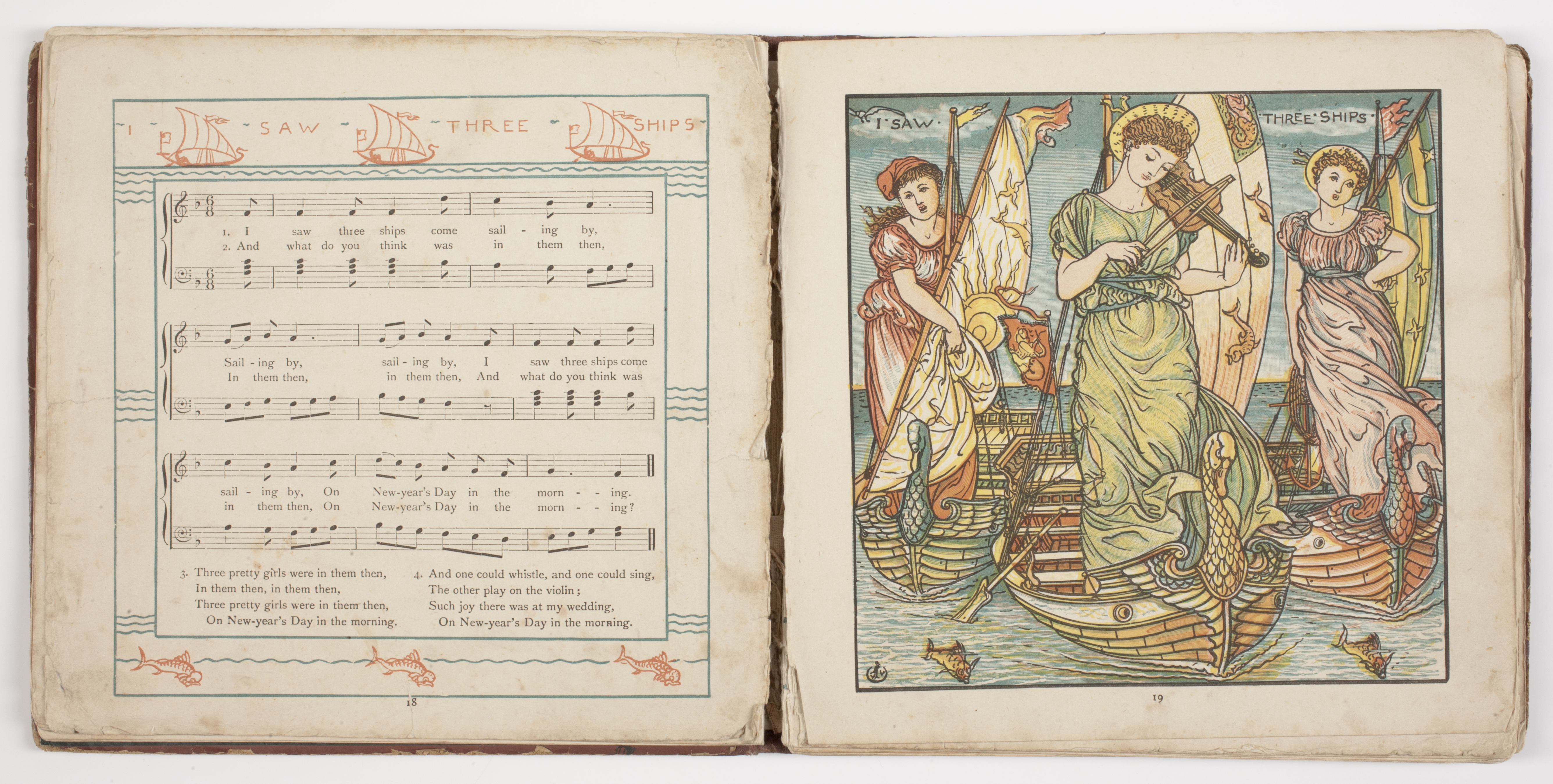
Original version published in London by George Routledge & Sons; illustrated by Walter Crane, with color printed wood engravings by Sir Edmund Evans.

What was Crane complaining about?  To the right is the illustration and music for “I saw Three Ships” published in London George Routledge & Sons; the illustrations are engraved on wood and printed in color by Crane’s collaborator Sir Edmund Evans.  It is an elegant piece of color relief printing; note the muted shades of yellow, violet, and peach worn by the three angels. In the hands of McLoughlin Brothers, Evans’ wood engravings are turned into chromolithographs, and the colors are robust shades of purple, orange, and green; the pale tint of the angels skin in Evans’ hands becomes a more life-like hue in the McLoughlin version, giving the angels the look of actual young girls dressed like angels.  Both versions are beautiful, but they are an apple and an orange, and at a retail cost of 75 cents, the McLoughlin version was clearly cheaper to produce and purchase; the cost of the Routledge edition was probably well over a dollar and possibly double the cost of the McLoughlin copy.

Not surprisingly, Charles Scribner II became an ardent advocate of an international copyright law.  But until the American copyright law of 1891 guaranteed some rights for foreign holders, McLoughlin Bros. reigned as a prolific publisher of picture book pirate editions.  Then just as now, the legal copyright fight over the intellectual and artistic ownership of images continues.

A side note: The words to the song are a bit different from the currently known carol: “I saw three ships come sailing by, Sailing by, Sailing by, I saw three ships come sailing by, On New Year’s Day in the morning.”  Happy New Year!

To learn more about the development of chromolithography, take a look at Boston Lithography, 1825-1880 by Sally Pierce and Catharina Slautterback (Boston: Boston Athenaeum, 1991).

Editor’s Note: This post is taken from a talk on “McLoughlin Brothers: Nineteenth-Century Entrepreneurs and Innovators of the American Picture Book” that  will be held at Koret Auditorium, San Francisco Public Library tomorrow, Saturday, Jan. 5, at 2 p.m.

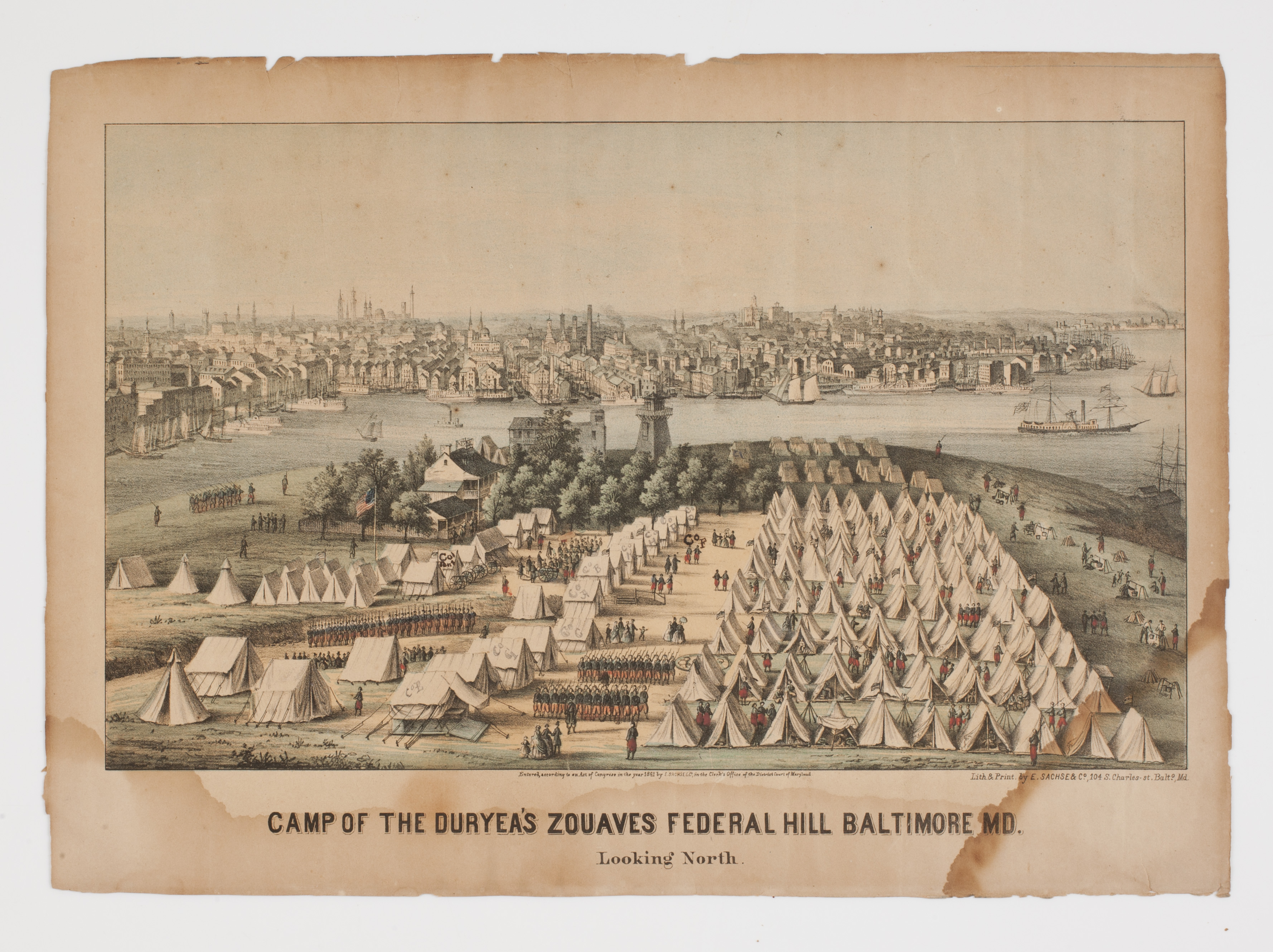
The Acquisitions Table: Camp of the Duryea’s Zouaves Federal Hill

Camp of the Duryea’s Zouaves Federal Hill Baltimore, Md. Looking North. Baltimore: E. Sachse& Co., 1861. 

This hand colored lithograph is one of six prints of Civil War encampments by E. Sachse& Co. given to the Society by member David Doret.  The publisher, Edward Sachse (1804-1873), had just opened at a new location on South Charles Street in Baltimore when the war began.  A specialist in views, Sachse naturally began to produce detailed images of wartime hospitals, regimental camps, and headquarters to meet the demand of Union print consumers who were anxious to see where their troops were living and serving.  With his main location in Baltimore and his sons working in Virginia and St. Louis, Sachse had access to several key staging areas for the supply routes and preparations of the war.  His prints serve as excellent, if a bit idealized, records of the gathering and movement of Union troops in the early days of the war.  With the Doret donation, the Society now holds over forty examples of lithographs printed by this firm, ranging in date from 1850 to 1874. Gift of David Doret.

“Another closing year draws nigh…”

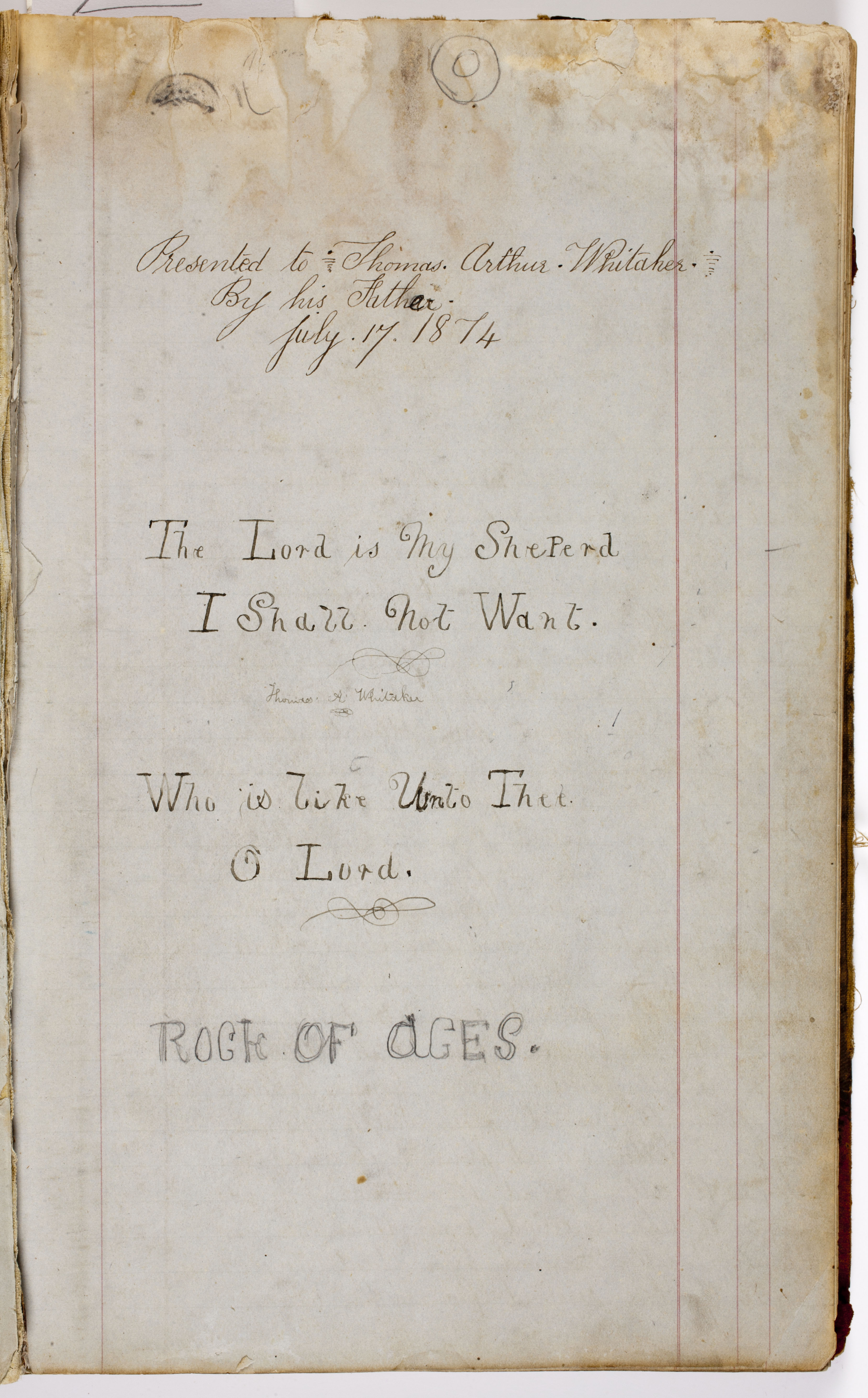
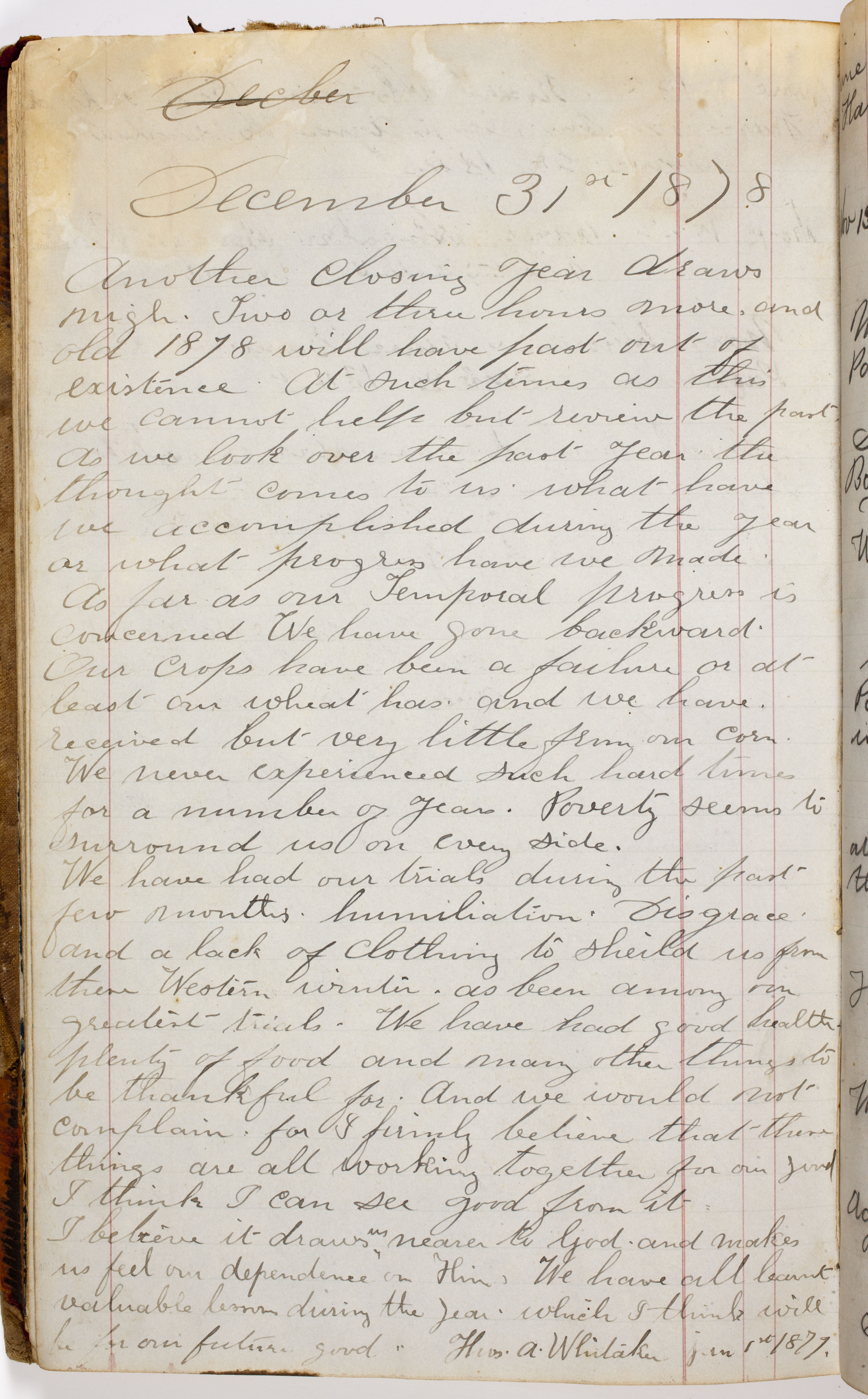
It is often hard to find diaries written by young men and boys.  So today I’d like to highlight a great diary kept by a young man, Thomas Whitaker, of Waltham, Massachusetts.  Thomas began recording daily entries in 1874, when he was 17 years old, and the volume continues through 1878.  He filled the entire diary, so it is possible he continued his daily record keeping past 1878 in subsequent volumes.  Thomas writes of his hobbies including stereoscopes, the circus, and music lessons, and of his work life at a textile mill where he oiled looms.  He also reflects frequently on his spiritual well-being and growth.  Thomas interestingly was nondenominational, attending services at Universalists, Episcopal, Methodist, Congregational, Unitarian and Baptist churches.

Most of Thomas’ reflective entries occur on the milestones of his birthdays and the approaching New Years.  In honor of our own New Year’s celebrations, I’ll share Thomas’ entry from December 31st, 1878.  It seems as though Thomas had a hard year, but he remains ever positive.

Another closing year draws nigh.  Two or three hours more, and old 1878 will have past out of existence.  At such times as this we cannot help but review the past.  As we look over the past year the thought comes to us what have we accomplished during the year or what progress have we made.  As far as our Temporal progress is concerned We have gone backward.  Our crops have been a failure or at least our wheat has and we have received but very little from our corn.  We never experienced such hard times for a number of years.  Poverty seems to surround us on every side.  We have had our trials during the past few months – humiliation – Disgrace – and a lack of clothing to shield us from the Western winter – has been among our greatest trials.  We have had good health plenty of food and many other things to be thankful for.  And we would not complain for I firmly believe that these things are all working together for our good.  I think I can see good from it.  I believe it draws us nearer to God – and makes us feel our dependence on Him, We have all learnt valuable lessons during the year which I think will be for our future good.

Happy 2013!

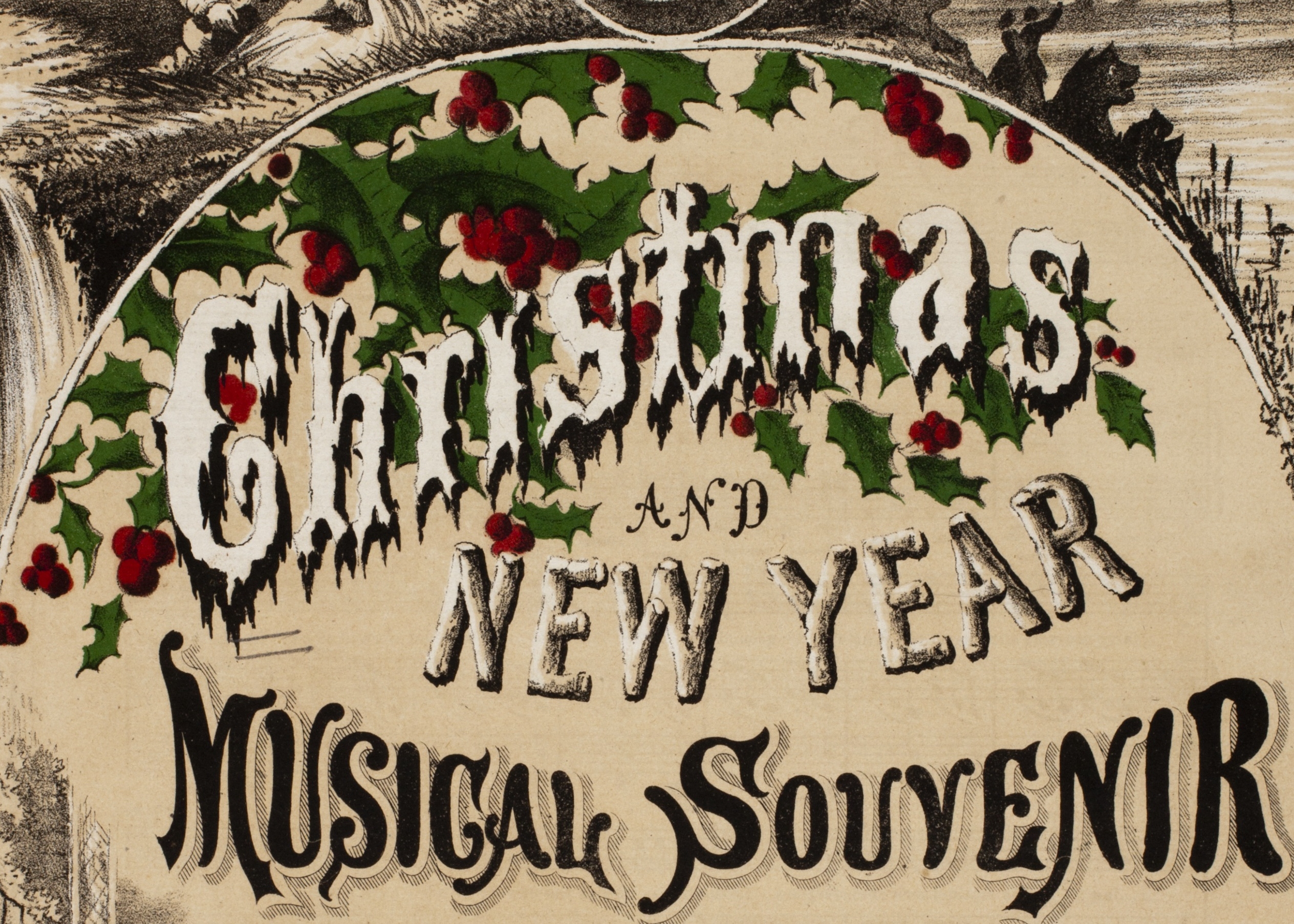
Christmas and New Year Musical Souvenir, Richmond ca. 1863

musical souvenir cover detailThis piece of sheet music in the Society’s collection represents a handful of Confederate imprints published by George Dunn and Company (printer) and written or edited by F.W. (Fitz William) Rosier. Even before official secession, and certainly after, the Confederate States produced their own government documents and publications; there were also religious pieces and education textbooks, songsters, prints, cookbooks (as in previous post) and sheet music created and illustrated by a number of Southern printers.

While some pieces of sheet music are political and/or patriotic, such as “Adieu to the Star Spangled Banner Forever” with words by Ella D. Clark and composed by J.R. Boulcott, or “Dixie Doodle” composed by Mrs. Margaret Weir, others, like the one here, were created for seasonal sales and use.
[book id=’22’ /]
This piece of sheet music titled “Christmas and New Year Musical Souvenir” was lithographed and published by Geo. Dunn and Co. of Richmond, Virginia and Julia A. Selby in Columbia, South Carolina around 1863.

The lithographed pictorial cover, with red and green coloring on the holly leaves and berries and decorative lettering, features several scenes including a man and woman in quiet conversation, a musician playing before a window in the moonlight, a pair dancing beneath a chandelier and a couple watching a boat sail on an otherwise still lake. Of the known copies of sheet music produced in the Confederate States, 110 of them were illustrated, five of which were by Dunn and Rosier (eight others were not illustrated).

The following three pieces of music with lyrics complement the cover images of courtship and romance, with Henry Wadsworth Longfellow’s “I Know a Maiden Fair to See,” F.W. Rosier’s “The Lover’s Wish,” and Thomas Hood’s “Fairies Have Broken Their Wands.” The three pieces call for the music to be played moderately quick, gracefully and with expression, respectively.

We have reproduced here and in the flip book above the original sheet music with lithographed cover; feel free to print and play it to hear, perhaps, how a Confederate parlor or piano room may have sounded in the last years of the American Civil War.

Christmas Cooking, North & South – 150 years ago

We are going to brave the waters of wartime Christmas. In the next few days, there will be three posts examining Confederate-printed items in the Society’s collection. This season of festivities is also one of commemoration and reflection as we are squarely in the War’s sesquicentennial.

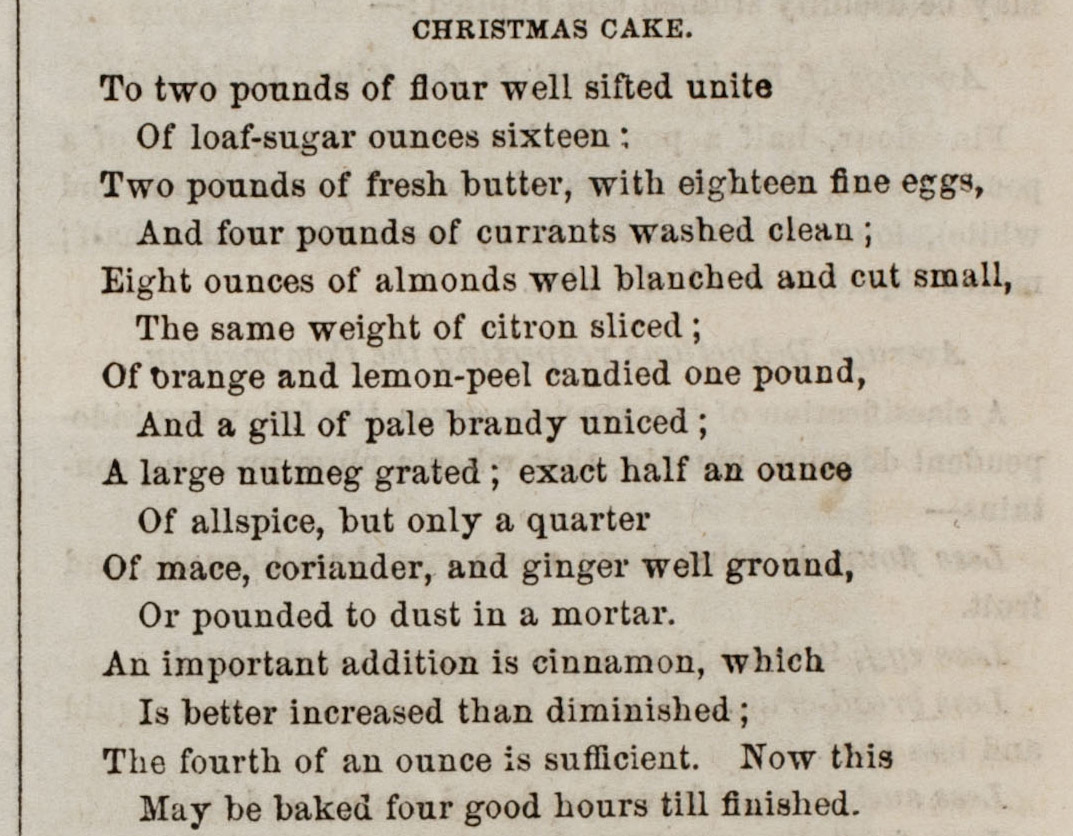
"Christmas Cake" recipe in Godey's, 1862

A glance over the pages of the nation’s most popular ladies’ magazine in the 1860s would suggest that (in the culinary sphere) all was well a year and a half into the Civil War. The recipe for “Christmas Cake” printed in Godey’s 150 years ago this month, requires no less than two pounds of flour, two pounds of fresh butter, four pounds of currants, eighteen eggs, eight ounces of almonds, eight ounces citron, candied orange and lemon-peel, brandy, nutmeg, allspice (but only a quarter), mace, coriander, ginger and cinnamon and sixteen ounces sugar. There are also recipes for Fruit Cake, Washington Cake, Queen Cake, Gingerbread and Lemon cake; no recipe was too rich, no dessert too sweet or spiced. In short, the Christmas recipes are not ones stressing the country’s-cook to have a tightened belt or be economy-savvy in the kitchen.

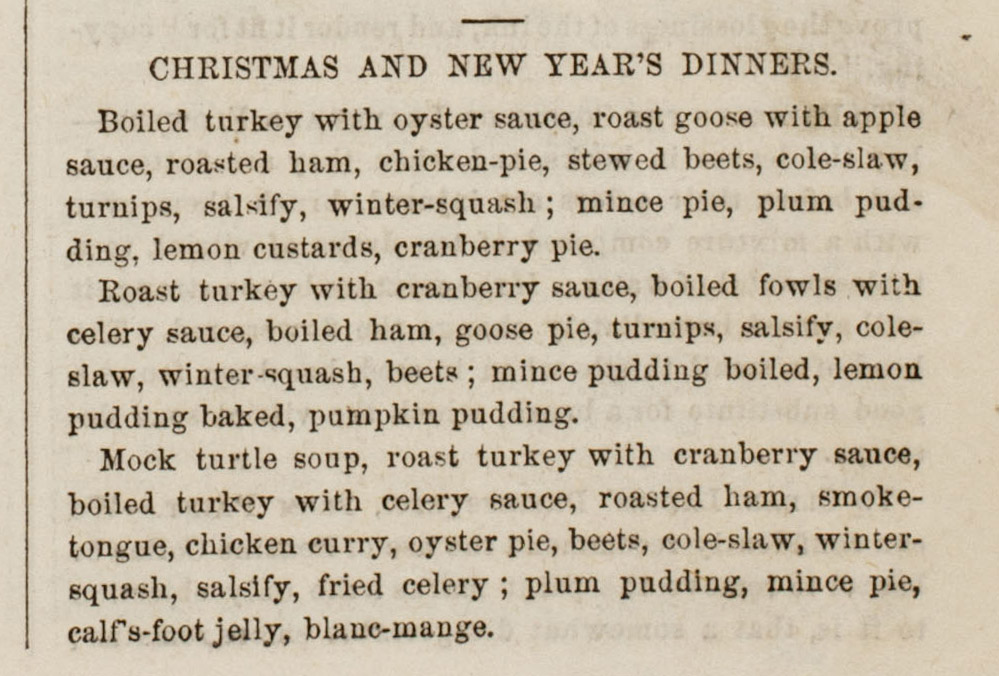
"Christmas and New Year's Dinners recipes" in Godey's, 1862

The December 1862 Godey’s tells a distinctive and seemingly unfazed Christmas food story. Sarah Josepha Hale’s publication shows a diversity of options – large numbers of puddings, pies, cakes and even a suggested menu for Christmas that “will be of great use to our lady friends during the Christmas holidays.” There is little talk of deductions (to say nothing of other ways to create a traditional recipe); there is neither rationing nor substituting. Though Godey’s notably had appeal to both Northern and Southern women in the 1860s, a book like The Confederate Receipt Book, which is subtitled “adapted to the times” reflects another take on wartime-eating.

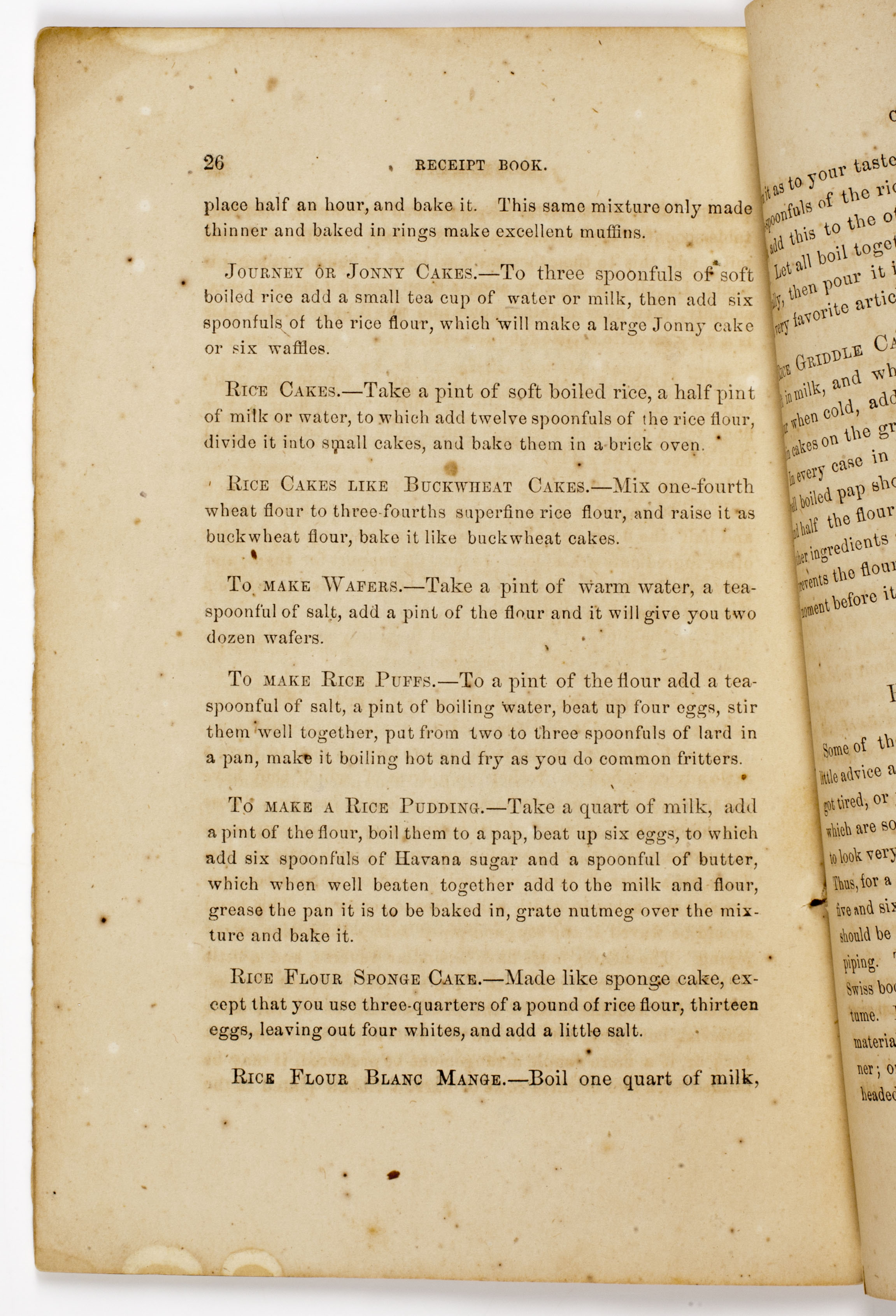
Page from Confederate Receipt Book referring to "Rice Flour Sponge Cake"

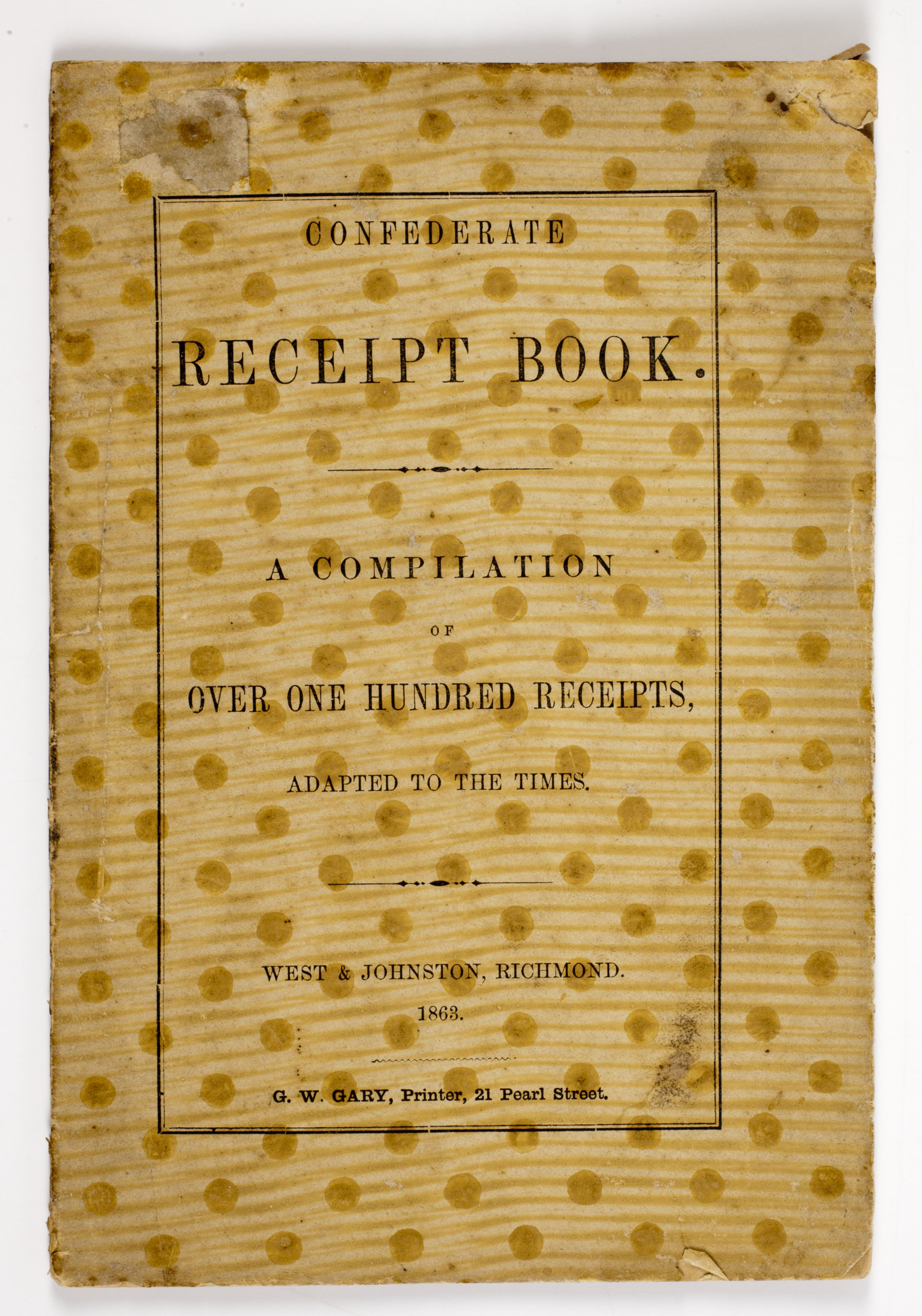
The text, a tightly-bound 28-page imprint, wrapped in dotted-wallpaper was printed by West & Johnson of Richmond, Virginia in 1863. The pamphlet, as the publishers’ advertisementindicates, is designed to supply “useful and economical directions and suggestions in cookery, housewifery, &c, and for the camp.” In the culinary section alone, the recipes evidence food shortages. Any romantic idea we might have had about the South celebrating the holidays with luxurious plantation balls and dinner parties would vanish with just a cursory glance at this wartime imprint.

The Confederate Receipt Book provides information on making ‘Confederate’ candles, medicinal remedies, directions on how to dry herbs, substitutions for coffee and cream, in addition to inventive culinary tips including how to rise bread without yeast and how to

make apple pie without apples. There is also an appendix with an 1862 note by Elizabeth Lewis discussing rice flour and its substitutive abilities. The closest I could find to a “Christmas Cake” was in this section, Rice Flour Sponge Cake. The two publications reflect not only divided diets but scarceness (or availability) of resources in 1862-3. Indeed, both tell vastly different culinary stories.

Confederate Receipt Book (Richmond, 1863)

Few facsimiles are available of the item and whereas every piece of information is valuable in this slim pamphlet, it was digitized in full; it is available here.

Think of it as our gift to you.

For more information on the Confederate cookbook:

Burroughs, Frances M. “The Confederate Receipt Book: A Study in Food Substitution in the American Civil War.” In South Carolina Historical & Genealogical Magazine 93 (January 1992). p. 31-50.

The Acquisitions Table: Moral Tales for Young People

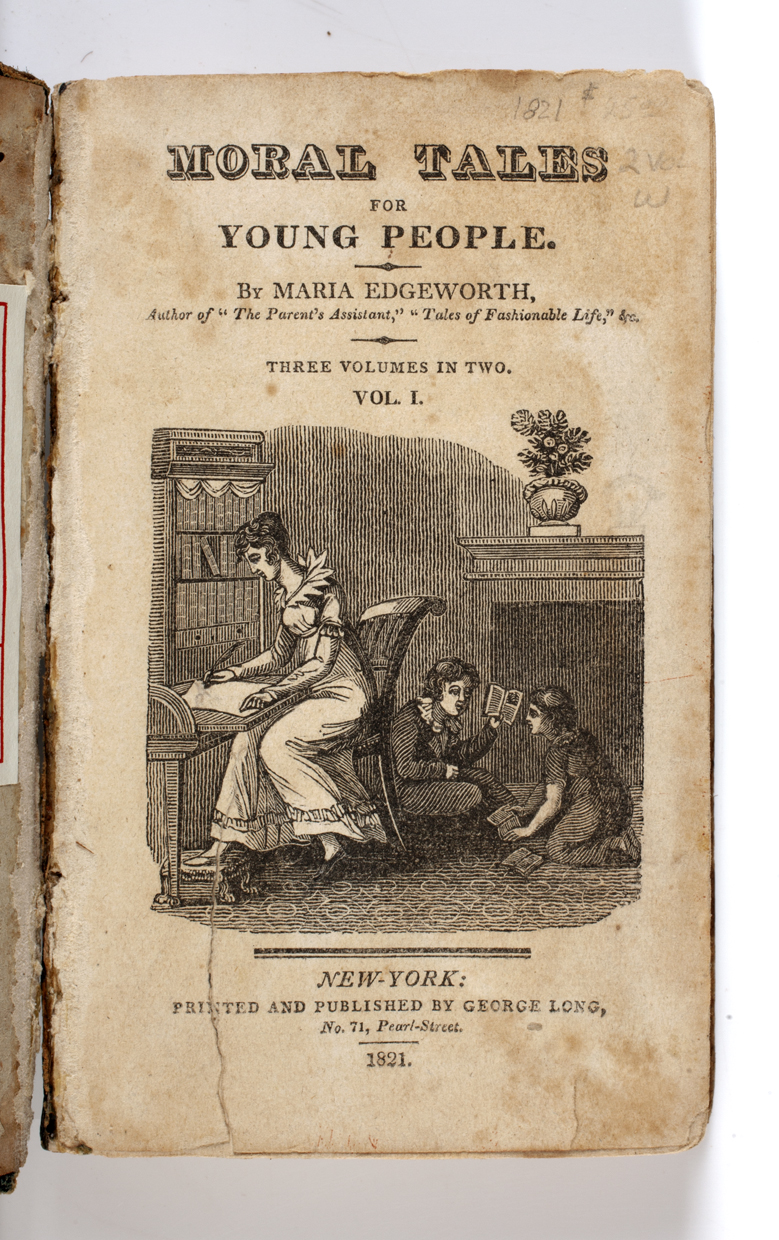
Edgeworth, Maria.  Moral Tales for Young People.New York: George Long, 1821.

It is always gratifying to discover another edition of Maria Edgeworth’s popular Moral Tales that is new to AAS.  George Long (1771?-1843) produced a steady output of textbooks and children’s books, many of which were written by British and European authors, including Miss Edgeworth.  Interestingly, this title page vignette features a woman writer at her desk (perhaps Miss Edgeworth), while two children (perhaps her younger siblings) eagerly reading a book (perhaps what she has published)–adding a visual reinforcement of the female author’s “natural” role as moral writer for child readers.

New Use of Collections: Dorothee Kocks on Rich-Media eBooks

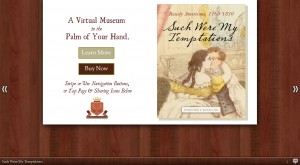
When I got my PhD, I never pictured myself calling Jaclyn Penny at the American Antiquarian Society and saying, essentially, “You got any smutty stuff?”  The result of my inquiries at AAS and other archives is now out: Such Were My Temptations: Bawdy Americans, 1760-1830. I’m writing about it here, on the AAS blog, because I’ve become an evangelist for using new tablet technologies to showcase rare-books art.

Click the picture to see a web preview of the book (with modesty shields on the images)

When I was researching the first American sexual revolution for my novel, The Glass Harmonica, A sensualist’s tale, I remember passing some black-and-white images buried deep inside a scholarly work. I read on, but then stopped – wait, was that really what I just saw? Turning back the pages, I peered at a (blurry, small) reproduced image of a shockingly explicit scene – from the 1790s.

Could I find a crisper image? Were there more? The unflappable Jackie Penny and other professionals I called at libraries and archives said, yes, indeed there were, and my project was off and running. I wanted readers to know the truth behind one of my characters, a rural bookseller who peddled Fanny Hill and more… shockingly more. I gathered what he would have sold out of the back of his carriage, and put it all together into a rich-media ebook.

Print technology in cash-strapped, academic presses cannot do justice to archival art. But rich-media ebooks can. Rich-media ebooks, briefly defined, are those you read on late-generation iPad, Kindle Fire, Nook HD, and other tablets. And now the content-creation programs for those tablets are becoming accessible to non-geeks – that is to say, people with modest technical skills.

For users of the AAS collections, this is fantastic news. With an asterisk. It’s almost fantastic news.

Using iBooks Author, released in 2012, you can easily create galleries of images – not to mention accompanying videos, music, interactive images, 3D items, and popover text like footnotes… Plus, in short order, I expect it’ll be easy to add zoom-able 3D timelines, interactive maps, and other rich media of particular interest to historians.

The downside of iBooks Author is that it’s only for Mac users and iPad owners. The asterisk is that it will be some time before a ‘device-agnostic’ program breaks down the walls between tablets. Technology changes so quickly that it could be just months away, and in fact, for those interested in pursuing the opportunities, frontrunners at the moment include Aerbook Maker, which helped develop my project. Others are Graphicly and Atavist, who likewise aim to make the process as easy as PowerPoint. Meanwhile, for those with more tech savvy, there’s Amazon’s KF8 and Adobe InDesign CS6.

Software details aside, the future is here. Extraordinarily luscious reproductions of historical images no longer are the purview of the few, the rare, the expensive coffee-table book. Such Were My Temptations is one example of a museum-in-your-palm. I’d like to read yours. For those wanting an introduction, I’ve created a how-to webinar series. You can find out more at BewareTheTimidLife.com.

Editor’s note: In the above video the author speaks from the heart about why she created a book about precursors to porn.

What Do You Wear to a Bicentennial?

The AAS’s bicentennial gala—a black-tie affair held in the Society’s reading room, complete with a dance floor where scholars usually sit and an Isaiah Thomas made out of marzipan—has come and gone. But well-dressed enthusiasts of America’s printed legacy still want to know: What is the appropriate sartorial observance of the Society’s bicentennial? While our founder Mr. Thomas might recommend a starched collar and black silk cravat, we have some other options for those who are antiquarians at heart, but don’t want to look like they’re going to a costume party.

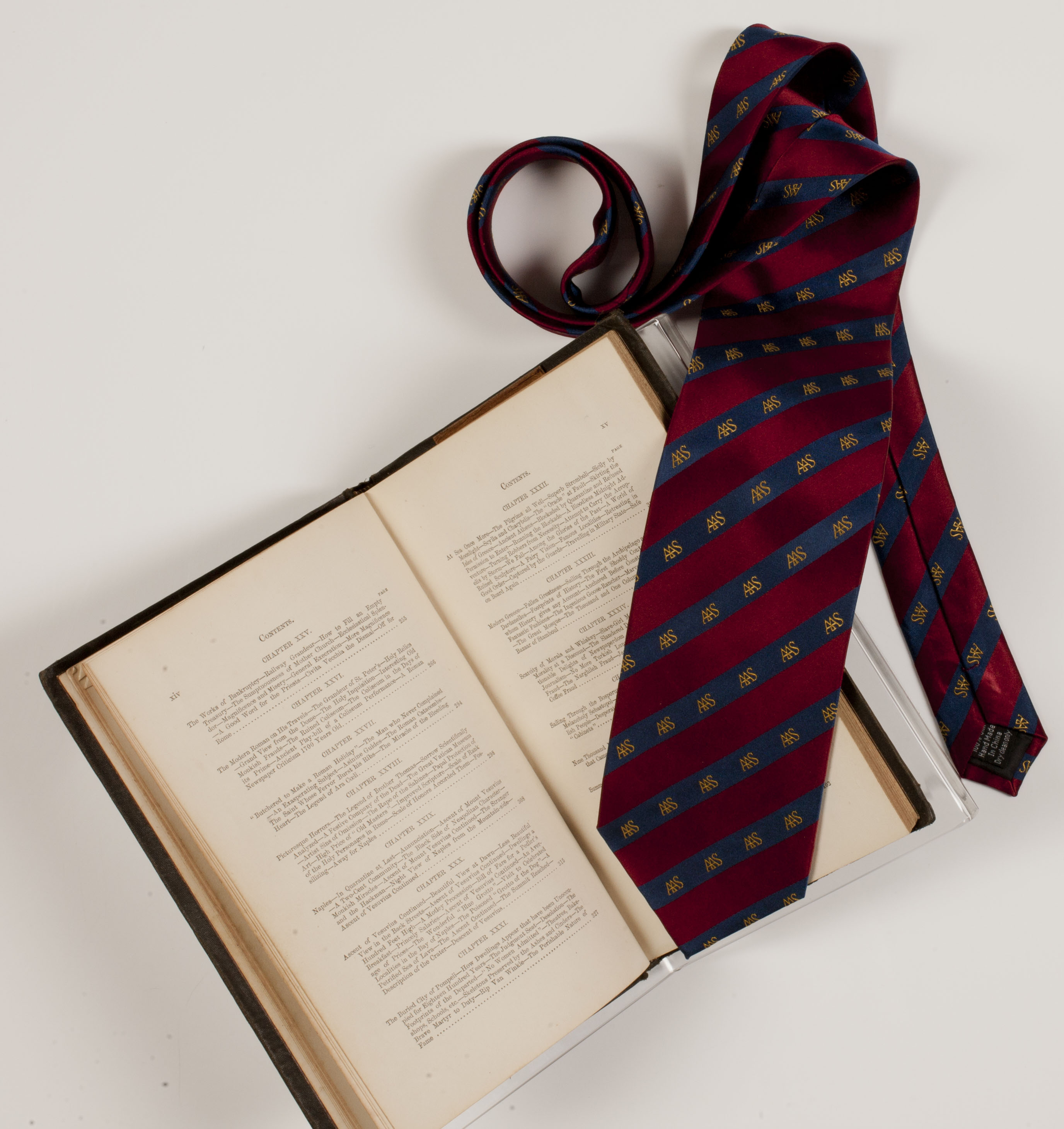
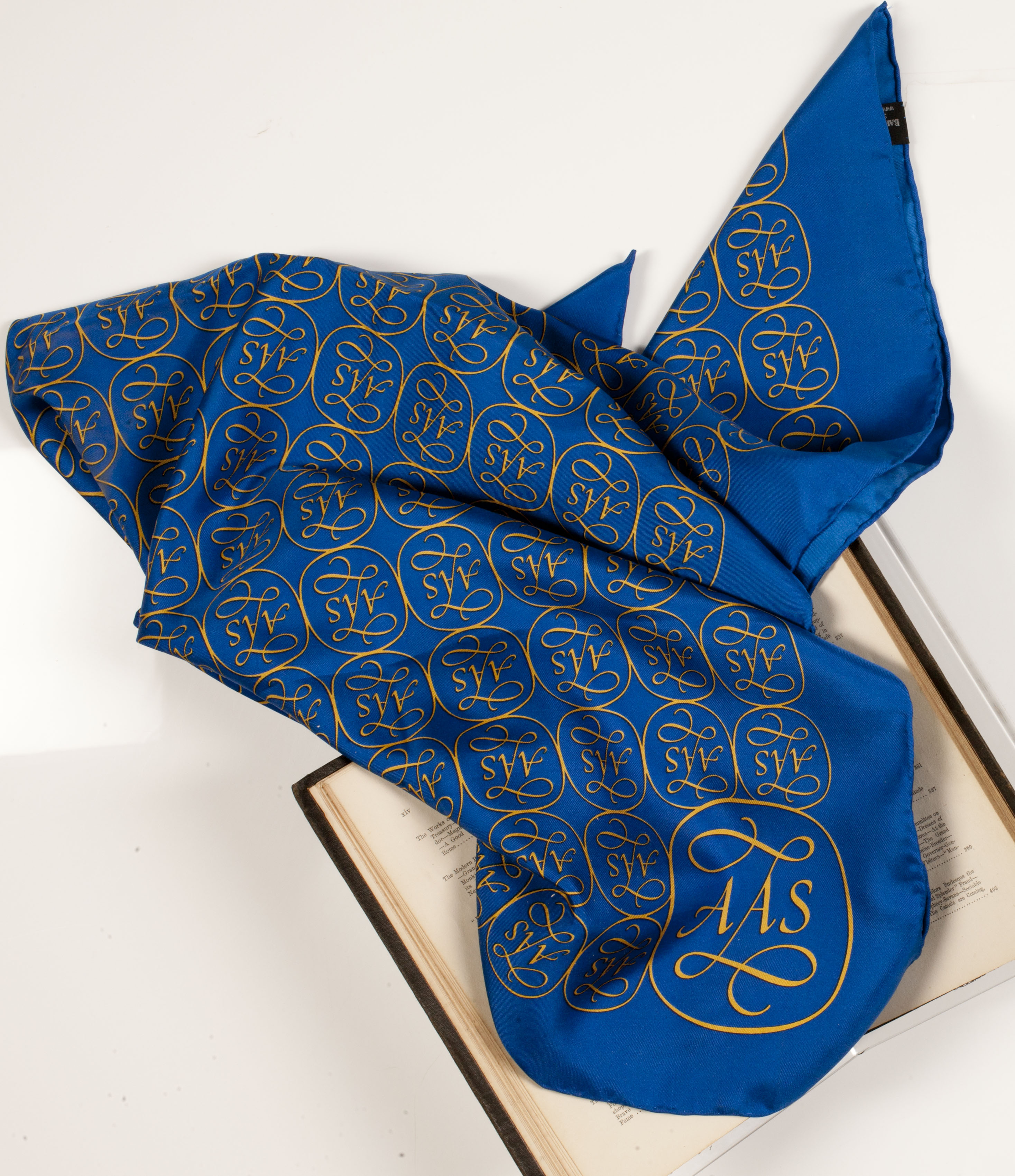
Our limited-edition heavyweight cotton bicentennial baseball cap (available here, in black, navy, and tan) is a great choice. But even in these business-casual times, there are occasions when such a choice might come across as a bit too cavalier. For those occasions (or for those of our readers who consistently adhere to higher levels of decorum), we have newly available bicentennial scarves and neckties. Some of you may remember the previous iteration of the AAS necktie, an item that has long since been sold out. Manufactured of polyester of an extremely high tensile strength, the earlier AAS tie was nothing if not durable. (In an unfortunate error in market-timing, they were ordered in the late 1970s, when fickle fashion called for a more expansive statement in men’s neckwear. Alas, the 1980s and Giorgio Armani came along and—autre temps, autre moeurs—the ties had to be sent back to the manufacturer to be narrowed.)

But, finding ourselves tieless as the bicentennial approached, and also wanting to “remember the ladies,” as Abigail Adams instructed us, our crack staff of in-house designers crafted a brand new line of neckties and scarves. Both made of pure silk, each item recalls different elements of AAS’s heritage. The scarf features the elegant script logo designed at Stinehour Press that long graced the covers of many AAS publications, while the necktie’s interlocking “AAS” logo will be familiar to anyone who has had the pleasure of enjoying a cocktail at the Goddard-Daniels House (the logo is the same as that on the Society’s cocktail napkins.) The scarves are 36 inches square, while the neckties are a timeless 3.5 inches wide. At $30 each, they make wonderful gifts, and are an ideal way to celebrate the American Antiquarian Society on a daily basis. You can purchase them through the AAS website, or by contacting Jackie Penny, at jpenny@mwa.org.