Booth, T.D. after William T. Ranney. Trapper’s Last Shot. Cincinnati, Ohio: T. D. Booth, for the Western Art Union, 1850.
Based on a painting by the American artist William T. Ranney, who was well-known for his images of Texas pioneers, woodland trappers and rugged landscapes, this engraving was originally offered as a members’ premium by the Western Art Union in Cincinnati, Ohio, in 1850. This organization was founded in 1847 to promote and cultivate the arts in the Midwest. The engraving was the last to be issued by the group, which published a total of three large framing prints between 1847 and 1850. It is also the last in the set to be acquired by the American Antiquarian Society. Discussions with AAS member James N. Heald last year resulted in a generous contribution from the Richard A. Heald Foundation to assist the Society in acquiring impressions of all known prints published by the various American art unions, with acquisitions to be made in honor of Georgia B. Barnhill. We already hold a complete set of prints issued by the American Art Union (New York), the Cosmopolitan Art Union (New York) and now, the Western Art Union (Cincinnati). Ranney’s image proved to be very popular with the American market. It was reissued as a lithograph by Currier & Ives in the 1850s, and as a wood engraving in Harper’s Weekly in 1867.
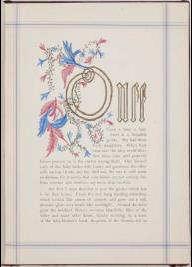
“Aunt Abbie.” The Fairy Grotto. [Green Bay, Wisconsin: Advocate Press. Robinson Brothers & Clark, 1877]
This charming volume is a true orphan, apparently the sole survivor of its kind. Printed by the local newspaper in Green Bay, Wisconsin, it presumably was meant to be decorated by the purchaser. The hand-done illuminations in this copy are only partially completed, and it contains the dedication: “This little story is affectionately dedicated to all my dear neices and nephews, East and West, by their loving Aunt Abbie.”
We’re starting to gear up for our summer series of K-12 professional development workshops! If you’re an educator and haven’t yet had the chance to attend one of our workshops, now is the time to do it. We have some great topics and interesting scholars joining us, not to mention the library materials.
For those who have not attended our workshops before, each program will feature a lecture and discussion with a prominent scholar followed by hands-on workshops where participants get to work directly with AAS library collection materials. We round out the day by sharing materials, resources, and methodologies on how to apply the content and materials with students in the classroom. Intended to be interdisciplinary, these workshops will appeal to educators from many different subject backgrounds, so be sure to take closer look at each program description!
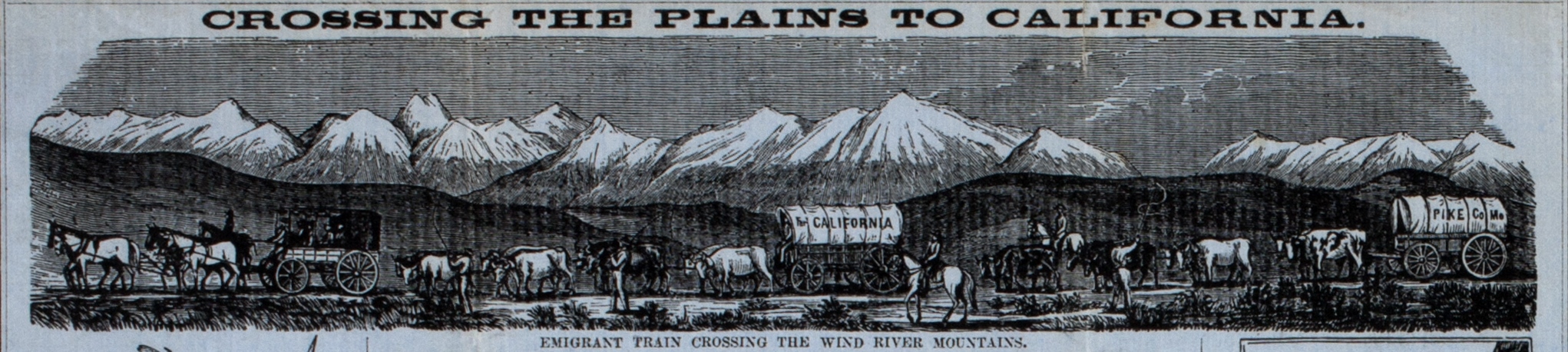
The first workshop, “Mining for Minerals: The Pull of the West,” will take place on Saturday, June 22. The day will be led by Kathryn Morse, associate professor of History at Middlebury College, and will explore the economic, environmental, racial, political, cultural, and social transformations put into motion by mining ventures and the subsequent settling of the West. Mining drove rapid economic growth in California and Nevada, along with environmental transformation, native dispossession, and, in some cases, violent social conflict. Gold and silver miners struggled through their labors with the meanings of hard work and wealth—and the tenuous connections between them—in an industrializing economy. These themes will be examined using a wide range of interdisciplinary sources, including cartoons and other visual materials, miners’ letters and newspaper accounts, and the literary works of Bret Harte and Mark Twain.
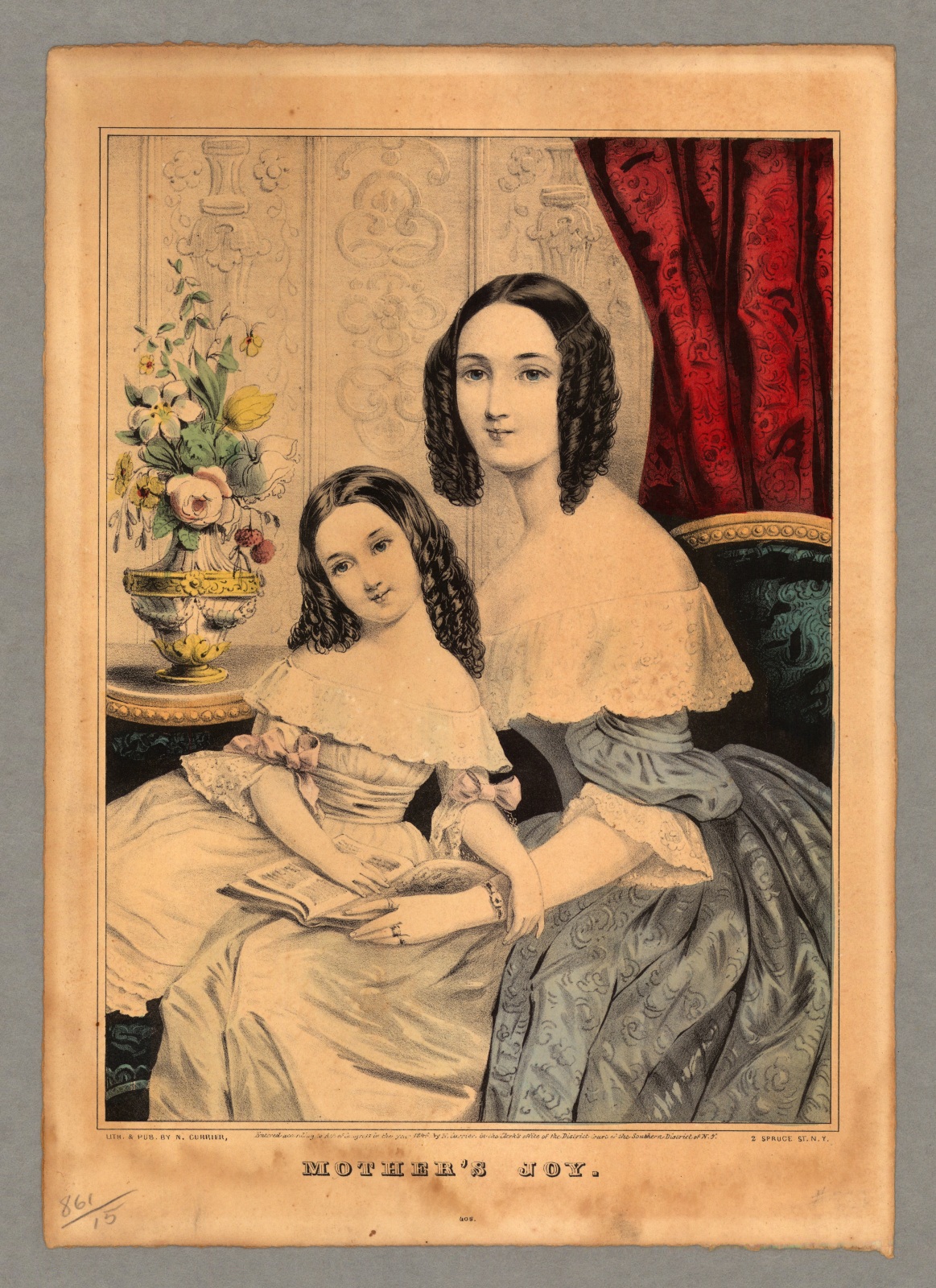
“Picture Perfect: Nineteenth-Century Women in Words and Images” will follow on Thursday, June 27. This interdisciplinary workshop will examine historic visual representations of women in conjunction with selected texts by nineteenth-century women authors, many of whom are cited in curriculum frameworks. Through this juxtaposition of words and images we will explore notions of gender, reform, and women’s roles. Teachers of history, English language arts, and visual arts alike will find the texts and images useful tools in the classroom as they address topics such as anti-slavery reform, women’s roles and the domestic environment, Indian removal, and westward migration. The lead scholar for the day will be Laura Smith, a lecturer in English at the University of New Hampshire, where she teaches courses in American literature and English teaching methods.
The series will round out with “Writing History” on Monday, August 19. Led by John Demos, Bancroft Prize winner and author of The Unredeemed Captive and other popular and influential historical works, this workshop will examine the process of creating and writing historical narratives, as well as some ways in which this process can be used to enrich both History and English classrooms. Throughout the day we will explore the nature of historical writing, discussing topics such as choosing a subject, forming a cohesive structure, putting a story in a larger historical context, developing a voice, finding the significance of a narrative, and the role of emotion in writing and reading history. The hands-on workshops will discuss writing techniques, tactics for culling evidence from primary sources, and strategies for teaching writing in the classroom, including connections to the English Language Arts and History Common Core standards.
So whether you’re a History, English Language Arts, Visual or Media Arts teacher, or just interested in any of the topics above, be sure to join us for one or all of the programs! All workshops will take place from 9 a.m. to 3 p.m. and the fee for each workshop is $60. (Worcester Public School teachers can attend for at no charge due to grant funding.) This fee includes pre-readings, materials, refreshments, and lunch. You can register by calling 508-755-5221 or online at http://www.americanantiquarian.org/k12workshop.
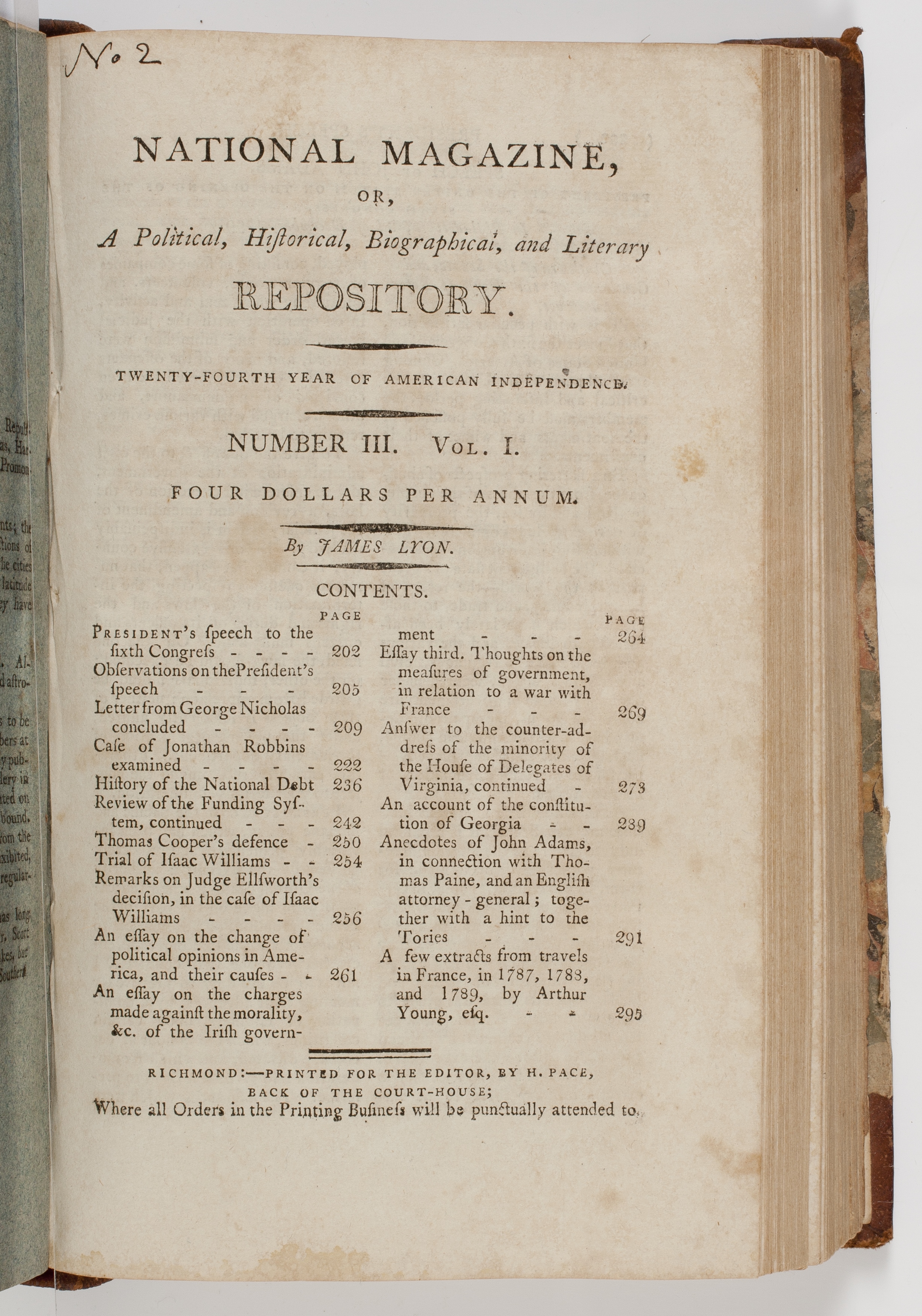
The Past is Present posting for April 8th about timing told of a volume of a periodical that got away from AAS despite the urging of Marcus McCorison. This was the National Magazine published in Richmond, Virginia and Washington D.C. in 1799-1800 by James Lyon. He was a Vermont printer who fled the state. Mr. McCorison wrote a bibliography of early Vermont imprints and was very interested in the career of this printer. For several years he never let me forget I missed acquiring that volume and sent me photocopies from catalogs when it was listed.
The good news is the volume is now here! After his death, many people contributed to a Marcus McCorison fund so we could acquire important materials in honor of him. In particular we wanted to acquire items that coincided with his interests. AAS used some of the McCorison fund to purchase this volume.
This purchase is doubly appropriate because it was acquired from William Reese, a close friend of Mr. McCorison. They first met when Mr. Reese was an undergraduate student at Yale in 1973. Since then they have shared many a book, a drink, and stories. I also wish to thank Mr. Reese who gave AAS a generous discount for the purchase of the National Magazine. His continued support of the institution is deeply appreciated.
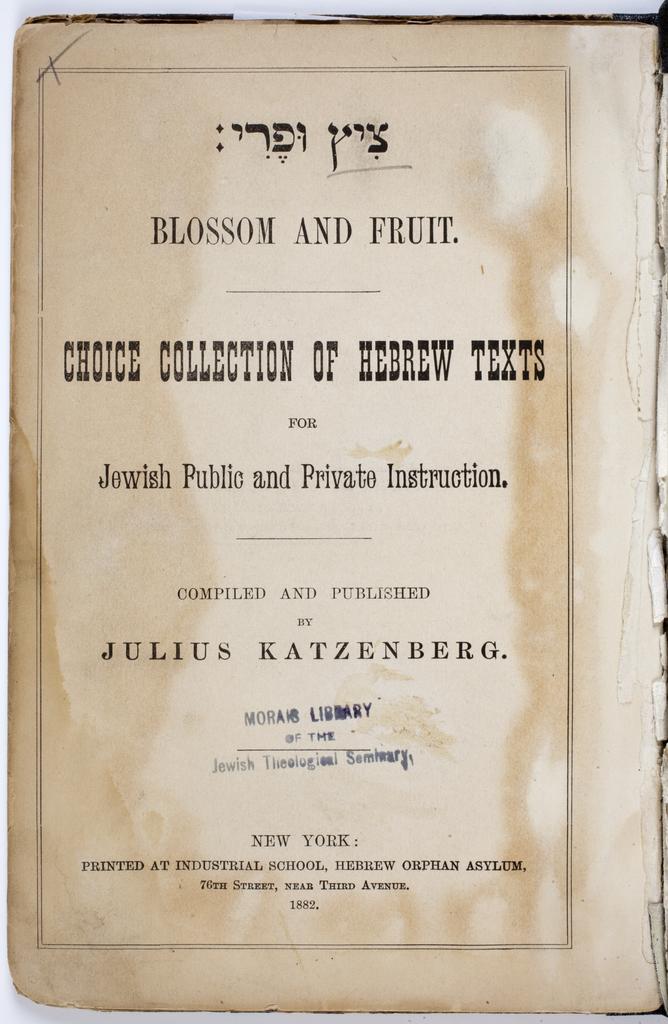
Blossom and Fruit. A Choice Collection of Hebrew Texts for Jewish Public and Private Instruction=Tsits u-Feri. Compiled and published by Julius Katzenberg. New York: Industrial School, Hebrew Orphan Asylum, 1882.
AAS certainly has Hebrew texts geared to Christian divinity students, but this text is geared to the needs of Jewish children and youth. AAS has just one other children’s book printed by the Hebrew Orphan Asylum Industrial School, which was a gift book printed as a fundraiser for Mount Sinai Hospital. Books like Blossom and Fruit reflect the emergence of a vibrant middle class Jewish community in nineteenth-century New York.
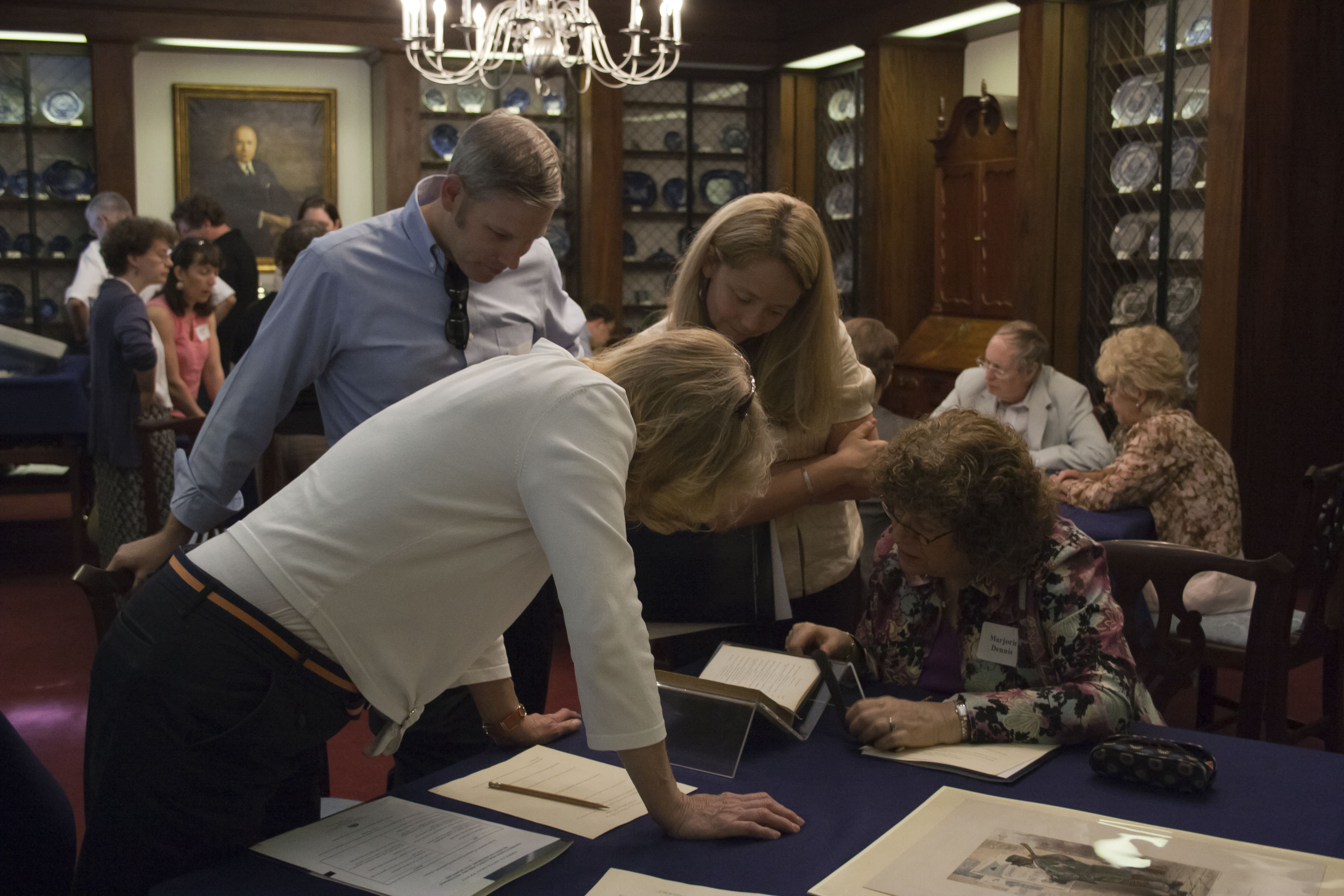
To study closely a nineteenth-century lithograph or actually touch the impressions of type in the sheets of an eighteenth-century newspaper can be a magical, even transformative, experience. For years I have seen K-12 educators become engrossed and inspired by such activities. However it was only after we conducted a one-day workshop for K-12 educators on the War of 1812 this past autumn that I thought of offering such an opportunity to the general public. At that conference we had a number of non-teachers attend and all were thrilled with the program. This made me realize that many of the folks who come to our lectures might also enjoy engaging in deeper conversations with an expert scholar, literally touching the past by exploring some of the wonderful treasures in our library, and sharing their observations and discoveries with other like-minded people. So we are now offering special programs called “hands-on history workshops.” Our first such program will take place on Saturday, June 1st from 9 a.m. to 3 p.m. when Ray Raphael will lead us in a discussion of Worcester’s role in the American Revolution.
The program will explore two basic themes. The first is the radicalization of rural Massachusetts in the summer of 1774 as described in Ray’s book TheFirst American Revolution. These events culminated in Worcester on September 5th when 4,622 militiamen from thirty-seven surrounding communities lined Main Street and forced Crown-appointed officials to walk a gauntlet and resign their commissions. Similar peaceful demonstrations by common citizens throughout rural Massachusetts seized political power and effectively ended Royal authority throughout the Commonwealth.
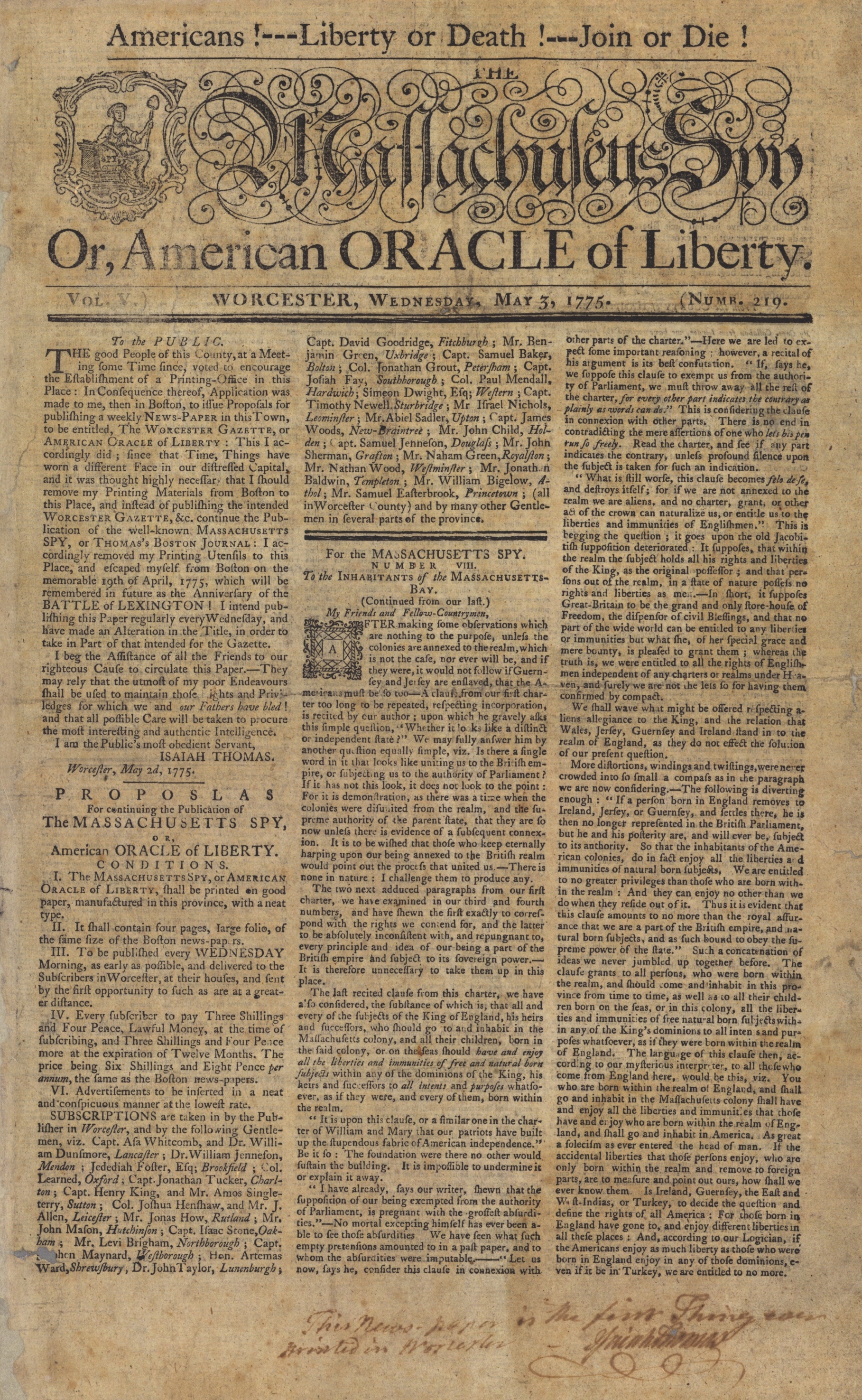
May 3, 1775 issue of Thomas' newspaper,the Massachusetts Spy
Our second theme concerns the public relations battle that followed the fighting at Lexington and Concord. Worcester and AAS’s founder Isaiah Thomas also played a vital role in this war of words in the spring and summer of 1775. Thomas smuggled his press and some type out of Boston on the evening of April 16th and set up a temporary printing office in the basement of Timothy Bigelow’s home in Worcester. From here he printed the first eyewitness accounts of the battles of Lexington and Concord in his newspaper the Massachusetts Spy and a series of depositions of eyewitness accounts of those events that were widely reprinted on both sides of the Atlantic and were instrumental in shaping public opinion.
Our workshop on June 1st will explore these events and allow participants to examine these early Worcester imprints and other primary source newspapers, pamphlets, broadsides and manuscripts related to both the events in the summer of 1774 and the battles of Lexington and Concord. The world of colonial printers and their role in fermenting the war in general will also be discussed.
The cost for the workshop is $65 for AAS members and $75 for non-members and includes pre-readings, materials, refreshments, and lunch. To find out more or to register go to http://www.americanantiquarian.org/handsonhistory.
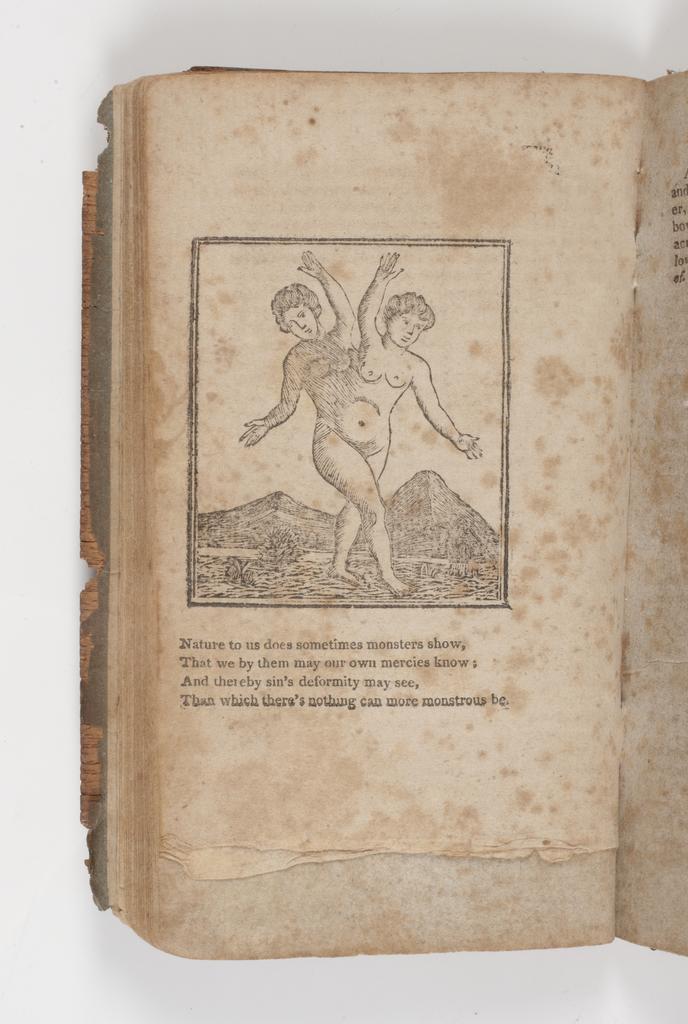
Aristotle’s Master-piece, Completed. In Two Parts.The First Containing the Secrets of Generation… The Second Part being a Private Looking-Glass for the Female Sex. New-York: Printed for the Company of Flying Stationers, 1812.
Aristotle’s Masterpiece is a fascinating hybrid text. It used the veneer of a supposed classical author (Aristotle really had about as much to do with this work as the Pope did) in order to give legitimacy to its discussion of the culturally sensitive subject of sex. Printed under various titles for over a century in America (from the 1740s-1840s), sections were added, dropped, and changed at will, including a midwifery manual. Most notable in almost all editions are the illustrations of monstrous births, hairy women, conjoined twins, etc.
This 1812 edition is unrecorded, but about a dozen among the more than fifty editions of Aristotle’s Masterpiece at AAS bear the imprint “for the company of flying stationers.” Flying stationers were book chapmen who, alongside broadside and ballad pedlars, hawked their wares on the street. Elsewhere in AAS’s collections, an almanac for 1761 was described as “sold also by the country storekeepers, moving-merchants, flying stationers and old ballad-women.” This early sex manual would have had a similar street-level distribution system, although perhaps it was advertised more through tantalizing whispers than the usual street cries?
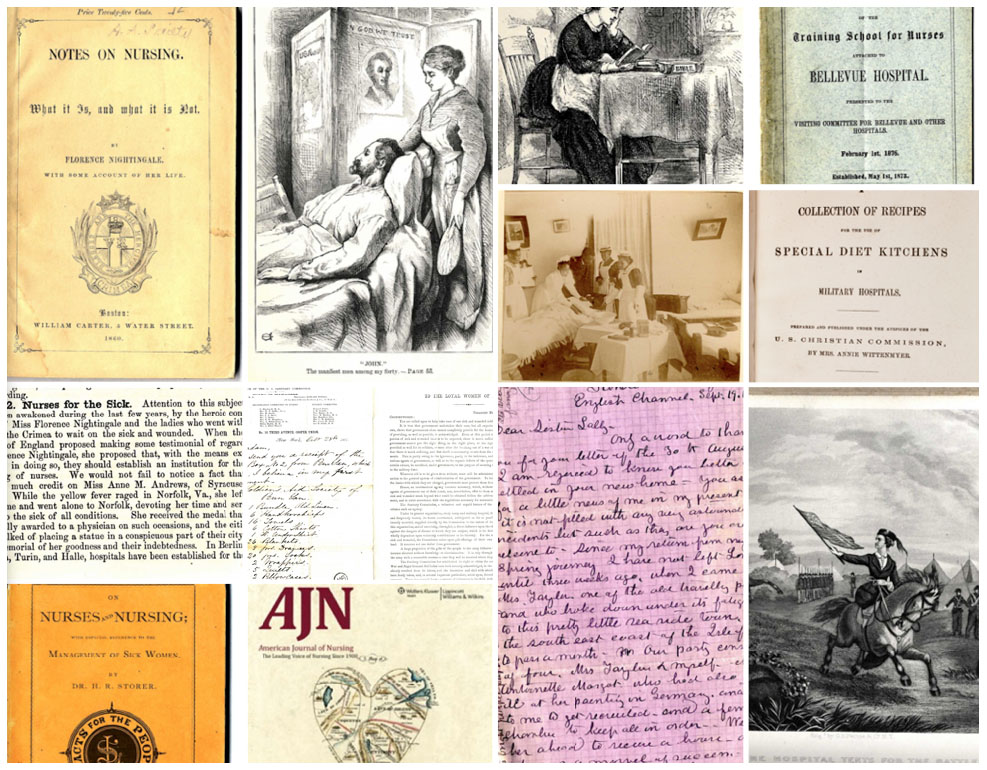
The March 2013 issue of AJN: The American Journal of Nursing featured on its cover a well-known AAS collection item – A Map of the Open country of a Woman’s Heartby “A Lady” published by Kellogg c. 1833–1842. Throughout the month of April, we received queries about this image from nurses around the country.
We enjoyed talking and working with them so much, that in observance of this year’s National Nurses Week, we compiled additional items to showcase the history of nursing. Celebrated last week to coincide with the birthday of the founder of modern nursing, Florence Nightingale (1820-1910), these items – culled from the AAS archive – represent the print culture of nursing from Nightingale through 1876 which is the end of the Society’s collecting period.
To the celebrated nurses – thank you again for all that you do, and we hope you had a well-earned National Nursing Week.
Click the image above to see the history of nursing collection items.
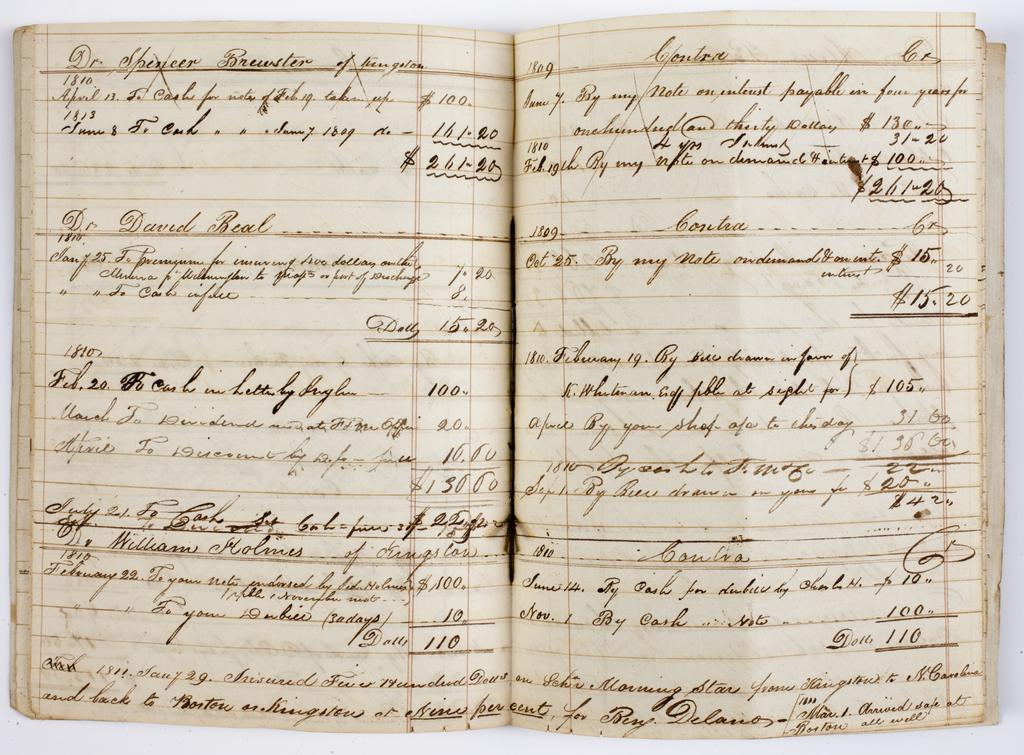
Thomas Prince Beal (1785-1852), son of David Beal and Lydia Prince, was a lawyer in the coastal town of Kingston, Massachusetts. He married Betsy Sampson, and the couple had seven children. His account book, although short, reflects his professional life from 1809 through 1810. Arranged by customer and listing debts and credits, the volume shows Beal’s activity with insurance on ships. Entries include “To premium for insuring 400 dollars on the Minerva” and “Insured one thousand Dollars on the Sch. Jefferson from Kingston…” Beal also collected mortgages on homes and land. It wasn’t all business, however. Beal was also sure to make a note of books he lent out to Dr. Bartlett – Johnson’s Lives of the Poets and Savage’s Poems.
“…you sockdologizing old man-trap!” Stomp. Scream. Panic.
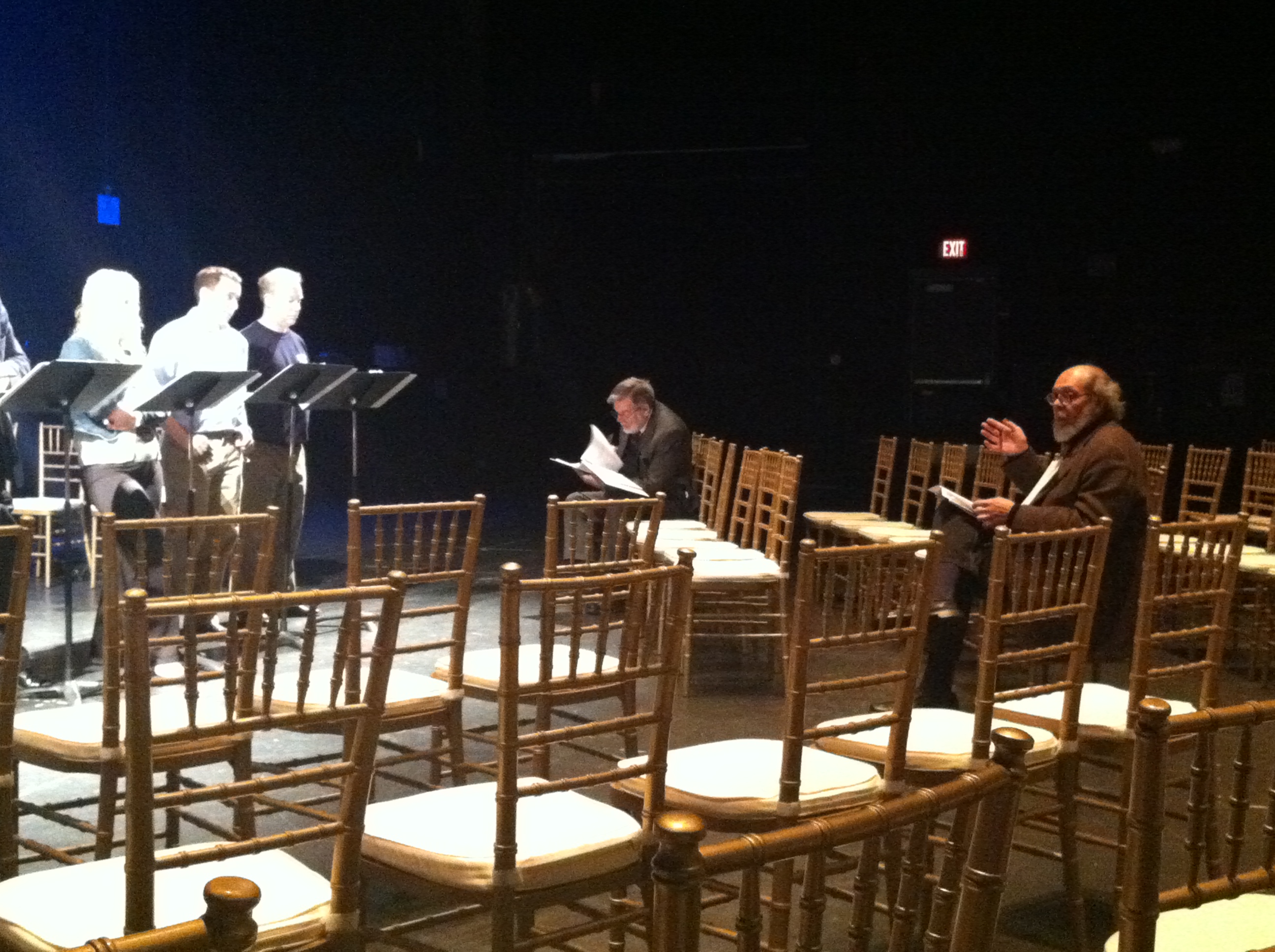
“Good, good – now next time, keep the scream going longer and continue the dialogue over it. Let’s see how that works.” This was just one of many exchanges between the group of nine actors practicing a staged reading of the historically-based play Sockdology, and Jeffrey Hatcher, the playwright who was also serving as director. These interactions continued all afternoon as the group – most of whom had only just met each other that day – attempted to bring excerpts of a play to life using just their acting talent, no scenes, no props, not even the entire script.
This wasn’t my first trip to the beautifully restored Hanover Theatre on Main Street in Worcester, but it was quite possibly the most interesting. (In the interest of full disclosure it was only my second visit, but I stand by my statement.) The actors and playwright had gathered at the Hanover around noon to begin rehearsal for the performance taking place that evening, an AAS and Hanover co-sponsored public program called “Creating Historical Theater: A Dramatic Reading of Sockdology.” When I arrived an hour later, they were sitting in a circle in an elegant sitting room just off the lobby of the theatre, reading their parts with periodic directions from Hatcher. Aside from wishing that I could attend a cocktail party in this fabulous room, I was struck by the process going on in which a script became a performance, actors got to know their characters, and a director made all of the pieces fall into place. It was fascinating to see how an actor implementing a simple direction could make something funnier, more emotional, or more significant.
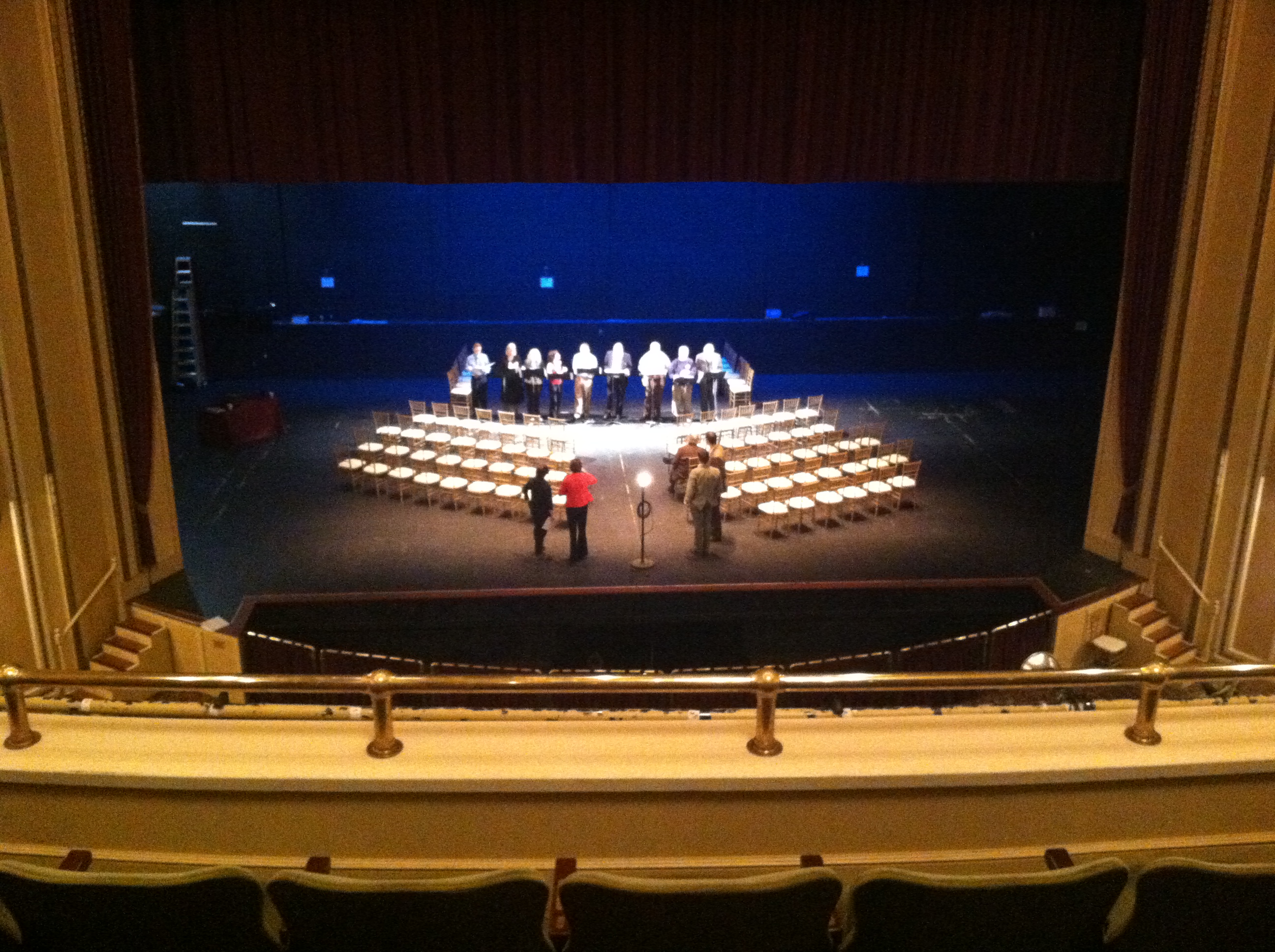
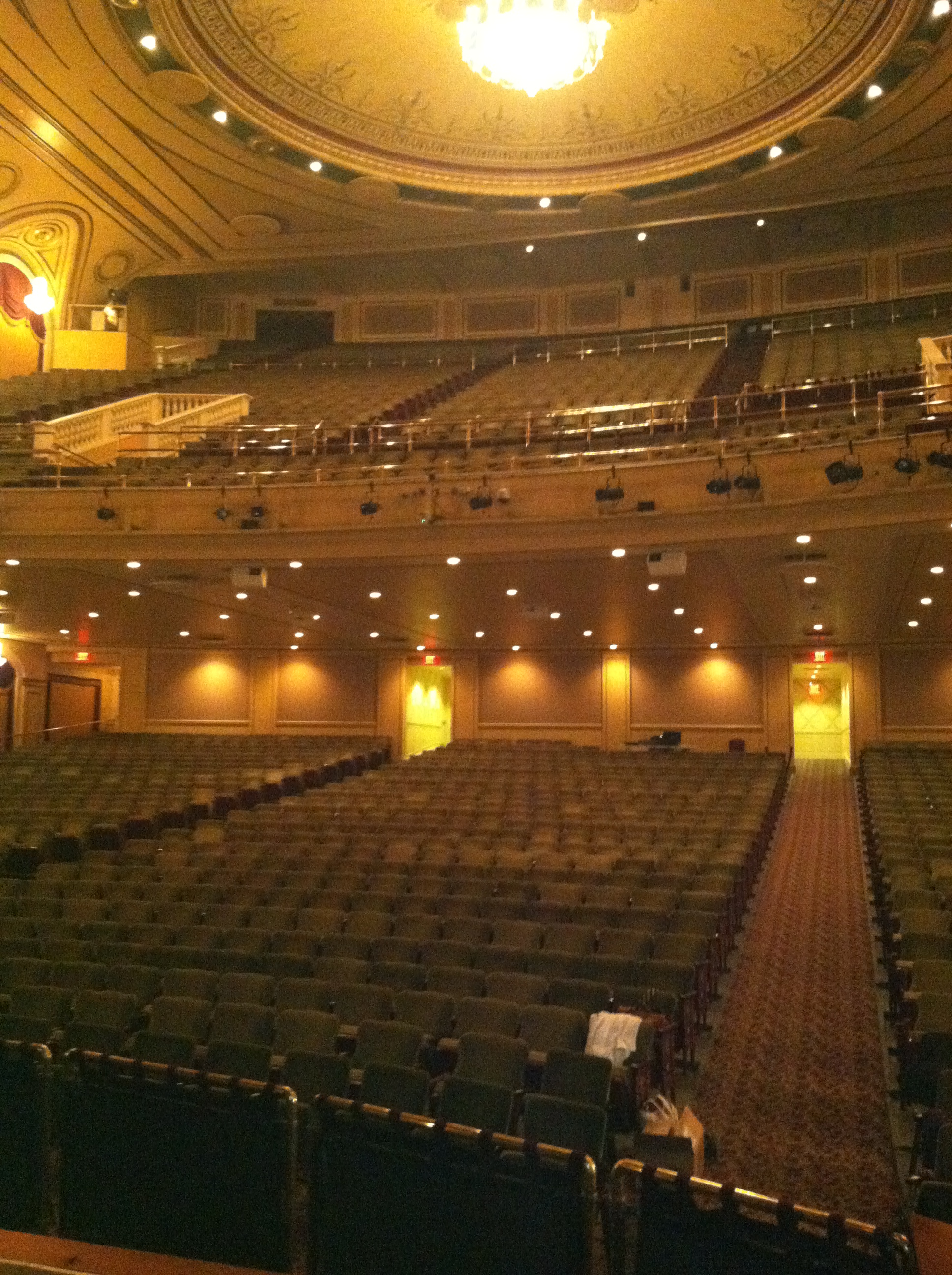
Looking out from the stage into the audience. I sat in the balcony to the left for West Side Story.
Once the rehearsal moved to the stage, an entirely new dimension was added to the practice. There’s something about an empty theater that makes it seem so grand, so full of possibilities. The performance, audience and all, was taking place on the stage itself, so that’s where we all congregated to continue with the rehearsal. I’d recently been to the Hanover for a great performance of West Side Story, and it was a bit strange to be on the stage looking out at the audience, seeing the spot where I had just been sitting as part of the masses. To think that this is what the actors see, but full of people, is humbling and gives a new appreciation for their work. Not to mention the deep orchestra pit in front, which prompted a conversation about the skill it takes dancers not to fall off the stage into it (although some did tell stories about those who were not so skilled at avoiding that particular “pitfall”).
But I digress. Being on the stage as the rehearsal continued, and into the evening as the audience filled the seats placed around the music stands holding the actors’ scripts, made the performance more intimate, in some ways providing a new sense of how the actors create their art.
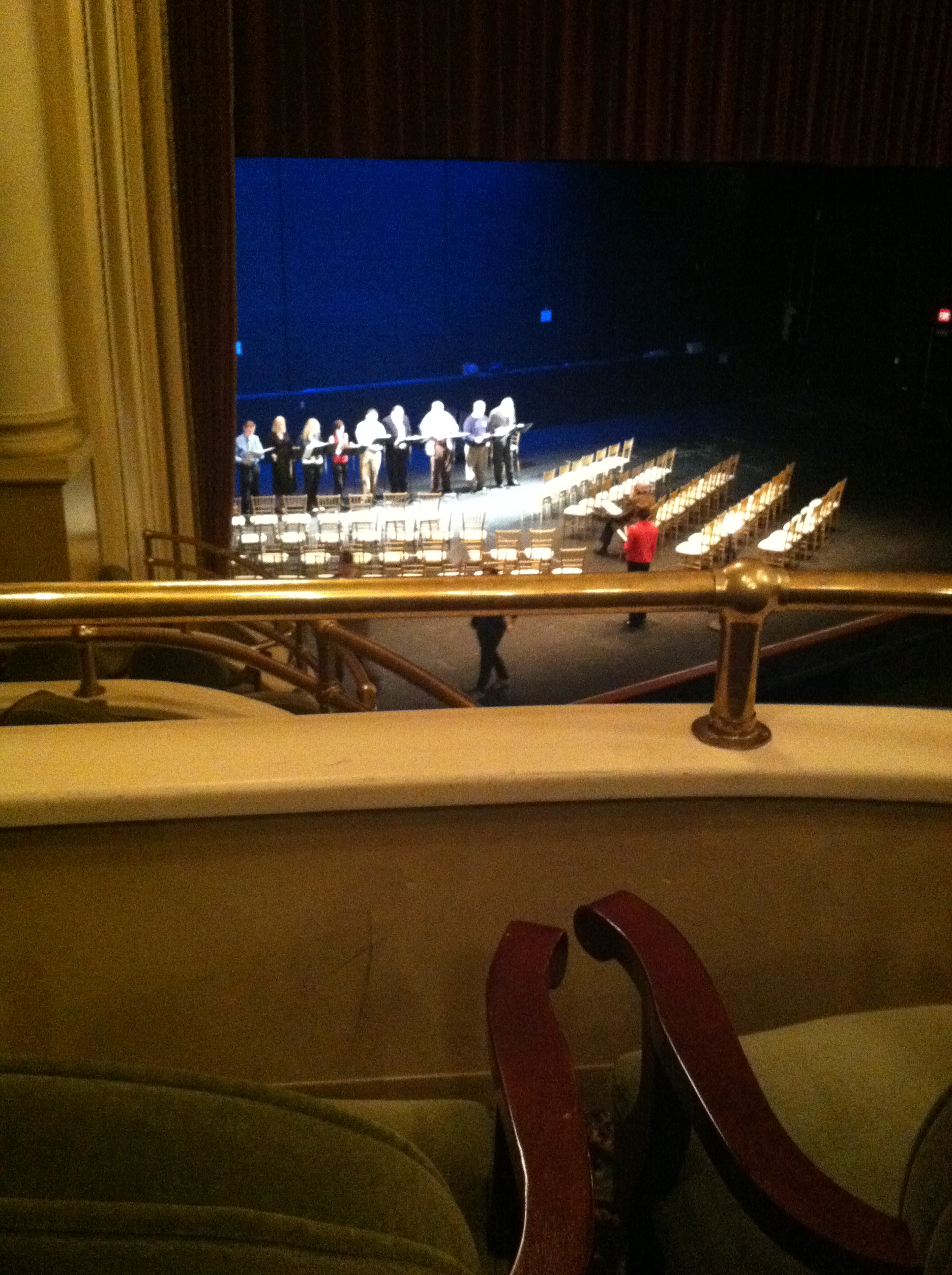
A view from the balcony, trying to get in Lincoln's shoes.
Then there was the play itself. The quote that began this post was a line in the play Our American Cousin, and was likely the last line that Lincoln heard before being shot while watching this play at Ford’s Theater. “Sockdology” is a boxing term that means a knock-out punch or “the brutal end of everything.” Hatcher used this somewhat ironic historical footnote to create his play, Sockdology, about the acting troupe that was performing Our American Cousin. The famous line weaves itself in and out of Hatcher’s script, as time moves forward and backward, imagining the moments before, during, and after Lincoln’s assassination. It was fascinating to watch the contemporary actors take on the quirky personalities of these historical actors while also creating the feeling that just off-stage, in the imaginary Ford’s Theater, Lincoln sat watching this popular play unaware of the fate about to befall him.
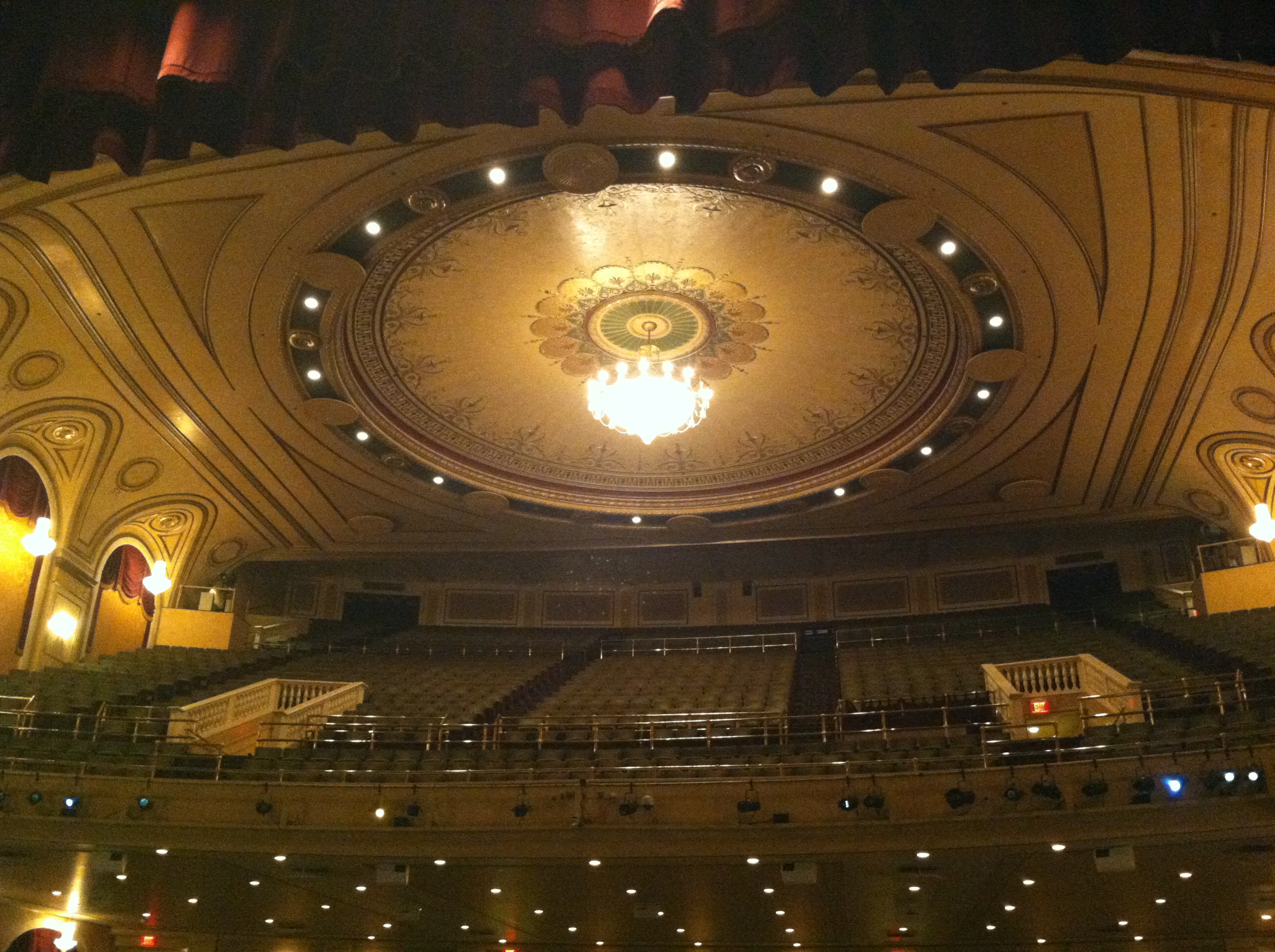
I took a trip up to one of the boxes to put myself in Lincoln’s viewpoint – sitting in a box, listening to lines (albeit here intermittently) from the play Our American Cousin. The style of the Hanover only added to the ambience. Its lush drapery, gilded ceiling décor, and sparkling chandelier are everything you would expect in a nineteenth-century city theater. Lincoln or no Lincoln, if you’ve ever wished you could have attended the theater in the nineteenth century the Hanover is a great place to start.
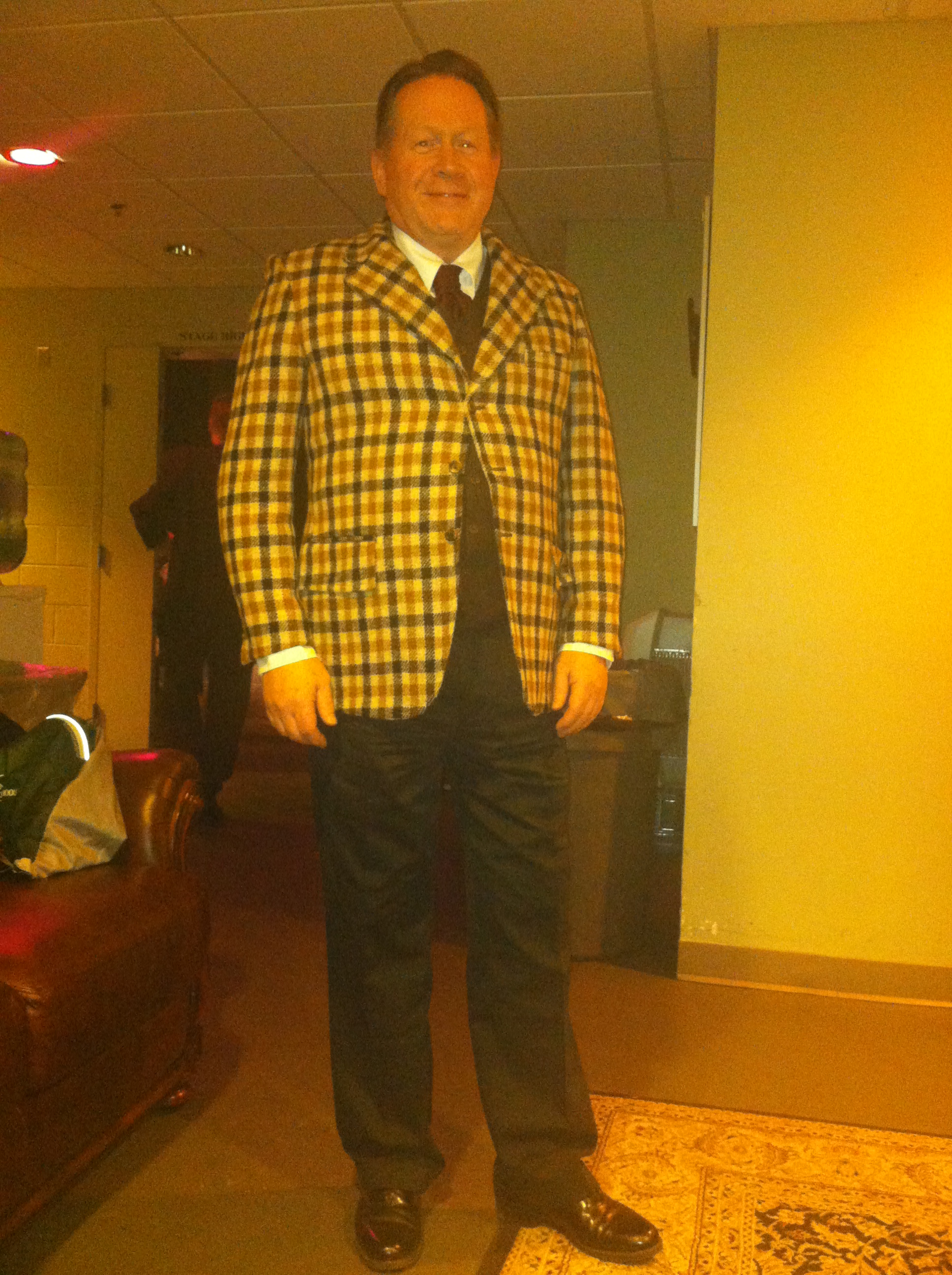
Neil Gustafson not as Isaiah as usual, but as an orchestra director.
But perhaps one of my favorite parts of the night was watching Neil Gustafson, the actor who performs our one-man show Isaiah Thomas – Patriot Printerabout AAS’s founder, transform from Isaiah (we had done a show at an elementary school just that morning) to the bombastic and petulant orchestra director in Sockdology who just doesn’t know when to quit proposing to a girl. I’d only ever seen him as Isaiah, so it was fun to see him play a very different part, reminding me how much talent it takes to make Isaiah come alive for so many students.
Despite the short rehearsal time the cast did a wonderful job and the audience appreciated the discussion after the performance with Jeffrey Hatcher. He answered questions about historical accuracy, how he comes up with ideas for plays, and screenwriting versus playwriting. He was well-qualified to answer these questions, having written plays such as Scotland Road and Compleat Female Stage Beauty, the latter which he later adapted into the screenplay Stage Beauty. He also co-wrote the stage adaptation of Tuesdays with Morrie with Mitch Albom, wrote for the TV series
Jeffrey Hatcher directing during rehearsal.
Columbo, and wrote the screenplays for the period films Casanova and The Duchess. He takes his historical research seriously. He conducted research for Sockdology in 1995 as part of AAS’s first class of fellows in our Creative and Performing Artists and Writers program, which allows artists and writers to delve into AAS’s collections and find new ways to incorporate them into products designed for audiences outside of the academy. Hatcher’s project was a prime example of the spirit behind the fellowships. His varied experience showed in his interactions with both the actors and the audience, and it was a real pleasure to watch him work.
All in all, this was one of those days I was thrilled to work where I do with the people I do. A little art, a little history, a beautiful setting, and interesting people are a mix that’s hard to beat.
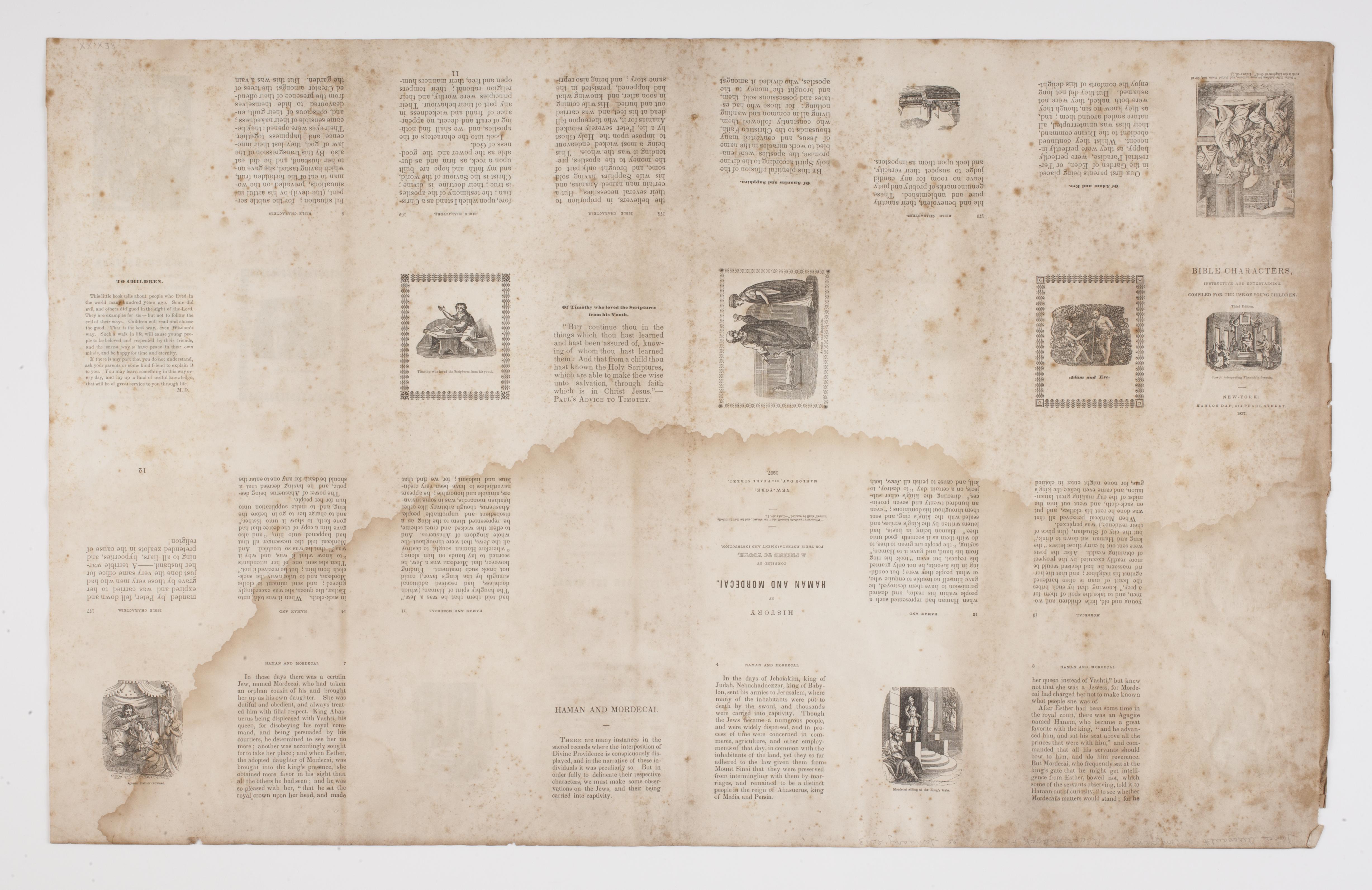
Bible Characters, Instructive and Entertaining Compiled for the use of Young Children (3rded) on a sheet with History of Haman and Mordecai compiled by a Friend to Youth. New York: Mahlon Day, 1837.
This single sheet printing shows the way in which multiple-page books were laid out (or composed) during the nineteenth century. Such sheets are rare survivors as they mostly were either made into saleable books or pulped if unused. In this case, two titles were laid out together by the printer to make the best use of the sheet. Both titles are illustrated with woodcuts of Bible figures including Adam and Eve, and Esther. Curiously, the tail piece to Bible Characters, which is illustrated throughout with toga-wearing figures in foreign climates, is a small cut of a very 1830’s steamboat at a riverside dock.
AAS has an edition of Bible Characters originally issued by New York Quaker publisher Mahlon Day and reissued with a new cover by New Bedford, Mass. publisher Charles and Augustus Taber. The Tabers also reissued both Bible Characters and History of Haman and Mordecai under one cover, and since this combined sheet was found in a New Bedford warehouse, it points to a definite connection between Mahlon Day and the Taber firm, a business relationship perhaps undergirded by their shared Quaker faith.
This Thursday, May 2, at 7 p.m., Nathaniel Philbrick will deliver a lecture titled “Bunker Hill: A City, A Siege, A Revolution,” based on his new book of the same name. We’re particularly excited to have Mr. Philbrick here this week as the book’s release date is today, making his visit to AAS one of the first stops on his promotional tour! No doubt Antiquarian Hall will be full of energy and historical enthusiasm.
The award-winning and bestselling author’s latest book brings him back to Massachusetts and takes a fresh look at one of Boston’s most well-known events, the Battle of Bunker Hill. In this new examination of the beginnings of what would become the American Revolution, Philbrick weaves a tale with a vibrant cast of characters, some still famous for their parts in the Revolution, others long-forgotten heroes that reemerge here in their rightful places. Among the revived is Joseph Warren, a thirty-three-year-old physician who became the on-the-ground leader of the Patriot cause. Warren gave William Dawes and Paul Revere the orders to send out the alarm that British troops were headed to Concord; Warren remained in the city until the last possible moment, and was then elected President of the Massachusetts Provincial Congress even as he supervised the organization of the nascent Continental Army. Clearly the credit for choreographing the Revolution doesn’t belong solely to the likes of John and Sam Adams, John Hancock, and George Washington.
Philbrick’s story embroils us in the fabric of pre-Revolutionary Boston—a city of 15,000 inhabitants packed onto a land-connected island of just 1.2 square miles. The narrative includes the larger-than-life personalities and soon-to-be heroes, but it also gets down into the interplay of ideologies and personalities that provoked a group of merchants, farmers, artisans, and sailors to take up arms against their own country – no small stakes, indeed.
If you loved In the Heart of the Sea, Mayflower, or any of his other narratives, this is sure to be a wonderful introduction to the new book given by the man himself. We hope to see you there, as well as at our other public programs this spring!
The American Antiquarian Society has a large number of periodicals and newspapers of which only a single issue was printed before they folded. There are a variety of reasons for why this might be. Sometimes issue no. 1 is really a prospectus trying to generate interest and subscribers, but failing in this mission. Often it is due to something I call “hope over business sense.” Someone had a great idea for a magazine and put together enough to get the first number published, but he then had to face the daunting task of coming up with more material. Others misjudged the demand for such a paper or were publishing it in the wrong region. For most publications, we have no idea why a second issue did not come out. They just disappeared like a popped bubble.
Here are three examples of publications that lasted just one issue:
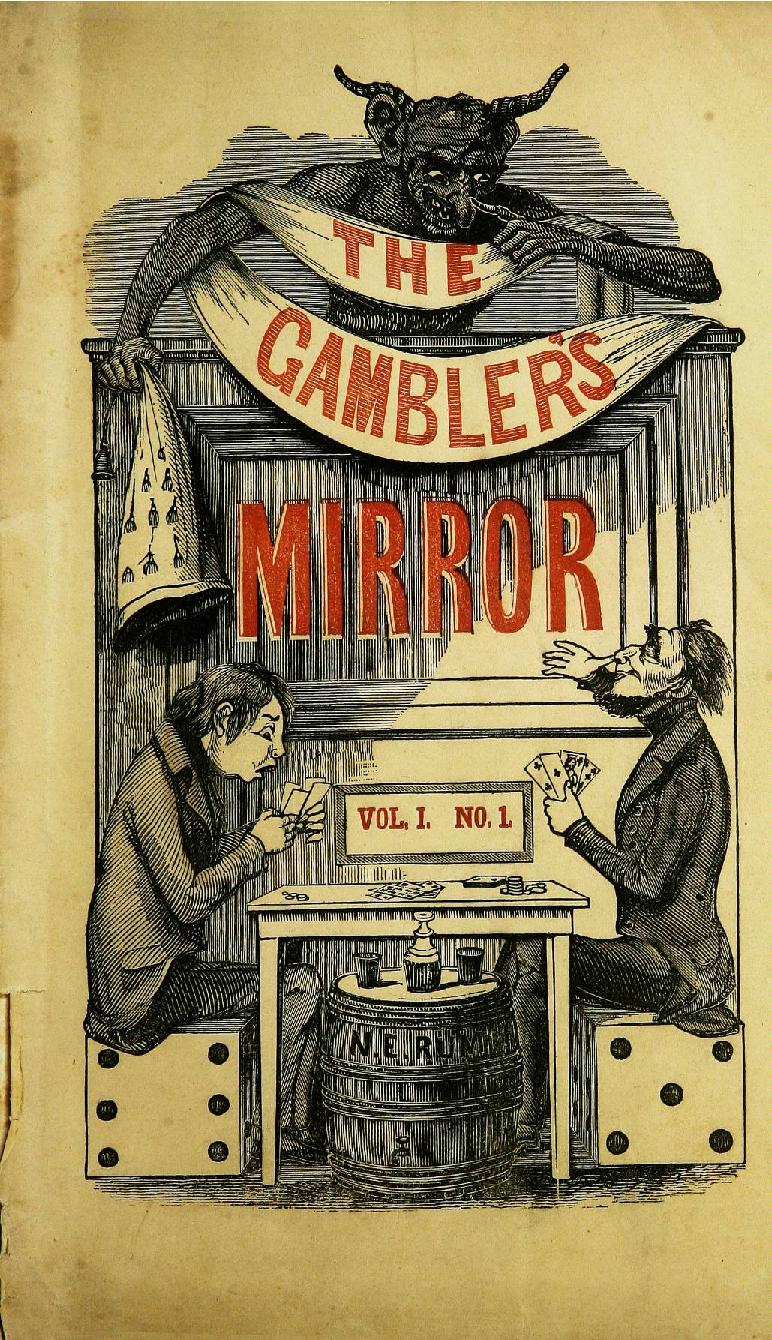
1.) The Gambler’s Mirror (Boston, MA). The only issue published came out in January 1845 and was edited by Jonathan H. Green. On the title page Green is described as “the reformed gambler, author of ‘Green on gambling:’; designed to expose the wiles practiced by the gambling and sporting gentry, and intended to warn the community against the evil tendency of their despicable habits.; illustrated by appropriate engravings.” The front wrapper has an illustration of two men playing cards. Both are seated on oversized dice and a barrel of rum is next to them. One gambler is winning all the money and is thumbing his nose at his despondent opponent. The articles include literary stories involving gambling as well as non-fiction ones aimed at educating the reader on the evils of gambling and how they can be cheated. The issue is 64 pages long and has woodcuts scattered throughout. No other issue was published. One reason might be the fact that Green did not have time to devote all his energies towards further issues as he was regularly travelling about lecturing on gambling.
2.) The White Man’s Newspaper (New York, NY). Issue no. 1 is dated May 1851. No other issue has been found of this anti-abolitionist newspaper. In the first issue, it boasted as having $50,000 of capital backing the publication of this radical newspaper. Apparently that was not enough as it disappeared as suddenly as it made its debut. AAS and Harvard have the only recorded copies of the first issue.
3.) Smith & Barrow’s Monthly Magazine (Richmond, VA). This is one of the latest acquisitions for the periodical collection, purchased at an auction in April. It is a Confederate literary periodical published with the goal of developing a Confederate world of literature independent of what was produced by authors in the northern states. Smith and Barrow were also trying to elevate the literary tastes of its readers by reprinting some of the best British literature being published (despite the blockade). W.A.J. Smith and H.C. Barrow had been partners since the beginning of 1864 and published the family newspaper Magnolia Weekly. The one issue of the Monthly Magazine was dated May 1864, about the time the partnership broke up over a dispute of ownership. This periodical died without a second issue being published, though W.A.J. Smith kept the Magnolia Weekly going until the fall of Richmond in April 1865 by taking on a new partner.
If not, a PDF version is currently available on the AAS website. But that’s not what this post is about. This is not a post about digital surrogacy. It’s a post about good, old-fashioned printing presses (okay, okay, a 1995 press). While we undoubtedly advocate for the most seamless access to all-things-AAS, we still get disproportionately excited about phrases like “trim-size,” “prepress proof” and “collate & saddle-stitch.”
We all channel printer/founder Isaiah Thomas; it’s an occupational hazard – what can we say.
The March 2013 issue of the Almanac – which hit mailboxes a few weeks ago – was crafted, curated, created, edited, designed and printed in Worcester County, Massachusetts (we believe Thomas would have been proud). Its birth began right here in house at AAS. After gathering information and copy from each department, the editing – and inevitable heart-breaking cutting – began. As evidenced by our initial draft that ran four pages longer than planned, it is extremely difficult for an institution that loves both words and images to make choices about what stays and what goes.
Nonetheless, several drafts and many eye-straining hours later, we had our final version and were ready to go to press. This is where the really interesting stuff begins.
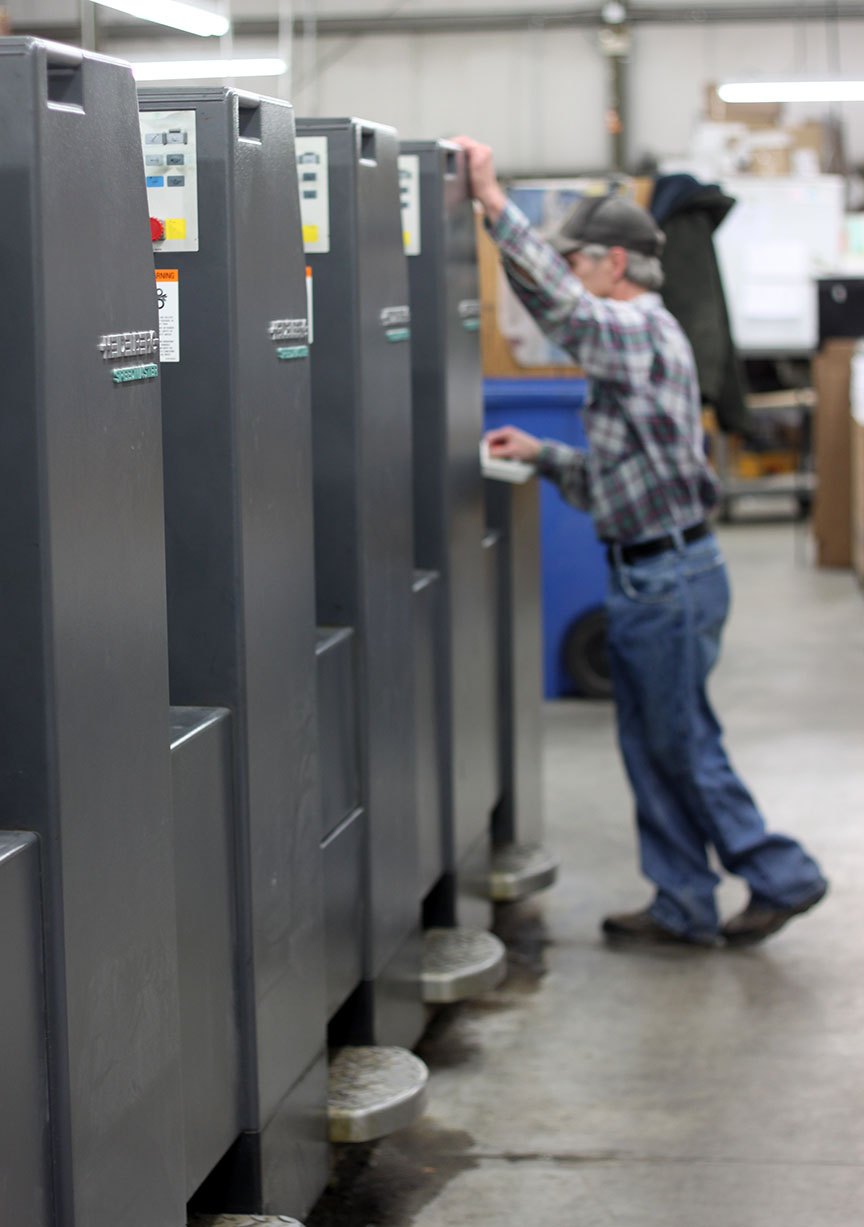
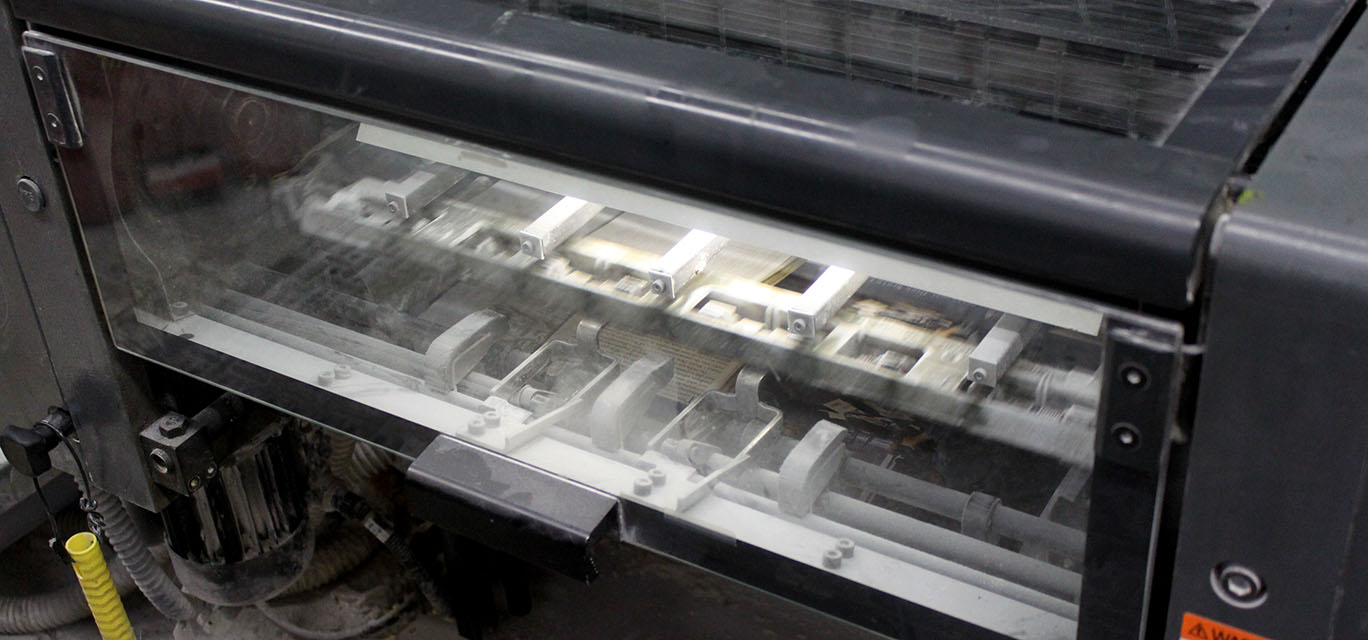
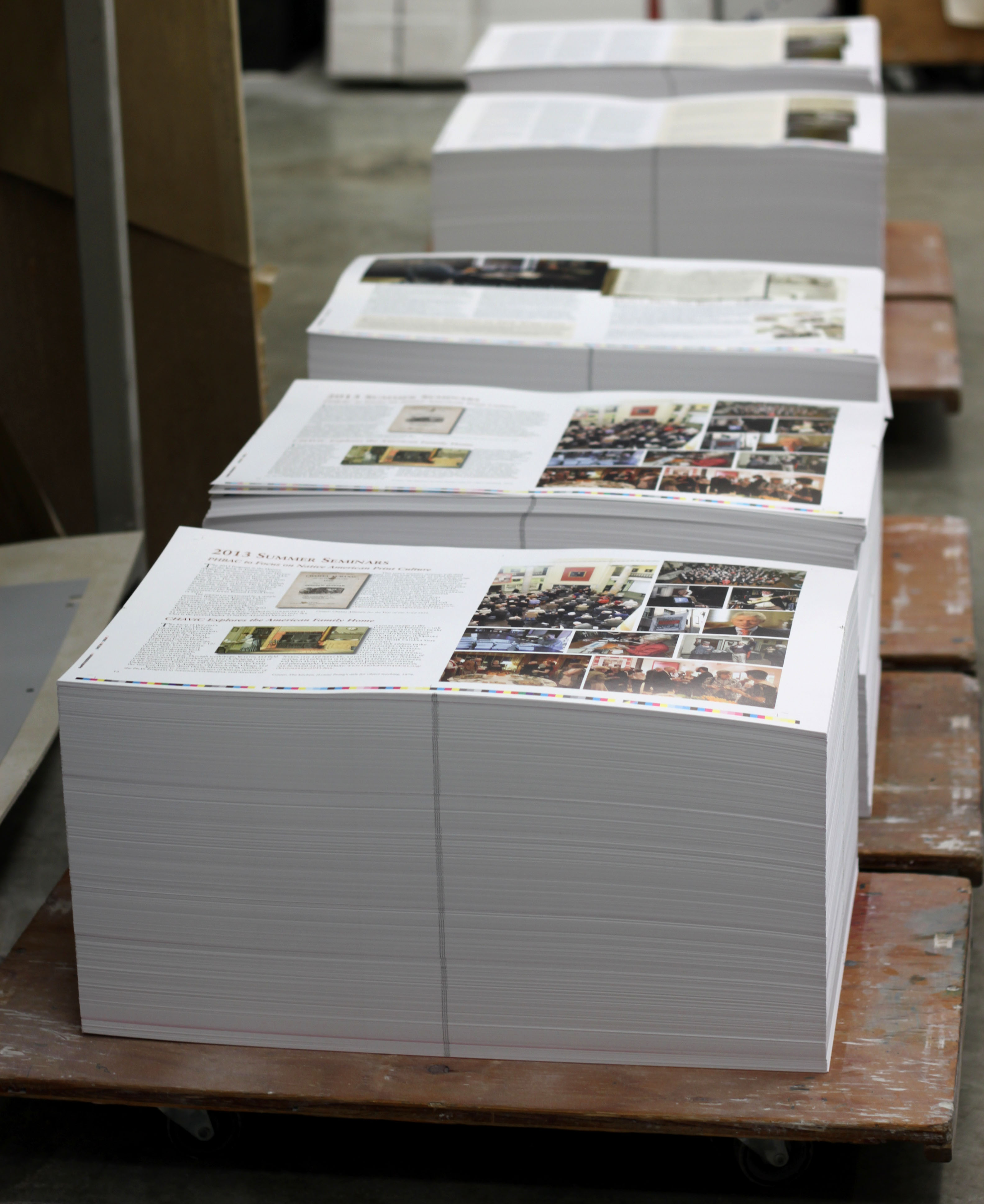
Printed, bound and mailed by American Printing and Envelope Company Inc., the Almanac was produced on a Heidelberg SM 52-6P Six Color Perfector Press (alas, the Almanac is only a four color job). This press runs 9,000 sheets per hour and is so fast that it actually required the Sports-Setting on the camera to be used to capture a sheet coming off into the press’s delivery.
A sheet coming into the delivery of the press.
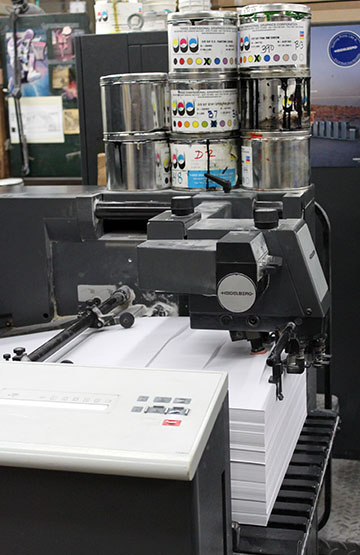
The Heidelberg is an offset press – a relative of the lithographic family. With the Almanac, Endurance Silk 80lb paper is loaded in the feeder and quickly moves its way through the press where each unit lays down one color of ink from the ink fountains (I spoke to one pressman who still called it an ink ball – another Thomas-proud moment). Working to distribute the ink evenly, some rollers oscillate and others are stationary. It is the set bead of ink from the fountain which determines a uniform and crisp impression on the paper.
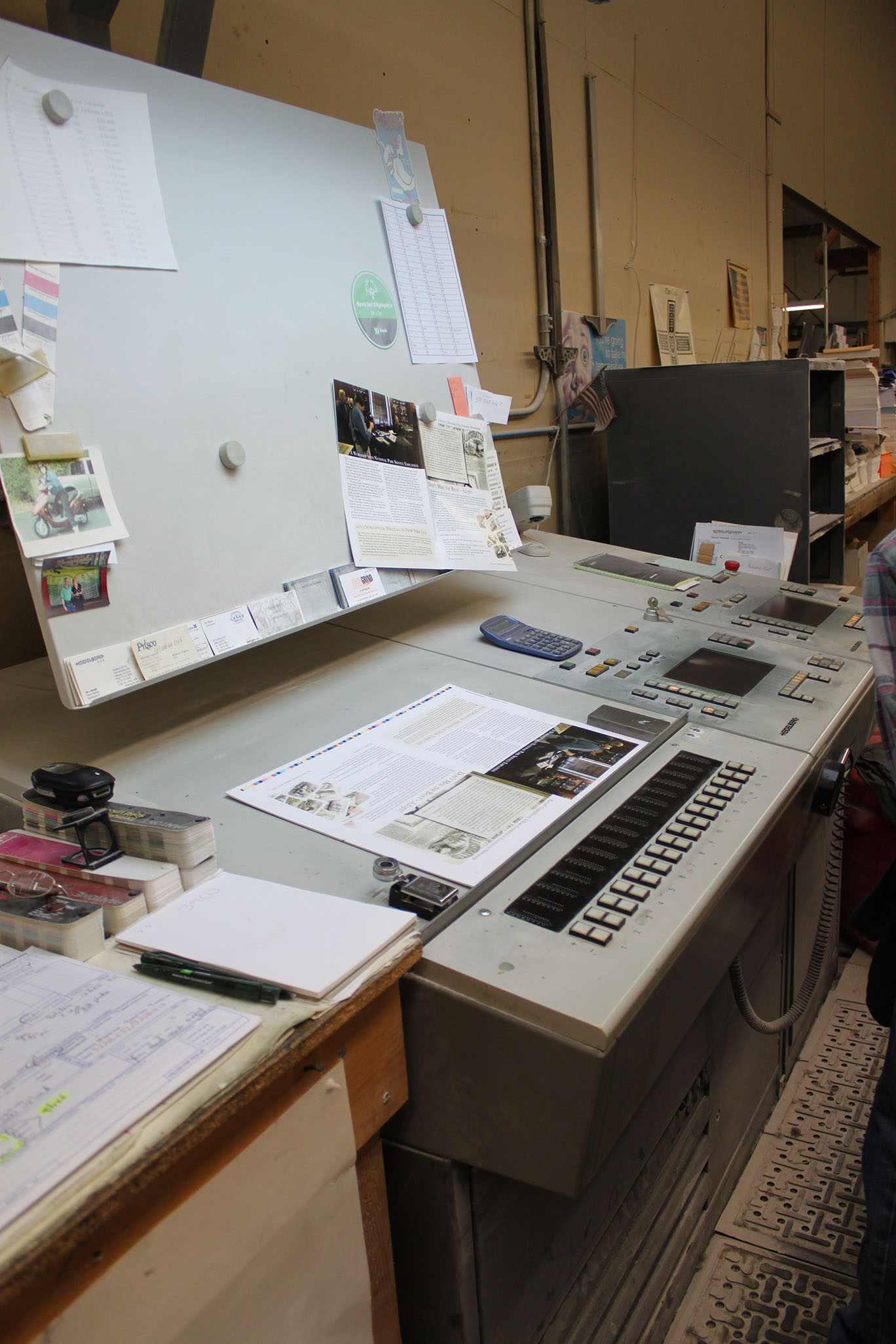
Pictured below are Almanac pages 10 and 7 on the CPC (Computer Print Control) station. This is where the pressman can manage and adjust color as needed to make the final copy look as close to the approved proof as possible.
The first issue of the Almanac in its newsletter format (in 1968) articulated the desire of the director to be in “closer communication” with the members and friends of the Society. Little – and arguably much – has changed since that first issue. The AAS Newsletter (retitled the Almanac in 1997) reports on publications, conferences, lectures, meetings, staff news, building repairs and renovations, members and fellows, cataloging and access tools and, of course, collections. We suppose our initial problem of simply having too much to include is a good one – it means there is a rich variety of activities, events, and news to share.
Although the Almanac’s informal style is somewhat ephemeral, that does not mean the quality or attention to its content, design, layout and printing is any less important or carefully considered. As a labor of love, it both inspires and requires strict attention to detail and painstaking design work.
This attention extends to the lessons we learned through the course of the process. Case in point, while working on the Almanac, we challenged each other to use the word “indicia” in a sentence. It’s harder than you’d think; try it. We also learned things about designing, prepress and printing that were somewhat alarming. (For instance, the Almanac has bleeds, knockouts and traps.)
Indeed, newsletter work is a dangerous business.
Again we ask, have you received your copy of the Almanac yet? You’re welcome to download it from our website, but if you are now channeling Isaiah Thomas, send us an email or give us a call. We’d be happy to mail you a hard copy.
Archive of American Publishers’ Ephemera, 1840-1900, 216 pieces.
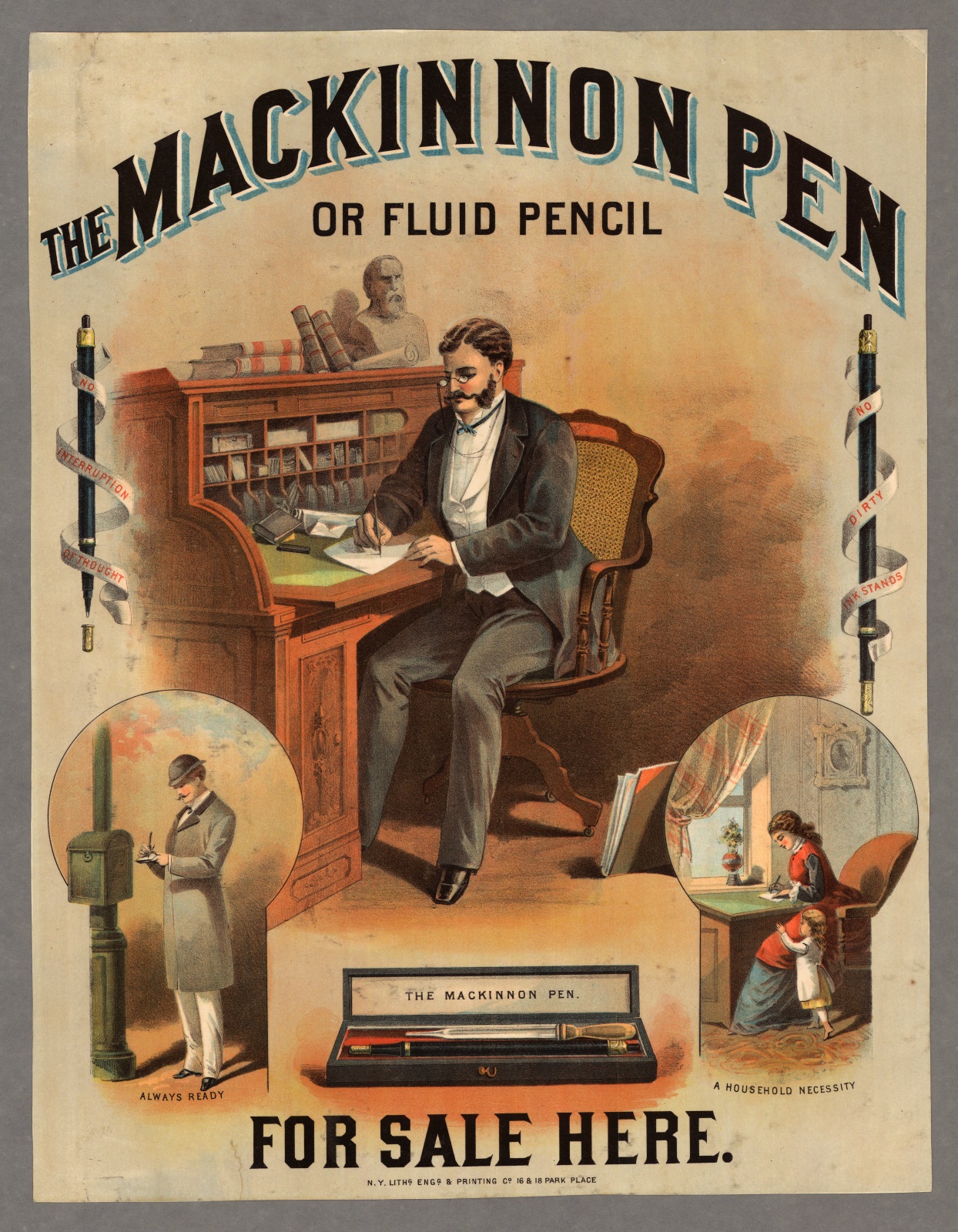
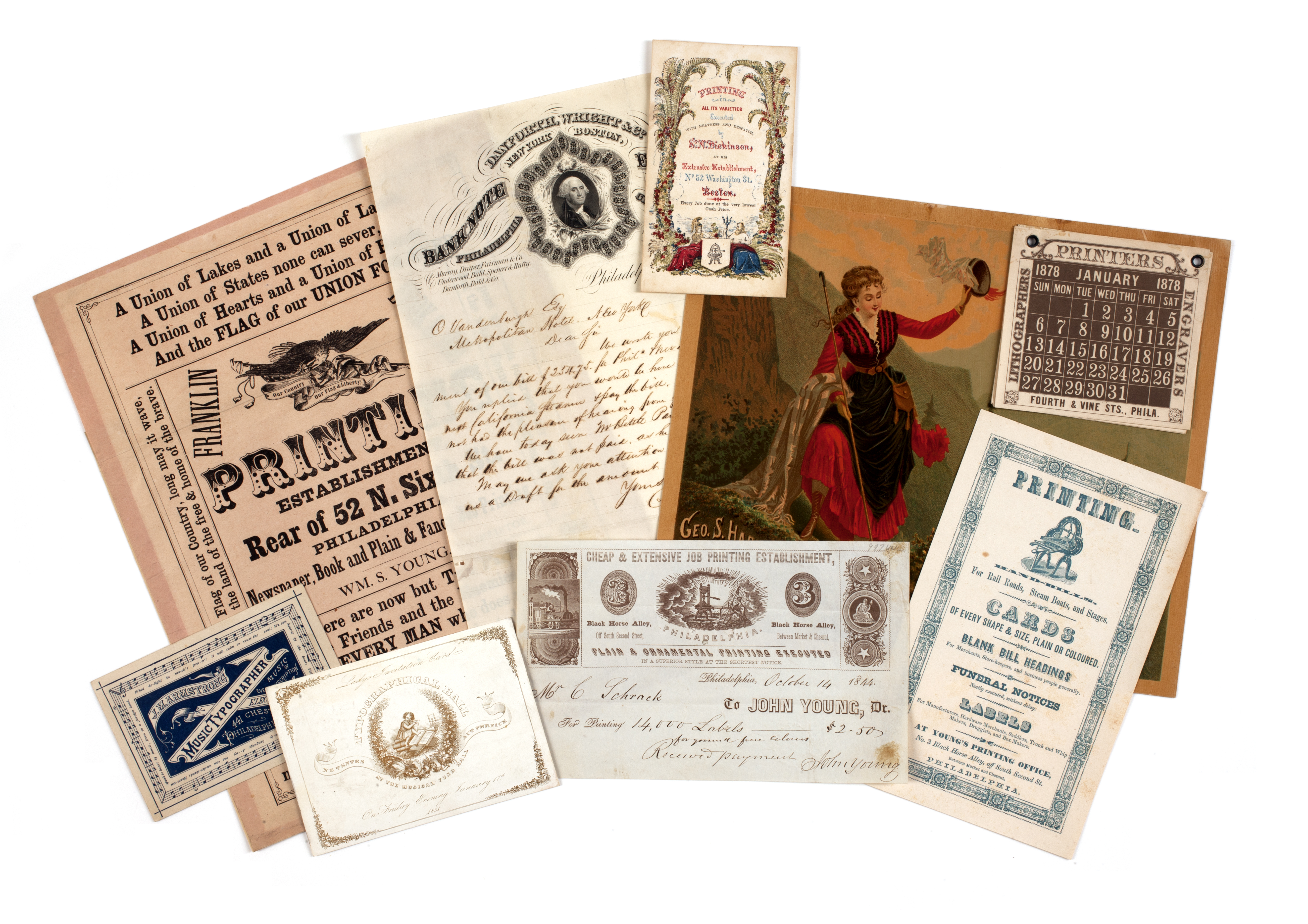
The American Antiquarian Society’s collection of American ephemera includes much material related to the book and printing trades, including bookplates, binders’ tickets, and trade cards for printers and publishers. A recent donation in honor of long time ephemera dealer and collector Joseph Freedman (who passed away in January of 2013), expanded the collection greatly. The new material includes over two hundred examples of printer’s bill heads, trade cards, and advertising handbills from large urban centers like Philadelphia, New York, and Boston, as well as smaller towns like New Bedford, Massachusetts, York, Pennsylvania, and Cincinnati, Ohio. These receipts for orders, detailed bills for printing jobs, and lists of supplies all help to reconstruct the vibrant printing history of the United States in the last half of the nineteenth century. Some highlights include an 1841 letter from lithographer George Endicott complaining to his landlord about a leaky roof, a bill from printer Augustus Kollner for book illustrations for a genealogy, an elegant engraved trade card for printmaker J. B Longacre, and an invitation to a typographer’s ball in Philadelphia.
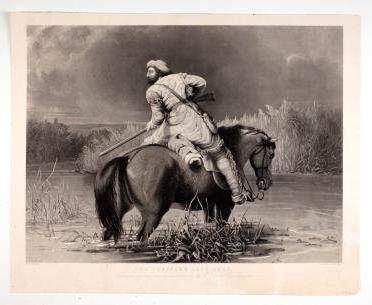 Based on a painting by the American artist William T. Ranney, who was well-known for his images of Texas pioneers, woodland trappers and rugged landscapes, this engraving was originally offered as a members’ premium by the Western Art Union in Cincinnati, Ohio, in 1850. This organization was founded in 1847 to promote and cultivate the arts in the Midwest. The engraving was the last to be issued by the group, which published a total of three large framing prints between 1847 and 1850. It is also the last in the set to be acquired by the American Antiquarian Society. Discussions with AAS member James N. Heald last year resulted in a generous contribution from the Richard A. Heald Foundation to assist the Society in acquiring impressions of all known prints published by the various American art unions, with acquisitions to be made in honor of Georgia B. Barnhill. We already hold a complete set of prints issued by the American Art Union (New York), the Cosmopolitan Art Union (New York) and now, the Western Art Union (Cincinnati). Ranney’s image proved to be very popular with the American market. It was reissued as a lithograph by Currier & Ives in the 1850s, and as a wood engraving in Harper’s Weekly in 1867.