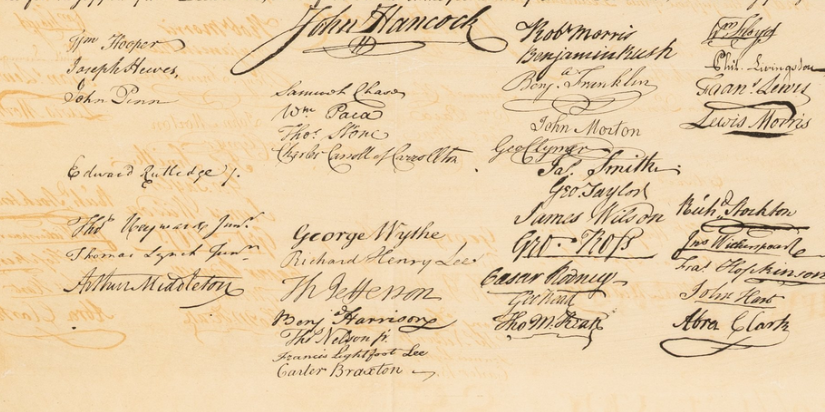
In celebration of the nation’s 250th birthday, the American Antiquarian Society’s new online gallery showcases printings of the Declaration of Independence produced between 1776 to 1876. The selection includes the Declaration’s first appearance in a newspaper, broadsides printed in the summer of 1776, official facsimiles, and commemorative printings for the centennial.
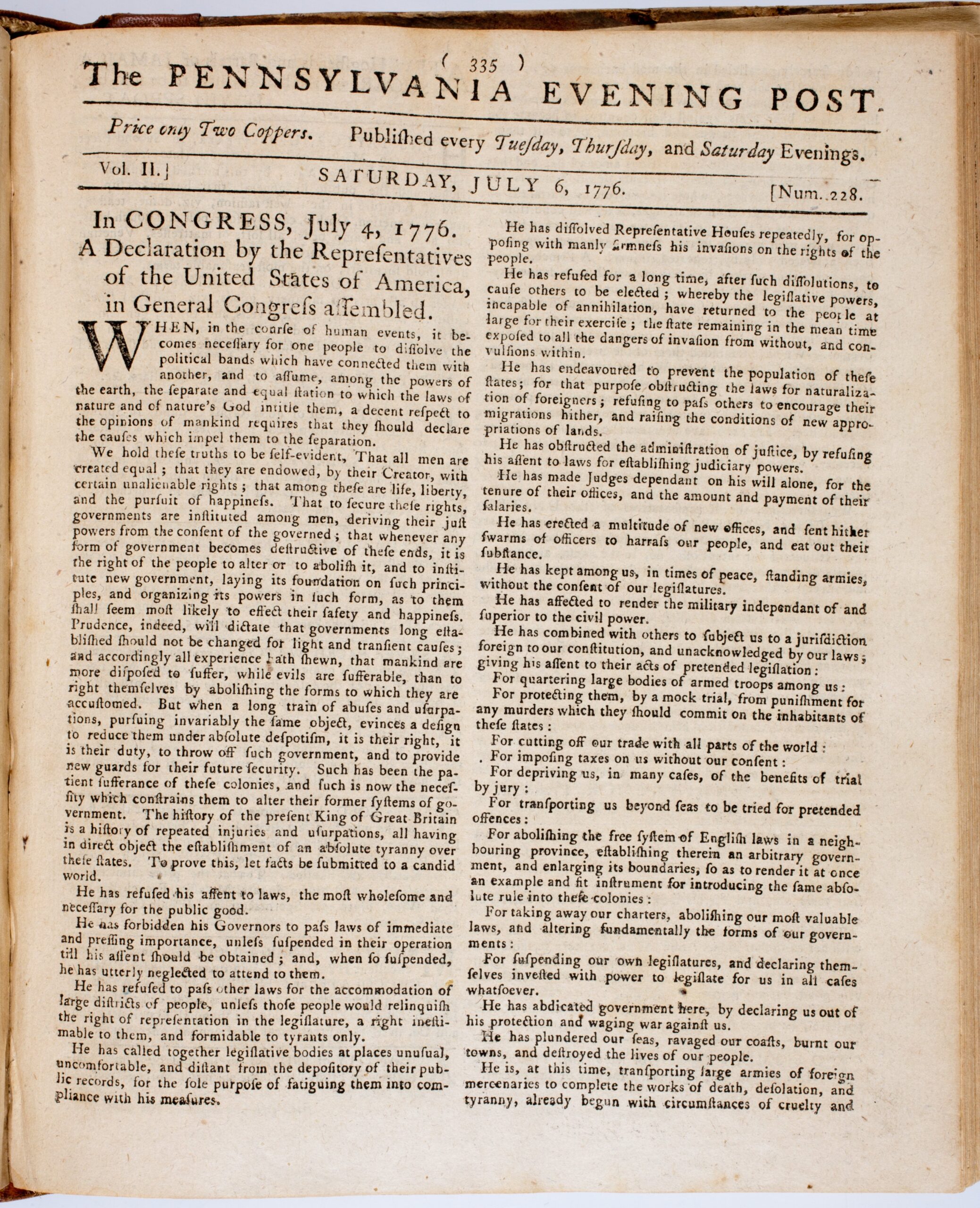
While the original handwritten Declaration of Independence — preserved by the National Archives — has its own well-documented history, the Society’s new gallery highlights the many printed versions created immediately after its adoption and later throughout the nineteenth century. Printers issued hundreds of iterations ranging from exact facsimiles to decorative designs intended to be framed and displayed (check out this AAS program to learn more).
The Declaration quickly attained national significance. In a July 1776 letter to his wife, John Adams, a Massachusetts delegate to the Continental Congress, wrote:
“I am apt to believe that it will be celebrated by succeeding Generations, as the great anniversary Festival. It ought to be commemorated… It ought to be solemnized with Pomp and Parade, with Shews, Games, Sports, Guns, Bells, Bonfires and Illuminations from one End of this Continent to the other from this Time forward forever more. You will think me transported with Enthusiasm but I am not. — I am well aware of the Toil and Blood and Treasure, that it will cost Us to maintain this Declaration, and support and defend these States. — Yet through all the Gloom I can see the Rays of ravishing Light and Glory...”
(John Adams to Abigail Adams, July 3, 1776. Massachusetts Historical Society.)
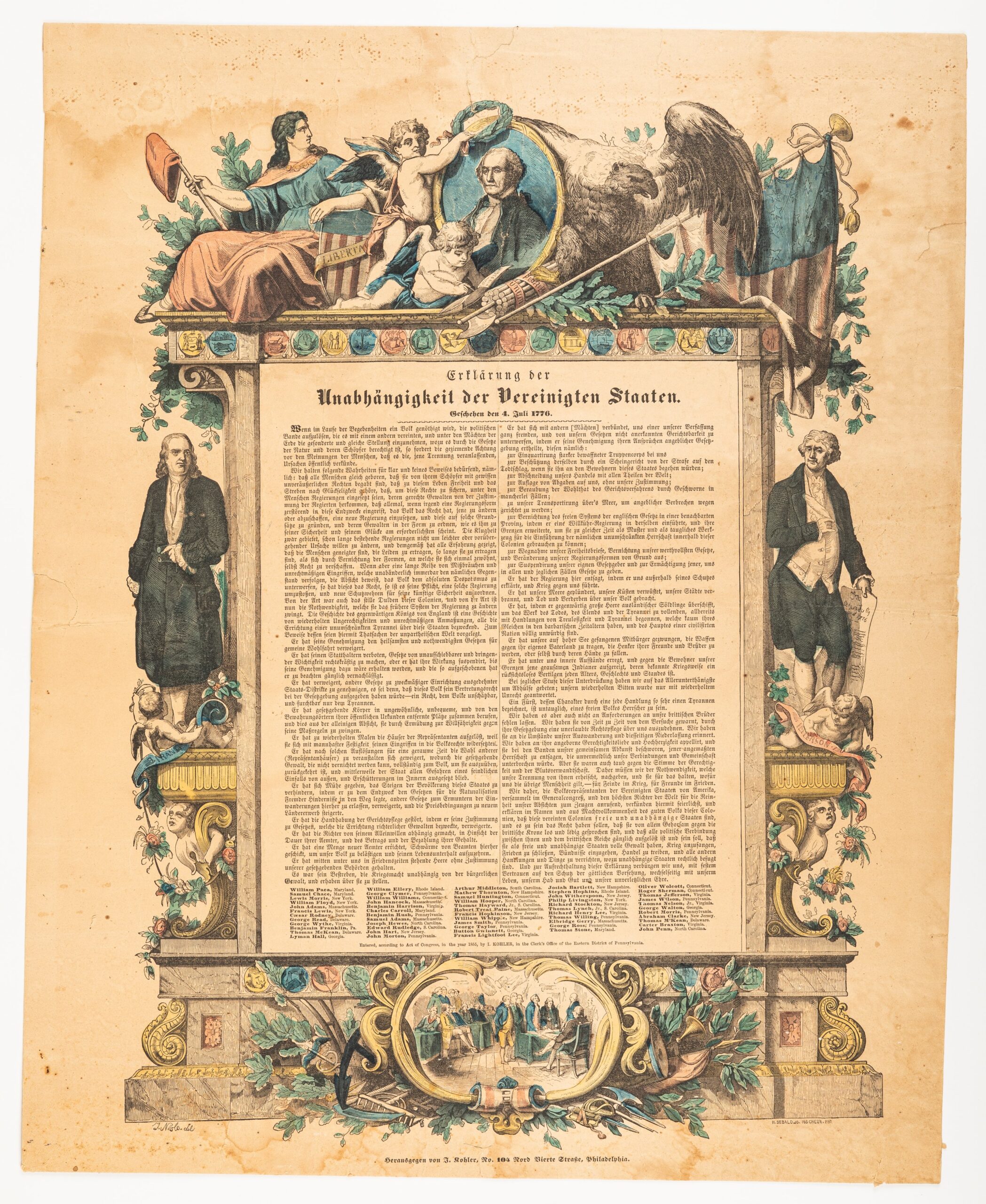
Americans did make the Fourth of July a day of national celebration. Copies of the Declaration of Independence circulated widely in English, Dutch, French, and German. They hung in homes, Masonic halls, civic buildings, and classrooms. In the 1830s, children learned the entire text of the document in their schoolbooks. A sample lesson for teachers from the 1836 edition of The North American Reader (Catalog Record) emphasized the significance of the Declaration:
“What is the merit of that immortal paper? The same which characterizes all the works of true genius… It is presumed that every teacher is fully sensible how important a knowledge of the Declaration of Independence…is to all the citizens of the United States. It is therefore hoped and believed that every teacher will require scholars not only to read it as an ordinary reading lesson, but that [they] will frequently question them to excite attention and inquiry.”
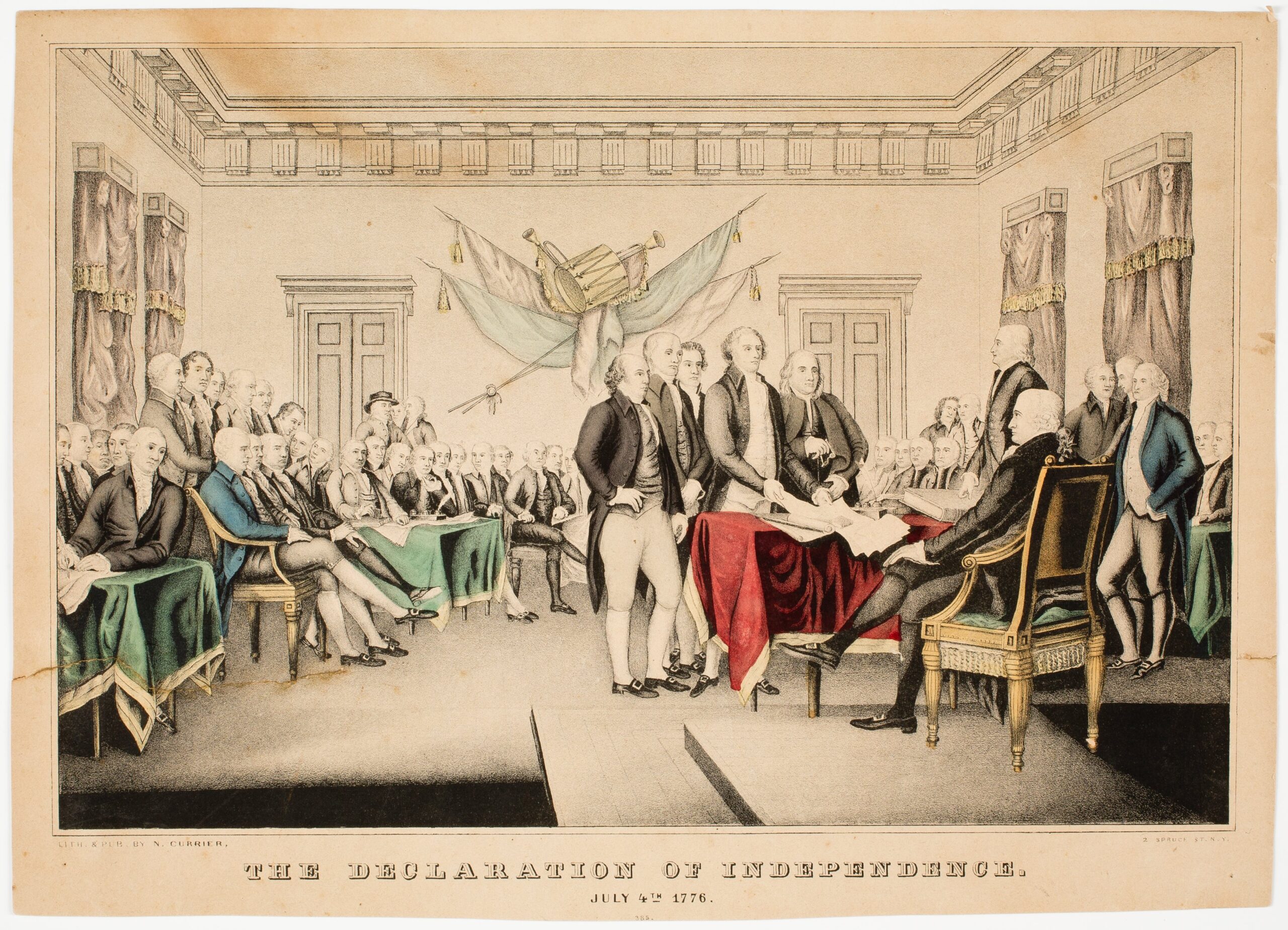
A distinct visual language around the Declaration emerged in the 1820s. Scenes of the drafting, Presidential portraits, eagles, and flags became common motifs, appealing to a growing market for patriotic imagery. The creation and celebration of John Trumbull’s famous oil painting showing the founders drafting the Declaration (installed in the rotunda of the U.S. Capitol in 1826) also helped drive the demand for printings of the Declaration. Trumbull’s composition appeared in many decorative editions, often as a vignette framed by the text of the Declaration itself.
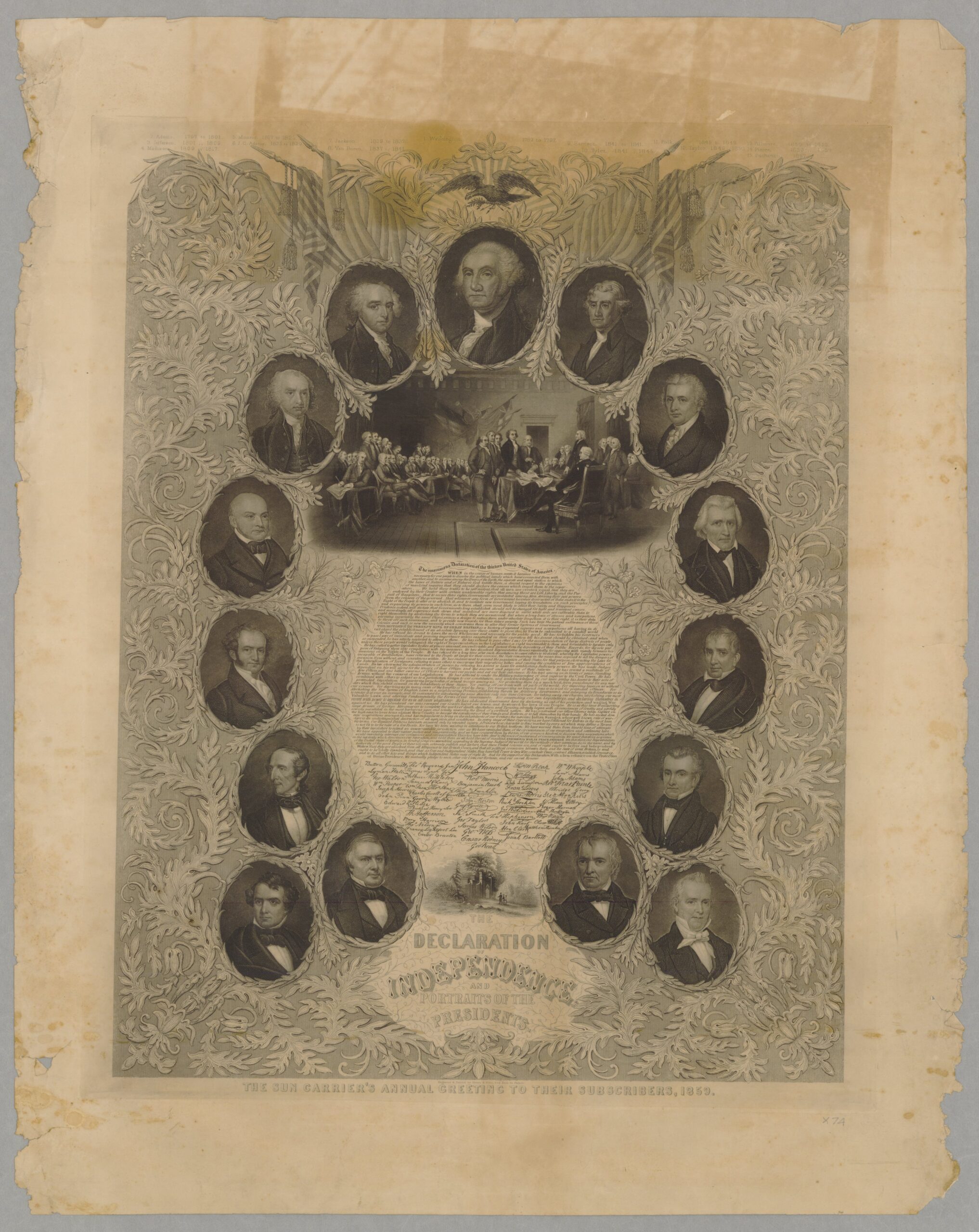
Together, these examples reveal how the Declaration of Independence moved far beyond its origins as a political document. Through newspapers, broadsides, and commemorative prints, Americans continually reinterpreted and celebrated the Declaration, ensuring its visibility in both public and private life. The items featured in the new AAS online gallery illustrate this evolving legacy and show how printers, artists, and citizens helped transform the Declaration into an enduring national symbol. By examining these objects, researchers gain a clearer understanding not only of the document’s historical significance but also of the fundamental place it has held in American memory for more than two centuries.
To view the online gallery, follow this link to the AAS website: https://www.americanantiquarian.org/library/declaration-of-independence
On July 4, 2026, the American Antiquarian Society will be hosting a free open house commemorating the 250th anniversary of the signing of the Declaration of independence. Stop by 185 Salisbury Street in Worcester, Mass., from 10 a.m. to 1 p.m. to view some of the many Declaration printings and make your own commemorative copy on a tabletop printing press! At noon, participate in a reading of the Declaration on the steps of historic Antiquarian Hall.
For more information about the open house, visit the link to the event page here: https://www.americanantiquarian.org/programs-events/open-house-declaration-independence
