When I first came across the Nadia Sophie Seiler internship at the American Antiquarian Society, I was drawn to the chance to work directly with historical materials. As an art history student with an ever-growing interest in libraries, museums, and archives, I thought an internship at AAS could connect my interests with my prior work-study experience at the James Cabell Library in Richmond, Virginia. Over the course of my internship, my work has ranged from smaller projects like rehousing collection materials to the more meticulous task of cataloging Canadian newspapers.
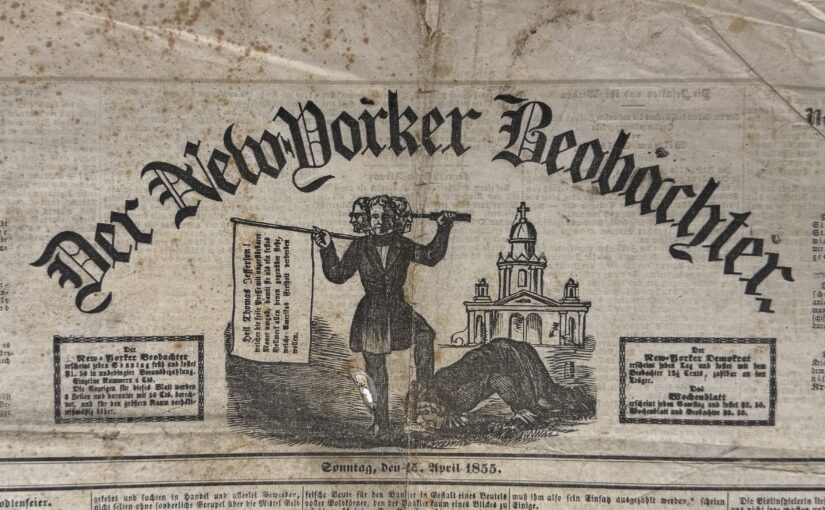
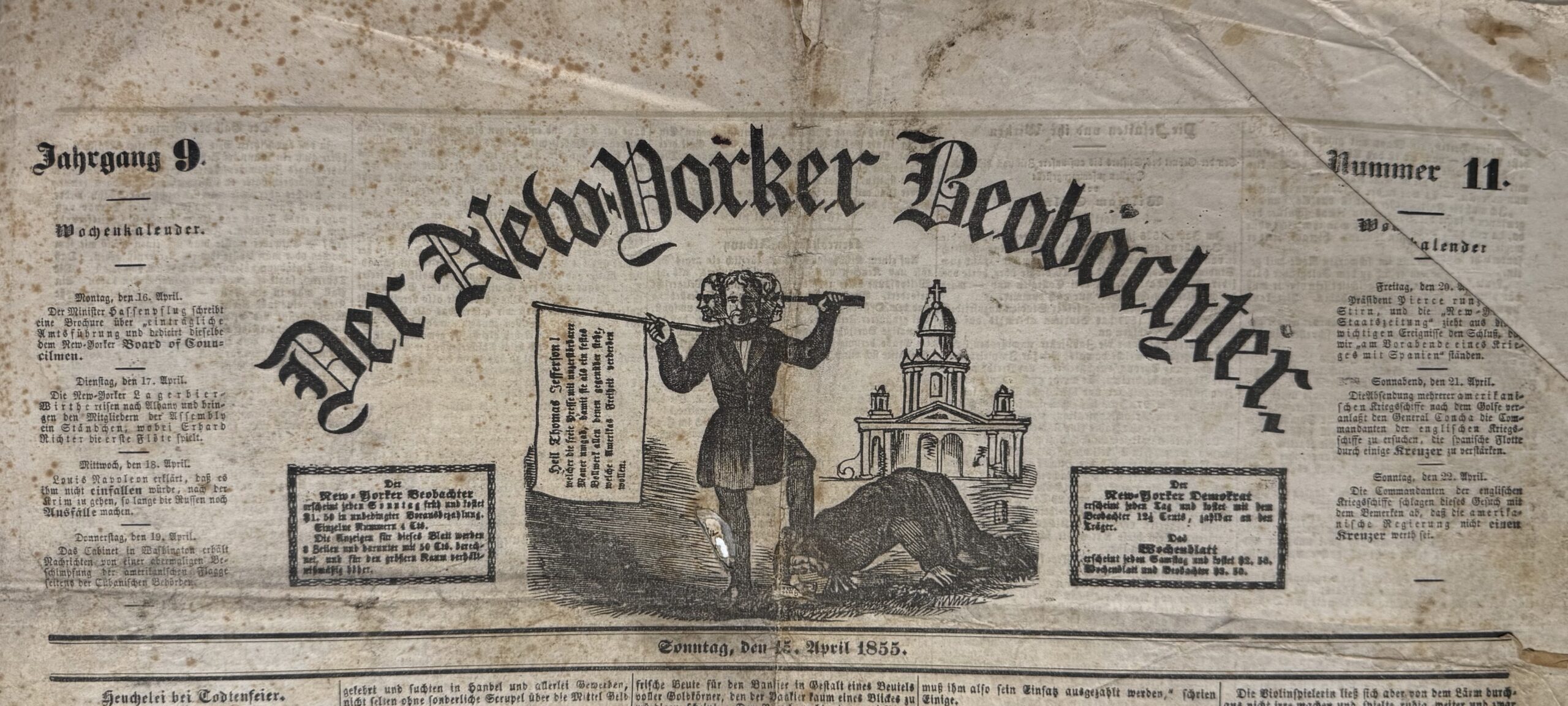
One of the most unexpected parts of my experience has been how I’ve been able to connect my art history background to materials I’ve worked with, especially regarding newspaper mastheads. At first glance, mastheads might seem purely decorative, or conversely, straightforward in their ability to describe the locale and substance of the paper. Looking closer, you begin to see how detailed and intentional these designs are. Political symbols, allegorical imagery, and intricate compositions all work together to create identity, values, and even ideological leanings before a reader consumes a single article.
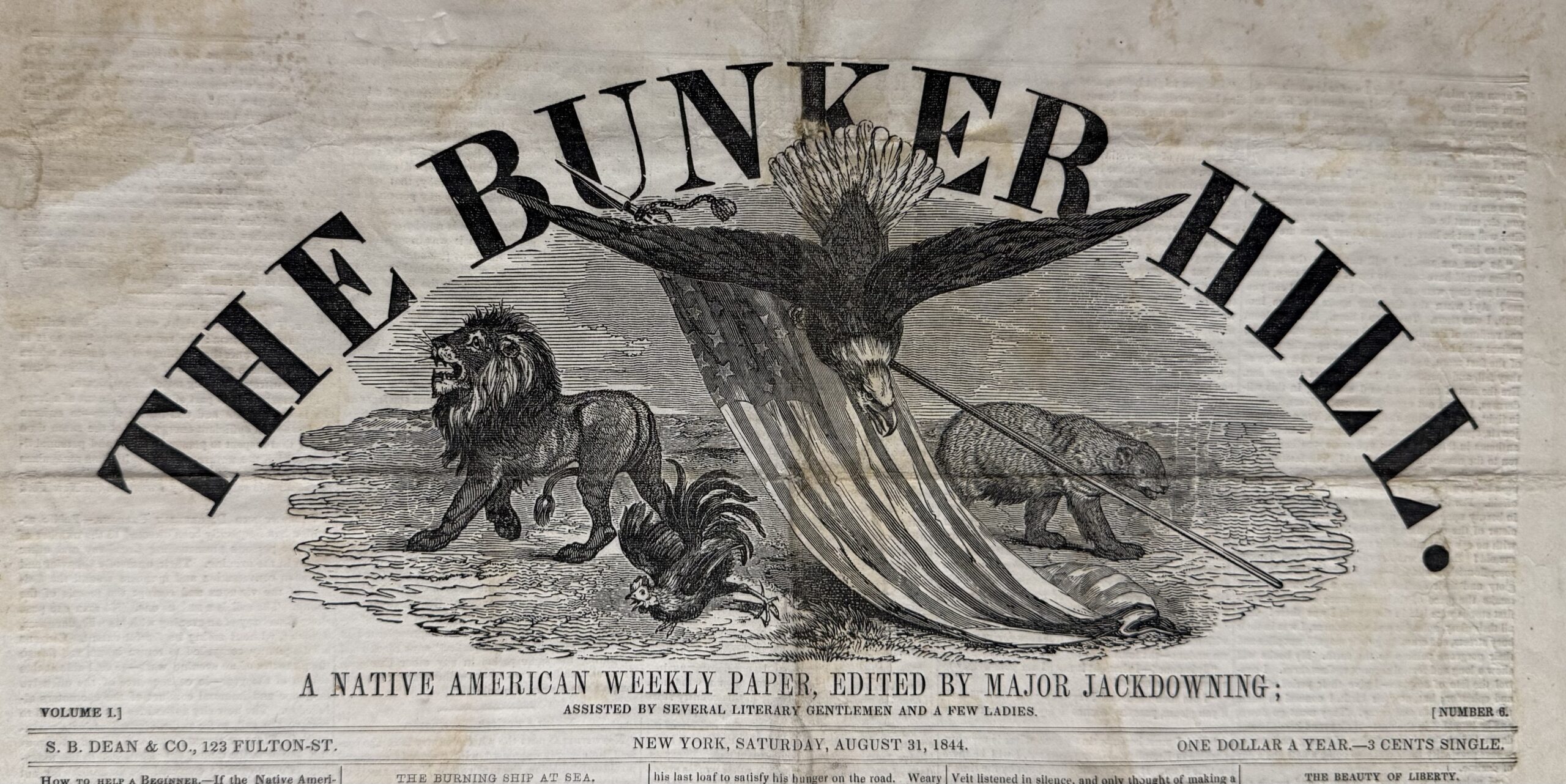
Simultaneously, I found myself reconnecting with my earlier interest in urban planning while working with advertisements in newspapers. I became curious about the addresses listed, what those places looked like then and now, and how they fit into the larger structure of a city. Looking them up revealed small but fascinating landscapes evolving over time. Many printing offices seemed to be located in larger shared buildings in dense downtown areas. These buildings often appeared along commercial strips near waterfronts where towns would’ve originally begun to sprout. These details offered a glimpse into how print culture functioned within the physical and economic frameworks of growing cities.
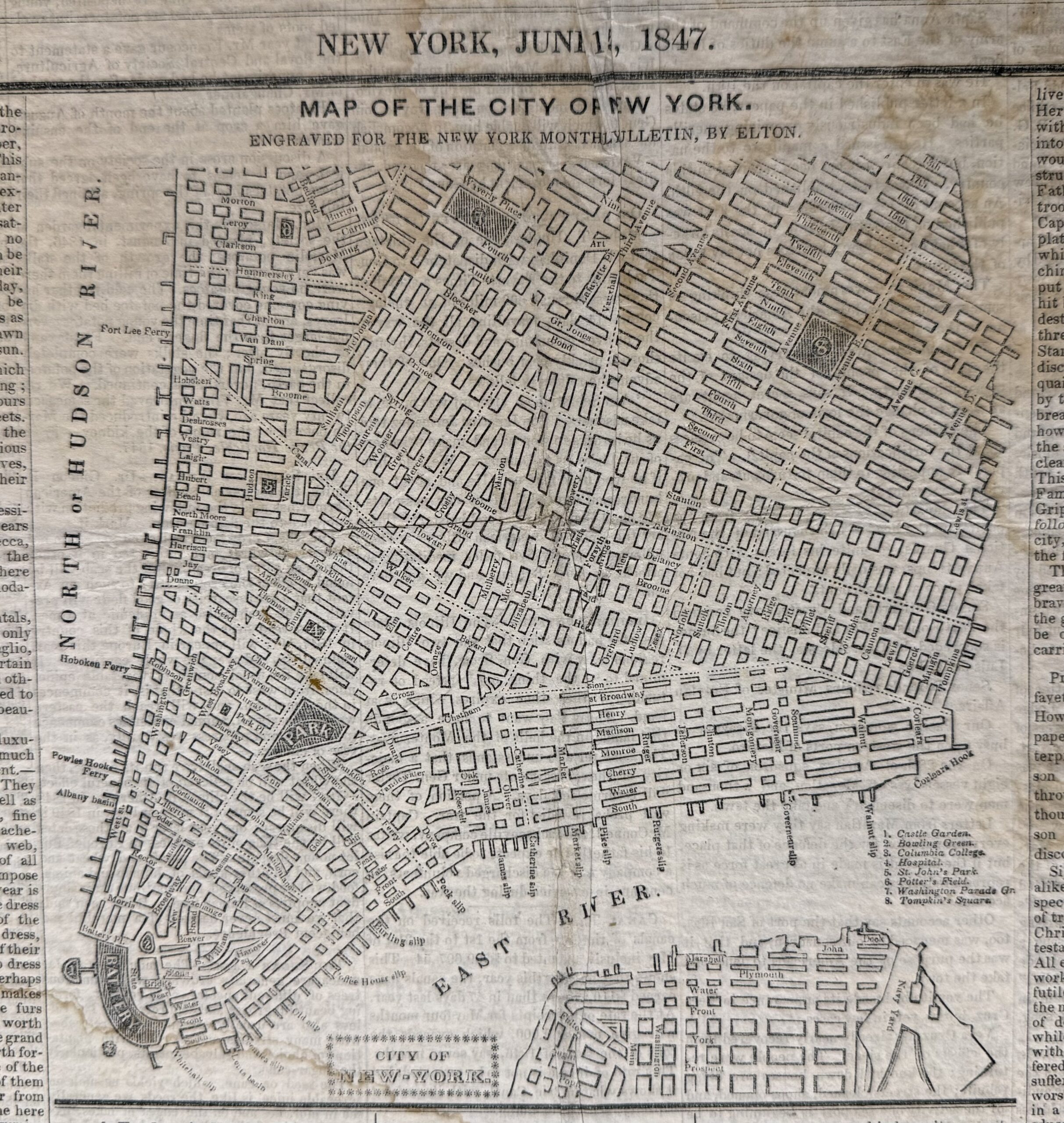
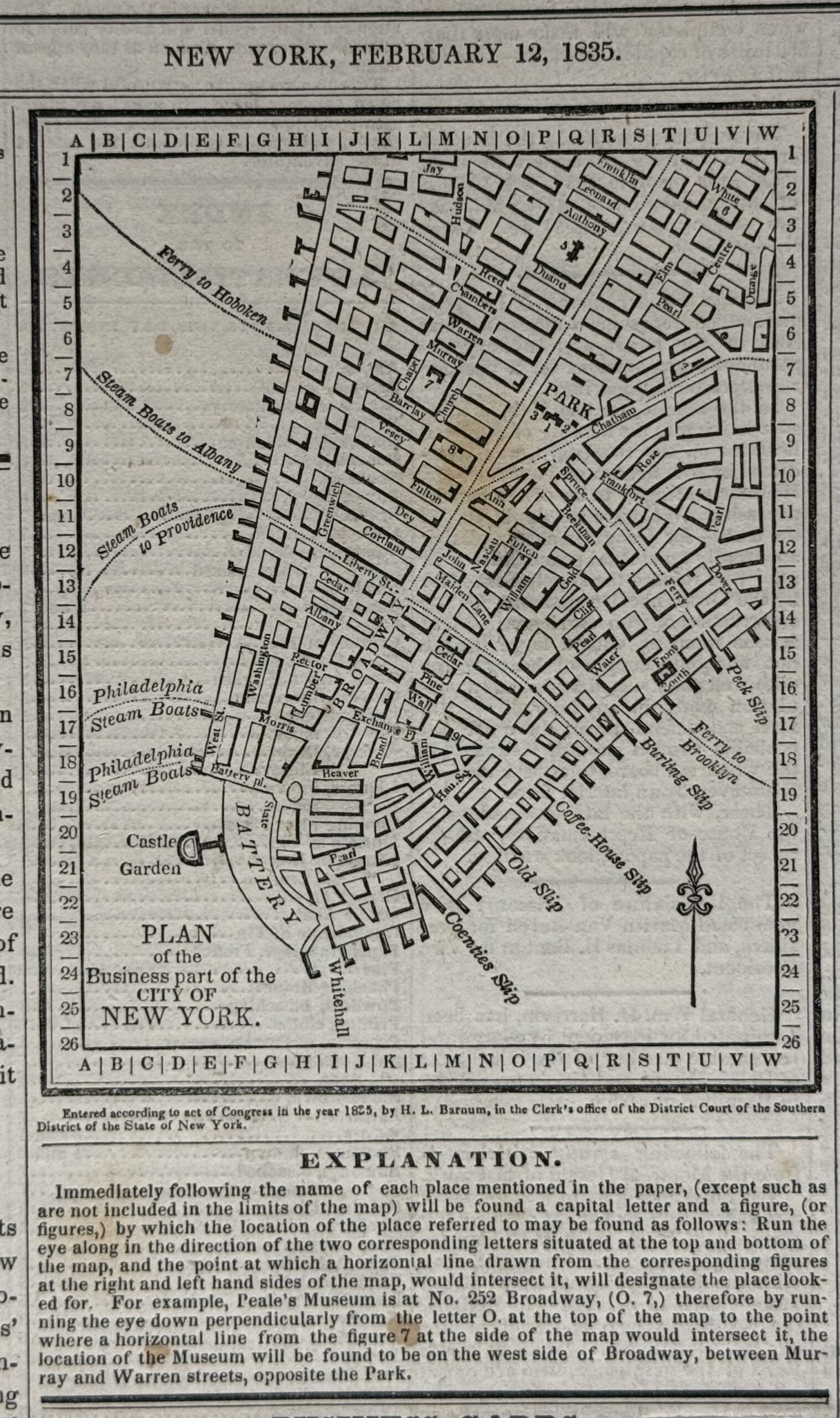
Even though I’ve shifted my academic focus from urban planning to art history, this experience reminded me that those interests still overlap in ways I hadn’t fully realized . Seeing layout plans and references to places like New York City’s business districts in the Business Reporter, and Merchants’ and Mechanics’ Advertiser (Catalog Record) felt like rediscovering a familiar lens – one that added another layer of meaning to the material in front of me. Connecting my background in urban planning to my current work in art history reassured me that changing academic paths did not mean abandoning what I had already learned. Instead, those earlier interests still shape the way I interpret visual culture, spaces, and historical materials. The two fields continue to inform one another in the way I approach research and observation.
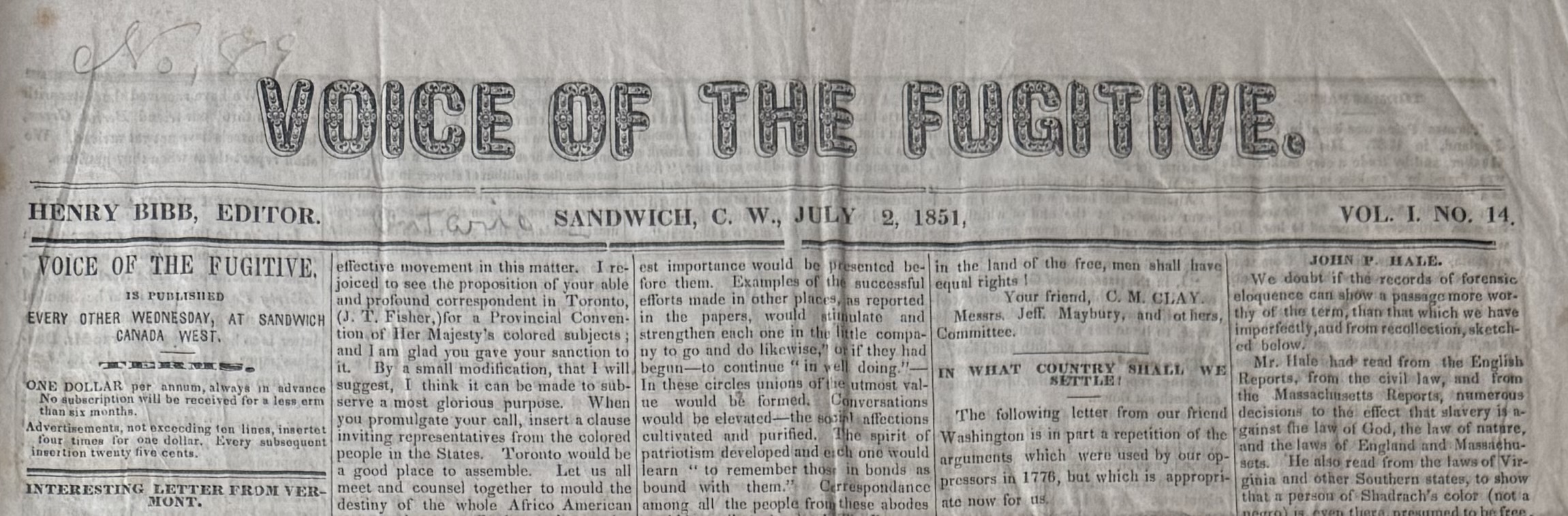
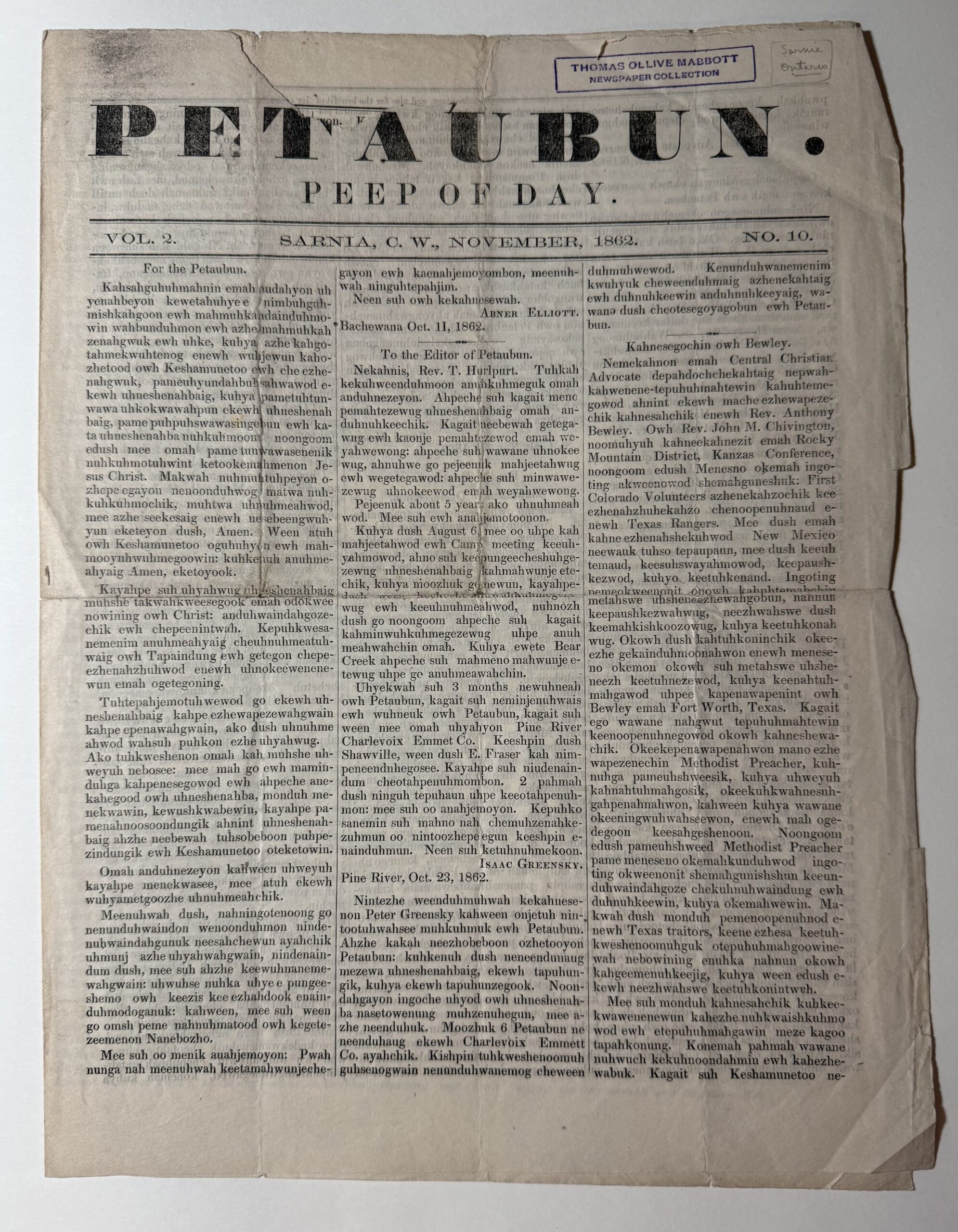
Some of the most exciting moments of my internship came through unexpected discoveries. Two newspapers stood out: Petaubun: Peep of Day (Catalog Record), printed and published in Sarnia, Ontario, by Thomas Hurlburt; and Voice of the Fugitive (Catalog Record), published in Sandwich, Ontario, by Henry Bibb and his wife Mary E. Bibb. Finding these papers felt especially meaningful because they are closely tied to another project underway at AAS focusing on expanding access to the early Black press.
The Early Black Press initiative is a forthcoming collaborative project focusing on preserving, digitizing, and increasing accessibility to newspapers and periodicals printed and published by Black Americans in the nineteenth century. Many of these publications document Black life, activism, and community-building. Voice of the Fugitive was an especially meaningful discovery related to this work. While the project already includes materials from the United States and the Caribbean, there had been a notable gap: Canada. The discovery and cataloging of Voice of the Fugitive will help fill that gap in a way that can only be categorized as serendipitous.
Similarly, the rediscovery of the Petaubun paper is closely aligned with the Society’s upcoming summer seminar, “Paper Relations: Histories and Futures of Indigenous Print Cultures,” which will explore Indigenous print traditions and their ongoing impact. (Learn more about the summer seminar here: https://www.americanantiquarian.org/programs-events/paper-relations-histories-and-futures-indigenous-print-cultures.) Working with these materials firsthand and seeing how they connect to larger institutional conversations made my internship experience feel intensely gratifying. Moments like these showed me what librarianship and archival work can be about: creating connections that keep information, stories, and voices accessible to anyone seeking them, whether for academic research or personal curiosity. There was something deeply fulfilling about realizing that the careful, somewhat solitary work of cataloging could contribute to broader conversations about visibility, history, and access.
As my time at AAS comes to a close, I find myself feeling grateful and grounded in a clearer sense of direction. Through conversations with staff, visits to other institutions, and day-to-day work with the collections, I’ve been able to see the many paths that exist within the library world and I can begin to imagine my place in it. I’m especially thankful to Serials Cataloger Alicia Murphy, my supervisor through this experience, whose guidance shaped every part of my time here. From the very beginning, she took the time to walk me through each process with patience and intention. She intentionally created opportunities to better understand the field as a whole through organizing meetings with staff across departments so that I could learn more about the different forms archival and library work can take, as well as arranging visits to institutions such as the Brown University Library, the Worcester Art Museum Library, and Worcester Polytechnic Institute’s Gordon Library. Experiencing these different environments firsthand gave me a broader understanding of how libraries operate across academic, museum, and specialized settings, and helped me better understand where my own interests may fit within the profession.
I’m also incredibly thankful for Vince Golden, Curator of Newspapers and Periodicals, whose generosity and enthusiasm made a lasting impression throughout my internship. Whether he was setting aside fascinating materials like wallpaper newspapers and papers from my hometown, sharing his extensive knowledge of newspaper history, or organizing opportunities for me to connect with staff over lunch, he consistently made the experience feel welcoming, engaging, and intellectually exciting.
This internship has continued to show me that libraries are not simply places where information is stored. They are places where connections are constantly being made between people, histories, disciplines, and ideas. This experience has left me feeling excited about the future and deeply appreciative of everyone who helped shape my time here.
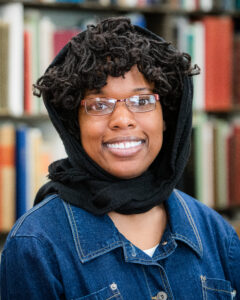 Daylah Owens-Watson is an art history student at Virginia Commonwealth University. She works as an Acquisition and Cataloging Assistant at the James Branch Cabell Library in Richmond, Virginia, where she gained prior experience before joining AAS for the 2026 Seiler internship. While at AAS, she catalogued 106 Canadian newspapers and entered over 2,000 issues into Clarence. Daylah plans to finish her bachelor’s degree while looking for more archival opportunities and continuing to work in libraries.