The Caribbeana Project

Luke Henter is a senior in the History Department at Princeton University. He studies 19th and 20th century international history, with certificates in the History and Practice of Diplomacy and Creative Writing. He has also worked at the Princeton Historical Review and is a member of the Community Service Interclub Council at Princeton.
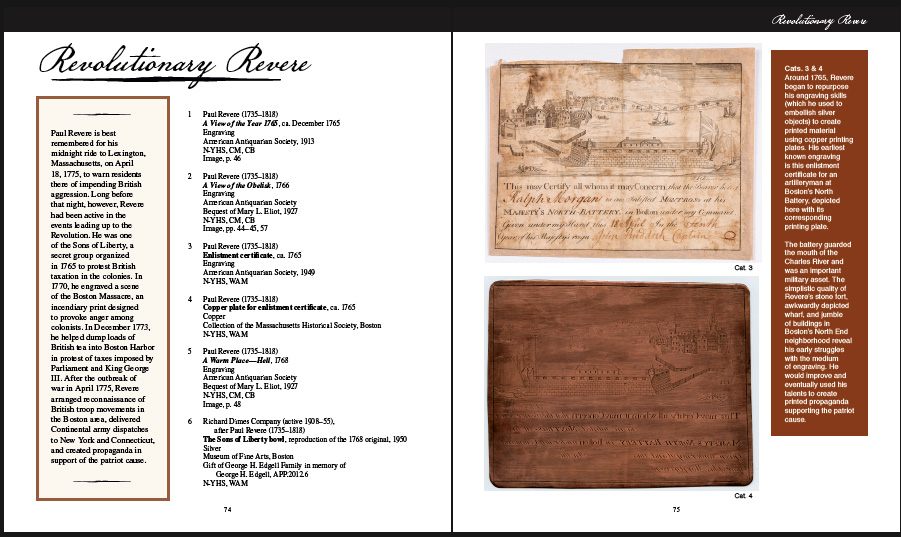
As a newcomer to the American Antiquarian Society (AAS), one thing becomes immediately clear after spending time in the archive stacks: I had a much higher chance of getting lost in there than I did actually finding what I was looking for. This is the inevitable result of building such a substantial archive over such a sustained period of time. Another inevitable outcome of having such a sizable collection is that it always contains something new and surprising, something I wasn’t expecting to find.

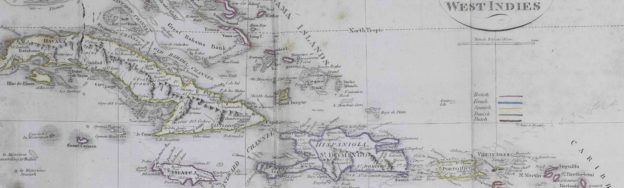
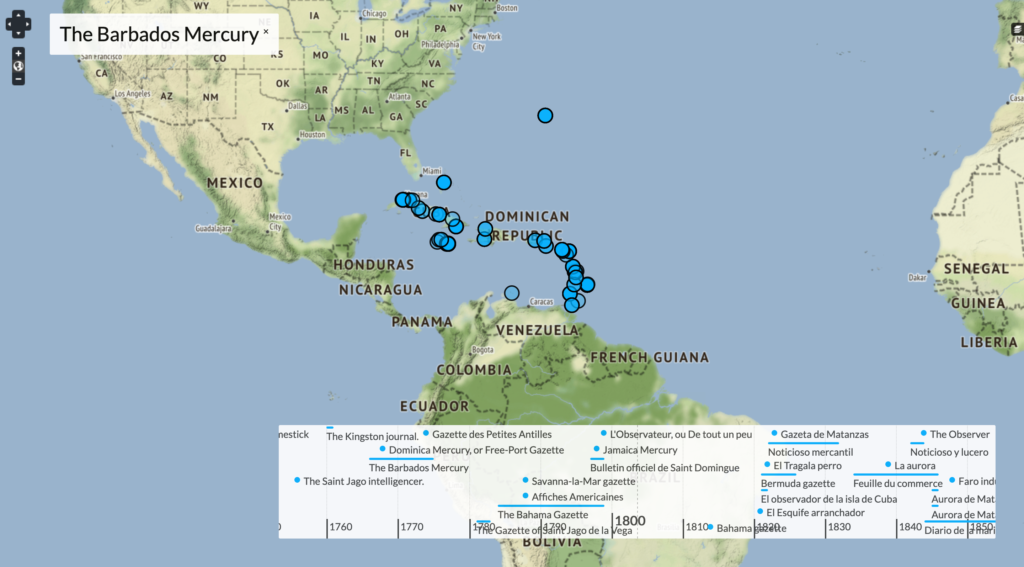
AAS is known for its “collection of books, pamphlets, broadsides, newspapers, periodicals, music, and graphic arts material printed through 1876 in what is now the United States,” but AAS’ collections are not limited – either by content or geography – to the United States or even to North America, and there is a rich collection of Caribbeana housed in the archive that deserves more attention. This dynamic collection forms the basis of The Caribbeana Project, a new AAS digital exhibition.

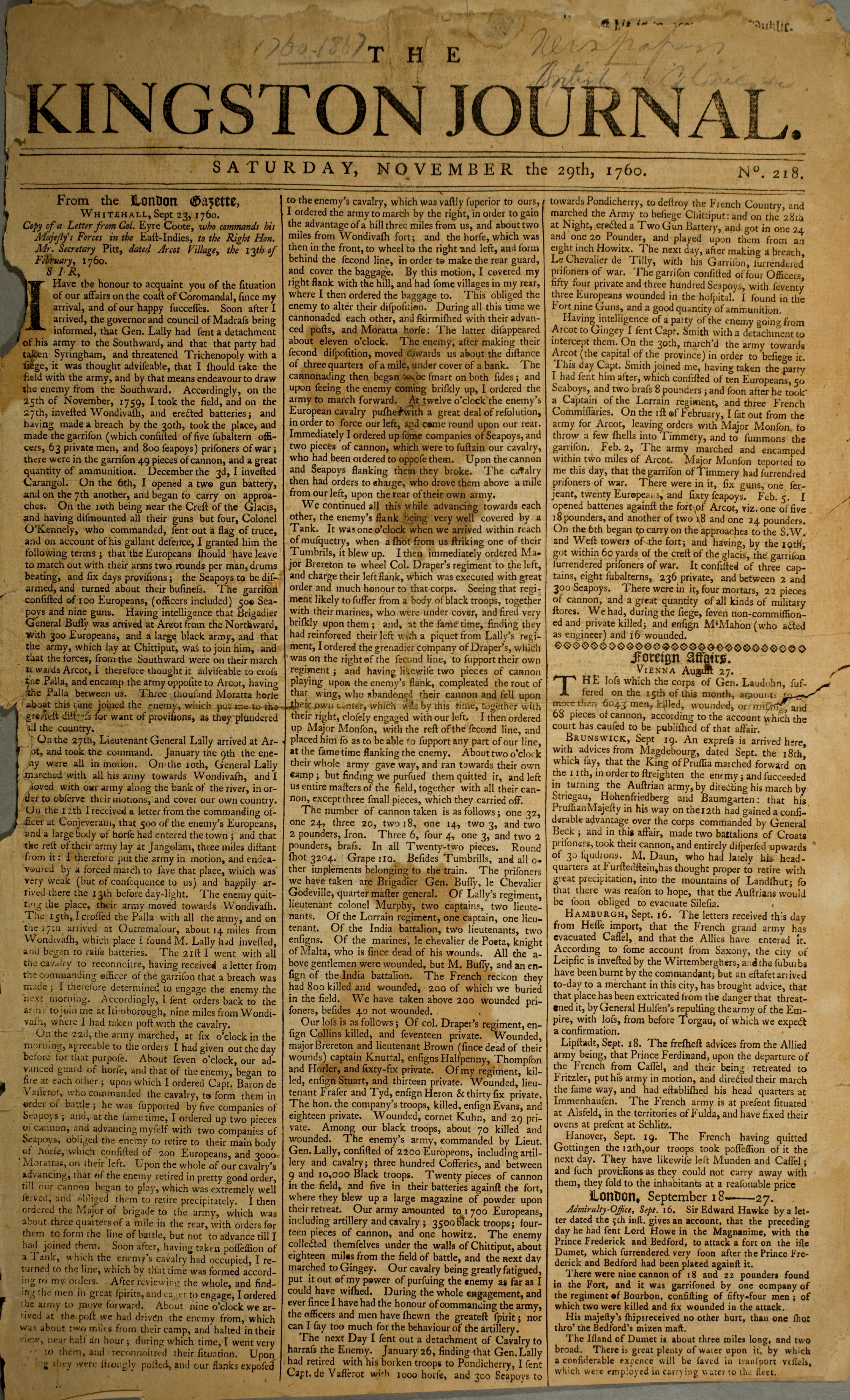
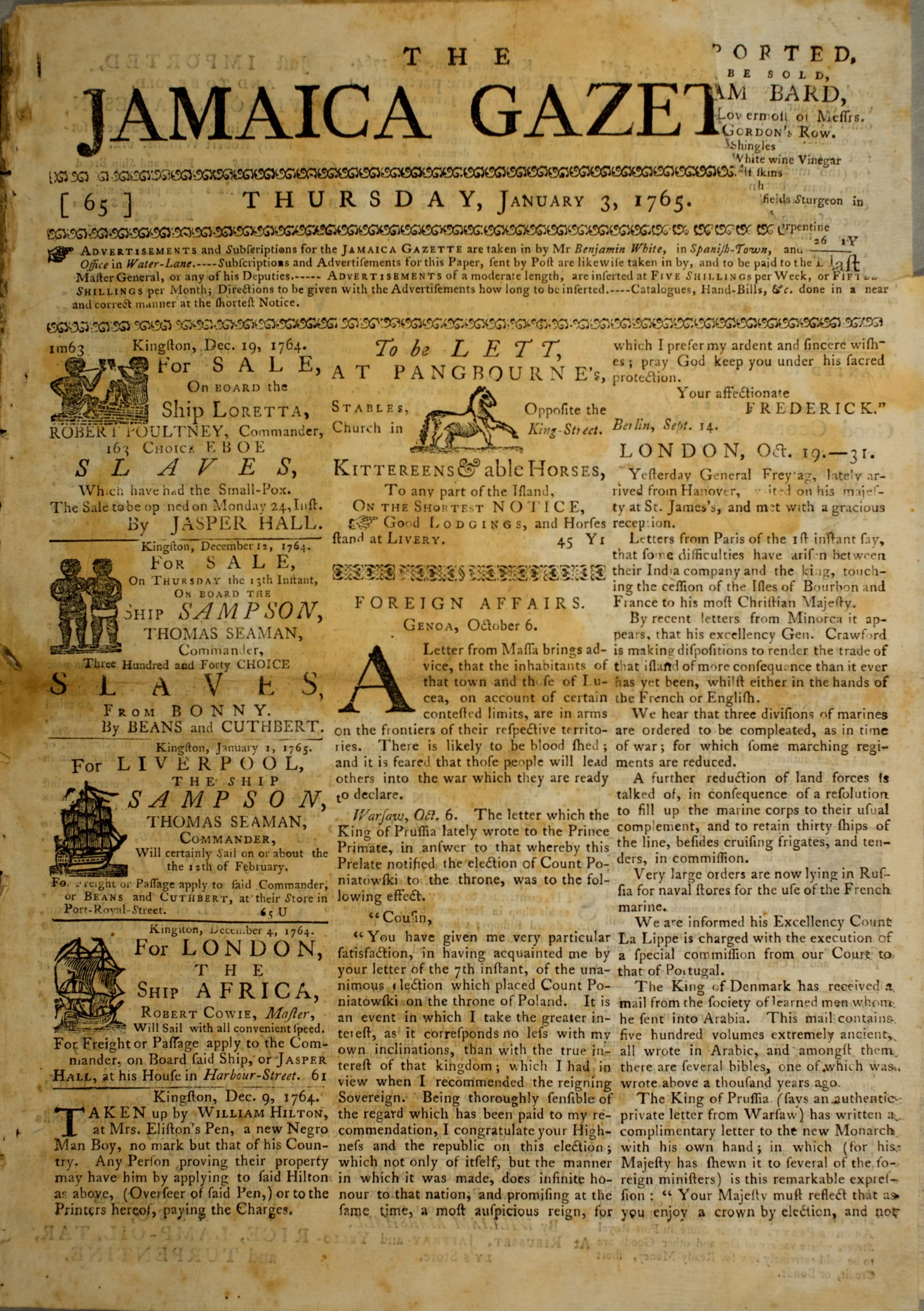
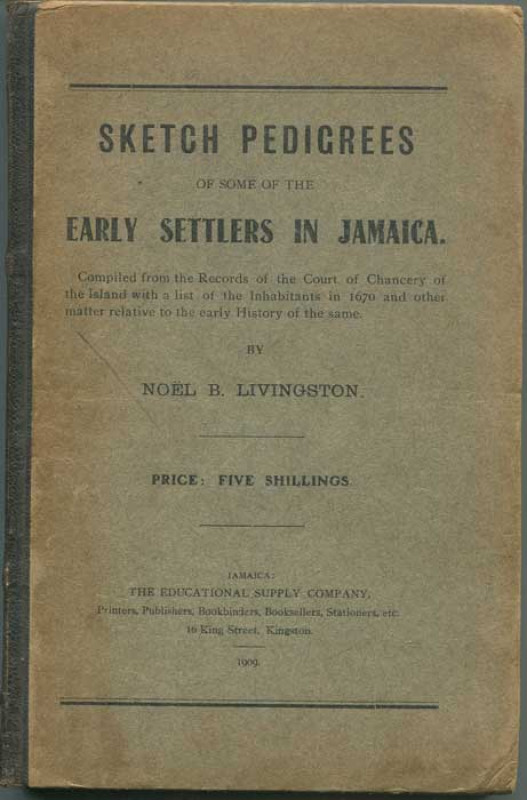
For an institution with a national mandate, it might seem incongruous for the American Antiquarian Society to hold such a wide-ranging collection, but the stories of North America and the Caribbean are intertwined. The AAS collections reveal that the study of each region is, in fact, complementary to, not separate from, the other. The items compiled for this project reveal the interconnectedness between the Caribbean and its people and the larger Atlantic World, visible in histories, trade, science and literature, religion, politics and law. The collection here includes travelogues from the eighteenth and nineteenth centuries, essays that describe the natural histories of the islands, and items that document the horrors of the Slave Trade and movement towards revolution and abolition.

The Caribbeana Project is not meant to be a complete account of every Caribbean-related item in the AAS Catalog. Such an account would be a monumental task. Instead, the exhibition advances two distinct claims. First, the Caribbean is an important and often overlooked aspect of North American history. Second, AAS’ collection of Caribbeana is rich and wide-ranging, and it is important to recognize these aspects of the AAS catalog.

The initial list for exhibition in this website was compiled from several bibliographies (Cundall, Cave, and others), as well as the AAS catalog. Then, I perused each one of the items, noting its characteristics and content. The Caribbeana Project makes it possible to sort these items by several characteristics, from date printed to place of publication. The highlight of the website is, however, a list of collections that groups the items by thematic focus, placing each item next to others that address similar questions. Reviewing these collections allows readers to see how different authors in different regions and different times considered the same general questions related to the Caribbean.

The process of creating this exhibition was neither simple nor straightforward. I am grateful to the PICS Internship Program for supporting this internship and making this great experience from last summer possible. I also owe a great deal to Elizabeth Pope, Curator of Books at the American Antiquarian Society, whose support and assistance have been invaluable and constantly appreciated as an internship supervisor.

The Caribbeana Project is meant to be both an inspiration and a resource. It has been the basis of an incredibly rewarding summer project, full of exciting breakthroughs and inspiring discoveries. I am grateful to both PICS and AAS for giving me the support and time to realize this project and make it a reality. I look forward to hearing, and seeing, how Caribbeana at AAS continues to grow and flourish. It is my hope that these resources prove as inspiring to future researchers at AAS as they have to me this summer.


Project Link: https://www.americanantiquarian.org/caribbeana/

For Further Reading:
Cave, Roderick. Printing and the Book Trade in the West Indies. Pindar Press, 1987.
Cundall, Frank. Political and Social Disturbances in the West Indies: A Brief Account and Bibliography. Institute of Jamaica, 1906.
Goslinga, Marian. A Bibliography of the Caribbean. Scarecrow Press, 1996.
Jordan, Alma and Barbara Comissiong, ed. The English-speaking Caribbean: A Bibliography of Bibliographies. G.K. Hall, 1984.

When Times are Tough, AAS Gets Going . . . on Transcription!

Staff at AAS have been sad and frustrated about Covid-19’s effects on our researchers, fellows, and fellow cultural institutions. Despite this hardship, we’ve been able to find some joy in our days and to feel connected to the collections we love by working on a staff-wide transcription of the first AAS donation book.

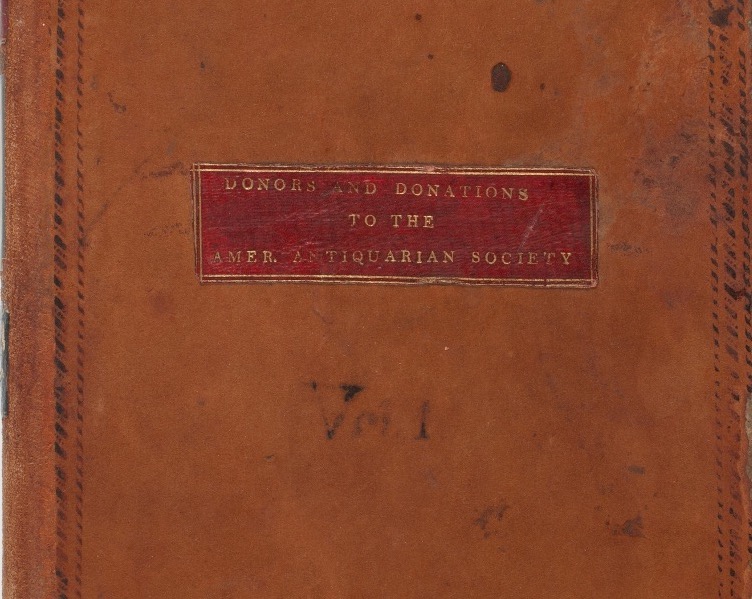
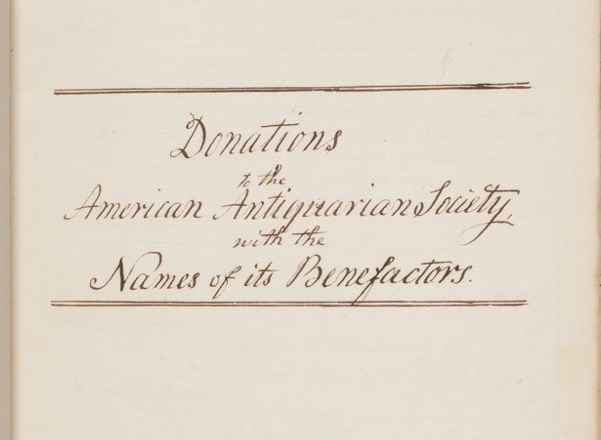
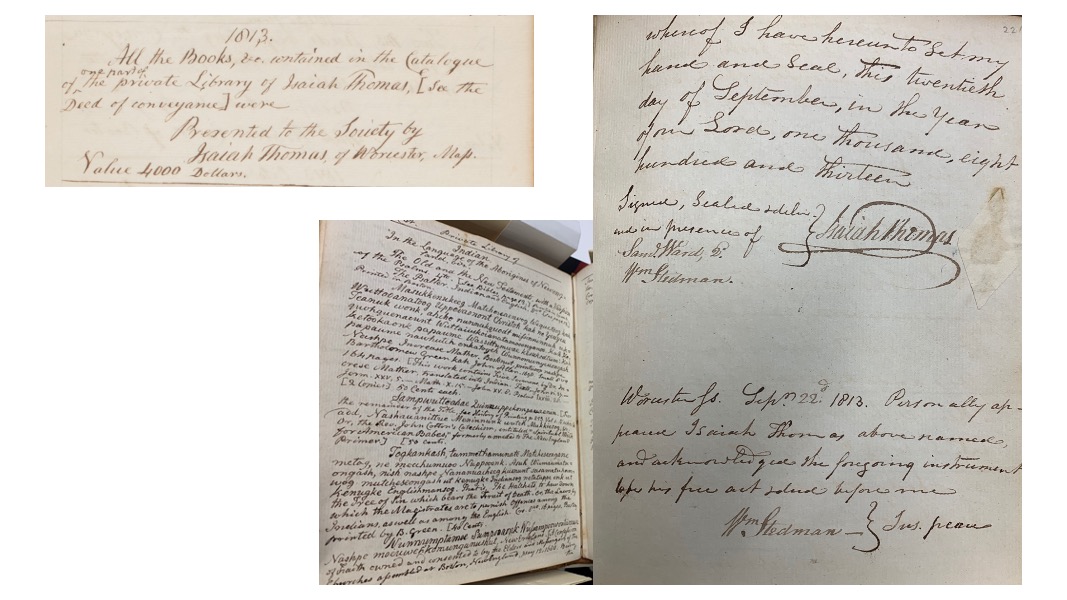
For those of you who are unfamiliar with the first donation book, it includes a list of all of the Society’s acquisitions between 1813 and 1829. Most of items in the list are written in our founder Isaiah Thomas’ own hand. It includes many artifacts from indigenous populations that were deaccessioned over the years, as well as all of the books, pamphlets, and manuscripts that we received during that period.

We started working on this project not long after we all began working virtually from home. The transcription project was intended to give staff something to work on in gaps between other tasks and help them feel connected both to each other and to the collections from which we are separated. And what better way to feel connected to the collections than to work with this amazing foundational document!

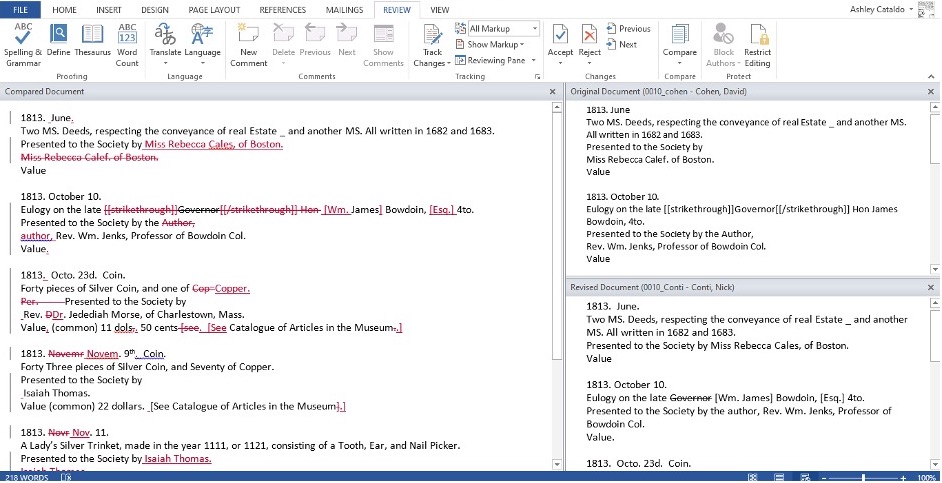
Two staff members transcribe each page of the donation book and, when the project is complete, we will reconcile the two transcriptions and produce one final, solid transcription. Once completed, we will post these transcriptions online. Digital images of the donation book are already available online here. Already 15 staff members have worked on the project, completing 120 pages from the donation book (that’s 240 pages of transcription!)

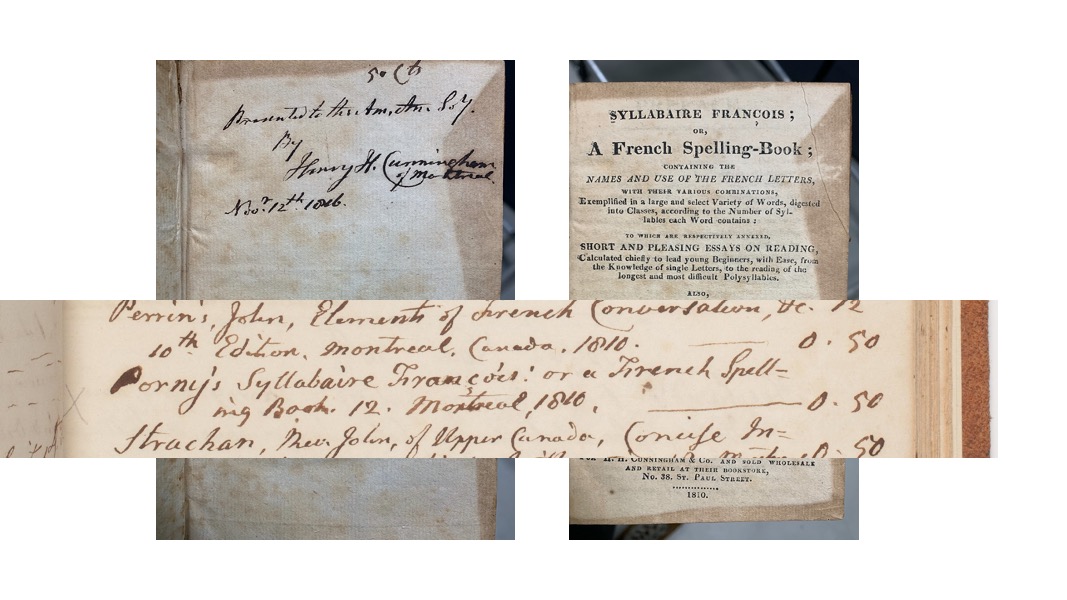
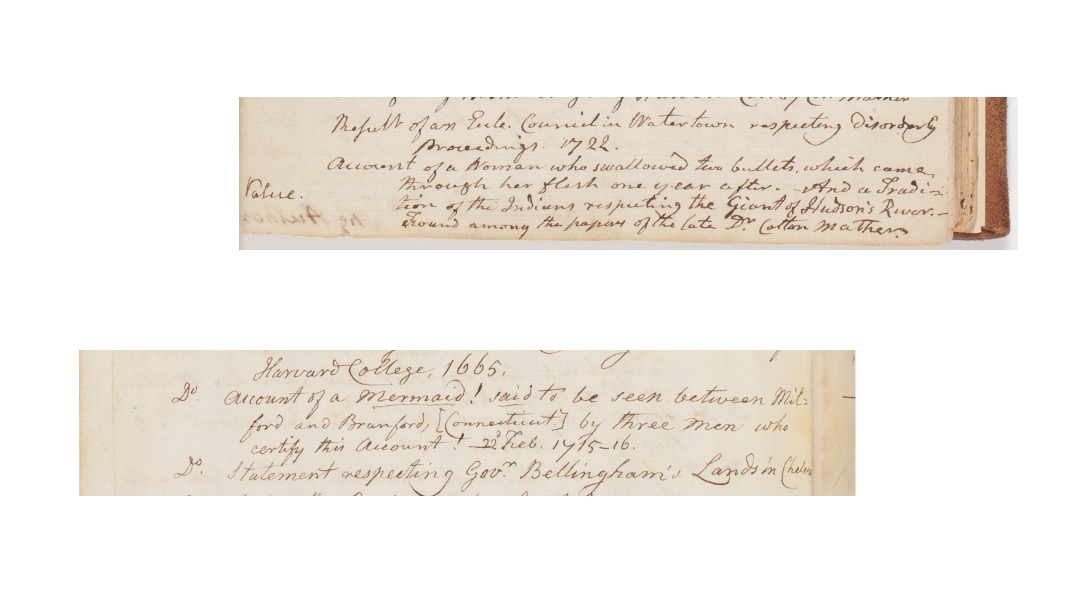
What is our staff finding so interesting about this book? Lisa Sutter, one of our acquisitions assistants, noticed a reference to an account of a mermaid whose existence was verified by three people. In a donation of Mather family material, Lisa also found a story about a woman who swallowed two bullets that eventually emerged from her flesh. (Cotton Mather (1663-1728) was known for his studies of medicine and wrote about this story.)  Curator of Children’s Literature, Laura Wasowicz, was struck when one of the pages she was transcribing listed of a book that she had cataloged not too long ago, Porny’s Syllabaire Francois (1810), and its donor, Henry H. Cunningham of Montreal.

Researchers at AAS have also found the donation book endlessly interesting, and we consider it to be one of the staples of research at AAS. Peter Onuf, a recent Distinguished Scholar in Residence, used the donation book to study early American antiquarianism; Megan Walsh, a past NEH fellow, has used the donation book to understand early woman donors and collectors; and Christine DeLucia, another past NEH fellow, has used the donation book to understand the collection and ultimate deaccessioning of early American indigenous artifacts. We can’t predict  how this transcription will be used in the future, but we are excited about the possibilities!

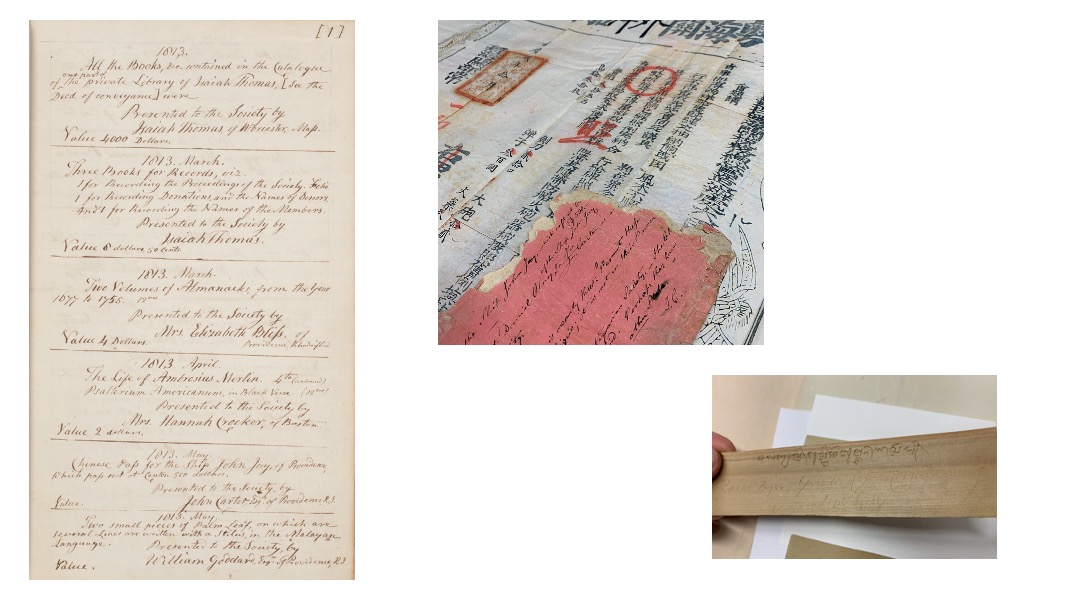
On the first page of the donation book Thomas lists several items: the donation book itself; a Chinese passport, which we recovered in the collections when working on the miscellaneous manuscripts rehousing project a few years ago; and a palm leaf from Malaya with writing from the Malayan leader at the time. Perhaps most importantly, Isaiah Thomas’ library appears as the first item in the donation book. Thomas conveyed his library to AAS with a deed of conveyance that appears in the back of his own personal manuscript library catalogue. The entry appears so humble, but, when our former director Marcus McCorison transcribed Thomas’ personal library catalogue, it came to almost 700 pages of transcription. This generosity combined with humility is what made Thomas such a good leader of the Society.

One can also look to our current leader, AAS President Ellen Dunlap, who despite being unbelievably busy during this time of crisis, has signed up for and completed 15 pages of transcription. She has been very supportive of this project which is helping the staff to look back at and connect with our early history and with the library collections. She is giving so much to the library and staff on the verge of her retirement just as Thomas gave everything he treasured to AAS at our founding.

Revering Revere: Designing the Catalog for Beyond Midnight

When AAS was tasked with creating the physical catalog for Radiant with Color & Art to coincide with the opening of the McLoughlin Brothers exhibition at the Grolier Club in 2017, the focus was (at least from the design perspective) on the eponymous color and art. We tried to frontload the design of that catalog to reflect and reproduce the quality of color achieved by Brothers’ printing successes. An earlier blog post reflected on our design process for the McLoughlin catalog.

We tried to apply that same formula last year when we were staring down the assignment of translating an exhibition into a catalog. Part-essay and part-illustrated checklist, the resulting exhibition catalog is softcover, 8.5 x 10” in its final trim size with 104 perfect-bound pages. It features ninety-two total images, seven of them bleeds. The design of the catalog was less about pigmentation and more about pragmatism.

Beyond Midnight: Paul Revere is about capturing the nominal Revere as the “producer” whose raw materials’ list reads like a litany for eighteenth-century creative work: prints, tools, copper, lead, silver, mortar, wedding rings and church bells. Indeed, Revere’s work seemingly reached every area of early American culture during the revolutionary period, from extraordinary political events like the Stamp Act protests and the Boston Massacre to everyday items like Psalm books, tea sets, book plates and currency. The catalog is like the exhibition, infinitely more than just “Revere’s Ride.” The five essays by Jennifer Anderson, Lauren Hewes, Robert Martello, Nancy Siegel, and Nan Wolverton are generously illustrated with material used in the physical exhibition, and the checklist of the exhibition further showcases Revere in his many hats: as revolutionary, maker, networker, and legend.
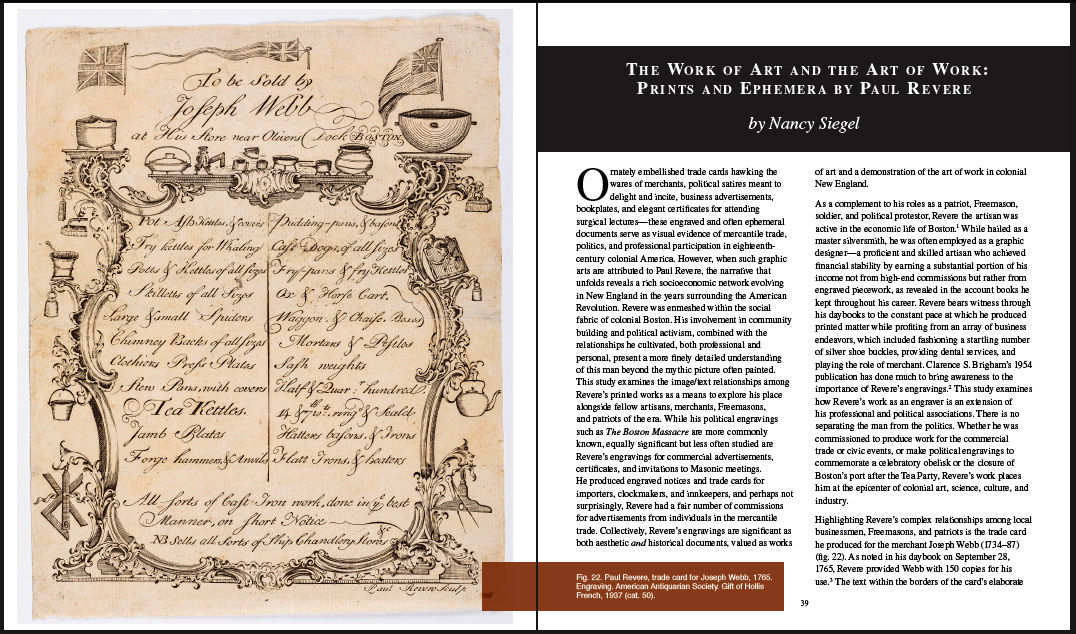
A survey of Revere’s print material shows he is a master in using tight spaces; he could maximize even the most limited of canvases. Looking at his body of engravings also shows him as an artist pushing both physical and political boundaries. And because Revere can borrow ideas like the best of them, we tipped our design-hat and, in turn, borrowed some of his ideas to use in the catalog, from the double columns to the close-fitted page. This feature was the one we co-opted for the print version of the catalog and is best seen in the page for Nancy Siegel’s essay “The Work of Art and the Art of Work” (below), which shows Revere at his finest in the illustrated Joseph Webb trade card (left page). In the copperplate engraving, Revere seems to be saying (and there is no source to confirm this, but to this designer’s eye it is obvious), “You want my signature Chippendale with text AND every ware illustrated in the shop as a border AND you expect it to still look good!? Pass my lodestone. And here, hold my bottle of dried tea leaves.”

This catalog, like the McLoughlin one, was offset printed by Puritan Capital in Hollis, New Hampshire on their Komori Lithrone G40 press. In a conversation with our printing representative, Richard Denzer, we were told of the press’s ability towards quality of the print-image, as well as its commitment to saving energy and resources. This is something, upon reflection, we feel would have been important to the ever-practical-Revere. The paper we went with for Beyond Midnight is an 80# accent opaque white text, with a coated soft cover. With some of Revere’s more rugged engravings and plates, it mimics the originals held at AAS and elsewhere. Indeed, the name Revere is bound up with the idea of copper, so reproducing this was important to us. This paper choice also reflects beautifully the copper pieces and other physical objects, seen in the plate of the Boston Battery. The first time we held a hard copy of the book, this page took our breath away.
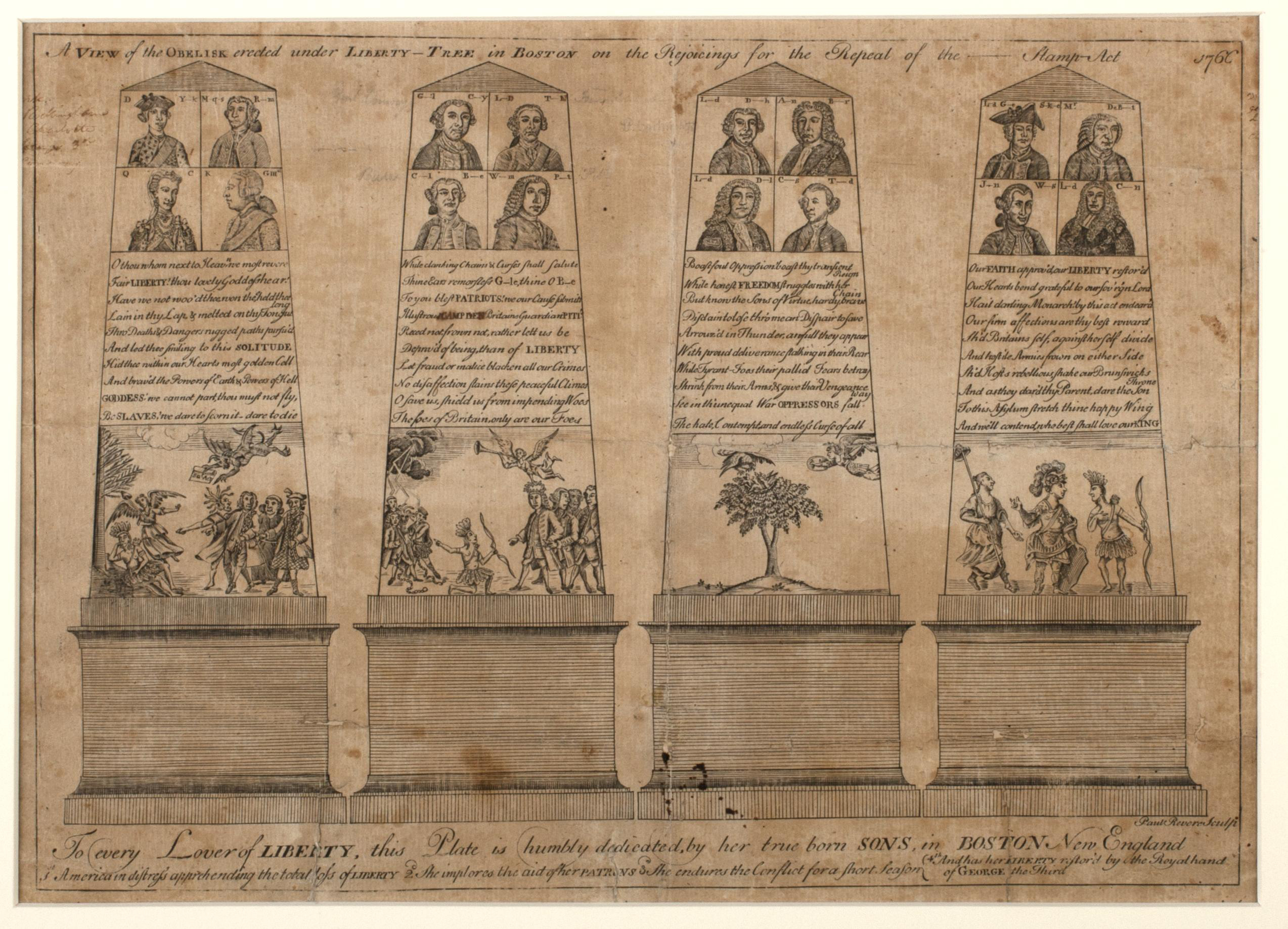
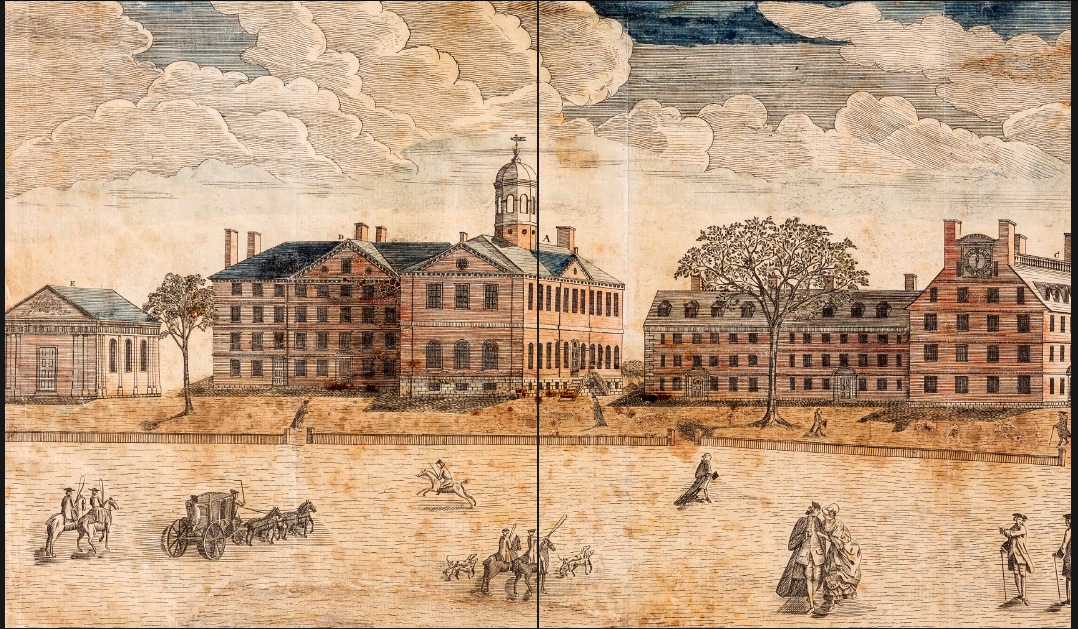
It was also important that the catalog include Revere’s signature prints. Full pages are devoted to prints like the Boston Massacre scene and his “Westerly View of the Colledges [Colleges] in Cambridge New England” (seen below), and the catalog offers a double-page spread for the 1766 engraving “A View of the Obelisk.” For fonts, we went with the ever-technical choices, set in STIX and Helvetica, as well as American Scribe for decorative purposes.

A print-copy of the catalog is available at our distributor, Oak Knoll Books. And when the physical exhibitions re-open at the Worcester Art Museum and Concord Museum, their gift shops will be happy to get a copy in your hands.

Something Old, Something New: Updates on the Program in the History of the Book

In his October 1983 report to the Council, former AAS President Marcus A. McCorison outlined the founding of the Program in the History of the Book (PHBAC), an ambitious initiative that set out to unite four areas of the Society’s work: collections, scholarship, fellowships, and publications. 

In the same 1983 report, John Hench, then assistant director for research and publication, listed a wide scope of activities under the new program, including an annual lecture series, new workshops and seminars, and a host of publications. Among these publications, Hench described,  “A newsletter [that] will keep scholars informed of activities of the Program and of similar work elsewhere . . .”  This newsletter was soon titled, The Book.

Published from 1983 to 2008, The Book served as the chief means by which PHBAC communicated with its various constituencies about the Society’s annual summer seminars, the annual James Russell Wiggins Lecture, and the progress of the five-volume series A History of the Book in America. It also served as a venue for the publication of essay reviews and substantive pieces on research collections and on research in progress. The collection is not only an important marker in the Society’s institutional history, it is also a valuable resource for the development of the History of the Book as a field of study.

This spring, The Book newsletter was digitized in its entirety.  Each issue is now available online in two formats: as a web-based flipbook and as a downloadable PDF. 

This collection is available here: https://www.americanantiquarian.org/book-newsletter

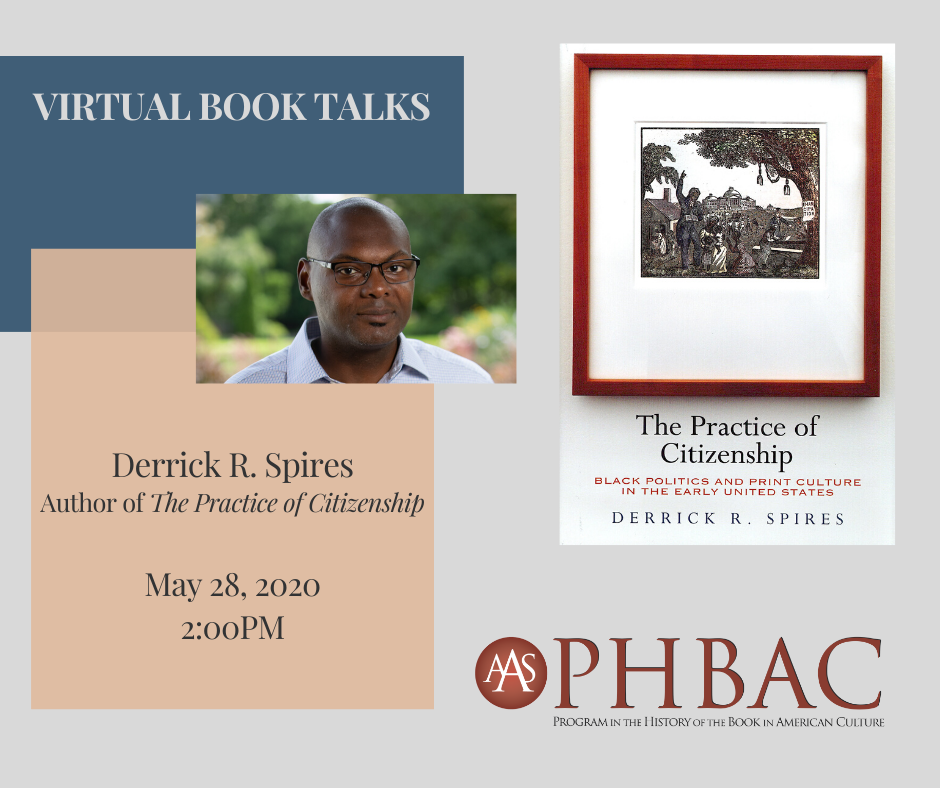
Virtual Book Talks

One of the latest activities of PHBAC is the Virtual Book Talk. This series showcases authors of recently published scholarly monographs, digital-equivalents, and creative works broadly related to print history and culture. During each installment, an author speaks about a recently published work and responds to audience questions. Programs can include an informal lecture around major points of the work, discussions of the archival research or creation and publication process, and readings from published texts. Programs typically last 45 minutes to one hour long. At the present, they will be streamed live on the Web and recorded for posterity. These programs are free but require advanced registration. 

Our first guest is Derrick R. Spires, Associate Professor of English and affiliate faculty in American Studies, Visual Studies, and Media Studies at Cornell University. Spires specializes in early African American and American print culture, citizenship studies, and African American intellectual history.  His first book, The Practice of Citizenship: Black Politics and Print Culture in the Early United States (University of Pennsylvania Press, 2019), won the 2020 Bibliographical Society/St. Louis Mercantile Library Prize and the 2019 M/MLA Book Prize. He is a General Editor for the Broadview Anthology of American Literature and serves on the editorial boards of American Literature and Early American Literature.

In The Practice of Citizenship, Spires examines the parallel development of early black print culture and legal and cultural understandings of U.S. citizenship, beginning in 1787, with the framing of the federal Constitution and the founding of the Free African Society by Absalom Jones and Richard Allen, and ending in 1861, with the onset of the Civil War. Reading black print culture as a space where citizenship was both theorized and practiced, Spires reveals the degree to which concepts of black citizenship emerged through a highly creative and diverse community of letters, not easily reducible to representative figures or genres.

Questions about the event may be directed to Kevin A. Wisniewski, Director of Book History and Digital Initiatives, at kwisniewski@mwa.org. To register for this event or to find out more about similar online programs, please visit: https://www.americanantiquarian.org/virtual-programs


Black Self-Publishing: A New AAS Research Project & Resource

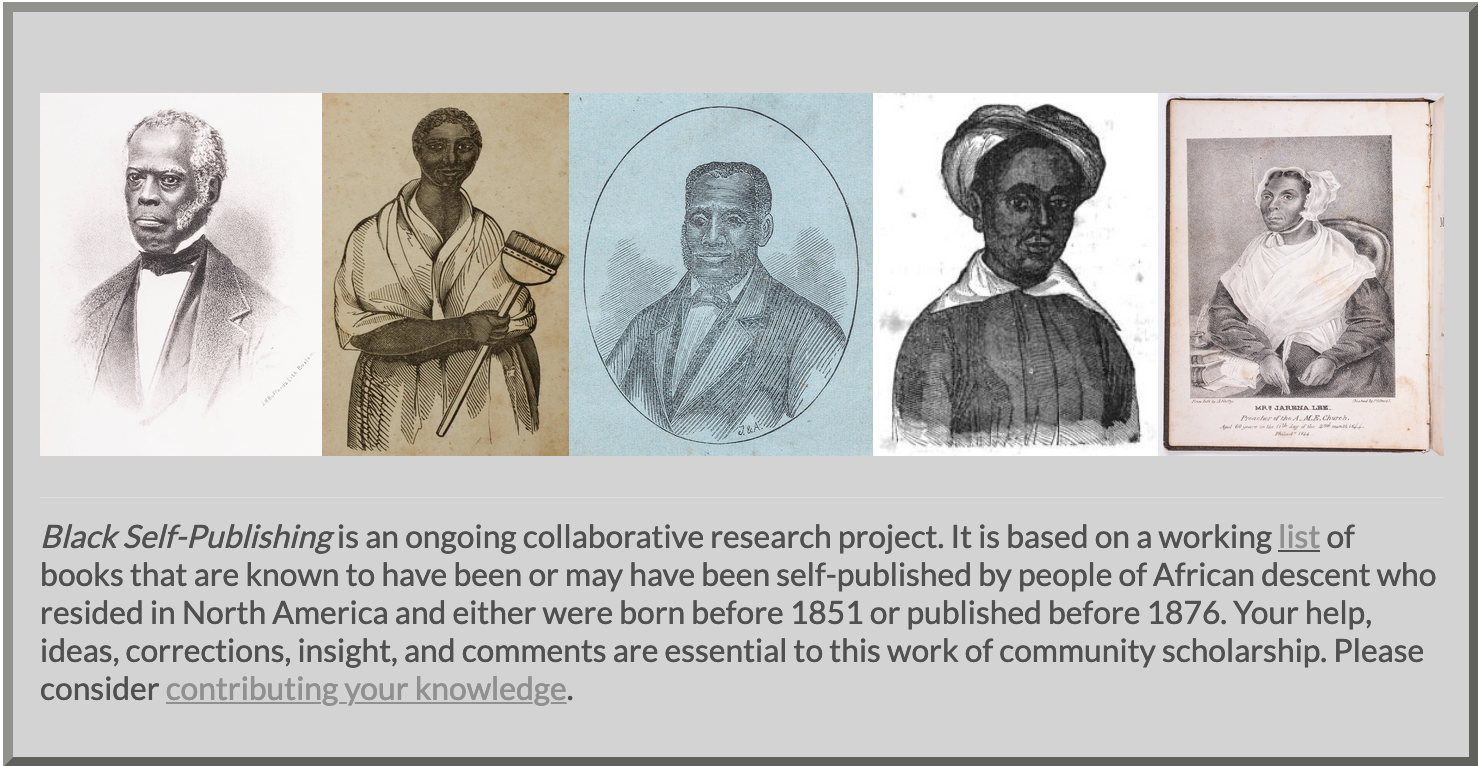
Black Self-Publishing is a new collaborative research project from the American Antiquarian Society. The core of this site consists of a list I developed of books self-published by black authors within the scope of the American Antiquarian Society’s collecting period (origins to 1876). Studying self-publishing, occasions when an author pays for the printing of his or her text, opened a window into the world of early African American print, revealing both a diversity of genres and authorial motivations for publishing. Although the narratives of Fredrick Douglass or Harriet Jacobs are probably the most popular to readers today, self-published texts by black creators compiled in this project encompass everything from a hotel-keeping manual to a speech on the “larceny of dogs.”

The project on self-published African American titles started as a spreadsheet and finished as an online exhibit using Omeka. By presenting this working list on a prototype site, AAS hopes to encourage new forms of collaboration among scholars, students, community members, bibliographers, teachers, and more. (Watch this video to see how you might engage with this project!)

Within my first few weeks at AAS, I received a crash course on the history of printing in America and was amazed at the complexity of the printing process: making paper, setting the type, inking and pressing sheets, and sewing together the pages. I began to learn how to analyze the materiality of a book.  During my internship, I examined chain lines (the prominent, wide-spaced, parallel lines in laid paper), gatherings (a group of folded sheets), and the slightest break in a letter on the page. At times, I felt like a slightly obsessive printing detective, solving historical mysteries while bending over books with a tape measure to compare the height of letters, excited about my type spacing discoveries.

AAS’s emphasis on the history of printing also contributed to my research. One of my greatest triumphs was uncovering the identity of the mysterious “Enterprising Publishing Company” listed on the imprint of several books on my list. Were they really a publishing company? I was determined to find out. After looking with no success in lists of newspapers, I made a breakthrough using Readex’s African American Newspaper database through the AAS website: I discovered that the Enterprise Publishing Company was the only black job printing office in Washington, D.C., from 1876 to 1881. Their claim that “that colored printers are the ‘boss’” remains one of the most memorable quotes from my summer.

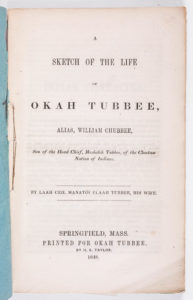
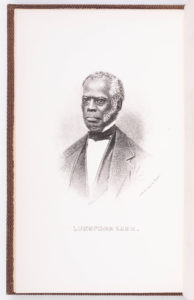
Other special finds (seen below) include The Experience of Rev. Thomas H. Jones, Who Was a Slave for Forty-Three Years (1868), A Sketch of the Life of Okah Tubbee (1848), and Lunsford Lane; Or, Another Helper from North Carolina (1863).

When my supervisor Elizabeth Pope and I journeyed over to the section in the reading room for bibliographies on Afro-Americana, I received a big shock. While Elizabeth showed me a bibliography for black writers related to the military, a bibliography of black New England writers, and a list of titles held by the Library Company of Philadelphia, I wondered why the bibliographies on Afro-Americana were so sparse and specific. (The methodology section of website lists the sources I consulted for the Black Self-Publishing site.) Although important work has been done on the topic, especially by black bibliographers in the early twentieth century, the deeper I researched into this project, the more I wished for a complete bibliography of Afro-Americana to guide my research. What I was able to pull together over one summer is nowhere near a complete bibliography, but I hope this project serves as another resource that leads towards a more complete and accurate account of books published by black authors. (A larger bibliographical project on all Black authors is now being undertaken by the Black Bibliography Project based at Rutgers and Yale.)

As I read more bibliographies and added their findings to my list, I became more familiar with the names of many early African American writers. I picked several to research further, and, after a short time, they began to feel like good friends. Looking into the stories of these authors was one of my favorite parts of the project; their stories were fascinating, and it felt like I was able to contribute to scholarly knowledge using the editions of their books at AAS. One author, the spiritualist medium Paschal Beverley Randolph, who prolifically self-published books for 20 years, started to feel like he was following me around.  Serendipitously, when I visited with a book dealer in Connecticut, Randolph’s book was the first I pulled off the shelf. And, even better, it was one AAS didn’t have in its collections!

The summer was full of exciting discoveries, from locating books to add to my list to closely working with the AAS collection. I’m excited to see how the black self-publishing project will be used in the future, and I’m so grateful for everything that my summer at AAS has taught me.


In the summer of 2018, Sadie Van Vranken was an intern at the American Antiquarian Society as part of the Princeton Internship in Civic Service (PICS) program from Princeton University. She created an Omeka website about self-publishing by early American black authors that incorporated her own research with that of others.

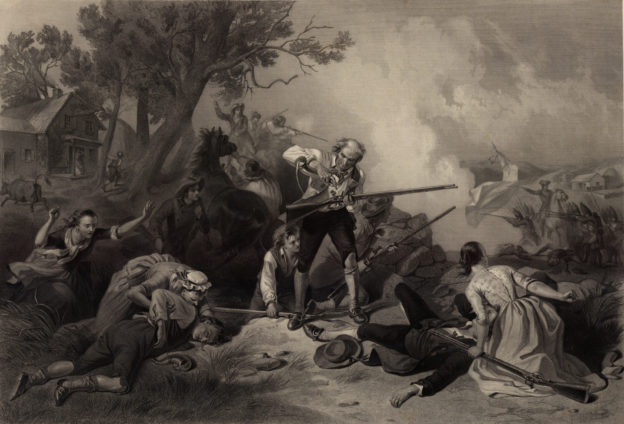
Reporting on the Battle of Lexington, 1775: Fake News and the Massachusetts Spy

May 3rd is an important date for both the American Antiquarian Society and the community of Worcester. On that date in 1775, Isaiah created the first object printed in this community: his newspaper the Massachusetts Spy. In this issue, he described the Battles of Lexington and Concord. While Thomas was present at those battles, his account is far from an objective one and in this video, I examine and provide some context to this document.

This is also one of the few objects in our collection for which we have a life-size paper facsimile, and we have often used this in our K-12 programming. Both teachers and their students have enjoyed being able to touch and read it as one might have in the eighteenth century. The Society has a number of digital resources for educators both related to this item and to many other aspects of American history and culture before the twentieth century.

These can be accessed here: https://www.americanantiquarian.org/k-12-resources.

Poets in the AAS Archive: Readings and Reflections

In 1995, the Society welcomed its first class of a new kind of fellow. They were the Creative and Performing Artist and Writers Fellows, and they included fiction writers, poets, playwrights, visual artists, sculptors, performance artists, and musicians, as well as non-fiction writers, documentary filmmakers, journalists anyone seeking to create original works based upon American history and present them to non-academic audiences and readers. Initially, this program was funded by the Lila Wallace Reader’s Digest Fund and is now supported by endowments created by Robert and Charlotte Baron, the William Randolph Hearst Foundation, and Deborah and Jay Last.

These fellows added immensely to the intellectual mix under the generous dome of Antiquarian Hall and benefited from and contributed to the lively conversations with AAS staff, academic fellows and the lay scholar alike over the past quarter century. Many have also created and produced powerful, imaginative, and beautiful works which we shall celebrate in the coming months in a program we are calling Artists in the Archive: Twenty-five years of Artist Fellows at the American Antiquarian Society.

We start our series in honor of National Poetry Month with the work of three fellows. In these videos, we meet the artist, hear about the inspiration and methods of their work and then hear them read one or two of their poems created under their fellowship.


“Snow Globe (April, 18, 1775) Revere Speaks” by Catherine Sasanov

Written from the perspective of Paul Revere, trapped forever on his Midnight Ride, the poem meditates in part on an incident with an enslaved child mentioned in the Society’s Hugh Hall Papers, 1718-1743. Sasanov juxtaposes Revere’s story with that of the hanged man Revere will forever be riding by: Mark, who after murdering his enslaver in 1755, is executed, gibbeted, and hung by the side of the Cambridge Road.

Catherine Sasanov was a 2016 Robert and Charlotte Baron Fellow at the American Antiquarian Society. She is the author of Traditions of Bread and Violence (Four Way Books, 1996), All the Blood Tethers (Northeasten UP, 2002),and Had Slaves (Firewheel Editions, 2010).

“And so you walk, Sassamon” and “John & John, At the Gathering of the Praying Indian Congregation at Natick, Confessions to be Heard, 1654” by Robert Strong

Robert Strong, poet and founding column editor of “Poetic Research” at Common-place.org, reads two poems from Bright Advent, the book resulting from his 2009 William Randolph Hearst Fellowship at the American Antiquarian Society.

Bright Advent engages the 17th century translation and publication of the Bible into Algonquian in the Massachusetts Bay Colony, the missionary work of the puritan “Apostle to the Indians” the Reverend John Eliot, and the linguistic brilliance of the native translator and Harvard student John Sassamon—the events, characters, and forces that led to King Phillips War in 1675. Bright Advent was awarded the Marie Alexander Poetry Series prize and published by White Pine Press in 2017.  Previous books include Puritan Spectacle, Joyful Noise: An Anthology, the chapbook Brethren, and the conceptual fiction Manufact Hologram.

“Graveyard, Monticello” and “Route 1 North, Woolich, Maine” by Tess Taylor

Both poems appear in her first book, The Forage House (Red Hen, 2013). Taylor recently had her poems featured in the exhibition Dorothea Lange: Words 7 Pictures at the Museum of Modern Art. She is also the author of Rift Zone (2020) and Work & Days (2016).

Here, Taylor discusses her career as a poet who works in archives and how the American Antiquarian Society helps foster that special work. Tess Taylor was a 2006 Robert and Charlotte Baron Fellow at the American Antiquarian Society.


“Don’t Expose Me”: The Beecher-Tilton Scandal of New York

Maggie Panteli is pursuing a BA degree in History and is graduating May 2020 from Clark University. During the summer of 2019, she worked part-time as a Readers’ Services Page and as an assistant in the Graphic Arts Department cataloging stereographs. Her favorite cataloging job was working with the McLoughlin illustrations. Her time at AAS has strengthened her commitment research and learning.

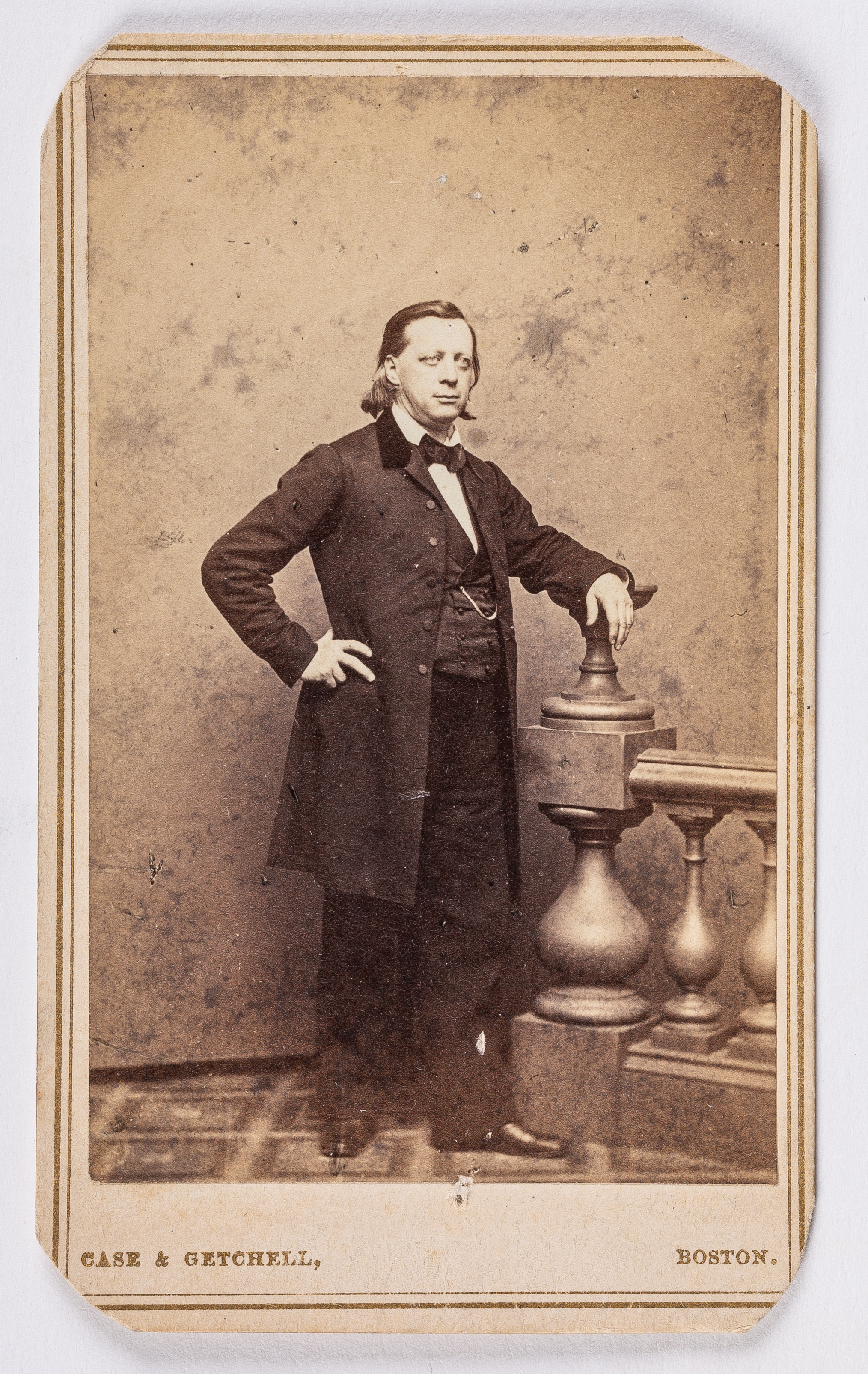
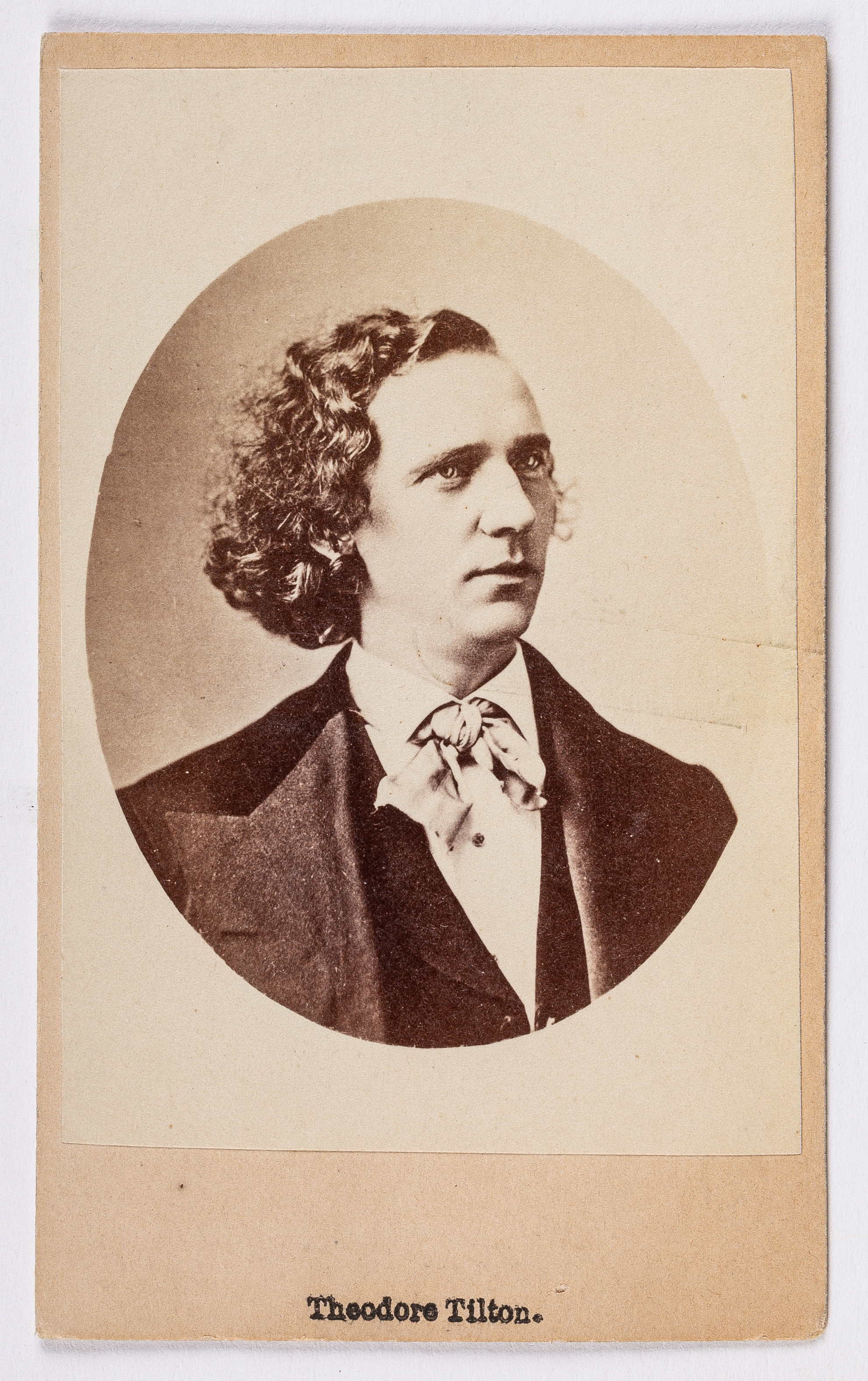
Traditional history classes can sometimes skip over some of the juiciest stories in American history. One of the most lurid and salacious stories of the nineteenth century is the Beecher-Tilton Scandal that rocked New York City in the 1870s. In 1870, Mrs. Elizabeth R. Tilton confessed to her husband, Theodore Tilton, an author and abolitionist, that she had been romantically involved with their church reverend and close family friend Henry Ward Beecher, brother of Harriet Beecher Stowe. The Tiltons separately joined Plymouth Church in Brooklyn Heights, New York, in the early 1850s and were married there in 1855 by Beecher. Beecher and Theodore Tilton became close friends in the late 1850s through their civil rights work and remained close until the early 1870s when the affair became public.

The trio initially agreed to keep the affair quiet, but in 1872 Ms. Victoria Wodhull, the infamous woman’s suffrage activist, published a sensational article in Woodhull & Claflin’s Weekly demonizing Beecher, mainly for his lack of morals and hypocrisy. Woodhull, who Beecher had criticized earlier for her “Free Love” advocacy and radical politics, is thought to have used the knowledge she gained from her friendship with Theodore Tilton to expose Beecher for his deceitful behavior. In her article, Woodhull proclaims, “[T]hey [those that make the rules] act upon the new doctrines while they profess obedience to the old . . . organized hypocrisy has become the tone of our modern society. Poltroon, cowardice, and deception rule the hour.”

Woodhull adds that letters had been sent about Tilton, and there were rumors that he had been violent throughout the marriage, possibly even causing his wife to have a miscarriage, and that he had kept her locked up in their house. Throughout the article, Woodhull refrains from speaking ill about Mrs. Tilton; however, she does boldly call out Beecher’s transgressions and hints to rumors she had heard, or made up for the sake of a sensational article.

At the time this article was published, Beecher and the Tiltons continued to keep as quiet as they could about the affair. However, in July 1874, Theodore Tilton publicly accused Beecher of seducing his wife and committing adultery. In response, Beecher set up a Plymouth Church investigation to look into the affair. The investigation found that Beecher was innocent, but public opinion and frustration led Theodore Tilton to sue Henry Ward Beecher for “criminal conversation” (adultery) and “alienation of [his wife’s] affections,”’ in late 1874.

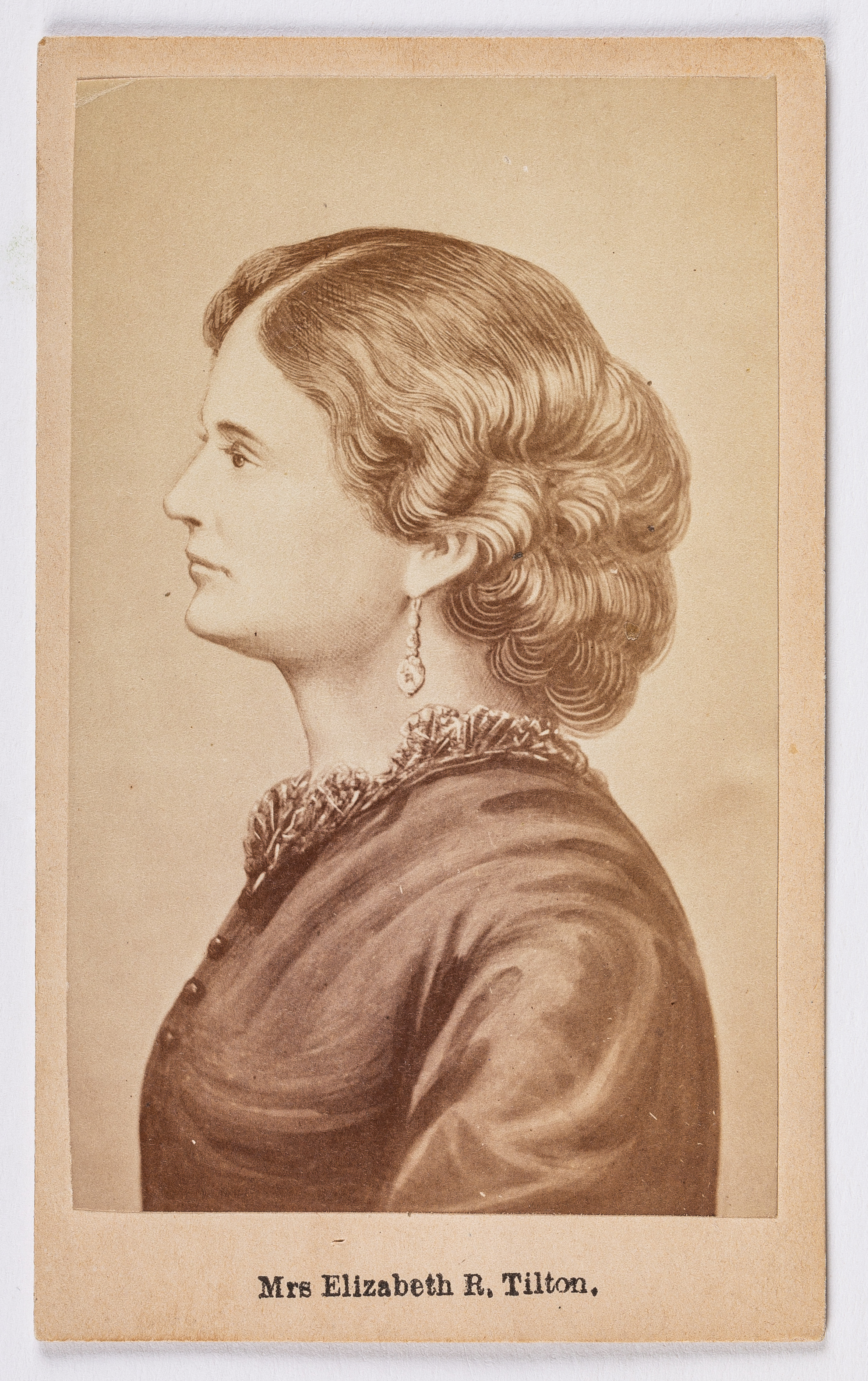
Mrs. Elizabeth R. Tilton, carte-de-visite, ca. 1875.

The civil case began in January 1875 and captivated the nation. While Beecher and Tilton both spoke at the trial, Elizabeth Tilton was unable to to do so because of spousal immunity. According to Richards Wightman Fox, in Trials of Intimacy, Elizabeth’s exclusion from the trial had little impact on the ruling because she was prone to changing her responses about the affair and was considered “untrustworthy”. At the end of a six month trial, the jury could not agree, and Beecher was finally acquitted. In 1878, Elizabeth Tilton issued her last confession that she did indeed have an affair with Henry Ward Beecher.  At the time, it was still interpreted as a rumor or untrue at the time.

While there is a large amount of information available about Henry Ward Beecher, Theodore Tilton, and Victoria C. Woodhull, Elizabeth seemingly vanished from the public eye after she passed away in 1897. Despite being publicly defamed and pushed to the sidelines, she maintained a starring role in a drama-filled court case. Nevertheless, historians have focused on the famous men involved in the case and overlooked its most mysterious and interesting character: Mrs. Elizabeth M. Richards Tilton. After the trial ended in 1875, Theodore Tilton moved to Paris, France, leaving behind his family and friends. Elizabeth was forced to move back in with her mother in Brooklyn with her two youngest children. Little else is known about her life in those years after the trial ended. Even the American Antiquarian Society, which boasts a wide variety of both cataloged and uncataloged artifacts directly related to scandal, possesses only a single, non-political cartoon image of Elizabeth Tilton.

Through my unique position this summer at the American Antiquarian Society, as both a reference page and a graphic arts cataloger, I was able to conduct research and create records for uncataloged artifacts in the vast graphic arts collection. This included the only “picture” (actually only an artist’s rendering) of Mrs. Tilton, as well as a number of carte de visite, political cartoons, and portraits of Mr. Tilton and Mr. Beecher. Additionally, I was able to catalog a portrait of Victoria C. Woodhull and a fabulous political cartoon flip card of Mr. Beecher and Mrs. Tilton.

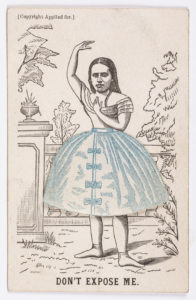
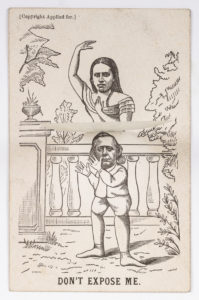
The flip card is titled “Don’t Expose Me” and it has a printed image of Mrs. Tilton standing among a garden with her hands in a dance position. Her skirt is not completely glued to the paper, and, when it’s lifted, Mr. Beecher stands under the skirt with his arms lifted in surprise.

Handling objects like these and looking closely in an attempt to accurately describe them during the cataloging process provided an opportunity to experience how printing, photography, and cartooning was used during the trial, which is often described as the largest “he said, she said” argument of the late 19th century in America. Studying events such as the Beecher/Tilton scandal and using ephemera and published trial material (also available at AAS), can contribute to understanding the cultural norms of America during the late 19th century. Now that they are cataloged, all these artifacts are findable and available for research purposes to anyone who comes to the American Antiquarian Society or uses the General Catalog. Perhaps more information about the life of Elizabeth Tilton will be uncovered and written about in the future.

For Further Reading:

Fox, Richard Wightman. Trials of Intimacy: Love and Loss in the Beecher-Tilton Scandal. 1st ed., University of Chicago Press, 1999. Housed at the American Antiquarian Society.

Woodhull, Victoria C. “The Beecher-Tilton Scandal Case: The Detailed Statement of the Whole Matter by Mrs. Woodhull.” Woodhull & Claflin’s Weekly , 2 Nov. 1872, pp. 9–13. Housed at the American Antiquarian Society.

McDivitt, Campbell, & Co., Law Publishers, No. 79 Nassau Street. Theodore Tilton vs. Henry Ward Beecher, Action for Crim. Con. [I], [II], V, VII, and XVII-XVIII, 1875. Housed at the American Antiquarian Society.

It’s All in the Details: Broadsides in Theodore C. Wohlbrück’s Photography

Long-time readers of the AAS blog know we have posted frequently here about Worcester-area photographer, Theodore C. Wohlbrück (1879-1936). We’ve been writing about the Society’s holdings of this artist’s work since 2010. AAS has a large collection. of photographic prints and glass plate negatives taken by Wohlbrück between 1900 and ca. 1910, including regional landscapes, city views, and images of his family.

In 2012, we wrote about a set of 180 of these views, mostly of the city of Worcester. At that time, these images had recently been scanned from fragile glass plates and were part of our new digital asset system. Recently, they have been added to the online inventory of Wohlbrück’s images constructed by the Society’s Visual Materials Cataloger, Christine Graham, and are now easily available via our website. Each negative has been described, can be keyword searched, and can be freely downloaded for enlargement. Because the digital images were created from 3” x 5” high resolution negatives, the level of detail is amazing and will allow researchers and scholars to better understand the built environment of our home city.

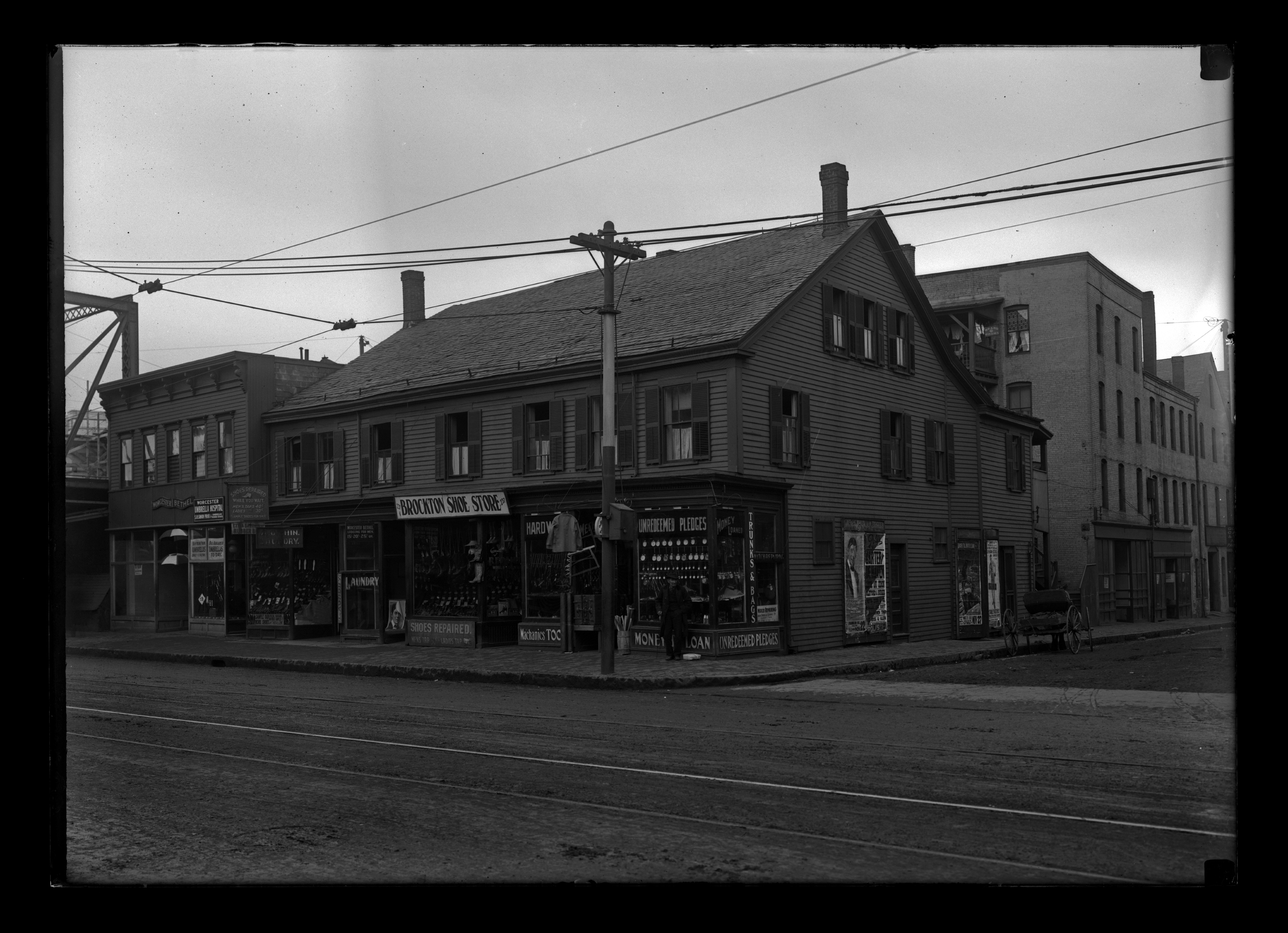
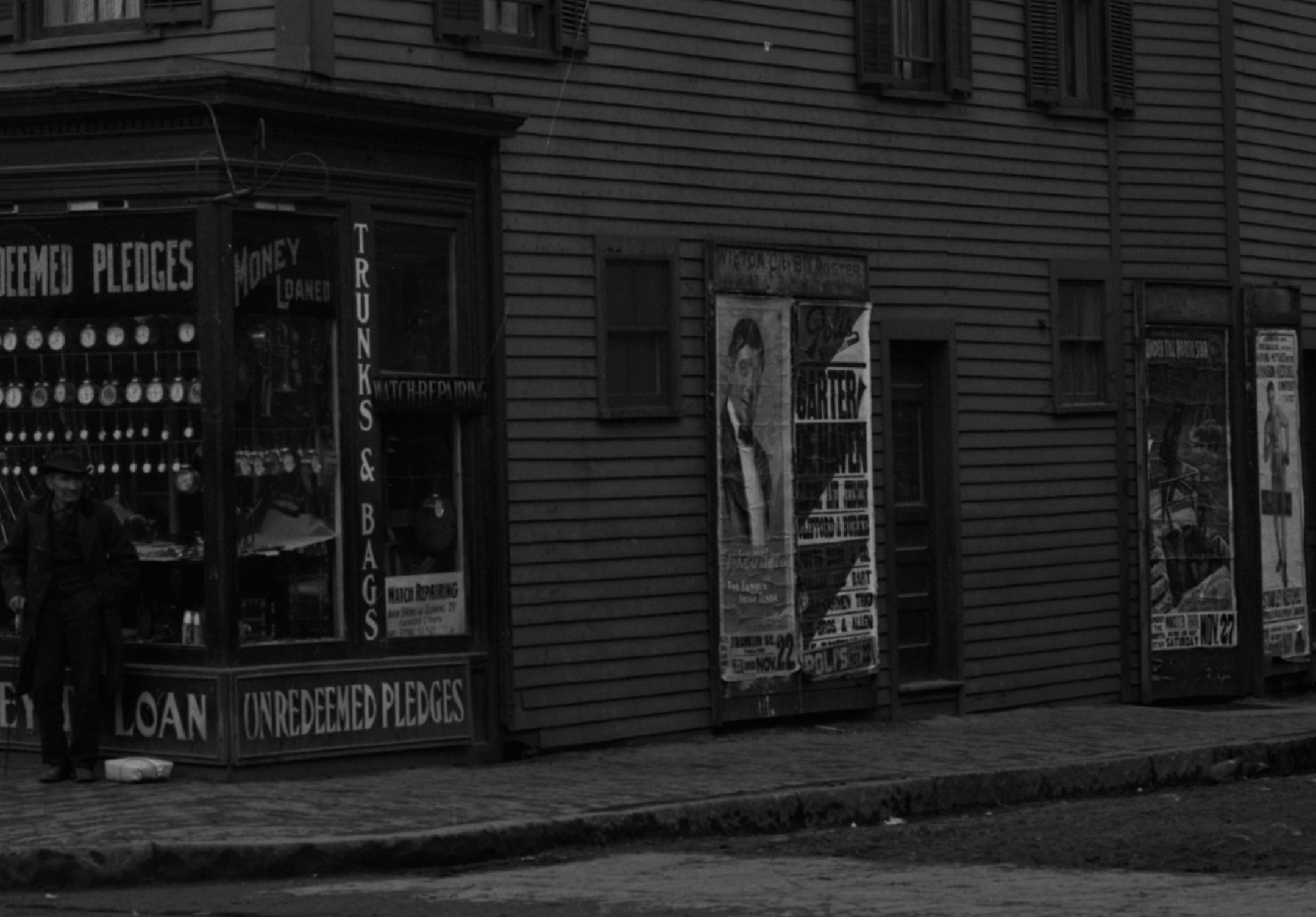
The graphic arts collection at AAS includes not only photographic collections like Wohlbrück’s, but it also houses outstanding examples of American broadsides. Broadsides are ephemeral printings that were posted in public places to announce events like auctions and entertainments, sell products, or promote political and social activity, etc. They were usually papered over, faded in the sun, or were damaged by weather and the great majority of them have been simply lost to time. While scanning through the new Wohlbrück resource, we found several excellent shots of broadsides in situ, like this image of the Brockton Shoe Store which includes four sections of advertising paper plastered on the side of the building.

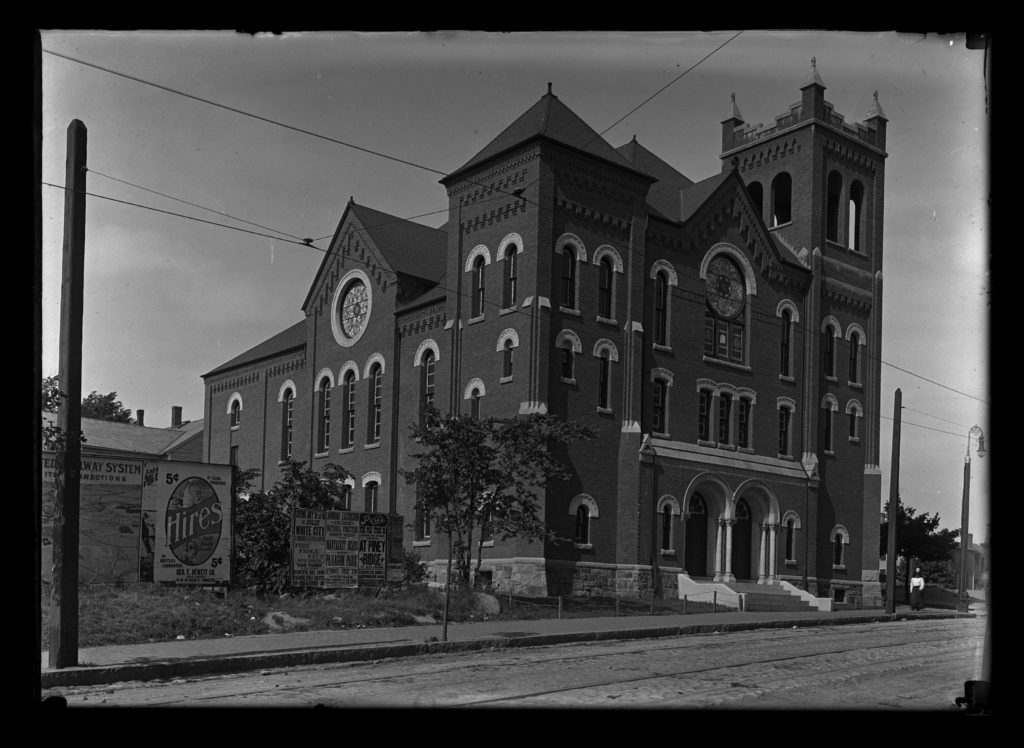
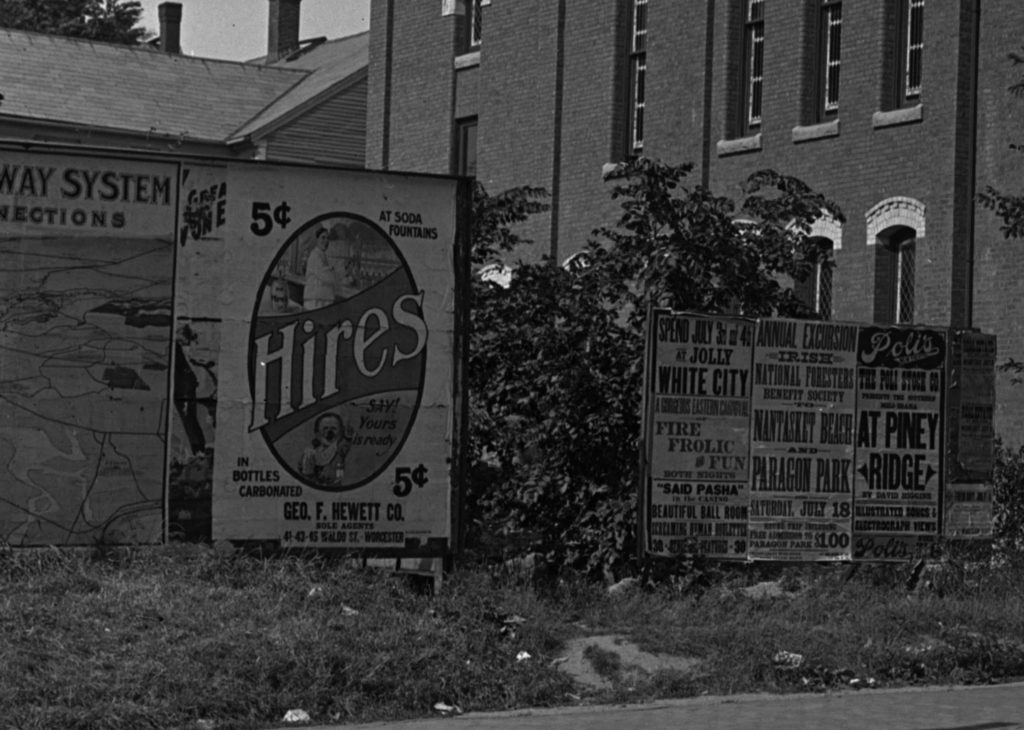
In some cases, users can zoom in and read the broadsides in their entirety as in the shot of the Baptist Church on Belmont Street. Here Wohlbrück’s composition included some overgrown fencing on a neighboring lot which sported ads for root beer, White City Amusement Park (in nearby Shrewsbury), and an excursion planned for the local chapter of the Irish National Foresters Benefit Society (an organization which supported Irish nationalism).

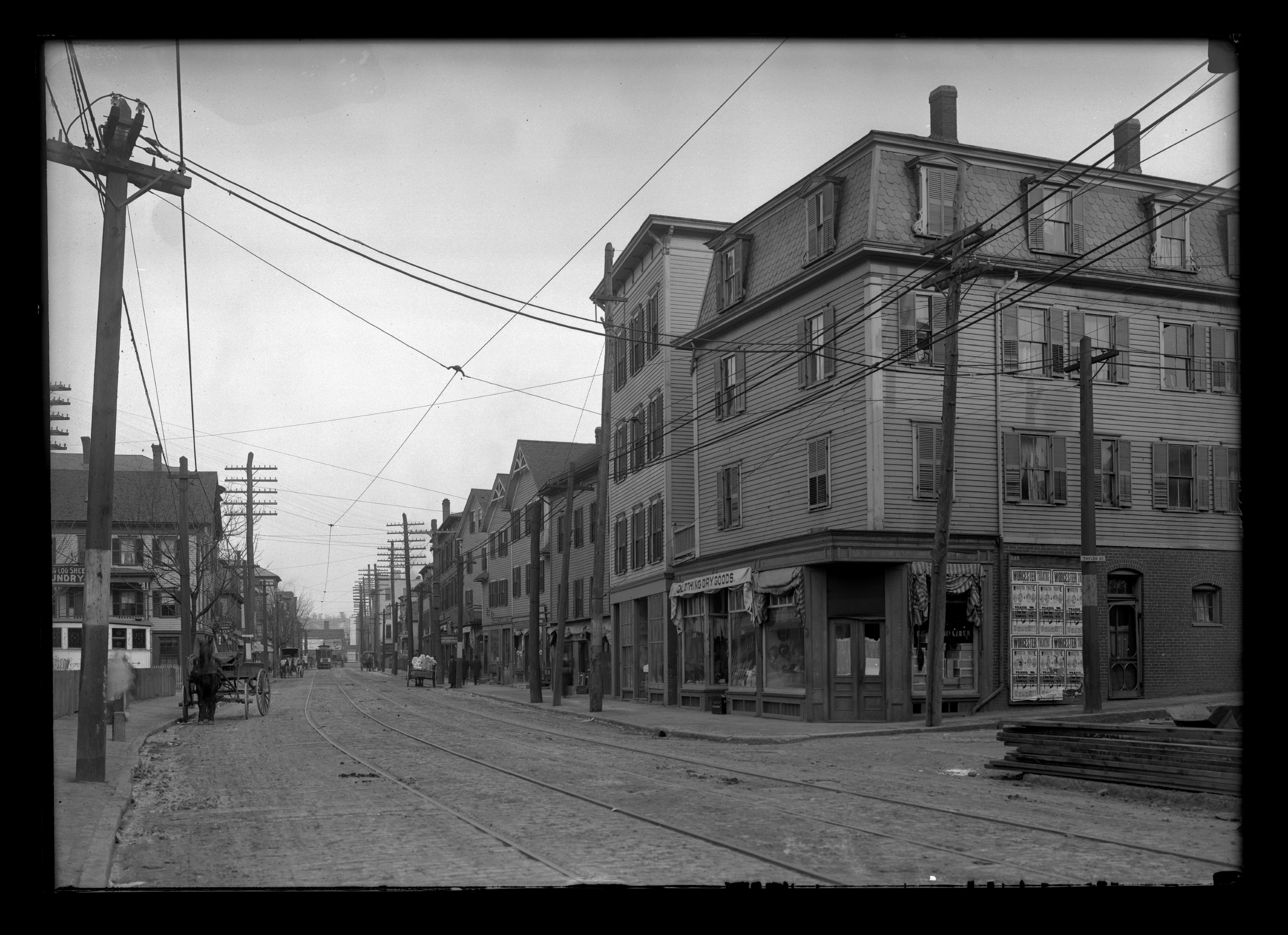
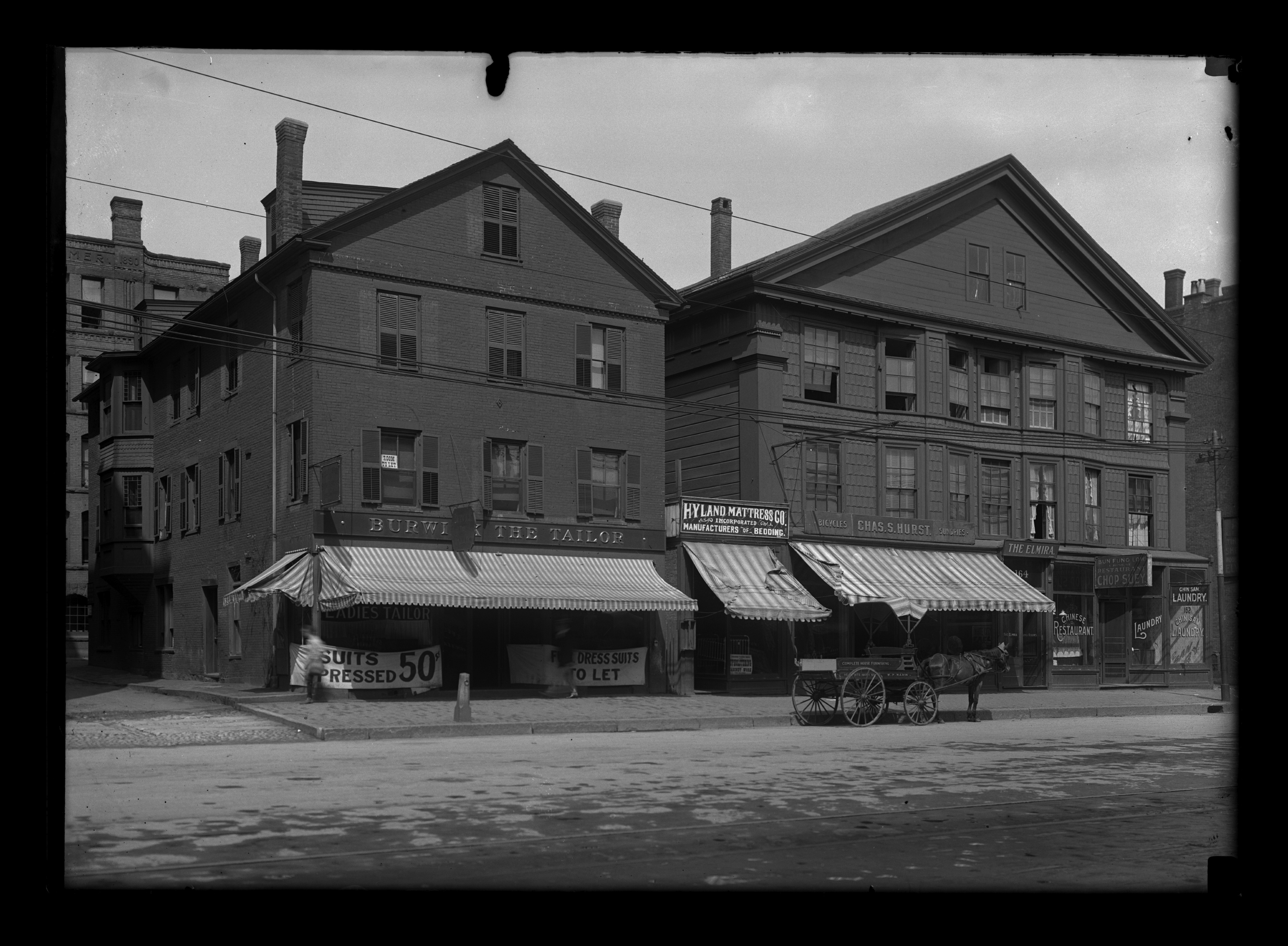
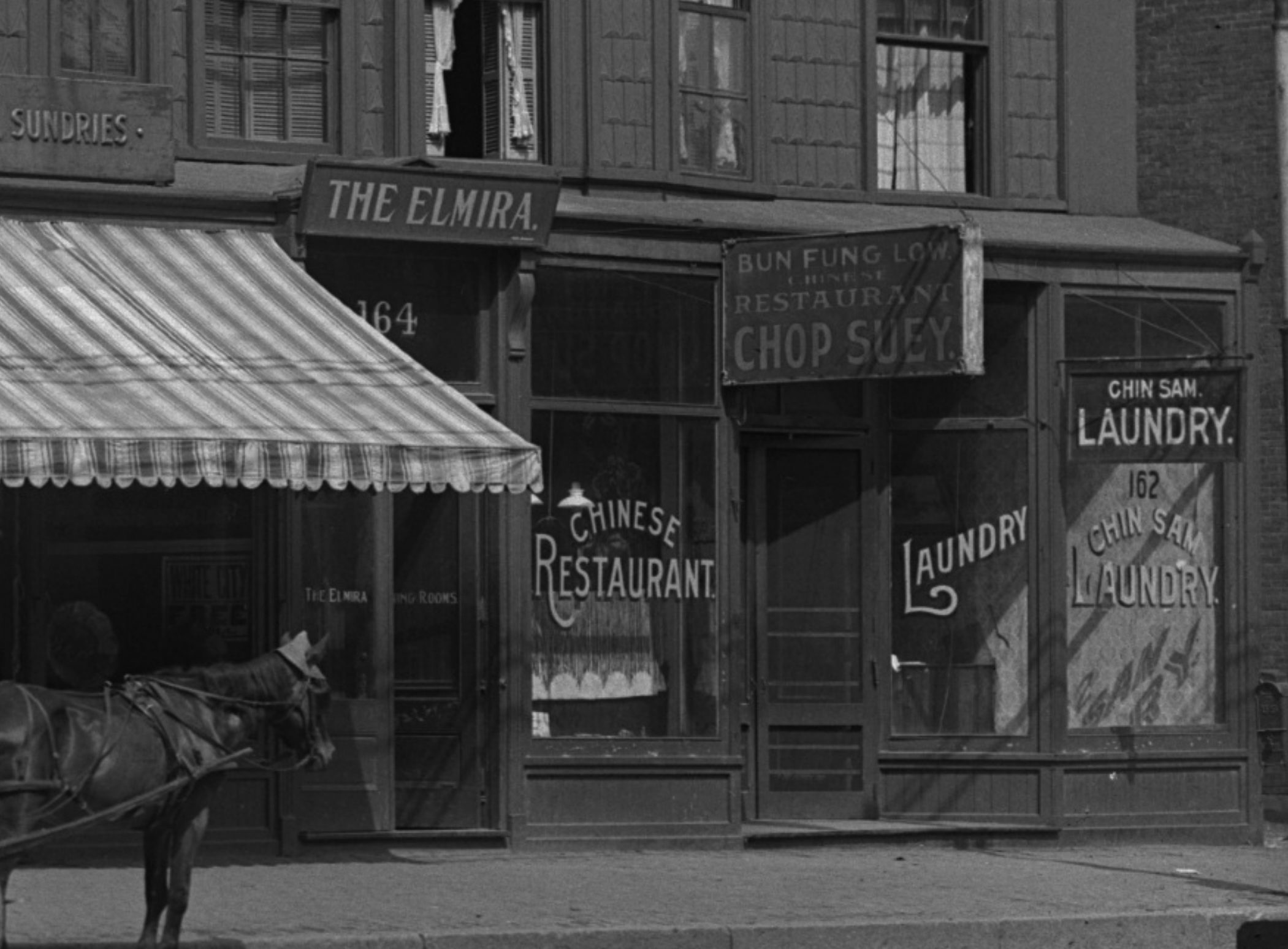
That last poster is not surprising, as the city had a large immigrant population at the turn of the century. Many Irish families had settled in the region in the 1870s and helped build the Blackstone Canal and railroads in the area. These resources then drove the industrial boom in the city in the early twentieth century when Wohlbrück was walking the streets with his camera. Central European immigrants, people from Scandinavia, and from Asia all moved to the city to work in the busy factories and manufacturing centers as the new century began. The broadsides posted on the side of a building in a view of the intersection of Millbury and Taylor Streets promoted a show at the Worcester Theater. Further research (and consultation with a language expert) revealed that the posters are printed in Yiddish and promote a Yiddish melodrama, “Satan in the Garden of Eden.” The play was written around 1905 by Joseph Lateiner, the first professional writer for the Yiddish theater in America, and was performed around the country by touring companies for Yiddish-speaking audiences, including residents of Worcester. Evidence of immigrant-owned businesses in the city can also be found in the window displays and signage in the commercial scenes Wohlbrück framed with his camera. For example, among the vendors he depicted along Main Street are Bun Fung Low’s Chinese Restaurant as well as a Chin Sam, a Chinese laundry.

While the focus of Wohlbrück’s camera was clearly on the prominent churches, hospitals and businesses in the city, zooming into the details of some of the images reveals layers of detail on costume and dress styles of the era, transportation methods (look for the endless wires for street trolleys), and advertising practices. The photographer’s negatives freeze moments in time. The digital versions now allow us to peek into shop windows, read “For Let” signs in apartments, see images of billboards on country roads, and peruse long-lost broadsides from more than 100 years ago.

Hidden Histories and the Digitization of New England’s Earliest Manuscript Church Records

Jeff Cooper serves as Director of New England’s Hidden Histories. He received his Ph.D. from the University of Connecticut and taught in the Department of History at Oklahoma State University. He is the author of Tenacious of Their Liberties: The Congregationalists in Colonial America (Oxford, 1999) and has edited, with Kenneth P. Minkema, The Sermon Notebook of Samuel Parris, 1689–1694 (1993), and The Colonial Church Records of the First Church of Reading and the First Church of Rumney Marsh (2006).

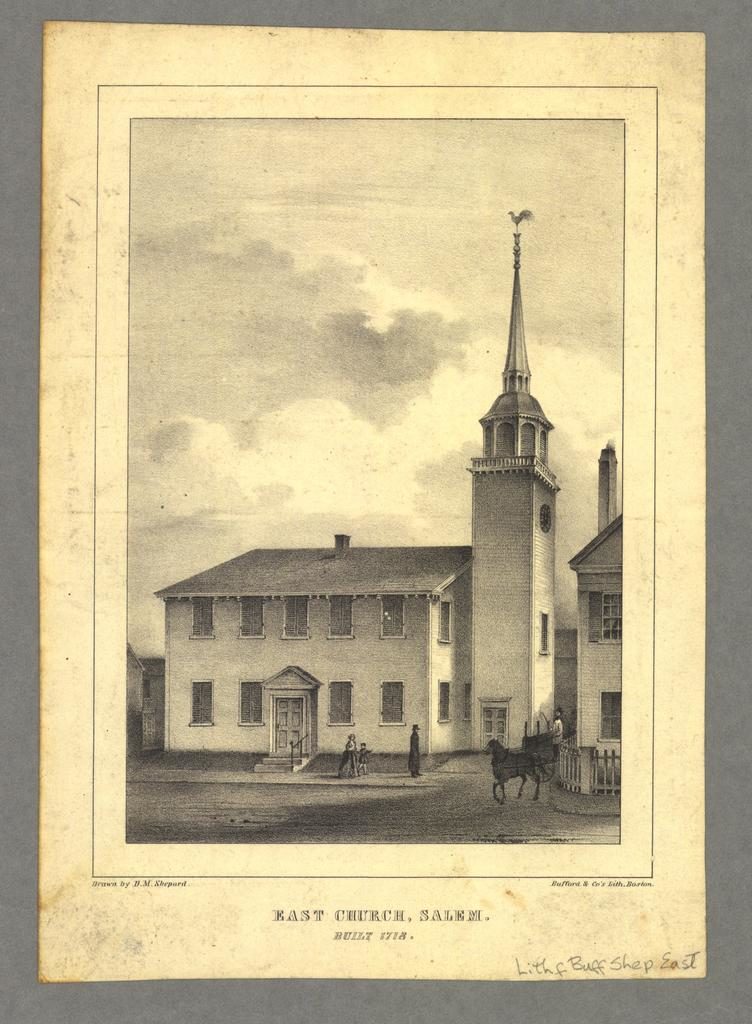
East Church, Salem. Built 1718. Drawn by D.M. Shepard. [ca. 1850]. From the collections of the American Antiquarian Society.

Few documents cast more light on early New England life than seventeenth- and eighteenth-century church records. Local churches stood at the center of community life in New England, and so almost everything that came to pass in the region’s villages eventually passed through the church doors. And ministers took note.

Vast amounts of information on a wide range of social, cultural, political, and religious topics can only be found in the broad range of documents that fall under the category of church records: ministerial diaries, letters, sermons, lay statements of faith and, especially, the leather bound ledgers in which ministers recorded not only birth, death, and membership lists, but the minutes of often rowdy church meetings and disciplinary hearings.


For the past fifteen years, New England’s Hidden Histories (NEHH), a project of the Congregational Library & Archives in Boston, has sought to locate, digitize, transcribe, and publish online New England’s earliest manuscript church records. The project, which was featured on the front page of the New York Times, has already made available documents from nearly one hundred local churches.

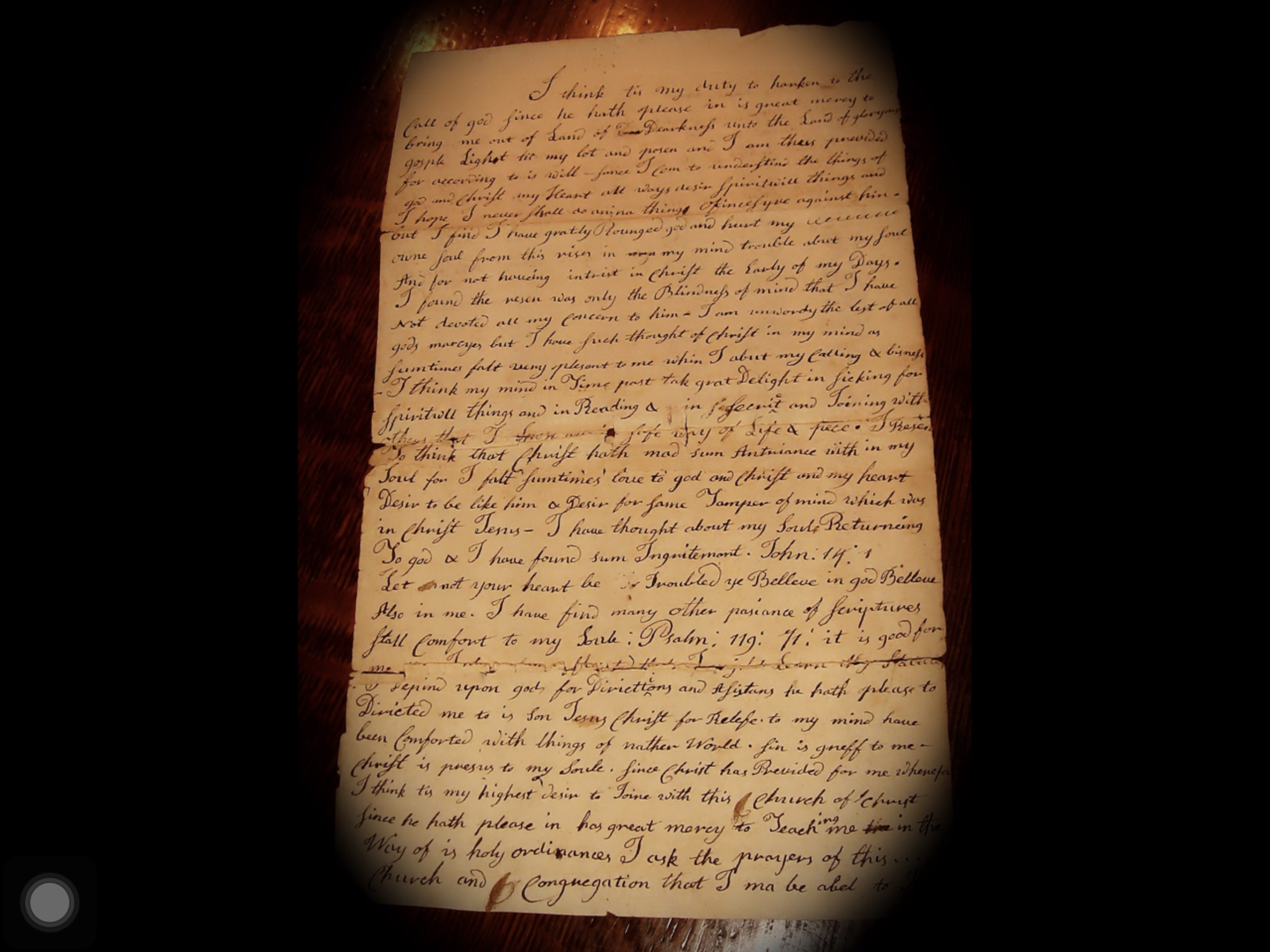
NEHH discovered the only “relation of faith” known to be written in the hand of a slave. Written by a slave named “Cuffee” in 1781, this spiritual testimony, along with hundreds of other similar documents, was found in the pastor’s coat closet in Middleboro, MA.

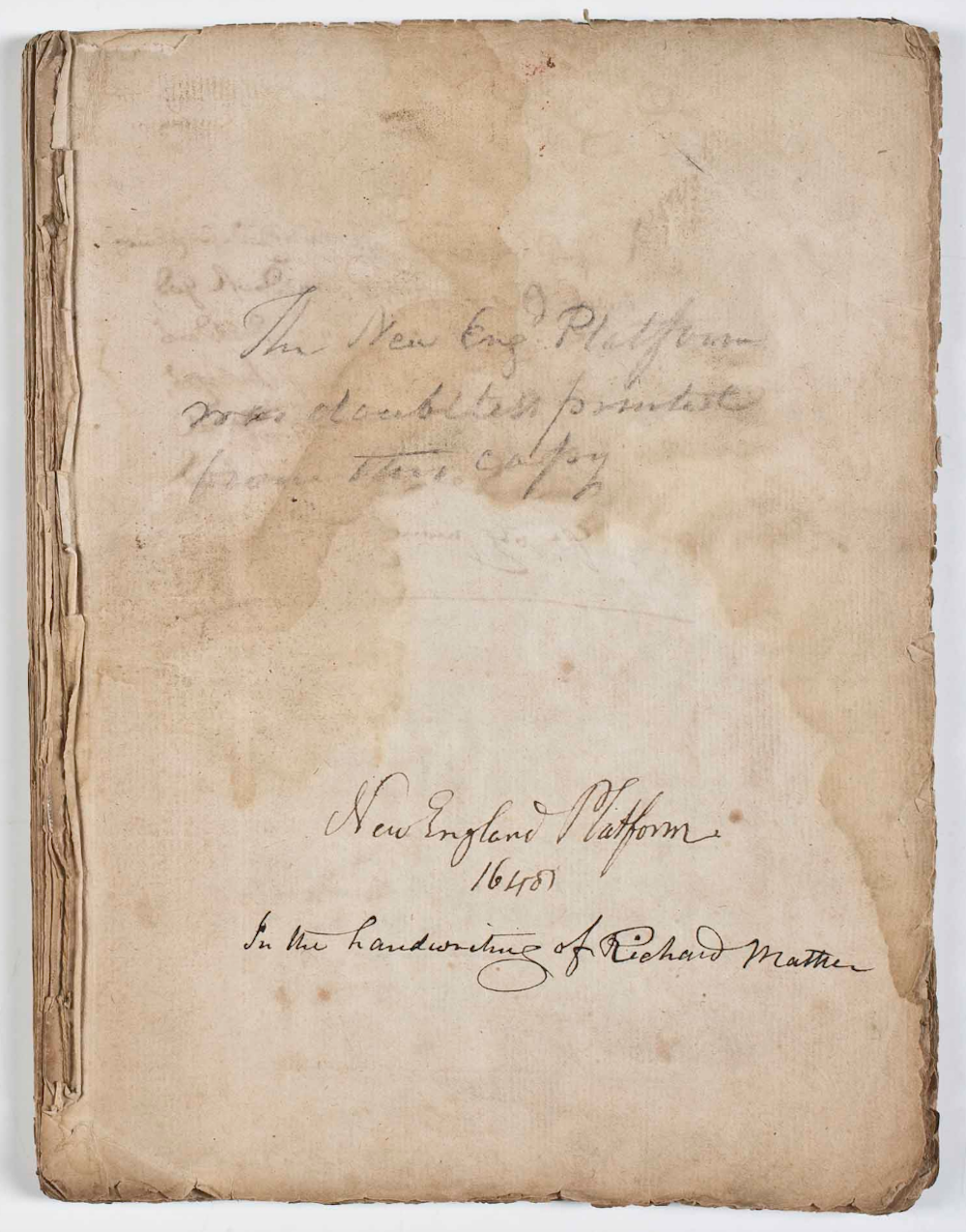
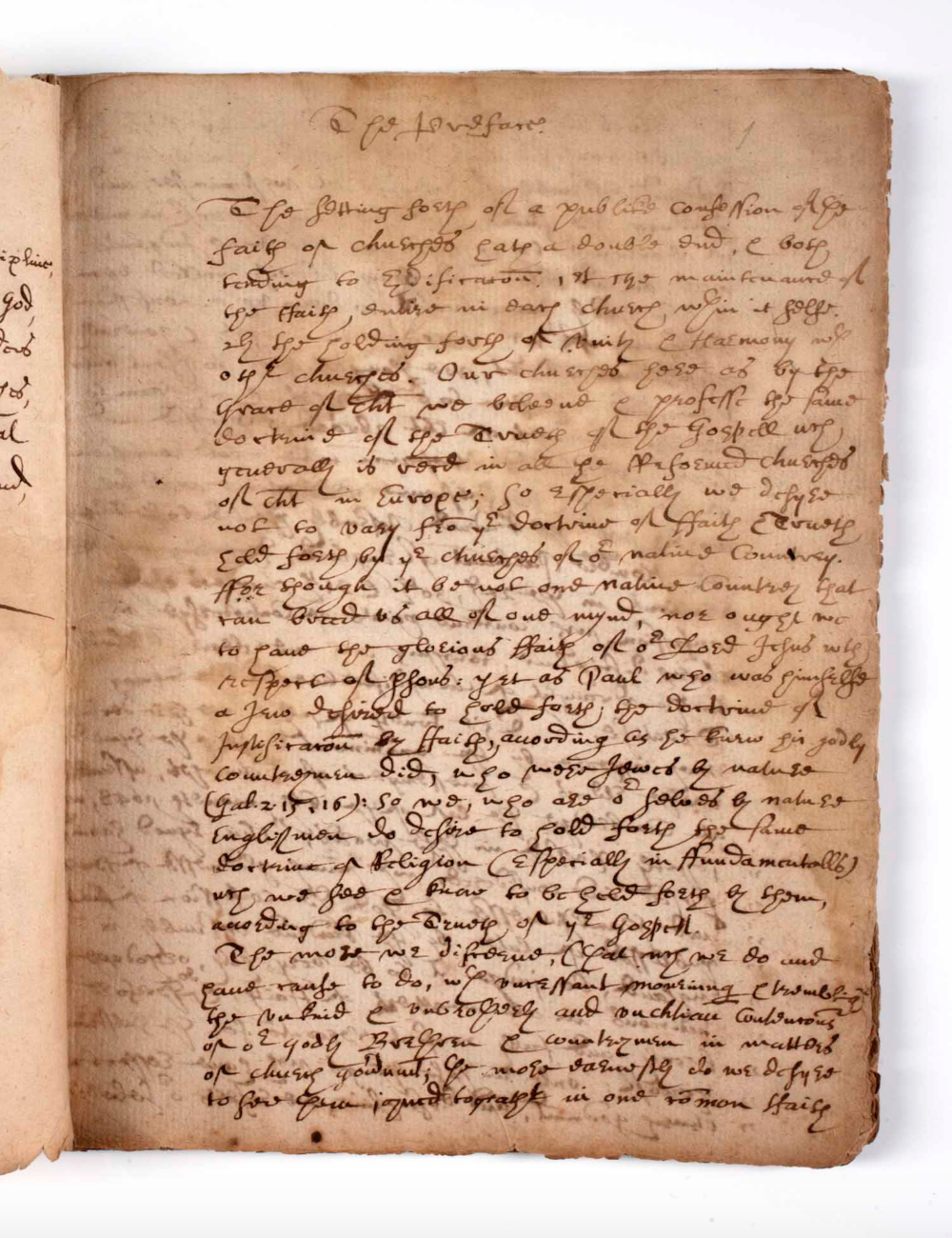
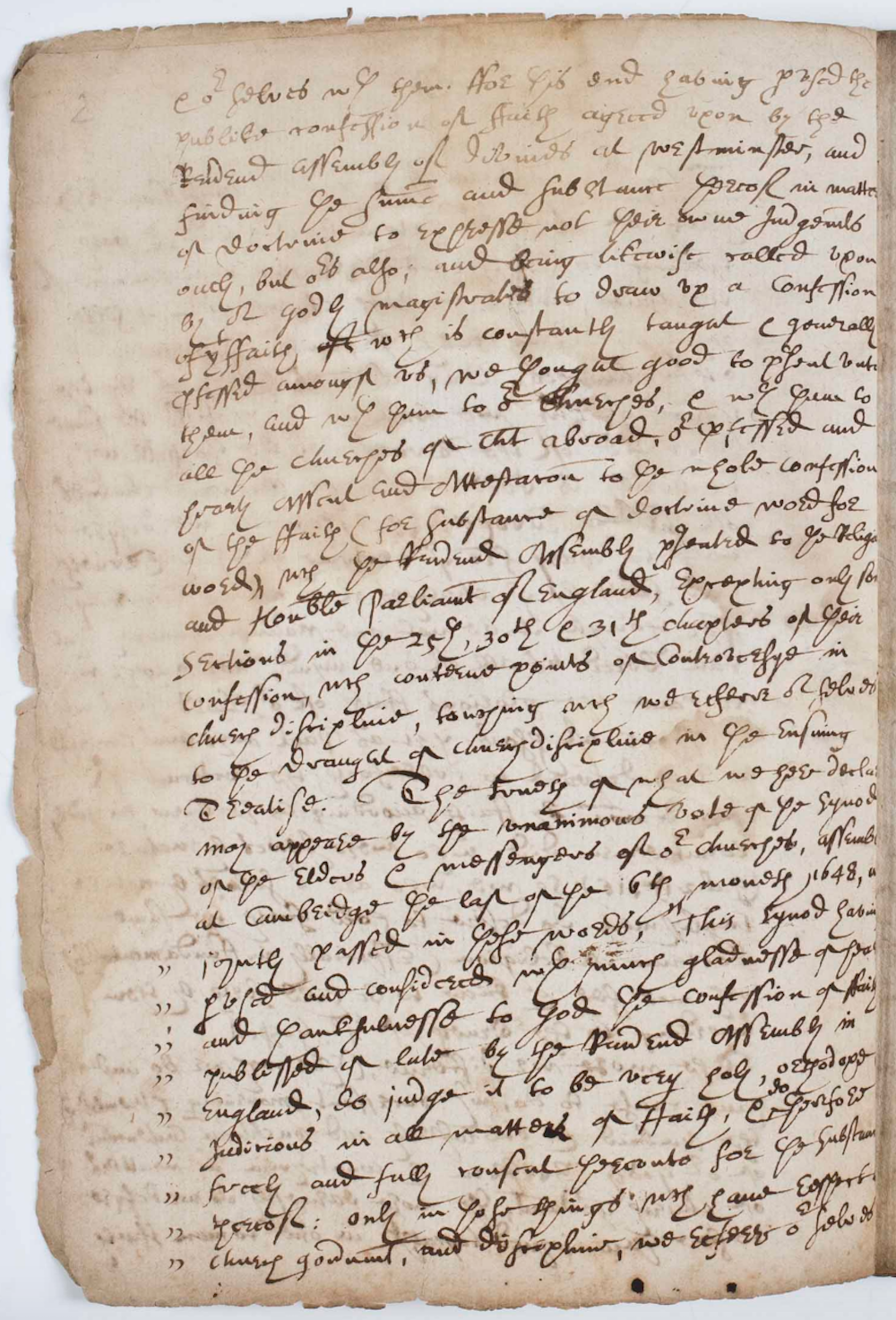
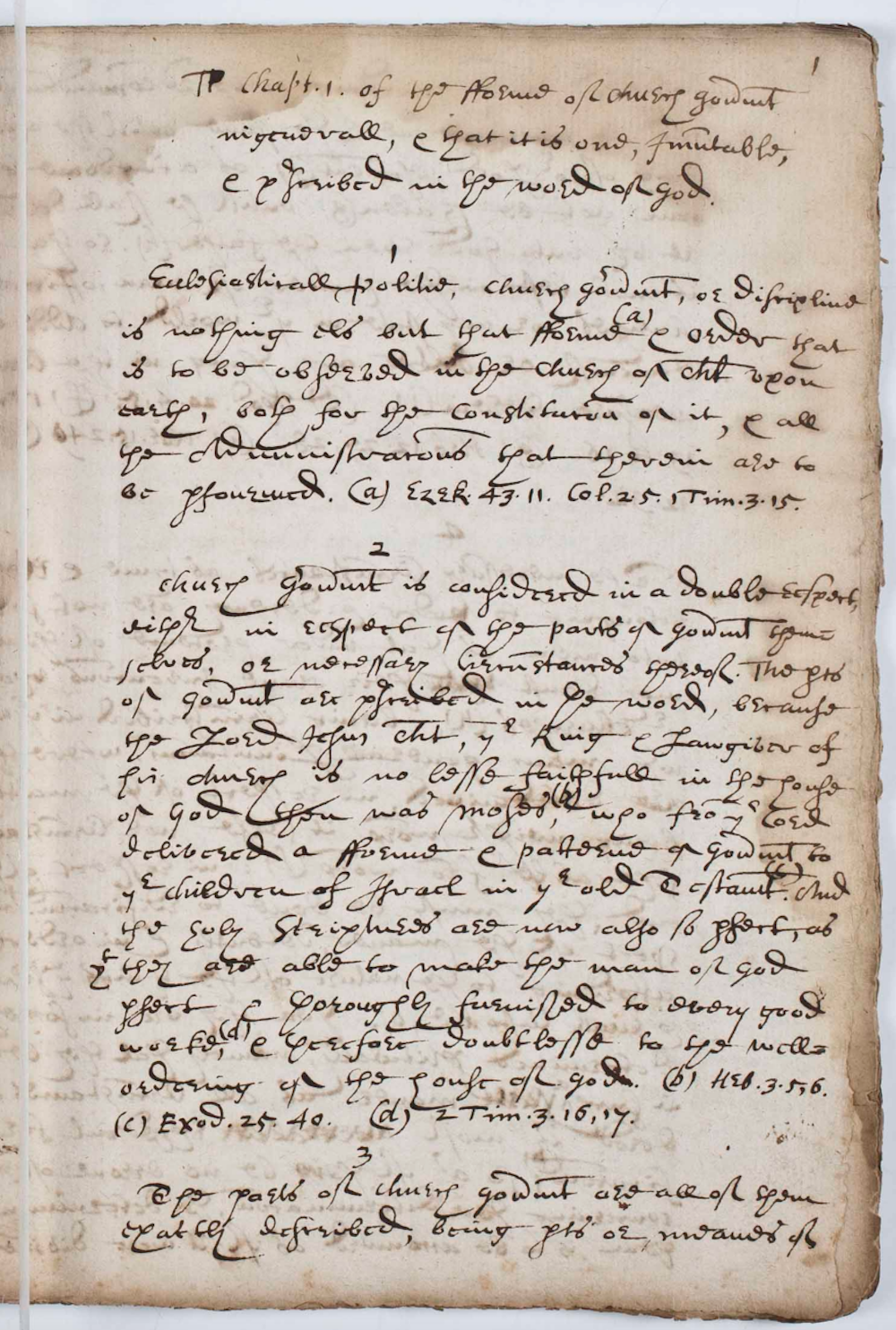
With support from the National Endowment for the Humanities (NEH), the American Antiquarian Society has partnered with Hidden Histories to digitize some of the most exciting and illuminating documents in the AAS’s vast manuscript collections. The current pandemic, which has forced virtually all research institutions in New England to close, underscores the importance of digital initiatives, and the online accessibility provided by these kinds of projects. Already the two institutions have collaboratively digitized and published online an early manuscript draft of Congregationalism’s foundational document, the 1649 Cambridge Platform, along with the church elders’ responses to lay objections to the document. Early New Englanders referred to the Platform as their “constitution” of church government.

Sample pages from “A Platform of Church Discipline” (1648).

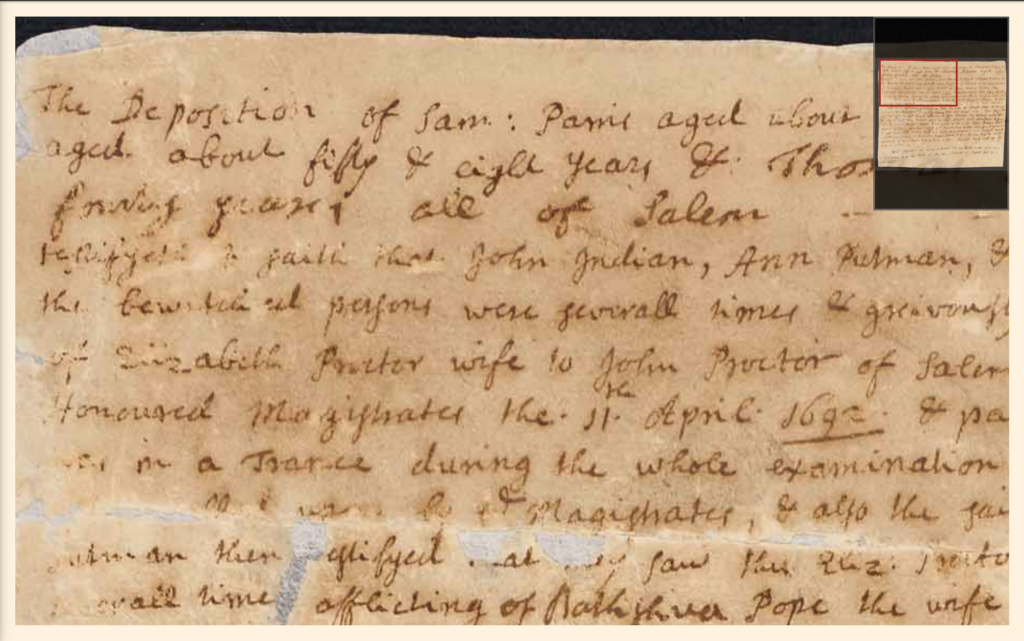
The two institutions have also published a fascinating volume of manuscript notes of sermons preached in Cambridge during the Salem witchcraft controversy. Several ministers delivered sermons before audiences that likely included other clergymen, and certainly included future ministers. What did ministers have to say? What did they attempt to convey to their anxious listeners? 

A Close-up of “The Deposition of Sam”, the testimony of Samuel Parrish against Elizabeth Proctor, accused of witchcraft (1692). Click here to read the full testimony and Elizabeth’s fate.

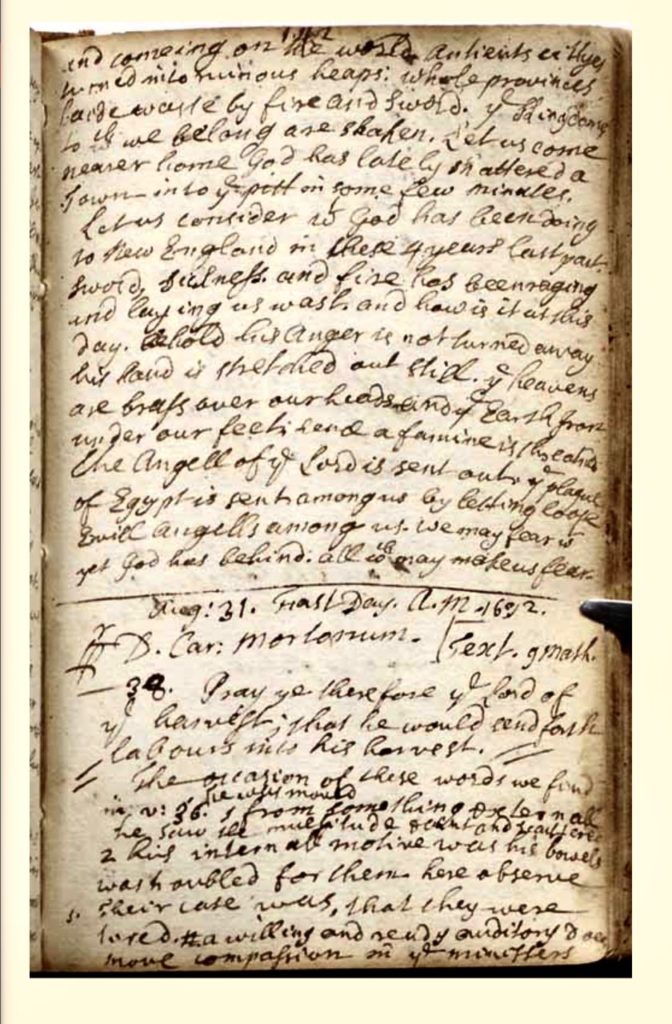
The answer, predictably, is complicated. Some chose not to mention the hysteria at all. Some spoke of it elliptically. But some were more blunt. Speaking just two days after five people were hanged, Increase Mather, who would serve as President of Harvard, and was arguably the most famous minister in New England, warned his Cambridge listeners that

“The plague of Egypt is sent among us by letting loose Evil Angells among us.
We may fear what yet God has behind. All which may make us fear.”

The AAS holds a notebook of sermons preached through the teeth of the infamous Salem witchcraft hysteria. “The Angell of the Lord is sent out,” Increase Mather warned, days after the first executions. The “plague of Egypt is sent among us by letting loose evill Angells among us.” This sermon notebook has been digitized, and will soon be transcribed by New England’s Hidden Histories.

A few weeks later, the eminent pastor Samuel Willard of Boston’s Old South Church pressed for religious reformation, reminding the congregation that “God has been opening the floodgates of his wrath” and has been “Pouring down his fury on us.”

“God has let loose Hell upon us,” Mather agreed, even after the calamity had begun to subside. “Evill’s angels have made Terrible havock among us.” Though the ministers did not speak with one voice, all agreed that New England faced a calamity of unprecedented proportions.

“We are at present under dark providences,” Willard lamented. “It is the most dark and cloudy day that ever was in the wilderness.”

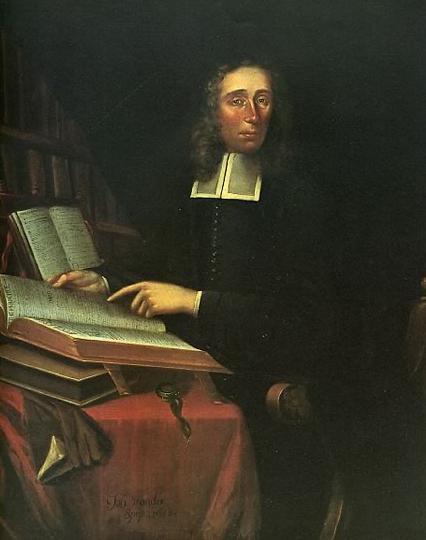
Portrait of Increase Mather, 1688. Public Domain.

Other significant documents slated for digitization include the papers of the Reverend Thomas Shepard, one of the key members of the founding generation, and the one thousand-page diary of Increase Mather. Collections of local church records scheduled for online publication include those of Worcester, Holden, Shrewsbury, and several others. Hidden Histories has transcribed many of the documents in its collections and is always looking for volunteers to assist.

The thousands of pages of historically significant documents to be published online by the AAS and New England’s Hidden Histories will provide scholars and the general public with an unprecedented opportunity to study seventeenth and eighteenth-century church and community life in the region.

New England’s Hidden Histories may be found at http://congregationallibrary.org/nehh/main.

In addition to its work with prestigious institutions like AAS, New England’s Hidden Histories has rescued thousands of documents from basements, closets, and attics within New England’s local churches. Many of these documents are in danger of fire, theft, or simply getting lost.


*                      *                      *

New England’s Hidden Histories (NEHH) and its Director James Cooper wish to thank Ellen Dunlap, Thomas Knoles, Richard D. Brown, Ashley Cataldo, and Austin Alexander for their help in forging this partnership; the AAS has been instrumental in launching NEHH as a national initiative.


Mapping the World: Understanding Women’s Education through Geography

Emily Isakson is pursuing an MA in Decorative Arts, Material Culture, and Design History at Bard Graduate Center. She has been a Readers’ Services page for the past three summers. Emily has always been interested in what has shaped the society we know today. Her time at AAS has only furthered her curiosity about the world.

This past spring, I graduated from Mount Holyoke College in South Hadley, Massachusetts. Mount Holyoke is a historical women’s college, and through the years I have grown to understand and value the importance of women’s education. One of the classes that I took my senior year at MHC was “Mapping & Spatial Imaging,” a course that not only taught me the basics of reading a map but also a class in which I learned how to use GIS (geographic information system) software.

Arathusa Fisk’s map depicting Worcester County (ca. 1825-1835).

Coming back to the AAS for my third summer, I wanted to pick a blog post topic that not only interested me but was somehow related to my most recent mapping experiences. With some guidance from Lauren Hewes, the Curator of Graphic Arts, I soon found my answer in a collection of maps made by young girls.

As a recent women’s college graduate with a personal interest in geography, I want to give a voice to these young female students who painstakingly created maps of different locations in the United States, and, in one case, a map of the world. I instantly became curious about why these student maps were created, what purpose they served and what their legacies were. And even more importantly, who were the girls who made them?

The American Antiquarian Society is home to six maps known to be made by female students and three others made by male students. The six made by school girls map out Worcester County, various states, the U.S. as a whole; one student, Jacobina O. Tuzo even drew a world map with a globular projection — an impressive feat for anyone.

Why were these maps made? My first thought was for a drawing class, as drawing was a popular subject for young girls to learn in school or to take up as a personal hobby. However, geography was another course that slowly became integral to education curricula in the 1800s. Nonetheless, skill in drawing was a popular expertise for women to have, and the drawing of maps was most likely deemed a suitable activity for learning geography because of the emphasis placed on female artistic capabilities.

Townsend’s patent folding globe from 1869 depicts numbers that can be matched to a separate pamphlet for easy learning and easy access.

In the AAS collection, there are many examples of books that address the topic of drawing instruction and geography in education, particularly in our school books collections. The process of making and studying maps was a popular activity and form of education all-around. Whether it was through hand-drawn maps, embroidered maps, outline maps, and even map games in the form of pop-up globes and puzzles, learning geography was an essential way to understand the world. After looking at some of the geography books and resources and by taking a closer look at what kind of things that are recorded and detailed on the maps, I believe that student maps were mainly made for their cartographic qualities (although their artistic ones are quite amazing, as well).

One of the maps, made by Arathusa Fisk (1810-1880), depicts a map of Worcester County (ca. 1825-1835) with each town finely highlighted by a different color. A resident of Holden, Massachusetts, Fisk knew well the in-and-outs of her surroundings. Created with a fine attention to detail, her map includes rivers and ponds and displays an acute knowledge of the area and coordinate systems. As a Worcester native myself, the map feels familiar to me even almost 100 years later, and even certain places like Quinsigamond Pond, which I still see almost everyday!

A full view of Tuzo’s map detailing the world on a globular projection. Her care is evident when looking at the small details and fine artistic skills she showcased.

All of the maps are made with a high level of precision and artistic skill — with my personal favorite being the world map made by Jacobina O. Tuzo. Hers includes not only the creative skills needed to create such an image, but the understanding of map projections, which preserve either size, shape, or distance. There are many types of map projections, with some of the most popular being cylindrical, conic, and azimuthal projections.The particular globular projection used by Miss Tuzo was one that was widely used in atlases because it created a spherical shape reflective of the globe itself.

A detail of the map, mainly showing Tuzo’s handwritten title and the cross hatching required to make such a map.

Tuzo’s map, in its precision, was most likely a copy of another map with her own flourishes added, like the specific and meticulous cross shading on the globe. My favorite part of her map, however, are the small ships that she has nestled in tiny patches of blue water. The ships highlight famous expeditions around the globe, including the voyage of Captain James Weddell, for which the Weddell Sea near the Antarctic Circle is named. Jacobina, upon some further investigation, was later listed by census records as becoming an artist. I like to think that her map, vehemently and proudly claimed by her as “Drawn By Jacobina O. Tuzo,” helped to lay the groundwork for her artistic interests.

A final detail of Tuzo’s world map, showcasing her little expedition ships! These delicate ships dot the span of the globe and help give us viewers an insight into the purpose of her map. This particular ship stamps Capt. Weddell’s trip to the South Pole.

I wouldn’t be able to finish this post without mentioning Emma Willard, a pioneer in women’s education throughout the 19th century. One of the subjects that she felt strongly about including in female education was geography. Perhaps Willard inspired young girls like Arathusa Fisk and Jacobina O. Tuzo to do things that men were doing. In our manuscript collection, there is a geography book which belonged to a girl named Sarah Miller ca. 1820. The illustrations in her geography book were inspired by Emma Willard’s teaching of  geography. The 1800s, especially the mid-1800s, were a time when education opportunities exploded for women. Female educators and activists like Emma Willard pushed for female education to shift and grow. The number of Female institutions of higher education blossomed during this time (like my dear Mount Holyoke College in 1837!). The study of geography and map-mapping is only one indicator of this.

Women’s education has been changing, and growing, for thousands of years — these girls and I are evidence of that. I am lucky to be able to not only have the opportunity to take geography courses like them, but I’m even luckier to have learned how to use and manipulate mapping software, stuffed with data and information. Through their maps, we’re able to see their worlds, what they deemed of importance, and even their dreams. From Worcester, to the U.S., to the world, I have all of it laid out in front of me thanks to those who came before!


The Latest Issue of the Almanac Is Released

The fall edition of the AAS newsletter, the Almanac, is now up on the website and showcases some of the exciting things going on at AAS!

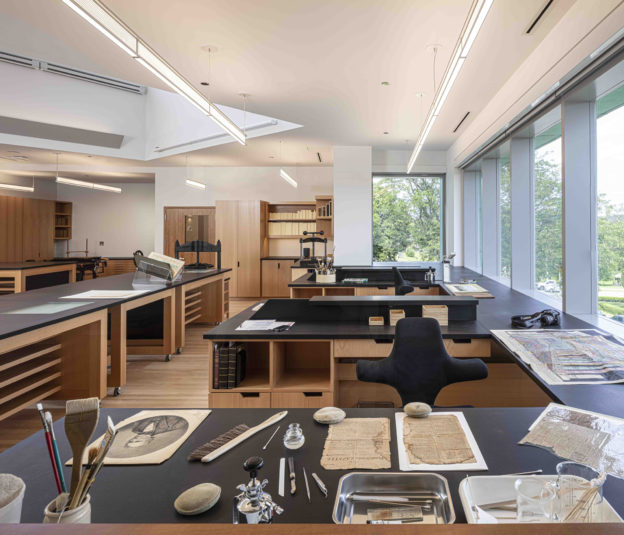
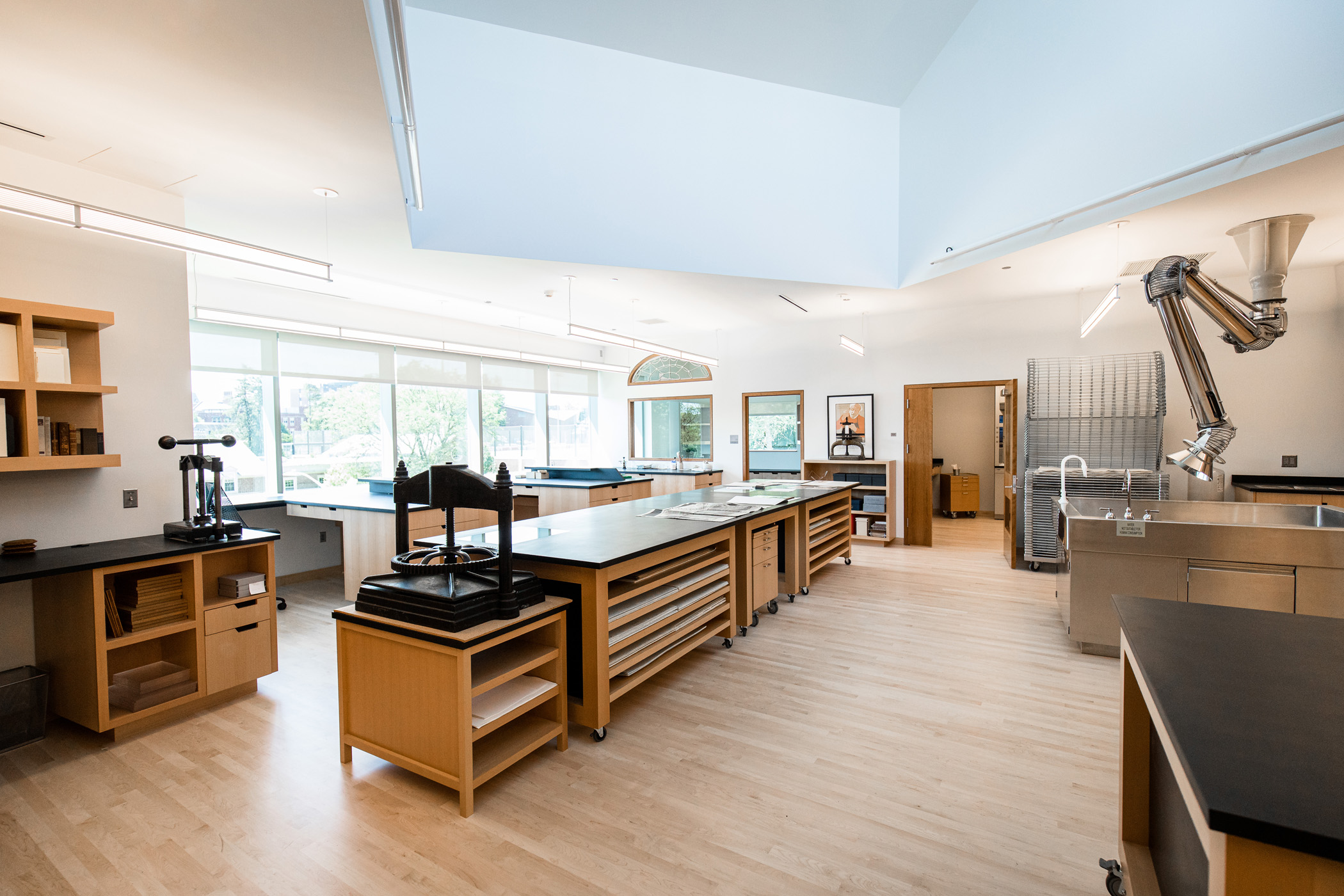
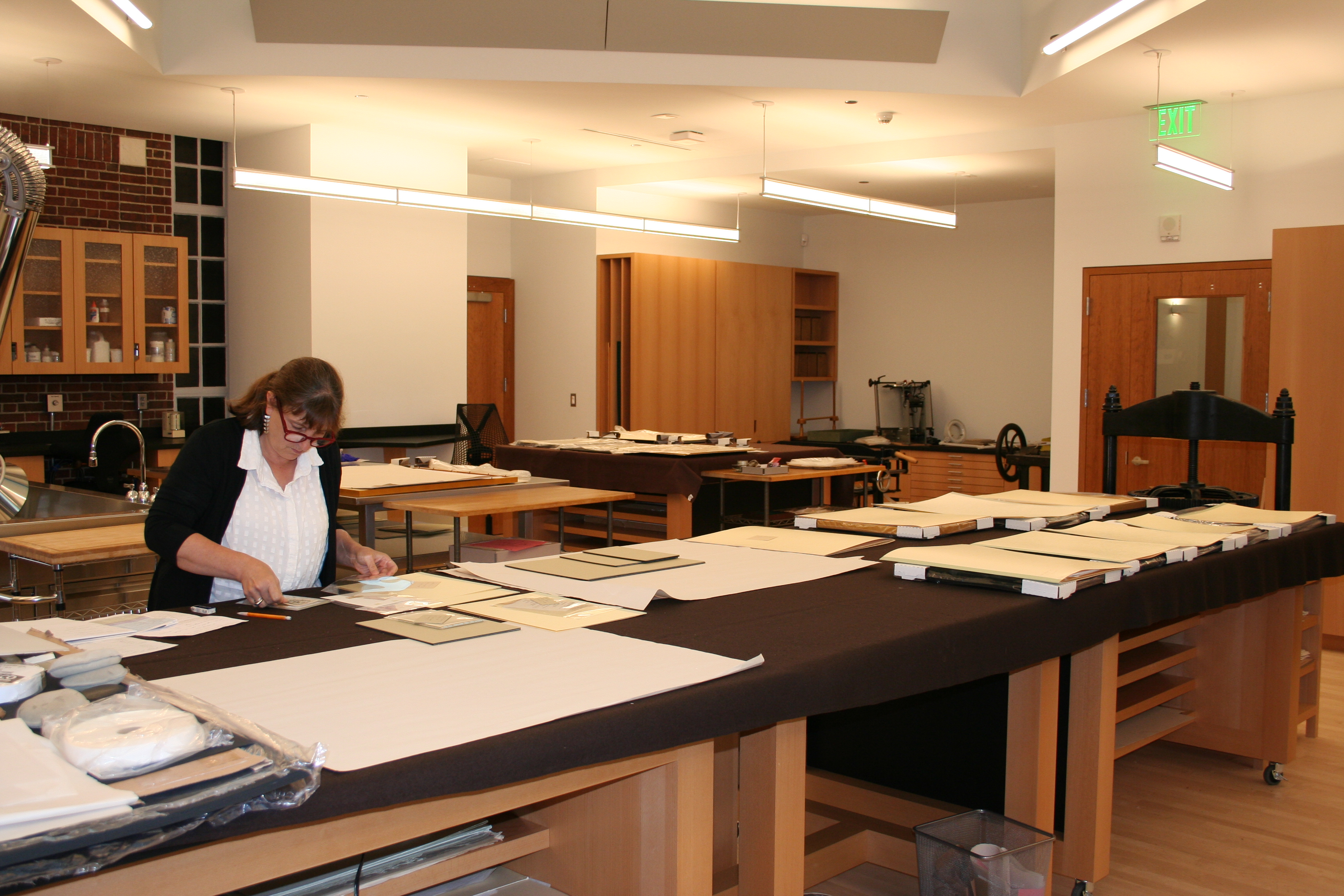
Some items featured include the opening of the Paul Revere exhibition at New-York Historical Society last month; a pictorial look at how we are utilizing our new Learning Lab and conservation spaces; an introduction to our new Director of Book History and Digital Initiatives, Kevin Wisniewski; and our 2019–20 long-term named fellows, Karen Sanchez-Eppler and Rachel Miller.

This issue also contains a photographic look at Antiquarian Hall through the lenses’ of Waldo Lincoln and Nate Fiske (over a century apart); our newest public program, which will engage the public with the staff curators; the lineup of the fall lecture series; a feature on the manuscript collection; staff news; member biographies; and so much more.

Finally, it was announced last month that AAS’s president, Ellen S. Dunlap, will be retiring in 2020; over the course of the next few issues of the Almanac we will be highlighting her invaluable legacy at the Society.

Check out the Almanac in print or digitally here!

A New AAS Illustrated Inventory: The Wohlbrück Collection

The American Antiquarian Society houses more than a thousand photographs and glass-plate negatives produced by photographer Theodore Clemens Wohlbrück (1879–1936) between 1900 and 1910. Since 2010, we have periodically highlighted different aspects of the collection on this blog, including information about Wohlbrück’s views of towns in Worcester County, his photographs of urban architecture, and a donation of negatives in 2014 from a Wohlbrück descendent.

Today, we are pleased to announce that all the negatives from the 2014 donation have been fully digitized and can be accessed via a new online resource compiled by the Society’s visual materials cataloger, Christine Graham-Ward. The resource, which is the twenty-second illustrated inventory to be produced based on AAS collections, is built on the Omeka platform and allows users to search the photographs by a variety of subjects.  

T. C. Wohlbrück moved to Worcester, Massachusetts, from New Jersey in 1900 and started his career as a photographer when he was twenty-two years old. He specialized in landscape and city views that were often turned into postcards. He opened a modest photo studio on Main Street and married a local girl in 1902.

The new resource includes studio photographs made by Wohlbrück of his family and friends, including many portraits of his first wife, Mabel Brown Wohlbrück Penneton (1879–1960), and their three young children, Virginia Wohlbrück Willard (1903–1994), Gretchen Wohlbrück Bath (1904–1995), and Theodore C. Wohlbrück Jr. (1906–1985). Wohlbrück also took photographs documenting the construction of the family’s home in North Worcester and recorded a family trip to Virginia.

Examined as a group, the digital files of the negatives show the work of a young photographer finding his way technically (some are out of focus, poorly framed, or double exposed) and should be considered a prelude to the later professionally produced glass negatives and photographic prints by T. C. Wohlbrück already preserved at AAS and the artist’s Western work produced after he left Worcester for Nevada and California in 1910 .

“Double Portrait of a Woman,” Wohlbrück Collection, c. 1905-1910.

Chat with a Curator: Halloween 2019

This fall we’re introducing a new kind of public program—one that gets you in conversation with our curators about our collection material!

This Wednesday, October 30, from 5 to 7 p.m., we will host our first “Chat with a Curator” program, during which the public is invited to drop in anytime during that window to view a selection of collection materials about Halloween and talk about them with some of the AAS curators. The items will range from children’s books and postcards to “haunted” diaries and early illustrated editions of classic scary tales, from documents about the Salem Witch Trials to “ghost” stereocards—just the thing to get in a spooky mood!

While there is no charge for this program, a suggested donation of $5 is recommended. Please also note that curators will be available to talk about the collection material on view during the program, but discussions about other research topics and/or donations should be held at a separate time.

See the video below for a sneak peek of the program.  After you’ve watched, you can vote on which collection item you think is the scariest by clicking here! Voting will continue until the beginning of the event.

We hope to see you here at AAS!

Uncovering the Hidden Women of the AAS Catalog: Adeline Shepard Badger

Title page of Badger’s address to the Crescent Literary society of Antioch College, an all-female society.

Over the past few years, the Cataloging Department has been actively working toward adding the subject heading “Women as authors” to all pre-1900 records in the AAS catalog with a woman author. This will enable researchers to easily identify and search for the women authors in our catalog. As cataloging assistant, I’ve been given the task of adding the heading and confirming that the people we’ve identified as women are, in fact, women. (This is not as simple as one might think. In addition to gender neutral names, men occasionally wrote under a female pseudonym and vice versa.) Through this process, I’ve stumbled across a lot of interesting women; many are familiar names whose contributions to history are well known, but there are many whose names are more obscure. I’d like to share the story of one of these lesser-known women here.

Ann Adeline Shepard was born into a transcendentalist family in 1835 in Dorchester, Massachusetts. After graduating from Antioch College in 1857, Adeline, known as Ada, became governess for Nathaniel Hawthorne’s three children. Ada traveled with the family throughout Europe, enhancing her teaching skills and knowledge of foreign languages. (Her sketchbooks and letters from this time are held by the Concord Free Public Library in Concord, Massachusetts.)

She returned to Antioch College in 1859 where she became Professor of Modern Languages and Literature and married Henry Clay Badger. In June 1861, Ada gave a speech to the graduating students of the Crescent Literary Society, apparently an all-female society at Antioch College. A copy of this address is held by AAS and is the only record of Ada in our catalog. In her speech, Ada encourages the graduating women to strive for greatness but also to “despair not, if your way should lead you among quiet scenes and your life’s mission be such as will bring you no worldly fame” (p. 8). Shortly after, Ada moved to Boston with her husband where she had four children and founded an all-girls school in Cambridge in 1867. In 1873, she became one of the first women on the Boston School Committee. Sadly, in 1874 Ada committed suicide when her youngest child was only 3 years old. It was reported that Ada was suffering from “temporary insanity, caused by overwork.” More than a decade earlier, in her speech at Antioch College, Ada had written “We all know mothers who walk quietly on in their homely round of duties, uncomplaining, self-sacrificing, with a cheering smile for everyone, but with an aching at the heart and a burden on the soul that only the deep, sad eye reveals” (p. 7); a sad foreshadowing of her own future.

Even by today’s standards, Ada lived an intriguing life. She graduated college, traveled with the family of a famous author, became a professor, and was active in her community. That she accomplished all this as a woman in the nineteenth century makes it all the more remarkable.