Milk-in’ the Sources

When I first told people I’d decided to nurse my twins I was asked jokingly, “So you’re going to hire a wet nurse?” followed by “too bad they’re not around anymore.”

Of course they are, I thought – just ask Salma Hayek.

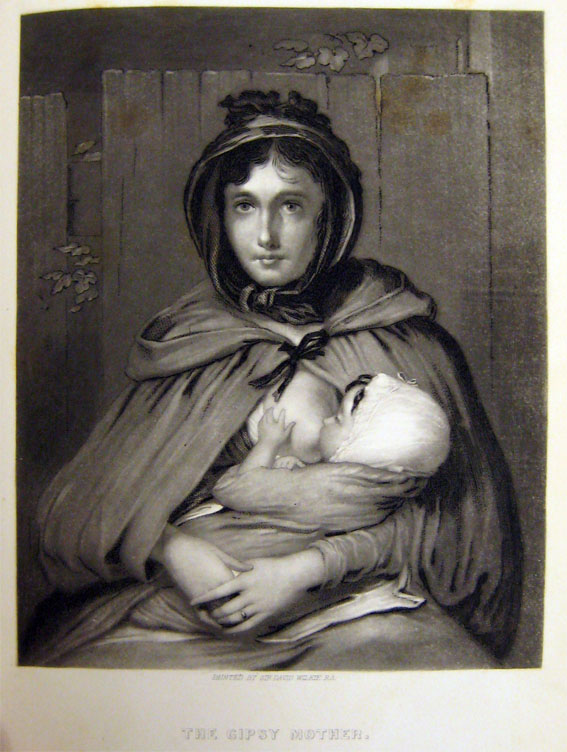
nursingFor awhile I didn’t think about nursing history, until I recently saw in the Graphic Arts workroom an engraving entitled “The gipsy mother” which was based on a painting by Sir David Wilkie. The image, displayed here, features a mother unashamedly breastfeeding her child while facing the viewer. Published in 1840s annuals such as the Gallery of mezzotints, it is yet another example of the rich images in the gift books collection. For more about our current project to get these images cataloged and searchable via the AAS online catalog with reference size images, see our earlier blog post on Prints in the Parlor. While the scene is visually stunning, revealing, and personal it begs the question, when did we become so sensitive about something so natural? Especially if such scenes of nursing were commonplace enough to be reproduced repeatedly, annually even?

Being a good researcher, I dutifully looked to the archive for answers. In addition to maternal and infant care manuals (as well as the exceedingly insightful letters in the Grant Burr Family Papers on the subject of breast care) there were two items I thought exceptionally blog-worthy –

The first evoked a conversation I had with a lactation consultant who told me women today are a full three generations away from nursing. So I figured if I looked back 100 years or so (in a time when mercury was medicinal), I would find the roots of the practice of nursing being replaced by the bottle. Surely, early advertising cards will enlighten us?

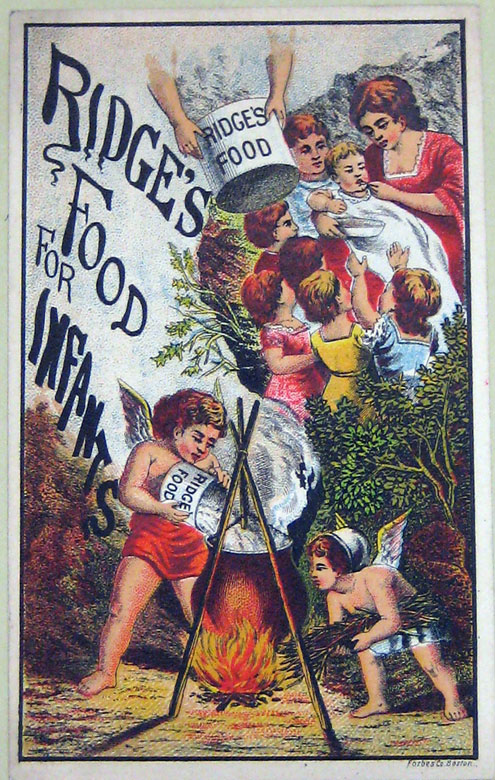
formulaNot surprisingly, trade cards for infant formulas were informative. The “Ridge’s Food for Infants” trade card as seen here claims to not only be affordable but a necessity for babies (to boot, its flourished with rock-solid endorsements).

The card, produced in Boston by Woolrich & Co. dates to between 1875 and 1900. The reverse of the card draws would-be consumer’s attention to the fact that “multitudes of infants are slowly starving at a period of infancy when development and growth are remarkably active” (cue the anticipated mom-freak-out moment) because of the mother’s inability to produce enough milk. This, of course, compromises the health in both mom and baby. The front of the card features a maternal vignette scene of a mother surrounded by children feeding her young infant Ridge’s with a spoon and bowl. In the foreground, two winged figures prepare the formula in an outdoor (aka natural) looking scene. What is striking about this, of course, is that the making of processed formula is made to look more “natural” than that of a mother breastfeeding her child.

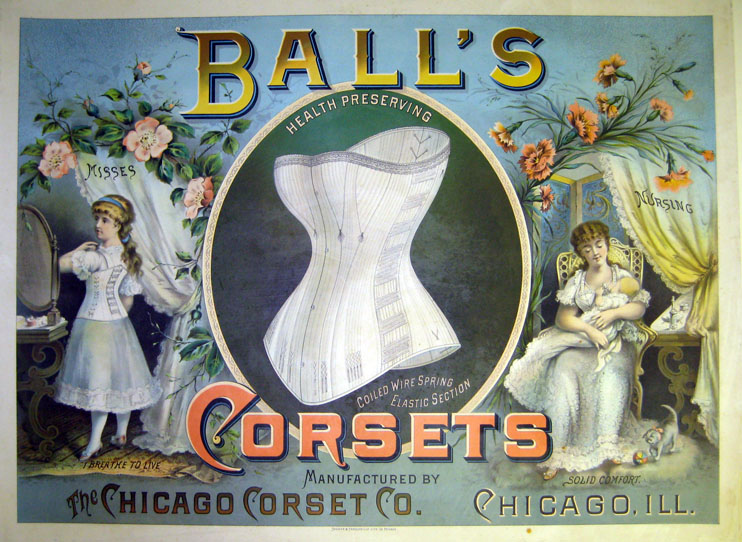
In contrast to infant formula advertising, for those mothers who wanted to avoid a wardrobe malfunction while nursing, there were “Ball’s Corsets” by the Chicago Corset Company. The corsetchromolithographed print shown here was published about 1880 and promises “solid comfort” for those breastfeeding. Two women are in the scene (flanking a large corset which exposes front, interior and side of the piece) – the woman to the left is a “Miss” admiring herself at her dressing table and stating “I breathe to live”. The woman to the right is a mother facing her viewer and watching her nursing child. The infant is successfully breastfeeding due to the ease and support of the corset (evidenced by the mother’s maternal affection and sense of security on her face).

These items in no way survey all of the visual representations on the subject of nursing present in AAS collections, but they do demonstrate the response to breastfeeding as one varied in the nineteenth-century as it is today. Additionally, they reveal how something so personal could be artistically conveyed.

A.L.A.: Librarians en masse


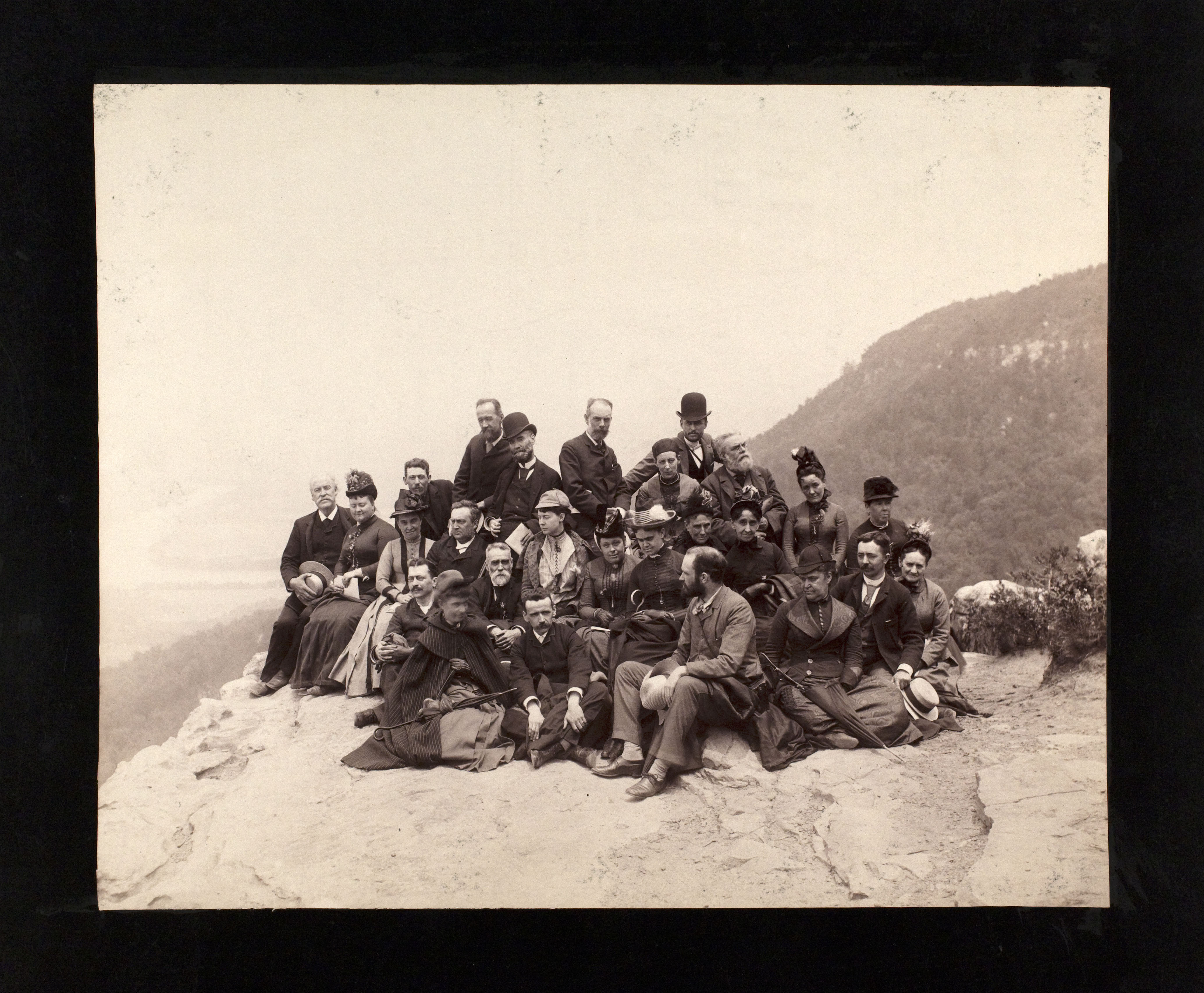
The ongoing processing of the Society’s Group Photograph collection has recently turned up a small cache of nineteenth-century photographs of librarians.  Oh sure, there are also significant photographs of mill workers, school children, and important businessmen, but around here we get pretty jazzed up over images of librarians.  On the whole, librarians tend to be a shy bunch, not prone to self-aggrandizement.  So, images of nineteenth-century librarians, taken as our profession was being crafted, cause great excitement. When this cluster of eight photographs of American Library Association outings turned up during our survey, we were all intrigued.

lookoutlibrarians

The photographs were taken at the time of the A.L.A’s annual meetings and range in date from 1887 to 1897. They show large groups of men and women gathered in a variety of locations, from Look-Out Mountain in Tennessee to Nova Scotia, Canada.  The photographs were intended as mementos of these occasions.  Those in attendance gather in their top coats and fancy hats, out-of-doors where the photographer had a chance of getting enough light.  Both Edmund Mills Barton (1838-1918), the Antiquarian Society’s Librarian, and Charles Augustus Chase (1833-1911), who served as AAS’s Council secretary and held terms on both the finance and publications committees, attended A.L.A. events.  The photographs ended up in our holdings through these men.  Several are annotated on the reverse with a list of participants, or included printed lists of attendees.

The images get right at the heart of librarianship, paralleling the growth of the A.L.A., the national professional organization which was founded in 1876 to “enable librarians to do their present work more easily and at less expense.”  The A.L.A., by the way, is still very much in existence today and holds conferences and training around the country to benefit the professional development of libraries and library staff. For more information on the ALA or this year’s annual conference in Washington, D.C. from June 24-29, 2010, you can click here. librarianslouchingThe nineteenth-century participants in the photographs range widely in age, from men with graying beards to young women with nary a wrinkle.  They appear well-dressed.  All are white, even though, as we learned in an earlier blog post, Daniel Alexander Payne Murray, the Assistant Librarian of Congress, was an African American.  Not surprisingly for such a bookish group, many wear glasses.

In addition to these photographs, the Society holds many nineteenth-century publications printed by the American Library Association, including bibliographies, indexes to periodicals, papers read before the group at various conferences, and Barton’s own reflection, The First Conference of American Librarians, a pamphlet printed in 1886.  Material related to the A.L.A. meetings is housed in our classed collections under both Libraries and Institutions, two groups of material accessible at present only through the auspices of our Reference staff.  In addition, Barton’s correspondence in the Society’s archives documents how closely the Society was participating in the early days of librarianship.

librarianglasses
This summer, as during most summers, AAS will employ a clutch of students from a number of colleges and universities.  The students will work on a wide variety of projects, from updating holdings records for newspapers and serials to sorting and cataloging materials from those complex classed collections, including Institutions.  Our past experience indicates that some of these students will likely choose librarianship as a profession.  Thus these young people are the followers of those individuals captured in the group photographs.  And, although they may not yet have travelled to an A.L.A. conference and they probably do not own such magnificent hats, many of them do wear glasses!

Three Opportunities to Learn More About Early African American Lives

Spring is springing, the bees are buzzing, and we are coming into the busy season here at AAS. Opportunity is knocking. This week AAS will be involved with two wonderful lectures on the lives of African Americans, so it’s a perfect time to tout the wide-range of material we have supporting the study of African Americans.

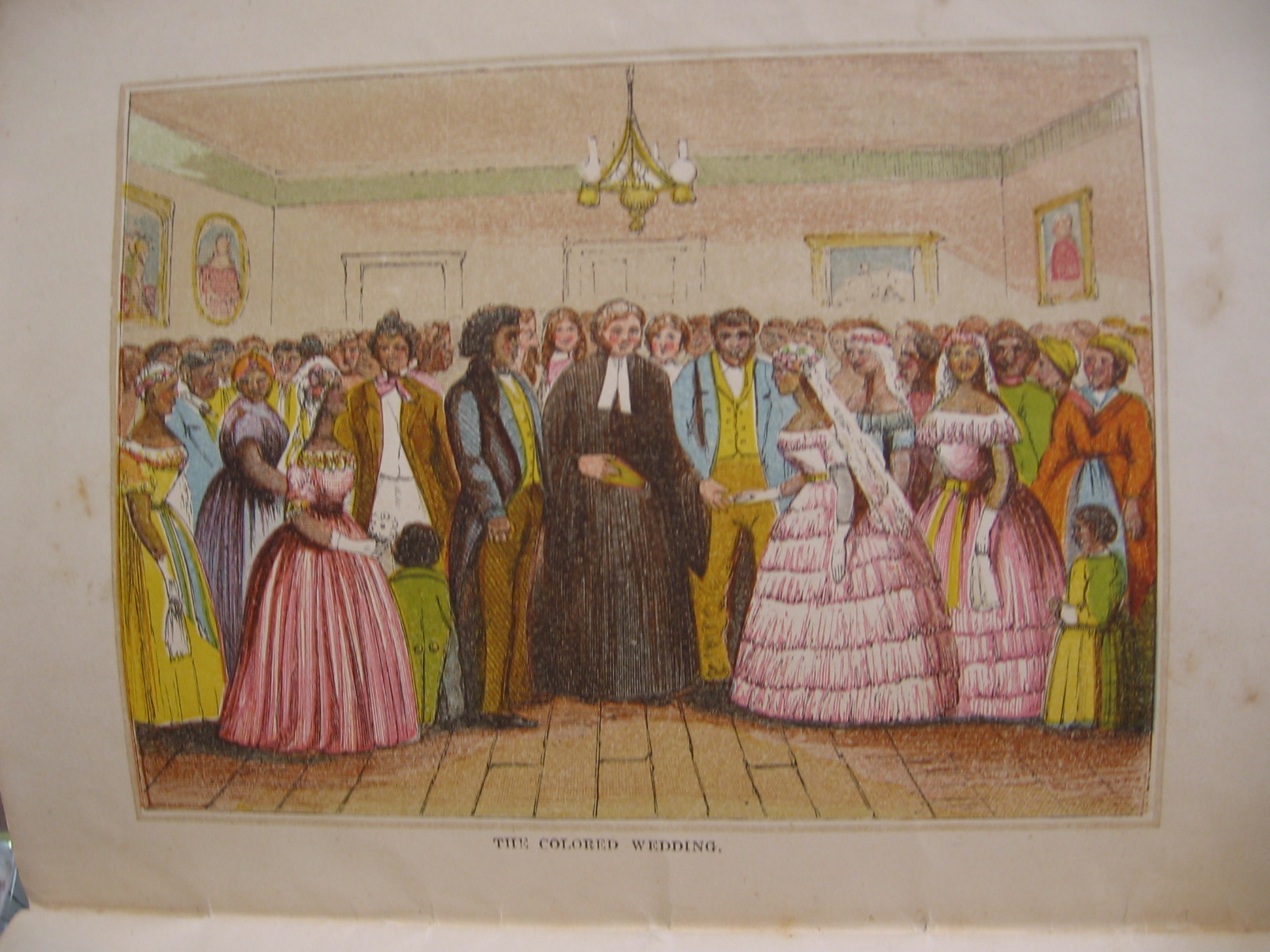
A wonderful example that just came across the reference desk is this illustration of an African American wedding from The Child’s Story of Cotton in our children’s literature collection.
wedding

Opportunity #1: April Haynes, the Hench Post-Dissertation Fellow at the American Antiquarian Society, will be presenting what promises to be a fascinating academic seminar tomorrow afternoon. For more information, click here.

  • Please note: this is not at AAS!

“‘Abuse Not’: Flesh and Bones in Sarah Mapps Douglass’ Classroom”
Wednesday, April 21, 2010, at 4:30pm
Pavilion Room, Peter Green House
Brown University, Providence, RI

Sarah Mapps Douglass (1806-1882) was an African American Quaker and a founding member of the Philadelphia Female Antislavery Society. In the 1850s, she became the head of the girls department of the Philadelphia Institute for Colored Youth and delivered a number of lectures on physiology. Douglass overtly challenged racism while subtly navigating the politics of benevolence and channeling resources toward autonomous black institutions. Using the reports of philanthropists and colleagues who visited her classroom, this talk will show reform physiology in action. In the context of antebellum Philadelphia—where popular physiology lecturers taught thousands of white auditors how to read flesh and bones for racialized, gendered, and sexual meanings—Douglass created a protected, dynamic environment in which African American girls learned to speak about embodiment.

Opportunity #2: You could also come to AAS this Thursday, April 22, at 7:30 p.m. for another AAS fellow’s eagerly anticipated illustrated talk: Ezra Greenspan’s “Researching and Writing African American Biography: The Life of William Wells Brown.”  More information about this free public lecture is available by clicking here.  (This one is at AAS.)

Opportunity #3: And if these talks inspire you, do your own research! A good place to start is our African American Resources page.

Here are some tips to get you started searching our online catalog for African Americans:

  1. To get a glimpse of the range of material the American Antiquarian Society has to support research on early African Americans, try a Guided Search of the Society’s online catalog for “Blacks” OR “African American?”. You will get over 4,000 hits!
  2. A more manageable approach would be to go back and do a Basic Search changing the Search Type to Subject Browse. Then type one of the subject headings suggested below into the Find This box.
  3. Typing in “African American” as a Subject Browse will pull up a different list of subjects than putting in “African Americans” so you may want to try both. Either one pulls up a whole range of subjects for you to examine. Click on the blue number to the far left to pull up all the records of items that match each subject.
  4. A Subject Browse for either “African?” or “Blacks?” will pull up people of African descent generally, not just Americans.
  5. To search collections that have been inventoried but are not yet in the online catalog (including wonderful visual material from the graphic arts collections), you can go to the listing of inventories and browse through the graphic arts collections. You could also search the website using the Search this Site box in the upper right hand corner of the American Antiquarian Society’s homepage. Typing in a keyword here, such as “African American” and “Blacks,” will pull up different hits than searching the online catalog.

Some subjects to search in AAS’s online catalog:

  • African Americans–Caricatures and cartoons
    African Americans—Genealogy
    African Americans—History
    African Americans—Humor
    African Americans—Juvenile fiction
    African Americans—Legal status, laws, etc.
    African Americans—Music.
    African Americans—Pictorial works (over 100 titles)
    African Americans—Songs and music
    African Americans—Social conditions
    African Americans—Suffrage
    Blacks—Juvenile fiction.
    Blacks as Authors (the subject is then subdivided by each author’s name)
    Blacks as Illustrators
    Blacks in the printing and publishing trades
    Free African Americans
    Free Blacks
    Freedman
    Race relations
    Slave
    Slavery –Justification.
    Slaves –United States –Songs and music
    United States–Race relations
    Women Slaves

Searching these subjects will only pull up a sampling of the materials we have that may be relevant to your research. But that’s what librarians are for! So come on in, or email us with questions about how you can best direct your search. We would be delighted to help.

It isn’t perfect, but . . . .

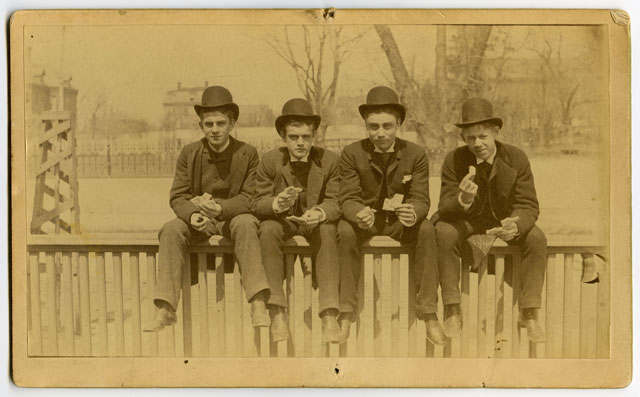
boysgroupRecently, the American Antiquarian Society digitized a new finding aid to help scholars access the Society’s Group Photograph collection (http://www.americanantiquarian.org/groupphotos.htm). Usually, we like these finding aides to be as complete as possible, with detailed entries and scans — you know, the whole works, like we have done for our collections of daguerreotypes, ambrotypes and tintypes. But this finding aid is a work in progress. In order to expedite access to the collection, we have posted a sort of abbreviated version of a finding aid – perhaps not as useful in the long run, but at least it is a start. This document allows basic access to about a dozen boxes of photographs that had long languished at the end of the photographic portrait collection, completely unprocessed. Images of groups just didn’t fit into our main collections, where the photographs are sorted by last name of a sitter or by geographic location.

Last year, our intrepid volunteer, Bill Mettey (see earlier post) sorted the images into three sizes: cabinet, standard, and folio, Billand then arranged the collection within each size by very rough groupings. Categories were developed and assigned based on the holdings, so we now have the military groups, the clubs, the schools, and the public officials all together. Group photographs that were known to depict Worcester residents are noted separately for each category. Unknown groups also exist within the collection and there are hopes that further research may help to identify the people depicted in these images.

The collection awaits further processing and we would ideally love to list each image at the item-level, including as much information as possible about each photograph. But, these are complex objects with many associations. You can list a regimental group photograph under the title of the regiment, the state, the location of the photograph, the event depicted, and so on. Local theatrical production photographs could be listed under the playhouse, the name of the troupe, the title of the play, the performers depicted. You get the idea. Bill did start to make an item level database for the Group Photograph collection, but the time involved was enormous and we wanted him to continue to bulk process other portions of the photographic collections. To further complicate the situation, there are still additions being made to this collection as other photography holdings are sorted.

After much thinking and hashing through our options, we decided to post this broader finding aid – it isn’t perfect, but it is a good beginning. familygroup Based on the way the collection is used, we will adjust the finding aid to help researchers locate key material. We might add more categories, add an index of the photographers represented, or scan the whole collection if funds become available. So, this means that the box listing for the Group Photographs Collection will continue to morph and grow. While this might aggravate us as librarians, as scholars it is exciting to think there is more to come.

Historical Fare for Today, Tomorrow, and Thursday

downandout Today you can check out a new issue of Common-place.org, an early American online journal AAS co-sponsors. If you want to understand today’s economic woes, you could do a lot worse than explore hard times in early America.  That’s the message in “Hard Times,” the latest edition of Common-place.org, guest edited by historian Michael Zakim.  Point your browser to http://www.common-place.org to meet William Duer, the Bernard Madoff of the 1790s, to learn how one reformed drunkard manipulated the antebellum market for suffering, and to discover the surprising consequences of nineteenth-century bank failures.

LeachLepore Tomorrow (April 14) at 7:30 pm AAS will host “Uncivil Discourse: A Conversation with Jill Lepore and Jim Leach.” You can read all about it in our post from last week by clicking here. Or you can read an article about the event in today’s Worcester Telegram & Gazette by clicking here.

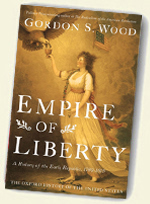
Then on Thursday (April 15), also at 7:30 and also at AAS, Pulitzer-prize-winning historian Gordon Wood will discuss his latest book Empire of Liberty: A History of the Early Republic, 1789-1815 (Oxford University Press, 2009). This book covers the beginning of the national government to the end of the War of 1812, a time marked by tumultuous change in all aspects of American life. woodThe founders of the nation had high hopes for the future of the nation but few of their dreams worked quite as they expected. They hated political parties but parties nonetheless emerged along with a vibrant and raucous popular democracy dominated by the “middling sorts” composed of merchants, artisans, and entrepreneurs with a fierce belief in equality. While many of the founders hoped to eventually abolish slavery by 1815 the institution was stronger than ever and starting to expand westward. These are just a few of the themes that Professor Wood explores as he describes this pivotal era when America took its first unsteady steps as a new and rapidly expanding nation.

But why stop there? Next Thursday (April 22) at 7:30 you can attend Ezra Greenspan’s rescheduled lecture on “Researching and Writing African American Biography: The Life of William Wells Brown.” Click here for an earlier blog post on that topic.

Logistical Information:
For further information on any of these public programs, including directions to AAS, please click here.

In order to prepare for and recover from this busy week, please note the following changes in the library hours:

1) The library will close at 5pm tomorrow, April 14, to prepare for the civil conversation.

2) We will also be closed on Monday, April 19, for the uniquely Massachusetts holiday of Patriots’ Day.

Dispatch from an AAS Intern: 19th-Century Children’s Letterwriting

These days you would be more likely to encounter a young child e-mailing or texting than writing a letter to a family correspondent. Many believe that letter writing is a lost art in the digital age. It is certainly romanticized in films and books but in the 19th century household correspondence was an excellent tool to teach children not only how to read and write but how to successfully express themselves.

During my internship at AAS I’ve had the opportunity to work closely with the family correspondence of Sampson Vryling Stoddard Wilder, an early 19th century merchant and prolific correspondent. While going through the letters of this collection (most of them are between Sampson and his ex-pastor, Reverend Chickering) I kept coming across delightful tidbits written by Sampson’s children. This got me thinking about the nature of family letter writing and education within the home. Also, they’re just very interesting and I wanted to share them with you!

dad
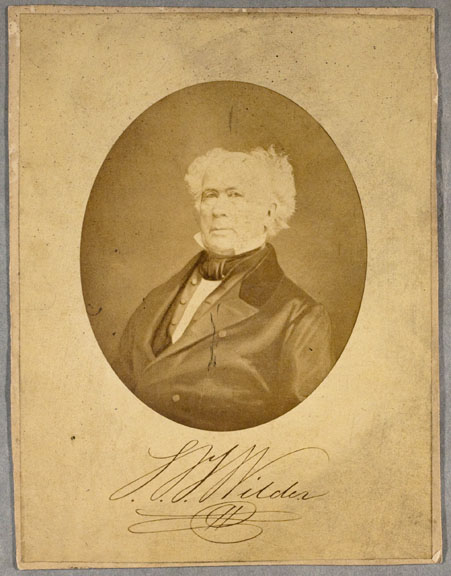
The collection contains only one photograph of Sampson Vryling Stoddard Wilder.
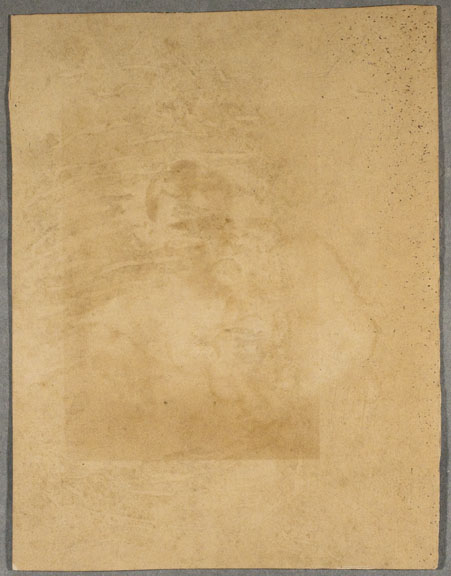
You may be able to make out the ghostly image of a child on the back of Mr. Wilder's photograph.  Perhaps Sampson, Jr.?
On the back of Mr. Wilder's photograph is the ghostly image of a child -- perhaps Sampson, Jr.?

Sampson’s daughter, Vrylina, is the most present child in the letters. On 23 April 1831 she added her own note at the bottom of her father’s letter to Rev. Chickering:

My dear Mr Chickering
Ma has come home, and I am very glad. I was tired of staying at the Institute. Sampson was very glad to see his sisters again. When I am seven years old, I am going to Bolton, to see you, and your cow, cat, Pigs, and chickens. Give my love to Mrs Chickering.
Good bye. Vrylina

Vrylina’s baby brother, Sampson, is mentioned again in an earlier letter in which she provides this anecdote: “Sampson likes pictures very much he saw Just now a monkey in a book drinking out of a glass, and he said ‘I afraid monkey will break it.’ He is a funny little boy.” I have not had much luck finding information about S.V.S. Wilder’s children so it is unclear to me how old Vrylina and Sampson would have been at this time. These little glimpses into family life, though, are truly treasures.

A letter dated 29 February 1836 is probably the most entertaining and thought provoking of all the juvenile writing I’ve encountered in this collection. Again Vrylina is the author. It is clear from her handwriting and exposition that she has matured. What is really interesting is that she has developed a bit of a sarcastic personality over the years. She writes to Rev. Chickering,

Papa says that there is an excellent opportunity to write to you without any postage, and that we must all write to you, but I told him I had nothing to write, he says, that is no matter, that you like long letters, even if they do not contain anything, so in obedience to Papa, I have made up my mind to fill a sheet, and I promise you in advance, that all, I shall say, will not be worth the ink and paper upon which it is written…

Later in her letter Vrylina asks the pastor to pray for her so “that I may be led to profess the Lord Jesus Christ, and thus be prepared when it shall please the Lord to call me hence to meet the angelick spirits of my dear little brother and sisters.” This request came about because of a worry that her father had expressed to her that she may not be spiritually prepared should she die unexpectedly. What is so fascinating for me here is that this young child speaks of death without fear. It is something that she has had personal experience with and something her parents did not shield her from. It is clear from this example that being compelled to write letters helped children to reflect upon their own lives and even their own spirituality.

In a pamphlet distributed to the trustees of the Philadelphia Academy, Benjamin Franklin highlighted the importance of correspondence, “The boys should be put on writing letters to each other on any common occurrences… imaginary business &c. containing little stories.” The purpose of this training was to teach students to communicate efficiently.

Surely Vrylina and Sampson’s father, Sampson Wilder, is a prime example of a good communicator. In a memorial to him it was said, Wilder’s writing was “terse and direct if occasion required; and seldom repetitious, each additional word being there with a purpose, defining or amplifying the leading idea.” As a man who valued writing and maintained a large correspondence it seems only natural that he would foster the virtue of good writing practices in his children.

The Acquisitions Table: Emergency Paper Sources

03

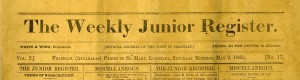
The Weekly Junior Register.  Franklin, LA.  May 2, 1863.  Vol. 2, no. 17.

In 1860 there were 555 paper manufacturers in the United States, but only 24 were in the South. Hence Confederate newspaper offices often had trouble obtaining printing paper during the Civil War. They were forced to seek alternative paper sources, such as the blank back of unused wallpaper. This issue is printed on the back of a beautiful pattern of peasant scenes. Wallpaper issues are extremely rare, but AAS happens to have another copy of this date on different, floral-patterned wallpaper. At this time Franklin was occupied by Union troops, but paper supplies had not been restored. Purchased from Old Editions. Harry G. Stoddard Memorial Fund.

Besides wallpaper, newspaper publishers sometimes had to resort to wrapping paper, lined ledger paper, and even tissue paper, and war was not the only cause of shortages.  The editor of the  Colorado Transcript (Golden, Colorado) for April 8, 1868 wrote, “We couldn’t help it. – Some of our subscribers will receive this week’s Transcript printed upon yellow wrapping paper, owing to the non-arrival of a supply at our factor’s store.  We had only enough to print about half of our edition, and have been compelled to resort, to this make-shift.”  Purchased from Old Editions. Harry G. Stoddard Memorial Fund.

~ Vincent Golden

“You Lie!”: Uncivil Discourse, Past and Present

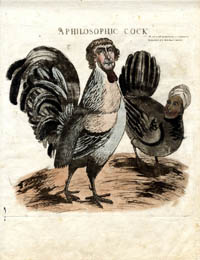
If you thought the tension and incivility between political parties in America couldn’t get any worse than it has been recently, then you haven’t spent enough time with nineteenth century political cartoons. Today I don’t think you could get away with publishing an image like “The Philosophic Cock” (in the new fully illustrated online inventory of AAS’s Pierce Collection). PCIn this political cartoon from this political cartoon from 1804, Thomas Jefferson is represented as a rooster cavorting with a hen with the head of Sally Hemings, the enslaved woman with whom he had a number of children. The original audience for this political print didn’t feel the need to wait for DNA evidence and AAS member Annette Gordon Reed’s Pulitzer-prize-winning work (on our website list of recent scholarship) to put the pieces of that scandal together.

History may repeat itself, but you never find yourself in the same river twice. (Little known fact: if you double your truisms, it doubles the truth of both statements.) So what are the differences between today’s outbreak of political rudeness and that in the early republic? Thankfully we can start with the fact that in today’s political arguments the denouement no longer involves dueling pistols. On the other hand, what do the similarities between the early nineteenth and early twenty first centuries tell us about American society then and now?

These questions and a whole lot more will be examined in a very civil discussion held at AAS next week. On Wednesday, April 14, at 7:30pm, the American Antiquarian Society will host “Uncivil Discourse: A Conversation with Jim Leach and Jill Lepore.”
LeachLepore
Jim Leach, the chairman of the National Endowment for the Humanities (NEH), will join historian and essayist Jill Lepore for a public discussion on the state of political discourse in America, past and present. This program is part of a fifty-state American Civility Tour that Leach is conducting to raise awareness of how divisive and potentially dangerous harsh and hateful language can be. Leach believes that the exchange of ideas and the consideration of other viewpoints are central to the humanities and that we need to bring this spirit of reason back into politics.

This event is sponsored by the NEH in partnership with the American Antiquarian Society and Mass Humanities. It is free and open to the public. Directions are available on our website. Regulars in the AAS reading room should note we will not be able to have our usual Wednesday evening extended hours on April 14th. Instead, the library will close at 5pm to prepare for the event.

As always, we hope to see you there!

“What’s with the round photograph?”

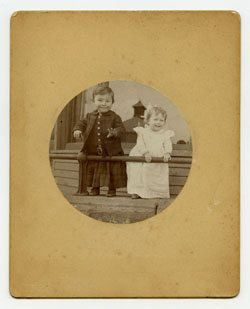
This was the question I got recently as I was sorting through some photographic material at my desk and was putting carefully aside a small, round photograph of two children. RoundphotoAs you might already know, the American Antiquarian Society has important holdings of early photography, including daguerreotypes from the 1830s and cabinet photographs of performers from the 1870s. A description of the entire photography collection and links to many illustrated inventories of our photographic holdings are available via our website. But today, in order to mark an important anniversary in photographic history, I wanted to post about a handful of small, round, images in our collection that date from well after 1876, our usual cut-off date for collecting.

On April 6, 1889, George Eastman sold his very first Kodak Camera No. 1, a single lens, bulky, wooden contraption that used rolled film. The No. 1 was a camera designed for the people, not for professional photographers. Perhaps this doesn’t sound like such a big deal today, when I can snap a photograph with my cell phone and email it half way around the world in a second or two. But until 1889 the populace could only consume photographs produced by professional photographers. You had to haul yourself and your family to the photographer’s studio to get a family portrait. 3 Or you hired the professional photographer in town to come out and take a picture of your home or your prize cow, or your factory or business. AAS has thousands of wonderful photographs that were produced by commercial photographers including the bulk of the portrait photographs in the collection, our 60,000 stereo photographs, and the majority of our views of cities and towns from across the United States.

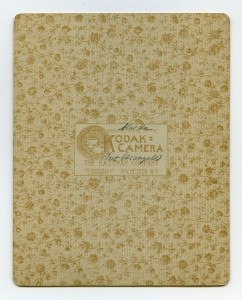
Eastman’s invention of the No. 1 revolutionized photography. Patented in 1888, but not sold until the following spring, the camera, at $10, allowed almost anyone who could afford the price to create a visual record of their lives, outside of the professional photographer’s studio. The exposures were a distinctive round shape and can be identified both by this shape and by their mounts, which are usually marked with the Kodak insignia. The camera had severe limitations (it could only take 100 shots, had to be returned to Kodak for processing, and had a finicky shutter that was set with a string), but it was successful enough that the company quickly come out with a smaller, more affordable version, the Kodak No. 2, or Brownie camera, which was released later in 1889.
1
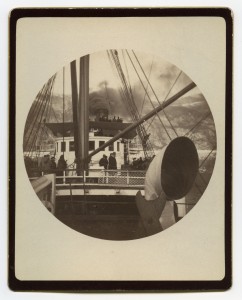
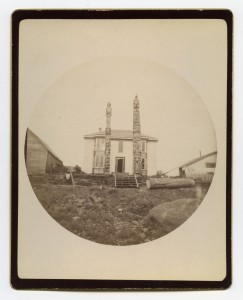
Because of the late dates, AAS does not hold many images taken with the early Kodaks, but I am including three in this post for your enjoyment. The charming photograph at the top of this post is of Gladys (age 1) and George Gage (age 2), c. 1888. It was the recent gift of Ingrid E. Wade and came to the Society in an album of family photographs.This image is one of the last in the album and is the only one not taken by a professional photographer (the relaxed postures and smiling faces on the toddlers are a dead give away that Mom or Dad are probably behind the lens). The two other images are later in date and were probably taken with a Brownie. These images, by an unknown tourist, were taken during a journey to Sitka, Alaska, in 1897 and are part of a set of about a dozen images found in the Society’s holdings of Alaskan views.
2
Not impressed? Well, consider this – how many times in your life have you sat for a commercial photographer? Well, for most of us there are all those dreadful elementary school pictures, the senior prom, and at our weddings perhaps. Maybe a military shot, or an official head shot for business. These are a small percentage of the images we now have of our lives. In 2010, almost every photographic image of our family, our travels, our home, our celebrations, we take ourselves. We post them on Facebook and we email them to distant relatives. We make digital albums where we can flip them, fade them, spin them upside down, if we want. All of this control over our images, every little pixel, owes its existence to Eastman and his Kodak No. 1. He really did bring photography to the masses, starting with little, round prints like these.

Prints in the Parlor

The American Antiquarian Society’s Graphic Arts department is currently in the early stages of a two-year long project entitled Prints in the Parlor. The project is funded by a grant from the National Endowment of the Humanities and focuses on cataloging engravings sisterswhich would have appeared in the American parlor from 1820 to about 1876. Large, single sheet engravings depicting politicians, patriotic events, moral lessons, and religious themes are included in the grant and are being digitized as they are added to our online catalog. I promise a later post with more on these wonderful prints, but today’s blog posting is focused on the second portion of the grant, the engravings which appear in gift books.

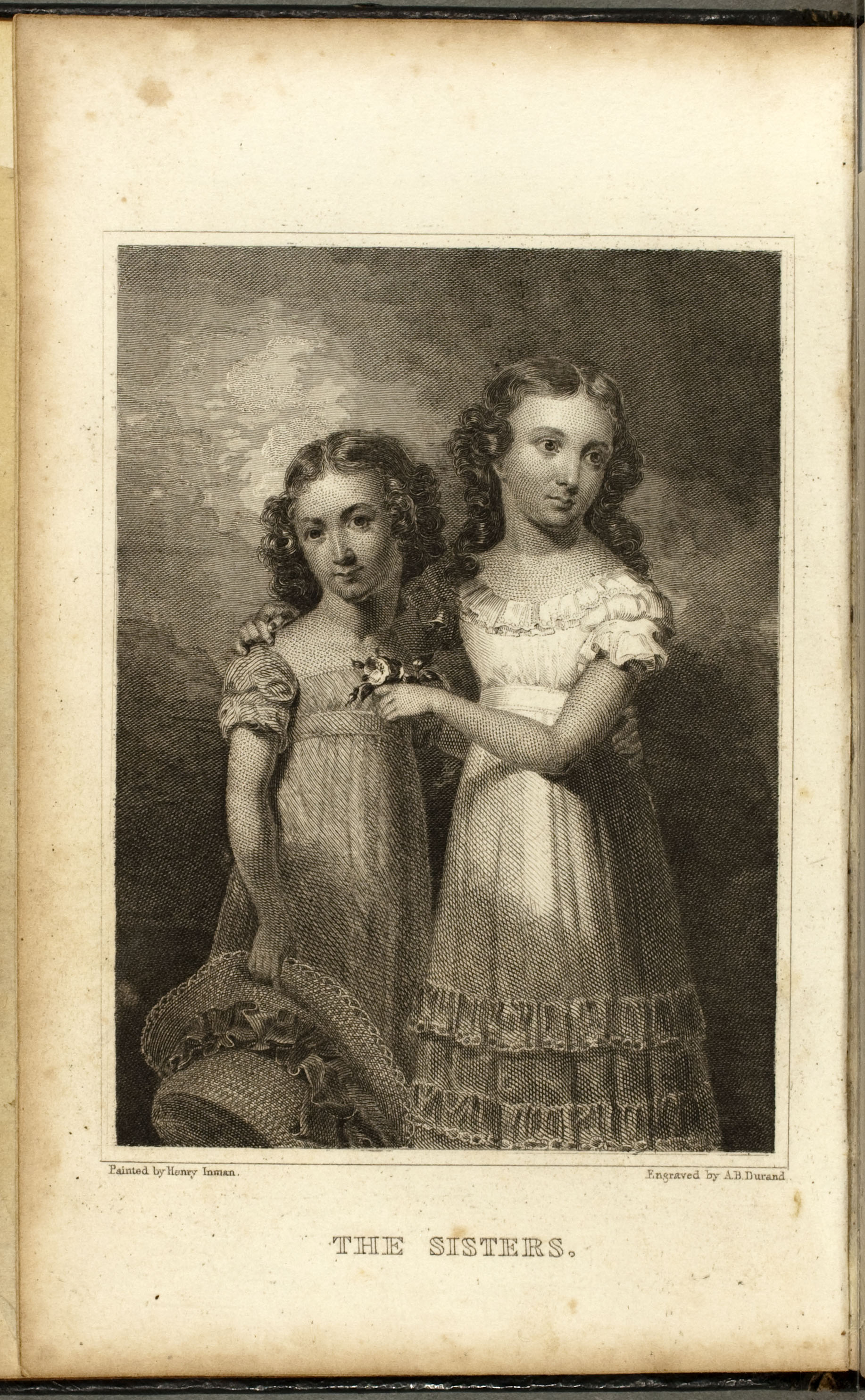
Gift books were published in the United States mostly before 1870, with the height of their popularity occurring in the 1840s and ‘50s. Based on a British tradition, the elegantly bound books contain poetry, prose, and illustrations and were intended to be read at home in the parlor. They were marketed for the holiday trade, and often came out in November with titles such as the Christmas Gift from Fairyland or The Friendship’s Offering and Winter’s Wreath. There are several good bibliographies of American gift books (see below) that break down the authors, texts, and titles of the illustrations, but no resource has yet provided the level of access to the illustrations that the Society is undertaking. Each engraved image in each gift book is being cataloged individually into our online catalog and will be searchable by key words in the description, assigned subject headings, and also by engraver and artist. The images are also being digitized. Our hope is to open up these illustrations to researchers and to add them to the ongoing conversation around nineteenth century visual culture.

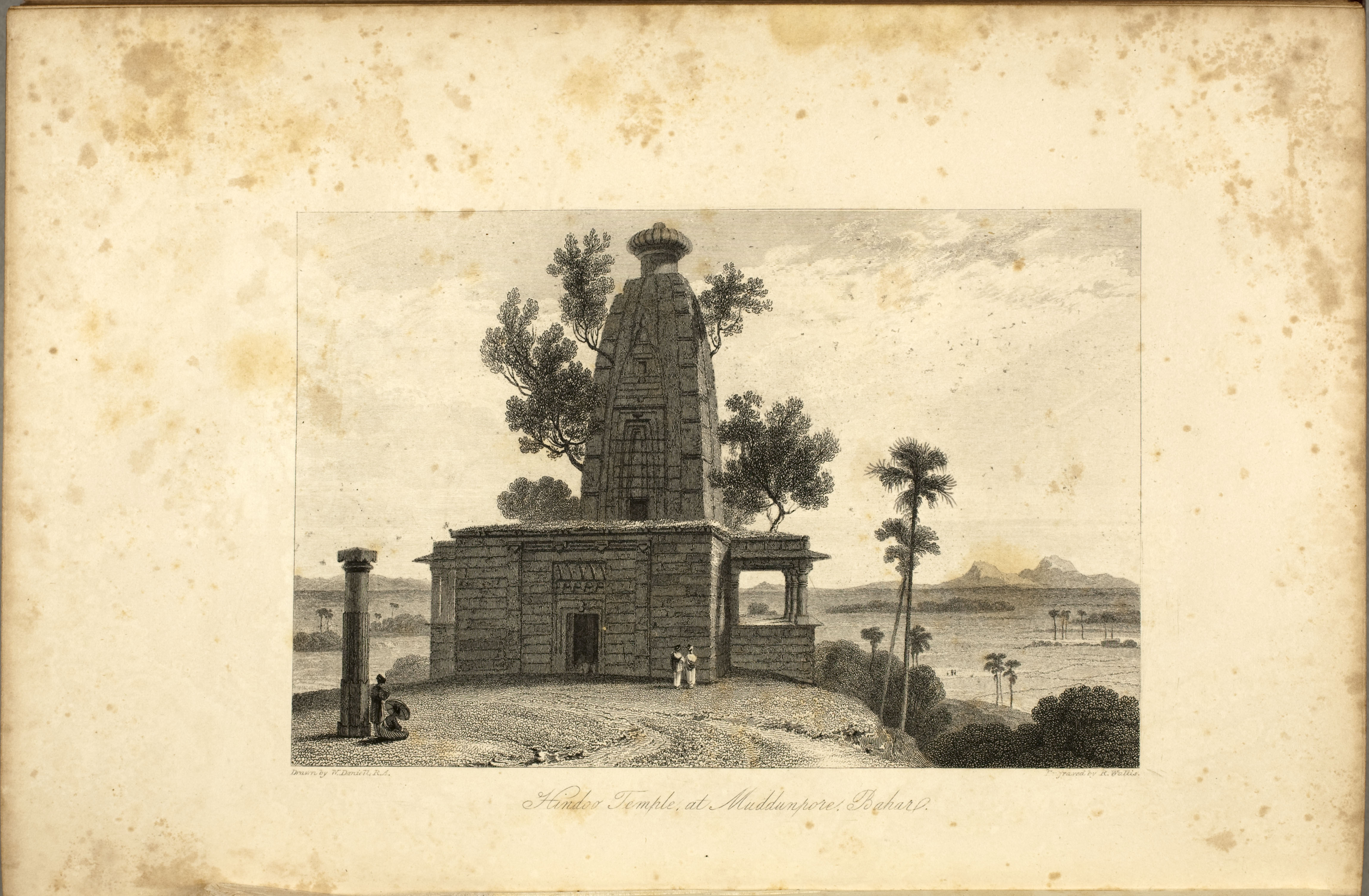
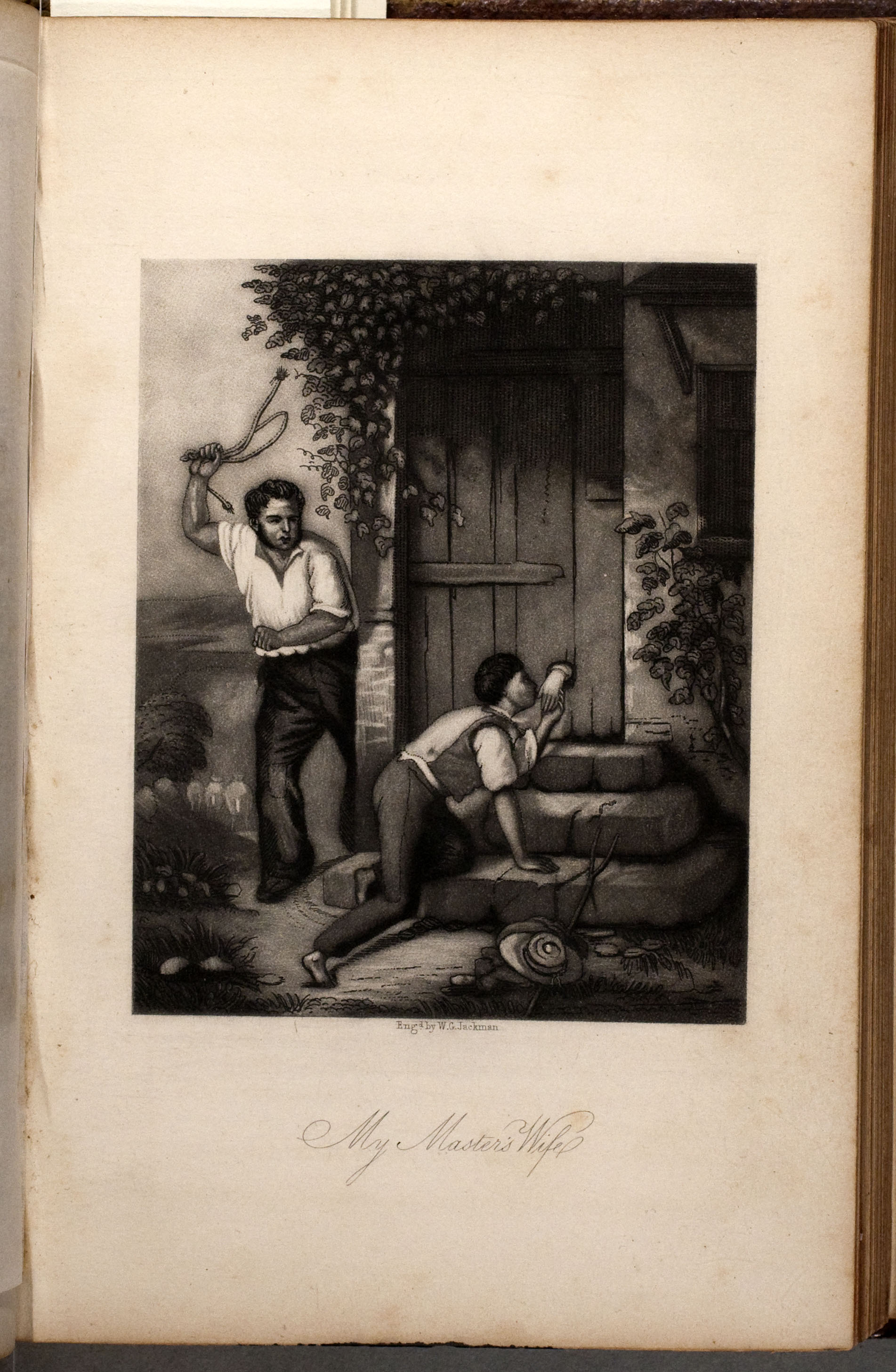
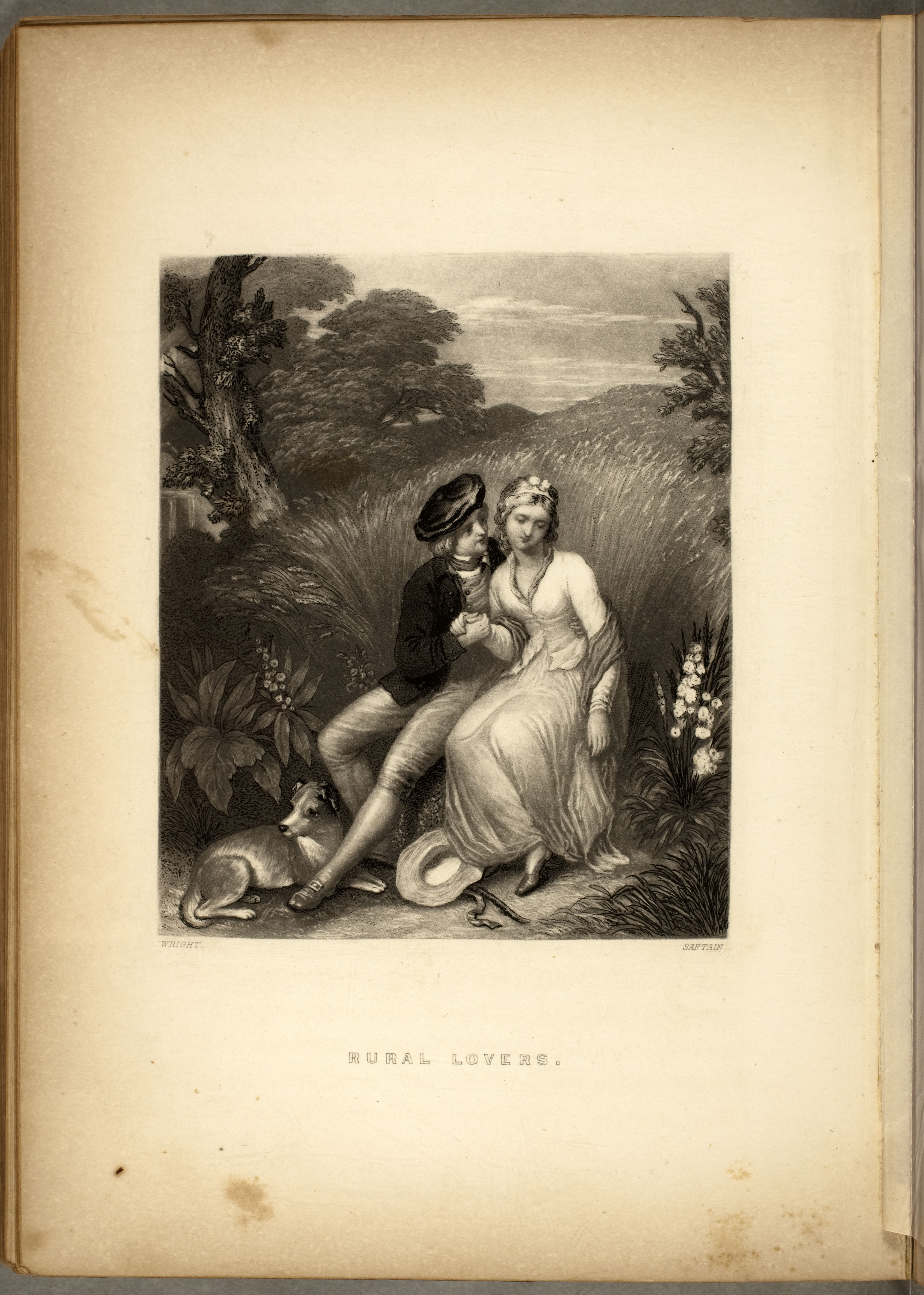
temple At the six month mark of the project we find that we are making some interesting discoveries. Christine Graham-Ward, our intrepid cataloger, has worked her way through about 188 volumes and cataloged 1,010 images. The challenge comes from keeping track of duplicates and repeated images, of which there are many. This will come as no surprise to scholars who are interested in the history of the book and who understand the complex nature of these objects. For the rest of us, however, it has been enlightening to realize that many gift book plates were reused over decades. Yes, you read that correctly, decades! The same image of two pretty girls first appears in 1828 and then re-appears multiple times in various volumes through 1849 – that’s a twenty one year time span! Some images do seem to be specific to the volume in which they appear, such as the view of a Hindu temple which appears in the Oriental Annual (N.Y. 1851) and nowhere else (yet!). masterswifeOthers are, as my eleven-year-old would say, completely random. The odd image, “My Master’s Wife” appears in the Forget-me-not, for 1850 and has absolutely no relation to any of the texts or poems in the volume. Often, an engraving gets re-titled to better fit with the text of the volume. This is the case with “The Harvest,” an illustration which first appears in 1848 showing a young couple in a country setting. In three variant incarnations, the title on the plate has been rubbed out and replaced, first with “Rural Lovers” (1852, 1855), then with “The Lovers” (1855), and finally with “Highland Mary” (1856). Rural I should remind you, we are only one quarter of the way through our holdings – there could be more alternate titles to come!

So when you are sitting at home figuring out your Times crossword, or dealing with the latest evil sudoku concocted by Will Shortz, keep in mind the ever-changing visual puzzle that Christine must grapple with daily as she moves through the gift books and their plates. Is this the picture of the woman leaning out the window that she saw back in September? Is this the same image of children outside of a cottage and it just has a different title? What about this lady wearing a turban? What were these crazy gift book publishers thinking? Well, at least we can answer that last one – as the book history scholar (and current AAS Fellow) Michael Winship has often said, the publisher is always trying to find a way to separate his customers from their money! Using attractive images over and over in gift books was apparently an affordable strategy (as the publishers could pass plates around amongst themselves or reuse them over the years) that allowed the publisher to quickly repackage text and plates to sell to the demanding holiday crowd.

We’ll have later posts on this project as we move forward. As we learn more about these complex volumes, we may have a new take on gift book illustration to share. We welcome comments!

Further Reading:
Faxon, Frederick W. Literary Annuals and Gift Books: A Bibliography, 1823-1903. 1912. Reprint. Pinner, U.K.: Private Libraries Association, 1973.
Kirkham, E. Bruce, and John W. Fink, comps. Indices to American Literary Annuals and Gift Books, 1825-1865. New Haven, Conn.: Research Publications, 1975. Includes full tables of contents and lists of illustrations from the almost five hundred titles listed in Thompson’s bibliography, with author, engraver, title, and other indexes.
Thompson, Ralph. American Literary Annuals & Gift Books, 1825-1865. 1936. Reprint. Hamden, Conn.: Archon Books, 1967.

AAS Helped Compile an Early African American Bibliography

Toward the end of his now-famous 1897 Atlantic Monthly essay, “Strivings of the Negro People,” W.E.B. DuBois states that the post-Civil War years brought for African Americans “the ideal of book-learning, the curiosity, born of compulsory ignorance.” Historians may note DuBois’ ultimate discontent with this ideal — the longing to achieve freedom through ‘book-learning” — but they also note the real attainments of individuals like Daniel Alexander Payne Murray, first black Assistant Librarian of Congress.

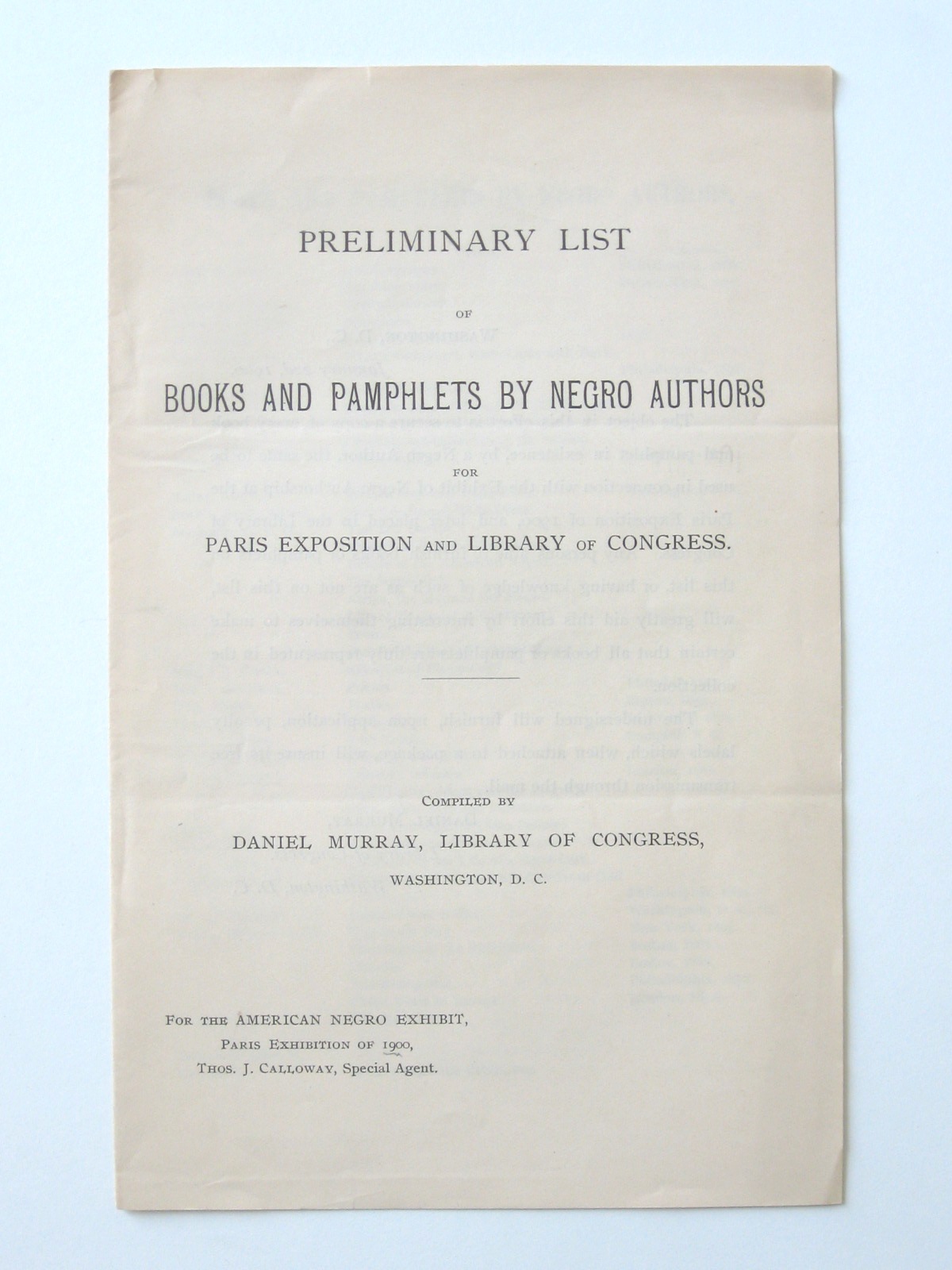
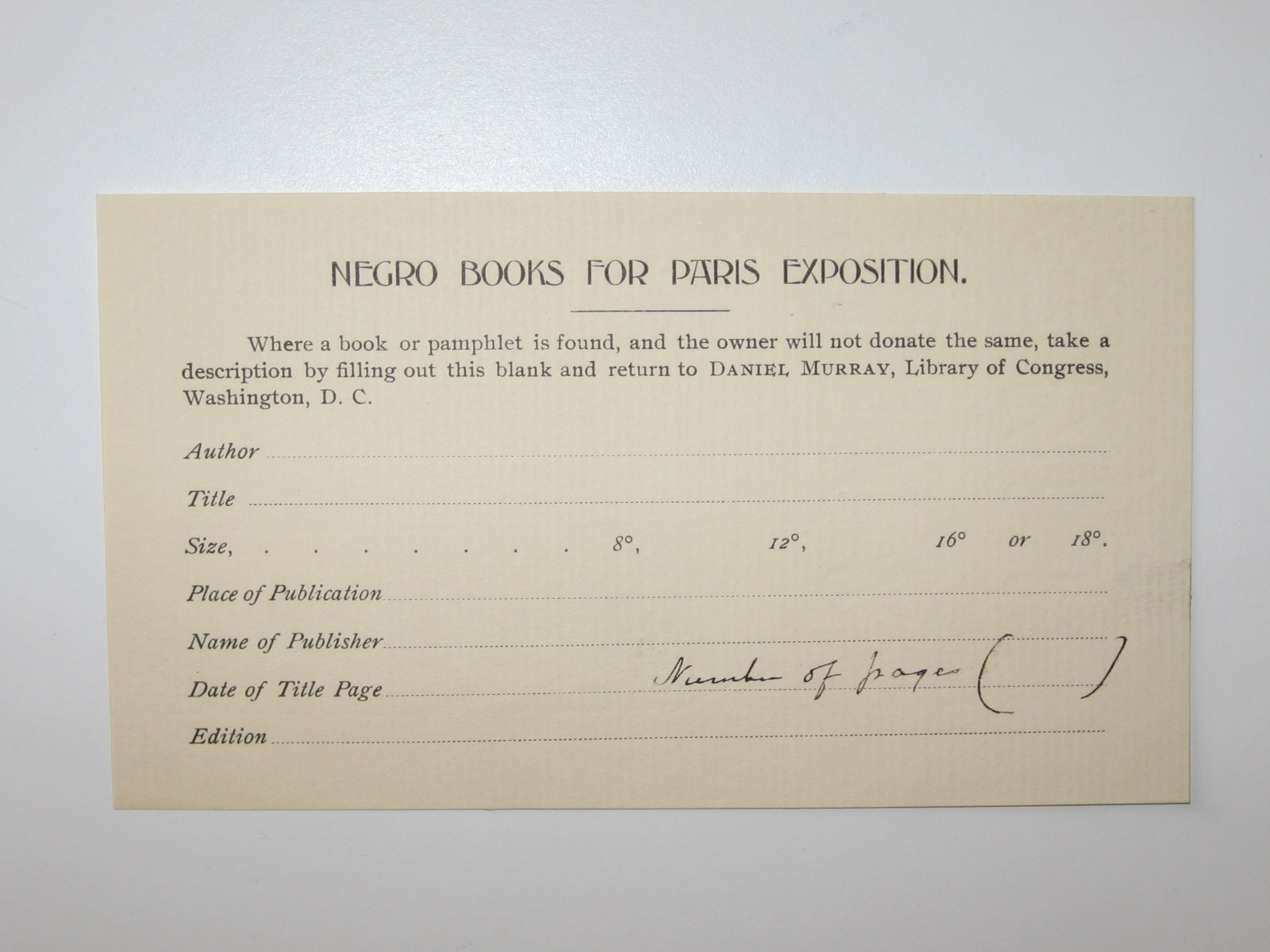
AAS has an interesting connection to Daniel Murray. We hold a copy of his Preliminary List of Books and Pamphlets by Negro Authors for Paris Exposition and Library of Congress. murray1The list is accompanied by a January 22, 1900 call for all men of “the co-operation of men of literary knowledge” to “get a copy of every book or pamphlet written by a colored man” for the 1900 Paris Exposition and Library of Congress.

Wishing to find more information on Murray’s connection to AAS, I went to the American Antiquarian Society’s Proceedings and discovered that Murray had specifically requested the aid of Edmund M. Barton, AAS’s head librarian from 1881-1908, in preparing the list. “No doubt many rare pamphlets are now in the collection of your Society and it is to have a list of them for bibliographical purposes that I will address you,” Murray wrote. “Mr. Edward C. Goodwin [U. S. Senate Librarian] gave me your name and urged me to write… I enclose penalty envelope for your reply, and labeled for any package you could collect from your duplicates or from some colored people in your vicinity” (AAS Proceedings, XIII).murray2

We have no idea which works, if any, Barton contributed to the exposition. He must have contributed at least a few of the famed pamphlets, as Murray later gifted the society with a diary of Paul Jennings. The Jennings work is part of Murray’s bibliography, and the AAS valued Murray’s donation as exceedingly valuable. (For curious readers, the AAS copy is cataloged as part of the Bladensburg series. If any reader of this blog has further information on why the Jennings work is part of the Bladensburg series, or any further information on the nature of the Bladensburg series, please let us know! Here is the AAS catalog link to Jennings diary.)

It was during those key years after the Civil War that Daniel Murray established his role with the Library of Congress, rose to the rank of assistant librarian, and created a bibliography of “Negro” authors for the Paris Exposition. Murray’s exhibit, a success for bibliographers and African-Americans at home and abroad, was nothing less than a display of the achievements of black authorship in America, put on display for the world to see.

Want to Learn More?
Libraries & Culture vol. 40.1 (2005): 25-37, recently published a fascinating treatment of Murray. For those interested in further reading on the Paris Exposition and race, see Smith, Shawn Michelle Smith’s American Archives: Gender, Race, and Class in Visual Culture (Princeton, 1999).

Adopt-a-Book Tonight at 6pm!

adopt Just a reminder that the best way to escape the dreary weather (besides a tropical vacation) is a relaxing evening with a glass of wine, delicious food, and some good books. If you agree, please join us tonight at the American Antiquarian Society for our annual Adopt-a-Book event beginning at 6pm. You may also attend vicariously by checking out the Adopt-a-Book online catalog. Logistical information is available on our events calendar.

Hope to see you this evening!

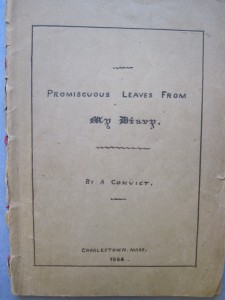
“Promiscuous Leaves” from A Convict’s Diary

AAS holds in its manuscripts collections an excerpted diary of a convict from the 19th century.  It is a small unassuming volume of just under fifty pages on plain brown paper, and doesn’t visually grab your attention. It was the title on the front page that piqued my curiosity: Promiscuous Leaves from My Diary.

Cover

A glance inside confirms that it is not a usual diary.  It is allegedly a collection of entries from a prison diary, which bears a gift inscription to an Anthony S. Morse, a prison inspector.  The relationship of the writer of the diary to Mr. Morse is unknown, though an educated guess might be that it is related to trying to win the diary writer’s freedom.

The diary leaves me with a number of questions:

1.    If the alleged original diary actually existed at one time, and it has not been lost or destroyed, where is it?

2.    The length of the original diary is not clear, when did the diary begin?  Furthermore, when did it end?

3.    The prisoner speaks of facing a very long imprisonment.  Did he ever get out of prison?

4.    The writer of the diary, at least according to what he has chosen to excerpt, is quite convinced of his own innocence.  If there’s any historical evidence, which way does it point?

I plan to post a bit of this diary at a time, while also researching the context and the person who wrote the diary.  Hopefully, we’ll all learn a few things, and have some fun along the way!  I think you’ll agree once you read some of the diary that it’s an intriguing document.

We begin with the front and back of the first three leaves:
[book id=’13? /]
Intrigued?  Stay tuned for the next installment…

The Acquisitions Table: Beware of a Swindler!!

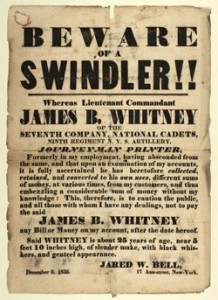
Beware of a swindler!! New York: J.W. Bell, 1835.

11sThis spectacular broadside documents the accusations of printer Jared W. Bell (1798?-1870) against a former journeyman, James B. Whitney. Bell accuses Whitney, who became a lieutenant commandant in the New York artillery, of embezzling money from Bell’s printing business. Bell was notoriously difficult. In 1821 he got into a street fight over the Hartford Convention and was arrested for blasphemy (he allegedly yelled, “God Almighty was a fool”). Bell was acquitted, but, as evidenced by this broadside, apparently remained a cantankerous New Yorker. Purchased from Thomas Cullen. Ahmanson Foundation Fund.

~ Lauren Hewes

Mark Your Calendars for Adopt-a-Book on Tues., March 30th

Some of the American Antiquarian Society’s collection materials have been on our shelves for almost 200 years, but other items are “new” antiquities. New, that is, in the way that hand-me-downs from your older sister are new. They are new to us even if they have existed for hundreds of years elsewhere.

The AAS curators specialize in attracting these ones that got away. The curators are avaricious hunters (it’s not a sin if you’re doing it for the good of all), ready to pounce on materials that belong at AAS. Of course, you can help support the collecting mission of AAS by bringing us items you have that were printed in the U.S. before 1876. But not all of us have antiquarian goodies stashed in the closet or attic.

Now the rest of us can help AAS acquire “new” materials though the annual Adopt-a-Book event. This year the bash will be held on Tuesday, March 30th, at 6pm. Tickets cost $30 and include drinks and hors d’oeuvres. The party makes for a wonderful evening in itself. When else can you have a glass of wine and mingle with fellow bookish folks in one corner of the reading room while in a separate alcove (because we all know wine isn’t good for books!) you can browse though over one-hundred original items all well over 100 years old and begging for you to adopt them? RSVP information is online. Even if you are unfortunate enough to be busy that night, you can check out the Adopt-a-Book catalog online.

Here is how the book adoption process works: generous friends of AAS donate the money that it cost the curator to purchase your adoptee. This gives the curator more money to go out and purchase more items. Although you can’t take your adoptee home, we will put a bookplate in it and will add your name to the online record so you will be immortalized as the donor. If you tell us your adoption story we may even feature your reasons for adopting on our blog, but only if you want us to do so.

Many people adopt materials in honor of a loved one. This post highlights a few items from the Adopt-a-Book catalog that would be great gift ideas. They are roughly in numerical order so you can easily find the illustrations and full descriptions of each item in the Adopt-a-Book catalog. The gift-giving options are limitless, or at least up to 147. No promises, though, that the items highlighted here are still available for adoption — if the past is any indication, they will be claimed fast!
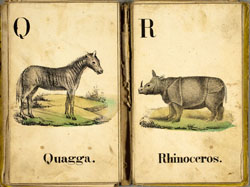
animal

For a New Reader, or an Animal Lover, or Both:
6. ANIMAL ALPHABET. Adopt me for: $250
Alphabet of Natural History. Hartford: D.W. Kellogg & Co., [ca. 1830-1842]

A Christmas Gift for the Chocolate Lover in Your Life:
8C. ANGEL’S CHRISTMAS. Adopt me for: $50
Walton, Mrs. O.F. Angel’s Christmas. New York: American Tract Society, [ca. 1870s]

Two Ideas for A Wedding Present:
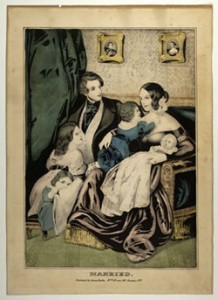
138. TASTEFUL WEDDING GIFT?married
Adopt me for: $75
The wedding gift, to all who are entering the marriage state. Worcester, MA: S. A. Howland, 1849.

OR

12. AFTER … Adopt me for: $75
Baillie, James. Married. Hand-colored lithograph. New York, [1848 or 1849]
bachelor
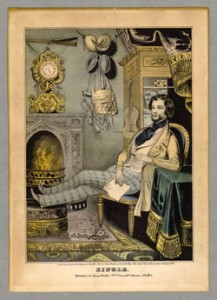
Paired with the title Single, by the same lithographic publisher, this image forms a lovely pendant on the role of the man in family life. No longer smoking and surrounded by symbols of leisure, the young bachelor from the first print now appears seated in a formal parlor with his wife and four children.
~ Lauren Hewes

For A Bachelor Party:
12. Before …
Adopt me for: $75
Baillie, James. Single. Hand-colored lithograph. New York, 1848.

For the Rooster Fanatic in Your Life (you know we all have them):
15. ROOSTERS FOR PIERCE! Adopt me for: $50 rooster
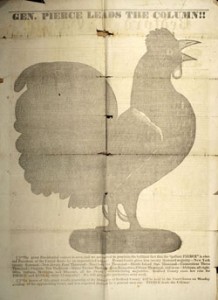
Bedford Gazette (PA). Nov. 5, 1852.

This newspaper issue is unusual because of the large, crude woodcut, taking up almost the entire second page, which celebrates the victory of General Franklin Pierce as 14th president. At this time the symbols of the Democratic and Whig parties were, respectively, the rooster and the raccoon. The rooster was carved on the side of a single wooden plank.
~ Vincent Golden

For Your Nephew’s Birthday:
22. BOYS’ PUMP BOOK. Adopt me for: $200
The Boys’ Pump Book: Showing how to Make Several Kinds of Miniature Pumps and a Fire Engine. New York: Anson D. F. Randolph, 1860.

For the Coolest Bibliophile You Know:
23. BIBLIOPEGISTICAL VERSE. Adopt me for: $150
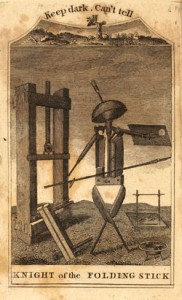
Bradford, John. The poetical vagaries of a Knight of the Folding-Stick, of Paste Castle: to which is annexed, The history of the garret, &c. Gotham [i.e. Newark, NJ?]: The author, 1815.

A rare copy in original printed boards of an extraordinary and little-known verse collection. Although published anonymously, the book’s copyright was taken out by one John Bradford, who worked as a bookbinder in New York City from 1809-1819. Indeed, the first section consists mostly of poems about bookbinding—one of the very, very few instances of knightbibliopegistical poetry in all of Western culture. The poems include “This World’s a Huge Bindery,” “Receipt for Binding a Book,” “The Binder’s Curse,” and “An Enigmatical List of Binder’s Tools,” consisting of 34 devilishly difficult verse riddles. Here’s a simpler one that this curator managed to solve:
The two ninths of one who commences a suit,
O.U. G—and the eleventh of a hot biting root.
[answer: PLOUGH]
One of the two inserted engravings depicts the Knight of the Folding-Stick, a fantastical creation fashioned from binder’s tools. The book concludes with “The History of the Garret,” a facetious prose history of Newark, NJ.
~ David Whitesell


For A Newspaper Enthusiast (or your paper boy if he’s really amazing?)

26. ALL THE NEWS THAT FITS. Adopt me for: $350
Centinel of Freedom (Newark, NJ). Dec. 5 extra, 1799.

An extremely rare extra edition—only one other copy can be found in institutional collections. It contains the speech President John Adams made to the opening of the sixth Congress, as well as King George III’s speech opening a new session of Parliament. Interestingly, to accommodate the text, the printer used the right margin by turning the text 90 degrees to fit it all in.
~ Vincent Golden

For Your Pastor:
29. PASTOR’S NOTEBOOK. Adopt me for: $300 pastor
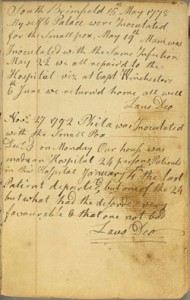
Coddington, Elijah. Notebook, 1773-1826.

Coddington (1742-1830) was the fourth pastor of the Baptist church in South Brimfield (later Wales), MA from 1773 until 1826. This notebook contains records of marriages, diary entries, accounts, and various religious comments including the following: “The Apostles were men abstemious in their lives & plain in their attire, humble in their walk and mighty in their Conversation. One sickens at the contrast between the Apostles & modern Clergymen—do mitred heads & powdered locks, Silken gowns & couloured Shews, Gilded pulpits, threadbare Sermons & rounded Salaries bespeak these the Successors of fishermen & tent makers?”
~ Thomas Knoles

For a Numismatist:
30. COIN COLLECTOR’S HANDBOOK. Adopt me for: $450
The coins of the world. Philadelphia: Matthew T. Miller, [1849]

First edition of one of the earliest American numismatic publications.
~ David Whitesell

For Newlyweds:
34. A “PHILOSOPHICAL” BOOK. aristotle
Adopt me for: $200
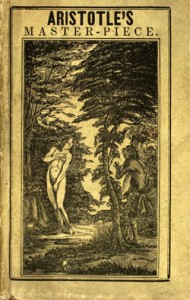
The complete master-piece of Aristotle, the famous philosopher. Displaying the secrets of nature in the generation of man … New York: Printed for the publishers, 1842.

The latest addition to AAS’s peerless collection of over 50 editions of the standard early American sex manual: Aristotle’s master-piece. AAS’s holdings begin with the “25th” edition of 1748—possibly an American printing, though perhaps an English import—and ends with this 1842 printing, by which time Aristotle was being superseded by newer, competing manuals. Unusual for such a work, the well-preserved binding of yellow paper boards loudly calls attention to itself through two appropriate wood engravings: an American Eden on front, and a contemporary American Venus on the back.
~ David Whitesell
war

For a Military Enthusiast:
37. MEXICAN WAR PRINT. Adopt me for: $75
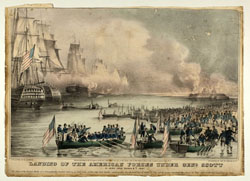
Currier, Nathaniel. Landing of the American forces under Genl. Scott at Vera Cruz March 9th. 1847. Hand-colored lithograph. New York, 1847.

For a Democrat:
43. VOTE DEMOCRATIC!
Adopt me for: $25
Election ballot, Liberal Democratic ticket, “Adams and Liberty.” [Massachusetts, 1870]

In case you thought I was exaggerating about items being adopted fast, in the time since I started this post someone just adopted #44, which was going to be my recommendation for a gift for a Republican! Best of luck in adopting, and remember, even if you miss out on the one you’ve always wanted, you can come see all the adoptees in person on Tues., March 30th.