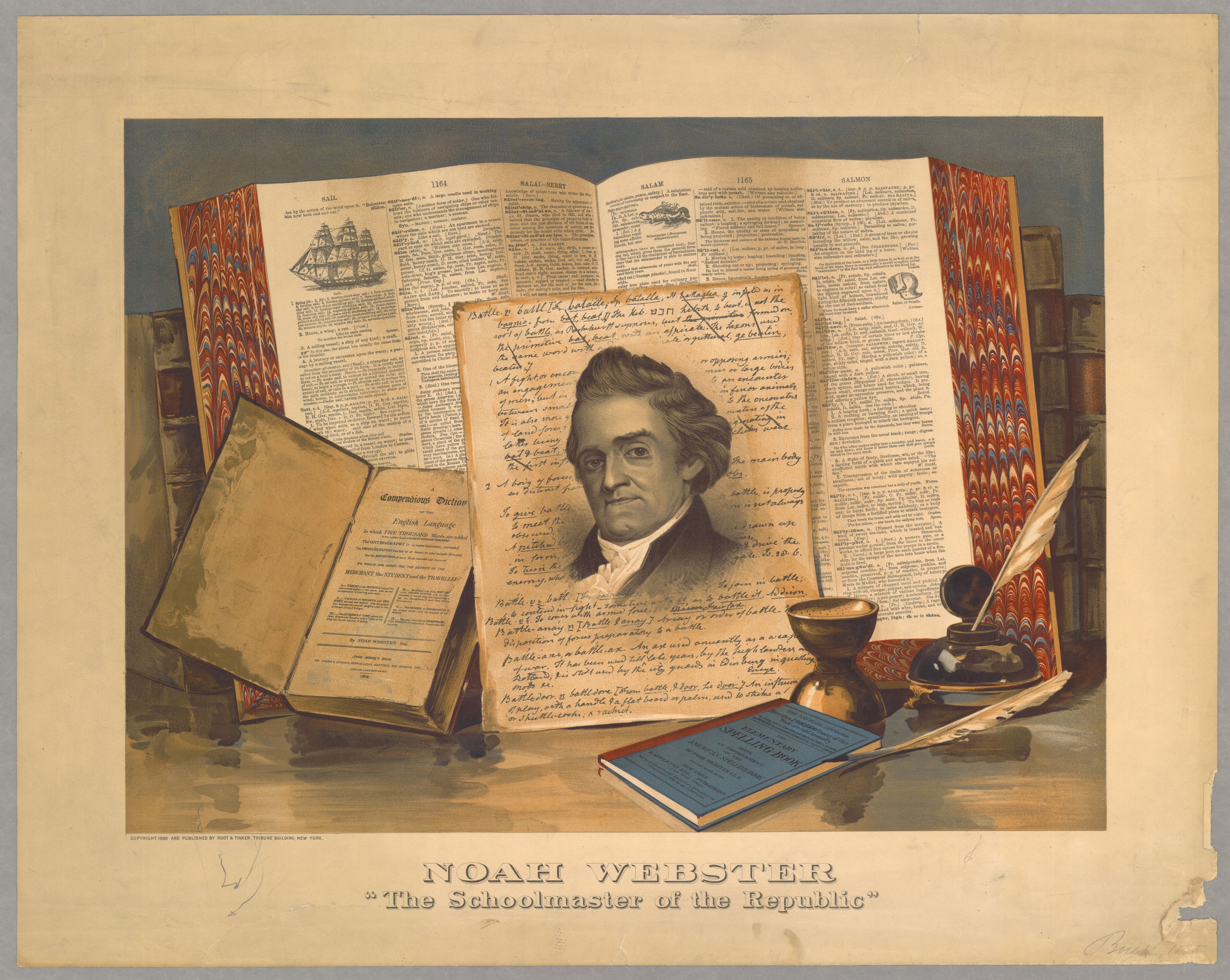
“Noah Webster: The Schoolmaster of the Republic,” printed by Root and Tinker in New York in 1885
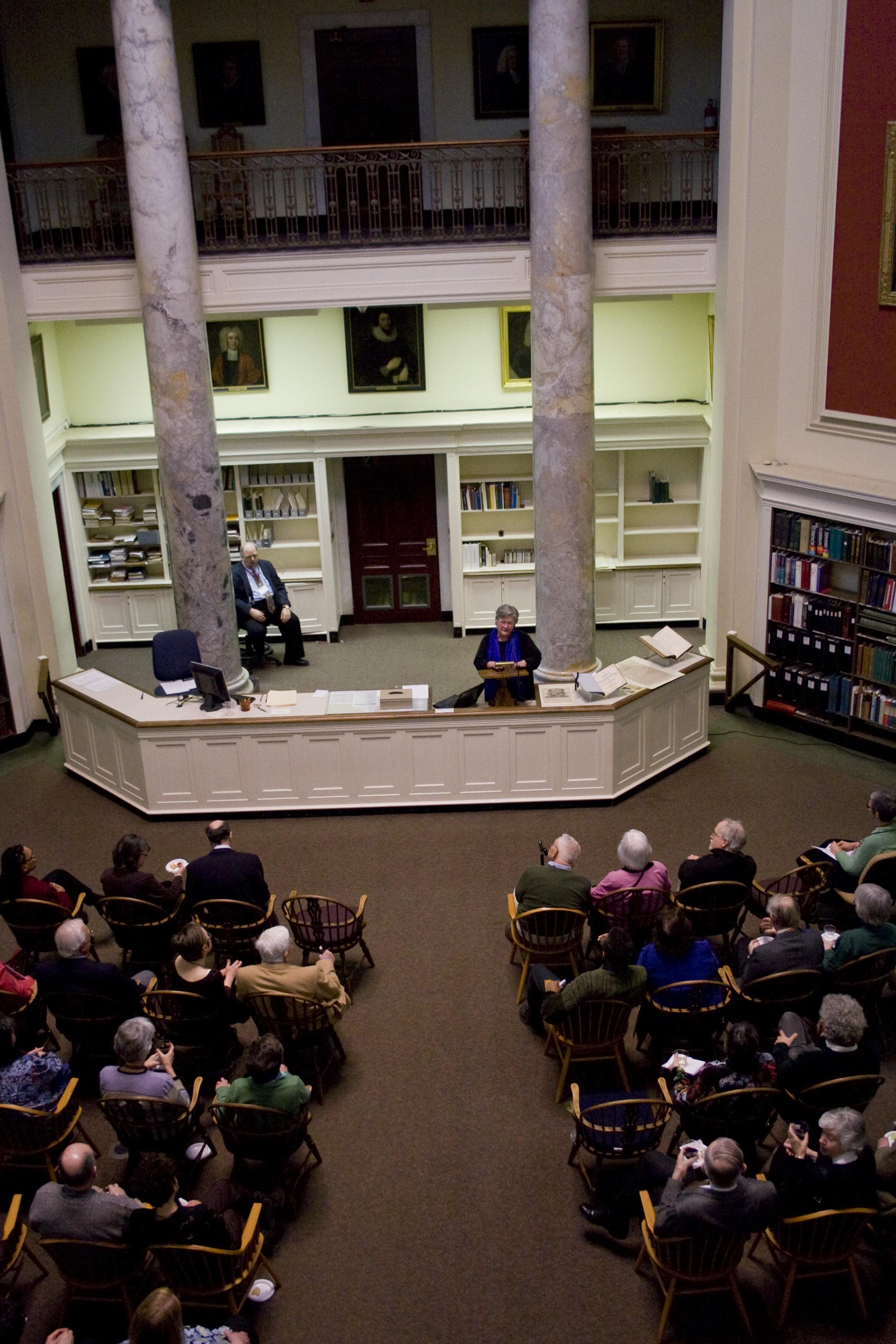
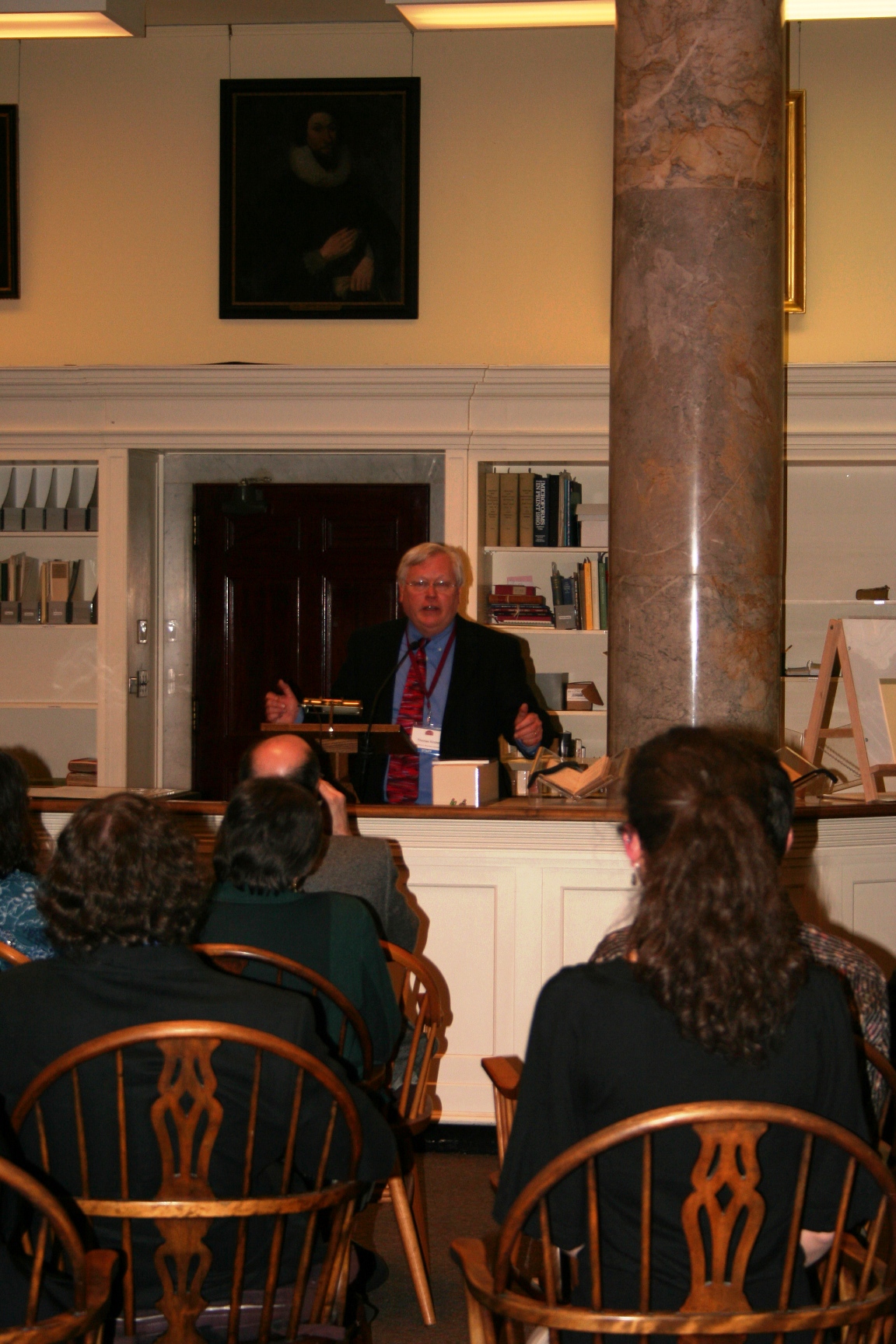
Don’t forget to join us tonight at 7:30 to hear Joshua Kendall discuss his new book, The Forgotten Founding Father: Noah Webster’s Obsession and the Creation of an American Culture.
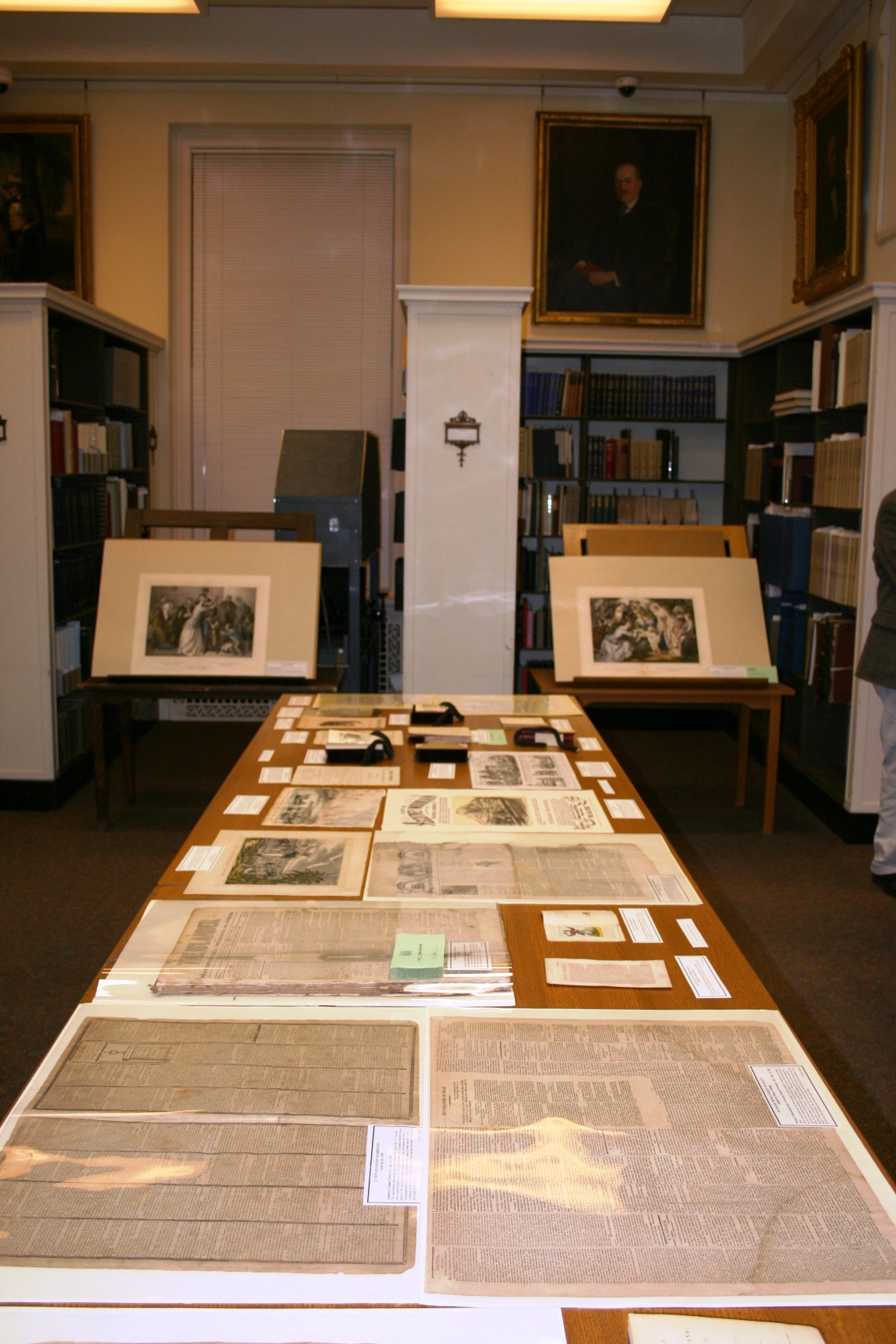
Noah Webster was not only America’s greatest lexicographer; he also helped to define American culture through his dictionaries and spelling books. A search of the Antiquarian Society’s online catalog produces hundreds of items authored by Noah Webster (1758-1843) and dozens more about him and his work. AAS founder Isaiah Thomas published numerous editions of Webster’s spelling book, A Grammatical Institute of the English Language. Some of these items will be on display in the exhibit case in the reading room for Kendall’s talk.
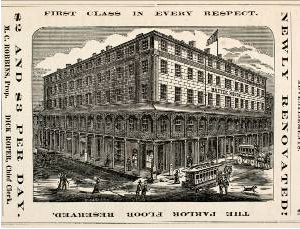
Mobile Circulating Library. New and revised catalogue of the Mobile Circulating Library … established November, 1874. Mobile [AL]: Shields & Co., 1879.
Only recorded copy (in any edition) of this catalog of a substantial southern lending library. Rates began at $6 per year and up, for which subscribers had access to over 2,000 volumes (including some in French), and some 30 newspapers and periodicals (including several in German). Fiction predominated, and there was a fair amount of German literature as well, apparently all in English translation. The Mobile Circulating Library, which occupied rooms in the Battle House Hotel (pictured), was also—perhaps primarily—a bookstore and stationery shop. Primary sources on the “book culture” of the ante- and post-bellum South are distinctly uncommon, and this is a noteworthy addition to AAS’s holdings. Purchased from L. & T. Respess. Harry G. Stoddard Memorial Fund.
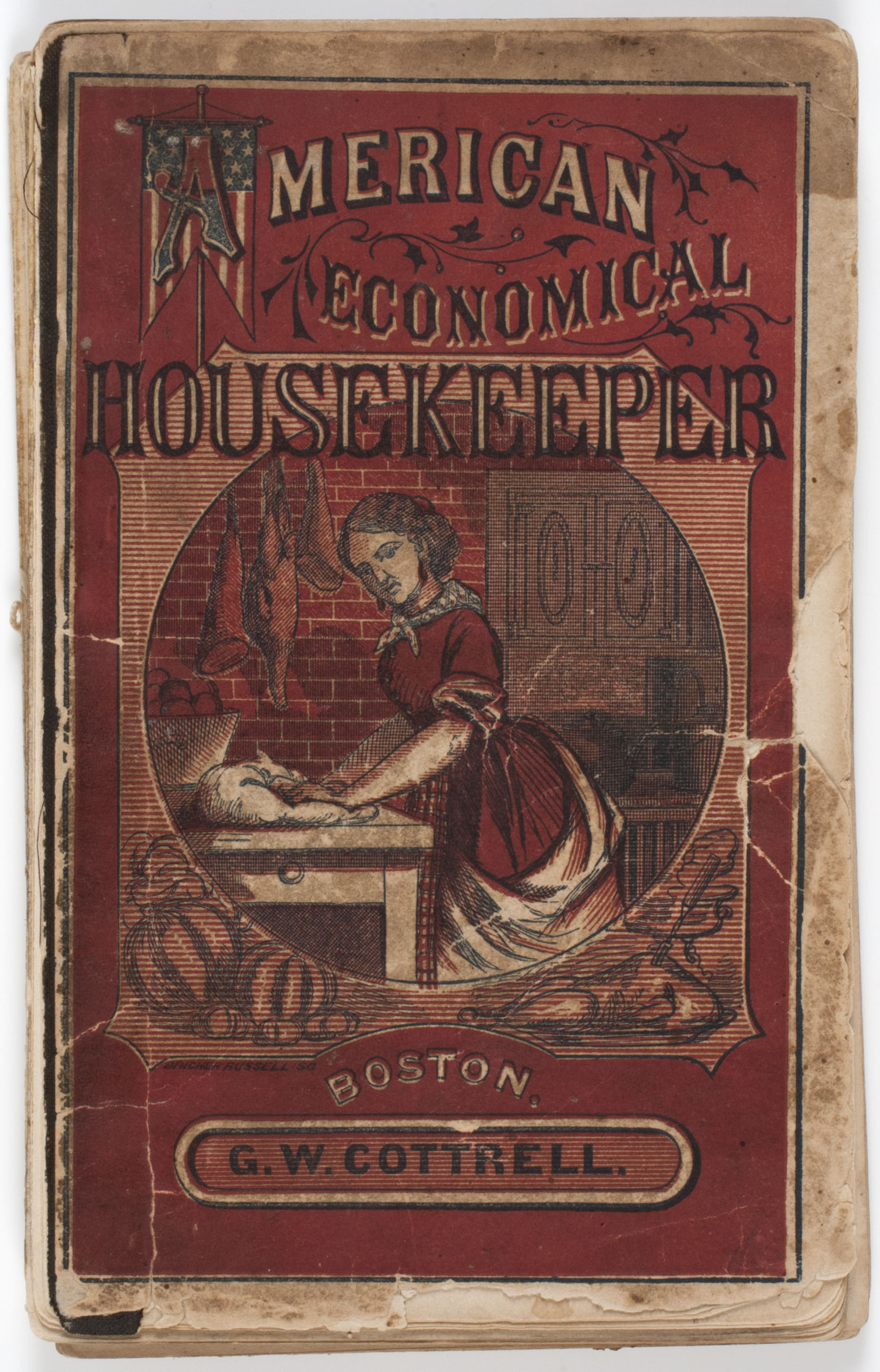
Cover of The American Economical Housekeeper by Mrs. E.A. Howland
Ever wonder what Susanna was chewing on in Stephen Foster’s famous folk song? Curious about how women occupied their days at home in early America? Interested in learning more about the relationship between early American housewives and their maids? Whether you are interested in the history of American cooking, women’s history, domestic history, or the recipes for antiquated baked goods mentioned in early American folk music, the American Antiquarian Society’s cookbook collection has a wealth of information on many cooking related topics. Small in size and well worn, these tomes bear uncommon witness to our social as well as culinary past.
The makings of women’s history in America can be found in these books alongside ingredients for archaic-sounding dishes such as Boiled Indian Pudding and English Curd Pie. Many of these books contain prefaces and chapters recording first hand accounts of household tasks women performed and accounts of their opinions on topics as varied as education and household economy. In Maria Rundell’s American Domestic Cookery published in Baltimore in 1822 [online catalog record], she gives a brief sketch of social roles for women in early America:
To attend to the nursing, and at least, early instruction of children, and rear a healthy progeny in the ways of piety and usefulness: – to preside over the family, and regulate the income allotted to its maintenance: to make home the sweet refuge of a husband fatigued by intercourse with a jarring world: to be his enlightened companion and the chosen friend of his heart; these, these are woman’s duties! (Rundell 7).
This passage outlines gender roles for men and women in keeping with the conception of separate spheres, women kept homes running happily and smoothly while men engaged in commerce in the outside world. Yet, we also learn that women were in involved in the disposal of household income from this passage. Further evidence of female economic skill is put forth in the passage, “Many families have owed their prosperity full as much to the propriety of female management, as to the knowledge and activity of the father” (Rundell 11). Rundell further notes, “can any one urge that the female mind is contracted by domestic employ?” (Rundell 8) Behind this statement we can hear the voices of those Rundell addresses. Some people in early America were concerned that domestic duties, or perhaps sole engagement with them to the exclusion of more intellectual endeavors, had an adverse affect on women’s minds.
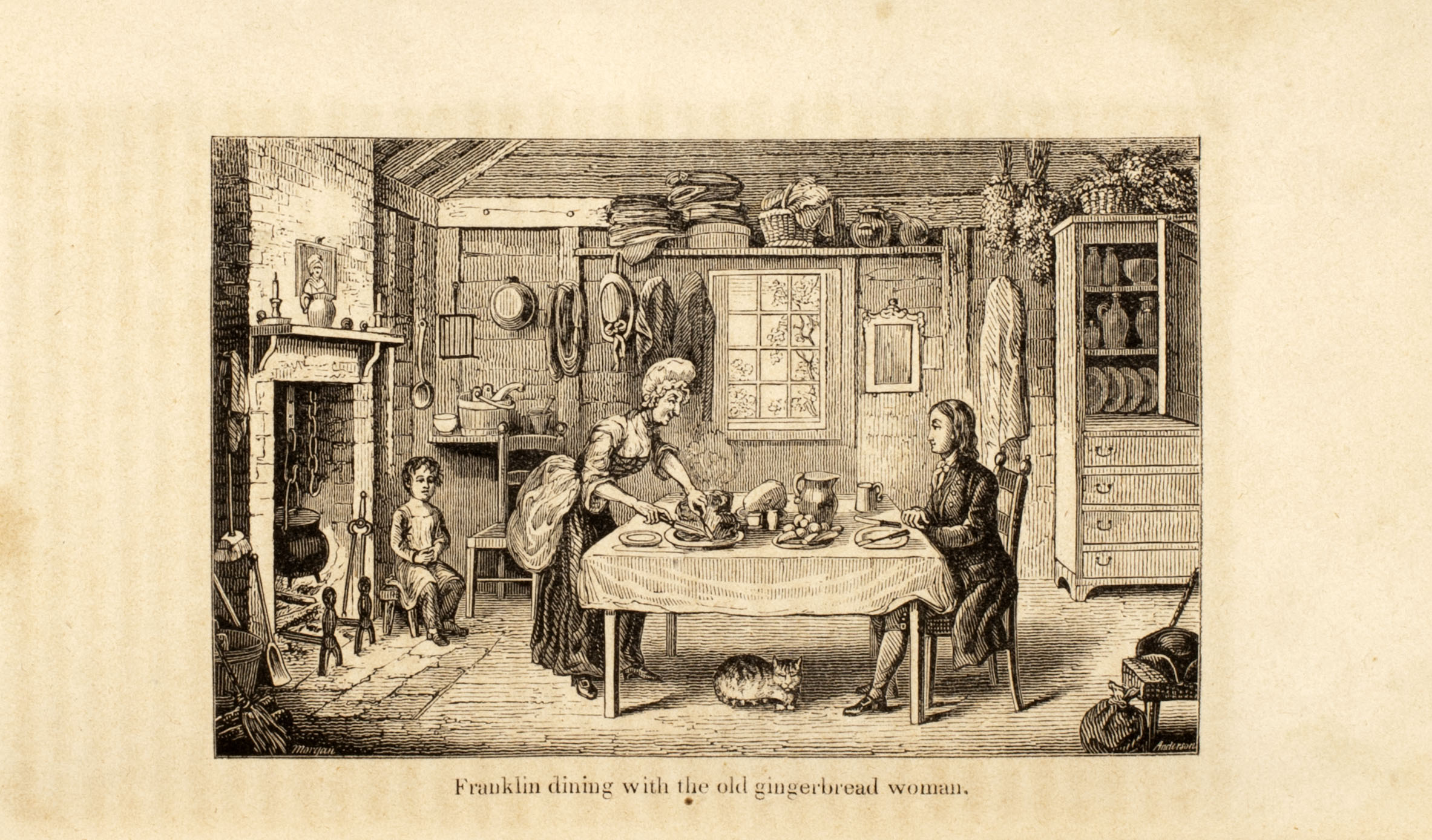
Image from The Life of Benjamin Franklin (1848) illustrated by Alexander Anderson
In Sarah Josepha Hale’s The Ladies’ New Book of Cookery, published in New York in 1852 [online catalog record], she notes that if mothers pamper their sons’ appetites they contribute to their future selfishness and profligacy. She more sweepingly characterizes the integral nature of women’s roles in early American society, “the duty which Nature has assigned her, that of promoting the health, happiness and improvement of her species” (Hale vii). Here, Hale echoes the commonly held view that women had a morally improving effect on society. Hale also notes that cooking is “the medium of social and domestic happiness” (Hale iii). It is clear from this cookbook that women in early American society regarded their domestic endeavors with philanthropic gravity.
In Lydia Maria Child’s The American Frugal Housewife [online catalog record], she asserts the importance of women’s roles in early America:
There is no subject so much connected with individual happiness and national prosperity as the education of daughters…The greatest and most universal error is, teaching girls to exaggerate the importance of getting married; and of course to place an undue importance on the polite attentions of gentlemen. (Child 91)
Here, we learn that early Americans thought women could have a positive impact on society outside of matrimony.
Cookbook composition also enabled women to find a literary voice at a time when it was less socially acceptable for women to become writers. In Eliza Smith’s The Compleat Housewife [online catalog record], she assumes the posture of a historian and a fiction writer at the beginning of her cookbook. Her book commences with a preface containing a short history of cooking, in which she discusses early cooks mentioned in the Bible. Smith also comments on the current literary mode of using prefaces: “It being grown as unfashionable for a Book now to appear in Publick without a Preface, as for a Lady to appear at a Ball without a Hoop-Petticoat.” She writes of her book “if it either instruct or divert, I shall be satisfied, if you are so.” Some women explored different forms of verbal expression through cookbook prefaces.
And what about the recipes themselves you might ask? Much of the fare in early American cookbooks remains the same as it does today. Influence of European cookery, Native American cookery, and Creole cookery in the south can also be traced. British influence existed in most recipes and notably in “English Plum Pudding” and “English Curd Pie.” Native American influence can be found in recipes calling for corn, Indian meal, and medicinal barks and herbs. Other recipes have a distinctly American ring: Fried Hominy, Pennsylvania Flannel Cakes, Kentucky Corn Dodgers, Cranberry Pie, Boiled Indian Pudding, Green Corn Pudding, and New England Pumpkin Pie.
A confection called Pilgrim Cake, which was reputedly concocted by “our pilgrim and pioneer forefathers,” simply called for flour, butter, and water, according to Miss Beecher’s Domestic Recipe Book [online catalog record] (Beecher 98). It was rolled out an inch thick and baked under ashes in the hottest part of the hearth. The ashes were scraped off before eating of course!
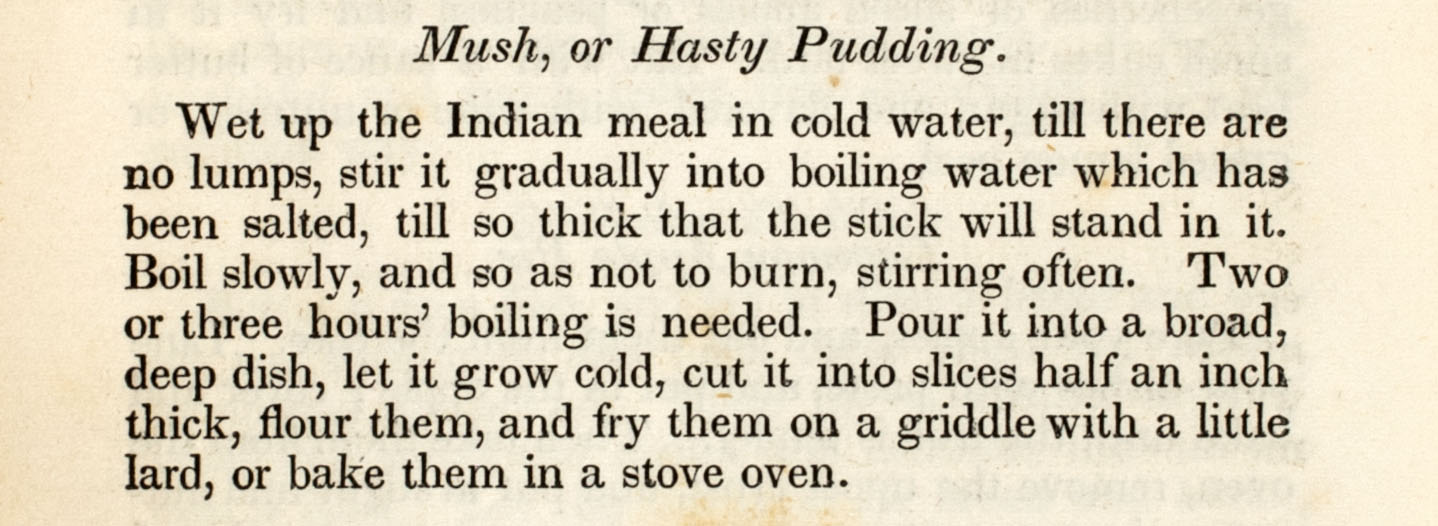
Hasty Pudding recipe from Miss Beecher’s Domestic Receipt Book
On a more whimsical note, Catherine Beecher’s recipe for Hasting Pudding provides historical verification of the thickness of hasty pudding as captured in the lyrics of “Yankee Doodle”: “And there we saw the men and boys / As thick as hasting pudding.” According to this recipe, one stirred hasting pudding “till so thick that the stick will stand in it” (Beecher 108).
An examination of early American cookbooks reveals a cornucopia of information regarding the history of early American cooking and the cultural and social history with which such history is interwoven. So, the next time you stop by the American Antiquarian Society to research women’s history or domestic history or the history of cooking, we suggest you explore the wide array of small tomes in the cookery book collection, well worn by generations of American housewives. And as for tearful Susanna’s buckwheat cakes, they were made from a mixture of buckwheat flour, milk, salt, yeast, and Indian meal.
How to Find Cookbooks at AAS:
AAS’s cookbooks are fully cataloged online. Searching AAS’s online catalog for the call number “Cook Books” will give you a list of the main collection, which consists of over 1,000 cookbooks published after 1820. Earlier cookbooks can be found by searching for the genre term “cookbooks” and then sorting the list by date. There is even a manuscript collection of handwritten cookbooks with an online contents list.
Further Reading:
Beecher, Catherine. Miss Beecher’s Domestic Receipt Book. New York: Harper & Brothers, 1846.
Child, Lydia. The American Frugal Housewife. 10th ed. Boston: Carter and Hendee, 1832.
Hale, Sarah Josepha. The Ladies’ New Book of Cookery. 5th ed. New York: H. Long & Brother, 1852.
Rundell, Maria. American Domestic Cookery. Baltimore: Fielding Lucas, 1822.
Smith, Eliza. The Compleat Housewife. Williamsburg, Virginia: William Parks, 1742.
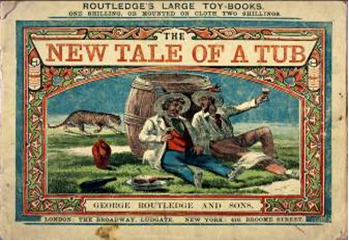
The New Tale of a Tub. London & New York: George Routledge and Sons, [ca. 1870]
The Routledge firm was a popular transatlantic picture book publisher and a direct competitor of McLoughlin Bros. The New Tale of Tub is a humorous poem about two Bengalese gentlemen whose picnic feast is interrupted by the approach of a hungry tiger. Purchased from Christopher Holtom. Harry G. Stoddard Memorial Fund.
On the evening of December 16, 1773, a group of disguised Bostonians boarded three merchant ships and dumped more than forty-six tons of tea into Boston Harbor. The Boston Tea Party, as it later came to be known, was an audacious and revolutionary act. It electrified Massachusetts, set the stage for war, and cemented certain values in the American psyche that many still cherish today. But why did the Tea Party happen? Whom did it involve? What did it mean throughout Massachusetts and beyond?
Benjamin L. Carp will discuss these questions tomorrow evening, April 5th, at 7:30 p.m. during the first lecture of the Spring 2011 public programs series. Carp, an Associate Professor of History at Tufts University, considers the Tea Party’s complicated legacy in his new book, Defiance of the Patriots: The Boston Tea Party and the Making of America (Yale University Press, 2010). When asked about his interest in this infamous event, he explained:
There hadn’t been a comprehensive book about the Boston Tea Party since the 1960s, and it seemed like a good time to reassess our understanding of this important event. The more research I did, the more I realized that there was new evidence to discover and new questions to ask. My book centers around a series of new arguments about the Boston Tea Party, which I’ll be discussing during my AAS program.
At Tufts University, Professor Carp teaches the history of early America. He has a broad interest in revolutionary political activity, cities, and the American Revolution. He has written about the contemporary tea party movement and the Boston Tea Party for the Washington Post and the Wall Street Journal. His first book, Rebels Rising: Cities and the American Revolution, was published in 2007. Professor Carp held a Kate B. and Hall J. Peterson Fellowship at AAS in 2001-2002.
As an added bonus, people coming to the lecture will have a chance to see AAS’s vial of tea recovered from the tea party!
AAS President Ellen Dunlap speaks to attendees while Adopt-a-Book 2011 event organizer and curator of newspapers Vince Golden rests
More than 50 friends of AAS joined curators and staff at our 4th annual Adopt-a-Book event on Tuesday, March 29. By evening’s end, a new fundraising record had been set: so far 101 donors have pledged $18,175 in support of AAS’s acquisitions program by adopting 144 collection items! All of the proceeds will be used by AAS curators over the coming year to acquire new items for the collection. We are deeply grateful to all who have so generously supported AAS’s collecting efforts!
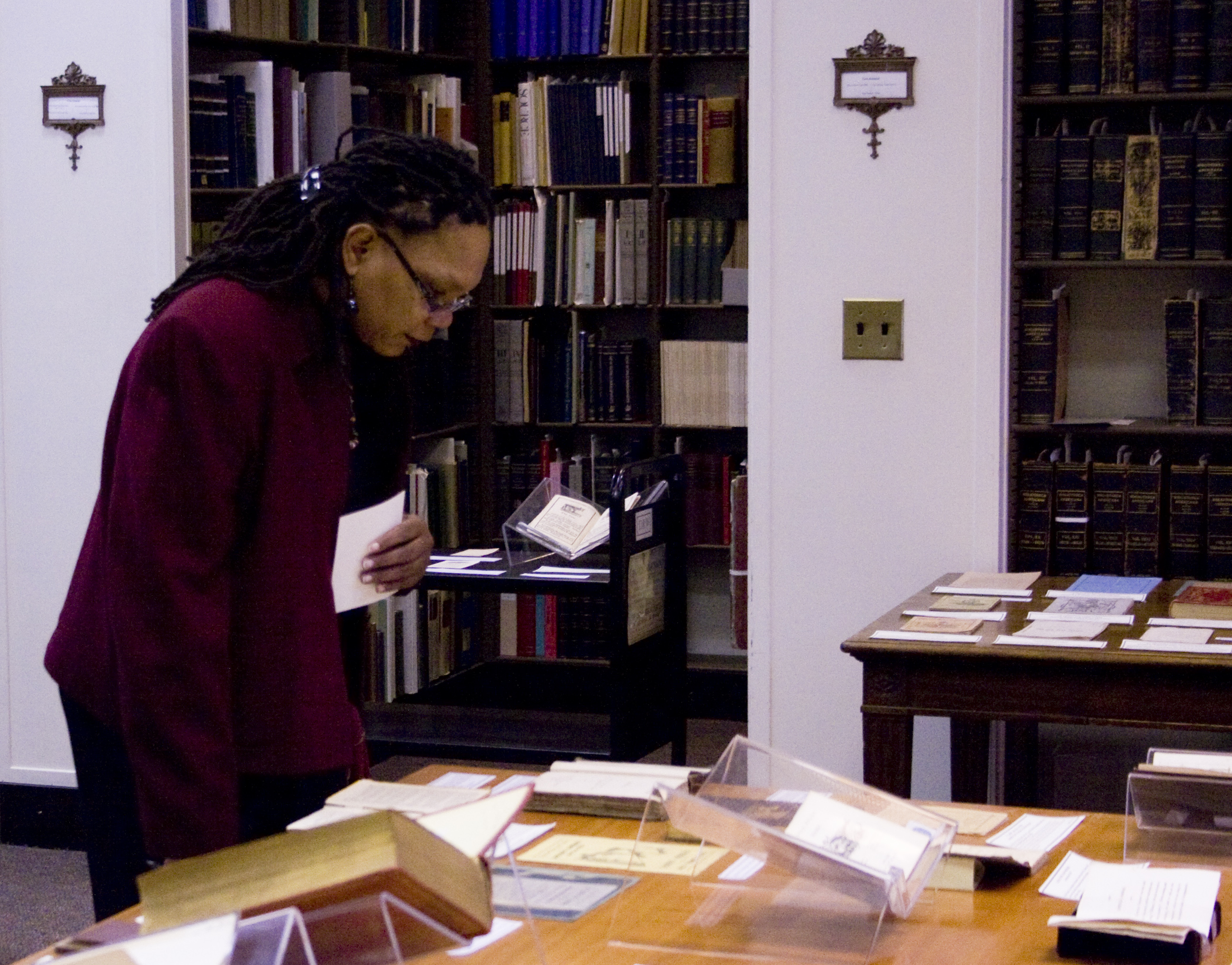
AAS member Joycelyn Moody selects an item to adopt
If you have yet to adopt and would like to, there is still time to participate in this year’s Adopt-a-Book event. The online 2011 Adopt-a-Book catalog has been fully updated to indicate which items have been adopted and by whom, and which items remain available for adoption. A supplement describes 33 new items first made available for adoption at the March 29 event, so there is bound to be something of interest. And if not, challenge us to find a recent acquisition meeting your adoption criteria and price range!
The latest issue of the Almanac has been posted on the AAS website. Highlights include details on our spring lecture series, Adopt-a-Book (back for the fourth year), summer seminars, and the new New England Historic Site Collaborative. Looking ahead, an exciting conference will be held at AAS in November, Before Madison Avenue: Advertising in Early America. This issue also has notes on K-12 teacher workshops, book recommendations from AAS fellows, and news from near and far.
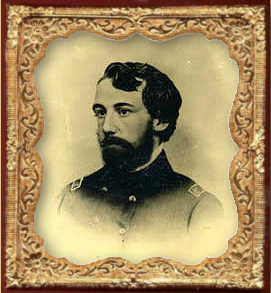
On the last page, we reflect on the origins of the Civil War collection at AAS and a photograph of Samuel Foster Haven, Jr., the only child of AAS librarian Samuel Foster Haven, who served in that role from 1838 to 1881. Recognizing the importance of the conflict, Samuel Foster Haven began collecting, arranging, and preserving documents and newspapers early in the Civil War. His son, a physician and a member of the 15th Massachusetts Regiment, was killed on the battlefield at Fredericksburg in 1862.
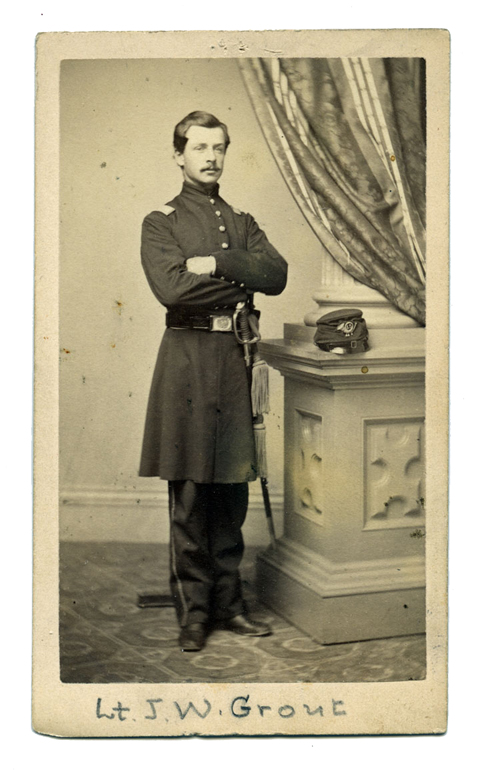
Lt. John William "Willie" GroutSamuel Foster Haven, Jr.
Another member of the same regiment is pictured in this issue: Lt. John William Grout, known as Willie, who was killed in the Battle of Ball’s Bluff in 1861. His death inspired a popular Civil War song, “The Vacant Chair,” written by Henry S. Washburn with music by George F. Root. The carte-de-visite showing Grout in his uniform is included in an upcoming exhibition at the Worcester Historical Museum, To Arms: Worcester County Answers the Call.
Back issues of the Almanac are also available online.
Tomorrow night, Tuesday, March 29, 2011 at 6 pm, the American Antiquarian Society’s long anticipated Adopt-a-Book eventwill be held at Antiquarian Hall (185 Salisbury Street, Worcester, MA). While we hope you have enjoyed our recent series of posts previewing some of the items available for adoption, the actual event will be full of extra special treats.
Drinks and hors d’oeuvres will be served (included in the $20 entrance fee) and you can mingle with book-loving friends. Most importantly, though, all of this year’s adoptees will be displayed in the reading room, and the AAS staff will be available for questions and conversation.
As an added incentive to attend the live event, additional items will be available for adoption tomorrow night that were too recently acquired to have been included in the online Adopt-a-Book 2011 catalog. Even better, these dozens of new additions are almost all available for adoption in the $15 to $50 range! They include:
the first newspaper published in Ipswich, MA
library bookplates
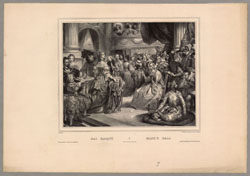
a French lithograph for resale in New York
a unique Kingston, NY newspaper announcing the end of the War of 1812
French-language New York newspapers on the assassination of Lincoln
a brightly colored children’s book, The Children in the Wood
Our final value-added feature of the evening will be informative and entertaining talks. AAS curators will give a brief overview of objects they have purchased with resources raised at last year’s Adopt-a-Book fundraiser. In addition, AAS-National Endowment for the Humanities fellow Lisa Wilson, Professor of American History at Connecticut College, will discuss her ongoing research project, “Cinderella’s Family,” on American step-children and step-families.
Please note: the reading room will close at 3pm tomorrow to prepare for Adopt-a-Book. Tickets will be available at the door at 6pm. We hope you will join us!
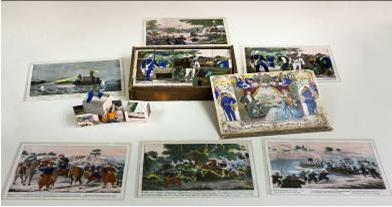
Pictures from the Civil War in North America – Bilder aus dem Bugerkriege in Nordamerica – Des tableaux de la guerre-civile en Amerique du Nord. Nuremberg: G.W. Faber, [c. 1864] Puzzle blocks in box, with six hand-colored lithographs showing the solutions.
This German game was produced for the European and American markets and includes six small lithographs depicting events from the American Civil War. Errors in uniform details and artillery design suggest that the German artists drawing the scenes were not familiar with American military dress—some soldiers wear strange desert-style hats and it is often difficult to tell Union from Confederate forces. But the technology is depicted more accurately, with Burnside’s pontoon bridges showing up on one print and large search lights on a ship monitoring the Southern coast on another. The sympathies of the toy’s designer, however, were clearly with the Union forces, as may be seen in the lithograph Virginian negro-slaves imploring protection in the camp of the Union army, where a crowd of African-American slaves is gathered before an officer seeking their freedom. Purchased from Rex Stark. Print Acquisitions Fund.
Today we conclude our second week of a series of posts that we hope will get you even more excited about the Society’s Adopt-a-Book event to be held at 6PM this coming Tuesday, March 29, 2011 in Antiquarian Hall.
When we began this fund-raising effort a few years ago, we noticed that our adopters often would commemorate a person or persons with their adoption. We find this highly satisfying! The Society is able to maintain and expand its holdings, and a relationship or person is honored at the same time.
Below are some memorable “honorable” adoptions from previous Adopt a Book events. None of the items pictured here are available for adoption but we hope you will enjoy looking them over and learning why others have adopted them. Please consider an adoption yourself from this year’s Adopt-a-Book 2011 catalog, in honor of whomever you please, of course!
From the 2009 Adopt-a-Book event comes this story from Laura Wasowicz, the Society’s curator of children’s literature:
Phelps, Almira Hart Lincoln. Caroline Westerley; or The Young Traveller from Ohio. Containing the Letters of a Young Lady of Seventeen, Written to Her Sister. Boy’s and Girl’s Library series. (New York: Harper & Brothers, 1839). [click here for the AAS online catalog record]
Laura recalls,
In 2009, I adopted this book in honor of the late Richard L. Anders (1924-2002) who was the Rare Book Cataloger at AAS from 1968 until 1990. Dick grew up in Ohio, and had a deep love for the natural world throughout his life. He did not like cars, and never owned one. Instead, he opted to walk or ride his bicycle to get to wherever he needed to be. For that reason, he had the very special opportunity to observe the minute but profound changes that the seasons had to offer on a daily basis, an opportunity which he cherished. When I acquired this book, I immediately thought that Dick would be very pleased that I found it for our collection. The author, Almira Phelps, was an educator who wrote botany textbooks for girls. In this case, she writes about natural history through a series of letters written by a young woman from Ohio who travels to upstate New York with her father.
A perfect match!
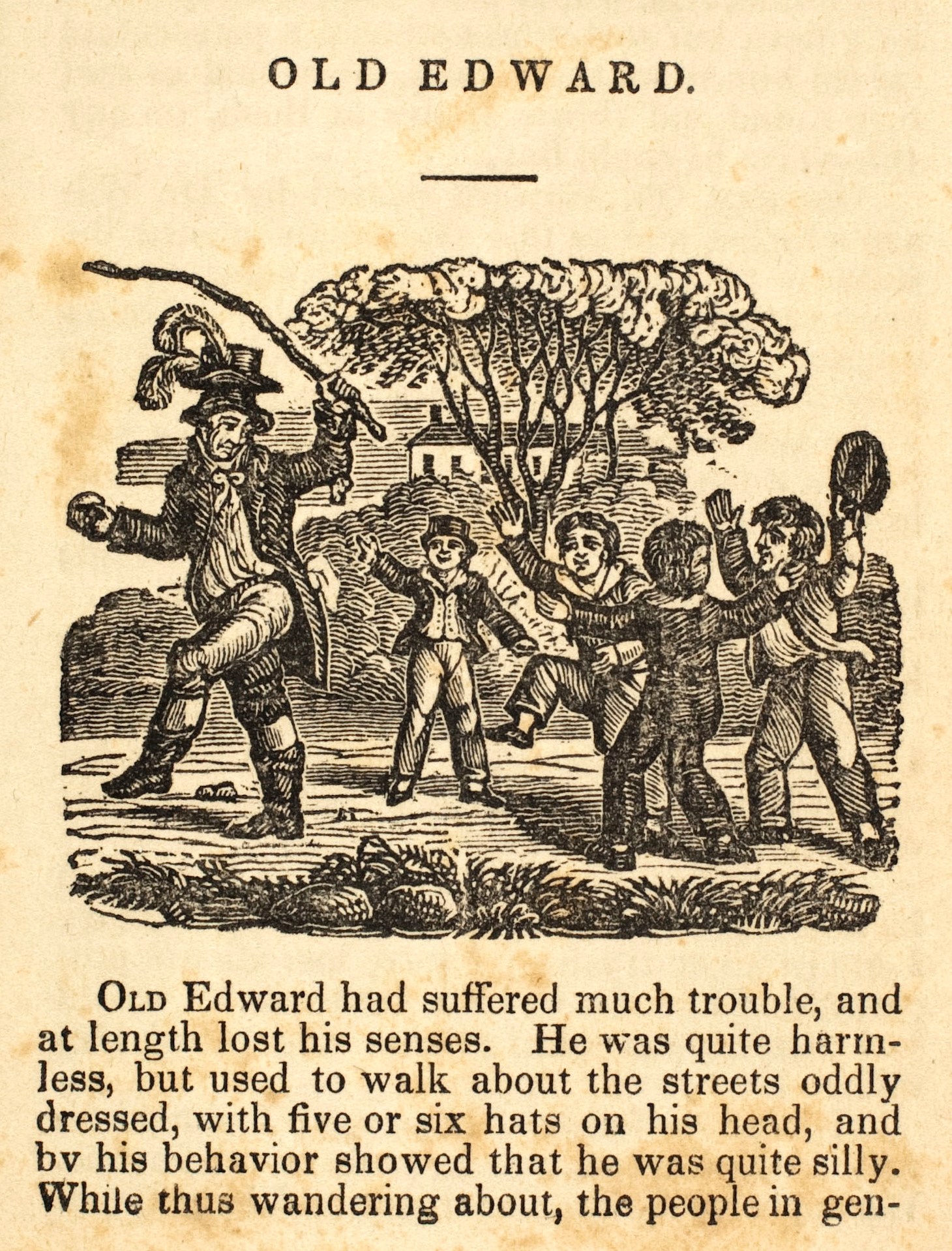
We often have people adopt books, newspapers or prints to honor someone in a particular occupation. In 2009, Kathleen McClintock adopted Old Edward. New York: Daniel Cooledge, [ca. 1833-1837]. [click here for the AAS online catalog record]
This early illustrated children’s story about mental illness is told as a conversation between a father and son on why it is wrong to chase and torment Old Edward, an unbalanced man who wanders about town wearing several hats at once. Mrs. McClintock adopted the book in honor of her husband, John McClintock, who is a psychologist.
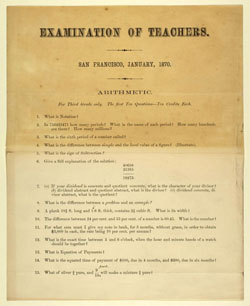
In 2010, we saw several similar occupationally-themed adoptions. Frances Langille adopted two items last year: Examination of Teachers, San Francisco, January 1870 (California, 1870) [click here for the AAS online catalog record] and
Pierce, Willard. A century sermon, preached at Foxborough, October 24th, 1828. The day on which the widow Hannah Sumner completed her hundredth year (Dedham, MA: H. & W. H. Mann, 1829) [click here for the AAS online catalog record].
The first object, a printed exam that teachers in California took as part of their certification, was adopted in honor of Frances Langille’s daughter-in-law Laurie Jewers, who is a teacher. The second, a sermon written to celebrate a parishioners’ 100th birthday, was adopted to mark the occasion of present-day Rev. Dr. Barry McCarthy’s then-upcoming installation as minister of the Greendale People’s Church, Worcester, MA.
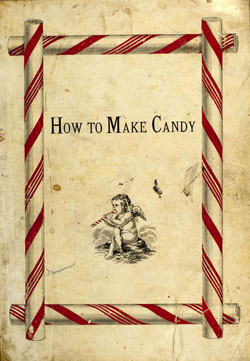
Also in 2010, the cookbook, How to make candy. A manual of plain directions of the more popular forms of confectionery (Hartford: N. P. Fletcher, 1875) [click here for the AAS online catalog record], was adopted by Caroline and Andrew Graham of R.A. Graham Co. in honor of their son-in-law, Ron Ward, who is a chef.
Finally, adopters are often drawn to objects because of the sense of place they document. In 2009, the Society’s President Emeritus Marcus McCorison adopted The Berlin city directory … 1858 (Berlin, Wisconsin: J.S. Wright, 1858) [click here for the AAS online catalog record]. This important sammelband of six very rare Wisconsin city directories, each the first published for the individual towns, includes separate listings of residents and businesses, as well as numerous advertisements. Mr. McCorison adopted the set of directories in honor of his late wife Janet K. McCorison, whose family hailed from the Badger State.
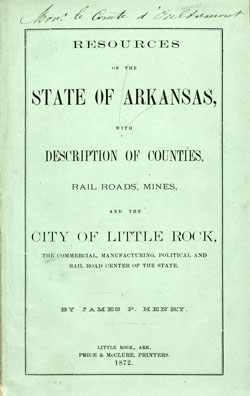
In 2010, the current president of the Society, Ellen Dunlap, followed this trend when she adopted James P.Henry’s Resources of the state of Arkansas, with description of counties, rail roads, mines, and the city of Little Rock (Little Rock: Price & McClure, 1872) [click here for the AAS online catalog record] in honor of her husband’s grandfather Jacob Douglas Armstrong (1815-1881) of Armstrong Springs, Arkansas. Jacob was, in her words, “something of a pioneer in the tourist industry in Arkansas where – in addition to being a blacksmith and a farmer and raising a bunch of kids – he ran a hotel and ‘spa’ known for its healing waters.”
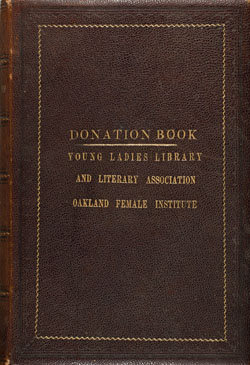
This year’s most interesting honorary adoption may very well be the adoption of the Young Ladies Library and Literary Association of Oakland Female Institute’s Donation Book, 1853-1855. It was adopted by AAS Intern (and now temporary staff member) Maury Bouchard in honor of a nineteenth-century clerk in Philadelphia named Nathan Beekley. Regular readers of Past is Present will recognize the name Nathan Beekley as the diarist whose daily entries from 1849 appear in the upper right hand corner of this blog as well as on their own site, Clerk and the City, which Maury has been instrumental in producing. We are certain Nathan would have approved of this item because The Oakland Female Institute opened in 1845 in Norristown, PA (where Nathan lived before moving to the big city and which he mentions frequent visits to in his diary). Anyone who has been reading along with Nathan’s sociable diary can imagine he made friends with at least some of the ladies in the Female Institute.
Find your own item to adopt in honor of a loved one, an ancestor, or your favorite historical figure by browsing the catalog of all 176 items up for adoption this year. Follow the directions for “How to Adopt” which are found in the sidebar to the right at the top of the page. You don’t have to wait until March 29th to adopt!
Today we continue a series of blog posts highlighting items from our upcoming Adopt-a-Book event, slated for Tuesday, March 29, 2011, at 6PM in Antiquarian Hall. You can read the entire Adopt-a-Book 2011 catalog on the AAS website, where you will find descriptions of all 176 items up for adoption this year.
The Society’s collection of early American newspapers and periodicals is among the greatest in the world, so scholars sometimes assume that we already have everything. Not true! Each year, our curator of Newspapers Vincent Golden finds new treasures to add to the collection. Sometimes a single issue is acquired to complete a run, while other purchases may include multiple bound volumes. Any issues of unrecorded papers or periodicals are also welcome, of course. As a result, the annual offerings for the Adopt-a-Book event are quite diverse and spectacular. Here are three examples (out of many) from this year’s event that are worth highlighting:
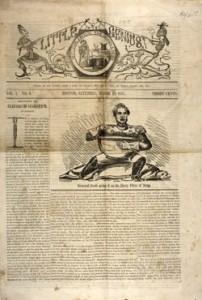
91. Little Genius (Boston). Vol. 1, no. 4, Mar. 13, 1847. Adopt me for $350
This previously unrecorded humor periodical (or at least humorous for the period) was discovered at a local book fair. No editor or publisher is given. The address for the publication is the same as that for Blackwell’s Antacrid Tincture, advertised on the back page, so it may have been used as a promotional piece for the product. The paper originally sold for three cents an issue which seems a bargain as the issue is heavily illustrated with cuts of people and animals and includes numerous jokes and stories, loosely disguised as news reports: “A fellow in Lowell has invented a machine to renovate old bachelors. Out of a good sized old bachelor, he can make quite a decent young man and have enough left over to make two small puppies, a pair of leather breeches, and a small kettle of soft soap.” Genius indeed!
54. Geneseo Journal (IL). Sept. 14, 1860. Adopt me for $125
This is the only known issue of a mammoth-sized campaign newspaper published by an association of Republicans. It was probably printed in the office of the Geneseo Republic. It avidly supported Abraham Lincoln and Hannibal Hamlin, as well as a slate of Republican candidates for various state offices. Most of this issue’s political content was aimed more at attacking Stephen Douglas than promoting Lincoln, although the issue does include an article titled “What Lincoln will do” as well as giving details of the Republican platform.
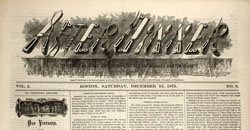
3. After Dinner (Boston, MA). Nov. 8, 1873-Aug. 7, 1874. Adopt me for $125.
The masthead of this periodical is quite interesting: the title letters are made up of cutlery! This paper was a weekly and was filled with miscellaneous information aimed at generating after-dinner conversation. Articles on a wide variety of topics were printed in the paper, such as “Phosphorescence of the Ocean,” and “The Apaches.” One article on Boston’s public horse-cars begins, “The horse-car carries the modern world on wheels and is confessedly a great public convenience.” But the article, which is really a rant on poor public behaviors like spitting, and pushing and shoving, continues, “If any person has a mean streak in him the horse-car will show it up to the worst advantage. It is the paradise of the snarler, the hot-bed of the grumbler. . .” The article appeared in the November 29th issue, just as the holiday shopping season was beginning, and so it surely stimulated after dinner conversation about individual experiences on the crowded Boston horse-cars.
In order to adopt these or any other objects in the Adopt-a-Book 2011 catalog, please click on the link and follow the directions for “How to Adopt” which are found in the sidebar to the right at the top of the page. Remember, you don’t have to wait until March 29th to adopt!
Today our series of blog posts continues with an update on the Society’s Adopt-a-Book event, which will be held at 6pm on Tuesday, March 29, 2011. All of the items pictured in this post are still up for adoption (as of this morning).
#154: Image from a nautical tale
Those of you who follow the blog know that we have been focusing on adoptable “orphans” for the last two weeks, trying to highlight this important fund-raising effort. The response has been wonderful! Several of the objects that we have discussed here on the blog have already been adopted. The Billy Holmes songster, the Oriental Tea Cup advertising broadside, two of the Green Family photographs, and The Little Nightcap Letters children’s book have all found supporters! Thank you! Thank you!
#35: French lithograph for the New York market
Each year, the Society opens up the Adopt-a-Book catalog for online viewing and adopting about two weeks before the gala event and this year, as in other years, we have been very pleased about the response we have had to this pre-event posting. As of yesterday, seventy-four of the 176 items have been adopted via the online catalog! This includes examples from every category including books, children’s books, manuscripts, newspapers & periodicals, and graphic arts. Many of the “adopters” are repeat participants in the event and had been waiting for access to the catalog in order to select their favorite pieces. To these long-term supporters, we offer our hearty thanks and gratitude.
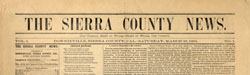
#145: Newspaper from a Gold Rush town
However, do not despair if you have not yet made your adoption(s)! There are still over one hundred objects in the catalog waiting for your support, including a newspaper from a California Gold Rush town, several texts relating to science, a New Hampshire woman’s diary, French lithographs sold in the United States, and a rare and curious work of nautical fiction. And for those of you who prefer to wait for the actual Adopt-a-Book event to make your selections, new for this year the curators at the Society will be pulling material together for March 29th that will be exclusive to that evening. These are objects that were “too new” to be included in the catalog but they are needy orphans, just the same. There will be material from each department, including children’s books, prints, newspapers, books, and manuscripts.
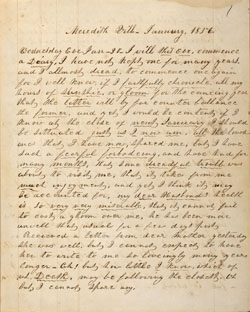
#152: A New Hampshire woman's diary
The catalog of all 176 items that are up for adoption this year will remain online. There you will find information about the events planned for the evening, as well as details about tickets, etc. Follow the directions for “How to Adopt” which are found in the sidebar to the right at the top of the page. This year we have added an option for online payment as well. And remember, you don’t have to wait until March 29th to adopt (but if you do – we will have exclusive objects pulled just for that night for your to consider!!).
Today we continue a series of blog posts highlighting items from our upcoming Adopt-a-Book event, slated for Tuesday, March 29, 2011, at 6PM in Antiquarian Hall. You can read the entire Adopt-a-Book 2011 catalog on the AAS website, where you will find descriptions of all 176 items up for adoption this year.
Our fifth featured orphan is actually not a single orphan, but an entire family that needs your assistance! Now in the spotlight are catalog nos. 15, 60, 61, 98, 159 and 171, which were selected for adoption by AAS’s curator of children’s literature, Laura Wasowicz, curator of manuscripts, Thomas Knoles, and The Andrew W. Mellon Curator of Graphic Arts, Lauren Hewes. All of this material has some connection to the Green family of Worcester.
In September of 2010, there was a large public auction in Worcester of material that originated in Maine, but was related to the influential Green family of Worcester and New York. Since AAS already had seven boxes of manuscript material relating to the Greens, and also held many books formerly owned by them, we were active bidders at the sale. We were largely successful, and also continued to acquire Green family material after September, building up our holdings of manuscripts and children’s literature related to this Worcester dynasty. The adoption fees vary widely on this material, reflecting the diverse valuations that Society curators try to balance every time they make an acquisition for the collection. Some items, like the letter from Isaiah Thomas, Jr. to William E. Green, we just had to have!
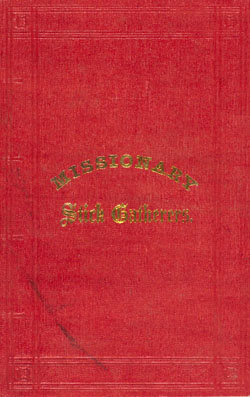
15. Bolton, Rev. James. Missionary Stick Gatherers: An Address to the Members of Juvenile Missionary Associations. New York: Protestant Episcopal Society for the Promotion of Evangelical Knowledge, 1857. Adopt me for $50.
Written by an English clergyman, Missionary Stick Gatherers exhorts children belonging to juvenile missionary societies to contribute what they can to the missionary cause, be it money, or by creating ornaments (useful small items) for missionary Christmas trees, or by sewing “dresses for the little Heathen children.” This modest work speaks volumes about 19th-century attitudes toward money and charitable giving. Bound in a still spectacular red cloth limp binding, it apparently belonged to the Green family. Samuel Fiske Green was a missionary in Ceylon so there was real support within the family for missionary work.
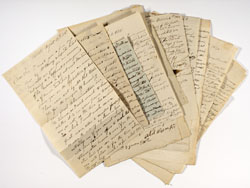
60. Green Family Papers. Adopt me for $200
At the Green Auction in September, AAS bid on seventy of the more than 2,000 lots and won thirty. We focused our bidding on William Elijah Green (1777-1865), a lawyer who practiced for most of his career in Worcester. This group of letters was among the lots that got away. The buyer removed the items of interest to him and sold the remainder to a dealer friend, who in turn offered them to us. Eventually we hope more William E. Green material will find its way to the Society.
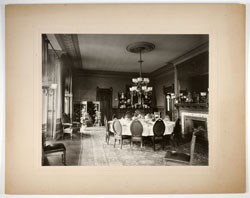
61. Green Hill, Worcester. Three photographs, ca. 1906. Stone Bridge adopted by Doris N. O’Keefe. Parlor adopted by Eleanor S. Adams. Adopt last photograph of Green Hill dining room (pictured here) for $50.
Originally a lot of three photographs, only the one pictured here remains to be adopted (you can see the other two photographs in the Adopt-a-Book 2011 catalog). The photographs were purchased by AAS at the auction in September and were just a handful of the many, many photographic lots that were sold there. The exterior view shows the stone bridge which was placed by Martin Green in his attempts to change the family’s Worcester property from a working farm to a more formal estate. The interior views show the dining room and a parlor, and were both taken by a Worcester photographer. The photographs capture the eclectic furnishings and cluttered decorating style favored by the Greens at the turn of the century, including marble busts, stuffed birds, prints, and Asian screens. The images will join the Society’s other Worcester photographic holdings, which date to about 1920.
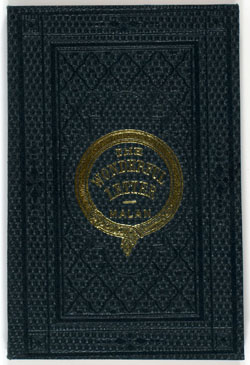
98. Malan, Cesar. The Wonderful Letter or The ABC of Faith. New York: Anson D.F. Randolph, 1863. Adopt me for $50
This is an allegorical tale for children about a humble pedestrian who instructs a mother and her children in the tenets of Christianity. This fabulous cloth limp binding is as pristine as the day it was issued. Although not purchased at the 2010 auction, the book was formerly owned by the Green family.
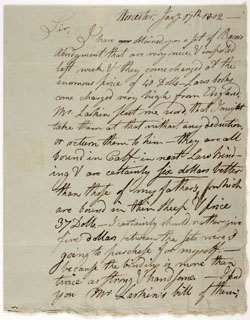
159. Thomas, Isaiah, Jr., Letter to William Green, January 17, 1802. Adopt me for $1,500
Isaiah Thomas, Jr. (1773-1819) followed his father in the printing and bookselling trade. In this letter Thomas is offering a set of Matthew Bacon’s A New Abridgement of the Law to William Elijah Green, a lawyer at that time practicing in Grafton, MA. Bacon’s New Abridgement was published in many editions in England in the 18th and 19th centuries. The fifth edition (London, 1798) was in seven volumes. It was not printed in America until 1813. We can not tell from the letter whether Green purchased the set from Thomas, but we do know that his law practice was successful and continued in Grafton and Worcester for decades.
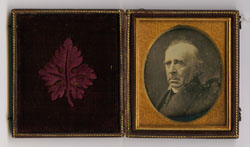
171. William E. Green, quarter-plate daguerreotype. [Worcester, 1840]. Adopt me for $1,500.
As seen above, AAS successfully acquired at the 2010 auction many manuscripts related to William Elijah Green (1777-1863), the man who is captured in this daguerreotype. The elder Green was a lawyer in Worcester and the head of what would become an influential family in New England and New York. One of the strengths of the Society’s early photograph collection is its very deep connection to our manuscript holdings, so we bid aggressively to capture this image at the sale. Having the face of the person who wrote all those letters to his children, wife, and business associates, really makes history come alive.
In order to adopt these or any other objects in the Adopt-a-Book 2011 catalog, please click on the link and follow the directions for “How to Adopt” which are found in the sidebar to the right at the top of the page. Remember, you don’t have to wait until March 29th to adopt!
Past is Present‘s series of posts on the upcoming Adopt-a-Book event will resume tomorrow. For today, please enjoy this story of (un)covered literary history.
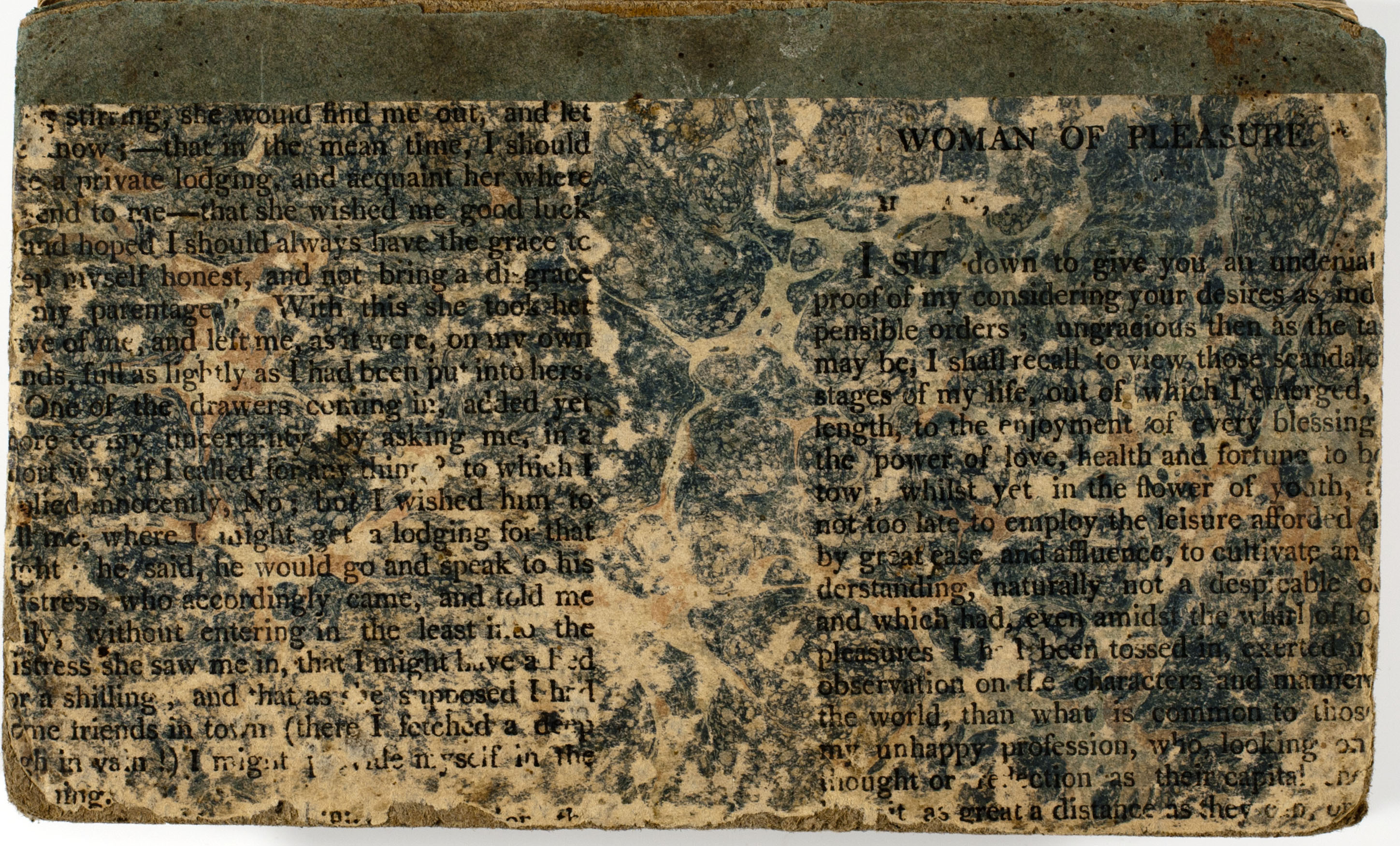
Ungracious then as the task may be, I shall recall to view those scandalous stages of my life…
Hanway's Advice, 1810
So say the marbled boards** (see further information below) covering AAS’s copy of Jonas Hanway’s Advice from Farmer Trueman to His Daughter Mary. The text inside is a series of discourses in which Farmer Trueman warns his daughter of the perils awaiting a country girl upon moving to the city: if a “silly proud girl,” then she may be “seized by the cold hand of poverty” and “to relieve her wants…[become] a prostitute.” Just such a tale seems to peek out of the book’s marbled boards, perhaps to accentuate Farmer Trueman’s virtuous message in one odd and unintended pulp story.
Or perhaps not. The sheets covering the boards of this 1810 Boston edition are actually unbound, unused copies of John Cleland’s quite vicious Memoirs of a Woman of Pleasure (popularly known as Fanny Hill). Marcus McCorison, AAS President Emeritus, bibliographer, and author of an essay on early American printing of Fanny Hill, has pointed to the “curious juxtaposition of pious works” bound with such risqué words. Perhaps an impertinent binder, with a supply of marbled Fanny Hill sheets at his side and a Hanway book to bind, covered this copy of Advice From Farmer Trueman. The binder may never have thought that the marbling would wear away, expose Cleland’s words, and reveal the binder to be quite the ironist.
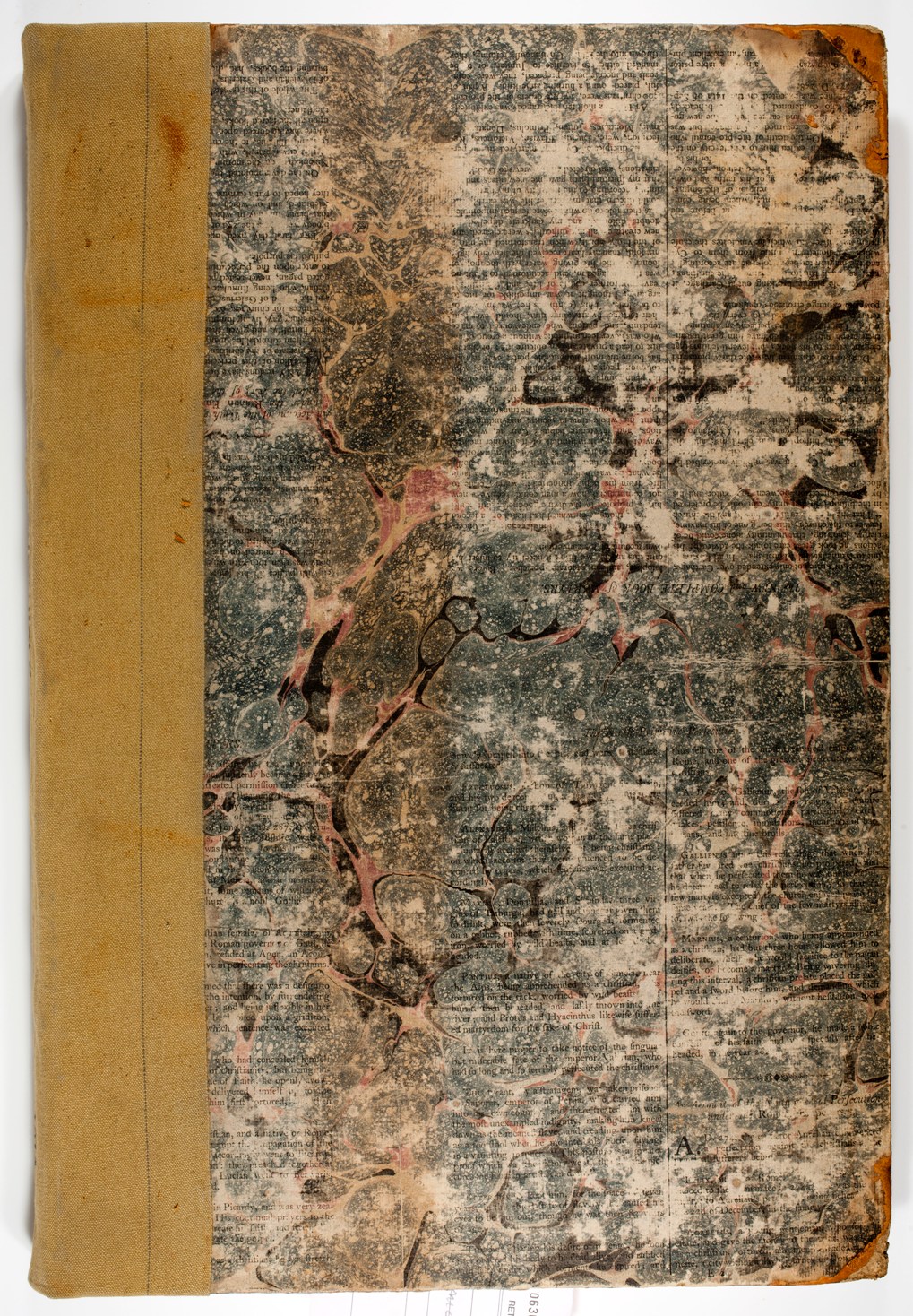
Boston Independent Chronicle, 1814
This anonymous binder was not unique in presenting such “curious juxtapopsitions.” In 1814, AAS founder Isaiah Thomas bound many of his newspapers in pages from Fanny Hill, as McCorison points out. Thomas marbled any paper at hand, using sheets of everything from the Psalms to Francis Blagdon’s History of Christian Martyrdom to Fanny Hill to cover his newspapers. So when readers request AAS’s early American newspapers, they may be confronted with quite a surprising array of “curious juxtapositions.”
At times our books relay information, ideas, and even wisdom to us only with repeated readings and incessant handling. Fanny Hill had been obscured by censors (and marbled paper) for years. It was only on this date (March 21) in 1966, over 200 years after its first printing and over 150 years after its first American printing, that the U.S. Supreme Court finally declared that Cleland’s novel was not obscene. Readers, critics, and time had their way with the censors and with the paper. Sometimes our books, as well as their secrets between and even under their covers, have a way of knowing (at least some) things before we do.
Further Information: Boston Courier, 1806
** “The boards” are the covers of a hard bound book, which were usually covered with scrap paper. Often, as in the examples shown here, that paper was decorated with a multi-colored, swirled design or pattern called marbling. Many pre-1850 books were issued by the publishers bound in paper covered boards, allowing for an inexpensive binding which could later be replaced with leather by a hand book binder. Read more at The Antiquarian Booksellers Association of America’s Glossary of Book Terms.
McCorison, Marcus A. “Memoirs of a Woman of Pleasure or Fanny Hill in New England,” American Book Collector 3 (1980): 29-30.
McCorison, Marcus A. Risque Literature Published in America Before 1877. (Available online)
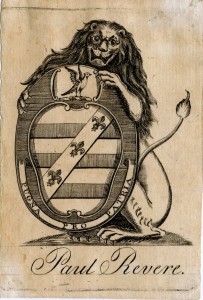
Paul Revere’s works are fabulous. And AAS has even more reason to celebrate because our collection includes copies of most of his known works. Revere is important historically, culturally, socially, and economically – and he deserves to be seen in his entirety. But we understand that not everyone can make it up to Worcester to see his works. So we want Worcester, and the Revere Collection, to come to you.
Anywhere. Anytime. And to anybody.
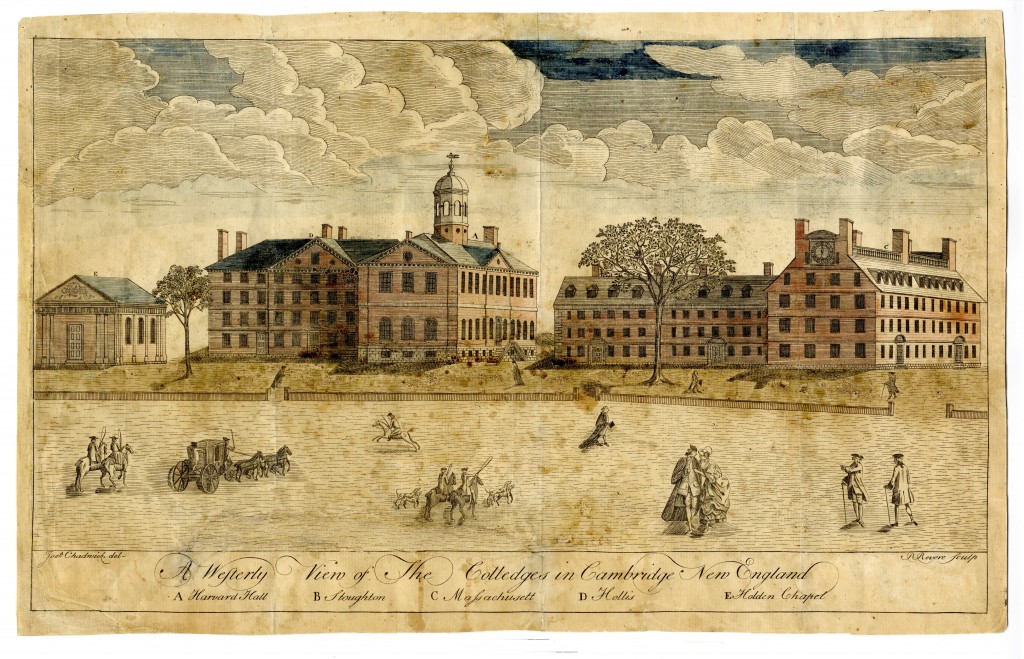
A Westerly View of the Colleges in Cambridge, New England (click on image to learn more)
The larger goal in designing this inventory was to cast a wide net and attempt to reach as many audiences as possible. In his time, Revere appealed to merchants, other craftsmen, patriots, book and music lovers, and readers of newspapers, to name a few. Illustrated online inventories are one way to democratize holdings and recreate that breadth in viewership. Therefore, our aim is to make collection materials available to teachers, students, scholars, collectors, artists, and anyone with an interest in historically significant works.
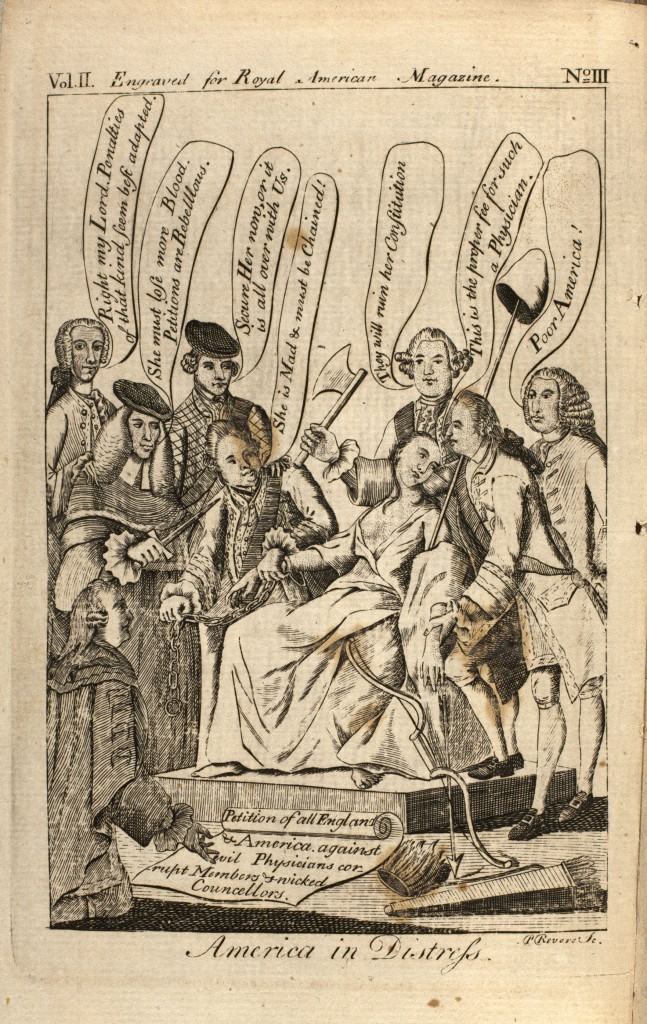
America in Distress (click on image to learn more)
If you like detail-rich descriptions, we have those. Thumbnails? Those are there too. If you want to browse the collection visually by subject, you will find the items have all been tagged with multiple general-audience-friendly headings. If you don’t have your own reference copy of Clarence Brigham’s Paul Revere’s Engravings, we have copious excerpts of the text online available via PDF. If you are in need of a writing prompt to dive into the collection, we came up with some to get you started. Perchance, if you like to zoom in to see everything from the time on the clock to the flourish of a Chippendale, you can. If you have your own Revere(s) and wish to compare plate markings, you can download them in higher-resolution. And to all those who need an excuse to enter the AAS Online Catalog, we have canned links to the holdings record.
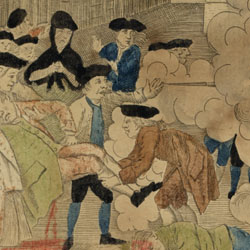
Detail from The Boston Massacre (click on image to learn more)
With other inventories, the compulsion has been to explain collection material elsewhere at AAS; one example is the D. C. Johnson Family Collection (where other Johnston pieces are in the Society’s political cartoon holdings, lithograph collection, plates in books and manuscripts, etc.) but in the Paul Revere Collection Inventory, we decided to store it in “one” space while maintaining it in its various curatorial collections.
In short, we “collected” it virtually.
As we wind down one inventory and gear up for another, the perpetual question always arises – what did we forget? What would make for a better inventory? So we ask you, what’s in your ideal inventory?