City Mouse and Country Mouse

With AAS’s annual Adopt-A-Book event right around the corner (read about last year’s event here), I thought I’d share another collection that will be up for adoption in April.

The Sawyer brothers lived in Manchester, New Hampshire in the mid 19th century.  Brothers Joseph and Henry enjoyed life in the bustling city, and loved sharing their experiences with their cousin, William Carr, who lived in the country setting of Bradford, New Hampshire.  In the tradition of the classic story of the city mouse and his country cousin, the brothers wrote to William about all of the intellectual and social activities they enjoyed in Manchester.  The brothers’ lively letters discuss their desire for education, attendance at lyceum lectures, membership in temperance lodges, and membership in the Manchester Athenaeum.

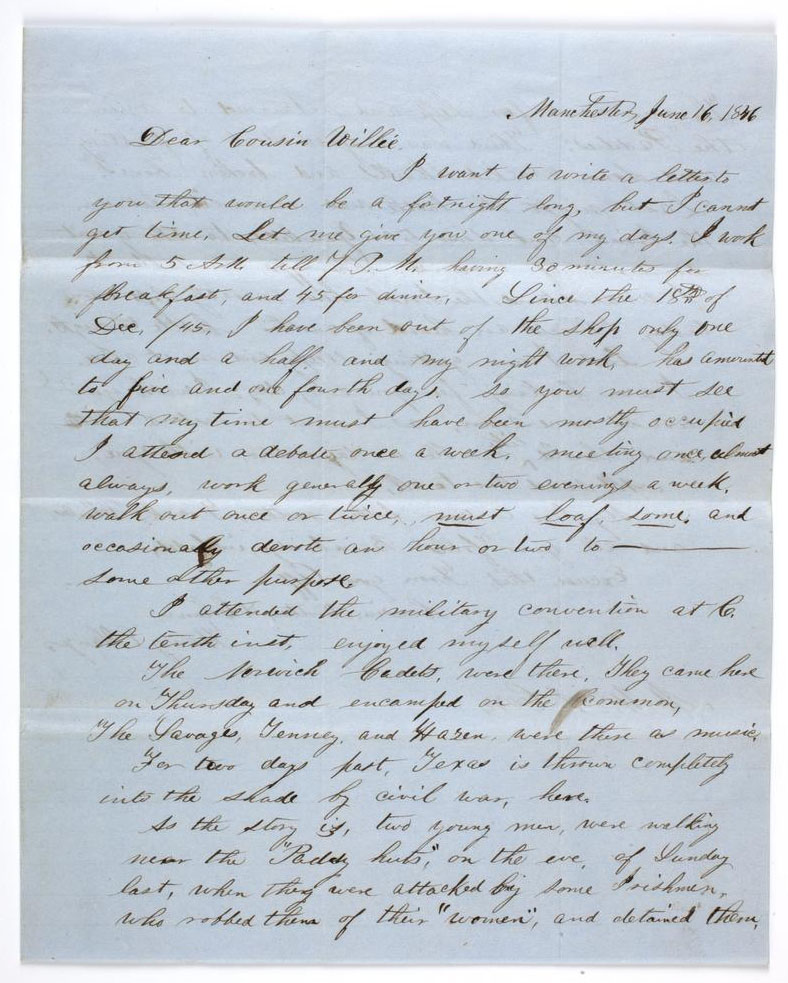
The letter shown here, dated June 1846, describes many exciting goings-on in Manchester.  Henry tells William about his busy work schedule, his attendance at a military convention, and even about a street robbery by “some Irishmen”.  In another letter, dated March of 1845, Henry writes to William about an offer to introduce his cousin to a unique experience should he visit the city –

“With regard to the Kankamagus Lodge” F. F. of T. B. I will just inform you that if you will come to Manchester I should be extremely happy if you would like, in my official capacity of ‘Warden’ to bandage your eyes and lead you into the circle of ‘True Brothers’…

What I wish we could see are William’s responses to the letters.  Did he envy his cousins’ urban lifestyle, or did he prefer the tranquility of his country home?  Either way, he surely was interested in learning about his cousins’ lifestyle, as the letters were exchange frequently, and over at least a six year time span.

This collection of Sawyer Family Letters provides an excellent look at the lives of young working men in the early days of the industrial era in New England.  Please considering adopting this collection!

A Modern Day Isaiah Thomas for the Classroom

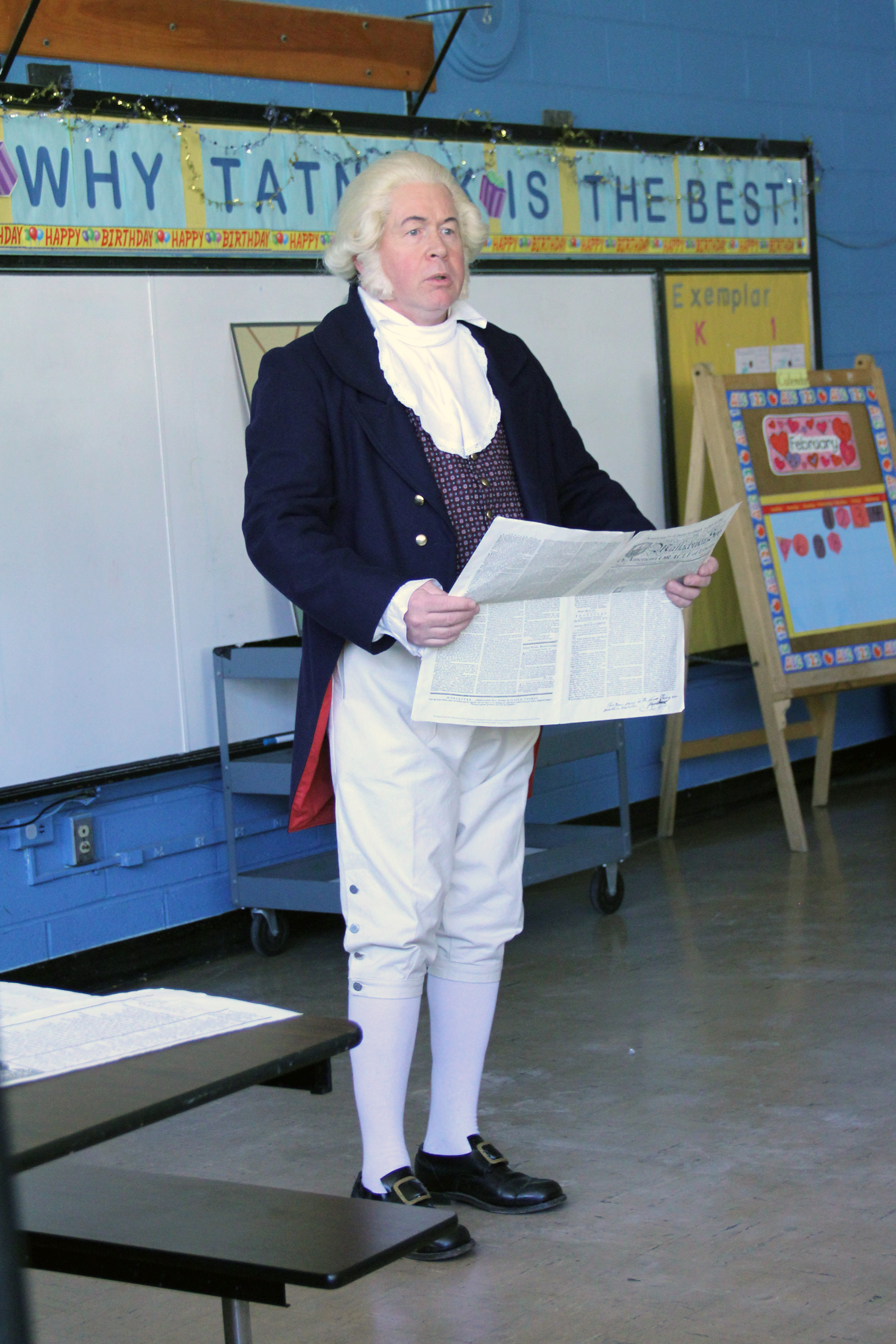
Here at AAS we talk a lot about our prestigious founder, Isaiah Thomas. His first printing press, “Old No. 1,” stands proudly on the balcony of Antiquarian Hall. His portrait hangs in the foyer. And now, as part of our bicentennial we are touring a one-man play written by James David Moran, Director of Outreach, that brings Isaiah to life and uses his story to introduce students to the American Revolution, the power of literacy, and AAS itself.

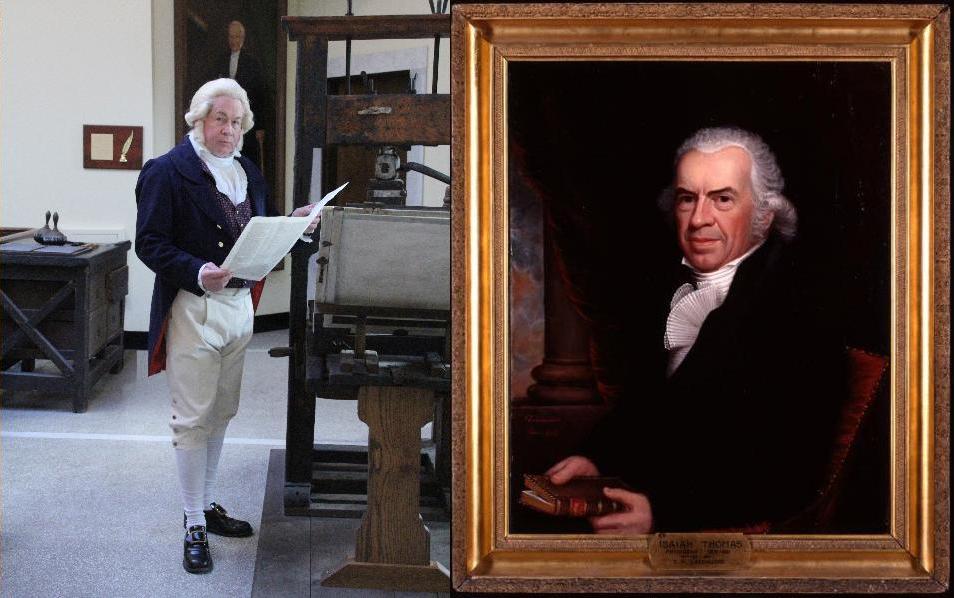
Left: Present-day Isaiah Thomas interpreter at the real Isaiah Thomas's original printing press. Right: Ethan Allen Greenwood's 1818 portrait of Isaiah Thomas.

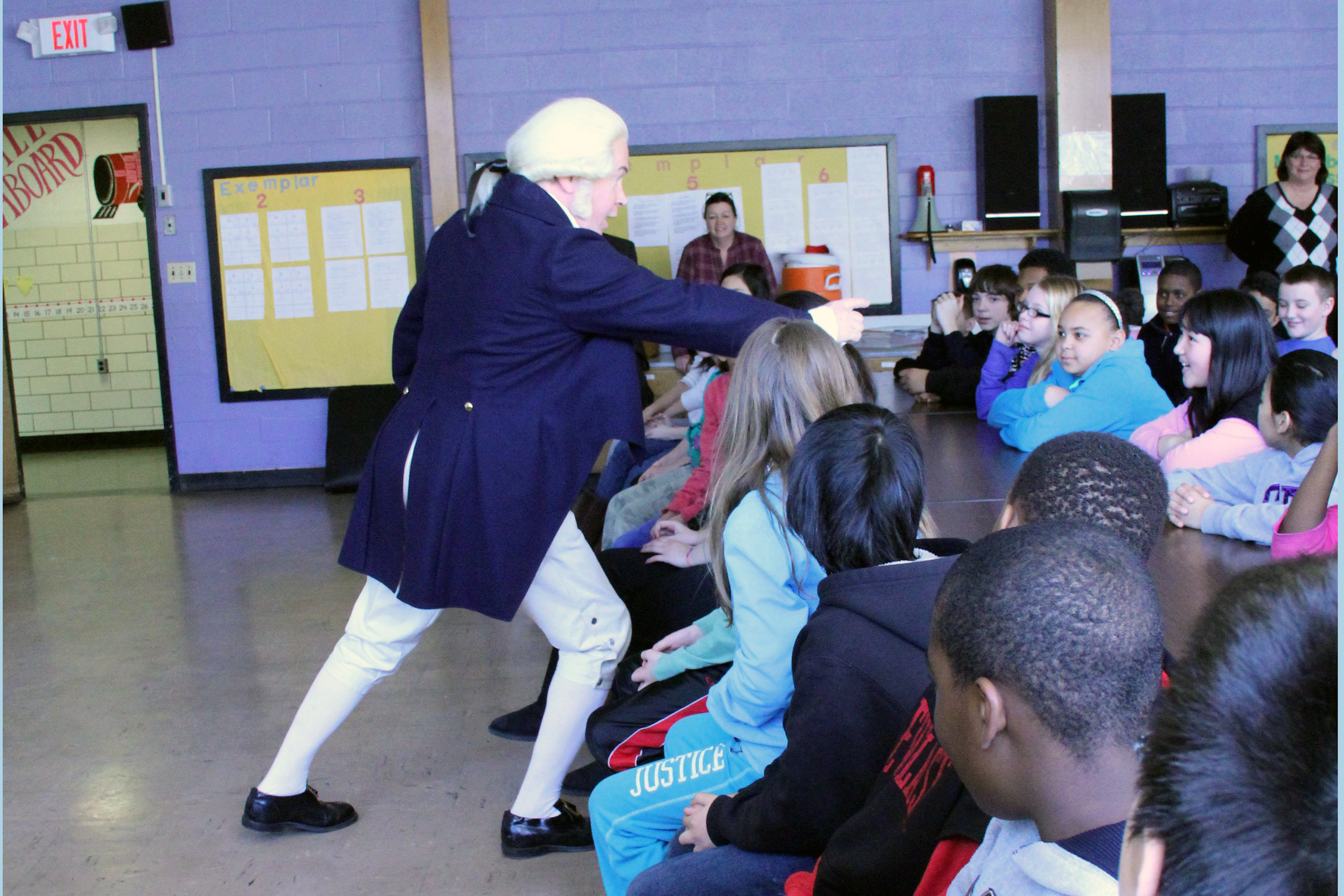
In Isaiah Thomas – Patriot Printer Neil Gustafson, a professional actor impersonating Thomas, goes into classrooms wearing period clothing. In an interactive presentation, Thomas tells his own life story and the history of our nation’s founding through selected documents that the real Thomas either created or collected. All of the documents he shares with the students are copies of documents from the AAS collections.

Along with the presentation, there is a curriculum guide developed by classroom teachers that includes background notes, lesson plans, and copies of documents to help prepare students for the show. This entire curriculum guide has now been put online on our website for teachers, www.TeachUSHistory.org.

This current tour, which is primarily bringing Thomas into every 5th grade classroom in the Worcester Public Schools, is made possible by a collaboration with CultureLEAP and funding from the Fuller Foundation, MassHumanities, and the Target Foundation. Teachers who have already hosted Thomas at their schools have been very positive:

Very entertaining! Greatly informative. Fun!

The students were mesmerized by the performance. Very authentic.

[This show] made what we had been studying really come ‘alive’ for the students.

It seems appropriate that on the 200th anniversary of the establishment of AAS we should be celebrating its founder, and this has been a wonderful way to do that. Check out our website to learn more about the Isaiah Thomas program.

Or check out last week’s Telegram & Gazette article that includes an interview of Isaiah Thomas (the interpreter, not the real one).

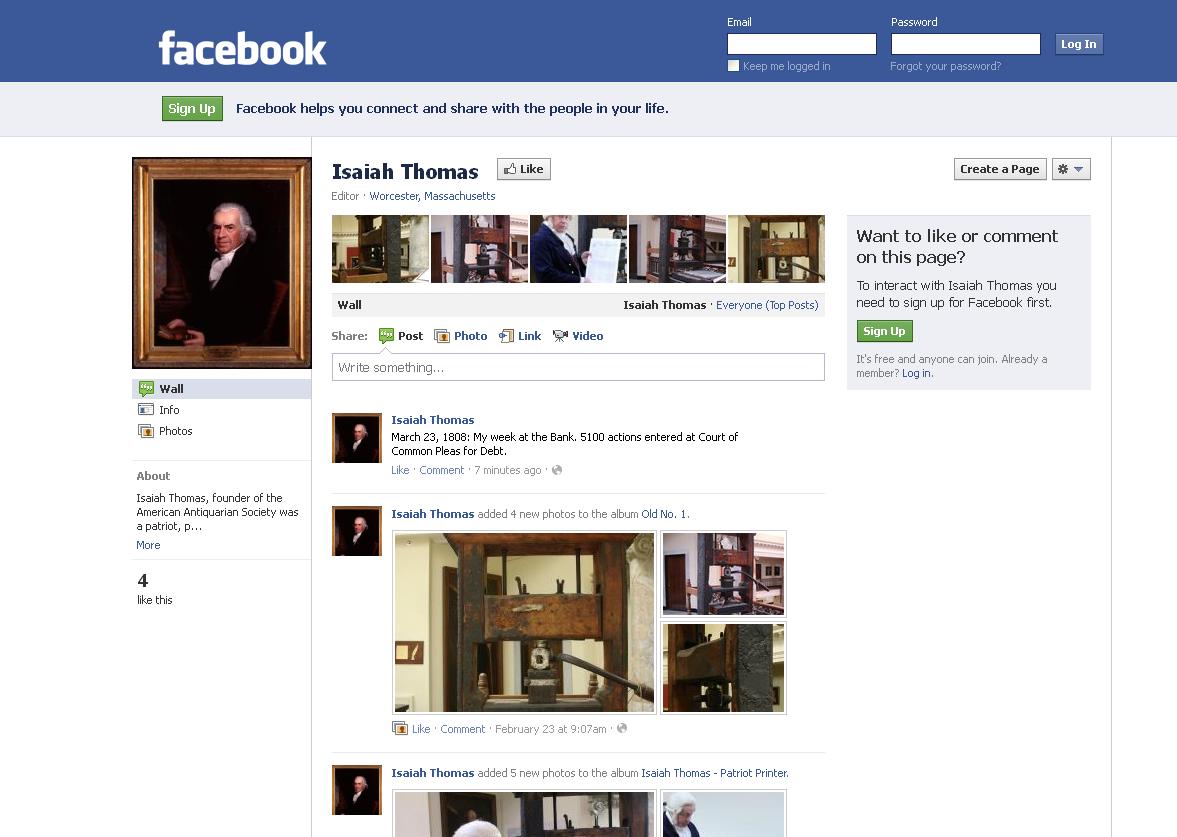
Editorial Note: This post is one of a series of posts on Isaiah Thomas. An earlier post described the founder of The Internet Archive as a modern-day Isaiah Thomas. Stay tuned for an upcoming post in which Isaiah Thomas gets a Facebook page!

Adopt-A-Book Catalog is Here!

The online part of the American Antiquarian Society’s fifth annual Adopt-A-Book event is underway!  Check out the catalog here.

The Adopt-A-Book Catalog features a variety of items acquired by AAS curators in recent months, which are available for “adoption.” Your “adoption” gift is a fully tax-deductible charitable contribution and will be used by curators in the coming year to purchase more interesting items like those in the catalog.

As it is the bicentennial, we have 200 items up for adoption with an initial 150 items below. The night of the event, there will be an additional 50 items for that night that will not be posted until after April 3rd. Come that night and see what we’ve held back.

The Acquisitions Table: Our Song Birds

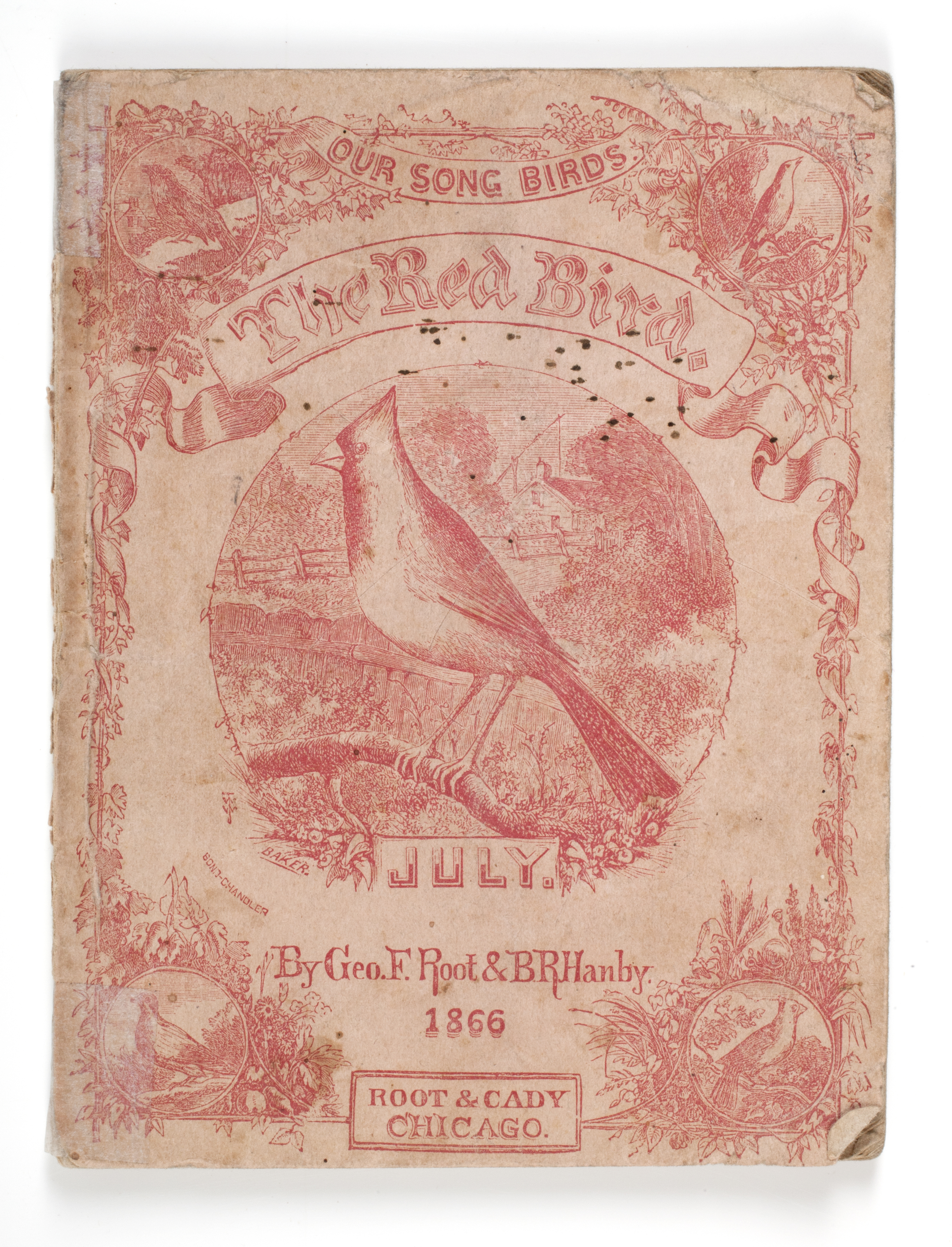
Our Song Birds (Chicago, IL). July 1866.

George Root was noted as a composer and as one of the largest music publishers in Chicago during the 1860s. This cute little 64-page booklet was written by Root and B.R. Hanby, and published by Root & Cady. It comprises one issue of a juvenile musical quarterly, Our Song Birds, that lasted six issues between 1866 and 1867. Each issue had its own title, with this one called “The Red Bird.” Like many pre-Fire Chicago imprints, it is quite scarce

With a French Accent

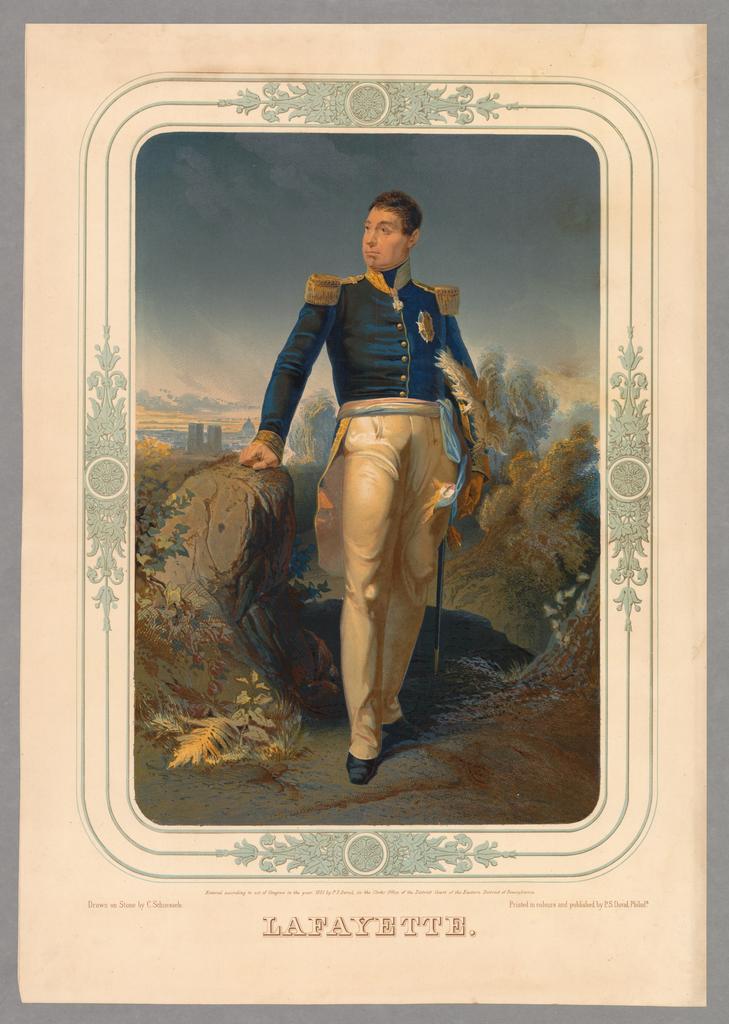
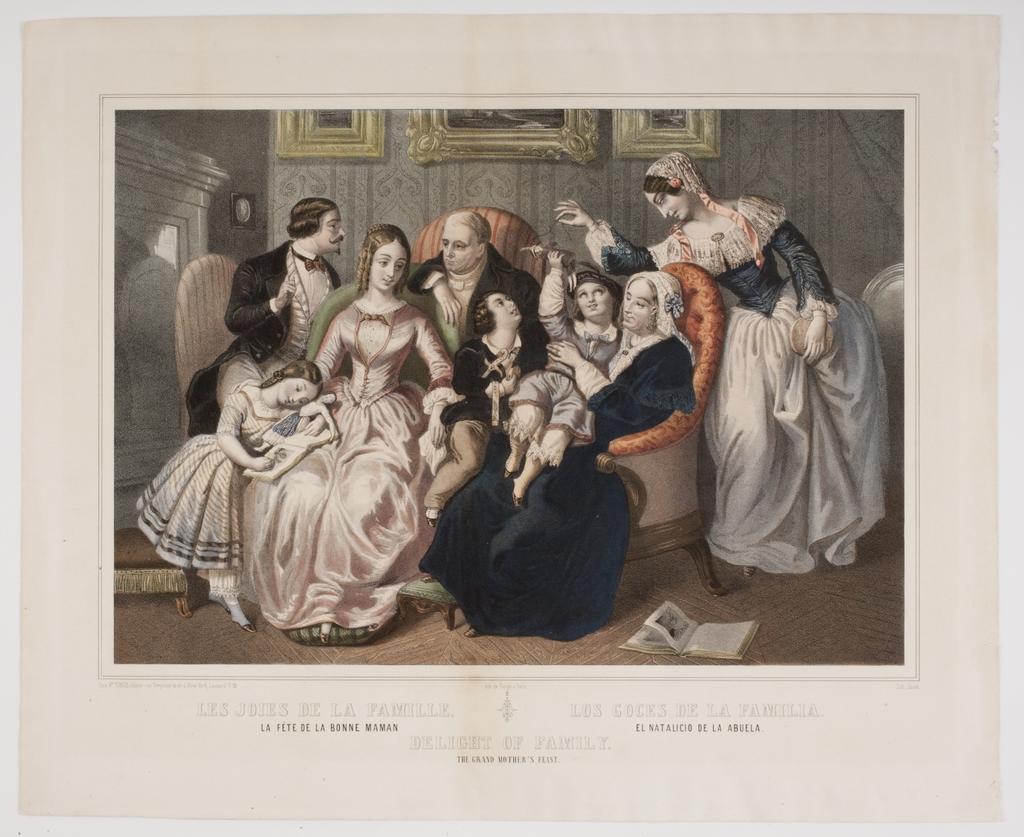
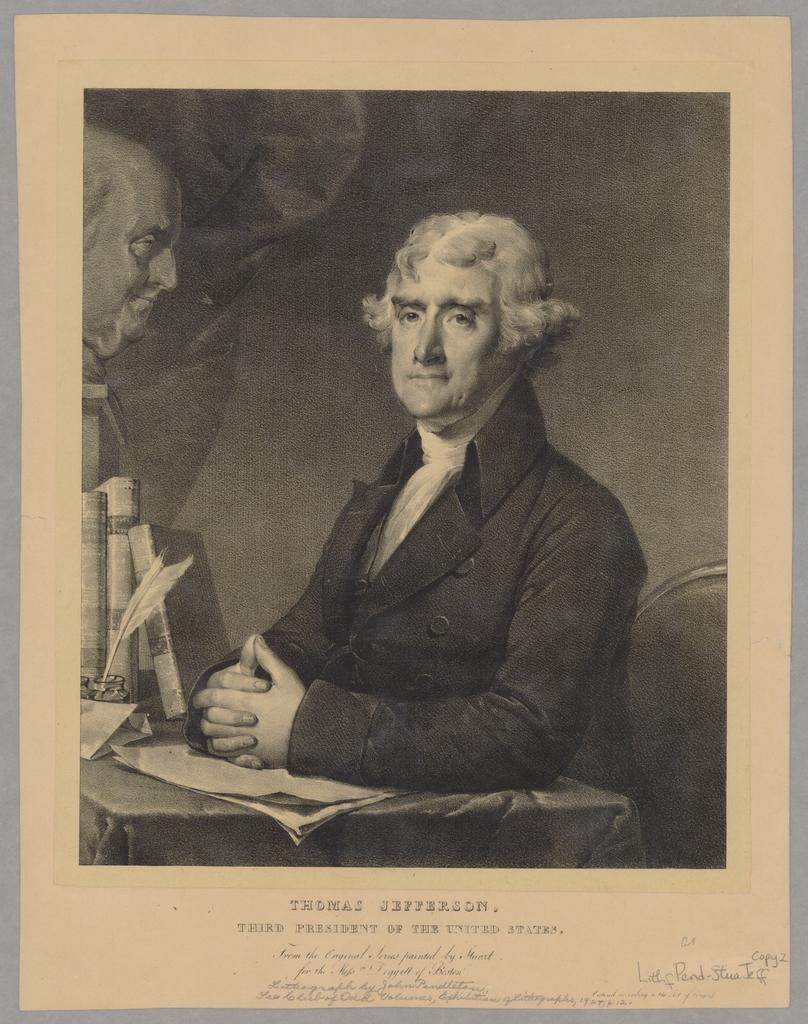
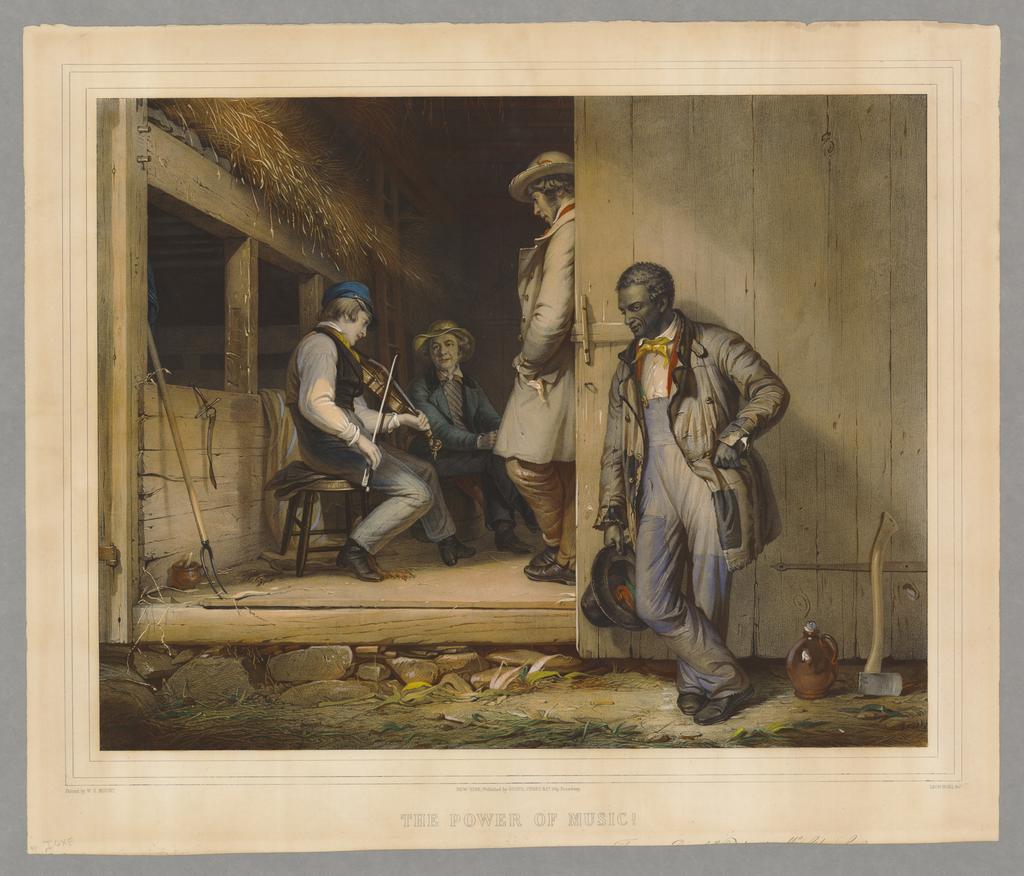
On Wednesday, March 14, 2012, the print exhibition With a French Accent, French and American Lithography to 1860 will open at the Davis Museum of Wellesley College. The exhibition is drawn entirely from the collection of the American Antiquarian Society and explores the influence of French expertise and design on American popular lithographic print production and consumption in the United States.

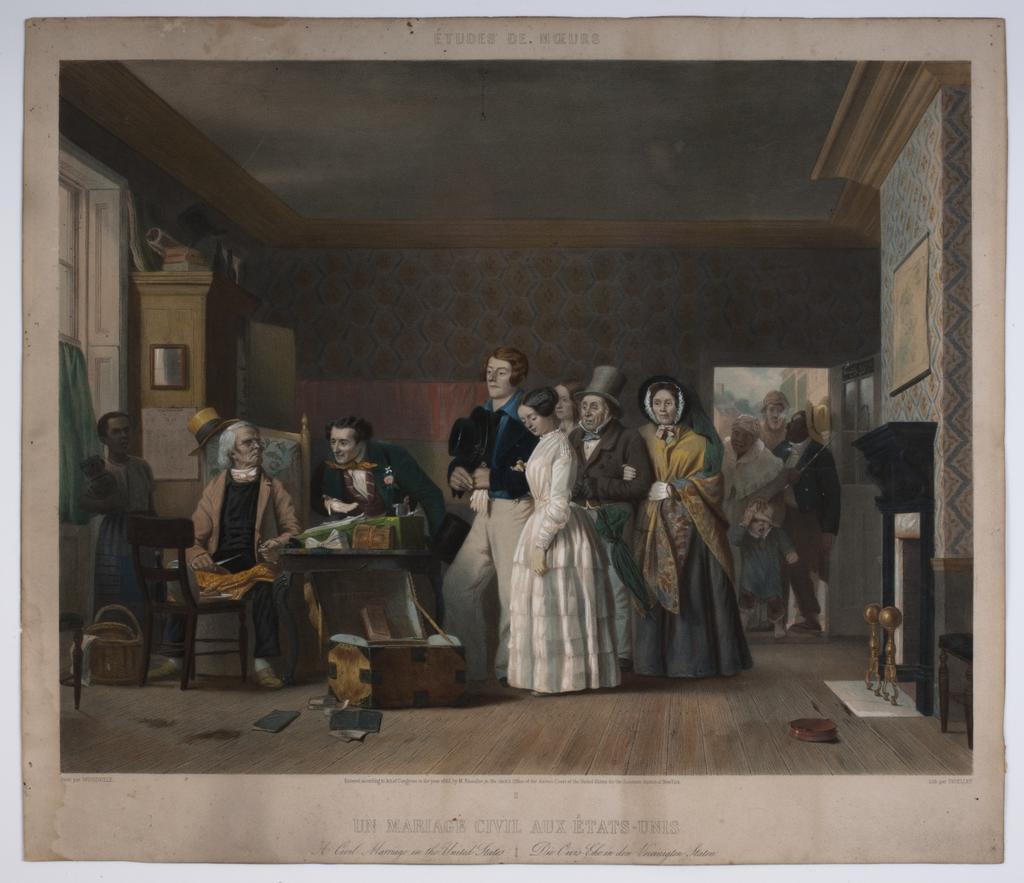
Claude Theilly after Richard Canton Woodville, Un mariage civil aux Etats-Unis / A civil marriage in the United States. New York and Paris: M. Knoedler, 1853.

Christian Schussele, Lafayette, Philadelphia, P.S. Duval, 1851.

La fe?te de la bonne maman / El natalicio de la abuela. The grandmother's feast. Paris: Veuve Turgis, c. 1855.

Nicolas-Eustache Maurin after Gilbert Stuart, Thomas Jefferson, third president of the United States. Boston: Pendleton, 1825-1828.

Work on the project began under the dome at AAS in 1995, when Georgia Barnhill and Lauren Hewes became interested in the possibility of studying French contributions to American lithography. They compiled a list of nearly one hundred names of French-born or French-trained lithographers active in the United States during the antebellum period, scoured archives for journal entries, customs paperwork, and ship manifests left behind by Americans traveling to Paris to learn the process, and gathered American newspaper reports about the dissemination of the technology. They looked at hundreds of lithographs in the Society’s collection, as well as prints held by other institutions here in the United States and in France.

After William Sydney Mount, The Power of music! Paris & New York: Goupil, Vibert & Co., 1848.
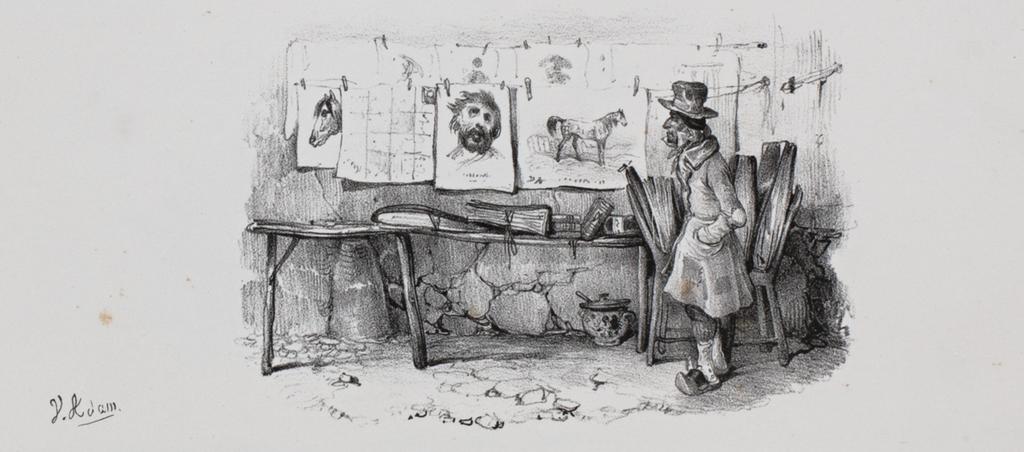
Victor Adam, Image of a French printseller, from Charades alphabetiques, co-published by Bailly & Ward in New York, c.1843.

In the 1820s, several American artists and publishers traveled to Paris and returned with lithographic equipment, prints, and practical knowledge.  A decade later, experienced French lithographic pressmen and artists immigrated to the United States to work in Boston, New York, and Philadelphia.  At the same time, imported French lithographs could be purchased from American booksellers and fancy good shops, entrepreneurs were buying prints wholesale in Paris and reselling them in places like Baltimore and Milwaukee, and American lithographers copied popular French images and adapted them for the local audience. 

By the 1850s, several French lithographic firms opened offices in New York City.  They sold a variety of lithographs, all made in France, including sheets drawn from their European stock, as well as specially published views of United States cities, and genre scenes by popular American artists like William Sydney Mount.  French lithographic influence was diverse and wide spread and raised the quality of American production while presenting inventive possibilities which echoed through the art of lithography as it continued to evolve in the United States.

The exhibition will run through June 3, 2012, and is being held in the Morelle Lasky Levine ’56 Works on Paper Gallery at the Davis Museum. It is free and open to the public. A symposium, French and American Lithography: History and Practice, will be held at Wellesley on Saturday, March 31 from 9:00 to 4:00.  This program is co-hosted by the Davis and the American Antiquarian Society and will explore transnational interconnection, particularly the impact of artistic exchange between France and the United States on American lithography through the nineteenth and twentieth centuries, and into contemporary practice.  This daylong event features a range of talks by exhibition curators Georgia B. Barnhill and Lauren B. Hewes, and visiting scholars Marie-Stephanie Delmaire and Catherine Wilcox Titus, and lithography demonstrations by a visiting artists and a master printer.

Research for this exhibition and the accompanying publication was made possible by the Florence Gould Foundation of New York.  At the Davis, this exhibition was made possible through generous support from the Marjorie Schechter Bronfman ’38 and Gerald Bronfman Endowment for Works on Paper.   The conference weekend is generously supported by Jay and Deborah Last, Wellesley College Friends of Art, and the Grace Slack McNeil Program for Studies in American Art.

A modern day Isaiah Thomas?

Let’s turn our gaze for a moment from our work at the AAS to the West Coast, where Brewster Kahle has founded The Internet Archive.

Kind of like a modern day Isaiah Thomas, Mr. Kahle had made his fortune, and now wanted to use it, in part, to establish an organization that would seek to preserve aspects of the physical culture of his time for future generations to use for their benefit. The institution was initially started to warehouse and archive websites and online content as a kind of virtual library of the early Internet. Mr. Kahle has since expanded the effort to include physical printed material from the age of the Internet, and he hopes to house a physical copy of everything printed from that time.

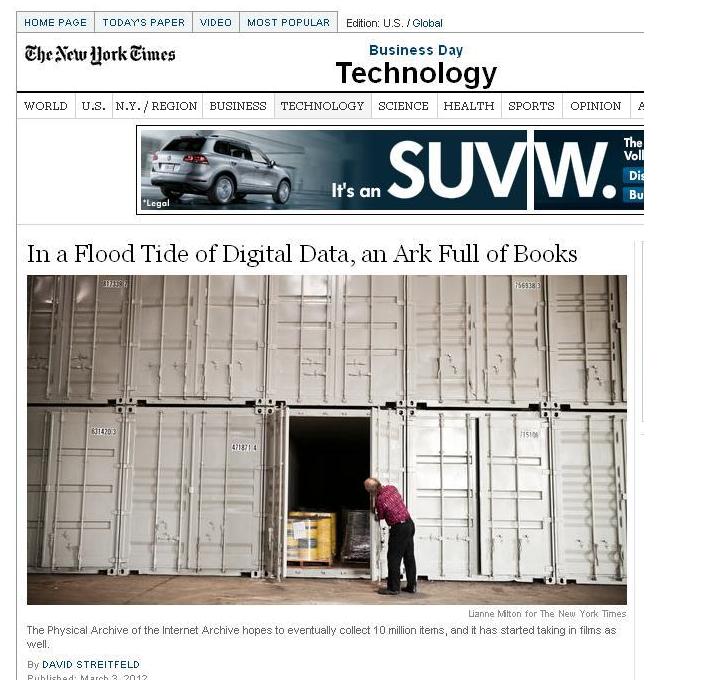
Mr. Kahle was quoted in a recent article in The New York Times by David Streitfeld.  “We want to collect one copy of every book,” said Mr. Kahle, who has spent $3 million to buy and operate this repository situated just north of San Francisco. “You can never tell what is going to paint the portrait of a culture.”

We could not agree with him more, and we’ve been doing it for 200 years come October.

“Lincoln’s proclamation, or advice or message or whatever the thing is that he has [just] sent to Congress…”

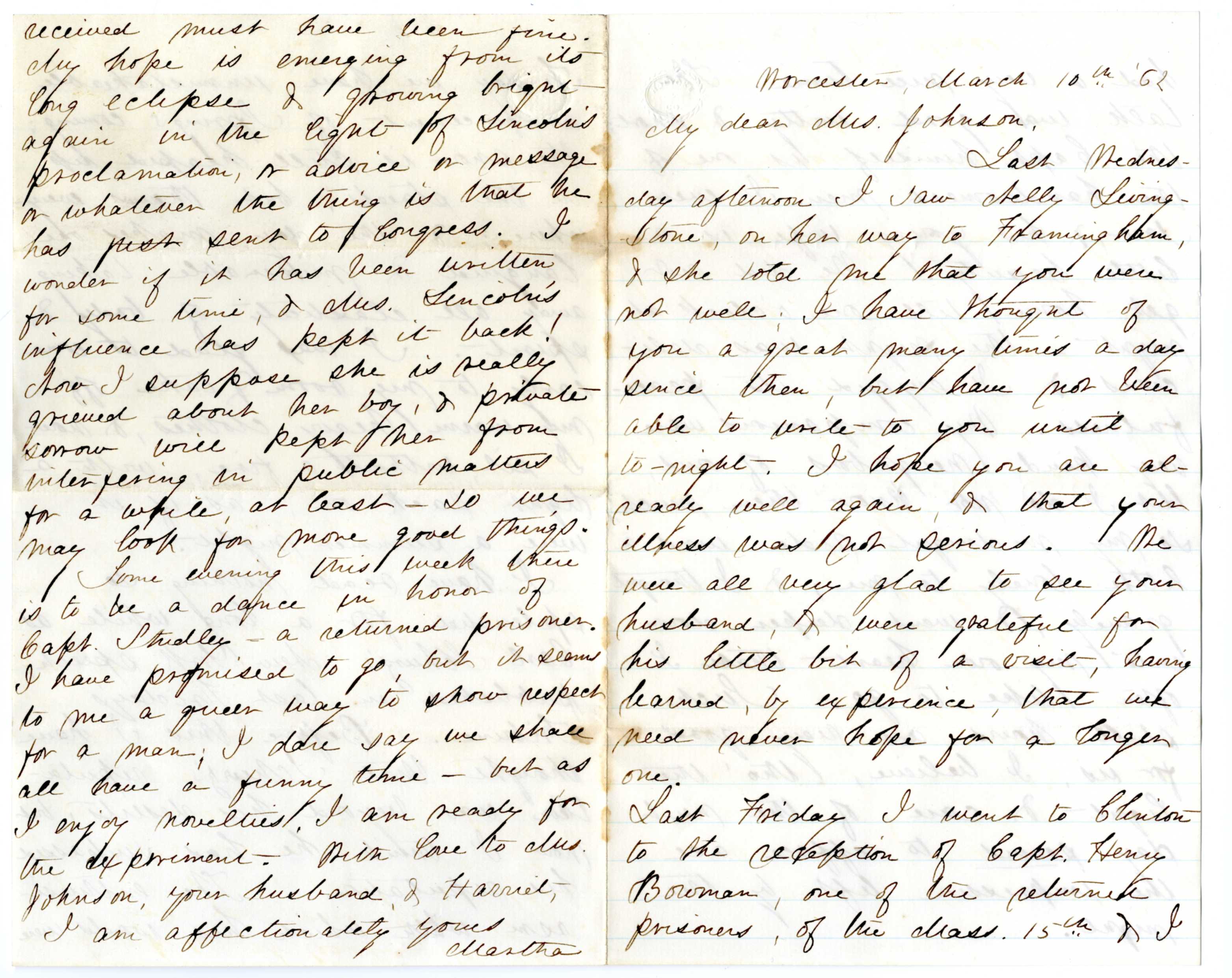
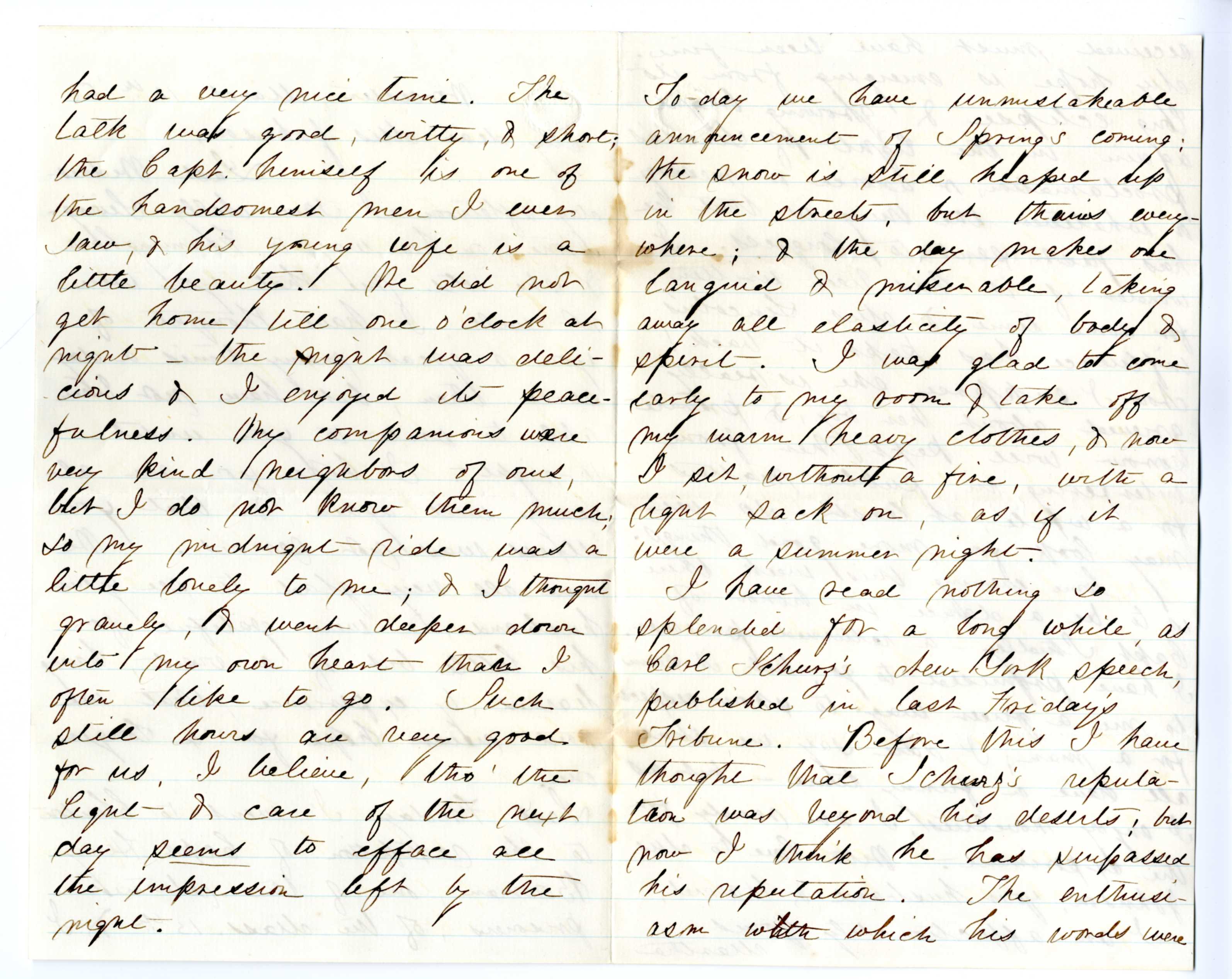
On this day 150 years ago, Martha LeBaron Goddard (1829-1888) wrote the letter transcribed below to her friend Mary Ware Allen Johnson. Her letters, composed over the years of the Civil War (of which the AAS has about 30), describe one woman’s response and ways of intersecting with the world (and war) around her.

This letter is only part of a rich, textured epistolary. Goddard, a native of Plymouth, moved to Worcester about 1850 and beginning with her arrival was active in the area community and relief societies. She also was an enthusiastic lecture-attendee, a writer of “Home Letters” for the Worcester Evening Transcript, and later Spy, a noted acquaintance of Henry David Thoreau, an unsurpassable admirer of Wendell Phillips (1811-1884) and an avid reader and reviewer. On the whole, Goddard’s correspondence represents an example of a letter-writer able to cull countless subjects on two sides of a sheet of paper. In short, she could describe her thoughts, the weather, war, politics, friends, health, reading and social events – all in about 500 words. She probably would have made a really good blogger (and I suppose, in a way she now is).

Letter from Allen-Johnson Family Papers, Box 4, Folder 19

Worcester, March 10th 1862

My dear Mrs. Johnson,

Last Wednesday afternoon I saw Nelly Livingstone, on her way to Framingham, & she told me that you were not well: I have thought of you a great many times a day since them, but have not been able to write you until to-night. I hope you are already well again, & that your illness was not serious.   We were all very glad to see your husband, & were grateful for his little bit of a visit, having learned, by experience, that we need never hope for a longer one.

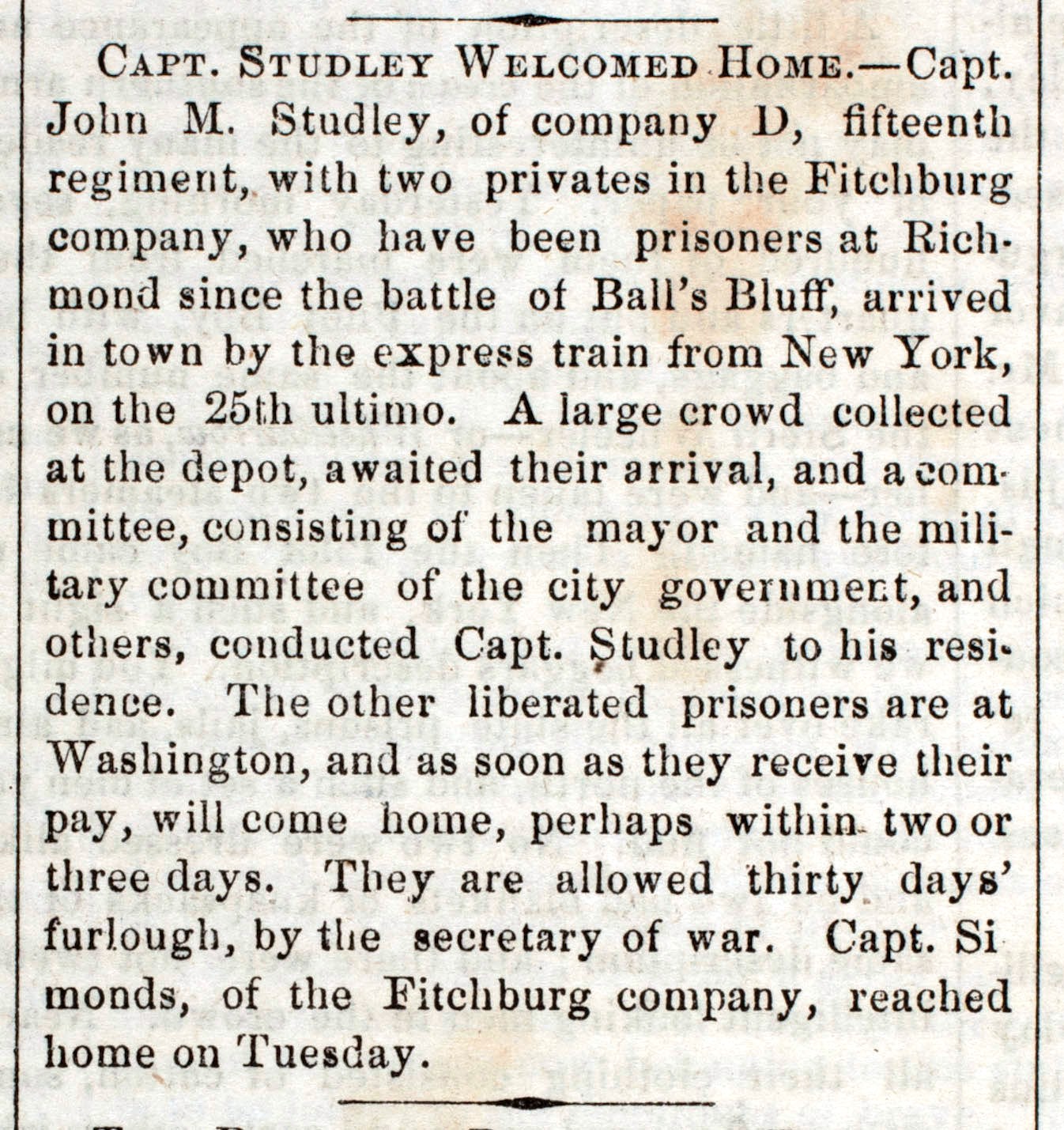
Last Friday I went to Clinton to the reception of Capt. Henry Bowman, one of the returned prisoners, of the Mass. 15th & I had a very nice time.  The talk was good, witty, & short: the Capt. Himself is one of the handsomest men I ever saw, & his young wife is a little beauty.  We did not get home till one o’clock at night — the night was delicious & I enjoyed its peacefulness.  My companions were very kind neighbors of ours, but I do not know them much, so my midnight ride was a little lonely to me: & I thought gravely, & went deeper down into my own heart than I often like to go. Such still hours are very good for us, I believe, tho’ the light & care of the next day seems to efface all the impression left by the night.

To-day we have unmistakable announcement of Spring’s coming: the snow is still heaped up in the streets, but thaws everywhere: & the day makes one languid & miserable, taking away all elasticity of body & spirit.  I was glad to come early to my room & take off my warm heavy clothes, & now I sit, thought a fire, with a light sack on, as if it were a summer night.

I have read nothing so splendid for a long while, as Carl Schurz’s New York speech, published in last Friday’s Tribune.  Before this I have thought that Schurz’s reputation was beyond his deserts: but now I think he has surpassed his reputation.  The enthusiasm with which his words were received must have been fine.  My hope is emerging from its long eclipse & growing bright again in the light of Lincoln’s proclamation, or advice or message or whatever the thing is that he has <just> sent to Congress.  I wonder if it has been written for some time, & Mrs. Lincoln’s influence has kept it back!  Now I suppose she is really grieved about her boy, & private sorry will kept her from interfering in public matters for awhile at least — so we may look for more good things.

Some evening this week there is to be a dance in honor of Capt. Studley — a returned prisoner.  I have promised to go, but it seems to me a queer way to show respect for a man: I dare say we shall all have a funny time — but as I enjoy novelties, I am ready for the experiment.  With love to Mrs. Johnson, your husband, & Harriet,

I am affectionately yours

Martha

Note: Capt. Studley is Captain John M. Studley – a notice appeared in the March 12th Worcester Spy describing the upcoming event.

Growing, Growing, Gone

Augustus Chatterton, Esq. World traveler, wit, and author of a late eighteenth-century book of poems, Buds of Beauty; or, Parnassian Sprig. The only problem is that no one knows who the man is.

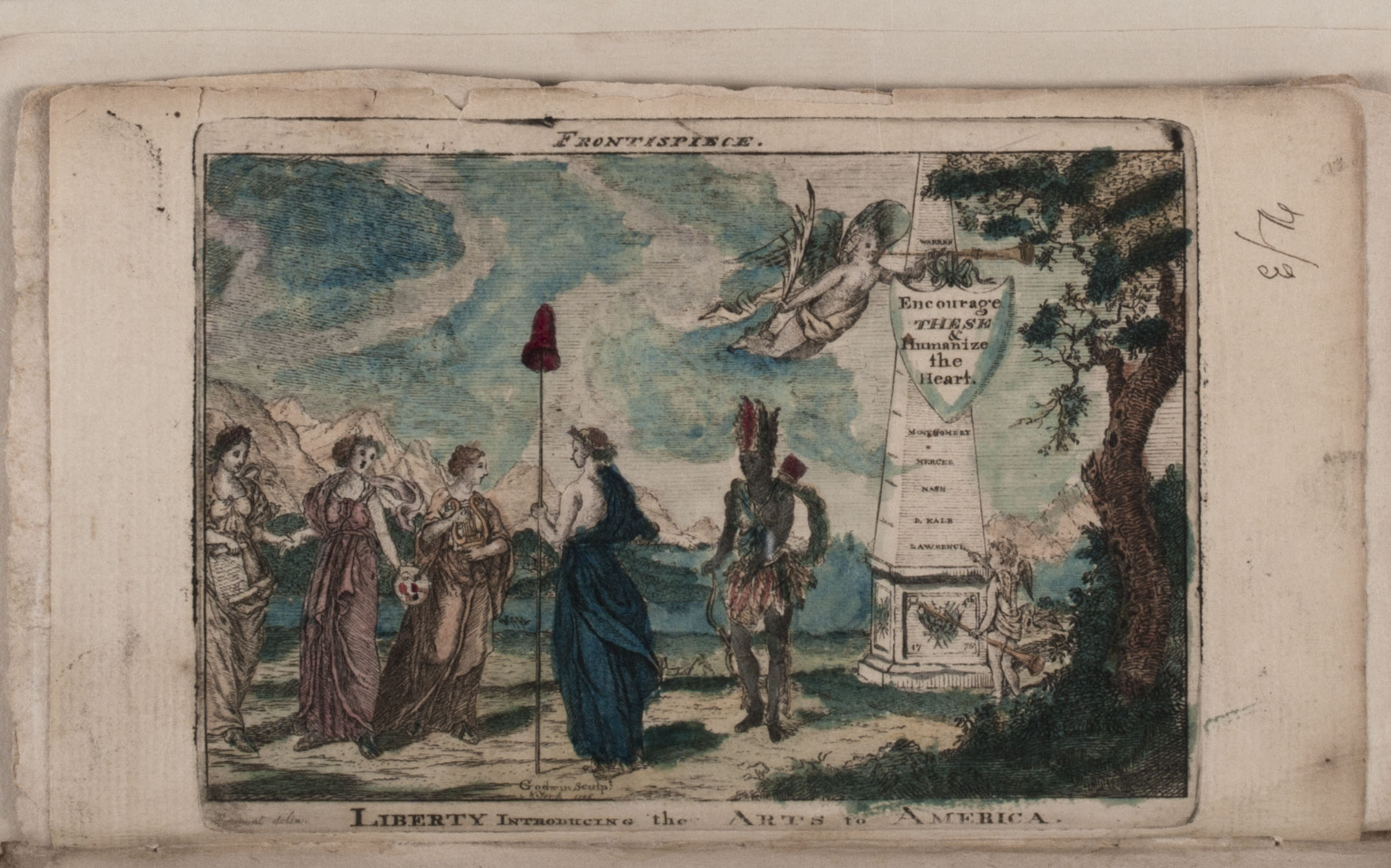
After Chatterton authored the 1787 work, which contains such picks as “The Printer and Plagiarist,” “The Segar,” and “Epitaph on a Mean Wretch,” he and his work seemingly damped off. Buds of Beauty was published in (at least) Baltimore and New York, and several American newspapers advertised its publication It was illustrated with a handsome Abraham Godwin engraving, “Liberty Introducing the Arts to America,” which complemented Chatterton’s message that the “Muses…follow liberty.” It even included a dedication to Benjamin Franklin, a “Philosopher–a Man–and a Patriot” who “induced [Chatterton] to embellish [his] little effort with [Franklin’s] name.”

In his Early American Poetry, Oscar Wegelin, who partly rooted his bibliography in AAS collections, guessed that Chatterton was a pseudonym. Wegelin must have guessed correctly, as many Buds poems reappeared in an anonymous 1795 Belfast work, Poems on Different Subjects. The Belfast work contains a list of its Irish subscribers and an updated tribute to Franklin, “On the Death of Doctor Franklin.” The anonymous author also included a double acrostic, “News-Printer’s Letter-Box,” dedicated to an American printer (see below). But there’s still no hint of who “Chatterton” was and why he published a meager book of poems in the states in 1787.

Wegelin was unable to identity the pseudonymous author in the early twentieth century, and today digital aids refuse to yield the authorship of Buds. Copies of the book, its newspaper advertisements, and engraved frontispieces, only pieces with which we can reconstruct a historical period and the production of a book, remain. But the author must remain anonymous and, so to speak, dead.

“News-Printer’s Letter-Box”

( A Printer at Baltimore, having got a Lion’s-head painted on the window, with the mouth open for the reception of Essays, &c. wished for something poetical on the occasion, and the Author sent him the following double Acrostic, which he published in his paper: )

In order to favour the efforts of merit,
Let Genius and Wit to my station repair;
Of all their effusions, their fire and their spirit,
I’ll quickly relieve them, and take a due care.

Has Damon a wish to convey his lost passion?
Or Phyllis a mind to reveal her keen pain?
No more let them sigh, but compose in the fashion—
Nay bring it to me, and I’ll publish the strain.

Has Franklin a plan to convey to the nation—
Such plan as might answer the good of the whole?
As soon as he perfects his skillful relation,
He safely may drop it, when dark, in the hole.

Young authors who blush at their youthful beginnings,
Ev’n while they are conscious their talents are bright;
Each here with due ease may get rid of his findings,
And leave them secure under the shield of the night.

Soft, sweet, sentimental, or witty, or smart,
Deposit it here, and ‘twill steal the heart.

(Click here for the solution to the double acrostic.)

For More Information:

A new resource for the study of early American poetry, A Bibliographical Description of Books and Pamphlets of American Verse Printed from 1610 Through 1820, will be published this spring but is available for preorder now. Much of the research for it was done at AAS by Roger E. Stoddard (who worked for forty-two years in the Harvard Library, retiring in 2004 as Curator of Rare Books in the Harvard College Library, Senior Curator in the Houghton Library, and Senior Lecturer on English) and is edited by David R. Whitesell (curator of books at the American Antiquarian Society).

The Acquisitions Table: The History of Little Red Riding Hood

The History of Little Red Riding Hood. Binghamton, NY: J. & C. Orton, 1840.

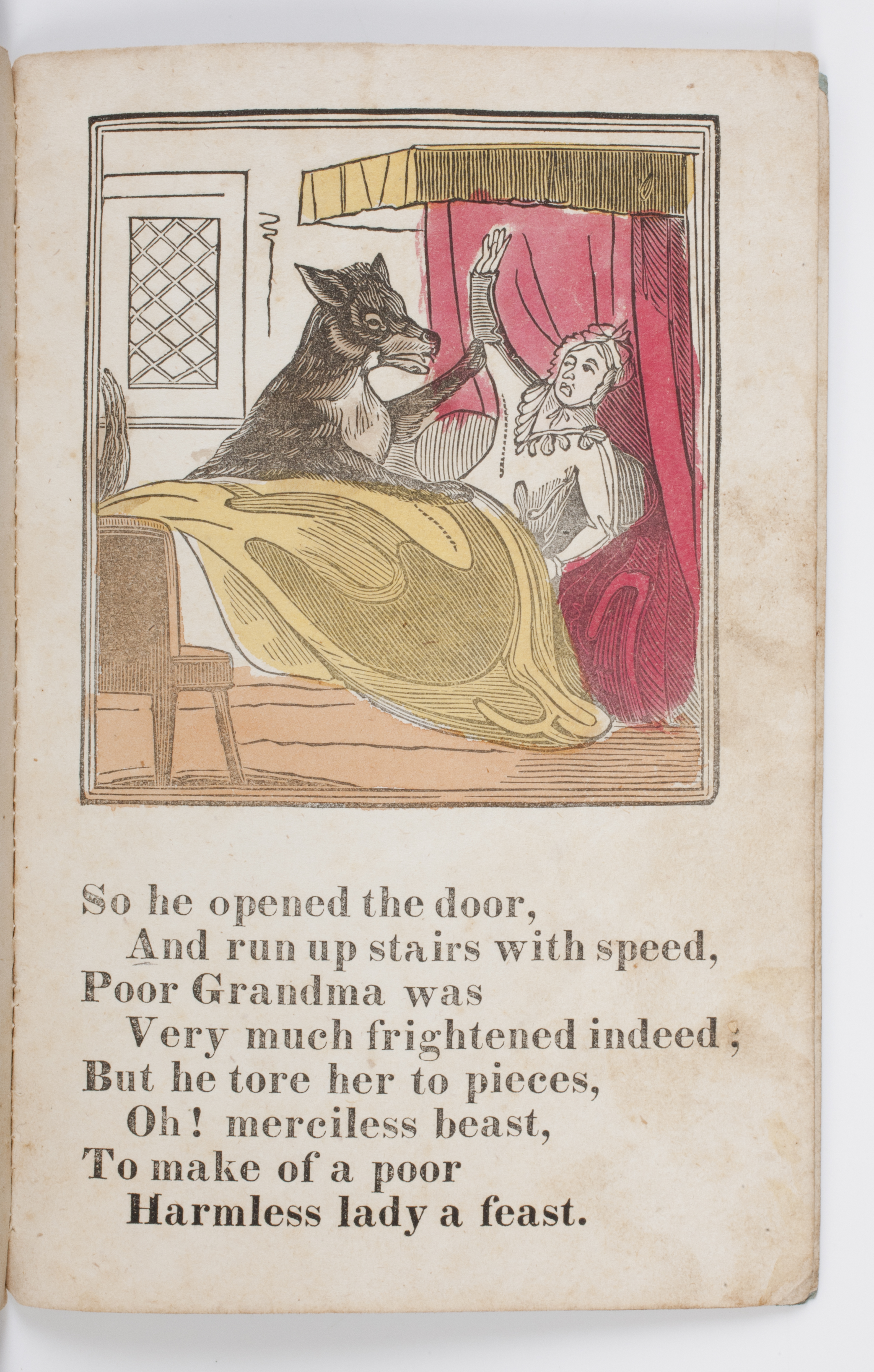
This is a classic example of a popular folk tale issued by a fairly obscure regional publisher, J. & C. Orton. Active ca. 1840-1841, the firm is represented in the AAS collections by fewer than a handful of imprints, all of them children’s books. We all know that little Red was attacked by the wolf, but it is easy to forget that her Grandma was attacked first. The text is incredibly blunt, “[H]e tore her to pieces, Oh! Merciless beast, To make of a poor harmless lady a feast.” Books like this one provide today’s researcher with valuable insight into the cultural connections between harmlessness, helplessness, gender, and age found in 19th-century American print culture. The back cover has a publisher’s advertisement listing several titles that are yet to be acquired—a curatorial shopping list!

The DTs

After supper Pap took the jug, and said he had enough whiskey there for two drunks and one delirium tremens. – Huckleberry Finn

Delirium Tremens: the strange affliction of “being tormented by devils” (Root 14) while under the influence of alcohol.

The Book: The Horrors of Delirium Tremens by James Root; New York: Josiah Adams, 120 Broadway, 1844. [AAS Online Catalog record]

Found among the American Antiquarian Society’s collection of nineteenth century books, The Horrors of Delirium Tremens seeks to warn its readers of the dangers of alcohol. Root, the narrator, begins by explaining that his drinking patterns consisted of long periods of abstinence and days-long periods of intoxication; he would “refrain and not taste of any kind of spirits for a number of weeks, and then after drinking again for one night, it would perhaps be several days before [he] became perfectly sober” (14). He did this for nine years, seeing no problem with his pattern as he experienced no unusual side effects (except, of course, the “ordinary effects” [14]).

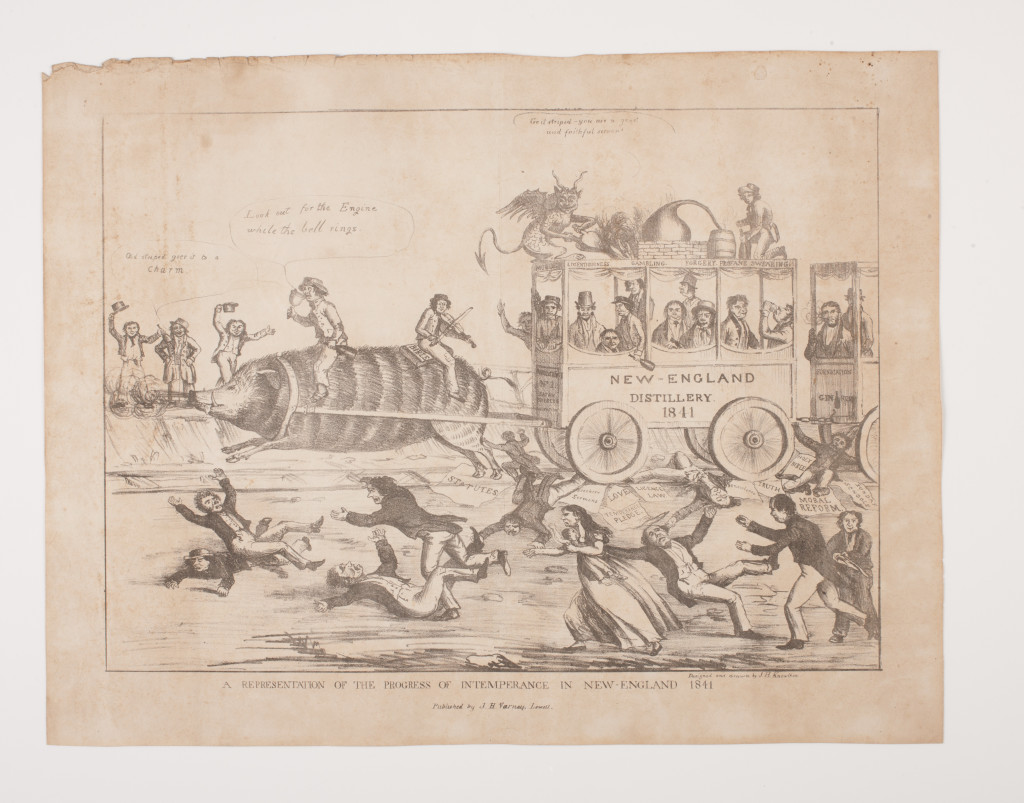
Representation of the progress of intemperance 1841

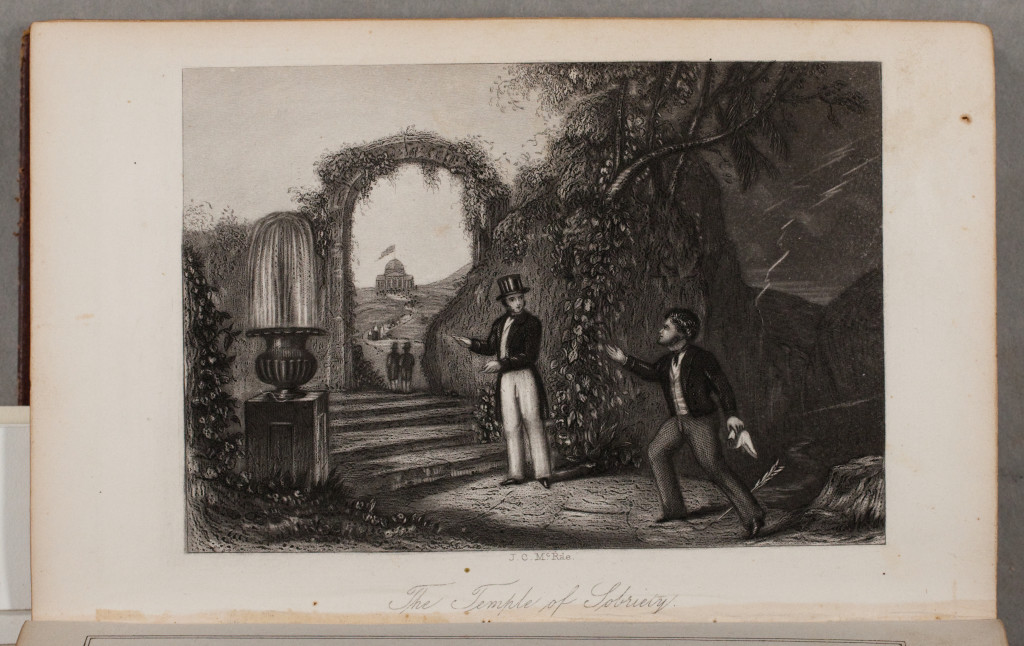
Although almost 500 pages long, Root’s book, unfortunately, has no illustrations. The image above is a political cartoon published by J.H. Varney titled “A Representation of the Progress of Intemperance in New-England, 1841” [AAS Online Catalog record]. The image below was engraved by J.C. McRae and is found in temperance gift books [AAS Online Catalog record].

Temple of Sobriety

In Root’s book, he recounts how after one particular drinking spree, he experiences the effects of Delirium Tremens. As he wanders from Manilus to Syracuse to Geddesburgh, he begins to hear strange, shrill noises and whispers. He strikes up conversation with the source of the noises, finding little to be unusual about his experience until he follows the voice to a group of “fiends” (32) and devils who threaten him with damnation. He climbs up a tree to try to escape them and even enlists the help of a local landlord, but to no avail. The hallucination does not fully pass until two weeks later. After it ends, he reverses his atheistic beliefs and prophesies to those whom he believes may be at risk of a similar experience.

The Context: Delirium Tremens was utilized as a piece of temperance propaganda, as J. C. Furnas writes in The Late Demon Run. Stories of frightening DT experiences worked as both urban legends and public service announcements. Sometimes exaggerated, but always effective, they scared men into becoming teetotalers. Furnas tells the story of a man who was jailed in Jefferson County, New York circa the 1830s. A “chronic alcoholic denied drink after a heavy spree,” (Furnas 118) he began to hallucinate and experience symptoms of withdrawal. His screams were so loud in the jail cell that three equally intoxicated prisoners were recruited by the jailer to keep him still. The recruited men, so disturbed by the man’s outbursts, vowed to become teetotalers. Indeed, even simply hearing the stories secondhand terrified men into abstaining from alcohol. Furnas recounts a particularly effective anecdote of a man who, believing a rat had run down his throat, used tongs to retrieve the imaginary rodent.

Captured in verse, the hallucinations are described:

See how that rug those reptiles soil! They’re crawling o’er me in my bed! I feel their clammy, snaky coil. On every limb—around my head—With forked tongue I see them play, I hear them hiss – tear them away! …

Delirium Tremens can result in hallucinations that are real symptoms of withdrawal.  The stories surrounding the condition, however, have proved just as important as the physical reality. The myths build off of one another, creating increasingly terrifying stories. Root’s book is unique in that it is a firsthand account. Readers are subjected to nearly 500 pages of his hallucinations and prophesying. However, the book did not prove particularly popular as Root wrote only one other speech [AAS Online Catalog record] in addition to the novel, perhaps showing that the best legends are the ones with multiple storytellers.

Further Reading:

•  The poem “The Devil and the Grog-Seller” on Google Books

•   Remarks on the history and treatment of delirium tremens: From the transactions of the Massachusetts Medical Society [AAS Online Catalog record]

•   The Life and Times of The Late Demon Rum [AAS Online Catalog record]

• Temperance poem “O, thou invisible spirit of rum! If thou had’st no name by which to know thee, we would call thee–Devil” [AAS Online Catalog record]

• AAS Fellow Xi Chen, a PhD Candidate in History at Northwestern University, is working on a project on “The Life and Times of John B. Gough” (who was a temperance orator)

The Acquisitions Table: Portrait of Nathaniel Bowditch

Harding, Chester, attr. Nathaniel Bowditch (1773-1838). Oil on canvas, [ca. 1830]

Salem navigator and mathematician Nathaniel Bowditch was also the author of several atlases and scientific publications which can be found in the AAS collection. Bowditch is perhaps most famous for his 1802 publication, The New American Practical Navigator, which went through several editions in his lifetime and is still in print. He spent many years working on an English translation of Pierre-Simon de Laplace’s Traité de mécanique céleste, a mathematically-focused tome dealing with issues of astronomy. Bowditch’s impressive personal library of over 2,500 volumes, maps and manuscripts was given to the Boston Public Library in 1858 by his descendants.

 This portrait was painted towards the end of Bowditch’s life, probably in Boston where he was working in the insurance industry. Art historian Louisa Dresser has attributed this painting to Chester Harding, though further research remains to be done. Harding was in Boston at the time, and was considered one of the most fashionable painters of the era. Bowditch was an active consumer of portraits, sitting often to have his likeness made in watercolor miniature, plaster busts and easel painting. He was painted in the 1820s by James Frothingham in Salem, in 1828 by the elderly Gilbert Stuart, and in 1835 by the Salem painter Charles Osgood. Based on the sitter’s appearance, this portrait was probably painted around 1830. The artist has captured the shrewd features of the sitter with great detail, capturing the sharp-eyed look for which he was known. A biographer noted, “It was indeed wonderful with what facility Dr. Bowditch could in an instant divert his attention from any subject to another of the opposite character; at one moment engaged in the every-day detail of the business of his office, at the next abstracted from all around him by the most elevated investigations of science. . ..”  This portrait was the generous gift of AAS member Karl Lombard Briel.

AAS in the news

The Society has received a lot of great press lately. Two weeks ago Worcester Magazine featured AAS as “Worcester’s hidden gem” in an article by Matthew Stepanski and last week AAS member and Telegram and Gazette columnist Al Southwick called the Society “far more than a collection of books and newspapers. The AAS has become an intellectual powerhouse of research, famed far and wide across the land and even across the ocean.”

Two AAS staff members also have received media attention recently. Lauren Hewes, Andrew W. Mellon Curator of Graphic Arts was featured on WBUR 90.9 FM. Lauren discussed our Valentine collection and the career of Esther Howland for a special Valentine’s Day story created by Andrea Shea, the station’s art and culture reporter. Philip Lampi appeared on the front page of the Telegram and Gazette in an article written by George Barnes after he received the first Chairman’s Commendation from the National Endowment for the Humanities. This was the first such award presented by NEH Chairman James Leach to an ordinary citizen for extraordinary work in support of the humanities.  Phil received this award for his life’s work researching early American voting records.

We hope to continue to garner media attention throughout this our bicentennial year.

Bibliothanatography

About two years ago, I found myself looking at an 1892 Bibliobroadsheet. It advertised the Bronson, Michigan, store of J. Francis Ruggles, the most unusual bibliopole ever working in Bronson, for sure. Michael Winship, professor of English at the University of Texas at Austin and an editor of the recently published five-volume series A History of the Book in America, was on fellowship at AAS and had just shared with me a photo of the broadsheet, Circularissingularis, no. 22.

I knew nothing about Ruggles at the time and was more than curious. In the broadsheet, Ruggles relates his family history (New England extraction and migration to a frontier Michigan homestead). At his Bronson “odditorium,” Ruggles said that:

with his correspondents in the principal literary centres, catalogues strewing in from all parts of the world by every mail, records of most of the works published since the origin of printing, no marvel that he is prepared to furnish any obtainable book ever printed.

When the broadsheet was printed, Ruggles had been selling books for over twenty years, rebuilt his shop after a devastating 1889 fire, and undoubtedly would have tried to provide his customers with any book ever printed.

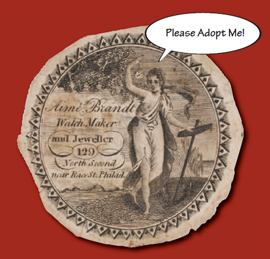
Ruggles recently reappeared to me as I’ve been working on an inventory of AAS’s collection of booksellers’ labels and binders’ tickets. The collection ranges from the early nineteenth century to the mid-twentieth century and provides just one entry point into the history of booksellers and bookstores in the U.S. The labels in the collection have not been cataloged fully, not to mention the labels still in books that have received little to no attention here at the library. Tucked into the thousand or so labels in the collection proper is an earlier label from Ruggles’s store. Dated 1875-76, the label advertises Ruggles’s ability to “supply any legitimate publication” with the aid of “representatives on both sides of the Atlantic.”

Was Ruggles superhuman or just the type of bookseller who knew what a customer needed and tried to supply it? In that, he was not unlike some of the great booksellers (the Sabins and Rosenbachs) or the less well-known (the Frank Shays [see an exhibit on Shay from the Harry Ransom Center] or Irving Ephraims [20th-century Worcester bookseller]). AAS has a number of collections that are ideal for the study of booksellers in America, including the manuscript Book Trades Collection and Isaiah Thomas Papers, and a vast number of bookdealers’ catalogs. But the bookstore is dead. The bookstore remains dead. And how shall we comfort ourselves but by the study of the history of booksellers and bookselling?

See also:

Marge Scott’s article on Ruggles in volume 23 of the Chronicle: The Magazine of the Historical Society of Michigan.

Michael Winship’s “‘The Tragedy of the Book Industry’? Bookstores and Book Distribution in the United States to 1950”, from volume 58 of Studies in Bibliography.

The Acquisitions Table: Calathumpian Advocate

Calathumpian Advocate (Concord, NH).  June 19, 1850.

This interesting political periodical could be described as rabble rousing. The term “calathumpian” is probably a colloquial Americanism relating to a society of social reformers, especially those that disrupt political events. This particular issue includes a report of the Calathumpian Fusiliers disrupting an election in Concord, ending with a list of participants, but the names are meant to be humorous, e.g. Sledge Hammer, Old Tar, Josiah Billdad, Lincom Squizzle.