The Acquisitions Table: Children’s Book for Sabbath Hours

Bullard, Asa.  Children’s Book for Sabbath Hours.  Springfield, Mass. & Chicago: W.J. Holland & Co., 1873.

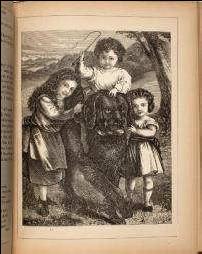
With the secularization of American society after the Civil War, this book by minister Asa Bullard answered a need to give children something wholesome yet entertaining to read while keeping the Sabbath free from raucous play.  This is a selection of short stories and poems, issued with luxurious full page photo-engravings, like this one of children playing with their large (but gentle) dog.

Benjamin T. Hill Goes to the Fair

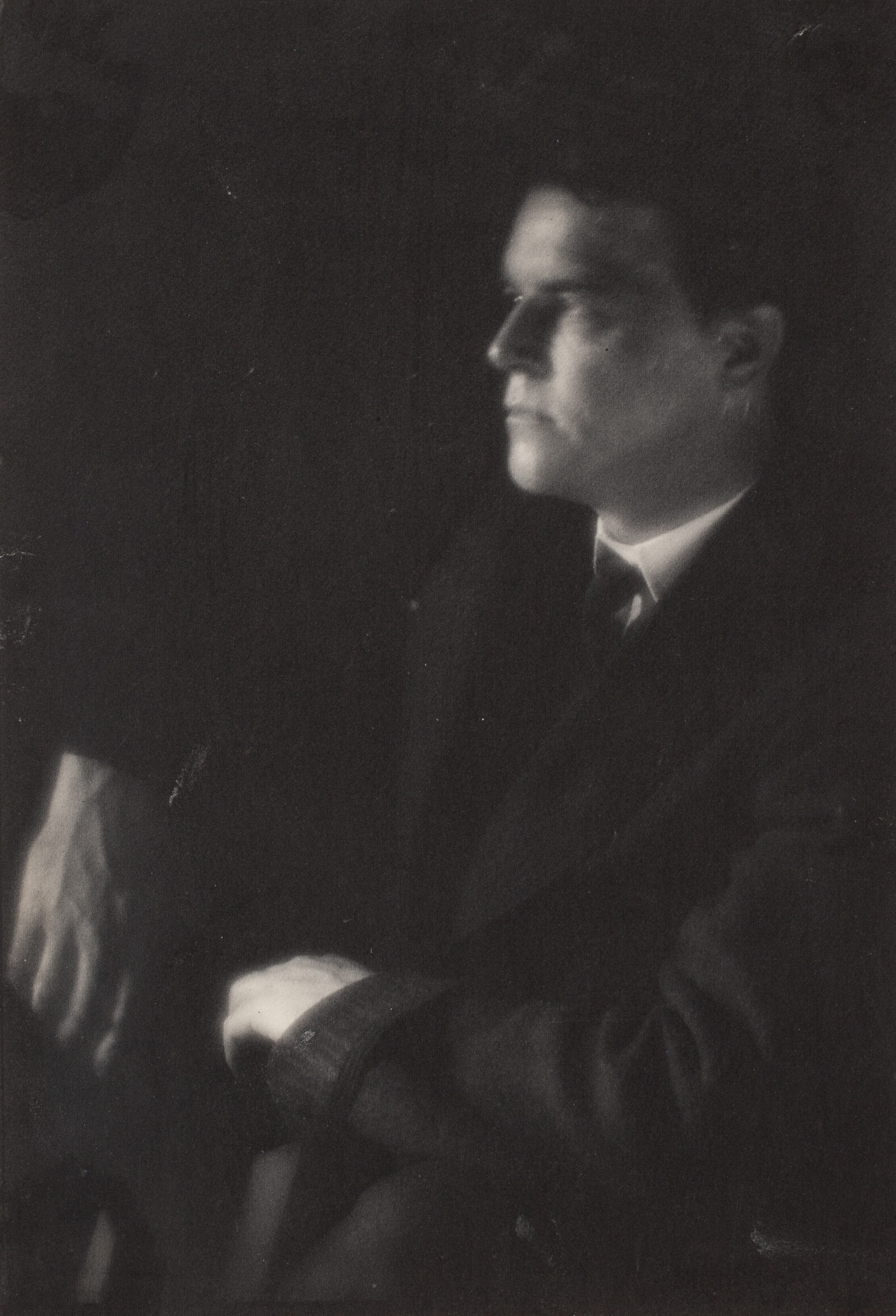
Portrait of B.T. Hill

I recently scanned a few boxes of glass negatives from the collection, all made by one Benjamin T. Hill, an amateur photographer and local historian elected to the Antiquarian Society in 1901 who also served as an auditor for the Society for twenty-three years. These negatives were all made at a fair in Worcester in the early 1920s. The fair took place near what was then Norton Abrasives and is now the Saint-Gobain complex, just west of West Boylston Street. The historic Odd Fellows’ Home, built in 1890 on Randolph Road, is visible in the distance in many of the photographs.

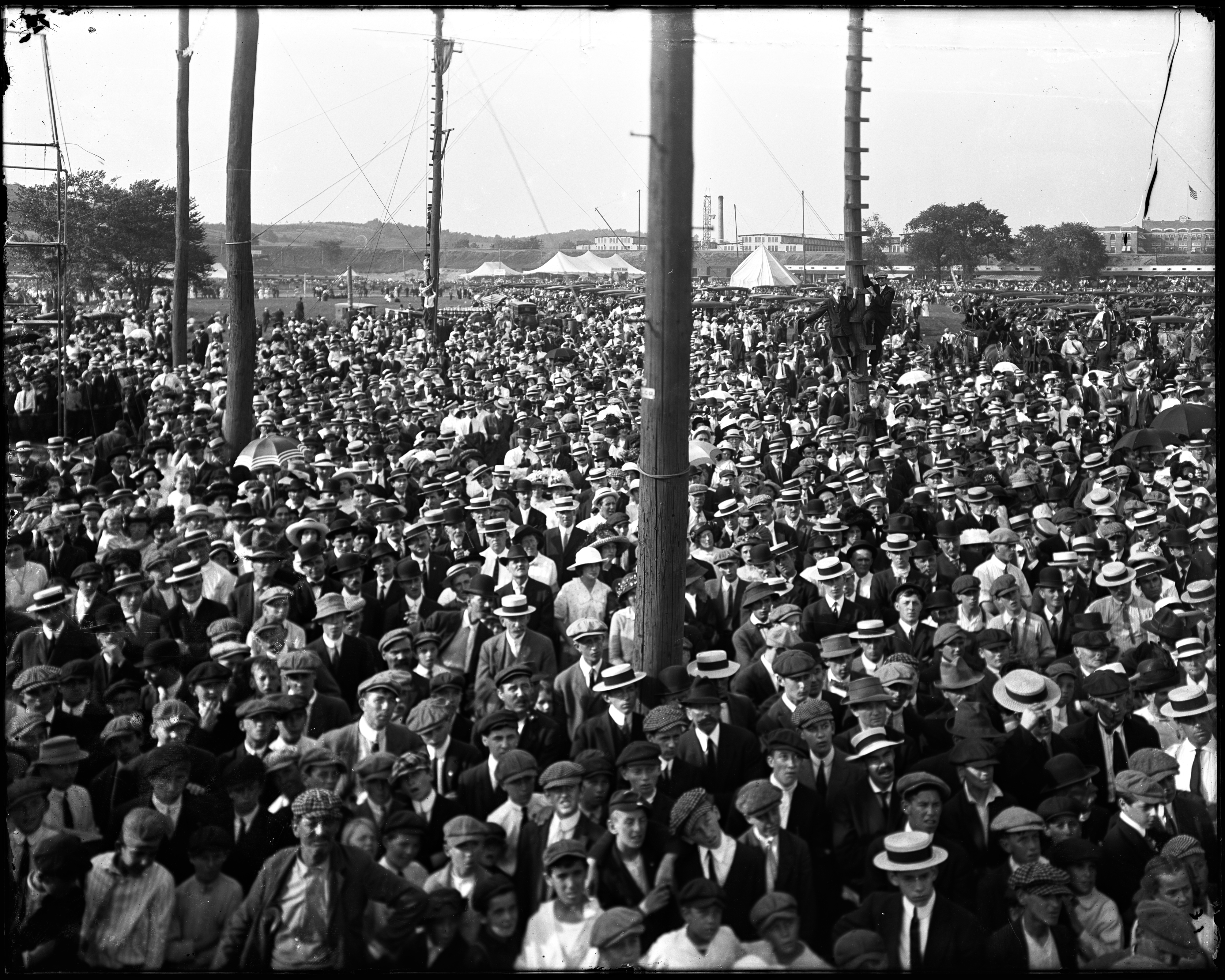
In this sizable array of images are photographs that are poorly framed, blurry, underexposed, negatives that fell victim to light leaks, images of crowds of people with their backs turned, images of rows of livestock presenting their hindquarters to the camera, inexplicable reenactments, a whole lot of empty foregrounds…and several stunning gems that offer a crisp and beautiful view into the world of the fair on that particular day. It’s worth clicking on the images to see them at full resolution.

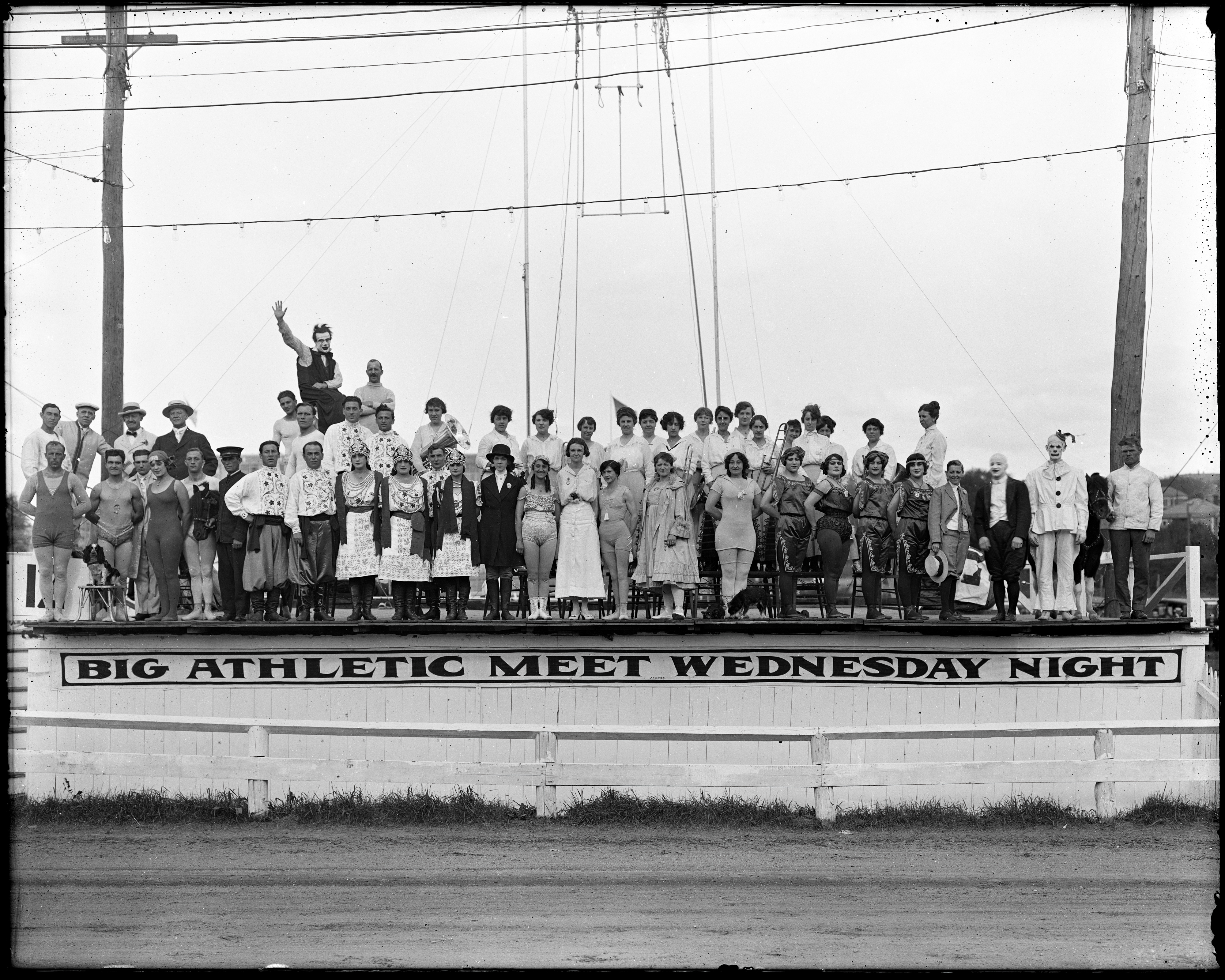
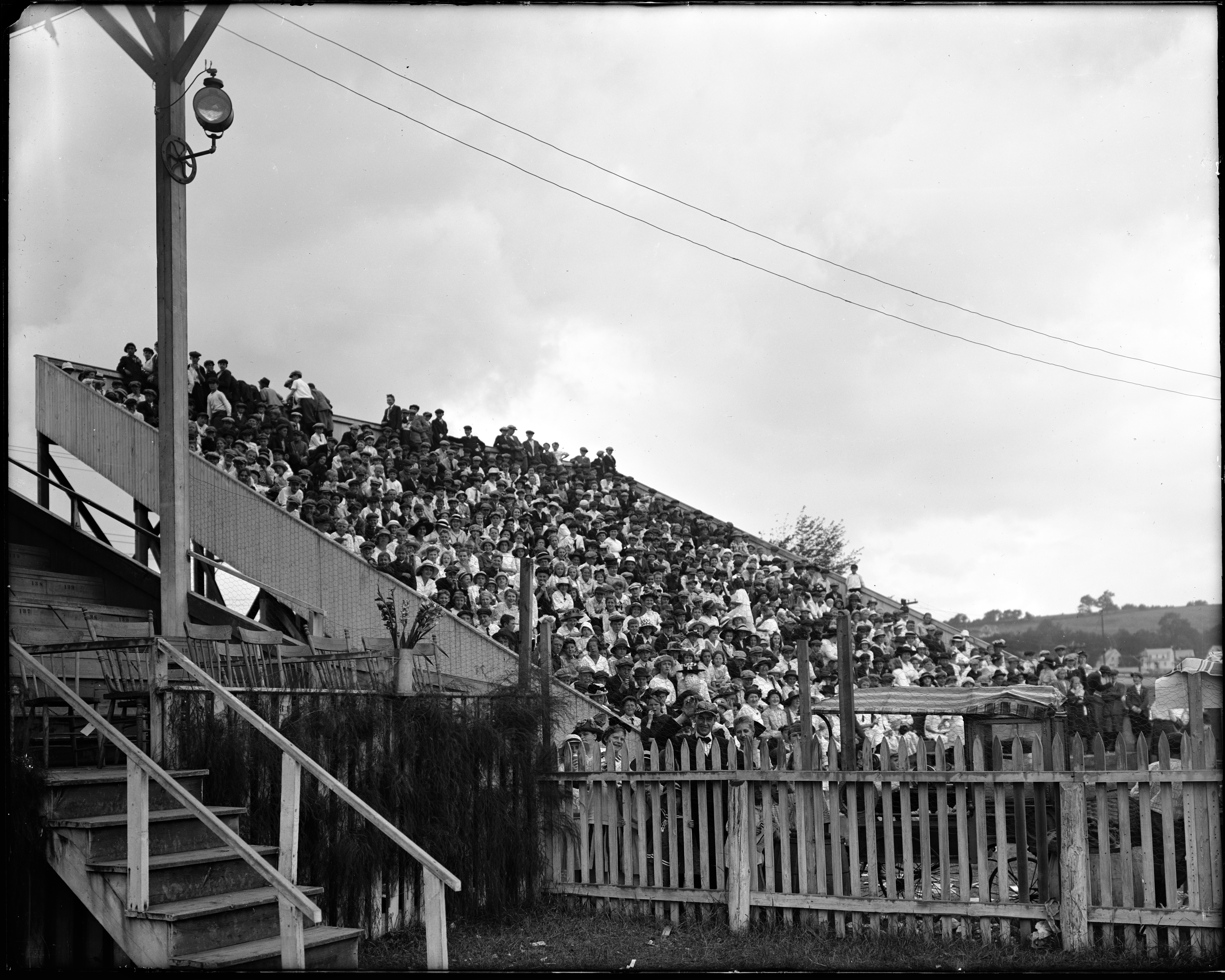
It isn’t clear why Hill was photographing the fair – it’s possible that he was hired to document the festivities, or, as some of the images indicate, had acquaintances who were vendors at the fair (an insurance company, a lumber company, car dealers). Some of the images are posed group shots, with subjects fully aware of and engaged with the camera, as can be seen in the photographs of the circus performers and, more unexpectedly, the entire grandstand of spectators with their heads turned to the left, looking straight at the camera:

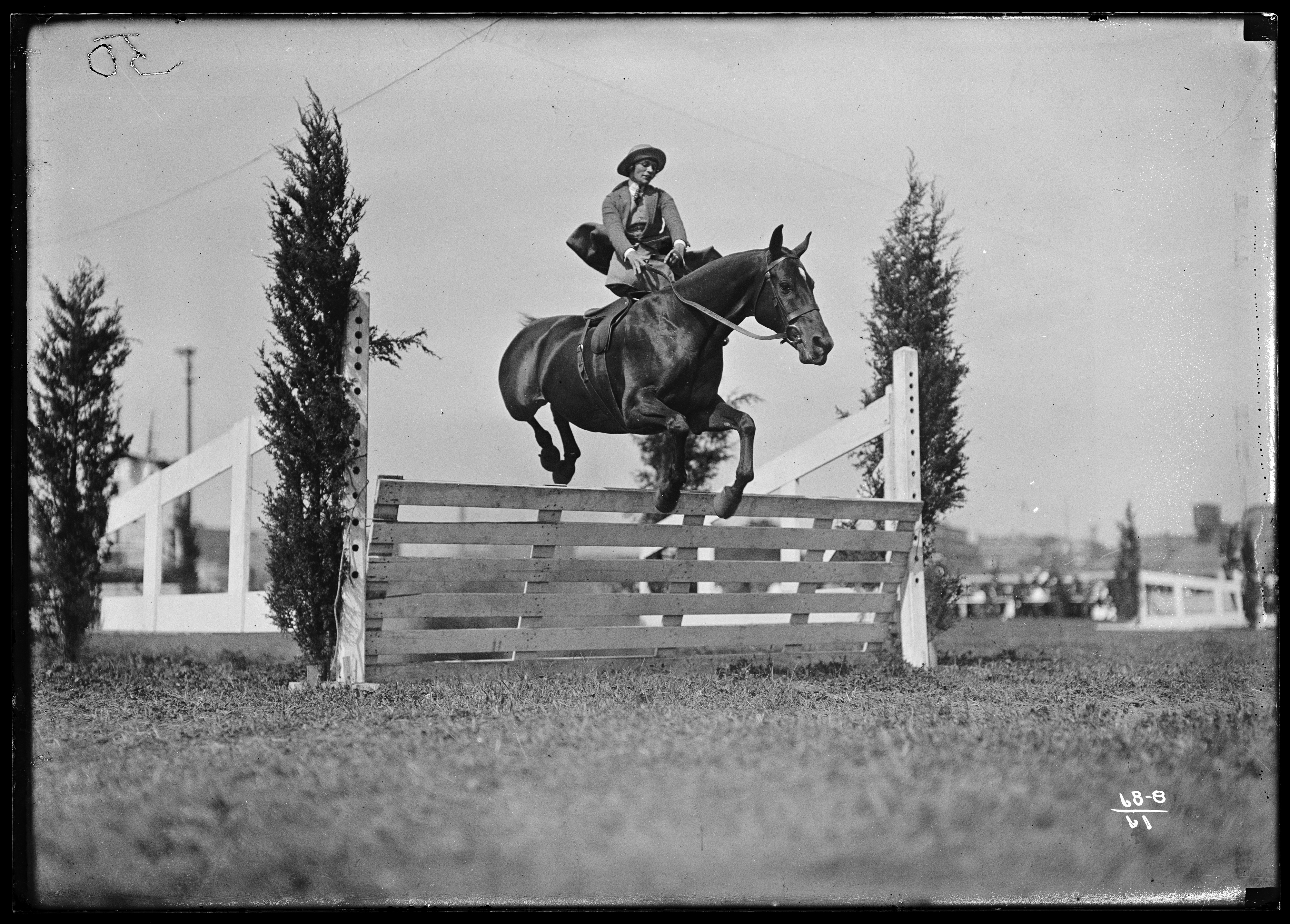
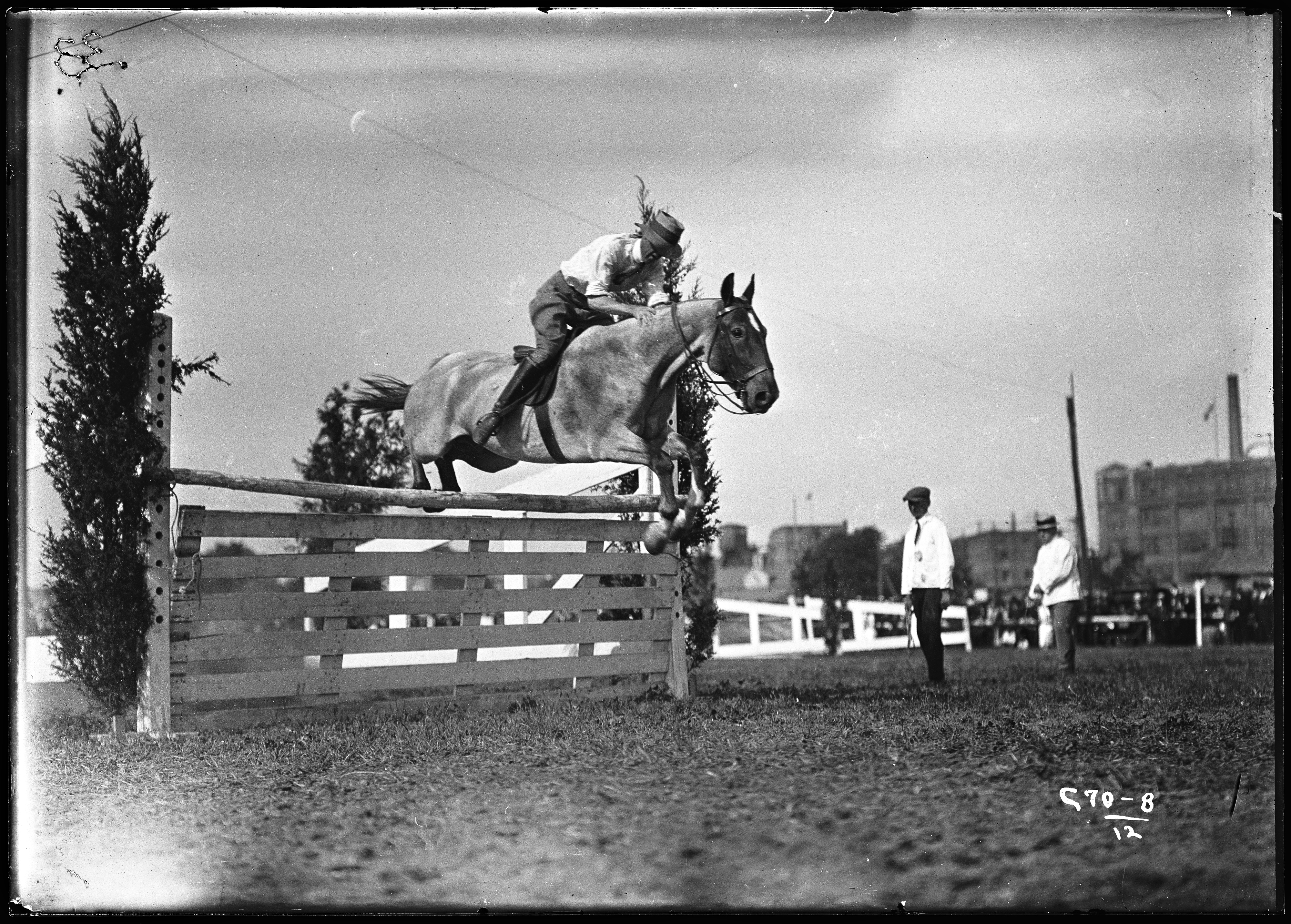
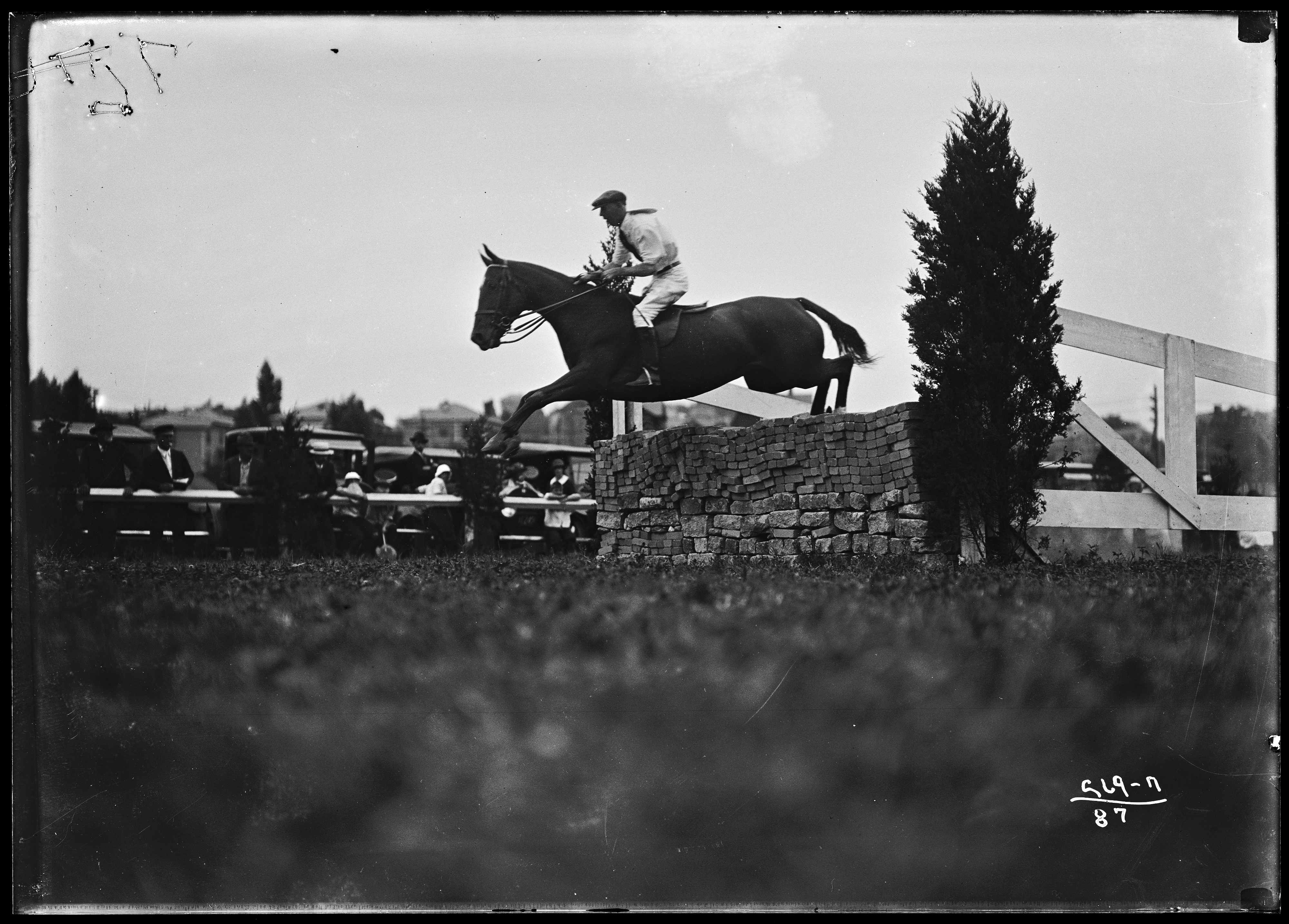
What is most interesting about the collection of glass-plate negatives of the fair is how revealing the collection is as a whole of Hill’s amateur status (and as a result, his probable wealth – this was not a cheap pursuit). He had a clear interest in entertainment. In the two boxes of 5×7 plates, the majority are images of horses jumping, many of them repeated attempts at the same shot, some slight variations in angle, some framed incredibly awkwardly. Of the lot, there are only one or two real successes, and one image of a woman jumping a horse while riding side-saddle is particularly stunning:

The framing is thoughtful and careful, the horizon is level, and horse and rider are sharp. He released the shutter just past the peak of the jump, and if you look closely you can see that she is even coming out of the saddle. No less dramatic is the image of a man and horse on the same jump; however, this one has a strange, hurried snapshot quality to it that belies the complexity of the photographic process.

A third attempt reveals a bad angle and a flat image, and draws attention to the fact that he had the camera sitting on the ground, for reasons unknown (one possibility is that he needed to reduce his own visibility and a large tripod would have spooked the horses).

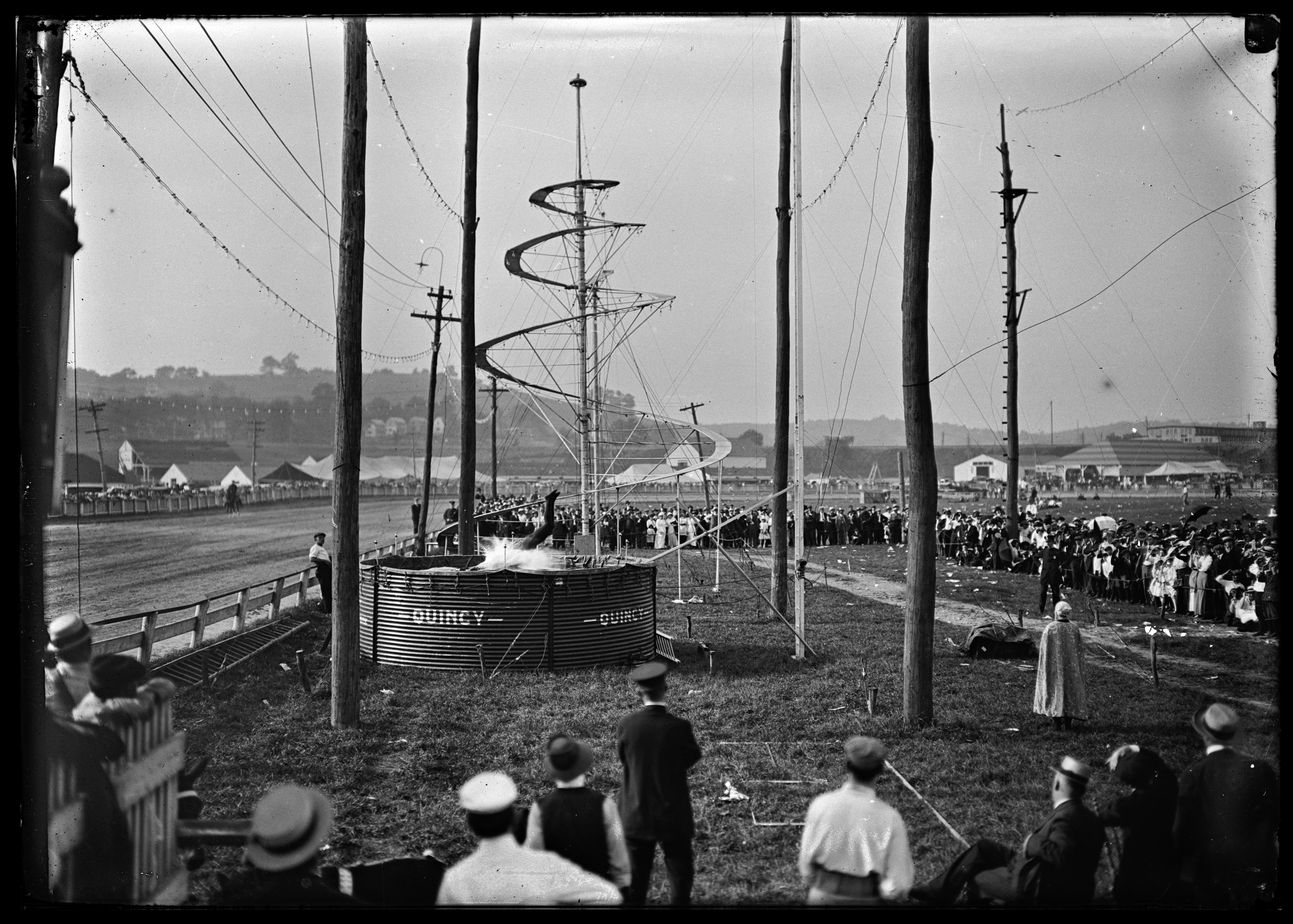
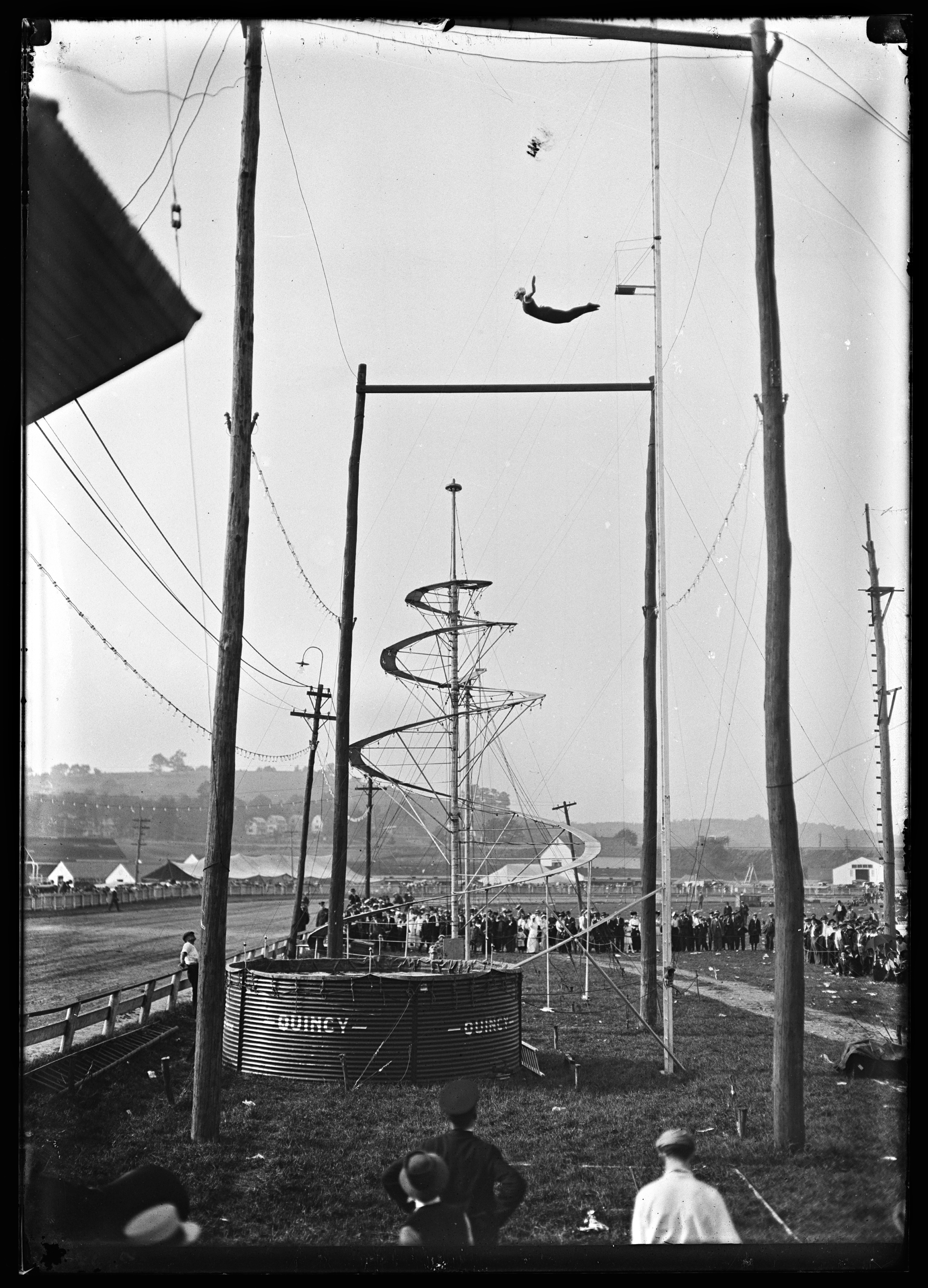
Another scene he photographed a few times was the high-diver. It appears as though he was trying to get at least one shot of the performer actually splashing into the tank, but he’s far enough away and the frame is so cluttered that it takes the viewer a long time to figure out what’s going on. In another image, he’s still probably standing in the same spot, but he simply turned the frame to vertical and released the shutter at an earlier stage of the dive. The first image is almost comical and bizarre; the second is dramatic and succinct:

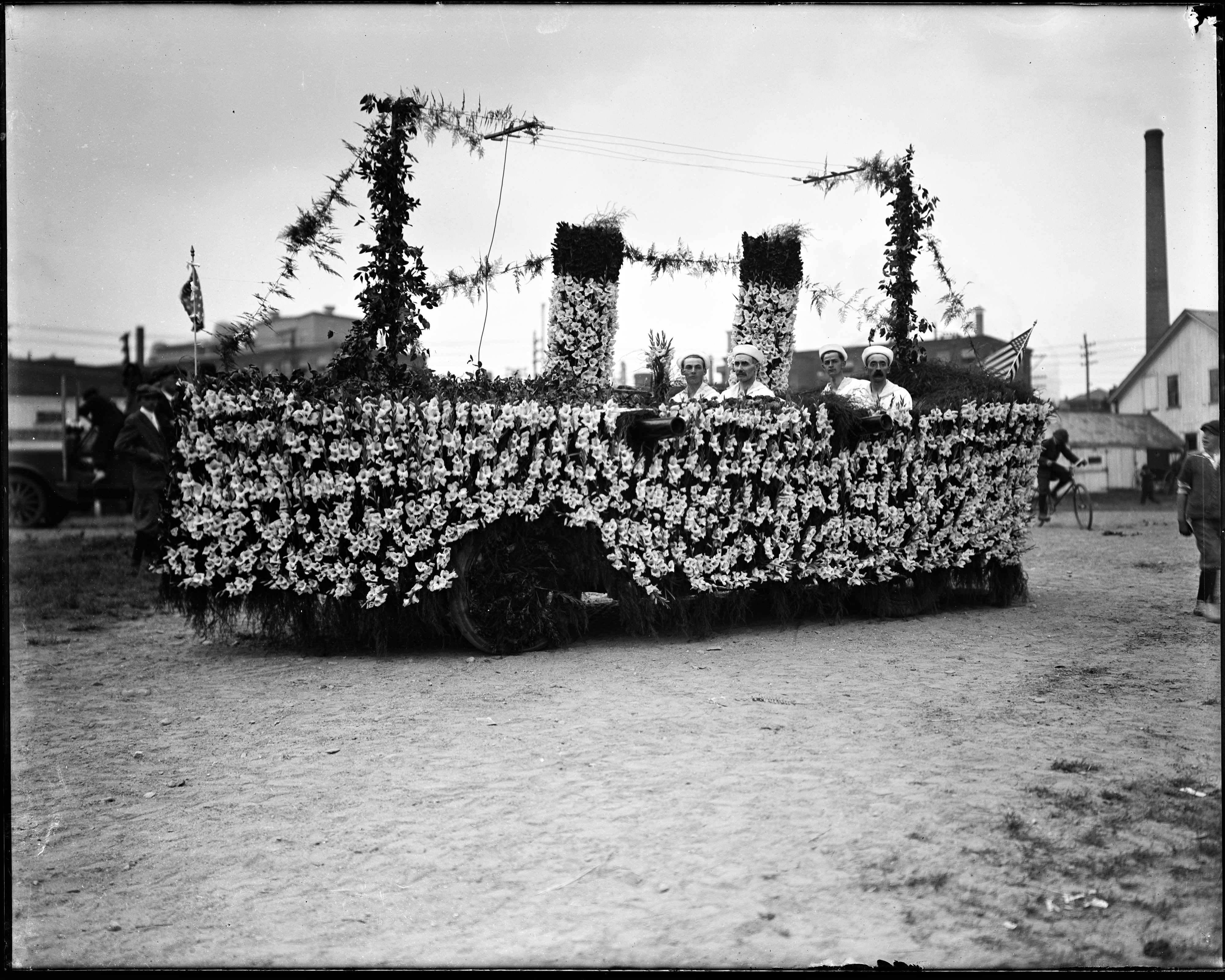
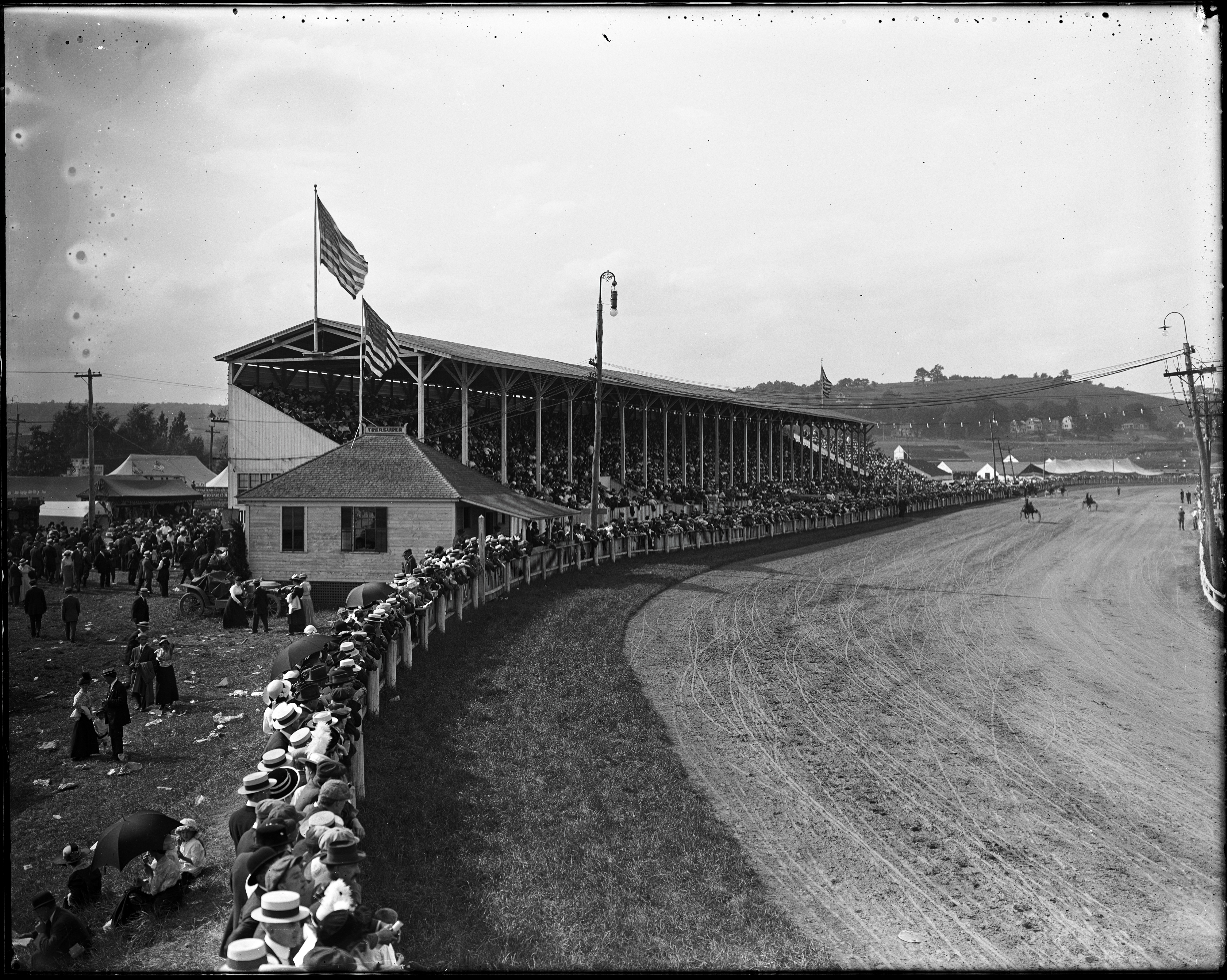
Regardless of how amateur he may have been, Hill managed to document a wide variety of scenes, and though some are eye catching simply for their novelty (like the parade float/battleship made of flowers seen below), others hold a level of detail that is nothing short of magic. The faces and costumes of circus performers (see the above group photo of performers on stage), the smiling couple behind the chicken wire (see the above photo of crowd on the grandstand), the families near the edge of the frame oblivious to the racetrack (see the left edge of the racetrack photo below), and the two boys who have climbed up the pole out of the crowd and spotted the photographer (see the second image of this post of the big crowd), are all there in sharp resolution (just look closely). It’s these larger 8×10 inch plates that go beyond the realm of pure documentation and are almost transportive to look at now.

Hill was, as one of his obituaries puts it, taken by death at the age of 64, in November of 1927. U. Waldo Cutler, the director of the Worcester Historical Society, wrote a letter to the editor of the Worcester Telegram in mourning of his passing saying, “There is no one to take his place as a source of information and of stimulus in the study of Worcester history. His wide and accurate knowledge of the facts and his great accumulation of historical material in picture and collected records have been a resource for many years already, and they will, I trust, remain down the generations as a monument to his patient and skillful research among the archives of our city.”

You can see the complete set of 131 glass plate negatives made by B.T. Hill of the fair here.

The Acquisitions Table: The Flower People

Mann, Mary Peabody.  The Flower People. Boston: James R. Osgood & Co., 1875.

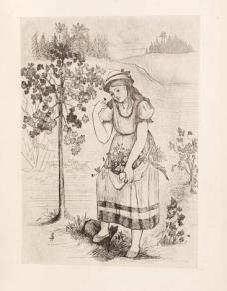
First published in the early 1840’s, Mary Peabody Mann’s The Flower People introduced the study of botany to children under the guise of conversations between a girl named Mary and various plants.  In this case, Mary is speaking to a leaf that she picked on a fall day.  The leaf patiently explains the life cycle of a tree, and its place in the ecosystem—a very early work of its kind written for children.  This exquisite photo-mechanically printed plate was designed for this edition by the elusive woman artist Mrs. G.P. Lathrop.

With a French Accent goes to Bordeaux, France!

This fall, the American Antiquarian Society, with the generous support of the Terra Foundation, is sending an important exhibition of American lithographs to the Musée Goupil in Bordeaux, France.  The exhibition, À la mode francaise: La lithographie aux États-Unis 1820 to 1860, will be opening on September 6 and closing on November 10, 2013. The exhibition is made up of over fifty objects selected from the Society’s outstanding collection of lithographs from the pre-Civil War era. The prints of American presidents, French leaders, genre scenes, and landscapes all reflect the relationship between French and American printers and artists during the early days of lithography.  Prints made by French artists who immigrated to the United States will hang with works printed in

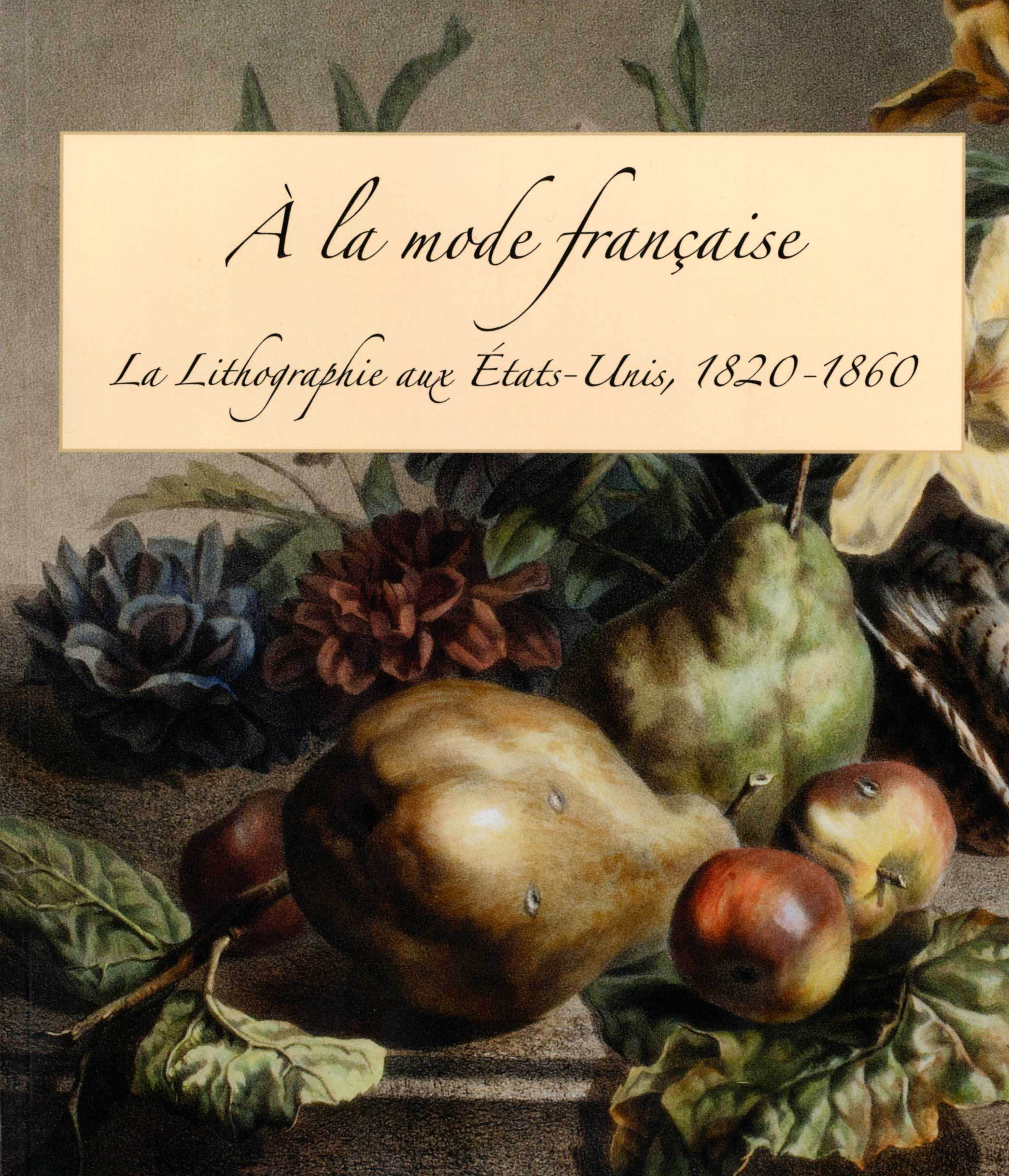
Cover of the French edition of the catalog

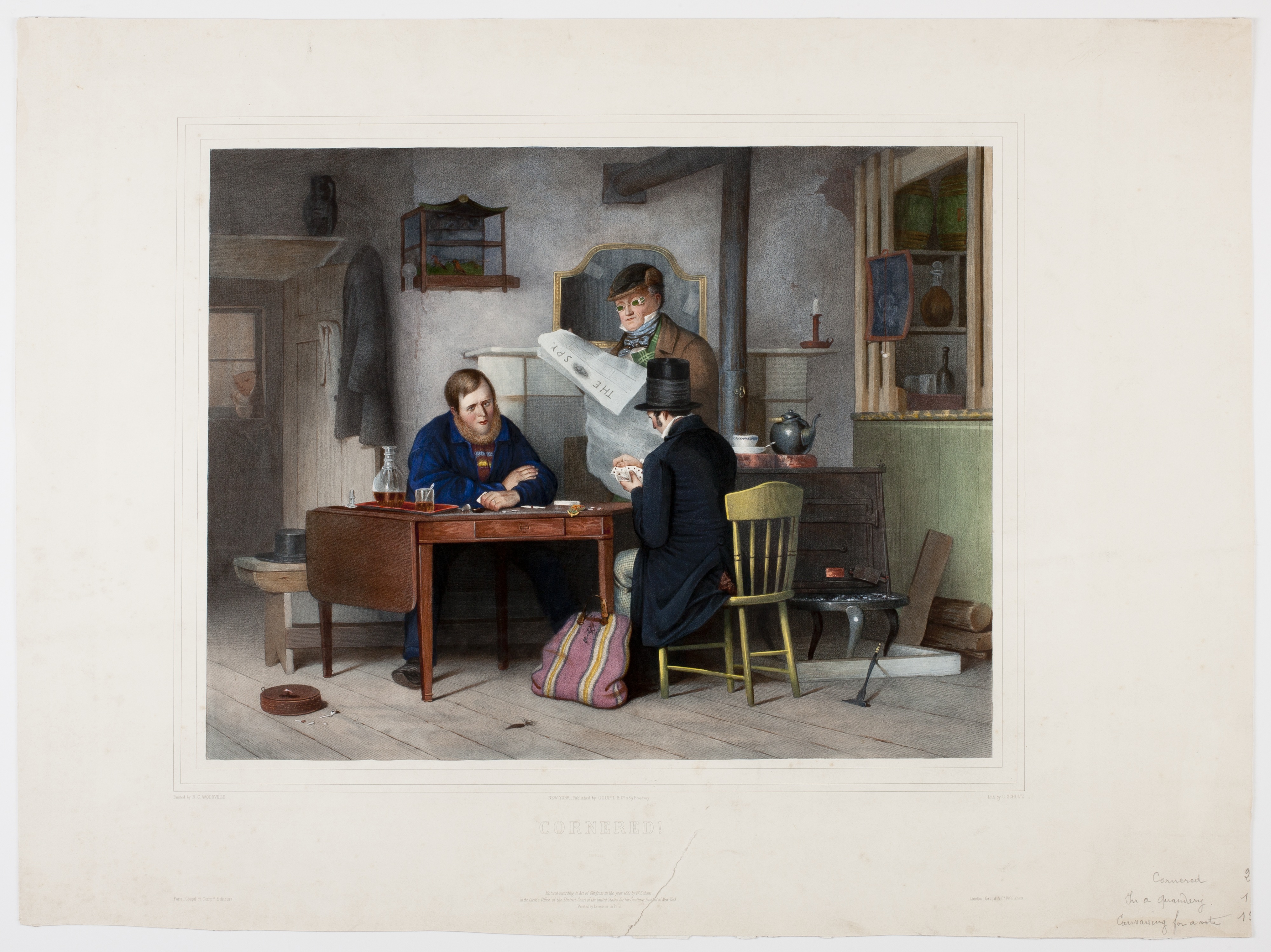
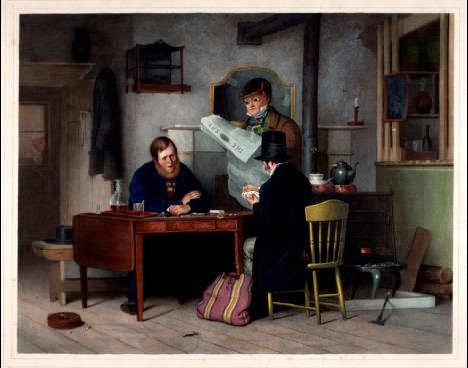
Boston, New York, and Philadelphia by firms such as Pendleton’s Lithography and George Endicott who each purchased French presses and hired trained Parisian pressmen to improve their products.  Examples of well-known prints published in France after American artists are also featured, including the Power of Music after the American William Sydney Mount and Cornered after Richard Caton Woodville (see above).  These images were published and printed by the French firm Goupil & Co. for distribution in the United States and Europe.

The AAS exhibition was first displayed in 2012 during the Society’s bicentennial year at the Davis Art Center at Wellesley College and was well-received by visitors and the press (https://pastispresent.org/2012/news/with-a-french-accent/).  This second venue will feature a slightly expanded exhibition and will be accompanied by a French-language edition of the original catalog.  The Musée Goupil will also be installing a historic lithographic press in the galleries along with an example of a lithographic printing stone used by the Goupil firm.

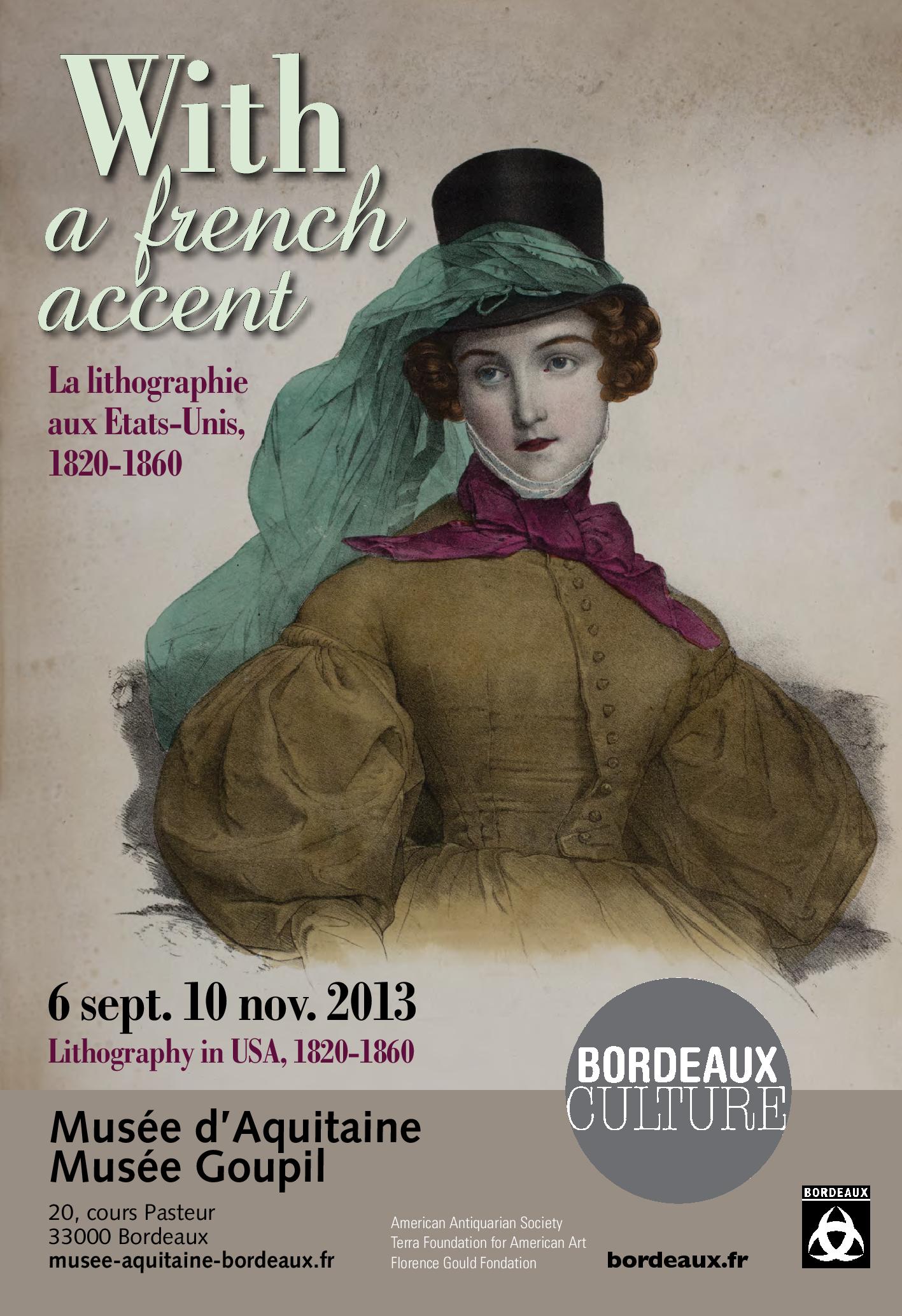
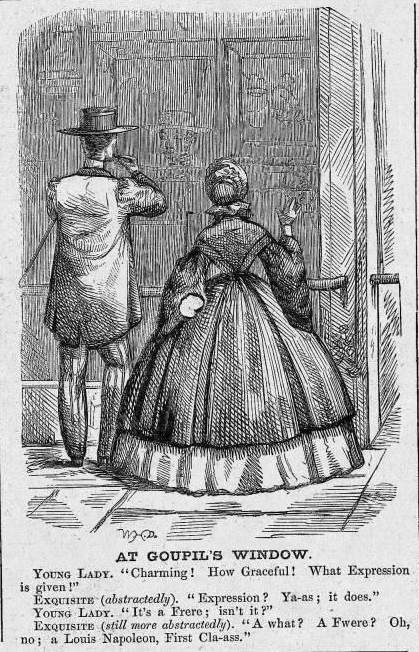
Work on the Bordeaux exhibition has been underway at AAS for several months. All the prints were examined by our conservators, matted and framed and packaged for transportation by air to France.  Labels were translated into French for a new audience.  The French-language catalog was edited and designed and arrived from the printer in early July. Emails have been flying between Worcester and the mayor’s office in Bordeaux (the Musée Goupil is overseen by the municipal government there).  Posters (such as the one seen at the right) and invitations have been prepared by our French counterparts and the logistics of moving and installing the printing press into the gallery are all worked out.  The Musée Goupil opened in 1991 following two generous donations to the city of nearly a quarter of a million prints and artifacts relating to the French publishing house of Goupil & Co., which was founded in Paris in 1850 and had offices around the world (including one in New York, which was featured in a cartoon in the January 19, 1861 issue of Harper’s Weekly).  The museum preserves and displays Goupil lithographs, photogravures, copper plates, lithographic stones, and presses and also holds important archival papers relating to the firm’s various business ventures.

“At Goupil’s Window” from Harper’s Weekly, January 19, 1861

To round out the activities, in October the Society’s Center for Historic American Visual Culture (CHAViC) will be hosting a conference in Bordeaux focusing on the exhibition.  The conference is also generously supported by the Terra Foundation.  American and French scholars and AAS staff and members will gather on Friday, October 11th to hear papers on a variety of topics, including French printers who migrated to the United States, the circulation of French prints in the American market, and depictions of Lafayette and Napoleon by American publishers.  Stay tuned for more details on the conference as the date approaches.

The Acquisitions Table: Moses Kimball’s Journal

Kimball, Moses. Journal, 1850-1851.

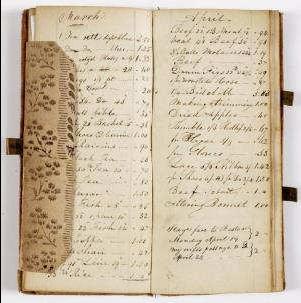
Moses Kimball (1809-1895) was an active citizen of Boston throughout the 19th century.  After failed attempts at the newspaper and printing business, Kimball succeeded in the museum business, purchasing and expanding the New England Museum (which had been established by Ethan Allen Greenwood) in 1838, and opening the Boston Museum in 1841.  He was a close associate of P.T. Barnum, and was the founder and owner of the “Fejee Mermaid”, made famous and widely exhibited by Barnum.  Kimball’s political life included three terms in the Massachusetts House of Representatives, as well as three unsuccessful runs for Mayor of Boston.  This account book chronicles another side still to Kimball, his family life.  Labeled “Family Expenses”, the book includes monthly lists of the various purchases Kimball made for his family (wife Frances Lavinia Hathaway and daughter Margaret Kimball).  Pages show the purchase of items such as linen and other fabrics, meat and sundries, wine and coffee, and the occasional travel expenses.  The front of the volume contains a pocket with receipts, including one for bleeding with leeches.

Samuel Langdon, Summer Jobs, and My Experience at the AAS

Dan Boudreau is a summer page at AAS and a rising senior at Worcester Polytechnic Institute (WPI), located directly across the street from AAS. A few months ago we had posted about the work of two WPI students with the “A New Nation Votes” project. In this current post, Dan, one of those two students, shares how his experiences at AAS through that project, the American Studies Seminar, and working as a summer page have influenced his studies.

Washington at Prayer

With the end of summer and the start of a new school year fast approaching, it feels like an ideal moment to reflect on the time I’ve spent with AAS over the past several months. This coming fall, AAS will host yet another of its American Studies Seminars for Worcester’s undergraduates; back in September, the 2012 seminar served as my introduction to the world of the Antiquarian Society. Led by Stephen Marini, the seminar focused on the role of religion in the founding of our nation, and each participant was encouraged to find a specific area of interest within this broad topic. After becoming acquainted with the immensely useful resources of AAS, we each set out to conduct our own research and craft an essay on our chosen subject matter. Although I was unaware of it at the time, the start of the seminar would mark the beginning of a productive year spent with the Society.

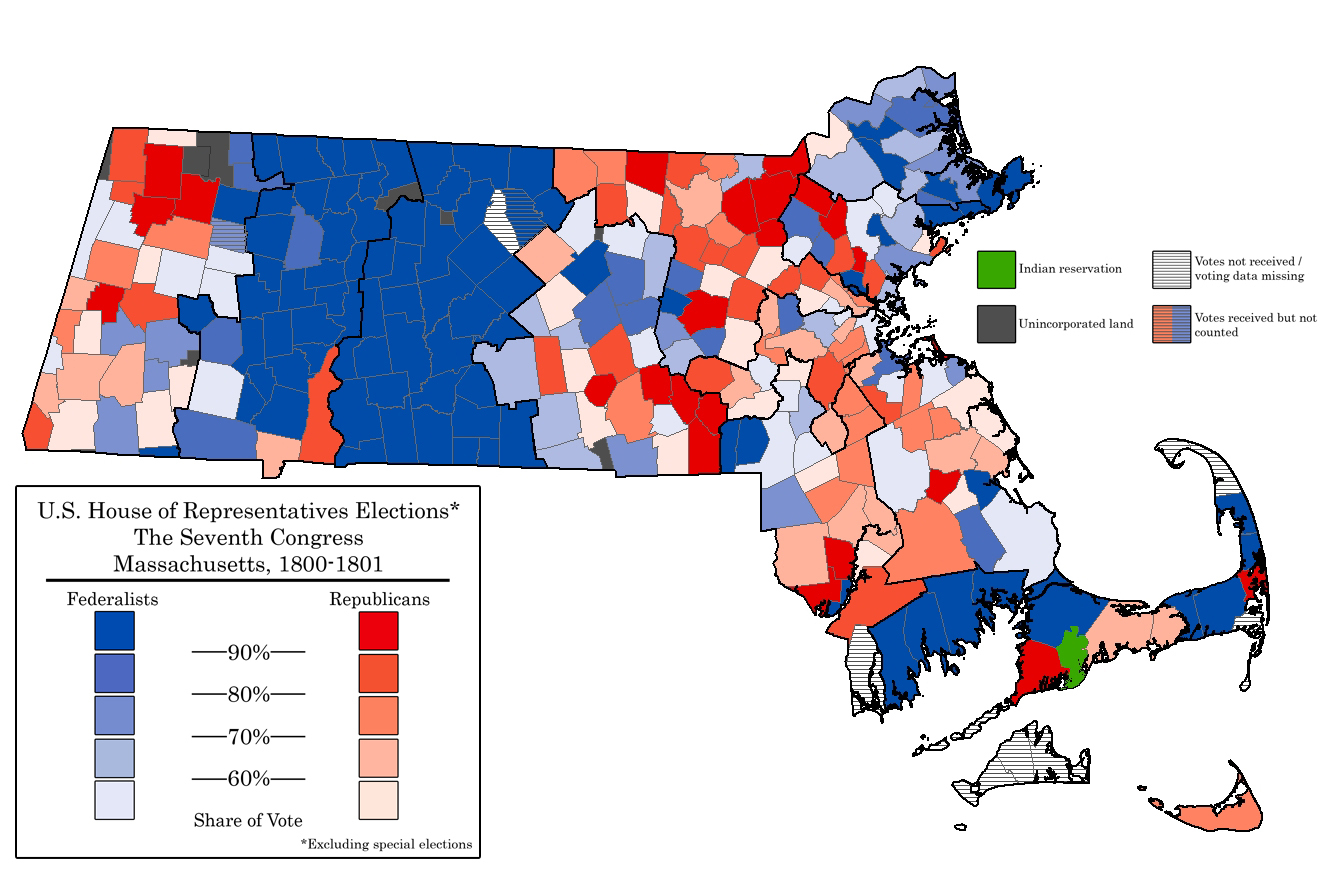
As I was finding my feet within the American Studies Seminar, I was also embarking on another (even lengthier) academic journey. And once again, I would be working at AAS. For our junior year project, a friend and I would be helping Phil Lampi and Erik Beck transition their “A New Nation Votes” database (NNV) into the online realm. We would take the NNV project’s early American voting records and digitally map the data through a GIS—a geographic information system. Starting from scratch, we would eventually produce several dozen maps of Massachusetts displaying election returns for U.S. House races in 1798 and 1800. With the NNV project and the seminar both on my plate (along with my regular classes), I was feeling a little overwhelmed early last fall—but excited just the same.

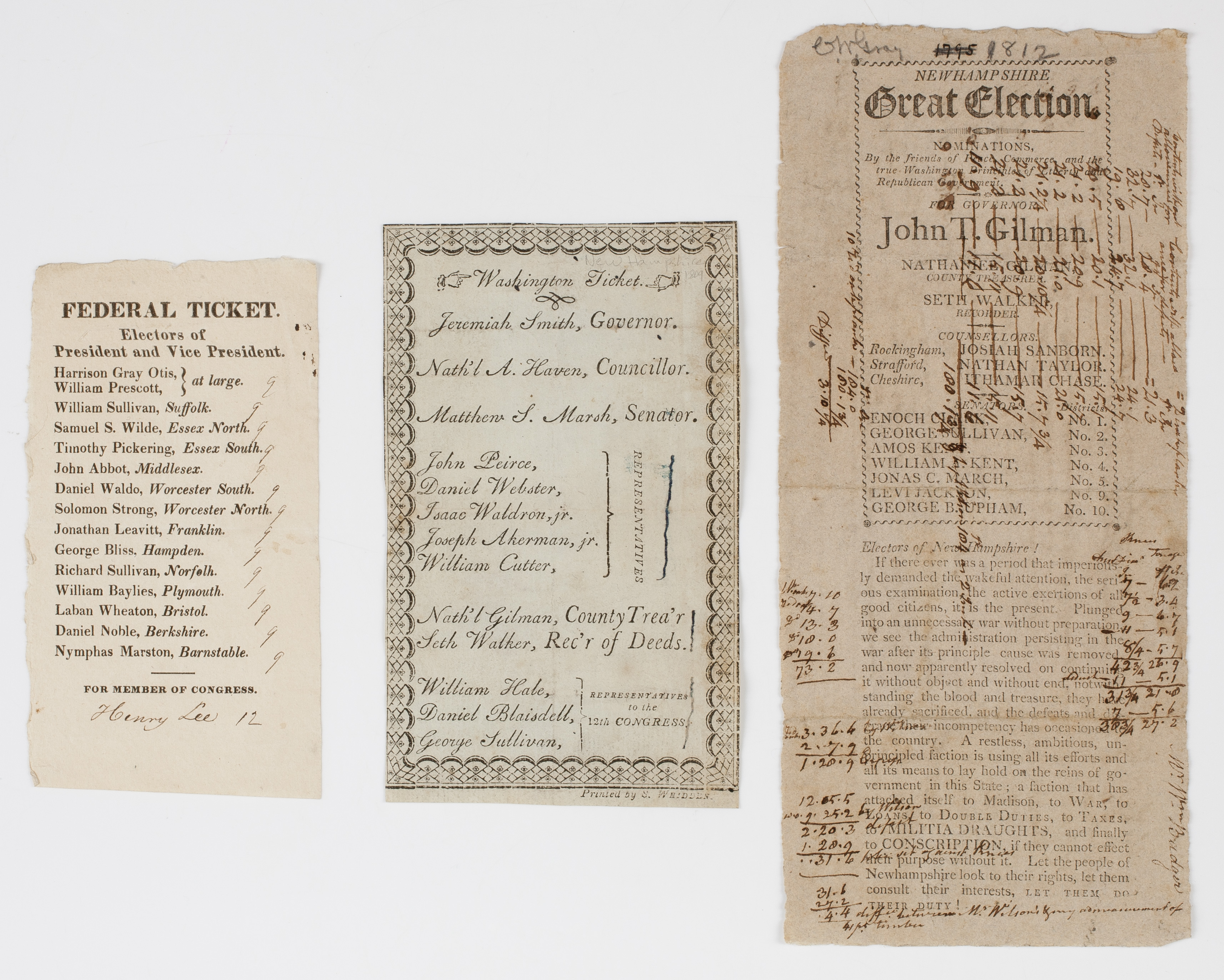
Ballots from early 19th-century New England elections
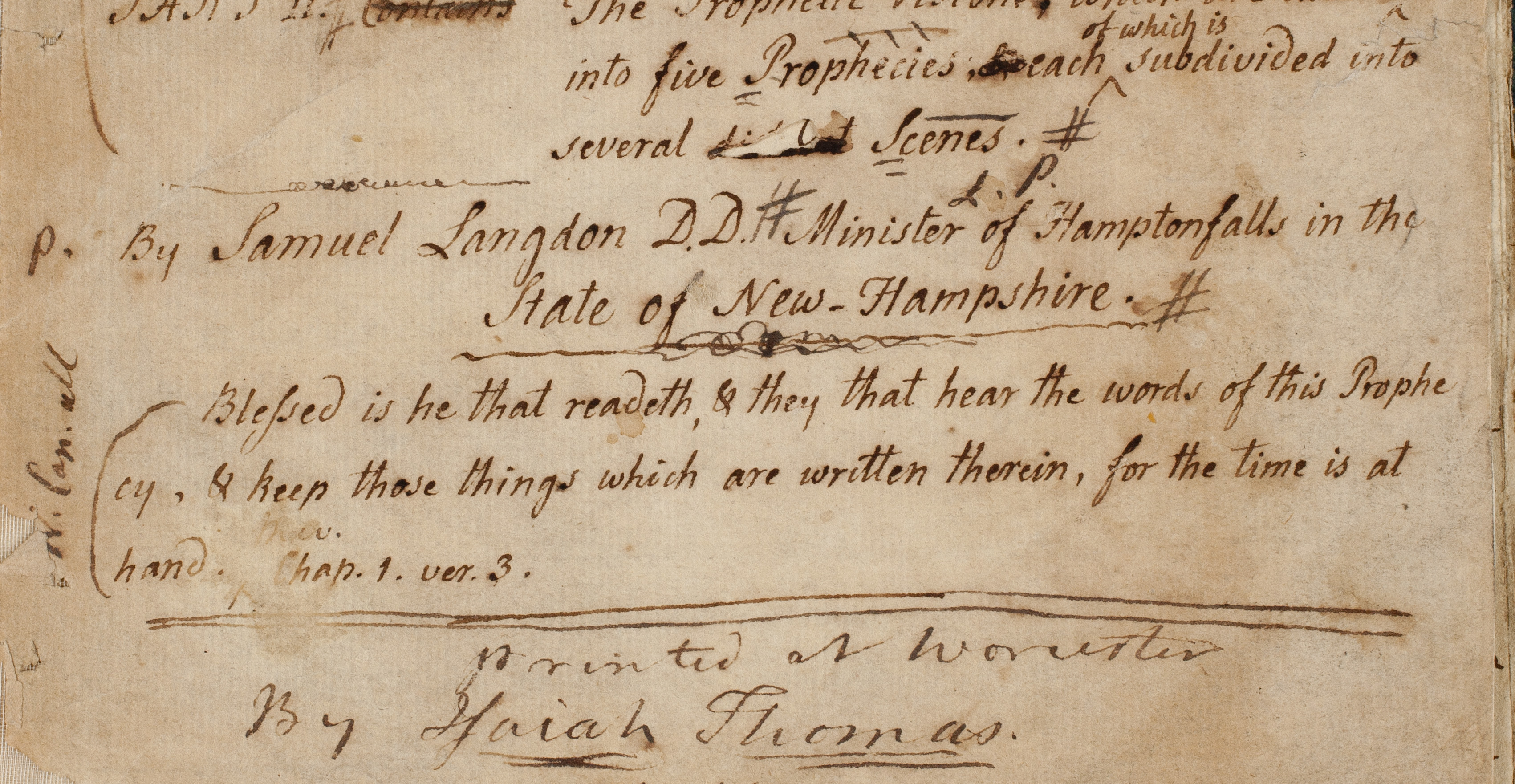
Handwritten title of Samuel Langdon from essay manuscript

Hoping to enhance my learning experience and ease my workload, I decided to select a seminar topic that would relate closely to the work I was doing for “A New Nation Votes.” Because the NNV project also involved historical analysis of the maps we would produce, I wanted to better understand relationships between religious affiliation and political association in turn-of-the-nineteenth-century Massachusetts and New England. If I could establish concrete connections between religion and voting preferences, I would likely be able to explain prominent electoral trends on the NNV maps.

After reading a fiery 1788 political sermon by Congregationalist preacher and Harvard president Samuel Langdon, I decided to look further into the biography of the author and began to make these connections. Luckily, I found that Langdon’s life and works illustrate many of the key links between New England’s Federalists and its conservative Calvinists. In my seminar essay, I explain as follows:

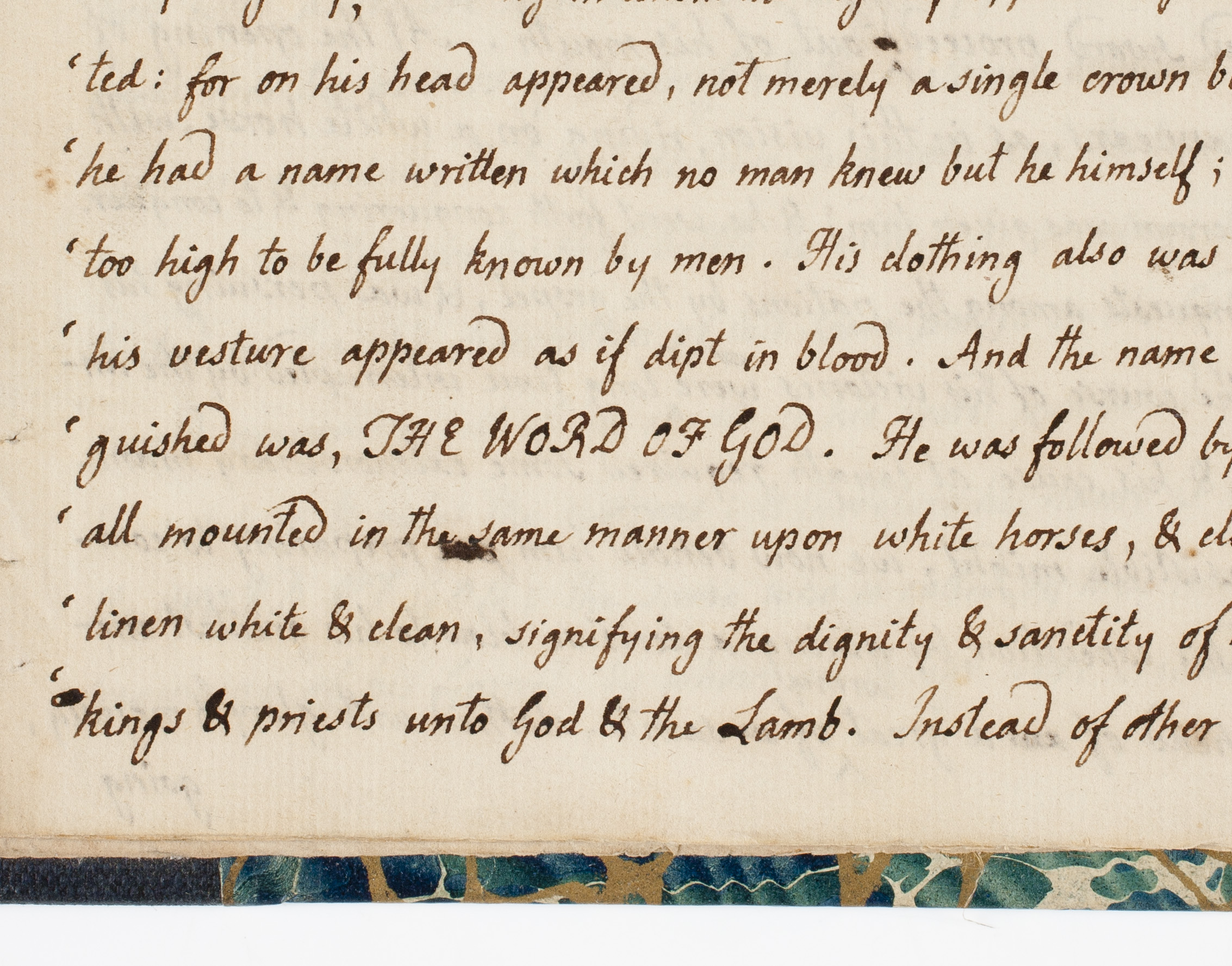
Detail from Langdon manuscript

At the heart of every one of his political sermons and writings was a rigorous Calvinist, Congregationalist ethic; Langdon’s theological beliefs served as the foundation upon which his patriot and Federalist politics were built. He used classic Calvinist notions of providence, predestination, human depravity, and societal unity in order to develop political viewpoints that stressed the importance of public virtue. […] Langdon during the latter part of his ministerial career represents the typical orthodox Calvinist preacher of 1790s New England, while the ideas expressed throughout his entire body of works illustrate the essential ideological links between Federalism and Congregationalism—the links that allowed the two doctrines to flourish together during the era.

NNV map of MA House elections in 1800

Through the example of Langdon, I was able to account for large amounts of Federalist votes in areas that were dominated by orthodox and conservative Calvinist Congregationalists. On the digital maps we had produced for the NNV project, a wide swath of Federalist votes in the Connecticut River Valley region of Massachusetts had been perplexing me (see right). I had known that its explanation would have something to do with the area’s Calvinist faith, but the exact nature of the Federalist-Congregationalist alliance still eluded me. After writing the essay on Langdon, however, I finally grasped the significance of the many links between the two doctrines and I could therefore better assess the electoral impact of the Federalist-Congregationalist establishment. I learned that Calvinist Congregationalism’s ideological compatibility with Federalism—Massachusetts Federalism in particular—allowed politically-minded ministers to easily push their congregations toward the party of Alexander Hamilton. In New England’s more secluded communities especially, conservative Calvinist voters of the lower classes were by and large Federalists. (Baptists and other Calvinist dissenters were the major exception to this rule, but that’s a topic for another day.) Thus, the rural towns of the Connecticut River Valley voted Federalist at the turn of the nineteenth century. In my NNV report, I put it as follows:

[T]he Federalists established dedicated rank-and-file support in the isolated rural communities of the Connecticut River Valley. In this part of the state, conservative Congregationalists—who tended to support Federalism—dominated the religious landscape. Conservative Congregationalists had a natural affinity for the party’s cause: in line with their traditional Calvinist ethos, the Federalist philosophy emphasized unity and stability.

And so, happily, my seminar work had tied in perfectly with my work on “A New Nation Votes.” I eventually completed both of my AAS projects successfully, and I began to look towards the summer and my senior year.

As I thought about my not-so-distant academic future early this spring, I realized that continuing my work at AAS was a must, as the further experience would undoubtedly yield even more rewards. For that reason, I quickly made plans to continue my digital mapping work on the NNV project. Not long afterwards, I learned about a summer job opportunity at AAS; I jumped on it, and thankfully got the position. For a couple of months now I’ve been paging books from the stacks, helping readers at the front desk, and working on all sorts of cool little projects. Because of this job, I’m able to bridge my junior year AAS experience with the work I have planned for my senior year. Moreover, the knowledge I’ve gained of the Society’s resources and facilities will surely help me out as I conduct my research next year.

Looking back now, it’s great to see all the ways in which my experiences with AAS have come together to benefit my academic career. The Antiquarian Society has made my last two years as an undergraduate far more interesting, challenging, and rewarding. I’m certainly glad that my school happens to be right across the street.

The Acquisitions Table: Cornered!

Schultz, Christian, after Richard Caton Woodville. Cornered! [Waiting for a Stage].Lemercier lithographer. New York & Paris: Goupil& Co., 1851.

With the exhibition and publication of With a French Accent: American Lithography to 1860, (Davis Art Center, Wellesley College 2012 and MuséeGoupil, Bordeaux, France 2013) the American Antiquarian Society has become a resource for the study of international production and distribution of lithographs in the pre-Civil War era.  This beautiful print, which was published, produced and colored in France for the European and American consumer, completes the Society’s holdings of Goupil lithographs produced after works by the American painter Richard Caton Woodville.  The Society already holds Woodville’s The Civil Marriage and Politics in an Oyster House. This image of three men waiting for a stage was originally sold via the Goupil catalog as a part of a trio of images by Americans — grouped together with a print after William Sydney Mount and one after George Caleb Bingham.  Goupil was well known for extremely fine lithographic impressions and for the skills of their colorists.  The print was sold at Goupil’s New York show room, as well as in London, Paris and Berlin. This impression came from the Goupil archive and has contemporary marginal notations regarding the inventory status of the print. This item was acquired with the support of the B.H. Breslauer Foundation.

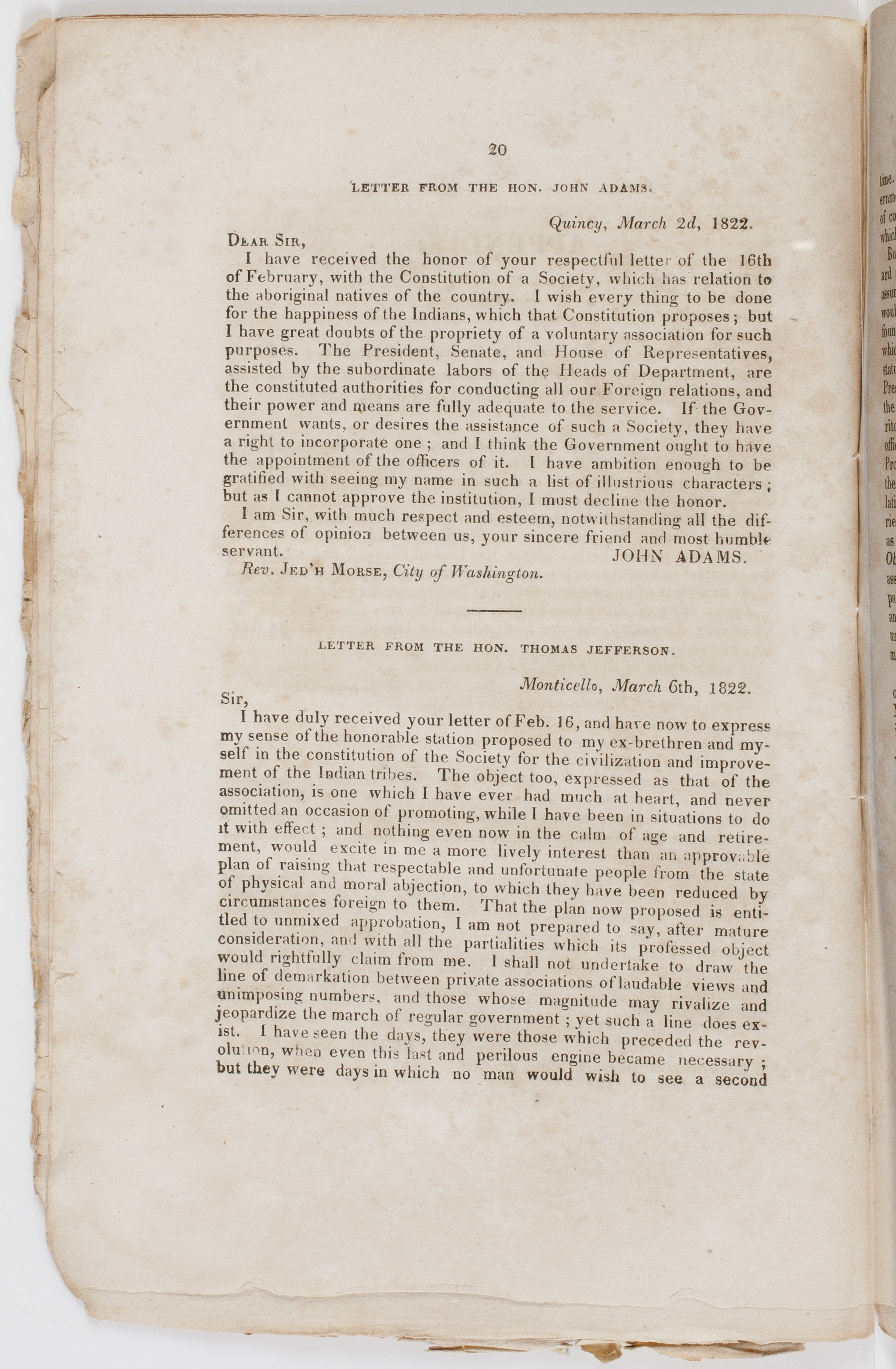
A Letter from Thomas Jefferson on the Plight of Native Americans

Camille Dupuis is a summer page at AAS and a rising senior at Hobart and William Smith Colleges in Geneva, New York. In this post she shares how her time at AAS and her interaction with programs and fellows has piqued her research interests.

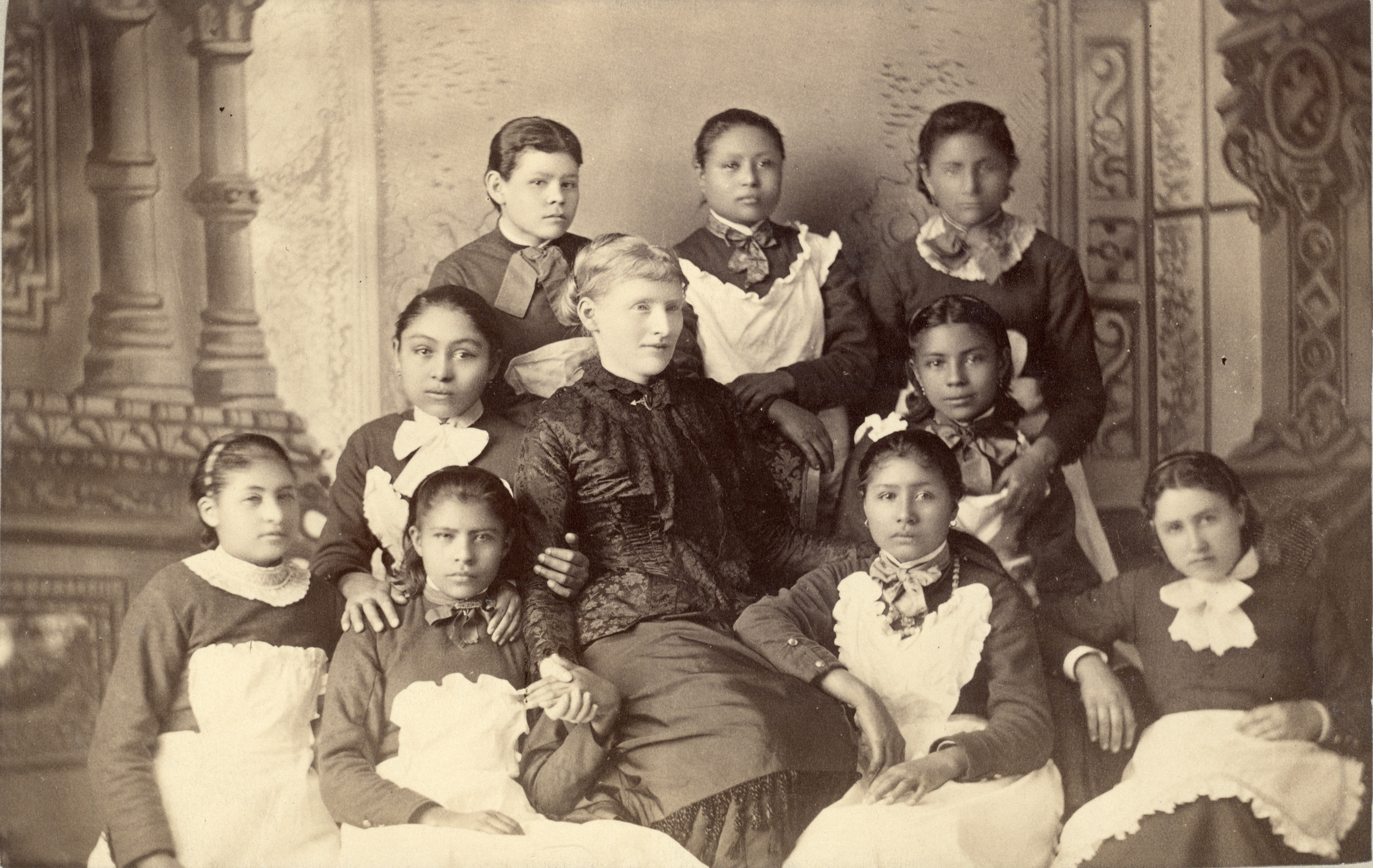
"Miss Irving and class" by J.N. Choate

At AAS there are thousands of different materials at your disposal and it can be overwhelming to think about where to even begin your research. A few weeks ago AAS held its annual History of the Book in American Culture Summer Seminar and this year the topic was Native American language and writings. I have always been interested in Native American culture (my secret joy as a European History major) and how the American Indians and Europeans clashed when the Europeans arrived and settled on what had been the Indians’ land for hundreds of years. I knew about the Westernization and boarding schools that were intended to integrate Indian children into American society in the late nineteenth century, but I was curious if the American government had tried to assimilate the American Indians earlier in history and if it was in a similar manner to the varying Indian schools in the 1850s and 1860s.

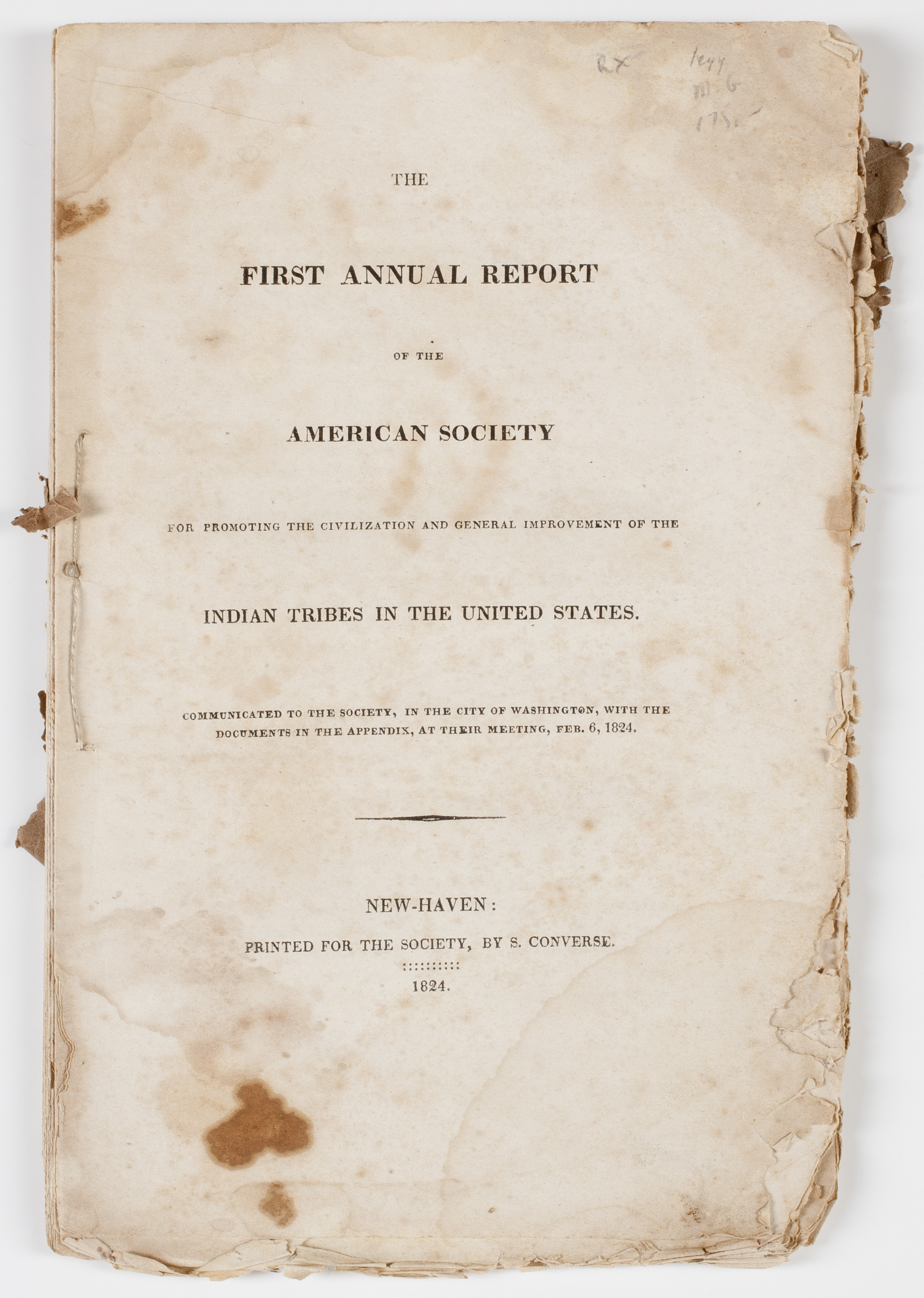
As I started my research I came across the 1824 First Annual Report of The American Society for Promoting the Civilization and General Improvement of Indians, which had been founded in 1822. The report includes their constitution, the report itself, a list of members (including those who declined to accept membership), and, the part that interested me the most, letters sent back to the Society from the various people they had asked to become members. As I started reading these letters one caught my eye and I realized that my research was going to make a pit stop. It was a letter from Thomas Jefferson giving the reasons why he was declining to become a member of the new society.

In his lengthy letter, Jefferson brought up many reasons why he could not readily become a member of this society even though he strongly believed in the cause to help the American Indians. In his mind there was no need for this society to be formed as it seemed to be working toward the same ends as the government and intended to include many of the public officials themselves. (For example, the Vice President and the Secretaries of State, Treasury, War, and Navy were to be ex-officio officers in the Society.) He worried that, in the end, the overlap with the government both in people and purpose would only cause collision rather than aid. He wondered what a voluntary private organization could do that the government could not, with men that had their personal objectives as their motivation instead of the interests of the people as a whole:

The Government is at this time going on with the process of civilizing the Indians on a plan probably as promising as any one of us could devise; and with resources more competent than we could expect to command by voluntary taxation;…Is it that a plan, originated by a meeting of private individuals is better than that prepared by the concentrated wisdom of the nation, of men not self-chosen, but clothed with the full confidence of the people? Is it that there is no danger that a new authority, marching independently alongside of the government, in the same line, and to the same object, may not produce collision, may not thwart and obstruct the operations of the government, or wrest the object entirely from their hands?

Most of the men in this society were not elected or chosen by the American people, but rather by their peers, and Jefferson was worried that this civilian organization “marching independently alongside of the government” would end up undermining the government’s efforts.  He went on to argue that there comes a time when the revolutionary mindset needs to stop and the government should be left alone to do its job. In the 1820s, when the country was still relatively young, Jefferson was worried that auxiliary private organizations, particularly all-encompassing ones such as this, could shake the still developing foundations of the Republic.  Of course, despite Jefferson’s fears of a private organization undermining the government’s policies towards Native Americans, the government itself began to cause conflict when it instituted Indian removal policies in the 1830s and eventually Indian boarding schools in the 1850s; this however, is a story for a different day.

Another aspect of the Society that thoroughly upset Jefferson was the overwhelming proportion of Society members that were also clergymen. He worried that the opinions “both as to purpose and process” of such a large majority of like-minded individuals would always outvote that of the others in the society, such as the public officials included. This would give clergymen and missionaries more influence when determining policies towards the Native Americans, such as whether or not schools should be opened on reservations or the children sent away to Indian boarding schools.

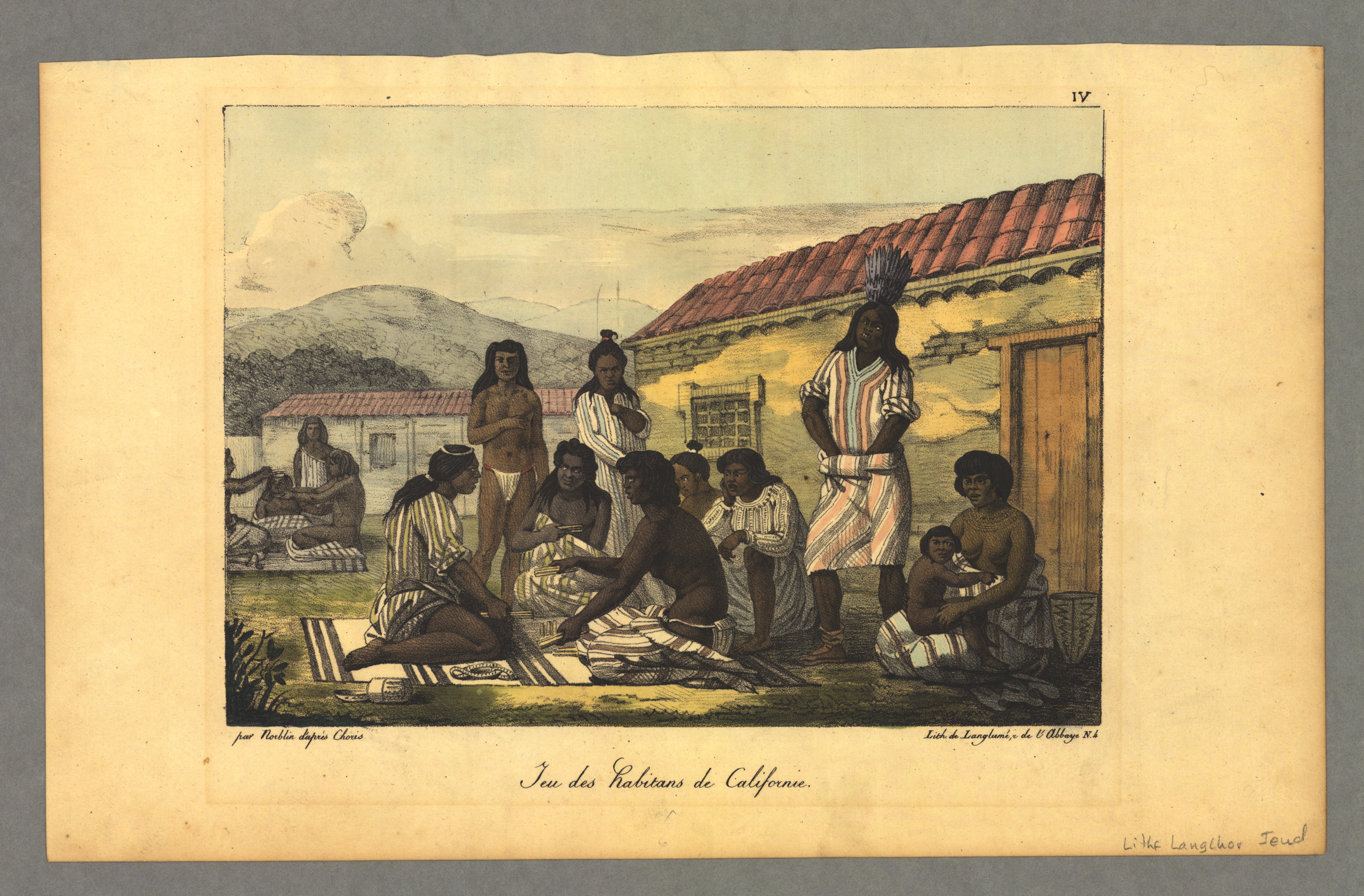
"Jeu des habitans de Californie," lithograph after a drawing by Louis Ludwig Andrevich Choris (1822)

When I mentioned this concern to one of our current fellows (who himself is working on religious conversions in the nineteenth century), he gave me a completely different perspective to think about…“religious ambition,” or the desire to spread one’s religion to others. As we talked he told me Jefferson was considered an “infidel” and did not hold much ground with orthodox religion. This made me think that it was not just the amount of clergy in the Society that worried him, but also the religious ambition this society would fuel. In civilizing the Indians, the Society also wanted them to become part of the religion that was celebrated in the Western world, namely Christianity. Given that Jefferson was not an adherent to orthodox Christianity, it is probable that he did not want Christianity to gain more members in the newly “civilized” Indians, giving it that much more influence in the Western world.

It is easy to find many different messages and clues as to what Jefferson is trying to convey in this letter, just as it is extremely easy to become sidetracked when doing research.  You never know what you will find in the materials held at AAS. There is something new to discover every day – all you have to do is start searching.

The Acquisitions Table: The History of a Great Many Little Boys and Girls

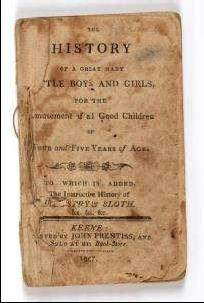
Kilner, Dorothy.  The History of a Great Many Little Boys and Girls.Keene, N.H.: John Prentiss, 1807.

English author Dorothy Kilner (1755-1836) targeted these stories specifically to young readers between the ages of four and five.  Although her audience is young, Kilner’s subjects are very serious: one young boy who refuses to wear clothes is beaten by a neighbor until he consents to getting dressed; in another story, a mother calmly explains to her daughter the choice between eating inexpensive milk porridge and wearing a sturdy stuff gown, and drinking costly tea every day and wearing rags.  This edition is not recorded in the Checklist of American Imprints or d’Alte Welch’s Bibliography of American Children’s Books Printed Prior to 1821, and we are delighted to have it.

K-12 Workshop: Learning about “Writing History” with an Expert

Why not jumpstart your school year by joining us for a workshop? On Monday, August 19, we’ll be hosting “Writing History,” a workshop for K-12 educators led by Bancroft Prize-winning author John Demos.

Through a lecture/discussion with Demos and a series of interactive workshops we will be exploring the process of creating and writing historical narratives, as well as ways in which this process can be used to enrich both History and English classrooms. Throughout the day we will explore the nature of historical writing, discussing topics such as choosing a subject, forming a cohesive structure, putting a story in a larger historical context, developing a voice, finding the significance of a narrative, and the role of emotion in writing and reading history.

All of these topics will be examined in a variety of ways, including writing exercises, working directly with AAS collection materials, and a session on teaching history through writing with staff from the Institute of Writing & Thinking at Bard College. Who knows – you may not only find ways to inspire your students to write, but get inspired to write yourself!

The workshop is $60 per person (free for Worcester Public School educators due to grant funding) and will take place from 9 a.m. to 3 p.m. All participants will receive materials for use in their classrooms and professional development points for attending the session. You can also register online.

We hope to see you there, and be sure to check out all of the workshops we have lined up for the fall!

When lightning hits a printing warehouse…in 1799

On the evening of June 26, 1799, a major summer thunderstorm passed through Worcester.  One result was that a warehouse that Isaiah Thomas used to store printing materials was struck by lightning, causing damage.  Of course something like that was newsworthy and a detailed report appeared in the next issue of Thomas’s paper, the Massachusetts Spy with a follow-up article a week later describing additional damage found.

The articles are interesting for two reasons.  One reason is the analytical way in which they describe the damage found as the path of the lightning discharge is determined.  Details of the damage caused, both large and small, are noted as the lightning jumped between chimneys, type cases, flooring, doors, nails, and other parts of the building.  It is more like a scientific report rather than a sensational news story.  At that time educated people often had an interest in “natural philosophy” or pondering how the universe operated.  Observing and reporting natural phenomena like this was part of it.

The other reason for our interest is the details given of the printing materials stored in the warehouse.  There are few descriptions of printers’ warehouses, and while this is not comprehensive, we do learn some details.  The most important fact mentioned was that Isaiah Thomas had the entire text of the Bible set in type and locked in iron chases.  Type was not cheap and at this time Thomas was the only printer to have so much type tied up ready to print an entire Bible.

We also learn that in a side room of the warehouse, Thomas stored books in sheets.  These would be sheets of paper with pages of a book printed on them waiting to be folded and bound up.  Binding up a whole run of a book was not economical at times because it would tie up a lot of capital while waiting for sales to come in.  It was easier to bind up small groups of books as orders came in.  The sheets would be waiting in the warehouse to fulfill those orders.
The article mentions a pile of rags for papermaking in the corner of one room.  Thomas’s business empire at this time did not include a paper mill (he had sold his mill the year before).  Newspapers needed a steady supply of paper and they would collect rags (newspapers often contained advertisements asking for old rags).  They would then be able to turn in the rags at paper mills and receive credit or paper in trade.

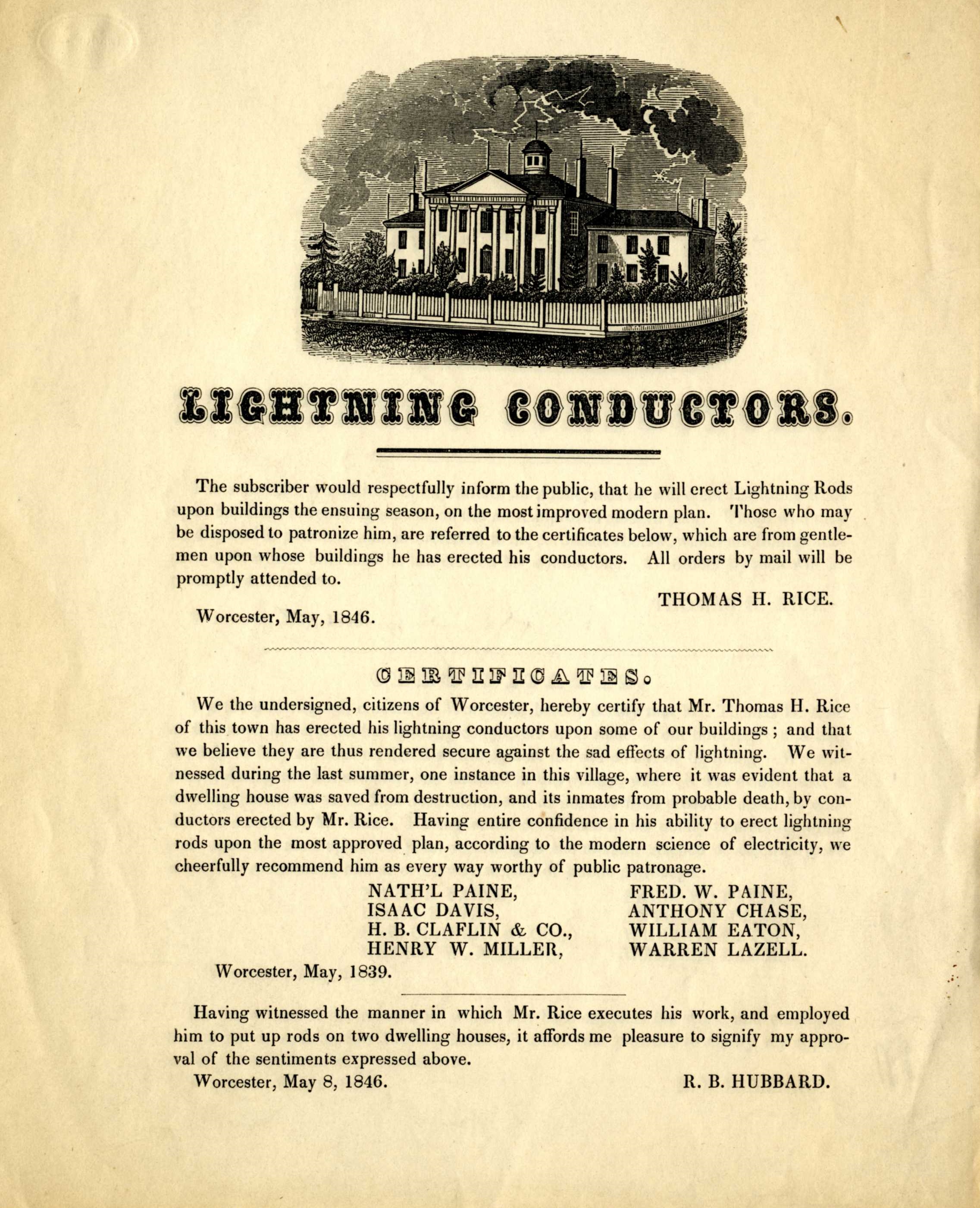
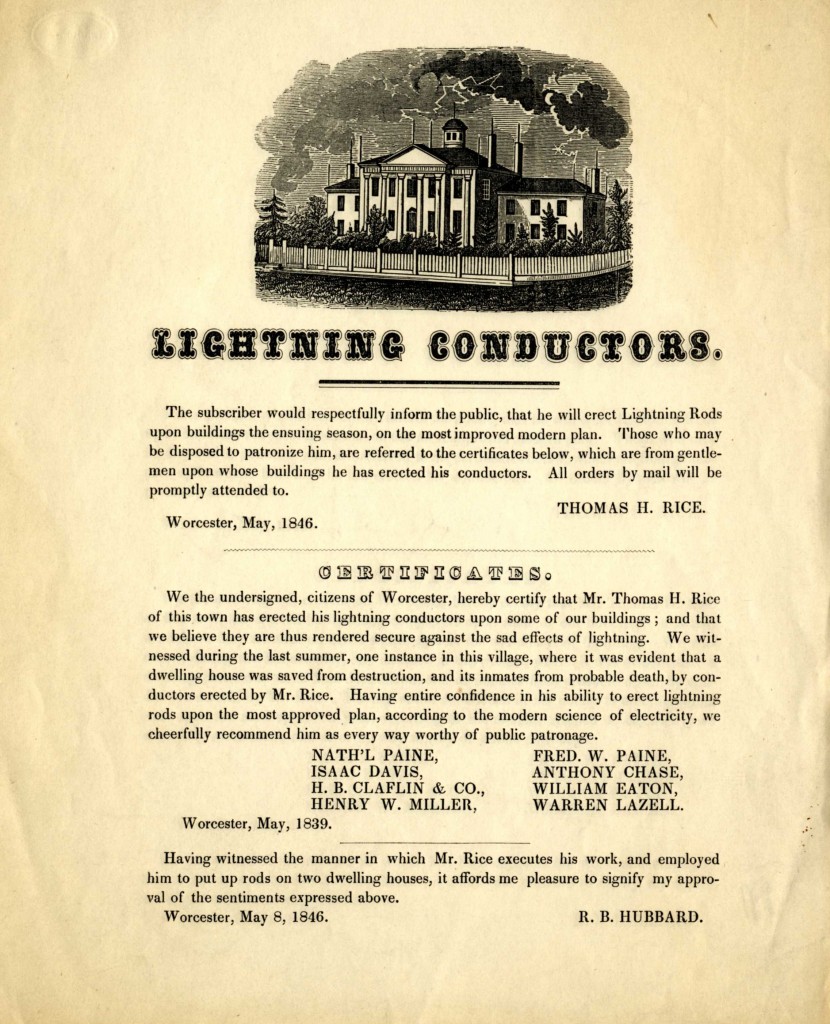
We will post below the content of both news articles about the lightning strike for your reading pleasure.  The recent discussion among the AAS staff over this incident brought to mind an advertisement from 1841 promoting the use of lightning rods (see right).  R.B. Hubbard installed a series of rods on the Society’s first building, which is shown in a stormy illustration on the advertisement fairly bristling with rods.  Perhaps the Society’s leaders remembered Thomas’s investigations of the 1799 lightning strike and took every precaution they could to keep lightning at bay.   We do not have a forest of lightning rods on the roof or the dome of our current building, but there is an elaborate grounding system in place to direct any of nature’s energy away from the electronics inside the building — including our phone and computer systems and servers, all of which could not even have been envisioned by Thomas in 1799 as he traced every fused nail and blown piece of lathe to determine the path lightning took to reach the ground.

_______________________________________________________

Thomas’s Massachusetts Spy, or, The Worcester Gazette

July 3, 1799

THUNDERSTORM

On the evening of last Wednesday, we were visited with a thunder storm in a degree of severity unusual in this climate.  Between the hours of nine and ten, the lightning struck a house, contiguous to the Courthouse in this place, the property of the Senior Proprietor of this paper, and occupied by him as a Warehouse.  In it were about 8000 weight of printing types, and among them the types for the whole of the Bible in 12mo, these were all set up in pages, and fixed in iron frames, (by Printers called chases) ready for the Press; the frames were deposited in large cases, made for the purpose, twelve frames in a case; the cases opened in front by doors; other types lay packed in boxes; and a considerable quantity lay in Printers’ cases in piles.  The whole were in a lower room.  The lightning struck the south gable end of the building; it divided into four distinct branches; three of them came down the southeast chamber, and the room below it where the types were deposited, on the south end, and east and west sides.  The first of these three branches entered the chimney, and ran down on the inside till it reached within three feet of the garret floor; here it burst through, throwing out one or two bricks; from the chimney it entered a closet of the chamber just mentioned, which it burst open in every direction, throwing off the boards, laths and plastering, &c. a plank to which the laths were nailed, on the side next the chimney, was split and shivered into many pieces; the mouldings round the fire place  were entirely separated and thrown off.  It passed by the chimney to the closet of the room below; here it left the chimney, and took an horizontal direction to the point of the upper HL hinge of the closet door, which point it melted; in its horizontal passage it burst off the laths, and threw the plastering  into the room; rent in sunder the plank to which the mouldings of the door were nailed, and three off the mouldings, &c after taking the hinge it turned its angle and passed downwards, melting the lower corner of the hinge; a large bar of iron, five feet in length, stood leaning against the closet with its broad side to one of the large cases of Bible types in iron frames, before mentioned, the lower part of the iron bar was in contact with the lower hinge of the type case; the lightning took to the iron bar, which conducted it to the hinge of the type case; the spot, where the iron bar was in contact with the hinge, melted; the lightning then took the hinge of the type case, and entering the case by a nail, met with a corner of an iron frame, or chase, inclosing the type of twelve 12mo pages of the Bible; it is discernible that the iron chase melted at the corner where the lightning struck it; it passed on two sides of this chase till attracted by a nail, on the back of the case, it went off into the ground, melting the head of the nail; no cellar was under the case; the outside and inside of the case, where the lightning entered, and where it went off by the nail, were scorched; a large pile of paper (books in sheets) were packed on the side of the room, and in contact with the closet door; the space between the HL hinge of the closet door, and the top of the iron bar, was twelve inches, and that space, six inches in width, was scorched to blackness; the paper was also scorched and the ends burnt through.  From the gable end another branch of lightning descended to the center post of the south end of the building; the studs, above the plate, were broken and shivered to pieces, and thrown out of their places; in passing the chamber before mentioned, it removed the plastering of the wall from the window to the corner of the chamber, it passed by a large heap of rags for making paper, which lay in contact with the wall from which the plastering is removed, but the rags are not scorched; along the center post it descended to the cell; in its passage through the lower room it threw off the plastering from the wall, and passing by another large case of printing types in chases, it shattered a corner of the case, but no injury was done to the types, nor did the iron chase appear to divert its course from the cell; it there took a direction to the southeast corner of the building, gouging the under side of the cell the whole distance of its passage; at the end of the cell its visible effects ceased; on the outside of the house, at this end, the shingles, clapboards and boards were broken and thrown into the yard, from the gable end;  the boards and clapboards were rent from the post which conducted the lightning, from top to bottom and in two or three places holes of two or three feet long, and from one to two feet in breadth, were made in the house by the boards and clapboards being broken, and studs shivered to pieces; in some places the studs were entirely removed.  The third branch took its course along the ridgepole, gouging the boards , throwing off the saddle boards, and shingles, and splintering the second  spar on the west side of the roof, till it arrived in the centre; it then divided, and descended by the center spars on the east and west; the spars are twenty five feet in length; on the east spar the boards of the roof meet, and of course there were two rows of nails; this spar was split and shivered from end to end in the line of one row of the nails, and one half of the spar fell; It then entered the chamber before mentioned by a window frame, separating the frame from the stud to which it was spiked, tore off the caseing of the window inside, broke ten panes of glass, forced the plastering from the laths, and threw it across the chamber; on the outside the clapboards were separated from the boards:  It descended into the lower room by the stud to which the frame of the window was fastened, splitting the frame and separating it from the stud, forcing off the caseing of the window and plastering from the wall and throwing them, as above stairs, across the room.  In this window eight panes of glass were broken; close by the window stood a pile of common cases of printing types; and near them, another large case of types in iron frames; but it does not appear that the lightning entered these, nor can any trace of it be discovered below the frame of this window.

The fourth branch took its course on the centre spar, on the east side of the roof, till it met the plate; the west part of the house was unfinished  inside, the rooms were not even partitioned off; the outside was boarded, and the window frames in; and the windows were boarded up, except one, which was left open’ the spar on which the lightning descended on this side, was split asunder from top to bottom, and shivered; all the studs to which the window frames were spiked, were split and broken in pieces, and some  of the pieces sent to a considerable distance; three of the window frames torn off, and boards in many places rent from the studs, broken to pieces, and thrown on the ground.

The Building struck stands in an elevated situation, and within ten feet of the Courthouse.  The Courthouse has a Cupola with a small bell, a mettle vein supported by an iron rod, which terminates with a wooden ball, gilt.  The vein is a number of feet higher than any part of the house injured.  In this house were a large quantity of paper, rags for making paper, shavings and other combustible substances, it is surprising that the lighting did not enkindle a flame.

July 10, 1799

LIGHTNING

In our last, we published an account of the effects of a stroke of lightning upon the Warehouse of the Senior Proprietor of this paper.  Since that publication further discoveries have been made.  The reader will recollect, that the types in the room to which three of the four branches of lightning centered, lay in three distinct forms. – Some were set in iron frames for a 12mo Bible; none of these were injured, the lightning played upon the iron frame without any effect upon the types.  Others were contained in common printing cases, which lay in piles; the lightning entered many of these cases and melted many of the types.  Other types in the room were packed solidly in boxes as they came from the foundery; the lightning entered five or six of these boxes and did considerable damage to the types.  In some instances it passed directly through the centre of these packages, perforating the paper in which the types were enclosed and leaving its traces upon the metallic substances in its way.  In other instances the passage of the lightning was in a diagonal direction, and then the opposite corners of the packages were the parts injured.  In some instances, the fusion was so great, as to leave the types in a mass:  In others, they were heated in the degree to adhere closely.    In some places, the appearance was that of a light substance having been burnt upon the surface of the types:  In others, that the types themselves had been passed through a fire of charcoal.  Both the common printing cases of types, and the boxes solidly packed were laying in piles, and difficult to remove; and no external injury appearing, occasioned the damage done the types not to be discovered in the first examination; it is true that a few of the cases and boxes which lay uppermost were then viewed with attention, but no traces of the lightning being discovered on them, it was supposed the others had escaped.
The Acquisitions Table: Augustus Gill’s Penmanship Book

Gill, Augustus.Penmanship Book [1830s].

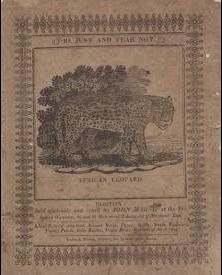
A new addition to our ever growing Penmanship Book Collection is a volume kept by a student named Augustus Gill, who was probably born in Canton, Massachusetts around 1820.  What is most striking about this particular item is its cover, which features an African leopard and the phrase “Be just and fear not.”  The blank book was printed by “Condon &Marden,” printers, and sold by “John Marsh, at the Stationary Warehouse” in Boston, probably in the 1830s.  Within the covers are the typical penmanship practice pages, with the author practicing words such as commandment, murmur, inconveniences, and termination.  But what makes this volume even more special are the additional pages in the back where Augustus practiced letter writing (addressing multiple letters to “Dear Uncle Asa”), and tried his hand at poetry and mathematical word problems.  His poems include verses on Death, Fidelity, Roses and Spring.  And Augustus must have been a good math student, as his arithmetic all adds up!
Of Royal Interest

With all eyes in the media directed towards the new addition to the royal family, we’ve taken a look back to seek out evidence in the historical record of this subject’s proportional popularity. Unsurprisingly, American buzz on the most recent princes and princesses is anything but new.
Indeed, everything about Queen Victoria’s life was reported in the nineteenth-century press – most notably her wedding and coronation. But coverage didn’t stop there. The deaths of her mother and husband were the lead stories in many American-based publications and when her children (and grandchildren) were born, their announcements took on comparable levels of interest with today. Here we have highlighted a few examples culled from AAS collection materials to showcase this fascination with royal newborns and infants hailing from the Hanoverians which we hope will contextualize our love affair with the newest branch on the tree of the House of Windsor.

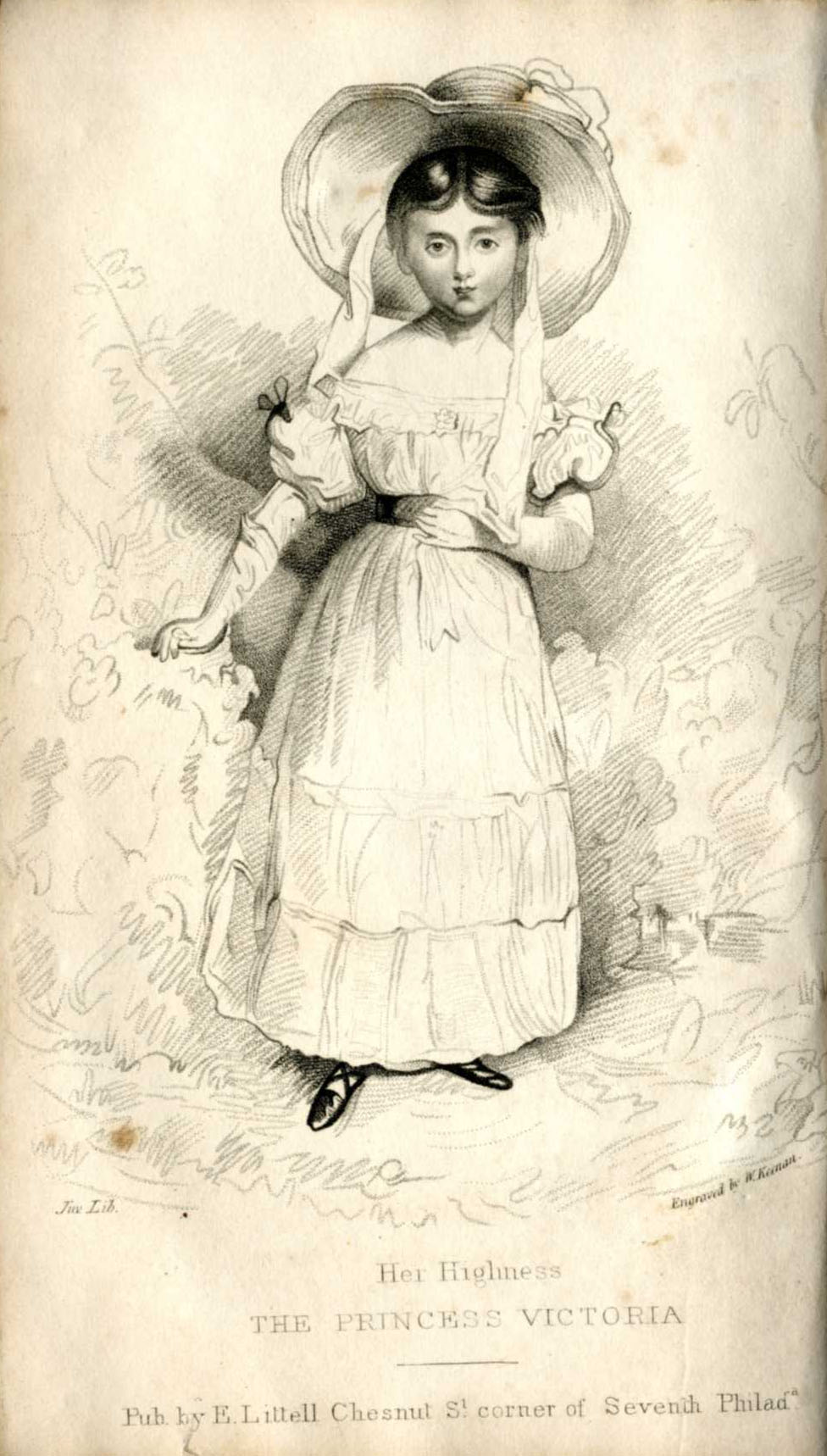
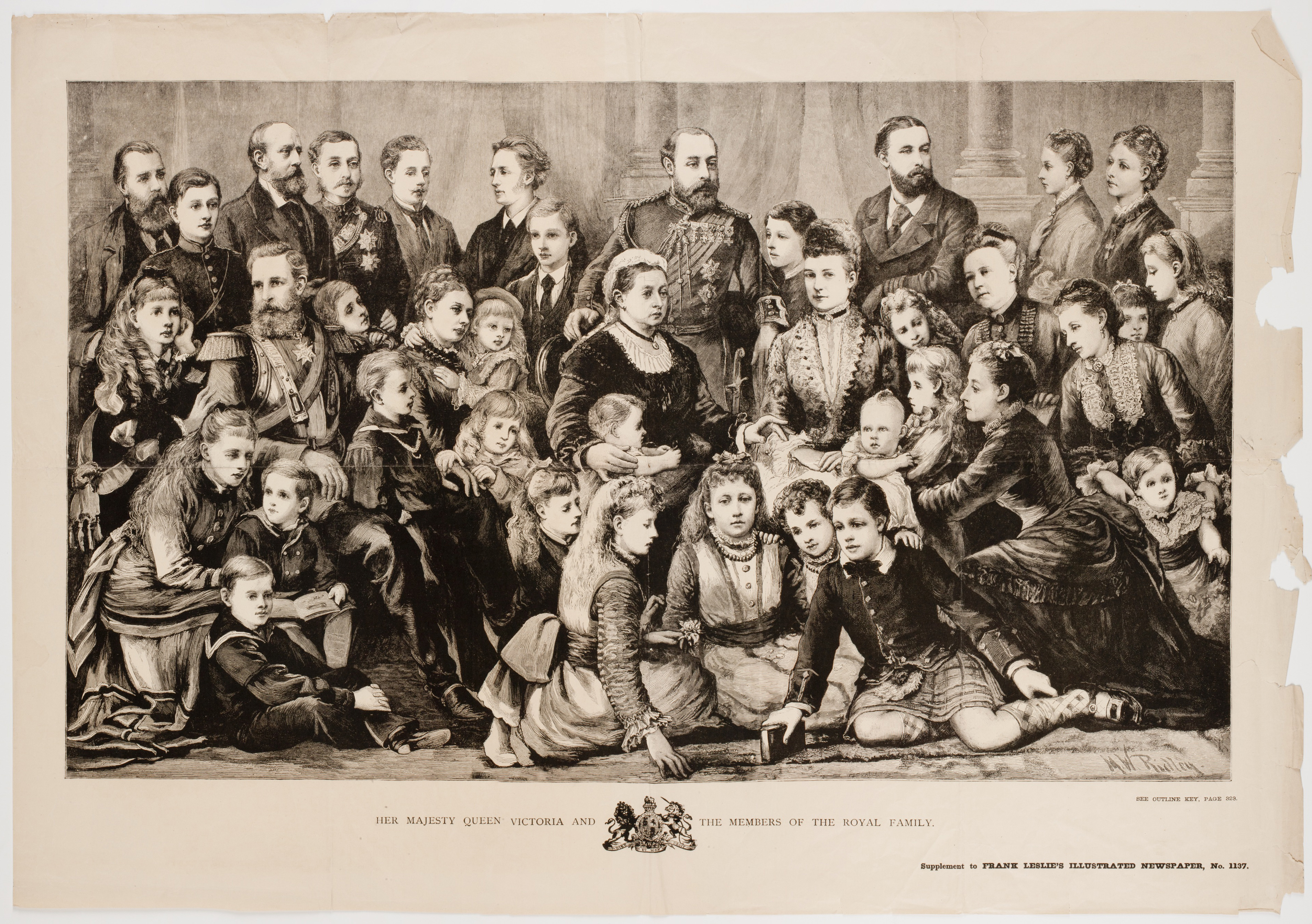
Though the subject was of importance to British printers, artists, and publishers, as witnessed in an 1841 gift book from London that included “A Royal Christening” engraved by Samuel Bull, the British were not alone in creating images of a reigning baby. In 1830 Eliakim Littell of Philadelphia, Pennsylvania published Lives of Remarkable Youth with a dedication to “Her Highness the Princess Victoria.” The juvenile book featured a frontispiece engraving of the young princess (notably alone) by William Keenan (see above). A generation later we then see “Her Majesty Queen Victoria and the members of the Royal family” by J.M Ridley, an 1877 wood engraving appearing in Frank Leslie’s Illustrated Newspaper with a matronly Queen Victoria in the center literally surrounded by children of varying ages (see below). The years in between the two images witnessed coverage in both newspapers and periodicals which announced everything baby-related from their palace-births to the continued pride of Victoria’s husband, Prince Consort Albert.

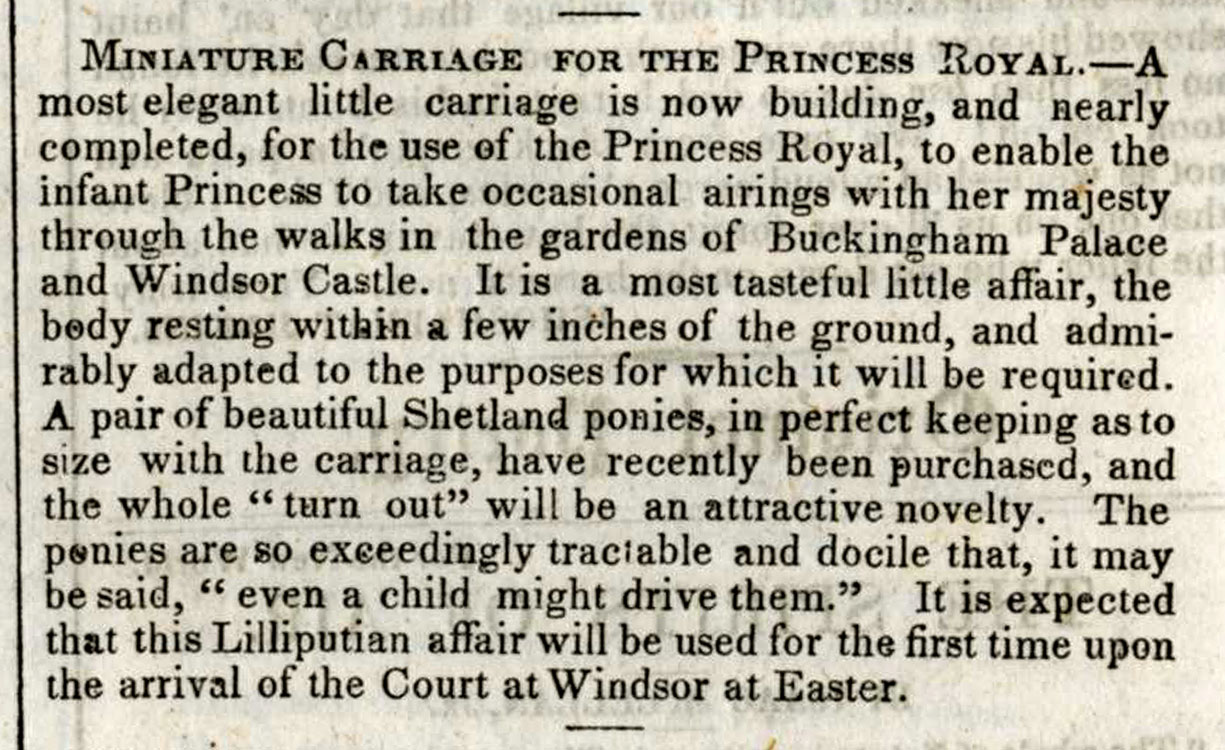
So how do we get from the young solitary princess in 1830 to the queen we see surrounded by dozens of her progeny in 1877? It begins with Victoria’s first child, born in 1840 and also named Victoria, but known to the family as Vicky. An article appearing in the New York-based publication the New World for March 27, 1841 describes the service, banquet, and concert on the occasion of the Christening of the Princess Royal. According to the article, the child was baptized “without even a whimper.” The Foreign News section in the same issue finds Her Majesty presumably pregnant with the future king (ahem), quote: “again in an ‘interesting situation.’ Exciting the hopes and sympathies of her loyal subjects.” (Her second child was indeed the future king. This was Albert Edward, later Edward VII, born on November 9, 1841.) An 1841 article in the New World describes the miniature carriage for the Princess Royal, explaining with careful attention to detail the transport which is meant “to enable the infant Princess to take occasional airings with her majesty.”

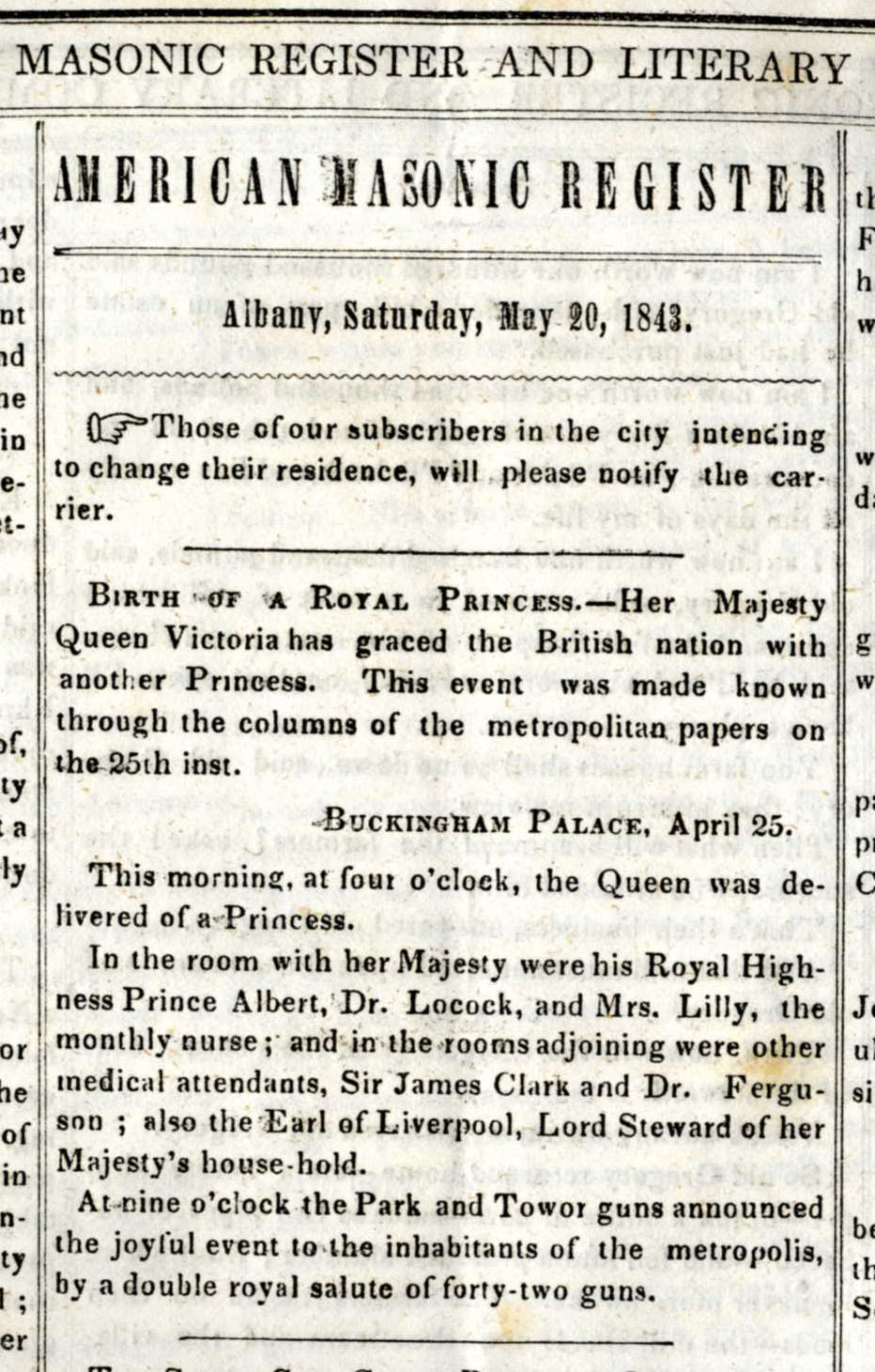
In May 1843, coverage continued in publications as audience-specific as the American Masonic Register, this time with mention of the newest princess Alice, and such precise details as to whom was in the room with the queen and at what time she was born (4:00 AM, her husband Prince Albert, Dr. Locock, and a nurse named Mrs. Lilly for those who are curious).

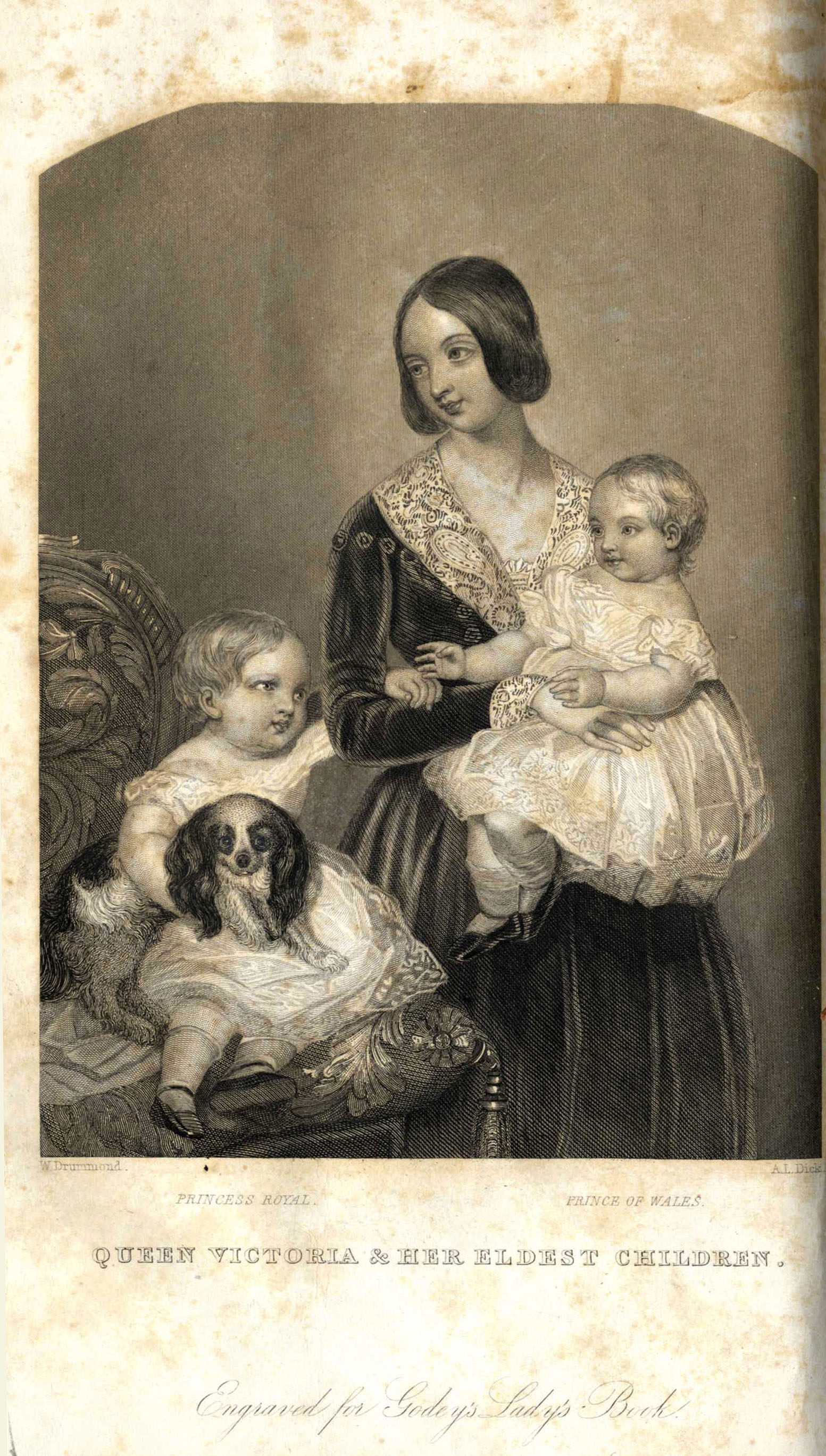
As if the American public couldn’t get enough information about the increasing royal family, publications such as Godey’s Lady’s Book, always on the pulse of subjects of interest to women, presented the engraving “Queen Victoria’s Treasures” in February 1844, invoking the idea of royal jewels (see below). In the accompanying article, the Queen is observed to “be an example for the women of her own great kingdom, [and] is, therefore, highly important to the world; and we rejoice that she so beautifully exemplifies the best virtues of her sex, in her character as wife and mother.” In order to ensure that there were no questions about viewers’ gaze being directed towards her maternal characteristics the article concludes, “All the regalia in the Tower of London would not so adorn and beautify Victoria in our eyes, as the jewels of her maternal love, which she displays in this picture.”

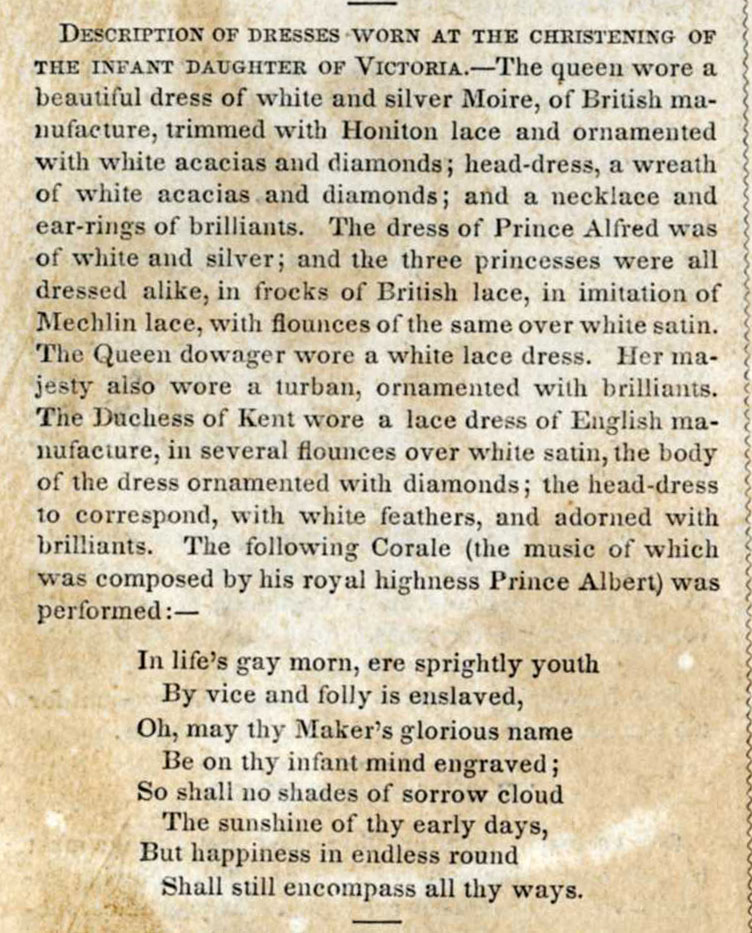
As if to further prove that Godey’s will rarely disappoint the fashion-conscious, in September 1848 Sarah Josepha Hale, editor of Godey’s, provides a gorgeous description of dresses and music for the newest regal christening for Princess Louise (Queen Victoria’s sixth child and fourth daughter):

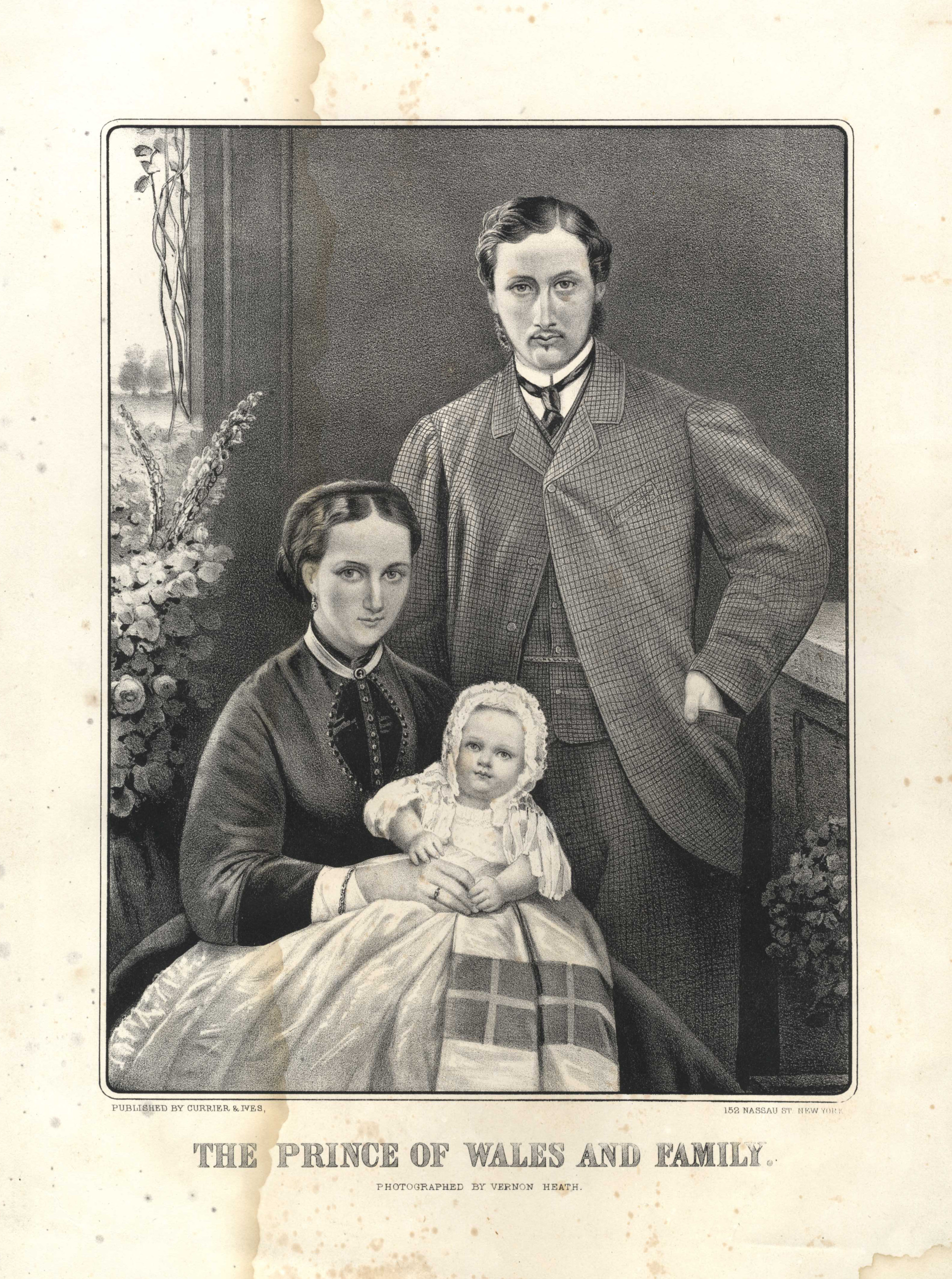
Even the years during the American Civil War couldn’t deter the interest in royal infants. A black and white Currier & Ives lithograph from 1865 shows a family portrait of Victoria’s eldest son Albert Edward, the Prince of Wales and later Edward VII, with his wife Princess Alexandra and their young infant, Prince Albert Victor.

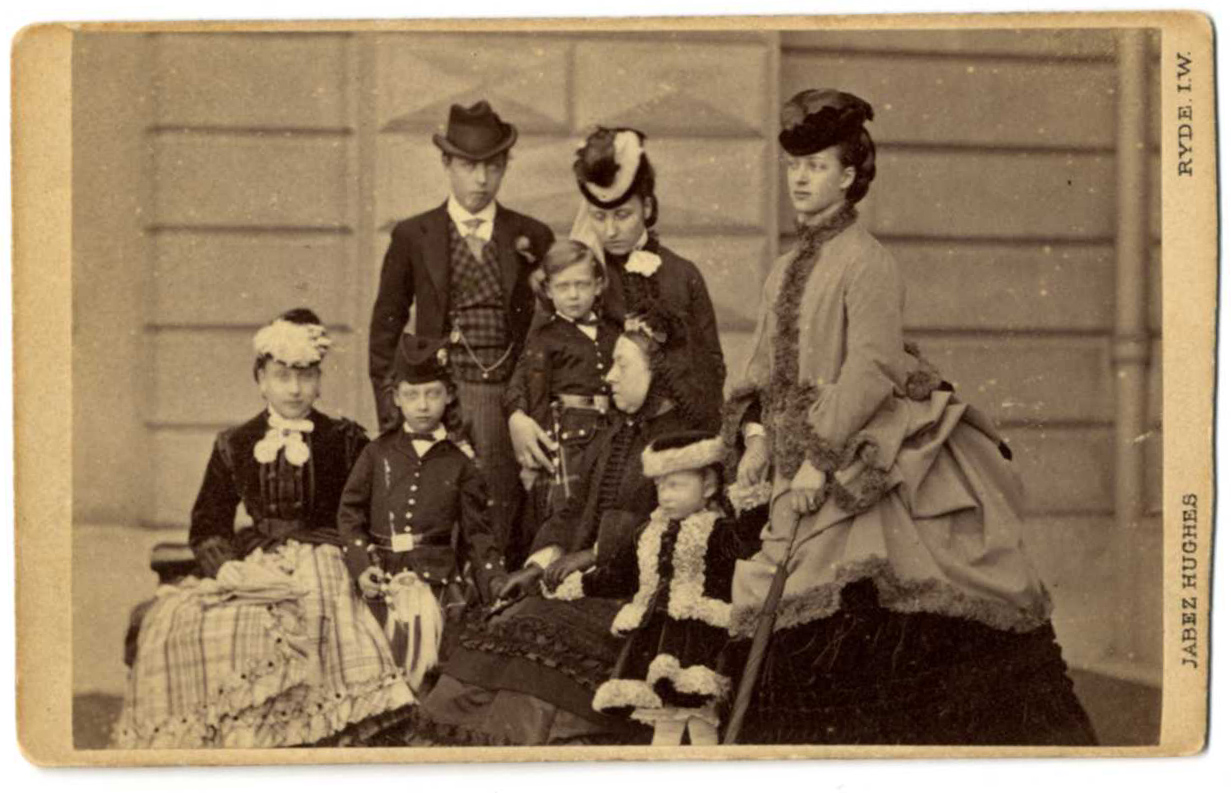
And while some images were created to be framed and displayed (such as the above-mentioned lithograph seen to the left), others were meant for far more portable (pocket-sized) means, such as this September 1870 carte-de-visite of the Royal Family including an annotation on the reverse: “Queen, Prince of Wales, Louise, Beatrice, Prince Leopold, the Children of the Prince of Wales.”

Indeed, the guilty pleasure of royal baby voyeurism is one shared across centuries. Though resources were spent throughout much of the nineteenth century on working towards an artistic, literary, and cultural independence to match our relatively recent political one, we were quick to co-opt the pleasures of the monarch’s royal babies.

If you are in the AAS reading room, stop by to view some of these items on display in the exhibition case.

Tracking down a Big Thing on Ice

Here in Central Massachusetts in July, readers and staff at AAS are experiencing our third heat wave of the summer.  Mind you, heat waves here in New England cannot compete with those that build in the American Southwest, Texas, or the Deep South, but we suffer all the same.  To counter the heat, I decided to do some searching in the online catalog for material related to the harvesting and sale of ice in America.  The plan was to gather material for a small exhibition that might offer cooling imagery for our visitors (I was thinking of stacks of thick ice slabs, big saws, ice wagons, fancy ice tongs, etc.).

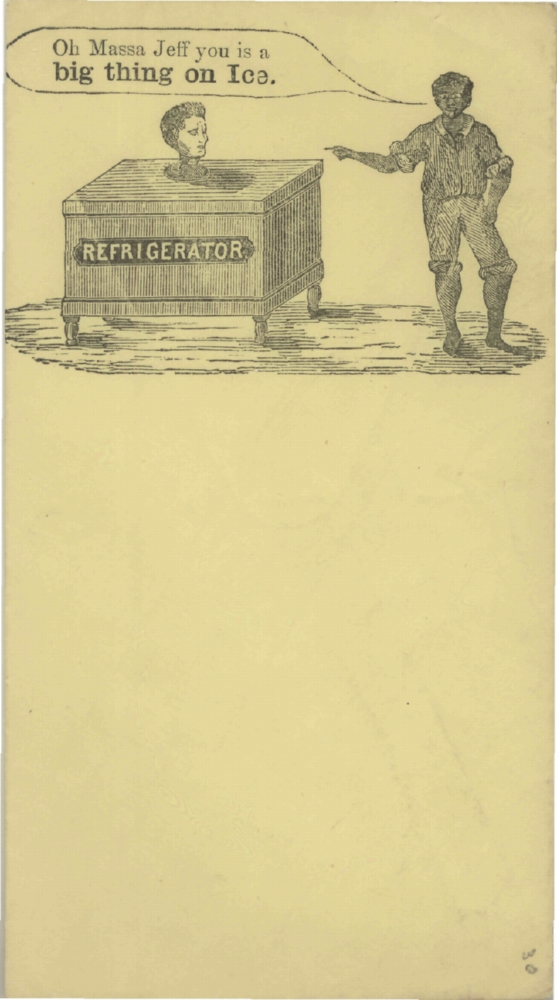
In my first broad sweep (keywords “Ephemera” and “Ice”), I located this Civil War-era envelope with a cartoon of an African American slave pointing to Jefferson Davis, who is depicted inside a low refrigerator.

It was odd and not at all what I was expecting to see in my search results! It looks as though Jeff Davis is in a magician’s trick box, about to be sawn in half.  The slave is pointing to Davis and saying “Oh Massa Jeff you is a big thing on Ice.”  What does that phrase and that image even mean?

Working with our summer page Camille Dupuis, I started searching for other uses of the phrase “big thing on ice” and was immediately overwhelmed with results.  We found the slang phrase used in American newspapers starting in 1861 and really coming into vogue by 1875.  The phrase was the title of a comic ballad written and performed in 1861 by the singer and actor Tony Pastor.  The song outlines the various uses of “a big thing on ice” which can mean a “profitable venture” or “an important event” or, on the other hand, “a really big sham” or “a blustery know-it-all.”  In his song, Pastor calls the phrase a “flash saying” and indicates it is in wide and popular use.

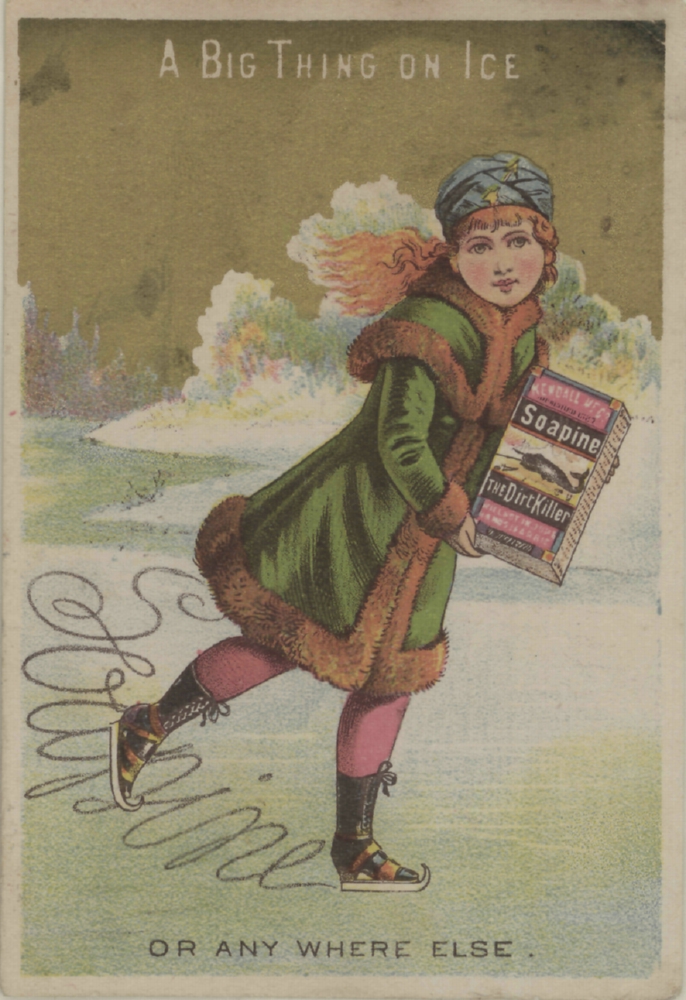
Pastor performed his ballad “Big Thing on Ice” to great applause (according to his biographer) at the Melodeon Theater in Philadelphia on April 11, 1861, the day before the attack on Fort Sumter and the start of the Civil War.  The phrase “big thing on ice” was almost immediately co-opted into use by Union soldiers and it turns up in their letters repeatedly. George Turner wrote to his cousin from Hilton Head, South Carolina, in August of 1862 stating “You must not worry for the absent one far away, for we are doing a big thing on ice.” (George Turner Letters, Providence Public Library, RI).  Harper’s Weekly uses the phrase in a fictional account of war recruiting, with a recruiter telling potential soldiers, “War is a big thing on ice.  Big thing!”  The phrase turns up on comic valentines, in advertisements for soap (see right), in the memoir of P.T. Barnum (who uses it to describe the carcass of a large whale that he displayed in his museum in a huge specially-made refrigerated case – literally, a Big Thing on Ice), and in the lectures of temperance reformer John B. Gough, who claimed giving up drink was a big thing on ice.

By 1865, the phrase began to take on double meanings, as first indicated by Tony Pastor in his ballad.  An article on the use of slang in the army published in the United States Service Magazine in June 1865 declares the phrase has been turned into a tired joke by soldiers, one of whom discusses Victor Hugo’s Les Mirables with his superior and slyly remarks the newly released and wildly popular book is a “bully big thing on ice, ain’t it?”  Hugo, of course, wrote at length about the subtle power of slang in Les Mirables, entitling one chapter “Slang which weeps and Slang which laughs” and stating, “As the reader perceives, slang in its entirety, slang of four hundred years ago, like the slang of to-day, is permeated with that sombre, symbolical spirit which gives to all words a mien which is now mournful, now menacing.”

Still true today (think about “the bomb” or “clutch,” which today are used to mean “cool” or “awesome” but 40 years ago meant something else entirely), and true for a “big thing on ice.”  Camille and I finally looked up the phrase in several dictionaries of American slang (ranging in date from 1889 to the present), where it was variously defined completely without context to mean everything from “a calm coolness of action” to “an important event” to “a fine rarity.”  Best of all, and proving that some things never really change, by 1905, the phrase had been shortened to just its initials, “B.T.I.,” eerily forecasting, perhaps, the use of BTW, AON, GTG etc., used by texting teenagers (and adults) around the world today.