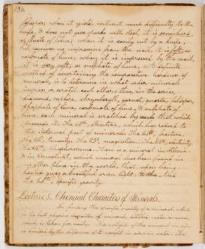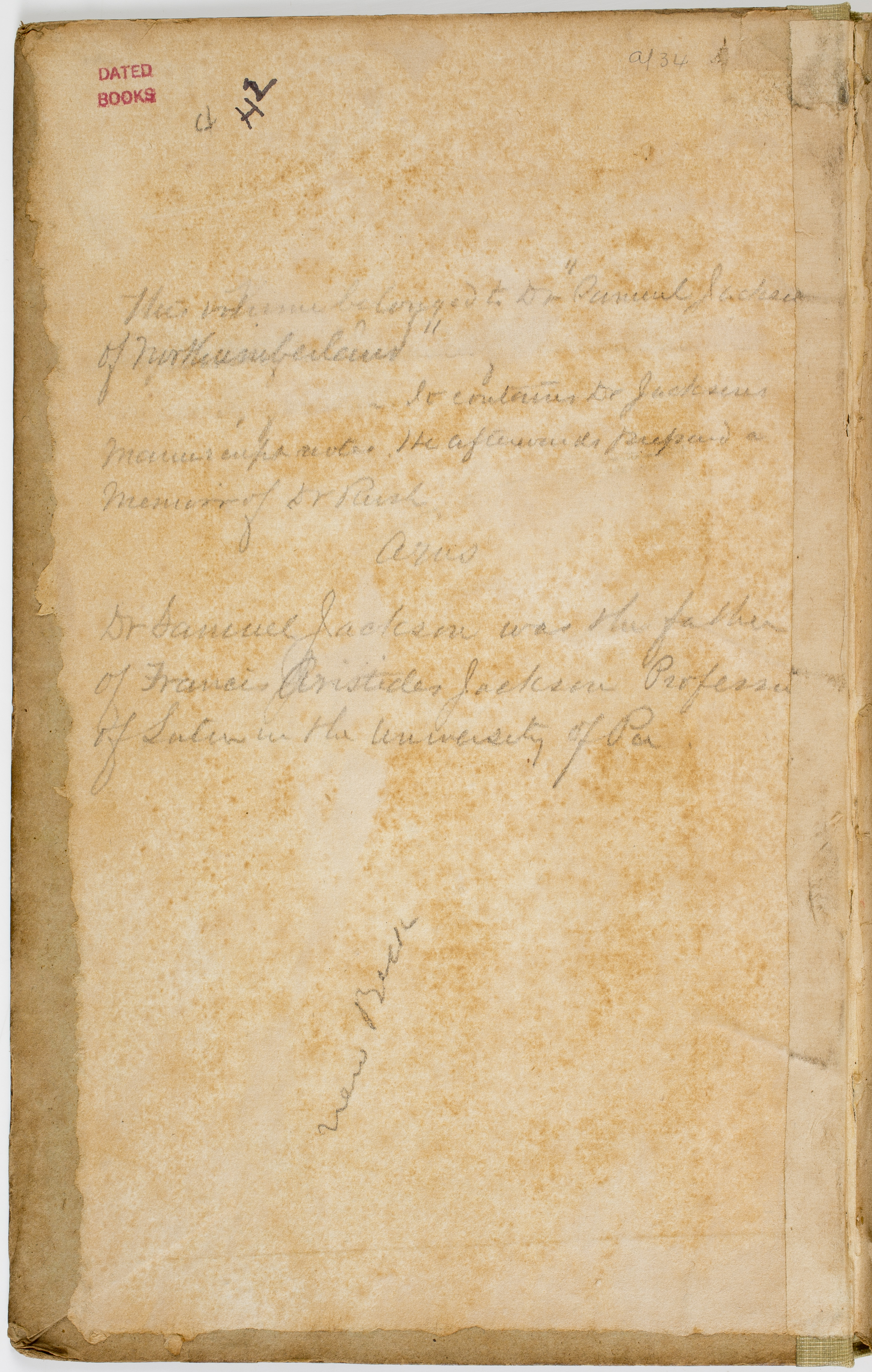
To continue the celebration of the American Library Association’s 2014 Preservation Week held back in April (and mentioned in an earlier post), we’re bringing you a behind-the-scenes peek into a conservation project that started just a couple weeks ago on a recent acquisition – a Bay Psalm Book from 1709. The revitalization process for this volume will start with a photo shoot, a cleansing bath, and some re-stitching, and will end with a new back, protective clothing, and secure housing.
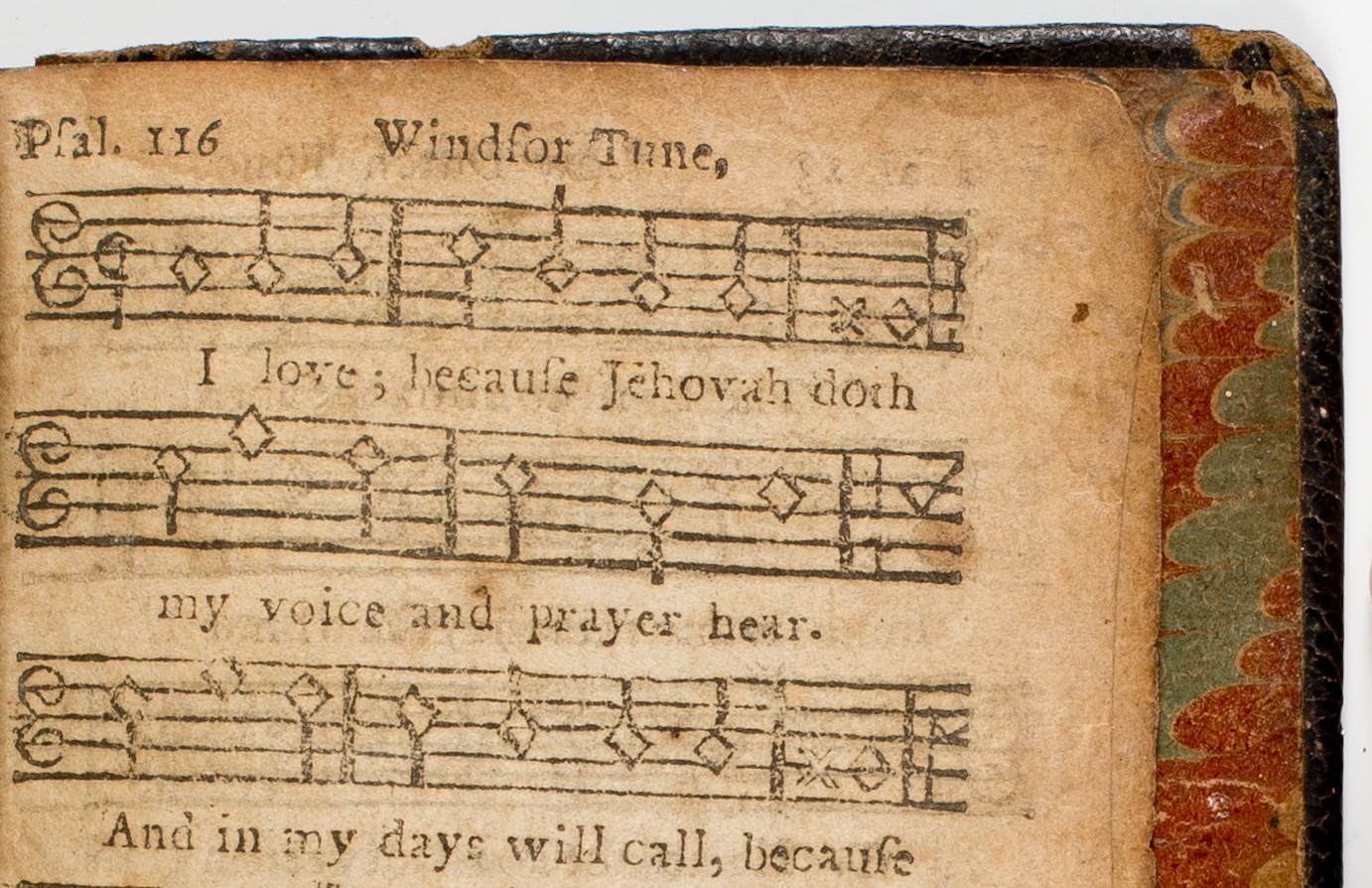
AAS was thrilled to add this early eighteenth-century edition to our already strong collection of early Bay Psalm Books, including a copy of the first edition from 1640. You can learn more about the Bay Psalm Book editions and why this particular one is of interest to us by reading the full article in the AAS newsletter, the Almanac, embedded below. (Spoiler alert: it’s the only known complete copy of this edition, it contains the earliest example of music printed in North America at AAS, and it is in complete and unsophisticated — although certainly not perfect! — condition.)
Even before the funding was secured to acquire this 1709 Bay Psalm Book (given by the Fred Harris Daniels Foundation in memory of AAS member William O. Pettit, Jr.), donations had begun flowing from eager members, scholars, and staff. Thanks especially to early donors Margery Dearborn, Jock Herron, and Meredith Neuman! Those generous early donations are now being used to conserve, house, and digitize the book in order to preserve its physical structure.
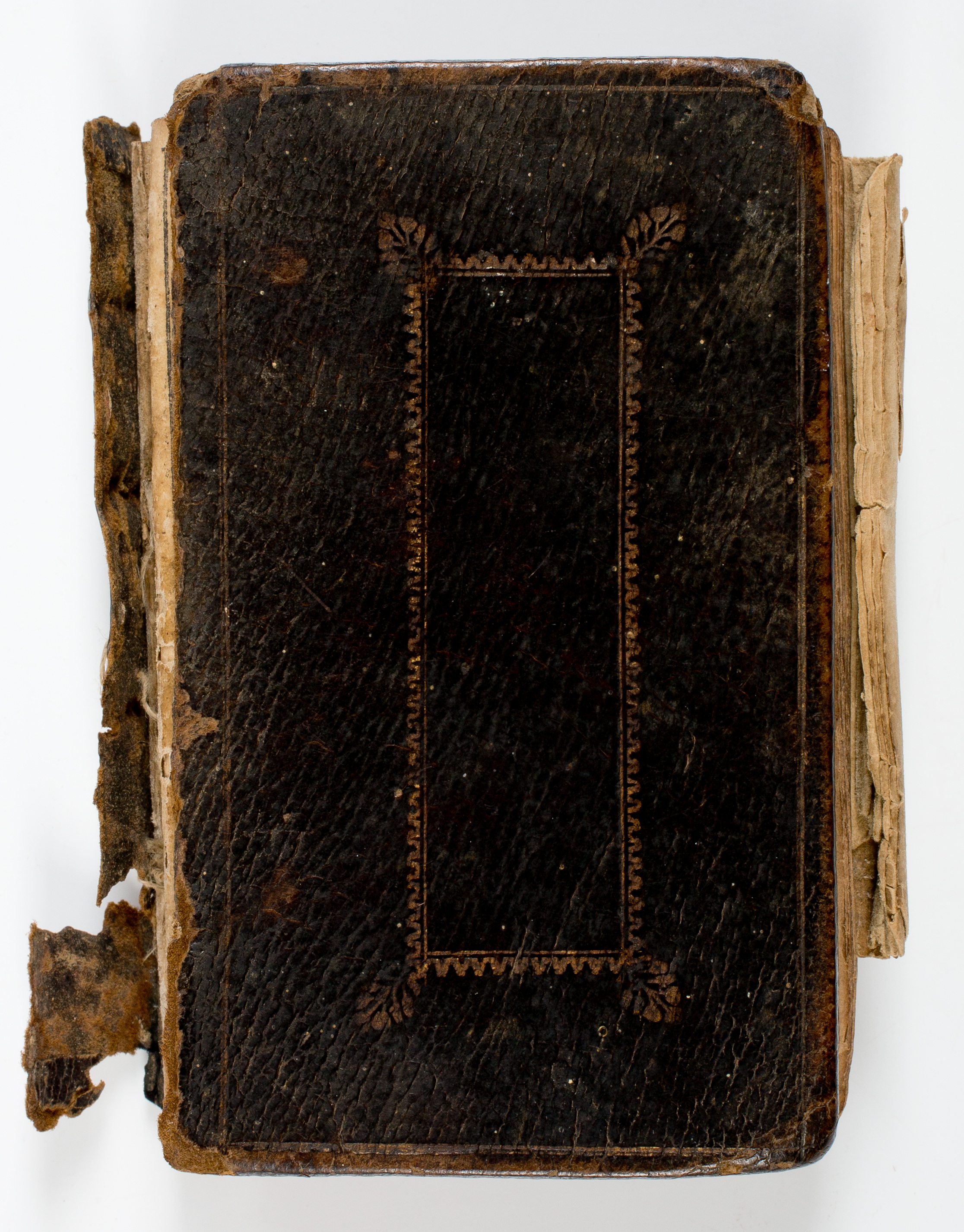
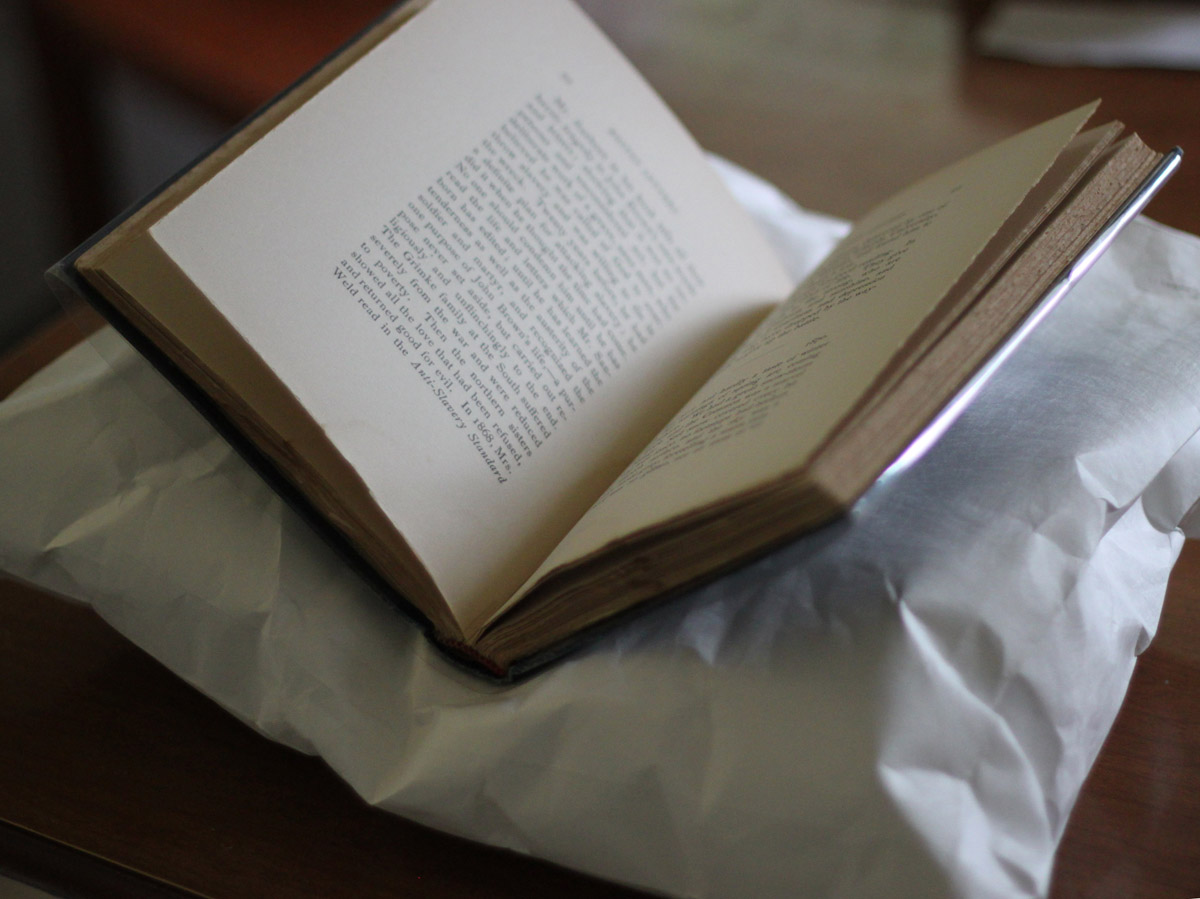
Using our newest Bay Psalm Book as it was originally intended is challenging in its current condition. Yet it is actually in remarkably good shape compared to other early psalters. Given that hymnals or psalters were meant to be flipped through and handled at least once a week rather than read through once a lifetime, those that do survive the centuries have almost invariably lost a few things along the way: their original binding, at least part of the title page, and usually some of the pages of music at the end. Remarkably, this 1709 Bay Psalm Book managed to hold on to all of its parts. Still, even just leafing through the volume in its current state puts its over-300-year-old body under undue pressure.
The goal of AAS conservation staff is to stabilize the book’s condition without losing potential information binding historians might find useful. The conservation plan, as it stands now, begins with high-quality, detailed photographs documenting the current state of the volume. The text block will then have to be removed from its period binding. The paper will be washed to deacidify or neutralize it, then alkalized in a magnesium bicarbonate solution, as it has become discolored from age and improper storage. Remarkably, little paper repair is needed apart from mending the tattered edge of the title page with Japanese paper. The signatures will be resewn and new endbands fabricated in the same style as they were originally. The text block will then be fit back into the original binding, which will be retained, but will need to have a leather re-back as the original binding has broken over the years. End papers will be added to protect the title page. A custom box will be made to the exact dimension of the volume so it can sit on the shelf with no danger of friction. There it will safely sit in AAS’s doubly-locked and climate-controlled vault (home of our “holy of holies”) where it will remain available for scholarly examination for hopefully at least another 300 years.
We think of these planned interventions as not so much a facelift as a hip replacement. Although the book will look more aesthetically pleasing in the end, the goal is to make it functional again. After all, if no one can open a book or turn its pages without breaking it or damaging it further, does it really exist as a book?
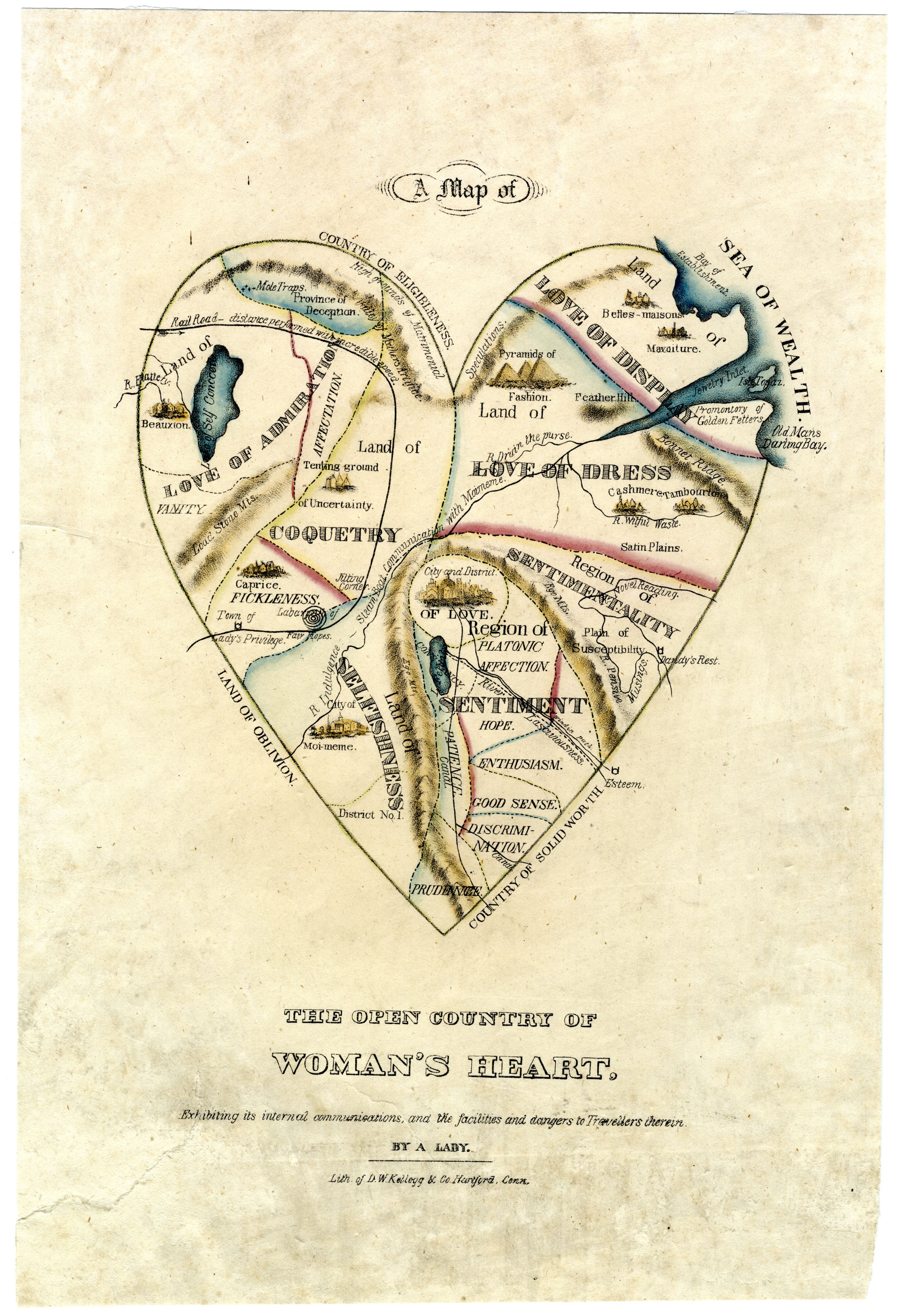
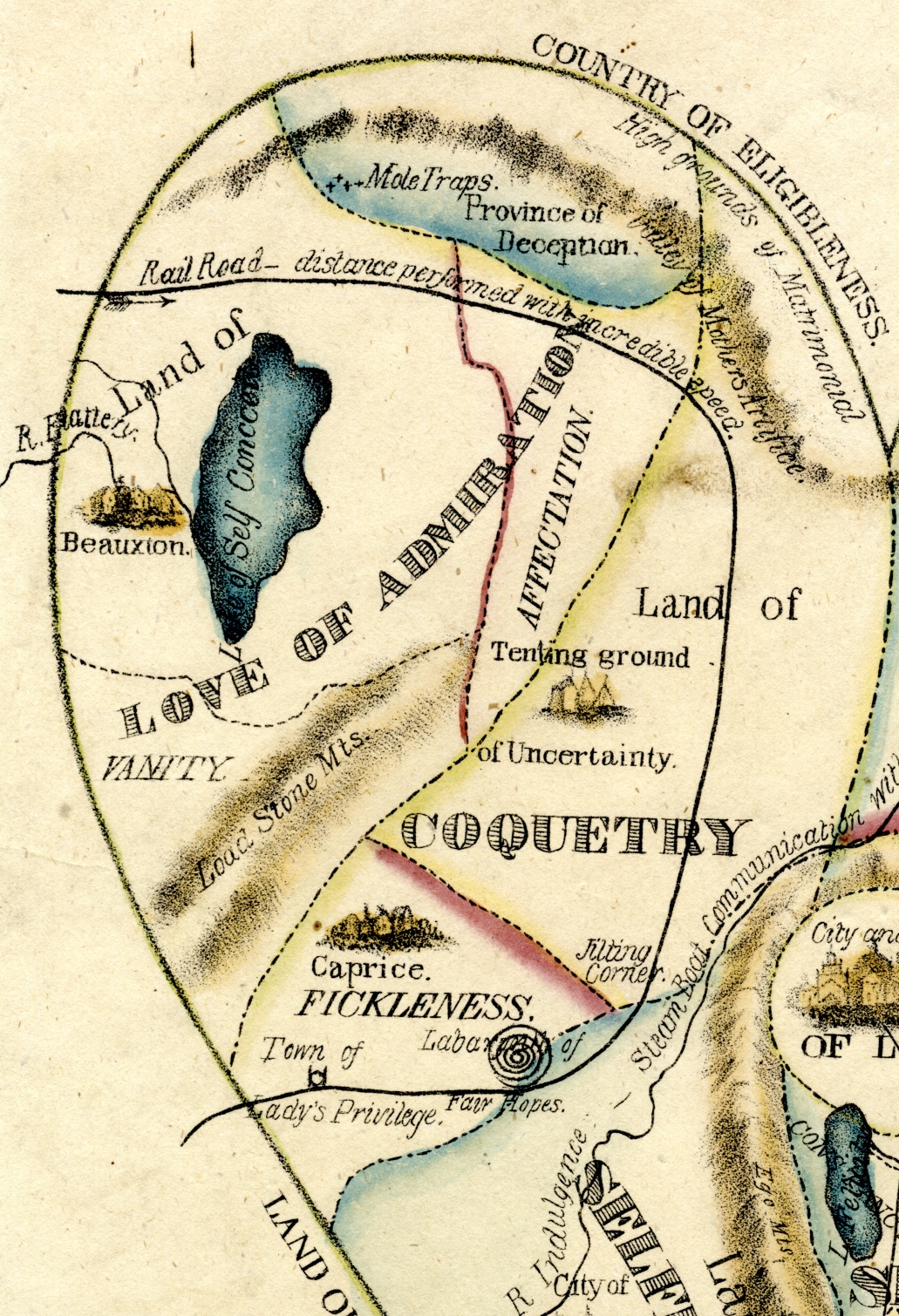
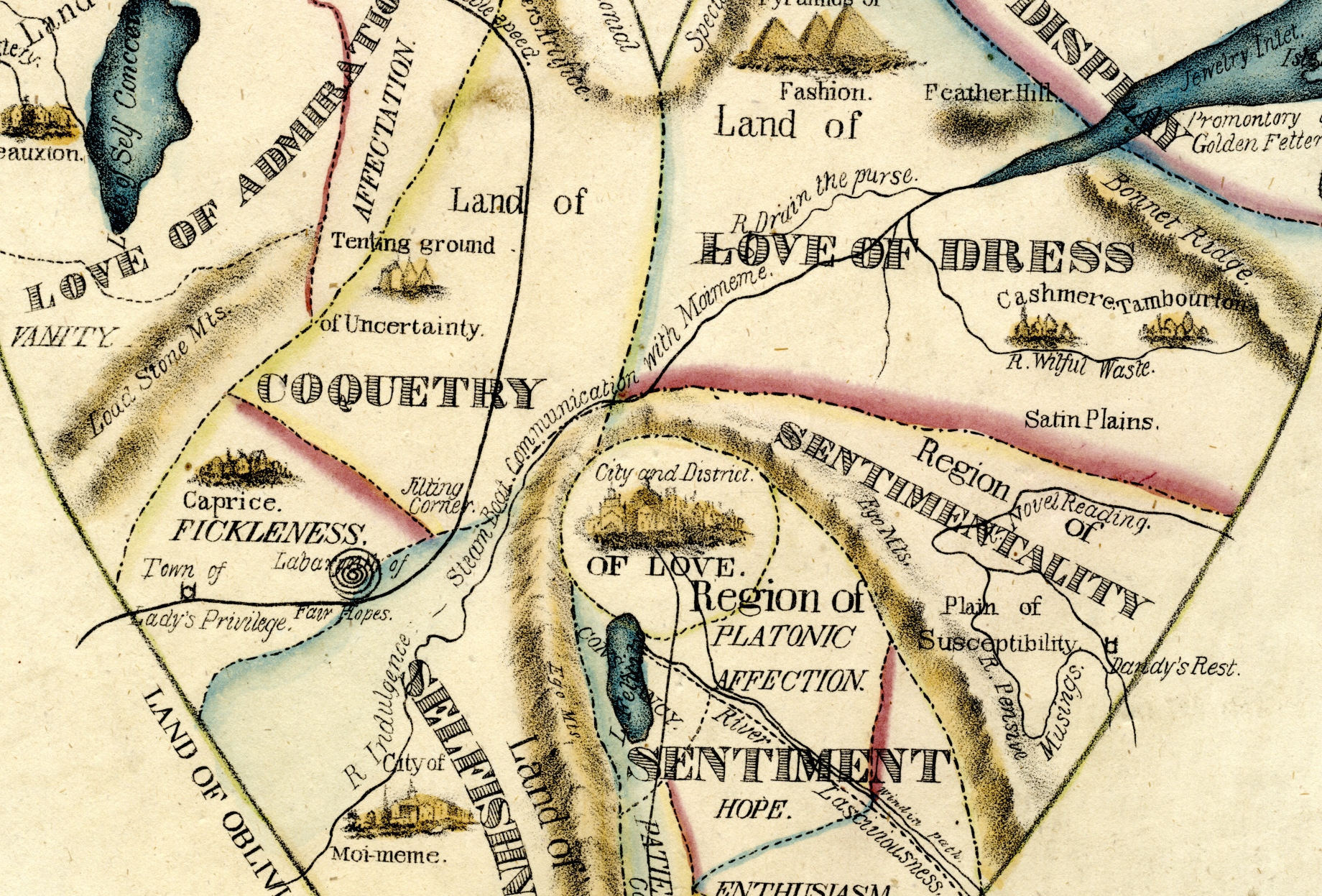
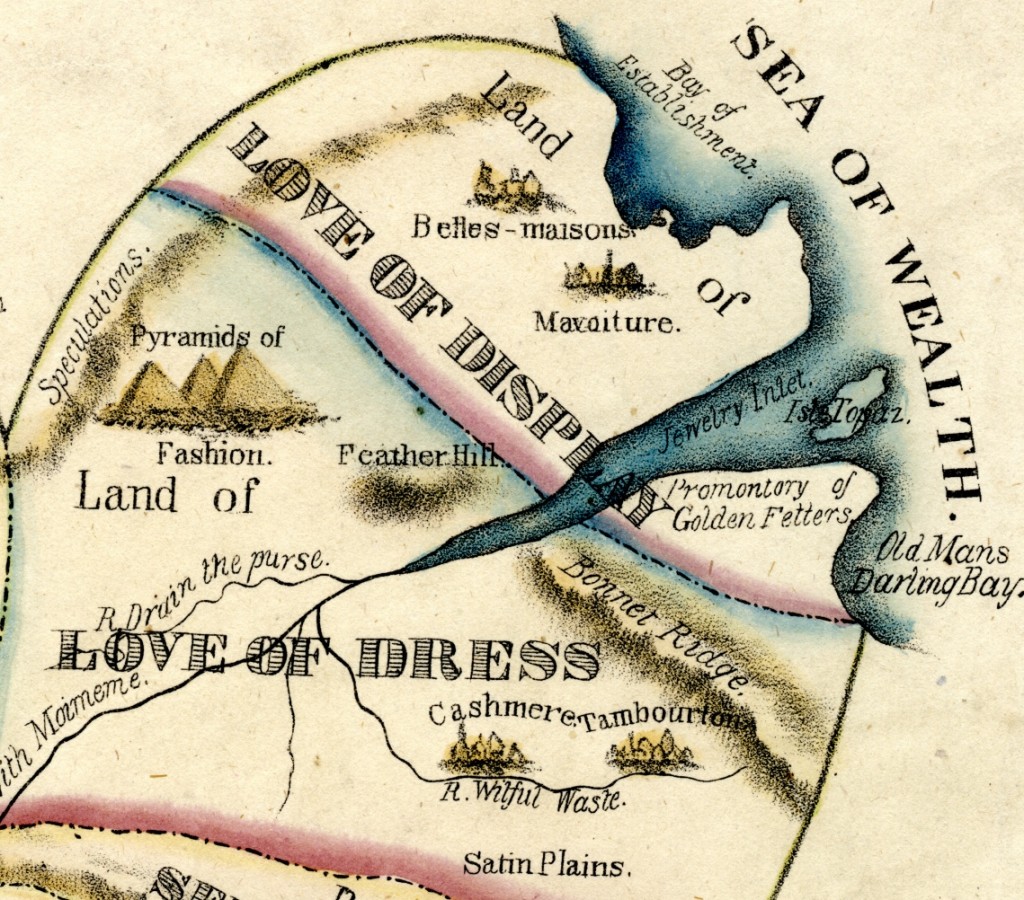 (and woman) nature. For example, apparently jewelry and clothing have always been seen as one way to a woman’s heart. If you look closely at the Lands of Love of Dress and Display in the top right of the heart, they include the cities of Cashmere and Belles-maisons (“Beautiful-houses”); the Satin Plains; the Pyramids of Fashion; Bonnet Ridge; and the Rivers Drain the Purse and Wilful Waste, both of which flow into the Jewelry Inlet. The creator has left no doubt about their attitudes toward a love of fashion and style, even bordering these lands with the Bays of Establishment and Old Mans Darling. By these standards, some women today—including myself, who can never pass up a good pair of shoes—are certainly guilty of a love of dress and display.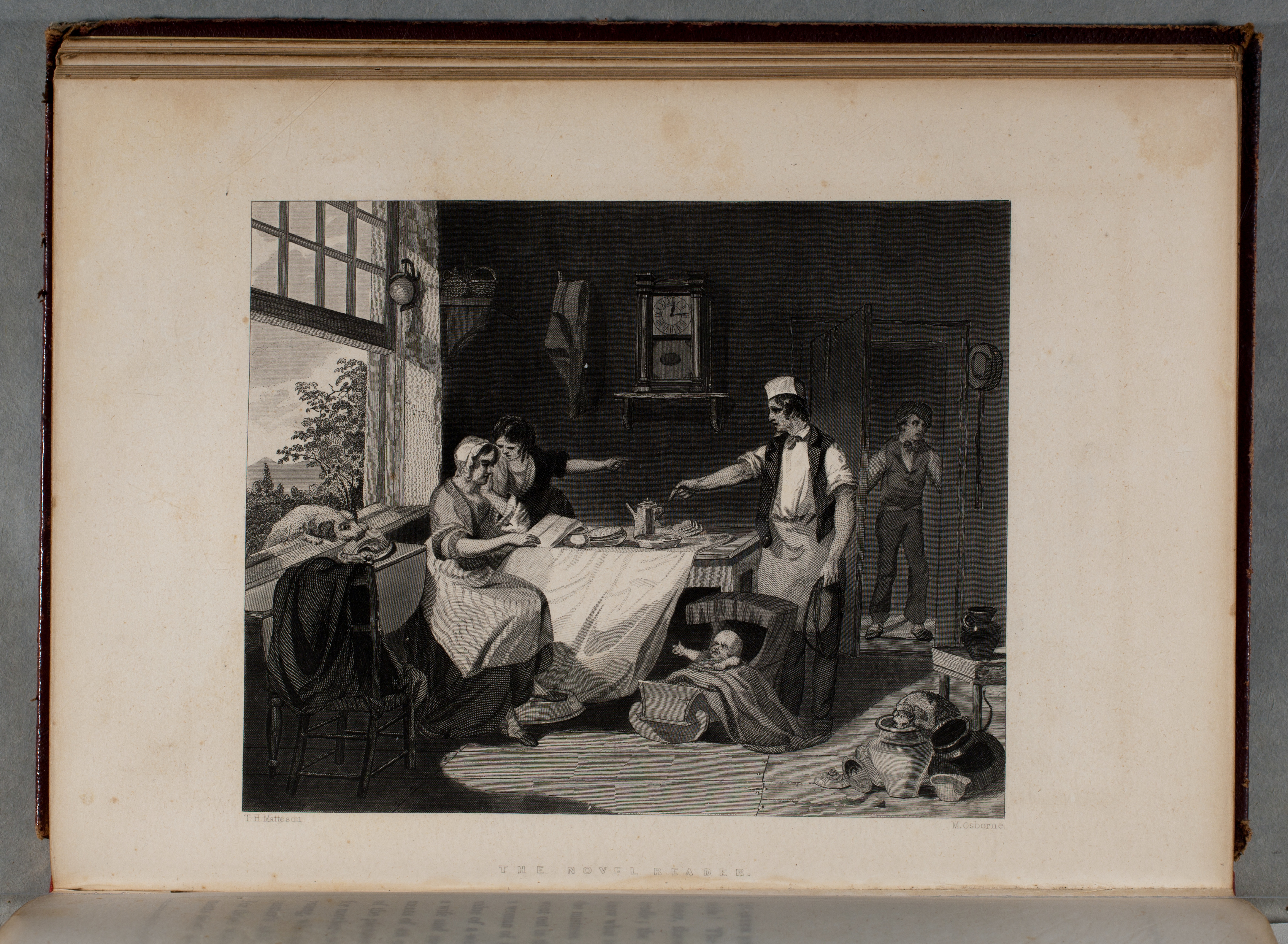


 (This program is being presented as part of the Worcester Revolution of 1774, a celebration of Worcester County’s overthrow of British Authority seven months before the fighting at Lexington and Concord. For further information about this project see
  histories, documents, and folksongs to craft an exploration of her ancestors—a mix of New England missionaries and Southern slave owners, including Thomas Jefferson. Taylor’s poems are as much about the imperfect material of family stories as they are about the politically charged material of history.