Adventures in Cataloging: Some Sleuthing Required (Part III)

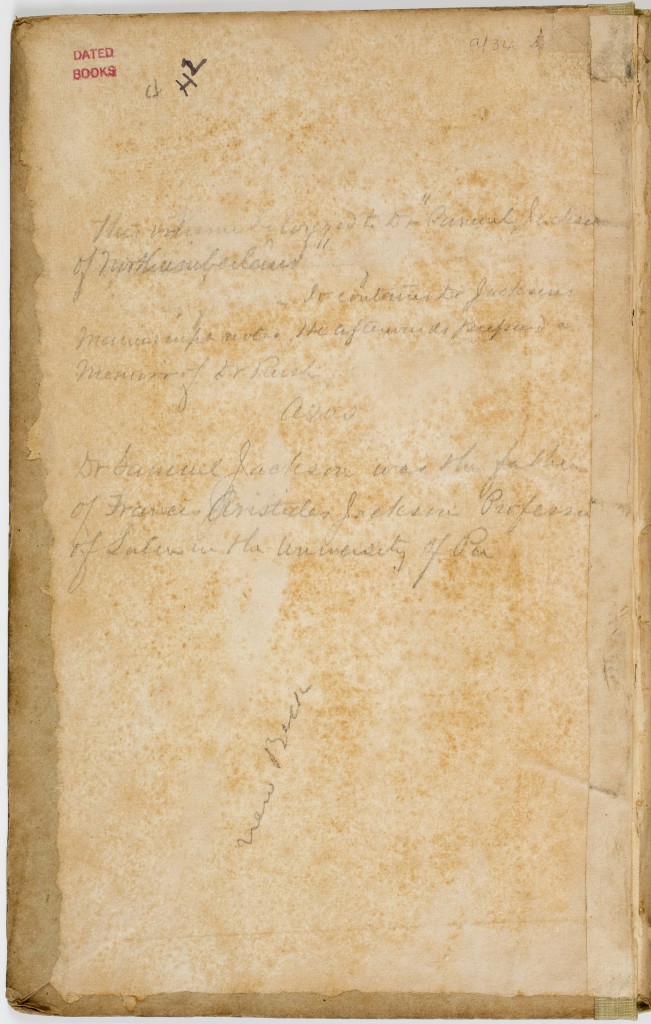
Dr. Asa M. Stackhouse’s notes about Dr. Samuel Jackson, which proved to be the key to disentangling the identities of the doctors Jackson.

This week, the series ends by correcting a case of mistaken identity. And if you missed the first two parts, be sure to check them out: Part I, Part II. 3. The Doctors Jackson We like to trace provenance information in our records when we can. This allows one to find former owners, virtually reconstruct an ...

Adventures in Cataloging: Some Sleuthing Required (Part II)

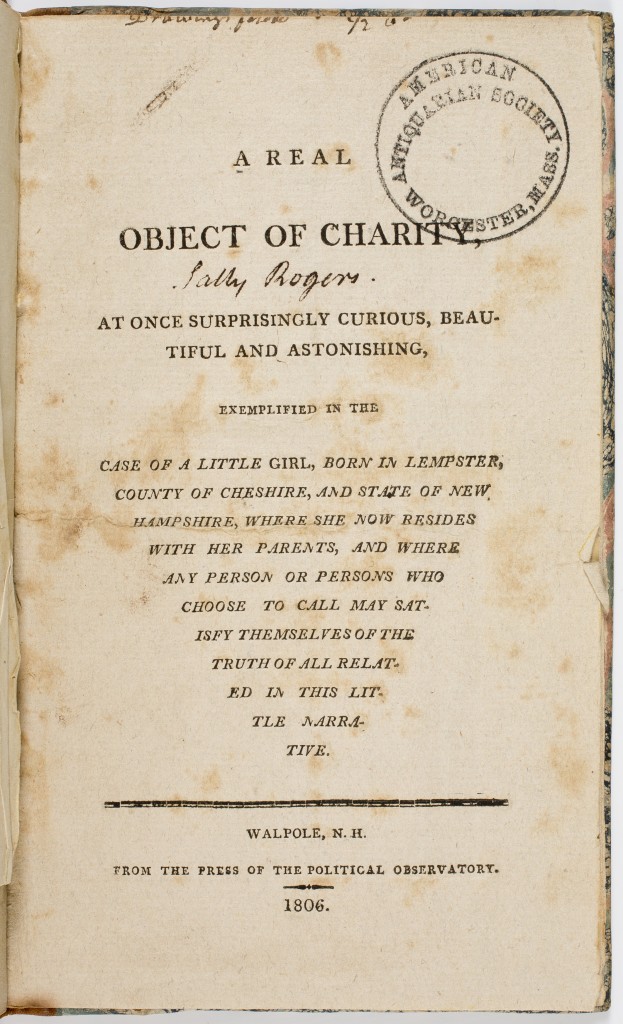
Title page of A Real Object of Charity (Walpole, N.H., 1806).

Last week, in Part I, Amy discovered the title and date of a pamphlet missing a title page by scouring the newspapers. Now, she puts a name to a remarkable but unidentified woman. 2. The life of Ms. Sally (or Sarah) Rogers Sometimes, I catalog a book or pamphlet and a person appears whom we know ...

Adventures in Cataloging: Some Sleuthing Required (Part I)

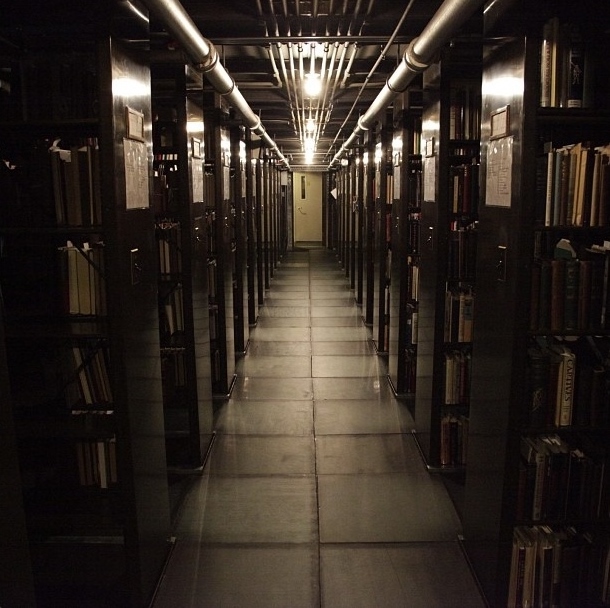
Our 25 miles of shelves hold many mysteries for the intrepid cataloger to unravel.

One of the neat things about working as a cataloger at the American Antiquarian Society is solving the puzzles that come across my desk. I work exclusively on books and pamphlets published in the early nineteenth century, and over the course of 200 years title pages are lost, authors are forgotten, and people disappear into ...

Happy St. Patrick’s Day! The Mathew Carey Account Volumes: A Digitization Case Study

Carey_Gigi-535

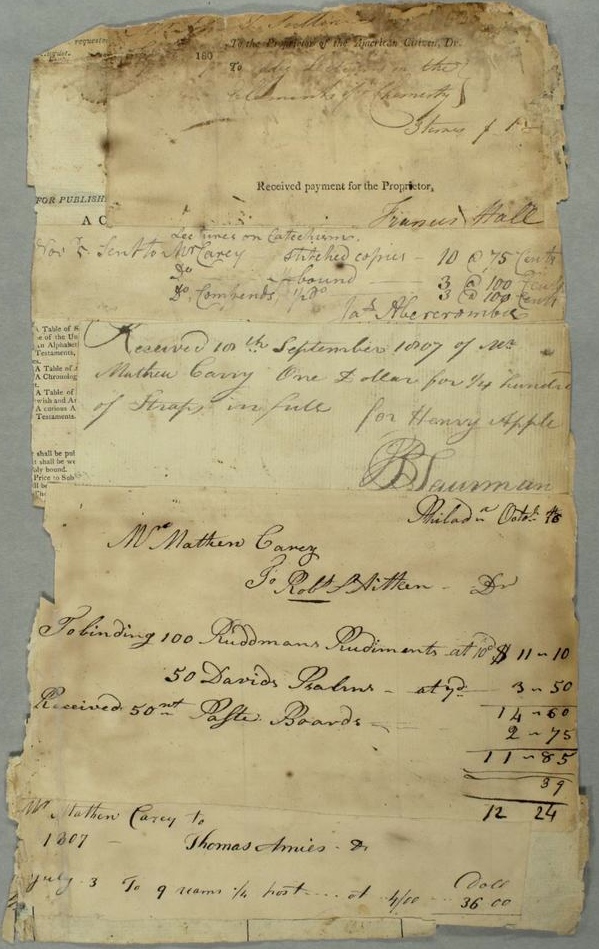
Under cover of night on the Dublin docks in 1784, Mathew Carey, disguised as a woman, set sail for Philadelphia. Having spent the previous week hiding out in his friends’ bookshops along Grafton Street, Carey decided that this was the only sure way to escape the British officials who were in hot pursuit of him ...

Digitizing the Visual Records: AAS Plays Metadatagames

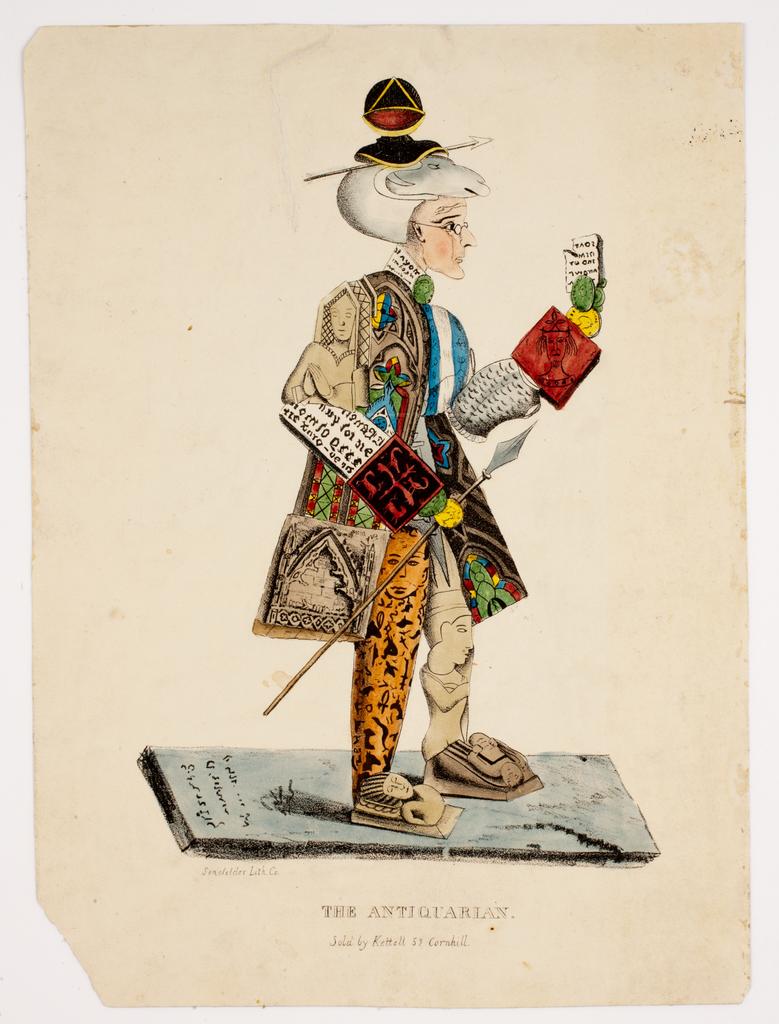
Image 1 Antiquarian

Last week, about twenty AAS catalogers, research fellows, curators, and other staff members gathered to discuss the challenges that come with transforming the visual code of an image into a written code. The creation of metadata in the form of indexing images is an inexact science, and it is one challenge that faces us as ...

Adventures in Cataloging: Inscriptions

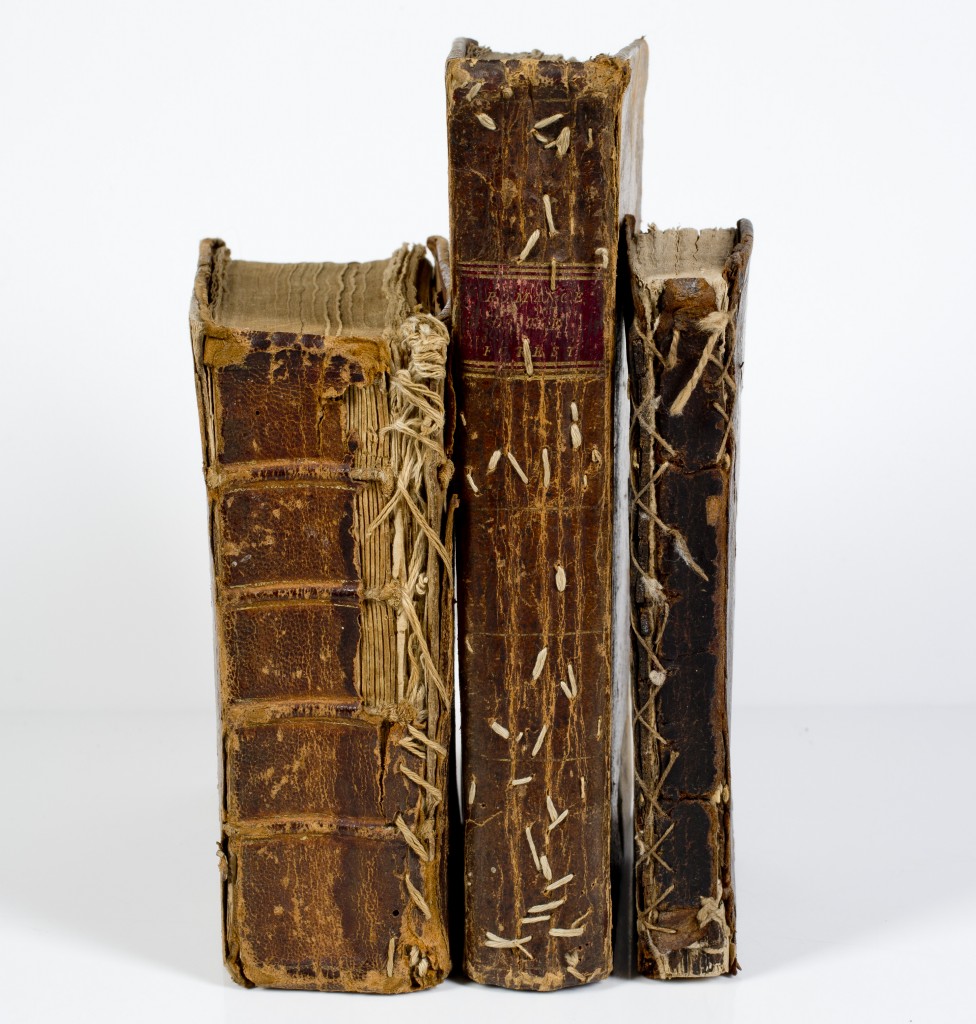
The re-stitched bindings of Perry’s Royal Standard English Dictionary (Worcester, Mass., 1788), Radcliffe’s Romance of the Forest (Philadelphia, 1803), and Russel’s Seven Sermons (Boston, 1715).

As a cataloger for the North American Imprints Program, my job is to catalogue books and pamphlets printed and published in North America between 1801 and 1820. I describe them, I put them into context with other books and pamphlets, and I become the latest person to handle an item that is two centuries old. Many ...

Instagram Redux

The Society's Graphic Arts collection is a wonderful place for browsing, looking for visual evidence of whatever topic you may be working on.  I have helped researchers hunt in the collection on such broad topics as death, food production, and dress, and as specific as orphaned children, methods of doing laundry, and book shop interiors. As ...

John Adams: Deadbeat, careless accountant, or the continuing victim of partisan politics?

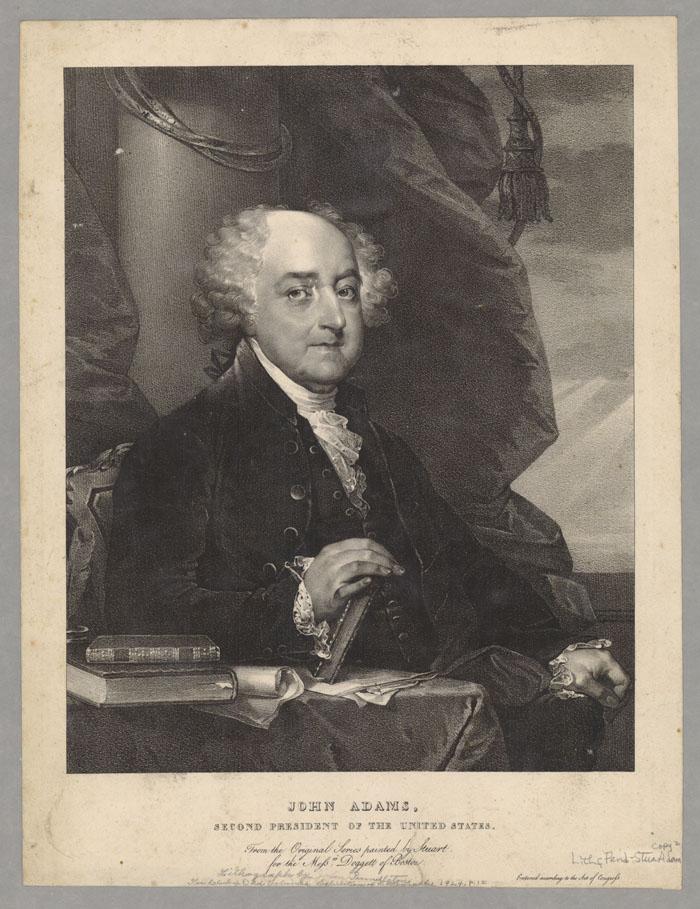
Since last October, the project catalogers creating online rare-book level records for 1801-1820 imprints have been working on United States’ federal documents. Admittedly, some government documents are boring. But much more often than I imagined they have been a source of interesting, even surprising, information. Many documents, but especially Secretary of the Treasury Albert Gallatin’s report ...

Private Libraries in a Digital Age

01

In an age of inter-connectivity, mobility, and Librarything.com that purports to bring us together in a digital utopia, whither will the truly personal library go? Do we risk having a network of Gatsbys present and past, interested in books more essential for their social value than their literary or historical merit? A social networking database ...

It doesn’t stop with “Antiquarian…” or, I’ll take what’s behind door number one!

Blog post 1 001

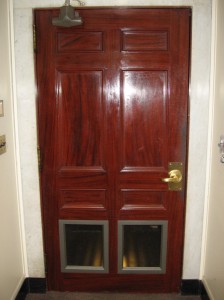
Assistant Curator of Manuscripts and Assistant Reference Library Tracey Kry comments on her impressions of AAS as a newly-arrived employee. A couple of months ago now, we had a post about creating an AAS Glossary that would talk about terms and collections unique to AAS (http://pastispresent.org/category/aas-glossary/ ).  The first post was about people’s confusion with the ...

Cataloger Uncovers Scandal: “It was Unrequited Love”

The Map of Portland, Oregon

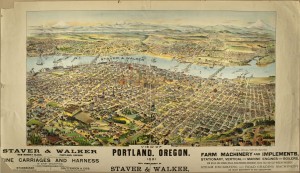
Like the other catalogers here at AAS, part of my job as the Graphic Arts cataloger is to figure out the artists, sitters, publishers and others who contributed to the works in the collection. So when I catalogued a large color lithograph view of Portland, Oregon from 1891, I noticed that the copyright holders were ...

Call for Co-editors for an AAS Glossary

booksnake

The American Antiquarian Society is almost 200 years old. I guess that's not entirely shocking, given that "Antiquarian" is in our name, but sometimes it's easy to forget that when we were founded there were no functional steam-locomotives, no sewing machines, no modern matches.  Napoleon was still fighting his way across Europe.  Even "The Star-Spangled ...

The Answer, or what to do when Google doesn’t give it up easily

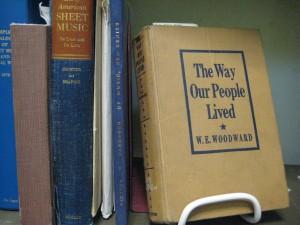
wayourpeoplelived

Ding, ding, ding... We have a winner! Our exercise in crowd-sourcing research questions was a success, and all the antiquarian glory goes to peterme for solving the reference mystery posed in our earlier post. The correct book our reader was looking for was (drum-roll please) “The Way Our People Lived: an Intimate American ...

The Question: See if YOU can solve this reference mystery

bookquestion

I was in a bookstore in the '80s and started reading a book about Puritans feeding their babies ale but now I can't remember the title. Can you help me find the book? This is the kind of question we live for at AAS: the test that can make or break you as a professional. ...

The Embezzler Redeemed – Part 3

brower_manhattan_company_bank_note

Continued from Part 2 of the Embezzler Redeemed One possible answer to this question is suggested by an account published in the November 19, 1803 issue of the Morning Chronicle. We understand that the Manhattan Company have discovered a further fraud of about eight thousand dollars, committed by Benjamin Brower, previous to his elopements. It is said ...