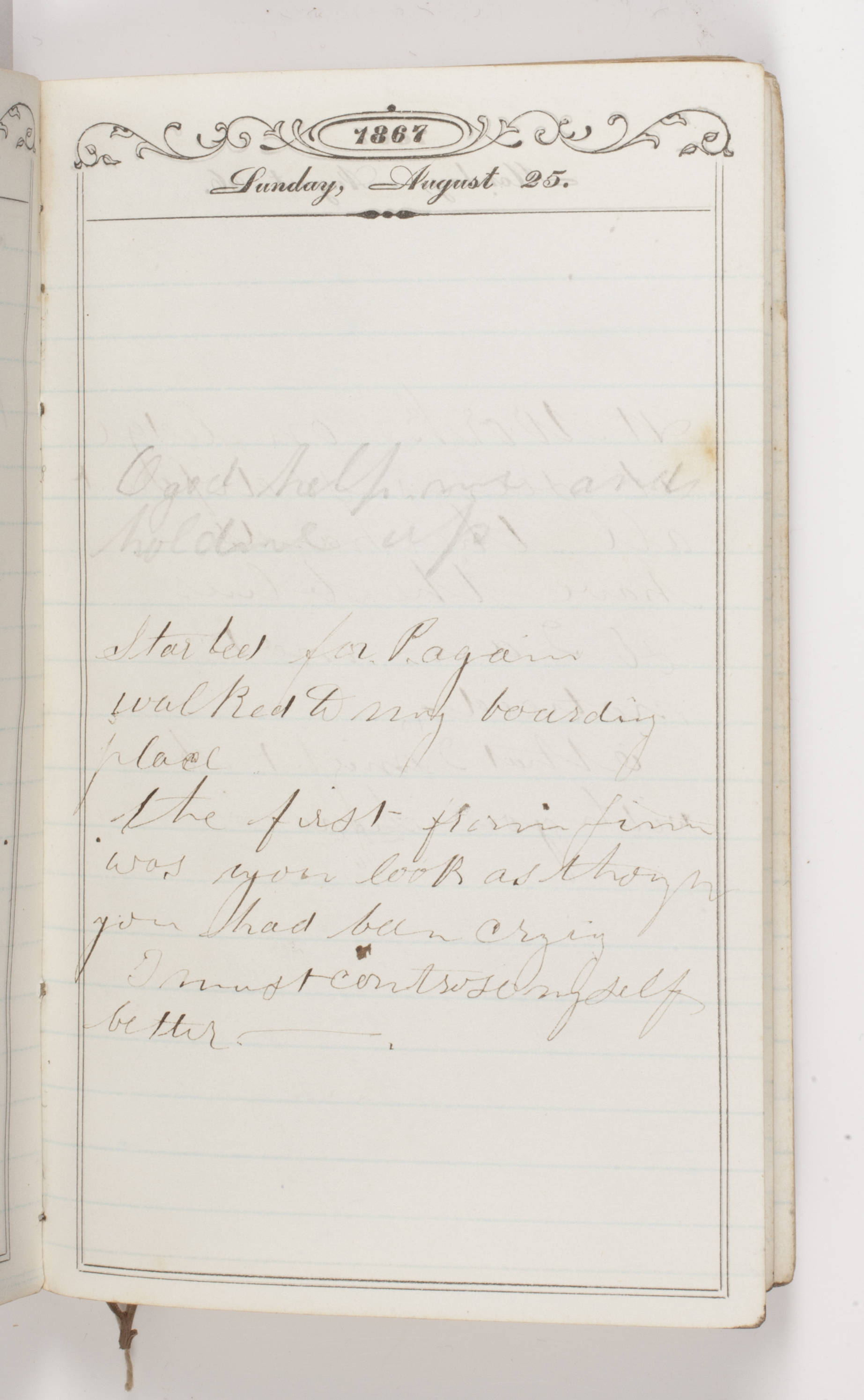
The Acquisitions Table: Juno on a Journey

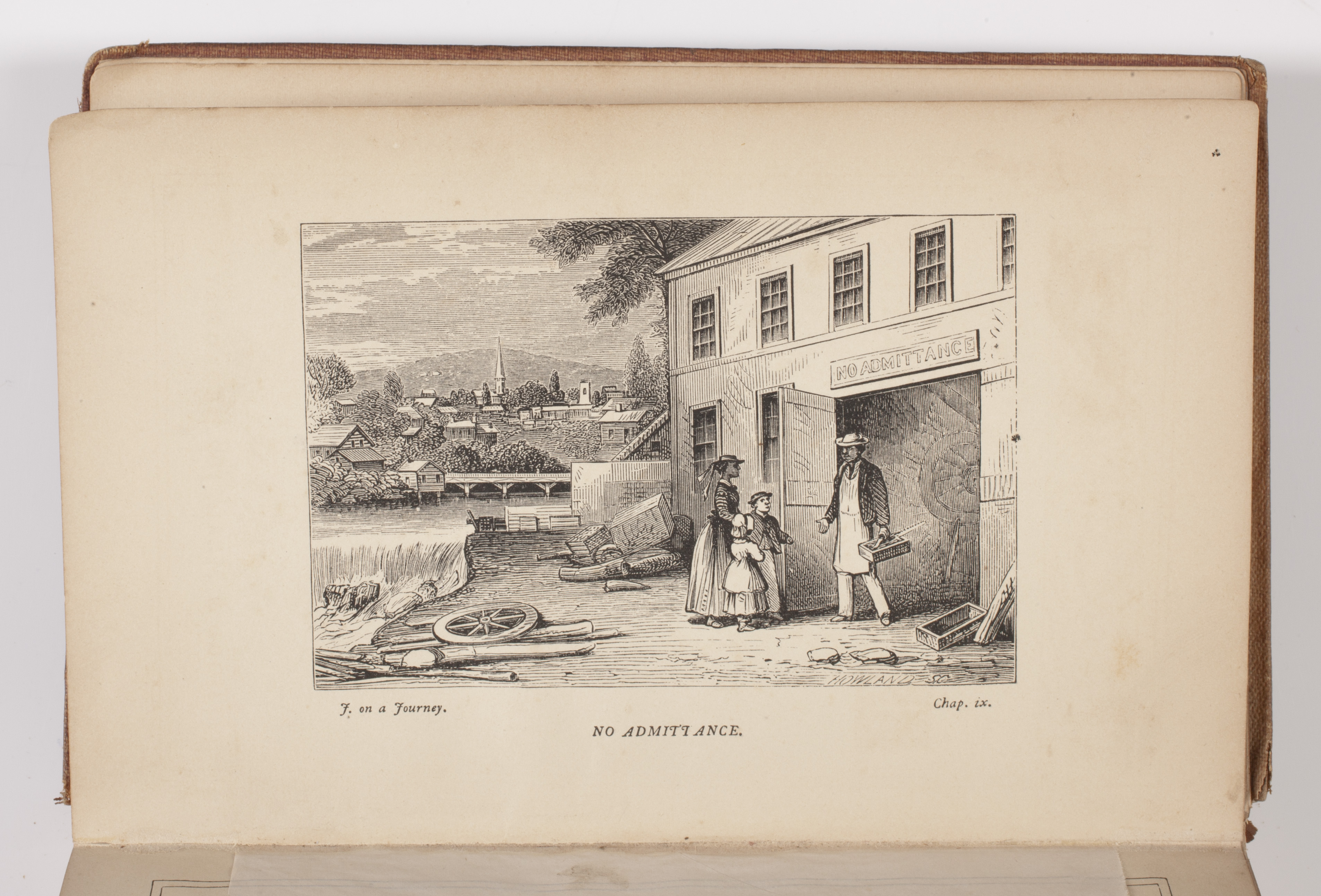
Abbott, Jacob. Juno on a Journey.The Juno Stories.New York: Dodd & Mead, ca. 1870.

Jacob Abbott’s Juno was among the first female African American protagonists of a children’s book series.  In this book, Juno is enlisted to take a little white boy named Georgie on a train journey by the boy’s father.  During this early fictional account of rail travel, Juno and Georgie make various side trips, as in this case of visiting a wheel barrow factory.  Although there is a “No Admittance” sign above the door (for safety reasons), the African American craftsman greets them at the door, and (probably attracted by Juno’s gracious presence) gives them a tour of his shop.  The gift of AAS member Charles H.B. Arning in honor of the Bicentennial.

Get Ready for the 2013 Adopt-a-Book Event!

On Friday, April 5th from 6:00 to 8:00pm, the American Antiquarian Society will be hosting our 6th Annual Adopt-A-Book event.  This event is an important fundraiser for the curatorial team at the Society, and monies raised will go towards future acquisitions of books, prints, newspapers, manuscripts, and children’s literature.

You can browse the entire catalog of the 100 items that make up the 2013 Adopt-A-Book list.  Fifty additional items will be available for adoption that evening only. Prices for adopting range from $25 to $500 and you can adopt in honor or memory of another person (or pet, or institution, or cause – which have all  happened in the past).  Books will be plated with a special bookplate spelling out the specifics of your adoption. As a bonus this year, if you pre-adopt via the online catalog list, entrance to the Adopt-a-Book evening on April 5th is free!

So, don’t miss the boat! Adopt!

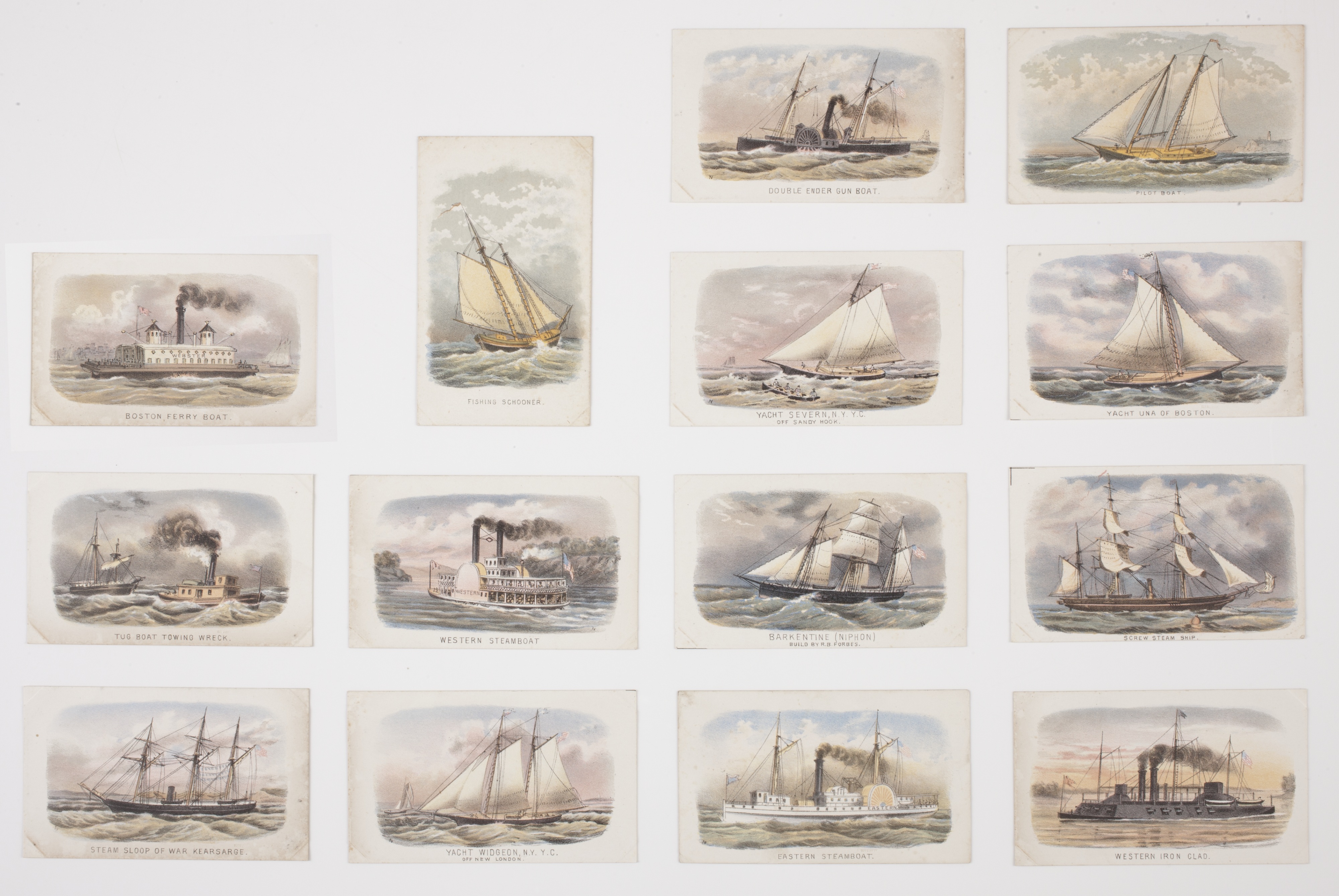
Boats, Sloops, Steamships and Yachts. Ephemera cards (set of 14), 1870-1890.

Adopt me for $200.00

These colorful cards of well-known warships, steamers, and yachts were intended to be collected and arranged in photograph-style albums and viewed in the parlor or nursery.  Louis Prang of Boston was a major producer of similar cards, issuing sets of flowers, adorable children, pets, urban views, and sea shells. Although this set is without imprint, it could well be a Prang production as it features several ships that berthed in Boston.

A Hairy Discovery

Former AAS intern Melissa Lydston worked in our Manuscript Department, processing a collection of family papers.  The Warfield Family resided in Providence, Rhode Island in the mid-nineteenth century.  The patriarch of the family, Daniel Warfield, was a soap maker and dye maker.  The collection proved to have more than just letters.  Read below for her findings.

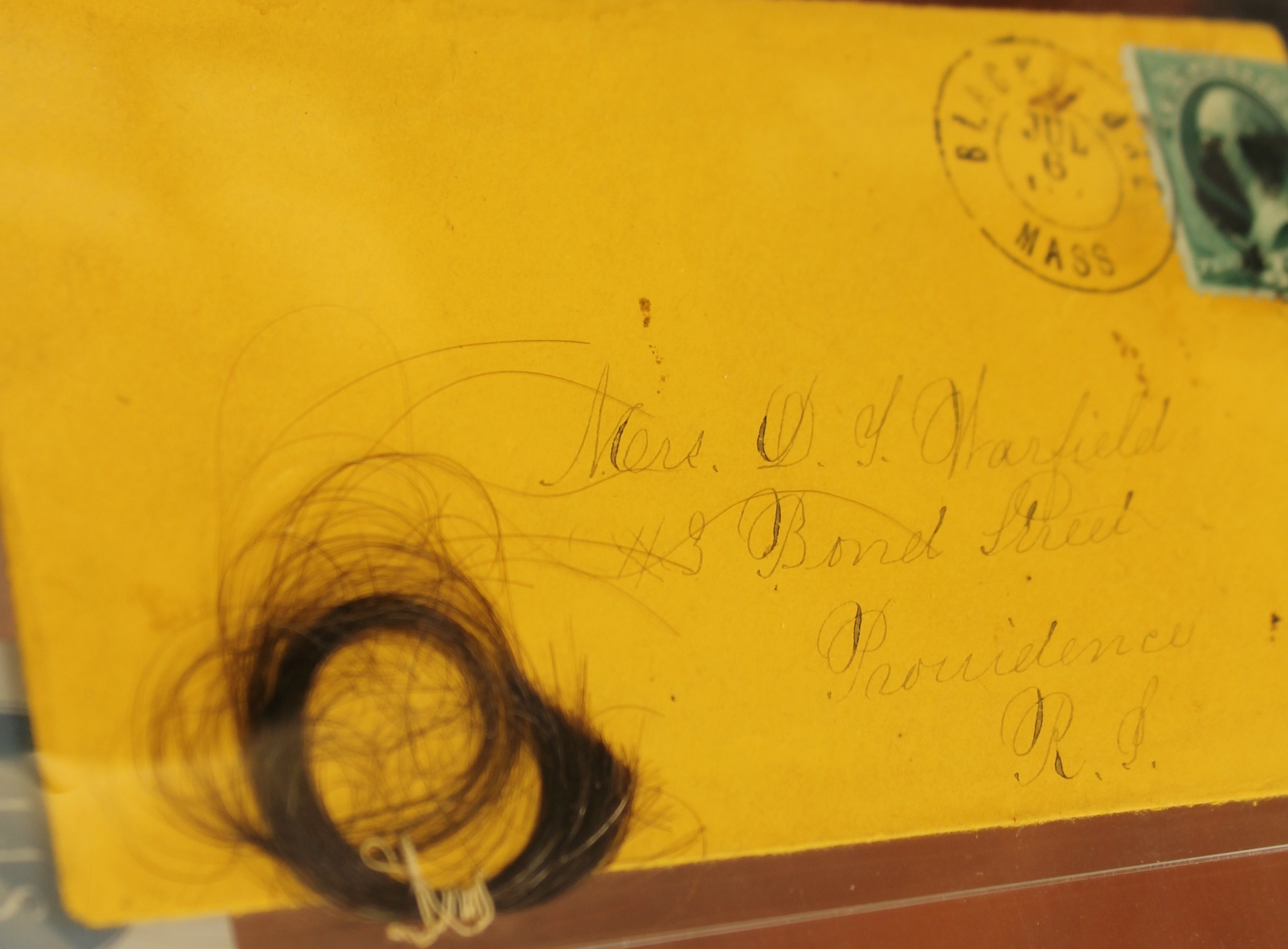
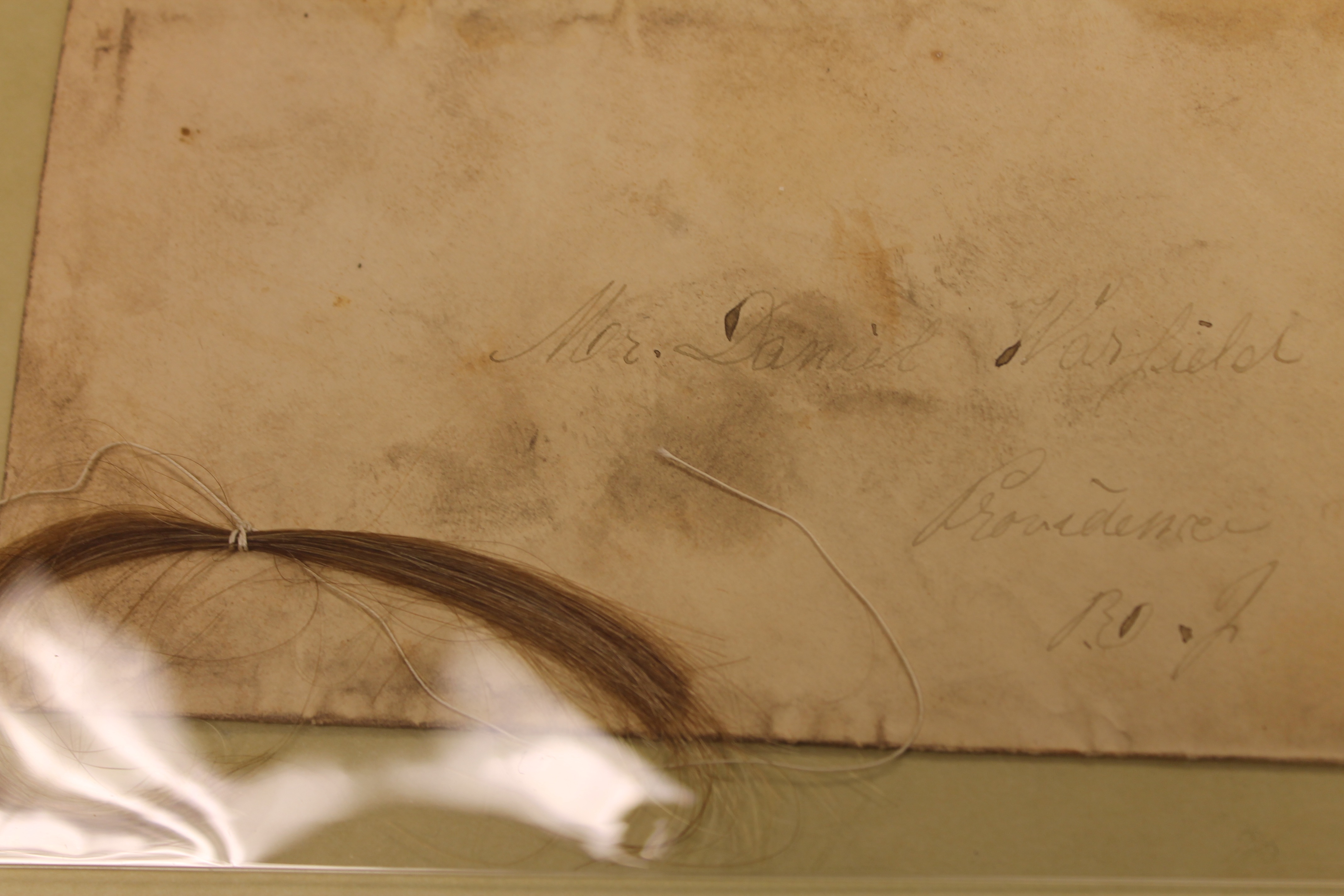
In the Warfield Family Papers, some of the most interesting letters contain more than just paper.  The Warfields exchange locks of hair with one another, for both superstitious and medicinal reasons.

In one letter, a friend of the family, Olive, asks Mrs. Emma Warfield to see if she has any friends in the spirit world.  Olive includes a lock of hair along with the request.  Her request aligns with Mrs. Warfield’s husband, Daniel Warfield’s, interests.  Daniel Warfield speaks about the “spiritual world” and seeks out spiritual meetings in Boston, as well as meetings in the Masonic Club and the Oddfellows.  He even falls upon his spiritual habits when bad luck strikes.  In one letter, Daniel writes to his wife from Newton Upper Falls, Massachusetts, saying that he may be discharged from his job.  He asks his wife to contact the spirit world for him.

The hair is also used as a prescriptive measure. Two separate letters with two different locks of hair are addressed to Daniel Warfield in Providence, Rhode Island. One letter includes a lock of blonde hair; the other includes a lock of brown hair. One belongs to Uncle George who is feeling “badly” and sends the hair to Daniel in order to determine his illness. Emma writes the letter for George and promises he will pay one dollar for the prescription. In another letter, Emma sends her own hair to get a prescription for her stomach. She includes the lock in order for Daniel to “state whether it is caused by [her] hair or not.”

It seems that hair is a link to the spirit world for the Warfields, and perhaps worth far more than the words inside the accompanying letters.

The Acquisitions Table: Atlas of Bergen County, New Jersey

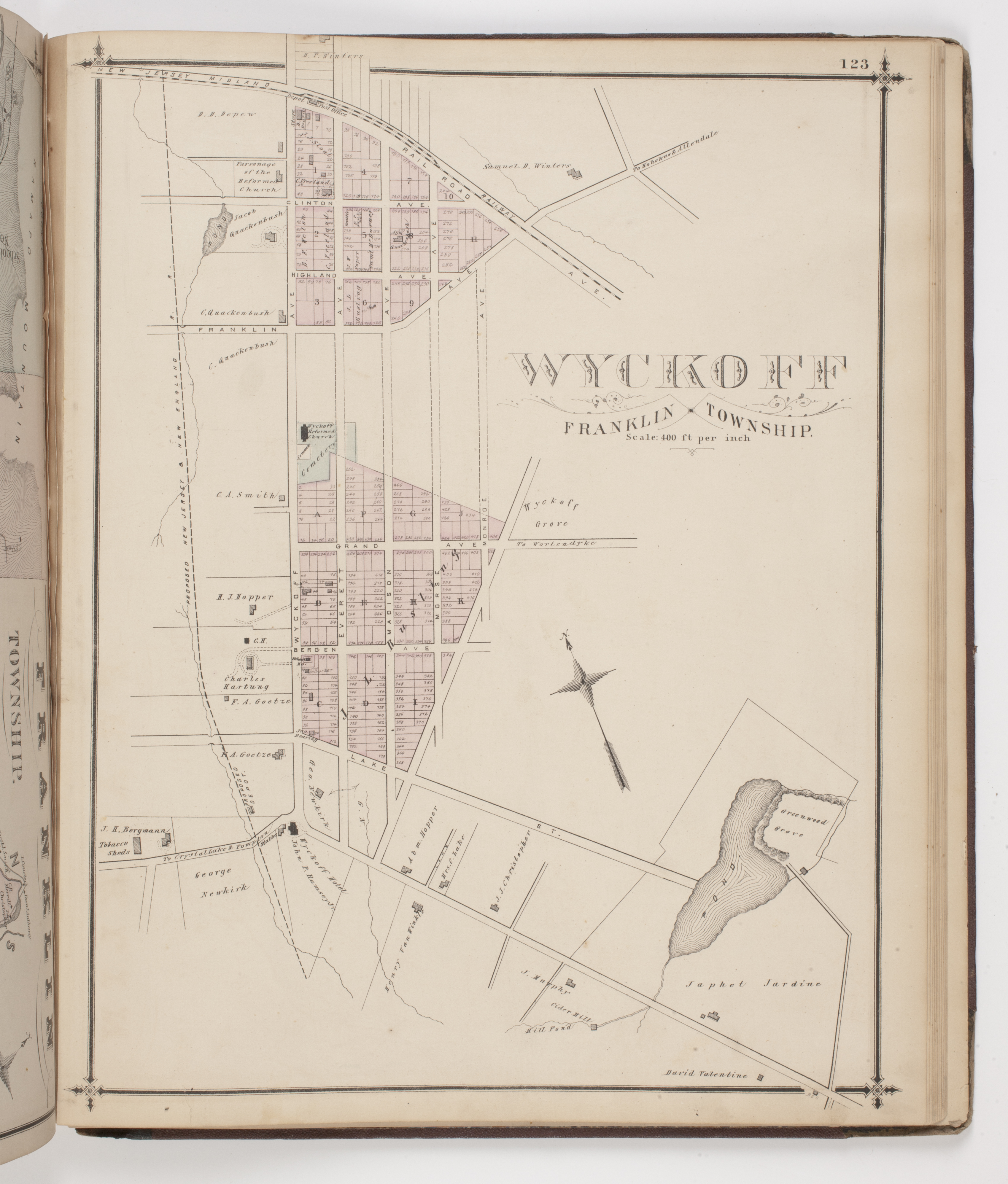
Atlas of Bergen County, New Jersey.[Reading, Pa.]:  Published by C.C. Pease, successor to A.H. Walker, [1876].

According to the bookseller’s description, this Bergen County atlas is the most elaborate and attractive of all New Jersey county atlases of the 1870s.  It is also one of the most difficult to find, as many copies have fallen victim to the breakers and plate peddlers attracted to its lithographed views of scenery and architecture, as well as hand-colored maps.

The volume is full of the kind of detailed information social historians and genealogists cherish.  It starts at the macro-level with world and continental maps, but quickly narrows its focus to North America, then the United States, then New Jersey, until it finally hones in on its target: Bergen County.  The bulk of the atlas is at the level of each individual township and village – mapping each plot of land and house.  At its most micro, it depicts David Knowles’ Mill (in Lodi) and George Miller’s Residence (in Midland).  The “street view” depicted here is quite different from today’s Google Earth view, but one imagines it will change even more as rebuilding continues in the aftermath of 2012’s Hurricane Sandy.

When is a Valentine a Newton?

Attribution is something libraries and museums struggle with every day.  Who is the sitter in this portrait?  Who is the author of this pamphlet?  Often the objects give us clues, but not always.  Sometimes they even lead us astray.  This is the story of a pair of daguerreotypes at the American Antiquarian Society and how they started out being associated with one person and ended up being someone completely different.  In this case, new digital technologies facilitated the research.

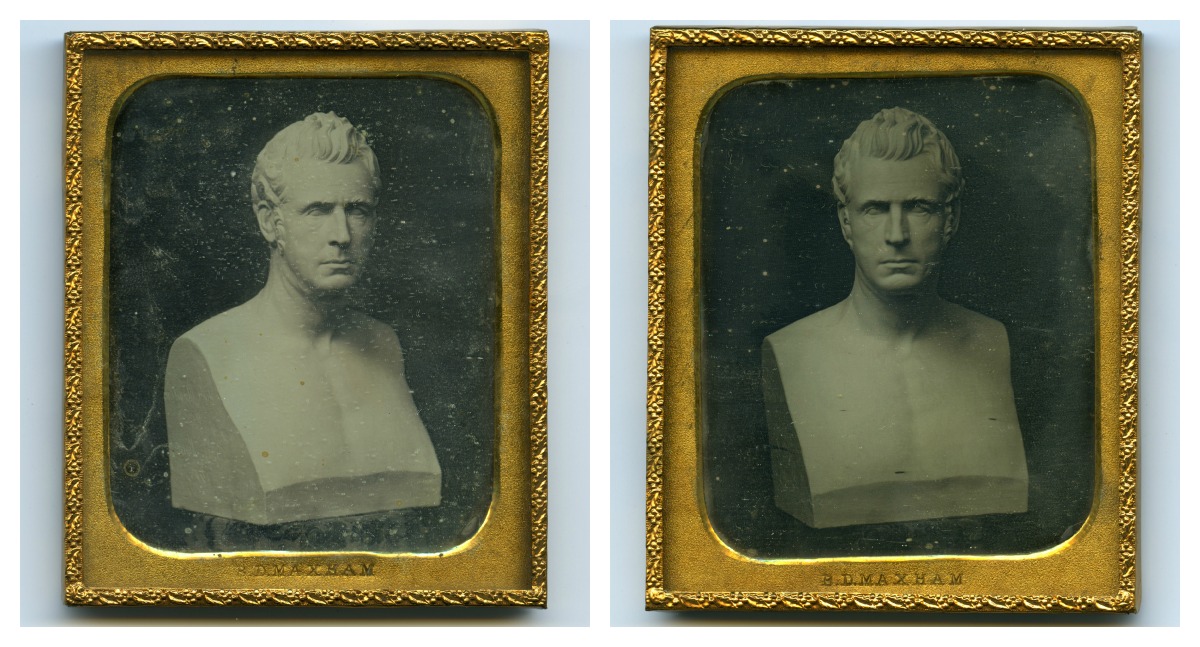
The pair of photographs depicts a sculpted bust of a man with wavy hair and a stern expression:

They date from the early 1850s and were made in Worcester by the photographer Benjamin D. Maxham.  Maxham had a shop in the city from 1850 to 1858 and made many daguerreotypes of Worcester residents.

The two images are not cased, but still have their backing pieces, edge preservers and mattes.  The mattes are stamped by Maxham.  Inscribed on the verso in pencil by an unidentified hand is the name “Elmer Valentine.” Valentine was a teacher of penmanship in Northborough, Massachusetts, and the author of several instructional manuals on writing which were published in Worcester.  The daguerreotypes were listed as depicting Valentine in the Society’s inventory and in the online resource for daguerreotypes, as well.  There are no notations regarding the identity of the artist of the bust.

It was not until recently, when high resolution scans of the images were loaded into the Society’s digital asset management system (GIGI, http://gigi.mwa.org/) that I began to have doubts about the sitter being Valentine.  I downloaded the scans of the two daguerreotypes and noticed a faint inscription on the side of the bust.  It is barely legible to the human eye at actual size.  Intrigued, I reversed the digital file (the technology of the daguerreotype resulted in the original photo being a mirror image of reality), and enlarge it immensely. At  400% magnification the incised inscription reads:  “Doct. Newton / by / B. H. Kinney / 185[?]”  The date is illegible due to shadows, even at 400%.

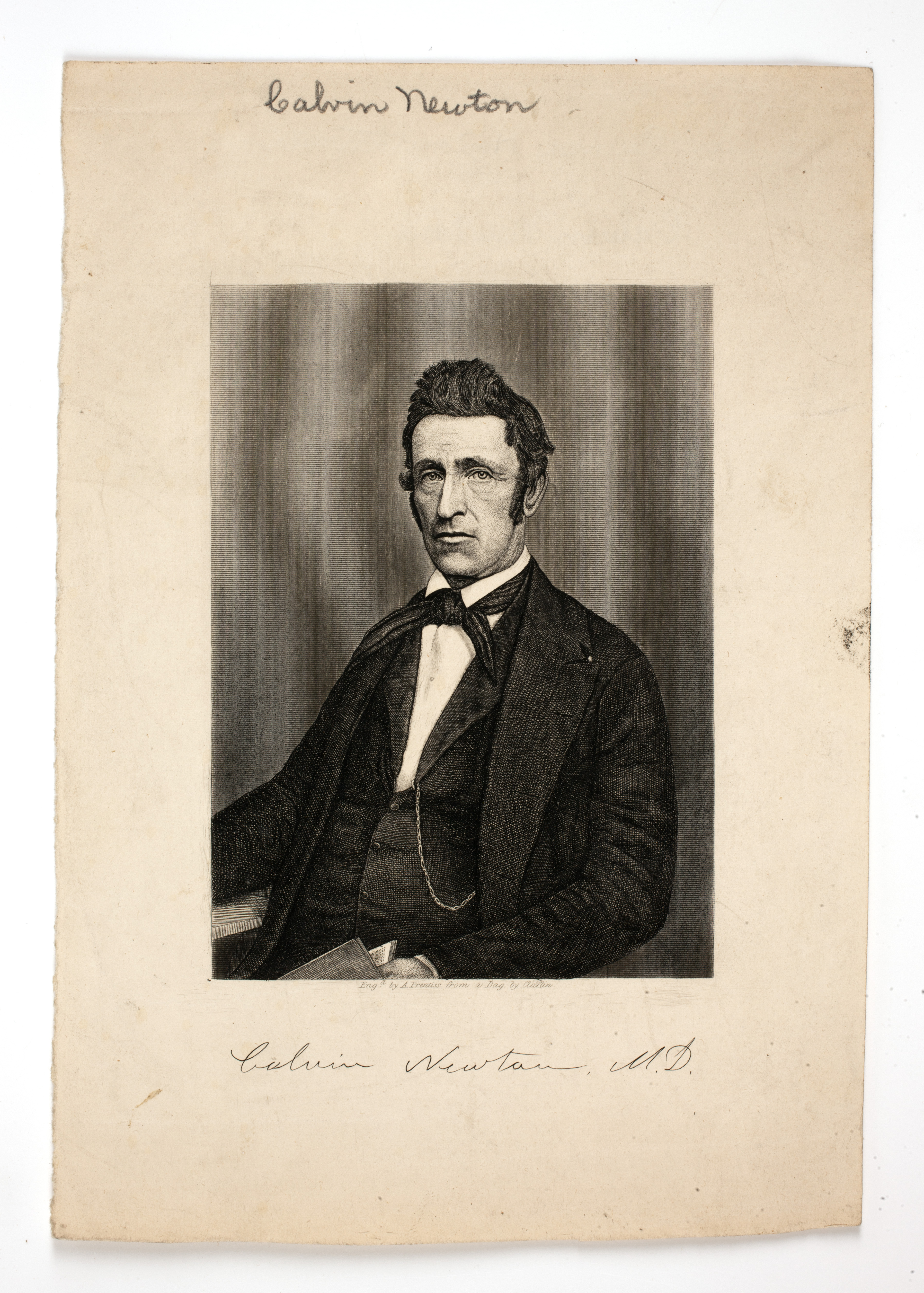
This discovery led me to the AAS catalog where I found that Dr. Newton was likely Dr. Calvin Newton (1800-1853) who had a medical practice in Worcester and was the founder of the Medical College on Union Hill.  He was also the editor of several periodicals, including the New England Medical Eclectic and The Worcester Journal of Medicine, both of which were published in Worcester.  In a biography published the year after his death, Newton was described as “a powerful man physically, a man of large mould, a great body, a great brain; his frame vigorous and well proportioned, every part alive with active, vital force.” He died of typhoid fever in August of 1853. An engraving of the doctor housed at the Society (see right) shows some similarities with the bust, particularly in the shape of the nose and the hair style.

Another avenue for investigation concerned the identity of the sculptor, B. H. Kinney, whose work is represented elsewhere in the Society’s portrait collection (http://www.americanantiquarian.org/Inventories/Portraits/39.htm, and http://www.americanantiquarian.org/Inventories/Portraits/130.htm).  In 1985, William Wallace, Executive Director of the Worcester Historical Museum, published a catalog of the work of Benjamin H. Kinney (1821-1888).  I pulled the catalog off the shelf but found no mention of Newton or of Valentine (just in case!).  I emailed the images over to Bill at the WHM and he called me right away to discuss.  His research on Kinney was based on newspaper searches and work with a manuscript archive.  He agreed that the bust certainly could be the work of Kinney, and that it would not have been unusual for Kinney to produce a bust after the death of such a prominent local person.  From the daguerreotype, it appears that the bust is made of plaster, in preparation for a marble carving.  Kinney made a preparatory plaster bust of Isaiah Thomas, which was commissioned for AAS in 1859, and still exists in the collection (http://www.americanantiquarian.org/Inventories/Portraits/129.htm).  Perhaps the medical school or a family member commissioned the piece after Newton’s death in 1853.  The date is obscured by shadow, unfortunately, but could be 1854 or 1857.  A quick check of the Worcester newspapers came up empty, but research continues to track down the commission details.

In the end,  AAS will be updating our online resource to reflect this new information, giving Dr. Calvin Newton a new prominence and firmly locating the bust in the oeuvre of Benjamin H. Kinney.  Put it down to the power of Photoshop, or to the persistent curiosity of the curator, or both … but without the ability to enlarge and rotate the digital file, Dr. Newton would probably have remained Mr. Valentine!

The Acquisitions Table: The Encyclopedia of English Grammar

Hall, WilliamThe Encyclopaedia of English Grammar: Designed for the Use of Schools.  Wheeling, Va.: John B. Wolff, 1849.

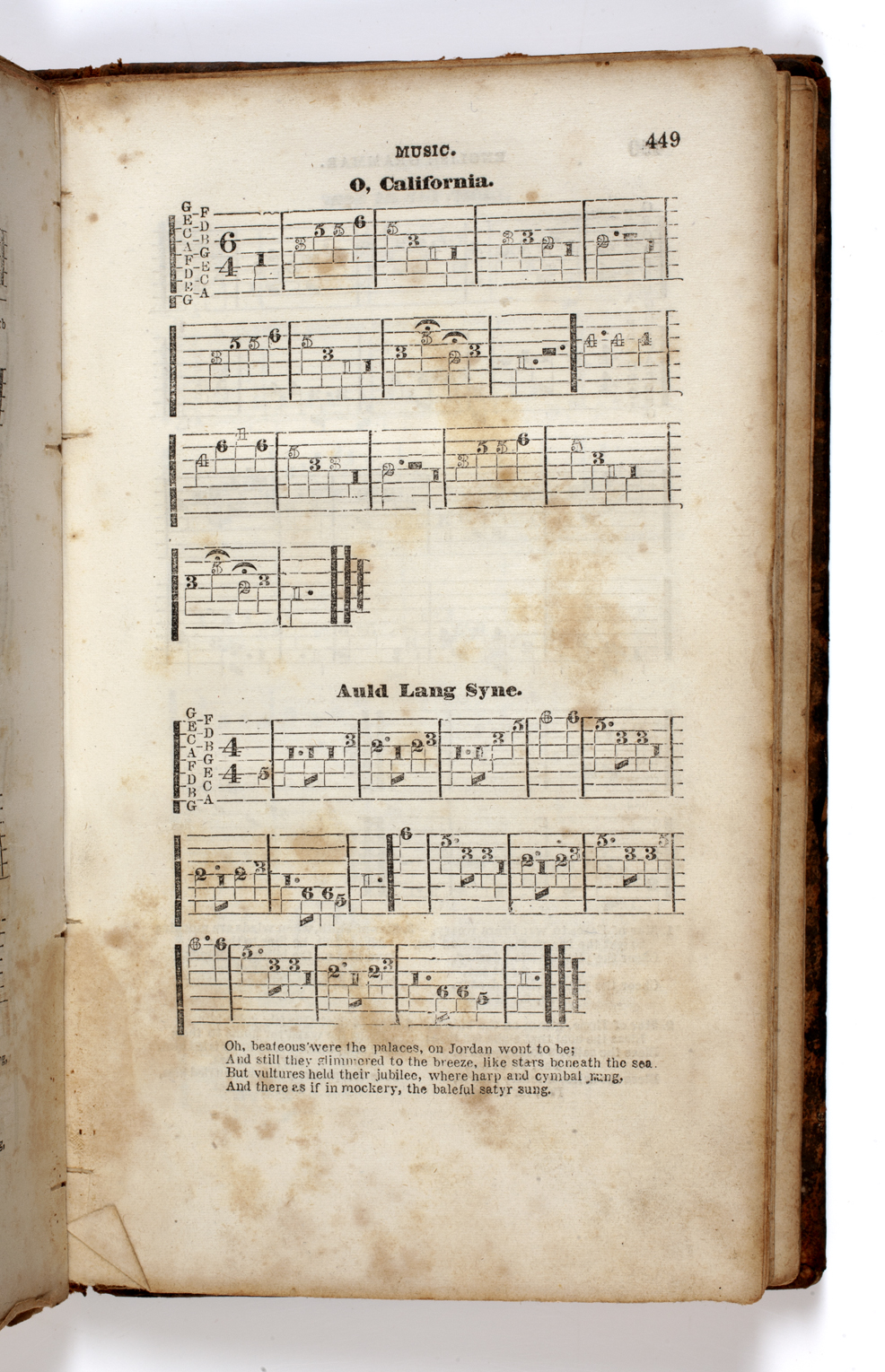
Like newspapers, textbooks were frequently among the earliest imprints issued in regional outposts like Wheeling, Virginia (later West Virginia).  Such is the case with William Hall’s Encyclopaedia of English Grammar, which was first copyrighted in nearby Ohio.  This image is taken from a chapter on music instruction found at the end of the book—embodying the porous and flexible nature of subjects treated within one textbook in antebellum America.  The songs themselves: O, California and Robert Burns’ Auld Lang Syne reflect popular musical taste.

Identifying the Unidentified, Part IV

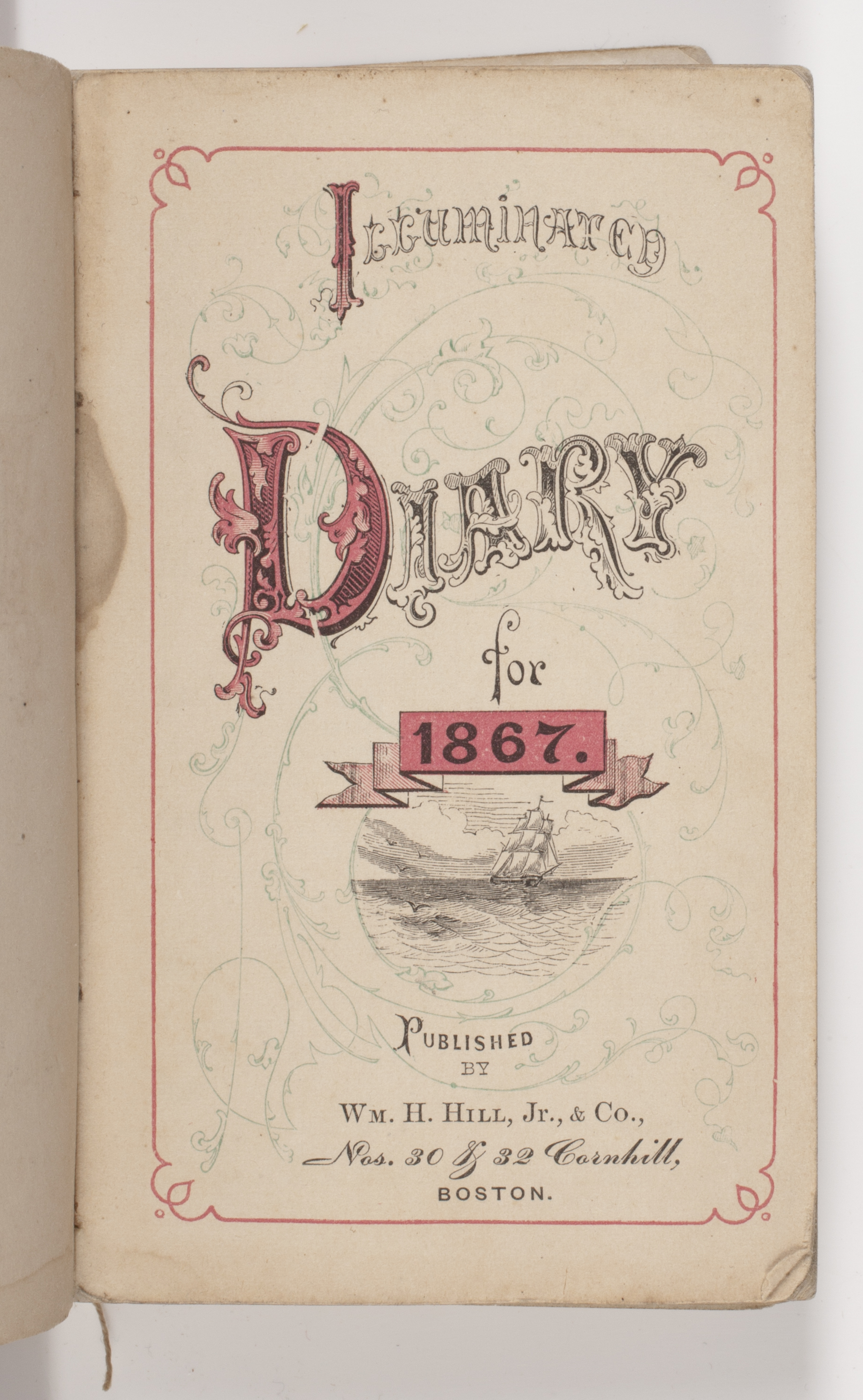
Over the past few weeks, we’ve been featuring posts by former AAS intern Lucia Ferguson (Smith College) about her experience identifying an unidentified diary (Part I, Part II, and Part III).  This week she shares her concluding thoughts.
Researching the Martin family proved mysterious and frustrating. And still, as I researched the lives Henry’s family lived after his death, I felt a strange fascination. Here is what I learned.

I have not found Henry’s date of death, but his wife filed for her widow’s pension on April 18, 1896. He must have died quite young—53, at the oldest. In 1910, Lizzie and 29-year-old Minnie lived together in Lyndeborough. Minnie was a schoolteacher; Lizzie ran the farm. In 1920, she was listed as head of household in Lyndeborough and owned her house. Her occupation was Farmer and Manager. Minnie and her husband Fred Kent (formerly a hired hand at the farm) lived with her. (Fred died in September 1973. They do not appear to have had children.) Lizzie died in Lyndeborough in May of 1922.

I found a death notice for Henry’s younger brother Moses: “Died, in Blakeville, N. H., April 24, 1870, Moses, son of Samuel and Lovilla Martin, aged 17 years. May the Lord sustain the afflicted family. Funeral discourse from Rom. 8:28.” (“And we know that in all things God works for the good of those who love him, who have been called according to his purpose.”)

This notice appeared in the Advent Review & Sabbath Herald, published in Battle Creek, Michigan. It was the only death notice published in that issue, buried in a roster of upcoming camp-meetings across the northeastern corner of the United States. In 1870, another Martin son, Levi, had recently married his second wife Sarah Wilkinson; her name appears on the list of subscribers to the Advent Review. Was it simply Sarah that got the obituary published in the Adventist paper, or were the Martins also members of that faith?

Levi seems to have been quite close to Henry, both in age and in friendship. He is frequently mentioned throughout the diary. He is also the member of the Martin family with the most information easily available. I discovered that he was married four(!) times, some in quick succession: 1868, to Clintina A. Atherton (age 16; he was 18); 1870, to Sarah Wilkinson; 1879, to Minnie A. Smith; 1899, to Nellie Isadore Kimball-Beals.

Lizzie inscribed the following poem in the back of the diary. Written by Barbara Johns, it was printed in Arthur’s Home Magazine in 1865. Lizzie wrote the stanzas out of order and changed a few words, either intentionally or mistakenly.

Henry—
Look upward with a steady faith / Hope’s brightness gayly borrow / And recollect tho’ dark today / It may be bright tomorrow / Forget not that afflictions deep / By God’s own grace is sent; / The one most precious is refined / For water rock was rent / And tho’ the clouds of sorrow lower / Yield not to discontent, / But midst the darkness and the gloom / Bless God for sunshine sent.

Recently I climbed Mount Monadnock. I felt the thrill of circumstance and time as I looked out over the countryside Henry Martin called home. He probably climbed this mountain too, I thought—probably saw this—but for him, the view was a way of seeing something familiar made new. It was humid, the air gently steaming as we ascended to find that view—but the sky was dark, thunderclouds rolled in over our heads, and songbirds fell silent. The air was heavy. It began to rain.
Memorial Service for Mr. McCorison

A memorial service for Marcus A. McCorison will be held on Saturday, February 16 at 11 a.m. at United Congregational Church, 6 Institute Road, Worcester, Massachusetts with reception following at the American Antiquarian Society, 185 Salisbury Street, Worcester.

For more information go to: http://www.americanantiquarian.org/mccorison.htm.

The Acquisitions Table: Notes in College

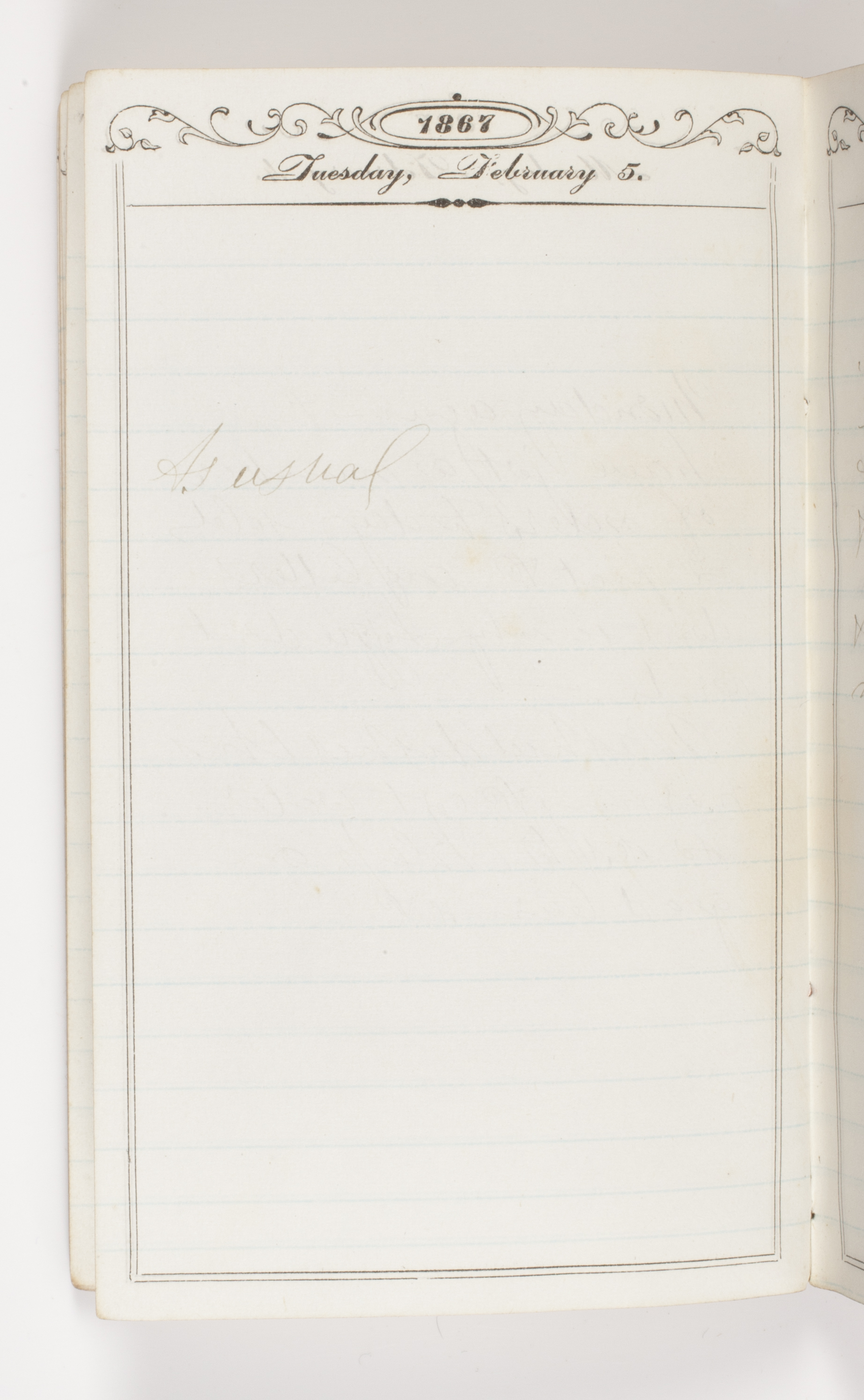
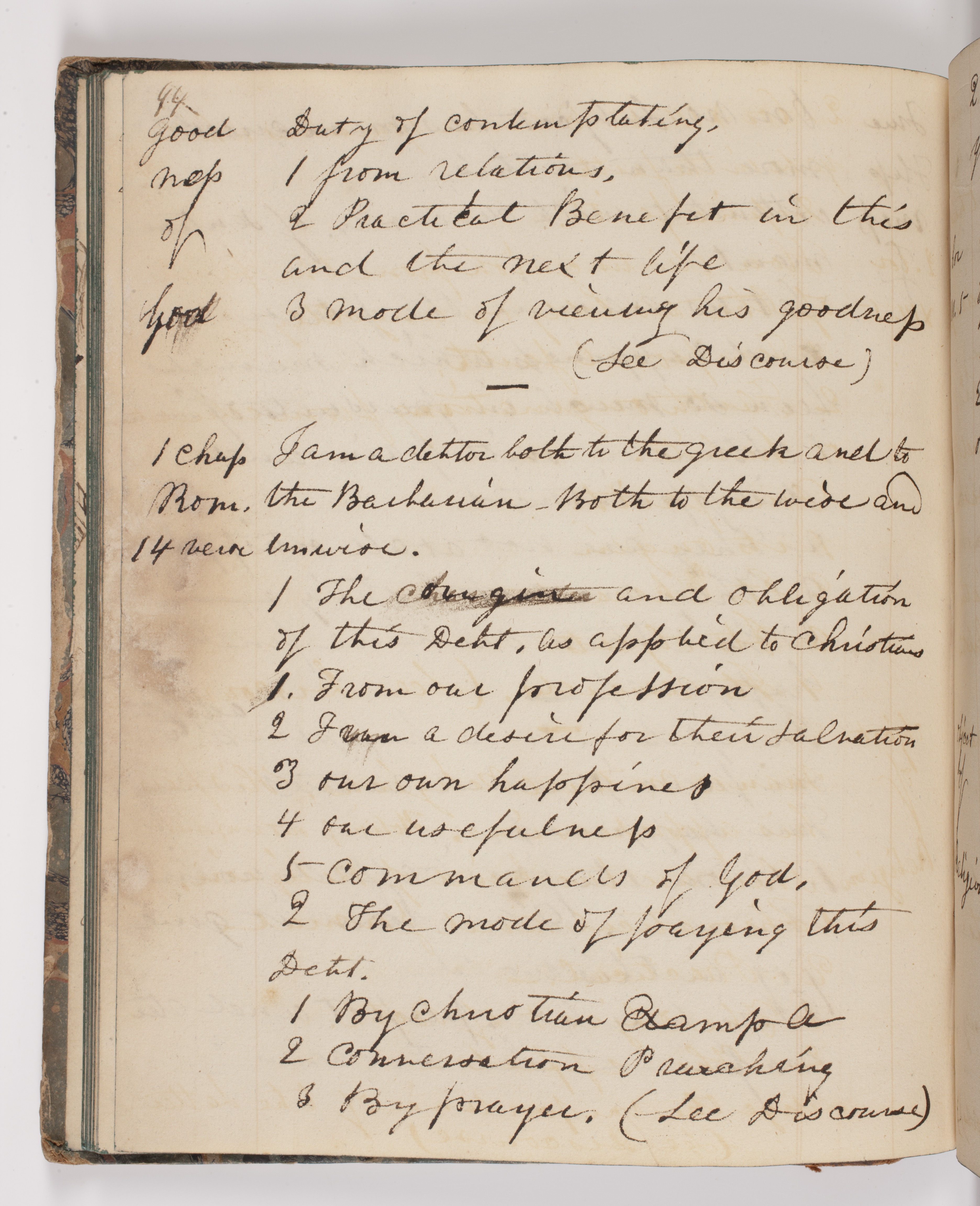
Downer, David R., “Notes in College,” 1827-1828.

David Robinson Downer (1808-1841) was born in Westfield, New Jersey.  He attended Yale College, graduating in 1828, and then entered the Auburn Seminary, eventually becoming minister of the West Presbyterian Church in New York City.  This volume consists of theological notes made by Downer during his senior year at Yale. There are entries on Biblical texts and a variety of theological subjects, and a “List of Books,” all theological, in the rear of the volume.

Remembering Marcus A. McCorison

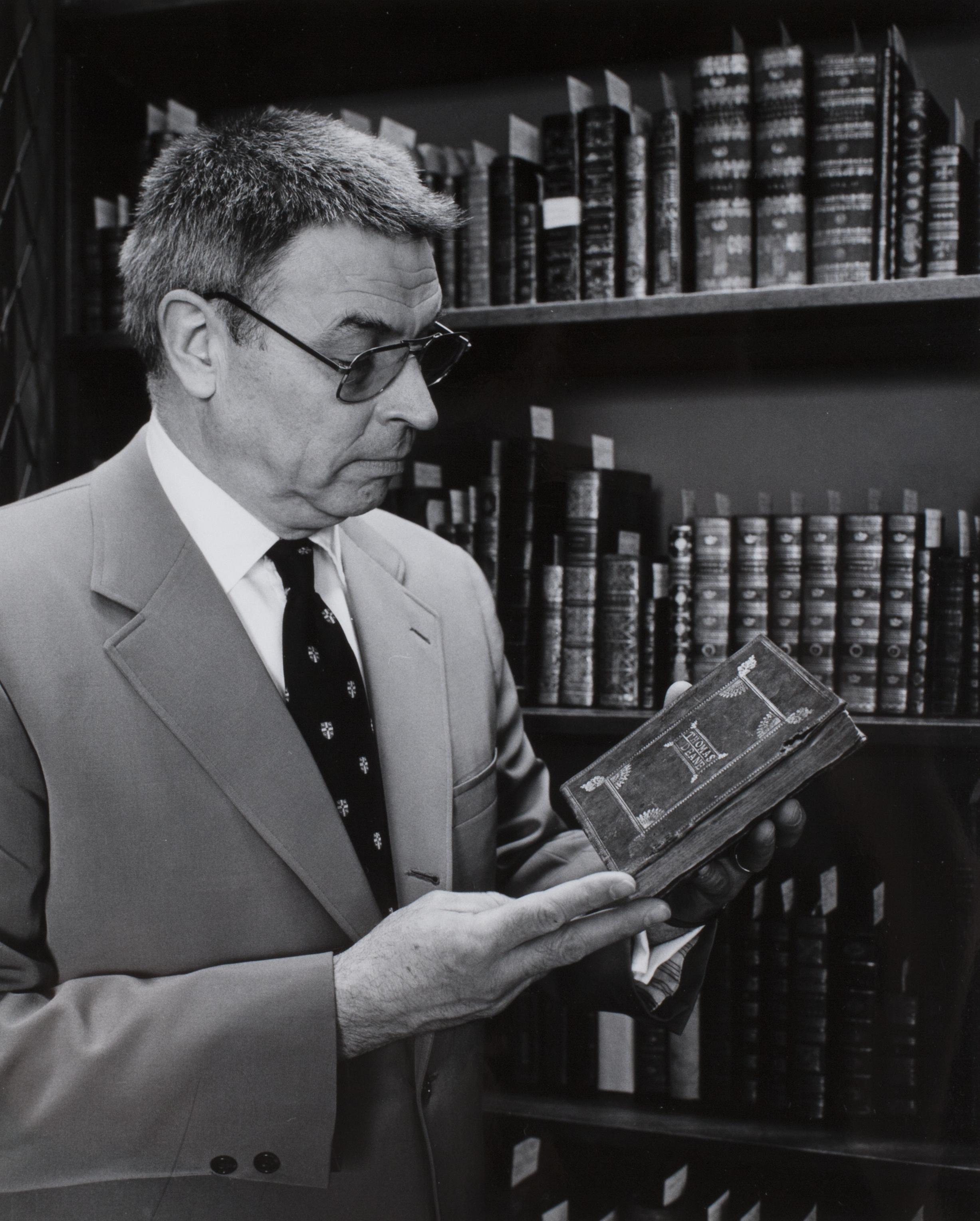
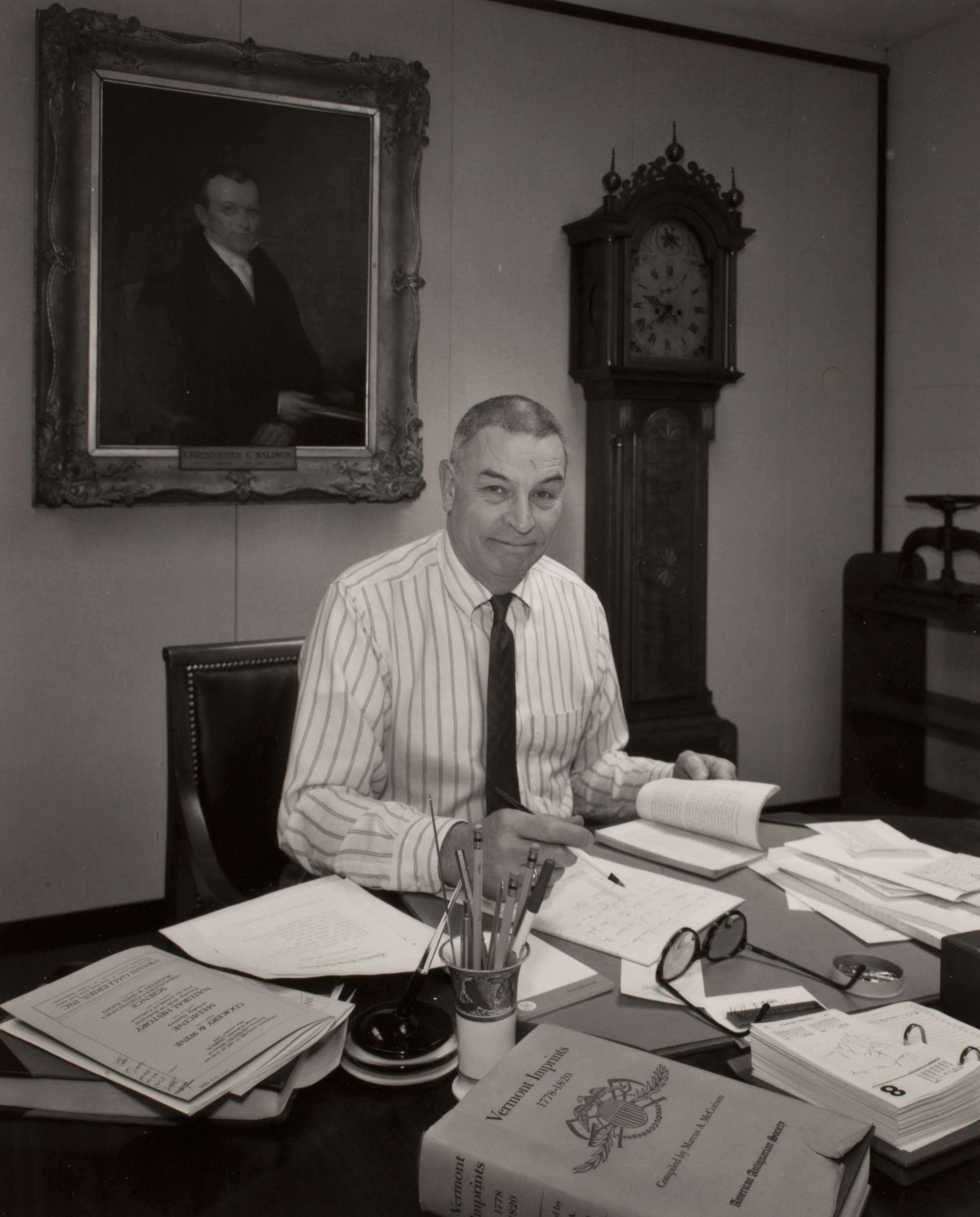
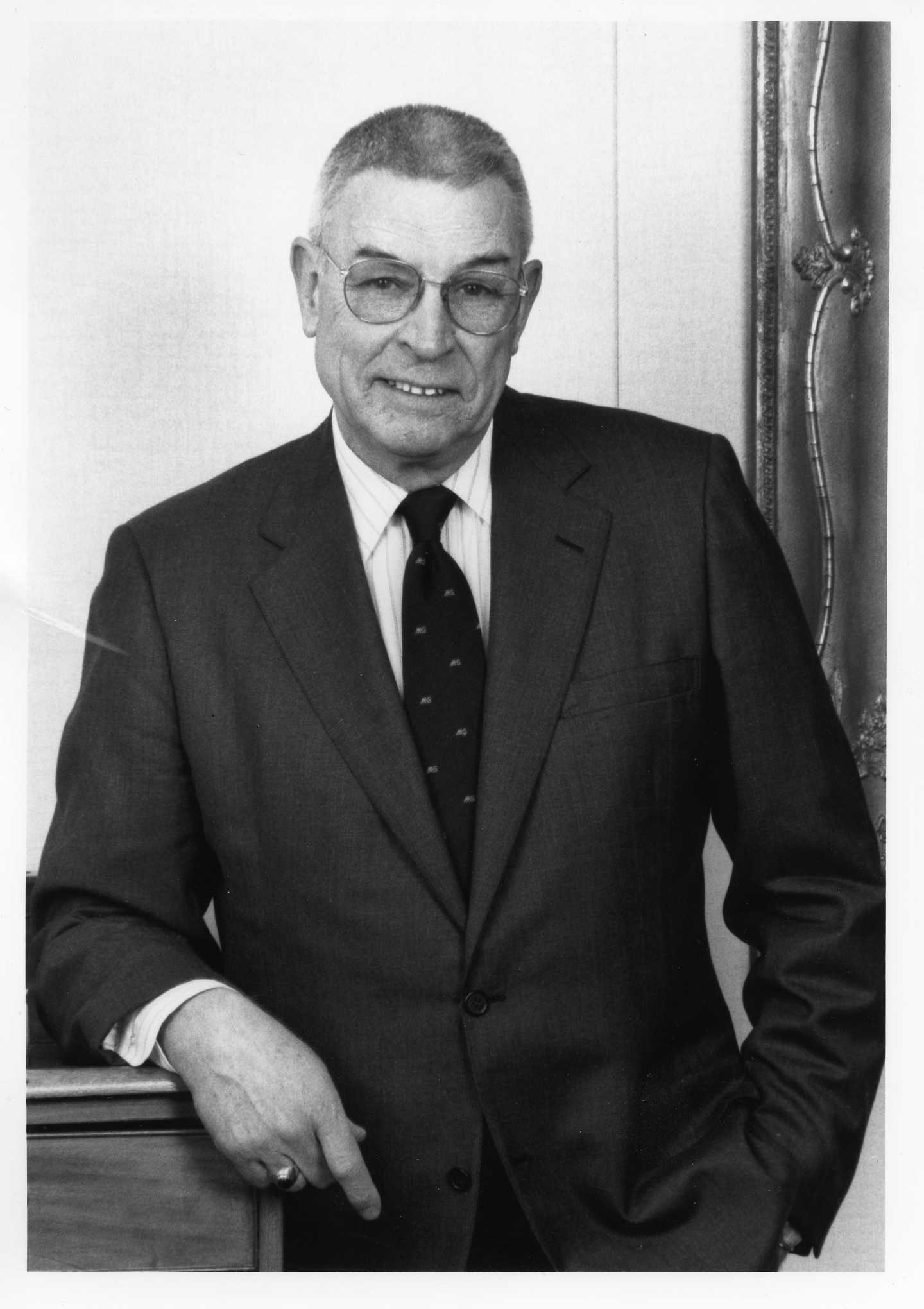
As we began planning a lengthy piece on AAS president emeritus Marcus A. McCorison for the Almanac newsletter last week, we pulled photographs of him out of the archives for possible use as illustrations.  I was struck by this photograph:

In it, Marcus is sitting in his office, which is now my office.  On the desk in front of him are papers, a Swann auction catalog marked with our wants, and a copy of his Vermont Imprints. Both the tall clock and the portrait of 1830s AAS librarian Christopher Columbus Baldwin are in the office today, within sight as I write this.

I came to AAS as curator of manuscripts in 1990, just two years before Marcus retired, and in fact I got to know him much better in the years after he left AAS. He continued coming to the library for a variety of research projects, and he routinely sent all of us curators items of interest from book dealers’ and auction catalogs.  His knowledge of the AAS collections was such that he was rarely wrong when he found something he thought we didn’t own.  He was a true bookman of the kind that scarcely exists anymore.

He was particularly generous to me when I became the Marcus A. McCorison Librarian in 2007.  We spent a most memorable day in New York City in 2008 after he had proposed me for membership in the Grolier Club.  On an almost unbelievably hot and humid June day he took me to lunch at the Century Club, where the staff  knew him by name, and then to visit a former vice-chair of the AAS council, and then to the Grolier Club to meet the admissions committee.  It must have been an exhausting day for him (it certainly was for me) but he propelled himself through it with the energy he brought to everything. I’ll miss him, as will countless others who knew him.

Saying Goodbye to the President Emeritus

This past weekend we said goodbye to a dear friend and colleague. Marcus A. McCorison – librarian, director, president, and then president emeritus of the American Antiquarian Society – passed away on Sunday, February 3. He will be sorely missed. Although a more detailed homage to Mr. McCorison’s contributions to the Society will be published in our upcoming issue of the Almanac, a full obituary and details about memorial services and donations to his book fund at AAS in honor of his life’s work are now available on our website at: http://www.americanantiquarian.org/mccorison.htm.

As current president Ellen Dunlap remarked upon presenting Mr. McCorison with the Society’s highest honor – the Christopher Columbus Baldwin Award – in 2010, “When I think of the great distance this institution has traveled over the course of these 50 years, I am reminded that it was Marcus who was the trailblazer. Along the way, he has imparted to us a great sense of responsibility and stewardship, not just for the collections, but also for the sterling reputation of the Society as a model of all that a great research library should be. By his example, he has challenged us to make no small plans, to maintain standards of excellence, and to be entrepreneurial, even ambitious, in the pursuit of our unique bibliographical agenda – building and preserving a great collection and making it truly accessible.” Here’s to Mr. McCorison and his legacy that will continue to live on as AAS enters its third century.

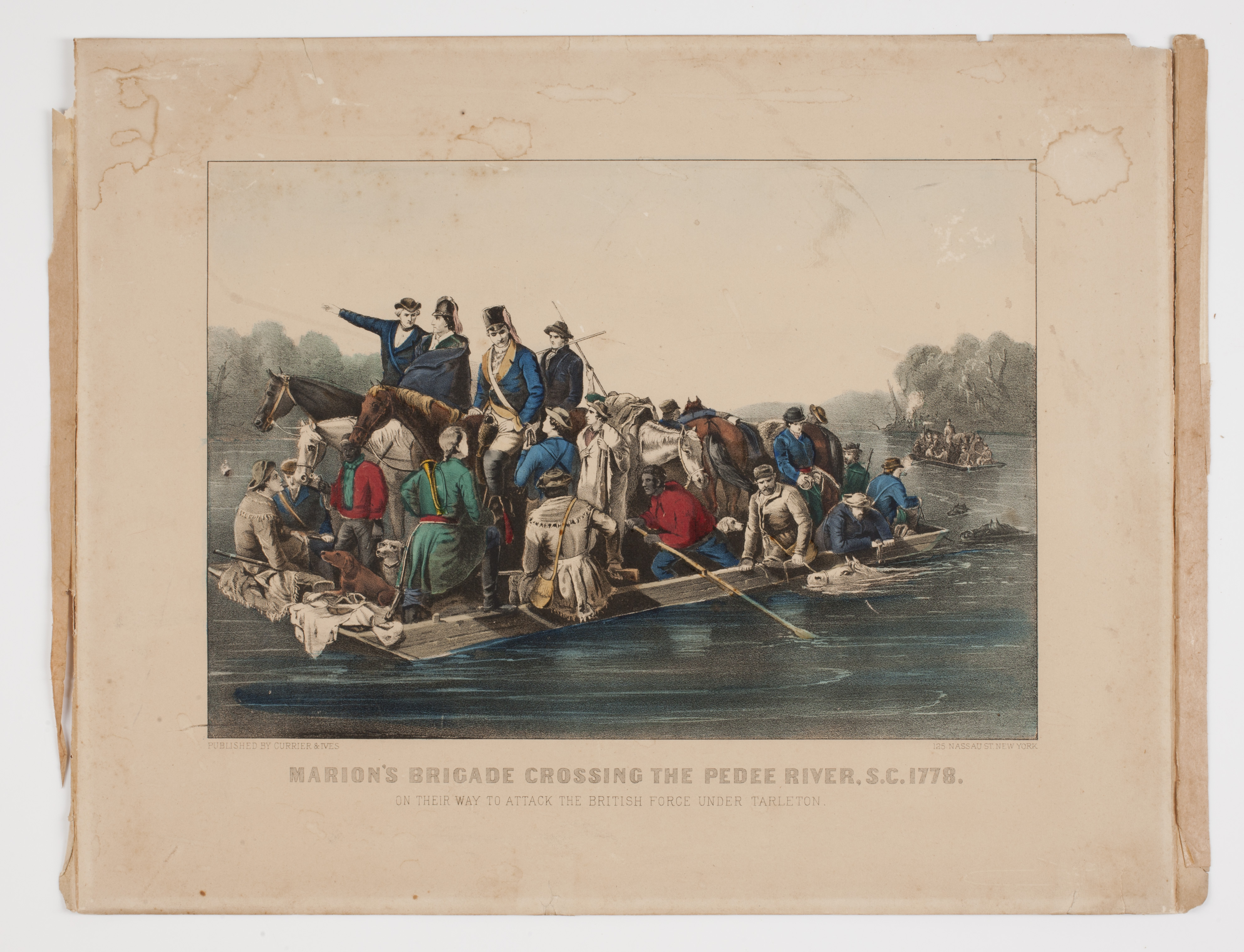
The Acquisitions Table: Marion’s Brigade Crossing the Pedee River

Currier & Ives after William Ranney, Marion’s Brigade Crossing the Pedee River, S.C., 1778, on Their Way to Attack the British Forces under Tarleton. New York: Currier & Ives, between 1872 and 1874.

Although founded in the 1830s, the firm of Currier & Ives continually produced historical subjects, printing images of the American Revolution and scenes from the colonial era and early Republic. Portraits of Washington and John Adams were published alongside contemporary images of Lincoln and Grant.  There was clearly a market for these pieces, as they were produced into the sunset years of the firm in the 1870s and 1880s.  This Revolutionary War era image of General Marion crossing the Pee Dee River in 1778 was based on a painting made by the American artist William Ranney in 1850.  Ranney’s composition had also been issued as an engraving published by the American Art Union in 1852.  This post-1870 hand-colored lithograph indicates that images of the crafty military hero known widely as the “Swamp Fox” had a long life and were still of interest to Americans nearly one hundred years after the Revolutionary War was over.

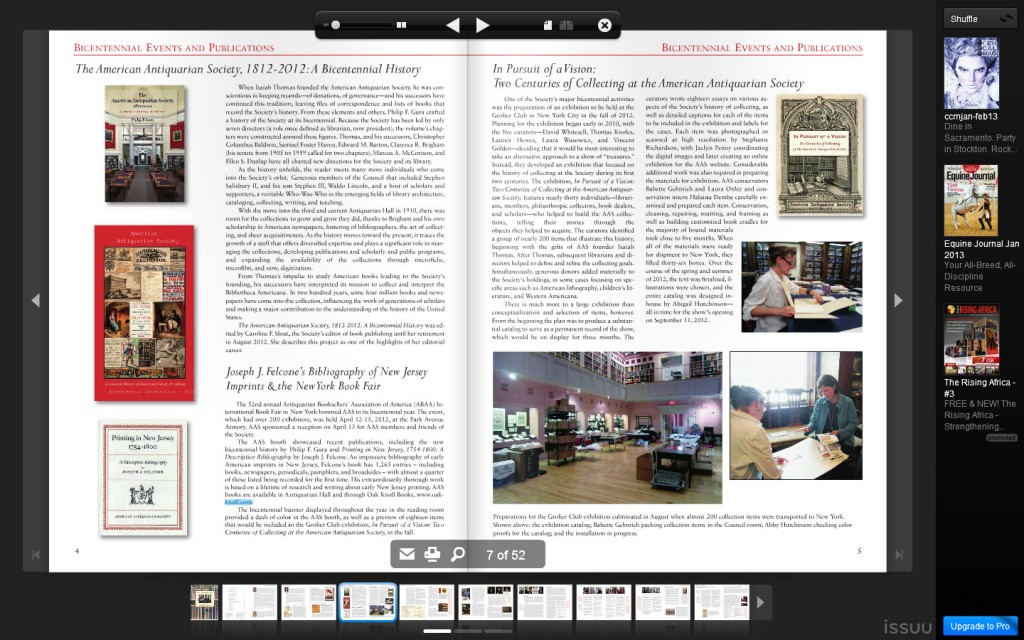
Reflecting on a Bicentennial Year: 2012 Annual Report Online

In case you have not seen it yet in its printed form, we are very pleased to have posted our 2012 Annual Report online.  Last year was full of celebrations and events to do with our Bicentennial, but that in no way marginalized the full year we had of fellowships, conferences, public programs, book publications, collection acquisitions,  seminars, and the general productive ferment of a flourishing institution.  There is something for every taste and interest amongst it pages, and we hope you will have occasion to read through it and see what a year it was!

Identifying the Unidentified, Part III

Last week, former AAS intern Lucia Ferguson brought us through some of Henry Martin’s (a previously unidentified diarist) daily routines.  Read on to learn about his experience as a soldier in the Civil War, and a miner in a goldmine.

After working as a farmhand in his teenage years, Henry served in the Civil War. He signed up in September 1864 and was enlisted in K Company of the 1st New Hampshire Cavalry Regiment on March 14 of that year. In the diary, however, there is scant evidence for his military career—just two or three mentions of “seeing Mr. Barrett about my pension.” Although Henry’s interior life certainly doesn’t overwhelm the pages (the diary is hardly a masterpiece of introspection), I found it interesting that it took me a very long time to identify him as a veteran at all. This goes back to the idea that a diary is, as a way of recording a life, very much grounded in the present, with little room for a sense of the past.

Henry’s record in the Register of Soldiers and Sailors of New Hampshire (1861-65) lists him as having been wounded. But we don’t know anything about his life in 1864, not really. All we know, so far, is within the pages of his diary.

In late June, Henry goes to work as a hand at a brand-new goldmine (the Diamond Ledge site in Dublin, New Hampshire, owned by Levi and Moses Fairbanks). He remains at work there until September 14.

Henry is proud of his work, writing on August 10: “very good luck to day I held the drill and loaded the blasts etc / had to sharpen drills…” But overall, the work was difficult and the experience lonely. Henry’s most emotionally charged entries were all written during those months at the mine.

God help me and hold me up. Started for P[eterborough] again walked to my boarding place. The first from Jim was you look as though you had been crying. I must compose myself better– (Sunday, August 25)

Work on ledge / it seems so diferent / all the hands have the blues so I am not noticed. O that I might be with you Lizzie— (Monday, August 26)

If you drive through Peterborough to Dublin today, you can find Gold Mine Road.

Check back next week for Lucia’s final thoughts on her research into Henry, and the rest of the Martin family.

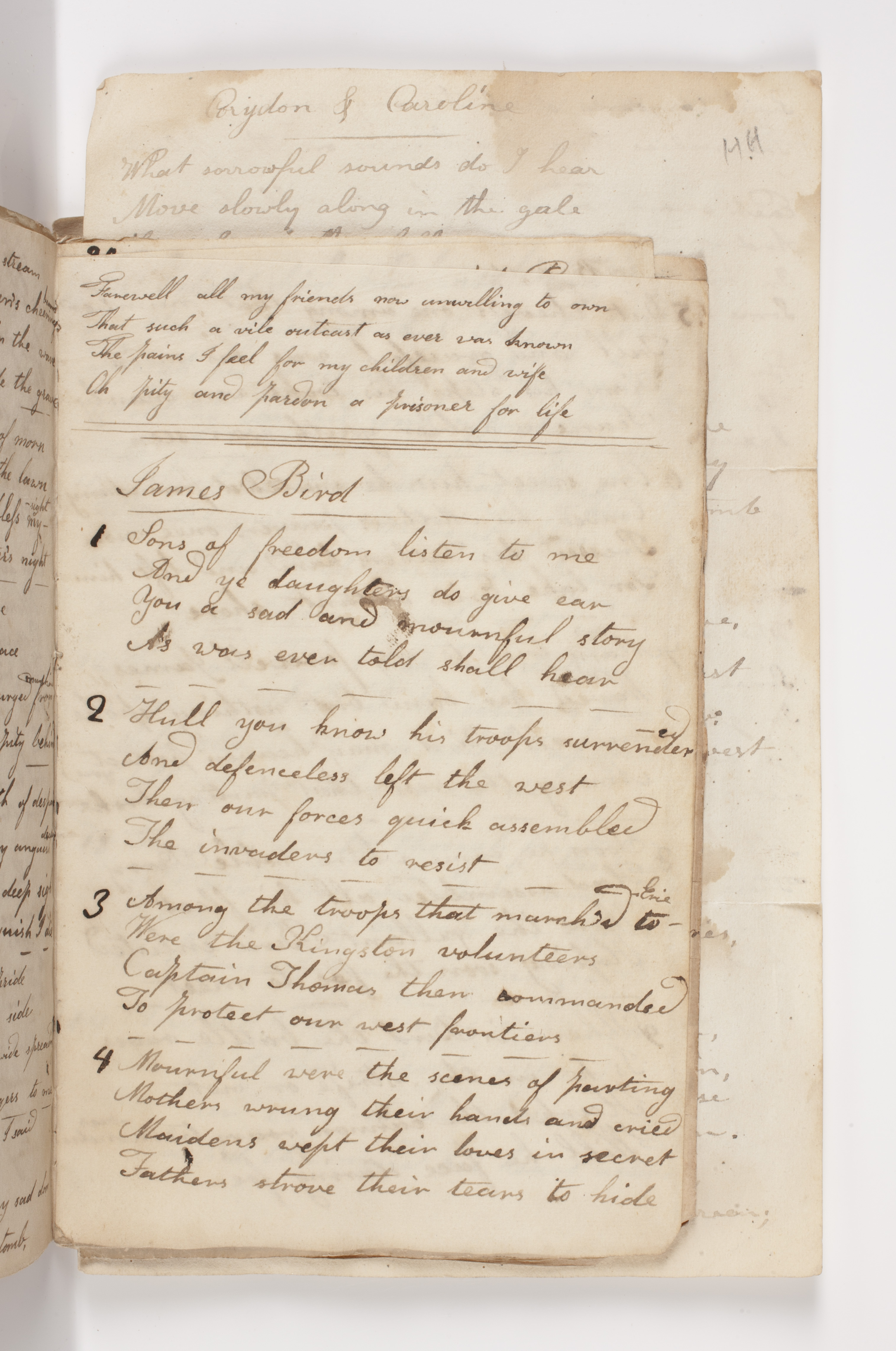
The Acquisitions Table: Levi Ballou Commonplace Book

Ballou, Levi, Commonplace Book, 1831-1840.

Levi Ballou (1806-1865) was born in Halifax, Vermont.  After studying theology with his brother William S. Ballou, Levi became a minister in Orange, Massachusetts in 1843.

These fascicles contain poems and prose extracts, almost all of which appear to have been copied by Levi Ballou from a variety of sources. The majority appear to have come from the albums of friends and acquaintances (almost all of whom were female) with a few coming from books and periodicals such as the Rural Repository.