The Acquisitions Table: Quill Pens

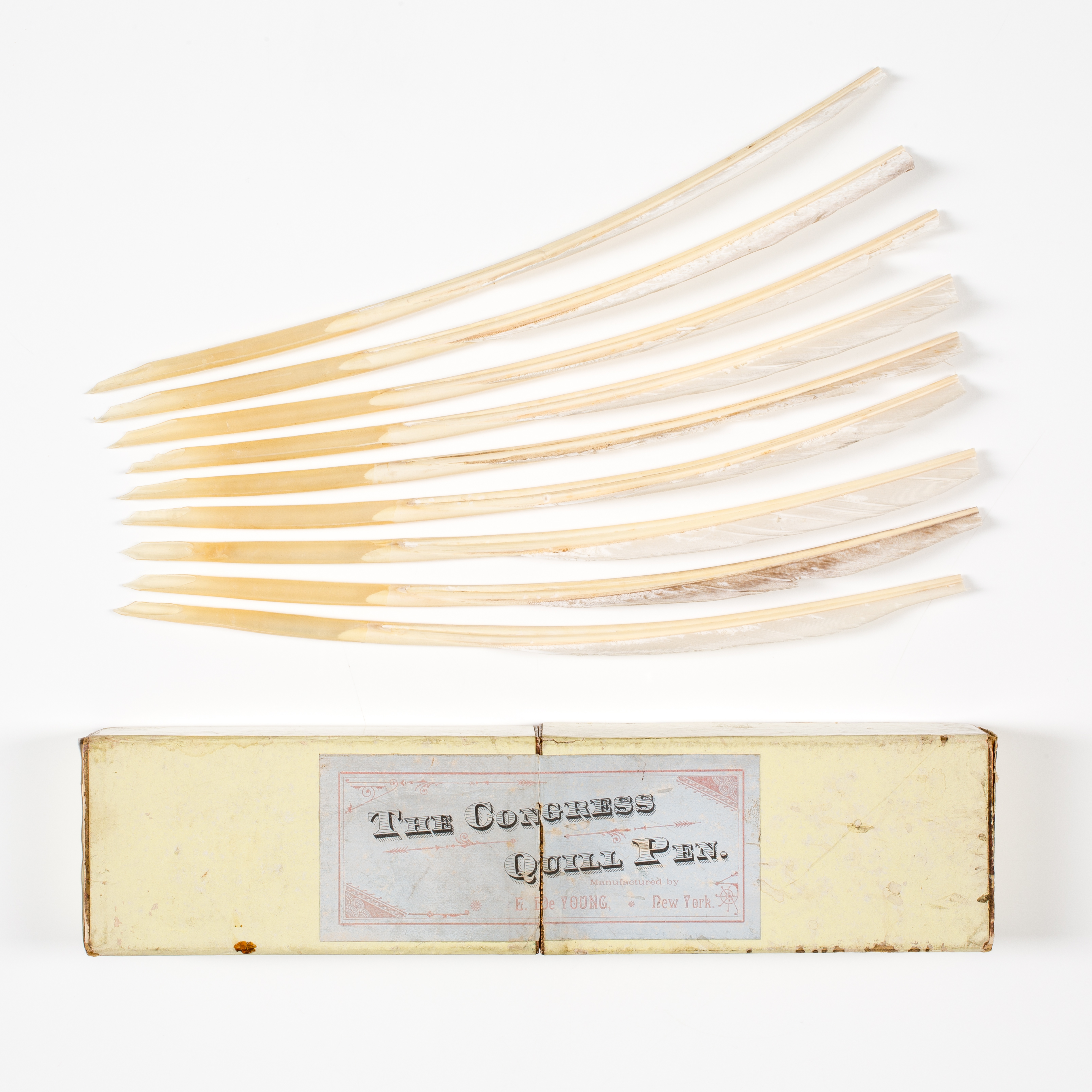
Box with Nine Congress Quill Pens. New York: Emanuel De Young, ca. 1850.

515145_0003This box of goose quill pens was purchased jointly by the manuscript curator, who wanted to add the pens to our holdings of writing implements, and the graphic arts curator, who wanted the box and label for the ephemera collection. De Young produced quill pens between 1846 and 1854 and continued to sell them into the 1890s. Orders for “Congress” quill pens, his brand name, appear in many state documents from the 1880s and 1890s (including orders from courthouses and legislatures in Illinois, Michigan, and Minnesota), so inexpensive quills were still in demand at the end of the century. The December 1891 issue of American Stationer reported, “There was a time some years ago when quill pens and unmade quills were standard articles and found ready sale from E. De Young, who is still in business and is still shoving the quill but not to the extent of years ago…”

Now In Print from the AAS Community

Every quarter at AAS we release a list of recent publications by those who have researched at serverthe library as fellows, members, or readers. To see this list, as well as a list of works published from 2000-2014, please visit our recent scholarship page on the AAS website. If your book, article, or other achievement is not included, just let us know if you’d like to see it there!
BOOKS

Brennan, Denis. The Making of an Abolitionist: William Lloyd Garrison’s Path to Publishing The Liberator. Jefferson: McFarland & Company, 2014.

Dobson, Joanne. The Kashmiri Shawl. 2014. (Baron Fellow, 2004-2005)

Gaskill, Malcolm. Between Two Worlds: How the English Became Americans. New York: Basic Books, 2014.

Glynn, Tom. Reading Publics: New York City’s Public Libraries, 1754-1911. New York: Fordham University Press, 2015.

Harvey, Sean P. Native Tongues: Colonialism and Race from Encounter to the Reservation. Cambridge: Harvard University Press, 2015. (AAS-NEH Fellow, 2010-2011)

Holzer, Harold. Lincoln and the Power of the Press: The War for Public Opinion. New York: Simon & Schuster, 2014. (AAS member)

Iarocci, Luoisa. The Urban Department Store in America, 1850-1930. Burlington, VT: Ashgate, 2014.

Johnston, Patricia and Caroline Frank, eds. Global Trade and Visual Arts in Federal New England. Durham: University of New Hampshire Press, 2014. (Johnston: Last Fellow, 2007-2008; Frank: CHAViC Fellow, 2013-2014)

Lomazow, Steven. The Great American Magazine: Adventures in History. Selections from the Steven Lomazow Collection of American Periodicals. New Jersey, 2014. (AAS member)

Plane, Ann Marie. Dreams and the Invisible World in Colonial New England: Indians, Colonists, and the Seventeenth Century. Philadelphia: University of Pennsylvania Press, 2014.

Raven, James. Publishing Business in Eighteenth-Century England. Woodbridge: The Boydell Press, 2014. (Peterson Fellow, 1986-1987; Peterson Fellow, 1994-1995; AAS member)

Tomlin, T.J. A Divinity for All Persuasions: Almanacs and Early American Religious Life. New York: Oxford University Press, 2014. (Botein Fellow, 2010-2011)

ARTICLES

Christ, Birte. “Capital Punishment and the Citizen-Subject.” American Literary History 27.1 (2014): 114-127. (Ebeling Fellow, 2012-2013)

Jortner, Adam. “Without Demons: Witchcraft and Witch Trials in the Colonial Chesapeake.” In Order and Civility in the Early Modern Chesapeake, edited by Debra Meyers and Melanie Perreault. Lanham: Lexington Books, 2014. (AAS-ASECS Fellow, 2014-2015)

Lopenzina, Drew. “Le Jeune Dreams of Moose: Altered States among the Montagnais in the Jesuit Relations of 1634. Early American Studies 13.1 (2015): 3-37. (Peterson Fellow, 2014-2015)

Verplanck, Anne. “Making History: Antiquarian Culture in Mid-Nineteenth-Century Philadelphia. The Pennsylvania Magazine of History and Biography 138.4 (2014): 395-424. (CHAViC Fellow, 2011-2012)

Verplanck, Anne. “‘They Carry Their Religion…Into Every Act of Their Public and Private Lives’: Quaker Consumption of Early Photographic Images in Philadelphia, 1839-1860.” Early American Studies 13.1 (2015): 237-278. (CHAViC Fellow, 2011-2012)

Wolfe, S.J., Kathleen M. Haley, and Caroline W. Stoffel. “EMINA (Egyptian Mummies in North America): A Database for Mummy Studies.” Yearbook of Mummy Studies 2 (2014): 117-124. (AAS staff)

Wolfe, S.J. “Padihershef and Me.” In Inspired by My Museum. Birmingham, England: Sampad, 2014. (AAS staff)

ONLINE RESOURCES

The Spread of U.S. Slavery, 1790-1860.” Online exhibit by Lincoln Mullen. (Peterson Fellow, 2013-2014)

EMINA—Egyptian Mummies in North America.” Online database launched April 19, 2014, by S.J. Wolfe. (AAS staff)

AWARDS

Shelby M. Balik received the Phi Alpha Theta Best First Book Award (awarded in September 2014) for her book Rally the Scattered Believers: Northern New England’s Religious Geography. (Peterson Fellow, 2003-2004)

David Brion Davis’s The Problem of Slavery in the Age of Emancipation was a finalist for the National Book Critics Circle Award for general nonfiction. (AAS member)

Ellen Gruber Garvey received several awards for her book Writing with Scissors: American Scrapbooks from the Civil War to the Harlem Renaissance: The Institute for Humanities Research’s Transdisciplinary Book Award; The Society of American Archivists’ Waldo Gifford Leland Award;  the year’s only Highly Commended Award of the SHARP DeLong Book History Book Prize; and sole honorable mention from the EBSCOhost/Research Society for American Periodicals (RSAP) Book Prize. (Peterson Fellow, 2008-2009)

Ezra Greenspan’s William Wells Brown: An African American Life was a finalist for the National Book Critics Circle Award for biography. (Mellon Distinguished Scholar in Residence, 2009-2010; AAS member)
Omeka Mania at AAS

We at AAS have figured out one way to beat the winter blues: Omeka! Thanks to the generosity of Jay Last (member since 1987), we held a two-day training session for our staff to learn this content management system for online exhibitions of special collections. Omeka is not archival software, but it was developed at the Roy Rosenzweig Center for History and New Media to work extremely well with the information systems in place at special collections libraries. Its stated goal is to “create complex narratives and share rich collections,” and we have nothing but rich collections that have complex stories to tell.

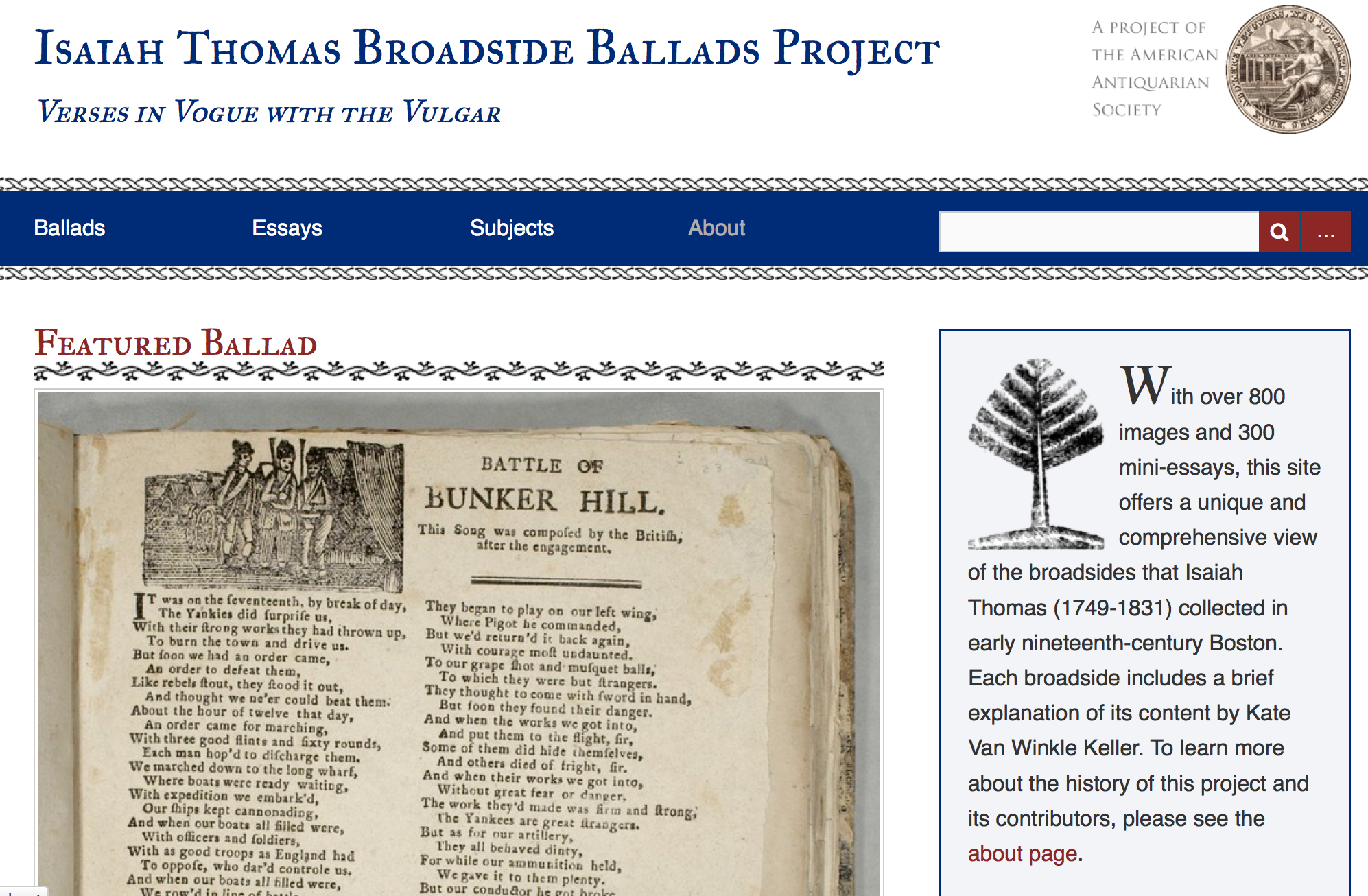
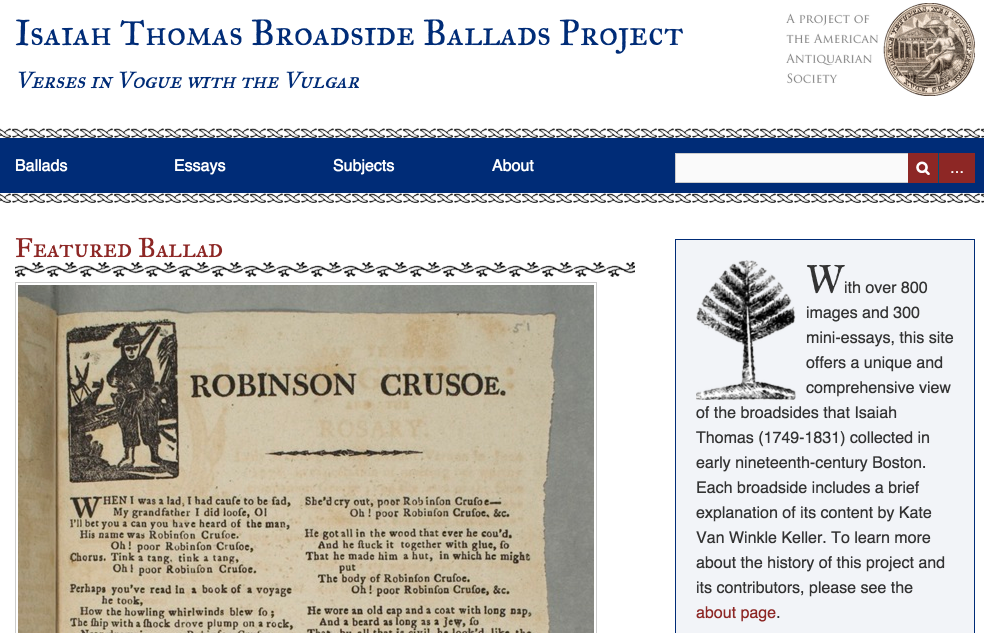
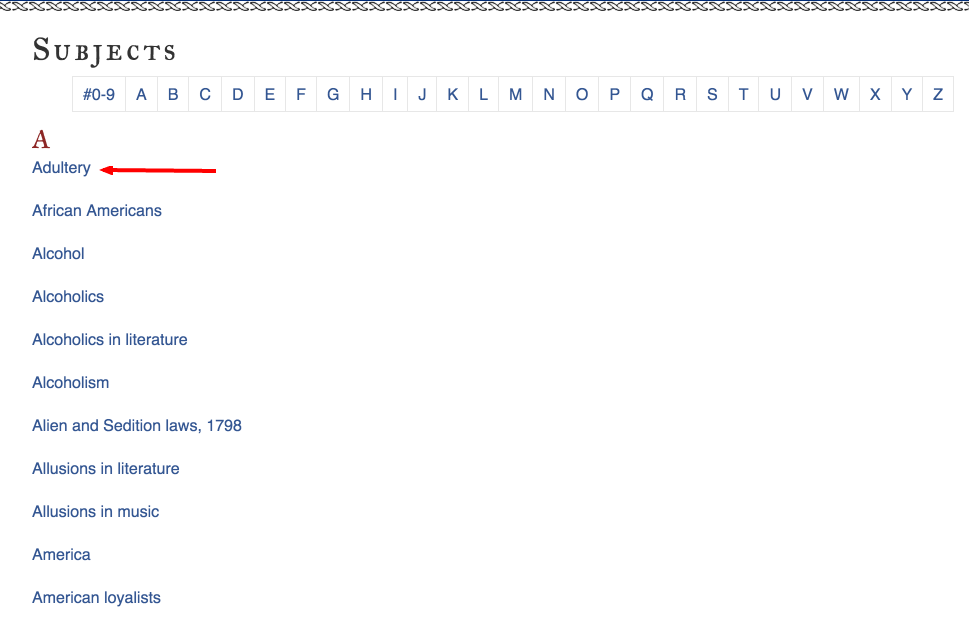
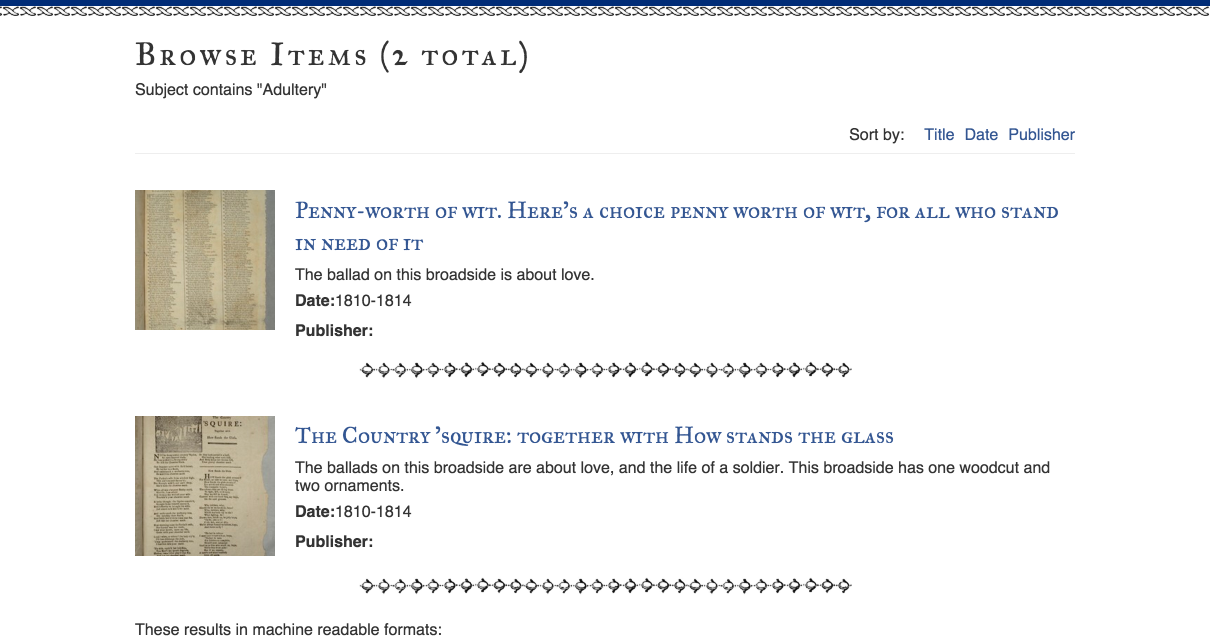
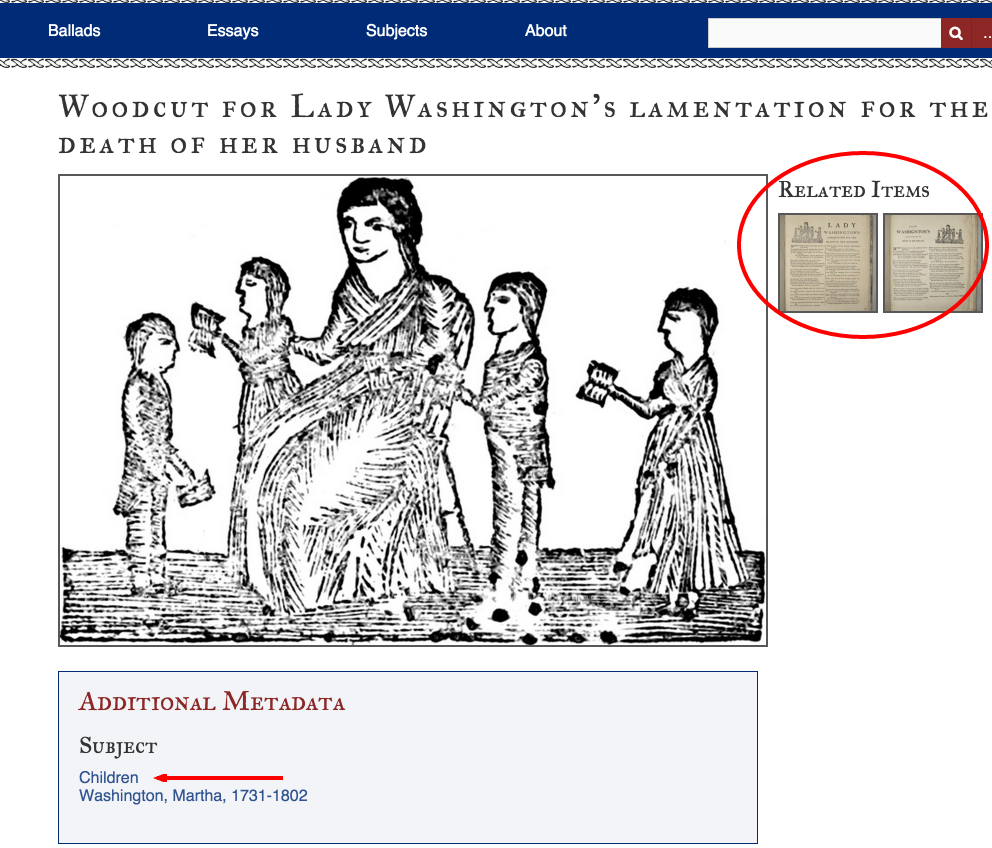
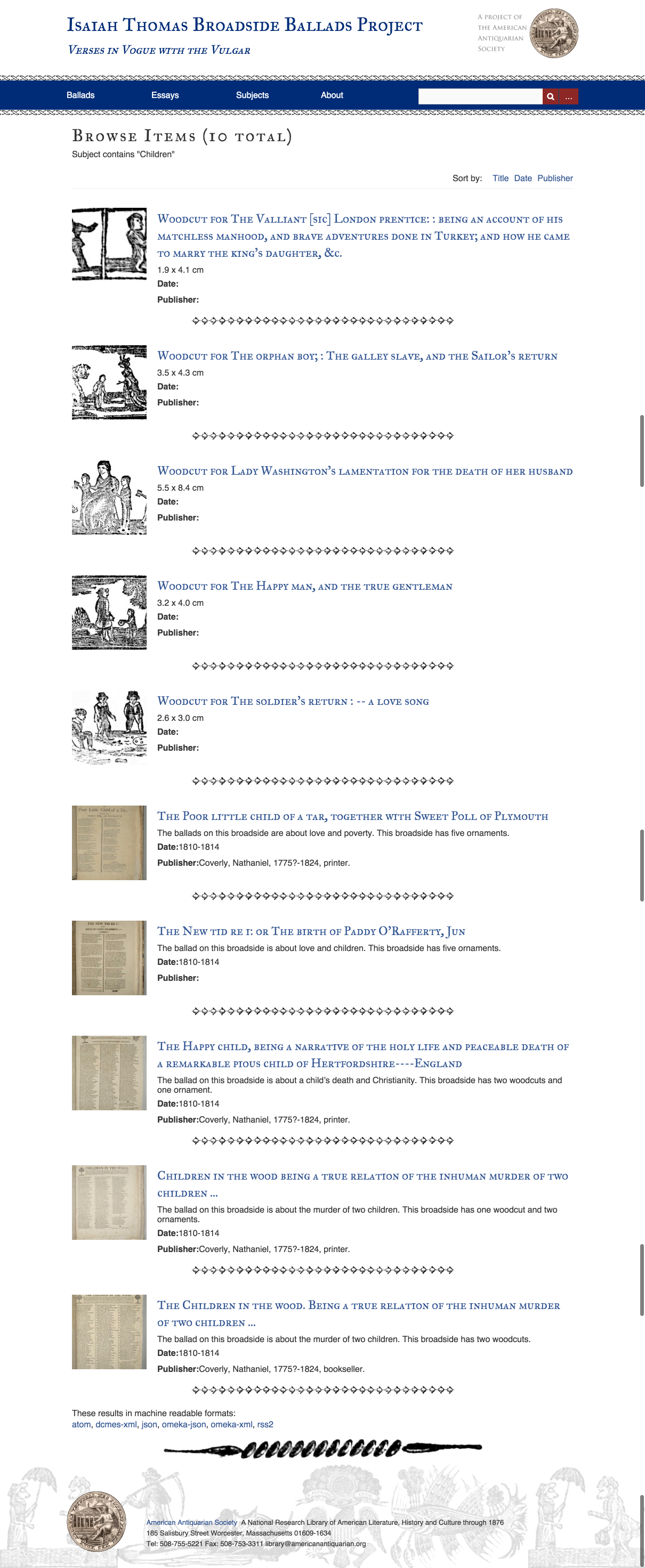
thomasballadsWe recently used Omeka for our Isaiah Thomas Broadside Ballads project: Verses in Vogue with the Vulgar, and found that many of its features work very well with our General Catalog and with our digital images archive, GIGI. Because all of the Thomas broadsides were already cataloged, we exported the Machine-Readable Catalog (MARC) records and then imported them into Omeka. We could therefore repurpose the data in our catalog into our exhibitions, rather than key in all the information anew. We were also able to make use of both the smaller images we derive from GIGI and to point our users to the high-resolution images we store in GIGI. As we worked through this project, we increasingly saw how Omeka-ready our materials are. We realized that virtual exhibitions are a wonderful way to open up our collections and to thereby fulfill, in an innovative way, part of the Society’s mission: “to make widely accessible the early historical record of our nation.” We therefore invited Omeka developer extraordinaire Ken Albers, who developed the Thomas Broadsides project for us, to come visit us in the tundra that is Worcester in February. Fortunately for us, single digit temperatures and double-digit measurements of snow did not deter Ken, and he came north to dazzle us for two days with all things Omeka.

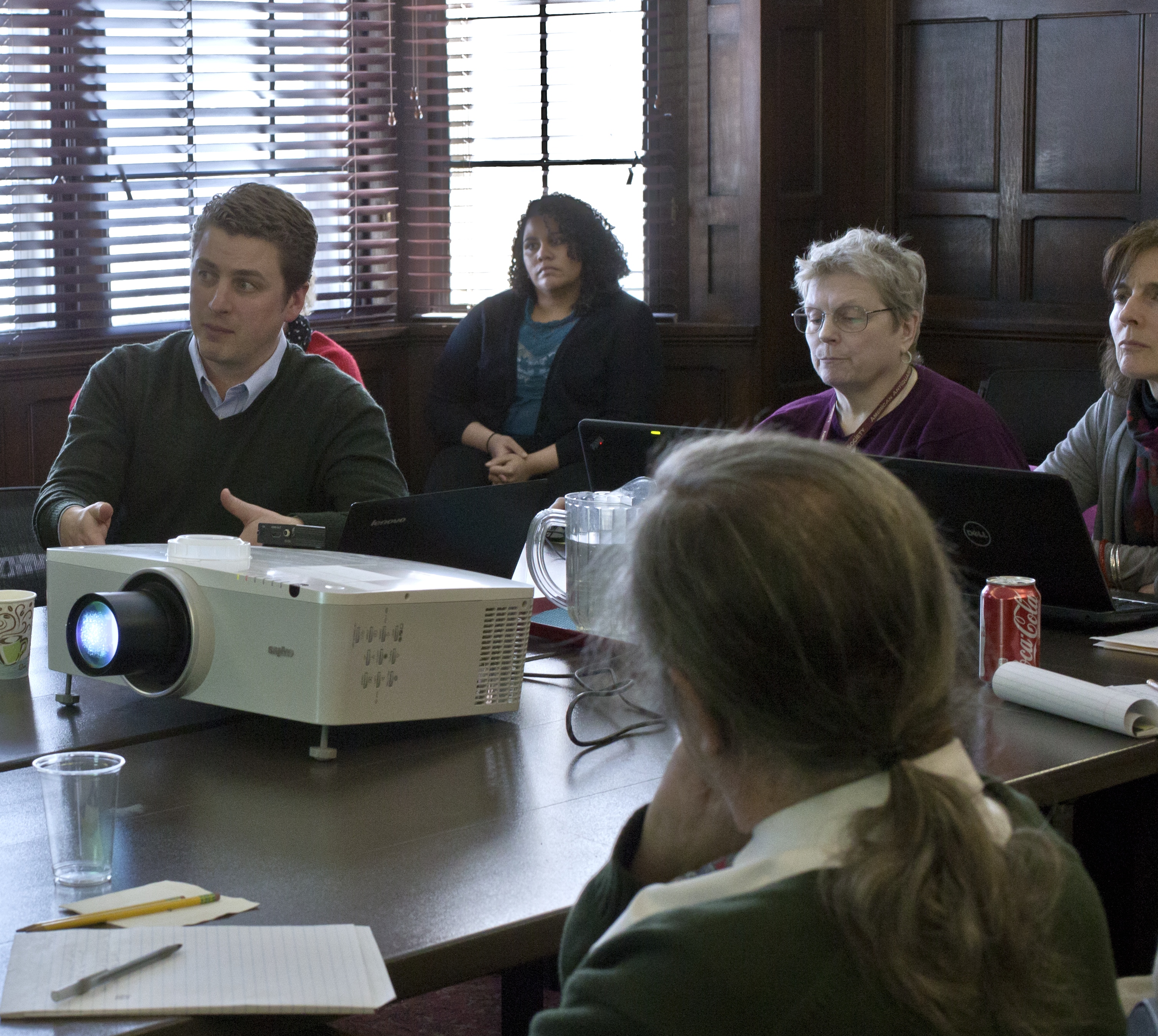
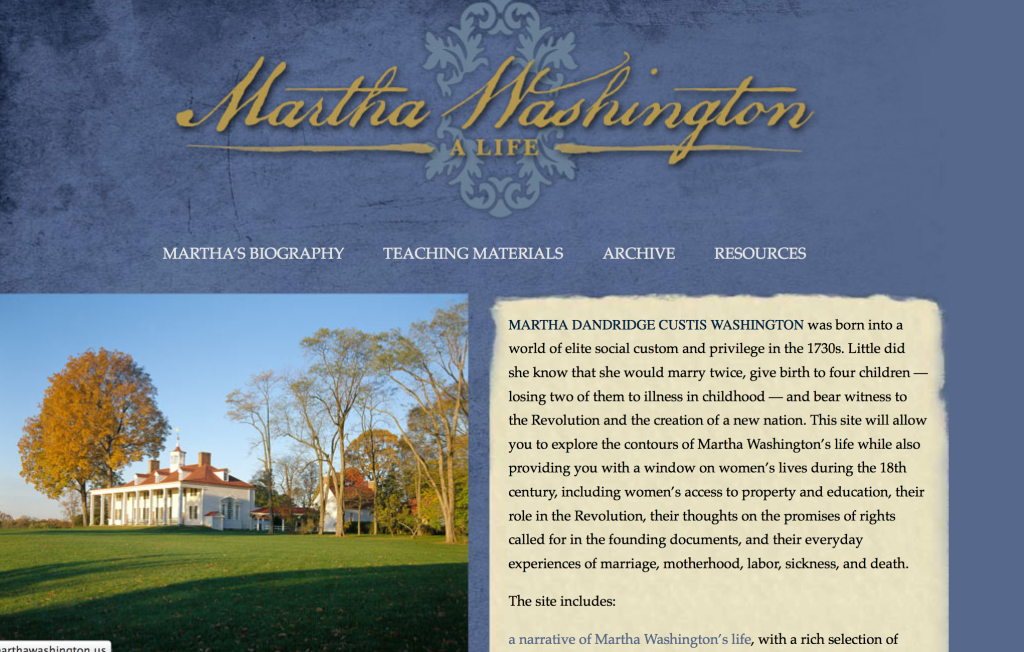
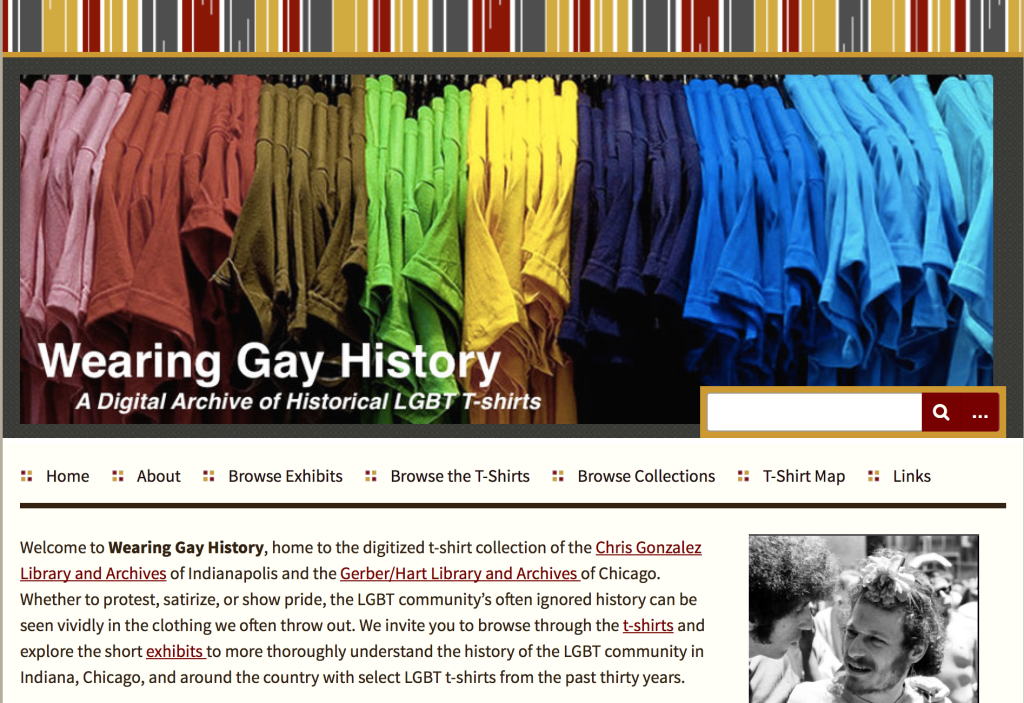
Ken spent the first day with about 25 staff members, introducing us to Omeka and how we can use it to encourage the public to start interacting with our collections online as we guide them through virtual exhibitions. As Ken walked us through the many ways of configuring Omeka for various uses, he showed us inspiring examples of how experts such as himself have used Omeka to make customized sites, such as Martha Washington: A Life, and also sites made by students who have made impressive use of Omeka’s basic features, such as Wearing Gay History: A Digital Archive of Historical LGBT T-Shirts. Ken encouraged those of us who will be designing sites to let the materials we are exhibiting guide both the organization and the look of our pages.

MaryWash

GayHist

Omeka_0001On day two of our training, Ken ran an Omeka lab for the ten of us who are creating sites. These sites will launch over the next year and include a range of items in our collections: Hawaiiana, the Louis Prang collection, and James Fenimore Cooper, just to name a few. Ken walked us through importing our data, how to display the data, installing plug-ins, choosing our themes, and customizing our themes. As we spent the day with our heads in our computers, exchanging ideas and asking questions, the excitement for this tool, which will enable us to share the collections we love so much, was palpable. We look forward to sharing what we have learned in the form of these exciting virtual exhibitions.

Please stay-tuned for the many exciting Omeka sites that will be housed on the “Digital AAS” section of our website.

The Acquisitions Table: A Present for the Young

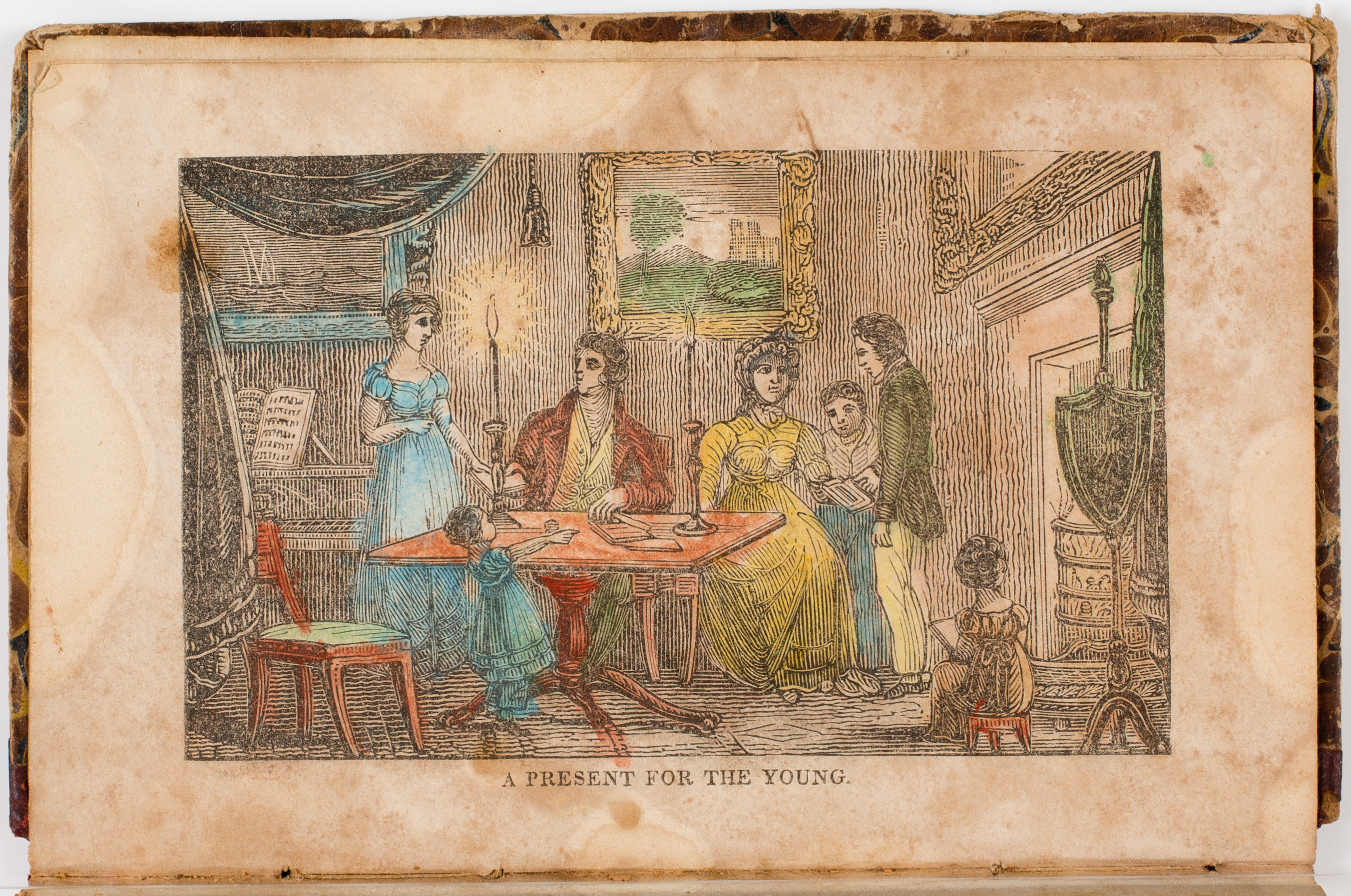
A Present for the Young. New York: D. Waugh and T. Mason for the Sunday School Union of the Methodist Episcopal Church, 1833.

515458_0001This wonderfully detailed hand-colored wood engraving is the frontispiece to A Present for the Young and illustrates the role of the family as the epicenter of literacy and civilization. Note the family gathered around the hearthside table; the painting on the wall, and the piano (with sheet music) neatly tucked into the corner. Literacy underlies the family’s activities: the father sits at the table over what appears to be a pamphlet (perhaps a periodical), and is engaged in speaking to his older daughter on the left; likewise, the mother is engaged in speaking to two children about a book in her hand, while another child is seated near the fireside engrossed in her own book. The youngest child excitedly points to the father’s reading, emphasizing the importance of reading, be it aloud or to oneself, in family life.

Meet AAS Fellow Melanie Kiechle

mkiechle

Melanie Kiechle is assistant professor of history at Virginia Polytechnic Institute and State University and is presently an American Antiquarian Society-National Endowment for the Humanities Fellow at the Society. Her current project is entitled “Smell Detectives: An Olfactory History of Nineteenth-Century America” and she recently sat down with us to discuss her work and research at AAS.


Past is Present: Can you describe your current project for us?

Melanie Kiechle: I’m working on a book manuscript that I’m currently calling “Smell Detectives: An Olfactory History of Urban America, 1840-1900.”  The book is about smells and smelling in the nineteenth-century, during the period when industries and cities were rapidly expanding.  It’s part environmental history, explaining how these expansions changed the air and the physical environment; part urban and public health history, exploring the rise of institutionalized public health around fears of miasmas and bad smells; and part history of science, because chemists were deeply involved in creating, identifying, and reducing stenches. But mostly I’m thinking of this project as a cultural history of fresh air and foul odors.  I’m working on recovering both how the smells of cities changed, and how people’s perceptions of odors as good or bad, as healthful or dangerous, were changing at the same time.  At its most basic level, my book will be about what it was like to live in these cities while they changed so dramatically, and how people reckoned with changes that they thought were positive, such as an expanding economy and more jobs, but simultaneously negative because they created stenches and threatened health.


Past is Present: What historians do you admire? What scholars inspired you to go into this work?

Melanie: It’s ever-changing, because when I started the project, I didn’t know it was going to be environmental. I was just interested in smell and sensory history. Some of the things I first read that really inspired me are great books about smell. For my current project, Alain Corbin, David Barnes, and Mark M. Smith definitely.  So, Alain Corbin, who’s a French historian, has a book called The Foul and the Fragrant, which is the classic work if you want to think about the history of smell. I don’t agree with all of it, but it was a brilliant starting point. He’s looking at the development of the bourgeoisie, so as you develop personal space, you notice that smell more because it infringes on your personal space. But he also does history of science and explains how people understood air within that period. David Barnes writes about the great stink of Paris, and picks up where Corbin left off.  So that was a starting point, but there are lots of historians who have done great work. Mark M. Smith is an American historian who works on the history of the senses, and he’s been pushing people to think about the senses. When I first got started I was really inspired by his work and all the possibilities it opened up. As a historian in general, I’m inspired by those who tell good stories about the past, including (but not limited to!) William Cronon, Richard White, Jill Lepore, John Demos, James Goodman, Natalie Zemon Davis, James Cook, Ann Fabian, Jackson Lears.  I could probably go on, but I’ll stop there.


Past is Present: I’m particularly wondering why you say fresh air is a right.

Melanie: Oh, I say that it’s a right because that’s how nineteenth-century Americans described it.  They actually talk about pure air as an “inherent right,” which is the same phrase that people used to talk about liberty. So it seems to me like that’s pretty loaded language…Today we talk about environmental rights and whether the environment has any rights.  I think it’s a striking and early use of that kind of idea. The place where this phrase comes up most is in legal proceedings in nuisance cases when people fight against the industries that produced bad smells.  Lawyers and plaintiffs claim that they have an inherent right to breathe fresh air or pure air. But the idea of a right to air also comes up in journalism.  In newspapers and magazines I’ve read about “the rights of the nose” which is the idea that people shouldn’t have to breathe things that smell bad.


Past is Present: What does it mean to be an AAS fellow? What would be your ideal find?

Melanie: Right now I would really like to find a disagreement about whether you can have your windows opened or closed in the city, which is a very particular thing for a chapter I’m writing. But the ideal thing for me to find would be someone describing what it’s like to breathe fresh air and what it’s like to breathe city air. How did that feel? That would be a revelatory document that would give us a much deeper sense of what it was like to live in these places and to want fresh air but to always have air that smells like something no matter what that smell was.

Read the whole interview here!

The Acquisitions Table: Norma, A Serio-Comic Burlesque

Crouch, F[rederick] Nicholls. Norma. A Serio-Comic Burlesque, Written Expressly for Sanford’s Opera House. [Philadelphia?, 1856].

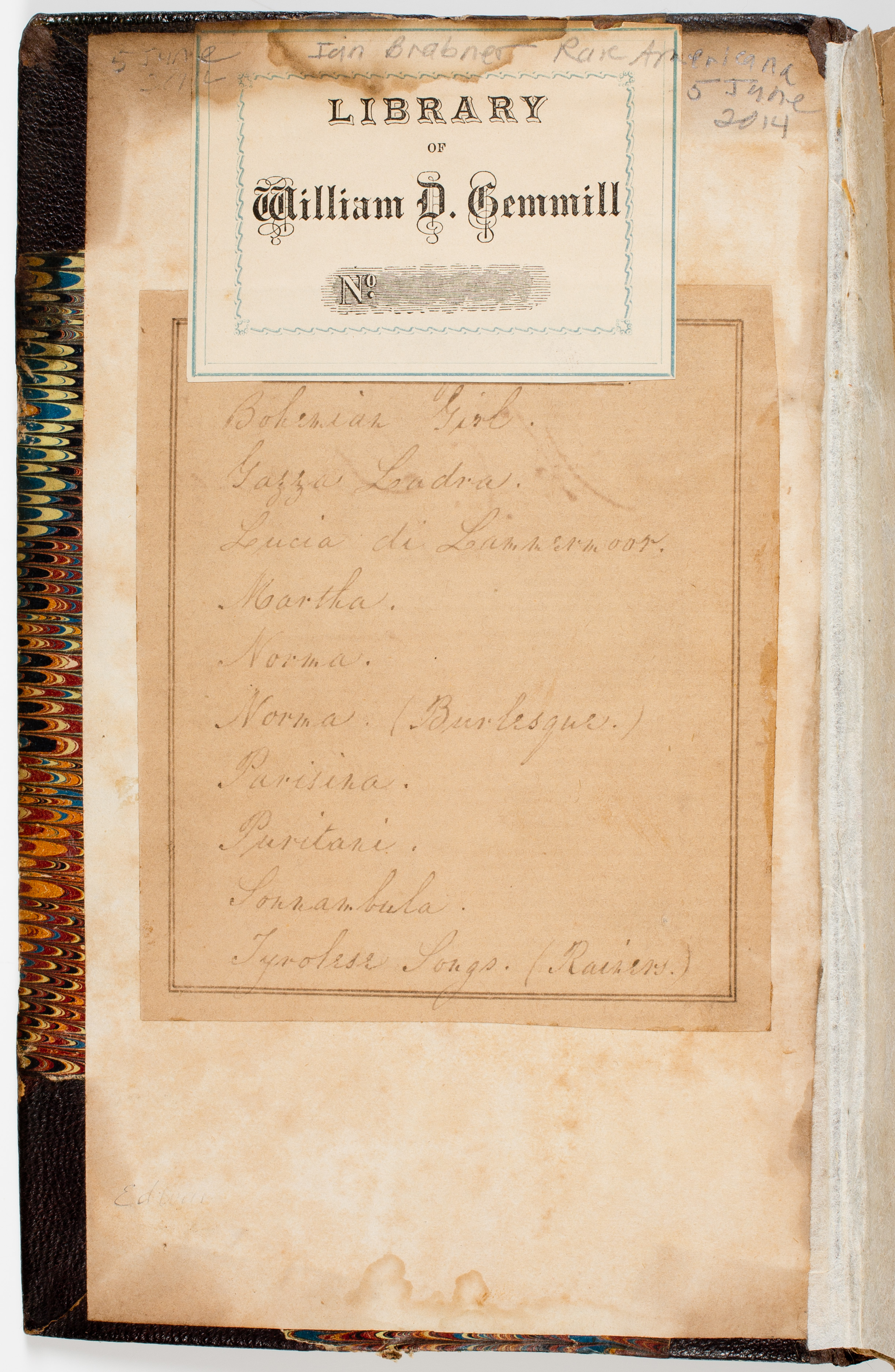
512965_0001The 10 opera or song libretti in Italian and English bound together in this sammelband were all lacking or defective in AAS collections. Most are for serious Italian operas, but also included is a previously unlocated burlesque of Vincenzo Bellini’s opera Norma, re-imagined as a Know-Nothing drama. The burlesque has the same characters as the original opera, except that the characters’ names are latinized. A few lines from the opening procession and chorus sets the tone: “Defend us from this secret foe! / ‘The Know Nothings’ here! are all the go; / To save our country strike the blow, / and send them to Old Nick!” (p.3). Crouch’s Norma, a Serio-Comic Burlesque is the sole Philadelphia imprint in the sammelband, except for three small tipped-in Philadelphia theatrical playbills from the American Academy of Music (including one for Bellini’s Norma). These Philadelphia theatre connections associate this libretti collection with William D. Gemmill (1832–1906), the manager of the Chestnut Street Theatre in Philadelphia, whose bookplate is affixed to the front endpaper.

A Saucy Valentine

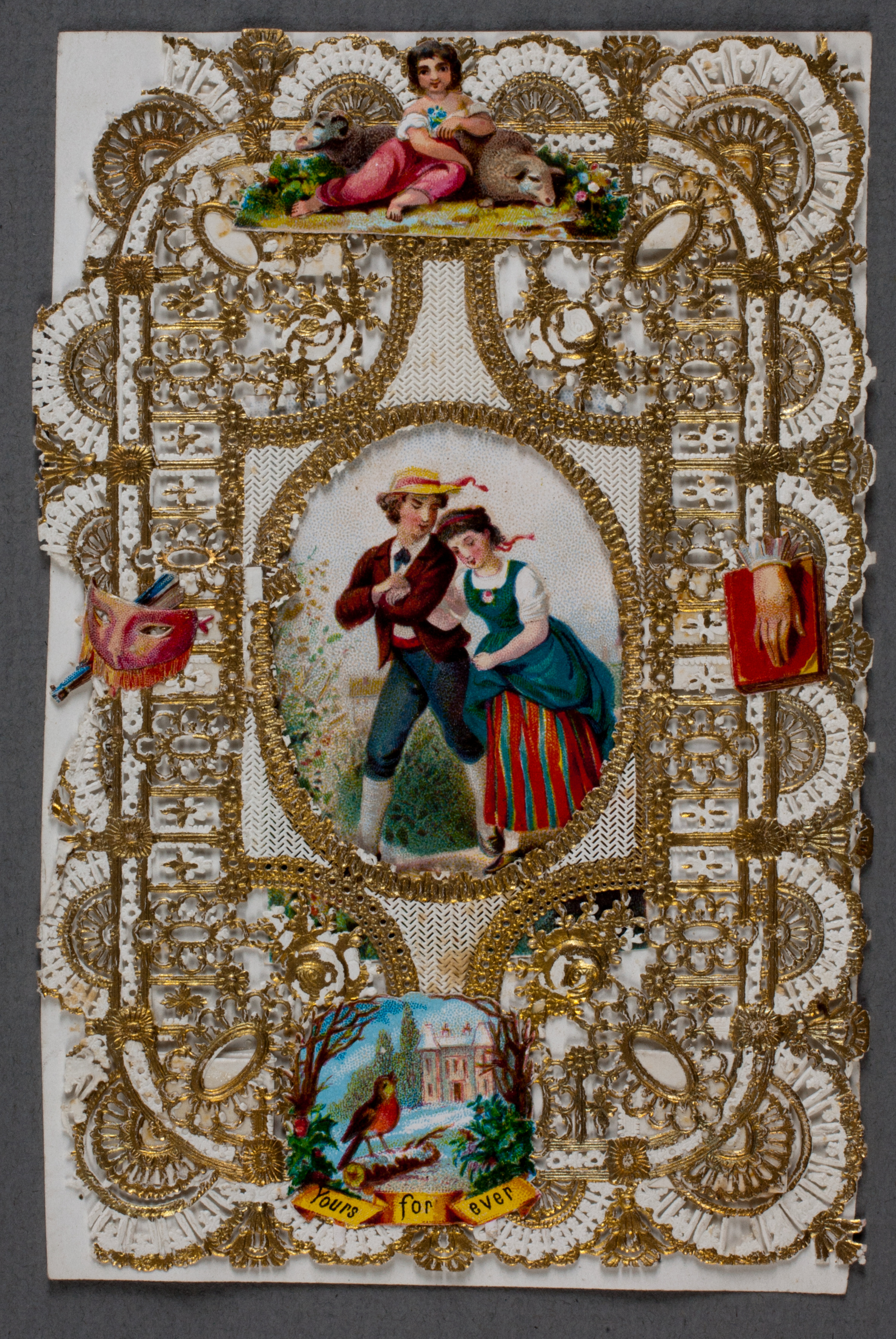
Esther Howland valentines (in business 1848-1881)This week, AAS was fortunate to receive a hand-made, circa 1830, valentine as a donation.  Society member George K. Fox of California presented the valentine to AAS President Ellen Dunlap at an event at the San Francisco Book Club celebrating the Society’s receipt of the National Humanities Medal.

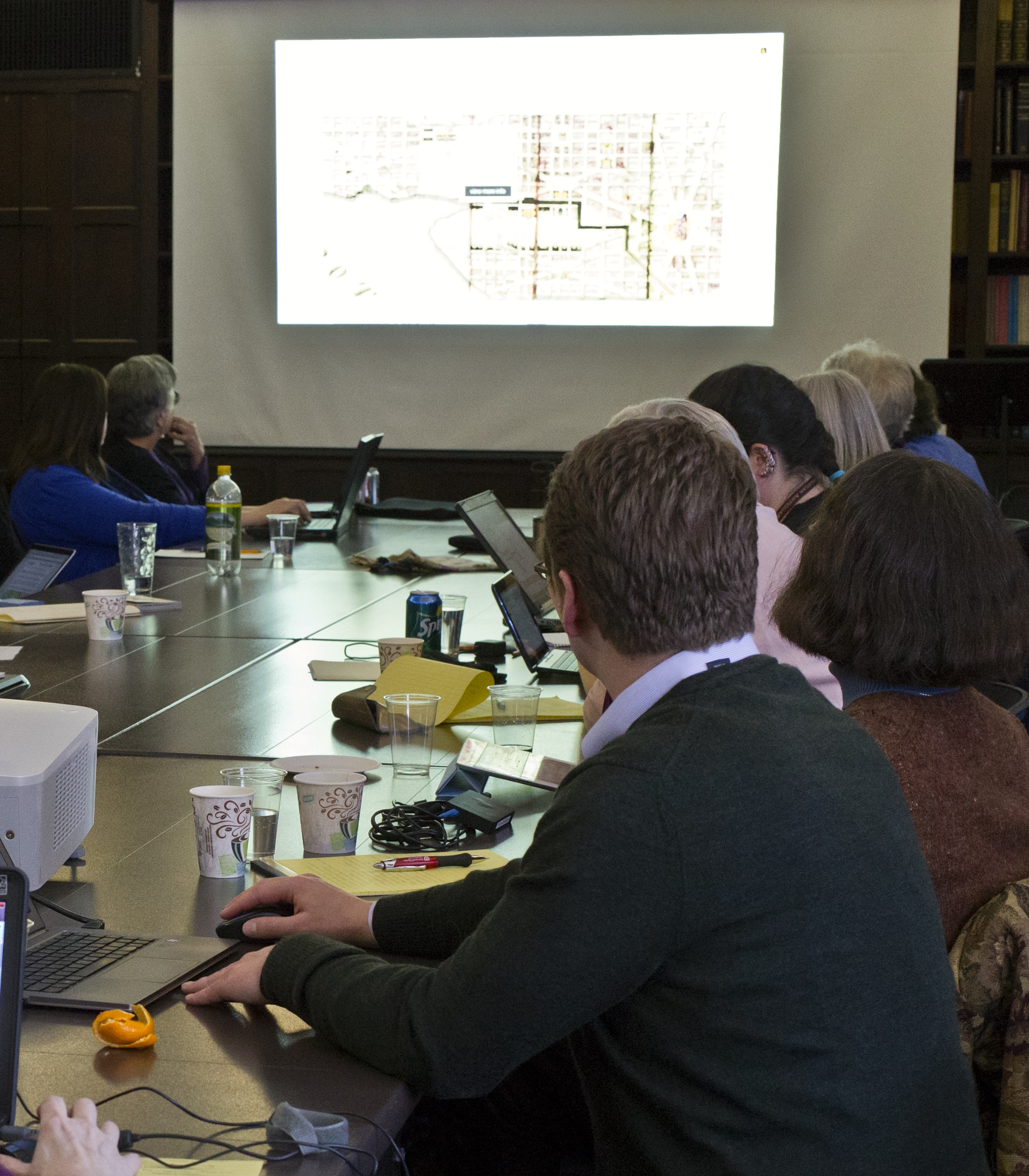
The Society has a large and representative collection of over 3,000 American printed and manuscript valentines. We have excellent holdings of lacy, colorful, heart-bedecked cards made by Worcester-resident Esther Howland  (at right and you can see more here), lots of comic or vinegar valentines designed for your “frenemies,” and plenty of printed material related to Valentine’s Day, including party invitations, manuals for assistance in writing love messages, and periodicals with articles about the customs and traditions popular in the nineteenth century.

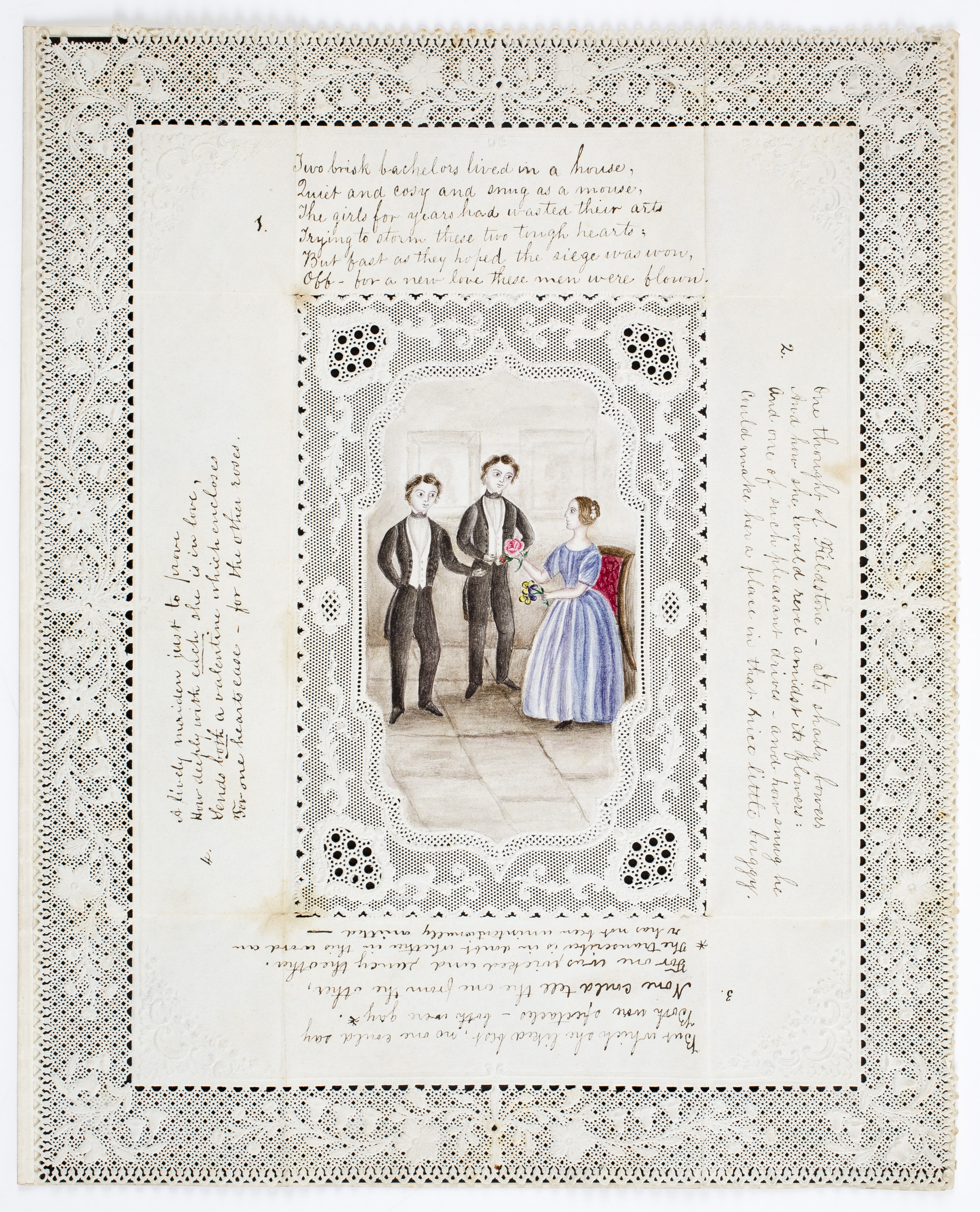
So when the California gift was presented and the staff on the West coast excitedly texted the news, we wondered how anything could possibly improve our already great holdings?  Well, this gift does!  The valentine is fantastic and is also well-documented.  The soft, embossed lace 520872_Valentine_0002paper features a lovely watercolor image of two young men and a lady holding some flowers, and four stanzas of original poetry written in the surrounding borders.  The valentine was likely made by Elinor Elizabeth Delafield, the wife of Dr. Edward Delafield, around 1830 when she and the two men depicted were all in their late thirties.  The two young men in the image are her brothers-in-law, the identical twins Henry and William Delafield, born in 1792.  Both brothers served in the War of 1812 and later worked as bankers and merchants in New York, where Elinor and Edward also lived.  They were notorious bachelors and, according to the family history, were inseparable.  The first stanza of the poem states: “Two brisk bachelors lived in a house, / Quiet and cozy and snug as a mouse. The girls for years had wasted their arts / Trying to storm these two tough hearts.”  The poem chides the twins for being fickle with love, casting aside one lady after another, and also scoffs at unnamed young ladies and their attempts to coerce the twins into wedlock.  The poem has a very breezy and amusing rhythm that highlights the mischief for which the twins were known—the brothers would often surreptitiously change partners during balls and no one would notice, a fact the poem includes, stating: “None could tell the one from the other / For one was wicked and saucy the other.”  The woman in the valentine holds a tri-color pansy and a rose, both of which are still associated with Valentine’s Day—the rose for love and the pansy (or heart’s ease) for contentment.

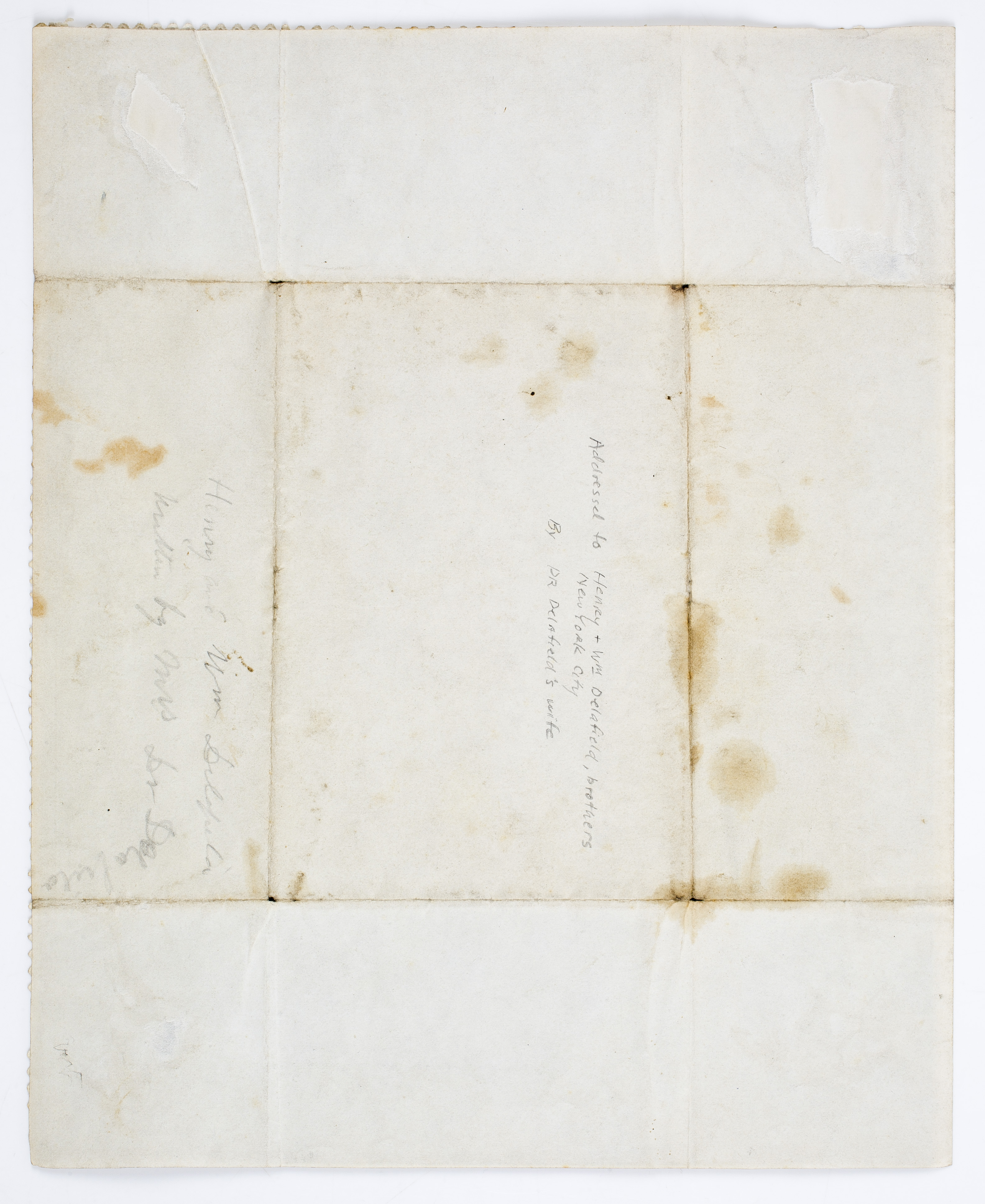
520872_Valentine_0001The valentine was found in a scrapbook kept by Susan Delafield Parrish (or Parish), a younger sister to the twins, and is inscribed on the back “Henry and Wm. Delafield / Valentine by Mrs. Dr. Delafield” (see right).  Possibly, the twins presented it to Susan after Elinor’s death in 1834 and Susan put it in the family scrapbook.  William never married, and died at age 62 in 1853.  Henry married at age 73 and died ten years later, in 1875.  The family genealogist recalled that the “boys” as they were called for their entire lives had “many family and personal friends, an excellent reputation, the good will of all, and plenty of determination.”  We are so pleased to have their valentine, made by an obviously doting sister-in-law, preserved at AAS.

You calling me yellow?

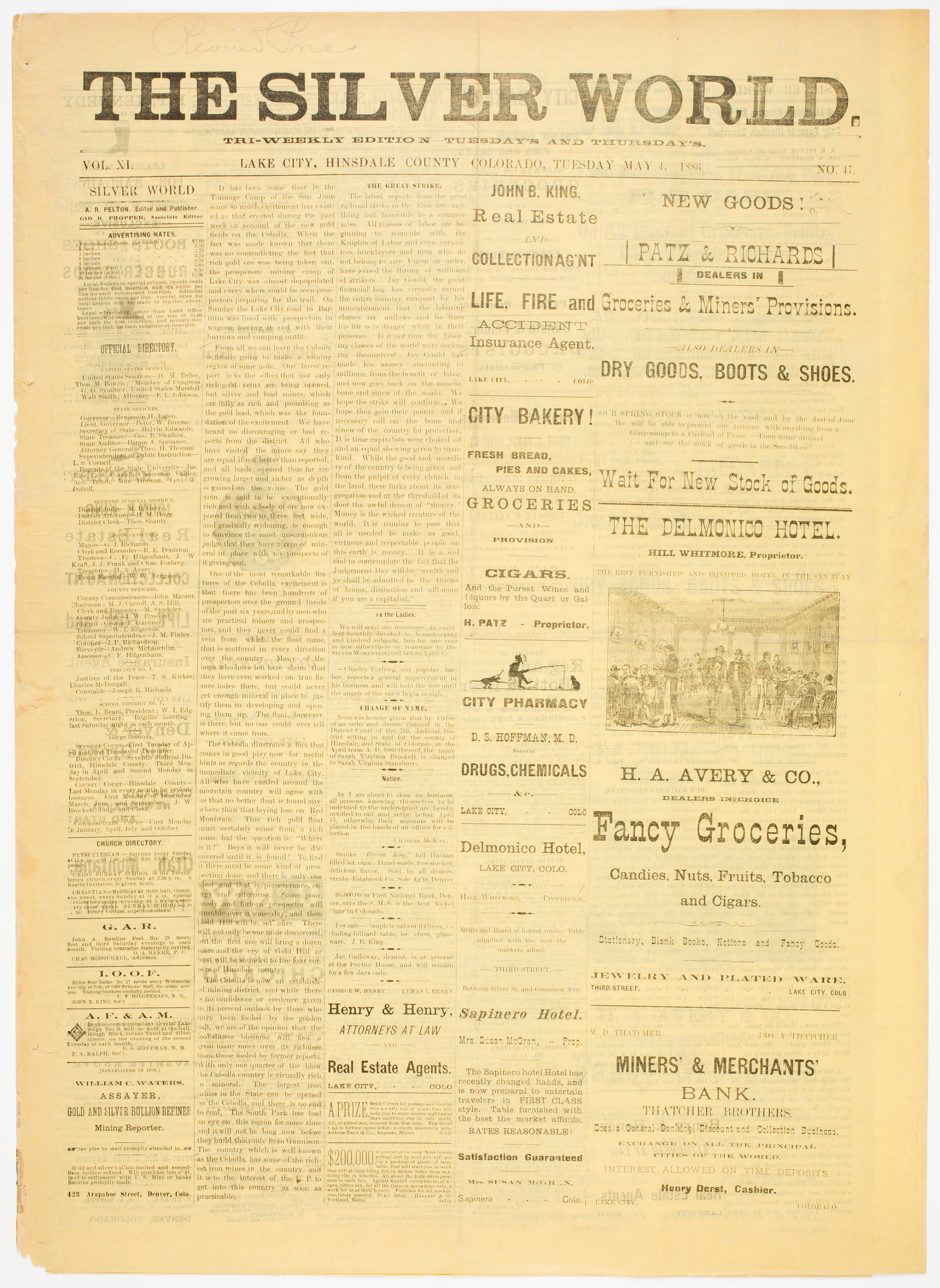
The Silver WorldLet’s say you are the publisher of a newspaper in a small mining town in Colorado and you run out of the regular paper you use to print your publication.  What do you do?  In the case of The Silver World published in Lake City, Colorado, you find an alternative source of paper.

Recently AAS acquired a copy of this paper dated May 4, 1886.  What immediately catches the eye is the yellow paper.  Due to a shortage of regular paper, this issue was printed on yellow wrapping paper.  As you can see, it served its purpose well.   The paper is thinner than normal, but it took ink well and produced a serviceable issue.

The Silver World began in 1875 as the first newspaper of Lake City.  At first it was printed on a Washington-style hand press.   In 1877 they obtained what is said to be the first power press west of the Continental Divide (it weighed 3 tons), brought in by road as no railroad had yet reached Lake City.  There are conflicting stories about when the paper ended, but it ceased in either 1888 or 1889.

Lake City still exists, despite a declining population since 1900.  Today 375 people live in the town, which also includes 200 historic buildings.

The Acquisitions Table: Belle of Baltimore

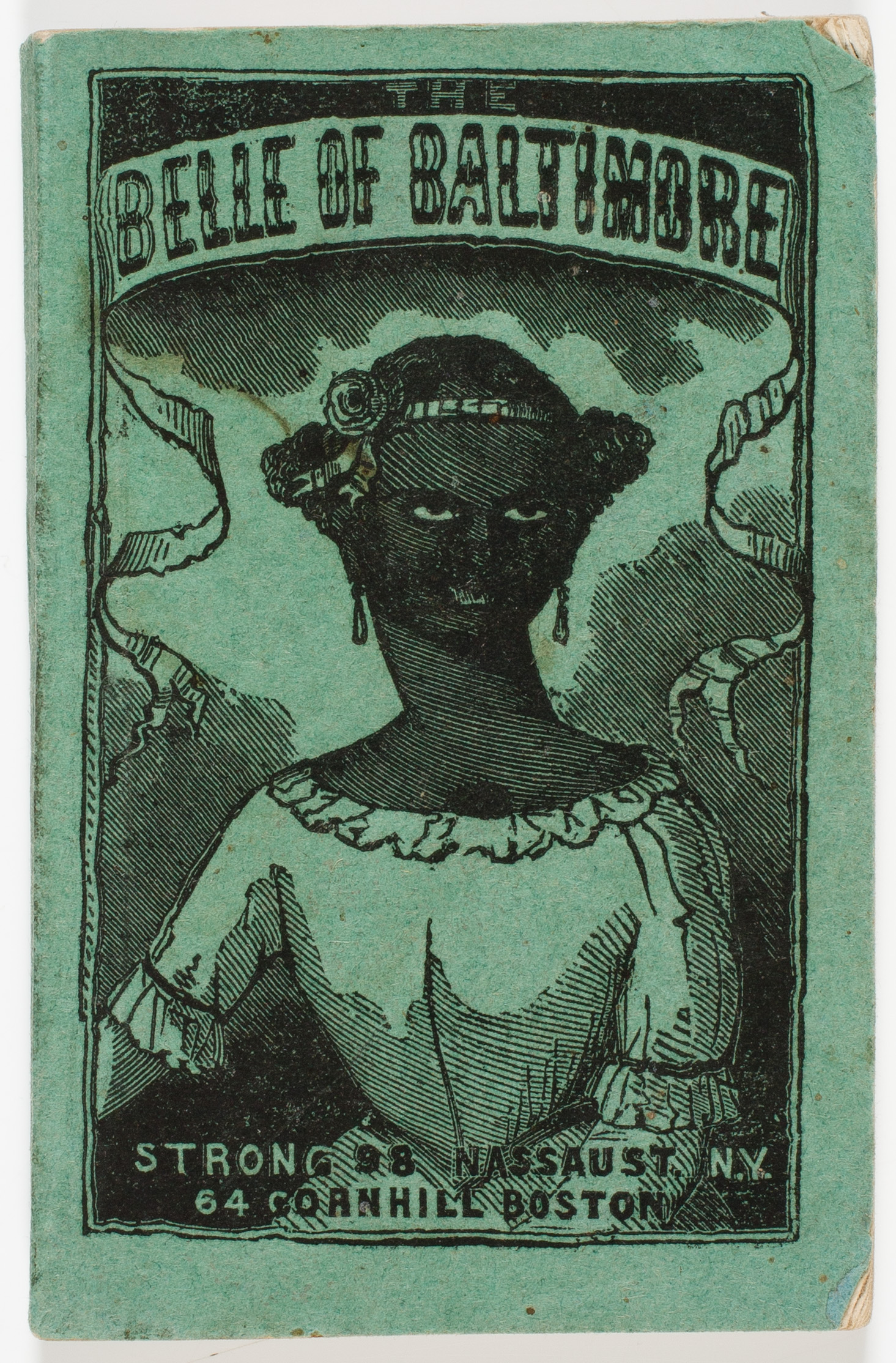
Belle of Baltimore. T.W. Strong, [between 1843 and 1866]

511932_0001A minstrel songster known in only two other copies (and those are either a variant or defective copy). This copy of Belle of Baltimore is remarkable for its intact publisher’s green wrappers and illustrations. The seven woodcuts, all but one depicting African Americans, are located on the cover, frontispiece, title vignette, and four more are scattered throughout the text. Song titles include: “Virginia Juba,” “Jim Crack Corn! I Don’t Care,” “Jim Crow’s Ramble.” Performers referenced include: the Sable Brothers, Charles White, Dan Emmit, T.D. Rice, Wm Laconta.

Newly Acquired Board Game Depicts Football Before the Super Bowl

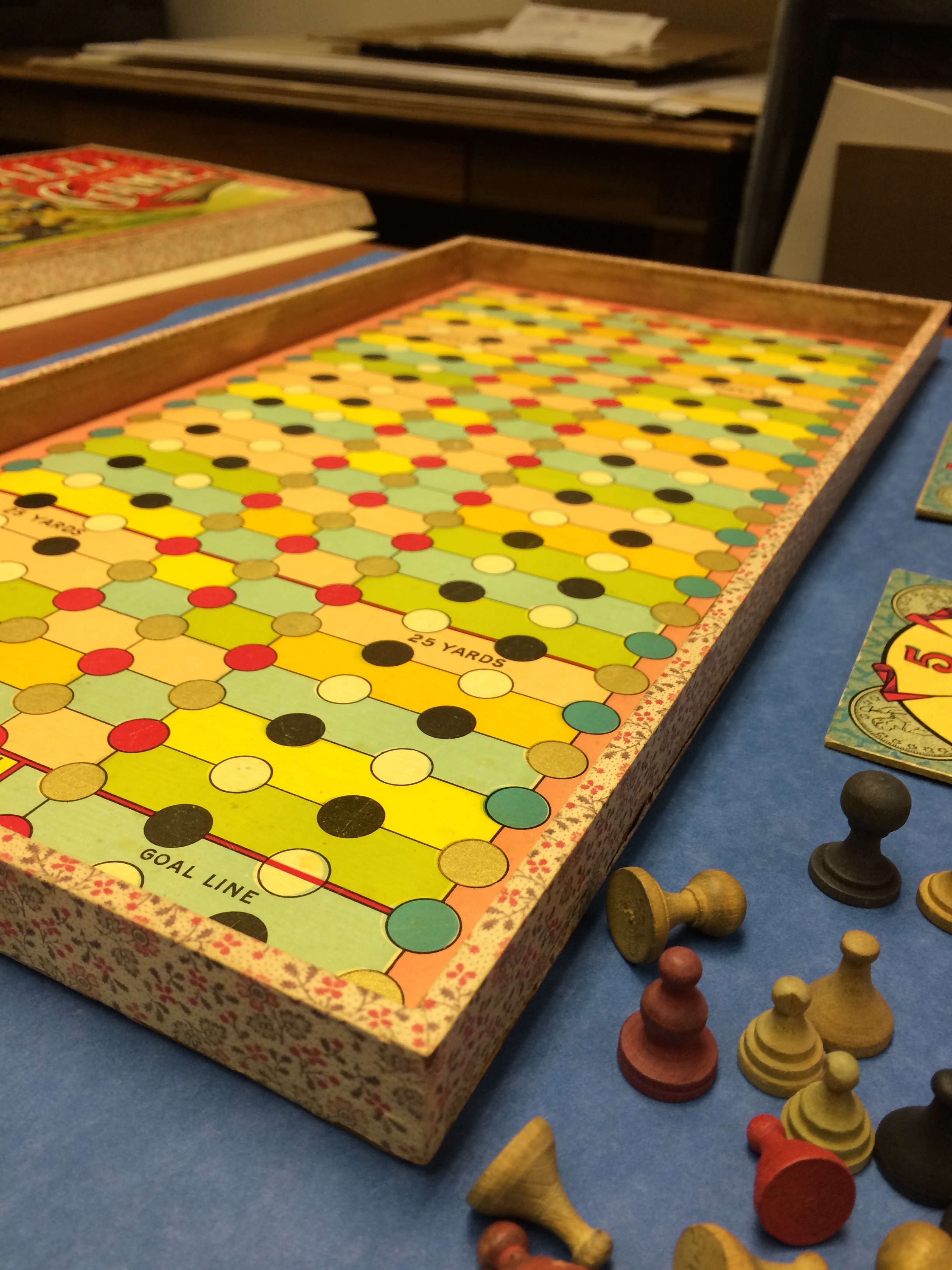
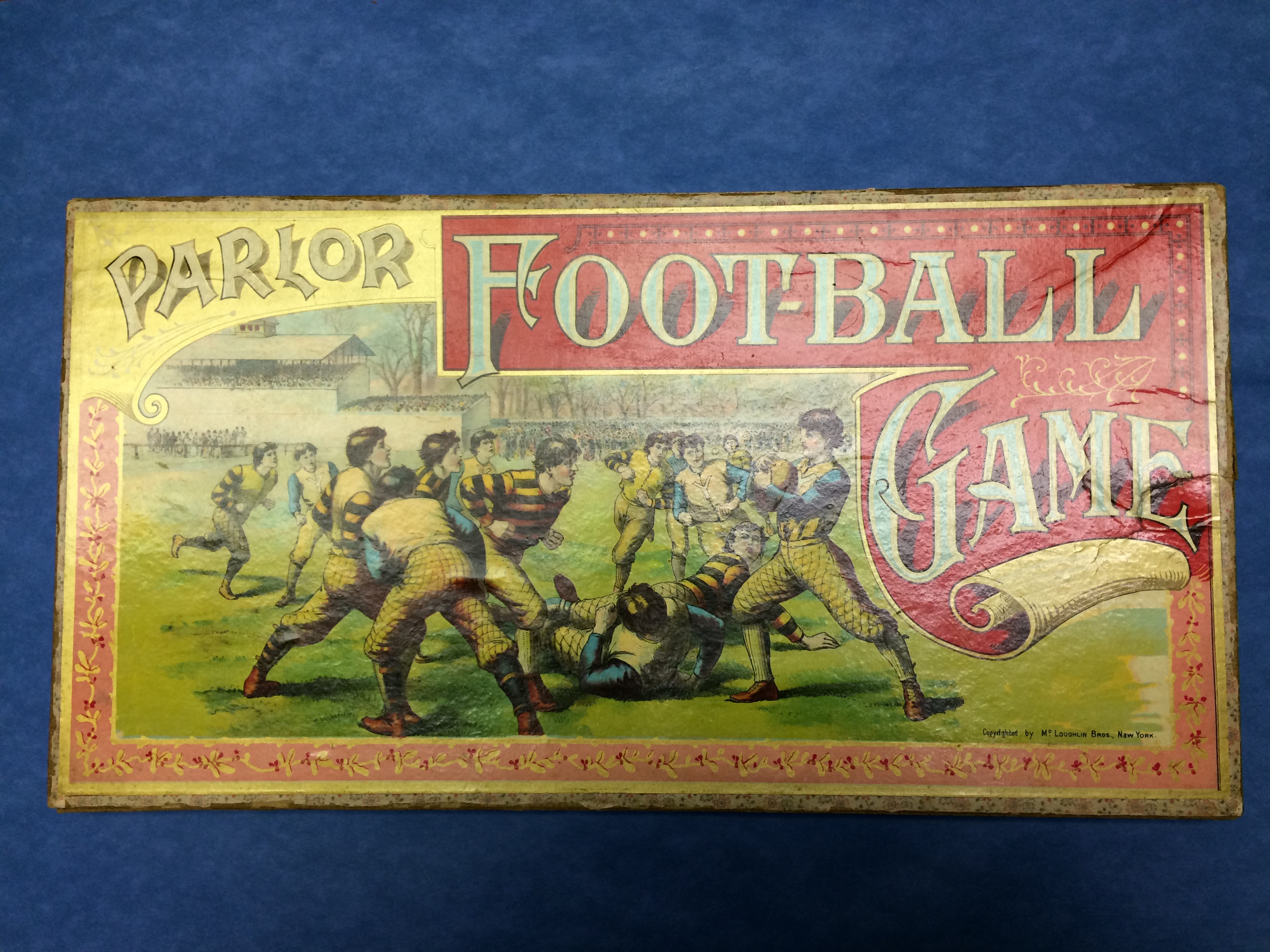
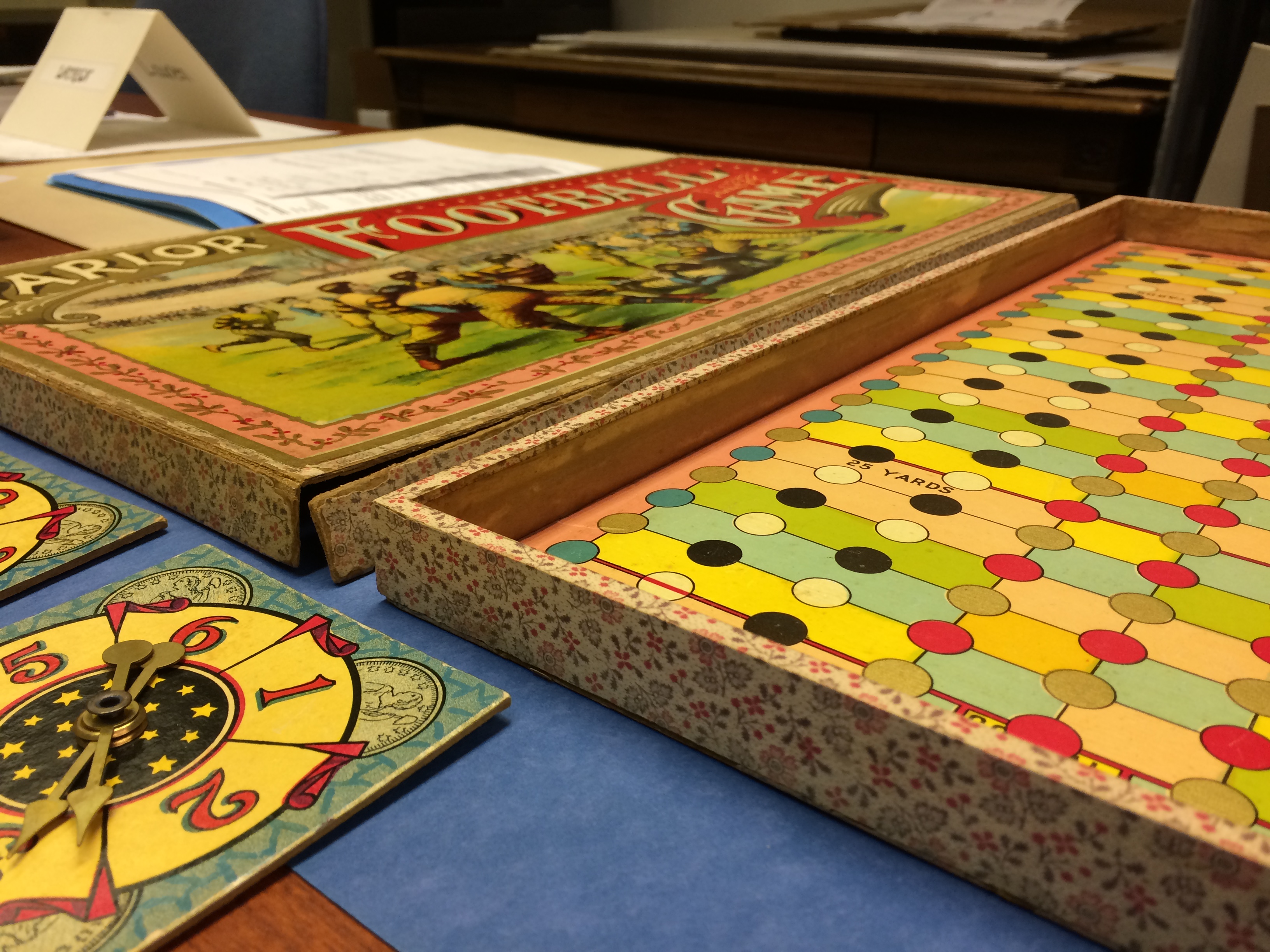
IMG_2479While trolling for children’s books and games at the Papermania fair held several weeks ago in the basement of the Hartford Civic Center (you could hear the marching band playing for the UConn men’s basketball game upstairs), I made the happy discovery of this aptly titled Parlor Foot-ball Game, issued by picture book and game publisher McLoughlin Brothers in 1891.  Its magnificently chromolithographed cover is nothing short of arresting: healthy, attractive (and yes, look-alike) young men competing for control of a ball that resembles more of a soccer ball or basketball than a modern elliptical football.  No dirt, grass stains, or blood sully this wholesome game.  If anything, the players appear to be in that ambiguous space between boys and men: they are all clean-shaven and wear the same pageboy haircuts.  Their protective gear is minimal—although some wear quilted knickers and several players have buckled shin pads.

IMG_2477

It is the team jerseys that reveal more about the players and place of football in American culture during the Gilded Age.  Half of them wear the “Y” of the Yale University Bulldogs, while the other half sport the orange and black horizontally striped jerseys of the Princeton University Tigers, reflecting the sport’s popularity on two exclusive college campuses.  In 1891, the sport of college football was barely more than two decades old, and both Yale and Princeton had the earliest teams.  Yale first competed in 1872, and by 1891 the team was coached by Walter Camp, who is now known as the Father of Football for his innovative work in transforming the game from English rugby to the snap and tackle dominated plays along the line of scrimmage that became characteristic of American football.  Princeton and its nearby competitor Rutgers are creIMG_2482dited with having the oldest football teams in the world, both established in 1869.  Princeton dominated the game, winning some 22 of the 40 national titles played between 1872 and 1900.

Also fascinating is the carefully composed pastoral background for this box top image.  Green leafy trees border the field, providing shade for an early fall day free from wind, rain, or snow.  Even the spectators seem to be neatly arranged between the covered grandstand on the left, the bleachers in the middle, and the standing spectators on the far right, who seem to be well-dressed college men and their girlfriends.  It is as though the box image is giving us visual instructions for the performance of the game as a social event.

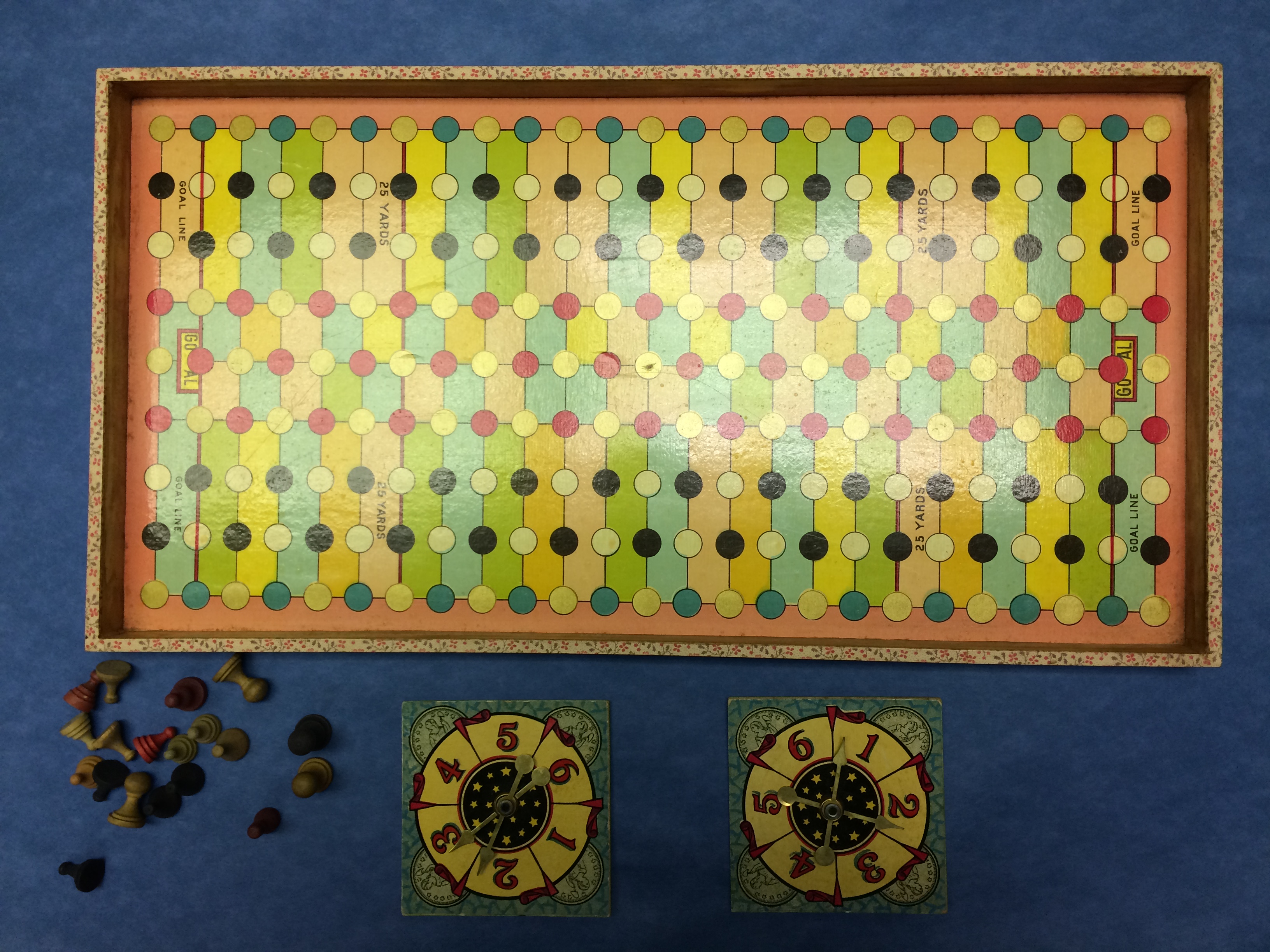
IMG_2478Like many late nineteenth-century games, the actual board game is governed by rules that seem ponderous to the modern eye.  The action is confined to a rectangular board marked by yards and goal spaces/goal lines on either side.  The game is limited to two players who take turns spinning in order to advance the ball piece toward the opponent’s goal line and maneuver around the blocking of four player pieces per team.  Five points are awarded for getting the ball piece over the central goal space, or three points for getting over the goal line on either side of the goal space.  According to the instructions, the game can be played for 12 or any number of points predetermined by the players, reflecting the fluidity of both the McLoughlin game, and this brave new sport played by college men.

Meet AAS Fellow Sean Moore

moorenew_0Sean Moore is Associate Professor of English at the University of New Hampshire and recently completed an American Antiquarian Society-National Endowment for the Humanities fellowship at the Society. His work has received support from a variety of institutions, including the John Carter  Brown Library, the Folger Shakespeare Library, and the Fulbright program, and he has just received an NEH Fellowship for the 2015-2016 academic year.  Sean’s current project is entitled “Slavery and the Making of the Early American Library: British Literature, Political Thought, and the Transatlantic Book Trade.” He recently sat down with us to discuss this new project and his research at AAS.


Past is Present: Can you describe your current project?

Sean Moore: My project, “Slavery and the Making of the Early American Library:  British Literature, Political Thought, and the Transatlantic Book Trade,” was inspired both by Brown University’s investigation of its endowment’s origins in profits from the slave trade and from my interest in how British books made their way to America in the eighteenth century.  In seeking to connect these two interests, I discovered that many pre-Revolution American subscription libraries were founded by people with investments in slavery.  I have planned six chapters for this book:  1) on private libraries financed by slavery, 2) on the Redwood Library of Newport, 3) on the Salem Social Library, 4) on the Charleston Library Society, 5) on the New York Society Library, and 6) on the Library Company of Philadelphia.  I am pairing a British literary text, and sometimes a philosophical one, from the period with each library.  For example, the first chapter, on which I have spent the majority of my time at the AAS, discusses the reading of Samuel Richardson’s novel Pamela by early American women slave owners like Eliza Lucas Pinckney and Esther Edwards Burr, and the purchase of Locke’s Two Treatises of Government by male slave owners like Washington, Jefferson, and Madison.  I do so in order to assess their appetite for imported literary commodities, their general consumer habits, and the means by which they found the money to pay to participate in British consumer culture.  My chapters on the subscription libraries basically cross-reference library proprietorship and patronage with records of who was involved in slavery and related enterprises like sugar, rum, tobacco, and shipbuilding.  The goal of my project is to map the dissemination of British books in America through what I am calling “slavery philanthropy.”


Past is Present: What historians or literary scholars inspired your entry into the field/inspire your work today?

Sean: My first book project sort of accidentally brought me into book history from postcolonial and economic theory when I began to realize that many of Jonathan Swift’s comments about imperial Britain and the Irish economy were making use of the jargon of workers involved in the book trade, and that he was saying that a Dublin book trade was necessary for the rest of the Irish economy to thrive.  The work of Irish book historians like Mary “Paul” Pollard, Raymond Gillespie, and many others inspired me, and I began to read more generally in the field of book history, like the work of Richard Sher, Adrian Johns, Leah Price, Robert Darnton, Lisa Maruca, and many others.  Maruca’s The Work of Print, in particular, introduced me to the seventeenth-century book trade handbook by Joseph Moxon, Mechanick Exercises, a copy of which Swift owned and perhaps made use of while writing many of his Irish political satires.

In preparing for my current project, I was inspired by Hugh Amory and David Hall’s The Colonial Book in the Atlantic World and many of the essayists they included in it, especially James Raven, who has written the most about British imports and the Charleston Library Society.  I also have taught D.F. McKenzie and Jerome McGann, making use of their concept of the “sociology of the text,” as well as Philip Gaskell’s New Introduction to Bibliography as a means of deepening my knowledge of the field.  For the slavery side to my project, I have been particularly inspired by the work of Simon Gikandi, Philip Gould, and Craig Wilder.


Past is Present: What does the AAS fellowship mean to you? What have you looked at while you’ve been on fellowship? What would you have liked to find? What would be your ideal find?

Sean: Prior to taking this fellowship, I was serving a three-year term as director of the UNH Honors Program, which, together with teaching and raising a young family, made it difficult to write a major monograph, though I have been able to publish an essay collection and write several articles.  The NEH fellowship this fall has been crucial in helping me to jump-start my work, and I have written 80 pages this fall and read many, many books and manuscripts in the reading room and in the scholar’s residence.  The central manuscripts for me have been the Boston bookseller Jeremy Condy’s account book, a memorandum on books borrowed from the Salem Social Library, and the catalogs of many eighteenth-century American libraries.  Moreover, conversations with library staff and fellows have introduced me to much current secondary reading in early American studies, almost all of which the AAS has.  I have also spent a considerable amount of time in newspaper databases and the University of Virginia Press’s digital papers of Washington, Jefferson, Madison, and Pinckney to assess the availability in America of certain British books and the transatlantic business transactions of early Americans.

What I would really like to have found, and perhaps may on another visit to the AAS, is more evidence that could help me cross-reference early library membership with members’ business affairs.  I haven’t really asked anyone to help me with that on this trip, as I have been busy writing and reading other material, but if I could get lists of the proprietors of the five libraries I am researching and historical, biographical, and genealogical data on members that would really help.  An ideal find would be evidence of a barter exchange of a slave or slave-produced commodity for books, as I have seen in the digitized papers of Washington, Jefferson, and Madison.

This fellowship has been crucial in immersing me in early American studies, a field in which I am somewhat of an immigrant as an Irish and British studies scholar, and the staff and fellows have been wonderfully welcoming.

There’s more! Read the full interview here!

Colonists, Indians, Pirates, and Lovers: The AAS Collection of Dime Novels, Part II

Last week, Brenna gave an overview of the dime novel genre and the best known American publishers. This week, she examines the difficulties associated with cataloging the dime novels.

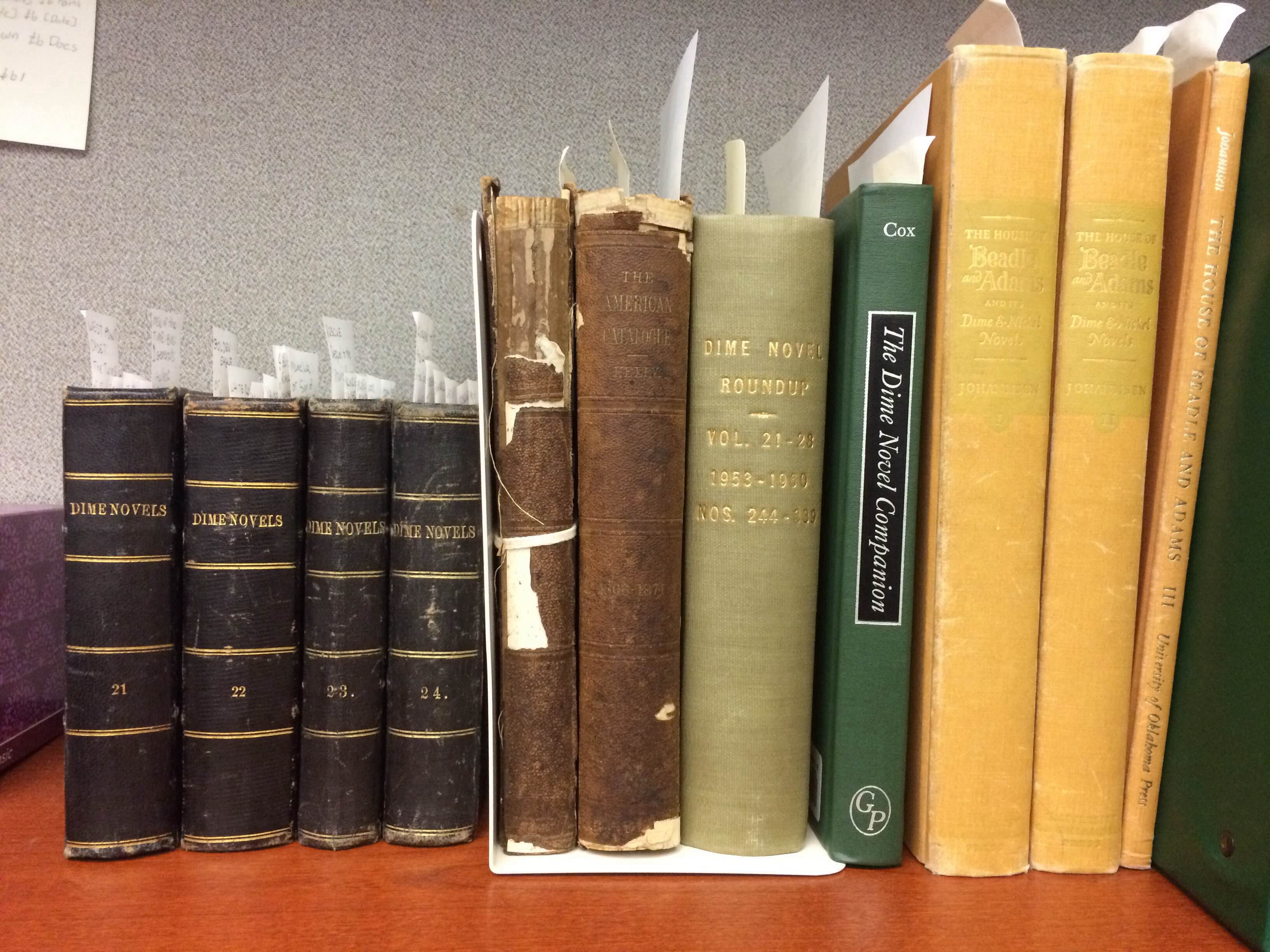
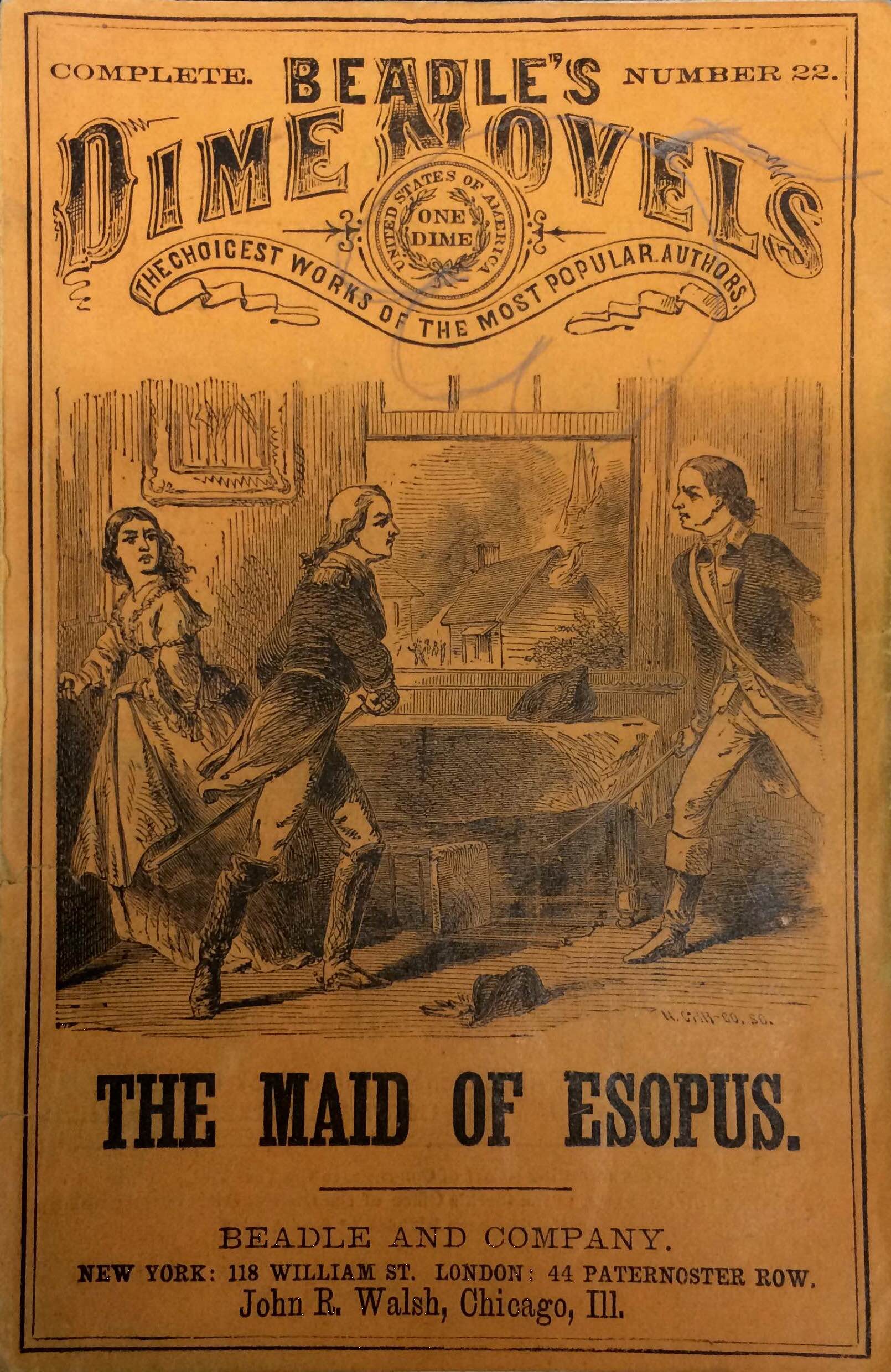
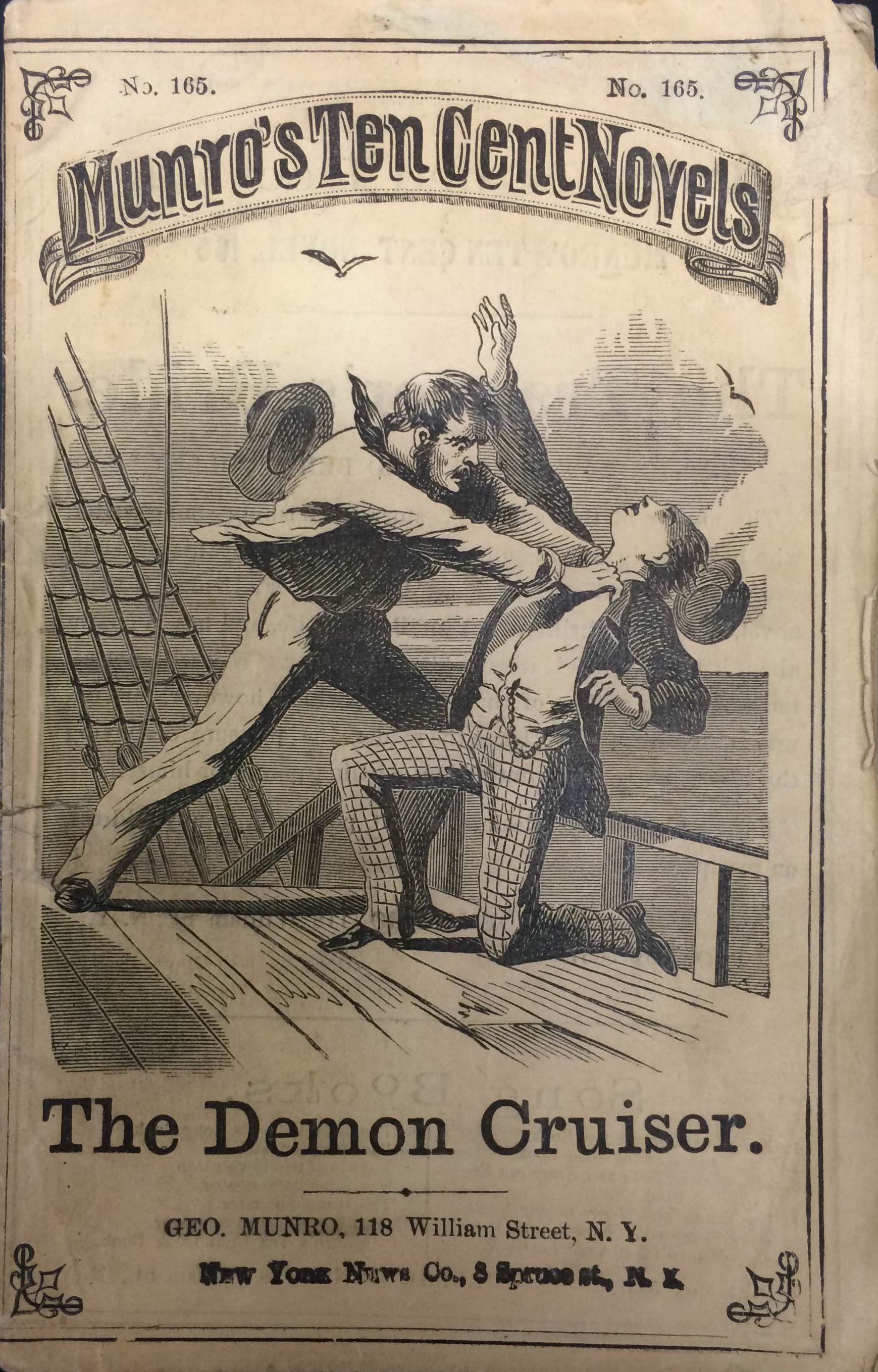
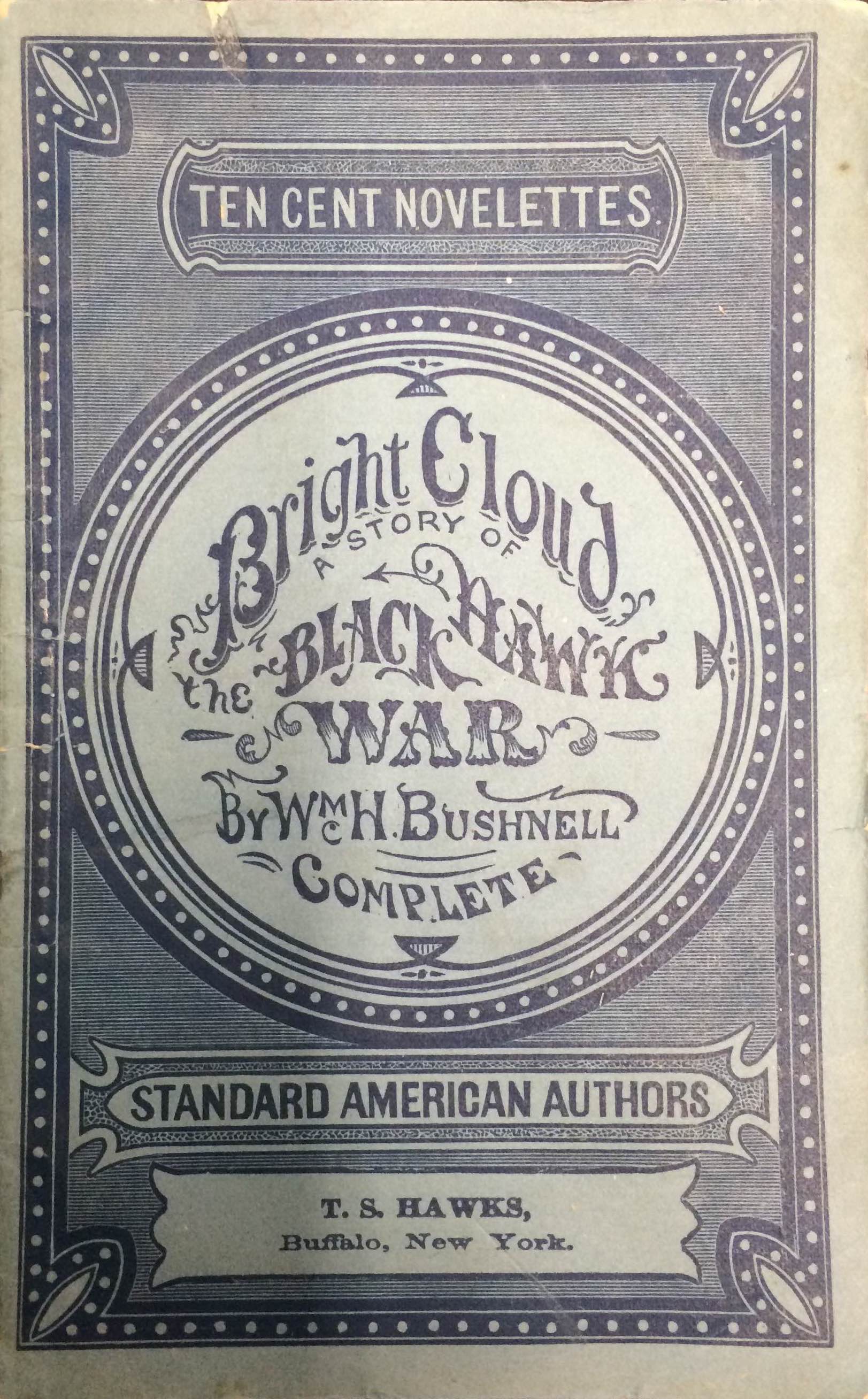
Part 2_Dime novel shelfieLet’s face it: dime novels are cool and fun. But though our collection is large, they have been sitting in the stacks, mostly uncataloged, for decades. The reason they languished in the stacks for so long is because their cheap publication and frequent re-printings can make them extremely challenging to catalog, especially the novels in the bound volumes. Many dime novels came in distinctive paper wrappers (orange for Beadle, beige for Munro, blue for Elliott, Thomes & Talbot) that had useful information, such as what series they were in and what number in that series, or perhaps different publication or date information than the title page, which might suggest a later printing or reissue. So, when we have copies of the novels without these paper covers (which frequently happens, as wrappers were both fragile and considered unimportant), we lose a great deal of useful information. This doesn’t by any stretch mean that they’re impossible to properly catalog, just that the job takes a lot of research.

Enter Albert Johannsen, who made cataloging Beadle publications significantly easier. In 1950, he published The House of Beadle and Adams and Its Dime and Nickel Novels, a three-volume bibliography of all of the firm’s publications, including background information on the firm, breakdowns of author biographies and pseudonyms, and tracings of individual novels as they were republished in other series. This allows me to put a wonderful amount of detail into the records for Beadle’s novels and other dime publications. Unfortunately, no one has done similarly in-depth work for other dime publishers. Sometimes, simply finding a list of titles in any given series can be a challenge.

As difficult as cataloging dime novels can be, I got spoiled with Beadle novels. Johannsen’s work made my life infinitely easier. All I had to do was flip through his book to find reprint information or a list of authors and pseudonyms. Most challenges that came up were questions of how much information to put in a record, or which variant titles or author names to trace. Even when I got my first novels published by George Munro, I was able to find with reasonable ease a wonderful checklist, with some work to disambiguate author pseudonyms, as a supplement to the magazine Dime Novel Round-up.

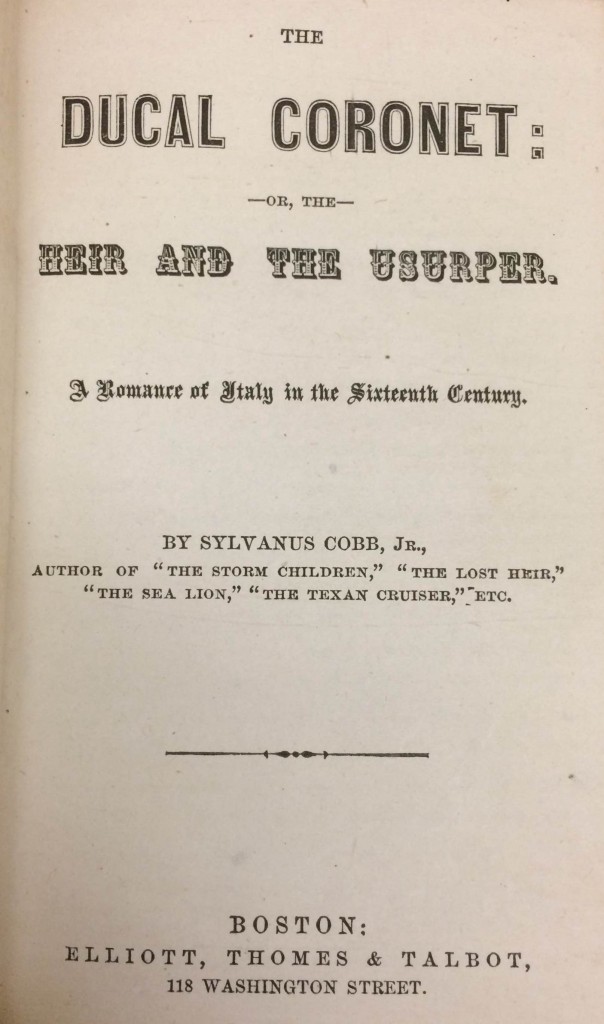
The novels of Elliot, Thomes & Talbot, however, were an entirely different story. I began with a novel called The Ducal Coronet: or, The Heir and the Usurper. A Romance of Italy in the Sixteenth Century by Sylvanus Cobb, Jr. There were no Part 2_Ducal Coronetwrappers. The title page had no series or numbering information. It didn’t have a publication date or even a copyright date. I didn’t know that their main series was called Ten Cent Novelettes until I started looking through some basic dime novel reference works, which were still a bit skimpy on information. It took finding a reference in Google Books, discovering that AAS not only had the periodical in question, but also had the appropriate year digitized (though I could have easily gone downstairs to find it), to find a list of the items in the Ten Cent Novelettes. The list gave me titles, authors, and series numbers, but still no publication dates. But now I at least knew that The Ducal Coronet was no. 12 of the Ten Cent Novelettes.
Luckily, a few different reference sources, including the wonderful The Dime Novel Companion by J. Randolph Cox, agreed that the series was published monthly and began in November 1862, so I could at least estimate that this novel was published in 1863, which was significantly better than the complete lack of date I had before. (In my searches, I even found a catalog of American imprints from 1861-1866, which included about five or six novels by Cobb. But, naturally, The Ducal Coronet was not among them.) Knowing the start date and the place of any given novel in the series leaves me much better off than I was just with the novel in hand.

But even with missing or inaccurate copyright statements, contradictory imprints, pseudonymous authors, and titles that can change until they are completely unrecognizable, untangling the publishing history of dime novels (as well as reading what bits I can justify for work) is some of the most fun I get to have on the job.

Isaiah Thomas Comes to AAS—In Miniature

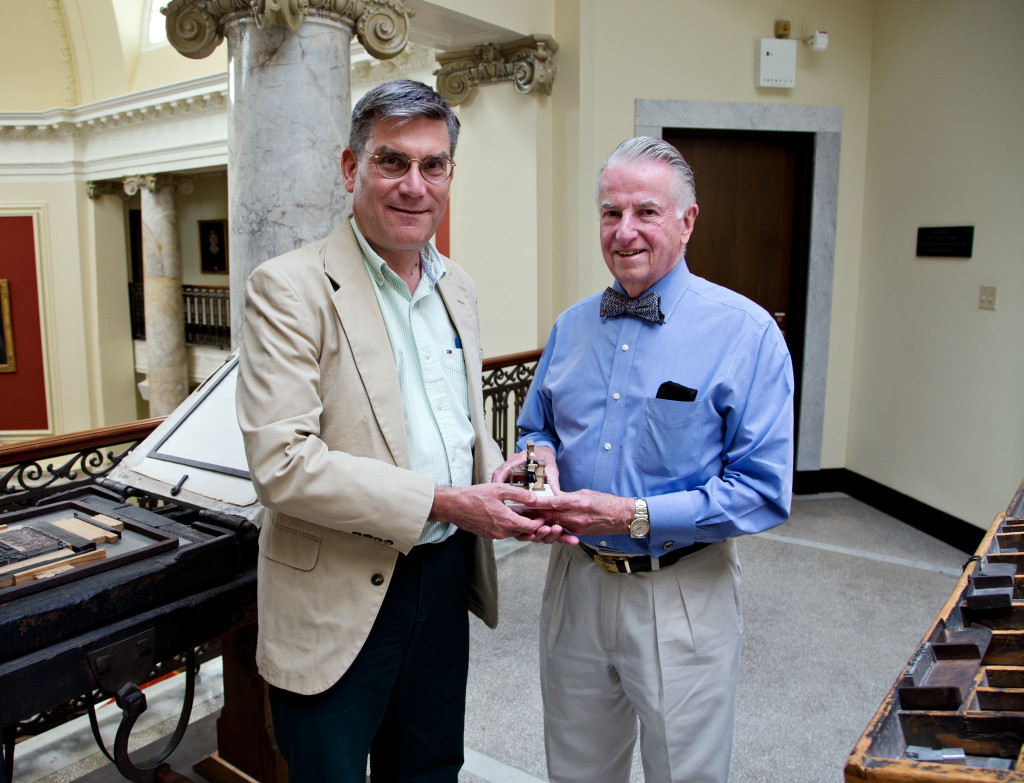
figurine_02With support from the Massachusetts Society of the Cincinnati we were able to bring our popular Isaiah Thomas-Patriot Printer program to communities in northern Worcester County. After one such performance at the Leominster Public Library, Donald Hicks came up to me and we chatted about Isaiah Thomas’s involvement with the Masonic order. Mr. Hicks, a retired banker, is an active Freemason himself and a former Grand Master of Masons in Massachusetts.

Isaiah Thomas was active in the Lancaster Lodge of Masons before he organized and became the first Master of the Morning Star Lodge of Worcester.  He was so active in the organization that several new lodges were named after him. He was elected Senior Grand Warden in 1795 and Grand Master in 1802, a position he held until 1805, and was then re-elected in 1809.  Thomas was one of the Masonic dignitaries at the laying of the cornerstone of the Bunker Hill Monument in 1825.

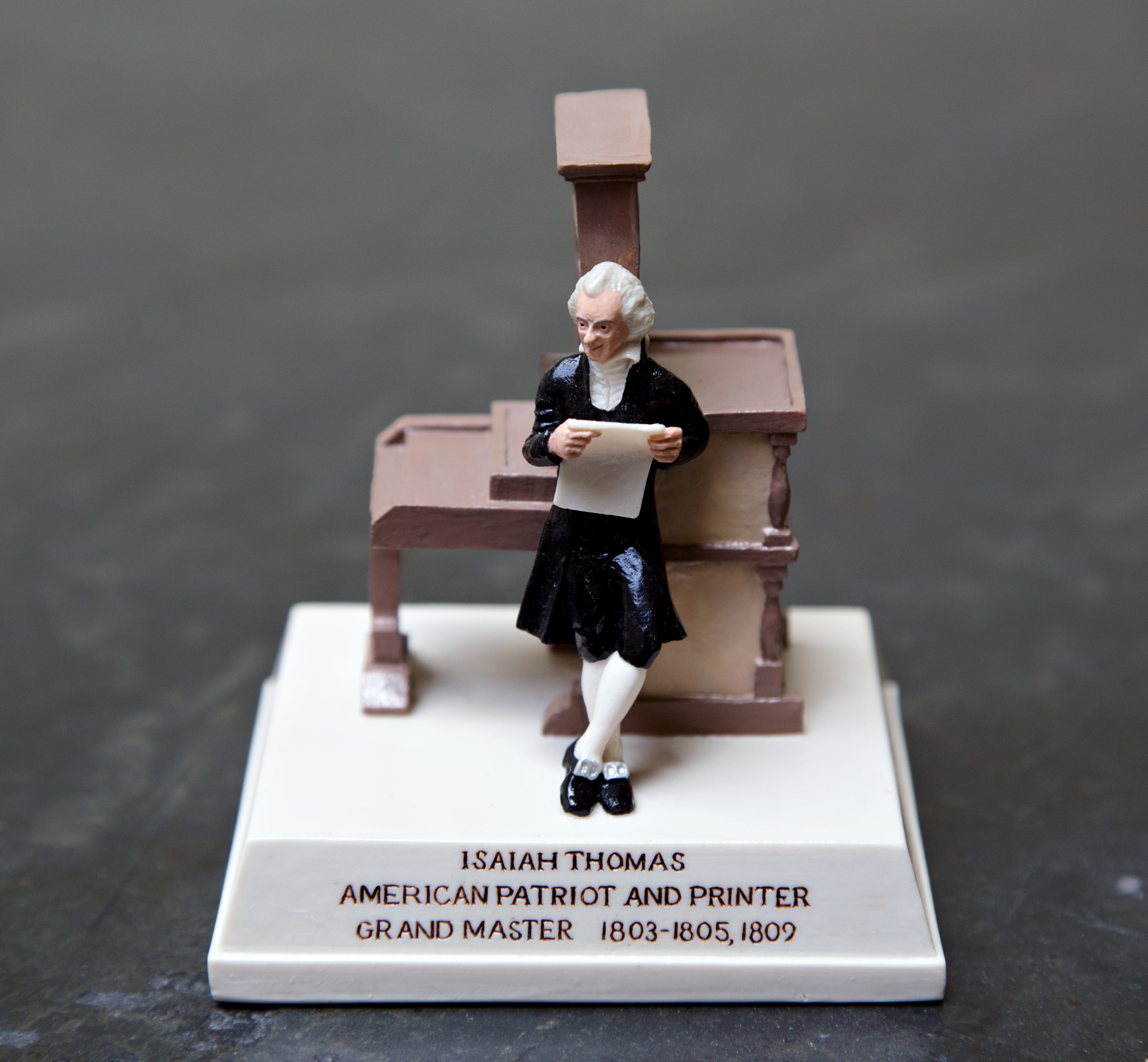
In 2009, the Masons commemorated Isaiah Thomas’s service to their organization by creating a Sebastian miniature of him leaning against his press and reading his newspaper The Massachusetts Spy (above).  Mr. Hicks donated one of these limited edition miniatures to the Society and the picture below shows him presenting it to me next to “Old Number One,” Isaiah’s famous printing press located in Antiquarian Hall.

figurine_01

Colonists, Indians, Pirates, and Lovers: The AAS Collection of Dime Novels, Part I

“The intelligent American public will find in the Dime Publications of the house of Beadle and Company works which meet not only a great popular want of excellent books and cheap rates, but which are, in every respect, deserving of the wide popularity to which they have attained.”
– from ‘A word to those who desire good books,’ Beadle and Company.

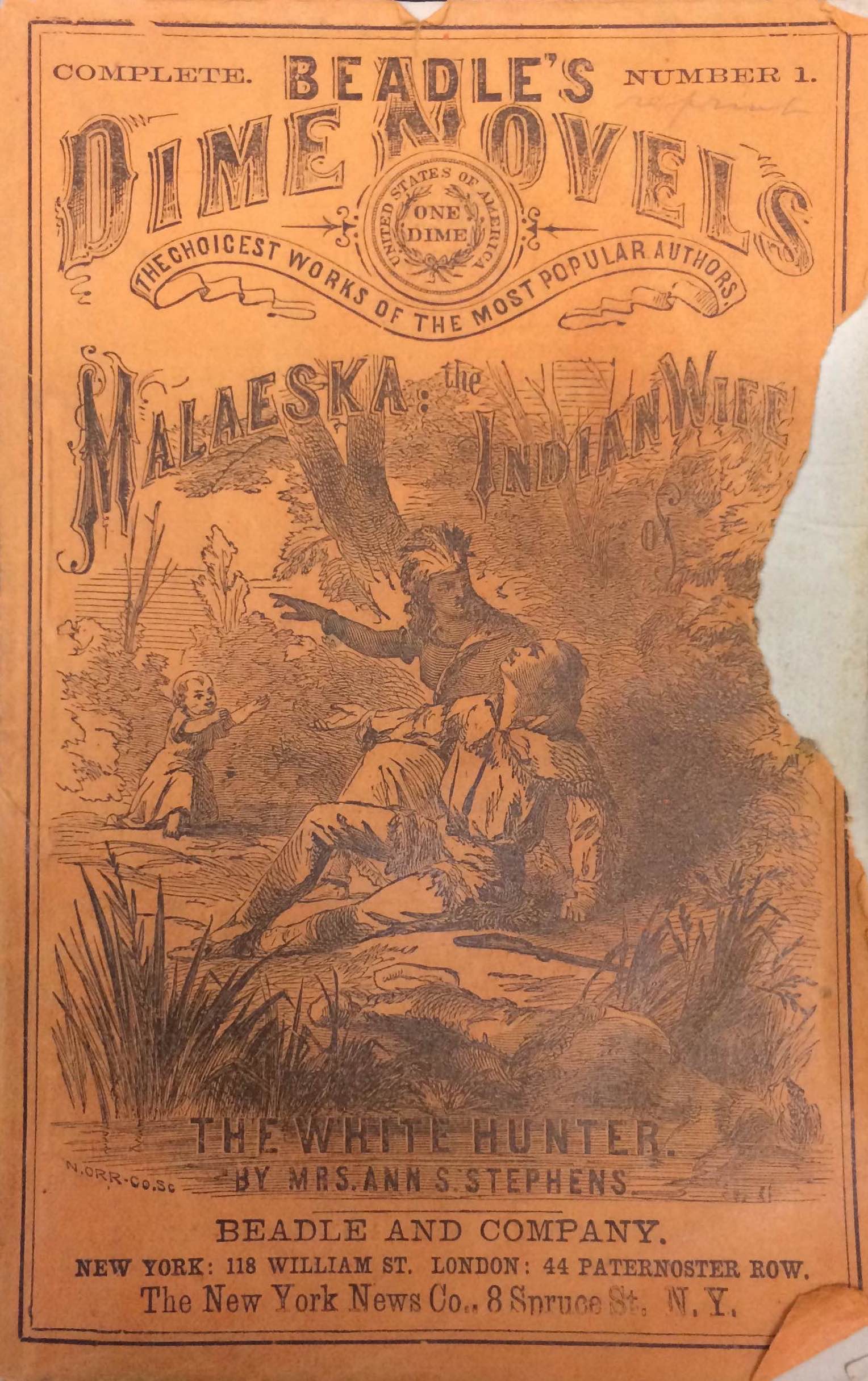
Part 1_Beadle_MalaeskaDime novels were cheap publications (yes, many of them only cost ten cents) that flourished in the second half of the 1800s. It is generally accepted that the first dime novel was Malaeska, the Indian Wife of the White Hunter by Mrs. Ann S. Stephens, published by the firm of Irwin P. Beadle & Co. on June 9, 1860. Beadle & Adams, as the publishers were later known, became the preeminent publisher of dime works, and their success bred competition. Munro’s Ten Cent Novels, published by George Munro (who was briefly partnered with Irwin P. Beadle after he left his brother’s firm) and the Ten Cent Novelettes of Elliott, Thomes & Talbot were not as successful as Beadle’s publications, but all catered to a similar interest for romantic and sensational literature. These stories frequently featured Native Americans, either with early American colonists or the pioneers of the West; heroic exploits during the American Revolution; tales of shipwrecks along the coast and pirates in the Caribbean (beating Disney by over a century); orphan children and missing heirs; disinherited dukes in Italy and witch trials in Salem; and many, many sundered lovers.

Part 1_Beadle_Maid of EsopusAs I’ve spent the last months immersed in the world of dime literature, I’ve discovered that there are variations in what counts as “cheap.” Beadle prided themselves on attracting excellent authors and providing the best, morally acceptable literature for the lowest price. I certainly haven’t had time to sit and read all the novels I’ve cataloged (though I really wish I could), but based on what I’ve seen from the early items I’ve cataloged, I believe they held to that standard reasonably well. There is little blood and gore, good usually triumphs, the woman gets the man she wants, there are even reasonably honorable British officers during the Revolution, and a whole cadre of friendly Indians (though plenty of Indians taking captives, too. This is the late 1800s, after all).

This changes as we move further down the chain. Part 1_Munro_The Demon CruiserMunro’s novels were of still reasonable quality, since he shared some authors with Beadle. But the writing was usually less elegant, the stories more explicitly violent, the Indians more likely to be racist caricatures. Even the quality of the paper, the printing, and the frontispiece illustrations were inferior. Then, we come to Elliott, Thomes, and Talbot. They were strictly purveyors of adventure and sensational literature. The writing ranges from amusingly corny to pretty bad, there are no illustrations, the stories are much more Victorian gothic, frequently taking place abroad, as opposed to the American focus of Beadle, and there was plenty of violence, poisoning, you name it. (Fun fact: some of these extremely sensational stories were written for them by none other than Louisa May Alcott, which is where Jo March got her literary tendencies.)

Part 1_ETT_Bright CloudWhat is particularly interesting about tracing this apparent decrease in quality is looking at the longevity of each individual series. Beadle’s most famous series, Beadle’s Dime Novels and New Dime Novels, ran for about 630 numbers, Munro’s Ten Cent Novels ran for 354 numbers, and Elliot, Thomes & Talbot’s Ten Cent Novelettes only ran for 86 numbers (though their Twenty Cent Novelettes ran for at least 172 numbers). Apparently, even in cheap fiction, attention to standards pays off.

Check back next week for Brenna’s take on the difficulties of cataloging the fascinating dime novel collection.