The Acquisitions Table: A Proclamation for the Encouragement of Piety and Virtue

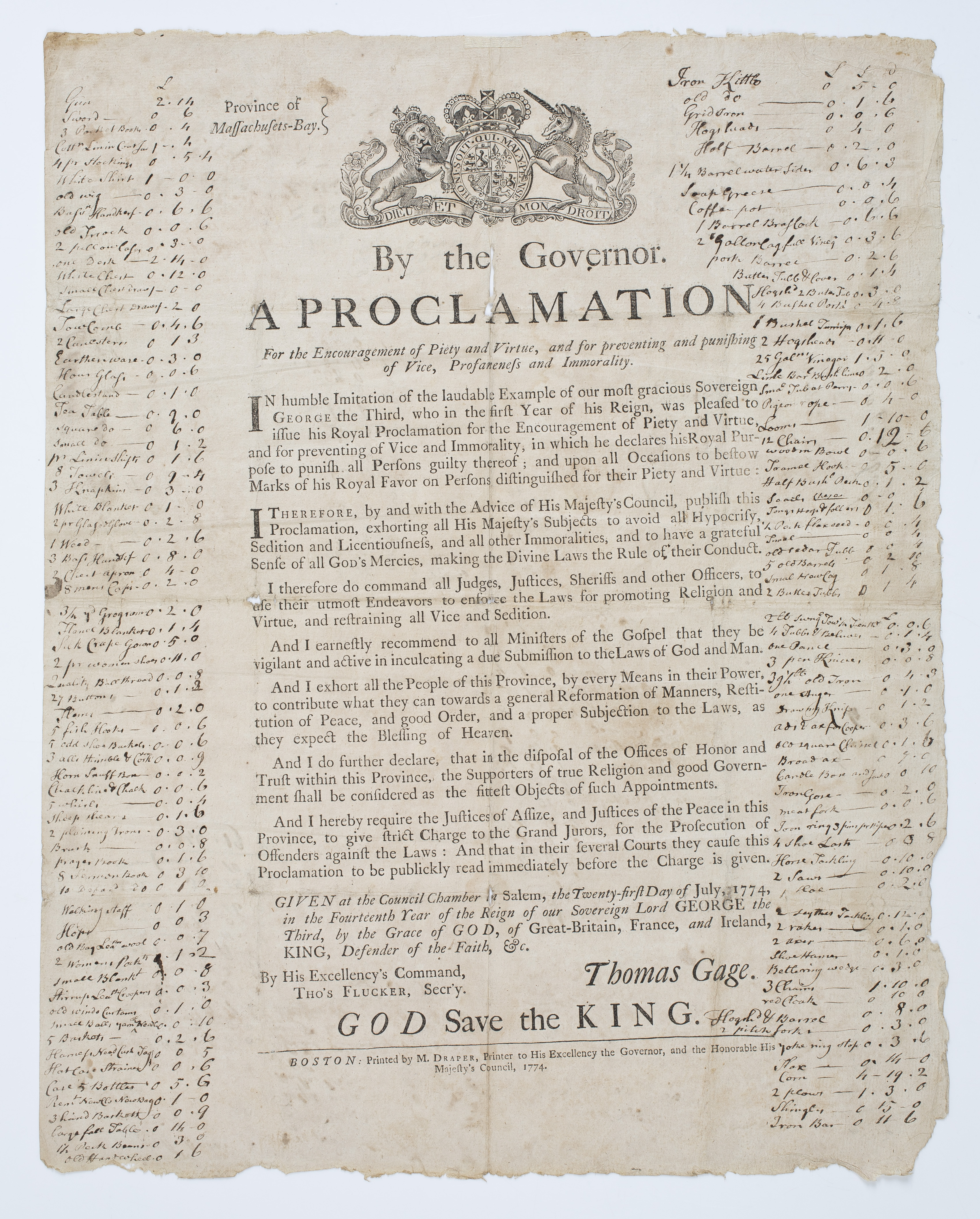
Province of Massachusetts-Bay. By the Governor. A Proclamation for the Encouragement of Piety and Virtue… Boston: Margaret Draper, July 23, 1774.

Province of MassachusettsThis important broadside was printed in Boston by Margaret Draper, a loyalist printer who enjoyed the support of Province of Massachusetts Royal Governor Thomas Gage.  Gage had been appointed by King George in the spring of 1774 to implement what became known as the Intolerable Acts (or Coercive Acts). Gage was, to put it mildly, very unpopular in Boston.  He closed the port and enforced the quartering act, raising the ire of the locals. This proclamation, issued in July of 1774 calls for calm and asks royal subjects to “avoid all Hypocrisy, Sedition, and Licentiousness, and all other Immoralities.” In addition, the proclamation asks for “all People of this Province, by every means in their Power to contribute what they can towards a general Reformation of Manners, Restitution of Peace and good Order.”  Gage’s proclamation was met with scorn and his actions to inforce the Acts in Boston helped to fire up the revolutionary spirit in other colonies.  By September, the First Continental Congress was holding meetings in Philadelphia to discuss independence.  This copy of the proclamation was owned by Elisha May (1739-1811), a justice of the peace and farmer in Attleboro, Massachusetts, who served in the Massachusetts militia from 1775 to 1781. The sheet was reused by the family in 1811 to tally up the holdings in May’s estate, listing more than 130 possessions, from his gun to sheep shears to bundles of hops.

The Asylum Journal Presents Presidential Candidates

Asylum Journal  (Brattleboro, VT)  November 22, 1842
Published every Tuesday, By the inmates of the Vermont Asylum.

AsylumJournal_0001

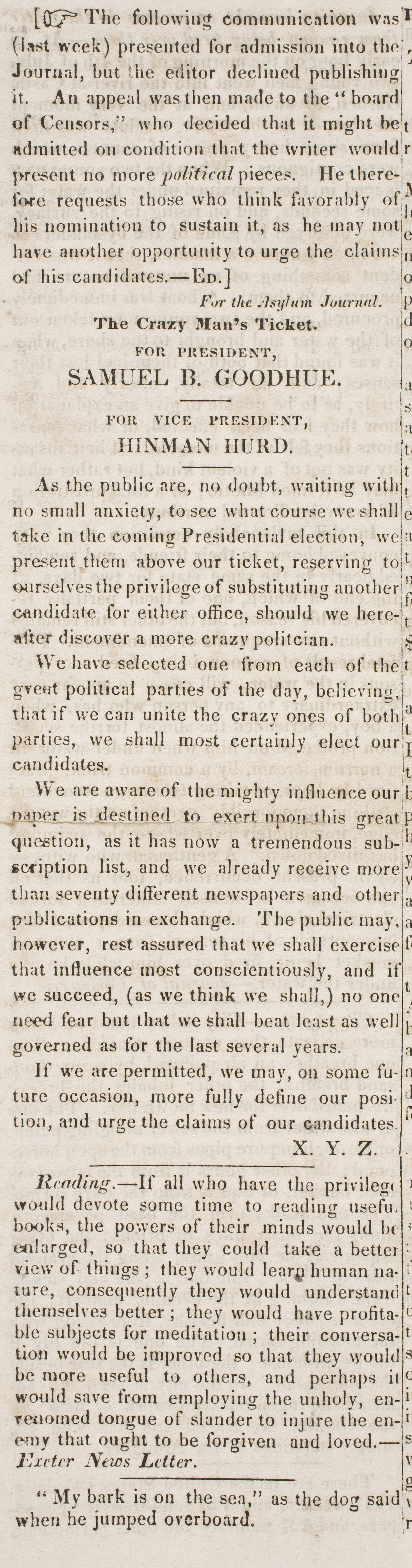
The Asylum Journal was published at the Vermont Asylum for the Insane, a private institution founded in 1834 by Anna Hunt Marshall.  It used a humane form of treatment on its patients, based on the theories of William Tuke that insanity was a medical condition and not due to problems of character or moral issues.  This issue shows that they used the activities of editing, printing, and publishing of a weekly journal as a form of therapy for its inmates.

This particular issue is interesting and oddly relevant as various people start declaring themselves as candidates for the upcoming presidential election.  In the nineteenth century it was common practice for a publication to print an election ticket for the party they supported.  The following appeared on page three of this issue:

AsylumJournal_0002The Crazy Man’s Ticket
FOR PRESIDENT
SAMUEL B. GOODHUE.

FOR VICE PRESIDENT,
HINMAN HURD

As the public are, no doubt, waiting with no small anxiety, to see what course we shall take in the coming Presidential election, we present them above our ticket, reserving to ourselves the privilege of substituting another candidate for either office, should we hereafter discover a more crazy politician.

We have selected one from each of the great political parties of the day, believing that if we can unite the crazy ones of both parties, we shall most certainly elect our candidates.

We are aware of the mighty influence our paper is destined to exert upon this great question, as it has now a tremendous subscription list, and we already receive more than seventy different newspapers and other publications in exchange.  The public may, however, rest assured that we shall exercise that influence most conscientiously, and if we succeed, (as we think we shall,) no one need fear but that we shall be at least as well governed as for the last several years.

If we are permitted, we may, on some future occasion, more fully define our position, and urge the claims of our candidates.
X.Y.Z.

Of course today it is difficult to select just one candidate from each party.

Spreading the News of the Declaration of Independence

As the United States is gearing up to celebrate its independence for the 239th time, here in the Outreach Department at AAS we’re also gearing up for another kind of event, taking place for the first time: hosting an NEH Institute for K-12 Teachers.

Among the many sessions in this institute, titled The News Media and the Making of America, 1730-1865, is one exploring the dissemination of the Declaration of Independence throughout the colonies in the days after July 4, 1776. Despite our current visual associations with the Declaration in its calligraphic form, complete with the proverbial “John Hancock,” the first copies of the Declaration shared with the public circulated in printed form. (In fact, the calligraphic version of the Declaration wasn’t even finished and presented for signing until almost a month later.) The first printing of the Declaration, done by John Dunlap, printer to Congress, was set in type immediately after its approval by Congress and printed overnight.  From there copies were dispatched to each of the colonies, making their way through cities and towns, spreading the news along the way.

These broadsides worked in two ways. For one, they could be read aloud to gathered crowds, instantly and exponentially expanding their reach. In one such instance, AAS founder Isaiah Thomas waylaid a post rider on route to Boston with a copy of the Declaration and publicly read it to a Declar of Indep - Salem-Charltoncrowd in Worcester – the first public reading of the Declaration in New England – before giving it back to the rider and sending him on. Secondly, they also acted as copy for printers throughout the colonies, who immediately started cranking out their own broadsides and reprinting the text of the Declaration in newspapers. Both forms of communication – oral and print – were necessary and effective ways of spreading the momentous news.[1]

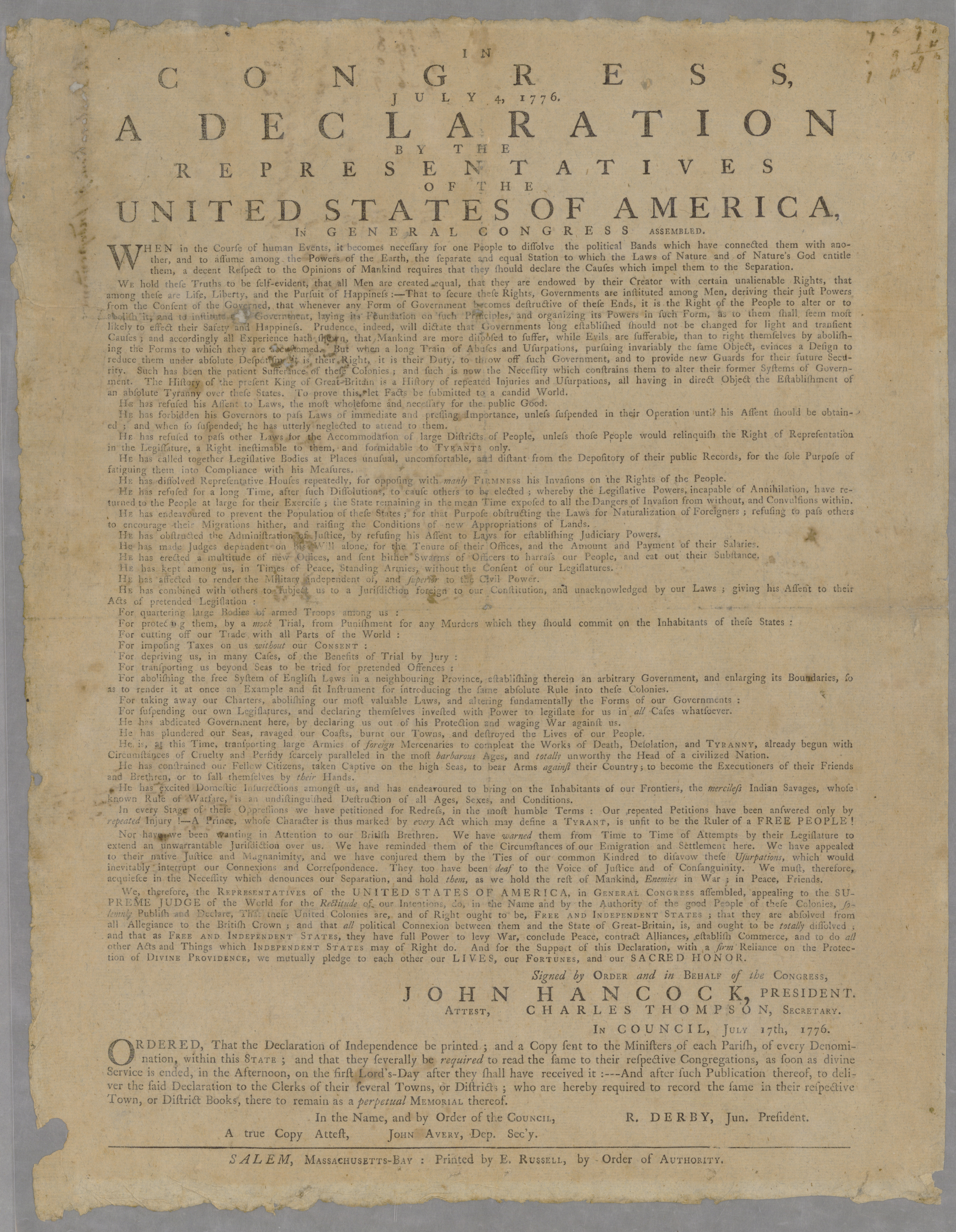
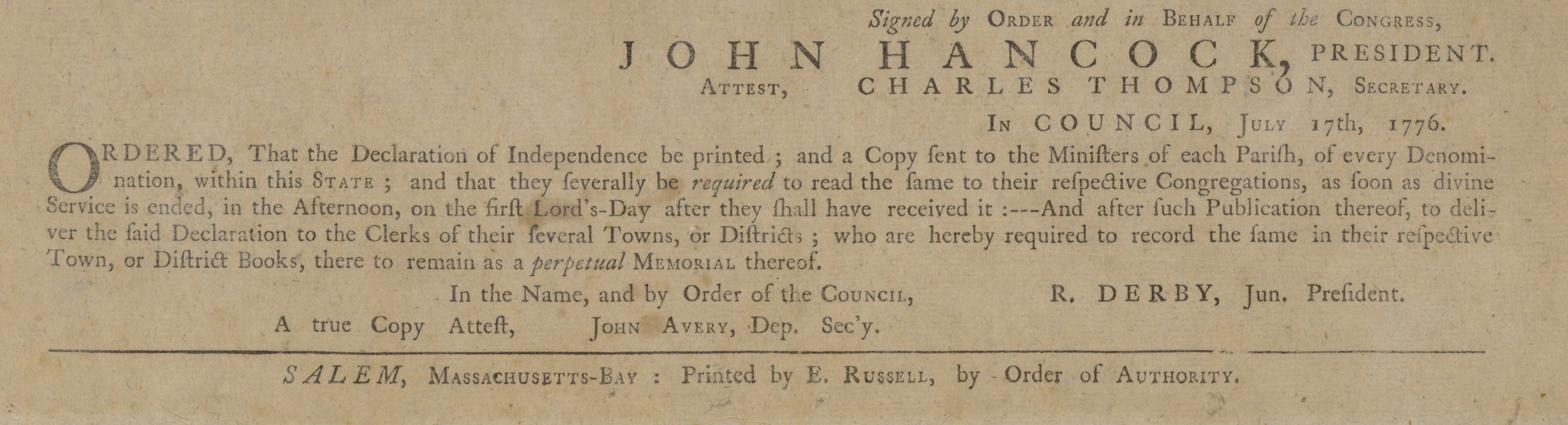
Proof of the ways in which printed and oral dissemination of the Declaration were intertwined in these early days can be found in a unique document in AAS’s collections (see right). At first glance this broadside edition of the Declaration, printed in Salem, Massachusetts, less than two weeks after the Declaration’s approval, doesn’t look much different from the Dunlap or other contemporary versions. But a closer look reveals an added paragraph at the bottom beneath the “signatures” of Hancock and secretary of the Continental Congress, Charles Thompson  (see below). This section reveals that the Revolutionary Council of the State of Massachusetts ordered this broadside printed and a copy sent “to the Ministers of each Parish, of every Denomination, within this State,” so that they could read the Declaration to each of their respective congregations. After doing so, they were to deliver their copies to the “Clerks of their several Towns or Districts,” who were “required to record the same in their respective Town, or District Books, there to remain as a perpetual Memorial thereof.”

Declar of Indep - Salem-Charlton - crop

Here we have the governing body of Massachusetts – now given a new layer of authority with the approval of the Declaration – not only ordering more copies of the Declaration to be printed, but also prescribing ways in which it would reach the largest numbers of the populace. With the vast majority of citizens attending church services, this was in many ways a surefire way to get the most bang for their buck.

But, as scholars of reader response and print networks will tell you, it’s one thing to know something was distributed in such a way, but an entirely other thing to know if it was actually read as intended. What this particular document in our collections tells us is that, at least in one case, the local minister followed the order to the letter.  Accompanying this broadside is a small scrap of paper with a handwritten note that reads, “The original copy of the Declaration of Independence, sent by the Council at Boston to the Town of Charlton July 17, 1776 and there read by the minister, Rev. Caleb Curtis, as directed. (See the order below the Declaration.)  E. I. Comins.” How’s that for a historical smoking gun?

Charlton Decl of Indep note

The Reverend Caleb Curtis was a member of what Peter Oliver, the last chief justice of the province under Royal rule and the author of “The Origin and Progress of the American Rebellion,” referred to as the “black regiment.”  So called because of their black ministerial robes, the black regiment were ministers who advocated resistance and eventually independence from Great Britain. Curtis, the town’s first minister, was active in local politics and a staunch Whig. He served as a member of Charlton’s Committee of Correspondence and was present at a statewide convention of the Committees of Correspondences held in Worcester on August 9, 1774. Curtis also preached before the Charlton Militia, providing a blessing to them as they headed off to fight the Regulars at Lexington and Concord on April 19, 1775. One can easily imagine such a firebrand minister eagerly reading the Declaration of Independence before his congregation at the first opportunity.

So this Fourth of July, as our social media feeds fill with celebrations, well-wishes, and news articles about the holiday’s history, we’ll also be taking a moment to think about that first Independence Day(s), and how the colonial news and social networks, though not as quick as a click of a button, were no less interdependent, effective, and resourceful.


[1] For a full description of the early dissemination of the Declaration of Independence see Thomas Starr, “Separated at Birth: Text and Context of the Declaration of Independence,” Proceedings of the American Antiquarian Society, 110 (April 2000).

The Acquisitions Table: Circular to All Who Play at Billiards

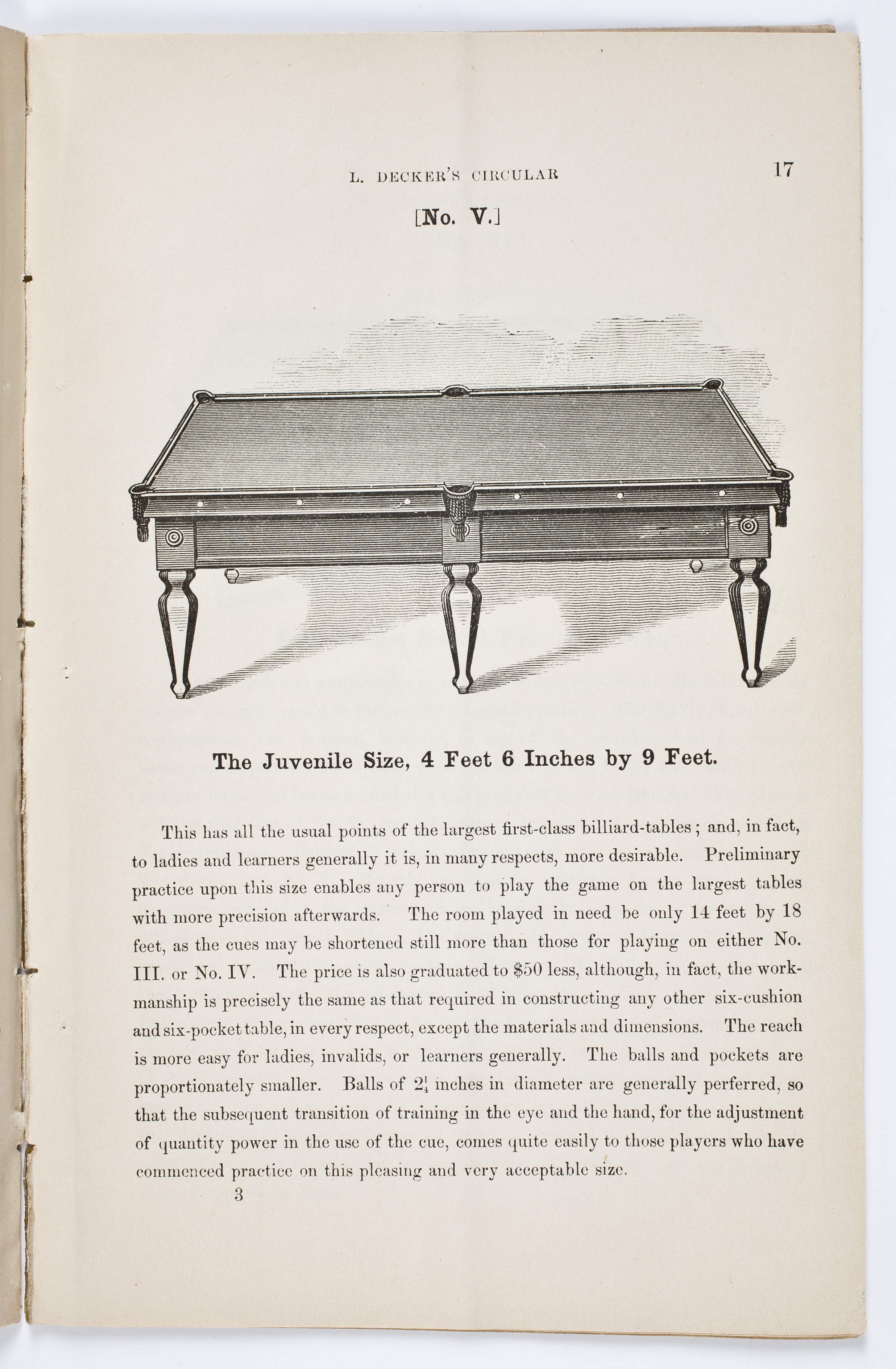
L. Decker’s Circular to All Who Play at Billiards, with Incidental Advice to Purchasers of Billiard Tables… Embellished with Beautifully Engraved Diagrams. New York: L. Decker, 1859.

billiardAn early unrecorded billiards catalog published by Levi Decker was just one gem in a stack of 45 pamphlets given by AAS member Kenneth Carpenter and his wife Mary. Out of this stack, fully 40% were entirely unrecorded in OCLC! AAS’s cataloging records will provide the first access to these titles for scholars. Another 40% of the pamphlets received did have records in OCLC, but were scarce enough that only one or two copies were known to exist. The slight form and ephemeral nature of pamphlets has meant they were long considered less important recipients for bibliographic work and cataloging time. As the known universe of books has become increasingly well-cataloged and often digitized, however, pamphlets are taking on an increasingly prominent role – less for their bibliographic interest then for the singular content often contained only within their pages. The particular examples AAS just acquired will prove useful to scholars working on everything from the aforementioned billiards tables, to the auctions of Boston’s Back Bay lots, to those studying minor local poets such as Edward Kesson, who appears based on the copy now at AAS to have sent his poetic pamphlet Lallera to no less a personage than Henry Wadsworth Longfellow.

No Permission Required: Exploring and Using Our Digital Collections

b-w primerPolicy changes frequently will fall under the un-glamorous category. But we are hoping that our newest one will fall under the hooray-for-AAS tally marking.

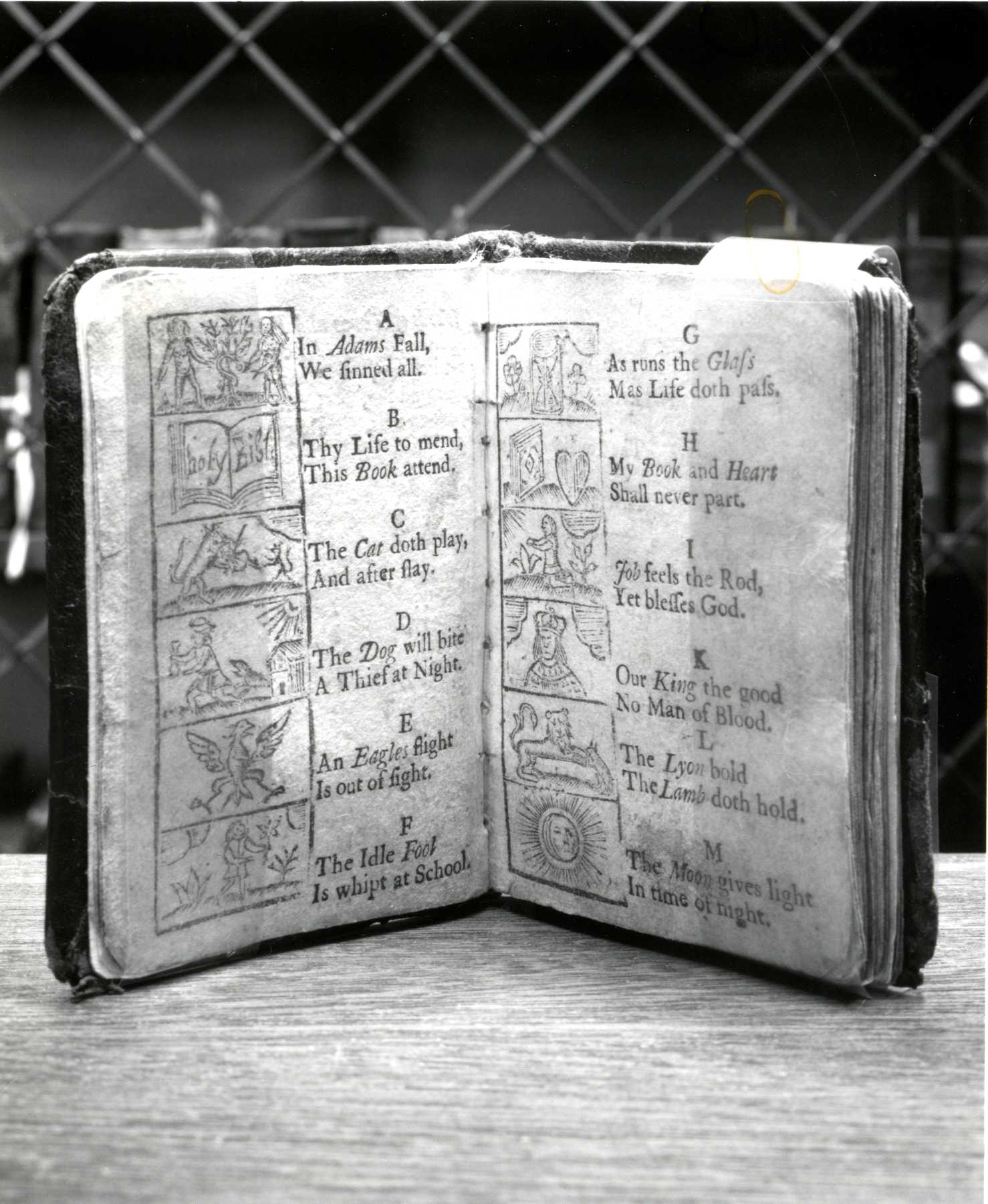
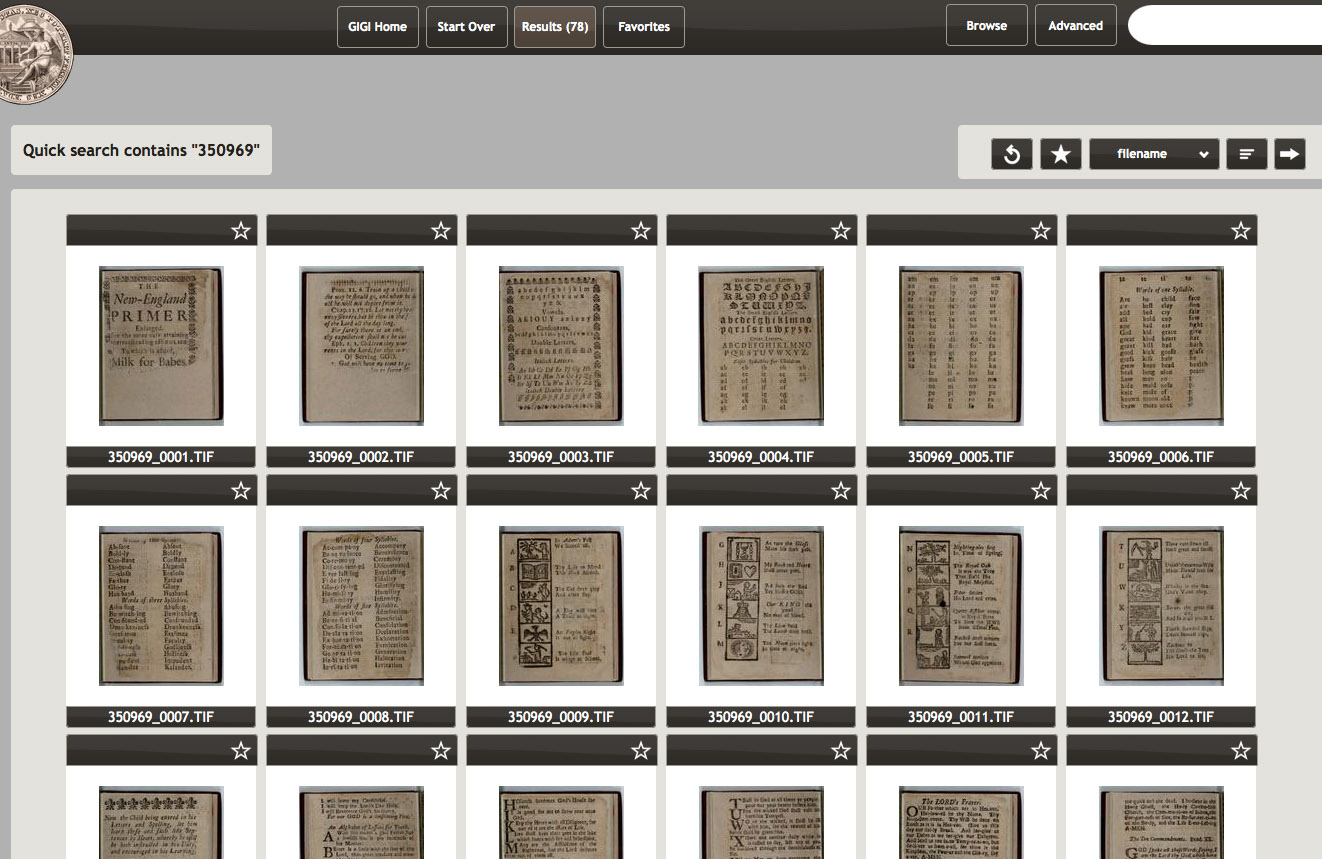
When books have included images from our collection, we’ve been providing photographic reproductions and permission to use them in the form of a licensing agreement; I’ve signed a few (read: thousand) of these agreements since starting the position in late 2004. Just a generation ago, the Society would showcase a double page spread of its primer as an interior illustration recreated as an 8×10 glossy print (left) and now we can display the same item in its ENTIRETY in GIGI (below).

GIGI screenshotIn addition to providing as-needed photography of collection material, we’ve also been filling our image archive, GIGI, with digital surrogates and links within the catalog. We’ve been providing open access to these digital collections, as well as to our online exhibitions and illustrated inventories. These resources feature some of our most-often reproduced images, including the portrait of John Winthrop, the woodcut of Richard Mather, the Boston Massacre scene by Paul Revere, Militia Muster by David Claypoole Johnston, and the Philosophic Cock by John Akin. Although finding them has been easy enough, use of these items has been somewhat complicated by the permissions agreement. Until last week, the agreement and fee for use of AAS collection materials was in recognition of the Society’s ownership of the documents (which included the cost of acquiring, preserving, and making it available), rather than in any copyright claim. But we have at last done away with licensing images and the (five-page) licensing agreement.

The original policy and agreement were devised to be gatekeepers of the collection material rather than provoke a villainous archival turf war. Not helping this has been that the rules on the books have been unclear and difficult to interpret. But we’ve come a long way. Now in the twenty-first century, copyright issues still raise a lot of questions. While companies are calling for stricter protection of intellectual properties, AAS is joining the numerous cultural institutions using open access and creative commons; with few exceptions, all of our print materials fall under the pre-1923 public domain. Access to digitized collection material has always been for research and scholarship and as we continue to add material we can fill out the digital collections and provide scholars even more items to use.

In his opening address, AAS founder Isaiah Thomas said the Society would not be “confined to local purposes – not intended for the particular advantage of any one state or section of the union, or for the benefit of a few individuals – one whose members may be found in every part of our western climate and its adjacent islands, and who are citizens of all parts of this quarter of the world.”[1] We like to think he would be proud of this development to continue to allow his collection to be used and disseminated – not limited to those locally in Worcester.

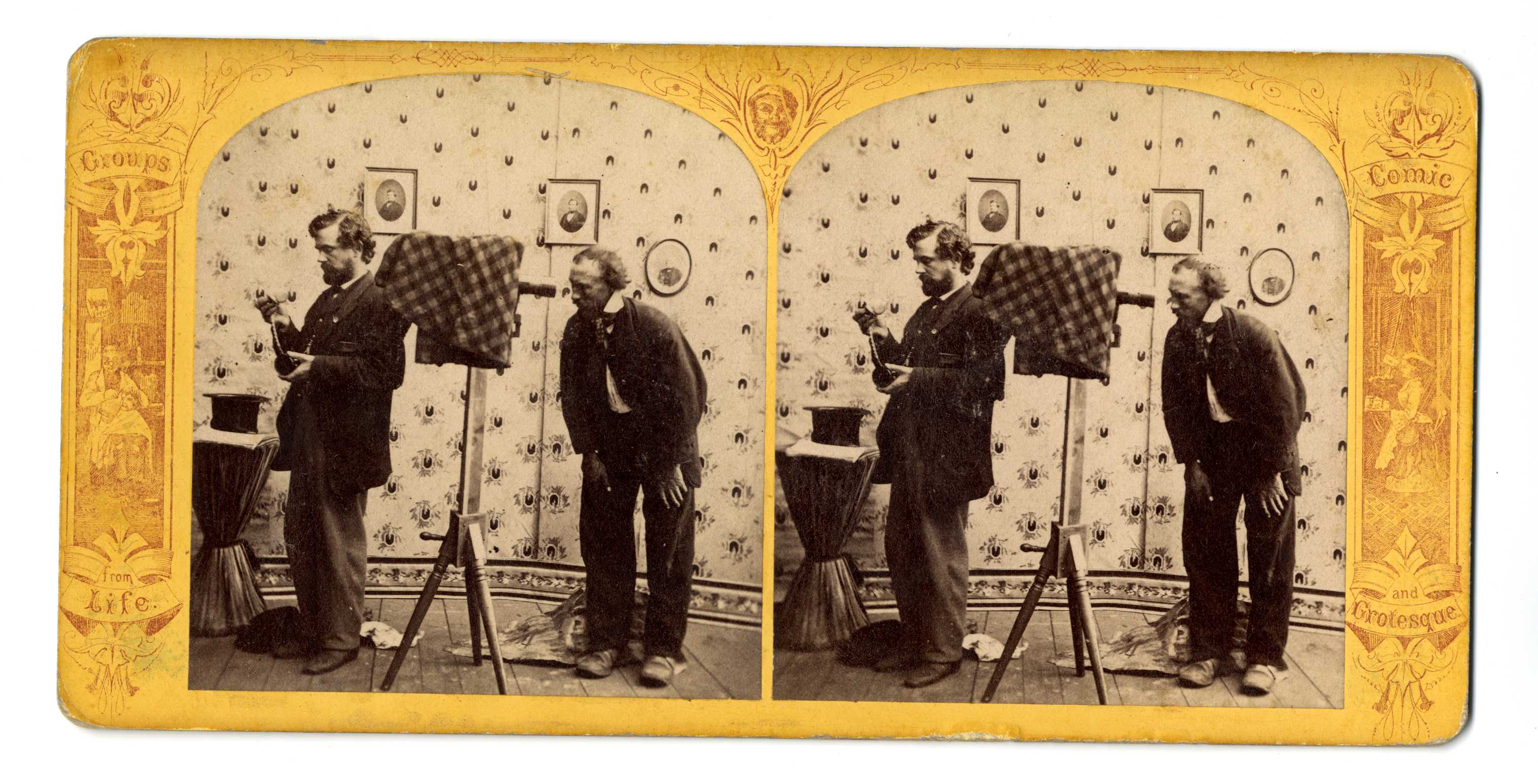
mysteries photograph
“Seeking to penetrate the mysteries of photography.” Stereocard collection. Box 321.

This permissions process, coupled with ordering of new photography, causes my phone extension to receive the most frantic calls (usually by those not living locally). It is no secret that book and article authors securing image permission can be panic-inducing. I’ve been told it is burdensome on all resources – time, money, and patience, and it can delay book production. We will continue to create new photography on-demand and there is still a fee to be paid for making reproductions (alas, not everything has been digitized yet!), but we are proud to provide this access and use of AAS resources. Our attempts at simplifying the process try to address as many different types of requests as we have received. The new obtaining digital images page describes the new policy a bit, and the newly redone form page allows you to submit a request for material not already digitized. And you can always email questions or orders to reproductions@mwa.org! There are image rights. And there are image very rights. We hope to now be part of the latter!

[1] Thomas, Isaiah. “Abstract of the President’s Communication on the Nature and Objects of the Institution, and on the Means for carrying into Effect the Designs of the Society.” Archaeologia Americana: Transactions and Collections of the American Antiquarian Society. Oct. 1814. Volume 1, page 28.

The Peoples Free School or Dog Convention: A Tale of Two Broadsides

This past April, AAS received a plain brown envelope via U.S. Mail, with no return address.  The envelope was carefully opened by our Acquisitions staff and two folded broadsides were found inside.  There was no note included, no inscriptions or marks on the broadsides, and, as luck would have it, there was not even a legible return postmark on the envelope!  Our Acquisitions Librarian sent out an email to the curators inquiring if one of us had ordered the broadsides from a catalog or perhaps won them at an auction.  Since broadsides fall in the Graphic Arts Department, I was the likely candidate, but, in fact, I had never seen the broadside pair and had no idea who might have sent them.

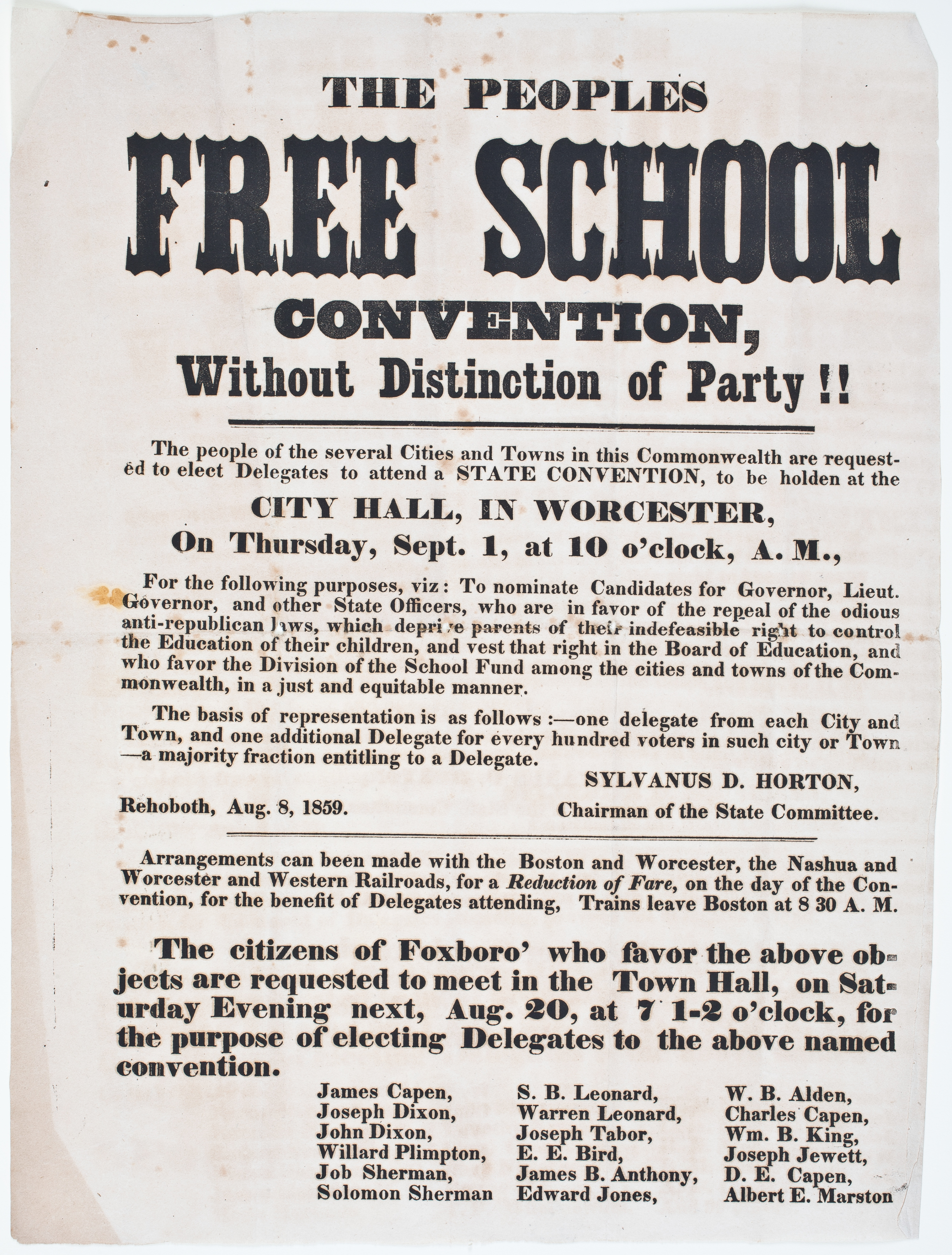
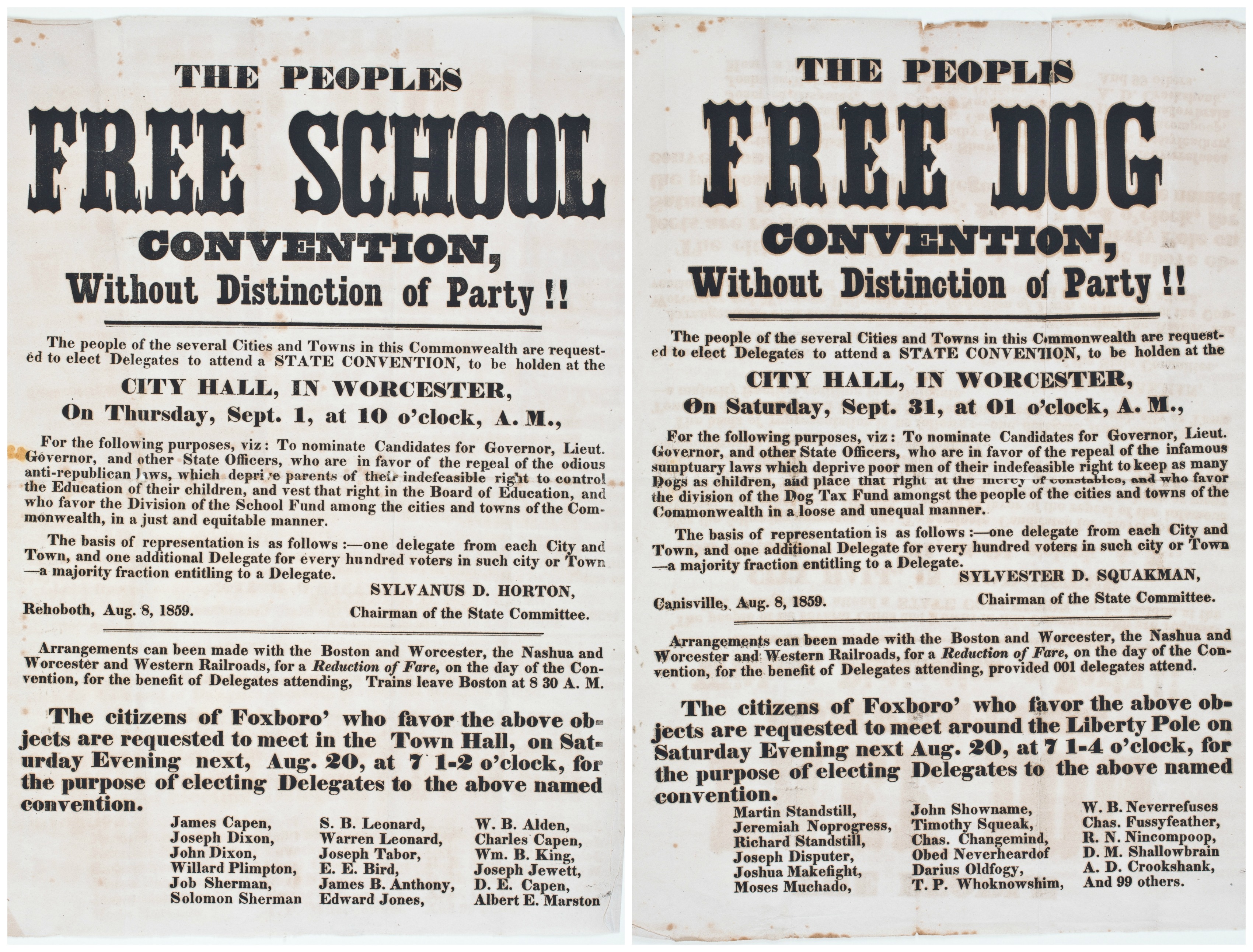
The two broadsides are clearly related to each other and were likely produced in Foxborough, Massachusetts, in 1859.  In fact, they were probably made from the same set-up of type, with, as will be shown, some amusing differences.  The first broadside is a legitimate announcement for a political convention to be held in Worcester, Massachusetts, on September 1, 1859.  The convention was being organized by The Peoples Free School party.  Sylvanus D. Horton, of Rehoboth, Massachusetts, who is listed as chairman, calls for towns across the state to send delegates for nominations to a new political party that will work to repeal the “odious” School Law.

Free School Convention bdsd

The School Law had been proposed by the State Board of Education in January and February of 1859. It called for abolishing the district school system in favor of a centralized authority to control school spending, construction, and the evaluation of teachers.  District schools tended to be in rural areas where populations were spread out over multiple small towns.  Most larger town and city schools were already following protocols supported by the Board, and the School Law was an attempt to create a uniform system across the state.  A look at newspaper coverage of the time shows that the issue was clearly divided along urban/rural lines.  The Barnstable Patriot reported on May 5, 1859, “No Committee, however much they may be interested in education, can so well judge of the wants of our schools as parents themselves.  Let that odious law, undesired and unsought by the people, be by them denounced and repealed!  Leave the power in the district, unless the people, in town meetings, choose to abolish the district system.  Let the people control their own affairs.”   A few months later the Worcester Spy called for calm and reason, pleading for rural areas to let the “good gentlemen of the Board of Education” make their case to the state Senate.  It added that there was a need to “equalize the pecuniary burden of constructing school houses … [T]he present system perpetuates small and inefficient schools and the system proposed will secure the wisest and most efficient management of the schools.”  Education was a hot topic in 1859 and some of the issues under debate still resonate today – modern topics such as the rise of the charter school movement, debate over management of public school resources, implementation of standardized testing, and Common Core curriculum come to mind.

The meeting of The Peoples Free School Convention was held in Worcester as scheduled, but not many people showed up and action on forming a platform was tabled until October.  City papers made hay from this: the Boston Traveler noted on September 2, “Not a man of influence in the state was present,” and the Worcester Spy complained that less than sixty people attended and that it was wrong and distracting for the small group to politicize the issue by trying to build a political platform around it.

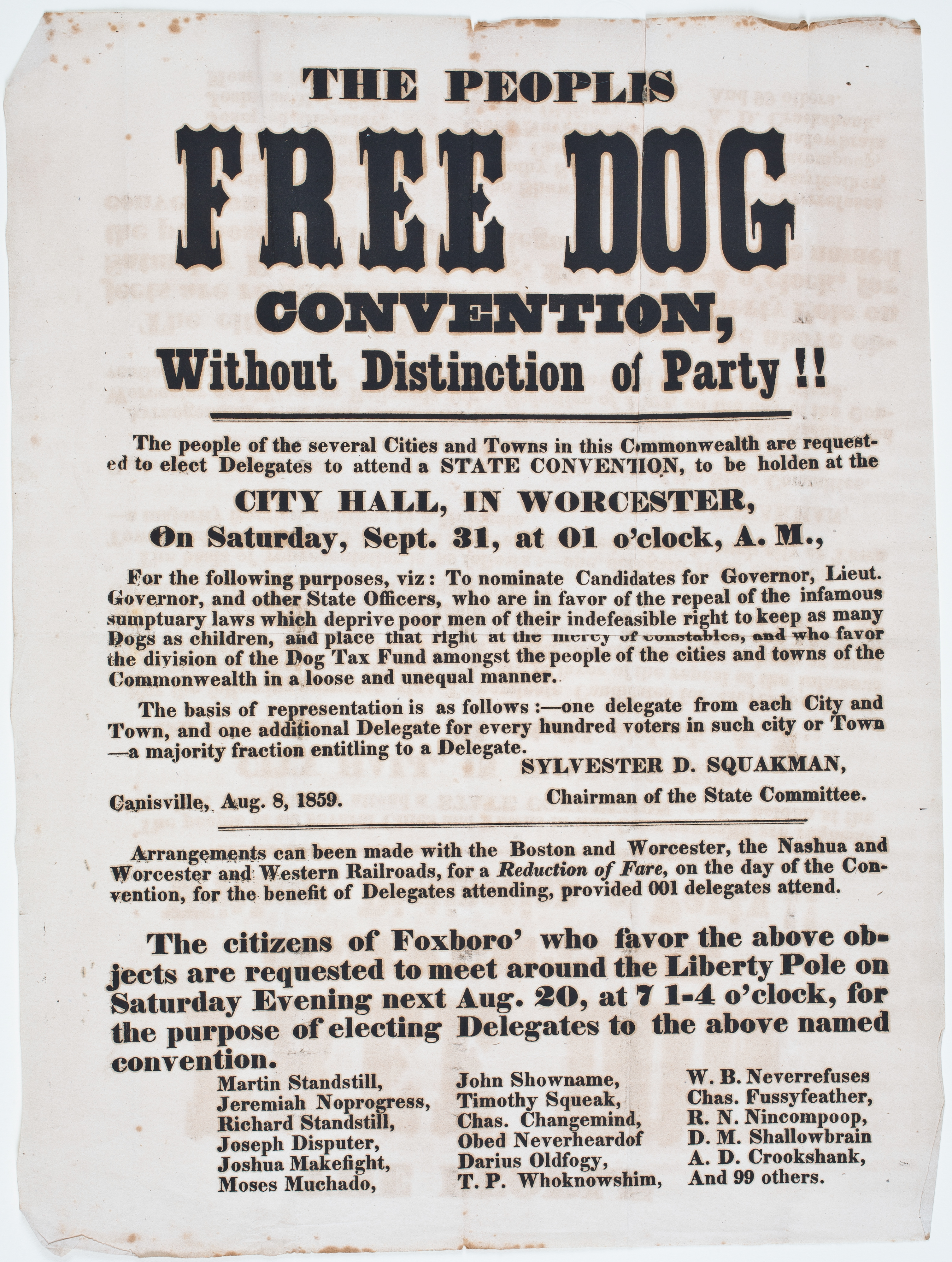
Free Dog Convention bdsdThe second broadside gives us some insight into the opinion of the unknown printer of The Peoples Free School Convention broadside.  This second version was actually known to AAS, as another copy is preserved in our collection.  The comic printing stands logic on its head, calling for a Free Dog Convention to be held on the impossible date September 31 at 1:00 a.m.   Instead of school laws, the text calls for the repeal of the “infamous sumptuary laws which deprive poor men of their indefeasible right to keep as many Dogs as children.”  All of the participants’ names have been changed, with Chairman Sylvanus D. Horton becoming Sylvester D. Squakman (of Canisville, not Rehoboth), and delegates like Charles Changemind, D.M. Shallowbrain, and Darius Oldfogy being called to participate from Foxborough.  It’s safe to say that the printer was probably not a supporter of district schools.

We are delighted to have this pair of broadsides at AAS.  We wish we knew who sent them to us, so we could give proper thanks!  For now, they are being listed as the gift of an anonymous donor.  Having the pair preserved together opens up the research potential of both sheets.  Scholars interested in education movements, urban/rural conflicts, state politics, and American nineteenth-century humor are all welcome to come to Worcester to have a look– we promise they will not be treated in a “loose and unequal manner” by Charles Fussyfeather or Martin Standstill.  Just please do not bring your dog to the library.

Free School-Dog Convention

Digital Antiquarian Wrap-Up: The End of the Beginning

DigitalAntiquarian_0006_crop
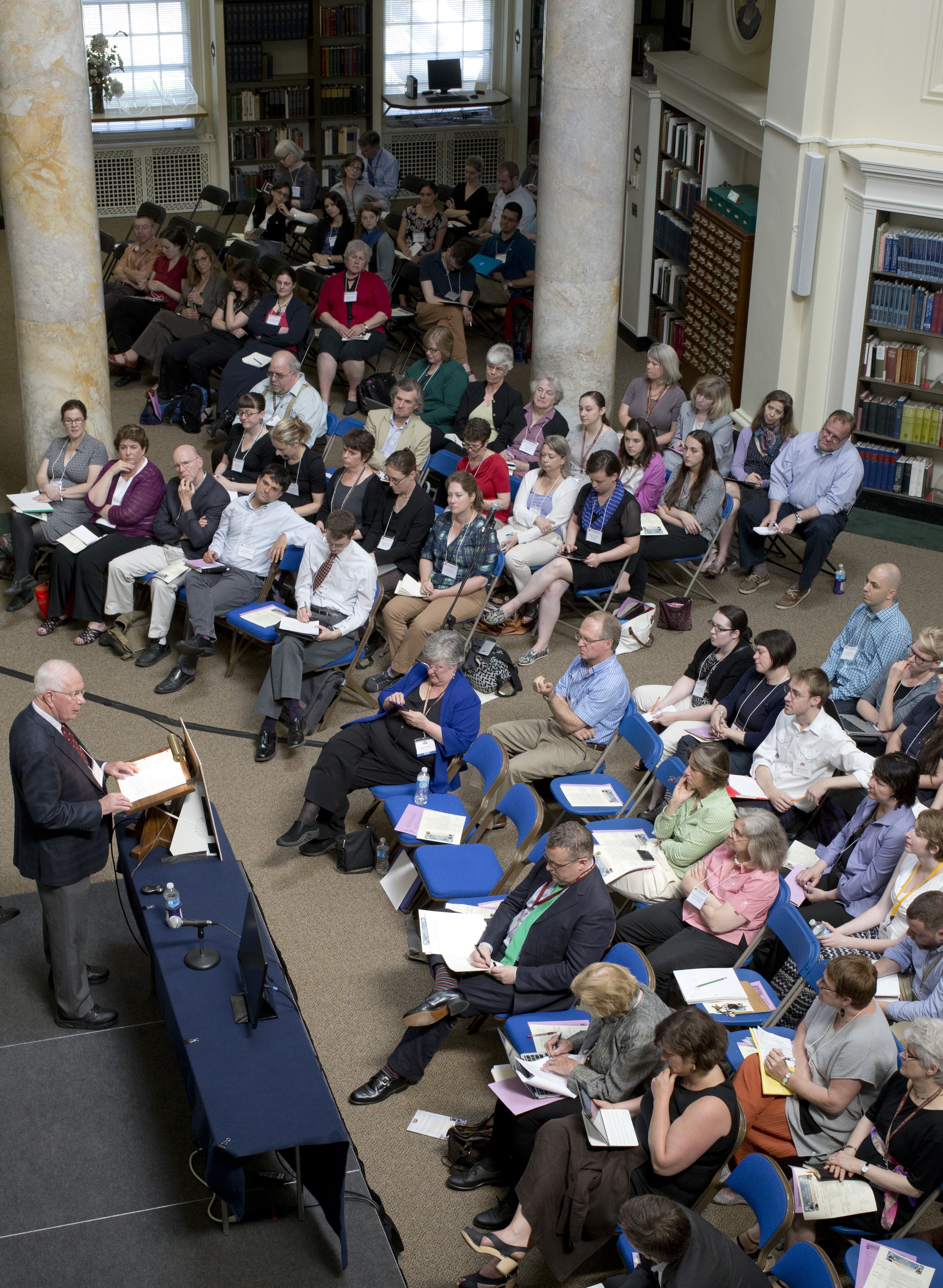
The crowd gathers in Antiquarian Hall for opening keynote from Kenneth Carpenter (pictured here) and Michael Winship.

It is hard to believe that after a year of preparations the Digital Antiquarian Conference and Workshop are now behind us. What began as a twinkle in my and Thomas Augst’s eyes when he was an NEH fellow here blossomed into a 10-day extravaganza here at AAS, starting with the largest academic conference the Society has ever hosted and ending with a weeklong workshop taught by no fewer than fifteen AAS catalogers and curators and three guest instructors. Thanks to the generous support of the Gladys Krieble Delmas Foundation and New York University’s Faculty of Arts and Sciences, as well as the Jay Last Fund at AAS, we were able to bring together leaders in book history, curators and librarians from university and independent research libraries, and innovators in the digital humanities to exchange ideas about the past, present, and future of historical information literacy and the archive.

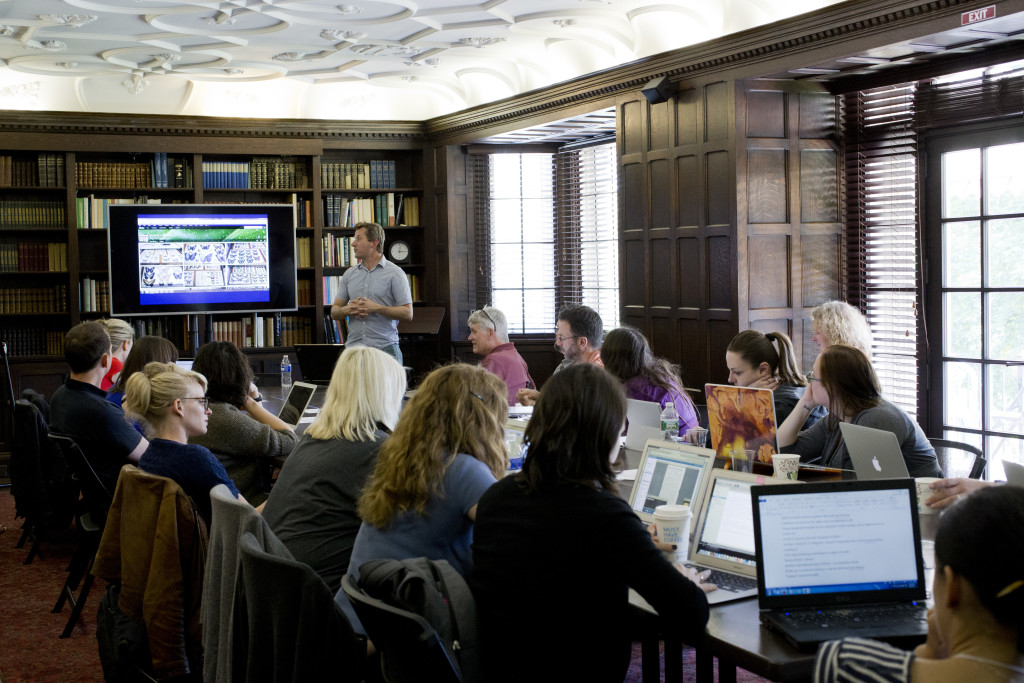
To accommodate the 180 guests and the 20 speakers at the conference, we had to transform the reading room from a work space to a large meeting space, complete with four large monitors to show slides. And this new arrangement was a crowd pleaser. After Michael Winship and Ken Carpenter kicked off the events with their keynote on the first day, Carl Stahmer really blew the lid off of the generous dome with his presentation of linked open data and the future of bibliography and library catalogs.

DigitalAntiquarian_0010
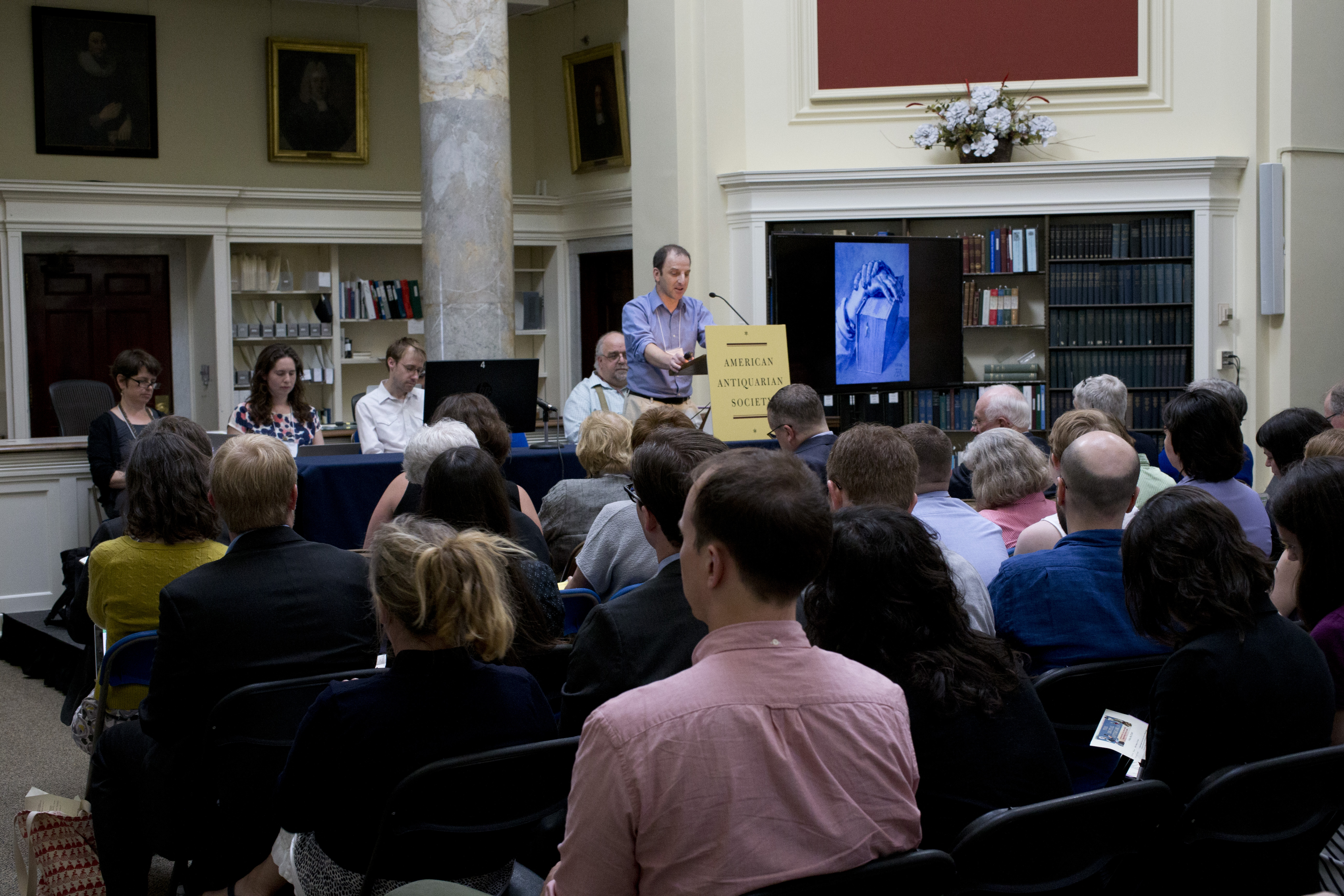
Leon Jackson delivers his paper “Historical Haptics: Digital and Print Cultures in the Nineteenth Century,” part of the Handling Newspapers panel.

Each day’s panels were organized around our collections and archival practices (Handling Newspapers, Editorial Matters, Book Ends, and Keyword Searches). The presentations were rich and full of reflections on, as one workshop participant put it, “the future of the past.” They were also incredibly jocular; as one workshop participant reflected, “This was the funniest conference I’ve ever been to.” Though this humor did not always translate to the slides, the participants have shared their visual presentations on the conference schedule website. The reception at the end of the first day featured a digital projects showcase including A New Nation VotesCassey & Dickerson Friendship AlbumsEarly Caribbean Digital ArchiveThe Occom CircleTEI Archiving Publishing and Access Service (TAPAS), and Walt Whitman Archive. This event gave conference participants a chance to speak with the designers of these impressive digital humanities projects in a convivial atmosphere. Please read the Twitter stream from the conference on our website.

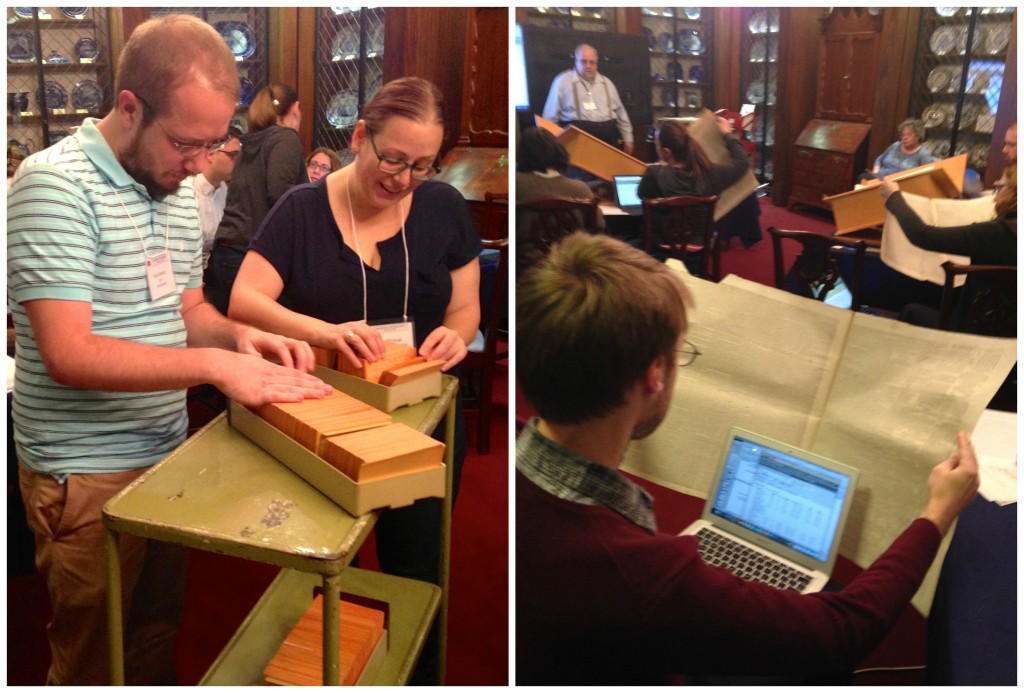
After the conference ended on Saturday, the workshop got underway Sunday night with a welcome dinner for the eighteen participants selected to take part. Most of the participants also attended the conference, so the icebreaking had been done, and we immediately started to gel as a group. Under the stewardship of Tom Augst and me, workshop classes began in earnest first thing Monday morning as the participants were whisked between the Elmarion Room for computer lab-like exercises and the Council Room for hands-on archival exercises. All of the curators and most of the catalogers ran sessions that had participants engaging deeply with the MARC format and considering how they might use the data in the AAS Catalog and in NAIP for their own digital humanities projects. To complete their exercises on MARC format, they consulted a number of bibliographies and electronic databases, and of course they had to reach for the resource most dear to our hearts at AAS: The Printers’ File. They also considered what work existing databases, such as America’s Historical Newspapers, afford and how if we don’t understand the archives behind such databases, we are likely to be confused, if not misled about the role they should play in our scholarship.

Slauter-Printers File collage
Participants use the Printers’ File and duplicate newspapers to complete exercises that required the use of analog and digital tools.

Curator of Books Elizabeth Pope productively flummoxed the group with questions around digitizing atypical books, using the AAS’s friendship albums collection as her guiding example. She also showed books that defy our standard definitions and asked the group how we might digitize them.

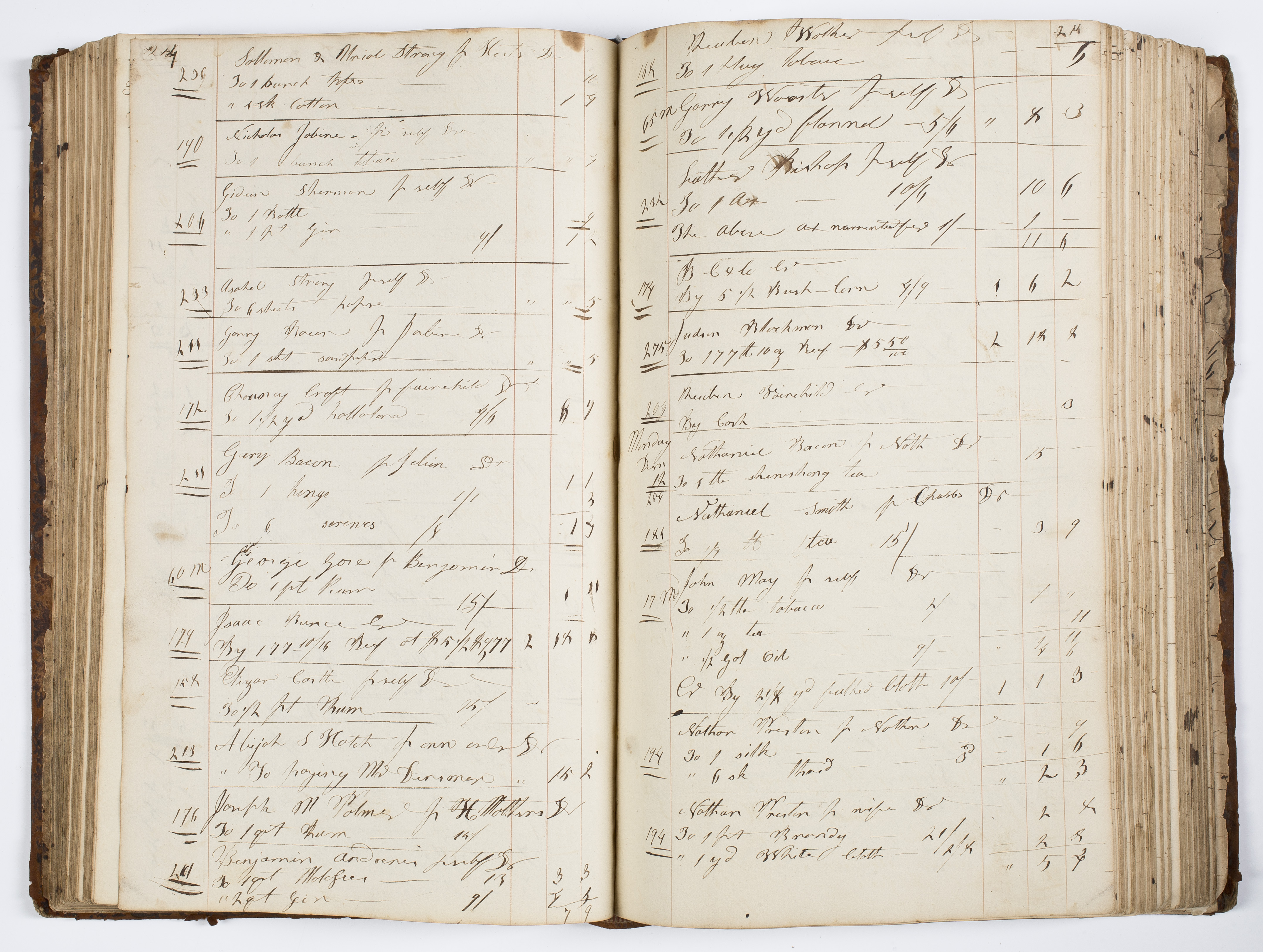
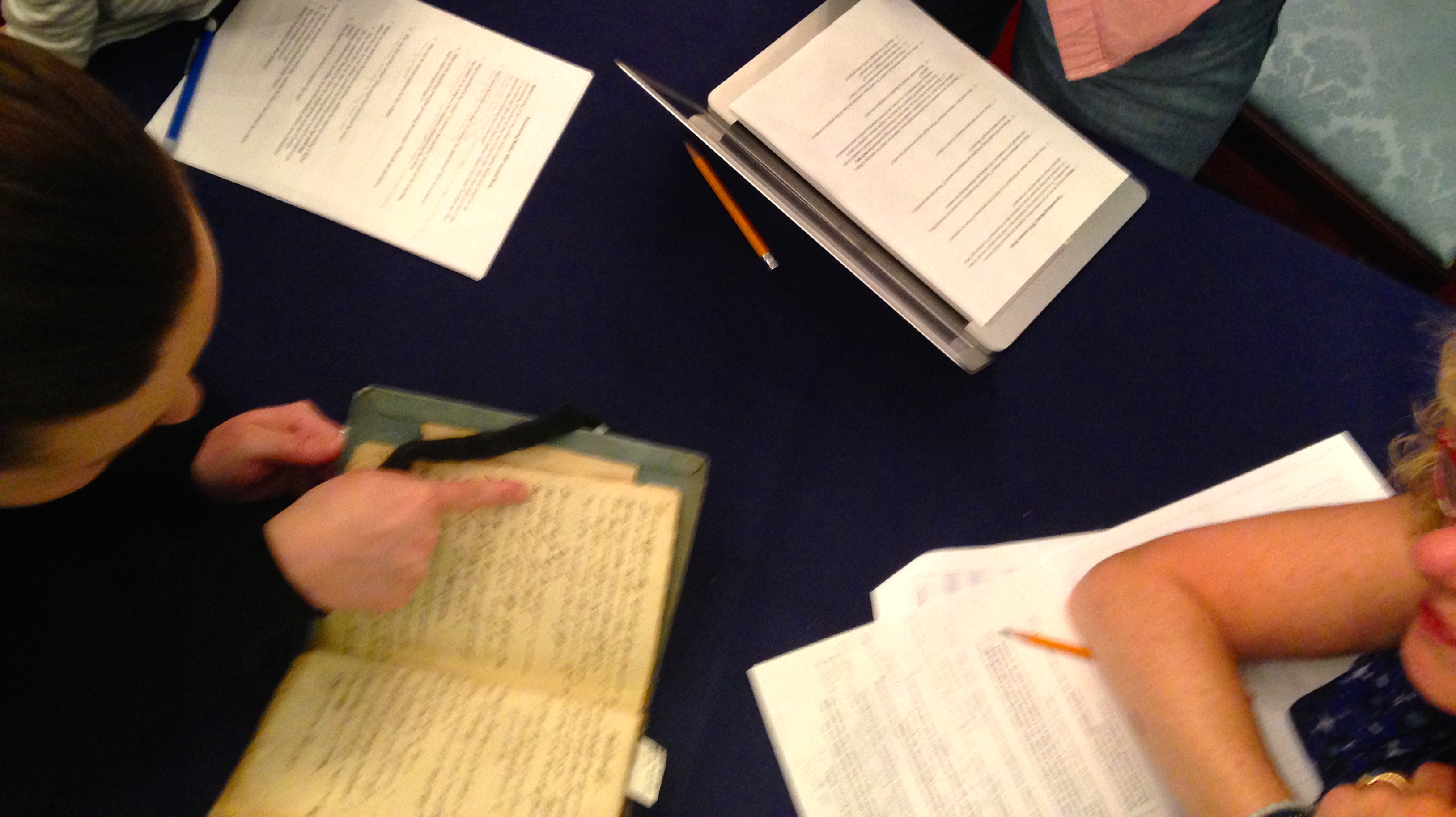
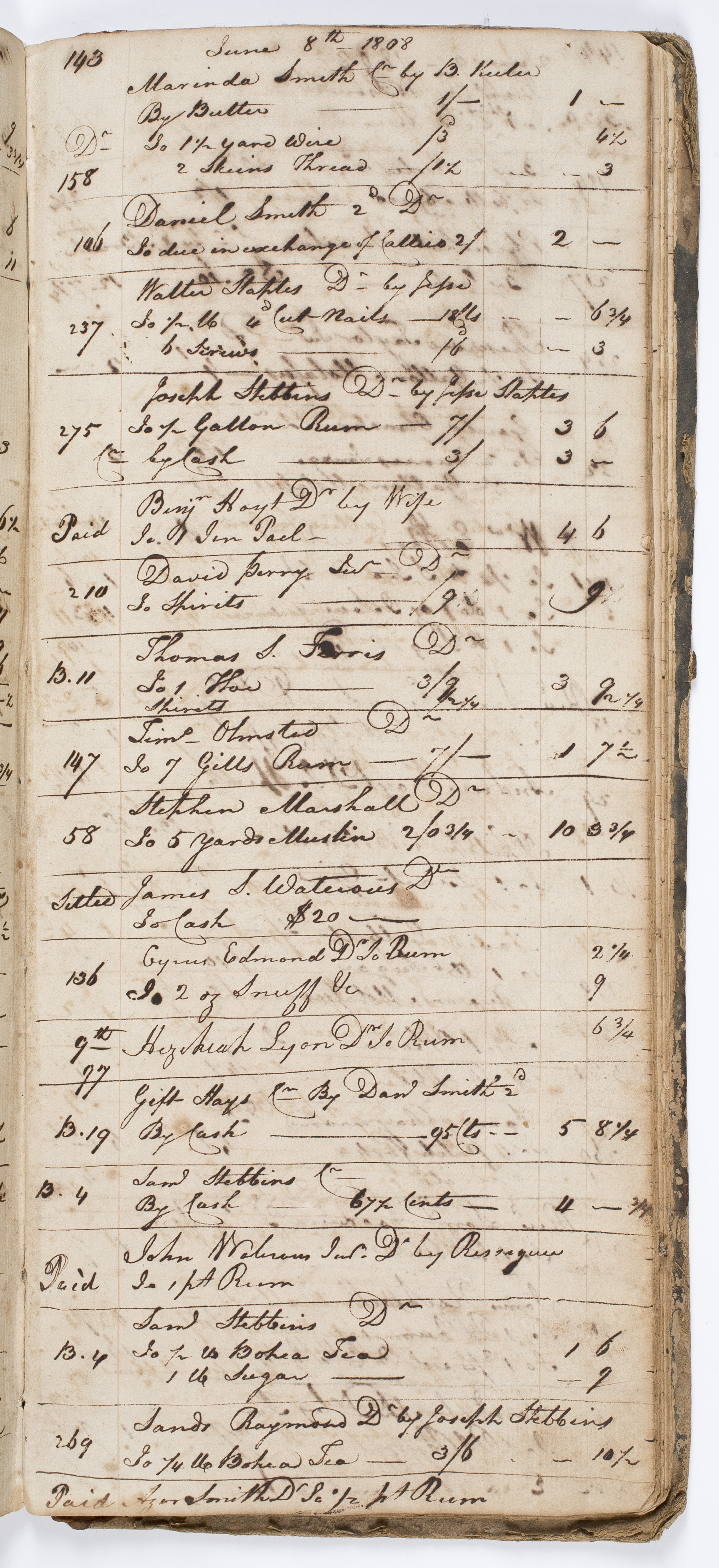
Curator of Manuscripts Tom Knoles presented the group with the researchers’ challenges around manuscripts with an exercise centered around the William Bentley notebooks held at AAS.

BentleyExercise
Participants outline steps for digitization of William Bentley’s eclectic diaries and account books in an exercise designed by Tom Knoles.
Presentation_0002
Tom Blake walks participants through an exercise that introduces them to graphic arts metadata in the Digital Commonwealth and in the Digital Public Library of America.

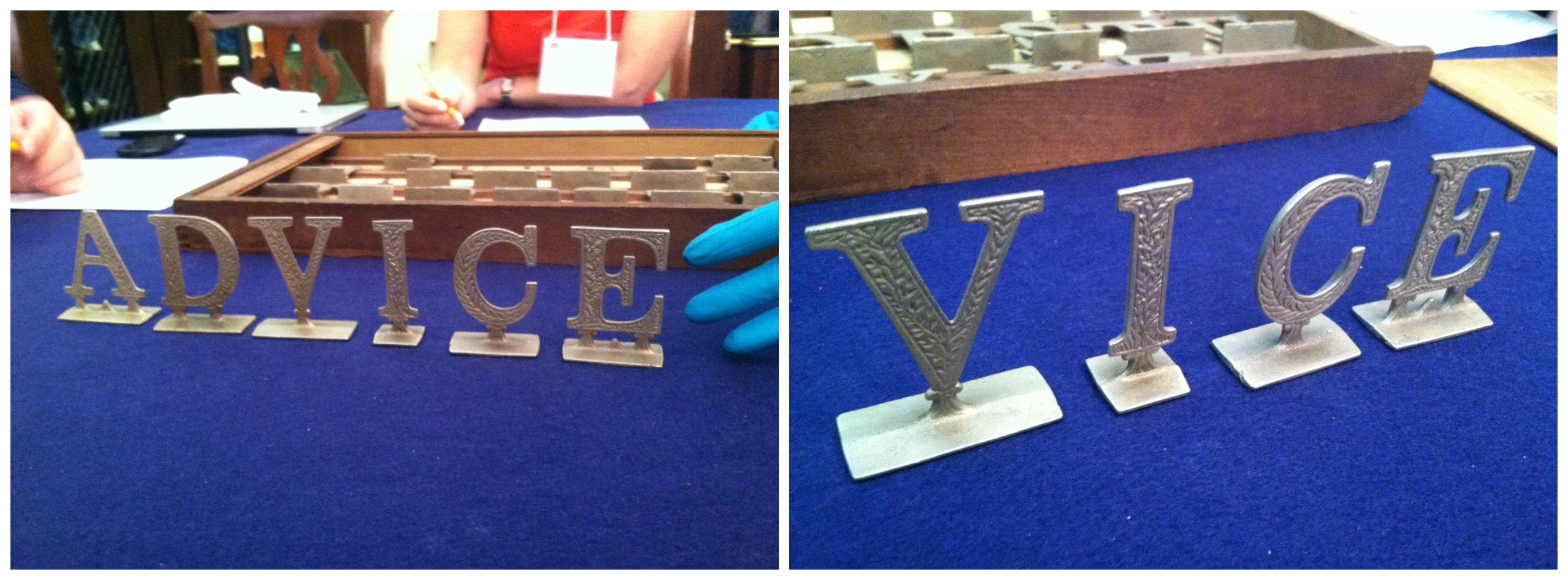
In addition to the AAS staff who dazzled the participants all week, three guest instructors joined us. AAS stalwart Michael Winship gave an overview of the history of editorial practice using the many editions of James Fenimore Cooper’s Red Rover (1827) to elucidate his points. That afternoon, Dawn Childress of Penn State Libraries taught a riveting session on TEI, using Edgar Allan Poe’s The Raven as her guiding example. The next day, Tom Blake of the Boston Public Library joined Curator of Graphic Arts Lauren Hewes to ask the group to consider the challenges and opportunities that come with the digitization of graphic materials, including nineteenth-century games such as “Eureka Letters,”  a game used to teach both spelling and morals. Please read the Twitter stream from the workshop on our website.

letter game collage
Participants came up with creative solutions to the exercise asking them how they might digitize nineteenth-century games.

As the week drew to a close, hearts hung heavy for the group had really bonded.

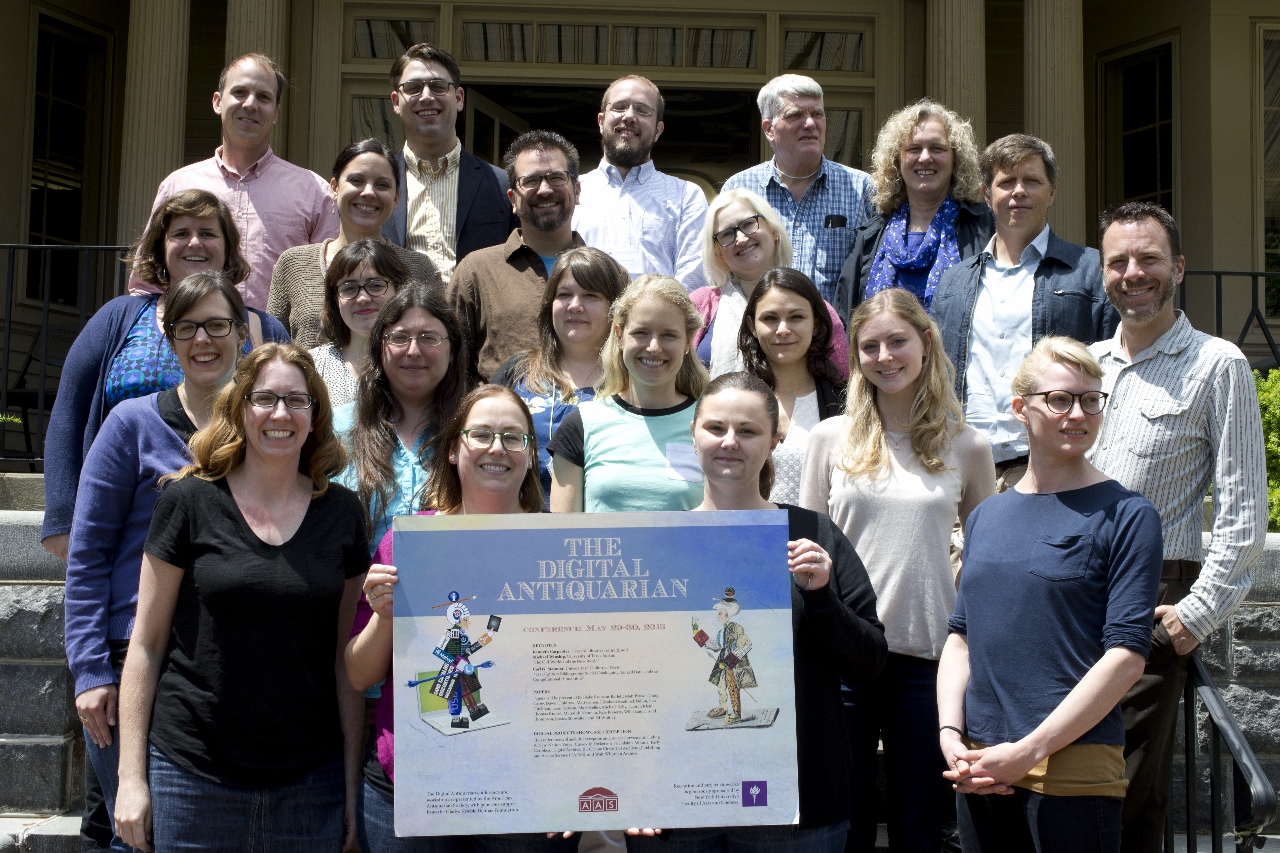
Workshop_0003 (2) (1280x853)
The Digital Antiquarian Workshop participants gather on the GDH steps with the poster from the conference in hand.

But, the sense that the Digital Antiquarian was less coming to an end and instead really just beginning here at AAS was palpable. Stay tuned for more to come!

Now In Print from the AAS Community

Every quarter at AAS we release a list of recent publications by those who have researched at
the library as fellows, members, or readers. To see this list, as well as a list of works publishedPicture1 from 2000-2014, please visit our recent scholarship page on the AAS website. If your book, article, or other achievement is not included, just let us know if you’d like to see it there!
BOOKS

Gallup-Diaz, Ignacio, Andrew Shankman, and David Silverman. Anglicizing America: Empire, Revolution, Republic. Philadelphia: University of Pennsylvania Press, 2015. (Silverman: Mellon Post-Dissertation Fellow, 2001-2002; ASECS Fellow, 2005-2006; ASECS Fellow, 2010-2011; AAS member)

Gura, Philip F. The Life of William Apess, Pequot. Chapel Hill: University of NorthCarolina Press, 2015. (Peterson Fellow, 1989-1990, 1998-1999, 2002-2003; Mellon Distinguished Scholar in Residence, 2006-2007; AAS member)

Howell, William Huntting. Against Self-Reliance: The Arts of Dependence in the Early United States. Philadelphia: University of Pennsylvania Press, 2015. (NeMLA Fellow, 2013-2014)

Loker, Chris. One Hundred Books Famous in Children’s Literature. New York: Grolier Club, 2014. (AAS member)

Luskey, Brian P. and Wendy A. Woloson. Capitalism by Gaslight: Illuminating the Economy of Nineteenth-Century America. Philadelphia: University of Pennsylvania Press, 2015. (Luskey: Peterson Fellow, 2003-2004; Tracy Fellow, 2012-2013. Woloson: Peterson Fellow, 2005-2006)

Moulton, Amber D. The Fight for Interracial Marriage Rights in Antebellum Massachusetts. Cambridge: Harvard University Press, 2015.

Shoemaker, Nancy. Native American Whalemen and the World. Chapel Hill: University of North Carolina Press, 2015. (AAS-NEH Fellow, 2006-2007; AAS member)

Wilson, Lisa. A History of Stepfamilies in Early America. Chapel Hill: University of North Carolina Press, 2014. (AAS-NEH Fellow, 2010-2011; AAS member)

ARTICLES

Anderson, Jennifer. “’A Laudable Spirit of Enterprise’: Renegotiating Land, Natural Resources, and Power on Post-Revolutionary Long Island.” Early American Studies 13.2 (2015): 413-442. (Peterson Fellow, 2004-2005; Hench Fellow, 2006-2007)

Chaplin, Joyce. “Ogres and Omnivores: Early American Historians and Climate History.” William and Mary Quarterly 72 (2015): 25-32. (AAS member)

Chaplin, Joyce. “The Other Revolution.” Early American Studies 13.2 (2015): 285-308. (AAS member)

DeLucia, Christine M. “Locating Kickemuit: Springs, Stone Memorials, and Contested Placemaking in the Northeaster Borderlands.”   Early American Studies 13.2 (2015): 467-502. (Peterson Fellow, 2011-2012)

Fielder, Brigitte. “Visualizing Racial Mixture and Movement: Music, Notation, Illustration.” J19: The Journal of Nineteenth-Century Americanists 3.1 (2015): 146-155. (Last Fellow, 2011-2012)

Kelley, Mary. “‘Talents Committed to Your Care’: Reading and Writing Radical Abolitionism in Antebellum America.” New England Quarterly 88.1 (2015): 37-72 (Peterson Fellow, 1990-1991; Mellon Distinguished Scholar in Residence, 2013-2014; AAS member)

Manion, Jen. “Transbutch.” Transgender Studies Quarterly 1 (2014). (Peterson Fellow, 2005-2006; AAS-NEH Fellow, 2012-2013)

Pratt, Lloyd. “Locality and the Serial South.” In Oxford Handbook to the Literature of the US South, edited by Fred Hobson and Barbara Ladd. New York: Oxford University Press, 2015. (NEMLA Fellow, 2008-2009; AAS-NEH Fellow, 2009-2010; AAS member)

Rusert, Britt. “Plantation Ecologies: The Experimental Plantation in and against James Grainger’s The Sugar-Cane.” Early American Studies 13.2 (2015): 341-373. (Peterson Fellow, 2011-2012)

Sheehan, Tanya. “Comical Conflations: Racial Identity and the Science of Photography.” In No Laughing Matter: Visual Humor in Ideas of Race, Nationality, and Ethnicity, edited by Adrian Randolph and David Bindman. Hanover: UPNE, 2015. (AAS-NEH Fellow, 2009-2010)

Sheehan, Tanya.“Marketing Racism: Popular Imagery in the US and Europe.” Co-authored with Henry Louis Gates, Jr., in The Image of the Black in Western Art, Vol. 5, The Twentieth Century, edited by David Bindman and Henry Louis Gates, Jr. Cambridge: Harvard University Press, 2014. (Sheehan: AAS-NEH Fellow, 2009-2010; Gates: AAS member)

Sheehan, Tanya. “A Time and a Place: Rethinking Race in American Art History” In A Companion to American Art, edited by John Davis, Jennifer A. Greenhill, and Jason D. LaFountain. Oxford: Blackwell Press, 2015. (AAS-NEH Fellow, 2009-2010)

Shields, David S. “On the Circumstances Surrounding the Creation of Early American Literature.” Early American Literature 50.1 (2015): 21-40. (Haven Fellow, 1985-1986; AAS member)

Shields, David S. and Fredrika J. Teute. “The Republican Court and the Historiography of a Women’s Domain in the Public Sphere.” Journal of the Early Republic 35.2 (2015): 169-183. (With additional conference papers: “The Meschianza: Sum of All Fêtes”; “The Confederation Court”; “The Court of Abigail Adams”; “Jefferson in Washington: Domesticating Manners in the Republican Court”) (Shields: Haven Fellow, 1985-1986; AAS member. Teute: Botein Fellow, 1994-1995; AAS-NEH Fellow, 1997-1998; AAS member)

Thompson, Todd and Jessica Showalter. “Satire in Circulation: James Russell Lowell’s ‘Letter from a Volunteer in Saltillo’.” Scholarly Editing 36 (2015).

Yao, Christine. “Visualizing Race Science in Benito Cereno.” J19: The Journal of Nineteenth-Century Americanists 3.1 (2015): 130-137.

AWARDS

Cornelia Dayton and Sharon Salinger won the Merle Curti Award (Social History) for their book Robert Love’s Warnings: Searching for Strangers in Colonial Boston. (Dayton: AAS-NEH Fellow, 2004-2005; AAS member)

Lisa Tetrault was awarded the inaugural Mary Jurich Nickliss Prize in U.S. Women’s and/or Gender History for her book The Myth of Seneca Falls: Memory and the Women’s Suffrage Movement, 1848-1898. (Peterson Fellow, 2007-2008)

Kyle Volk won the Merle Curti Award (Intellectual History) for his book Moral Minorities and the Making of American Democracy. (AAS-NEH Fellow, 2010-2011)

Christopher Florio won the Louis Pelzer Memorial Award for his article “From Poverty to Slavery: Abolitionists, Overseers, and the Global Struggle for Labor in India.” (Peterson Fellow, 2014-2015)


New AAS Online Exhibition Launched: Louis Prang and Chromolithography

Prang bird
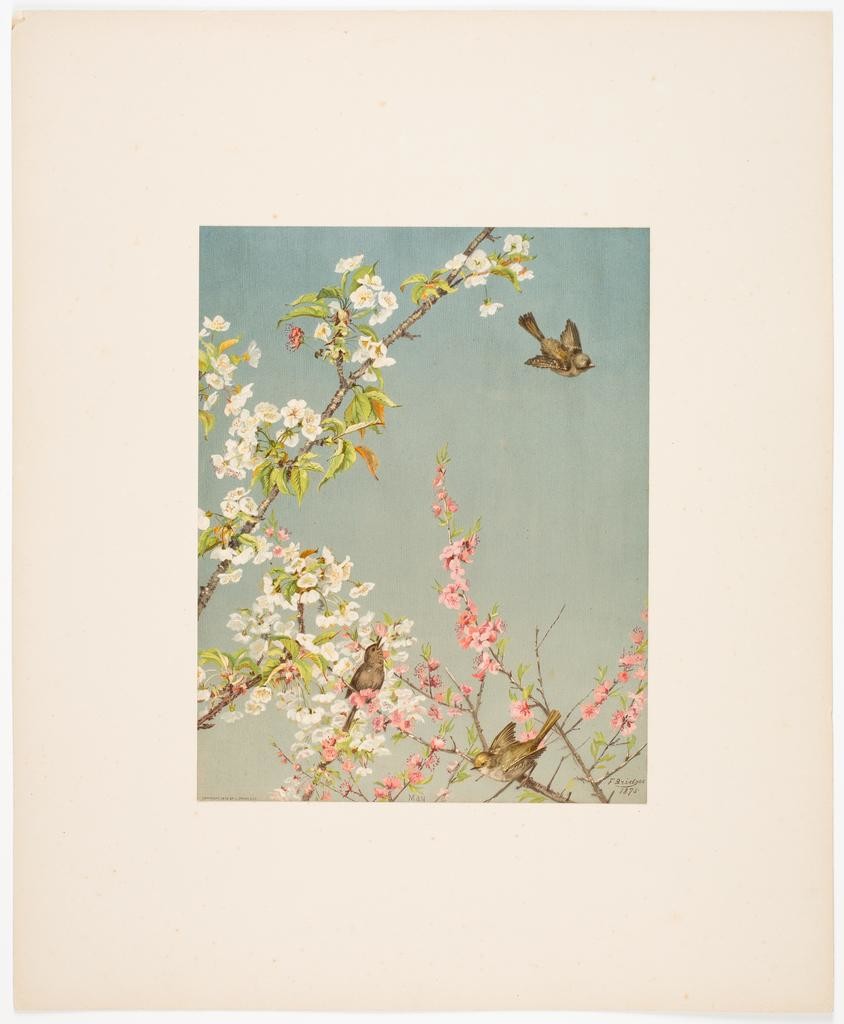
“May” after Fidelia Bridges, 1876. This print is from a set of calendar pages published by Louis Prang in 1876. These scenic prints show the New England landscape through each month of the year, and marks Prang’s first collaboration with floral and bird painter Fidelia Bridges. Bridges created works for Prang for over fifteen years, including many successful Christmas cards and prints.

When I started working at AAS nine years ago, I did not know much about American prints and printmaking. Lithography and engraving were never the focus of my art history classes. And I only knew Currier & Ives from the prints my mother had hanging in every room in the house, and they were not my cup of tea. When I began as the visual materials cataloger, I quickly delved into the world of nineteenth-century prints, learning the difference between a wood engraving and intaglio engraving, and the difference between a colored lithograph and a chromolithograph. It was also at this time that I discovered the work of Louis Prang, the most famous Boston lithographer in the second half of the nineteenth century. I did not understand why Currier & Ives landscapes were more popular than Prang’s, whose prints looked like rich oil paintings. When I cataloged the Prang Collection in 2010, I always knew I wanted to do more with it.

I began a master’s program at the Harvard University Extension School in Museum Studies in 2010 (and will be graduating this week!), and created a mock exhibit for one of my classes which focused on AAS’s Prang material. Besides prints and advertisements, the AAS collection features progressive proof books, salesman’s sample books, and art education text books. Nothing ever came of the project, and it was not until last fal,l when the Harvard program switched their final assignment from a thesis to a capstone project, that I thought about reviving the Prang exhibition idea. Luckily for me, AAS was looking to create more online exhibitions for the website, and was going to use the online web-publishing program Omeka to do it. After an intensive two-day workshop led by Omeka web-developer Ken Albers, I was easily able to create a simple, yet informative exhibit about the work of Louis Prang, using the materials here at AAS.

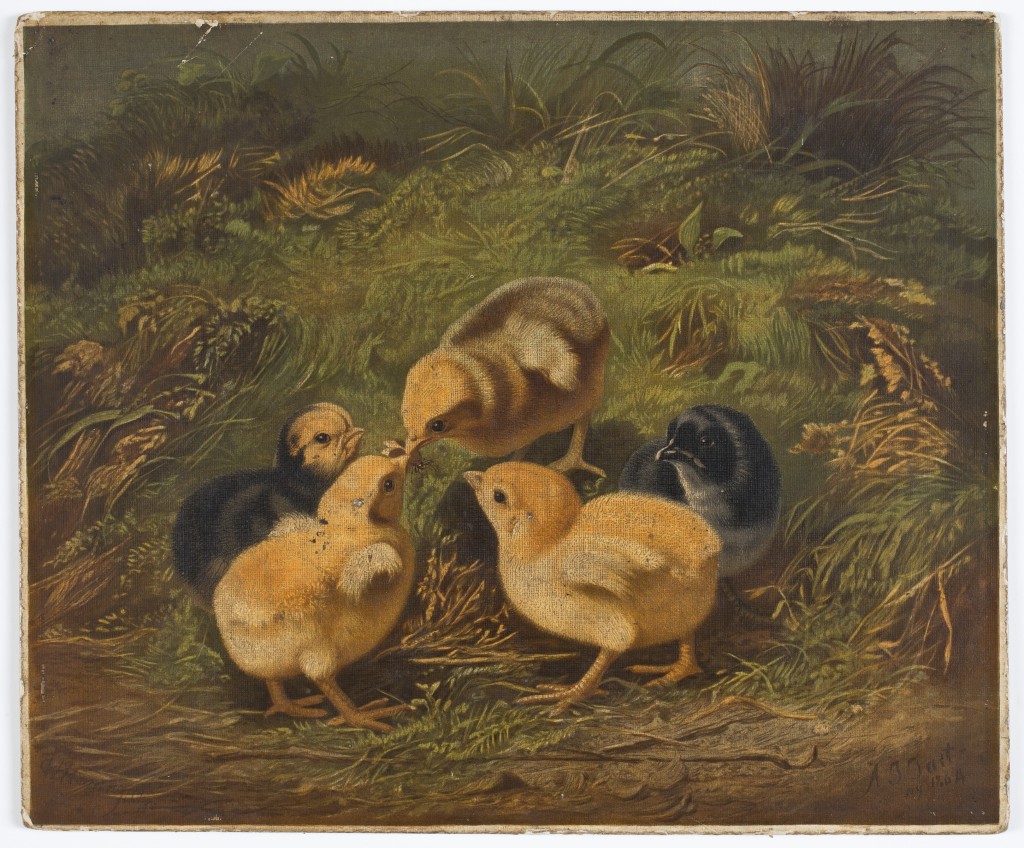
“Chickens I” after Arthur F. Tait, 1866. After being unsuccessful with his first two sets of landscape chromos, Prang published this charming scene of baby chicks by Arthur F. Tait in 1866, which proved to be a big seller. Prang would continue to successfully sell animal-themed prints after Tait for the next two decades.

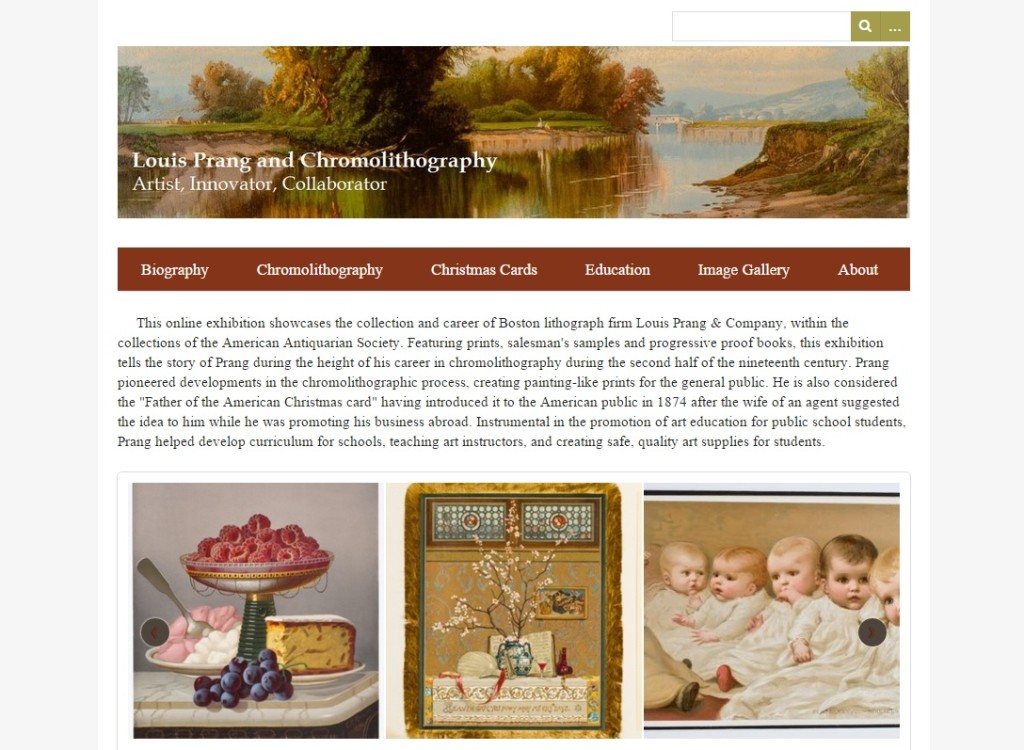
Prang exhibit screenshotThe exhibition details the major aspects of Prang’s career from 1850 to 1900. It begins with a look at his development of the chromolithograph process and how a chromo is made, and features what Prang considered the pinnacle of his career, a 116 sheet chromolithographed set of Oriental vases from the collection of William T. Walters in Baltimore, completed in 1897. Prang is responsible for introducing the Christmas card to America in 1875, and the competitions he held in the 1880s to come up with new designs are discussed. Lastly, Prang, along with his second wife Mary Dana Hicks, was a driving force behind giving public school students a quality art education, and examples from the text books published by Prang are given. An image gallery features almost forty of the best chromolithographs by Prang in the AAS collection, so scroll through and enjoy!

Printmaking with Creative Artist Fellow Annie Bissett

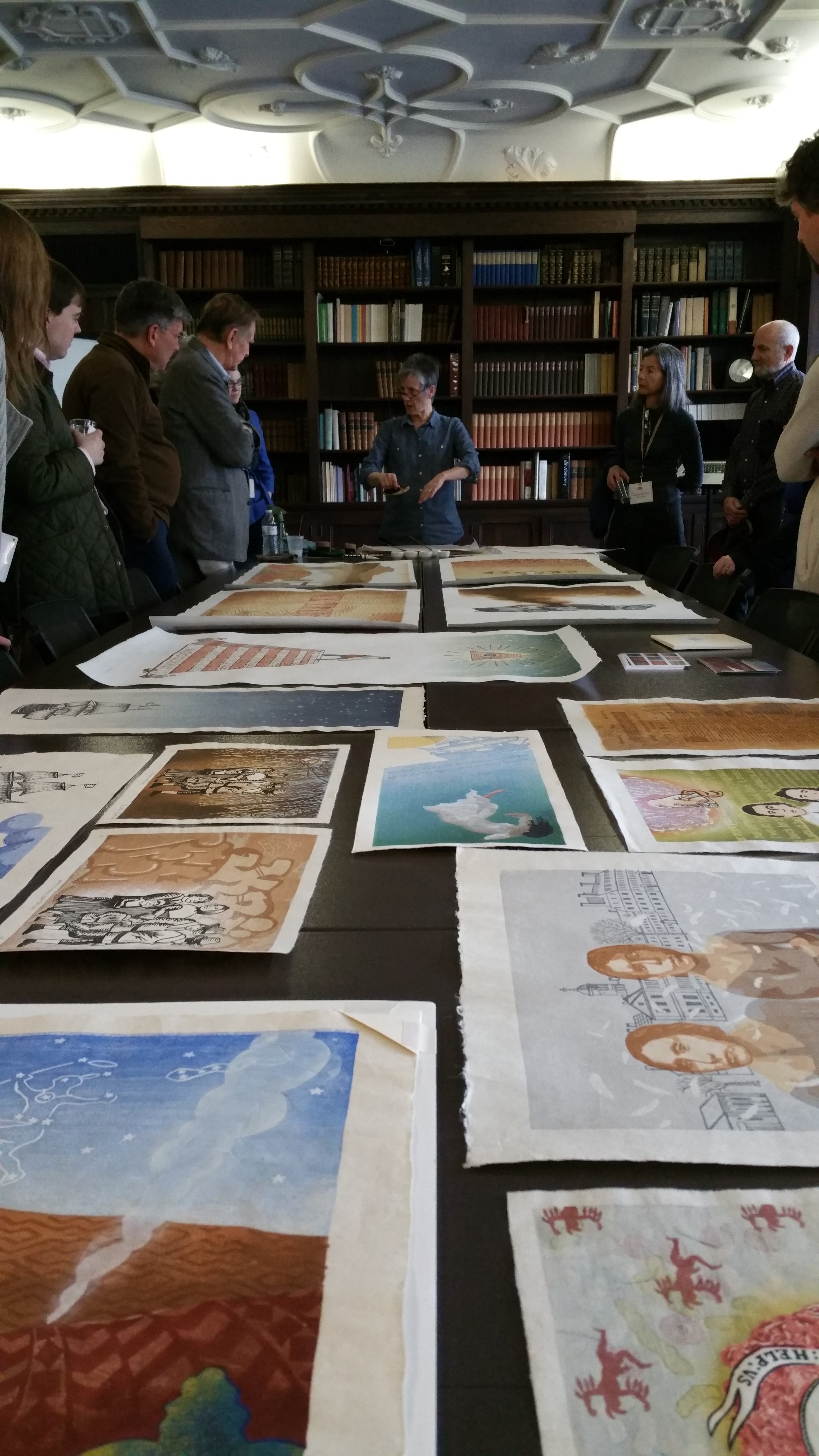
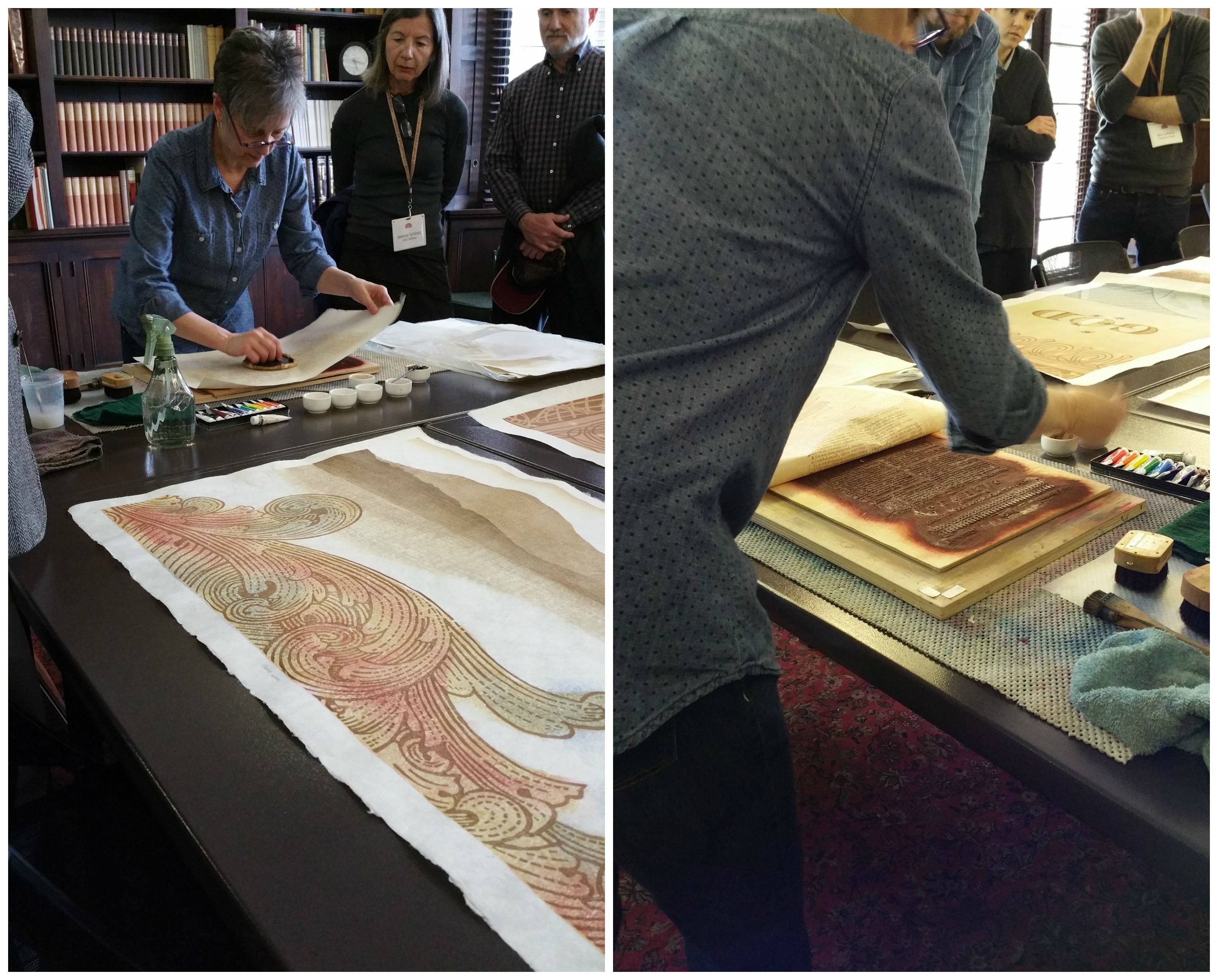
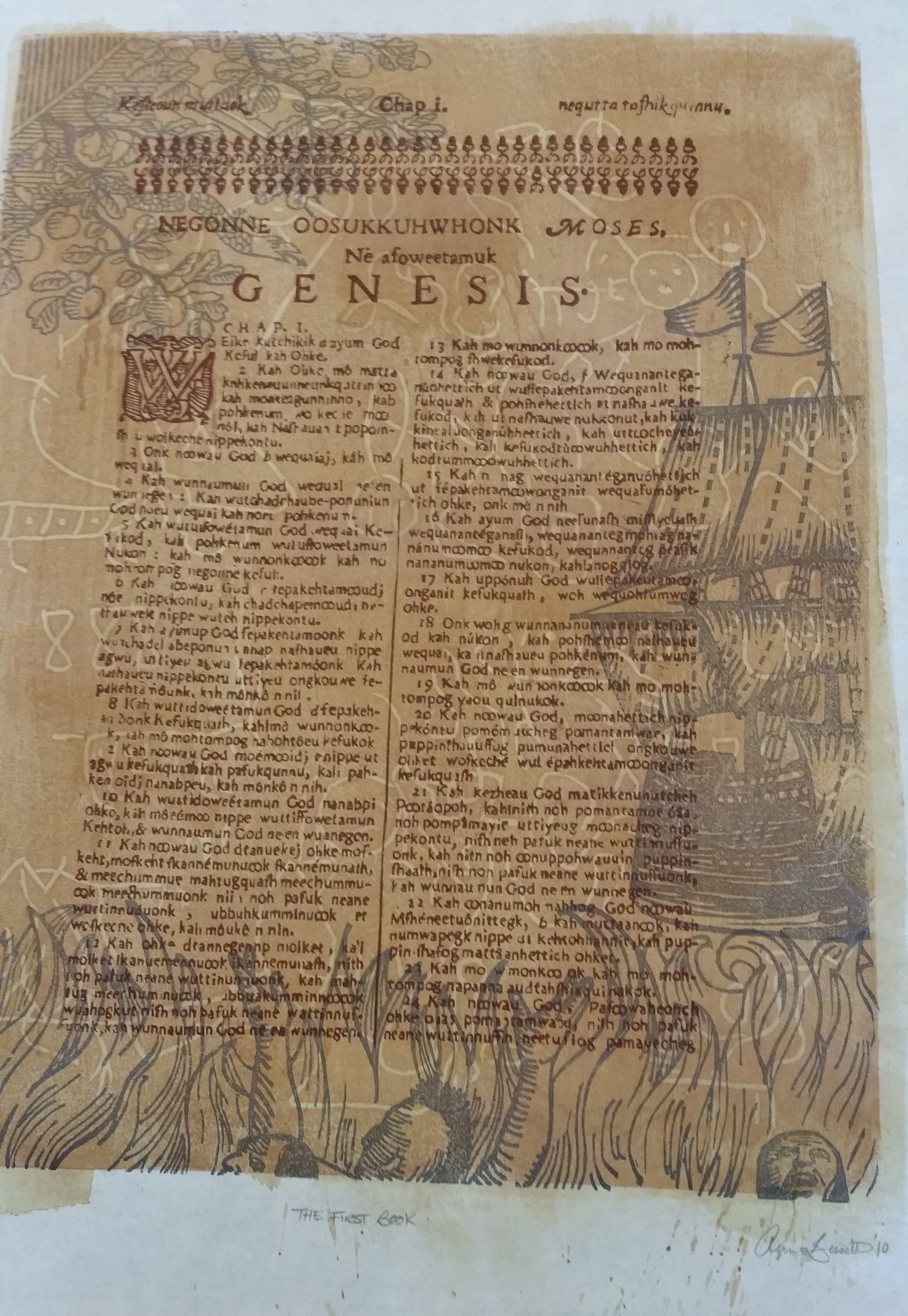
20150430_170716 (2)AAS staff and fellows recently got a remarkable lesson in printmaking by Annie Bissett, who was in residence as a Jay and Deborah Last Creative Artist Fellow. Annie led a fellow’s talk one evening after the library closed, during which she shared some of her previous works and then conducted a demonstration in printmaking. She generously allowed participants to try their hand at creating an impression from one of her Chinese style woodblock prints.  Everyone soon got into the act, creating multicolored images of a sailing ship!

Annie Bissett has exhibited throughout the United States and her work is in the collections of the Yale University Art Gallery, the Portland Museum of Art, Hood Museum of Art, Mortimer Rare Book Room at Smith College, and the Boston Public Library, among others. She has created two projects that include both a series of prints and accompanying artist books. These projects are entitled “We Are Pilgrims,” a series of woodblock prints about the early settlers of Massachusetts, and “Loaded,” a group of prints about money. She often appropriates historical imagery and texts into her elegantly and beautifully designed prints. To learn more about her work visit her website.

Bissett demo
Annie demonstrating the printmaking process to the group.

20150430_175616_001 (2)While here at AAS, Annie conducted research for a project about the spirituality/religiosity of American national identity. She scoured the Society’s collections of children’s literature, primers, almanacs (including several almanac diaries), type specimen books, hymnals, and broadsides. As she wrote in her fellowship report, “Much of what I found exciting were book forms and conventions that I had never seen and that I think would be very interesting to recreate with contemporary content, such as: metamorphic pictures, almanacs (I can imagine using some of the almanac conventions to address climate change issues), the books called ‘Divine Emblems,’ a book type I found that presents trades and professions to a juvenile audience, and books of moral lessons and maxims.”


The Gamebrarians: AAS Plays a 19th-Century Version of Cards Against Humanity

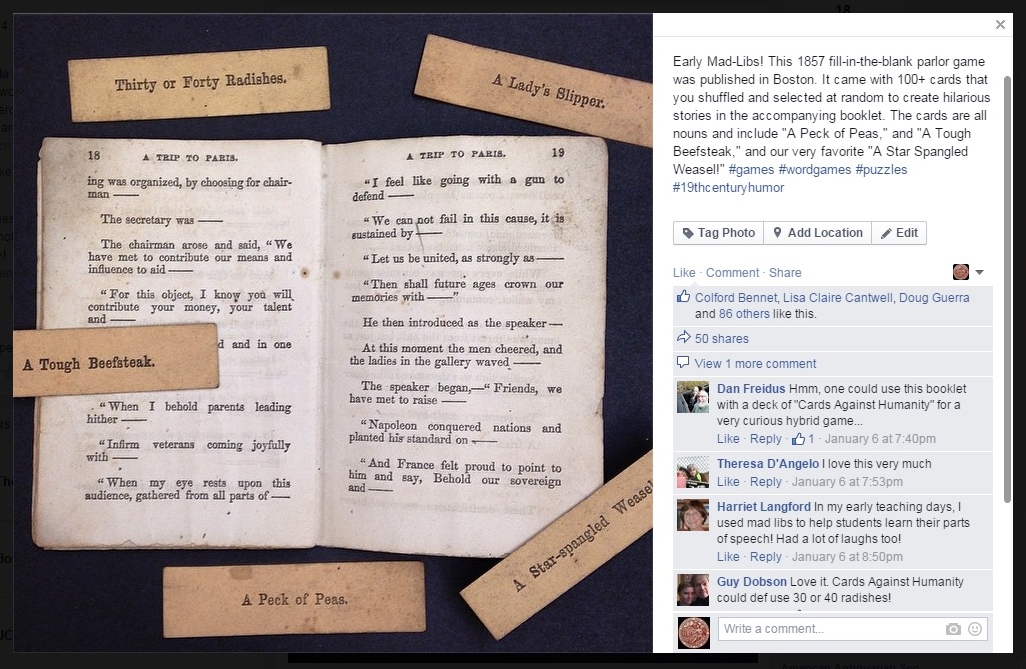
A few months ago we posted an image on Instagram and Facebook that, while fun, we had no particular expectations for. It was a quite a surprise, then, when it garnered a massive amount of attention on both platforms. To this day it remains one of our most widely circulated posts on Facebook.

wordgame post 2The image was a picture of an 1857 word association game called “A Trip to Paris: A Laughable Game. Being a truthful account of what b fel one Jothan Podd.” It includes a small pamphlet that, through a series of random sentences with blanks for nouns, tells the story of Jothan Podd’s trip to Paris—sort of. In reality it’s more a jumble of non-sequitur sentences that are made funny by filling in the blanks with the nouns on the accompanying cards.

Does the concept sound familiar? It certainly did to our social media followers, who instantly expanded on our comparison to Mad Libs to include the now wildly popular Cards Against Humanity and Apples to Apples. And in many ways the game is indeed a cross between Mad Libs and Cards Against Humanity. Like Mad Libs, you’re filling in blanks to create a sort of story, but unlike Mad Libs, where you come up with the missing words yourself, there are cards to fill in the blanks and those only include nouns, rather than all parts of speech. This is where it becomes more like Cards Against Humanity, in that a complete thought is finished by pairing it with a noun card provided by the game.

The response gave us an idea – why not just play the game ourselves (using twenty-first-century protocol for handling material, of course) and see how it stacks up against the modern versions? And with that, “The Gamebrarians” was born.

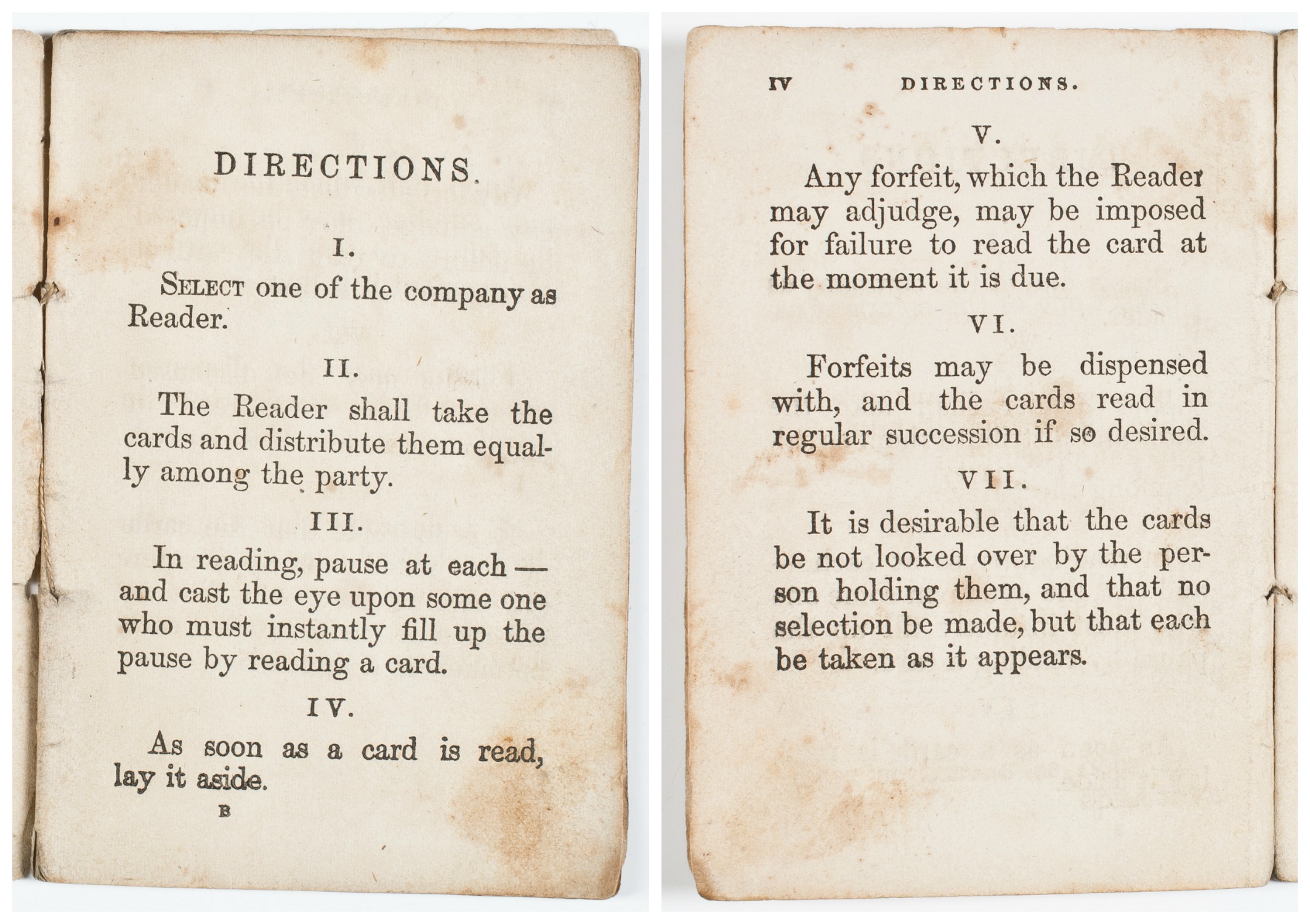
Directions collageAlthough the rules of the original game (see left) simply call for one person to read the story while the rest of the players each take a turn flipping over a random card to create a ridiculous sentence, we decided to play the old game by the rules of modern Apples to Apples and Cards Against Humanity to make it a little more interesting. Each person takes a turn reading a sentence from the pamphlet, while the others finish it with one of their cards. Whoever plays the card the reader finds funniest wins a point. Here’s what happened!

We’ll leave the judging of how well the nineteenth-century plot and terms hold up to you, but the overall result of filling in a blank with a series of irrelevant, mundane, or absurd things (how does one get a clam intoxicated?) remains the same. And while at first glance it seems that this nineteenth-century version is much more PG-rated than Cards Against Humanity or even, for that matter, Apples to Apples, it’s still a word association game and it’s very likely that there was plenty of potential for a double entendre or two (we’re still trying to figure out what a star-spangled weasel is, but there has to be a joke in there somewhere).

Thanks to the generosity of Jay and Deborah Last and an anonymous AAS member, we are currently in the process of cataloging and digitizing our entire games collection, making this wonderful collection more accessible to researchers. The process has also highlighted the fact that there are plenty more anachronistic yet relatable nineteenth-century games where this one came from, and so we hope that this will not be the last you see of The Gamebrarians.

If you want to play the game yourself, a print-friendly version of the entire pamphlet and set of cards can be found here!

Metadata Matters: “African American” in the News and in the North American Imprints Program

This post was co-written by AAS Digital Humanities Curator/ACLS Fellow Molly O’Hagan Hardy and AAS Head of Cataloging Alan Degutis.

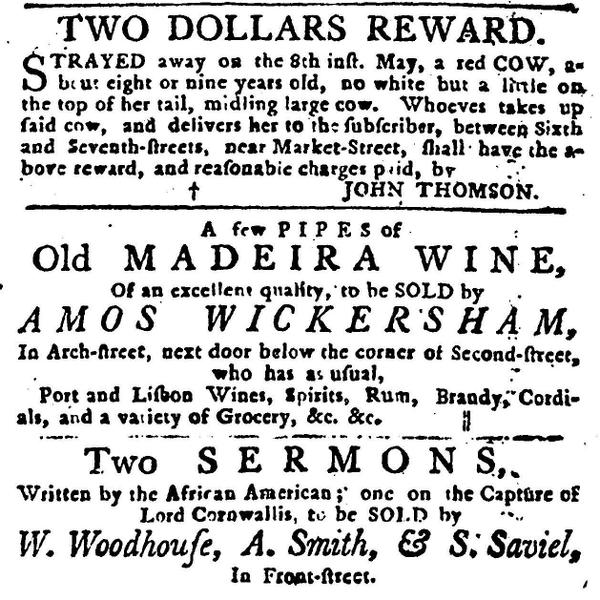
PhiladelphiaJournal (2)The New York Times recently reported the “discover[y]” of the earliest known use of the term “African American” from almost fifty years earlier than previously thought. The Oxford English Dictionary attributed it to The Liberator in 1835, but Fred Shapiro, an associate director at the Yale Law School Library, came across an earlier use of the term in The Pennsylvania Journal on May 15, 1782, in an advertisement for “Two Sermons, written by the African American; one on the Capture of Lord Cornwallis, to be SOLD.”

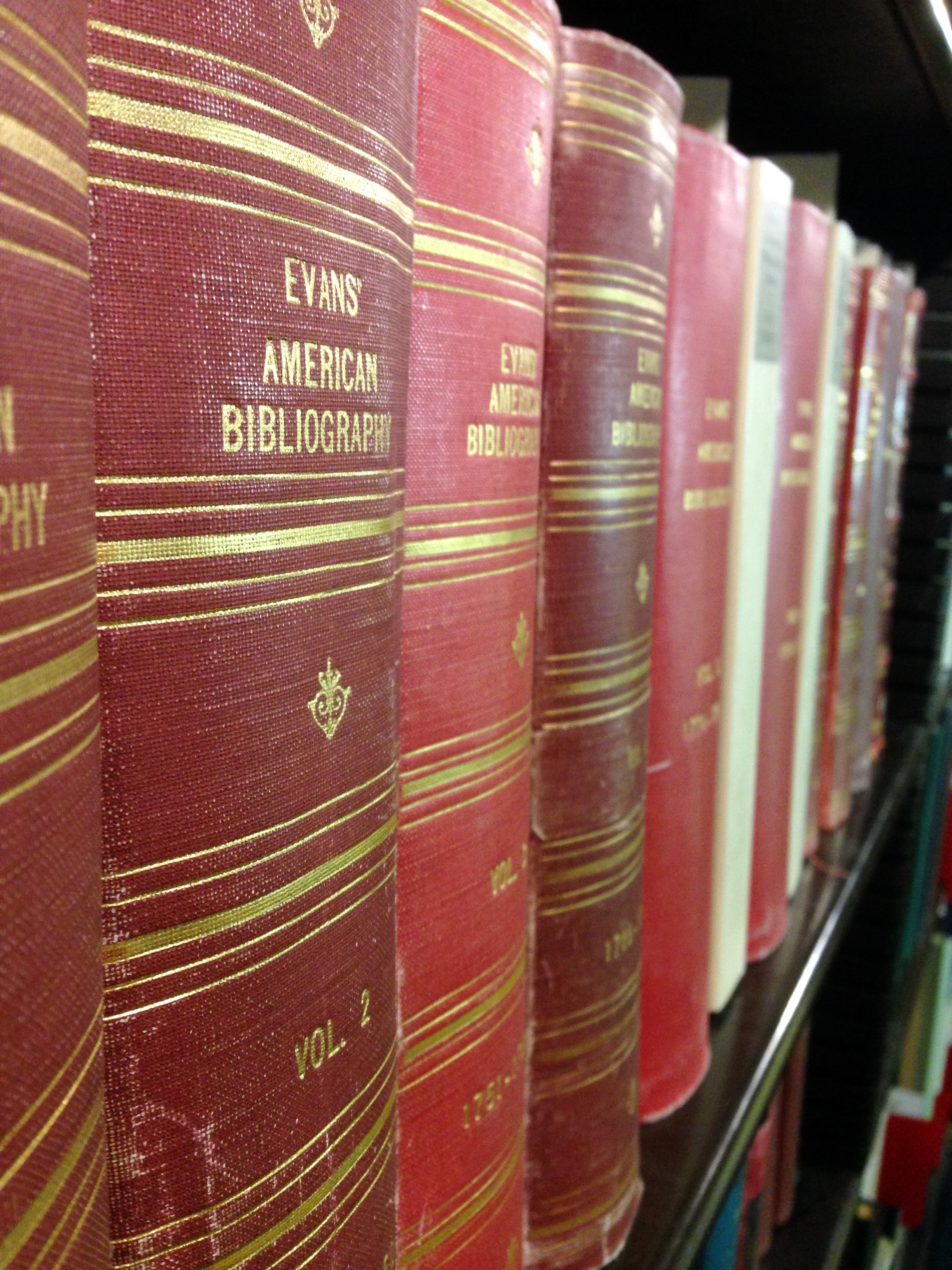
Harvard’s Houghton Library holds the only known extant copy of the pamphlet A Sermon on the Capture of Lord Cornwallis (1782) (and they have speedily digitized it in its entirety). Though AAS does not own a copy of this pamphlet, we began to wonder if it had been recorded by our North American Imprints Program (NAIP), which aims to catalog all imprints in North America before 1820. As Hardy has written about previously, NAIP includes records for items not held by the AAS, and therefore can be understood as analogous to what the English Short Title Catalog (ESTC) is for British Studies for EvansBibliography (2)early American studies. A Sermon on the Capture of Lord Cornwallis certainly fit the NAIP criteria for inclusion: it was printed in the U.S. before 1820 and though it was not recorded in Charles Evans’s monumental twelve-volume American Bibliography, if a copy existed, NAIP ought to have a record for it.

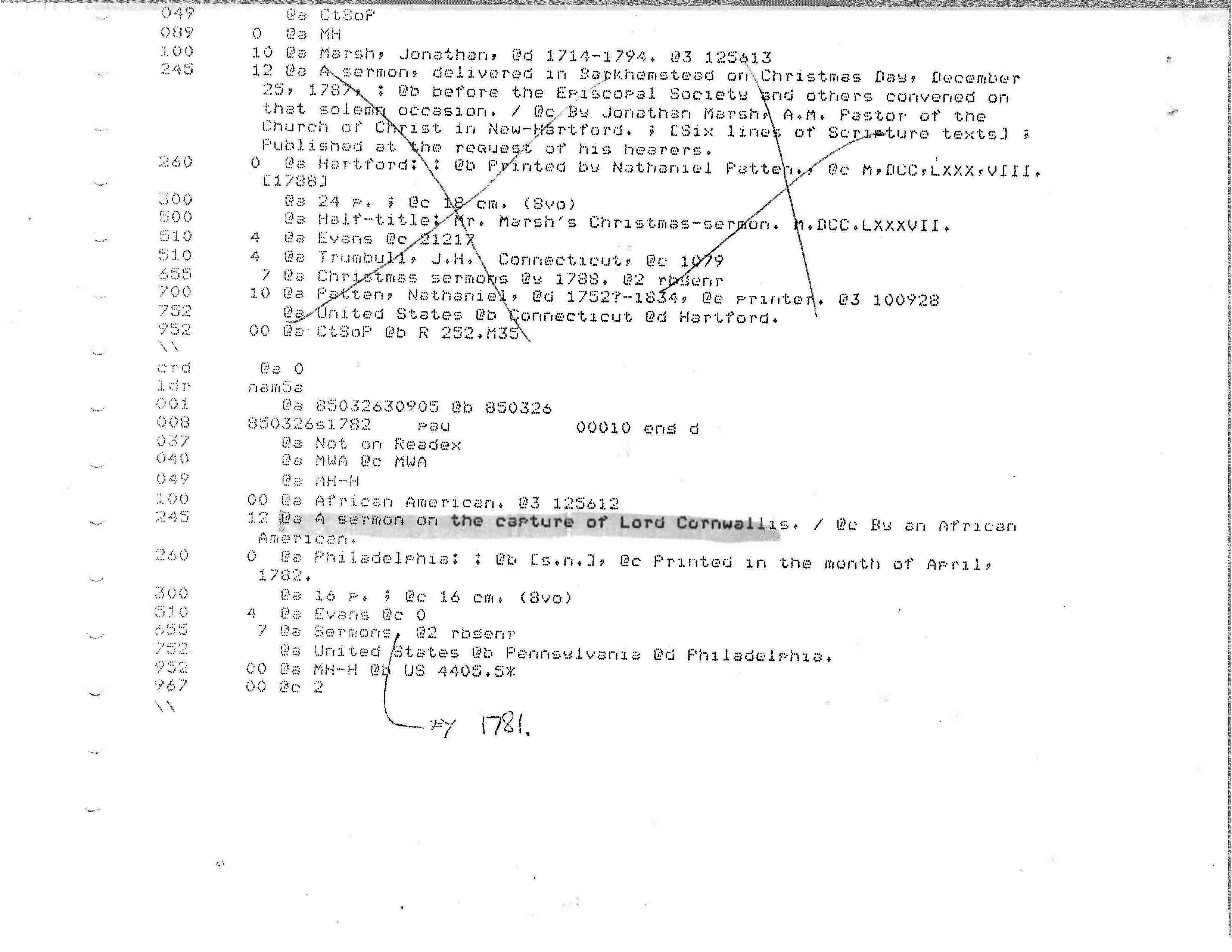
Before exploring the record, let us say a word about how and why such records were created. In the late 1970s the ESTC was established, with offices in London and Baton Rouge. As plans for the ESTC were being developed, Marcus McCorison, director of the American Antiquarian Society, proposed that AAS collaborate with the ESTC, taking responsibility for cataloging U.S. and Canadian imprints within ESTC scope. Thus, with the generous support of the National Endowment for the Humanities, the North American Imprints Program (NAIP) was established as a sister project to the ESTC. As work on the ESTC began, Henry Snyder, director of the North American office, began to solicit North American libraries to contribute reports of their eighteenth-century holdings. Reports could come in three forms: 1) photocopy of the title pages with bibliographic information filled out (this was the preferred form); 2) 5X7 note cards with bibliographic information filled out; 3) copy of a main entry catalog card (this was the least preferred form because the information was not standardized). Reports for North American imprints were forwarded to the NAIP office at AAS. Last week, we went down to the basement  to dig up this very report, and were pleased to see that it came in the first of these three formats:
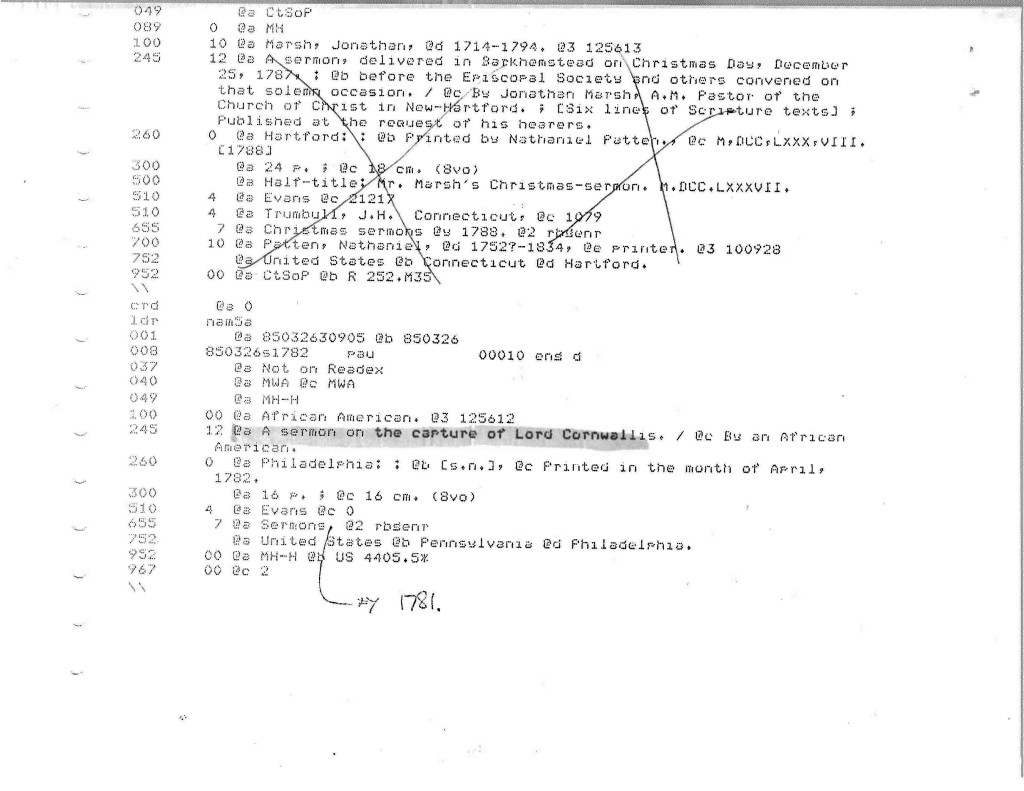
LordCornwallis_Page_2By 1985, AAS NAIP catalogers had completed the cataloging of AAS holdings, and had begun to create records from ESTC reports for North American imprints. It is at this time that the initial record for A Sermon on the Capture of Lord Cornwallis was created, with the minimal genre heading of “Sermons” in the MAchine-Readable Cataloging (MARC) 655 field.

LordCornwallis_Page_1

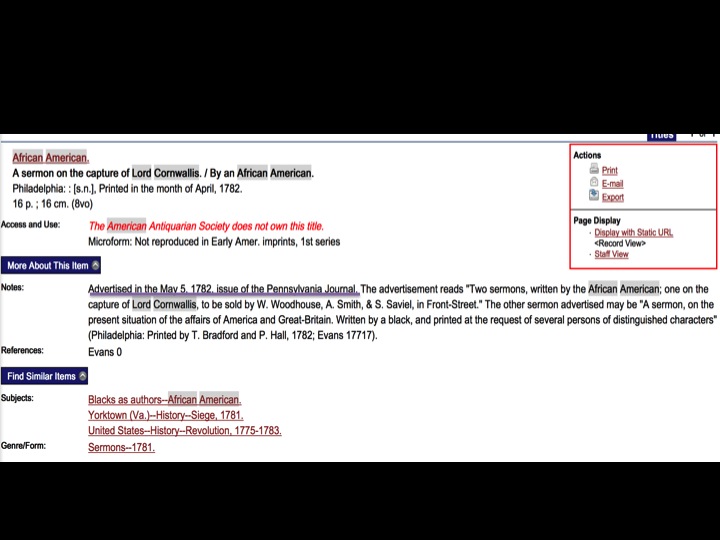
NAIP records were integrated into the ESTC file in 1990, and these records were made available through the Research Libraries Information Network (RLIN), as a microfiche catalog, as a CD-Rom catalog, and eventually in the online version of the ESTC we use today. Part of the work of NAIP was not only to create this comprehensive catalog, but also to enhance the records that AAS received with more complete metadata wherever possible. And an AAS cataloger eventually did just that by adding two subject headings. The NAIP record (below) now includes information about the content of the pamphlet. The MARC 651 field contains the subject heading Yorktown (Va.)—History—Siege, 1781. A NAIP-specific heading (“Blacks as authors”) appears in the 650 field; the heading allows researchers to search for titles written by Black authors. To the heading is added the name of the author; in this case, the author can be identified only by the phrase “an African American” found on the title page of the pamphlet.

AASRecord (2)Degutis has since added a “General Note” in the 500 field with a citation to the advertisement Shapiro found in the Pennsylvania Journal. We are grateful to have this additional information in our record. This news also offers us a chance to realize once again how much crucial information is contained in the metadata of the NAIP records; it is just waiting for scholars to put that information to work as data in the role of evidence, to paraphrase Trevor Munoz’s useful definition of data. We at AAS have been dedicated to assisting such efforts for decades, and the tools and methodologies of digital humanities offers us new ways to do so.
Gen. Benjamin Butler and Shoo Fly Chewing Gum

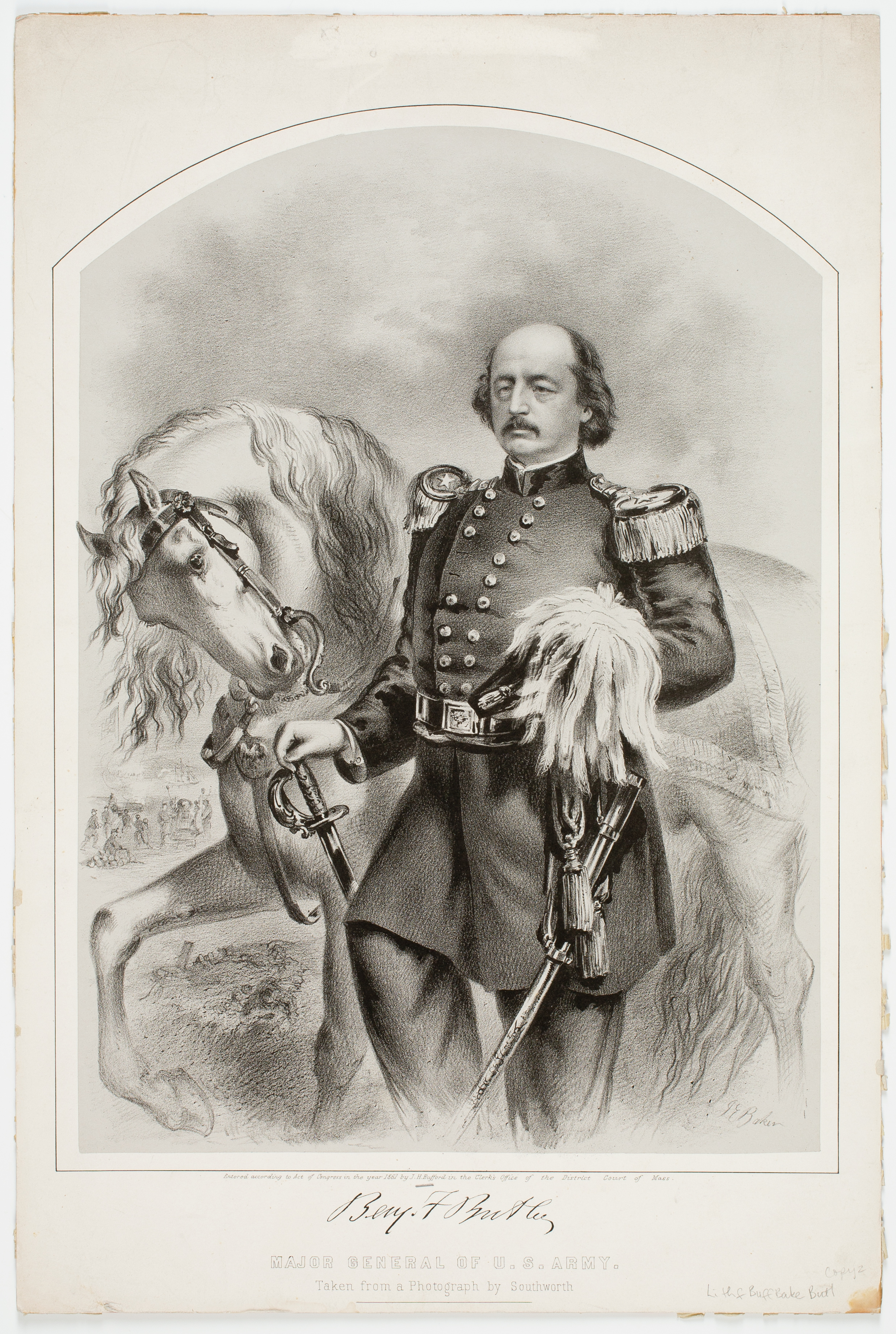
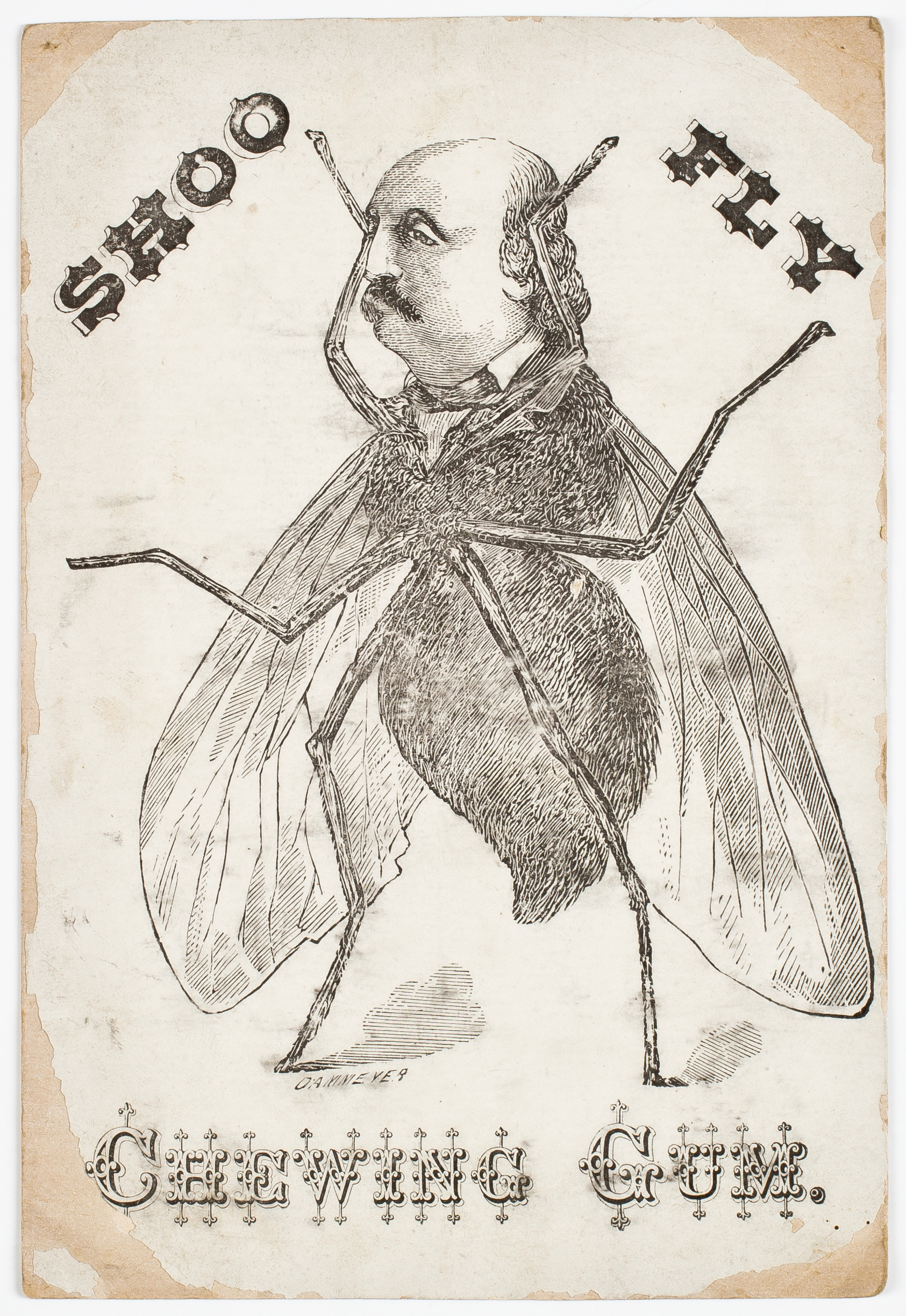
ShooFlyTradeThis past winter, while hunting in the stacks for a trade card for a reader, I spotted this intriguing advertisement for chewing gum.  As editor of the Society’s Instagram account, I had been participating in an event called #bugginout, which featured posts by libraries around the world focused on illustrations of anthropomorphic insects.  These posts had been appearing for a few weeks, every Wednesday, and all of the participants were amazed at how much material we were finding in our collections.  I thought immediately of using the Shoo Fly trade card for #bugginout, but first I had to do some research.  Why, I thought, was Benjamin Butler’s head on the body of a fly? And why was that image used to sell chewing gum?

Butler, of course, was a Civil War general in the Union Army, infamous for his controversial policies during occupation of the South and his BenButlermanagement of soldiers and wartime funds.  After the war he was elected to the U.S. House of Representatives (representing Massachusetts) for consecutive terms from 1867 through 1875, and he ran for governor a few times as well (he served in that post from 1883-1884). Did he chew gum, I wondered?  Or was the advertisement intended to be insulting, perhaps? An in-depth look through the Society’s online newspaper databases soon provided a slew of clues, and I realized I had too much information for an Instagram post.  This would require a longer blog entry.  So, here it is!

First, some history on chewing gum.  According to Kerry Segrave in Chewing Gum in America, 1850-1920: The Rise of an Industry (2015), Americans chewed natural gums (usually the sap of trees—spruce was popular) well before 1850, but it was around this time that commercially produced gum began appearing on the market.  The gums were made of natural ingredients and were either plant-based, or, oddly, petroleum-based.  Some producers touted the health benefits of chewing gum, stating it could be used for “the cleansing and preserving of the Teeth, a most desirable article for sweetening the breath, imparting a delicious fragrance to it, and leaving the Teeth and Gums in a healthy state.” By 1860, chewing gum was being produced and consumed all over the country and newspaper editors, ministers, and social commentators all bemoaned the practice as disgusting, unattractive, and unhealthy.  It appears that gum chewing was a distinctly American habit, and was often noted by European visitors as odd and faddish.

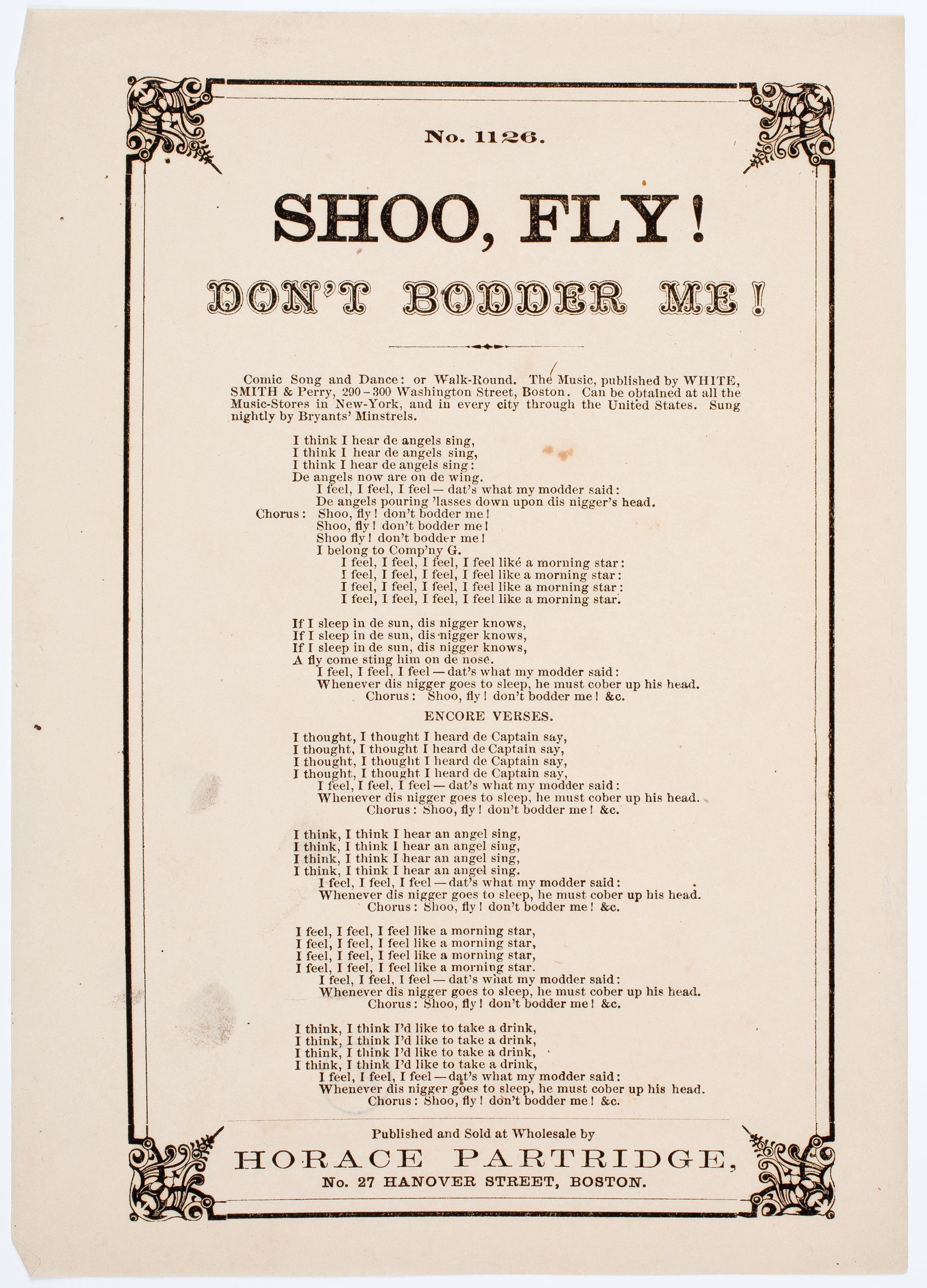
ShooFlyBalladBut still, Benjamin Butler on a chewing gum trade card?  The next turn in my research took me to the publication of the minstrel tune “Shoo Fly, Don’t Bother Me,” which appears first in the newspapers during the winter of 1869.  There is a dispute among today’s scholars over the composer and exact date the tune was written, with the most likely candidate being the Maine composer T. Brigham Bishop, who claimed to have written the song during the Civil War.  Other composers of the day, like Billy Reeves and Frank Campbell, have also been credited with writing “Shoo Fly.” Regardless of authorship, it is clear from the newspapers that the song “broke out” in December of 1869 when it was performed in minstrel acts from New York to California. Multiple editions of single sheet ballads and sheet music exist from 1869 and 1870 featuring the tune and lyrics (see above). Playbills in the Society’s collection feature the number starting in 1869 and continuing until nearly 1880. It was a popular song, indeed.

The connection to Butler became clear when a search in the Congressional Record turned up a reference to the Congressman using the phrase during debate.  Butler was giving a speech on the floor when he was interrupted by Samuel Cox of New York, who lost his temper over something Butler had said and threw numerous insults at the Massachusetts representative.  Cox, although only 5’3” tall, was known for his fiery rhetoric.  Butler apparently paused and gazed at Cox across the floor before waving his hand and saying dismissively, “Shoo fly, don’t bother me.” (Revealing, might we add, an impressive awareness of pop culture for the 51-year-old Butler.) This sarcastic reference was picked up immediately in the press and crossed over to theater performances of the song, which began to feature performers of similar stature to Butler (tall and round) and Cox (short and wiry). Scholars today credit the Butler/Cox verbal altercation with helping prolong the popularity of the tune.

According to the April 28, 1870, edition of the Detroit Advertiser and Tribune, one of Butler’s constituents sent him a box of chewing gum in April 1870.  Each piece was individually wrapped with the words “Shoo Fly” printed on the wrapper and the box contained a likeness of Cox as a fly. No mention of a fly with the head of Butler, alas, nor any indication of who sent the gift to Butler.  The first reference to Shoo Fly Chewing Gum as a brand comes later in the printed record, in 1880, but it is likely that the product was around earlier. The gum was produced in Cleveland, Ohio, by E.A. Palmer & Bro., a druggist and extract manufacturer, but no exact start date for the brand has yet been revealed. Palmer made candies, patent medicines, and laundry soaps, and sold toothbrushes and extracts. The Cincinnati Daily Gazette published a history of gum chewing in January of 1880 and mentioned Shoo Fly as a popular brand that had been around for years.  It appears that Palmer may have taken advantage of the popularity of the song and Butler’s association to the phrase “shoo fly” in 1869/1870 to issue this trade card promoting the gum.  Co-opting a popular trend in advertising was certainly not unusual.  There are other products that jump on the “Shoo Fly” bandwagon in the 1870s, too, including Shoo Fly soap, Shoo Fly button garters, and Shoo Fly window screens. Why not chewing gum?

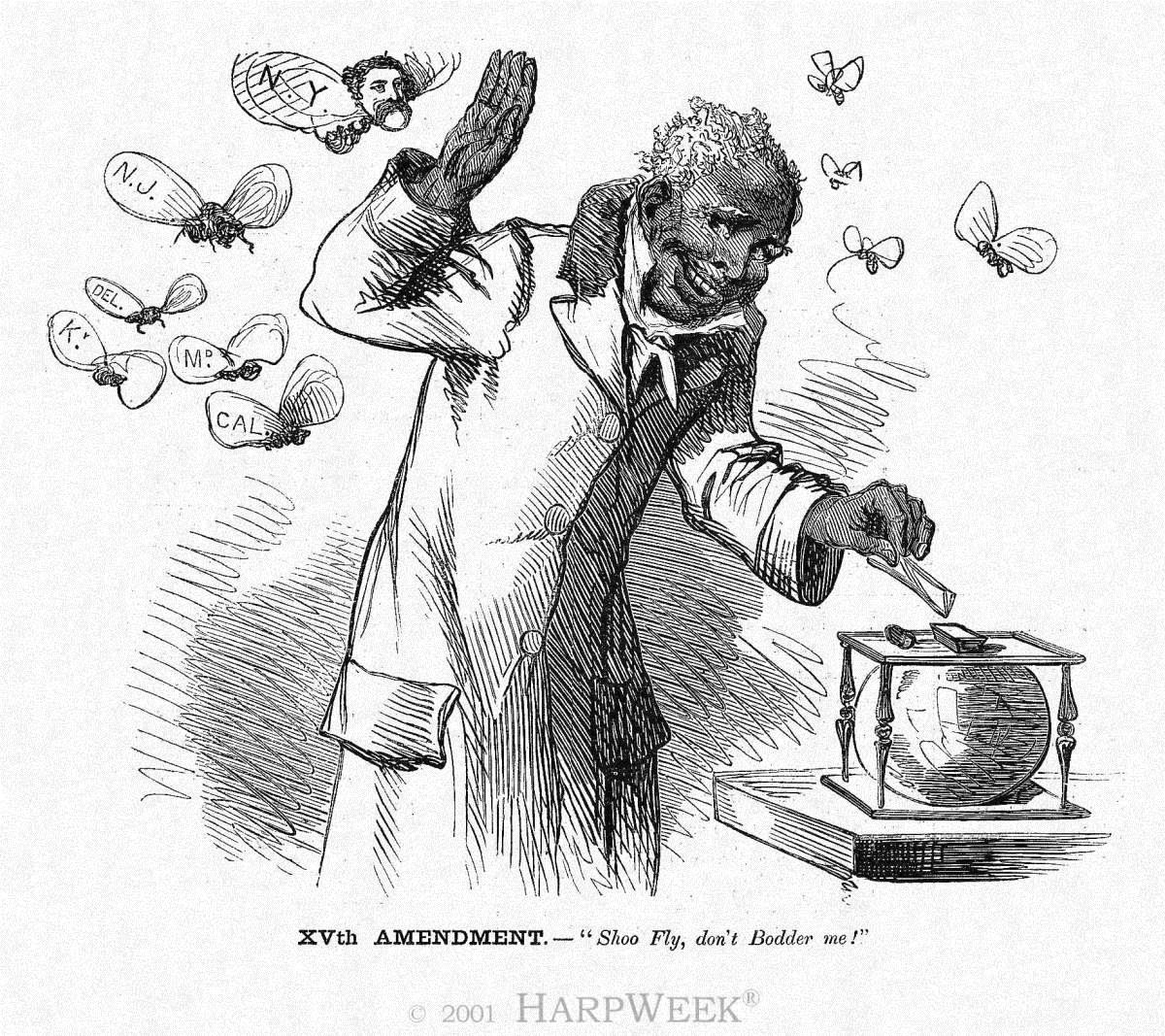
Shoo Fly Harper'sThe song “Shoo Fly” continued to be referenced in the press frequently in the 1870s, including in Harper’s Weekly with a March 12, 1870, cartoon regarding the 15th Amendment showing an African American voter swatting away opposition flies as he puts his vote in a ballot box.  This same image was reused by E. A. Palmer on the box lids of his chewing gum (and example of the box is in a private collection), but the image was revised, with the voter holding a placard with Palmer’s address and the flies each labeled with the various flavors offered (spruce, cream, mastic).

While most of my initial questions about this 6” x 4” piece of ephemera have been answered by research in the library, and while I learned a lot about popular music and gum chewing habits, there is still more work to be done.  The black and white wood-engraved image lacks a printer’s imprint, although the image is signed “DAMMEYER.”  Did E.A. Palmer borrow the image from a periodical or newspaper, as he did later with the 15th Amendment image?  Who is Dammeyer?  And perhaps most importantly, from an advertising perspective, would Americans buy chewing gum associated with a giant fly with Benjamin Butler’s head?  If not, perhaps that explains why other copies of this motif seem so scarce.  I think I will go post the card on Instagram and see what social media and the #librariesofinstagram can turn up!