The Civil War comes to “Mary S. Peake, the Colored Teacher at Fortress Monroe,” Part 1

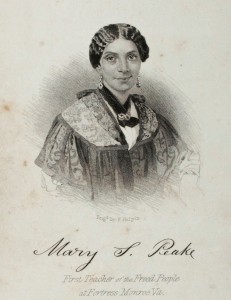
What we have for you today is the story of a remarkable African American woman and her community.  The story was told by Rev. Lewis C. Lockwood, self-described as the “First Missionary to the Freedmen at Fortress Monroe, 1862,” in a book titled: Mary S. Peake, the Colored Teacher at Fortress Monroe.  (The full text ...

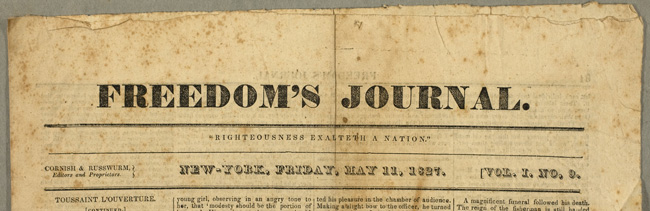
Samuel Cornish, John Russwurm, and the Early Black Press

In March 1827, Rev. Samuel Cornish and John Russwurm co-founded Freedom’s Journal in New York City. It served as the first African-American newspaper in the United States and commemorated the 50th anniversary-year of the first American anti-slavery statutes in the 1777 Vermont Constitution. One of their primary objectives in starting Freedom’s Journal was to combat ...

Ads during the Civil War Years

Civil War era newspapers were more than just sources of information regarding current events.  In the Boston Daily Advertiser, for example, nearly half of any given issue was devoted to advertising.   It was certainly not alone in this, though it was at least honest enough to include the word “advertiser” in its name.  Goods and ...

This Week in the Civil War: Gettysburg, Hippos, and the French are in Mexico!

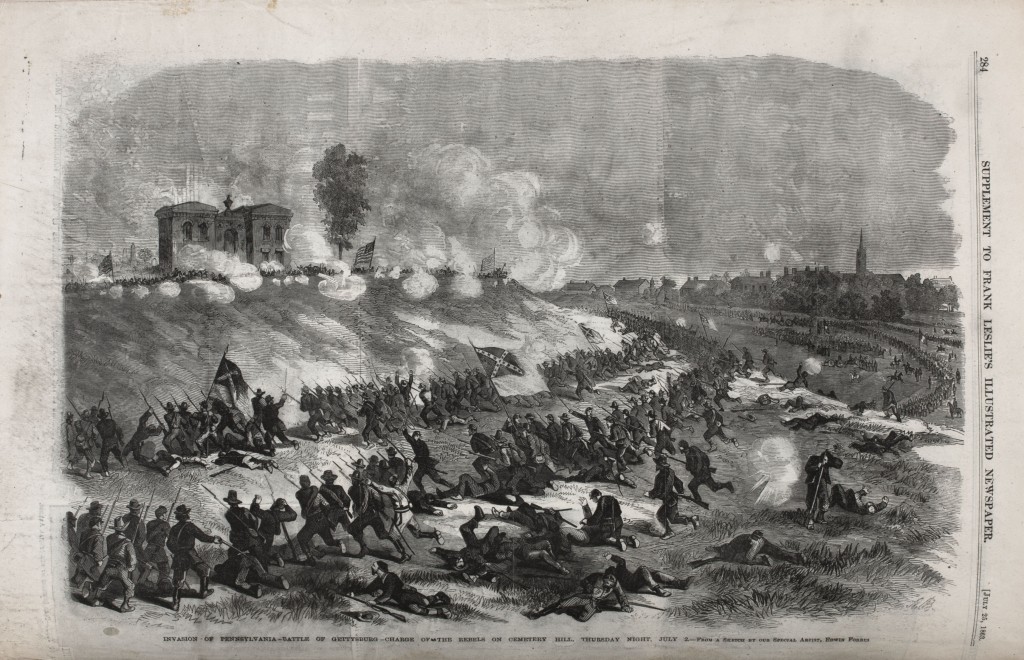
In the United States today July, 1863 is remembered primarily as the month of the Battle of Gettysburg.  For Americans at the time, however, there was plenty of other news to think about.  Readers of Frank Leslie’s Illustrated Newspaper, a weekly publication from New York, learned about the battle in the July 11th edition of ...

Charles Dickens: Novelist, Social Reformer and…Flashy Dresser?

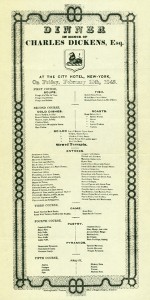
In 1842, Charles Dickens made his first of two visits to America.  He took a sweeping tour of the country, meeting with dignitaries such as Longfellow, Poe, and President John Tyler.  He visited Massachusetts, New York, Pennsylvania, Washington D.C., Virginia, Maryland, Ohio, Kentucky and Missouri.  While in New York City, he was welcomed with a ...

A Story You Probably Didn’t Know about John Brown’s Body, Douglass, Emerson, and Thoreau

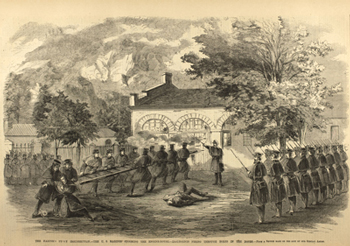
Today we present a story in two parts, part of which you probably already know and part of which you probably didn't know before.  PART I is a summary of the story of John Brown, Harper's Ferry, and American Anti-Slavery from AAS volunteer Colin Fitzgerald: For three days in October 1859, radical abolitionist John Brown conducted ...

Raise a Glass to the 4th

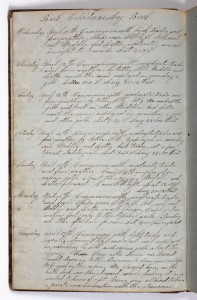
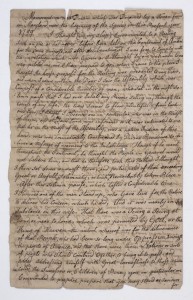
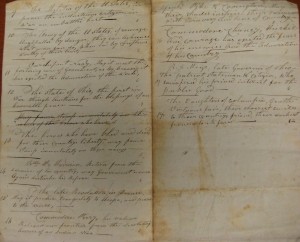
In honor of Independence Day, I thought I'd take a look into AAS's manuscript collection to see how folks observed the holiday in the past.  Sure, it's all about barbeques and fireworks now, but closer to our independence the holiday probably meant something different to those who lived through the Revolution. Elnathan Scofield (1773 - 1841) ...

On the Poetry of Phillis Wheatley

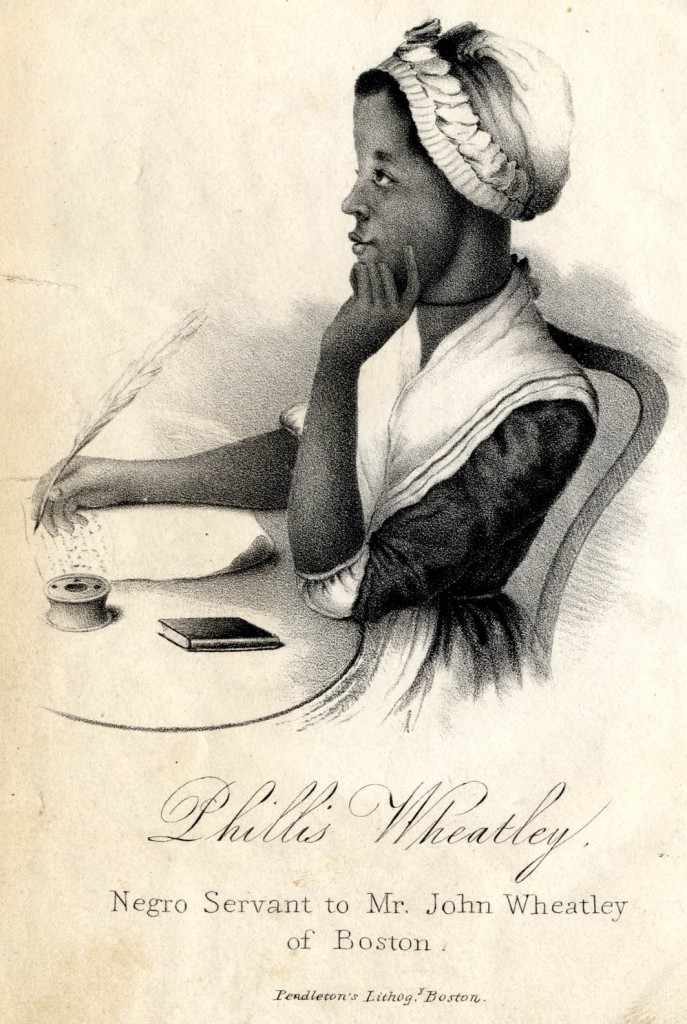
With the publication of Poems on Various Subjects, Religious and Moral (London, 1773) [AAS online catalog record], Phillis Wheatley became the first published African American poet. Because of her status as a house slave in Boston, Massachusetts, she achieved high literary recognition in the years following publication. Prominent political figures like George Washington and Thomas ...

The Civil War Comes to California

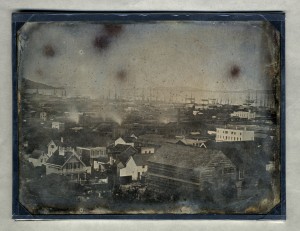
As was mentioned in a post last week, Americans will be marking the 150th anniversaries of the great events of the Civil War over the next four years.  Many of the battles, commanders and regiments of that conflict have become legends, and the narrative of a nation split apart, brother fighting against brother, remains compelling.  ...

This Week in the Civil War, Illustrated: “Cash or curses” as payment for foraged food

There has been much interest in the Civil War of late.  The increased coverage makes sense given that next few years mark 150 years since the conflict that divided our United States.  Here at Past is Present, we would like to highlight another side of the war years.  Rather than focusing on the battles or ...