Goodbye Blacksmith, Hello Schoolmarm!

school

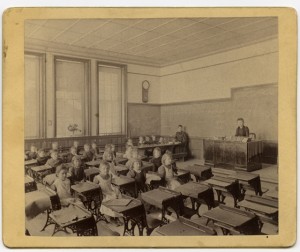
When Diann Benti, former AAS assistant reference librarian, created our now (nearly) complete anonymous blacksmith blog, she was inspired to do so by the Massachusetts Historical Society’s tweeting John Quincy Adams. Past is Present would never have a tweeting blacksmith, Diann informed us in her blog post when the blacksmith initially forged his way ...

On “Readies” and Fore-edge Painting

Book of Common Prayer.  New York D. Appleton & Co., 1845.  Gilt fore-edge.

In a New York Times Book Review article last month, Jennifer Schuessler quoted Bob Brown, an early proponent of electronic reading devices.  In his prescient manifesto, "The Readies," Brown declared: “The written word hasn’t kept up with the age....  Writing has been bottled up in books since the start."  Brown called for no less than ...

AAS Helped Compile an Early African American Bibliography

murray1

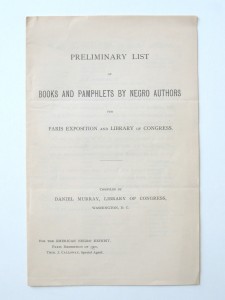
Toward the end of his now-famous 1897 Atlantic Monthly essay, "Strivings of the Negro People," W.E.B. DuBois states that the post-Civil War years brought for African Americans “the ideal of book-learning, the curiosity, born of compulsory ignorance.” Historians may note DuBois’ ultimate discontent with this ideal -- the longing to achieve freedom through ‘book-learning” -- ...

Typefindings: Good Old College Days

rutgers

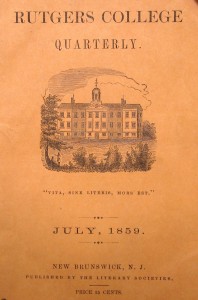
Today's university may be in need of a revolution of its own, what with its failure to create true interdisciplinary conversation and its isolation from the wider public.  The late eighteenth-century college did not exist in such isolation from the people, though few colleges became hotbeds of revolutionary activity during the war like Queen's College (now Rutgers University). ...

Type Findings: Introducing the AAS Printers’ File

Avis Clarke

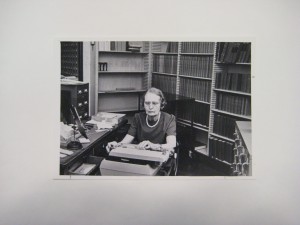
Avis G. Clarke, cataloger-cum-researcher of early American imprints and printers, filled hundreds of AAS card catalogue drawers with the AAS printers’ file. Detailing the lives and works of virtually every printer working in America before 1820, the printers’ file is a masterpiece of indexing. Comprising 134 drawers of biographical, printing, and publication ...