pastispresent.org
an online forum for early American discovery, discussion, and diversion from the American Antiquarian Society

March 9, 1870 Wednesday, In the Life of a Blacksmith: Blacksmithing again.  On our big wagon.  I drilled and bolted the wheels today.  In the eve I read [C-- C--] and then wrote a letter to Simon.

Apple Pie Bake-Off Or The Sweet Taste of Revenge

November 5th, 2009, by Diann Benti

6

In the October 1813 Report of the Committee, Isaiah Thomas justified the choice of Worcester for the home of the American Antiquarian Society. He maintained that an “inland situation” offered the best protection against,

the destruction so often experienced in large towns and cities by fire, as well as from the ravages of an enemy, to which seaports in particular are so much exposed in times of war.

War and fire. Yeah right, Mr. T. We know the real reason you picked Worcester: the apples. From the end of August into late November, the orchards in the surrounding hills gently rock us out of summer and into the sweet lull of autumn. We are eventually deposited harshly onto winter’s doorstep. But up until that point, it is a reverie of fresh apples. So in the spirit of a New England autumn, an apple pie experiment.

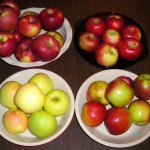
applesThe Premise: Four pies sharing the same crust recipe and apple varieties (Gravenstein, Northern Spy, Baldwin, and Golden Delicious to be exact). The differences would be the spices and sweeteners used in the filling: three from historical recipes and one from a modern cookbook. As with the pound cake experiment, our testers would be the AAS fellows.

The Historic Recipes: Most of us are familiar with apple pies starring apples coated in white (or brown) sugar with a dash of cinnamon or nutmeg. We kept the modern recipe modern, but took advantage of historical recipes that called for unexpected sweeteners.

Powdered Sugar/Rose Water Recipe from The Virginia Housewife by Mary Randolph, 1836

apple_pie_rosewater

White Wine and Lemon Recipe from Mrs. Putnam’s Receipt Book by Elizabeth Putnam, 1860

apple_pie_wine1apple_pie_wine2

and finally…

Let’s be honest, lately these fellows have been working hard, turning in call slip after call slip for materials the reference staff then pages. Their industry is our sore feet. But we can’t say no. Instead it was time for a different kind of revenge:

The Molasses-Sweetened Recipe from The Young Housekeeper’s Friend by Mary H. Cornelius, 1846

The Young Housekeeper's Friend by Mrs. Cornelius, 1846

The unwitting accomplices: Jess “Could have been a pastry chef” Lepler, Hench Post-Dissertation fellow and assistant professor of History at the University of New Hampshire, Emily “Queen of the Crusts” Pawley, AAS-NEH fellow and Ph.D. in the History of Science (2009), University of Pennsylvania, and Allison “I don’t really cook” Stagg, Last fellow and Ph.D. Candidate in Art History, University College, University of London.

apple_pie_butter_gratingThe Process: Pie making is a relatively boring task. One part was thrilling: the discovery of a cheese grater to easily add the cold butter to the crust dough. The rest was pretty straight forward: peel, cut, mix, pour, and repeat. The historic recipes forced us to make educated guesses on what exactly a “teacup” of molasses, a “little” mace, or a “few tea-spoonsful” of rosewater actually meant–caution usually guiding our judgment.

Before the crust covering, there was time for a snapshot of one pie. (t looks delicious when you think it’s chocolate…)

apple_pie_molasses_ready_for_baking

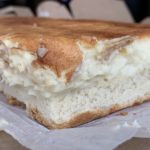
apple_pie_molasses_pieceThe Results: Victory! “The molasses one was vile. It was gross. It was disgusting,” said one esteemed fellow. “Horrible,” proclaimed another. That’ll teach them.

But what of the other pies?

apple_pie_bakedThe powdered sugar/rosewater pie prompted the most broadly split opinion. The cloves created a particularly pronounced flavor that some found an odd combination with the perfumy and off-putting rosewater; others were disappointed they couldn’t taste the rosewater more. As spirits are likely to do, the wine-flavored pie swayed many a fellow. The final score tallied, the white wine pie tied with the modern one in terms of taste. One fellow concluded, “We Americans should be eating wine pie.”

The fresh, tart taste of the modern and wine recipes complimented the crisp apples purchased that day from an orchard. Would this story have ended differently if the experiment took place in the middle of winter with mushy apples two months old? The weighty flavors of the molasses and powdered sugar/rosewater recipes might help mask less-than-delicious apples.

The Take-Away: When you are going to torture library fellows make sure your boss isn’t there. But from Ellen Dunlap, AAS president and unexpected tester, the thoughtful conclusion that our palettes may be more comfortable with subtle flavors. She preferred the modern pie, enjoying the complexity of its spices to the more monotone qualities of the historically-inspired ones. “I kind of liked the first taste of the rosewater and the wine, but they quickly got boring,” she said. And apparently even presidents don’t care for molasses-sweetened pie.


Tags: , , , ,